I hope it’s forgivable for an old man to settle upon not one but two traits of personality and disposition that he writes the most highly.
The need to settle on to, rather than one only, is because they are inseparable one from the other in terms of the way they manifest themselves. I regard each of them equally highly and think that they underpin the person I am to a significant extent.
The first of these is “Laughing”. I have always laughed a lot and think that laughter and humour are so very important. I don’t mean laughter that is cutting but that is happy and recognising of funny and humorous events. Observation also leads to laughter because funny things create mirth that off and unwinds.
A gentleman by the name of Arnold Glasgow, once wrote “Laughter is a tranquiliser with no side effects “. Yes, laughter is a panacea and a mood lightener. We all need to set aside a totally serious countenance on life.
The second trait which I use and manifest frequently and often spontaneously without realising is “Singing“. I make songs up, I know a lot of songs – or bits of them anyway. I’ll catch myself singing in shops, in the toilet, out in the garden, when I was showering, while driving the car and in all sorts of situations.
So both these characteristics are traits that I value and appreciate – although maybe at times others don’t appreciate them as much as I do!
Recent commentary has discussed shortfalls in the accomplishments of Australian students. Our students compared poorly with their Asian peers and other overseas counterparts. More money and material resources are directed towards Australian education than in many of the countries to whom we are compared, yet our results continue to be inferior.
An issue that impacts on outcomes is that of student attitude. Googling ‘student discipline’ online brings up countless reports confirming this to be the case. The latest PISA (Program for International Student Assessment) survey found that “…Australia ranked 63rd out of 68 OECD countries for classroom discipline.” (Classroom behaviour the key to future pay, Weekend Australian 19 – 20 May 2018). Dr Sue Thompson from the Australian Council for Educational Research (ACER) confirmed that “… the environment is challenging for teachers.” (ABC Australian Kids behaving badly in classrooms, 16.3.17)
The ABC Report by Alice Martin goes into the level and degree of student offending. “ Things you would find in a classroom: an entire class deciding to ignore the teacher in silent protest, chairs thrown, threats and overturned desks.
(Australian) Teachers came forward to tell the ABC about the biggest classroom disruptions they experienced. It did not stop there. One teacher had three Year 9 boys skip her class and smear their poo all over the school gymnasium walls, while others had been cursed with the full spectrum of profanities. The list went on…and on.”
While the level and degree of ill-disciplined behaviour varies, the issue is one that has a deleterious impact upon learning opportunities and academic outcomes.
Classroom behaviour (or misbehaviour) has a negative impact on what can be achieved. Although not talked about openly, the behaviour of many students at both primary and secondary levels, leaves a lot to be desired. Teachers spend as much, if not more time, on classroom management and discipline as they do on teaching. This is not fair on those who are keen to learn.
Classrooms and students in many of our Territory schools are not quarantined from this sad reality.
The issue is one that has its genesis in the bringing up of children. Parents as primary caregivers are responsible for the initial shaping of the values and attitudes of their offspring. Proverbs 22.6 suggests “Teach your children right from wrong and when they are grown they will still do right.” (Bible, Contemporary English Version)
If Australian students are to attain the levels achieved by their overseas counterparts, this issue needs to be recognised and corrected.
An article in the NT News (March 23 2019) confirms that schools can have an almost magnetic appeal to people. In her column School can seal the deal, Raphaella Saroukos confirms what many educators have known to be a truth for a long time, that “Parents are placing their child’s education first when it comes to buying into the residential market”.
She is absolutely right. When parents with school aged children are looking to buy a home, the qualities and characteristics of schooling opportunities is a prime consideration. Saroukos emphasises the point that “a school’s quality and reputation are a growing incentive for buyers who (in time) can enrol their children in certain middle and high schools.” These are the secondary schools available once children complete their primary school years.
Increasingly, schools advertise their wares and what they offer for students. This is happening through print, radio and television advertising. The vast majority of schools augment this outreach through websites, facebook accounts and by using the ‘My School’ application.
While important, promotion alone does not confirm the quality of education offered by individual schools.
The atmosphere or feeling generated by the way students, staff and parents relate to each other is of critical importance. This quality is not created by school buildings and facilities. It is about the way people connected with schools get on together.
Sought-after-schools have strong and practised values. An overarching quality is the respect that everyone within a school community has for each other. The best promotion that can happen is word of mouth, with satisfied parents, students and staff sharing their perceptions with others. This may lead to increasing school enrolments as others seek the same quality of education for their children.
Saroukos’ column illustrates this point. Those reading her column (and with school enrolment in mind) might appreciate her citing of parents who were motivated to purchase a home in Wulagi because of the school. Parent Shardae Harris is quoted: “I love the school, the teachers are great and Jamal (son) enjoys it … it’s better for us as parents to sleep at night knowing he loves going to school.” (Op cit)
The Saroukos column is focussed on housing in areas where the quality of schooling is known about by estate agencies. Aside from Wulagi, she confirms that other sought after school suburbs include Driver, Leanyer, Nakara, Parap, Stuart Park and Wanguri.
The quality of education on offer is a prime consideration for families buying houses in our suburbs.
Cleaning the drain of weeds at Nhulunbuy Primary School circa 1984. The job took all weekend. Call it an extracurricular undertaking by the school principal.
List three jobs you’d consider pursuing if money didn’t matter.
If money didn’t come into the equation and if I was reasonably fit not standing my age, there are three things I would opt for doing in a job or occupational sense.
I would like to be a person involved in cleaning out stormwater drains around schools and public buildings. This was something I used to do when the principal of Nhulunbuy Primary School and it was good weekend work.
The second thing that I would most like to do would be to be a shiner of shoes setting up a little stool footrest and a seat for the customer. I would clean polish and buff shoes and have great conversations with the people whom I was serving.
The third thing I would like to be as a cleaner of streets in Dublin, Ireland. Many years ago when visiting I went out for an early morning walk and had a terrific conversation with a street cleaner during that conversation learned a lot about the city and what made a tick from the viewpoint of a street cleaner.
The thing that each of these three jobs have in common is that people performing them are generally unobtrusive and blend into the background of the environment in which they work I left pretty well alone and have great opportunities to observe and to learn about the characters of others they see passing by. Because of the anonymity of these professions, a great deal of understanding becomes possible because the job operators are not hassled or interfered with.
So these are the three things that I would like to do.
What aspects of your cultural heritage are you most proud of or interested in?
I am 77, born in Australia in 1946 of parents were born in Australia of parents who were born in Australia. We have children born in Australia and they have children born in Australia.
However, I am confused and wonder whether I’m entitled to claim a cultural heritage or not.
In Australia, at the moment we have a situation where on October 14. a referendum will determine whether or not increased status and new (advisory) powers will be given to Aboriginal Australians, often referred to as “The First People“, because they arrived in Australia anywhere up to 60,000 years ago.
Not Aboriginal Australians living today but their predecessors.
Over the years there has been a lot of breast-beating and blame taken for the fact that the “the rest” of us or at least our predecessors were responsible for terrible things that happened to indigenous Australians after the landing of Captain Cook in 1788.
Yes, there were atrocities and cruelties and conflicts of a physical and military type nature perpetuated after that settlement. Discrimination went on for many years.
However, what the thinking tends to overlook is that nothing positive has ever been done to support, benefit and recognise Indigenous Australians.
I have spent many years working in the field of Indigenous Education and still take a deep interest in what happens.
The thing that breaks me up is the fact that nothing that’s been done that’s been of positive benefit and is a positive benefit for indigenous people is recognised. It’s as if nothing ever has been done other than petrol ongoing abuse and stripping Aboriginal Australians of their rights.
I am made to feel that as first people, Aboriginal Australians are the landlords of this country and as a person who is one of the “rest“ because my ancestors came later – then I am a little better than a tenant.
It is this tenancy notion that’s causing so many who are not aboriginal to feel that they have to act in a supplicatory manner toward those who are in the lineage of the first people.
Am I entitled to a cultural heritage? That is a question to which I have no answer.
I am 77, born in Australia in 1946 of parents were born in Australia of parents who were born in Australia. We have children born in Australia and they have children born in Australia.
However, I am confused and wonder whether I’m entitled to claim a cultural heritage or not.
In Australia, at the moment we have a situation where on October 14. a referendum will determine whether or not increased status and new (advisory) powers will be given to Aboriginal Australians, often referred to as “The First People“, because they arrived in Australia anywhere up to 60,000 years ago.
Not Aboriginal Australians living today but their predecessors.
Over the years there has been a lot of breast-beating and blame taken for the fact that the “the rest” of us or at least our predecessors were responsible for terrible things that happened to indigenous Australians after the landing of Captain Cook in 1788.
Yes, there were atrocities and cruelties and conflicts of a physical and military type nature perpetuated after that settlement. Discrimination went on for many years.
However, what the thinking tends to overlook is that nothing positive has ever been done to support, benefit and recognise Indigenous Australians.
I have spent many years working in the field of Indigenous Education and still take a deep interest in what happens.
The thing that breaks me up is the fact that nothing that’s been done that’s been of positive benefit and is a positive benefit for indigenous people is recognised. It’s as if nothing ever has been done other than petrol ongoing abuse and stripping Aboriginal Australians of their rights.
I am made to feel that as first people, Aboriginal Australians are the landlords of this country and as a person who is one of the “rest“ because my ancestors came later – then I am a little better than a tenant.
It is this tenancy notion that’s causing so many who are not aboriginal to feel that they have to act in a supplicatory manner toward those who are in the lineage of the first people.
Am I entitled to a cultural heritage? That is a question to which I have no answer.
The consequences of bullying behaviour have played out in the saddest possible way. The passing of Amy Everett, a 14 year old girl from Katherine, again highlights an issue that continues to press upon modern society. In Australia, suicide is the major cause of death for children between the ages of 5 and 14. While there may be a number of factors contributing to this sad loss of young lives, bullying and harassment, has without doubt, become the number one contributor.
The online access people have can encourage bullying. While face-to-face bullying has been a traditional tactic of harassment, the coming of cyberspace communication has added an exponential element to the problem. Bullying, much of it sharp, vicious and aiming for maximum hurt, has become a 24/7 occupation. Keyboard bullies can get at anyone, anywhere and at any time.
Amy Everitt’s passing is the most recent case of a phenomenon that is ending the life from far too many people, especially young people. And it is happening all too often.
The ‘Courier Mail’, in covering the Amy Everett story (January 11) intimated that online bullying can be taking place without parents having a real understanding of what might be happening. Clearly there is a need for children and young people to be protected from online savagery. The following sound advice was offered to parents and those responsible for children.
“ 1. Regularly talk with them (children) about technology and their online activity.
2. Put filters in place and set security levels to high restrictions.
3. Make sure their passwords are changed regularly and kept private even from friends.
4. Many children don’t want to talk about online bullying for fear they will have their social media access taken away. Assure them this won’t happen.” (Courier Mail April 11, 2018)
Many very young children have access to social media platforms and can be reached by unscrupulous persons. Michael Carr-Gregg an eminent child psychologist, believes that 60% to 70% of primary school aged children are on social media and this should be discouraged.
It is suggested that social media companies should not allow children under the age of 12 to use their platforms and this should be enforced.
Children, along with everyone else, can and should be encouraged to eliminate vicious and hurtful online bullying. Young people should be taught to bar access to their accounts by those seeking to harm them through vicious words and vile statements.
There are lots and lots and lots, and lots and lots more brands. I don’t know where to start. The question creates a reminiscing opportunity for a very old man.
I am going to overlook history and go with contemporary times. There are three communications brands of which I have become aware since retiring, and which have opened up a vista of appreciation for communication in my life.
In third place comes “The Conversation”. Sadly, TC has changed its focus quite a bit since I joined in 2014. I used to enjoy TC Because you could reply with comments on Papers written by academics. Sadly, that has largely gone by the bye so the conversation is no longer a two-way thing.
In the second place comes “LinkedIn“. I like this medium because of its professional orientation and because of the way it links with so many people in so many different places. Importantly, it is a professional rather than a social program, and that for me is great.
Top of the pile for obvious reasons of appreciation, for the help that is given with queries, for the contact that it enables, for the records it keeps on those who are members, and for its most reasonable cost for a detailed membership each year, I take my hat off and applaud WordPress.
To me, these communications brands have meant and in two of the three cases still mean a lot.
Thank you WordPress and everyone who participates.
We are living in an increasingly volatile and unpredictable world. Safety and security are paramount issues and frequently the centre of conversations.
Terrorism is increasingly global and no country or region is guaranteed as safe from its impacts. The Christchurch massacre on March 15 showed that to be the case.
Questions about safety and the uncertainty of security affect both adults and children. For children, one of the most significant impacts has been the requirement that schools develop lock down policies. Policies are periodically drilled for the sake of awareness, so that if schools are under threat they can be safely implemented.
Children of all ages are very aware of what is happening in the world. ‘The good, the bad and the ugly’ elements of life are constantly brought to their attention through media and by listening and contributing to conversations.
Sarah Parry and Jez Oldfield wrote that “While adults often have enough life experience to … take a long term perspective toward such disasters, children can face different challenges.” ( How to talk to children about terrorism, The Conversation, June 5, 2017.) Events such as the Christchurch massacre cause children to “… experience much higher levels of distress than usual. … this can include aches and pains, sleeplessness, nightmares, … (children) becoming very snappy … withdrawn … not wanting to be separated from their parents.” (Op cit)
Shielding children from confronting reality does not work and is an unhelpful strategy. Parry and Oldfield write that “… young people today are exposed to anxiety provoking information like never before. Rather than shielding children from inevitable stressors, we need to focus on arming them with balanced information, compassion, hope and the chance to develop their resilience.” (Op cit)
Rather than hiding the horror of terrorism from children, frank discussion, including answering their questions, is a wiser approach. Parry and Oldfield suggest the following strategies.
* Ask children how they feel about what they have seen or heard. Then address their feelings.
* Remind children that helpers of those distressed are the real heroes. Discuss their bravery, decency and morality.
* Be conscious of the need to “ … enhance children’s confidence, sense of bravery, ability to problem solve and develop their moral compass” through empathetic and understanding parental support.
* Sorting the truth from myth and misinformation that circulates after tragedy, helps children keep things in perspective.
* Be conscious of the need to reassure young people about parental and adult care for their safety. Parry and Oldfield (op cit) offer wise words. “ Being able to reassure young people that they are safe, loved and cared for can make all the difference.”
These considerations are paramount in helping children during uncertain times.
What’s the best piece of advice you’ve ever received?
There have been so many people who have supported and helped me throughout my life that separating them from each other and getting down to only one has been very difficult.
I thought back through the life I’ve had particularly my professional life which began in 1968.
Considering hundreds of people finally brought me down to the one person who I think is a great influence on the way I operated during the last 19 years of my professional life.
His name is Charlie Carter he was our Regional Superintendent for Education when I first came to Darwin.
Sadly, he is now deceased but what he did for me, evoked eternal appreciation.
When I first took up the Principalship at Leanyer School there were quite a number of
people who were unhappy about how I started my leadership career at that school. They never came and talk to me but some of them went to Charlie Carter to talk to him, my boss, about me.
Charlie‘s response was to send me a handwritten note. He said in the note that he needed to talk to me about some concerns people had about my style of leadership. He wanted to meet away from the school. He wanted our meeting to be in a private venue and he wanted to talk to me about what people had been telling him.
I appreciated this greatly. We had a very worthwhile meeting. Mr Carter outlined the facts of the concerns that were held about me he did not criticise me but he allowed me to think things through in a way that would enable me to go forward in a corrective way.
I went away from that meeting and took on board his advice. Without a shadow of a doubt, his meeting with me in this way helped me through what became a 20-year career as principal of Leanyer School. I asked people in the aftermath of things to talk with me if they felt there were issues I could be doing differently and better. That invitation over the years was accepted and respectful relationships became the modus operandi between me, staff, parents, and students at Leanyer.
When Mr Carter died I spoke of my appreciation for what he had done for me at his funeral. This included my reading out the note he had written to me all those years ago.
I was blessed by this man who believed in helping me rather than pulling rank and giving me a hard time. He was a genuine, sincere, and committed superordinate and colleague.
Yes, Charlie Carter is my number one influencer, more than any other. helped me in an uplifting manner.
My favourite musical album is “A World Of Our Own” from April 1965 by The Seekers. It is a terrifically folk music-focused collection of beautiful, almost spiritual songs.
It is 60 years since the group came into being. Their music appealed to me in my youth, as a young man who gently aged into his middle years and now into his old age. My admiration for this group of very genuine people and their wonderful music will live on well and truly beyond my lifetime.
Which topics would you like to be more informed about?
These days we get more news more constantly distributed through more forms of media then at any other time in our history. Gone are the days of Newspapers, trunk line telephone calls, telegrams, and long delays between are happening and it’s reporting. These days no matter where you are in the world, newsfeed is instantaneous. Communications have impacted upon is globallyTo the extent that isolation and unawareness is no longer an issue.
There is however an issue and a need for the accuracy of information. Disinformation, skewed data and the impact through media of spin doctors representing business industry and government . I get plenty of news and instantaneously know what’s going on but how much of it is for real, how much of it is invented,how much of it is interpreted in a particular way that doesn’t fully represent the facts – these things leave me bemused.
I won’t go on about social media including Facebook, TikTok, Instagram and other forms of social media, other than to say that while there might be some positives, there is also a hell of a lot of deleterious outcome because of people being hurt by comments and by taking things to heart. The impact of trolls it’s horrendous and before social media that sort of incursion into peoples rights and privacy entitlements are often breached.
I want the correct information about everything. Is that too much to ask.
Life without music would be deadly dull and frightfully boring. For me, music adds vitality and colour. Country and Western music is my favourite genre, closely followed by folk music. Blues music comes third along with my occasional recourse to Rock and Roll. My favourite group was and still is, The Seekers. I have a couple of their CDs and they are treasured.
The Father of Country and Western Music in Australia was Slim Dusty. He was a wonderful soloist and with his wife Joy McKeen part of a beautiful musical duo. McKeen wrote many of their songs and was a writer for other C And W singers.
I love music and singing, often breaking into song. Some of those are my creation, adapted from poems I have written.
Yes, I like music but the modern-day genres do not turn me on. Musically speaking, I prefer to stay lost in history, rather than chancing my luck in the modern musical era.
Ready for the classroom misbehaviour and the management of ill-disciplined children.
Ready?
Ready to teach children as young as five about the meaning of ‘consent’.
Ready?
Ready for the NAPLAN tests which for many are an annual educational abomination.
Ready?
Ready to deal with an increasing number of parents who have no respect for education and educators.
Ready?
Ready to be weighed down by a curriculum to which elements are added and added without anything ever being deleted.
Ready?
Ready for endless exercises in professional development, which often seem to be purposeless and trite – indeed after hours time filling exercises.
Ready?
Ready for hours and hours and hours of educational input where teaching is more about data collection for systemic justification than it is for children.
Ready?
Ready for a career that so many teachers find to be disappointing and fruitless and so disenchanting that up to 70% of those graduating from pre-service into our schools, leave within five years.
In the 1970s through until 2010 we often travelled, firstly with our children and as they turned into young adults, by ourselves.
Over the years we visited many places and had learning and insightful holidays. They were challenging and impacted by limited budgets. They were also enjoyable, great for family togetherness, and offered wonderful alternatives and coping opportunities. The holidays were great.
However, these days, with retirement being a full-time occupation, holidays at home are the best alternative available. No more crowded airports, expensive airfares, noisy and smelly destinations.
Just peace and quiet that fits an upper-end septuagenarian.
I love reflecting on our past holiday experiences, but these days I relish holidays at home.
Singing and storytelling used to be very much a part of school activities. Curriculum changes and pressure on teachers have almost assigned these activities to history. Yet they can fill an important place in our classrooms.
Children love singing. When it comes to a personal vocalising adventure, it is also something many teachers decline because of self-consciousness. Unfortunately, many teachers are reluctant to sing with children at the classroom level. In many schools, singing is left to the music teacher. The activity is one in which classroom teachers, even those responsible for early childhood children, rarely engage.
Singing is an activity I enjoy with children in many different school settings, in all grades and all kinds of schools.
I’m no expert in musical terms, but enjoyment should be the key to singing. Holding a tune helps, but if that does not come naturally, it can be cultivated.
Singing is confidence building for children. I believe that singing can also build teacher confidence. The exercise promotes vocal projection, facial expression, and correct word usage. Listening skills are enhanced because singers have to listen out for each other.
Memory building
Learning the lyrics and music that go with singing helps with memory building. Songs learned to stay with people for years, sometimes a lifetime. The stimulation of memory is necessary because the ability to memorise, one of the characteristics with which we have been blessed, is enhanced by practice.
Part of the appeal to memory is challenging children to learn the words and tune of the song as quickly as possible. Make singing exciting.
When I was a primary school student back in the 1950s, we used to have singing lessons in our schools broadcast over the radio. Lessons were weekly for 30 or 45 minutes. Once the song we were learning was introduced, the singing teacher would drag the learning out over several weeks. We, poor children, would back up phrase by phrase, line by line and verse by verse for what seemed an eternity. The enjoyment of singing became entangled within this torturous learning process. When teaching singing, be thoughtful about methodology.
Linking
Singing can be linked with other curriculum elements, especially Social and Cultural Education. ‘Linking’ similarly applies when it comes to musical appreciation. Music and instrumental appreciation are helpful when studying countries, cultures and people. Musical appreciation is a strategy that helps us better understand and appreciate Indigenous Australians.
Creative appeal
Children are asked to use their imaginations to create stories, write poems, manufacture art/craft pieces and carry out scientific experiments. This may extend to electives studies, speech preparation and other activities. There is no reason why children, even very young children, can’t be encouraged to create and teach (under guidance) their songs.
Telling stories is an enriching teaching and listening experience.
At the risk of sounding old-fashioned, I extol the virtues of storytelling. With the advent and use of smart boards and connecting devices, teachers often use audio-visual technology for story reading and storytelling. The possible reluctance that teachers may feel about telling stories to children is not new. When I was a primary school student, we used to have ‘Junior Listener’ reports broadcast to us by radio. For half an hour or so, we would sit at our desks in rural Western Australia and listen to the story of the week being read to us by a presenter in Perth. Memory fades with time, but I cannot remember our teachers being much into storytelling. We were read to from time to time. However, in those days, books were not attractively presented or full of colourful illustrations to be shared with children.
Teachers should not feel reluctant about telling or reading stories to children. Sadly, the skill of storytelling is becoming a lost art. I always gained great satisfaction from being able to share stories with students from Transition to Year Seven. I believe that teachers of older students can fashion their delivery of material in a way that transmits it to students in story form. The story provides a ‘setting’ and helps place the context of the message into a feasible environment. It helps students understand the application of theoretical contexts.
To tell stories with and to children is to engage with them in an immediate conversational context. Stories told with animation and conviction, with supporting gestures and eye contact, engage children and switch them on in a way that draws them close to the message being conveyed.
Advantages
Storytelling offers many educational positives.
* The quality, meaning and context of language, word usage and meaning can be followed up by discussion during ‘conversational pauses’ within the story or at its end when it is being reviewed.
* Questioning to test listening helps to build the notions of concentration and listening. Having ‘mini quizzes’ where some contestation produces within the group (for instance, girls versus boys, the contest between class groups and so on) adds to student focus and engagement. This strategy discourages students from ‘switching off’ and mentally wandering off into the distance.
* Having students work on ‘prediction and ‘forecast’ by sharing their thoughts about where the story will head and how it will conclude can be an exciting testing strategy. This approach helps develop the skills of logic and reasoning within thinking.
* Language study is enhanced. Asking children the meanings of words and words within context is an example. Similes and antonyms can be developed as a part of word study.
* Some texts which share stories are written in the ‘language of yesteryear’. Two volumes come to mind, ‘Grimm’s Fairy Tales and stories by Hans Christian Anderson. These stories not only introduce children to a vast array of very colourful old-fashioned words that the idiom of modern language has superseded. They are also set in social situations of the past, primarily replaced by the social attitudes and dispositions of today. These stories lend to a beautiful exploration of word development and compare historical and contemporary social mores. They help with developing an understanding of what has changed and why once acceptable behaviours have been replaced.
* The appeal of stories to the imagination and ‘the mind’s eye’ is such that art growing or flowing from story presentation can be colourful and creative. If the account is drawn from history, asking children to think of clothing, transport, buildings and other artefacts from the past can help with differentiation and clarify understanding.
* A great way of treating longer stories is to serialise (or mini-series) them, with ‘to be continued’ as part of the understanding. That is an excellent way of helping children anticipate what may happen. A good story being well told can also be a motivator. The continuation can be applied as a reward for effort and endeavour.
Qualities
* Make sure when telling stories that you use clear, expressive language. Take the part with language variations of the characters you are describing.
* Engage children by asking them to respond by being characters in the story. Have them think about and describe the feelings, moods and attitudes of those around whom the story is centred.
* Have children act or visit the story or parts thereof through dramatic expression. Drama is a subject very rarely considered these days.
* As a storyteller, make eye contact with the group. Vocal expression is essential, including pitch, rhythm and other elements of speech.
End Point
I could go on about storytelling. A good story, well told, will be remembered for a long time. I still have people, now in their late teens and adult years, tell me they remember my storytelling and how much they enjoyed the stories I told.
It is a sad fact of life that adults tend to lose their imaginative capacities. To engage in storytelling is to keep the imagination of the storyteller alive and flourishing. As a school principal, I used to talk with children about the importance of creativity and imaginative thought. To tell stories has helped keep me in touch with this advice.
Singing and storytelling are enjoyable activities. I recommend both.
Henry Gray
Researched and prepared for ACEL by Henry Gray (FACEL). My primary focus on and belief in education is that it develops children and students holistically, preparing them for life. I have a blog site at henrygrayblog.wordpress.com and invite you to access it anytime, should you wish
In today’s world, emailing has become possibly the most common form of written communication. Most people have email accounts and use emails prolifically. Schools and teachers have email accounts, often displayed on the school’s website.
Communication by email is encouraged, including contact between parents and teachers. Notwithstanding the ease with which email communication can be used, it is important to consider a cautionary approach to its use. This is because emails are written documents and can be held against writers for years and years to come.
* If parents seek information about homework assignments and work due,
excursion information or similar, response is fine.
* If parents want information on school policy or are confused about a particular
whole school policies or school matters, refer them to a member of the
leadership team and forward the email sent and you reply to your senior.
* Under no circumstances offer parent value judgements about a child’s
character by email. Written statements can come back in future times to haunt
the writer.
* Be aware of the fact that emails can be used as documentation supporting
actions in courts, including custody battles between parents. To that end avoid
sending emails that ‘take sides’ or can be interpreted as supporting one parent’s
viewpoint or the other.
* Never promise by email that a child ‘will’ make certain progress by a particular
time or ‘will’ achieve particular outcomes. ‘Will’ is an absolute and confirms
that a particular attainment will be the result. Use ‘can’ or ‘could’ or similar
non-committing words. The onus is then on the child and not on the teacher to
take prime ownership of possible outcomes.
* It is wise to keep copies of emails sent to parents in a designated folder.
Trashing can be tempting but if a communications issue is raised to the
teacher at some future time, not having a record can be very unhelpful.
The above dot points could be extended and others added. Suffice it to say that the use of emails can be fraught with danger, a situation that all too many people find to their eternal sorrow. Stick to material issues and don’t enter into the realm of value judgments and character comments. Parents may send emails of this nature, asking to you comment on their perceptions. That invitation should be avoided because a response means they may quote you and tie you to what is their position.
Never write and send emails in the heat of the moment, while over-tired or while less inhibited than usual because of the use of alcohol. The reasons for this advice should be obvious.
If in doubt on the subject of email correspondence, check with a senior staff member. It is always better to be sure than sorry when dealing with email traffic.
.
.
* If parents seek information about homework assignments and work due,
excursion information or similar, response is fine.
* If parents want information on school policy or are confused about a particular
whole school policies or school matters, refer them to a member of the
leadership team and forward the email sent and you reply to your senior.
* Under no circumstances offer parent value judgements about a child’s
character by email. Written statements can come back in future times to haunt
the writer.
* Be aware of the fact that emails can be used as documentation supporting
actions in courts, including custody battles between parents. To that end avoid
sending emails that ‘take sides’ or can be interpreted as supporting one parent’s
Write about your most epic baking or cooking fail.
It wasn’t until quite late in life that I became someone who was in any way involved with proper cooking. Unlike our children who learnt to cook with their mother from quite young ages and who are now, all three of them, excellent cooks and Stuart for food preparers, I would consider myself to still be on my L’s in the world of cooking.
I can cook chops, steak, eggs, make toast, put hot water on pre-prepared vegetables, and that’s more or less it. The worst experience I’ve ever had would be admitting to burnt toast. Fortunately, none of the toast I have burnt has ever caught on fire.
I can cook sausages, heat up and cook rissoles, and do a couple of other things. But my culinary capacities are very, very limited.
I really can’t fail this topic because I’ve not had enough exposure to warrant much consideration about what I can do and what I can’t, in the world of cooking. I often wish I had learnt to cook, including sweets, cakes, and a whole variety of things but alas cooking to me is largely foreign. It’s pretty hard to muck up on coming steak, particularly when you want it very well done or cremated. Similarly, the other items I’ve mentioned don’t lend themselves to too much spoiling. I simply do everything on a timer so get things ready in that regard.
One thing I do is to make sure the dirty dishes associated with cooking and eating are cleaned up as soon as they have been used. So though I might get an ‘L’ and even a fail for cooking, I get top marks for cleaning up and making sure that all utensils, plates, cutlery and everything else are clean and looked after and never allowed to clutter the sink.
Share a lesson you wish you had learned earlier in life.
I share a lesson about experience. The experience that I have now is a plus for me, but something quality-wise not always inherent in decisions I made when younger and in full-time work.
At times I made blues and could have done better but I tried very hard based on what I knew.
Alas in my retirement and my septugenarian years I now look back and wish that I had the experience of today in my younger years, or to put it more politically I wish “I had the experience of today in my life of yesteryear“.
The paradox is that from the viewpoint of hindsight, it’s too often the case of looking back on what I did that could’ve been done better and seeing the same mistakes being made by today’s leadership generation, who do not have the experience that I have now gained.
So often you see “history repeating“ and one is powerless to do anything about what’s going down.
Schools are perhaps the most scrutinised of all institutions. Teachers and staff are always under a magnifying glass held by parents, community members, employers, social welfare groups and government departments. Examining schools and teachers by registration boards and performance management units is constant. Processes by which schools and staff administer education are being constantly updated and applied. Curriculum priorities are forever being altered. ‘Compliance’ and ‘accountability’ seem to be the most important keywords within school action and teacher performance plans.
Government demands are poured upon educators. Expectations, many of them constantly changing, cascade upon schools like torrential rain. These pressures can become quite destabilising.
This is especially the case when principals and leadership teams feel that everything demanded of schools by the system (and of the system in turn by the Government) has to be instantly grasped and wedged into practice. Knee-jerk reactions cause inner disquiet for staff, who are often reluctant to change practices without justification but are pressured to make and justify those changes.
Before change is implemented, school staff, council and community members should have the chance to understand the new policy and direction fully. ‘Making haste slowly’ is wise but challenging when the government gives little time for a response.
The constant change in educational direction does little to positively enhance how those working within schools feel about what they are doing. Staff become ‘focussed by worry’. Is what they are doing good enough? Teachers may maintain brave faces but, beneath the surface, suffer from self-doubt. This, in turn, leads to discontent and unhappiness.
Positive Atmosphere A Must
School principals and leadership teams must offer reassurance and build confidence within their teaching and support staff groups. This does not mean lowering standards but acknowledging and appreciating staff effort. Making that appreciation public can help by sharing teachers’ struggles with the broader community.
Well-being cannot be bought as a material resource. Neither can it be lassoed, harnessed or tied down. The ‘feel’ of a school is an intangible quality generated from within. It is a product of the professional relationships developed within the organisation. School atmosphere, which grows from the tone and harmony within, is precious. That feeling can also be lost if positive recognition and appreciation of staff is discounted or not considered necessary.
It is up to Principals and leadership teams to ensure that a positive atmosphere, precious yet fragile, is built and maintained. It is easy to lose the feeling of positivism, which is necessary if an organisation grows and thrives based on its human spirit.
I recommend the wisdom of building spirit within our schools. It will add to feelings of staff satisfaction and well-being. Stability and happiness within school workplaces, embracing staff, students and community, will result.
To be asked the question what are my favourite foods reminds me of the time some decades ago when I worked in an aboriginal Community in remote Western Australia.
Part of the service offered to children was two meals a day on weekdays in the community canteen. Breakfast, dinner and then after school, afternoon tea was given to children not to eat in the dining room but to take home or eat outside.
The word “Mirrka“ in the vernacular of the area is “food”. The word “Walkumunu” translated into English as “good“.
For some reason, this question brought back memories of children and the community dining room. Although the meals were pretty ordinary, the children were always very hungry and some would declare that the food that was given was good.
I wish my favourite food was vegetarian and nutritious – also enjoyable to eat. Unfortunately, when a child, my meals were dished up including a lot of vegetable varieties that I did not like. It was required of me that I ate everything on my plate. This meant 70 to 80% of what was dished up engendered within me a dislike and a determination that these foods would not be part of my diet when I could control what I ate.
Consequently, my favourite foods are pretty limited. I love meat and a few but not many vegetables. Potatoes, carrots, and cucumbers in my favourites in the vegetable line.
I like ice cream, apricots, strawberries, and above all cherries. Not too much more in the fruit line I’m afraid although apples are fine.
One thing I find quite irksome is the fact that if I smell food anywhere up to 20 metres away it puts weight on my frame. Food I like, or food I don’t seems to have the same effect. In terms of gastronomic intake, the people in this world I most envy are those who eat like pigs, and drink like fish, all the while remaining as thin as whippets.
Invasion by head-lice is a perennial problem for children at school, with re-infection occurring regularly. There is a significant cost for the purchase of products used in treatment. That is particularly the case where two, three or more children in each family have to be treated every time an infestation breaks out.
Until the 1980s, the impact of headlice was felt less than is now the case. Community health sisters used to come into schools, inspect heads for infestation and treat infected children. However, that practice was discontinued because the powers that be decided the head-lice issue was a “social” rather than a “medical” problem. The onus for treatment came back onto schools and parents.
Teachers and administrative staff used to check children if head-lice were suspected, notifying parents of the need for treatment. In more recent years it has been deemed inappropriate for school staff members to touch the heads of children and inspect for lice. In part that was to avoid embarrassing children. It was also felt that physical inspection of heads could be deemed a form of assault.
If head-lice are suspected, staff telephone parents, asking that children be taken home and treated, before returning to school. This may mean time off work for parents and lost learning time for children.
Head-lice continue to be the number one scourge for schools and students. It takes the inattention of only one family represented in a class of children to cause an breakout affecting them all. Schools urge parents regularly inspect children’s heads for lice or eggs, carrying out treatment if necessary. The problem however continues to manifest itself within our schools.
Illness
In a similar manner, health problems affecting one or two children can have an impact upon whole school classes. During the cold and flu season classes are quite often decimated because of children who are sick and away. Teachers are also susceptible and many become quite ill. The non-treatment or non-exclusion of one or two children in the first instance can have serious health impacts upon whole school communities.
The Demands Of Work
Parental work commitments can mean unwell children are sent to school, even though they may spend the day in the sick bay. It is not uncommon for primary school sickbays to resemble a scene from crowded house! Support staff (when signed parental permissions forms are completed) can administer prescribed medication. They also handle reluctant parental responses when ringing and requesting sick children be picked up from school.
A good deal of the contagion that spreads through school classes happens because children in poor health are at school and spreading infection.
Notification
A growing amount of administrative time is spent in notifying parents about health issues. Letters from schools to parents about head lice are sent home with monotonous regularity. With a growing percentage of parents declining immunisation for children, notification about measles, whooping cough, chicken pox, new strains of flu and other outbreaks have to be made.
Student health and well-being matters are major school issues. They should be at the forefront of parental awareness and response.
As a child, adolescent, young adult, older adult, and now I’m chronologically enhanced old man, I have to report that running has never really been my forte.
When playing cricket in my 30s and 40s and into my very early 50s, I used to run when it came to fielding in the ball. I won fielding awards for teams with which I played; just as well, because my batting was mediocre and my bowling not too flash.
My most memorable fielding stint happened in 1985 when playing cricket for our team at Nhulunbuy, some 650 km east of Darwin in the Northern Territory. The batsmen hit the ball and it was racing toward the boundary. As I raced across the field in order to prevent the boundary shot, a water buffalo charged out of the surrounding bush and started towards me. That got me moving at a rate of knots. I fielded the ball about eight or 10 metres in front of the approaching buffalo, intercepted the ball and pegged it back to the wicketkeeper. Fortunately, the buffalo lost interest did a 180-degree turn and wandered off back to the bush from whence it had emerged.
These days, running for me is a total impossibility because of constraints placed upon a leg and a hip by surgical necessities.
Walking is a different thing. I always enjoyed walking in my former different growing-up years and as a young mature and then aging man. I have used a pedometer and a Fitbit to measure my walking and until a few years ago used to look at clocking up 15,000 steps a day. At the moment I’m not sure how far I’m walking because I spend time at home. However, I did read that an exercise to this activity associated with things like housework and gardening should be taken into account. I do quite a bit of both. It’s not being measured at the moment because my Fitbit broken and I haven’t replaced it yet.
I sometimes think a 77-year-old man that I would like to be thin, fit, and rushing around but do have to recognise my limitations.
So encapsulating, running is out of the question and walking is not undertaken with sweating fervent enthusiasm. I do try to keep mobile and at times think back to what was compared to work now.
In our modern times schools, especially primary schools, are supposed to be all things to all people. Parents are increasingly engaged with work commitments extending from early in the morning until quite late in the afternoon. It is small wonder that an increasing number of children spend time before and after school in care programs. Many children are at school by 7.00 o’clock in the morning and do not leave care programs until well after 5.00 o’clock each afternoon. Most school councils accept responsibility for Outside School Hours Care (OSHC), providing after school support for children. The number of before school care programs for children are increasing. Children are spending almost as many hours each day in school and care programs than at home.
They are also enrolled in care programs during school holiday periods.
Preschool now commences for most children at the age of three, with timetables providing for full day rather than half day programs. This has been designed to fit in with working parents.
These key structural and organisational changes have contributed to redefining educational priorities. Pre and primary schools are as much about child care as education. This is added to by the fact that community expectation seems to be that children will be brought up by the combined efforts of parents, teachers and child care workers. That used to be the sole responsibility of families.
If schools organise pupil free days for professional development, the response from many parents is one of concern because child care for that day changes. Children either stay at home (with work implications for parents) or are booked into all day care.
In these modern times, family responsibilities have in large part been outsourced to secondary caregivers. Governments have reacted to community pressures and endorse institutionalised nurture and care as being a good substitute for parental time and attention. The justification is that parents are so busy working to boost the economy and sustain the home front, that key parenting responsibilities have to be outsourced. The community expects schools and teachers to be involved with the bringing up of children.
Schools and staff play an important part in the development of children. However they can never take the place of parents. Without doubt, parents are THE primary caregivers for their children. That responsibility should never be hand-balled to secondary providers and government agencies. Schools can do their bit. However, if parents and families fail in their obligations, children will be the losers.
I am 77, well retired and after 40 years as a school principal, often reflective on leadership.
Leadership was, is and always will be on my mind. Leadership offered me challenges and celebrations: I loved being a leader.
To me, the best model of leadership and the one most effective was, is and always will be ‘Concentric’.
Allow me to share and see what you think about its worthiness.
Concentric management: A team approach to organisational leadership
Much is written and said about leadership. Of all subjects, writings (and sayings) about this subject are probably more prolific than about any other. It is possible to become so involved with leadership consideration that one can forget to lead!
While theoretical considerations and the underpinnings of leadership models are essential, overlooking the practicalities of leadership makes for inferior application. Leadership in practice makes the leader a leader because that is what others see.
Since the forefather of organisational study, Samuel Taylor began the formal processes of writing about leadership typology, and it seems that the critical focus has been on a hierarchal model. There have been variations within that model, with distance either maximised or minimised regarding member identification within the leadership group.
Embracing the Pyramid: hierarchical leadership
Hierarchical leadership is the most common of practised models. There are variations within its practice. Lone leadership is somewhat of a rarity. Much more common – and perhaps the most pervasive of all leadership models is that of shared hierarchy, with leadership layers going from top management echelons to the middle and lower-level management. Accountabilities are generally upward toward the pyramid pinnacle, with accountability requirements generally being directed downward.
Below the pyramid levels containing the leadership group (who may or may not be a team) are positioned as the workers, those within the organisation who make up its base. They are the foundation upon which the pyramid rests. This is a model of dependence and reliance but may be one that minimises respect and trust.
A fallacy of the pyramid for those atop the structure (even those only halfway up as they look down) is that self-righteousness, self-importance, and a sense of inflated personal self-worth can take over. Those within the leadership domain separate from those they supposedly support through leadership and grow away from the team. Those they lead, in turn, come to look upon them with disparagement and with a lack of respect for the positions they occupy. Rather than working together, the group tends to pull apart. In such organisations, hollowness can replace wholesomeness.
Concentric leadership
Concentric leadership flattens the pyramid. The leader remains the leader, those within the leadership structure occupy their positions, but all become part of the organisation regarding equality that is foreign to a traditional hierarchy.
From above, a concentric organisation is best represented as a circle. In the middle of the ring is a dot or a series of dots representing the leader or leadership group. They are bolded or enhanced. That group are set ‘one apart’ from the majority but is in no way magnified or accentuated in the way traditional organisations describe and transcribe leadership. Most of those within the organisation are signified as boundary riders who stand side by side to make up the circle’s circumference.
Mathematically speaking, a circle is a series of dots. Symbolically, each dot represents a member of the group standing side by side (left and right hand) with peers. That is a ‘bird’s eye’ view of a concentrically led institution.
From the side and applying the principle of a circle represented by a series of dots, a concentrically configured organisation is seen as a straight line. The enhanced dot or dots represent the leader or leadership team. In a school context, the most significant dots represent the principal, flanked by two assistant principals and two senior teachers.
Everyone else within the school community stands on the same plane and level as the leadership group. Such an organisation is one priding itself on offering equality of recognition, with everyone being at the same level. This model does not identify people based on subordinates looking up and superordinates looking down. Everyone looks at each other simply sideways or ‘across the circle’ eye movement. Concentric leadership, in principle and practice, is designed to promote feelings of equality and togetherness. This leadership method would be frowned upon by traditional hierarchal adherents.
Respect-based leadership
My purpose in writing this piece is not to uphold one leadership style in a way that denigrates other models. It is instead an attempt to outline an approach which, if right for an organisation and if practised, can work to bring a group together in a way that releases powerful and positive organisational synergy.
In all situations and regardless of model, leadership is either ‘ascribed’ or ‘acquired’.
Ascribed leadership is the authority vested in a position by its creators and recognised by its holder(s). It is power-based leadership with expectations ‘commanded’ by superordinates. If the position holder doesn’t comply with expectations held of the position by those above, tenure can be short.
Ascribed leadership authority is a perfect fit for the hierarchal model, where positions are (or can be) filled by those appealing to leaders while being intransigent toward those in more lowly positions. Ascribed authority is famous among those who want to get on because it can guarantee upward mobility by key decision-makers. If work is done to the expectation, upward promotion may be conferred.
Acquired authority is earned based on perceptions held for leaders by those around them within the organisation. It grows from respect-based perception. Such power is not conferred but is achieved through recognition earned by members of leadership teams by those being led. Without a doubt, it is the more challenging but more meaningful and everlasting of the two authority types that are in play.
Leadership styles can conflict. Respect is not necessarily earned by those leaders who play the power game by adhering strictly to the demands and expectations of the position from above.
Neither is the leader who earns subordinate and peer respect necessarily highly regarded by those above. The perceptions attached to acquiring care-based recognition may infer a particular weakness in the character of such leaders. Superordinates may believe that respect has been offered because the leader is compromising, vacillating or too giving. Such a perception might threaten the ‘management based on a ‘tight ship’ principle.
Trust, accountability and concentric leadership
Concentric leadership is not a model that will work well in distrustful situations. It may be that those at top leadership levels do not trust a leader further down the organisation who advocates concentric practice because they may be seen to be less authoritative than desirable. There are also concerns that leaders who consult and fully engage with others are weak in not being able to make up their minds without considering the opinions of others.
There can be organisational issues that arise where a desire by leaders to be concentric is signalled. Those within the structure may suspect that statements of intent are empty rhetoric. To sell the concentric concept, leaders must act and ‘live’ in a way that encourages trustful responses. This is best helped if leaders are available to their teams, avoiding being seen as aloof or remote.
Concentric leadership is anathema to the principle of ascribed management but sits comfortably in the context of acquired leadership. If leaders are on the same plane and operate at the same level as all within the organisation, trust is a stand-out quality. The leadership team does have organisational accountability, setting them a little apart from others within the group. That context is shown by the elevation and the magnification of the dots, central to the described linear structure.
Concentric leadership must be validated by practice. There will be an appreciation by those within that the leadership team has a job to do. With everyone operating on the same level, communication should be enhanced because those within the organisation don’t have to crane their necks in ‘looking up’ to understand the leadership group.
The awareness is inward and soulful, being based on the respect and trust that develops within a group in which everyone is on the same plane. Authentic concentric leadership gives a new and positive meaning to the concept of the ‘level playing field’.
Quality leadership: never utopian but constantly striving
No organisation anywhere can boast a leadership panacea because organisational equilibrium constantly changes. However, in striving for the best within organisations, I strongly recommend an approach that considers concentric leadership. The model builds trust and appreciation.
While a concentric approach may fly in the face of the hierarchically inclined, it can be promoted and shown as building leadership character and strength that is positive and enhancing. In a school context, the trust and respect growing from such an approach add hugely to internalised values. Vesting confidence in such a model is helpful to organisations because of the satisfaction of its parts, staff, students and community.
If those within schools are happy and satisfied and achieve organisation balance, that, in turn, is suitable for Departments of Education. If systems are going to build and develop, then the genesis of positivism has to come from their foundations. Schools are the foundation on which Education Departments and systems are built.
From the ground up, concentric leadership can influence positively. If that happens, with an enhancement of trustfulness upon which the model is predicated, all augurs well for future system developments.
Be warned, however! There are leaders to whom such a model is anathema. The thing they don’t want is for their positional power and ascribed authority to be wilted.
Concentric leadership is for those who believe in collectivity and togetherness. It can be organisationally fulfilling because it satisfies all those within who have a genuine stake and interest in the schools or situations they are leading. It will never suit those who aim to pontificate, dictate and lead by command from the great heights of hierarchal pyramids.
As The Gardening Man growing up, one of my ambitions was to write well and speak well. I discovered sometimes indeed often, people can write well but speak poorly or speak well but right poorly. I wanted to have reasonable skills in both domains.
That was especially important because, on the other side of the skills ledger, I am hopeless when it comes to maths, physics, chemistry, and any of those mathematically and symbolically inclined subjects.
Certain circumstances along the way help me in terms of language. Maybe a daily prompt later in the peace will enable me to elaborate.
Words also need to be fun and there is one word that plays on my mind quite often. It’s not my favourite word and it’s not a use that I try and use too often myself. But living where I live, working where I’ve worked and listening as I have, suggests that the “f…” word is very common. I frequently wonder whether that word is the first one learned and uttered by some babies. It seems to be one of the world’s most universally and frequently uttered epithets.
My favourite word, one I use frequently, be it in euphoric or despairing situations or anything in between is “Peet” and in the longer form “Peeetie”
Rather than being straightforward, modern education has become a kaleidoscope of confusion. Many graduate teachers are quickly disappointed by the realities of a teaching profession that fails to meet their preconceptions.
Rather than finding that teaching is about “teaching”, they discover there is a huge emphasis placed on testing, measurement, assessment and evaluation, often in areas outside their teaching fields. It seems the children are forever being monitored and confronted by batteries of tests.
It quickly becomes obvious to teachers that education is being driven by data. Teaching and teaching methods are dictated by data requirements.
Academic competence is important. However holistic education (the social, emotional and moral/spiritual elements) seem to be given scant attention. Graduate teachers have a strong desire to work as developers of children. Many are quickly disillusioned because education seems to be about a fairly narrow band of academic outcomes.
For many graduate teachers, the gloss of teaching soon wears off. They find themselves unable to cope with the ‘teaching for test’ emphasis that now underpins education. The brief years many spend in classrooms before resigning, are disillusioning. In turn, they may share their perceptions of the teaching profession with others, negatively influencing their thoughts and opinions.
The discounting of their observations is a hard reality for classroom practitioners to accept. Unless verified by formal testing, teacher evaluations are considered to be invalid.
Preoccupation with the formalities of testing and examination are not always priorities generated by schools. Rather, requirements are set by departmental administrators and schools have to comply. In turn, these priorities are not necessarily what administrators want, but are compelled by the demands of politicans.
Sadly, Australian education is deeply rooted in the art of comparing results at primary, secondary and tertiary level with those achieved by students in overseas systems. Often those students are from countries totally unlike Australia, but that is not taken into account. The fact that educational objectives are dictated by comparison to overseas systems is a weakness of Australian education.
Education should be about the needs of children. It should not be influenced by the desire of political leaders and key administrators to brag about how good Australian education is, compared to other systems. Many graduate teachers find themselves caught up as players in this approach. They quickly wise up, and quit the profession. Our students are the losers and perceptions of education in schools become sadly discoloured.
I am a very, very old man whose evenings generally follow a particular pattern of predictable activity.
That has been accentuated and external activities more limited since the Covid 19 pandemic. Although the pandemic is ‘over’ and Covid is now deemed ‘endemic’, I don’t accept that it has become any less a social and health concern than was the case from 2020 to 2022.
(My concerns are supported statistically because the numbers of people getting ill and dying from this evil virus are now significantly higher than the number of people succumbing to Covid during its pandemic years. For me, masking up, hand hygiene, trolley wiping and physical distancing are ongoing practices.)
The Covid, retirement, and my appreciation of a quiet life mean that this evening, as is most often the case, I will do the following.
Help prepare our evening meal.
Serve our evening meal with my wife.
Help gather dirty dishes accumulated during the day into the dishwasher and put it on.
Take the dry dishes from the dishwasher and put them away – if not tonight then in the morning.
Make phone calls or send text messages to our children and/or grandchildren.
Read – usually Newspapers online and maybe The Quarterly Essay.
Watch the news bulletins and the “730 Report” on the ABC.
Reflect and think about the day, the future, the past, and various other things that come into my head.
Watch entertainment, usually “Foyles War“, “Frost“, “Midsummer Murders “, “Call The Midwife“, “Death In Paradise“ and as always finish the night viewing with an episode of “Dad’s Army”.
After that, it’s my final ablutions of the day and then off to bed.
This night will be the same as most nights, the variation being watching football and cricket (when it’s being played at a reasonable hour) during these sporting seasons.
You may think my night tonight, as most nights, will be deadly, dull, boring and humdrum. But for me as a person who worked very hard through all of his years of full-time employment and now as a very, very, very old man, I will find this evening, as most evenings, quite satisfying.
Technology has introduced cyberspace to young people in a way that both helps and hinders. It offers advantages and benefits that support and assist in their studies. However, there are downsides that can have a deleterious effect on their minds and lives.
One of the major digital age drawbacks is the savage impact social media has on lives through cyber bullying. Another downside is the temptation to complete assignments through cutting, pasting and plagiarising from online sources.
One of the more sinister impacts of the online age, is its ability to disrupt and change the behaviour of users. Young people can be influenced to alter their thinking about things important to their future life. Some of these changes are little short of bizarre.
“Australian children as young as seven … are launching aggressive attacks on their parents, lying to get out of school and avoiding family holidays to play Fortnite marathons, as the video game recruits a new generation of underage players.” (Jennifer Dudley-Nicholson, Kids in video game crisis, Sunday Territorian, 26 May 2019)
The author adds “Education and neuroscience experts warn excessive and premature use of (video games) is leading to a ballooning crisis for Australian families, … now checking their children into dedicated rehabilitation centres to wean them off screens and reintegrate them into social, family and school life.” (Op.cit)
This is an issue that has been looming for some time. Experts have cautioned against children of tender years being allowed uncontrolled access to gaming applications. However it seems their advice has largely been ignored.
There are others claiming to be experts who maintain that ‘games are just games’ and do not alter the perceptions of young people about the realities of life.
If a significant number of children and adolescents are so preoccupied with gaming that nothing else matters, then addiction is a real issue. Fortnite, one of the major online games is not recommended for player under 13 years of age.
It is influencing far younger children. The article quotes neuroscience communicator Jill Sweatmen who is concerned that this particular game is attracting children who at 7 or 8 years of age are too young and mentally unprepared to handle its content. “There are short term consequences and significant long term consequences to this.” (Op cit)
Parents need to be on guard and absolutely aware of the sites their children visit and the online games that can be so absorbing. Schools play their part, but awareness, education and the shaping of young attitudes has to start in the home. This issue cannot be ignored.
Teaching comes under more external scrutiny than any other profession. This is quite aside from professional development and performance management requirements set by professional organisations and education departments. are also standards and expectations set by AITSL that teachers are urged to attain. This by u
goal setting is supported by both education departments and professional organisations.
There is a great deal happening happening otherwise that adds to observation and evaluation of teachers. Included is the development of personal plans that consider the effectiveness of each staff member. Individual plans for continual growth and development derive from these meetings. Teachers and staff members are encouraged to self evaluate, measuring themselves against these plans. Everything about these processes takes account of AITSL recommendations for personal and organisational growth and development.
In an effort to build confidence in teachers and schools, parents and members of the public are encouraged to quite minutely scrutinise what is on offer within our classrooms. I believe teachers are willing to share with parents, appreciating the opportunity to converse with them about classroom programs and children’s progress. However, this needs to be done at a time appropriate to both parents and teachers. Conversations on issues with teachers at the start of the school day, while classes are in progress and immediately the school days concludes, are not possible. Teachers are preoccupied with their students and learning at these times. Conversations work best when parents make appointments through school front offices to meet with teachers. There are also programmed parent – teacher interview sessions at least twice each year.
In the interest of fairness, parents and caregivers should initially raise matters with teachers before going higher. Similarly, if the issue is one involving school leadership, the first call should be to the principal or a member of the school leadership team. If issues raised are not able to be resolved at those levels, taking the matter up at a higher level is then appropriate.
School leaders, teachers and support staff act with the best interests of students in mind. To this end, most schools are doing a commendable job.
What personality trait in people raises a red flag with you?
The personality trait in people that I most despise and abhor is that of split loyalty. I have no time for people who commend you to your face but condemn you behind your back. It seems to me that too often the world is full of these people.
That may be caused by jealousy it may be caused by a desire to keep sweet with people on the face of things while all the time undermining them to others behind their backs. That may be to gain some sort of advantage employment, recognition or for some other reason.
Split personality is the epitome of disloyalty. I want to know if I’m doing something right or wrong, Those telling me this and giving the one story the same story to me as to anyone else, is important.
One of the things I have always tried to do is to practice this loyalty. It is helpful in practice if the focus is on issues and messages rather than on personalities and messengers.
Split loyalty is a sad syndrome and a characteristic I abhor.
The question of teacher supply is a problem looming on the education horizon.
Professor Barry Harper, Dean of Education at the University of Wollongong, recently raised the need for the Australian community to prepare for a looming teacher shortage. If educational systems ignore his advice, this may well result in schools without teachers.
Harper, in his paper ‘Factors fuelling the looming teacher shortage’ (Media @ University of Woollongong) advises that a significant percentage of teachers will be retiring within the next five to ten years. Educational authorities understand that a vacuum in teacher supply will create problems. He states that “ … efforts to plug the gaps left by retirees are being thwarted by two factors. … One is the attraction of teaching overseas … the other is a desire by a significant number of teaching graduates to only teach for a short period of time before moving on to other careers.”
The number of teaching graduates attracted to overseas teaching destinations runs into the thousands. As far back as 2003, British school principals had headhunted 3,000 Australian teachers. “There are also hundreds of Australian teachers working in New York schools with many more scattered throughout North America … and Canada.” (Harper)
Harper suggests that Australian teacher graduates are classroom ready because their training includes first hand practical teaching experience. They are attracted overseas by salary and the experience of living abroad. An upside for Australia is that they don’t want to stay away forever. They come back with a world view of education ready to commit to teaching in our classrooms.
“Unfortunately Australian public school systems do not recognise (their qualities). Rather, teachers returning from overseas find themselves behind their colleagues who stayed at home, both in pay and promotional opportunities.” (Harper)
Adjusting the profession to accord equity to both returning from overseas and stay-at-home educators, may help to boost overall teacher numbers.
The more significant issue is that of graduating teachers opting for short term rather than long term careers. Various studies referred to by Harper confirm that fewer graduating secondary students are opting to train as teachers, with 25% of graduating teachers opting out within five years of starting their careers. “Around 32% of qualified teachers (are) working outside the profession.” (Harper).
This issue is one that must be addressed before chronic teacher shortages become a school and classroom reality. The jury is out on whether education ministers and their departments “ … can make our schools attractive for a long term (teacher) commitment rather than as staging posts for other careers.”
Name the professional athletes you respect the most and why.
Because of how sports have unfolded over the years and from the time I first became interested in sports and sports participation in the 1950s, I need to add a preamble that is “situational” to my perceptions.
In these modern times, sport in all its forms is much more about business than recreation. It used to be that Sport was considered to be an add-on for those with skills and athletic capacities to display those skills after hours and the day’s work was done.
That’s all changed; Sport in its various forms is now a full-time occupation for those competing at the top and even middle levels.
Sport has become so business and finance-focused that athletes and sportspeople are competing against each other within the infrastructure of teams, meaning that advancement by one can depend upon a decline in form by another. In metaphoric terms, I think Sport has become almost a “dog eat dog“ proposition.
One of the disappointments to me, a person who has studied and followed sports since the late 1950s, is that the notion of “we as a team“ has now become “I and the others in the team”.
Very rarely in interviews with sports people do you hear those being interviewed deferring to other members of the team in a fulsome and holistic way. In answering the questions they will concede the contribution of others but overall they are being interviewed because they were standouts in whatever field of competition had taken place.
It seems to me that the desire to earn money has supplanted being an athlete or sportsperson for the love of the game in which they’re participating.
Sports people in all fields of endeavour in huge and ever-increasing amounts of money during the time of their place in the Spotlight. so the years of highlight are usually from the ages of SAFE 15 or 16 through to the ages of 33 to 35. Any top-level sportsperson in any field of endeavour aged more than 35 is a rarity. And that in a world where the average age of people (taking Australia here) is 81 years for a man and 84 years for a woman.
With sport being what it is, one’s earning life rarely exceeds 20 to 25 years, and there is a long long time left to hit the average age.
There is sadness about sports, for while earning money is great, devastation to the body (physically and mentally) can leave people far more broken than they should be at a very young age.
My appreciation of sportspeople does not extend to the modern era because of the changes in focus that have taken place. A sense of ‘entitlement’ seems to be pervasive among sports people.
My favourite sportspeople are all those who play for the joy of their sport, not worrying about fame, glory and money.
I find relaxing or trying to relax to be a real challenge. I’m not very successful at relaxing easily and try to avoid having to take relaxant medication to achieve that state.
I know this might sound funny and people reading may think it’s a little bit on the quiet side; But for me, my best relaxation comes through writing and that’s to do with the fact that for me writing achieves a great deal of contentment. I don’t believe you can relax unless you are contented.
I write a lot, including on LinkedIn and my blog. Over the years I have done a lot of writing. I’ve always found it to be the best way of relaxing.
Apart from that if I try and switch off, and get away from everyday life, it’s a case of sitting in a reclining chair and watching television, reading a book and the bubble talking on my telephone to my children and grandchildren.
Listening was an important attribute instilled as an attribute enhancing comprehension and understanding.
Handwriting was taught and legibility encouraged.
Children learned about words through phonetic study.
Oral reading to the teacher and within groups lead to fluency when sharing text. Discussion within groups and shared conversation built understanding about meaning of the written word.
Children learned tables and mathematical formulae. They developed the ability to carry out mental computation and were dexterous without the need for calculator assistance.
Grammar was studied. Rules relating to the English language and usage were studied and understood.
Spelling was an essential subject. Words and their usage was an important part of study.
Manners and deportment which were developed by parents speaking with and modelling to their students, were reinforced and consolidated while children were at school.
If you had to give up one word that you use regularly, what would it be?
The word I would give up – and have given it up in the context of its insincere use – is the word “sorry”.
Sorry should be a noble word, used only when it is sincerely and honestly spoken. So often “sorry” is uttered mechanically and without sincerity when things go wrong and mistakes are made.
When not meant, the word is almost a blasphemous utterance.
“Sorry” if sincere, is a golden word but if insincerely used, is trashy dross.
I try hard to live and let live and try very hard to avoid feeling grudges or dumping on people because of some situation that has occurred or because of some wrong I feel has been done to me.
In terms of personal relationships with others, I try very hard to play along the lines of forgiveness or not responding in a tit-for-tat way if I’ve been wronged.
But in a more overarching sense, I do hold a grudge and it’s permanent because the source of the grudge never goes away. I hold a grudge against government at the local, Territory/state and Australian levels. It’s because of the selfishness of so many politicians who put themselves before others and don’t appear to give a fig about their constituents. It’s also a grudge fuelled by the fact that governments are quite prepared to waste, waste and waste money from Treasury funds to which we are all contributing through taxes.
It often seems to me that the government is intent on taking from people by way of taxation and giving to those who don’t deserve the support that they’re offered. The welfare industry is so alive and well in Australia that it’s mind-boggling.
So much money is wasted (with obvious attempts to justification) by politicians and high-level public servants who travel and seem to be exiting the area and often Australia to go to any tinpot conference it’s on offer. The amount of money that is spent on travel is absolutely astronomic. It’s always official of course and there’s no contribution by politicians to their costs.
One of the amazing things for me is the amount of contrivance that goes on, in order to justify extra dipping of hands into the public purse by those who are so richly rewarded by way of salary, entitlements and everything else.
Yes there are a few politicians who put themselves second to others and there are some who are generous with their own personal money in support of others.
But for everyone of these there are 99 who go the way that causes me the grudges I hold.
Share a story about the furthest you’ve ever traveled from home.
Over the years, our family has travelled quite widely. In terms of overseas destinations, that started in 1975, with our last trip north of the equator happening in 1996.
It was during this trip that I was able to golf three of the things I most wanted to do – Based I suppose on some sort of idiotic aspiration.
At the age of 50 (1996), I wanted to:
Slide down a banister attached to a set of steps in Harrods in London.
Go as far out as I could onto the land attached to the western/southernmost point of Lands End in Cornwall.
Witness a sunset in July from that point of land most eastern/northeastern from John O Groats in Scotland. That would be “lands end” at the other end of the United Kingdom.
They were my three wishes.
I did the banister slide. It was from the ground floor down into the eatery or cafeteria at Harrods.
I climbed out over the safety barrier at Lands End and nervously took myself as far out beyond that fence as I could without falling into the water, where any misstep would have meant falling and being battered to pieces on the rocks by water in a turbulent ocean.
Above all, I observed and experienced and was drawn it by that perfect sunset from the easternmost point of the top-end of Scotland out beyond John O Groats, a little town I found quite fascinating.
And it was travel to that point in time that took me to the furthest point in distance away from where I live in Australia. It remains the furthest point of travel home to this day.
From time to time the issue of media influence on shaping the values of young people comes up for discussion.
It is often asserted that what young people see, hear and experience has no influence on the shaping of their attitudes and values. People are scoffed at if they suggest otherwise. Researchers and others connected with empirical study assert that young people know that games are for amusement. Therefore, playing these games will have no impact upon their lives.
I believe that to be totally wrong. Many young people immerse themselves for hours on end, day after day, week after week in playing these games. Common sense suggests this has to impact on their thinking and attitudes.
Young people may become so totally absorbed in this “escape from reality“ that it becomes their reality.
While some of these amusements are quite benign, many of the more popular ones are about murder, massacre, slaughter, and macabre behaviours. It stands to reason that young people (and those who are not so young) who become totally immersed in these activities will be influenced by their addiction.
The fact that so many young people these days are “I“ and “me” people who do not think about others, may well be a result of exposure to online gaming. Lack of manners, slack, disrespectful speech, the inability to focus on real life tasks in school and elsewhere, disinclination toward real life activities all point toward cyberspace influence. The key characters in online games generally behave in a way that promotes heroism through bullying, harassment and other negative behaviour. Can we wonder at this bravado and these attitudes rubbing off on the impressionable minds of youthful gamers?
Common sense suggests that the antisocial behaviour of many young people has its genesis in their indulgent online activities. When cyberspace completely absorbs the minds and the attention of users, something has to give!
One of the most recent games is “fortnite”, which focuses on extremely negative social behaviour. Game changes and modifications always seem to focus on negatives, rather than social decency.
I believe it imperative for parents to be aware of the online games their children are playing. They would be wise to monitor the classification of these activities and the length of time spent in online indulgence.
Without doubt, the games children play impacts on their thinking, attitudes and behaviour. That can have negative consequences. It may result in them making poor decisions that impact upon their lives and their futures.
There are many educational practices which on the face it, seem to be deadly dull and boring. They are maintained because of obligation or to provide teachers with administrative time while keeping students occupied. They can be regarded as hack activities.
Children don’t appreciate them as being meaningful and engaging, often using them as switch off or ‘mucking around time’. Modifying these activities and dressing them up with added meaning can transform them into looked forward to interludes and valuable learning tools. That takes a bit of imagination and promotion, but it is well worth the effort.
Enhancement and transformation can be extended to many facets of student learning and development. This paper illustrates my message by drawing on three very ordinary school classroom activities, silent reading, the marking of children’s work and eating lunch. This list is not exhaustible and other activities (including ‘show and tell’) can be included.
Up the Ante on Silent Reading
“Silent reading” often takes place at strategic times during the school day. At times when teachers need space and minutes for important elements of preparation and administration. Children are often engaged in “silent reading” (which could be anything but silent) straight after lunch or a break periods. This may give teachers time to organise and fine tune preparation for lessons to come. Silent reading is sometimes encouraged because teachers need time to complete records, work with individual children, and so on.
It’s often felt that silent reading does not really fill a useful or meaningful purpose in school programs. It is often random and concludes with children putting books away. There is a possibility they may have enjoyed reading, but with little sense of completion.
Silent reading is an activity that can be made meaningful and engaging. A working strategy might be as follows:
Ask children as they read to take note of the following. You might even develop these or similar markers with the class before this activity becomes operational.
• The title of the book, the author and illustrator.
• The construction of a verbal summary about the book.
• The development of an understanding that can be shared. This may include a summary about the main characters in the text, or what the text is about if it is nonfictional.
• A synopsis of what the reader has learned from the text. Every story has a moral, and every factual text a message that is being offered.
• An indication of whether the text is more or less appropriate for younger or older students and why.
• A recommendation. Would you encourage others to read the book or not; why you’re making that recommendation.
Encourage children to take brief notes as they read, to cover the points listed above. Teachers might also create a template or rubric that outlines these elements, with children to fill in the blanks.
At the end of the period, ask a number of children to share their learnings as outlined. Oral expression can be assessed. Building confidence and understanding will be encouraged through this sharing.
It is wise to check the names of children on a list, with a date to show when they have presented to the group. This means that next time the activity takes place, other children can be selected to offer their verbal summaries.
This activity could be pre-organised on a roster or planned as a ‘cold turkey’ activity so children do not know when they will be selected.
Any activity that enhances purposeful “silent reading”, is worthwhile. Value adding is an outcome and extension, enriching comprehension and oral expression opportunities. Reading is an important learning tool and its meaningful practice establishes a critically important learning habit.
Make Marking of Work a Highlight
The teaching life is always busy. It is very easy to get behind with routine classroom tasks. One of the areas easily overlooked is that of marking children’s work. In particular, that can apply to bookwork, homework, and other tasks set for children. It can also include extra work set by way of sheets or other materials children are asked to complete. These days children do a lot of work online and sometimes submit files for marking. That happens for both primary and secondary school students.
It’s extremely disappointing to students if work submitted for marking is overlooked. It also hurts if their perception is that teachers regard marking as a chore and a drudge. Initially children will be very disappointed their work has not been marked. If non-marking becomes a habit, then attention paid by children to work tasks will gradually decline. The reason for that is a belief that even if work is submitted to their very best standards, this will not be recognised or acknowledged. In short, children can come to believe the teachers are disinterested in what they produce.
That in turn takes from the self-esteem children feel, the pride in self and their attitude toward work tasks. If teachers fail to mark work this can become very demotivating for children. Regardless of everything else, they may believe that teachers are not interested in them and the work they do.
If a child brings to your attention the fact of work to be mark is outstanding, my suggestion is to apologise and then set about marking the assignment as quickly as practicable. Letting students know that this has been an oversight will not hurt. Children respect honesty.
Rewards
When marking, do so as thoroughly as possible. My suggestion is to correct spelling, punctuation, and other omissions. Do so neatly and in a different coloured pen (preferably red) to what the child has used. Adopting the ‘CRC’ (commendation, recommendation, commendation) approach is suggested as it offers both perspective and balance.
Children appreciate comments written on work and I believe that stickers or stamps are an absolute “must”.
Students love to share work assessments with their peers, parents, siblings and with others. Teacher care and attention to marking can for them, be the icing on the cake. Knowing their work is appreciated, motivates many students to maintain and better their future efforts.
Lighten Lunch Eating
Supervision of lunch eating arrangements is often part of teacher responsibility. That’s especially the case for Early Childhood and Primary children. This can feel like both an imposition and a chore.
Quite often, lunches are eaten in classrooms before children go out to play. There is usually a time of 10 or 15 minutes allocated for lunch eating. This might include getting lunches from refrigerators or luggage lockers, eating, disposing of litter and replacing the lunch container.
Keeping children focused and engaged while they are eating can be an issue. Often, there are children who have nowhere near completed eating by the time the release bell goes. These slow eaters can finish up sitting outside eating their food. When this happens, food more often than not finishes up in the bin.
There are ways and means of encouraging children to eat lunches. Requiring children to stay in their seats or sit in social groups and acting in an acceptable manner may work for some. Playing soft music as a background can relax atmosphere and encourage eating.
When supervising lunches, consider playing a game that focuses on etiquette, table manners, posture, and general good manners. Commend children on eating with their mouths closed and not becoming overly distracted by the social environment of lunch time. Giving points to groups for compliance is a way of reinforcing positive eating behaviour. On occasion, I would introduce imagination. One example would be asking children to remember their manners and display appropriate etiquette. A reward might be an online visit to see important people or visit a favourite restaraunt for afternoon tea. The emphasis is to reinforce the importance of these qualities, that if demonstrated can open doors on important elements of life and living.
Teachers sometimes use lunch eating periods for marking work, talking with colleagues, or preparing for lessons. While important, there are games that can be played and attitudes can be built around recess and lunch eating activities.
I found the children quite often appreciated me taking an interest in what they were eating and interacting with them during lunch periods. This can be an enriching time.
Conclusion
There are many ordinary and mundane school activities. That is as it should be, for learning should be about substance, not perpetual ‘froth and bubble’. Student motivation and desire to succeed should also come from within and not be totally dependent on the use of props and teacher prompting.
However, adding meaning to what can be quite ordinary activities by developing healthy attitudes toward them is enriching, rewarding and can build important social attitudes and learning outcomes.
My ideal home is a place where we can live in comfort without having to worry overly about structure, keeping flashpoints flash, worrying about it from the viewpoint of keeping up appearances for the sake of keeping up with the Jones and being able to live cleanly and comfortably.
We’ve lived in our present house since 1987. To start with, we rented and then bought from the house and commission. This incurred a huge responsibility of debt, and both of us (my wife and I were both working) determined that we would pay off our house as quickly as possible.
While Housing was cheaper in Darwin in those days, Salaries also reflected the times in which we lived. Fortunately, there was some subsidy on the interest rate and that was a blessing. At the time, interest rates were closing on 15% in Australia.
We worked hard and paid double the rate that we were required to pay under the terms of our mortgage. We added other funds and concentrated on paying the house off – which we did in about 5 1/2 years. Never was any person more rejoicing than I was the day I went into the housing commission to pay the last instalment.
The manager whom I had never met came dancing out, shook hands, and suggested that we would want to go on borrowing for renovations or possibly for a house to use to send investment.
He got a one-word answer of two letters. We had determined that when we came to renovating and approving our house we would have the money to do it before the work commenced. No more debt, no more dead money which flight interest happens to be and that’s the way we went. We’ve done a lot of renovations on our house over the years and it’s a comfortable place in which we live. It’s not flash but it suits our purposes
Importantly, it is a house We can call “home”. Our children are always welcome Our grandchildren are always welcome when they come they treat the place like their own because that’s what it happens to be.
Our house, our home is the place in which we relax and feel comfortable.
What does your ideal home look like?
HOME NOT HOUSE
My ideal home is a place where we can live in comfort without having to worry overly about structure, keeping flashpoints flash, worrying about it from the viewpoint of keeping up appearances for the sake of keeping up with the Jones and being able to live cleanly and comfortably.
We’ve lived in our present house since 1987. To start with, we rented and then bought from the house and commission. This incurred a huge responsibility of debt, and both of us (my wife and I were both working) determined that we would pay off our house as quickly as possible.
While Housing was cheaper in Darwin in those days, Salaries also reflected the times in which we lived. Fortunately, there was some subsidy on the interest rate and that was a blessing. At the time, interest rates were closing on 15% in Australia.
We worked hard and paid double the rate that we were required to pay under the terms of our mortgage. We added other funds and concentrated on paying the house off – which we did in about 5 1/2 years. Never was any person more rejoicing than I was the day I went into the housing commission to pay the last instalment.
The manager whom I had never met came dancing out, shook hands, and suggested that we would want to go on borrowing for renovations or possibly for a house to use to send investment.
He got a one-word answer of two letters. We had determined that when we came to renovating and approving our house we would have the money to do it before the work commenced. No more debt, no more dead money which flight interest happens to be and that’s the way we went. We’ve done a lot of renovations on our house over the years and it’s a comfortable place in which we live. It’s not flash but it suits our purposes
I often stop, think and then have a tear form in my mins eye. Sadly, it is not a tear of joy but somber reflection. Over the years the diminishment of respect, the shedding of values, personal selfishness, and so on have come to the fore.
This is best shown through a paper that I wrote some time ago and occasionally revisit and share with others. It’s a bit on the long side but that’s the way it is. I hope you appreciate and think about what I’ve written.
WITH THE PASSING OF TIME
Written when I retired in January 2012
Once upon a time, a principal reflected on what was (2012), what had been (1970) and what had happened between times. A little voice in his head told him to think as much as possible about “balance”, “pros” and “cons”, “challenge”, and “celebration”. Determined to move toward even-handedness he began to reflect on the four decades of his educational experience.
He thought about the waves of systemic leadership that had rolled over the system. There was the “Moresby mafia” followed at intervals by domination from other States, Territories and arrivals from overseas destinations. More recently (2009), the ‘Queensland Cowboys’ had succeeded the Western Australia ‘Sandgropers as system leaders. The Northern Territory was undoubtedly hybrid.
He thought about Jim Eedle, the Northern Territory’s first Secretary for Education, after the NT Government took portfolio carriage for education. Eedle said (Katherine, March 1979) that “schools are for children” and “structure should support function.” He thought about how the structure had now assumed skyscraper proportions with the children somehow in the shadows.
He thought about the back that many children were children who seemed to lack the first-hand care and nurture a parent should offer. It appeared this was less forthcoming with the passing of years. Increasingly, schools were asked (indeed required) to take on primary matters of children’s upbringing. He wondered and was sad that ‘loco parentis’ was now so mainstream.
He worried that with the passing of years, a preponderance of weighty issues had grown into school curriculum requirements. Lots have been added, and little dropped. He wondered how teachers could cope and was concerned the children would be overburdened, and staff become disillusioned. The educational pathway seemed increasingly cluttered and overgrown.
He was concerned that written reports were no longer short, concise, explicit and individualised. Instead, they were long on hyperbole, being stereotyped, jargon-riddled statements. They had become increasingly wordy but, essentially, said less and less. Notwithstanding the enormous amount of teacher effort devoted to their preparation, he felt they said it meant little to parents.
He worried that, over time, children had become more self-centred. “I” and “my” were pronouns and possessives underpinning their belief and value systems. He yearned for those times past when it seemed children were well-mannered and cared for others. “Yes please”, “thank you”, “excuse me”, and “may I” were fast disappearing epithets. That he felt underpinned a loss of character.
He wondered where safety and security for children had gone. In the 1970s and 1980s, children could play outdoors in a safe, secure environment. Come 2012 and parents no longer felt the children were safe. The threat for young people was felt from cyberspace to the street. There was a feeling that children needed to be wrapped and cosseted – but not by parents. As primary caregivers, they were too busy at work to offer personal nurture.’ Minding’ at Outside School Hours Care centres was the in thing.
He wondered whether, in an enlightened age, children feel ‘used’ when their schooling futures were discussed in a way that likened them to pawns on a chessboard. He wondered whether children appreciated being ‘objects’ for limited academic testing (Four May Days each year). Did they feel that overall and holistic educational needs were considered necessary by Federal Politicians setting State and Territory educational agendas?
He wondered about modern communications. Were the children of the 1970s not better speakers and listeners because face-to-face communication was alive and practised? ‘Facebook’, ‘Twitter’, texting and the new ICT tools of the twenty-first century reduced the need to gain and have confidence in speech and speaking (including listening). He was concerned that literacy skills were going out the door. What would happen to thinking?
He wondered about the wisdom of straying too far from the scriptural adage, “Spare the rod and spoil the child”. While responses to poor behaviour should not be brutal, was not accommodation in 2012 on what was unacceptable in 1970, simply encouraging children and young people to push the envelope? Were not the elders abrogating their upbringing responsibilities and being ostrich-like?
He was sad that keys, security, guard dogs, dead latches, CCTV cameras, high fences, barbed wire, crim safe mesh, sensor security systems and floodlights had become the installation order. It seemed that in 1970, nights were for sleeping. Forty years later, nocturnal malevolence seemed to prevail. He wondered where ‘Where Willie Winkie’ had gone.
He wondered about gender equality. In the 1970s, children deferred to adults on public transport when entering doors and joining queues. Similarly, men deferred to ladies, the young to the old.
No more!
He wondered why it was that in 2012, chivalry was dead!
He was concerned about ‘pace’. In the 1970s, things moved more slowly. There seemed to be less to do, yet crucial tasks were completed. There was a simple serenity about the way things were done. Time off work WAS time off work.
He pondered tranquillity. The separation of priorities enhanced inner peace. Family, work and recreation had occupied degrees of importance in that order. Come 2012, the imperative of ‘work, work and work until you drop’ had pushed family and recreational pursuits onto the back burner. Was that not poor prioritisation?
Did the ‘new way’ promote happiness and inner peace?
He wondered about the future. As a young educator in 1970, he had looked to the future with confidence and rosy anticipation. Come 2012, and looking back, he wondered why system realities had sullied his vision.
And revisiting this piece of writing eleven years after it was developed, he still wonder
In a role with Charles Darwin University, I was working with many International Students. Most were undertaking one-year Graduate Diplomas in Education. Part of my role was to observe them in classroom teaching situations, advising them on teaching methodologies and voice usage. Some of my points with group members over time are included below. They tend to be points of pronunciation and speech application that need a little attention. I am including these points as they build up over time to become a statement of things to watch that I could share.
____________________________________________
34A
WORD USAGE AND PRONUNCIATION (2)
Some things to watch:
* Your pronunciation and use of ‘sh’ – you tend to go to ‘s’ with words.
* The need to be aware that some words (i.e. ‘sugar’ are said as ‘shugar’ although they are spelled without that sound (sh) being emphasised.
* Similarly with ‘cl,’ i.e. ‘in the next class’, not ‘in the next cass’`.
* Similarly with ‘th’ i.e.’ thirty centimetres’ not ‘tirty centimetres’.
* Sometimes you miss plurals, i.e. ‘use your coloured pencils’, not ‘use your coloured pencil’.
* “How many we need?” should be “How many do we need?”
____________________________________
34B
WORD USAGE AND PRONUNCIATION (3)
More things to watch:
* ” One group, two group” should be “one group, two groups”.
* “How many groups are need?” should be “How many groups do we need”
* “You can do it” (statement) should be “Can you do it?” (question) when asking children if they are up to a particular challenge.
* “Do amount” should be “Do the amount” …. of work.
* “I am looking for people who is working.” Should be “I am looking for people who are working.”
* “Finish?”. Should be “Have you finished” or “I have finished”.
In a role with Charles Darwin University, I was working with many International Students. Most were undertaking one-year Graduate Diplomas in Education. Part of my role was to observe them in classroom teaching situations, advising them on teaching methodologies and voice usage. Some of my points with group members over time are included below. They tend to be points of pronunciation and speech application that need a little attention. I have these points as they build up over time to become a statement of things I could share to watch.
__________________________
33
WORD USAGE AND PRONUNCIATION (2)
Some things to watch:
* Your pronunciation and use of ‘sh’ – you tend to go to ‘s’ with words.
* The need to be aware that some words (i.e. ‘sugar’ are said as ‘sugar’ although they are spelled without that sound (sh) being emphasised.
* Similarly with ‘cl’ i.e. ‘in the next class’, not ‘in the next cass’.
* Similarly with ‘th’ i.e.’ thirty centimeters’ not ‘tirty centimetres’.
* Sometimes you miss plurals, i.e. ‘use your coloured pencils’, not ‘use your coloured pencil’.
* “How many we need?” should be “How many do we need?”
_____________________________________
34
WORD USAGE AND PRONUNCIATION (1)
In a role with Charles Darwin University, I was working with many International Students. Most were undertaking one-year Graduate Diplomas in Education. Part of my role was to observe them in classroom teaching situations, advising them on teaching methodologies and voice usage. Some of my points with group members over time are included below. They tend to be points of pronunciation and speech application that need a little attention. I am including these points as they build up over time to become a statement of things to watch that I could share.
After retiring as a full-time Educator in January 2012, I had the chance to sit back, reflect and learn. There was also within my heart a desire to share with others – especially those who are in preservice training or at the very beginning of their teaching careers – some thoughts and ideas that they might find helpful.
At the beginning of my teaching career – and that was back when education was a lot simpler than it is now in terms of expectations and demands placed on teachers – I was helped in my learning by several educators who were far more experienced than me.
That help came to me in face-to-face conversation, through the telephone, and by letter or correspondence. To say that I was appreciative would be an understatement for in those days of inspection and careful study of newbies by inspectors and superintendents, it was easy to fall foul of expectations.
As I came to the other end of my professional life, the end rather than the beginning, an ambition was born within me and the determination that I hax been helped by senior colleagues and those who had gone before.
It was for this reason that I established my blog with WordPress in 2013, calling it “Education A Life Force“.
In the years since, I have used my blog primarily for educative purposes and through my LinkedIn account have both shared posts on my blog and invited others to my blog by sharing its address. The feedback I get suggests that what I am doing has been appreciated.
I also have a blog for more general purposes not related specifically to education.
There are other things I have done to spread messages, but my blog has been a prime source of helping me to help those in the same way as I was supported by others.
And by the way, I really appreciate WordPress and its management.
This is a very interesting topic and one that brings back memories to me. For that reason, I hope you will forgive me for not interviewing somebody in a contemporary sense but rather recalling my involvement some years ago as an interviewer when invited into the ABC studio in Darwin.
The program was two hours long and offered me the chance to interview three people of my choice.
I chose three past students who had been student counsellors and stand-out young people during their primary school years; Young people who had gone on to consolidate their lives in positive and contributive terms during their secondary years and in emergence into young adulthood.
This program which went territory-wide enabled me to share the positivemess of youth and the finex example so many set.
That program took place over 20 years ago but what it offered is still at the forefront of my memory.
Interview someone — a friend, another blogger, your mother, the mailman — and write a post based on their responses.
30
WHEN PRESENTING
KEEP SPEECHES SHORT
At the time of the presentation. Some keynote presenters go on and on and ON! Those in the listening audience are too polite to say what they think about the length of the presentation. Having to endure prestressed for up to two hours on one occasion is far, far too long.
I believe that no initial presentation should go beyond 25 minutes. I used time beyond that for audience engagements through questions and other interactive responses and sharing opportunities. The outcomes will be positive, the messages will stick, and the audience will be satisfied.
_______________________________________
31
TODAY, IT WOULD BE COUNTED AS DISCRIMINATION
I come from an era when those trained as teachers had to model correct speech to students. This included pronunciation, diction, word choice usage and overall clarity. Part of our training was that speech imperfections (i.e. ‘rabbits sun wing around Wocks’) had to be overcome before graduation. For those with speech and speaking challenges, corrective and elocution sessions were offered. They were free and compulsory. It was deemed that teachers who were to teach students had to, for example, correct speech and speaking.
I tend to think a lot and feel a lot “right now“, where “right now“ is most of the time. Myriads of thoughts and feelings seem to fly around inside my head most of the time. That’s even the case at night when I seem to spend all night dreaming. Sometimes, The memories of those dreams fade quickly while on other occasions they last a long time.
Right now at this very instant I have within me a feeling of various emotions, coupled with aspects of life some of which are controllable and others beyond my capacity to manage in any way.
Right now, as is always the case, I feel certain apprehensions about what the future holds from the viewpoint of adverse weather conditions and environmental alterations with the capacity to impact very negatively upon the way we are right now. That includes fear of cyclones in the coming season, bushfires which are presently all around and earthquakes and tremors which seem to be increasing in frequency in this part of the world.
Sorry for the gloom, but right now as always, I am wondering just how far down we can and will go as a territory and a country with our well-intentioned leaders seemingly allowing the place to drift. I just don’t feel good about how things are going, and how powerless I feel about being able to effect any correcting changes in that direction.
Facial muscles are important because they can ‘make your face live’, providing animation and life through talk. An expressionless face can be taken by those listening as meaning the speaker is not interested in what they are saying. Speech is helped by a ‘living face’ and pleasant expression.
____________________________________
29
Most of the time, conference and audience pictures are simply of people sitting and listening. Is there a chance that conference ‘action’ pictures might show people engaged more interactively in participative opportunities offered by presenters?
Maybe a weakness of presenters and their presentations is that they go on and on. Interactivity between the presenter and the audience can add to the dynamics of the speech.
___________________________________
29A
SPEECH DEVELOPMENT TOO OFTEN DISCOUNTED
I often listen to the radio or watch on television as key, prominent, essential people speak on and about their areas of expertise. So many, yes SO many of them are very poor presenters regarding their qualities of speech, diction and (on television) gesture.
The ‘matter’ factor of their offering is acceptable. They know their subjects. But it is their manner and method of delivery that let them down. Leaving lasting impressions of mediocre delivery, I am sure, is not what the speakers want. But unfortunately, that’s the way it often goes.

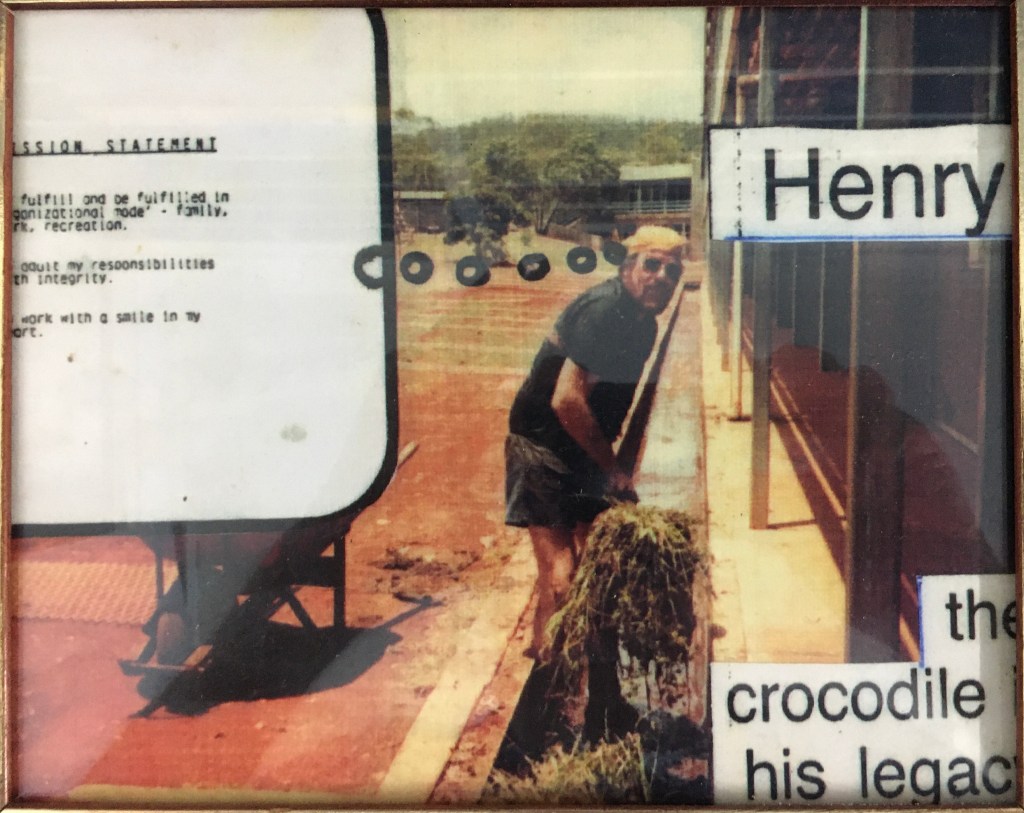


 EDUCATION, A LIFE FORCE