HOLIDAY DISHES

Do you or your family make any special dishes for the holidays?

I would have to become nostalgic and reflective in order to remember back to the time when special additions were a part of notable occasions. These days with our children and grandchildren living at the distance around Australia, each day tends to get treated in more or less the same way when it comes to special foods.

On the other side of the coin, if there is something that takes our fancy, then will get it straight away and not wait for special occasions.

I’ve tried to reflect and take my memory back over time to special dishes associated with Christmas.

My first memory takes me right back to my childhood in the 1940s and 1950s. On Christmas day my mother would make plum pudding, with plum pudding sauce and into the cake before it was cooked were placed coins of different values. There were threepences, sixpences, shillings, two shillings and occasionally a half crown – equal to two shillings and sixpence.

We had to be careful when eating the cake lest we swallowed a coin or two. These days such a presentation would be outlawed and occupational health and safety standards and probably because of modern day Hygenic requirements. But that was then!

Fast forward to a time when we went overseas with our children, we had Christmas dinner in Georgetown the capital of Penang in Malaysia.

On Christmas Day we went to the Tunku Abdul Razak Centre in downtown Georgetown to a restaurant for dinner. I can’t really remember the mail itself but do you recall the “Special“ nature of an extra we ordered. That extra was a bottle of wine – which in Malaysia was somewhat of a rarity. Wine was also very very expensive but we thought we treat ourselves because after all it was Christmas day.

That bottle of wine centralised the attention of all the wait people (In those days, waiters and waitresses) who hovered around our table more or less at every opportunity.

It was to watch us drinking the wine, with glasses never allowed to empty before being topped up. And we did leave a quarter in the bottle for them to share. Happy Christmases should be shared.

ALWAYS BE AWARE OF CHILDREN

It’s important the teachers understand duty of care responsibilities. Teachers have to be aware of and able to account for children at all times. Inside and outside classrooms, this is a number one priority.

If it is necessary to leave the classroom for urgent reasons, ask a nearby teacher to keep an eye on the class while you are out of the room. It may not always be possible to have a colleague fill this role. That being the case, having someone from the school office come up and keep an eye on children for a brief period of time will cover this responsibility. If a support staff member (not a teacher but a person who works with teachers for the betterment of children) is available, that will suffice.

Duty of care is a common sense issue. If the accident, injury or class mishap occurs and no teacher is present, the onus can come back on the teacher.

One aspect of care that can be easily overlooked is yard duty. Those rostered on our “loco parentis” responsible in duty of care terms for the whole of their rostered time. Teachers cannot be late out or leave their duty early. A person who is rostered for duty “first” recess or lunch, needs to wait until the “second” person on the roster is out and about.

Accident or injury that occurs in the duty area but without the teacher being on duty can leave teachers liable for negligence and worse.

If unsure about duty arrangements or responsibilities, checking with school leadership teams or classroom teachers have been there for a good while is highly advisable.

This is a priority issue, one that cannot be left to chance.

TEACHERS ARE EXAMPLE SETTERS

As teachers, we are deemed to be professionals, charged with setting a good example to children we teach. That example also impacts upon the wider school community and is often seen by the public at large outside the school gate.

This doesn’t mean that teachers have to be pariahs, persons not able to have fun in life. It does however ask that we take into account the impact of our behaviour on those who observe what we are doing.

Within the school context student behaviour, decorum, and attitudes toward work and learning are part of our developmental brief. Teachers who model the behaviour they suggest, earn the respect of students.

If teachers are seen to act in a way that is out of kilter with behaviour suggested to and expected of students, respect held for them will quickly evaporate. Whether we like it or not, we are visible identities within our communities, people often looked up to by students both young and old.

This places us under a significant onus of responsibility. Even in retirement, people remember what educators stood for and how they lived out their professional and social lives.

It may seem unfair that expectations held for us as teachers set us somewhat aside from others in the community. That simply goes to show the power of influence we have over others. Children frequently discuss with parents the fact that things are “right” or “wrong”, because that teacher says so! Maybe we need to consider in a positive way the onus of responsibility we bear to young people.

Rather than considering this to be a burden or a drag, we should value the respect invested in us as contributors to the development of young lives.

THE MAN WHO NEVER SLEEPS

If you didn’t need sleep, what would you do with all the extra time?

In the olden days when I was younger, my favourite comic hero was “The Phantom”. The phantom knocked himself up, fighting crime and doing good.

I remember one issue of the comic titled “The Man Who Never Sleeps“. Phantom found this person, who unfortunately had an evil character bent, To be quite a challenge because of the constancy with which he perpetrated negativity through his criminal actions.

Fortunately, with my identified persuasion and hard work, phantom managed to overcome the negativity of the man who could not sleep. He had no eyelids, but made sleeping difficult.

If I were a person who needed no sleep, I would be about doing good work and volunteering for organisations of both the sporting and academic nature and would devote myself full-time to those ventures. I would drive people needing medical support or night visits to emergency departments or chemists taking them to and from those appointments.

I would spend my time where I needed no sleep in trying to help others and being a community-minded person.

IS AUSTRALIAN EDUCATION IN THE DOLDRUMS?

Jason Clare, Australia’s Minister for Education, seems to have a burning ambition to contribute to the enhancement and development of education’s offerings to Australian students. His enthusiasm is commendable and his acceptance of advice from Tanya Pliberseck (along with her willingness to offer that support) is commendable.

I hope that within the educational domain, Mr Clare is able to discern the wood from the trees. There has been far too much experimentation and allowance of teaching to be subjugated to the whims of researchers whose experimentation turns students into educational guinea pigs.

Good, sound holistic education, as declared essential in the preamble of the Melbourne Declaration on Education in 2008 needs to be revisited. The declaration stated education should take account of the academic, social, emotional and moral/spiritual needs of students. Sadly, that ambition now seems to have become lost in history.

VOCATIONAL TRAINING IS OFTEN DISCOUNTED

In recent times, a realisation seems to be growing among those who are involved with educational decision-making and the setting of priorities for students. It appears to be dawning upon us all that there is more to education than university degrees and occupations based solely upon pure academics. That should be reassuring for those who are completing secondary school and are concerned that high-level academic qualifications are a prerequisite to every occupation in life.

So much is made of university qualifications, including bachelor’s and master’s degrees and PhDs, that little else seems to count. That is far from the case. There is a myriad of excellent occupational opportunities available, requiring practical skill sets outside the scope of degree qualifications. The pity is that more is not made known about TAFE, VET and trade options when young people are considering career options. The thrust seems toward the need for upcoming tertiary-age students only to consider fully academically focused degree courses.

Tim Pitman and Gavin Moodie, writing for ‘The Conversation’ (Supporting part-time and online learners is the key to reducing university drop-out rates), revealed that the first-year university attrition average for Australia across all universities is under 15%. For the NT, that attrition rate is just above 26%. This means that one in very four students has cause to re-think tertiary studies.

There are many reasons for study discontinuity, and one might well be a realisation that full-blown degree study is not the best option. Re-thinking career options are part of this double take. It might also be that study costs and the burden of an upcoming HECS debt weigh on the student’s conscience. Withdrawal from courses by March 31 in the year of enrolment means that HECS debts are avoided.

The need for a re-think can leave students in a state of insecurity about what to do occupationally.

An option that might be considered is promoting to students the array of work opportunities available through trades training and related areas of occupational study. Our worldis desperately short of qualified people. Part of this is a misplaced belief that trades and apprentice-based training leads to second-class jobs. That is far from the case. Thriving communities need occupational balance, and this is an area of distinct shortfall in many places on the globe.

MY ENDLESS WORRY

24/7/365

I awake each day, fearful of the fact that we are edging ever closer to the inevitable invasion of Taiwan by China. A column in ‘The Australian’ today (Xi’s troops ready for Taiwan invasion) added to my foreboding. The start of this war cannot be far over the horizon and because of alliances, will quickly engulf the whole of SE Asia and the Pacific.

With Darwin being where Darwin is, and with the ever-upgrading of defence training and facilities, I stand in the yard, look at our home, look at THE surrounding neighbourhood, and wonder when (not ‘if’) it will be reduced to smouldering rubble by a missile or barrages of missiles directed at our city.

We are reasonably well prepared and ‘aware’ of cyclones. However, Darwin, Palmerston, Nhulunbuy (where fuel storage is anticipated) and Alice Springs (with Pine Gap being front and centre of Chinese interest) and other towns and communities will need bomb shelters and missile refuges. Our state of readiness for protection from environmental desecration and shattered infrastructure occsioned by war, is zero out of ten.

I feel war that will envelop our region is imminent, and we are far from ready.

The Bombing of Darwin in 1942 will be minuscule compared to the damage that will be wreaked on Darwin in the 2020s – or 2030s if the wait lasts that long.

I contemplate the years ahead with apprehension and worry for my family and indeed for the whole of our Territory and Australian community. And indeed the world, already engulfed by increasing warfare.

THREE THINGS I DETEST

Name your top three pet peeves.

There are many positives and many negatives that one experiences in traversing life’s pathway.

1 Promotion not based on merit.

In 1978, on the day that Prince Charles and Princess Diana were married in London, we had a very prominent politician come to our house at Angurugu on Groote Eylandt. We knew him quite well.

He had just been on a visit to the United States of America. He came back both being bemused and concerned by the fact that in America, people were being promoted into high-level positions and prominent occupations based on race, ethnicity specifics, gender, and so on. That night, he expressed the hope that Australia would never be a place where people were promoted or recognised for positional occupations other than the merit principle of selection.

I pondered deeply upon what he said and to this day, believe that what he said was right. People have to be worthy of the positions they occupy. Recognition based on merit is an accurate indicator of readiness or otherwise.

Fast forward to 2023 and so many positions these days are being filled by people because of race, ethnicity, belief specifics, and so on. The Merit Principal no longer applies. In many instances people selected for positions are not expected to perform at a superior level, meaning that standards of expectation are varied and not constant.

2 The awarding of honorary doctorates.

I have worked at the Charles Darwin University as a lecturer and in other capacities. I have also completed several tertiary degrees to postgraduate and masters level. I contemplated doctoral studies and stepped away because I wanted to devote myself fully to my school occupation as a principal. Personal study would have gotten in the way of my performanceAnd probably diluted my school leadership.

I am aware and no many students who have worked hard, with dedication and with personal sacrifice to earn their doctors in various disciplines. They have all left the university owing substantial higher education contribution debt HECS). This can take many years to pay off but they do have a qualification of merit and calibre.

What irks me is the fact that universities engaging in doctoral level courses, then turn around and confer Honorary Doctrines on all sorts of people for all sorts of things. And to add insult to injury, Honorary Doctorate holders often asked to speak at graduation ceremonies – making it look like that they have and a genuine qualification when indeed it is no more than hollow and pyrrhic.

To me, doctorates so conferred diminish the status of doctoral qualifications that have been earned through genuine study and long-term commitment. I cannot but feel that many of these people who have quality genuine doctorates must feel somewhat hollowed out, when they observe the triviality of an Honorary Doctorate conferee deemed to be a very important person, giving the valedictory address at graduations. That in my opinion belittles those who have actually earned their degrees.

If I was to ever be offered an honorary doctorate and that is not likely, I would decline on the grounds I’ve outlined. I would not accept something that belittles the work of genuine students.

3 The abolition of “fail”.

The third thing I find to be absolutely abhorrent is the notion of the word “fail” no longer being a part of a evaluative vernacular. As a student I tried very hard to avoid failing any area of study and development. As an educator I also worked hard with those in my schools, both students and teachers, to ensure that they were successful and did not have to countenance failure in their studies or work.

However, to take away the notion of failing reduces everybody to some sort of a singular level of degree of success. Not everybody does succeed and they should not be conferred that title unless it has been genuinely earned.

With the passing of time, to suggest somebody might fail has become a “no, no“. That takes the onus of accountability away from people.

After retiring, I spent a number of years working at our university in various capacities as a lecturer, tutor and marker. There were occasions within these capacities when it was necessary to fail students because quite simply they were not up to speed. A great deal of their minimal performance had to do with effort put in to succeeding.

What really upset me when I did fail students, was being overridden by those in charge of the education faculty (I was working with trainee teachers), who seemingly had to ensure that students did not fail..

It is no wonder that way we are graduating a lot of mediocrity into various of the key professions – and it is all thanks to this attitude of everybody succeeding.

CONNAIR THE VITAL NT OUTBACK LINK

Once a week there was a round-robin flight from Darwin to Darwin flown by Connair that included every port on the Arnhem circuit. Included in this once-weekly flight were Borroloola and Numbulwar. The route was from Borroloola to Numbulwar.

There was some capital work needing to be done at Numbulwar. We were expecting two tradesmen on that flight. The plane arrived, but not the tradesmen.

A follow-up telegram revealed that the two men had gotten off the plane at Borroloola, thinking Borroloola was Numbulwar. They did not discover their mistake until the plane had left.

The following week, the tradesmen arrived in Numbulwar. Seemingly they found the fishing in the intervening week to be both relaxing and rewarding!! How they justified that to the boss of the company, I am not sure.

When out in communities one could never be sure if the plane was going to be on time or whether it was going to be delayed. The one thing you could generally be sure about was it if the plane was due to arrive on a particular day, it would arrive on that day. Occasionally there was a blip in that regard but not too frequently.

An issue at times was the worry people had if they were using Connair to get to Darwin, Katherine, Groote Eylandt or Nhulunbuy to connect with another plane. For the most part, however, things did work pretty reasonably.

Connair was a vital lifeline for us during years of poor (if any) outback road connections and during years preceding telephone and internet connections that these days keep people linked.

CONNAIR – FLYING IN REMOTE AUSTRALIA IN THE 1970s

Connellan Airways (Connair) was all about outback communications, transport and indeed lifeblood. We flew Connair from 1975 until going to Groote (and Ansett) from the beginning of 1979.

Who can ever forget flying in DC3’s and four engine Herons en route to and from Darwin and outback posts in Arnhemland. There was pilot Washington and chief air hostess Dorothy and many others who contributed to maintaining the lifeblood that was about ensuring regular passenger routes were serviced year around.

One of my memories (and I have it on film) was that of Numbulwar students being loaded for a flight to Groote Eylandt by DC3 to represent our community at the Gulf School Sports in 1976.

Then there was a teacher who turned up to catch Connair at the end of the school holidays. She left a luggage locked in at the Young Women’s Christian Association Darwin and couldn’t get it out before plane time. No matter, she had a wire door for the house in which she lived that she wanted to take back to Numbulwar. There ensued are quite animated conversation between the check-in staff and the teacher because she wasn’t allowed to take the wire door on the plane. It was a Heron flying that day and the small plane would not accomodate the wire door; it would have to await the next time a DC3 was flying the route.

Then there was the time a Heron en route around Arnhemland airstrips tipped up on its tail at Roper River (Ngukurr). That was due to a heavy freight load with the plane tipping because of weight transference as passengers alighted. The plane was righted, a couple of fuselage cracks taped and the plane passengers carefully reboarded before the plane took off.

Connair is long gone, but memories are forever and live on.

FIE TO THE ‘INFLUENCERS’

Who are your current most favorite people?

My favourite people!

There is a certain quality of anathema about this question from where I sit. So often, people think of their favourite people as those who, in one way or another, are “Influencers”. Influencers are people who are used or upheld in some way as social bastions, who teach their wares loudly and seek to influence others to do what they do. Metaphorically, these people are shepherds intent on herding sheep in a particular direction, all aimed at feeding the ego of the influencer.

I think of Influencers in a more negative context. They are like the Pied Piper leading the rats of Hamlin to the River Wezer, to drown in their confusion and uncertainties.

It worries me greatly that unknown “Influencers” are able to so drastically and often negatively, to impact upon people who follow them like Blind Freddie. They copy them, and hang onto their every word.

To date, these sorts of influencers have played no part in my life and I hope that they never ever will. I also hope that all members of my family will follow in the same mindset – that they own the outcomes of their lives and do not allow their thinking to be shaped by what other people do.

I have a lot of respect for many people and no respect for many more – that because of the pathways they have taken through life.

Without a shadow of a doubt my favourite people are members of my family, with children and grandchildren helping to enrich the live of this old man.

There Comes a Time

There comes a time,

When it is time to cast,

Aside the trappings and the memorabilia,

The cards of appreciation,

The letters of thanks,

The pictures of people taken together,

Accumulated down the occupational years,

Which are part of a redundant history,

A period no longer relevant,

When the only thing left to gather on heaping files,

And settle on drawers full of history,

Is dust.

Times have now passed,

When that all burned brightly,

On occupational front burners,

When retirement was an experience and deep reflection,

On the years that had gone before,

But decades on,

With memories of what was, growing fainter,

It can be time to quit the accumulation,

To consign it to the tip of landfill waste,

To go back over time and to forever live on past memories,

Means that going forward as one should,

Cannot happen.

Memories of what went before,

Notwithstanding material reminders,

Burn less and less with the passing of years,

There are flashes of recall, revisitation to events,

But the mind and its internal reflections,

Move on with age, leaving behind what was,

Sometimes offering vivid but brief recall,

More often diffusing the sharpness of memories,

Dulled by age and tarnished by distance,

From happenings of the past,

Now history

HENRY THE URBAN FARMER

I am an urban farmer.

I am going share on LinkedIn and add to my blog, my “togetherness blog“ a little series about one of my occupations at the moment.

In retirement, one of the things I have discovered about flash terminology is the term “Urban Farmer“. I did not identify quickly as being an urban farimer, but the term has a certain warmth and it sticks.

As an urban farmer who has an 800 square block with a backyard and some fence lines, I face both challenges and have the opportunity to celebrate. I’m going to share a little over the next period of time about both.

Some of my posts will talk about the frustrations experienced as an urban farmer. Others will talk about the things I’ve been able to do and tell about the produce I have been able to share.

There will be some giveaways that are offered and all my giveaways are free to anyone who might like to use them. I’m not an urban farmer for profit but rather for the fun and for the frustration that it offers.

Urban farming is not a bad occupation for a very old man.

One of my pawpaw trees.

CATS FOREVER

What are your favorite animals?

Without doubt, cats are my favourite animals. Over the years while our children were growing up we had a number of cats, not altogether but consecutively.

These days without children gone we know longer have cats but I retain fond memories of felines.

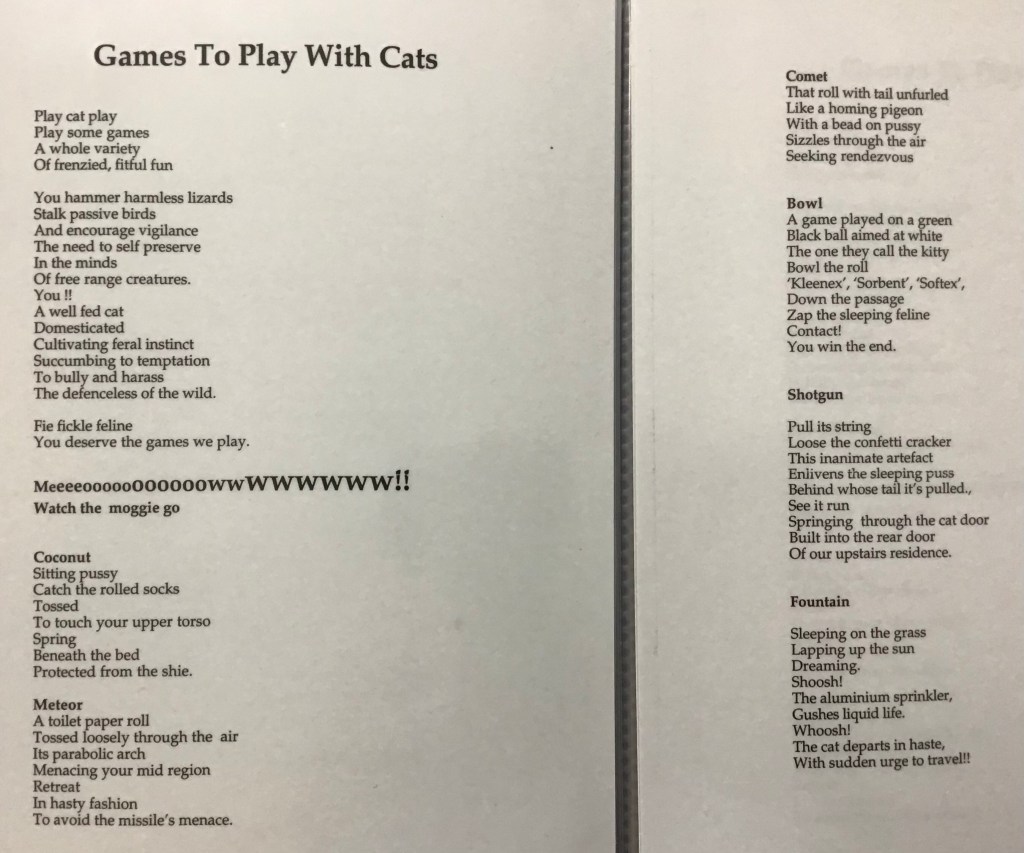
I wrote a little piece called “Games to Play with Cats”.

Allow me to share.

Cats can be so much fun.

SCHOOL PRINCIPALS – NEGLECT NOT STUDENTS

I was a regular in classrooms and programmed teaching until the last three years of my principalship years. It then became more incidental but was maintained. Principals need to know their students and the best way to achieve that is by teaching them. I most certainly read all reports to parents written by teachers and wrote my own comments to the child on each report. As a principal I found children valued knowing I valued them. Part of this was possible because I engaged my leadership group fulsomely in the business of school operations. Sharing in this way enabled me to share time with children.
Things CAN become busy from an adminstrative viewpoint but we neglect establishing and maintaining meaningful connnections with students at our peril.

ALWAYS REMEMBER THE PRIME FOCUS OF YOUR ROLE

THE IDES OF ENVIRONMENT

Beach or mountains? Which do you prefer? Why?

I’m sure that any poll of a small or large sample of people would determine just about a 50-50 split on the preferences they would have for either the sea or the mountains.

Both environments have their beauty, their challenges, their tranquillity and their dangers.

I am a person who has no swimming prowess. My first swimming lesson was at the age of 14 and a pool under the supervision of a director who did not know how awful a 14-year-old felt to be practising the basics of aquatic performance along with six and seven-year-olds. Her telling me that I was awful at swimming was both a confirmation and a humiliation.

I leapt out of the pool, swore loudly at her, took off and never looked back when it came to swimming, the sea, watersports or anything else that had the beachfront.

My preference is definitely for hills and mountains.

On our family farm as I was growing up, was a great big hill or someone saying to me. It’s that at no great distance behind our house. Relatively speaking, the hill was quite tall. It was rough and rugged but laced with trees. It had several grassy knolls and also a slope that was well grassed that one could slide down during the winter months when the grass was green.

As a young child and a person merging into my teenage years, I spent a great deal of time, many many hours in fact, up that hill. Sometimes it was roving, sometimes sitting and contemplating, and on other occasions because of its elevation just taking in about a 280 or 90° scope of the world from where I was perched. I could see many aspects of our farm, the road beyond our boundary, neighbouring farms and so on.

The beauty and the majesty of hills and mountains do it for me.

I am the hills and mountains man.

THE TOP THREE FEEDS

What are your family’s top 3 favorite meals?

These days, with our children now with children of their own, my favourite meals are those preferred by my wife and myself.

We way simply and we’ll

Favourite meals:

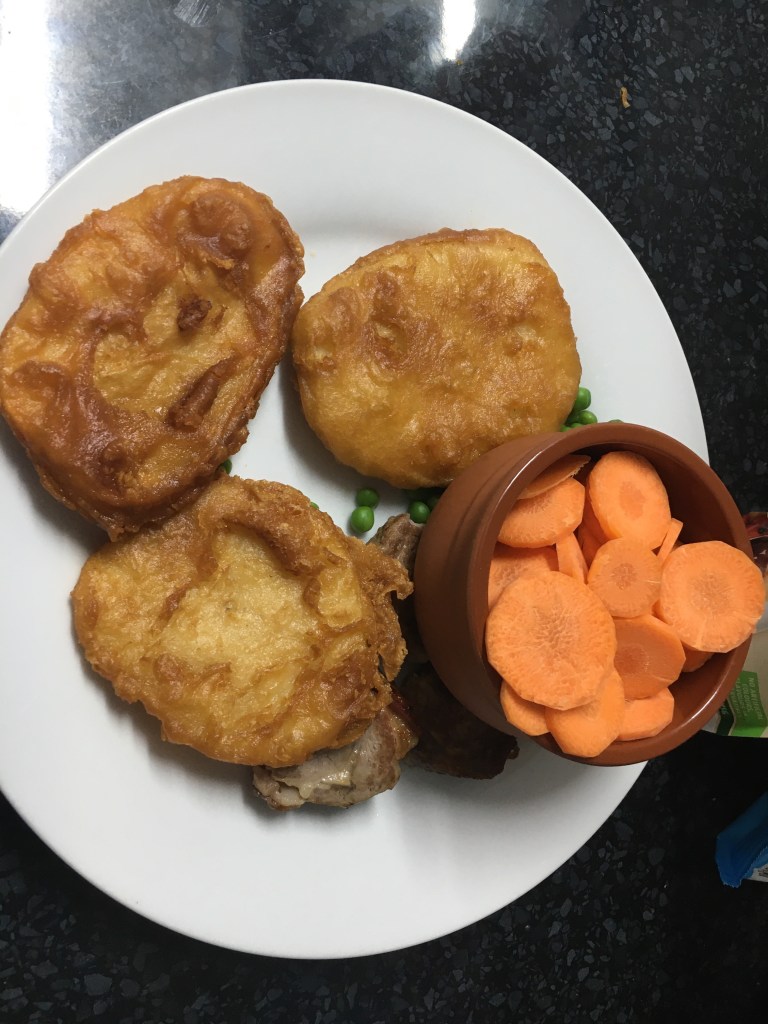
Crumbed salmon and potato cakes with vegetables and sauces.

Scotch Fillet steak is well done with traditional gravy and baked potato and pumpkin.

Bacon and fried eggs on hash browns with vegetables.

An essential side dish is a nice helping of raw carrots.

Good glorious food.

A yummy meal.

ALLEGATIONS AGAINST TEACHERS – GUILTY UNTIL PROVEN INNOCENT.

AUSTRALIA – BUT IT CAN HAPPEN ANYWHERE


The series of child abuse inquiries happening around our nation
at the moment are lifting the issue to the forefront of public awareness. Without doubt, some of the allegations levelled against teachers and others are as a result of the ‘stimulation’ generated by these inquiries.
Sins against children need to be visited and perpetrators punished. However, the reputations of those who are completely innocent of any wrongdoing need to be protected. Current actions need to be such that educators protect and guard against allegations at some future time.
Teaching is a profession that requires increasing vigilance in human relations by teachers, school leaders and principals. In recent years, the issue of child abuse has gained traction. Lots of abuse issues, most of an historical nature, are being raised.


Various Royal Commissions and inquiries have highlighted the matter. And, without doubt, many of the allegations being brought against alleged perpetrators of past abuse, especially sexual abuse, are justi ed. They need to be followed through. However, there are instances when allegations are made with mischievous and malevolent intent. They hang those falsely accused out to dry. Accusations may be levelled against people many years after the alleged abuse occurred.


A June 2015 program aired on ABC TV’s Australian Story illustrates this point. A female teacher in Melbourne, Josephine Greensill, was accused of sexually interfering with
two boys around 30 years ago. She was dragged through a messy court process, including being accused, found guilty, and jailed. The case was subsequently appealed and another grimy court process ensued. At the end, she was found not guilty of these crimes and acquitted. Her career, of course was absolutely ruined.
The protagonists who had brought the case against her, two men in their early 30s (they had been boys of seven or eight at the time referred to in the allegation), have not to this point in time been charged for making false allegations. The story’s inference is that they have simply shrugged it o . Signi cantly, the Victorian Department of Education, teachers’ union and registration authority appear to have o ered no visible support to the teacher. These cases are not rare.
Allegations made against teachers presume guilt until the teacher proves his or her innocence.
I have been told that it is very unlikely prosecution will be brought against false complainants. The only recourse available to someone falsely accused and acquitted, is to seek redress through the civil court. That is costly, messy and continues the hurt.
Protective practices
It is wise for teachers to keep a clear, detailed and time noted record of instances when they have been connected with students in counselling and development. Nothing beats a detailed diary. When moving schools, retiring or otherwise moving on, take these records with you (I would suggest a diary). Maintain their accessibility. Keeping this data in USB or electronic form is an option.


If allegations are then brought, there is a clear record to show the date, time, place, and nature of the counselling. Often details brought by the complainant are fairly vague and being able to refute them with accurate data is of inestimable value.


There are one or two other points to keep in mind.


If counselling or working one-on-one with children, ensure that it is in a space that has visibility from the outside. A room with a see-through window, a common area within, a learning module, or a location within a linear classroom close to an open door are options.


I believe it paramount for teachers to report matters of counselling and discipline to a senior or to the principal along with keeping a written record.


Those who have false accusations brought against them, regardless of outcomes, are never the same people again. I understand they look at life di erently. Their outlook becomes tinged with suspicion. They wonder if they can never be part of trustful relationships again.
This issue is one of growing consequence and something all educators need to take on board and carefully consider. Don’t live in fear but never think it can’t happen to you – because it can.

TEMPTING THE VIRUS ON A SUNNY DAY

Naughty, naughty beaches,

For tempting all the breachers,

They frolicked, frisked and gambolled,

On the sands they rambled ,

Hanging close together,

In sunshine and warm weather,

I hope and hope and pray,

The virus kept away,

But odds on that it didn’t,

And they’ll regret their foolish day.

A few days later, a rash of cases in Victoria and NSW.

HERE WE GO AGAIN

(The saga of bilingual education)

Please, please,

Whatever you do,

Do NOT think,

Bilingualism is new.

It has come and it’s gone,

For six decades or more,

From the highest of ceilings,

To flat on the floor.

They say ‘yes’ then say ‘no’,

It starts, stops and then’s all go,

Green light then red, it makes you so dizzy,

Does the concept have substance,

Or is it all fizzy?

They’ve argued for decades,

For scores of years,

Nothing is settled,

The subject brings tears,

Of euphoria and despair,

Of love and then hate,

It’s still all in the air.

What is its fate?

POH

HENRY MEETS WILLIAM THE CONQUEROR

If you could meet a historical figure, who would it be and why?

History Re-visited

There’s so much that’s fascinating about history and about people who have made up what has gone before but I find it very hard indeed to choose somebody I would like to meet – there are so many.

If it comes down to one single person I would very much like to meet William the Conqueror and talk with him about what he left, why he decided to invade the United Kingdom, what his plans were, if in his opinion he succeeded in his commission or not, and what he would do differently if he were to revisit the past in these modern times.

I would like to talk to him about strategies, battle plans, weapons, and how he found the people of England reacted to him coming from abroad to civilise and conquer.

There are many people from the past I would like to meet but there are certain parallels between what happened when the country of England was invaded.. I would find it fascinating indeed to have a conversation with William the Conqueror.

TRAVEL IS BACK

(A caution … or not)

Travel is back,

But if you choose to roam,

You may catch Covid,

And never come home.

Travel is back,

There’s war overseas,

Power’s shot into pieces,

To death you might freeze.

Travel is back,

Fares are sky high,

You’ll find less and less,

Your money can buy.

Travel is back,

Know when you return,

From overseas jaunts,

Debt could sear and burn.

But hold out your hand,

Luck’s on your side,

My tax I know,

Will your pension provide.

Ants be damned one and all,

To Government give mun’

Handballed to grasshoppers,

To keep them in the sun.

Having it all

What is

Having it all

Accumulating assets,

Wanting, wanting,

Money,

Starting with cents,

Happy with a little,

But not for long,

Wanting,

Always wanting,

More and more and more,

Cents to dollars,

More and more and more,

Until the money bin is as full,

As Scrooge McDuck’s silo,

Build another, another, another,

But never ever is there enough,

The more breeds unhappiness,

Misery and despair ever enveloping,

The heart, the spirit,

Then the mind.

STOP,

Cease the downhill slide,

Immense wealth,

But nothing in the soul,

But emptiness.

REVERSE,

The trend,

Deprioritise the money,

Deprioritise your inner man,

Peace of mind,

Inward satisfaction,

Contentment with my lot.

THAT,

Is,

Having it all,

For every day,

Of life.

INSTINCTIVELY WARY – BE SURE, NOT SORRY

Do you trust your instincts?

INSTINCTIVELY WARY

This topic reminds me of the oft-quoted and frequently ignored adage “Fools rush in where angels fear to tread”.

I am also reminded of the paper presented to a Northern Territory leaders conference in 1992 by Professor Frederik Wirt. His paper “Will The Centre Hold“ made a big impact on my thinking. Wirt talked about the fact that we are so taken by the need to progress, expand, enlarge and become magnificent, that we overlook consolidation and building on organisational and indeed personal foundations.

I am wary and at times reluctant to move too soon in a particular change direction. I want proof that any move toward change will be based on careful pre-consideration. That idiom is part of my personal approach.

To this end, I don’t trust my instincts to lead me in a particular direction without careful consideration of the pros and cons likely to come into play.

If this means making haste slowly, so be it. Decisions leading to foolish outcomes need to be avoided.

UNDER SURVELLIANCE

It’s so discouraging to know,

I am surveyed where ere I go,

Tracked here and followed there,

Seen by an eye just everywhere.

I cannot hide,

Forever seen,

24/7,

The tracking’s keen.

Won’t write it down,

Nor scream and shout,

Worry not,

As I go out.

Where ‘ere we go,

Say or do,

It shall be seen,

For me and you.

Can’t keep our moves,

From being shared,

‘Anon’ is stripped,

Our spirit snared.

PORN

Filth,

Vile depiction,

Of the body,

That should not be,

Displayed for visual slathering,

That appeals to the banal nature,

Of man or womankind in a way,

Leading to lustful thinking and impure reactions.

This unnatural indulgence

Is a habit best not entertained,

For it is unholy,

Despoiling of respect for human physicality.

7 @ 31, 4@30, 1@ 28, 28, 28 then 29

What’s your favorite month of the year? Why?

I think of the rhyme about days in our months.

“Thirty days hath September,

April, June and November,

Thirty-one have all the rest,

Excepting,

February alone,

Which clear,

Has but twenty-eight days,

And twenty-nine days ,

Each leap year.” (Anon)

Without a shadow of a doubt, February is my favourite month of the year. It is the shortest, it has a variable number of days – and it is my birthday month.

Thanks to parental circumstances, I was born in the second month of the year and coincidentally in the second month of the beginning of what is now known as the “era of the “boomers.

I suppose there are pluses and minuses about being a very old Boomer, but the one redeeming factor is that I was born in the second month of the first year beyond the end of the Second World War.

I would be very dishonest indeed if not confessing to the fact that one of the points endearing me to both the date of my birth and the month there all is the fact that when Australia locked onto the Vietnam war with our then prime minister Harold Holt declaring “all the way with LBJ“, my birthdate was not drawn as one of those Who was committed to Vietnam.

(Not to forget that the Vietnam War, from an Australian viewpoint of troop commitment, was simply the government of the day crawling up the United States has asked.)

So all in all and considering many factors from a long time ago and up to the present day, I’m rather glad to call February my favourite month of the year.

FOREVER CONFINED

Boof was a bow bow

He wandered at will

A fence never stopped him

He roamed until

One day the dog catcher

Happened his way

“It’s into the pound

And there you will stay.”

Owner got notice from Council

And frowned a deep frown

“Redeem Boof for moola

Or he’ll be put down”

No money they had

Though they looked near and far

They had but one option

To sell their car.

The money they got

Freed Boof from the pound

“But we now have no car

You miserable hound

You’re confined to the yard

The holes we will fix

If you try getting out

We’ll hit you with sticks.”

Locked in the yard

Boof pined and got thin

You could count his ribs

Right under his skin

He whimpered and whined

Each passing day

His zest fast fading

He’s wasting away.

There is no redemption

His freedom has gone

No walks for this bow wow

So often alone

The yard is his prison

The fence doesn’t fail

Is where he resides

His home or his jail

MY PLACE OF HAPPY MEMORIES

What is your favorite place to go in your city?

There is no place like home and it is at home that I am the happiest and most relaxed. We have lived in this house since 1987 and 36 years later, our house is our home. Our children are always welcome and our grandchildren are at home whenever they come to visit.

Our house is ours and sits comfortably on an 800-square-metre block of land. Over time, we have renovated, modified and upgraded our home and its surroundings.

They say that home is where the heart is, and my heart is certainly in my home, our house and our family.

Home is where the heart is.

ON CHANGING MORES (pron. ‘morays’)

The old man stops and then he says,

“The world has changed in many ways,

Some change is good, some change bad,

May make us feel good or awfully

Suffice to say we will move on,

Be our stay on earth short or long,

Soon the old ones will be dead,

Today’s young folk our ‘leading head’.

What comes next I do not know,

But we will reap the things we sow,

Born, we grow, get old and on,

Until the day we all are gone.

WE ARE THE LUCKY PEOPLE or WITH TONGUE IN CHEEK

How lucky we are,

How lucky we are,

Blessed by good government,

How lucky we are.

People hear about Aus,

From near and from far,

They envy our government,

How lucky we are.

They seek to come to this land,

From places afar,

Because of good government,

How lucky we are.

Australia’s so special,

Little goes wrong,

Because of good government,

In our hearts a song,

Uplifted by Canberra,

Through trouble and strife,

They sort all our ills,

Turn on the good life.

Without our good governance,

This country would fall,

Preserve our good government,

For it helps us all.

How lucky we are,

How lucky we are,

In the arms of good government,

How lucky we are.

FIRST IMPRESSIONS ARE LASTING IMPRESSIONS

What’s the first impression you want to give people?

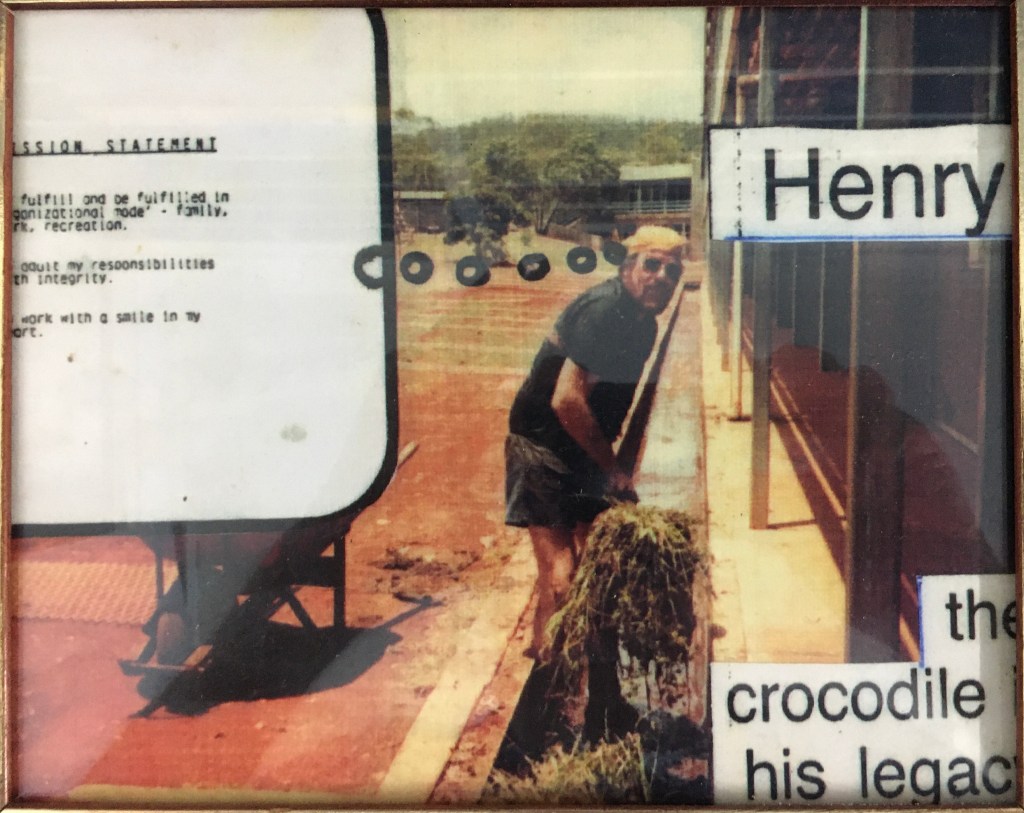
in short, I want people to know that my mission statement is a mirror of my life, that it is lived, practised and is not an unloved text of empty rhetoric. I want people to know it is a a lived and practised focus.

“ To fulfil and be fulfilled in organisational mode, family, work and recreation.

To acquit my responsibilities with integrity.

To live with a smile in my heart.”

RIPENING FRUIT

When fruit gets ripe I am glad,

But then it spoils and I get sad,

When it ripens eat it quick,

Fermenting fruit will make you sick.

It needs to ripen for green fruit,

If eaten will your stomach boot,

You may gag and feel quite yik,

T’will be that way until you sick.

Once fruit is ripe then don’t delay,

Eat it up, ’twill fuel your day,

As my Granny once told me,

Fructose gives the best of energy.

BALANCE

It’s only good

It’s only fair

If domestic-ally,

Men do their share.

Don’t make excuse,

And do not fudge,

Be a man,

Share the drudge.

Sweep the floors,

Do the dishes,

Don’t leave it all,

To the missus.

Share everything,

Don’t be a sod,

Be equal,

In the eyes of God.

Domestic bliss,

Will come to you,

If you each share,

In all you do.

BUKU BUKU, BANYUK BUKU BUKU

What book are you reading right now?

This translates from Bahasa Indonesian as “books, books, lots and lots of books”.

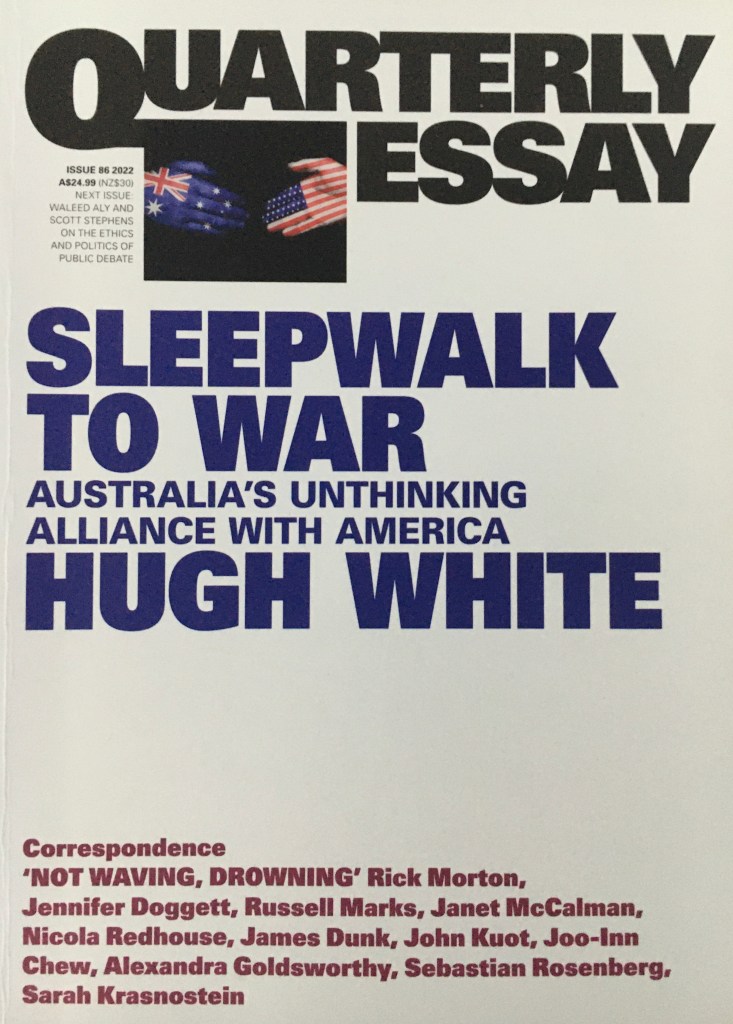
Over the years, I have read many books. But there is one book a Quarterly Essay I have read and keep reading over and over in my mind. It raises a constant concern with me and I am caused to wonder HOW SECURE IS DARWIN?

That essay, written by Professor High Wright is titled “Sleepwalk to War”.

There was a headline in the online edition of ‘The Weekend Australian ’ for October 28 and 29. It read, “Northern exposure leaves residents searching for safety.” It is a comment on those left in Northern Gaza and what is unfolding as Israel launches a land blitz into the area.

In time – and possibly in the not-too-distant future – northern exposure will leave residents of Darwin, Palmerston and the Top End of the NT searching for safety.

I believe we are in increasingly uncertain times. As Professor Hugh White suggests, we could be ‘Sleepwalking to War’. And if war comes, we, as Australia’s northernmost city with its ever-increasing focus on military personnel and facilities build-up, will be the first port of call in the event of hostilities.

It happened in 1942. It could happen again.

White’s writing raises constant food for thought.

Be aware. Be VERY aware.

THE DAYS, THE WEEKS SPEED BY

The older I get,

The faster the week goes.

Days merge into each other.

They whizz by in whirlpool style,

Sucking me from one day to the next,

With dizzying speed.

In my days of ages past,

Things moved slowly.

My career beginnings moved ponderously

Magnified by isolation.

But the years have rolled,

Now I look back on a time that has gone

From morning, to noon to late in the day.

I know not how long,

Will be the period of my requiem,

My reflection.

I reflect on challenges

And opportunities that came my way.

Hopefully

I will be remembered

For good.

So the whirlpool

Of my latter years

Spins ever faster.

From dust I came

And to dust

I will return.

What endures

Will be the memories

Of my life,

Left for others.

May they be blessed remembrances

Longyearbyen – The Place where I would like to live

If you could live anywhere in the world, where would it be?

Where the extraordinary is ordinary

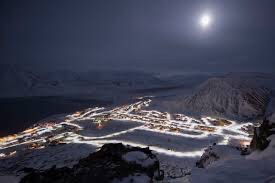
I am absolutely fascinated by Longyearbyen. “Longyearbyen, the administrative centre of Svalbard, is a tiny Norwegian metropolis with 2,400 residents from almost 53 different countries. The small Arctic town is inhabited by nature enthusiasts who live in close unity under tough climatic conditions with the High Arctic wilderness right on their doorstep. Longyearbyen is the gateway to the nature-based experiences and the starting point for most adventures in Svalbard. This Arctic wilderness starts virtually in the town centre and never ends!”

A resident of the town (online source) has written.

“Although the tiny metropolis may appear a bit “harsh” with a rough industrial exterior, Longyearbyen is renowned for its hospitality and high level of comfort. Most people enjoy themselves in Longyearbyen and quickly feel they belong here. Many are bitten by the “Arctic bug” and refuse to move southwards. “I only planned to be here for one year, but I’ve been here for many years now,” is a comment you hear virtually every day. Nevertheless, Longyearbyen is a place people come to work and not somewhere they can spend their entire lives. The average time people live in Svalbard is seven years, according to Statistics Norway.

The residents of Longyearbyen feel that we live completely normal everyday lives. However, those looking from the outside often perceive our everyday life as somewhat extraordinary. The polar bears are never far away, so it’s a necessity to carry weapons when we venture outside the settlement. The climate is harsh and unpredictable. Some people find the contrasts and changes between light and dark challenging, while others think it’s wonderful.

There are separate “roads” in the town centre for snowmobiles

• We only have one grocery store

• We are used to living next door to reindeer

• We still take off our shoes when we enter hotels and restaurants, a tradition that has arisen from the problem with coal dust in the old days.

• All the mining infrastructure is protected and remains as surreal monuments in and around the settlement.

• The streets in Longyearbyen have numbers instead of names.

• Longyearbyen has a university centre with 300 students, all of whom must learn to use firearms.

• Seeing whales swimming in the fjord from our lounge window is not an uncommon occurrence.”

I live in Darwin, NT, Australia. It is hot and humid, with two seasons,

“Wet” and “Dry”. More dry than wet and very, VERY rarely cold.

Longyearbyen is very appealing.

Source: “Longyearbyen- online information”.

Longyearbyen – the place that is calling me.

RUSH UPON US, DIZZY IDEAS

The upsides and downsides of innovation

Innovation, innovation

The new sport that will build our nation

Let all we’ve done up until now

Stand still, as new ideas we sow.

Steady state is droll and dull

Folks waste time who think and mull

Support new ways with shouts and cheers

Let new ways fall on our ears.

Theorists here and gurus there

We need bright sparks everywhere

The world is such a sad, sorry mess

That’s all down to slow progress.

Let us race and rip and tear

Spread new ideas just everywhere

Froth and bubble is what we need

Come, innovate with lightning speed.

If belly up it all goes

With innovation on the nose

We will rush on without a care

Just leave our mess for those back there.

DATA IS GOOD

Data, data, data.

We need it more and more,

Cauterise and analyse,

Children and students bore.

Go purely academic,

Trash holistic education,

Testing is all that counts,

Sell that to our nation.

Personal skills are for the birds,

They don’t boost statistics high,

Saturate with endless tests,

At least one each day is nigh.

Fun and laughter, happiness,

Dangle not learning carrots,

Motivation is a waste of time,

Teach children to be parrots

COOL AND KEPT

What’s the coolest thing you’ve ever found (and kept)?

Two artefacts were given to me and I have them to this day. Both were unexpected.

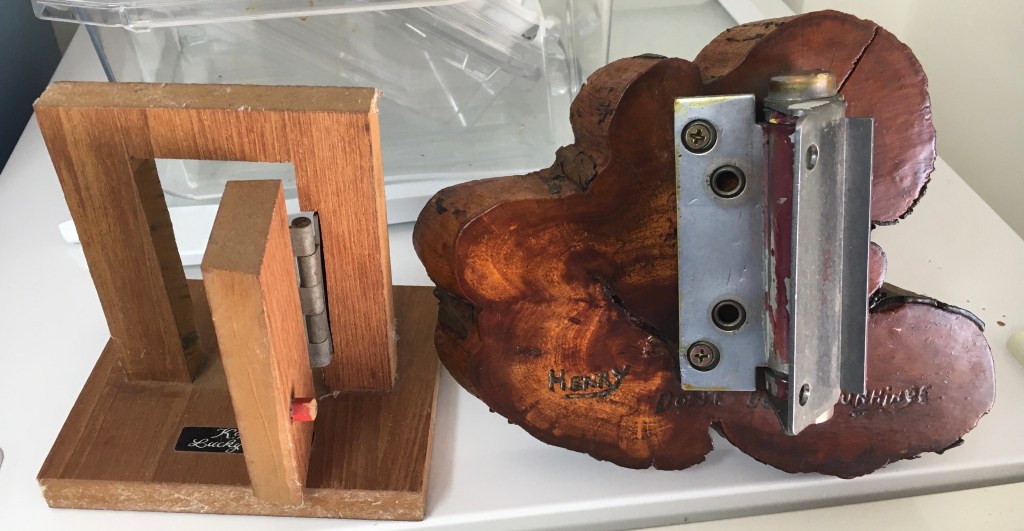
The first was a lucky door being a lucky door prize I won when Principal at Karama School. It always reminds me of the four happy years I spent at that school.

The second was created by our maintenance officer at Leanyer School at a time when I was stressed. A day or two later, on my desk, I found a plaque with a hinge mounted on its surface. Engraved on the plaque were four words, “ Henry, don’t be unhinged”.

I have kept these objects and the memories they have evoked to this day.

The two precious memories.

FOOD FOR THE BIN

Feeding one’s kids

It seems like a sin

You go out and buy

Food for the bin.

Chips, yes please!

And chicken too

On a plate the brow pluckers

Tears tumble, boo hoo.

Plates pushed away

Is it a sin

To transfer good food

From the shop to the bin?

“Sit there and eat it”!!

Kinds whinge and whine

But refuse like mules

For eons of time.

Minutes drag by

Like hours it seems

Food stays untouched

What happens are screams.

“Take it away”

Steadfast to the last

They refuse like real martyrs

To break their long fast.

The fast lasts as long

As the food on the plate

But once in the bin

Young voices grate ..

“We’re hungry, we’re starving

Feed us real quick

Our tummies are empty

With hunger we’re sick”!

What do you do?

(This you’ll regret)

Give lollies and sweet things

Then peace you will get –

It’s only a breather

Until the next meal

Then it starts all over

The next squawk and squeal.

THE JOY OF WORK

There is no joy in work,

Maybe once,

But not now.

Workers survive to pay their bills.

Accounts descend upon them,

With shrieking crescendo.

Appreciation

For a job well done,

Has long since

Gone out the door.

Bosses don’t care how workers feel!

Making money is all that counts!!

Employees are essential,

But they are crushed.

Increasingly,

Employees,

Bastions, preservers of company structure

Do for companies,

What their companies

Won’t do for them.

They give much

Of themselves,

Receiving less and less

For their offering

Of more and more.

An organisation is a bee hive,

There are queens, drones and workers.

CEO’s are the queens

Presiding, commanding,

Directing through their boards.

Squatters masquerading as interested parties

Wanting invested dollars

To return fat dividends,

Inflated

By employee sweat.

CEO’s make big bucks

They downsize employees

Persuading those remaining

To do more of the same for less,

As they run scared.

Fat drones sit on boards,

Soaking up profits,

Stuffing dollars into bloated wallets.

Parasites thriving on sweat and tears,

The lifeblood sucked from labour

Rewarded with mere pittance.

Workers comply.

Job security paramount

They work their butts off,

Prostrating as slaves before their master,

Hoping to curry favour.

They divide against each other,

In their desire to comply.

Fools they are.

Like worker bees,

Their muscle is consumed.

They are held to have no brains at all.

Cajoled,

Exploited,

Eschewed,

They fall,

To be replaced,

By waiting others.

Unending cycles of diminishment,

Day by day drudge

Building thrones and refurbishing boardrooms

With tapestries of opulence.

Working,

They pray

Longingly

For the reckoning to come.

They anticipate

Moth eaten drapes,

And throne legs destroyed,

By termite ravage.

All are equal in God’s sight.

They live,

And hope,

The reckoning will come.

They long for milk and honey

A promised land,

So long denied.

ROUTINES – THE BIT I MISS

What part of your routine do you always try to skip if you can?

Life is all about routines and it doesn’t matter whether you are young, middle-aged or old routines are a part and parcel of daily living. Sometimes routines can become very, very monotonous, but nevertheless, if they’re avoided then something about organisation can come adrift.

Of all the routines and necessities, the one I like the least is going shopping. I don’t like the crowds in shops and in shopping malls, I don’t like the behaviour so often manifest requiring security guards to be on duty all the time, and I don’t like the inordinate wait at checkouts.

Check out queues are getting longer and longer and in Darwin at least the supermarkets seem to be employing fewer and fewer staff to open check out pricing points. The supermarket that I mainly go to is quite large and serve a population within the area of some 10 or 12,000.

Often these days, only one checkout is open, with customers either having to go through self-serve or lineup at the express lane which is slow as a week, because it also supports people buying cigarettes.

I do not like shopping. I know it has to be done but if I can avoid it and put it off by getting bye for another day or two –That’s what happens!

MALCY THE LAWNMOWER MAN

From lawnmover maintenance Malcy does shirk

Four ride-ons he owns and none of them work

Starts with a machine – ‘fore the end of the day

He’s got out a goer, the crook one put away

All through the week the machines he rotates

For some vendors on time, for others huge waits

Bits of the yard he leaves barren and bare

Next to a swathe left high in the air

You wonder at times if he ‘tacks with a spade

Not the symmetry you ‘spect of a lawnmower blade

When he’s gone you look out with a kind of despair

Lawn looks like a site strafed by planes from the air.

Four ‘chines in the shed and none of them work

At least not for long but Malcy can’t shirk

Mumma wants moola for hairdo and dress

If he he hands her the dosh, then Malcy won’t stress

Till he goes to his shed at the start of the day

Knowing the maintenance man is the one he should pay.

THANK YOU DR. JIM

Who is the most famous or infamous person you have ever met?

He has passed to his rest now, but for me, he left behind an everlasting legacy.

For me, the most famous person I have ever had anything to do with, is Doctor Jim Eedle. His words and his suggestion of establishing priorities when it came to Education, had a lasting impact on my mind and my actions.

I need to hark back to 1979 when the Northern Territory Department of Education became an entity in its own right, responsible to the Northern Territory Government. Until that point in time Education in the Northern Territory had initially beennthe responsibility of South Australia and then later the Commonwealth Government.

For the Northern Territory, 1979 was the birthing year of education in a local context of operation and control. Doctor Eedle was our first secretary (these days CEO) of education in the Northern Territory. At the time I was a new and somewhat novice principal in the Northern Territory. In that context I was finding my way and establishing priorities.

Dr Eedle called all principals to attend a conference in Katherine, a regional town 300 km south of Darwin in March 1979. He addressed us as leader of our new department and is as our new department’s first principals.

Dr Eedle offered advice that for me evoked deep appreciation of his value as a leader and a person. He told us all that as a new system, we needed to do two things.

He told us that “Schools are for children“. We should never forget that as our number one focus and our priority. We should never devalue the worth and the importance of that is our prime focus.

The second thing he told us was that “structure should always support function”. In other words, the central focus should always be doing our best for students

Doctor Eedle said these two points of focus should be the eternal drivers of what we did educationally in our schools and system. He cautioned that if structure became more important than function, then we were on the wrong track.

Those two operational principles stuck with me and I endeavoured to practice them as a principal in my schools over the years.

To me they were always remembrance clauses to keep me focused on priorities. I tried very very hard to implement and to retain a focus on the advice Dr Eedle offered all those years ago, until I retired.

His wise advice and the focus he offered, make him for me, the standout person who I will always remember.

NOBODY SINGS ON AEROPLANES

Nobody sings on aeroplanes

Children squawk.

Some hop, run or jump for a length up and down the aisle.

Babies howl -some sleep.

Some passengers walk walk up and down, playing ‘dodge’ with attendants and fellow passengers. It seems many are looking to see who they know on the flight.

Some go to the toilet every five minutes.

Others hang in for as long as they can and crush toward bladder relief as the plane approaches its touch down rendezvous.

Those against windows get good views- often of clouds but are vulnerable when it comes to exiting to the aisle.

Everyone is hemmed in like warp and weft fabric stitches.

First class is first class and the rest of us are like battery hens in cages.

First class passengers are very special. The dozen or so of them get an attendant to themselves, can be first off the plane and have their very own toilet.

Attendants follow a timeline of provisioning governed by the length of the flight. The longer the flight, the more service interludes.

The inflight monitors are tiny and weenie and cannot be sen for glare.

iPads are invited and can be hung on a strap for passenger use- rather distorted when the guy in front elects to put his seat back, back!

The kid behind you delights in kicking the hell out of the back of YOUR seat. Call it in-cabin turbulence.

Those in aisle seats risk either left or right elbow contact with food and drinks trolleys and rubbish carts.

Legs stiffen and it is hard to retain a little movement and circulation. Numb bum sets in.

Children have yelling competitions, each trying to outdo the other and maximise crescendo effect.

Those from row 20 back (737 which seats 174) have more and more passengers passing them by (en route to the two rear toilets) the longer the flight goes.

It is apparent to ‘historical’ travellers that with the passing of years more and more seats have been crammed into less and less space. (A further complication is that they have become more ample and displaced more personal space than used to be the case.)

The longer the flight goes, the longer it seems it has yet to fly.

Occasionally there are VERY BRIEF lulls in the exposition of lungs and the toileting impulse of passengers – but they ARE brief and quickly resume in intensity and movement.

Very little communication ensues from the flight deck. Two minutes at the front and two minutes at the back end of flights. (No longer flight deck crew pointing out topographical features and human impact on the landscape beneath the flight path as once was the case.) [Maybe because more and more passengers are focussing on iPad movies, games on hand held devices and so on.]

Some read, some try but cannot because the magazine or paper will not fit into the space between seat occupied and seat back in front of one’s nose.

Flights can be advanced by tail winds, slowed by headwinds and wound back by flight control requirements.

The aisles with passengers coming and going are SO narrow. They are like the roads across the north coast of Scotland, barely a car wide and with passing places that have to be negotiated by cars going in opposite directions. Excepting the aisles on planes do not have designated passing places.

‘Aisles alive’ swings into action when passengers embark and disembark. The jam at the end of the flight is like inner city traffic at home time.

A flight has to be at least three hours long to qualify as one where passengers spend more time in the air than they do on embarking (arriving for check in) and disembarking (departing the airport) at the end of their flight.

The ascent and descent of flights plays merry hell with ear pressures, particularly if younger passengers. You can but empathise with them and their parents as this discomfit, not understood by young flyers, becomes apparent to the ears of others.

ADD MEANING TO MEETINGS

Leaders and members of staff in our schools are required to attend many different forums. These range from unit or section meetings, staff meetings involving all school staff members, to conferences, workshops and other professional forums.

Although they may not openly speak about their concerns, participants often feel a certain sense of resignation about having to participate in seemingly endless rounds of meetings. There is often a sense of resignation to this inevitability along with feelings of compulsion because attendance is required. If people do not attend, their absence is noted and they may be talked about in less than positive terms. They may be counselled for non-participation, with absences being held against them when their organisational futures are being considered.

All this adds up to an internalised reluctance on the part of people to engage in these forums. The thought of “meeting after bloody meeting” comes to mind and creates negative mental pictures about the worth of these gatherings. Of course, participants don’t speak this way, but thought processes may belie outward appearances.

This adds up to meetings and gatherings of all types being unlooked forward to events. There may be resentment and even bitterness on the part of some because they desperately want to be elsewhere. Some believe they should be at work, not again absent from their prime places of employment. Nevertheless, they are obliged to attend these meetings, forums or conferences. When attendance requirements end, there is often a feeling of immense relief that “finally” they can be elsewhere.

It would be a real plus for these attitudes to be overcome and replaced by positive reactions.

My propositions for modifying the end points of meetings may help to overcome these negatives. In the case of local or school based forums, school principals and meeting leaders could invite input by participants. In the wider context and when dealing with major conferences, those changes might be adopted by conference presenters and organisers. If that was to happen, those attending would be much more positive in their attitudes and feelings about engaging.

Anything to enhance feelings and belief about the benefit and use of forums, would be a positive outcome.

Engagement should not be overlooked

In many forums, meetings and conferences, the idea of “engagement” by audience and participants is minimised or downplayed. This happens even in workshop contexts, with the word “workshop” being misapplied. It often happens is that the group invited to workshop engage only their listening skills, with there being no active opportunity to participate in any exchange or sharing of ideas. The activity is merely about listening to the ideas espoused by the presenter or group facilitators .

The singular requirement for listening is even more pronounced in other, more high level forums. Lengthy expositions, often supported by PowerPoint slides seem to have no end.

The sufferance attendees feel could be changed if they had the opportunity to participate meaningfully in planned activities.

In all contexts where people are gathered together for professional engagement, two way exchange is more enhancing than the prevailing practice of one way communication. When one does all the talking and everyone else all the listening, meetings lead to audience disaffection

What can be done

The following ideas are only suggestions. There could be more ways of enhancing engagement by participants in attendance at professional gatherings.

• In unit and staff meetings, consider asking everyone who is participating, to join in building a shared conclusion. This could be done by way of a round robin where people are asked to offer a commendation about the meeting, through verbally sharing something they have gained. Rotation could be clockwise or anticlockwise if the group is sitting in a circular arrangement. Comment could be invited from right to left or left to right if people are seated more traditionally. If they are so inclined, participants should feel free to “pass” to the next person without comment. To go around the group a second time asking for a recommendation (how something might be done differently or better next time), would offer valuable feedback to presenters. Seeking a second commendation or recommendation might enhance the exercise.

Having somebody record or summarise comments made, would offer valuable feedback to presenters. This participation would help those attending to feel they are part of the meeting.

.

Professional forums and workshops could be planned so the same opportunity could be offered to participants. This would be an “enabling strategy”, providing presenters with feedback and clues as to what’s really appreciated by audience members.

This isa significant approach because the quality of feedback will indicate to presenters both perceived strengths and areas of need within the presentation. Those seeking to expand the knowledge of others through their presentations will gain insights into what audience members and listeners clearly understand, along with anything they do not understand. This information can be invaluable in re-shaping presentations or modifying what is being offered for subsequent forums.

Conference organisers and presenters could organise for group participation to support any or all aspects of the program. Presenters could build feedback opportunities into their workshops or lecture based presentations. A period at the end of each presentation could be set aside for “question-and-answer” responses. Audience members might offer feedback aligning with the “commendation, recommendation, commendation” (CRC) feedback loop. This approach could be varied by pausing at the end of each section of the paper, inviting audience members to comment. Varying methodologies to sample responses could be employed, but the structure should be one enhancing two-way engagement and interaction. If they knew they were going to have an opportunity to join in, more people might be inclined to opt into conference programs. Two way exchange is a more appealing dynamic than ‘one way’ listening.

• I believe that this feedback approach could have a place at the end of conference formalities or during conference dinners.

• Feedback and discussion opportunities could be inserted at the end of each conference session, day or at the conclusion of the conference. This would vary the approach of having designated rapporteurs who summarise proceedings for a passive, listening audience. Enabling more people to participate in the conclusion of sectional or overall activities would be appealing for many participants. The benefit of this is a requirement that people would have to listen and understand in order to be able to make meaningful comment. That would help overcome the universal problem of people being in attendance but mentally shutting of from the program.

• This approach could take the place of guest speakers at conference dinners. Having a roving microphone which ‘visits’ from table to table asking people to comment on conference highlights and personal learnings, would be a way of sharing conference highlights in a semi social situation. Commendations and recommendations could be included. In order to introduce some variation, people sitting at each table could be asked to respond to a particular question in relation to the conference. This would broaden the scope of responses and keep people thinking.

Concluding Thoughts

The variations suggested are intended to be constructive. If adopted, they should guarantee a greater level of participation within meeting, workshop and conference forums than has traditionally been the case.

If people attending conferences are guaranteed an opportunity or option to participate, their level of enthusiasm and desire to engage will rise proportionately. In far too many cases people are summonsed or required to attend. They do so reluctantly and somewhat resentfully.. There is really no “heart engagement” or wanting to be there. It’s an obligation, a drudge and a chore. Attendance in part may be coerced because professional futures may depend on involvement. Of course, resentment would not be expressed out loud because it might reach the wrong ears, so people put on a bold front and attend. This is not an ideal situation but it is the way many people feel about having to attend a whole plethora of meetings.

Overcoming these feelings and taking away disconsolate attitudes may help boost enthusiasm about professional gatherings organised for professional pursuit. If mundane meetings can be made more meaningful, organisers, participants and everybody connected with these activities will emerge as winners.

PRIVACY IS AN EXTINCT CONCEPT

THERE IS NO SUCH THING AS ‘PRIVACY’

I am an old man and thankful that I have lived most of my life in a context where PRIVACY WAS PRIVACY. Privacy wasn’t talked about like it is these days, but it was a quality or an entitlement that we had.

No longer. There is a lot of talk about ensuring and guaranteeing privacy, but that is all pie in the sky. Governments, agencies and instrumentalities know everything about everyone. Watching and listening devices are everywhere. From cameras to drones to satellites, there is nothing about anyone that is not discoverable.

The latest quirk is that of the Brisbane City Council wanting CCTV cameras to be enhanced or supported by listening devices so that passers-by can be both seen and heard. If that intrusion is allowed, watch it proliferate into other cities towns and centres which are under surveillance.

George Orwell got it wrong. He only imagined half of what it would be like in his ‘1984’ It’s much, much MUCH more intrusive than he ever prognosticated.

I praise the Lord that at least my thoughts are still private but fear the day will come when the innermost of human sanctums will be desecrated by intrusion.

CONTEMPLATING AGE AND GETTING OLD

Aging is a funny process. You may ‘look’ old but quite often don’t ‘feel’ that aged within your mind. You appear old to others and are often treated accordingly. That can range from derision and discounting to the according of appreciation and respect.

Age is something often beholden from without, but not necessarily felt within by the aging one.

Practically speaking, one has to know her or his physical limitations as she or he gets older. Without that caution, there can be unnecessary and hurtful consequences. Falling, accidents and other altogether avoidable setbacks may occur.

A strange phenomena about ‘age’ is that it is often anticipated with dread by those who are younger and considering the futures of life’s pathway. Yet on arrival, you wonder what the fuss and worry was all about.

Being prepared in terms of planning when young for financial security when older sure helps! Being old, poor and dependent on others for everything is NOT recommended.

From Henry at 77.

CROC COSTS HUGE DOSH

Name the most expensive personal item you’ve ever purchased (not your home or car).

In terms of BIG purchases and dollar outlays my biggest purchase was made three weeks ago.

Three of our family members are coming up for their 50th birthdays. We always aim to purchase substantial gifts made of crocodile skin for our children and their partners to recognise and appreciate their half-centuries of life. Gifts made of crocodile skin are virtually guaranteed to be part of their lives for the rest of their days.

I am glad we made this purchase to celebrate our children. It was 16,000 Australian dollars well spent.

DON’T TAKE THE DRUG STEP

Too late!

The day you begin,

Can be the day too late,

To stop.

Drugs offer

A slippery slide,

A roller coaster ride.

Up, up, uppers,

Exhilaration,

Down, down, downers,

Plunging despair,

The crest crashes.

A yawning trough,

The pits,

The only way is up,

Inject,

Ingest,

Force the mortal flesh,

Reach the mountain top.

Savour brief sunshine,

Before you slide,

Into the abyss of soulless despair.

That fix,

That fleeting rise,

Artificial joy.

Again the fall,

That sinking hopelessness.

Pump your veins,

Full of shit,

Rise, rise, rise,

Between the falls.

Day,

Slips into night,

Until one day,

You rise no more.

Forever cast,

Into nether silence,

Beyond the grave.

DOD.

NETT ZERO ON PODCASTS

What podcasts are you listening to?

At last, the question has been posed that I find easy to answer. It may not be right that I should be able to answer it so easil. The fact that I can might indicate that I am very ignorant for not engaging sufficiently with this aspect of media presentation.

I do not watch podcasts. I have never watched the podcast and at this point don’t know that I ever will.

Without a doubt, a lot of work goes into producing a podcast and the awards that people earn for the creation are certainly justified. However, most podcasts tend to be a wee bit regurgitated in terms of covering things that have already made the news or media in other contexts.

I worry about podcasts, in part because they may well mean taking a lot of my time. I do a lot of work through blogging and LinkedIn and in several other respects, so don’t feel the urge to go down the podcast road.

As an extension of this question I sometimes wish I could get into YouTube and maybe do some recording on that device. For me, that would be a learning experience and I have to confess that I am rather frightened and nervous about domains that are new and untried.

ROUTINES

The way it was for years and years

Every day

I drive my son

To catch the same bus,

At the same time,

To the same school.

The same five people

In the same clothes,

Blue collar, white collar,

Wait

On the same seat,

The arrival

Of the same bus.

They stand

At the same time,

Entering

In the same order,

Punching

The ticket machine

In the same way,

Day, after day, after day.

Greeting,

(Usually) the same driver,

In the same way,

Stepping

To the same seat,

In the same way,

Day, after day, after day.

I leave,

Following the same route,

Frustrated

By the same light,

Sonorously red,

Refusing pressure pad prompt,

(Although the road’s empty).

Teasing,

Tempting rules breach,

Day, after day, after day.

Finally released

Into idle traffic flow,

I pass

The same people.

Walkers, joggers, runners,

Pursuing the same routines,

In the same order,

Going to the same places,

Monday to Friday,

Day, after day, after day.

A man

Like a king,

Strides

Stick in hand,

Ahead of his spouse,

His special queen,

Ready to thwack

Intrusion

Into their private space.

Starting,

And finishing,

Within the sanctity of their abode.

A woman,

Thin,

Athletically clad,

Runs her dog,

Toward a day of canine languidness.

Recovering its energy,

While she works.

Two ladies

In earnest conversation

Talk away the metres,

Their walk secondary

To earnest discourse.

Yesterday’s happenings

Uppermost in their minds.

They seem unaware,

Of the lifted penumbra,

And escape

Of early morn,

Into the day.

Downhill

Strides a man.

Enthusiastic,

Sarong wrapped,

Sandle shod.

A stout, knobby staff,

Aids his energetic gait.

He walks with fervour,

Religiously propelled,

With no time to spare,

Before ministering

To the next needy soul.

Days, weeks, months,

Come and go.

This same ritual

Punctuates each day,

Each week,

Each month,

In the same way.

Each day,

Beginning anew,

Completing its cycle,

In the same way,

Day,

After day,

AFTER DAY.

AUSTRALIA – DON’T SOUR OUR DREAMS

HOW THINGS WERE WHEN BOATS WERE TURNED BACK AND MOVEMENT TO AUSTRALIA WAS STRICTLY REGULATED – WHICH INCLUDED PEOPLE BEING HELD AY NAURU AND MANUS ISLAND

We’ve come from near and afar,

Tragic horror where we were,

Now we are here,

Across the oceans and the plains,

Our home regimes were major pains.

We pawned our jewels,

Shelled out much money,

For passage to a land,

Of milk and honey.

A land of promise

We were told,

Awaits those who cross

From countries

Whose birthrights are sold

On sad regimes

Which make no sense,

Anathema to those

With pounds and pence

Who oppose autocracy,

And dream democracy.

Challenged, spurned, cast adrift,

We left behind a major rift,

An ideological chasm so wide,

It casts us on the other side,

Of a yawning gulf

We will never bridge.

So we arrived

Down under,

Was our trip a massive blunder!?

Herded into compounds like cows,

In camps,

Contained within razor wire.

We yell,

“Is Australia ANOTHER living hell??”

“Justice please,

Justice” we call,

Hear us …

Our despair quells.

Our plea a prayer,

Will it fall on deaf ears,

Raising within,

Internal fears,

That we will be moved.

Back. From whence we came,

Or worse,

Oh SHIT!!!

RETURNED,

From where we left,

We will face torture,

Trial,

And DEATH.

INFORMATION TECHNOLOGY (I.T.)

I.T.,

Ideologue,

To you our alter ego,

We sacrifice our souls.

Baal,

Of the modern era,

To you all things are beholden,

Then servant,

Now master,

Bowing low in supplication,

We are putty in your hands.

Seven headed hydra,

Your resource appetite is enormous,

Knowing no bounds,

Barely satisfied

By the dollars,

The explosion of dollars,

Poured into your thirsty gap.

Venus Flytrap,

Your scent entices,

Your jaws snap shut.

You suck our vitality,

Eschew our energy,

Spitting out,

Our dry, skeletal remains.

Quickly forgotten,

We blow away on the winds of change,

While you seek,

Your next victim.

Praying Mantis,

Upon us you prey,

Grabbed!!

Our heads serrated by your pincers,

You feast upon our brains,

Injecting numbing belief,

That YOU,

I.T.,

Are ALL that counts.

Prince of Modern Darkness,

You command attention,

We look upon you,

Falling like blind souls

At your technological feet.

Stunned by your intensity

We let all things

Other than YOU

Slip from peripheral vision.

Plunging,

All considerations but I.T.,

Into an age of eternal darkness.

I.T.,

You are a drug,

Seared into our psyche.

You are an aphrodisiac,

A demigod,

Exciting our desire,

Driving us to worship at your alter.

Nothing else matters.

Pied Piper,

You have lead your rats to the brink.

Stand smilingly aside,

Witness from your screens,

As we sink,

Deeper, ever deeper,

Into a hopeless abyss,

Of eternal servitude,

From

Which we,

Will NEVER emerge.

TRANSACTION DECLINED

A couple

With hungry child,

Approach the checkout.

In their trolley,

Are basic necessities.

Nothing elaborate,

Every item one of need.

They consult the plastic,

Enter digits,

Hoping to God

For the green numbers.

STRIKE ONE

“Please re-enter”

Demands that soulless terminal screen.

Embarrassing the couple,

Exposing their shame,

To fellows winking,

Thinking,

“We’re better than them”.

“Sometimes the card sticks …

Have another go

OK?”

Transaction re-entered.

STRIKE TWO

Declined again! … then again.

STRIKE THREE!!

You are out.

Derision haunts the couple,

Shoppers laugh behind their hands.

The sad pair,

Buy meagre items,

With a handful of coins,

Loose, forlorn in a bag.

Biscuits, milk.

The forlorn child

Hurriedly tears the packet,

Gnawing the nourishment,

Like a hungry rat.

Whither now?

God only knows

Toward what end

Their forlorn destiny will lead.

They wander from the precinct,

Into the nether regions,

Of near distance.

Rain falls,

Lightly from the sky,

How they wish

It was manna from Heaven.

BOTH A DUNCE AND A STAR

What was your favorite subject in school?

Without a shadow of a doubt, my favourite subject during my school years and the years that have followed since was history.

I always did very well in history and remember in a trial examination, for year 12, getting 88% before sitting by leaving certificate in 1963.

History has been something I have followed out with Leigh ever since. The subject helps me appreciate and respect what has gone before in leading us toward today’s world.

Aligned with history, I also liked English – language and geography. They were my favourite subjects, and I tried to do very well with my results. If my star ever shone academically, it was in the domain of history, with those other subjects not far behind.

Alternatively, I was, am, and always will be hopeless in the dunce class regarding mathematics, physics, and chemistry. These are subjects ever so crucial to one’s traverse through life, yet ever so foreign and unintelligible to me.

Miraculously, there is just one bright spot in the otherwise cesspool of ignorance, which is my lot within these academic domains. I do understand arithmetic well, and that subject makes a lot of sense to me. However, I am lost when it comes to anything that is algebraic, geometric, trigonometric, or calculus-related. I’m also lost, but when it comes to chemistry and physics.

Life serves up different hands to different people, and my lot within the deficit fields mentioned would put me into the bottom 5% of accomplishments determined upon people in this country and this world.

SCREEN TIME

How do you manage screen time for yourself?

It was, as I retired, that screens were just starting to really take off, in terms of the way they impact of every aspect of life here in Australia and certainly within the Northern Territory.

I went through the era of screens being introduced into schools via computer technology in the late 1980s and onward to the point of my retirement. Fortunately, I missed the way in which screen use became exponentially accelerated by iPhones and the proliferation of social media, which happened from about 2012 onward.

Although I used computer technology and the screen at work my knowledge was pretty limited.

Since retiring, I have been able to engage with the screen in ways I had not heard of prior to retirement. I have an active LinkedIn account and nearly 28,000 contacts on that device. I have an active blog and it has grown over time to be very useful to me in professional terms and sharing with others.

My use of the screen is limited only to professional and developmental issues. I do not use social media. I do not have Facebook, Instagram, TikTok, or any other of those things and never will, because for mine they are far too dangerous and far too negative in terms of outcome.

I find the screen particularly useful, because it keeps me in touch with a lot of what’s going on and enables me to share hugely, and all from home.

To me that is important, because I no longer feel comfortable going out, socialising and going to meetings; that is largely because of the impact of Covid and my concern about catching this vicious virus.

Additionally, I keep across everything that’s happening in the world of News and have a good grasp on current affairs and understanding and that’s all down to screen usage.

Yes, I do value of the screen but it’s not the “end all of the be all”of life and must be used in the context of where it is a part of, but not the whole of life.

TAKE TIME TO RELAX

Teachers need to remember that there is more to life than teaching. I believe it important for teachers take time to relax and in that relaxation to get right away from their professional obligations. One good way of doing this is to leave school at school and not to take it home. It may be that teachers start work early or leave school late in order to accomplish what needs to be done; that is wiser than putting school into bags and cases to take home in order to work on at night.

Teachers need relaxation, time with families, and to extend their interests and activities to life beyond classrooms. Dedication is important but to become introverted and narrowly focused on teaching and classroom does little to expand personal development for educators. Already a great deal of “out of class room” time is asked of teachers for extra curricular activities associated with schools. Then there’s the professional development needs that ask teachers to spend time after work and at weekends honing their professional skills. school camps, reporting nights and the many, many hours it takes to prepare school reports add to the extracurricular list.

While most teachers are motivated by the desire to work with and develop children, the issue of reward does come into contention. NT Teachers are paid for 36.75 hours each week. However, the vast majority put in 15 or 20, sometimes more hours each week over and above the time recognised by renumeration. This time is generally given willingly. It is easy to see why teaching can become a profession that totally consumes people.

Work life balance is important, and something that should always be taken into account.

LEARNING TAKES TIME

It is easy to make the mistake as teachers, of thinking we have to approach teaching in a rip, tear, rush manner. There is so much to be taught and so little time in which to do it, that the only option is to cram and cram. It is easy to think like that because of the huge load placed on schools and staff.

Learning takes time. Brain and cognitive development does not come all at once. Rather the process is graduated and in sync with the overall physical and mental development of children. We need to keep this in mind, teaching empathetically and patiently.

This is not an easy exercise in our modern classrooms. There is so much pressuring in and upon teachers, that quite often the only thing of seeming importance is to cram in as much learning opportunity as possible. Children need to have time to understand and digest the concepts being taught. The traditional lesson of introducing new concepts, teaching then revising and extending in the cyclical way was a good method of operation. It still works in this day and age. Crowding too much into shorter periods of time will leave students with half understandings and cause them to be very frustrated learners.

Reinforcement is important. The joy of learning is to understand what one has been offered from a learning viewpoint. This means pacing learning steadily and carefully, not always easy because of the imperatives trust on teachers. Getting the balance right between quantity (volume” and quality (manner of teaching”) is important. Volume learning is frustrating for students. The emphasis on quantity so that ticks can be placed against lists of things to be taught to the disadvantage of quality is unfortunate.

One way of a judging how well students are learning is to take them aside individually or in small groups is to discuss with them what’s been taught. If they can come back to you in a relaxed conversational manner showing understanding then it becomes clear that the right quantity/quality nexus is being met. If students appear to have no clues at all, then obviously the amount being crammed is overdone.

I believe that learning opportunities have to be consistent but “making haste slowly” is developing teaching in the right direction. One quality that is absolutely necessary when teaching is to have patience, to be prepared to spend time doing things with children so that learning sticks.

THE RACING CAR VERSUS THE HEAVY WEIGHT

Do you need time?

I have been conscious of time all my life. Admittedly, one sees time differently as a child to the way it impacts when you are an adult.

Be it as a child, an adolescent, a young, then older, and now a very old adult, time has always

been a factor in my life.

Sometimes, through all my ages, time seems to drag. Metaphorically, it goes so slowly that it seems as if the big hand of the clock is struggling to raise itself from the 6 to 12 (the ‘to’ side of the analogue clock) with a heavy weight attached to the minute hand. Movement to the end of engagements seems to take an absolute eternity.

Juxtapositionally, when an activity is being enjoyed and the desire is for it to continue, it is all too often over, it seems, within the twinkling of an eye.

Again metaphorically, it seems on these occasions the minute hand of the clock is being pulled from 12 to 6 (the past side of the analogue clock) by a super-charged car racing at breakneck speed.

Time. Sometimes there is too much and on other occasions too little of this commodity.

Time. Something we have in equal amounts and a commodity we all use so differently.

GRRRRTS [Cars]

GRRRRTS [Cars]

Grrrrrts are polluters,

Grrrrrts are road fillers,

Grrrrrts are time wasters,

Grrrrrts are addictive carriers,

Grrrrrts are costly addendums,

Grrrrrts are destroyers of fitness,

Grrrrrts are creators of lazy attitudes,

Grrrrrts are accident prone, deadly missiles,

Grrrrrts are creators of dependent, slavish attitudes.

Grrrrrts are accessories we would be better off shedding.

WHERE TO IN 1096 DAYS FROM NOW?

What will your life be like in three years?

I am so very uncertain about the future that I do not know what my life will be like three years from now. The older I get, the harder it is for me to understand where I might be 1096 days from now. The future is just too hard to predict.

My lack of surety and my increasing uncertainty are based on the following.

I am an ageing old man. In three years from now, I will have transitioned from septuagenarianship to become an octogenarian. Life is fraught with uncertainty for a person at that age. One doesn’t know what one’s health it’s going to be like. Physical propensity and mental acuity are hard to predict.

The world is in a very uncertain place. I live in Darwin in the Northern Territory of Australia. With the threat of war all around and given the uncertainty of peace continuing with our region, I can be sure of nothing. One thing is for certain. If Woolworths or break out in this part of the world Darwin Business be right in the firing line because of our proximity to Southeast Asia and because of the fact that Darwin is increasingly a military city.

Environmentally, the increasing heat we are experiencing, the fact that earthquakes are happening to our north and south and with more frequency than before, the vagaries of the cyclone season, and the ever increasing propensity for bushfires, make me very unsure when contemplating this particular question.

In a social context there is increasing discord within our community. Race, religion, and sociological factors give rise to feelings of insecurity. Along with that is an escalation in crime and the physical insecurities that one feels because of behaviours are happening within the community.

In three years from now?

I am unsure.

Very unsure.

VERY, VERY UNSURE!

On Whistleblowing

FREE?

FREE!!

I feels so good to know you see,

That Australia is a country free.

Free to think and free to speak,

Protects the braggers and the meek.

If there are issues their points are raised,

To bosses who give heaps of praise,

To those who make the problems known,

Although their privacy is blown.

Those on high like the alert,

Who call it out and aren’t inert.

They are the ones who always care,

So the system treats them fair.

Oh shit I hear a dreadful scream,

This scenario was but a dream,

The honest ones those truths did utter,

So they are banished to the gutter.

Stay mute, keep quiet if things you know,

If you tell you’ll have to go,

The truth if told may shock, surprise,

But your star will sink, not rise.


.

.

.

.

RIPENING FRUIT

When fruit gets ripe I am glad,

But then it spoils and I get sad,

When it ripens eat it quick,

Fermenting fruit will make you sick.

It needs to ripen for green fruit,

If eaten will your stomach boot,

You may gag and feel quite yik,

T’will be that way until you sick.

Once fruit is ripe then don’t delay,

Eat it up, ’twill fuel your day,

As my Granny once told me,

Fructose gives the best of energy.

THE TREE STUMP’S SPECIAL – BUT ABORTED -CELEBRATION

Invent a holiday! Explain how and why everyone should celebrate.

Many, many years ago an incident happened at a school where I was working that fits this special holiday or celebration idea.

We had a team of gardeners who were responsible for keeping our lawns and our garden beds up and also for removing any trees that were a threat or a danger to children and passers-by – because of the falling branches and so on.

One particular tree was removed but the contractors left a very ugly stump with very exposed roots jutting out of the ground and told me that they would be back later to attend to it.

Over the next number of months, the stump remained where it was. I went to the grounds contractors several times – in fact, many times – and asked that the tree stump be removed.

Patience sometimes comes to an end so I declared to the children at the school that we were going to have a special “in school celebration“ to honour the survival of this tree stump. I This would be a special day of birthday remembrance for the tree stump.

A lot of children had the same sort of imagination as myself and thought that that would be absolutely glorious. So we started to organise to celebrate The tree stump’s survival in a special way.

Out of courtesy, I contacted the grounds maintenance people to let them know that in two or three days time we were going to be holding a special commemerative anniversary to celebrate the tree stump’s capacity to survive. We were going to have a special cake made to commemorate the stump and would actually place the cake on the stump and cut the cake using the stump as a base for a table.

Sadly, our plans were aborted.The very next day the gardening crew arrived and took the stump from its position, and ground out the root system to boot.

Which goes to suggest to me that there are more ways of killing a cat then choking it with cream.

THROUGH THE KALEIDOSCOPE OF THOUGHT

(Response to a columnist of ‘The Australian’ who was discounting aged citizens)

Shane, oh Shane,

For your thoughts I fear,

Resentment for boomers,

You hold so dear,

You dismiss the aged,

As blights upon Earth,

Yet I suspect a connection,

Of lineage through birth,

With some who are old,

Who must weather your scorn,

For without we boomers,

You never were born.

The vindictive streak,

With which you colour us all,

(Yes I confess,

It’s gotten my gall),

But on reflection I’m sad,

For the way that you feel,

And wonder if years,

Will that spirit heal?

May your future be bright,

But may I be bold,

And wonder your thoughts,

When it’s your turn to grow old.

ADVANTAGE WOKEISM

There is someone here,

And someone there,

But wokeists, wokeists everywhere,

In every state and territory,

Showing us the better way,

Of accomodating every deed,

Of modernists’ every need,

Enlightening, showing us the way,

To live in society today.

Mores and beliefs that once were held,

From life wokeists have now expelled,

In ‘Wokeland’ now I find my home,

Safe and happy I’ve become,

Living life so gay and free,

Prudish times are history,

What was, has faded clean away,

New tides of wokelife are here to stay.

AEROPLANE CRUSH

Airfares are far, away too high,

They are a reason I won’t fly,

Crowded into seats so small,

There is no room for legs at all,

Three seats in space that should take two,

Jammed in, there’s nought that one can do,

Knees together, elbows in,

I feel like a sardine in a tin,

From ‘go’ to ‘whoa’ seems like an age,

(I’m like a hen struck in a cage),

Off the plane in space I’m free,

Flying now is not for me.

WEBSITES – SUCH A VARIETY – BUT IT IS “BALANCED CHOICE” FOR ME

What are your favorite websites?

There are so many websites operated by so many millions of people addressing tens of millions of themes, that one does not know where to start.

My awareness of websites is pretty lean because I’m not what you might call an Internet explorer. I use the Internet and website as I need to but I don’t play around with them too much. I offer this as I thought because that means in responding to this question, I am limited by my lack of exposure and exploration.

When contemplating the vastness of cyberspace, Internet and website opportunity, my mind just boggles at the magnitude of such a challenge.

Accept that my field of exposure is therefore very limited.

It is from this narrow base of exposure that I respond by saying that my very favourite website and one of the most significant here in the Northern Territory of Australia is the Balanced Choice website operated by Adam Drake, the founder , developer and manager of this website.

Established in about 2012 or 13, Balanced Choice is an organisation of committed and dedicated people whose prime focus in life is to enhance and uplift others. Those within the organisation spend their lives within the Northern Territory and other states, also overseas, helping those who need bolstering and uplifting. It’s through the outreach of this dedicated organisation and it’s the wonderful team that hundreds and indeed thousands of people around Australia have been showing and helping to a better way of life.

The Balanced Choice team talks the talk but that is reinforced 100% by the fact that every member of the team led by the brilliant but humble Adam Drake, “Walk the Walk”, validates my website choice. example and the quality of limes they are recommending to others.

Without a shadow of a doubt, the website operated by Mr Drake and supporting Balance Choice is the most outstanding of which I am aware.

RELIVING PAST TIMES

Is there an age or year of your life you would re-live?

For the most part, I have no desire to go back and re-live any of my pastimes. Growing up on a farm in isolation from a town, with no telephone and a trip to town maybe once a week was not something you’d yearn for.

When I went away to college for three years to complete my year 12, I didn’t mix often with any other students because of the strangeness of the school and its philosophy, which accorded with my parents beliefs but which I had to force. Indeed, when I finished my studies they would not let me graduate because I was deemed not to be a good enough Christian.

That news was given to me just prior to my sitting my year 12 examinations at state level.

Going back to the farm in my late teens and early 20s and working for four years for my father had its moments, but it wasn’t really too flash.

I went to teachers college and graduated from a two year course and my wife and I went to Warburton Ranges in the far east inland of Western Australia in 1970.

If I needed to re-live anything, I think it would be the fact that going to Warburton, isolated although it was and without any modern day communications, was indeed a wise move.

It taught us that we could live in isolation but in satisfaction with each other and with the job that we were doing.

It must have made a mark because at the beginning of 1974 after three years elsewhere, we went back to Warburton Range‘s again but this time with three children.

Going back or going to Warburton in 1970 is probably what I would revisit because it enabled us to reach a point where we were “our own people“ and in time “ with our own children“.

I’m glad of the move we made at the start of 1970. It was the right move for us. I would revisit it in “Groundhog Day“ terms – if that was necessary- to reboot the experiences that followed our move.

DISREGARDING HISTORY IS BOTH SAD AND FOOLISH

What historical event fascinates you the most?

I have a theory that is sadly all too often in acted out in today’s world.

Reflection upon history and cultural background is all too rare, being acknowledged and appreciated by too few people.

It often seems in our mad haste toward the future that regard for the past is evermore scant. In metaphoric terms we are in the car that is going ever faster and attractiveness with evermore intensity to peering through the windscreen as we drive headlong into the future. We never ever take time to brake, stop at the red light, and take time to glimpse into and reflect upon what is seen in the rearview mirror of our history.

It often seems to me as a person who does reflect upon the past, that in today’s world, there is today, tomorrow, next week, next month, next year, the next decade, Scores of future years, and beyond that the somewhat shrouded vista of the future.

It’s a case of being in today’s world, reflecting upon yesterday, and forgetting what happened before that because it has faded and become almost invisible within the realm of hindsight.

The only feature saving us all from total separation from the past are those occasional news columns that reflect upon “this day in history“. It’s surprising how much comes back of the past when perusing these columns.

And with those remembrances come reflections On what was done that was right, and things that might have been done differently and better. Sadly, reflections upon the past are very very rarely undertaken when the future is being planned.

So it is the past mistakes are oftener re-visited and returned as policy touted as new, when it is a revisitation of things in the past that were discarded for lack of positive outcome.

It seems that people in charge of organisations do not want to hear from those who preceded them. Any contribution from those who have “been there, done that” is unwelcome.

Historical events that are local, or from a wider vista of the past always interest me. In personal terms I sometimes reflect back through the awareness created by my diaries. I have kept a diary, with a few gaps here in there, since 1970.

They haven’t been many historical memories that I remember and it’s hard to come down to just one. However, if push comes to shove, I have to single out one thing in history

The thing that appeals to me the most, goes all the way back according to Holy Writ to Old Testament times. It has two parts.

The first part was that of God creating a flood of water that covered the whole world; it rained for 40 days and 40 nights and the world was cleansed.

The second part was that following the flood and in the years to come the people of the world decided that they would build a tower, the tower of Babel, that would reach up into the heavens. Should there be another flood the people of the world – given the dimensions of the tower of the Bible – could climb the tower and escape the flood.

The story in the Bible goes that God could not allow this to happen and so he sent it a confusion of tongues upon people so that they no longer all spoke the same language. That is where the multitude of languages and dialects that we have today came from.

Some people believe in the Bible and what is said scripturally while others don’t.

But these two manifestations stand out to me for their deep historic significance. And the multitude of languages we have on earth had to come from somewhere – just the same as Noah’s Ark being found centuries after the flood on Mount Ararat, I believe somewhere in Sinai.

THE STANDOUT “NEED TO KNOW”

What’s something you believe everyone should know.

There are many things that people need to know. That is particularly true for the younger generation who are growing up.

Those of us who are older could also benefit from sitting and developing a personal “need too know“ list. So much passes us by these days, particularly in a world where knowledge is doubling every few years. The volume of information that is “ out there“, is beyond imagination. It is easy to become overwhelmed by the mass of information available. Metaphorically, there is so much known about the modern world, that we could easily be buried under the avalanche. These days, “information overload” is the phenomena grasping us by ournmetaphorical necks and threatening to choke us.

In this context, selectivity is important. It’s a case of “needing to know“ What we “need to know.”

As a retired educator the thing I’m most worry about for young people being born and then coming into our education system within the next few years is the fact that they may well be educated without understanding the value and the concept of currency. One of the things that was always important to me was that children had the chance to use money and to understand it as concrete substance of value.

It seems that concrete currency is on the way out and that everything is going to be online and therefore monetary values and money itself will become figurative rather than literal.

To me that is the real worry. For children and people to have no inkling of currency other than to refer to it in an online context, will mean that understanding money and its value will deteriorate.

If young people grow up not understanding money, there’s a fair chance that they will very quickly fall into the situation of being in debt, possibly far more deeply than is currently the experience of this generation.

Concrete learning and understanding is ever so important, particularly in the field of monetary understanding.

I hope that Education systems are able to guard against this outcome, but I am not holding my breath.

PRESENTING AND SPEAKING IN PUBLIC

Many educators are required to present in public. That may be in every environment from staff meetings to convention centres. delivery may be to a few people or to hundreds attending conferences. Delivery at workshops comes into the equation. Included are interviews that may be on radio, television or on you tube and similar.

The way in which presenters deliver their messages often reveals alarming shortfalls in methodology. The way in which presenters speak often reveals shortfalls in their capacities. Gesture, body language, word choice, speech hesitations, and awareness of time are a few areas requiring education. There are many others.

It is said that beyond a presentation, 7% of audience recipients remember the speech content and often for short periods of time. On the other hand 42% of audience groups remember the manner and method of delivery and for substantial periods. It is the way in which presenters present, rather that what they say which makes key impact.

I believe that educators, from teachers through to principals and departmental CEO’S should consider speech and message delivery training. This might be through formal coursework, or through joining an organisation that promotes speaking and listening skills. Toastmasters and Rostrum comes to mind but there are other organisations including Zonta.

It is easy to discount the importance of speech delivery. This is an area that needs our attention.

SCHOOL CHILDREN EATING LUNCHES

EATING LUNCHES

Supervision of lunch eating arrangements is often part of teacher responsibility. That’s especially the case for Early Childhood and Primary children.

Quite often, lunches are eaten in classrooms before children go out to play. There is usually a time of 10 or 15 minutes allocated to lunch eating. This might include getting lunches from refrigerators or luggage lockers, eating, disposing of litter and replacing the lunch container.

Keeping children focused can be an issue. Often, there are children who have nowhere near completed eating by the time the release bell goes. These slow eaters can finish up sitting outside eating their food. That is supposed to happen; however more often than not, the lunch finishes up in the bin.

There are ways and means of encouraging children to eat lunches. Requiring children to stay in their seats or sit in social groups and acting in an acceptable manner may work for some. Playing soft music as a background can relax atmosphere and encourage eating.

When supervising lunches, I often used to play a game that focused on etiquette, table manners, posture, and general good manners. Included was commending children wait with their mouth is closed and I didn’t become distracted. Giving points to groups for compliance is a way of reinforcing positive eating behaviour. On occasion, I would introduce imagination. One example was out the class pretending to be eating daintily and displaying appropriate etiquette, with a reward being a figurative visit to Buckingham Palace for afternoon tea.

Teachers sometimes use lunch eating periods for marking work, talking with colleagues, or preparing for lessons to follow. That’s important but there are games or attitudes can be played or built around these activities.

I found the children quite offered appreciated me taking an interest in what they were eating and interacting with them during lunch periods. This can be an enriching time.

LEFT EYE, RIGHT EYE AND “I” EYE

What does it mean to be a kid at heart?

Simply put, to be a kid at heart means never to lose your sense of creativity and imagination. So many adults allow their imagination to become stilted and unaccommodating of anything less than what might be conventional. They freeze up and become staid and ultra serious.

When I was working with children in schools I was always in awe of their creativity and imagination. I used to say to children, “you have three eyes, your left eye, your right eye and your “I“ I. This is your imaginative eye which will facilitate you when it comes to creativity”.

I used to say to children, “as you get older there is a distinct danger that you may lose your imagination. Never ever allow that to happen because if you do you will become the poorer for it and sadly I think enjoy life less”.

I have aimed to keep my imagination and stay young in my thinking. One of my students told me toward the end of my career, “Mr Gray, you have the body of a man, but the mind of a child”.

That was a GOOD reference.

I hope I will be forever young and a kid at heart.

THE GAME OF EYES

The ‘game of eyes’ is an interesting one to play with children and students. Rather than asking students to put up their hands to answer questions, let them know that you asked the question and then make eye contact with the student who is being “asked” to answer the question.

This is a good way of in which comprehension exercises, conducting impromptu quizzes, and otherwise engaging the focus of children can be undertaken.

Eye contact is confidence building. Having children interacting through eyes is a great way of involving the whole class.

If eye contact is made with a student who isn’t responding, make a gentle note of that to the child and move on.

Using this method of eye contact is a great way of dismissing children for recess, lunch and at the end of the school day. Rather than naming children to leave or having them all bolt at once, let them know that the child whom the teacher is looking is the student designated to leave.

It can be a case of “when your eyes touch my eyes that your signal to stand and leave”.

This method is a great way of identifying with children. When the child rightly identifies that she or he is being looked at by the teacher, a word of acquiescence or praise can be a good thing.

Try it with the eyes.

NEW IDEAS – WISE CHOICES OR FADS

Too often new, beaut ideas are grabbed and planted into schools in a faddish manner. This may satisfy romantically inclined educators but can reduce children in schools to being educational guinea pigs.

One of the things many educators find anathema is sticking with proven approaches. Methodology which is foundationally solid needs to be built upon in incremental terms. That guarantees that teaching and learning will go from strength to strength.

Sadly, the preference seems to be that of consigning what is working to the WPB. With that done, new beaut systems are brought in as replacement technology. It seems that educators get bored with ‘same old, same old’. They toss out good, proven and working programs to push new, innovative and largely untested practices onto schools and into classrooms.

While change is important, it should be both considered and incremental. Throwing the baby out with the bath water can create learning and knowledge vacuums. Neither should children and students in our schools and places of learning be treated as experimental control groups.

I believe it important for teachers in classrooms to carefully consider changes that might me made. Taking students along with you, through discussion and pre-consideration should be part of the process.