What’s the thing you’re most scared to do? What would it take to get you to do it?
There is no way known that I would go out at night any more. There is too much crime happening in what was once a most peaceful and safe city.
Driving at night risks a rock coming through the windscreen.
Neither would I go walking in the CBD after dark for fear of being accosted or mugged. For an old man like me, the only thing happening in Darwin of the night was they would go to nightclubs and drink. That’s not my scene.
I’m frightened of going into the Shopping Centre at night within our suburbs because of the behaviour of people and thread for safety and security and then exists.
From sunset onward until the start of the new day, my place is at home the only area where I feel secure.
That never used to be the case. Darwin used to be peaceful and happy without threats being offered to people by others.
Over time the situation gets worse.
The only thing that would change my mind about how I feel, would be for Darwin to revert to the way it used to be. And that of course will never happen.
One day after a burst of rain, Toadstool Town was gazetted.The town grew quickly and more buildings popped up, illuminating the landscape.The developmental program was rapid, but the town was built on shaky foundations and building code requirements were paid scant attention.Sadly and before their time, structures began to decay and break down. Development of new structures slowed.The decay continued unabated as paint gave way to mould and edifices crumbled to the point of being almost unrecognisable.The end came quickly as the surrounding landscape swallowed up what had been.
I complain when people who are the newest members into an organisation, acting the way that suggests they are the greatest expert on all things associated with that organisation.
I complain when people won’t admit failure when something has gone abominably wrong.
I complain when people always put themselves first.
I complain when hearing of people being awarded honorary doctorates.
I complain when people fail to meet time related obligations.
I complain when people speak incoherently or mumble.
I complain when people who should know how to hold a writing tool, have no idea of its management.
I complain when people are provided with opportunities which completely ignore the merit principle of readiness for positions.
There are other things that I complain about and also many things in which I rejoice.
It is of concern that quite often the opinions and beliefs of educational practitioners are discounted because they are not ‘guru theoreticians’ engaged in research and located within universities. I have great respect for academic doctors and professors, but rue the fact that those who can contribute but without the ultimate academic accolade are regarded as having opinion of less worth than those held by high level academics. Ofter practitioners, being those as the chalk face have contemporary experiece. Those within academic halls have often been removed from classroom reality for a long time. Both academics and practitioners should be equally heard.
THOUGHTS FOR PRE-SERVICE TEACHERS1. Always make sure you write notes at the end of each day, that reflect on the things you have done well and on things you might do differently and better with or during your next lessons. It is important to make note of your successes as well as noting the things offering challenge. This 'reflective journal ' is ever so important and can be easily overlooked. My suggestion would be that you write it with reference to your plans and notes used during the day, that you write conversationally and that you use it as a way of noting things you recall.
Teachers are directors, the classroom a stage and students the actors in a play that is pointing them from today toward the present. Each scene offers them ongoing development and confidence building.
If a preservice teacher, never feel undervalued. Know that older colleagues appreciate the qualities you bring to schools. Know you are regarded as staff members while in your practice schools.
‘No one on their death bed ever regretted not having spent more time at work’ is something I heard many years ago.
Work IS important and we need to do our very best. However, there needs to be life after work, a time for family, friends and relaxation. We need renewal and revitalisation. That does not happen if ou noses are forever on the grindstone.
We need to do our conscientious best at the coalface. We also need to live life
When going on practice, it is common to have questions to which answers are sought. My advice is to keep a small note book handy, to jot things down which go toward providing information and answers.
As a part time person connected with teacher education, it is heart warming to know of the deep commitment of so many pre-service teachers to becoming our teachers’ of tomorrow.
Should the development of speech and speaking programs be part of the curriculum available to children and students of all ages? Is ‘speaking and listening’ becoming an extinct form of expression?
My concern is more with the qualities of speaking and LISTENING than with the mere speaking of words. There is speaking and speaking. Listening as a part of the speech platform seems to have gone by the bye. Too often people listen for pause, so they can begin speaking. They listen but don’t hear or comprehend
For me, this question is redundant. A lottery win is not possible because I don’t buy lottery tickets.
From time to time one hears of people having huge wins. But for me that oversells the concept of lotteries.
Every week and on every day a lottery is drawn, and millions of Australians spend tens of millions of dollars on what’s more or less a game of chance operating on very long odds.
I live not too far from a busy news agency where lots of tickets are sold.
Invariably the queues, if it’s a big draw, are very, very long. People spend huge amounts of money on tickets. And when they do come up with a winner, even a moderate amount, they go rushing around and rejoicing without for one minute thinking about how much they have spent to achieve the win.
Lotteries are a non-starter for me. I rejoice in the money I have saved through not purchasing tickets in lotteries.
We do well to contemplate the ethics and values that underpin educational motivation and drive us as educators. One of the smartest things our Federal Government ever did, was to put on schools the need to develop values statements. I took this very much to heart and canvassed staff, students and the parent communnity. The response fro students and staff was above 90%. High level returns (in order of 60+%) came from our community. All responses were ranked and scored, then published as a supplement in our newsletter, ‘Leanyer Links’. From each group the first response was RESPECT. For me it is the most important value and deserves to head the rest. What do readers think?
Retired teachers are seldom invited to take a backward look once they depart their schools on the last day of their teaching or leadership careers. Wise Education Departments, schools and universities involved with training the upcoming generation of teachers, do well to invite retirees to share their knowledge with continuing and future educators. To do so, enables valuable inside knowledge based on their experience to be shared. While teaching, for teachers, is always a process of discovery, it ought not be a process of re-discovery. Sharing learning by coaching can help to avoid regurgitation. My suggestion is that retirees be invited to coach, thereby enriching those of us who remain or who will be our next generation of teachers.
The issue of violent threats in their various forms is one I believe needing careful address. It’s the matter of “issue” rather than “individual incident” that needs careful consideration. The matter is not new – but rather has been ongoing over time.
From time to time the system and various support professional organisations including our Association have looked at the matter and considered process that might be taken into account when reacting to matters of threat. That to me is part of the problem; our system is “reactive” rather than taking a proactive role in engaging the matter.
Threat in its various forms is not new. However, responding to the matter seems to be one that causes embarrassment. Often Principals and staff members feel that to air issues occurring within the school organisations is tantamount to a profession of weakness. There seems to be a preference to manage within, making sure that word about problemsdoes not get out. Over time there have been assaults levied against Principals and staff members where it seems that departmental management is to mute the issue almost in some sort of “we are guilty because it happened” fashion.
I think that issues of this nature have to be put right out into the public domain and addressed with responsible but justified professional aggression. “How dare they” ought to apply. The response being developed needs to have full system support and it ought not to be that recommendations on process point and direct the whole matter back to schools at the individual level to manage.
Members of student and parent communities do not have the right to inflict themselves upon teachers and other staff members in a violent, threatening or intimidating manner. Staff and principals deserve full departmental support against this sort of behaviour all the way to action through court processes. An “under the carpet” response is not acceptable.
Maybe during my time as a school educator I was lucky in not having these sorts of things thrust against me personally. I can promise that assaults directed toward my staff or myself would have been most vigorously pursued through courts.
No, I would not have felt weak all guilty about taking these actions because staff members and school principals deserve to be respected and protected.
I would hope that the issue going forward is addressed in an appropriate responsive and responsible manner
Educational organisation within schools is many things to many people. Principals and school leadership teams are motivated and inspired by many different stimuli. The elements and influences which press upon schools are poured into a metaphoric funnel above each place of teaching and learning. Community, hierarchial and government clamor rain caqn come down like the cascade from the end of the funnel onto schools in almost waterfall proportions.
While Principals and leadership groups are able to take, analyse, synthesise and consider the way in which the school can and should accommodate demands from without, it is easy for a sense of proportion and a perspective on reality to become lost. The flood of seemingly insatiable demands heaped on schools can result in destabilisation and disequilibrium.
This is especially the case in situations where Principals and leadership teams feel that everything demanded of the school by the system (and of the system in turn by Government) has to be acceded and put into practice. These reactions, best described as knee jerk, cause an inner disquiet within staff who are often reluctant to change without justification, but are pressured to make and justify those changes anyway.
In metaphoric terms, schools that comply with demands so made, remind me of a frog hopping from lilly pad to lilly pad on a pond’s surface. Sooner or later the frog will miss in its parabolic leap from one pad to the next and do a dunk into the water. I believe we need, like a duck, to do a lot more deep diving to ascertain what rich life there is at the bottom of the pond. Too often we are urged and in turn urge our teachers, to skim the surface of learning without exploring issues with children and students.
Beneath the educational top soil, there are rich substrata of understandings that need to be explored. Too often that depth learning is overlooked. Educators know that depth learning is disregarded because of the imperative that we drive on, moving rapidly from one initiative to the next.
This approach is one that does little to positively enhance the way those working within schools feel about what they are doing. They become ‘focussed on worry’ and internalise feelings of discomfit about what and how they are doing. They can feel both disenfranchised and destabilised. They wonder whether they are valued and appreciated. While they may not talk about feelings of insecurrity in an ‘out there and to everyone’ way, their expressions of concern and disquiet are certainly expressed to trusted colleagues in an ‘under the table’ manner.
Teachers may maintain a brave face to what they are doing, but beneath the surface suffer from self doubt. This leads to them becoming professionals who overly naval gaze, generally in a very self critical manner. Teachers can and often do become professions who feel there is little about which to self-congratulate and rejoice.
Establishing Priorities and Building toward Positive Atmosphere
In this context and against this background it is essential that empathetic school principals and leadership teams offer reassurance and build confidence within their teaching and support staff cohorts. They need to help staff understand that ‘frog hopping’ is not essential and that ‘deep diving’ into learning, whereby children and students are offered the opportunity of holistic development is encouraged.
If this is to happen, Principals need to take account of two very important considerations.
They need to act in a way that deflects as much downward pressure as possible away from staff. They need, as I have previously written ( ) to be like umbrellas, open to diffuse the torrent of government and systemic expectatiion, keeping change within reasonable boundaries. This will ensure that schools, students and staff are not overwhelmed by cascading waterfalls of macro-expectation. Principals and leadership groups need to maintain as much balance as possible within their schools. In spite of what system leaders may say, random acceptance and blind attempts at implementing every initiative will lead to confusion st school level.
Principals have to have the courage to say ‘no’ to changes which come at them giddyingly and often in a poorly considered manner.
The second critically important consideration, largely dependent upon the ability of school Principals and leadership groups to be selective in terms of their acceptance of change invitation, is that of school tone, harmony and atmosphere.
The way a school feels is intangible. It cannot be bought as a material resource. Neither can it be lassoed, harnessed or tied down. The ‘feel’ of a school is an intangible and generates from within. It develops as a consequence of feeling generated among those within the organisation.
I often feel that the atmosphere of a school, which grows from the tone and harmony within, is best expressed as a weather may which superimposes on that school. When Principal at Leanyer School I had a rather clever member of my staff take an aerial photograph of ‘our place’ and photoshop a weather map over our campus. This I kept close for it was necessary for me to appreciate the ‘highs’ within our school. I also needed to take account of the ‘lows’, being aware of the fact we needed to make sure they were swiftly moving and not permanently affective of the people within our borders.
Learning about Atmosphere
My awareness of atmosphere did not come about by accident. In 1994 while at Leanyer, I was asked to act as our region’s Superintendent for a period of six months. At that time Leanyer was somewhat struggling when it came to material resources and that was a worry. Other schools seemed to have a lot more in material terms. Although not jealous, an inner aspiration was to be like better resourced schools.
During my tenure in the acting position. I visited each of our region’s schools, some on more than one occasion. I made contact with Principals and took every opportunity to go into classrooms meeting and talking with children and teachers. I also visited Leanyer School but as an ‘outsider’ not as someone presuming ‘insider awareness’. (I wasn’t there; someone else was acting as Principal and I needed to accord leadership space and respect).
The most critically important thing I learned during my time as Superintendent, was appreciation of organisational atmosphere. No matter how good schools looked, no matter how many material resources they held – if they did not ‘feel’ good, they were lacking quite decidedly.
Part of my learning was predicated by appreciation of Leanyer ‘from the outside in’. Having been Principal for two full years at the school before temporary promotion, I was used to viewing the school from the inside out. Opportunity to look at the school from a different perspective along with comparative opportunity, helped me appreciate the blessing and joy abounding within the school. It felt good! The atmosphere within was second no none!!
Organisational atmosphere is both precious and fragile. There is no guarantee that this intrinsic quality will remain constant. The way people within schools act and interact changes regularly.
Atmospheric Challenge
Within schools are three key groups of people – students, staff and parents. Watching overall is the wider community. Change of personnel and client is common with the arrival and departure of children and staff. Systemic demands and government priorities are hardly constant. This opens schools up as being organisations in a constant state of flux. Just as weather patters change, so too, do pervading atmospherics within schools. Those feeling on a positive ‘high’ today, may find that feeling of well-being eroded by something that unfolds tomorrow. Contrawise, circumstances causing feelings of despondency (‘low’ points) can be changed by circumstances, becoming ‘highs’.
It is up to Principals and leadership teams to ensure that positive atmosphere, precious yet fragile is built and maintained. It is easy to lose the feeling of positivism so necessary if an organisation is to grow and thrive on the basis of its human spirit.
I learned a long time ago about the importance of atmosphere and recommend to readers that we all always work to build the spirit within our schools.
The series of child abuse inquiries happening around our nation at the moment are lifting the issue to the forefront of public awareness. Without doubt, some of the allegations levelled against teachers and others are as a result of the ‘stimulation’ generated by these inquiries. Sins against children need to be visited and perpetrators punished.
However, the reputations of those who are completely innocent of any wrongdoing need to be protected. Current actions need to be such that educators protect and guard against allegations at some future time. Teaching is a profession that requires increasing vigilance in human relations by teachers, school leaders and principals. In recent years, the issue of child abuse has gained traction. Lots of abuse issues, most of an historical nature, are being raised.
Various Royal Commissions and inquiries have highlighted the matter. And, without doubt, many of the allegations being brought against alleged perpetrators of past abuse, especially sexual abuse, are justi ed. They need to be followed through. However, there are instances when allegations are made with mischievous and malevolent intent. They hang those falsely accused out to dry. Accusations may be levelled against people many years after the alleged abuse occurred.
A June 2015 program aired on ABC TV’s Australian Story illustrates this point. A female teacher in Melbourne, Josephine Greensill, was accused of sexually interfering with two boys around 30 years ago. She was dragged through a messy court process, including being accused, found guilty, and jailed. The case was subsequently appealed and another grimy court process ensued. At the end, she was found not guilty of these crimes and acquitted. Her career, of course was absolutely ruined.
The protagonists who had brought the case against her, two men in their early 30s (they had been boys of seven or eight at the time referred to in the allegation), have not to this point in time been charged for making false allegations. The story’s inference is that they have simply shrugged it o . Signi cantly, the Victorian Department of Education, teachers’ union and registration authority appear to have o ered no visible support to the teacher. These cases are not rare.
Allegations made against teachers presume guilt until the teacher proves his or her innocence.
I have been told that it is very unlikely prosecution will be brought against false complainants. The only recourse available to someone falsely accused and acquitted, is to seek redress through the civil court. That is costly, messy and continues the hurt.
Protective practices
It is wise for teachers to keep a clear, detailed and time noted record of instances when they have been connected with students in counselling and development. Nothing beats a detailed diary. When moving schools, retiring or otherwise moving on, take these records with you (I would suggest a diary). Maintain their accessibility. Keeping this data in USB or electronic form is an option.
If allegations are then brought, there is a clear record to show the date, time, place, and nature of the counselling. Often details brought by the complainant are fairly vague and being able to refute them with accurate data is of inestimable value.
There are one or two other points to keep in mind.
If counselling or working one-on-one with children, ensure that it is in a space that has visibility from the outside. A room with a see-through window, a common area within, a learning module, or a location within a linear classroom close to an open door are options.
I believe it paramount for teachers to report matters of counselling and discipline to a senior or to the principal along with keeping a written record.
Those who have false accusations brought against them, regardless of outcomes, are never the same people again. I understand they look at life di erently. Their outlook becomes tinged with suspicion. They wonder if they can never be part of trustful relationships again.
This issue is one of growing consequence and something all educators need to take on board and carefully consider. Don’t live in fear but never think it can’t happen to you – because it can.
The work of teachers and school leaders reminds me of an iceberg. Only 10% of its mass is visible. The other 90% is hidden beneath the ocean, seen only by marine creatures. In the same way the work done by teachers and school leaders is 10% observable and 90% unseen.
Perception
A common public perception of teachers and school support sta is that they work for six hours each day ve days a week. This 30 hour working week is complimented by 12 weeks “holiday” each year. When it comes to occupational comparison,
those working in schools are deemed to be people on Easy Street. Letters to newspapers and callers to radio talkback programs frequently slate teachers for lack of commitment and care for students. A criticism heaped on teachers, support sta and school leadership teams is that teaching is a simple job, generating far too many rewards. I have heard people say that teachers should go and get themselves a “real job”. Letters to newspapers regularly decry teachers as being too well rewarded for the tasks they undertake.
There are some of course, who appreciate the in depth nature of teaching and education: Sadly the view that teaching is super cial appears to be held by many people.
Many students and parents appreciate ‘their’ teacher. However, in media releases and public statements about schools and teachers, there are far more brickbats than bouquets on o er. Criticism is often harsh and strident with acclamation of the positives being restricted to recognition on World Teachers’ Day.
What is Entailed
Teaching is far more than what is visible to the public. In fact, ‘teaching’ is but one small part of the educational equation. Detailed planning, preparation and programming, taking many hours of time, precede classroom teaching and direct engagement with students. Beyond teaching there is the recording of outcomes, (testing, measurement and assessment), review and then the considerations of revision and extension. These educational elements go well beyond teacher and pupil interaction in the class room.
After Hours Commitment
A drive past most schools before and after hours, on weekends and during holiday periods will reveal a growing number of parked teachers’ cars. Sta members are inside working on the huge number of tasks that embrace the teaching profession. Salary recognises teachers for around 37 hours per week. Many in real terms many are working upwards of 60 hours during the same period.
Teachers are one of the few professional groups not eligible for overtime payments to recognise extra hours at work. Police, remen, and nursing sta work to xed rosters and are remunerated if extra hours or shifts are worked. This does not happen for teachers in schools. The only person entitled to compensation for extra work is the school janitor and only if pre-agreement has been arranged.
These days, there are more and more meetings in which teachers and sta members are required to participate. Sta and unit meetings, moderation meetings, performance management meetings and a plethora of other gatherings have proliferated. Most are held outside the scope of the normal working day and week. Teachers organise extended excursions. They coach and manage teams and groups involved in sporting and cultural exchanges of several days duration. Preparation for their normal classes before going is part of the deal. They are part of fundraising activities, school council committees and school improvement planning groups. The list goes on.
Unlike many professionals, educators do not always feel they can leave school at work. Programming and preparation, marking and updating data onto electronic les which transfer back to school records are three of the tasks that transfer classrooms to lounge rooms.
A ‘Giving’ Profession
As teaching does not pay overtime, teachers give an incalculable number of unpaid hours devoted to their profession. This makes ‘giving’ one of the key characteristics of those engaged in the profession.
Teachers and support sta should not be knocked. They are sel ess, giving and caring. Most are there for others and without the work they do our society would be the poorer. Theirs is one of society’s linchpin professions. And they deserve to be valued and appreciated.
Students deserve the very best in terms of pastoral care that can be offered, Teachers and leaders must be circumspect in their approach to matters of this nature. There is no room for compromise. However, to accuse teachers and school leaders falsely seems to have become a fashion. Lawyers ask those in toruble with the law to dig deeply into their memories in order to come up with instances of inappropriate conduct (particularly of a physical or sexual nature) that may have been put upon them when young; that in order to try and establish mitigating circumstances and lessen the impact of prosecution. To drege up some inapppropriateness for anywhere up to 30 years ago can give free rein to imagination.
I know for an absolute fact that false allegations of a historical nature can be absolutely embroiling. Suddenly alleged perpetrators are caught up in police investigations. They are presumed to be guilty until they can prove themselves to be innocent and can become instantly non-entitled to continue occupational engagement (if they are still teaching or working with young people) until the matter is resolved. That can take many weeks and months.
Surely the ultimate unhappiness for a teacher, particularly male teachers happens if they are falsely accused of wrongdoing in relation to students. Those who wrong children deserve punishment. However at times reporting of inappropriate conduct is mischevious and deliberate.
In Australia, with several commissions of inquiry happening in to alleged institutional abuse ovee time, advertisments and reporting coverage are rife with invitations for alleged victims to search their souls and come forth in reporting mode. Part of the inviration may be the lure of compensation at some future time.
Genuine matters need to be reported. However those who make mischevious, false and malevolent accusations are home free and there is no recourse in law for those falsely accused to seek justice. Even if innocent of accusations, the notion of ‘mud sticking’ is very real and slurs on character everlasting. Those falsely accused are never ever again in a good place.
While the matters after investigation may resolve and be found to have no substance, allegations have a huge impact the accused, so much so that the accused becomes the victim of the piece.
Whatever the reason for the reporting mischief, it has a deadly impact upon the psyche, inner feelings and wellbeing of the person against whom accusation is made. This impacts on the accused, affecting feelings of physical wellness and mental equilibrium. Although not guilty of sin the accused would feel like an abomination because these sorts of allegations cut very deeply. False allegations leave permanent scars, a deep unhappiness that may follow so accused educators beyond their retirement and into their graves
Within schools it sometimes happens that scheduled meetings have to be cancelled. Staff are advised they should use the time for inputting and recording of student data. The first call on teachers’ programmed release from face-to-face teaching, is the use of non-contact time for recording purposes.
Data is important. Student progress should be regularly recorded in order to confirm student outcomes and assist teachers in revising and forward planning their units of work.
Changing Focus
In recent years, there has been a lot more focus on data and formalised recording at system level than was the case in the past. However, in past times, good records were maintained within the vast majority of schools. It is a misnomer to suggest that nothing happened before national testing was introduced
Tests were developed and applied at school level. These days the emphasis is increasingly upon nationalised testing regimes . Results are used in part for comparison of schools within and between States and Territories.
Shortfall
National tests, standardised as they are, fail to recognise the individual and specific backgrounds of students in schools and their catchment areas. While databases have been prepared which examine the socio-economic factors within school communities, these are quite general and don’t take account of specific differences between people. Cultural differences, occupation, income, family educational background, housing affordability and geographic location impact on schools within their communities.
Refocussing Education
One of the deleterious effects for schools forever being under the testing and assessment magnifying glass, is that the human side of development can be overlooked. Years ago a group of educators visited a gas bottle refilling business. The guide suggested children were like gas bottles. Empty cylinders were refilled, then sold. Similarly, children started school as “empty vessels” were filled up with knowledge on the way through and graduated from school “full” of understanding, ready to contribute to society.
This was a sad comparison. Children are complex individuals. Their development towards adulthood includes social, emotional and moral/spiritual needs along with literacy, numeracy and other academic outcomes. Over-focus on academic testing and data can detract from these wider developmental needs. The world needs articulate people who are confident communicators, intuitive thinkers and careful decision makers. Academics are part of education but by no means the whole of what should be offered.
What is and what should be
Educators talk about the need for holistic education. However, with funding attaching so critically to educational outcomes which are only academic, the priority naturally turns to literacy and numeracy. The key and often only focus of educators’ meetings is that of literacy and numeracy teaching, strategies and data.
Schools are achieving, but success often goes unacknowledged. Those working within our schools often feel deflated, becoming convinced they are failing in terms of building students toward desirable outcomes.
Education should not be laissez-faire. Neither should it be so data focused, concentrated within one narrow domain, as to overlook the importance of holistic development. Teachers, parents and community should be working in partnership with students, to prepare them for a fulsome entry into life’s world. Education for the whole of life goes well beyond narrow, academic, data confirmed outcomes .
Name an attraction or town close to home that you still haven’t got around to visiting.
Within fifteen kilometres of our home are tunnels constructed into the natural cliff face, the headland on which Darwin, the capital of the Northern Territory, stands.
During World War Two, the tunnels housed surveillance equipment and cannons with ship-destroying capacity.
These runnels have become a major tourist attraction. Guided tours and commentary are offered.
I know this from what people have told me. These tunnels attract people from all over the world – but I have never visited.
From time to time there is strong media inference that school educators are on Easy Street. The need for more accountability is advocated for principals and teachers. There is an inference that Education Departments do little in holding principals and teachers to account.
Nothing could be further from the truth! Individual principals go through regular performance management exercises. Their schools are also appraised, usually once every two years. Senior staff and teachers set annual developmental targets.
Assessment criteria for performance and school effectiveness are regularly updated to accommodate curriculum changes.
An upside of performance measurement is that peers are involved in the process. Principal performance takes account of staff and community perception. Principals realise that perceptions of their leadership are important to the department, school and parents.
School assessments involve a fellow principal and senior departmental officer. All staff, some students and members of the community are interviewed. An advantage of this model is that principals and teachers are able to share an understanding of leading and teaching.
Disadvantages
Preoccupation with assessment can mean that personal aspects of performance are always front and centre of thinking. This can lead to hesitancy in trying new ideas and expressing professional opinion. It may result in educators accepting what is handed down from above without discussion. Concerns about possible shortcomings or weaknesses of changes that have been imposed are let slide.
One of the pressures on school principals is that their jobs are temporary. Employment contracts are offered for no more than four years. If a contract is not renewed, they do not have a position to wh ich they can return in the public service. School leaders accepting contracts have to relinquish their permanency within the NT public service, becoming temporary employees.
Principals and teachers are assessed against standards developed by the Australian Institute for Teachers and School Leaders (AITSL). Beginning teachers must meet graduate standards. As teachers gain experience, standards expected become more detailed. Annual assessments and periodic reviews organised at a school level, are set against these expectations. Teaching quality and contribution to the corporate life of the school are taken into account. AITSL has a tool enabling teachers to collect evidence supporting their professional status. This can be accessed on a daily basis.
Any belief that school staff are free agents when dealing with educational matters is fallacious. School leaders and staff members are held to constant and rigorous account for personal performance and the effectiveness of their schools. Far from being overlooked, accountability is the number one issue for all educators.
Computers were introduced to school classrooms during the 1980’s. Initially, schools set up dedicated computer rooms and classes were rostored to have one or two periods each week. Students learnt about computers and how to develop documents for print-out.
Schools then moved to a number of units in each classroom and more time was devoted to student use of these tools. With the advent of iPads many schools encouraged each student to have their own personal device. In 2017, we would be hard pressed to find a school without computers or iPads. When electronic smart-boards and other supports are added, schools almost drown in technology.
The cost of purchasing and maintaining hardware has increased, becoming a major cost item for schools. As well, items purchased are often outmoded within months of being bought.
Additional costs are significant. Software is not cheap and neither are licences needed to authorise multiple users. When maintenance needs are added to purchase costs, schools are faced with significant and ongoing budget commitments.
There are classroom pitfalls that need to be avoided.
Students tend to digress from what they should be doing with computer and iPads, drifting from learning to entertainment sites. It is imperative that students sign agreements about use of search engines, with teachers monitoring that commitment. Engaging with inappropriate sites can lead to big problems. Games sites need to reinforce and extend student learning and need to have an educational purpose. Entertainment programs without educational merit distract students and waste learning time.
*Children sometimes play with networks that have been set, causing programs to crash or corrupt.
Misuse of technology by students can lead to cyber bullying and other inappropriate online conduct. Cyber bullying has reached epidemic proportions.
Students working on topics can be lulled into thinking that googling the topic, then cutting, uploading and pasting segments from existing sources into the text they are developing is fine. It isn’t! It is important that students think about and own their work, in order to understand topics. There is a distinct danger they could become plagiarists, taking the ideas of others and using them without acknowledging their sources.
Spell-checking and grammatical correctness are automated tools in many software packages. It is entirely possible for students to create and edit text, without understanding what they have written. Computers, iPads and other devices can help support learning. However, they should always be used with care by students, under teacher oversight. There is every chance that gadgets can become relied on to the point of detracting from genuine student learning.
My fifth most enjoyable fun activity is playing ‘devil’s advocate’ on issues being debated, to stimulate responses that throwback onto me in terms of reaction to those ‘expressed’ viewpoints.
Fourth on my fun list is writing poetry that reflects life and living.
The third fun activity is studying promises Political parties make before elections, and then two or three years later, looking at what was promised and what has been fulfilled. “Long on promises and short outcomes“ is invariably the order of the day and people who made those promises don’t exactly like being reminded about what they said and what’s been delivered.
Fortunately, I am blessed with a good memory. My second from-the-top fun activity is to think about and reflect upon funny incidents that have occurred for us since my teaching career began in 1968. Many of the reflections cause great merriment.
The fun activity I like the most has a serious side. It’s reflecting upon knowing and thinking about people I’ve worked with over the years as fellow educators, students in my schools, staff, and other associates. Some of those memories are serious, summer fun But all bring back the past. I like to reflect upon the Rewards (and the fun) attached to being a people person and not one who overlooked the human side of the enterprise with which I connected.
So from five to one, That’s the way it’s been for me.
Reporting on student progress to parents and primary caregivers is of critical importance. It is an element of the educational partnersghip that includes the student, home and school. ______________________________________________________
Reporting to parents and caregivers in most primary schools, is a task undertaken each term. Toward the end of terms one and three, teachers report orally. Oral reports allow for conversations with parents on student progress. They enable teachers and parents to discuss progress including student strengths and the challenges they face.
Written reports are provided toward the end of terms two and four. These documents are looked forward to by many parents. They are at times photocopied and sent to grandparents or other relatives living at distance.
For teachers, report writing is a task not to be taken lightly. The importance of reports to parents in large part influences the way in which these documents are regarded by our department and school principals. They are valued and valuable documents.
There are a couple of things that need to be understood. The first is that with teaching being increasingly a collaborative effort, a number of teachers may need to contribute to the preparation of student reports. Secondly, the steps leading to final report documents, mean that reports have to be started many weeks before the end of each term. Allowing time to prepare them reasonably is something that can be easily overlooked.
Consider the following:
* Reports as a statement from teachers to parents need to be honest and accurate. * Spelling and grammar need to be correct as they reflect teacher standards. * Reports should be factually correct. * Preparation is helped if teachers have a critical colleague read through their documents before sending them to senior staff for vetting and approval. * What is written needs to be substantiated by background facts supporting statements of progress. Inaccuracy can be embarrassing to teachers if report comments are challenged by parents and cannot be refuted. * Language needs to be carefully chosen, reporting on facts and not supposition. * Avoid words like ‘will’ and choose words like ‘may’ when talking about potential for improvement. Absolute words throw the onus on teachers to make things happen; it is up to the student to achieve his or her potential.
I have always favoured the idea of teachers discussing reports with children and students about whom they are prepared, on a one-to-one basis. Commendation and recommendation for improvement might be part of these conversations. Post report discussion with parents can also have positive spin offs, particularly if the approach is one of offering encouragement.
Reports reflect outcomes based on effort. That, together with character traits that contribute to good citizenship deserve recognition. While academic success is important, the social, emotional and moral/spiritual aspects of development are also worthy of mention. That is not always possible because these criterion have been expunged from many reporting templates.
These days, budget stringency and cost-cutting measures occupy organisational thinking. Budget overruns and the need to cost cut in education is front and centre in the NT. The issue of budget context is a primary conversational point with budgetary constraints is becoming more and more urgent. Cost cutting and reprioritising of expenditure is the order of the day.
In that context that I am somewhat bemused by an area in which logical and legitimate curtailment could be made, without reducing the effectiveness or efficiency of operations. In fact, the reverse may apply.
Meeting on-line
It is paradoxical that in an era of cost cutting and pruning, one domain which seems to be never curtailed and forever expanded is that of travel and accommodation costs associated with meetings, conferences and gatherings. Without being too cynical, it seems that every opportunity possible is taken to travel for the purpose of meetings and conference opportunities. Some meetings attended last for very short periods of time but that doesn’t reduce travel costs. Anecdotal evidence about constant attendance at intra-territory, interstate and overseas meetings is abundant. Whenever you ring wanting to talk to people at middle and upper level management, it seems that they are somewhere around the Territory or away from the Territory attending meetings or going to conferences. As well significant proportions of school controlled budgets are allocated to funding for professional development travel purposes.
Change Needed
There is absolutely no need for these constant gatherings. They are disruptive, detract from work function and add huge budgetary burdens. One of the first changes I would make as a government minister or departmental head would be to institute a program of meeting online through whichever of the technologies was most appropriate. It could be by teleconference, video-conferencing, Skype or some other cyberspace methodology. Meetings would be instantaneous. Within the framework of reasonableness, people could connect worldwide and engage in conversation of the subject under discussion. While socialisation and getting together are important, the issue of time utilisation and cost saving makes this method one needing further exploration.
I became involved with online conferencing in the late 1990’s and during the following years attended many significant conferences that had world-wide connection. They were extremely well organised, followed carefully constructed timetables and operated on a 24/7 basis. Online discussion and later video linking helped make these connections relevant, focussed and timely. Importantly, as a school principal, I remained on duty at my workplace. At the same time I had the opportunity to extend my professional horizons by contributing online to conferences and professional gatherings.
Several years ago the Association of Northern Territory School Educational Leaders (ANTSEL) organised its Biennial Conference through online method. Conference contributors involved through video linkage in the sharing of papers and discussion threads on topics. This conference was one of the cheapest ever planned. It was also one of the most successful in terms of its organisational structure.
Setting Priorities
Gatherings of people are important. However they incur significant expenditure and involve regular absence from work. In the interests of better effectiveness and efficiency and more considered utilisation of budgets I strongly suggest that online alternatives of meeting and gathering through cyberspace links be explored.
Airline companies, convention organisers and accommodation providers may not be particularly impressed by this alternative method of gathering. However, in the interests of budget setting and establishing careful expenditure priorities, I would encourage an examination of this alternative conferencing and meeting method.
A front page story in our national paper several years ago (Australian 7/2/18) on hip and knee replacements insufficiently considered the pain and suffering of those with affected joints. I endured years of agony and fixit efforts with my right knee before it was replaced and similarly with my right hip.
My knee was scraped several times, bits of shattered bone were removed and I had sinvisc (cartilage replacement gel) treatment, all to no avail. My hip was a total agony I endured for three years.
The agonising pain of these worn joints is debilitating and life limiting for those who are sufferers. Painkillers are mind dulling, habit forming and definitely not the answer. Surgery is the only real option.
I wonder at the suffering and bravery of our forebears who were afflicted in a time before surgery was available. Praise be that corrective surgery is available for it helps make life worth living again.
Allow me to offer compliments on the environmental vista of a beautiful city to both leaders and citizens. I’ve been to Adelaide on a few occasions and the appearance of this place should be the envy of city leaders elsewhere in Australia.
Being driven by taxi enables one to have a good look around at what is passing by. There is no graffiti, no litter in the streets and no long and unkempt grass on verges. It’s obvious that trees are maintained and shaped in order to maximise safety, shade and appearance. Spacious and manicured parks enhance your city’s green, clean look.
Cities of such appearance are inviting and relaxing. First impressions are lasting impressions and the appearance of Adelaide does South Australian’s proud.
Write about your first name: its meaning, significance, etymology, etc.
What does Henry mean?
From the Old German name Haimirich, which is from the Germanic heim, meaning “home” and ric, meaning “power, ruler”.
Henry is an English male given name and an Irish and French surname, borrowed from Old French, originally of Germanic origin (Haimirich) from the elements haim (“home”) and ric (“powerful”).
How far back does the name Henry go?
The Old High German name is recorded from the 8th century, in the variants Haimirich, Haimerich, Heimerich, Hemirih. Harry, its English short form, was considered the “spoken form” of Henry in medieval England.
Famous people named Henry
Henry is a classic royal name – there have been eight kings of England bearing the moniker, and it’s the real name of Prince Harry. Henry James was an American author, famous for penning the classic novels “The Portrait of a Lady” and “The Turn of the Screw”
Online sources
My parents named me ‘Henry’ after my Mother’s Father, Henry Riches. He was the captain of a sailing ship plying the England to Australia route. He have up the sea to become a farmer.
I met him briefly when a young child, He passed in 1950 aged (I think) 84.
Notwithstanding the communications role played by computer keyboards, iPads and iPhones, I frequently have the chance to observe the challenges handwriting imposes on people using pens and pencils on paper. TV vision of people (of all ages) writing, reinforce the dismay I feel that handwriting is no longer taught in schools.
How to hold pencils and pens, how to position paper and how to sit comfortably when writing are rudiments of understanding that assist handwritten communication.
For the growing numbers without these skills, handwriting looks to be everything from an uncomfortable action to pure torture.
Keyboard skills are important. So too is the ability to write legibility and with a degree of confidence and comfort that nowadays seems to be no longer educationally relevant.
One thing I have learned from the coronavirus outbreak is the fact that saving money is no longer a part of the Australian culture.
When I was growing up, one of the very important impressions placed upon me was a belief in the wisdom of saving in order to spend. My parents particularly put a stress on the importance of having money prior to making purchases.
When I was a young man, the idea of buying goods on spec was frowned upon.
Obtaining goods before having the wherewithal to buy them was called “hire purchase”. The practice was rather discouraged. One of the touted disincentives that was touted was the inadvisability of having to pay extra for goods by way of interest on top of what was being borrowed.
Fast forward 50 or 60 years and Afterpay, and other schemes encouraging people to “buy now and pay later“ are all the go.
People think nothing of paying extra for goods by way of interest on purchases and don’t consider interest as being dead money. Over the course of their economic lifetimes too many people are paying tens of thousands of dollars in debt money: Interest paid is dead money.
I fully understand and appreciate the need for mortgage arrangements for house purchases and even for the buying of a motorcar. However, the idea of living from hand to mouth in daily living terms is anathema and it’s something that has always filled me with horror.
To learn that Australian households are the second most indebted in the world (behind Switzerland) is absolutely awful! For every one hundred dollars of income households earn, they are in debt for $120. That’s all about expenditure over income and the multiplier effect over time is quite deadly.
No wonder people are broke!
If anything, I hope the COVID-19 might reinstitute thinking about the wisdom of saving so that the day income ceases is not the day abject poverty commences.
For many a year as a youth and then as a young man, I dreamed of wanting to become an educator.
I thought it would never come to pass. That as the son of a farmer, my life was determined.
But circumstances arranged themselves in such a way that I was able to go to teachers college, train as a teacher and later become a head teacher and then Principal. That in Western Australia and later, from 1975, the Northern Territory.
I am now retired and often look at the twelve years that have passed since my last day at work.
I reflect upon the challenges and celebrations of a career that I am so glad to have experienced.
School principals and staff members are increasingly confronted by the issue of recognising and celebrating special days on our Australian calendar. Christmas and New Year coincide with school holiday periods and do not impact during term times. Others, including Australia Day, Easter, Anzac Day, Mothers’ Day and Fathers’ Day take place during the school year. They are acknowledged in classroom programs and by schools.
Historically, there was no problem with celebrating these occasions. As a matter of course, classroom teachers covered them as days of significance. Australia Day, coming at the start of the school year, was a day recognising a period of changing direction in Australia’s history. Acknowledging and appreciating contemporary Australians and their contribution to society became part of the celebration. Easter cards, letters and cards for mothers and fathers and ANZAC commemorations were regarded as thanks and appreciation opportunities. Easter was about Jesus’ character of sacrifice and forgiveness. ANZAC recognition focussed on our defence force, their families and their selflessness in upholding peace and security. Mothers and Fathers days are timely reminders of the important part parents play in the upbringing of children.
In recent years, community resistance to celebrating these days has been rising to the surface. Some people see Australia Day as having negative connotations for Aboriginal Australians. Easter, in recognising our traditional religious base, could be embarrassing to migrants and others who have alternative belief systems. Others may use ANZAC Day as a chance to comment negatively on the roles played by governments in denying entry to some who would like to call Australia home. Finally, the celebration of mothers and fathers is seen by some as failing to recognise single parent families and families of same sex parents.
The character of Australia’s population has changed. We now have a truly multi-cultural and multi-ethnic population. The definition of ‘family’ is changing. Our evolving society has become more empathetic and aware of the role filled by Aboriginal Australians which was misunderstood for a long time.
While some modifications may be wise, there is no way our special days of celebration should be vacated. Abrogation would be very unfair on people and their need to rejoice as Australians in the country we call home.
Part of this is recognising values, beliefs and people who contribute as family and societal members, to the growth, progress and well being of our country. Broadening the scope of celebrated days to incorporate our diversity would be a wise option.
Recent commentary has discussed shortfalls in the accomplishments of Australian students. Our students compared poorly with their Asian peers and other overseas counterparts. More money and material resources are directed towards Australian education than in many of the countries to whom we are compared, yet our results continue to be inferior.
An issue that impacts on outcomes is that of student attitude. Googling ‘student discipline’ online brings up countless reports confirming this to be the case. The latest PISA (Program for International Student Assessment) survey found that “…Australia ranked 63rd out of 68 OECD countries for classroom discipline.” (Classroom behaviour the key to future pay, Weekend Australian 19 – 20 May 2018). Dr Sue Thompson from the Australian Council for Educational Research (ACER) confirmed that “… the environment is challenging for teachers.” (ABC Australian Kids behaving badly in classrooms, 16.3.17)
The ABC Report by Alice Martin goes into the level and degree of student offending. “ Things you would find in a classroom: an entire class deciding to ignore the teacher in silent protest, chairs thrown, threats and overturned desks.
(Australian) Teachers came forward to tell the ABC about the biggest classroom disruptions they experienced. It did not stop there. One teacher had three Year 9 boys skip her class and smear their poo all over the school gymnasium walls, while others had been cursed with the full spectrum of profanities. The list went on…and on.”
While the level and degree of ill-disciplined behaviour varies, the issue is one that has a deleterious impact upon learning opportunities and academic outcomes.
Classroom behaviour (or misbehaviour) has a negative impact on what can be achieved. Although not talked about openly, the behaviour of many students at both primary and secondary levels, leaves a lot to be desired. Teachers spend as much, if not more time, on classroom management and discipline as they do on teaching. This is not fair on those who are keen to learn.
Classrooms and students in many of our Territory schools are not quarantined from this sad reality.
The issue is one that has its genesis in the bringing up of children. Parents as primary caregivers are responsible for the initial shaping of the values and attitudes of their offspring. Proverbs 22.6 suggests “Teach your children right from wrong and when they are grown they will still do right.” (Bible, Contemporary English Version)
If Australian students are to attain the levels achieved by their overseas counterparts, this issue needs to be recognised and corrected.
Much is written and said about leadership. Of all subjects, writings (and sayings) about this subject are probably more prolific than about any other. It is possible to become so involved with leadership consideration that one can forget to lead!
While theoretical considerations and the underpinnings of leadership models are essential, overlooking the practicalities of leadership makes for inferior application. Leadership in practice makes the leader a leader because that is what others see.
Since the forefather of organisational study, Samuel Taylor began the formal processes of writing about leadership typology, and it seems that the critical focus has been on a hierarchal model. There have been variations within that model, with distance either maximised or minimised regarding member identification within the leadership group.
Embracing the Pyramid: Hierarchical Leadership
Hierarchical leadership is the most common of practised models. There are variations within its practice. Lone leadership is somewhat of a rarity. Much more common – and perhaps the most pervasive of all leadership models is that of shared hierarchy, with leadership layers going from top management echelons to the middle and lower-level management. Accountabilities are generally upward toward the pyramid pinnacle, with accountability requirements generally being directed downward.
Below the pyramid levels containing the leadership group (who may or may not be a team) are positioned as the workers, those within the organisation who make up its base. They are the foundation upon which the pyramid rests. This is a model of dependence and reliance but may be one that minimises respect and trust.
A fallacy of the pyramid for those atop the structure (even those only halfway up as they look down) is that self-righteousness, self-importance, and a sense of inflated personal self-worth can take over. Those within the leadership domain separate from those they supposedly support through leadership and grow away from the team. Those they lead, in turn, come to look upon them with disparagement and with a lack of respect for the positions they occupy. Rather than working together, the group tends to pull apart. In such organisations, hollowness can replace wholesomeness.
Concentric leadership
Concentric leadership flattens the pyramid. The leader remains the leader; those within the leadership structure occupy their positions, but all become part of the organisation regarding equality that is foreign to a traditional hierarchy.
From above, a concentric organisation is best represented as a circle. In the middle of the ring is a dot or a series of dots representing the leader or leadership group. They are bolded or enhanced. That group are set ‘one apart’ from the majority but is in no way magnified or accentuated in the way traditional organisations describe and transcribe leadership. Most of those within the organisation are signified as boundary riders who stand side by side to make up the circle’s circumference.
Mathematically speaking, a circle is a series of dots. Symbolically, each dot represents a member of the group standing side by side (left and right hand) with peers. That is a ‘bird’s eye’ view of a concentrically led institution.
From the side and applying the principle of a circle represented by a series of dots, a concentrically configured organisation is seen as a straight line. The enhanced dot or dots represent the leader or leadership team. In a school context, the most significant dots represent the principal, flanked by two assistant principals and two senior teachers.
Everyone else within the school community stands on the same plane and level as the leadership group. Such an organisation prides itself on offering equality of recognition, with everyone at the same level. This model does not identify people based on subordinates looking up and superordinates looking down. Everyone looks at each other simply sideways or ‘across the circle’ eye movement. Concentric leadership, in principle and practice, is designed to promote feelings of equality and togetherness. This leadership method would be frowned upon by traditional hierarchal adherents.
Respect-based leadership
My purpose in writing this piece is not to uphold one leadership style in a way that denigrates other models. It is instead an attempt to outline an approach which, if right for an organisation and if practised, can work to bring a group together in a way that releases powerful and positive organisational synergy.
In all situations and regardless of model, leadership is either ‘ascribed’ or ‘acquired’.
Ascribed leadership is the authority vested in a position by its creators and recognised by its holder(s). It is power-based leadership with expectations ‘commanded’ by superordinates. If the position holder doesn’t comply with expectations held of the position by those above, tenure can be short.
Ascribed leadership authority is a perfect fit for the hierarchal model, where positions are (or can be) filled by those appealing to leaders while being intransigent toward those in more lowly positions. Ascribed authority is famous among those who want to get on because it can guarantee upward mobility by key decision-makers. If work is done to the expectation, upward promotion may be conferred.
Acquired authority is earned based on perceptions held for leaders by those around them within the organisation. It grows from respect-based perception. Such power is not conferred but is achieved through recognition earned by members of leadership teams by those being led. Without a doubt, it is the more challenging but more meaningful and everlasting of the two authority types that are in play.
Leadership styles can conflict. Respect is not necessarily earned by those leaders who play the power game by adhering strictly to the demands and expectations of the position from above.
Neither is the leader who earns subordinate and peer respect necessarily highly regarded by those above. The perceptions attached to acquiring care-based recognition may infer a particular weakness in the character of such leaders. Superordinates may believe that respect has been offered because the leader is compromising, vacillating or too giving. Such a perception might threaten the ‘management based on a ‘tight ship’ principle.
Trust, accountability and concentric leadership
Concentric leadership is not a model that will work well in distrustful situations. It may be that those at top leadership levels do not trust a leader further down the organisation who advocates concentric practice because they may be seen to be less authoritative than desirable. There are also concerns that leaders who consult and fully engage with others are weak in not being able to make up their minds without considering the opinions of others.
There can be organisational issues that arise where a desire by leaders to be concentric is signalled. Those within the structure may suspect that statements of intent are empty rhetoric. To sell the concentric concept, leaders must act and ‘live’ in a way that encourages trustful responses. This is best helped if leaders are available to their teams, avoiding being seen as aloof or remote.
Concentric leadership is anathema to the principle of ascribed management but sits comfortably in the context of acquired leadership. If leaders are on the same plane and operate at the same level as all within the organisation, trust is a stand-out quality. The leadership team does have organisational accountability, setting them a little apart from others within the group. That context is shown by the elevation and the magnification of the dots, which are central to the described linear structure.
Concentric leadership must be validated by practice. There will be an appreciation by those within that the leadership team has a job to do. With everyone operating on the same level, communication should be enhanced because those within the organisation don’t have to crane their necks in ‘looking up’ to understand the leadership group.
The awareness is inward and soulful, being based on the respect and trust that develops within a group in which everyone is on the same plane. Authentic concentric leadership gives a new and positive meaning to the concept of the ‘level playing field’.
Quality leadership: never utopian but constantly striving
No organisation anywhere can boast a leadership panacea because organisational equilibrium constantly changes. However, in striving for the best within organisations, I strongly recommend an approach that considers concentric leadership. The model builds trust and appreciation.
While a concentric approach may fly in the face of the hierarchically inclined, it can be promoted and shown as building leadership character and strength that is positive and enhancing. In a school context, the trust and respect growing from such an approach add hugely to internalised values. Vesting confidence in such a model is helpful to organisations because of the satisfaction of its parts, staff, students and community.
If those within schools are happy and satisfied and achieve organisational balance, that, in turn, is suitable for Departments of Education. If systems are going to build and develop, then the genesis of positivism has to come from their foundations. Schools are the foundation on which Education Departments and systems are built.
From the ground up, concentric leadership can influence positively. If that happens, with an enhancement of trustfulness upon which the model is predicated, all augurs well for future system developments.
Be warned, however! There are leaders to whom such a model is anathema. The thing they don’t want is for their positional power and ascribed authority to be wilted.
Concentric leadership is for those who believe in collectivity and togetherness. It can be organisationally fulfilling because it satisfies all those within who have a genuine stake and interest in the schools or situations they are leading. It will never suit those who aim to pontificate, dictate and lead by command from the great heights of hierarchal pyramids.
I have an ancient vehicle that still goes well. Registration requires an annual check for serviceability and roadworthiness, which is fine. I want to stay with this vehicle because car theft in the NT (Including Hiluxes, SUV’s and flashy, expensive and new vehicles} is rife.
Over a short time, hundreds of vehicles worth millions of dollars have been stolen. If they are crashed, sympathy is heaped upon the thieves, especially if they are killed or maimed. Scarcely a thought is offered to vehicle owners, many of whom are still paying these vehicles off. The fact they are up against it, with insurance premiums hiked for claims and payments still due on damaged, trashed or burnt vehicles, matters not.
My ancient vehicle will do quite nicely.
____________________________
POLICE ARE LUMBERED
Without stating the obvious, it seems to me that our police force in the Northern Territory is increasingly lumbered with responsibilities to counter crime, which makes their load almost an impossible one.
They are increasingly responsible for domestic violence issues (which seem to be growing at an exponential rate), countering public violence, and managing what seems to be an increase in traffic violations. They are required to be aware of potential injury to people and wanton damage to property being levied against our community.
I have personally witnessed on many occasions how police do their jobs and do them well. I’m also well aware of how they are treated by members of the public, with insult, attempted assault, taunting, racial vilification of them in their work, and so on.
One of the difficulties for police is that they have to be so circumspect in the way they carry out their duties, lest they even minimally overstep the mark. It seems that perpetrators of wrongdoing have so many rights that their entitlements are violated by even the smallest policing misstep.
Requiring police to be doing evermore in policing and demanding they be ever more vigilant in terms of the way they react to wrongdoing, must be frustrating to the extreme. It is no wonder that many police leave the force.
I wonder too, whether it is wise for new police who have just finished their training, to be given first-up appointments to crime hot spots and remote areas around the territory.
I have a huge respect for our police force and that stretches back over decades in the Northern Territory. However for them to be disrespected, treated like baggage and have to minutely monitor every action they undertake lest they cause offence or impose upon the entitlements of those who are perpetrators of wrongdoing, is just not right.
If you could un-invent something, what would it be?
If I could uninvent something that is now paramount because of its influence in this world, it would be the discovery of Information Technology – which has led to so much instability and so much hurt through online communication that it’s benefit Is dwarfed by the negatives that have evolved from its creation.
At best, Information Technology Has reduced people of all ages, cultures, socio economic status, and others to depersonalised communicators and no longer speak to each other in a primary context of speaking and listening.
I wrote this poem sixteen years ago. It grew from the apprehension I felt about what was developing in the IT arena.
It has come to pass – and IT influence is ever more.
Teachers, particularly Primary School teachers often wonder whether schools are schools. It seems that many including parents, politicians and the community at large think of them as creches. Accord hij ing to the Macquarie Dictionary a school is a place where instruction is given for children. A creche is a nursery where children are cared for while their parents work. It seems to many educators that parents and primary caregivers are muddled between the two.
I am not blaming parents for the social malaise of the early 21st century. Talking about parents, schools and children Jeff Wells (Weekend Australian 20-21 April 1991) wrote it is a sign of the economic times that many families have to offer their children to be brought up by institutions alternate the nuclear family because of economic imperatives.
Changes in Educational Perception and School Definition
During the past fifteen to twenty years, for instance, teachers and office staff have become increasingly the minders for sick children, They are sent to school when unwell because parents cannot afford the time off work to care for them. The phenomena of unwell children spending their days in school medical rooms is exacerbated by industrial relations laws that either don’t recognise or are unkind to the needs of parents. This is still the case, notwithstanding the changes to legislation that has lead to some apparent enlightenment and added employee entitlement under the Fair Work Act.This puts school staff into a position of being minders, with school too often like unto health centres.
Front and centre to this are children who will endure as much as they can when sent to school ill, because they fear consequences if parents are contacted by the school about their unwellness. Over my years as a school principal, I became all too aware of this phenomena.
It is during the past twenty odd years that vacation school care, outside school hours care (before and after school) homework centres, school extracurricular programs for sport and so on, have sprung up. I have the greatest respect for the support these programs offer, but make the point that their necessity has been occasioned by parents who are increasingly obligated to work and occupational commitment. The modern world and economic necessity have prioritised their time, largely taking family destiny out of their parental hands.
Expecations coming down from On High
Added to this role expansion (some would say distortion) are in-school imperatives increasingly driven by Australian Government compliance requirement setting detailed agendas which put a real squash on school, learning and teaching time. principals and teachers in schools are feeling the squeeze like never before. Be it wise or not, school based educators appear to be increasingly supplicant to these demands; rarely if ever is debate about the wisdom or otherwise of imposed agendas initiated at school or system level. Schools and staff are expected to ‘stretch’ and cover curricular demands.
I recall Jim Spinks, a prominent Tasmanian school Principal and ‘practical academic’ advising that if things are added onto the school curriculum, items have to be dropped off in order to enable sensible accommodation. This exhortation is rarely followed meaning that schools and staff members become overwhelmed by requirements.
Metaphorically, schools are like sponges, given more and more to soak up: The capacity to endlessly absorb responsibility is reaching toward a perilous end-point. Confirming this is both anecdotal and empirical evidence attesting to teachers leaving the profession in increasing numbers. There is only so much a body can take and there is a huge lack of appreciation offered schools and staff members.
Aspiration and Actuality
Caring educators believing in and practising quality education always aim to meet the needs of learners. However there is an onus on society, its governments and its institutions to make sure schools and educators are affirmatively recognised and appreciated. Meeting the needs of children and students will be more likely to happen if education’s key servants – teachers and support staff – are given support, credit and recognition deserved for they role they play in educational and developmental partnerships.
One garden shed full of tools, pots for pot plants, tiles for fixing bathrooms and toilets, empty rubbish bins and buckets, old roller blinds, and aluminium workbench, and all sorts of paraphernalia. It’s tidy but– Fits the mould of clutter.
An office full of memories and records but it’s in paper and electronic form going back to the 1970s. Many books, periodicals, articles that have been saved, self written assignments from the 1960s and 70s, and so on– Clutter.
The Laundry, with cupboards full of gear for washing, cleaning, painting, house cleaning agents, blasting rubbish, cutting grass, – Clutter.
I could go on but would never ever get to the end of my clutter.
Opportunities will arise enabling teachers to transfer to other schools or move into promotional and support positions. It is generally wise to consider staying in a particular position for a number of years in order to gain experience and consolidate as members of the teaching profession.
Building a CV as suggested (Vignette 41) will ensure that up to date information is available when it comes to preparing an application for a desired position that may be advertised. Having background material ready is especially useful because positions that are advertised generally require applications to be lodged within a fortnight of the advertisement appearing.
Most advertisements are listed on the government website rather than being advertised in newspapers. A regular check of the website will ensure teachers are aware of available positions.
Advertisements include details of obtaining job descriptions (JD’s). It is essential to have the JD to hand when completing applications because this enables applications to be written specifically to the job criteria. Follow and specified word limits and write applications tightly so they encompass the JD in a relevant and sensible manner. Evidence of capacity should be included to demonstrate suitability against each of the criteria.
Criteria are generally listed as ‘essential’ or ‘desirable’. The essential criteria are basic to the position and need to attract a sufficiently detailed response from applicants. All responses should be salient and based on evidence. Avoid getting off the point when preparing applications.
Primary evidence of capacity to fill a position is most important. Primary evidence is the recent (within the last three years) confirmation of experience and ability within a particular field. Secondary evidence can be useful but should only be included in a supplementary or supportive context.
I would strongly advise that applications be written on the basis of a certain amount each day. There is often a tendency to leave applications to the last minute, meaning they can be rushed and ill prepared. Such applications sell applicants short. Consider the following method of approach.
* Spend the first two days in reading the JD and writing key word points to be
expanded when you write the application.
* Write your CV which attaches to the application using headings suggested.
* Referring to your CV and considering other documentary evidence, write to each
point of the JD, setting yourself a goal of so much each day. Don’t over-write on
one day then leaving the task for two or three days before re-visiting.
* Periodically re-read the JD and requirements to make sure you keep on track and
don’t include extraneous detail.
* If the application is due by COB on a Friday, aim to finish it on the Tuesday
prior, including proof reading. It would be useful to have a colleague or spouse
then ready your documentation and offer feedback. Have this done so you can
spend time on the Thursday before lodgement is due, including final changes.
* Editing, including spelling and grammatical context is important.
* When lodging an application, ask for an email confirming its receipt.
* Make sure you keep a copy of your application, preferably a hard copy as well as
one that has been electronically saved.
Sometimes people defer from writing applications for positions because it all seems too hard. Remember, ‘nothing ventured, nothing gained.’
Coming from a farming background I have to say that of all the animals in the world, my favourite animal is the humble sheep.
My father had fine wooded merino sheep on our farm and took great pride in the quality of the fleece the sheep produced.
Luck’s a fortune in respect of my Father’s sheep. My Father had bought a new farm in 1949. He had about 1200 sheep and had to shear them all himself with a single-stand shearing plant.
The farm at that stage had not been developed to have full shearing facilities.
I well remember my Father having to shear the sheep on the floorboard section of the machinery shed. He had to bale all the wool by hand.
Bales of wool then had to be manually manhandled onto the back of his truck and taken to the siding for train transport to the Fremantle wool stores in Perth.
I guess one of the reasons that sheep are my favourite animals quite apart from the fact that they have lovely natures, is the fact that my father’s first wool clip hit the best wool sale of all time.
Wool was in critically short supply after the Second World War and my father‘s clip went for so much money that he was able to pay the farm down in 12 months.
I am also a great admirer of the sheep in northern Scotland.
When visiting Scotland in 1996 we found that some of the sheep were very intelligent but they burrowed into the walls or embankments at the sides of the roads, to keep out of the freezing wind.
They were well protected. I thought that these sheep had amazing common sense.
Poor Old Henry was a school principal. He had two members of staff who were forever in his ear. Or rather, in his ears. One on one ear, the other in the other.
Both sides of Poor Old Henry’s brain box were inundated by inputs. He could take no more and fell off his chair.
The two seniors went to investigate. Would he recover – that was the $64 question?
I am not tempted to subscribe to Facebook, X, Tik Tok, Instagram or any social online accounts. These communications options are not for me. There is to much hurt caused by trolls and others who use these and other social media accounts to rip into and scarify account owners who become bullying victims.
It is wise in my opinion for me to steer clear. I cannot be scarred by people accessing my social media accounts, if I don’t have accounts to access.
Blogging, using LinkedIn and responding to newspapers through online comments will do me fine.
During my lifetime I have had many very interesting driving experiences. We have driven around Australia in hole and then part at least six times.
We have crossed flooded creeks, run into plagues of locusts, driven against an army of advancing cane toads, and had to dodge cattle.
By far and away the hairiest and most frightening drive I have ever undertaken was one Christmas holiday period around about 15 years ago. This was in the year or two just before I retired.
The wet season had come early to the Northern Territory and also to the top end of Western Australia. We were driving down to Perth from Darwin, a distance of just over 4000 km.
It was raining the whole time from Darwin until we got down to Carnarvon, 3000 kilometres into our journey.
On our first night out of Darwin we stayed at Halls Creek. It was raining when we got there and raining when we left early the next morning. We had come through a number of flooded road sections in order to get to Halls Creek and were anxious to be on our way early the following morning, heading toward Fitzroy Crossing. This was on the great Northern Highway.
We left Halls Creek just a wee bit before sunrise at 6 am.
The light of the day was just dawning, hindered by the fact that overhead were very heavy rain bearing clouds.
In fact the road and surround were so dark because of cloud cover… natural light at best, was penumbric.
Neither were we sure when we’re going to run into water across the road, or how deep and fast running it was going to be.
When we were about 60 km south of Halls Creek, a very large car with an eight cylinder engine passed us, going the other way toward Halls Creek.
A couple of minutes later I looked into the rear vision mirror and saw the car had turned around and was closing on us at breakneck speed. Without the shadow of a doubt they were trying to catch up with us, to do some sort of mischief.
There were six or seven adult indigenous persons in the car and as they gone past us in the other direction it seemed more than obvious that the impact of alcohol or drugs was. That kept us at some distance ahead of the car following which was gaining on us but it is much slower rate.
My heart was in my mouth because it was hard to tell whether there was water across the road or not and certainly the rain was still falling. I finished up doing around about 170 km an hour and wondering what might happen next.
Fortunately, a road train coming the other way and going toward Halls Creek passed us heading north.
Then came the second road train about a minute later. The two road trains must’ve deterred our pursuers, who gave up the chase.
That was the worst, most explosive driving experience I have ever had.
The heading translates as “Snacks are bad avoid them”. right now I would love a nice big feed of Kentucky Fried chicken, or if that was not available a Big Mac, or if that was not available baby from Red Rooster, or if that was not available on a couple of big whoppers from Hungry Jacks.
The thing is – I cannot!
I would love to – but I can’t!!
I’ve just been diagnosed with diabetes level two. Part of that is because I have led a more sedentary lifestyle since retirement that has put the weight on me.
I am in the process of being treated for diabetes and am reliably informed that the medication will be pretty well needed for the rest of my life. At the same time, I have cut back on everything sweet, including biscuits, lollies, and so on. I am allowing myself one ice cream a day.
Interestingly it hasn’t been so hard to resist the sweet things and the snacks because I’m motivated to overcome the challenges confronting me.
So the snacking would be lovely. But it cannot be a part of my dietary reality.
Describe an item you were incredibly attached to as a youth. What became of it?
Its registration number was M.932. It was a fantastic white in colour Holden utility that my father bought for me to use and later gifted to me when I left the family farm.
The utility gave me mobility as a young man
I was finally able to move independently and without having to rely upon my father giving me rides to places I wanted to be. It meant that I could go to cricket, to other activities, visiting, and to places away from home without having to trouble anybody for a ride. It also meant that I could carry out activities without other people within my family knowing what I was doing. Not that I really had anything to hide; it was just nice to be able to act and to be independent.
So is the 19 to 21-year-old man, the freedom of my own transport was quite exhilarating and most certainly appreciated.
May be the story of the Ute and the place is it went my best to be told at another time. Suffice to say that it lasted many years and drove many a mile – kilometres these days.
In 1972, I traded it for we needed the car accommodating family. What happened to that utility I do not know. What I do know is that it was a tremendous vehicle and served us well.
My mission (since 1982) was and still is embodied in my soul.
To fulfil and be fulfilled in organisational mode, family, work, recreation.
To aquit my responsibilities with integrity.
To live with a smile in my heart.
My mission to serve others and to be an educator to the best of my ability, led me to undertake tasks that were necessary in supporting educational efforts. At the time of this picture, I was the principal of Nhulunbuy Primary School in East Arnhemland in Australia’s Northern Territory. A stormwater drain running the length of the school, was choked with weeds. There was no-one to do the job, so it became Saturday – Sunday effort on my part.
One thing I have learned from the coronavirus outbreak is the fact that saving money is no longer a part of the Australian culture.
When I was growing up, one of the very important impressions placed upon me was a belief in the wisdom of saving in order to spend. My parents particularly put a stress on the importance of having money prior to making purchases.
When I was a young man, the idea of buying goods on spec was frowned upon.
Obtaining goods before having the wherewithal to buy them was called “hire purchase”. The practice was rather discouraged. One of the touted disincentives that was touted was the inadvisability of having to pay extra for goods by way of interest on top of what was being borrowed.
Fast forward 50 or 60 years and Afterpay, and other schemes encouraging people to “buy now and pay later“ are all the go.
People think nothing of paying extra for goods by way of interest on purchases and don’t consider interest as being dead money. Over the course of their economic lifetimes too many people are paying tens of thousands of dollars in debt money: Interest paid is dead money.
I fully understand and appreciate the need for mortgage arrangements for house purchases and even for the buying of a motorcar. However, the idea of living from hand to mouth in daily living terms is anathema and it’s something that has always filled me with horror.
To learn that Australian households are the second most indebted in the world (behind Switzerland) is absolutely awful! For every one hundred dollars of income households earn, they are in debt for $120. That’s all about expenditure over income and the multiplier effect over time is quite deadly.
No wonder people are broke!
If anything, I hope the COVID-19 might reinstitute thinking about the wisdom of saving so that the day income ceases is not the day abject poverty commences.
When written, my concern was that public schools in the Northern Territory, Australia, were ‘hiding their light’. Rather, they should let it shine. My advice applies to public schools elsewhere. What do you think.
It says in the Bible that we should “never hide our light under a bushel” (Matthew 5.15). That means if we have a good story to share, we should share it.
People could be forgiven for believing that very little happens in our public school system in the Northern Territory. Stories that focus on “good news” coming from our public schools are infrequently shared in the pages of newspapers, on radio or via television.
Contrawise, stories about private school educational outcomes are far more frequent. They make good reading and certainly uphold the positive qualities of schools, staff and students about whom they are written.
I admire the forthrightness and the willingness of those within the private school sector who share their good news stories. It’s hard to believe’ on the basis of publicity, that celebratory learning takes place within the public school sector. Yet it does!
Process
A major impediment to sharing stories about what’s happening within government schools, is the process principals are required to go through in order to get good news stories into the public domain. It’s required that those wanting to share publicly have to take their story outlines to the Media and Marketing Section of the Department of Education in order to get clearance for that to happen. Story outlines going into the section then have to go through a number of internal clearance processes before Media and Marketing can authorise the school to go ahead with the item for public release. That takes time. Great news is old news before it gets into the public domain.
Policy change needed
I personally believe that anything to do with policy must always go through formal channels and processes. However, if schools have good news stories to share about what’s happening at “their place”, why should there be a hold-up to them being able to share the joy? Principals and schools should be trusted in terms of telling their stories.
There seems to be a belief within our public schooling system that all publicity is bad and should therefore be avoided! As a school leader, I never adhered to that philosophy. Rather, the schools in which I was privileged to lead and the NT Media shared many celebrations, ranging from student accomplishment to school anniversaries.
Swinstead’s Word
Many years ago the Northern Territory News Chief of Staff, Julian Swinstead, was invited to speak to a meeting of Darwin Principals on the subject of publicity. He shared two very important points with the gathering.
Mr Swinstead said that newspapers had to sell. As sensational stories, usually negative, have the potential to draw readership they had to be published. That was a question of marketing. However, print media was also interested in sharing good news stories. His second point was that media doesn’t know everything about what’s going to be happening within schools or elsewhere within the community. He told us that we (principals of schools) needed to let the media know what was happening in order to arrange coverage. His advice could also be applied in terms of radio and television outreach.
Becoming Media Savvy
There are lots of good things happening in public schools within the Northern Territory. But you wouldn’t know it! I believe it timely for our Department to consider allowing Principals to make contact with media outlets in order to arrange coverage of “good news” stories without needing to get permission for that to happen. I would encourage School Principals and others within school leadership teams to have the courage to go out and to share the positive outcomes of their schools with the Northern Territory public at large. If this happens, their schools and students will be the winners. A new, positive face to our Territory Community on public education is long overdue.
From time to time the issue of media influence on shaping the values of young people comes up for discussion.
It is often asserted that what young people see, hear and experience has no influence on the shaping of their attitudes and values. People are scoffed at if they suggest otherwise. Researchers and others connected with empirical study assert that young people know that games are for amusement. Therefore, playing these games will have no impact upon their lives.
I believe that to be totally wrong. Many young people immerse themselves for hours on end, day after day, week after week in playing these games. Common sense suggests this has to impact on their thinking and attitudes.
Young people may become so totally absorbed in this “escape from reality“ that it becomes their reality.
While some of these amusements are quite benign, many of the more popular ones are about murder, massacre, slaughter, and macabre behaviours. It stands to reason that young people (and those who are not so young) who become totally immersed in these activities will be influenced by their addiction.
The fact that so many young people these days are “I“ and “me” people who do not think about others, may well be a result of exposure to online gaming. Lack of manners, slack, disrespectful speech, the inability to focus on real life tasks in school and elsewhere, disinclination toward real life activities all point toward cyberspace influence. The key characters in online games generally behave in a way that promotes heroism through bullying, harassment and other negative behaviour. Can we wonder at this bravado and these attitudes rubbing off on the impressionable minds of youthful gamers?
Common sense suggests that the antisocial behaviour of many young people has its genesis in their indulgent online activities. When cyberspace completely absorbs the minds and the attention of users, something has to give!
One of the most recent games is “fortnite”, which focuses on extremely negative social behaviour. Game changes and modifications always seem to focus on negatives, rather than social decency.
I believe it imperative for parents to be aware of the online games their children are playing. They would be wise to monitor the classification of these activities and the length of time spent in online indulgence.
Without doubt, the games children play impacts on their thinking, attitudes and behaviour. That can have negative consequences. It may result in them making poor decisions that impact upon their lives and their futures.
Based on my Northern Territory experience, the context is applicable to educators everywhere.
The Northern Territory, Government and Education Department have finally recognised an issue that has been dogging Principals and Assistant Principals for many years. Our school leaders are very stressed people.
Several years ago, it was agreed that Principals and Assistant Principals should be entitled to an allowance of $600 per year to be spent on goods or services helping to alleviate undue stress. This can be used to fund course attendance, spent to assist in purchasing stress-reducing equipment and so on.
There are many factors driving stress. Possibly the most significant issue is that of school leaders being required to be all things to all people. They are confronted by significant challenges in trying to meld the expectations of the government, the education department, the community, parents, students and staff. Developing an accord between these groups that fulfils expectations is a significant task.
The NT Principals Association, the teachers union, and other professional groups connected with the further development of education have known of the deep stress confronting educators for many years. It now seems that the education department has agreed that the existence of undue and “over the top“ work pressures is a reality.
Minimising unnecessary stress has been recognised as a necessary adjunct to promoting the physical health and mental well-being needs of principals.
However, this will, at best, be palliative. The intention is to dissipate the effects of a deepening and broadening problem. It would be altogether better if unnecessary stressors were identified and removed.
Much of the load on school leaders is about accountability and “justification“. While responsibility for educational outcomes must be taken seriously, going over the top is problematic. The need to constantly justify one’s existence takes from what the prime focus of education for school leaders should be all about.
One stress area is wholly overlooked. Regarding impact, the most significant school staff stress is borne by classroom teachers. Curriculum and teaching demands placed on schools by departments are generally passed down to teachers.
It is at the classroom level that expectations demanded of students must be met. Teachers spend more time teaching, testing, measuring and recording results. Departmental recognition of stress and tangible support should be extended to all teachers in all our schools. Allowing teachers to teach rather than inundating them with excessive data demands would be a good start.
The stress relief program goes some way toward recognising and countering the issue. However, there is still a long way to go.
Hundreds are lifted, by his team’s strong endeavor,
Their efforts like seasons, changing lives forever.
By his example, hearts swell and take flight,
Passing the torch, igniting sparks through the night.
With each soul he touches, the legacy grows,
A garden of purpose, where inspiration flows.
So stand we together, in the glow of his feat,
For in the wake of his journey, no challenge we won’t meet.
Inspired by Adam, together we stand,
A choir of echoes, across the land.
—
The poem developed with the help of AI encompasses the themes of Adam’s unwavering commitment to service, his leading role among the Balanced Choice providers, the significant and lasting impact of his support on the community, the revitalizing effect of his return visits, and the many lives uplifted by his and his team’s efforts.
Do you spend more time thinking about the future or the past? Why?
I awake each day, fearful of the fact that we are edging ever closer to the inevitable invasion of Taiwan by China. A recent column in ‘The Australian’ (Xi’s troops ready for Taiwan invasion) add to my foreboding. The start of this war cannot be far over the horizon and because of alliances, will quickly engulf the whole of SE Asia and the Pacific.
With Darwin being where Darwin is, and with the ever-upgrading of defence training and facilities, I stand in the yard, look at our home, look at THE surrounding neighbourhood, and wonder when (not ‘if’) it will be reduced to smouldering rubble by a missile or barrages of missiles directed at our city.
We are reasonably well prepared and ‘aware’ of cyclones. However, Darwin, Palmerston, Nhulunbuy (where fuel storage is anticipated) and Alice Springs (with Pine Gap being front and centre of Chinese interest) and other towns and communities will need bomb shelters and missile refuges. Our state of readiness for protection from environmental desecration and shattered infrastructure occsioned by war, is zero out of ten.
I feel war that will envelop our region is imminent, and we are far from ready.
The Bombing of Darwin in 1942 will be minuscule compared to the damage that will be wreaked on Darwin in the 2020s.
I contemplate the years ahead with apprehension and worry for my family and indeed for the whole of our Territory and Australian community.
Most gifts are tangible and concrete. They have material substance. They have extrinsic value and are worth something in monetary terms.
I don’t want any tangible gifts. For me, “appreciation“ for what I do for others is the gift I would seek. That appreciation might be expressed verbally, by some written message, in a card or by letter – and that is sufficient.
Over the years I have kept a file of “thanks and appreciation“ letters and messages.
I value highly appreciations that have been offered to me by people young and old. Those messages confirm that I have done something right and something that must has made a difference in the lives of others.
Among my prized possessions are two editorials that were written and published in the Northern Territory News. I am attaching them to this response.
At some stage a topic may come up that enables me to better express my thoughts about Nicholas Middis. He was a student at my school, and he met a very tragic and sad death. Nicholas is referred to in the first attached editorial.
In summary, the best gift I can be given is that appreciation which is intrinsic but which is without price.
As a teacher who became a principal, I desired to complete doctoral studies during my career.
I’ve done or completed several degrees at postgraduate and master levels and was deadset keen to undertake a doctorate.
I was also a school principal and, in that context, became aware that many of my colleagues were taking time off work to complete study programs. Thinking the matter through, I decided it would be far better for me from the viewpoint of my job and my work with children, staff and community not to leave and undertake study because it just seemed unfair to those with whom I was working.
So, I didn’t pursue doctoral studies, and I am not particularly sorry about that. What I had was a full-time professional life, and what I did was spend my time as a principal in my schools. I also worked around the school, teaching children and getting to know them.
How happy I am in retirement to reflect upon my career. Part of that is to be glad that I took the course of action I did and prioritised my work over study.
As a result, I also sacrificed 106 weeks of accumulated sick leave when I retired. Some of my colleagues and others, approaching the end of their working lives, used to take time off for medical reasons and for basically cutting out their sick leave that had accumulated.
To my way of thinking, that was not right, and I was quite happy to sacrifice my 106 weeks of sick leave to stay the course in my school and work with students, community, and staff.
On May 19 2023, I was awarded an Order of Australia Medal for my services to education. I felt ever so proud and humble in receiving that award and feel ever so blessed to have prioritised as I did – even though that meant the sacrifices I have described.
Those sacrifices were nothing compared to the joy and satisfaction I got from my work.
During my lifetime I have attended three different colleges. All those colleges and some similarities and differences as well.
I’m not including Primary or high schools or designated universities in this response.
Western Australia Missionary College (WAMC)
I was a student at this college for my academic years 10 to 12. I attended from 1961 to 1963 inclusive.
The West Australian Missionary
College was operated by the Seventh Day Adventist Church. It was for students both young and old for those undertaking academic studies along with vocational training.
The church believed that Students should also work and that work was good for the soul. To this end, regardless of who you were and what your course of studies, it was compulsory to work a number of hours each week to go towards offsetting the cost of fees.
There were four student categories;
Category A student who had to work for nine hours a week.
Category The students who had to work for 14 hours a week.
Category See students who had to work for 18 hours a week.
category The students who had to work for 24 hours a week.
The cost of fees other than work or adjusted to reflect the number of hours being worked.
It was possible to work for eight hours on Sunday and for four hours each afternoon from Monday to Thursday. There was no work on camp Friday because, in the afternoon, students had to get ready For Saturday’s “Sabbath”. From sundown on Friday until sundown on Saturday, there was no work, with the time being devoted to church and religious activities.
It was a place of difference.
My second college was Graylands Teachers College housed in army huts built in Perth during World War Two. That was my place of learning in 1968 and 1969.
My third College. Mount Lawley
College of Advanced Education as an external student, from 1974 and 1975.
I have many stories I could tell about my times in these three places, all of which played an important part in my life.
Do you play in your daily life? What says “playtime” to you?
As an old man I don’t really play any more. But play was an important component in my growing up years and was enjoyed by our children who were born in the 1970’s.
I worry at its diminishment in these modern times.
Playing in the outdoors was something members of older generations took for granted when they were children. In more recent years there has been a foreclosure on what was once unregulated freedom. Safety and security issues have raised concerns about the wisdom of young people being allowed ‘old fashioned’ freedoms of play.
The upshot, is that many young people prefer to sit and play games on screens, rather than being in the outdoors letting off steam in a running, playing manner. There are hundreds of pieces of research that have been done, all pointing toward the fact that a lack of physical action and activity is depriving children of an energy outlet in play.
It is true that many children are now playing less than used to be the case. There are of course, a growing number of play centres in cities that attract young people, but they are often at distance from where people live. It also costs a lot to patronise these centres, meaning they are beyond the means of many families.
From time to time, walking or bike riding to school are promoted as one off family days. Children walk or ride with parents or others to school. Normally the majority are dropped off and picked up by parents and carers. Even on these special walk and ride days, most children (and many bikes) are collected after school.
School and public playgrounds used to be fun places for children. However, they have been impacted by occupational health and safety (OH&S) requirements that have taken many of the fun elements out of playgrounds. Roller slides used to be powerful drawcards for children but after an accident or two, OH&S decreed that rollers had to go and be replaced by a flat plastic or metal sheet down which children slid. Fun evaporated. ‘Stranger Danger’ awareness and the possibility of needle stick injuries have also discouraged parents from allowing children access to public playgrounds without supervision.
More and more families are living in high rise apartments. Limited playing space naturally encourages sedentary activity.
For whatever reason, physical activity and letting off steam in play situations seems to be diminishing. This is an unfortunate trend and not one helpful to the development of young people. It makes play opportunities at school all the more important.
They walked out for days, months and years, They walked and walked until eventually, they were walked out. And in the end , I reflected on their journey and their character. Like 2023, they are finished.
Wishing you and yours all the very best for the time of the year in which we live – celebration of Christmas and entry into the new year.
.
I hope you can look back on 2023 as one during which you had much to celebrate as well as challenges to master. For us all, 2024 will offer 52 weeks of yet-to-be-experienced anticipation.
This year, it seems to me that there is a “forced joyfulness“ about the weeks of the festive season. With so much trouble in the world and with so many things going wrong on the International and domestic fronts, we are all making an effort to secure feelings of well-being during the 2023/24 Christmas and New Year period.
I just hope this lasts into the months of 2024. The year just ended gave very little that could be described as offering long-term optimism. So many people continue to struggle.
As we look at 2024 it seems that we have to hope that things will be better. That ‘hope without fulfilment’ has been the challenge besetting the world for the last three or four years. Whether or not the hope of an upturn in outlook and action for 2024 becomes a fulfilment or remains a distant hope is a matter that is very much up In the air.
Hopes:
That the Israel and Hamas conflict will resolve quickly.
That the Ukraine and Russian conflict will be over before 2024 is out.
That China will do less sabre rattling against Taiwan.
That the people of Australia will become more united and less divided by cultural, ethnic and religious considerations.
That the myriad of conflicts in every part of the world will cease and dialogue will lead to solutions.
That people will think ‘we’ rather than ‘I’ and ‘me’ in isolation from ‘us’.
That spending priorities will place the necessities of life ahead of frittering activities.
That all parents will take far better primary care of their children, rather than preferring institutional upbringing of their offspring.
That the world, locally, regionally and globally will be threatened less in terms of weather, climate and environmental disasters.




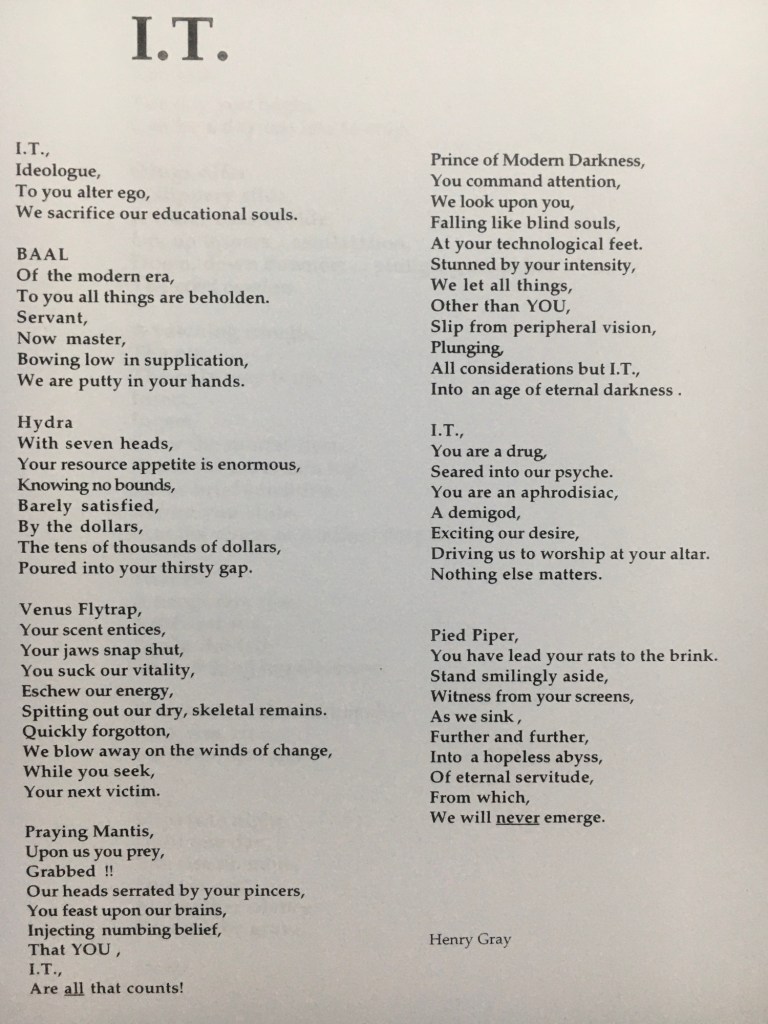




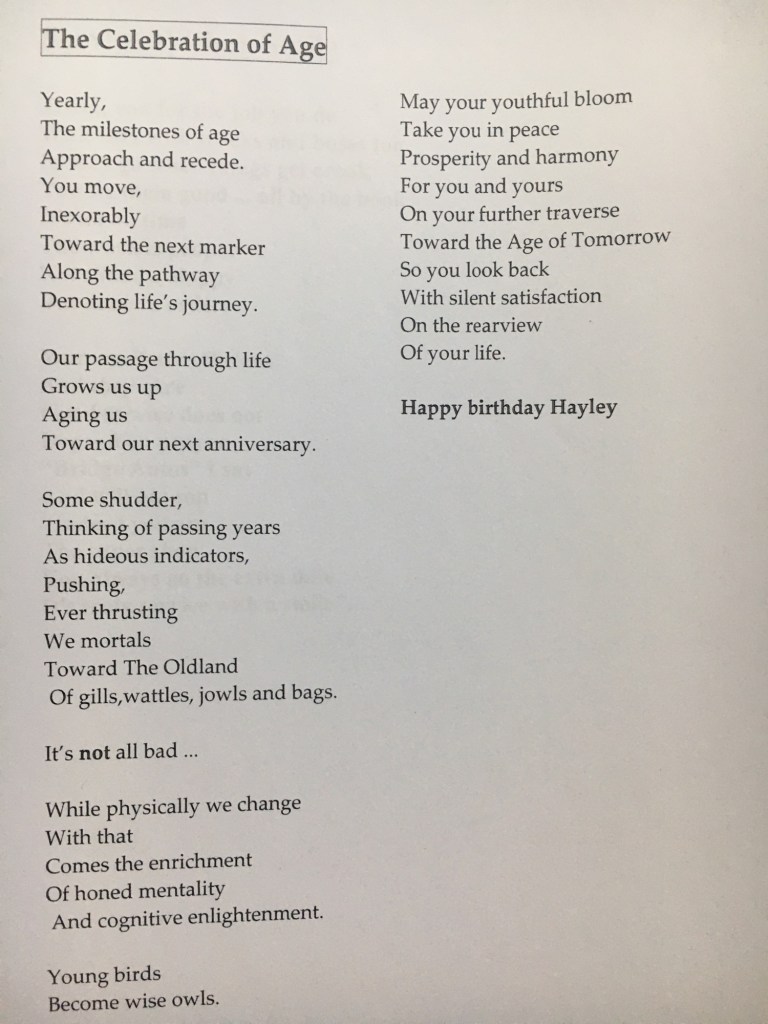





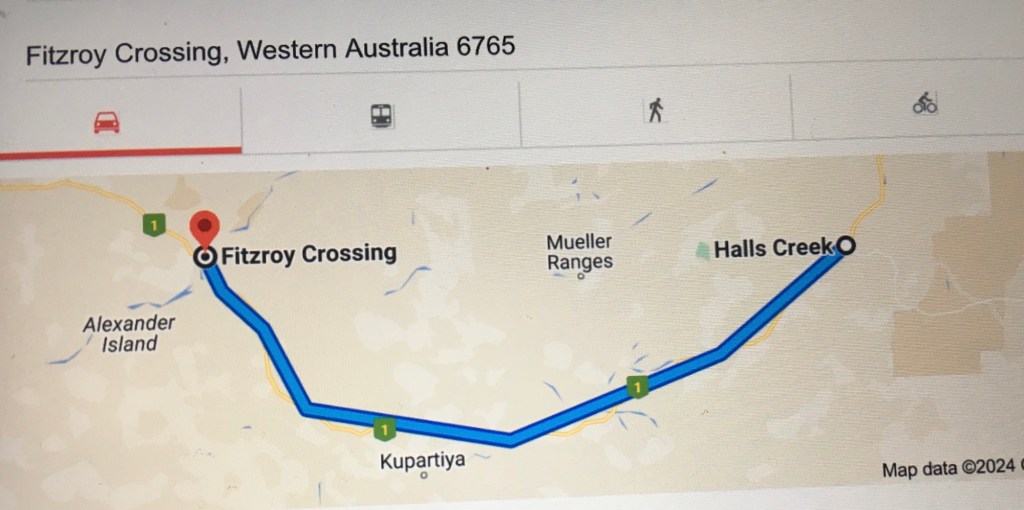


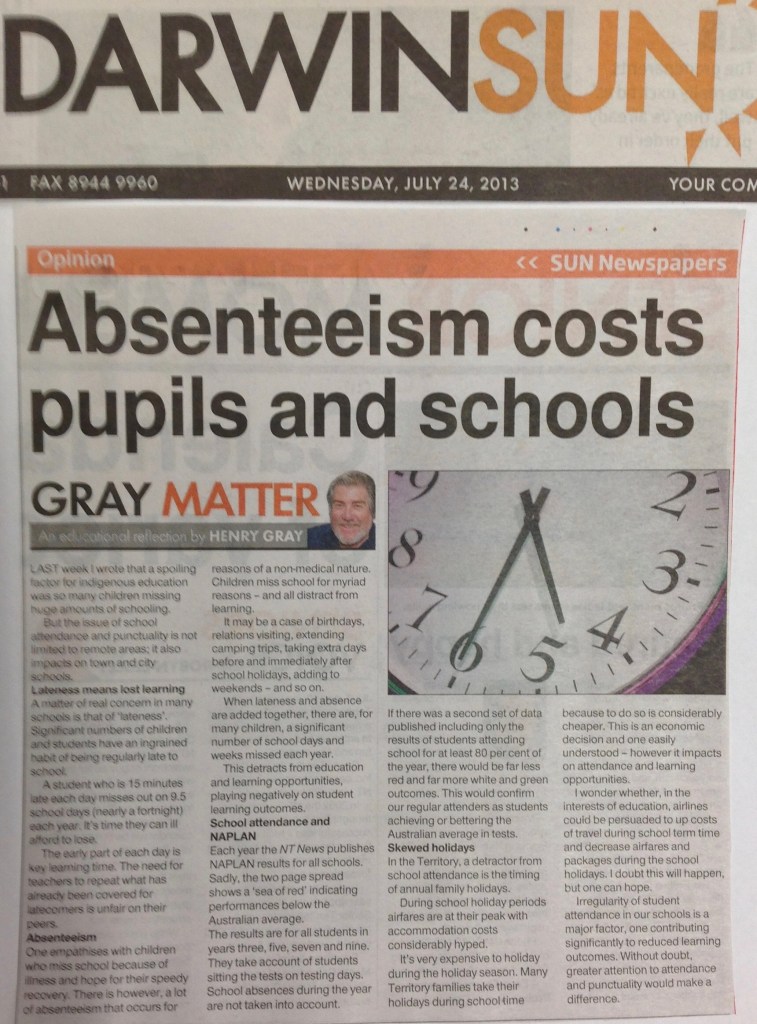
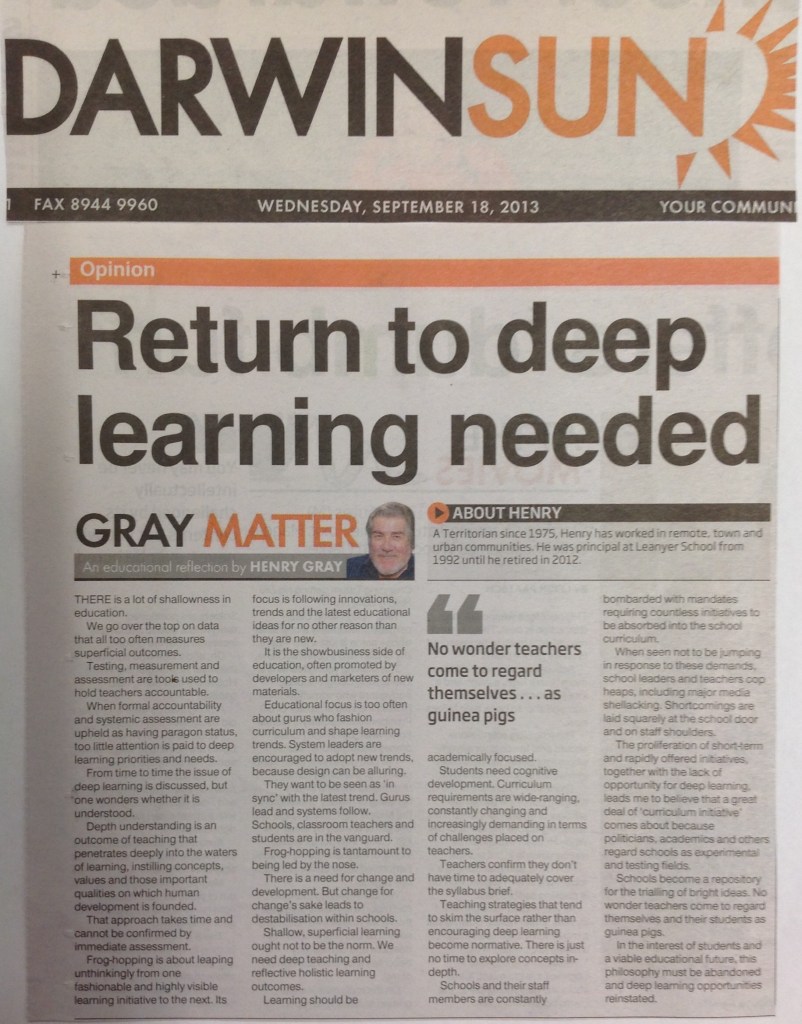
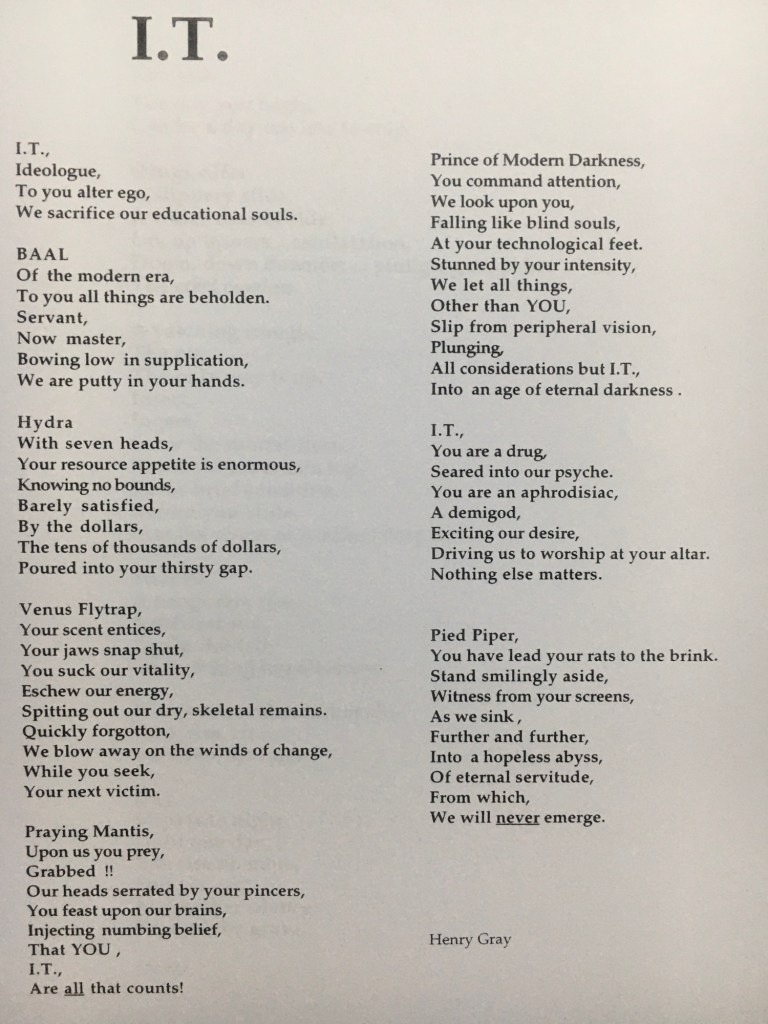

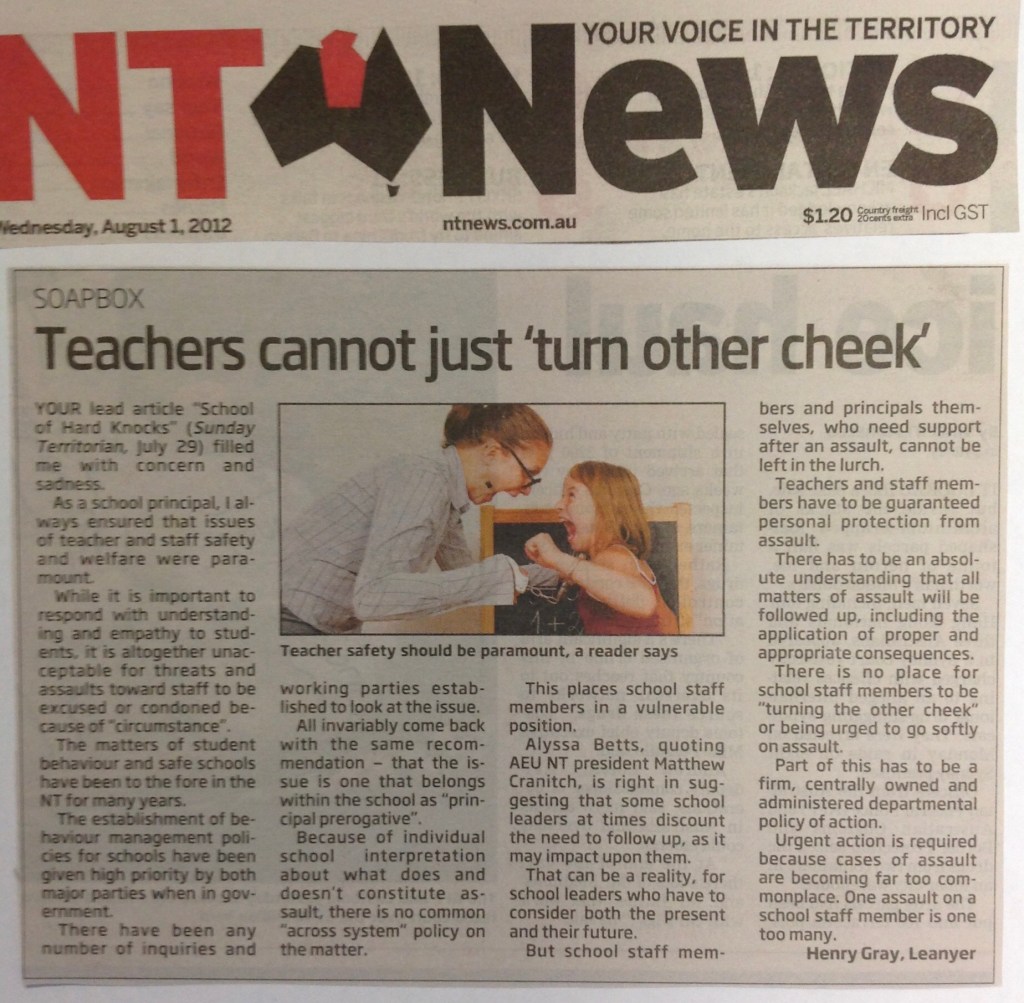
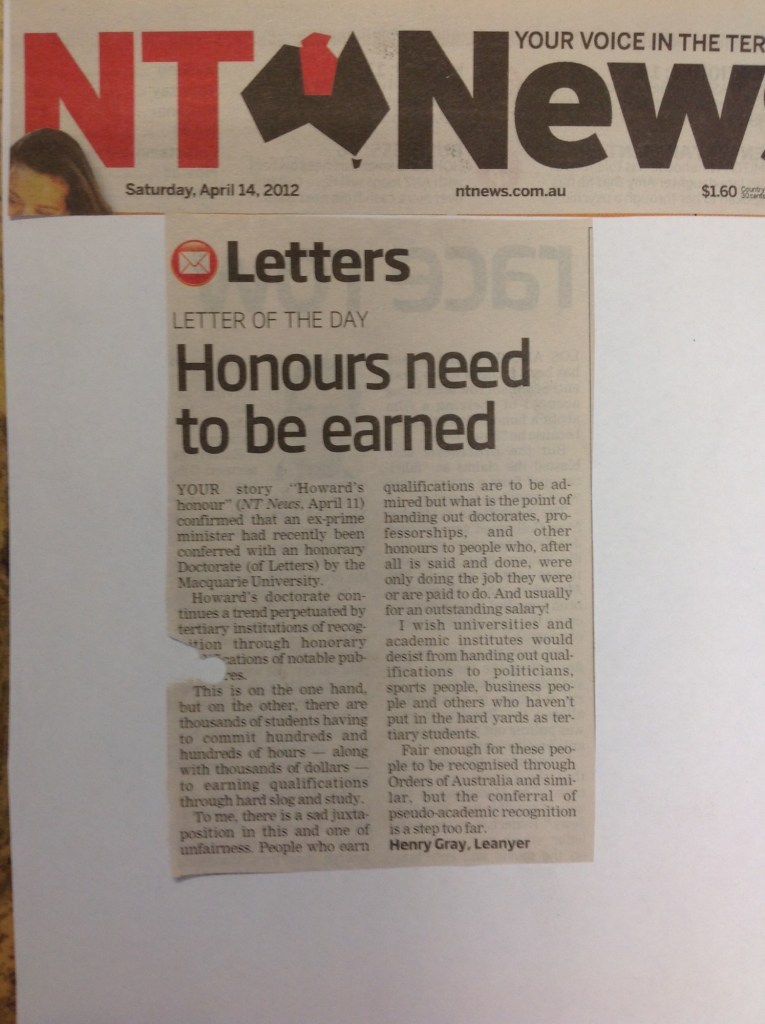
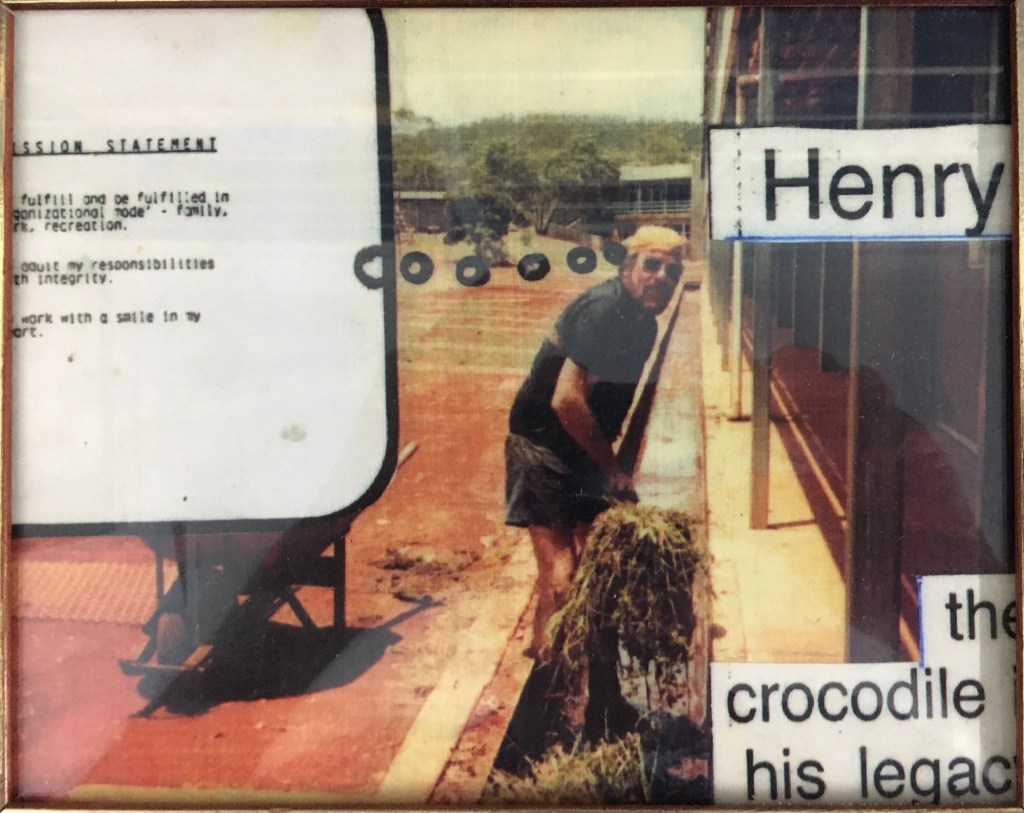
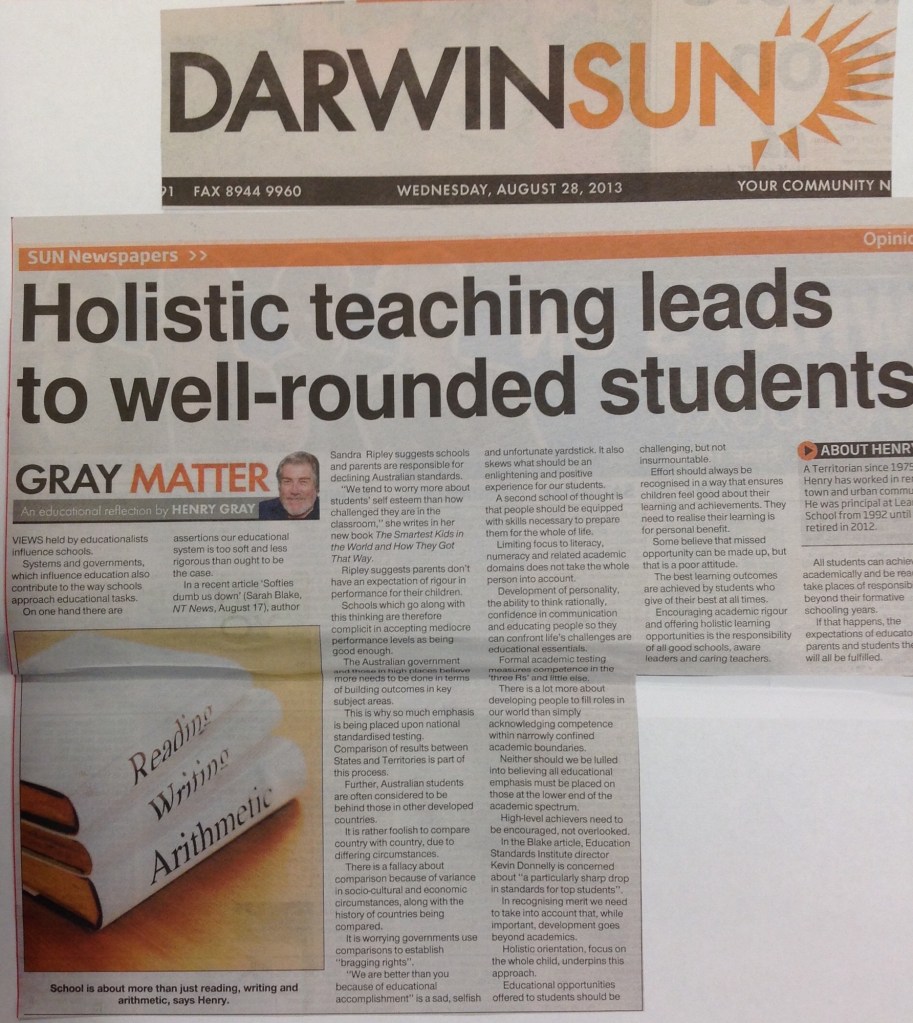
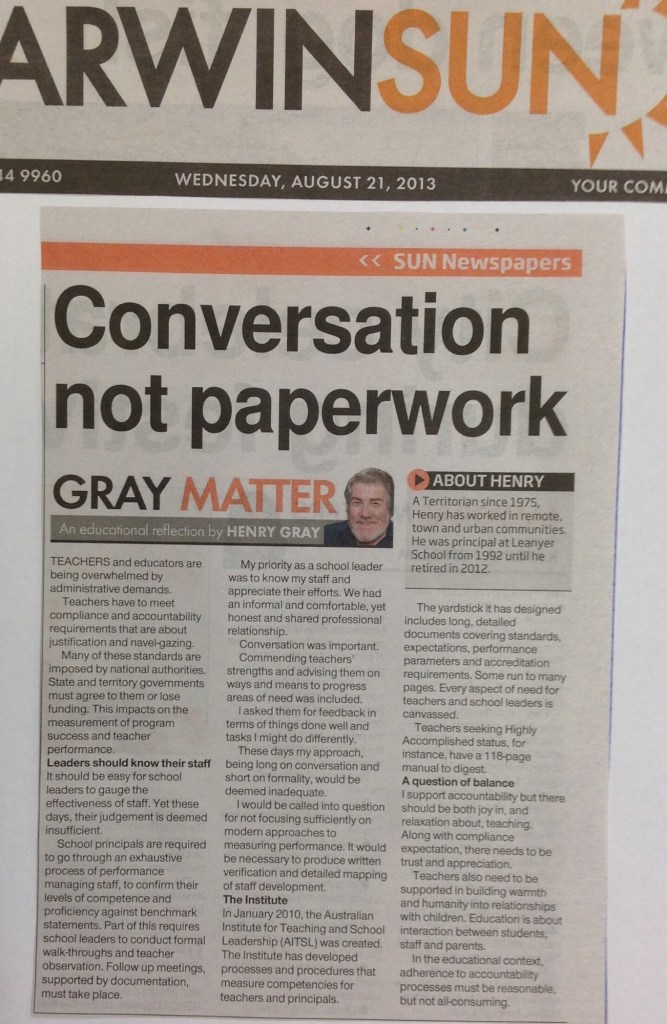


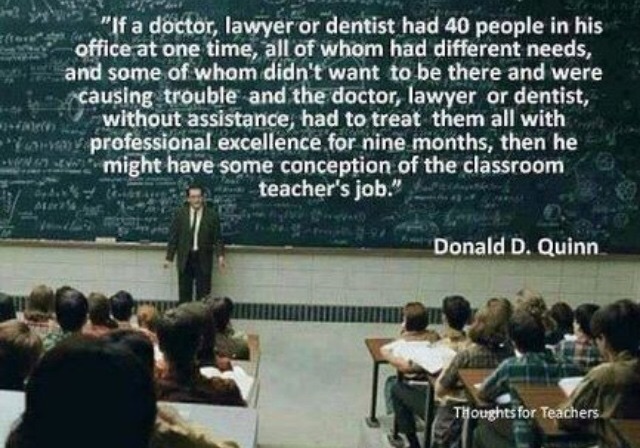
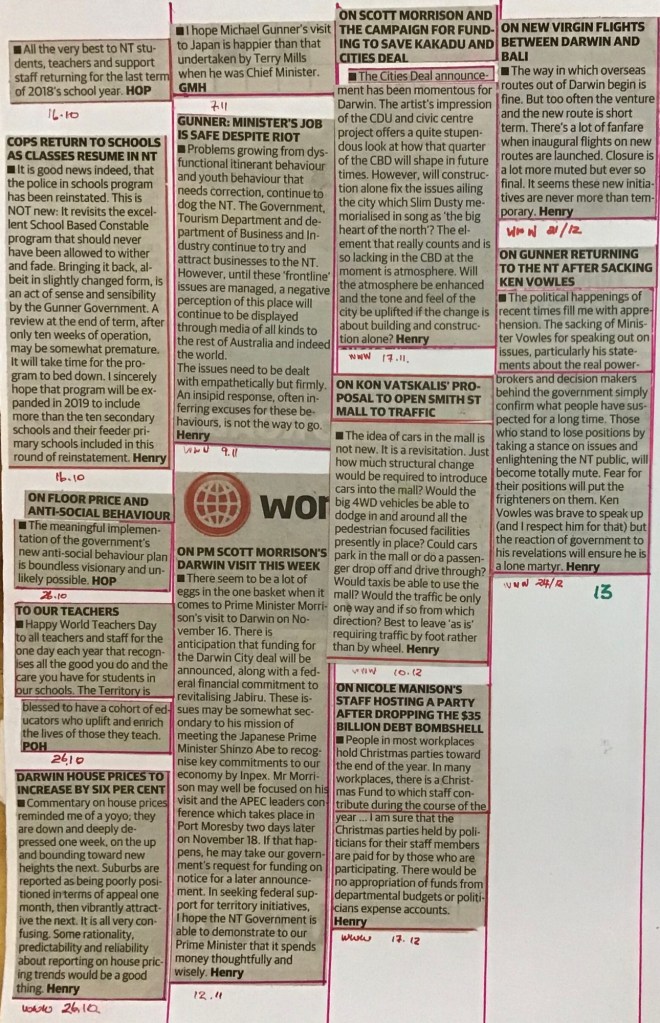
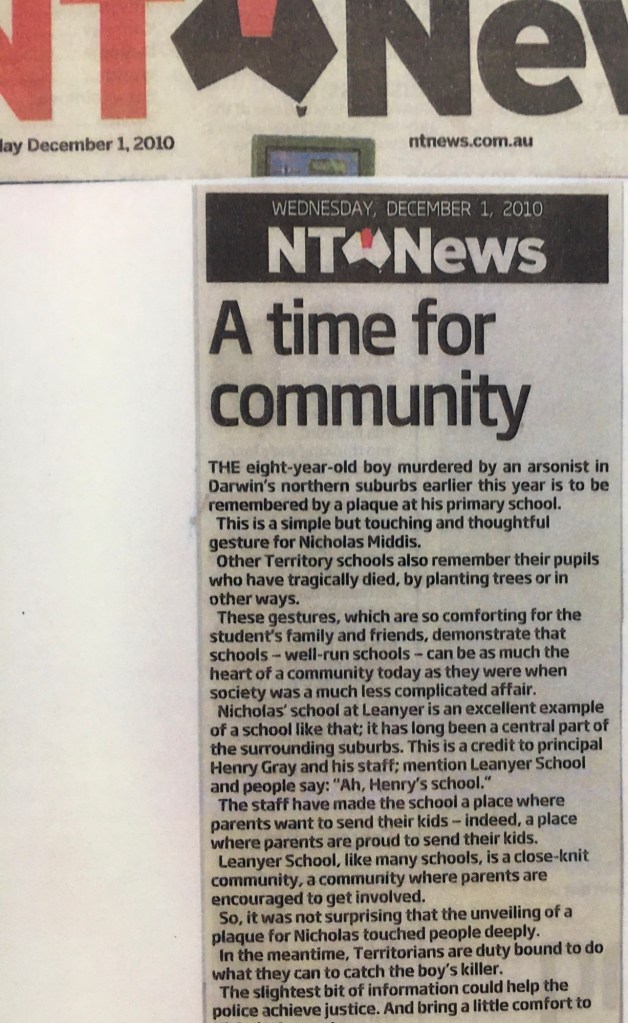
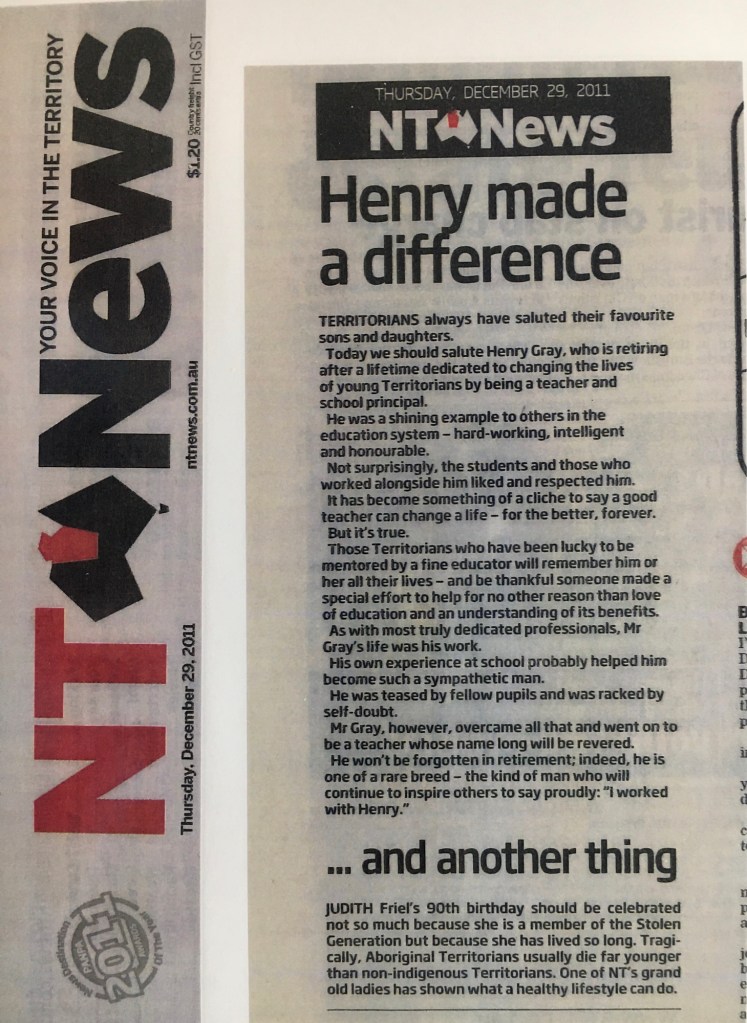
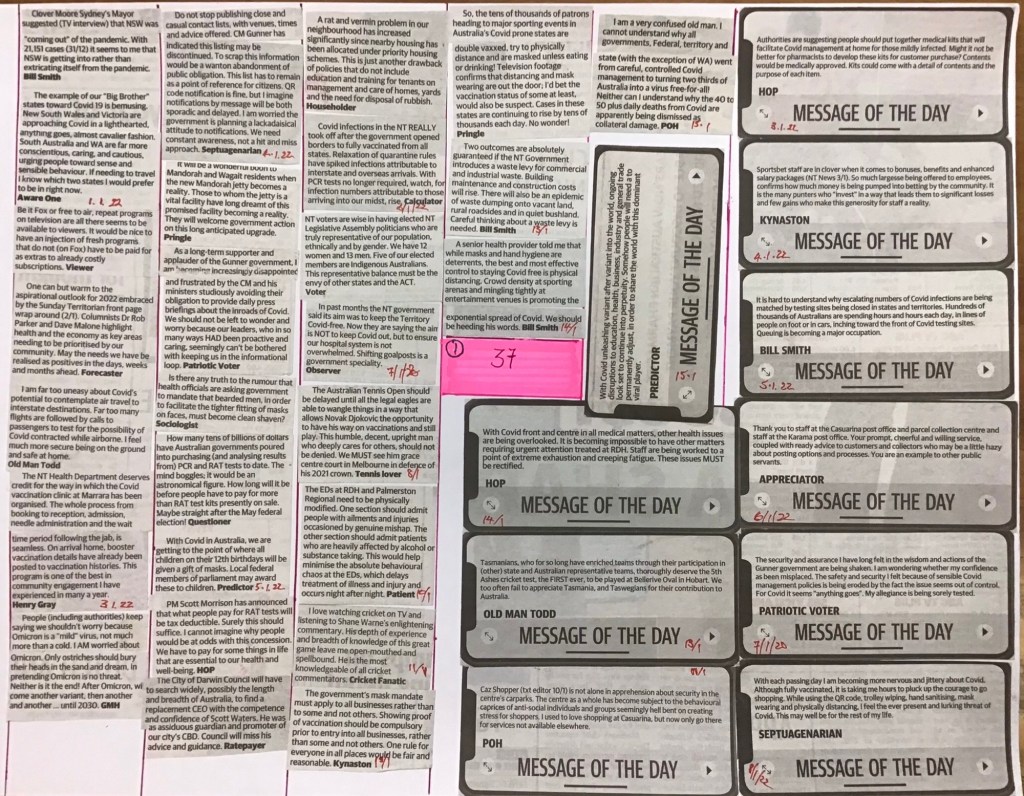




 EDUCATION, A LIFE FORCE