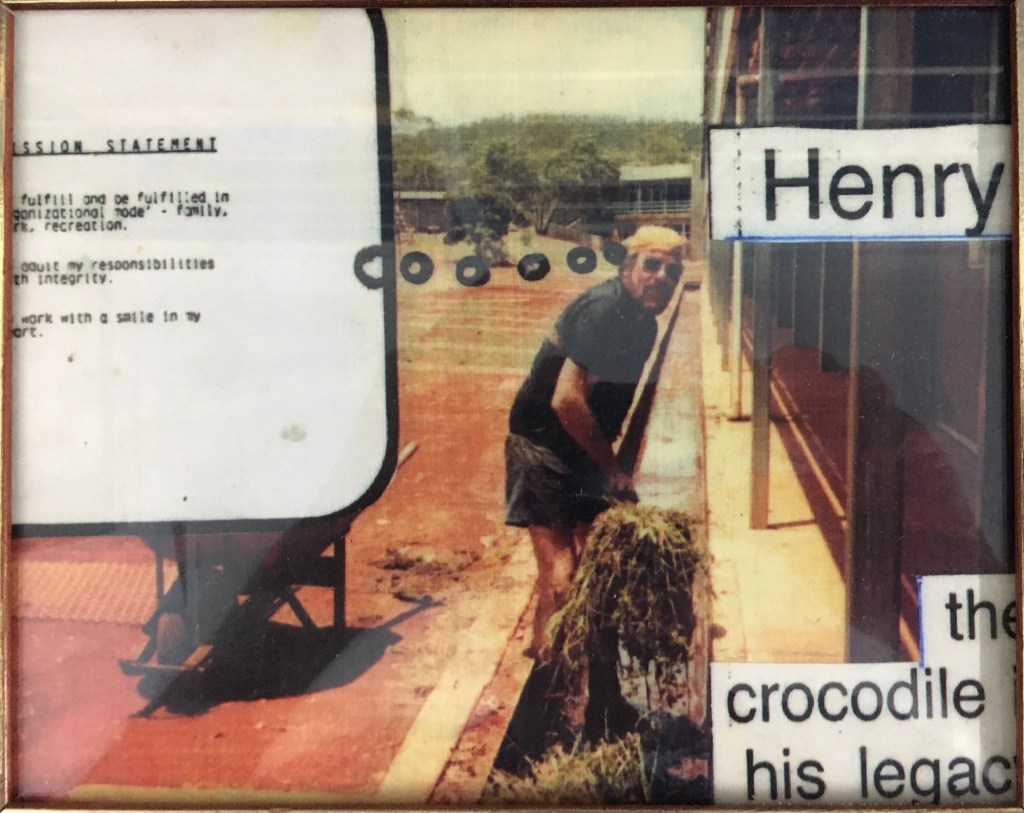
UNPLUGGING

Maybe it’s because I’m old but I find unplugging easy.

I turn off my mind, switch off my thoughts, and drift off to sleep.

Sometimes that is sitting in an easy chair. Sometimes it may be while I’m watching television and going to sleep. Usually, it’s when I go to bed switch off the light then unplug my mind and drift off into dreamland.

The Land of Nod is a nice place to visit.

TEACHERS – NEW IDEAS – WISE CHOICES OR FADS

Too often new, beaut ideas are grabbed and planted into schools in a faddish manner. This may satisfy romantically inclined educators but can reduce children in schools to being educational guinea pigs.

One of the things many educators find anathema is sticking with proven approaches. Methodology which is foundationally solid needs to be built upon in incremental terms. That guarantees that teaching and learning will go from strength to strength.

Sadly, the preference seems to be that of consigning what is working to the WPB. With that done, new beaut systems are brought in as replacement technology. It seems that educators get bored with ‘same old, same old’. They toss out good, proven and working programs to push new, innovative and largely untested practices onto schools and into classrooms.

While change is important, it should be both considered and incremental. Throwing the baby out with the bath water can create learning and knowledge vacuums. Neither should children and students in our schools and places of learning be treated as experimental control groups.

I believe it is essential for classroom teachers to consider changes that might be made carefully. Taking students with you through discussion and pre-consideration should be part of the process.

TEACHERS – ‘QUIZZING’ THE NEIGHBOURHOOD SETTING

This follows on from earlier vignettes on quizzes for children in classes.

Too often, children are insufficiently aware of their immediate, local environment. They can be in the classroom and not know who is next door in the adjacent module, who the teachers are, and so on.

I’ve spoken elsewhere about the importance and the use of quizzes. They can be constructive in a very stimulating manner.

The quizzing model can be extended to create an awareness of the whole school environment, particularly on the part of younger students. This might include sections of the school, functions of particular staff members, aspects of school history, particular school emphases and so on.

Many of our schools are situated not far from nearby shopping centres. For children a little older, incorporating what is connected with shopping centres nearby into the quizzing model can extend awareness and understanding. But too frequently, nobody knows anything about immediate and not-too-distant environments. It’s as if they are wrapped in some personal bubble from which they never emerge. Broadening the base of understanding and extending the comprehension to include these awarenesses is an essential cognitive tool.

Beyond people and places (or places the people), matters about bus routes, names and highlights of suburbs, sporting venues, and associated sporting activities can be included. Then, of course, there are Notary Public, government figures, and the incorporation of local organisations (emergency services, police, medical) that can be included.

The content field for quizzing and paralleling formal studies is wide open! Using the local environment can be an essential part of learning for students. It also helps teachers preparing these activities be more aware than they otherwise might have been.

WHAT IS A FRIEND

Someone honest.

Someone empathetic

Someone who told you things as they are.

Someone who rejoices in your successes.

Someone who is never jealous.

Someone you can turn to for advice and support in times of need.

Someone who values people over property and possessions.

Someone who keeps confidences.

A friend is all of the above and so much more. But remember always that to have a friend, you also need to be friendly.

TEACHERS – BACK TO SCHOOL POINTERS

While these pointers are primarily for parents, knowing and understanding them as teachers might help with reinforcement or reminding if necessary.

BACK TO SCHOOL POINTERS

1. Be confident, not hesitantly or ‘worried’ in conversation with or around children. Doubts rub off.

2. Label possessions – clothes, lunch boxes, – clearly and indelibly.

3. Choose lunch boxes small enough to fit into school fridges. Oversize boxes are often full of emptiness and take up unnecessary refrigerated space.

4. Be aware of healthy food policy for your school. Don’t pack poor quality food.

5. Be aware of school nut policies that are often in place.

6. Cut fruit, sandwiches and other food into manageable portions. Younger children do not get on with whole pieces of fruit.

7. Defence Force children enrol from interstate at this time of year. Know about the support that can be offered through Regional Education Liaison Officer’s (REDLO’s) for primary schools and Defence School Transition mentored (DSTM’s) for secondary schools.

8. Be aware of tutorial support programs for defence children arriving from interstate.

9. Be trustful and avoid being helicopter parents.

10. If parents need to have in depth conversation with teachers, make an appointment at school office for these meeting. Don’t shoehorn in and at Teachers who are trying to introduce children to the year and settle them down.

11. At home time, let teachers dismiss children to pack their bags including getting lunch boxes from fridge without doing it for them. Children have to learn these strategies.

12. Don’t crowd into classrooms and around doors at the start of the day or at home time. ‘Crowding’ leads to chaos. Wait at a respectful distance for children to emerge.

13. For Middle and senior school enrolments, discuss courses and study options with school coordinators within the first few weeks.

14. Most schools have parent/teacher information evenings within the first weeks of school. Plan to attend and ask question about school processes and directions.

15. Most schools have websites. Look them up on Google and read about your school.

16. LET GO OF YOUR CHILDREN FOR THE SCHOOL DAY AND BE TRUSTFUL.

17. Be aware that all teachers establish classroom rules with children. Learn from your children what they’re rules are, so parents and teachers can be together on the same expectational wavelength.

18. Become aware of school homework policy. Read handbooks.

19. If nearby when bringing or collecting children, avoid what can be disruptive conversations in loud voices with other parent. This talk can be off-putting to teachers and distracting for children.

20. Make sure vaccination and immunisation records are up to date and bring these records so they can be copied onto student enrolment data.

21. Ensure that a contact phone number is available to the school and always kept up to date.

22. Where applicable, know the cyclone policy applying to your school. Keeping a copy of this and essential data on the fridge or home notice board is not a bad idea.

TEACHERS – EXTENDED EXCURSIONS

Excursions have always played an important part in the educational opportunities offered children. Some excursions are local. Others are at distance from Darwin and Palmerston but within the NT. Extended excursions to other parts of Australia are not uncommon.

I believe that the purpose and reason of extended excursions should be to enhance educational opportunities for students . It can be too easy at times to overlook the benefits children might receive from these opportunities.

It’s not uncommon for students in the Top End to go on excursion to Katherine, Alice Springs, Jabiru or other centres within the Territory. There is a lot of learning that can be done in these centres.

At times the educational benefits that can be gained by students are minimised because of the visit’s focus. Katherine has extensive agricultural industries. Horticulture, animal husbandry and other agricultural enterprises are part of its development . There is significant industrial development in the town. As well, the centre is an important regional hub for places to the east, south and West.

It’s unfortunate that many excursions don’t to take the actual economy of the region into account. Rather than students becoming aware through visitation of what is on offer economically, they spend their excursion time in altogether different directions.

Included might be a trip down the gorge, hunting freshwater crocodiles the night, swimming in the pool, visiting Card Cutter caves and so on. While these activities might be part of an excursion, taking the other economic activities of Katherine Region into account should in my opinion be a part of the excursion itinerary. That then gives a complete picture of the students of what’s on offer with in the region.

Similar criteria when considering itineraries for other Territory centres called and should be considered.

Plan excursions carefully so that students enjoy what’s on offer but ensure that their learning and understanding of regions is enhanced.


NEVER JOBLESS

Excepting for the first four or five years of my life, I have really never ever been without a job.

As I grew older that extended to include more sophisticated jobs like cleaning dad‘s tool shed, maybe greasing the tractor, Looking after fuelling vehicles on the farm, and so on.

From the age of 15 through 17, I was at a college that required students to offset part of their fees by working; Working was deemed to be good for the soul. In that context, I worked at picking fruit, emptying bins, again collecting eggs but this time from the college’s poultry farm, and carrying out other tasks on the College farm.

For the following four years after receiving my Leaving Certificate I worked on my father‘s farm. That included ploughing, combining seed into the ground, harvesting, turning super bags, cleaning out the fowl house, grubbing doublegee plants out of growing crops, and stone picking in the off-cropping season in order to remove obstacles from the ground that would impede the cultivation in preparation for cropping and various other things.

I also helped run Vacation Bible Schools for my church, was a sometime lay preacher, a youth worker, and various other activities of a religious nature.

In 1968 and approaching the age of 22, I got lucky and managed through the help of a wonderful Education Minister in Western Australia (Edgar Lewis the member for our electorate) to get into teachers college from where I graduated two years later with a teacher’s certificate.

Then came my occupational job for life. After five years in Western Australia working for the Education Department in remote schools, we came to the Northern Territory. I was a teacher and school principal in five locations, two remote one town and two urban from that time until I retired in January 2012. I was ever so glad and still am, for the chance to be a part of educational delivery in WA and the NT.

Since retiring, I have discovered blogging, and LinkedIn, and enjoy writing to share ideas with others, giving back I hope, in the same way as people gave to me during my career.

That will probably continue for the rest of my life.

I’ve also, since 2012 (and actually back in the 1980s as well), worked with our university in teacher education as a part-time lecturer, observer of trainee teachers, editorial leader and marker of assignments. I also did a bit of work online in the later part of my time with Charles Darwin University, with students who were teachers in

training.

These days, I spent some time acting as The Editor for my grandchildren who are getting into the upper secondary levels of schooling. I’m happy to do that, because they’re sort of assistance that students need these days from teachers is often not provided – I guess I was lucky back in my time is the student when that first hand contact and into personality was the part and parcel of teaching and learning; not just the downloading of material online, giving it to students, And telling them to do this or that or the other project and research.

I also am in “urban farmer”. I grow pawpaw plants from seed, give away the plants and also give away fruit. It’s my part of helping people and it’s done gratis.

It’s true to say I have never really been without a job. Right now I am helping birds displaced by clearing to have a place offering food and water.

I have never really been without a job.

SCREECH, YELL, HOLLOW, SCREAM

Canberra May 29, 2024, heard on radio in Darwon

I have been listening to the federal parliamentary question time in the House of Representatives.

I am sitting in my car listening to it right now.

Talk about a circus of shouting, hollowing, screaming, and elected members on both sides of at the house. The whole thing is just a total and utter shambles and schnozzle.

I just hope that students and other impressionable people are not listening to the hubbub going on in the Federal Parliament this afternoon. What a terrible, terrible example our politicians are setting to the listening public.

One sensible question and one sensible answer fell into the midst of the session, but that was almost anachronistic.

And these are our leaders!!

TEACHERS – MEDIA AWARENESS

There is a deep and abiding interest by the community at large in matters of an educational nature. Increasingly print, radio, and television coverage refer to educational issues. Some people pay little attention to what is being reported about education because they feel it to be inconsequential. There is also a belief that what is reported, misconstrues facts. That to some extent may be the case; however it is important to be aware of the way education is trending within the community.

Retaining information about education can be useful. There are various ways and means of doing this, but it works best if collation is organised regularly (almost on a daily basis).

Newspaper items can be clipped and pasted in a loose leaf file, indexed book, or similar. Indexation is important as it allows you to quickly refer to things you may need to recall.

Photographing news clippings using an iPhone or iPad, saving them to your pictures file, then creating an album for clippings is another method that works well.

Scanning clippings and saving them onto USB stick is a method that works well. Again, indexing the USB file helps. It may be that you choose categories to index under, rather than an “A” to “Z”approach.

Clippings files can be backed up on iCloud or otherwise saved onto computer or USB.

From experience, the use of newspaper clippings when it comes to social and cultural education, cruising for general knowledge, for stimulating discussion in class, are but three ways in which they can be of use. Clippings can also be used to stimulate the content of debates, the writing of persuasive arguments for older students and so on.

Awareness of issues can stimulate professional discourse including helping to shape the way in which members of staff develop collaborative programming to support teaching in schools.

I believe teachers would find a study of media and the establishment of a clippings file useful and worthwhile.

TEACHERS – USE SILENT READING AS A LEARNING TOOL

“Silent reading” often takes place at strategic times during the school day. Children are engaged in “silent reading” (which is often anything but silent) straight after lunch or a break periods. This gives teachers time to organise and fine tune preparation for lessons to come. Sometimes silent reading is encouraged because teachers need time to complete records, work with individual children, and so on.

It’s often felt that silent reading does not really fill a useful or meaningful purpose in school programs. At best, it is often random and concludes with children putting books away. There is a possibility they have enjoyed reading, but with little sense of completion.

Silent reading is an activity that can be made engaging and meaningful. A working strategy might be as follows:

Ask children as they read to take note of the following. You might even develop these or similar markers with the class before this activity becomes operational.

• The title of the book and the authors and illustrators.

• The construction of a verbal summary about the book.

• The development of an understanding of that can be shared, of the main characters in the text, or what the text is about if it is nonfictional.

• A synopsis of what the reader has learned from the text to date. Every story has a moral, and every factual text A message that is being sold.

• An indication of whether the text is more or less appropriate for younger or older students and why.

• Are recommendation. Would you encourage others to read the book or not; why you’re making that recommendation.

Encourage children to take brief notes as they read, to cover the points listed above. You might also create a template or rubric that outlines these elements, with children to fill in the blank’s.

At the end of the period, ask a number of children to share their learnings as outlined. Oral expression can be assessed. Children are encouraged to build confidence through this sharing and that is the point should be understood.

It is wise to check the names of children on a list with a date to show when they have presented to the group. This means that next time the activity takes place, other children can be selected to offer their verbal summaries.

This could be pre-organised on a roster or keeps as a ‘cold turkey’ activity so children do not know when they will be selected.

Any activity that enhances “silent reading”, adding meaning and purpose is worthwhile. Value adding is an outcome and extension, enriching comprehension and oral expression opportunities

LIFE’S ACTIONS MORE IMPORTANT THAN CHURCH RITUAL

Brought up as a young person in a religiously inclined home, I practised religion and felt myself to be affiliated with a particular church followed by my parents during my formative years. That continued into my early teens and really up until I turned 20. Within my church I served as a lay preacher, are used leader, a person who participated in running Fake-ation Bible Schools for young people in our hometown and so on.

Not so long after I turn 20, I was appointed as a delegate to the State Conference held each year by our church. during that conference I was astounded to learn that money operation as in all churches belonging to this group were regularly asked to give, and give until it hurt, was not being used for the furtherance of the work but rather by the church leaders to amass assets. These assets included the purchase of property for investment and so on.

I asked questions at the conference of our leaders and those who were there as delegates. I was it that we were being urged to give money to further the churches work within Australia and overseas, when investment and by implication bank balances seem to be the important thing and the way that money was being directed.

In response to my questioning I was more or less told to “mind my own business”. Decisions impacting upon the church were made by people in positions of authority and it was not my right to question the propriety of what they did.

For me, being involved with organised religion and the visibly practising Christian began to cease at that point in time. I remind affiliated with the church only to satisfy my parents. That made me feel somewhat hypocritical because what I was on the outside was not how I felt about religion on the inside.

With the passing of time I disaffiliated from the church and from organised religion and that remains the case to this day. I have however tried very hard throughout my life to live in a decent and principled way and to help others per my mission statement which I will re-list at the end of this response.

For a long time after my severance from religious formalities and church practices, I felt guilty about what I had done and thought that I had somewhat apostatised. Some years decades passed, and I wrote a letter to my parents, who felt guilty about my departure from the faith, to point out that they had not failed me – that I had made my own decisions about the church and religious affiliation. I hope when they passed, it wasn’t with the feeling of guilt that they had misguided me in some way.

It was about going back to that conference and considering the priority is the church exposed and the practices (it seemed to me) in which the church engaged.

My parents had wanted me to train as a minister and become a pastor of the church. That of course never happened.

However, I think that my life as a teacher, educational leader and a person working with others has enabled me to fill the work I’ve done with the same (hopefully) positive outcomes for them (and myself) that would have ever been achieved had I followed my parent’s occupational wishes.

OH THE STORIES I COULD TELL

Do I remember life before the Internet?

Do I what?

I did the majority of my living – along with my family – in all sorts of places that were remote. That was back in the days of :

Emergency traffic by telegram at around $.60 for 12 words.

Transmission of telegrams from the Post Office and dispatch points that were quite public.

All mail sent by road with days and weeks taken for delivery in response.

Banking transactions if they were available had to

be conducted manually.

Long-distance telephone calls, called prank calls, cost several cents per minute, And we are often limited to calls of no more than three minutes.

It was all so interesting. Stories I could tell about what it was like a legion – and in some places I have published comparisons.

But one good thing about not having the Internet was that social media, being non-existent, was not the bane and often the evil of what it is today.

THE FIRST OF 290 COLUMNS

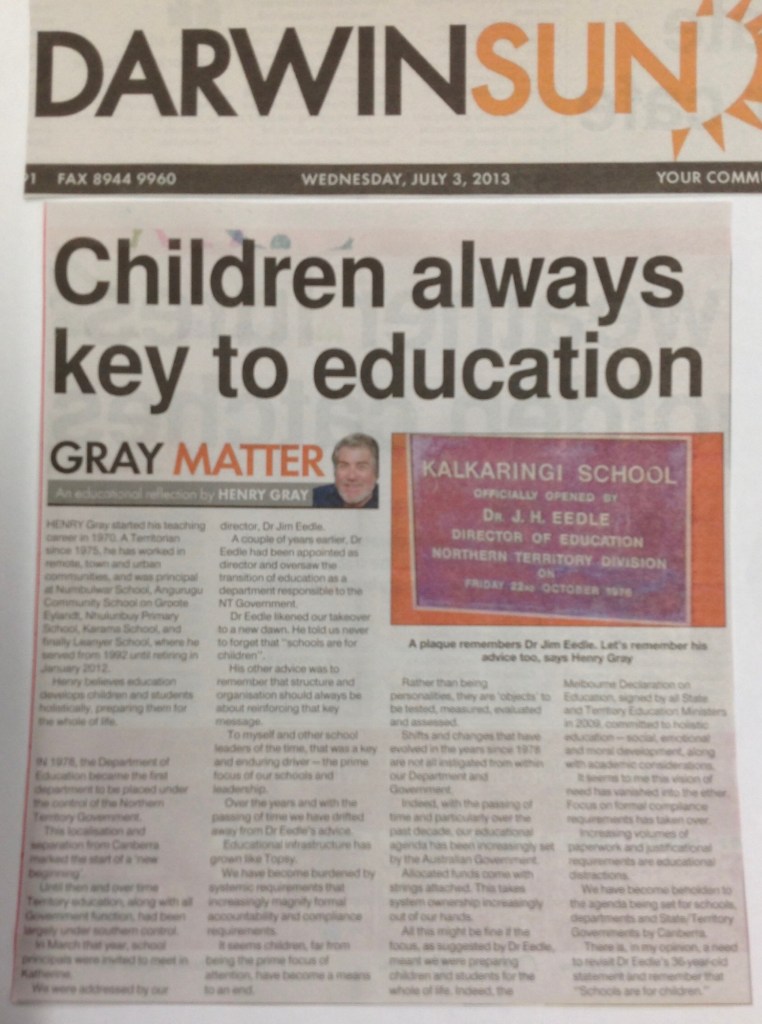
Starting in 2013, I wrote weekly column column on the Educational Matters or the Northern Territory news. These columns were regular until the newspaper changed its focus – some 290 columns later.

My first column.

Note: When asked to write, I accepted as a volunteer and was not paid for what I wrote.

ORAL COMMUNICATION IS A MUST

for the whole of my life, I have tried to be a person who is a good listener, a clear speaker, a careful evaluator of what others say, and a person who has tried to develop in others excellent speaking and listening skills.

For a long time, I was a member of the Toastmasters Club. That was in the Northern Territory of Australia. I became an Advanced Toastmaster at the highest gold level.

For many decades I focused on developing speech and speaking in a personal sense and through coaching and mentoring others. I think it is an area in which I am quite competent.

A worry that I have is that in becoming older – I am now 78 – time will see me lose my speech and speaking skills. I do not want that to happen and try very hard to maintain correctness in all areas of oral communication.

This is a field of critical importance and I worry that the skills are becoming lost by people who prefer to Communicate through fingers and text using electronic devices.

It’s Time to Stop the Breast Beating

I wrote this and it was publshed in 2013. Has the ‘attitude of supplication ‘ decreased. I think not.

In terms of educators meeting learner needs, it is time for us to stop the self-flagellation and breast-beating that accompanies educational accountability. “Are schools and teachers meeting the needs of children and students” is a question that needs repositioning.

Rather than schools and educators being dumped with loads of accountability for educational inputs and outcomes, it’s time for quizzing to turn to children and their parents. Self responsibility on the part of students and their parents should be the challenge. Are we meeting the needs of learners needs to be looked at in terms of “are children and their primary caregivers doing their bit toward the development of our next generation”.

I once had a conversation with a Principal colleague who told me of a meeting with parents over their child who was particularly and negatively challenging his schools’ culture and ethos. The parents upbraided the Principal for his lack of care and concern. They demanded he and the school do more for the child. The principal offered a conditional response. He and the school would do better for the child for the eighth of the year the child spent at school, if the parents would commit a greater effort for the remaining seven eights of the year – the time he was in their care.

This story goes to the nub of the issue.Schools have a role to play in child and student development, a matter educators have never shirked. However, parents are the primary caregivers and over time the gradual off-loading and dumping of rearing responsibilities onto schools is misplaced and alarming.

The notion of school being a place where fizz has to be applied to every learning situation in an effort to engage learners is equally as galling. Schools need to be fun places and learning needs underpinning with enjoyable experiences. However, there are vital aspects of learning that are repetitious, mundane and focussed toward cognitive appeal. Not everything can be bubble and froth because learning is not about fizz but about substance. 

Metaphorically, schools add the yeast added to the bread to make learning rise in the minds and souls of young people. That means biting onto key issues and chewing on the meat of learning opportunities.

The thought ‘best’ education has to be about froth and bubble in order to appeal to young people is a sad commentary on modernity. It also suggest that deep learning is unimportant.

Motivation and Inclination

There seems to be a belief held within society and certainly implied by Governments that all students are inclined learners. Nothing could be further from the truth. Deliberate disinclination is an ingrained element within the psyche of many children and students. Non-respondents may reject learning opportunities by passive resistance or by more belligerent defiance. All rejection is negative, confirming that while you can lead a horse to water you can’t make it drink.

If children come to school with attitudes of deliberate disinclination and defiance, it is hard to move them from negative to more positive attitudes without parental awareness and support. That is not always forthcoming and in fact parents often take the side of children, being in no way prepared to support the efforts of school staff.

It is behoven on children and students to recognise and accept responsibility for their actions. Educators are often too quick to excuse children and parents and too slow to recognise that the onus for change and development should be vested on the home as much as on the school front.

Sadly in this day and age, with parents compulsorily committed to work and earning, the upbringing and development of children, in almost total terms, is thrown at schools. I mean this quite literally because the social/government and system imperative plants this responsibility on and into schools. Many school educators feel they are being ‘commanded’ to bring children up. When societal failings become apparent, schools and their staff members are held up as being the major contributors to that failure. parents, prime carers and students themselves are home free. 

That is totally wrong. The wrong people and institutions are be3ing blamed for shortcomings, when the responsibility belongs to those whop are excused.

TEACHERS – MEDIA AWARENESS

There is a deep and abiding interest by the community at large in matters of an educational nature. Increasingly print, radio, and television coverage refer to educational issues. Some people pay little attention to what is being reported about education because they feel it to be inconsequential. There is also a belief that what is reported, misconstrues facts. That to some extent may be the case; however it is important to be aware of the way education is trending within the community.

Retaining information about education can be useful. There are various ways and means of doing this, but it works best if collation is organised regularly (almost on a daily basis).

Newspaper items can be clipped and pasted in a loose leaf file, indexed book, or similar. Indexation is important as it allows you to quickly refer to things you may need to recall.

Photographing news clippings using an iPhone or iPad, saving them to your pictures file, and then creating an album for clippings is another method that works well.

Scanning clippings and saving them onto USB stick is a method that works well. Again, indexing the USB file helps. It may be that you choose categories to index under, rather than an “A” to “Z”approach.

Clippings files can be backed up on iCloud or otherwise saved onto computer or USB.

From experience, the use of newspaper clippings when it comes to social and cultural education, cruising for general knowledge, for stimulating discussion in class, are but three ways in which they can be of use. Clippings can also be used to stimulate the content of debates, the writing of persuasive arguments for older students and so on.

Awareness of issues can stimulate professional discourse including helping to shape the way in which members of staff develop collaborative programming to support teaching in schools.

I believe teachers would find a study of media and the establishment of a clippings file useful and worthwhile.

TEACHERS – TRIP DIARIES

While children and their families are not encouraged to take annual leave during school term time, this can be unavoidable. We cannot dictate to the parents when they take the children from school for holidays because the circumstances are beyond our control.

Parents will sometimes come and approach schools and teachers for work to be done while children are on holidays either interstate or overseas. It really works! The work state is that best sporadically completed. Young people also feel it to be an imposition and don’t approach tasks with a positive mindset.

I was often confronted by families taking leave during school time. Home work as described above was never said. Rather, I’d sit down with children, talk with them about trip diaries and encourage them to compile a journal that covered the holiday period.

Children who accepted this task were rewarded when they returned to school. This happened in a number of ways:

Children had their diaries read, were able to share them with classes, and received certificates commemorating the work that they had put into their journals.

Students shared their journals with their classes, educational units, and often at unit or house school assemblies. One of my methods was to interview children during assembly using an “question-and-answer” technique.

On occasion, local media was contacted meaning of the children were featured in the local newspaper with the work they had done being acknowledged.

Encouraging children to complete diaries commemorating their travels gives them and indelible and everlasting reminder of the undertaking. It has the added benefit of encouraging them to keep records, the strategy that will stand them in good stead throughout life.

Consider this as a strategy that may be useful during your teaching career.

TEACHERS – STORYTELLING: A WONDERFUL TEACHING SKILL

Story telling as a part of the teacher’s repertoire should not be allowed to die. If it is fading, consider the need for its resurrection.

Story telling has become a lost skill for many teachers. The emphasis on its importance has diminished because these days the use of technology is substituted for old fashioned story telling by voice. It is now more fashionable to sit children in front of computer screens or smart boards, with DVD’s doing the story telling.

I’d encourage teachers not to allow story telling to become a lost art. Children of all ages love story telling.

There is the ordinary and more usual form of ‘once upon a time’ story telling. This narration approach is embellished if the narrator adopts a characterisation role, with different vocal impressions representing characters within the story.

There are other variations.

Rather than being a narrator, the storyteller can get inside the story by assuming character ownership. Telling a story for instance “Goldilocks and the Three Bears” from the viewpoint of being one of the characters and embellishing the story from that particular character’s viewpoint, adds a quite exciting variation.

The “character” chosen need not be animate! Using the same story, the storyteller might choose to be the plate of porridge, the broken chair, the disappointed “too hard” bed, or any of the other artefacts in the story.

These variations can appeal to the imagination of children and to get them really fired up. Storytelling lends itself to extension in drama, art, and elements of science, maths and written expression.

I believe it quite possible to link storytelling and extensions to elements of the curriculum. But it takes engagement and getting outside the purist form of written documentation (The way in which curriculum documents often dictate resources and approaches) in order to achieve these ends.

HAVING IT ALL

To me, “having at all“ means to be happy and contented with life in terms of my contribution to that life (which includes many people, family, personal, and professional).

It also means to be happy and satisfied with what life has given to me through actions and interconnections that I have with people.

It also means to have been satisfied with what life has built for me not just immediately but over the many years I have been on earth.

There are challenges, there are celebrations, there are people and there have been people over many years with whom I have engaged.

In so many ways I’ve had it all. I did my latter years I’m still having at all.

TEACHERS – THE GAME OF EYES

The ‘game of eyes’ is an interesting one to play with children and students. Rather than asking students to put up their hands to answer questions, let them know that you will be answering questions and then making eye contact with the student who is being “asked” to answer the question.

This is an alternative way in which comprehension exercises, conducting impromptu quizzes, and otherwise engaging the focus of children can be undertaken.

Eye contact is confidence building. Having children interacting through eyes is a great way of involving the whole class.

If eye contact is made with a student who isn’t responding, make a gentle note of that to the child and move on.

Using this method of eye contact is a great way of dismissing children for recess, lunch and at the end of the school day. Rather than naming children to leave or having them all bolt at once, let them know that the child whom the teacher is looking is the student designated to leave.

It can be a case of “when your eyes touch my eyes that your signal to stand and leave”.

This method is a superior way of identifying with children. When the child rightly identifies that she or he is being looked at by the teacher, a word of acquiescence or praise can be a good thing.

Try it with the eyes.

TEACHERS – JOY SEASON

The last weeks of Semester Two offer students, teachers and school communities the chance to enjoy activities that can be overlooked. For many schools these weeks encourage celebrations that go beyond academics. Tests and exams are over. Primary and secondary school students are about to enter a Christmas holiday break. This is a period that allows for some quiet reflection on the year to date. It provides a chance for students and staff to participate in some of the more non-academic but vital pursuits associated with school experiences. Activities that help build school spirit and camaraderie can include the following.

* Major assemblies featuring class performances.

* Dry season concerts, often held outside at night.

* End of semester school discos.

* Overseas exchanges with sister schools.

* Intra school athletics carnivals .

* Shared sporting and cultural activities between schools.

* School community breakfasts.

* Open days and school fetes.

The focus on academics and assessment programs, poses a danger that these respite times and activities can be put on the back-burner or overlooked altogether. Including these activities provides balance for students. They should be included in school calendars.

The social and emotional aspects of student development are supported by these and similar activities. They offer children a chance to relax and recognise non classroom abilities in each other.

Not wasted time

Some would reason there is no place in our schools for activities of this nature.

Their argument is that each minute of every school day should be devoted to the academic aspects of school life. However, children and teachers are human.

They need and deserve the chance to associate though activities designed to build school spirit. The importance of these shared opportunities cannot be overstated.

Building tone, harmony and atmosphere within schools is an enormous challenge. Visitors gain instant impressions about how the school feels. School spirit grows from the synergy or collective energy developed within and between students and staff. It’s the association that comes from sharing happy times that builds toward the tone and atmosphere sensed by visitors and others. In turn, the reputation of schools is either positively or negatively judged by this feeling of comfort.

It is sharing collective times together that helps in building these perceptions. The “joy times” help create an everlastingly good impression about schools. That is appreciated by those within and by the community at large.

TEACHERS – STUDENT WELFARE IS PARAMOUNT

WELFARE IS PARAMOUNT – BASED ON AUSTRALIAN MODEL

Safety and security for children are paramount entitlements. It doesn’t always follow that these needs are being met for children. Sadly in these modern times children seem to be increasingly the victims of those who prey upon them. Sometimes evidence of this may be obvious but often that is not the case.

If teachers believe, from observation or from conversation with children, that something is untoward, it’s important for them to report their concerns. Northern Territory law obligates people to report matters of concern is a punishable offence.

Classroom teachers, particularly those new to a school can find themselves in an invidious position when it comes to reporting. Raising matters of concern with senior teachers, assistant principal or principal (depending on the way the school is structured) is wise.

In some schools matters reported to the principal are then raised to Family and Children’s Services at that level. This enables the principal to take ownership of the report on be half of the school. It also offers a shield to teachers who may be worried about parent or caregiver reaction if a report is made. In any case it is important that school principals know about matters that are reported so that follow up do not come as a surprise.

Reports made to Family and Children’s Services are treated confidentially by the Department. However surmising by parents about the report source may well take place.

Although the situation can be difficult, the law is quite clear and reporting obligations are mandatory. Children and young people have to be safeguard and protected.

It is a part of our duty of care to children that these matters be followed up and not set aside. In fact, at the start of every semester teachers are required to sign their understand about reporting matters of a sexual nature and other abuse. This is after receiving correspondence and participating in in service that deals with these issues.

Awareness is important and observation plays a distinct part in this process.

MR PUTIN, I DESIRE CONVERSATION WITH YOUR ALTER EGO

If I could talk with someone for just one day, I would like to be Vladimir Putin’s alter ego. I would persuade in the following areas.

(Alter egos are persuadable but of course Mr Putin is intractable.)

Following conversation the Alter Ego would speak as follows.

“Within the day I would try to right the wrongs committed against Ukraine. I would withdraw all my troops, and initiate peace and reparation talks with President Zelenski.

I will put in place plans to reconstruct those areas of Ukraine my troops have laid desolate and waste.

I would withdraw from all occupied territories associated with Ukraine including the Crimean Peninsular.

I would expedite reconstruction by designating engineers, construction firms, and at least 25,000 personnel to go in and start rebuilding all that had been wrecked.

I would require my defence forces to locate them to remove all minds that had been laid.

I would employ Russian earthmoving companies to make good the terrain devastated by trenches and upheaval.

I would authorise a payment equivalent to 10,000 American dollars to each Ukrainian displaced by the unjust war I created.

I would support Ukraine in joining NATO. I would also withdraw Russia from membership of the Security Council because we have sold that institution short.

Together with my generals and other key decision-makers supporting my commands, I would petition that we appear before the International Court of Justice, pre-empting that appearance by pleading guilty to heinous crimes.

My final act would be to dissolve the Russian Government, stepping down as leader and asking the United Nations to instigate procedures to turn Russia’s autocratic power into an elected democracy.

On that day I would try to make good all that has been so wrong in the way I have acted in the past.”

Back to real life.

How I wish!!

TEACHERS – CLASSROOM GUESTS

In these modern times, there is a huge depth and breath of material requiring curriculum coverage . Gone are the days of simple, straightforward 3R’s teaching.

While most teachers have a fairly good general knowledge, the specifics of learning activities being presented can be enhanced through having guest speakers work with children. Over the years I have witnessed many classroom situations where children’s understanding has been magnified by guest presenters.

There are one of two things that need to be taken into account when inviting guests to support learning activities.

First and foremost the visitor needs to have ochre card clearance to work with children. Checking with the school office on compliance is a good idea. Sometimes teachers might invite guests into the classrooms without clearance from seniors. That is most unwise.

It is judicious to ascertain the appropriateness of the visitor, from those who have been in the school for a period of time and may know of past occasions when support has been offered.

A visitor should be well briefed on teacher expectations. He or she needs to know the age and comprehension of children. The level of vocabulary needs to be appropriate in order to ensure understanding. This engages children. If class members find it hard to understand what is being said or done, they quickly switch off and can become disruptive. Making sure all these “before hand” elements are taken into account will ensure that the visit meet its objectives.

It goes without saying that guests need to be thanked. If that thanks is offered by a child or student representative, then so much the better.

TEACHERS – EATING LUNCHES

Supervision of lunch eating arrangements is often part of teacher responsibility. That’s especially the case for Early Childhood and Primary children.

Quite often, lunches are eaten in classrooms before children go out to play. There is usually a time of 10 or 15 minutes allocated to lunch eating. This might include getting lunches from refrigerators or luggage lockers, eating, disposing of litter and replacing the lunch containers in school bags.

Keeping children focused on eating can be an issue. Often, there are children who have nowhere near completed eating by the time the release bell goes. These slow eaters can finish up sitting outside eating their food. That is supposed to happen; however more often than not, the lunch finishes up in the bin.

There are ways and means of encouraging children to eat lunches. Requiring children to stay in their seats or sit in social groups and acting in an acceptable manner may work for some. Playing soft music as a background can relax atmosphere and encourage eating.

When supervising lunches, I often used to play a game that focused on etiquette, table manners, posture, and general good manners. Included was commending children who ate with their mouths closed and didn’t become distracted. Giving points to groups for compliance is a way of reinforcing positive eating behaviours. On occasion, I would introduce imagination. One example was out the class pretending to be eating daintily and displaying appropriate etiquette, with a reward being a figurative visit to Buckingham Palace for afternoon tea.

Teachers sometimes use lunch eating periods for marking work, talking with colleagues, or preparing for lessons to follow. That’s important, but there are games that can by played or or attitudes that can be built around lunch eating.

I found that children quite often appreciated me taking an interest in what they were eating and interacting with them during lunch periods. This can be an enriching time.

TEACHERS – RECOGNISE THE SHY CONTRIBUTOR

All children are different one from the other. In every classroom there are some children who stand out and come more readily to the notice of teachers than others. These are students who invariably volunteer answers to questions and to push themselves forward to be noticed and appreciated by teachers.

When discussing issues or undertaking teaching tasks requiring oral responses by children, it’s wise to make sure that the “quiet” students are recognised and invited to speak.

Quieter and more reflective students often have a lot to offer. They bring interesting perspectives to bear on conversations and the classroom discussions. If they are pushed to one side by exuberant children, what could be quite valuable material to conversation and topic consideration can be lost.

One way to ensure that all children are included in a conversation, especially if the teacher is new to the group and doesn’t know them all that well, is to have a class list with them. As a child speaks, place a mark against their name. Quieter students will be more quickly noticed. Invitations to the students to join can help bring the whole class together when considering issues.

It is important that every child be given the opportunity to contribute to discussions and classroom conversations.

IT’S THE MEMORIES EMBEDDED WITHIN

The personal belongings I hold most dear are the encompassments of my life, from birth to the present day, embedded within my memory and housed in my brain.

My life is full of memories, some of them sad but most of them positive. Embedded within is everything embracing my family, work, recreational pursuits, and contributions in a total personal and professional context.

I have material aids, tangible artefacts and other physical and visible paraphernalia. But at the end of the day, these things can be left behind and it’s what remains within my memory that I treasure the most.

Those treasures come to light in conversation, in sitting and reflecting and casting back to the past through to the present and indeed prognosticating toward the future.

My most precious treasures of those within my mind.

TEACHERS – ALWAYS BE AWARE OF CHILDREN

It’s important the teachers understand duty of care responsibilities. Teachers have to be aware of and able to account for children at all times. Inside and outside classrooms, this is a number one priority.

If it is necessary to leave the classroom for urgent reasons, ask a nearby teacher to keep an eye on the class while you are out of the room. It may not always be possible to have a colleague fill this role. That being the case, having someone from the school office come up and keep an eye on children for a brief period will cover this responsibility. If a support staff member (not a teacher but a person who works with teachers for the betterment of children) is available, that will suffice.

Duty of care is a common sense issue. If the accident, injury or class mishap occurs and no teacher is present, the onus can come back on the teacher.

One aspect of care that can be easily overlooked is yard duty. Those rostered on our “loco parentis” responsible in duty of care terms for the whole of their rostered time. Teachers cannot be late out or leave their duty early. A person who is rostered for duty “first” recess or lunch, needs to wait until the “second” person on the roster is out and about.

Accident or injury that occurs in the duty area but without the teacher being on duty can leave teachers liable for negligence and worse.

If unsure about duty arrangements or responsibilities, checking with school leadership teams or classroom teachers have been there for a good while is highly advisable.

This is a priority issue, one that cannot be left to chance

TEACHERS – VOLUNTEERS ARE WONDERFUL SUPPORTERS

Volunteers offer wonderful support to classroom teachers. There are myriads of tasks that need to be undertaken in classrooms. Signing reading books in an out, hearing children read, working with small groups, changing readers, and doing physical tasks around the classrooms are a few of these things. Volunteers also assist on school excursions, overnight class camps and so on.

Without volunteer support, teachers would be stretched at times to almost impossible limits. Those fortunate enough to have volunteer assistance are greatly blessed.

There are some things about volunteers that classroom teachers need to consider. Firstly, volunteers must have ochre cards authorising them to work with children. Volunteers without cards mean the school is committing a breach of law.

There is a need for teachers and volunteers to know each other well. It’s very wise for a conversation to take place that establishes the boundaries under which the association of teacher and volunteer will work.

When volunteers are hearing children read or are conducting groups, it is important that they model correct speech and have a clear understanding of what they are doing. They need to be able to speak correctly and comprehend tasks being undertaken. Teachers need to ensure that volunteers have the capacity to complete tasks to which they are contributing.

Importantly teachers must ensure that volunteers do not exceed their authority when it comes to commanding or disciplining children. This can easily happen, particularly if the volunteer is older by some years then the teacher.

Discretion is an essential. Volunteers with concerns about the children should share their observation with the class teacher, not with other parents or staff. Confidentiality is paramount.

Dress is important. Volunteers need to be attired in an acceptable professional manner because they are working in classrooms with children.

If these elements and other practical needs are taken into account, the support the volunteers offer can assist classroom teachers quite immeasurably.

It’s is essential that volunteers are appreciated and this is conveyed to them from time to time. Taking volunteer support for granted is an absolute no-no. Certificates of appreciation, notes of thanks from children and staff and acceptance of them as people are strategies that help in this regard.

TEACHERS – PRESENTING AND SPEAKING IN PUBLIC

Many educators are required to present in public. That may be in every environment from staff meetings to convention centres. Delivery may be to a few people or to hundreds attending conferences. Presentations at workshops comes into the equation. Included are interviews that may be on radio, television on u-tube and similar.

The way in which presenters deliver their messages often reveal alarming shortfalls in speech and speaking methodology. The way in which presenters speak will reveals shortfalls, most of which cannot be hidden. Gesture, body language, word choice, speech hesitations, and awareness of time are a few areas often requiring education. There are many others.

It is said that beyond a presentation, 7% of audience recipients remember the speech content and often for only a short time. On the other hand 42% of audience groups remember the manner and method of delivery and for substantial periods. It is the way in which presenters present, rather that what they say which makes key impact.

I believe that educators, from teachers through to principals and departmental CEO’S should consider speech and message delivery training. Many politicians and notary publics certainly need to hone their speech, speaking, listening and comprehension skills. This might be through formal coursework, or through joining an organisation that promotes speaking, listening, appreciation, comprehension and evaluating skills. Toastmasters and Rostrum come to mind but there are other organisations including Zonta, an organisational supporting women within this domain.

It is easy to discount the importance of speech delivery: It is an area that needs our attention.

_________________________________

COLLECTIONS DONATED TO NT ARCHIVES

Collections of a bower bird

List of Items Donated

To the NT Archive

September 24 2019

* Leanyer School Yearbooks 2012, 2013 3 items

* Portfolio of advertisements Leanyer School 1992 onward 1 item

* The Saga of Harry Scrawls Volumes 1 – 5 in a bound volume. Two copies. 2 items

* ‘Media Stories and Public Relations’ Leanyer School 1992 onward. Laminated

stories from the newspapers. 1 item

* ‘Media Releases’ Leanyer School 1992 onward. Laminated stories from

newspapers, electorate office newsletters, Education Department

publications and so on.

* ‘Our School Was 21’. Compilation of all the activities including letters,

programs, copies of photographs and memorabilia associated with this

anniversary. Bound into one volume. 1 item

* ‘Leanyer Primary School Action Plan for School Improvement

2000 and Beyond’. Slim, summative document outlining school and

community held ambitions and context. 1 item

* Leanyer Primary School Annual Report 2006. 1 item

* Leanyer Primary School Strategic Implementation Plan 2009 – 2012. 1 item

* ‘Student Councils: Organisations Empowering Primary School Students as

Decision Makers’ 1997. [Dissertation completed as a part of university study

by Henry Gray] 1 item

List of Items Donated

To the NT Archive

July 5 2019

* Leanyer School Newsletters 1992 – 2010 bound A5 volumes. 27 items

* Leanyer School Newsletters 2007 – 2010 bound A4 volumes. 8 items

* A3 Folders containing features and highlight items.

* National Teachers Day features 1999 – 2001.

* World Teachers Day features 2003 – 2006.

* Education Week celebrations 1998, 2000, 2005,

* Back to School features 1999, 2001, 2004.

* Education and Children’s features 1999 – 2001.

* Schools Our Focus and School Enrolments 1999, 2000.

* Newspaper and Departmental Clippings 2004 – 2006.

* Leanyer Folder. ‘Renovation Celebration’ and other features. 8 items

* Leanyer School Yearbooks 1998 – 2013 (No copy of 2006) 31 items

[Multiple copies of some years.]

* Leanyer School Print Media stories 1992 – 1999. 14 items

[ Multiple copies of some years. Some original copies from

the NT News and other papers. Some photocopied. All in

bound, laminated covers.]

* Leanyer School assorted media stories in A4 folders from 4 items

1992 – 2000 and beyond.

* Leanyer School Contributions and Celebrations’ 1 item

[Bound volume.]

* Total 93 items

More has been donated since.

*

*

*

*

TEACHERS – CLASSROOM WORK DISPLAYS

Classrooms are sometimes negatively remembered because the walls are bare and the environment lacks wall charts, work displays and other evidence of learning. On other occasions, they host displays that seem to stay, without change, almost forever. Work displayed during term one may still be on display in term four. Such classroom environments lack vibrancy and relevance of current learning outcomes.

While it takes time to organise displays of student work, it’s well worth the effort. Children are reminded of what they have done and are justifiably proud of their “product” when it is on display. They are able to compare their work with other’s efforts. Displays can become talking points and they can also be used when revising and reinforcing previous learning.

It is important to change work displays periodically so they are always contemporary. This also give students, whose work hasn’t been displayed, a chance to join in the showing. Children love sharing their work with peers and with parents who visit from time to time. My belief is that parents feel welcome into classrooms when children’s work is on display.

When work is about to be taken down and replaced, an idea is to take photographs or video of the room. Pictorial material can be included in a physical or electronic folder and kept within the classroom for reference. This builds up a compendium of work that can be used on parent teacher nights, open classrooms and as a reminder of what has been done when records are being prepared.

TEACHERS – EDITING AND FIXING

It is important for children take pride in their work. This adds to the meaning and purpose of tasks set and assignments completed. For children to be proud of their work is part of the completion and finishing of written product.

When children write, encouraging them to edit their work is important. Spelling, punctuation and grammar are elements that need to be checked. The level and degree to which this is done, depends on the age and academic level of students. Editing should be to the level of curriculum expectation for children in the class.

Peer editing can be adopted in some circumstances. Self editing is also an important habit to establish with children. When work is finished and before being passed up for marking, ask them to go through carefully and check for errors. This is a good way of establishing editing as a habit.

In fixing mistakes, encourage children to do fix the error neatly. Computer produced documents need to be edited in a way that is understood by students.

Running automated grammar fix and spellcheck programs can mean students fix mistakes without understanding why that fix was necessary. My suggestion would be that students print off text, effect manual correction, which is then inserted into work.

Corrected work should be appreciated and assessed by teachers. It is frustrating for children to do their very best, only to have their work briefly scrutinised or passed over by their teacher.

Editing and fixing are two important and sometimes overlooked work traits.

TEACHERS – CLASSROOM GROUPING

CLASSROOM GROUPING

The thought of teaching a class of 20 plus students can be quite overwhelming for many teachers. This is especially the case when focus on individual learning needs is considered.

Organising children into groups is one way of helping manage this issue. Grouping according to ability is one method adopted by teachers. While that’s can be a useful strategy, it is important not to overlook self-sufficient groups. It is easy to spend disproportionate amounts of time with children in challenging groups, overlooking the needs of others.

A method that can facilitate classroom organisation is identifying children with leadership capacity who can oversight classroom groups. However, it is important not to place too much onus on group leaders, who have their own work to do.

When grouping, it is important to study peer preferences, so that groups do not include students who are incompatible in the same desk set. It is fine to work on relationships development overflow time but as an initial challenges its should be avoided.

Gender may come into grouping consideration. Having groups comprised of all girls or all boys may challenge the development of normal social relationships that should evolve within a group context. Considering mixed gender grouping may be wise.

Setting group level tasks and offering recognition and rewards that recognise groups can be a way of introducing healthy competition and social awareness. Learning characteristics and styles of group members might be taken into consideration when establishing groups.

It can be possible to identify particular students as group leaders. If this option is employed, discussing maters that will unfold during the day with these children can be a useful strategy. Along with the teacher, they know what is coming and understand the roles they might fill during particular sessions. It is never too soon to develop leadership skills with children.

LEGACY IN REQUIEM

The legacy I would like to leave behind when I pass from life on earth is that people will remember me as a person who lived his mission statement in life.

They will recognise my aims in living life were met and lived and that I did good for others. That my priorities were fulfilled.

In the end, I will be remembered as a person whose goals in life – as enunciated in his mission statement – were truly, honestly and thoroughly.

My mission in life. The summary of my living and remembrances in death.

TEACHERS – EXCURSIONS CAN ENHANCE LEARNING

Excursions can play a very important part in extending educational understandings for children. To study in classrooms and to learn in the traditional way and also through online or library extension is fine. If children can be taken out on visits to places being studied, that really helps. To “see” what one is being taught and to observe things as they happen, reinforces and cements learning. Excursions can help make learning live.

There is a need to prepare students for excursions. Ideally, excursions should be during the middle segment of the lesson or learning sequence. The initial elements of lessons lead into the excursion, with follow up after the excursion tying the venture into learning outcomes.

All excursions should be relevant. There is at times a tendency for excursions to be stand alone affairs disconnected from teaching. In that context they are an outing unrelated to learning.

Binding excursions into the text of learning is part of the warp and weft of the learning fabric. These activities have a meaningful part to play in teaching and learning. They can enrich the program and add value to educational outcomes.

TEACHERS – BE VISIBLE AND KEEP DETAILED RECORDS

Written several years ago but more relevant than ever

I offer this vignette in cautionary terms. Teaching is a profession that requires increasing vigilance in human relations on the part of teachers, school leaders and principals.

In recent years, the issue of child abuse has increasingly come to the fore. Lots of abuse issues, most of a historical nature, are being raised. Various Royal Commissions and Inquiries have highlighted the matter. I have heard that from Victorian Inquiries, around 1,600 issues have been and are being followed up (July 2015). There are inquiries taking place in other states and territories.

Without doubt many of the allegations being brought against alleged perpetrators of past abuse, especially sexual abuse, are justified. They need to be followed through. However, there are instances when allegations are made with mischievous and malevolent intent. They hang those falsely accused out to dry.

The recent program on ABC “Four Corners”illustrates this point. A female teacher in Melbourne was accused of sexually interfering with two boys around 30 years ago. She was dragged through a messy court process, including being accused, found guilty, and jailed. The case was subsequently appealed and another grimy court process ensued. At the end, she was found not guilty of these crimes and acquitted. Her career, of course was absolutely ruined. The protagonists who had brought the case against her, two men in their early 30s (they had been boys of seven or eight at the time referred to in the allegation) have not to this point in time been charged with their own gross criminal conduct. The story’s inference is that they have simply shrugged it off! Significantly, the Victorian Department of Education, Teachers Union and Teachers Registration Authority appear to have offered no support to the teacher.

Allegations made against teachers presume guilt until the teacher proves his or her innocence.

I have sought advice on what recourse is available to people who are falsely accused of interference with children, particularly when cases are brought years and years later. The response I have received is that it is very unlikely prosecution will be brought against false complainants.

The only recourse available to someone falsely accused and acquitted, is to seek redress through the civil court.

The purpose of this particular vignette (which follows from the one before) is not to pursue the issue of recompense. Rather, it is to strongly suggest educators keep a clear, detailed and time noted record of instances when they have been connected with students in counselling and developing them. Nothing beats a detailed diary. When moving schools, retiring or otherwise moving on, take these records with you. Always keep them in accessible place. Under no circumstances destroy or discard those records.

If allegations are then brought, there is a clear record to show the date, time, place, and nature of the counselling. Often details brought by the complainant are fairly vague and being able to refute them with accurate data is if inestimable value.

There are one or two other points to keep in mind.

If counselling children, make sure that you do so in a place that has visibility from the outside. A room with a see-through window, a common area within, a learning module, or a location within a linear classroom close to an open door are suggested. In the circumstances it’s not a bad idea to write down the names of people who observed, or were in the “visible” proximity at the time.

If the classroom teacher, it is always useful and indeed recommended that you report matters of counselling and discipline to a senior or to the principal, along with having kept a written record.

Those who have false accusations brought against them, regardless of outcomes, are never the same people again. I understand they look at life differently. Their outlook becomes tinged with suspicion. They wonder if they can never be part of trustful relationships again. This issue is one of growing consequence and something all educators need to take on board and carefully consider. Don’t live in fear but never think it can’t happen to you: It can.

TEACHERS – ALWAYS BE CIRCUMSPECT BECAUSE MAKING ALLEGATIONS IS ALMOST A FASHION

The spate of abuse inquiries happening around our nation at the moment are raising the issue of abuse to the forefront of public awareness.

Without doubt, some of the allegations levelled against teachers at others are as a result of the “stimulation” generated by these inquiries.

Sins against children need to be visited and perpetrators punished. However, the reputations of those who are completely innocent of any wrongdoing, need to need to be protected.

I would contend that keeping a distance between professional and social contact by teachers with parents of children is wise.

Our actions today need to be such that we protect and guard against future allegations.

COLD! WHAT IS COLD WEATHER?

In Darwin, the three levels of temperature that dominate are:

Hot

Very hot

Hot as hell.

It is never ever very cool in Darwin. As we approach the end of May, we have yet to experience a minimum overnight temperature of less than 20°C. Very rarely during the day, even in the middle of our dry season, are maximum temperatures less than 30°C. Added to that, the humidity for most of the year is oppressive and stifling. For the majority of the year, that humidity persists 24/7.

I love the cold weather. When we have travelled past times to two places that are cool and cold, I have always enjoyed that chill on my skin.

Darwin is home. But only because I’m prepared to compromise. I let my love of cold weather take second place and stay put in the city that was once described as “The Big Heart of the North” by Slim Dusty – in my opinion, the best country and western male singer we ever had in Australia.

TEACHERS – CONTACT – KEEPING IT PROFESSIONAL

Teachers and parents occupy a special and unique partnership when it comes to the development of children. They come together during parent teacher interviews during reporting time in order to share information and compare notes about children and their progress.

This association can sometimes lead to the formation and development of socially based friendships between parents and teachers. While it is important to get on well with parents and primary caregivers, I believe it important not to confuse professional obligations with social contacts.

If issues of professional and social contact become entwined that can lead to teachers being less definitive than should be the case when dealing with children. Teachers may tend to excuse or find a reason for poor behaviour. They might determine that circumstances are impacting on student performance. While understanding students, it is important expectations should not be reduced because of intimate knowledge or inside information available to teachers. This may result in teachers being labelled as “unfair” in dealing with children in different ways. It may also lead it to teachers diminishing standards and justifying lowered expectations.

There is a danger in socialisation. On the basis of some case studies teachers getting too socially close to families and children within those families, may bear the brunt of unfortunate allegations and accusations levelled against them in future years. That has happened in the number of cases, with teachers reputations being permanently besmirched by unfair and untrue allegations over inappropriate conduct. A recent “Australian Story” reporting on the jailing of a female teacher for alleged interference with children 30 years earlier – with the woman eventually being exonerative and acquitted – illustrates my point. Had she not been friends with the family, this matter would never have arisen. Cases reported in the media from time to time confirm that allegations brought against teachers are not rare. Even with acquittal, the teacher’s reputation is forever ruined.

TEACHERS – WHAT PEOPLE SEE IS THE ICEBERG TIP

The work of teachers and school leaders often reminds me of an iceberg. An iceberg reveals only 10% of its mass. The other 90% is hidden beneath the water, visible only to marine creatures. In the same way what is seen of the work done by teachers and school leaders is 10% seen and 90% unseen.

Perception

The all too frequent public perception of teachers and school support staff is that they work for six hours each day five days a week. This 30 hour working week is complimented by 12 weeks “holiday” each year. Those working in schools are deemed to be people on Easy Street when it comes to occupational comparison.

There are of course some who appreciate the job of teaching and education as being in depth; however the idea that the job is rather superficial appears to be held by many people.

One of the criticisms heaped on teachers, support staff and school leadership teams is that teaching is an easy job, generating far too many rewards. I have heard people say that teachers should go and get themselves a “real job”. Letters to newspapers regularly decry teachers as being too well rewarded for the tasks they undertake.

What is entailed

Teaching is far more than what is depicted by the professions percentage of public visibility. In fact, teaching is but one small part of the educational equation. Detailed planning, preparation and programming, taking many hours of time, preceding the act of classroom teaching and direct engagement with students. Beyond teaching there is the recording of outcomes, (testing, measurement and assessment), review and then the considerations of revision and extension. These educational elements go well beyond teacher and pupil interaction in the class room.

After hours commitment

A drive past most schools before and after hours, on weekends and during holiday periods will reveal a growing number of parked teacher’s cars.

Staff members are inside working on the huge number of tasks that embrace the teaching profession. Salary recognises teachers for around 37 hours per week, yet many in real terms many are working upwards of 60 hours during the same period.

These days, there are more and more meetings in which teachers and staff members are required to participate. Staff and unit meetings, moderation meetings, performance management meetings and a plethora of other gatherings have proliferated. Most are held outside the scope of the normal working day and week. Teachers organise extended excursions. They coach and manage teams and groups involved in sporting and cultural exchanges of several days duration. Preparation for their normal classes before going is part of the deal. They are part of fundraising activities, school council committees and school improvement planning groups. The list goes on.

A ‘giving’ profession

Unlike many occupations, teaching does not pay overtime. The incalculable number of unpaid hours devoted to their task by educators makes ‘giving’ one of the key characteristics of those engaged in the profession.

I abhor the fact that teachers and school staff members are so often knocked. Ours (and I say ‘ours’ after being retired for a number of years) is a selfless, giving and caring profession . Most of us are there for others and without the work we do, our society would be the poorer. Ours is one of society’s linchpin professions.

TEACHERS – PROGRAMMING SHOULD BE FLEXIBLE

Planning and preparation are vital prerequisites to teaching and learning. Unless lessons are carefully planned there is every chance they will go awry. When that happens students are dissatisfied and teachers unfulfilled.

There’s a juxtaposition to this. It sometimes happens that “once in a blue moon” opportunities present themselves to the school. It may be a visit by players from an interstate football team. It could be that a Notary Public whom no-one was expecting happens along. It could be the sudden arrival of what had been an unplanned Arts Council performance.

In these instances it can be wise to set aside preplanned lessons so the children can participate in activities brought to the School by visitors or performers.

If teachers decline participation because the program has to be forwarded and nothing can get in its way, a class of disappointed students will be the result. Because the learning is “forced” children will be resentful and less inclined to appreciate the lesson. Little will be done towards building relationships between students and the teacher.

Of course, if the activity or the visit is for a higher or lower year level within the school, carrying on with pre-planned activities is fine. Making sure children understand why they’re not joining in will help in setting learning attitudes.

___________________

BONES ALL INTACT

Like the vast majority of people in this world, I have had my share of ups and downs as far as health issues are concerned.

I would imagine that of the 7+ billion people living today, there would be no more than 10 of those who have never been impacted by aspects of health challenges.

With the threat of disease and the uncertainties we are confronted with these days, I can say that never have I suffered any broken bones. No big bones, no little bones, no toe bones, no finger bones, and no other bones.

Arthritis tells me that my bones are alive from time to time – but they have never been broken. I hope it remains that way until the end of my days.

TEACHERS – ASSEMBLY ITEMS

Most schools, particularly primary schools, hold regular school assemblies. Once a week or each fortnight parents and community members are invited to the school. During assemblies classes put on items or entertain to share learning outcomes and skills. In most schools and assembly roster is drawn up well ahead of time so the teachers and classes know when it is going to be their turn to perform.

It is important to begin planning and preparation for an assembly presentation a long way of the time of delivery. Having students discuss what they would like to exhibit is one way of getting them involved. Planning and preparation for an assembly might be based on reminders of what will be done, with practice and preparation being “a little and often”. School assembly presentations can be spoiled if there is a rush to get ready at the last minute. Last-minute rushes cause teachers to become frustrated and students to become edgy. That is the recipe for guaranteeing the assembly will not be enjoyed.

The prospect of performing at assembly can be a motivation for children. Practice can be offered as a reward for classes who finish work early. Part of refining assembly items can come from discussion between teachers and students.

Quality assembly items confirm ownership by the children in the class. Having children narrate, lead and generally present items, engages parents and those attending. If the teacher does all the leading and children are an “accessory – after-the-fact” the assembly is lot less impactive and performances a lot less memorable. For teachers, there is reward in terms of recognition that comes their way for the efforts they have made in preparing classes to present. An assembly is also a way of showing the community just how much interest in and understanding teachers have of children in their classes.

It’s important to make sure the parents of children who are performing at assembly have lead time in order to organise their programs so they can attend. It is very disappointing to children if their parents and relations cannot be there. It is also disappointing to parents who miss out on the children’s performance because of short notice or even no notice.

Evidence the parents love assemblies rest in the fact that many of them take movies, photographs, and other pictorial memorabilia of their children’s performances. School assemblies are one of the most important ways school leaders and teachers have of presenting in public. Assemblies celebrate children and a prese

TEACHERS – TRANSIENT AND LATE STUDENTS

Beware the student who is often late. Your school may have policies dealing with late arrivals. Notification to the front office, if required, need to be followed. Careful marking of the roll also helps to identify children who have a habit of being late to school.

Children who are frequently late do little for their educational opportunities and can detract from the learning entitlement of others. This is because teachers have to go over what has been covered in order to bring latecomers up to date. Teachers may elect to catch children up in their own time. However, this takes away from their refreshment breaks and down time.

One method that might be employed is assigning worksheets to children who are late, with the requirement that missed activities be done as a part of homework tasks. This has the added benefit of making parents or carers aware of the problem. Children could also be required to undertake catch up activities in the school library during recess or lunch time.

Lateness means lost learning. The habit of tardiness needs to be overcome with regularity being the norm.

Not accepting lateness and positively recognising those who are regular and punctual attenders can be a wise move. There are various ways of managing this including certification for those students who have perfect attendance and punctuality records. These students might be recognised at class or whole school level. One of the very best ways of helping to overcome poor attendance is recognising those who are regular always punctual and on time.

TEACHERS – DRAWING QUIZZES

DRAWING QUIZZES

This is an angle on quizzing. It is often non-verbal and requires students to focus their attention on a blackboard or whiteboard. This novelty quiz is best worked from a competition points viewpoint between boys and girls. It might also be between other groups in the classroom.

Introduce by telling children you’re going to do some drawing on the blackboard and they have to tell you what it is you have drawn might be about fact or it could be fictional.

An example of fact would be a drawing of a termite mound, termites therein, location of the mound, and other environmental settings. Children have to guess what you have drawn and then watch each symbol or drawing addition represents. It sometimes takes a little while for children to clean the first clue but after that association allows the quiz to proceed quite rapidly.

Responses can be enthusiastic and sometimes noise can get out of hand. This means that hands up might be a part of the approach. You can also alternate between boys and girls, groups, or by some other agreed method.

Imagination is the only limiting factor in an exercise like this.

Another might be to draw a railing style fence, which can also be interpreted as a section of railway track. Children have to identify elements of either or both.

Exercises of this nature are far from pointless. They fire up imagination and also help extend the general knowledge of children in the class. These sorts of activities take little time to prepare and administer. Once children get the quizzing habit, they look forward to these short, sharp knowledge testing interludes.

Try this approach to quizzes. It is different and can be fun.

TEACHERS – ‘QUIZ OUT’ TO LUNCH

A good quick activity that can engage and galvanise children prior to recess and lunch breaks is a short but intensive quiz. One if the best ways to organise this is to call for hands up after the question. The first hand earns answering right. A mistake is not penalised it passes to the next hand and so on. Questions that come from teacher knowledge rather than being read, speed the pace of the quiz.

The complexity of questions would depend on the level of class and children. Questions can be about all manner of things. Some thoughts from an inexhaustible list might include the following:

Spelling words

Recall of stories being shared

General knowledge

Politicans in the assembly

Bus routes

Layout questions about the local shopping centre

Wheat, from seed planting to bread making

Plurals of birds, animals and so on

School history

What teachers teach where (visualised school mapping and location within the precinct)

Watch my face, what’s my mood

Maths, SOCE and other subject questions – quick revision.

The list goes on

Stimulating thought processes prior to a break or at home time can be stimulating and fun.

TEACHERS – PLAYING ‘CAPTAINS AND CREW’ WITH TECHNOLOGY

There is increasing focus within classrooms upon technology and its use to promote teaching and learning. One of the things of which we have to be careful is the technology doesn’t take over. Technological tools are servants to be used in the enhancement of what we offer our student groups. We should never allowed to take over and dominate. Technology is a good servant but can be a bad master.

For older teachers particularly but younger ones as well, technology can be confusing. There is so much to learn and keeping abreast of developments can be hard. There is also a tendency to keep things not fully understood at arm’s-length. The case in point for myself was reluctant to come to terms with Learnline, a critically important communications tool I needed to understand in order to work with external students at university. I got over that concern and learned to use the tool and now try and keep abreast of upgrades and enhancements.

I was always appreciative of the fact that smart boards and other devices came toward the end of my teaching career. Being nervous about using and applying technology is not wise but certainly exists.

In 1996, there was an article in ‘The Australian’ newspaper written fro memory by Heather Gabriel. This column suggested that teachers in classrooms avoid becoming petrified of technology. Rather than stressing over understanding, the writer suggested teachers regard themselves as captains and students as the crew of a ship. The purpose of any journey is to get from Point A to Point B. To achieve that, a ship’s captain employs the expertise of his or her crew and acts as the overall controller.

Similarly, children often know a lot more about the intricacies of technology than teachers. Delegating children to use that knowledge to manage the ‘mechanics of technology’ can help avoid glitches and facilitate smooth sailing. Keeping an eye on the way technology is being used helps avoid the shortfalls (wrong sites and so on) that can find their way onto computer screens.

This approach promotes a collaborative and shared classroom. And over time, teachers learn a lot from children about ‘what works’ on the technological front.

Try it, it works.

TEACHERS – THERE ARE ‘SAYERS’ AND ‘DOERS’

There are two kinds of personalities in this world. Regardless of what we do when we go these personality types are with us. There are the “sayers” and the “doers”.

I believe it is very important as educators to be people who earn the respect of others

by “living” the statements that we make in the positions that we uphold to others. It is all together too easy to be somebody who commands and ask other people to do things and to act in particular ways. That after all is a part of the teaching and development of others. However we need to be prepared to live by the precepts we espouse. Unless we adhere in our lives to the things we ask of others we will not earn their respect.

“Do as I do” is very important in the teacher – pupil relationship. If students know us as teachers who live by this principle their respect will be enhanced. This applies to every aspect of that relationship.

If we want children to be on time and say so, then we need to be on time ourselves. Everyone children to return promptly after recess and lunch, then we can’t avoid is teachers to be late ourselves. If we want children to wear hats out in the playground then as teachers we need to do the same. If we put it upon children to keep their desks and tidy tray is clean neat and tidy, then teachers’ tables and working benches should be kept the same way.

I don’t believe we should ask the children to maintain standards that we are not prepared to maintain ourselves. And example might be handwriting.

If we ask children to take care when they’re writing in where books then we need to have the same set of standards that we maintain with written work. We might think the children don’t sense or understand what we’re doing but believe you me, they are very sharp and perceptive in that regard.

The principle extends to the way in which we approach our teaching tasks. The precepts or tenets under which we operate should not just be sets of empty words but reflective of vibrant teaching practices. In that way we earn the respect of our colleagues, the community and of course our students.

There may be occasions when we have to depart from the norm of usual operation. If that’s the case I believe it important that students and close colleagues understand why on the particular occasion the expected process can’t be followed.

Respect is a very important quality and in many ways the cement the binds those within an organisation together. It is a key value. If we earn the respect of others, self-respect also develops.

SACRIFICES PALE INTO INSIGNIFICANCE

What sacrifices have you made in life?

SACRIFICING STUDY FOR WORK

As a teacher who became a principal, I desired to complete doctoral studies during my career.

I’ve done or completed several degrees at postgraduate and masters level and was Deadset keen to undertake a doctorate.

I was also a school principal and in that context became aware of the fact that a good number of my colleagues were taking time off work to complete study programs. Thinking the matter through, I decided it would be far better for me from the viewpoint of my job and my work with children, staff and community not to leave and undertake study because it just seemed unfair to those with whom I was working.

so I didn’t pursue doctoral studies and am not particularly sorry about that. What I had was a full-time professional life and what I did was to spend my time as a principal in my schools. I also worked around the school teaching children and getting to know them.

How happy I am in retirement to reflect upon my career. Part of that is to be glad that I took the course of action I did and prioritised my work over study.

As a corollary, I also sacrificed 106 weeks of accumulated sick leave when I retired. Some of my colleagues and others, approaching the end of their working lives, used to take time off for medical reasons and for basically cutting out The sick leave that was owed to them.

To my way of thinking that was not right and I was quite happy to sacrifice my 106 weeks of sick leave to stay the course in my school and work with students and community and of course staff.

Exactly a year ago today, I was invested with an Order of Australia Medal for my services to Education. I felt ever so proud and humble in receiving that award and feel ever so blessed to have prioritised as I did – even though that meant the sacrifices I have described. Those sacrifices were nothing compared to the joy and satisfaction I got from my work.

TEACHERS – DEVELOP A PERSONAL PHILOSOPHY

When they begin their training, preservice teachers are often asked to think about a philosophy, that is a personal belief position, underpinning why it is they have decided teaching is for them. Some people think that it’s a waste of time to develop a philosophy and that such reflection is not very important. They could not be more wrong.

Personal philosophy is the essence upon which a career builds. It’s really a foundation stone, THE foundation stone, where it all starts and from which one’s training and career evolve. It is the starting point to the teaching journey. It is therefore important for preservice teachers and those starting out to spend time developing a belief statement upon which their future builds.

That statement may be short and pertinent or somewhat longer. One of the best and most meaningful philosophies I ever read was that of a teacher from 30 years ago. Her philosophy, the first page of her work program, was simple yet significant. It was five words long, “Teaching is a kind of loving”. That summed up her attitude and her desire to be a person who was there for others. Most certainly others came before herself.

Others might have a statement that embraces a sense of mission. It’s not unusual for statements are philosophy to be defined as “mission statements”.

Many years ago when a relatively young principal, I was invited to attend a leadership development program. We were asked to develop a mission statement of 25 words or less. Until then I knew where I wanted to go but had never defined that in terms of ‘mission’.

I spent considerable time thinking and reflecting on my priorities as an educator, as a family man, and as a person in this world.

My mission statement, from 1983, has been with me since that time. I have it on the back of my card. It reads:

“To fulfil and be fulfilled in organisational mode – family, work, recreation.

To acquit my responsibilities with integrity.

To live with a smile in my heart.”

This precept has been my guiding philosophy for the past 36 years and something I regularly reflect upon.

Please consider the importance of a defining philosophy or sense of purpose and mission.

TEACHERS – STAFF ROOM ASSOCIATION

STAFF ROOM CONTACT

If not on duty, my strong suggestion is that during recess and lunch breaks teachers spend time out of their classrooms, mingling with staff in the school staffroom. It is important for teachers to have social contact with each other, where that is not necessarily connected with professional learning and formal collegiate exchange. Sharing time together is important; teachers and staff members should get to know each other.

Those who don’t intermingle miss out on a lot of conviviality and the sharing that goes with being in the company of others. Avoiding isolation and being regarded as an isolate is important.

Don’t focus conversation entirely on classroom issues. These matters will come up. However being away from the classroom physically should also support the need to be away from it mentally. There is more to teaching than classrooms and children within the class. If sharing outcomes, concentrate on the positives and things that have been good about a particular teaching session. It can be all too easy to focus on the ongoing challenges and continuing problems, therefore overlooking the good bits.

Avoid scandal, gossip and character besmirchment when sharing with colleagues. This includes picking children to bits and making comment of a negative nature about them. There is a time and place to have a conversation about challenging children. The social aspects of gathering together are important for forgetting about what’s going on within the classroom for a period of time.

Cups and plates used during breaks should always be washed and placed in a drainer. Washing, drying and putting a way of utensils can help keep the class the staffroom neat and orderly. Dishwashers are provided in many staff rooms. Placing crockery and cutlery in them before going back to class helps ensure staffroom tidiness. There is nothing worse for support staff and those left behind to have to clean up after others. Messy teachers and staff quickly fall from favour with their peers.

Spillages on carpets and other floor coverings can occur. To clean up any mess quickly is important. There are far too many school staff rooms where floor coverings have been spoiled and the aesthetic affect of the room impacted because spillages have been left. Once dried on floors, spills are hard to remove.

Move on the first bell and aim to be back with the children when breaks are over and it is time to resume teaching activities. There’s often some distance between learning areas and the staffroom so giving yourself travelling (walking) time to get back and resume duty needs to be taken into account.

Mix with staff socially and don’t hide away from colleagues.

TEACHERS – THE INS AND OUTS OF YARD DUTY (Play supervision of students)

YARD DUTY

In most schools, yard duty is a very important part of the “extra” that teachers and staff provide for children. The pros and cons of yard duty have been raised as issues over many years but this responsibility is still with us.

I believe that yard duty is important not only for insuring children’s safety and well-being, but to help teachers get to know children in and outside the classroom.

There are a number of things teachers on the yard duty should take into account.

* Cover all areas of the designated duty area. Don’t stand still in one place but rather be aware and move around the whole of the area to which care is designated. Children love to get away into nooks and crannies, not necessarily for mischievous purpose but because at times they like to be alone, and on their own. Be aware of where children are within your area.

* Converse with children as you go but avoid staying in the one place talking to individuals or small groups for too long. The whole area that needs your coverage during time on duty. To spend too long in one place talking distracts from the 360° “eye and ear awareness” for which you are responsible.
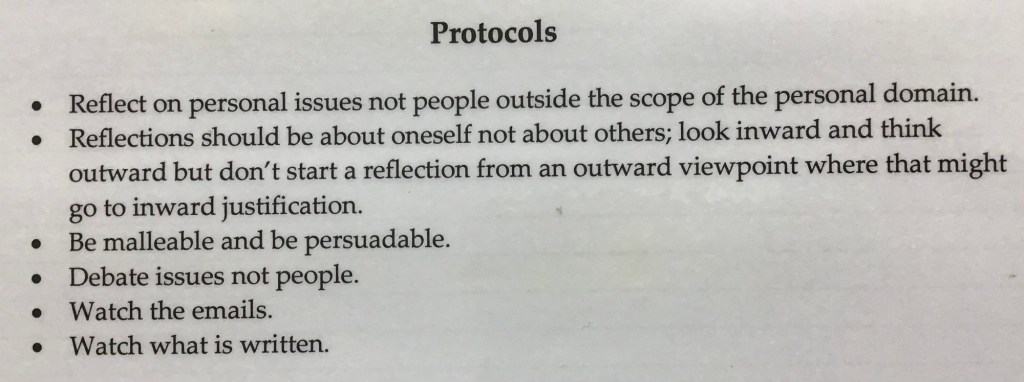
* School guards can become horribly rubbishy places. Children have a propensity to throw litter onto the ground rather than using bins, even if the nearest one is only 2 metres away. If and when you see children using the bins, commend them on their tidiness and care for the environment. A little bit of praise can go along way when it comes to building the tidiness and civic pride habit.

* If a child has an accident or injury while you are on duty and if you are unsure of severity, send somebody who is reliable to the office to report the matter straight away. It’s often a good idea to send students in pairs to ensure that the message is delivered. If you have a mobile phone, contact with the front office may not be a bad idea. When out on yard duty I always carried my mobile and if there was a need to contact the office, it was done. Some schools have two-way (walkie-talkie) radios which are used for this purpose.

* If a child is injured while out in the sun, offer them shade if you can. That may mean you shedding a jumper, giving up your hat, or standing over the child in a way that prevents the sun from shining directly onto him or her. At the same time encourage peers to stand back and not crowd in on the injured child.

* It can be helpful and comforting for somebody who is distressed to have a close friend nearby to talk with and comfort them. It’s usually easy to identify such a person. To allow that person close proximity to the injured child while keeping others back is a good idea.

* Most schools have hat policies and also students who at times either forget the hats or prefer not to wear them when out in the sun. If your duty is out in the sun, be aware of children who may not have hats and direct them into shaded areas.

While some teachers don’t like wearing hats (and therefor set a bad example to children by not wearing them) I’d strongly urge duty teachers to always have a hat on their heads when out on duty. Remember, we model for children. If we don’t do what they’re required to do that places us in somewhat of a hypocritical situation.

* In most schools, recess and lunch duties are shared between teachers. That means during any break period there will be two teachers who share the oversight an area. Always be on time if going out on the yard duty or replacing somebody already there. It’s important to not leave an area unattended, because if an accident occurs while supervision is not supplied, duty of care comes into question. There has been more than one court case as a result of poor supervision when children are at play.

* If your duty area covers toilets, make sure you keep an eye on activity around toilet doors and be aware of the behaviours of children inside. You may not feel comfortable (nor might it be appropriate) about going into a particular toilet block but eyes, ears and awareness play a very important part in this observation. Behaviour in and around toilets needs to be appropriate and not ignored.

* There is usually a five minute warning bell or chimes to alert children to the fact that recess and lunchtimes are about to end. If out on duty, make sure the children stop playing when the bell begins to sound. Directing them back to classroom via the toilet, hand basin, and drinking fountain is a good idea. Encouraging children to be ready and in line with the second bell goes can be a good time management habit to acquire. Time awareness is very important. As well, duty teachers generally need to be back to take charge of their classes or groups when the second bell goes.

Yard duty is central to the care provision provided for students by school staff. At times it might be a little irksome and you may not feel like doing it. However in the overall scheme of things here for children is paramount and duty of care critically important. Yard duty should never ever be neglected.

____________________

EDUCATIONAL NUGGETS

Doing more with less

Generally speaking, budget stringencies are asking school principals and educational leaders to be like Moses in ancient times. Moses asked Pharaoh for more building supplies so Israelites (system slaves) could go on building good homes and Egyptian infrastructure. Pharaoh got cross and told Moses to go away. Supplies were cut off. The Israelites had to scrounge, using their wits to develop construction materials. Similarly, educators and principals are challenged to do more with less – just like Moses.

Schools and child care

We need to change the thinking paradigm of those who believe the prime purpose of schools to be that of providing child care. The fact that schools are often defined as places where children go to be brought up, being like unto second homes with teachers pseudo parents is a sad indictment on modern life. Often it seems, parents give birth and hand over their children for almost total institutionalised upbringing.

The Best Leadership

Ascribed leadership is assigned to the position and is a power many choose to use. My preference was for acquired leadership, leadership based on respect earned through the appreciation bestowed by others. 

Respect

I believe the most essential quality to be earned, as a student or as a teacher, is that of RESPECT. Respect has to be earned, for it is a recognition of decency that accrues because of genuine care.

The fragility of youth

We need to realise how fragile and concerned about the future young people are, doing our best as educators to build confidence and a sense of the positive into their thinking and belief patterns.

Hierarchical organisation

Hierarchal organisation is a worry. It stacks people in terms of importance within a pyramidical structure, from less to more important. My preference is concentric management, with one plane for all.

TEACHERS – WRITING APPLICATIONS FOR POSITIONS

Opportunities will arise enabling teachers to transfer to other schools or move into promotional and support positions. It is generally wise to consider staying in a particular position for a number of years in order to gain experience and consolidate as members of the teaching profession.

Building a CV as suggested (Vignette 41) will ensure that up to date information is available when it comes to preparing an application for a desired position that may be advertised. Having background material ready is especially useful because positions that are advertised generally require applications to be lodged within a fortnight of the advertisement appearing.

Most advertisements are listed on the government website rather than being advertised in newspapers. A regular check of the website will ensure teachers are aware of available positions.

Advertisements include details of obtaining job descriptions (JD’s). It is essential to have the JD to hand when completing applications because this enables applications to be written specifically to the job criteria. Follow and specified word limits and write applications tightly so they encompass the JD in a relevant and sensible manner. Evidence of capacity should be included to demonstrate suitability against each of the criteria.

Criteria are generally listed as ‘essential’ or ‘desirable’. The essential criteria are basic to the position and need to attract a sufficiently detailed response from applicants. All responses should be salient and based on evidence. Avoid getting off the point when preparing applications.

Primary evidence of capacity to fill a position is most important. Primary evidence is the recent (within the last three years) confirmation of experience and ability within a particular field. Secondary evidence can be useful but should only be included in a supplementary or supportive context.

I would strongly advise that applications be written on the basis of a certain amount each day. There is often a tendency to leave applications to the last minute, meaning they can be rushed and ill prepared. Such applications sell applicants short. Consider the following method of approach.

* Spend the first two days in reading the JD and writing key word points to be

expanded when you write the application.

* Write your CV which attaches to the application using headings suggested.

* Referring to your CV and considering other documentary evidence, write to each

point of the JD, setting yourself a goal of so much each day. Don’t over-write on

one day then leaving the task for two or three days before re-visiting.

* Periodically re-read the JD and requirements to make sure you keep on track and

don’t include extraneous detail.

* If the application is due by COB on a Friday, aim to finish it on the Tuesday

prior, including proof reading. It would be useful to have a colleague or spouse

then ready your documentation and offer feedback. Have this done so you can

spend time on the Thursday before lodgement is due, including final changes.

* Editing, including spelling and grammatical context is important.

* When lodging an application, ask for an email confirming its receipt.

* Make sure you keep a copy of your application, preferably a hard copy as well as

one that has been electronically saved.

Sometimes people defer from writing applications for positions because it all seems too hard. Remember, ‘nothing ventured, nothing gained.’

____________________________________

TEACHERS – BUILD YOUR CV

Building a curriculum vitae is a professional necessity that is too often overlooked. People tend to think ‘why bother’ or ‘I’ll remember’ when it comes to things they should be recording. Memory fades and with it the capacity to recall things that can help with job and promotion applications.

I would suggest considering buying an expanding file. Label each opening with one of the graduate standards suggested by AITSL. It would be wise to label them in order of the way the graduates standards are listed in documentation. Then as evidence of meeting graduate standards is provided, place a note about that in the relevant section of the file. Also include evidence confirming your meeting of those standards. Samples of student work from time to time may help, particularly if they verify teaching strategies and efforts. In addition it can be handy to keep a notebook into which you add jottings from time to time, for transfer to your CV.

Make sure you unload those jottings into the file possibly expanding them into a more detailed format before so doing.

As time goes on upgrade your file to consider standards for teachers gaining new understandings, proficiencies and experience. In that way your folder is of evidence is always up to date.

Make sure that as you update your expanded folder, to take out those things that are no longer relevant. They become secondary (aged) rather than primary (recent) evidence. When cleaning out the file my suggestion would be that rather than destroying documentation removed, you store it in some secondary way to be called on if necessary.

Photographic evidence confirming what you have done can be useful. With iPads and iPhones, taking supporting photographs becomes easy. My suggestion would be that you either print these photographs and add them to the folder or alternatively that you start an index on the device into which photographs can be added.

From time to time colleagues and superordinates, even parents might offer you written recommendations or references. Keeping these and adding them to your CV is important because those statements substantiate and validate what you have to say about yourself.

Developing sound methodology in relation to compiling evidence for CV purposes is a very good habit to establish and maintain.

FOLLOW THE LEADER & LEAD THE FOLLOWERS

My take on this question is to say I do both.

When it’s appropriate and when I am in a subordinate relationship then I am happy to follow the leader.

For much of my career, I was a leader, and in that context, I led

the followers.

I’ve been able to do this – in both capacities – because I don’t stand on unnecessary ceremony and I never have kowtowed to anybody.

As a leader, I was never in a position of wanting to be somebody relishing ascribed power. Always I tried to work based on being a leader who acquired the respect of those with whom he worked.

TEACHERS – TAKE TIME TO RELAX

Teachers need to remember that there is more to life than teaching. I believe it important for teachers take time to relax and in that relaxation to get right away from their professional obligations. One good way of doing this is to leave school at school and not to take it home. It may be that teachers start work early or leave school late in order to accomplish what needs to be done; that is wiser than putting school into bags and cases to take home in order to work on at night.

Teachers need relaxation, time with families, and to extend their interests and activities to life beyond classrooms. Dedication is important but to become introverted and narrowly focused on teaching and classroom does little to expand personal development for educators. Already a great deal of “out of class room” time is asked of teachers for extra curricular activities associated with schools. Then there’s the professional development needs that ask teachers to spend time after work and at weekends honing their professional skills. school camps, reporting nights and the many, many hours it takes to prepare school reports add to the extracurricular list.

While most teachers are motivated by the desire to work with and develop children, the issue of reward does come into contention. NT Teachers are paid for 36.75 hours each week. However, the vast majority put in 15 or 20, sometimes more hours each week over and above the time recognised by renumeration. This time is generally given willingly. It is easy to see why teaching can become a profession that totally consumes people.

Work-life balance is essential and something that should always be taken into account.

TEACHERS – LEARNING TAKES TIME

It is easy to make the mistake as teachers, of thinking we have to approach teaching in a rip, tear, rush manner. There is so much to be taught and so little time in which to do it, that the only option is to cram and cram. It is easy to think like that because of the huge load placed on schools and staff.

Learning takes time. Brain and cognitive development does not come all at once. Rather the process is graduated and in sync with the overall physical and mental development of children. We need to keep this in mind, teaching empathetically and patiently.

This is not an easy exercise in our modern classrooms. There is so much pressuring in and upon teachers, that quite often the only thing of seeming importance is to cram in as much learning opportunity as possible. Children need to have time to understand and digest the concepts being taught. The traditional lesson of introducing new concepts, teaching then revising and extending in the cyclical way was a good method of operation. It still works in this day and age. Crowding too much into shorter periods of time will leave students with half understandings and cause them to be very frustrated learners.

Reinforcement is important. The joy of learning is to understand what one has been offered from a learning viewpoint. This means pacing learning steadily and carefully, not always easy because of the imperatives trust on teachers. Getting the balance right between quantity (volume” and quality (manner of teaching”) is important. Volume learning is frustrating for students. The emphasis on quantity so that ticks can be placed against lists of things to be taught to the disadvantage of quality is unfortunate.

One way of judging how well students are learning is to take them aside individually or in small groups to discuss with them what’s been taught. If they can come back to you in a relaxed, conversational manner showing understanding, then it becomes clear that the proper quantity/quality nexus is being met. If students appear to have no clues, the amount being crammed is obviously overdone.

I believe that learning opportunities have to be consistent but “making haste slowly” is developing teaching in the right direction. One quality that is absolutely necessary when teaching is to have patience, to be prepared to spend time doing things with children so that learning sticks.

TEACHERS – DON’T IGNORE TIME TELLING

TIME TELLING AND TIME AWARENESS

These days many many children have difficulty in telling the time. It is important that children learn to tell and to appreciate time as early in life as possible. One of the things heading to confusion is the fact that we have both digital and analogue time telling devices.

I would strongly suggest having a decent analog clock in each classroom. If the school doesn’t supply clocks, a quite readable analog can be purchased from any supermarket for no more than about six or seven dollars. The clock would need to be sufficient to read from the back of the classroom. The numbers ‘1’ to ’12’ are preferable to those with other markers denoting five-minute intervals.

While more expensive I would also suggest a digital clock to be displayed somewhere in the room. That will help students when it comes to comparisons between analogue and digital time telling.

No device is of any use if it is ignored! To that end, reference to time by teachers is important. There are many games available that help students when it comes to time telling. Another strategy may be for teachers to draw attention to the clock(s) as the day reaches towards milestones. That may be recess, lunchtime, home time, the start of art, physical education lessons and so on. I believe that after a period of time children will begin to learn to avert their eyes toward clocks and possibly to remind the teacher about what is coming up and what is happening next.

Time telling is very much a part of functional literacy. People who don’t know how to tell the time can become quite lost.

To appreciate time quotients it may help for teachers to tell students undertaking activities at what time that lesson is due to finish. They then begin to understand how long they have to go. This can help students organise their time and to work out how much should have been completed by the time a particular period in lapses.

A useful activity is to give children blank clock faces and ask them by inserting minute and hour hands, to show particular times dictated in a mental exercise. Variation on this might be to ask students to show their favourite time of the day and why it is that this is a highlight time.

To develop exercises drawing attention to both analogue and digital time telling is a way of having students understand both methodologies.

This might sound like an exercise that is never ending. However children will become time literate with practice and importantly have an understanding of what time means. Time management is an issue that often challenges people, including adults. To help students gain an understanding and appreciation of time and why it is important cannot be overstated.

TEACHERS – DON’T NEGLECT DESK TIDINESS

DESK TIDINESS

One of the things that happens all too quickly and easily in classrooms is for student desks or working tables to become untidy. This bad habit applies to students of all ages. It impacts tidy trays and disk storage areas.

One of the things that quickly adds to untidiness are sheets of paper students have completed but which haven’t been filed, glued into scrapbooks or arranged for permanent keeping. They quickly become ratty, crumpled, dog-eared and therefore not worth keeping although they are a record of work.

It is important to encourage children to take pride in their work. One of those pride elements is the way in which work is stored in desks and storage units.

Another thing that often happens is that pencil shavings get left either on the top of the desks, in desk storage areas or on the floor. It’s important to encourage children to sharpen their pencils at the waste bin. The best pencil sharpeners are those that contain the shavings so that they can be periodically emptied into the bin.

Desks and tidy trays can become cruddy, quickly. I believe it is important for teachers to have students go through and tidy their desks at least once a week. It is a habit worth establishing.

When choosing a time to clean desks or desk areas make sure that a time limit is set. It shouldn’t take more than 10 minutes for desks to be given a regulation cleanup and for tidy trays to be fixed. The ideal thing happens when students automatically and by habit keep their desks clean neat and tidy and. To encourage this when students finish work and have five minutes spare, to ask if their desk need attention can be a way of helping to establish that habit.

I’ve heard it said that “cleanliness is next to Godliness”. There is no better way of starting young people who grow to become tomorrows adults into acquiring the tidiness habit than reinforcing it through school. And there is no better place to start than with desk tidiness.

TEACHERS – IMAGINATION IS SO CRUCIAL

IMAGINATION

One of the delightful things about teaching and working with children is the quality of imagination they can bring to learning and understanding. I used to say to children in classes, particularly those in the upper primary area, that they had three eyes: Their left eye , right eye, and their “I” For “imagination”) eye. Their “I” eye was in the middle of their foreheads but not visible. Their “I” eye was hidden from view but had the capacity to work hard and to see a lot beneath the surface. Their imagination was something that enabled them to visualise things not necessarily there at the moment. For instance the ability to conjure up pictures in their minds of what was going on in stories, in their understanding of historical facts, their engagement with music, drama, and with core subjects including Literacy and Mathematics.

The use of imagination can make learning a living and vibrant experience because it facilitates engagement. Too often people feel disassociated from what they are doing. They don’t bring imagination into play as they tackle tasks.

As the teacher and in later years as a person who used to work with children in the areas of music, storytelling, and drama I used to encourage them to use imagination to make things real through their engagement with what we were doing and therefore learning outcomes.

Imagination can also be used to help tackle problems and solutions. Often adults find it hard to overcome problems with which they are confronted because they don’t bring imagination into play. Inhibitions come to the fore and make overcoming challenges hard. Children are not confronted by those same obstacles or barriers. It’s for that reason that children often find solutions to problems much easier to reach than do adults. They don’t have the same hangups and worries about their environment as may be be the case for adults.

It is of concern that video games and technological entertainment can diminish imagination for children. Rather than relying upon their imagination and thought processes to reach end points that’s all done for them by games which reward them for no more or less than following the sequence of activities and events by letting their fingers walk around keyboards. While games are part of life they should never be allowed to take over the natural ability of children to immerse themselves in situations and solve problems without assistance.

Imagination is to be encouraged, particularly when it comes to story writing and creation. It’s something I believe we as teachers need to work hard to grow upon our children. Neither does it end with primary school students but extends into the middle and upper school domains.

I believe the teachers who work with children to grow their imaginations also grow their own. Being aware of imagination and its qualities is important. Imagination should not become stunted as people reach from childhood into adult realms. It is critically important as a teaching of development tool.

TEACHERS – DON’T DISCOUNT DRAMA

Drama is an area often underdone in classrooms. It is generally seen to be a subject that must give way to more important requirements, like getting on with language maths science and other key subjects. Drama is seen as a diversion taking attention away from key learning and conceptual areas.

That this happens it’s a pity. Rather than being an isolated standalone subject, drama can be used to correlate and integrate with other subjects. It can be used to reinforce learning by putting students into a context of acting out situations about which they’ve been learning. It offers a first hand experience rather than being second and third hand. it allows students to engage with and immerse themselves in experiencing what it was really like to be a part of the past

Children love to play and to pretend. To reinforce literature, stories been told, history, even mathematical and scientific concepts through acting them out and in gauging through play can be reinforcing.

Sometimes teachers feel drama is a subject that is below them. They feel embarrassed about the idea of getting involved with students in dramatic play situations. Drama can be a very vibrant and engaging area and for teachers to involve convinces students of the authenticity of Drama as a subject reinforcer. And what’s wrong with teachers having fun in classrooms with students. If they can assume roles outside their skins, this will encourage children to do likewise.

I encourage teachers to integrate Drama into student learning and developmental opportunities. ‘Learning by doing’ (and drama IS doing) is one of the very best methodologies available to educators.

SHRINKING

The one small improvement I can make in my life, I started 132 days ago. I was diagnosed with diabetes two and amongst other things was told I needed to lose weight.

Medication and injections prescribed by the doctor have helped. But it took willpower on my part as well.

No sweet biscuits or chocolate or lollies apart from cough lozenges have passed my lips since day one of my medication.

I started at around about 120 kg – am too fat for a person of my build and height.

For years I have wanted to lose weight but somehow the motivation wasn’t there. Maybe the diabetes gave me the motivation.

I weigh myself each Monday morning and today my weight was down to 110.1 kg. It’s been coming down slowly slowly each week. And I am making sure that I’m not eating between meals, And that I have just two meals a day.

My medication helps because it cuts out cravings for eating.

When I get down to a desirable weight, I never want to go above it again.

TEACHERS – MAKE ‘SHOW AND TELL’ COUNT

“Show and Tell” is often considered to be a way of filling in time. It gives children a chance to share a little about themselves or their activities with classmates. It is generally informal and there is no structure around this part of the program.

Show and tell can be transformed into a very meaningful classroom segment. It can also be engaging for all class members. Here are some ideas.

* Ask selected students to be ready with specific questions of the presenter.

* Similarly, have students pre-prepared to offer commendations and recommendations for the presenters consideration.

* With the class, prepare an evaluation template that covers elements of speech and speaking. Work with the class to ensure that the template takes account of ‘matter’, ‘manner’ and ‘method’ as key presentation elements.

* Draw up with students a class roster that enables all children to have regular turns at parenting and evaluating.

A program of this nature lends itself to a progression that develops a range of presentation skills. The following might be included:

Eye contact

Clarity of speech

Speed of speaking

Use of punctuation in oral presentations

Qualities of vocalisation

Use of notes

Inclusion of props

Stance and gesture

Focus on speech parts including the beginning, middle and the end if an oral presentation.

A similar raft of skills can be developed to cover speech evaluations.

Show and tell should be a meaningful and looked forward to part of the program. There is a great deal of relevance in encouraging children to speak, listen and appreciate with confidence.

__________

TEACHERS – BUILD STRONG NETWORKS

As a profession, teaching is at its most viable when members respect and support each other in a fully collaborative manner. The joys and challenges of teaching should never belong to those who remain in isolation from each other.

A strength of teacher education is the encouragement offered trainees to link with each other in discussion groups either in person or by discussion boards on Learnline . Observation confirms the help those preparing to teach can help each other on matters varying from assignment tasks to practice teaching rounds. Carrying quality communications habits into teaching beyond graduation is wise.

There is a misnomer that to share matters of challenge is a sign of weakness. That is far from the case. Those raising issues often find that colleagues are having similar issues or have developed strategies that help with mastery of similar difficulties. A problem shared is a problem halved.

Many universities have developed or are establishing alumni groups. Keeping in touch with colleagues through the university post graduation offers professional sharing opportunities.

Sharing through professional associations is recommended. There are maths, science, literacy associations among a host of others. Belonging to associations enables members to keep abreast of trends. Opportunities for personal professional development along with contributing to others through group membership is enriching.

I would recommend a consideration of joining ‘LinkedIn’. This site enables members to build up a global contact base with like minded people. Members can join specific interest groups, sharing global ideas.

Maintaining contact with the graduating peer group is another way of keeping in touch. Whatever the preference, keep in touch with others because that helps support both individual and collective strength.

_____

TEACHERS – KEEP A CLIPPINGS FILE

There is a deep and abiding interest in matters of an educational nature. Increasingly print, radio, and television coverage refer to educational issues. Some people pay little attention to what is being reported about education because they feel it to be inconsequential. There is also a belief that what is reported, misconstrues facts. That to some extent may be the case; however it is important to be aware of the way education is trending within the community.

Retaining information about education can be useful. There are various ways and means of doing this, but it works best if collation is organised regularly (almost on a daily basis).

Newspaper items can be clipped and pasted in a loose leaf file, indexed book, or similar. Indexation is important as it allows you to quickly refer to things you may need to recall.

Photographing news clippings using an iPhone or iPad, saving them to your pictures file, then creating an album for clippings is another method that works well.

Scanning clippings and saving them onto USB stick is a method that works well. Again, indexing the USB file helps. It may be that you choose categories to index under, rather than an “A” to “Z”approach.

Clippings files can be backed up on iCloud or otherwise saved onto computer or USB.

From experience, the use of newspaper clippings when it comes to social and cultural education, cruising for general knowledge, for stimulating discussion in class, are but three ways in which they can be of use. Clippings can also be used to stimulate the content of debates, the writing of persuasive arguments for older students and so on.

Awareness of issues can stimulate professional discourse including helping to shape the way in which members of staff develop collaborative programming to support teaching in schools.

I believe teachers would find a study of media and the establishment of a clippings file useful and worthwhile.

CHARLIE CARTER: NUMBER ONE

There have been so many people who have supported and helped me throughout my life that separating them from each other and getting down to only one has been very difficult.

I thought back through the life I’ve had particularly my professional life which began in 1968.

Considering hundreds of people finally brought me down to the one person who I think is a great influence on the way I operated during the last 19 years of my professional life.

His name is Charlie Carter he was our Regional Superintendent for Education when I first came to Darwin.

Sadly, he is now deceased but what he did for me, evoked eternal appreciation.

When I first took up the Principalship at Leanyer School there were quite a number of

people who were unhappy about how I started my leadership career at that school. They never came and talk to me but some of them went to Charlie Carter to talk to him, my boss, about me.

Charlie‘s response was to send me a handwritten note. He said in the note that he needed to talk to me about some concerns people had about my style of leadership. He wanted to meet away from the school. He wanted our meeting to be in a private venue and he wanted to talk to me about what people had been telling him.

I appreciated this greatly. We had a very worthwhile meeting. Mr Carter outlined the facts of the concerns that were held about me he did not criticise me but he allowed me to think things through in a way that would enable me to go forward in a corrective way.

I went away from that meeting and took on board his advice. Without a shadow of a doubt, his meeting with me in this way helped me through what became a 20-year career as principal of Leanyer School. I asked people in the aftermath of things to talk with me if they felt there were issues I could be doing differently and better. That invitation over the years was accepted and respectful relationships became the modus operandi between me, staff, parents, and students at Leanyer.

When Mr Carter died I spoke of my appreciation for what he had done for me at his funeral. This included my reading out the note he had written to me all those years ago.

I was blessed by this man who believed in helping me rather than pulling rank and giving me a hard time. He was a genuine, sincere, and committed superordinate and colleague.

Charlie Carter is my number one influencer, who more than any other. helped me in an uplifting manner.

TEACHERS – PRESENTATIONS AND MIND SET

PRESENTATIONS AND MIND SET

From time to time teachers will be asked to prepare presentations for colleagues, school staff, parents committee meetings, and possibly for other audience groups. Used to working with children and students in a classroom context, presentation requests take teachers outside their normal comfort zone. Suddenly they are confronted with a new arena.

Quite often people who were asked to prepare a presentation react with stage fright. Presenting in a formal or semiformal matter is something that causes them a great deal of nervous reaction. Some become so nervous they refuse point-blank to participate.

In an informal or social context people are comfortable to converse and exchange experiences. Yet when asked to present to the same people and others more formally, those selfsame and confident communicators clam up!

There is no doubt that the first time is the hardest when it comes to presentations. Relaxation of the mind and not anticipating “the worst” is critically important.

I would strongly recommend to teachers and indeed to all professionals that they consider joining Toastmasters, Penguins, or some other speech and speaking club. Membership of such groups enables people to develop confidence when it comes to speech presentations. Graduated programs help recognise the essential ingredients of speech. Graduated development means progress in understanding the rudiments of a presentation with presenters building on previously acquired skills. Membership of these groups also facilitates critical listening, with a view to members evaluating each other and through that process honing their self evaluation skills.

There are many people in high places who have great difficulty when it comes to presenting. Some have managed to sidestep the challenge by resort to PowerPoint presentations but the essence of delivery can be stilted, uninspiring and predestinated to leave the listening audience feeling bored, flat and unconvinced.

Speaking up with confidence does not come naturally to a lot of people. However it is a skill that can be acquired and once gained builds confidence in people called upon to make formal presentations or contribute to organisations and groups.

Details of such groups are often available by word of mouth, online, and through telephone book entries. Although membership has a fee attached this can be tax-deductible because it has to do with professional development.

I unequivocably recommend this course of action for your consideration.

TEACHERS – TREAT EMAIL’S WITH CAUTIOUS RESPECT

E-MAILING – CAUTION NEEDED

In today’s world, emailing has become possibly the most common form of written communication. Most people have email accounts and use emails prolifically. Schools and teachers have email accounts, often displayed on the school’s website.

Communication by email is encouraged, including contact between parents and teachers. Notwithstanding the ease with which email communication can be used, it is important consider a cautionary approach to its use. This is because emails are written documents and can be held against writers for years and years to come.

* If parents seek information about homework assignments and work due,

excursion information or similar, response is fine.

* If parents want information on school policy or are confused about particular

whole school policies or school matters, refer them to a member of the

leadership team and forward email sent and you reply to your senior.

* Under no circumstances offer parent value judgements about a child’s

character by email. Written statements can come back in future times to haunt

the writer.

* Be aware of the fact that emails can be used as documentation supporting

actions in courts, including custody battles between parents. To that end avoid

sending emails that ‘take sides’ or can be interpreted as supporting one parent

viewpoint or the other.

* Never promise by email that a child ‘will’ make certain progress by a particular

time or ‘will’ achieve particular outcomes. ‘Will’ is an absolute and confirms

that a particular attainment will be the result. Use ‘can’ or ‘could’ or similar

non-committing words. The onus is then on the child and not on the teacher to

take prime ownership of possible outcomes.

* It is wise to keep copies of emails sent too parents in a designated folder.

Trashing can be tempting but if a communications issue is raised to the

teacher at some future time, not having a record can be very unhelpful.

The above dot points could be extended and others added. Suffice it to say that the use of emails can be fraught with danger, a situation that all too many people find to their eternal sorrow. Stick to material issues and don’t enter into the realm of value judgements and character comment. Parents may send emails of this nature, asking to you comment on their perceptions. That invitation should be avoided because response means they may quote you and tie you to what is really their position.

Never ever write and send emails in the hear of the moment, while over-tired or while less inhibited than usual because of the use of alcohol. The reasons for this advice should be obvious.

If in doubt on the subject of email correspondence, check with a senior staff member. It is always better to be sure than sorry when dealing with email traffic.

TEACHERS – ASK FOR HELP

ASK FOR HELP

One of the strongest attributes of the teaching profession is that of ‘fraternity’. Collegiality and sharing are elements of that togetherness. Unlike some occupations in which people feel they have to sit on problems or challenges and muddle through, teaching invites those with questions to seek assistance in finding answers. This does not mean teachers should not have a go, but rather that they seek support to help in reaching satisfactory outcomes.

This might include asking for clarification when a particular theory or teaching practice is not fully understood. It could be that teachers are struggling with classroom management, that discipline policies need explaining; a myriad of issues may press upon the teacher’s mind. They will remain there unless help is sought or given.

Teachers are often credited with having a sixth sense. Part of this is having the intuition to understand matters that others might be finding confusing and offering advice or support. Gumption needs to be a characteristic that allows teachers having difficulties, to ask for help if it is needed.

It is not a sign of weakness or inability to ask for support in understanding matters that are not fully comprehended. If there is a need ‘sensed’ in others, ask if they would like assistance. Two way caring and sharing should be informal, a part of the relationships that establish between members of staff.

In some cases, mentors are assigned to staff members new to a school. Building a two way professional relationship with a mentor or coach is wise. Beginning teachers can contribute to these relationships for they often have a better understanding of new methodologies than those who have been in schools for a number of years. Therefore meaningful two-way relationships can be established.

Keeping in touch with each other in a professional context is essential to the professional growth of teachers and school staff members. If problems are not shared and help not sought, worry, despondency and despair can set in and infect the soul. It is indeed sad if this happens … and it need not!

Caring and sharing are attributes to be cherished and practised.

BENDING THE BARS INPRISONING MY BODY AND MIND

The circumstances of life shackle the bodies and the minds of countless people. There may be many people in the world finding themselves in some sort of a binding situation from which they cannot escape. I am one of those people who are held captive.

To me, freedom is aspirational rather than real. For freedom to become a reality, I must bend the bars that entrap my body within the frame of restrictions with which I have to live.

Even more significantly I must untangle my mind from the barbed wire which binds fears, concerns, anxieties and hesitation within the grey matter of my cranial cavity.

At times I come close to breaking out from the constraints that shackle me; on other occasions, I feel more bound and more imprisoned than any other time.

Is freedom a reality or an illusion?

TEACHERS – INTERVIEW STRATEGY

Interviews between parents/carers and teachers about children is one of the most important ways of keeping in touch with progress being made. It’s important that teachers and parents are on the same wavelength regarding student progress.

In many schools interviews are organised toward the end of term one and term three. This allows teachers to let parents and carers know how students are progressing to a particular point in time during the school year. These conversations also help to prepare the way for written reports that follow, usually at the end of term two and term four.

While these interviews are usually brief (around 10 to 15 minutes) they are a way of ensuring some contact regularity about teaching and learning.

At times, longer interviews dealing with more specific issues are necessary. I believe that interviews to deal with specific topics or being called for particular reasons need to be programmed. Arranging by phone or note for parents to come in as a mutually convenient time the best way to go. Similarly if parents ring requesting interviews the same should apply. It’s best for interviews to happen in privacy and after school hours.

Some parents will approach teachers at the start of this school day to deal with an issue “there and then”. This isn’t fair on to the teacher or the class. Interviews conducted audibly in front of children places teachers in a bad situation. These conversations can be quite embarrassing. When this happens and teachers are confronted, I believe it appropriate to “call time” on the conversation there and then and arrange for a mutually convenient time when the conversation can be pursued.

If the teacher is unsure how an interview will progress or if she/he feels undue pressure, it is advisable to ask for a senior to be present during the meeting. If the teacher feels comfortable about an interview and doesn’t need that support, to be under the gaze of others as the interview is progressing can be helpful. The venue may be an interview room, a classroom that is visible to others, or similar environment in which the conversation takes place.

A strong suggestion is the teachers take notes for their own personal records of interviews that take place. It is a good idea to spend time post the meeting to write these notes up in some detail. Notes can record positives along with matters being dealt with the more challenging context.

When interviews happen “off-the-cuff and the spirit of the moment” teachers are caught unprepared. They may also be dealing with parents or carers who are somewhat agitated and even hostile. To set a future interview time gives everybody the opportunity to prepare and to come into the conversation in a rational way.

When teachers catch students doing something good and want to offer praise, sharing that praise with parents and carers can help. That might be done through a phone call or a simple brief message of congratulations of the parents coming to the school. This policy offers a sense of balance about reasons why contact is made with parents and carers. Conversations do not have to be totally about poor attitudes or behaviour.

For students to be made aware of interviews taking place between parents and teachers can be wise. That can be done in a positive way. I think it hard on students when adults have conversations about students without students knowing or understanding why the interview is happening. Students are very imaginative and may have all sorts of things on their minds about matters. Misinterpretation needs to be avoided. Children need to know that meetings of this nature are about helping them overcome issues and grow in terms of both character and accomplishment.

TEACHERS – HOW YOU ARE KNOWN

Sometimes teachers get into a bind about how they should be addressed by children and students. Some believe that in order to encourage relationships, that first names are fine.

Under no circumstances would I endorse this approach. Teachers are adults, students in primary and secondary schools in a learning relationship under their guidance. Respectful address demands that teachers are addressed as Mr, Mrs, Miss or Ms.

Surnames can be hard to pronounce. Teachers with difficult or indecipherable surnames often ask students to use their christian names instead. If this is done I’d strongly suggest the Christian name be preceded by Mr, Mrs, Miss or Ms. Another method might be to have children use the first letter hard to pronounce your surname. In that case it would be Mr M, Ms S and so on.

Students in secondary schools tend to refer to teachers is “Sir”, “Miss”, or “Ms”. That may be a preference but personally I would recommend the use of names as outlined above.

Appropriate address of teachers by students helps when it comes to the establishment of a respectful relationship. Similarly, those relationships are in hands if teachers take the time and make the effort to learn and use student names when speaking to their learning clientele.

TEACHERS – ROUTINES ARE IMPORTANT

Children appreciate classroom routines and organisation. Although young they like predictability. From experience I don’t believe young people despair of repetition but value ‘links’ with the day that routines reinforce. They like things to be predictable because that offers reassurance and extends feelings of security. Many children come from environments that are not always predictable. A settled, predictable school program where children know what is happening and what is coming next builds both confidence and trust.

Students who were part of my schools from years ago and with whom I have had contact years later, have told me how big and scary school was when they were little. Those who have come back to visit the schools of which they were student members talk about how little the school seems compared to what it was when they were in their primary, especially early primary years. An object lesson I learned from these disclosures was that children appreciated the security they were offered at school.

There are times when programs need to vary and when general routines and timetabled programs have to be set aside. If possible, we should avoid springing these changes on children ‘out of the blue’. It is important that teachers give as much notice as possible to children about changes and why they are being made. This can sometimes be done through forward notification to parents via newsletter or online contact. Letting children know beforehand is helped if school leaders give lead notice to teachers about changes.

Routines will be helped if children understand the following:

* What subjects happen on what days.

* Routines marking the beginning and end of each school day.

* Recess and lunchtime procedures including play areas.

* Understanding the times each day for maths, language and other subjects.

* Being clear about the days the class may have specialist teachers for subjects.

* Knowing what is where in the classroom, unit and school.

* Understanding the school facilities and knowing the school map.

* The names of teachers school support staff.

* Rules that are in place to make the classroom, unit and school safe.

* The names of and a little background about relief staff.

* Their right to be protected and feel safe at school.

There are many other factors that build into school routines, the above being a sample of what might be relevant.

Routines and procedures are essential. Without them, children can become aimless, confused, and lost in what should be the safe, supportive environment of school.

TEACHERS – TECHNOLOGY CAN CREATE SEPARATION

It is important that technology in classrooms and schools should be appreciated. It is important that teachers and students share teaching and learning opportunities,where these are enhances by the use of technology and equipment available. However, technological tools should never be allowed to stand in the place of the teacher.

Can be all too easy for teachers to recycle from direct interface with students, preferring instead to establish communications with learners through software packages available to support learning. Using attachments like blackboard, Skype, Scootle, and a myriad of other learning aids can help when it comes to refining and extending student learning. These devices must be under the control of teachers and structured in the way they are used to support student learning. It can be all too easy for teachers to hand pass their role in student learning development to the point of becoming detached.

The best most enriched learning comes from the contact developed and maintained between teachers and students. It is nice to “put a face on learning”! I believe students appreciate teachers who are there for them in a direct and first-hand context. To disengage, deferring classroom teaching practice to a robotic attachments with mechanical voices is anathema.

Perspective is important. Nothing can ever replace the first-hand relationships that develop and involve sincere, committed teaching professionals and students, primary, secondary and Treasury, with whom they engage.

ALTER-EGOING HELPS BALANCE

The person with whom I disagree the most is Australia’s number one public figure – our Prime Minister Anthony Albanese. There are so many things that have happened during the last two years of the Labour Government that seem to be taking Australia down the pathway to a very dark future.

I ponder deeply on this issue of his leadership and where it is taking us. That pondering leaves me feeling quite depressed and at times with an open mouth because of his mind-boggling decisions.

To cope I have created in my mind an alter ego of our Prime Minister. For everything he has done that I think is wrong, there is an alternative that if applied would make things right.

I dwell on the subject quite a bit and at times publish on my blog or elsewhere these thoughts which from an old alter ego viewpoint most positive.

The responses I get reassure me that my feelings are not unfair.

TEACHERS – THE PROS AND CONS OF MOBILE PHONES

MOBILE PHONES IN CLASSROOMS

In our modern, technological age, it seems that every child has a mobile telephone, smart phone or similar device. It’s understandable the parents give their children phones in order that they might be contacted in emergency situations. However there is a time and place for their use. That time and place are definitely not within schools and certainly not in classrooms.

If children bring mobile telephones to school they need to be kept in their bags in their lockers. If there is a worry about security may be appropriate for teachers to take and lock these devices in a secure place.

It is altogether too easy these days for children and students to misuse smart phones. Sadly, there seems to be a trend toward taking inappropriate photographs of students who are being bullied, interfered with, or who are in compromised situations. These photographs of been circulating for all to see.

When this happens within a school context it casts the school, its leaders and staff in a poor light. When students have been embarrassed or injured and that recorded on phone camera all sorts of recriminations can come back on the school. A great deal of time is taken in trying to resolve issues and overcome the hurt occasions by the wrongful use of those devices.

Far better that the school have a rule that smart phones another recording devices do not belong within its boundaries.

We need to be aware of the trouble smart phones can cause if they used for wrong purposes and at the wrong times. They need to be carefully secured and not used during the school day.

TEACHERS – CLASSROOM TIDINESS COUNTS

CLASSROOM TIDINESS

School days are hectic and “hurly-burly”. There is so much to do and so little time in which to do it! That being the case, it is easy for teachers and students to overlook the need for classrooms and personal space within (desks, tables, lockers and so on) to be kept in a reasonably clean and tidy state.

There can be nothing worse than opening a student desk to see a mass of learning material, waste material, socks, hats, toys, and other bits and pieces shoved in all higgledy-piggledy and to the extent that it’s hard to exert the pressure necessary to force the desk lid closed.

Another area quickly sullied is the classroom floor. Pencil shavings, bits of the writing tool, pieces of paper of all sizes, items of clothing, food scraps and wrappings; if children needed the tables and other things, finish up then try to strew them around on the floor. Often, the floors are left in a polluted state until cleaners come in at the end of the day and endeavour to straighten out the chaos.

That is not a good look! Neither does it do anything for the reputation of the class or teacher – for cleaners certainly talk amongst themselves and to each other about the state of things they find in classrooms.

They need to be some basic rules about classroom cleanliness and tidiness. That can be hard because of pressure is driving on teachers and students. Nevertheless it is necessary. Some suggestions:

. Have children periodically (at least once a week) go through and clean the lockers of residue.

. Undertake the same routine for desks but possibly a little more often. Make sure the children have loose papers fastened into books or folders is the case might be.

. Have children or students pick up any rubbish from the floor at the end of each session or period. That become something done before recess and lunch breaks. If insisted upon that process becomes “automatic”, a habit of many children will undertake without having to be reminded.

. (Ensure that the above applies equally to older students as well as younger. Students will sometimes argue that it is not “cool” to pick up after oneself and to keep things tidy. That particular lackadaisical mindset needs to be overcome.)

. Check the children keep refrigerators closed and lunchboxes tidy within.

. If children aged lunches in the classroom, check to make sure that their lunch containers are clean, that they keep their food as they should, and that any genuine rubbish goes into the bin.

. Cupboards and, and Benchtops belong to the whole class. Include those areas in the cleanliness and tidiness drive. It might be appropriate to assign particular students groups to particular common areas within the classroom and it becomes their responsibility to ensure that tidiness is maintained.

* Make sure that the teacher for example is one that models to children. Teachers tables and work areas need to be kept tidy and organised in the same way as being advocated for children. There is nothing more powerful than personal example.

. Having students involved in group competitions reward cleanliness and tidiness in my opinion is a good idea. Rewards can be extrinsic or intrinsic. Reinforcing the need for positive civic attitudes is important and putting clean, tidy needs into some competitive context can be quite fun.

TEACHERS – THE WAY WE TALK TO CHILDREN

One of the most important things about offering security to children is the way in which teachers speak “with” them. Often it’s a case of teachers talking “at” or “to” those they are teaching.

When dealing with each other in staffrooms or collaborative sessions or during professional development sessions, teachers speak conversationally. They each feel comfortable with the other and conversations reflect this attitude.

When dealing with children however, teachers often lose the conversational element replacing it with what might be termed “command language”. The niceness of speech often dissipates and delivery takes on a quite harsh quality.

Metaphorically speaking teachers when dealing with each other, are somewhat like motorcars which come along quietly from point a to point b. However, when relating to children those same teachers trade the cars for four wheel drive vehicles, lock them into 4×4 and then grate their way through conversation with children in a manner that can be far from pleasant.

Language can be embracing or off putting. In order to draw children close in terms of comfort, qualities of conversation and vocalisation are important. There is no way the teachers will draw children in and toward them if their language is the push off in terms of its invitation.

TEACHERS – CONSIDER THE IMPORTANCE OF MODELLING

MODELLING

I don’t believe that we can over estimate the importance of teachers modelling for students. This goes for primary and secondary students.

In some contexts teaching is regarded as being a profession in which one group (teachers) tells the other group (students) what to do and how it should be done. This of course is rather simplistic definition of teaching and learning processes. It hardly examples the interaction and togetherness that ideally embraces teachers and pupils in teaching/learning contexts.

One of the very important aspects of the leadership offered by teachers is the modelling they do through their own personal example and conduct. Students being young look to and emulate teachers and others. An example of this is the children often tell the parents that particular viewpoint is right because it is what the teacher thinks, therefor it must be right.

Without being prescriptive in anyway, I believe that modelling extends to include the following:

Dress standards

Speech patterns and modelling – setting a bright example free speech and vocalisation.

Punctuality

Showing respect.

Handwriting, including in students books and on whiteboards.

Correct spelling and accuracy in word usage.

This list could go on, but I’m sure you get the drift. Teachers deal with the development of people. It’s as we do and how we are that is so important to those we teach and shape toward being the adults of tomorrow.

TEACHERS – MARKING AND CHECKING WORK

The life confronting teachers is always busy. It is very easy to get behind with routine classroom tasks. One of the areas easily overlooked is that of marking children’s work. In particular, that can apply to book work, homework, and other tasks set for children. It can also include extra work set by way of sheets or other materials children asked to complete. These days children do a lot of work online and sometimes submit files for marking. That happens for both primary and secondary school students.

It’s extremely disappointing to students if work submitted for marking is overlooked. Initially children will be very disappointed that work has not been marked. If non-marking becomes a habit, then attention paid by children to work tasks will gradually decline. The reason for that is a belief that even if work is submitted to their very best standards, this will not be recognised or acknowledged. In short, children can come to believe the teachers are disinterested in what they produce.

That in turn takes from the self-esteem children feel, the pride in self and their attitude toward work tasks. If teachers file to mark work in the way suggested this can become very demotivating for children. Regardless of everything else they may believe that teachers are not into rested in them.

If a child brings to your attention the fact of work to be mark is outstanding, my suggestion is to apologise and then set about marking the assignment as quickly as practicable. Letting students know that this has been an oversight on your part as a teacher will not hurt. Children respect honesty.

Rewards

When marking, do so as thoroughly as possible. My suggestion is to correct spelling, punctuation, and other omissions. They’re so neatly and in a different coloured pen open parenthesis preferably red) to block the child has used.

Children appreciate comments written on work and I believe that stickers or stamps are an absolute “must”.

Students love to share our appreciation for work show on by teachers with the parents, siblings and with others. Teacher care and attention to marking can be the icing on the cake for students I like to know the work is appreciated this will help them further in a motivational context

MY CAREER PLAN IS HISTORY

After completing schooling and gaining a year 12 certificate (thanks to my parents for year 12 completion in those days for a country boy in Western Australia in the 1960s was rare), I worked on the Family farm for four years.

During that time I did it in pieces of study but none of it was connected. It includes everything from a wool classing

qualification to a general Bookkeeping certificate, A unit in sociology and a few other bits and pieces.

That all changed when I went to teachers’ college and graduated at the end of 1969.

What then followed with a career in education in Western Australia and the Northern Territory extending from 1970 to my retirement in January 2012.

for most of those years, I was the school principal and worked extraordinarily hard – anything up to 80 hours a week which I documented. Along the way, I also did a lot of external study and that was after I finished work for I never mix work and study.

Following my retirement I worked for four years at the Charles Darwin University variously as a lecturer, tutor and marker.

It all ended in 2016 and I went out into what is called the “pasture of the long paddock“.

These days, I do a lot of writing and publishing online, and in various other outlets. But it’s true to say that my career these days is a career that has been retired – along with me.

As a 78-year-old man, I don’t have any wish to start another career.

A SHOW … SO LONG AGO I HAVE FORGOTTEN

I can honestly say that if I have seen a live performance is so long ago I cannot remember having been to a show. Live performances do not appeal to me and I haven’t been to one since we came to the Northern Territory in 1975.

As a school principal, I did go to eisteddfods with students who were competing and also had students involved in an annual musical for schools in the Northern Territory called “The Beat”. In fact, I was on councils managing both these programs.

However, I’m not counting these programs as live performances in the way they are normally thought about.

I have never attended theatre performances as an audience member. I don’t like cabarets and modern comedy because its salaciousness does not appeal to me. I’m not interested in dance performances, circuses or anything else of that nature. I don’t watch them on television either.

Others may love live performances – but that’s not me.

INTERACTING WITH STUDENTS IN CLASSROOMS

When moving around classrooms and relating to children at desk level, it is important not to “Loom”. Looming is to stand above the child looking down at the child causing the child was down there to look up at you the teacher.

This places the child at some disadvantage when communicating with the teacher. It may also give the impression that the teacher is much more important as a person than the students because of the hype differential.

As well, students often have developing voices and the further away you are the less chance there is of catching for the child is saying. Misunderstandings can happen.

It is far better for teachers moving around classrooms to bend down, Neil, or Steve when talking to children so that they looking at each other more or less from the same level. My experiences that this builds the quality of contact between teacher and student. One of the advantages is that it enhances I contact and enables teacher and student to talk to each other with lowered and therefore more conversational voices.

To get down and work closely with students also builds confidence in relationships particularly from the Charles viewpoint towards his or her teacher. It overcomes the perception that can be held by children at the teacher is above all and somewhat remote as a person from them as pupils.

Try it! It works.

WORKING WITHIN A CLASSROOM

KNOWING’ YOUR CLASSROOM

It is all too easy these days for teachers to become disassociated from the classroom teaching space and somewhat “distant” from pupils in terms of the seating within. This has come about in part because of our preoccupation with computer and with the requirement that we are forever developing data to input, indicating student progress.

Unfortunately it can happen that teachers very rarely leave their tables because of attachment to this device. Communication with students across the classroom is by voice.

I believe that in terms of location, it is essential for teachers to be aware of the physical essence of the children and where those students are sitting.

As a person who sometimes works at schools level with teachers on practice I follow the rule of drawing a map and over a period of time showing how, where, and when teachers have moved around the classroom to contact students the desk level. This can be done into Waze. The first is to have a photograph of the classroom as it’s set up but without students at desks. On the face of that “blank” draw a line that tracks the route followed by teachers around the classroom over a period of say 20 minutes. The other method more simply is to draw an outline of the classroom including desk locations. In the same way track the teacher for a point in time indicating direction of movement by occasional arrows across the track path.

Student teachers always appreciate that feedback, for a chosen just where they’ve been how they’ve moved, which students have been contacted the most, which the least and so on. It also shows students in terms of the movement toward a teacher rather than allowing the teacher to circulate.

It is very important for teachers to spend time with each student and this is best done by getting away from the teachers table, leaving the computer mobile’s, then moving around talking to students and seeing how their work at an individual or group level within classrooms is progressing.

The other great thing about this methodology is that it helps teachers to get to know students, to appreciate the strengths and weaknesses and to better understand the way they relate to each other with in the classroom. This awareness is very important and sadly often overlooked.

APPRAISING AND APPRECIATING SCHOOLS

SCHOOL APPRAISAL – A RECOMMENDED MODEL

Educators are quite constantly involved with processes relating to testing, measurement and evaluation. This is done in different ways by people directly and indirectly connected with schools. While most factors of measurement relate to academics, there are other things to be considered when evaluating schools.

Over time priorities and processes have changed. These days within the NT a detailed visit by senior colleagues including a group of the principal’s peers and senior management staff is the way appraisals are undertaken. The process lasts several days. Examination includes conversations with some school staff members.

The Northern Territory Education Department has been concerned about the performance of its schools since taking over responsibility for education in 1978. Various models have been followed.

One of the very best was called the “Internal/external School Appraisal Model”. This involved members of the school staff and members of community working in groups to analyse the various aspects of school function. Teaching performance, staff relationships, student welfare, school appearance, communications and all other factors were examined. Each panel included staff and community members. A facilitator was appointed for each group.

Groups had the ability to glean information from a number of options. Included what questionnaires, interviews, and of course the self-awareness of that particular aspect of school function built within the group. Toward the end of the process each group presented in turn to the whole school staff and also members of community who cared to attend those sessions. From the report grew recommendations for future consideration. Each group also indicated things that were being done well and should be continued.

After presenting, each group report and recommendations to the forum of staff and community. Some revisions were then made and a priority put on the recommendations.

When all groups had presented and the final report from the “internal process” developed, this then went to an external panel which considered the report. This panel had the opportunity to order the recommendations as a whole.

This was a very elongated process. However he enabled all staff and those with a keen steak and interest in the school to have input. Importantly the report was owned by school staff and community members.

I applied this model at Nhulunbuy Primary School when first becoming principal. I gained, it was used it Karama Primary School in 1987. Of all the methodologies used over time to help centre school action in the right directions this approach was by far and away the most effective.

When people within an organisation own what they do including developing the context of futures direction the whole process is validated by ownership.

Although it may never happen I would certainly recommend a return to the past when it comes to appraising a school and its place within the community.

PLEASE REINFORCE (AND PRACTICE) GOOD MANNERS

CORRECTING FOR POLITENESS SAKE

These days, manners are not practised by habit. Many children (and adults) are poorly mannered. It seems that a big percentage have never been taught the rudiments of good manners at home. Child care programs may try but their prime focus is on minding, not on teaching.

All too frequently children overlook ‘excuse me’, ‘please’, ‘thank you’. ‘i beg your pardon’ and so on. Although it gets monotonous, correcting students who overlook these essences of politeness and good manners is important. Commenting in a praising context to children who do remember to use these words and expressions can offer positive reinforcement.

One of the most frequent oversights occurs when children butt into conversations being held by teachers with another student or students. That impetuosity certainly needs correction. Children need to appreciate the need to wait their turn when dealing with teachers.

Manners can be broached through appropriately constructed lessons. To involve students in situational role play where manners need to be practised can help. Periodic classroom discussions about manners and politeness might be useful.

The subject could be broached through a Socratic Discussion session.

Strategies to reinforce the need for good manners including reinforcement through daily classroom interaction should be part of teaching and learning strategy.

GOOD WORK SHOULD BE APPRECIATED

REWARDING THE EFFORT OF SCHOOL STUDENTS

Children owe it to themselves to do their best work in class. Sometimes they may think their work being done for teachers and parents. There are ways of helping children realise teachers and parents are supports, with the work being done ultimately for their benefit.

While ownership of work is vested in children, applauding their efforts helps when it comes to building pride in product and learning outcomes. It is discouraging for children who are trying their best, to be minimally recognised by teachers. Handwritten comments of praise, stamps, stars and stickers mean a lot. They are small tangibles that go a long way toward building justified pride in the hearts of children who have done their best. These small tokens of recognition are boosting for children. They love sharing their successes with parents, relations and friends.

Recognition of work and effort through merit certificates awarded at class or school assemblies is boosting for children. Classroom wall charts which track star awards are constant reminders of student success. Mention in school newsletters might be an option. Letting parents know about the efforts of their children by work of mouth, phone call or note might be an option. Rewards policies are often established by particular schools but a great deal of praising opportunity is left to the discretion of teachers.

Don’t overlook recognising effort by encouragement awards. It is nice to let children know their efforts at improvement are not going unnoticed.

Some schools allow teachers to purchase stickers and other reward tangibles from classroom allowances. If not, purchases of teaching aids and requisites are tax deductible. It is wise to keep receipts.

Recognising and rewarding the efforts of children, goes toward creating a positively happy classroom. Children are made to feel good about work outcomes while praising is uplifting for teachers.

COMMUNITY INVOLVEMENT

For many many decades, I was very actively involved with the community. It was both as an educator and a Volunteer.

I have been involved in a great deal of manicures and the community level.

These days, I’ll take a back seat when it comes to community. I am not out and about any more but retain contacts through media.

I am happy to lead a quieter life after huge activity for the whole of my working life and some years into my retirement.

CARTOONISTS SHOW THINGS AS THEY REALLY ARE

With the imposition of an increasing number of barriers to free speech, fewer and fewer people have the confidence to comment freely on issues. Cartoonists have been an exception to this rule. They defy the odds by region, state, country and the world for plying their trade and calling those out who act wrongfully or make shortsighted and crass decisions.

Good cartoonists honestly and unswervingly highlight the pros and cons of issues. While they may invoke people and personalities into cartoons, they do this to magnify matters about which we should be concerned.

All cartoonists have specific drawing styles, which adds to their stamp of communication by caricature. A key ingredient of cartooning is conveying a message so the reader is not left wondering what the cartoon is really about. Their style and relevance make the cartoonist’s messages meaningful. They take on contentious matters and stimulate debate on issues.

Any law or its interpretation that would stifle the free expression of cartoonists would be a retrograde step. Freedom for cartoonists to express what are often deep-seated community opinions must be preserved. That right should be as sacrosanct as parliamentary privilege.

But if laws of restriction were to be introduced, I am sure cartoonists would defy them and continue their trade of offering us all deep-seated awareness and understanding.

MY PERCEPTONS OF THE NT IN 2022 – BUT SHARPER NOW

During the past 46 years, the length of time I have been in the Northern Territory, there has been ongoing downturn in the level of respect paid to our social institutions and those who are responsible for leading and maintaining their functions.

The time has long since passed when the general public extended courtesy to those responsible for delivering essential services. Members of the police force, paramedics, bus and taxi drivers, and emergency services personnel are far too often made the butt of community discord and anger. School teachers and support staff, health department personnel, and those administering housing and community services also have to endure the spite of vindictive and disgruntled ‘clients’. In more recent times, service station operators and shop assistants have suffered abuse.

Key community organisations and those employed to keep them functional are increasingly at the mercy of verbal, physical and often violent assaults at the hands of the public.

When matters are reported, follow up action rarely occurs. Sadly, victims are often told to put up with abusive behaviour in order to avoid ‘inflaming’ situations. This supplication simply serves to make aggressors even more antagonistic. They go the harder with aberrant conduct because of the blind eye turned on their previous actions.

The degeneration of community respect for service providers is patently obvious. I can only wonder at the general level of law, order and attitudes that will be shown toward key institutions and personnel in another 40 years.

UNIVERSITY FOCUS IN AUSTRALIA

I am gobsmacked that some of Australia’s universities, supposedly led by thoughtful intellectuals, would contemplate lowering entry requirements for admission to courses, so critically important in preparing future contributors to major industries. That tertiary institutions would set the bar low “… to take subpar students” (6,7/8 2022) is making a mockery of the standards that should be expected of higher education. Sacrificing quality (course calibre) for quantity (increasing numbers of students admitted to courses) can lead to only one conclusion; that universities are more interested in income from students and government funding, than they are to maintaining reputations based on course standards.

Many students who are admitted to degree study under these conditions, will be drafted into remedial and ‘catch up’ programs, saturating bridging courses. Student drop out rates will skyrocket – but not before exiting students have been responsible for generating dollars into university treasury coffers.

The motivation for attracting students to university courses at degree level must be based on a valid ATAR score. To water down standards flies in the face of common sense. If universities are determined to lower entry level requirements, the Federal Government should take responsibility for enrolment processes by prescribing entry level requirement that cannot be diluted.

Will war come to Darwin

With Darwin being where Darwin is, and with the ever-upgrading of defence training and facilities, I stand in the yard, look at our home, look at the surrounding neighbourhood, and wonder when (not ‘if’) it will be reduced to smouldering rubble by a missile or barrages of rockets directed at our city.

Darwin, Palmerston, Nhulunbuy (where fuel storage is anticipated), Alice Springs (with Pine Gap being front and centre of Chinese interest) and other towns and communities will need bomb shelters and missile refuges. Our state of readiness for protection from environmental desecration and shattered infrastructure occasioned by war is zero out of ten.

I feel war that will envelop our region is imminent, and we are far from ready.

Henry Gray – GG for just one day

Just one day would be enough. As Governor-General for one day, I would make one immediate and crucial decision.

The first decision of the day would result in a chain reaction of responses, but it would stand, be immediately implemented and not rescindable.

I would prorogue the Australian government. That would be with immediate effect.

The Caretaker government would stand in place, to be jointly headed by the Leader of the Opposition and a selected person from the dismissed government side.

An election would be held within 35 days.

My reason for this action is because of the misplaced policies of the present government, particularly in the area of immigration, housing, and delusion of education, along with its policy of anti-integration of ethnic subsets within our population.

We cannot have one day longer of the same government.

SHOULD SPELLING BE A COMPULSORY SCHOOL SUBJECT

SPELLING: NECESSARY OR SUPERFLUOUS?

Some say that attention the spelling is old hat and the discipline of being able to spell accurately and correctly is not necessary anymore.

In an age of computer technology, they argue that the computer, iPads and similar gadgets provide students with correct spelling options through “spellcheck” and other text-refining devices. Therefore it is not necessary to know how to spell words by heart.

Others argue that in terms of priority, spelling is a basic that no longer needs to be taught. There are other teaching and learning priorities.

Maybe “experts” believe that spelling skills will be acquired by osmosis. Some people genuinely believe that spelling accuracy isn’t essential because corrections for spelling and grammar can be provided by checks inbuilt into attachments for Word documents and others. My personal belief is that that is the lazy way out.

I once had a teacher say to me, “I don’t teach spelling because I don’t like it.” Teaching basics is apparently dull and quite stifling for some people. This overlooks the fact that teaching essential basic understandings is repetitious. Not all learning is tinsel and glitter. However, there is a way of engaging children with spelling that makes it quite exciting and looked forward to. There are numerous spelling games available that can be adapted for classroom use. These can be developed to support and reinforce graduated learning.

Spelling and word appreciation games up also available. This is one area where computer and iPad use can be reinforcing. My contention, however, is that spelling is an area that requires primary teaching. It can’t all be left to children working on devices and acquiring the understanding they need without teaching going into the program.

An example of one game I used with spelling was to ask children to within their minds to configure words broken into syllables attached to a piece of elastic. There is the word. As your stretch the elastic in your mind’s eye, the word breaks into syllables. Syllable awareness enabled children to follow the pattern of the word. When the word had been examined by the stretch method, the elastic was relaxed; the word came back together and was spelt orally with everything all in place. I found this method worked remarkably well, especially if it was built into a game including competition between children for accuracy and recall.

I believe we neglect to spell at our peril and to the eternal loss of students.

_________________________________

BEWARE OF TRENDINESS POTHOLES

WATCH OUT FOR TRENDINESS

Education is exciting, often because of the chance to innovate and try out new ideas. However, it is crucial to consider and study the merit of new ideas. ‘Reform’ and ‘initiative’ are words often overdone.

Education that bounces from one new idea to the next, to the next in rapid succession, can present a destabilising and hard-to-follow classroom experience for children. There seems no end to the plethora of ideas, approaches and priorities that come along.

Schools and teachers must apply a filter to suggestions for change. The pros and cons of issues need to be considered. To grasp at something new for the sake of its novelty is unwise.

Schools and staff who take and consider ideas and change suggestions are wise. This is where the value of collaboration and conversation comes to the fore. Within every group, some want to run with change. Others prefer dialogue and careful consideration, and a third group dig in and avoids change at all costs. From this delightful mix, school organisation evolves.

Some thoughts:

* Discuss issues with colleagues and also be a sounding board for them.

* Read and research new initiatives.

* List the pros and cons relative to change in teaching approaches.

* Discuss ideas with people who may have trialled them.

* Make the subject one for discussion at unit meetings and possibly whole staff

meetings.

* Consider whether changes will build on what has gone before or whether

they will mean starting all over again in particular areas. There is much to say for ‘steady state’ or incremental development.

* Take into account budgetary implications of change. Programs that are resource-heavy can finish up costing schools a lot of money.

* Consider if change addresses significant learning needs or if it is simply about embellishment or ‘prettying the edges’ of learning; is it about superficiality or

substance?

Change ought not to be resisted by habit. Neither should it be unthinkingly accepted for change’s sake. Consider new ideas on their merit, including thinking, reading and discussion with others.

Importantly, consider that change should build on what has gone before. To throw out everything that has been developed, using change as an excuse to ‘start all over’ would be the extreme of foolishness.

_________________________________

SCHOOLS AND THE FORTRESS MENTALITY


It is a sad thing that open environments, once a feature of child care and school precincts are being consigned to history. Fenceless, physically borderless boundaries have all but gone.


Schools started with outer perimeters marked by knee or waist-high fencing that was no more than railing stretched

between vertical uprights. However, more and more have fences being upgraded to two-metre-plus high, impenetrable barriers. All are aimed at protecting schools from damage and vandalism.


A sad thing for schools is the need for this fortress-like mentality. Students and staff members shouldn’t be confronted with teaching and learning environments surrounded by two-metre-high fences.

They should not have to go through gates that open in the morning, are locked at night and require pass keys at other times. They should not have to walk around school precincts under the surveillance of CCTV cameras or sit in classrooms where security systems are turned on after hours to afford protection. They shouldn’t have to enter and exit classrooms through doors with double locking and deadbolt systems in place to secure against unlawful entry.

Neither should they be made to feel like prisoners, looking out from classrooms through windows reinforced with security mesh.


Teachers and students leaving schools at the end of each day, wonder whether violations occasioned by unlawful entry will occur overnight, at weekends or during holiday times. Will walls be graffitied, windows smashed, doors forced, rooms trashed and property stolen? Worrying about the susceptibility of workplaces to violation is always on the back-burner of thinking.


Ironies


An irony is the apparent reluctance of some school leaders to follow through on issues of wanton damage to premises and property. That may have to do with school leadership groups somehow feeling a misplaced ‘shame or blame’ for these happenings. The fact that schools are broken into is not their fault.
The issue needs to be aired in the public domain. Offenders should be dealt with in other than a trivial fashion. They are fully aware of what they are doing and deserve to face realistic consequences.
Students and staff who are the victims of property crime need to know that offenders will be dealt with appropriately, not handled with kid gloves and let off lightly.
Schools used to be happy and open places of learning, not enclosed fortresses separated from their communities by security devices. Sadly, that era has been consigned to history and may never be restored.

ADMIRATION AND ADVICE

I appreciate admire and take advice from all members of my family, from my wife to our children and our grandchildren. They all have a lot to offer and these days in my retirement, they are my world.

We all see the world differently and we must hear from each other and respect them as individuals are not visually narrowed through failing to consider viewpoints and advice from others.

My answer to this question now is somewhat different from the way I would’ve answered over time when I was working. Then the field was far wider, but my family members have always been my most sincere and honest advisors.

TECHNOLOGY AND REALITY : A QUESTION OF BALANCE

Over-reliance on communication technologies and a predisposition to prefer cyberspace can lead to a point of where the viewpoint of others become owned by those who are online and out there. It’s so easy to see what others write, then taking their words and owning them. With communication and discourse it’s ever so important and original thought prevail and be shared.

The thoughts of others can influence thinking but nobody should ever allow what they believe think and feel to be totally substituted. If this happens undue influence prevails, with people becoming hesitant, unsure and not at all positive about going forward on the strength and courage of their own convictions. With this comes the danger of plagiarism subsuming creativity: submergence of one’s beliefs and thoughts to those of others is both sad and dangerous. In terms of entrepreneurialship and engagement, this is something that needs to be thoroughly understood and avoided.

THE WORLDS IN WHICH WE LIVE

I believe there are two worlds: the real world in which we physically live and the technological world that resides in cyberspace. Simply put, around our planet is this endless space into which we launch on which we receive. It is instantaneous, but disengaging of people in direct physical terms. We ‘go global’ from desks, lounges, kitchen tables, the front porch, our cars, internet cafes – and all that in a way that consumes hours of our time without us having to physically move an inch!

We talk without opening our mouths. We identify respondents without engaging in eye contact. We reveal our inner selves thoughts without supporting our comments with a physical presence that confirms the emotion behind our expression. We communicate to others into the environment without having an awareness of that environment based on our presence and therefore not confirmed by our senses. In this context people young and old are removed from the real world, preferring one that is artificial.

Of course, there are issues at times of people feeling not confident when it comes to first-hand communication. Information Communication Technology offers both a palliative and a panacea. It’s important that people have the opportunity to communicate and share; adeptness at managing one’s self in the cyberspace world is important. However, there is a question of balance and total substitution of traditional communicative methods with their replacement by the ‘new way forward’ offered by technology creates an imbalance of another kind.

I LOVE ELECTIONS I ALWAYS VOTE

Quid pro quo – this is an easy one to answer. The heading says it all. I love elections and I always vote.

I have never missed a state, territory or federal election since the voting age embraced me.

I love the hype and razzmatazz that goes with the elections and also like contributing comments posing a viewpoint that is exactly opposite of what I feel. That always gets a reaction.

At the end of an election, I like to write a poem or two about what has happened and what outcomes have been achieved.

I am sufficiently a realist to understand that promises made before an election, and at best, will only be 10% honoured.

VIOLENCE AGAINST WOMEN A GROWING AUSTRALIA – AND WORLDWIDE – SCOURGE

The sad and growing scourge of violence against women will only ever get worse.

Justice systems allow offenders to bail while waiting for their court cases for violent offences. On top of that, penalties are often trivial.

Appended protection and trespass orders are ineffective and a waste of paper upon which they are printed.

Electronic bracelets should be required for EVERYONE who is charged with violence – and not only against women.

These matters are being treated far too trivially and leniently by the justice system. In these times of increasing violence, God help women, children and us all.

I OFFER TO BE AN HONORARY UNIVERSITY VC – TO FIX A FESTERING PROBLEM

I want to volunteer on the University board for a few days. I will act in an honorary capacity.

Give me carte blanc with the way security and extreme partisanship are managed, and I guarantee to have all this protesting gone within a week.

The trouble with university boards is that decisions that should be taken to quell the nonsense creating campus unease are avoided at all costs.

Too many boards and councils expertly practise the practice of obfuscation. The problem lives on.

SHOCKING ANTI-ISRAEL PROTESTS AT AUSTRALIAN UNIVERSITIES

Australia is aping America

I cannot get over the wish-washy weakness of university Vice Chancellors in allowing these protests to establish and flourish. The amount these people are paid to see things right on campuses requires making hard decisions.

Runnng, hiding and ducking for cover on controversial issues is not what VC’s should do; the mouthing of platitudes and hoping the problem will fade away, do not cut it as a response.

THE SETTING SUN

This may sound odd, but the sun gives me direction in life. I often think my life has been one that began when the sun rose, with my maximum capacity and contributions increasing as the sun reached toward its midday zenith.

In the early afternoon, as the sun slowly began its downward trajectory, I continued to feel what I hoped was a meaningful role in life. In the very late afternoon, I retired and that was now 12 years ago.

The sun is now reaching towards the western horizon, even as I reach the stage of tadvanced septuagenarianship in my life.

As the sun continues to fade, I will reach toward the end point of my days on earth.

The sun epitomises my track and cycleof my journey through life. When it sets for the final time on my days I hope that satisfaction for a life well lived will be part of my benediction.

I TRY TO LIVE BY MY MISSION STATEMENT

My mission (since 1982) was and still is embodied in my soul. 

To fulfil and be fulfilled in organisational mode, family, work, recreation.

To aquit my responsibilities with integrity.

To live with a smile in my heart.

My mission to serve others and to be an educator to the best of my ability, led me to undertake tasks that were necessary in supporting educational efforts. At the time of this picture, I was the principal of Nhulunbuy Primary School in East Arnhemland in Australia’s Northern Territory. A stormwater drain running the length of the school, was choked with weeds. There was no-one to do the job, so it became Saturday – Sunday effort on my part

WE MUST BE A JOKE IN THE EYES OF THE WORLD

We must a joke in the eyes of the world.

What other country takes in overseas people from those who are legitimate to illegals, then panders to their beliefs by changing our customs, i.e. being an apologist for Christmas, Easter and so on?

What other country is so welfare-bound that it takes the taxation contributions of three average households to fund the welfare entitlements of one (household)?

And what other country so softly folds its hands and gives in to the trading demands of overseas partners?

We ARE a soft touch.

YOU CAN GET TOO OLD TO WORK

Age begets experience which is a workplace positive. However, advancing years often mean a decrease in resilience and physical strength.

Blue collar oldies will be confronted with increasing physical exhaustion as their resilience and bounce-back capacity gradually diminishes.

Occupations like teaching and nursing – direct dealing with people – demand resilience and recovery time from one day to the next. These professions will for the most part drain their providers to a point of exhaustion bordering on illness.

The bounce and vitality these positions need are inherent in those younger in their professions. Working forever policies need some very careful thinking, including differentiation between occupations. One size does not fit all