Defence air exercises – maybe not so reassuring

Exercise Predator and Pitch Black

It would be nice to feel reassured by Exercise Predator and Pitch Black – and the other numerous defence exercises around Darwin and the Top End -that we are a safe and protected community. Unfortunately, unrest and war are engulfing the world at a rate unprecedented in the modern era. With the ADF in all its parts so under-resourced materially and with severe personnel shortages, I worry that we would be easy pickings for a determined aggressor.

Population explosion of political hopefuls.

The Northern Territory has a general election of the Legislative Assembly on August 24. In the territory, we have mandated for you terms of government.

The Northern Territory government goes into Caretaker mode tomorrow 1 August – coinciding with the Universal Horses birthday – with pre-polling opening on 12 August.

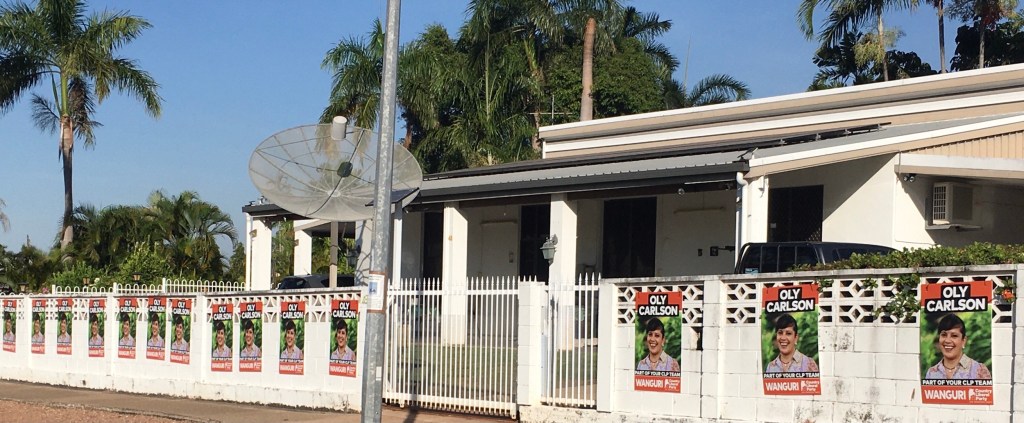
There is a festival, a carnival, of extravagant postings and placings of core flutes of people seeking election all around Darwin and Palmerston.

Some electorates are saturated with the likenesses of people seeking election. In the electorate of Wanguri, One hopeful has at least 600 call flute likenesses plastered on fences and walls and roadsides and everywhere else. Many have less signage but it’s still well and truly overdone.

I fantasise that should these posters come to life, Darwin’s population would increase by 50,000 people.

Election Promises on the credit card

Whichever party wins the election in 24 days, one thing is for sure: Fulfilling those election promises – which ARE kept – will be on the Government’s credit card.

Borrowings will take us ever further into debt. With interest payments already a significant drain on the NT treasury, the idea of “short-term gain for long-term financial pain” will come into sharper focus than ever before.

When it comes to debt, how long can the government keep kicking the can down the road before the vast amount we owe turns around to bite the territory hard?

And is that not true of governments everywhere?

ELECTION TIME PENDING IN THE NT (AUSTRALIA)

DV on the increase

Domestic violence and crime belong in the same camp because both are about criminal behaviour. DV and crime are receiving ever more money and are being budgeted to try and curb their manifestation. It is not working – the frequency of both, especially DV, is on the increase. There has to be more than awareness rallies; will the government have the mental steel to invoke anti-DV practices that work?

Crime prevention – the truth of what will change post-election

We are now 26 days from the NT election. Both the Labor Government and CLP Opposition are saturating the Territory with written and verbal promises that significant attention will be given to alleviating Territorians from the scourge of crime post-August 24. Root causes, boot camps, truancy officers to ensure school attendance, holding parents accountable, the continued resurrection of the School-Based Constable program – the promises are dropping thick and fast. Sadly, based on post-election results, there will be little action, and we will all continue living in a crime-riddled Territory.

ME

I am Poor Old Henry.

The youth in me has gone, my skin is wrinkling and stretching with age.

My fear of peaceful tranquility continuing in the NT and Australia is fading fast.

I feel cast out because I am not a First Nations person and that dispossession is increasing with the passing of time.

I am glad to be old for that means my time left on earth is shorter by far, than the time I have already had.

TICKETS WON WILL BE GIFTED

If you won two free plane tickets, where would you go?

In earlier posts, I have outlined the fact that, while travel was a key part of our lives from the 1970s until nearly 2000, the desire to travel as tourists and visitors has all but evaporated.

If I was given two tickets for travel, I would accept them, and then gift them to two of my grandchildren, enabling them to travel and enjoy some aspects of the world. To assist, I would support them with travel expenses to meet accommodation, side trips and entertainment costs.

As we enjoyed travel when younger, I want to offer this opportunity to two of our grandchildren so they can enjoy other places and learn, as we did, about life beyond Australia. They deserve the education, enjoyment and challenges provided by travel.

I am too old and tired to go traipsing around the world.

WHAT’S IN A ‘NICK’NAME

What is the story behind your nickname?

Like many of the questions posed on this site, I’m finding it difficult to get my head around the best way to respond. That probably comes from the time I have spent on this earth, together with the fact that “fortunately”, I continue to be blessed with quite a good memory.

I have been called many things over the years, some complimentary and others rather scarifying. Among these callouts have been a few nicknames.

My thoughts on this? Also confused by the fact that I have used many pseudonyms When writing for various publications over the years. These have generally been in the material sent to imprinted in Newspapers.

I would add that at no time when writing seriously on crucial issues, have I used a pseudonym because one needs to be genuine and attach their name to issues-focused correspondence and papers.

The nickname I use most is one identified on my blog and with several other memberships. It’s probably not a proper nickname because it is only semi-detached from my Christian name.

The identification in “Nick” is “Poor Old Henry”, Often written as showing or as one-word “pooroldhenry”. It is a nickname I use for often answering the telephone as “poor old Henry”. I also use it in other contexts.

The exciting thing about using this nomenclature Is the responses it gets from those hearing it.

“You’re not poor!”,

“You’re not old”,

“poor old Henry” – (with a disbelieving look)

“POOR OLD HENRY!!” –

th expostulation)

“Poor old Henry” – (with some semblance of sympathy).

And so on …

WHY (14)

Do politicians standing for election, plaster the core flutes of their countenances over every conceivable space in the electorates for which they are standing?

Do politicians on high salaries wring every vestige of entitlement from their expenses and entitlements, never spending a red cent of their money?

Do politicians stretch the truth and make pre-election promises they will never keep?

POSSIBILITY/PROBABILITY

There is a possibility but not a strong probability that PM Albanese will oust himself as part of the Australian Government cabinet reshuffle.

There is a possibility and quite a strong probability that Australian athletes earning gold, silver and bronze medals at the Paris Olympics, will be conferred with Orders of Australia and pobbibly Member of order of Australia medals.

There is a possibility and a strong probability that retiring ministers Linda Burney and Brendan O’Conner will be presented with honorary doctorates, possibly from several tertiary institutions.

How can we keep healthy?

A layer of dust circles the world.

A massive layer of disease envelops earth.

There are wars renting and polluting the air we breathe.

Crowding populations evetlastingly spawned are choking space.

It is HARD to keep healthy.

I am glad I am old for that end dates my time on this mortal coil.

THERE IS NEVER ANY BLUE SKY

Blue sky,

Has fled from my life.

Replaced,

By ever thickening,

Ever darkening,

Clouds of despair.

From bright light,

To dimming.

Then penumbric reflection,

Of dusk.

Into the black night,

Deepening,

Of depression.

Like an Arctic winter,

The sun,

No longer rises.

My life,

Is without shadow,

Without illumination.

I am

Lost in tundra darkness,

24/7/365.

More and more,

I realise,

Extinguishment,

Is the only escape.

Poor Old Henry

WHY (13)

Do politicans standing for parliament and councils, find it necessary to place hundreds and hundreds of countenance flutes onto every fence and into every conceivable space, to tell us they are standing for election?

Everywhere? EVERYWHERE!

REGISTRATION DUE IN AUGUST

I have an ancient vehicle that still goes well.

Registration requires an annual check for serviceability and roadworthiness, which is fine. I want to stay with this vehicle because car theft in the NT (Including Hiluxes, SUVs and flashy, expensive and new cars} is rife.

Over a short time, hundreds of vehicles worth millions of dollars have been stolen. If they are crashed, sympathy is heaped upon the thieves, especially if they are killed or maimed. Scarcely a thought is offered to vehicle owners, many of whom are still paying these vehicles off.

The fact they are up against it, with insurance premiums hiked for claims and payments still due on damaged, trashed or burnt vehicles, matters not.

My ancient vehicle will do quite nicely. I will keep my old car.

My 15 year old Toyota Camry

OUCH! TOO MANY KIDS CAN’T HOLD A PENCIL

A letter in ‘The Australian’ on August 29 2019 from Bill Pannell sums up a growing deficiency among students. Pannell writers

“TV report of recent NAPLAN test results suggests a deficiency and continued deterioration in writing skills in Australian high school students.Video footage accompanying these reports makes the reason for this problem obvious: a sort of back-hand claw-like grip of pens and pencils.

Surely some basic instruction in the use of a writing implement would produce improvement in this area?”

Mr Pannell’s letter hits the nail on the head; that the ability to hold a writing tool comfortably and write with wrist and finger authority and control is fast becoming a lost skill. The skill of handwriting used to be taught in school. Handwriting lessons were part of the curriculum.

My urging and heartfelt pleading to graduating teachers is to research and reinstate handwriting lessons as a part of their teaching operation. Handwriting is vitally important and the ability to handle writing tools with authority and comfort should be reinstated. Handwriting lessons should never have been dropped.

HANDWRITING SHOULD BE TAUGHT

There is a lot of debate these days about whether or not handwriting should be taught at school. In some countries, including Finland and the United States, handwriting has gone by the by. Rather than being taught how to use a pen, all students are given the opportunity to learn keyboard skills including touch typing.

While trying to understand why this change has occurred I would be the very last person to advocate that handwriting should become a skill of the past. Rather I believe that it should endure forever.

I am certainly not down on keyboards and computers. But for children to have both handwriting and keyboards is optimal. To become mono skilled with handwriting going out the door would be altogether wrong. There are many many occasions in life when handwriting is important and indeed the only written communications method available.

When teaching handwriting, the “3 P’s” rudiments immediately comes to mind. That has to do with the methodology of writing. It is about;

* pencil or pen hold

* paper position

* posture – the way we sit in order to write most effectively and comfortably.

Stressing these things over and over again until they become habitual is important.

Part of handwriting is teaching children how to hold a pen or pencil so that it is comfortable and their fingers and wrists don’t ache. Watching people write these days can be quite a torturous experience because of the way in which writing tools are held. It’s obvious from observation that many people have never been taught how to write. That is an absolute pity.

The size (diameter) of pencils and then transition from pencil to pen is a part of writing graduation. Initially pencils are thick and as children grow older with more dexterous finger management the diameter of the pencil become smaller. When a reasonable agree of writing skill has evolved, then is the time to move on to pans. That is usually around year four to year five. Children love graduation to pens and having pen licenses issued to them by teachers.

Lined size is a part of learning to write. The younger child the bigger the line. 1 inch lines (30mm) are generally the starting point going down to around 12 mm by the time children get to the end of middle and the commencement of the upper primary years. Handbooks and exercise books can be purchased where lines are divided into thirds. This helps children when it comes to tall letters (t, f,) and letters having tales (g, y q,). The dimensions associated with writing can be trained with children developing that discernment over time. Over time, the one third divisions can be left and children go to straight lines for their writing activities.

These days specific handwriting lessons are often not offered in class. Or it may be that there is a handwriting text where children simply open and copy what’s written for them. I believe that those texts are enhanced by use of a transcription book and also with teachers demonstrating letter formation, joins, words and so on the whiteboard. The idea of children learning by copying really helps when it comes to handwriting development.

The way paper or writing books are positioned helps when it comes to the slope of letters. Writing from left to right is part of this and can be difficult particularly for left-handed children. Left-handers tend to “drag” their arms across pages as they write from left to right meaning that dog ears and crumpled pages become the norm. Train children as they finish a line of writing to lift their arm going back to the start of the

And then working across the page from left to right that overcomes the shuffling of arm on paper that can occur if this is neglected.

Steadying the paper or page onto which writing is being done helps. For this purpose the spare hand can be used. So often it is seen propping up children’s heads as they write where that writing is the task of one hand alone. Rather than the spare hand being a head prop, metaphorically describe it as an anchor which holds the boat (paper or book) steady against the wall so that it doesn’t rock back off fourth, or similar. This will involve a lot of reminding and correction easily seen as being in need of remediation when teachers are walking around classrooms.

Support children with lessons as a transition from printing to writing script style. Linked script is part of this and it does take time to teach. Little and often is important and I would suggest a handwriting lessons every day.

Remember to comment on handwriting and praise the effort that students put in to the script. Be they printing or writing this praise will help.

Handwriting is so important. It needs to be revived not neglected.

THE BEST PLACE FOR HOLIDAYS

In the 1970s through until 2010 we often travelled, firstly with our children and as they turned into young adults, by ourselves.

Over the years we visited many places and had learning and insightful holidays. They were challenging and impacted by limited budgets. They were also enjoyable, great for family togetherness, and offered wonderful alternatives and coping opportunities. The holidays were great.

However, these days, with retirement being a full-time occupation, holidays at home are the best alternative available. No more crowded airports, expensive airfares, noisy and smelly destinations.

Just peace and quiet that fits an upper-end septuagenarian.

I love reflecting on our past holiday experiences, but these days I relish holidays at home.

Toughen laws on crime, particularly youth crime

In Australia and everywhere

Before every election, for as long as I can remember, both the major parties – whether in government or opposition – have made significant promises about controlling and managing crime, particularly youth crime.

The day after the election, the elected government shelves the promises, bowing to pressure from interest groups not to act in any way other than softening existing laws.

Whichever party finds itself in opposition continues to hound and berate the new government to make a change.

If and when elected to government, the vociferousness while in opposition is suddenly muted, with the ‘new’ opposition finding a voice on the issues they are conveniently ignored while in government. Every four years, the cycle is repeated.

And one who has lived with this issue for the past three decades should not be cynical!

TAKE “I” OUT OF OUR THINKING

I ABHOR ‘I’

“I“!!

It is a selfish word. It is the most misplaced word. It is a suffocating word, smothering the notion of “we“ and “us“. It is a proud word, forever upholding individuals over the collective.

I was born a baby boomer. Then came the X and Y generations, the Millennials and the Z generation.

Going back over time the focus always used to be on “we“ in terms of the way we put others before ourselves and valued the community above ourselves.

Now that’s all gone! People think only of themselves, and what they want, and to hell with the rest!

Too many politicians are in politics for themselves and not other people. Too many CEOs of retailing and manufacturing companies are in their positions for their good, and what they want comes first. Too many people in government departments are more concerned about themselves and what they can get out of their jobs than they are about the jobs they do and the people they serve.

Service for others used to be heart service. These days it is lip service. It is not genuine but rather pretends. People who put others before themselves are a distinct minority.

Yes, the word “I” is the word I would most like to banish into extinction.

NOISES WHEN WORKING AT HOME

Barking dogs day and night.

Intermittent arguments among and between people.

Hoons hooning at any time of the day and night, the evidence being in scoured and tyre-streaked roads.

Heavy braking punctuated by car horns.

Traffic going up and down ours and an adjourning main road day and night.

The wailing of police and ambulance sirens.

Regular nighttime parties from residences near and far.

Occasionally, but not often, it is quiet.

THOUGHTS FROM OLD HENRY TO INTERNATIONAL STUDENTS TRAINNG TO BE TEACHERS – 5

Points of advice … continued

16. Resources and materials

These support lessons but do not become ‘the’ lesson. Smart boards support teachers but don’t replace the teaching effort that needs to be applied. It can be easy to think that resource materials occupy a more important place than they should.

Make sure what you use is appropriate to the age level of students. If using a smart board or whiteboard text, make sure it is legible and not written in a small and hard-to-decipher script.

17. Owning lessons and deference to the classroom teacher when you are in charge

Although it can be difficult to understand, please know that you are the teacher in charge, particularly when doing your last practice when you are responsible for the lessons being taught in their entirety. Don’t feel you have to check lessons step-by-step with your mentor while lessons are underway. Ask at the end for feedback but try and carry the lesson without breaking to check how things are going. In part, this will give you increased self-confidence. It will also give children or students greater confidence and belief in your sr ‘Thierry’ teacher.

18. Satisfying competencies

Remember that competencies are cumulative and build on each other. As you satisfy each competency, you need to keep that competency as part of what you are doing, while adding the next to your skills. Don’t make the mistake of thinking that once you demonstrate competency, you can tick it off, forget it and move on to the next skill area. Each competency adds to those that have gone before and they are applied altogether.

19. Conclusion

I wanted to share these thoughts with you. As a person who was once a student teacher, I remember with appreciation the work down with me and helped me develop. It is up to those who are teachers, to make sure we continue help to those who are our upcoming and developing generation of teachers.

Should you wish, feel free to contact me at henry.gray7@icloud.com

THOUGHTS FROM OLD HENRY TO INTERNATIONAL STUDENTS TRAINNG TO BE TEACHERS – 4

Points of advice … continued

11. Lessons and plans submitted well ahead of time

It is critically important to offer your lesson overviews and plans to your Mentor Teacher as far in advance as possible. This will give her or him time to carefully consider your planning, offering you comments and feedback you can

apply going forward. Planning and preparation are key to quality teaching and being well prepared is the essence necessary to quality teaching.

Try to avoid handing initial plans to your mentor in the morning when lessons are to be delivered. This would not give him or him sufficient time to offer you meaningful feedback or suggestions.

12. Being on time

It is also of utmost importance that you are on time at the start of each day and each period. It is good practice to be at work at least 20 minutes before the start of the day so you can set up without being flustered. Similarly, to stay at the end of the day to get as much ready as possible for the next day is wise practice.

As part of this, try and establish with your mentor a time you will meet during or at the end of the day to discuss what has happened. These collegiate (staff together) feedback sessions are essential if you at going to get the most out of your practice teaching period.

If for any reason you need to leave early, make sure you discuss this wi your mentor, then clear it with the school Leadership Team. Often an Assistant Principal is the person responsible for giving the okay on matters of necessary absence.

13. Work commitments while studying

Many students are working during the time of their training and have to fit work commitments around study obligations. Practice teaching requirements mustn’t be compromised by work obligations. If necessary, arrange with employers to change work hours so that you a not put under pressure about practice teaching requirements.

As each Teaching and Learning block is built around the requirement of hours and days, you cannot afford to cut back on required Tim allocations. If you do, it means that practice teaching requirements are not fulfilled.

14. Participating in extra opportunities available for language appreciation

One of the needs that tend to emerge for International Students is naked to avail themselves of the opportunities to practice English Language usage. While some International Students have studied and have TESOL qualifications, there are wide variations in the ways language is studied and practised in ordinary everyday situations. I am not being critical in making this comment: However,

it is true to say that the issue of language is one of the most challenging confronting overseas students. (This would of course work in reverse for a traditional Australian English speaker visiting an over-ease country and participating in teaching programs.)

I strongly urge you to participate in programs that might be available

to help, support and assist you in the area of language usage. As I visit around, there are things about the language I note concerning individual students. I will develop a document that looks at the way language is being applied to circulate it to everyone with whom I am working. It will point out some of the ways language is being used and how it might be better spoken.

15. Classroom observation

Before the course commences – the opportunity to participate in classroom observation for the sake of appreciating the way teachers and students interface and work together would be helpful. This is an expectation that children and students in Australian classrooms may act and respond in the same way as those in overseas countries. The are significant differences. Some of these differences I have spoken to individual students about; relate to attitude, concentration and general behavioural and deportment matters. Being aware of these differences before teaching practices commence could be very helpful.

To be continued

REFLECTIONS ON THE NORTHERN TERRITORY FROM POOR OLD HENRY

NT road deaths

Sadly, 39 people have been killed on our roads during 2024, compared with seven deaths in the same period – January to July – in 2023. However, between July and December 2023, another 24 people parked on territory roads, bringing the total to 31. The worry is the number of people killed in the 12 months of July/August 2023 to this point of time in 2024. Sixty-three people have perished in these twelve months, and that is highly alarming. What has gone wrong?

NT Election looms

Just 34 days to our NT election, I am becoming more excited and more apprehensive by the day. As a very old man, I believe this could be close to the last NT election in which I will have the privilege to vote. I hope the outcomes will bring economic furtherance, social cohesion and enhanced well-being to the Territory.

THOUGHTS FROM OLD HENRY TO INTERNATIONAL STUDENTS TRAINNG TO BE TEACHERS – 3

Points of awareness … continued

6. Aura of friendliness and engagement

Children and students react positively to teachers who manifest an attitude of friendliness and who are willing to share conversationally with them during lessons and activities. In the olden days, teachers in Australia used to be “standoff and starchy”. They did not interact conversationally with those whom they were teaching. These days there is a closer affiliation between teachers and students which has done a lot to add humanity to the profession.

7. Repetition of instructions and children ‘listening for repeats.’

Aim to give instructions as few times as possible. Some children and students get into the habit of deliberately not listening, meaning teachers feel obligated to go over and over and over the giving of instructions. That does not help either in time management or the flow of the lesson. Aim to get to where instructions are given, ideally once only and certainly no more than twice. This will be helpful if instructions are kept simple and brief. Sometimes instructions are too complex or have too many parts. This confuses children, and students go can get lost in directions.

8. Timing of Lessons and Breaks Needed

Make sure you stick to the times set for lessons. This is part of your planning and will be checked through by Mentor Teachers. When lesson times are confirmed, stick to those times rather than running on and going overtime. Make sure as part of this that you transition ( move) from one part of the lesson to the next within the time suggested.

When a lesson finishes and you move to the next task, make sure you follow time so the second or following lesson is not crimped (made short) of time. If you consistently run over time, the periods for recess and lunch may be reduced. Children and students need their break times for eating, playing and relaxing.

You will learn how much to plan for select periods the further you get into your practice. It takes a little while to work out time management matters for a group or class.

9. Your daily recordings of outcomes.

Always write notes at the end of each day that reflect on what you have done well and on things you might do differently and better with or during your following lessons. It is essential to make a note of your successes as well as note the items offering challenges. This ‘reflective journal ‘ is ever so important and can b easily overlooked. I suggest that you write it regarding your plans and notes used during the day, that you write conversationally and that you use it to note things you recall.

10. Self-evaluation

This follows from the above point. ‘Critically think’ about your teaching and the developments within you that are taking place. Consider the way you influence children and students and consider the way they, your Mentor Teacher and other colleagues are impacting you. I strongly suggest that you consider yourself a ‘junior colleague’ and member of the staff of your practice school.

To be continued …

THOUGHTS FROM OLD HENRY TO INTERNATIONAL STUDENTS TRAINNG TO BE TEACHERS – 2

INTERNATIONAL STUDENTS

A Compote of general material prepared for International Students undertaking the Graduate Diploma Program at CDU in 2012 and 2013.

Please note this document is written in a way that reflects my working with a group of students from several Asian Countries. They were training as teachers at Charles Darwin University. This is the first of a series. I am realigning some of my earlier notes and will send these to you as they are updated.

1. Introduction

Thank you to those who were able to come to our conversation on Thursday afternoon. I think it was helpful for us to share time. Students need to have the opportunity to talk and express opinions. Sometimes students have questions they want to ask, and there may not be a forum or the opportunity for this to happen. Another thing discussion helps is for people to realise that others could share their issues. Talking things over and working together in a group situation can be wise.

There were several things you raised which I will take on board. The requested information will also be organised in the next few days.

The issues you raised were, in part, some of those I had listed to discuss. Some other points I had in mind did not come up, so I will discuss them with you in this email.

An important thing for you to consider is that ‘at risk’ where this applies can be taken to mean ‘an extension’ being the opportunity for you to continue to develop and consolidate your teaching development and understanding. This is an essential process because it would be altogether unwise and unfair on you to suggest that everything had even been completed satisfactorily if that was not the case. That would be selling you short and also doing a disservice to the school and the children where you might go and teach on graduating from the course.

One of the things I would urge is that you consider your development to date. Take note of both the theoretical subjects completed and the practical teaching work undertaken.

Think about the things you have done well and celebrate your successes. Think about the ongoing nature of your course and things you might do differently and possibly better if you continue the program. It is always essential to self-evaluate and note your progress in a reflective journal.

2. Matter, manner and method – including VOICE

What you teach, how and why you teach, all come into the equation. Matter or content is prescribed mainly within the curriculum. Children and students need to understand the relevance and ‘why’ things are being taught, why they are necessary and how they are applied. Manner, or ‘how’ you teach, is down to your personality and characteristics. The “3M’s” all connect to help “make” a teacher.

I wanted to place particular emphasis on VOICE. While correct language use is essential, so is how teachers use their voices. It is, in my opinion, important that teachers are conversational with and when dealing with children and students. Many teachers forsake the idea of conversation and use a commanding voice with students most of the time they interact. Their vocal tones can become very unpleasant. The way we talk, as well as what we say, is significant.

3. Facial characteristics

The facial expressions teachers use are essential. It’s important that teachers look happy, relaxed and pleasant. Children and students do not respond well to those who look unhappy, uptight, overly and constantly serious or miserable. The face is an essential part of a teacher’s makeup.

4. Stance and attitude

The way teachers stand, their deportment, their physicality and the way they appear are important considerations. Look and act comfortably, but ensure posture is not overly rigid or overly relaxed and sloppy. There are set a critical example to children and students in how they stand, sit, walk and act. If you are well prepared, this will help your confidence. That will reflect through the matter of how you look and function.

Part of this is to relax with children and students. Don’t be stand-offish and aloof, and always maintain careful standards.

5. Dress standards

Be sure you understand the dress codes that apply to members of staff. If unsure, ask so that you know the dress sense applying to your school. Smart and casual generally fit.

To be continiued

THOUGHTS FROM OLD HENRY TO INTERNATIONAL STUDENTS TRAINING TO BE TEACHERS – 1

International Students

I wanted to offer some thoughts and responses to matters impacting on International Students undertaking the Graduate Diploma program at Charles Darwin University.

Language as it is spoken and used situationally is the number one issue.

Understanding and appreciating the nuances and peculiarities of Australian Culture is another.

A third concern is the seeming inability of some with whom I have been working to manage time allocations. Lessons are planned to take particular amounts of time in total, with time divided sub-sectionally. Students regularly overrun on time taken for parts and the whole of lessons.

Those who have been to China and other overseas destinations to teach, could well be resource people to assist with support and cultural understanding programs. They know what it is like to be expatriate from an Australian viewpoint and could bring a lot of understanding to any program designed to minimize the impact of visa or expatriate living. Icahn immediate come up with three names of educators who have and still fill different roles who might assist.

In dealing with program development about situational living would need to take into account that cultural practices and mores vary widely from one culture to another. Chinese people for instance are often inclined to be impersonal and to remain detached and unengaged if someone in the near vicinity is stressed or if something untoward that needs attention is happening.

From this, the equalities of sympathy, empathy and engagement which impact on the “personality of culture” need to be explored. The context of community is one that varies widely from culture to culture.

At times there are variations to the way in which gender is regarded and treated. Within our multi-cultural and plurals tic society we make every effort (sometimes not successfully) to practice gender equality. Those coming from overseas may have a different take on gender appreciation. Hence there may be occasions when response to a male person who is offering advice may be somewhat different to the quality and level of response offered a female supervisor.

Those coming to our shores as International Students, particularly those who have teaching qualifications from home institutions and who have been practicing as teachers, may not always take kindly to advice. They may feel their basic understandings are in place and they are coming simply to add, at considerable personal expense, an additional qualification. It is critically important that if this the case, our University does not allow itself to agree to a “qualified qualification”. Standards need to be upheld at all times.

My initial point about spoken language and difficulties international students face in its understanding and usage suggest there is a need for a compulsory upfront unit which enables students to come to terms with the way we use language in our classrooms, schools and indeed our community.

This unit might also include for students and awareness of the way our children act and interact in classroom contexts. Overseas students come from backgrounds which generally perceive children and those receiving instruction as being passive creatures who will sit for long periods and soak up the learning offering being provided by the teacher. Dynamic interaction and response by students, in other than a receptive listing mode, does not come into the equation.

To alter the focus of the Graduate Diploma program as it is offered to International Students seems to be an altogether wise and prudent move. As the program in being modified to become a two year qualification with greater focus on pedagogy, would suggest this as the right time to effect necessary change.

There may be an anticipation on the part of some Graduate Diploma (International) students that the course is somewhat of a ‘given’ – a formality if you like. My perception is that their concern in vested in the notion of quickly completing the course so they can presented with the Diploma to frame and hang on the wall. I think they perceive the course as offering a beginning and an end, with the intervening weeks being somewhat of a time formality, to be completed as quickly as possible.

The journey itself and the learning that can and should take place is seen as being a “quick as you can” means to an end. The response of some students is to gloss over their practice periods, talking about “passing”, “failing”, and “ticking boxes” indicating that bit is done and it is time to move on to the next element. Elements are seen somewhat in isolation to each other, rather than being linked and interdependent on each other. Progress needs to

be cumulative, building on what has gone before therefore deepening and broadening the practical teaching experience.

The international student market is growing, and we must get it right for them from a satisfactory viewpoint and ensure that the student development business is working for tertiary institutions. Investment in student satisfaction with outcomes is essential in securing the future of Australian Universities as institutions training overseas candidates

REFLECTIONS ON YOUNG HENRY AS A TEACHER – 3

Why Write About these Things – TO INTERNATIONAL STUDENTS I WAS LECTURING.

Recounting this experience to you, is to demonstrate (show) that all teachers have experiences that impact and help to shape their lives going forward (into the future). At the time as a novice teacher I felt somewhat bewildered and overwhelmed by this experience and the challenges that followed throughout the year. At times during 1970 and in following years, I wondered if teaching had been the right career choice. These days, looking back, I can answer that question affirmatively (with a ‘yes’)

If we as teachers are able to accept and master challenges, this leads to a growth in our strength of character, helping us to become resilient, resourceful educators.

I would like to email you some thoughts relating to elements of teaching, from resources to attitudes, you may find useful. They will be largely reflective and not intended in any way to impugn (criticise).

I have learned a lot on my educational journey and much of that learning has been becauyse of people helping me with development and understanding. These are the intentions (motivations) I have toward you as fellow colleagues.

All the best for your continuing development.

ELECTION IN AUSTRALIA’S NORTHERN TERRITORY -1

ELECTION (1)

The NT goes to the polls to elect a government for the next four years on August 24 – in 35 days.

I have been an NT voter since self-government in the late 1970’s. I am excited and anxious about the possible outcome as we approach the election.

Will the future of our Territory be in the hands of the Lawler Labor Team, or will the CLP under Finacchario’s leadership come from behind – the ‘behind’ being eight years in the political wilderness – and snatch the government benches?

With each day, I am growing ever more apprehensive and nervous about which way the cookie will crumble.

It has been four years in the making, and the planning and anticipation have brought us to the edge of election day.

REFLECTIONS ON YOUNG HENRY AS A TEACHER – 2

My First Teaching Experiences

My first day of teaching was in the beginning of February 1970. We had been appointed to Warburton Ranges in remote inland Western Australia – this after having initial appointments to Merredin a large country town in WA, replaced by Warburton. I will never forget that when we arrived by road after a journey from Perth of 1,600 kilometres, being surrounded by Indigenous Australian’s who were as strange to me as the differences between your home countries and Australia might be to you. We had to find our way in a whole new and different cultural context. English was for members of that community a foreign language and for us, their dialect equally as difficult to understand.

To say we didn’t struggle through the first months as Warburton would be an understatement. Not only was thee language ‘foreign’ to us who were required to teach in English, but the cultural contexts of life were equally as different and difficult to comprehend.

Back to that first day. I was a Master on Probation. Our Principal (THEN called Headmaster) had been appointed after seven years of teaching a top level Grade Seven class in the very best primary school in Perth. It was a research school. He decided that promotion required him to undertake remote service and applied for the leadership role of any primary school in WA. Warburton Ranges was his reward – and he was as much at sea (lost for understanding) as me.

On that first day, he rang the handbell. (There were no electric bells in those days). All the children eventually lined up outside the main school doorand he started introductions. Suddenly the children, sensing some danger, turned and scattered to the four corners of the school yard.

Rushing into the yard from the community came a senior Aboriginal person trailed by his family. He was brandishing (shaking) spears and a woomera (spear thrower). His family members coming behind had an array (collection) of weapons in their hands.

It turned out that he was wanting to spear a senior girl, because she had told his daughter that he (her Father) had snakes in his legs. This was a major affront (insult) to him and he was seeking to punish her for this statement. (The ‘snakes’ were very prominent varicose veins)

The girl who had made the statement was the daughter of another senior man, who was school handyman and gardener. When he because aware of the threat to his daughter, he raced to the garden shed and came out with HIS spears and weapons, setting off in pursuit of the first man and his family.

This all worked out in the end and after a lot of verbalising (language and threats back and forth) the incident quelled (quietened and disappeared).

The children who were students had also disappeared and did not return to their first day until the second day of the school year.

My recall is based in part on memory but there are specific details in my diary – a journal maintained for most of my professional life.

REFLECTIONS ON YOUNG HENRY AS A TEACHER – 1

Some Reflections on the ‘Way it Was’

I remember when first graduating as a teacher, thinking toward the future and feeling just how far it stretched into the distance. Then, it seemed like the future was never-ending and that my teaching career would go on and on and on. In those days, training was for only two years, with three year training for teachers in Western Australia becoming compulsory, from memory, in 1969. Earlier it wads optional (two year or three year trained choice) I commenced training in 1968 and being mature aged was required to undertake the two year training option.

Prior to determining that teaching was for me, I had been a young man working with my Dad on his farm. in those days it was rare indeed for children to have a chance to complete Year Twelve and have the chance for education beyond secondary years. Most boys on farms (in the rural area) left school at 14 or 15 years of age, going to work on farms or at menial (blue collar) jobs. Some but not many did apprenticeships.

Girls left school around the same age and many became domestics (house helps) at home or for others, with the emphasis on cooking, sewing, cleaning and often minding younger siblings (at home) or other people’s children (if employed). For some girls, there were positions in stores or if you were really lucky, a job as secretary in a bank or business.

I was lucky (or blessed) to have Parents who allowed me to complete Year Twelve for without my Leaving Certificate (equivalent to a tertiary entrance qualification) I would never have been able to undertake teacher training. I was (I think) the only boy from my primary school to go on and complete all years of secondary education.

These days I look back and reflect on just how fast it seems the years have flown by. Sometimes I think about the challenges we confronted and the learning I achieved.

A VERY DIFFICULT QUESTION

FAVOURITE GAME

This is somewhat of a difficult question for me to answer.

I have never played cards (the standard pack) in my life. I wouldn’t know where to begin on analysing a pack of cards or beginning to understand any of the games played with them.

Video games are not my thing. I’ve never had a video game application on my phone, iPad, or laptop. To me, video games are a waste of time and miss use of technology. I know that not everybody will agree with me on that particular perception, but we are all different from each other.

Once upon a time I used to played board games – but that was as a child. Included were “Snakes and Letters“, “drafts”, “Chinese Checkers“, “Monopoly“, and “Test Match“.

At one stage when just a little boy, I can meet remember being mesmerised by “Pink Up Sticks”.

As I merged into adolescence and young adulthood, any desire to play board games disappeared and has never returned.

I sometimes wonder whether not playing these sorts of games has somehow or other stunted my character or deprived me of investigative undertaking and lateral thinking opportunities.

But that’s the way it is.

WHY (12)

Do applies that look tempting and nice in supermarkets, so often reveal themselves to be full of bruises when peeled for eating?

Are local authorities so reluctant to spend money on the maintenance of assets, but willing to splurge on extravagant events?

Do so many people elected to councils and into government suddenly become as quiet as mice until the time for the next election is coming around?

HOW I WORKED WITH INTERNATIONAL STUDENTS – FURTHER EXAMPLE

To: XXXX XXXX

From: Henry Gray

Re: Comments and Observations – Written and given after conversation

Time: 11.00 am until 12:00 noon

Lesson: Maths (Measurement)

XXXX

Your preparation for this lesson (paperwork and the readying of aids) was impeccable (spot on). Lessons that are carefully thought through and planned generally succeed because they are built on a very sound planning base. Your documentation confirms that you are developing a sequence of lessons looking at various aspects of measurement. This lesson was one of a series and that was patently clear from your documentation.

It was a pleasure for a person like me, to be able to come in and see ‘at a glance’ what your lesson was about from the documentary evidence. You have a very good way of developing paperwork, including its layout. There was no clutter about your documentation and one did not have to ‘look’ in order to understand the highlights of your planning and approach. The salient (important) points ‘leapt out’ of the planning pages. Your paperwork is of the highest order.

Some thoughts:

1. Good learning continuity including sequencing was apparent from your notes and was/is being practised by you with the children.

2. Measurement was related to real life contexts, meaning the children were having the opportunity to ‘apply’ maths in life’s world contexts. That gave credence and clarity to the learning experience.

3. You were careful to explain (by word and demonstration) what types of situations require measurement by volume, what should relate to measurement by length and so on. This meant that vague and mystical understanding was overcome.

4. You asked good, exploratory questions of the children.

5. You elicited (encouraged) child driven responses to questions rather than coming out and answering questions before children had time to think about them and respond to what you had asked. That is good practice.

6. You kept children on task by gently reminding them about appropriate behaviour – when this was necessary.

7. When working with the group of children on the floor (during written exercise time), you kept a veery good eye across children who were working at their desks. This confirmed to me that you have good group management and class management skills. (It can happen that when teachers focus on groups within a class, they overlook the need to ‘keep across and be aware’ of the class as a whole. That for you was not an issue.)

8. You were careful to ensure that the explanatory and collective aspect of the lesson (prior to worksheet distribution) did not exceed a reasonable time limit. Perhaps if that section could have been a few minutes shorter, children would have had a little more time with written work but that is a minor point.

9. You were ‘posture conscious’ making sure that you worked at a height that was suitable and reassuring for children. You get down to their level when working and this builds confidence by the children in you as their teacher. You are close (without being uncomfortable close and hemming them into a small space) rather than distant – to me that is an important mannerism to have developed. It confirms you feel comfortable with the children and that they feel confident with and in you.

10. The atmosphere (tone and harmony) you generate as a teacher is very affirming (good).

11. It was very apparent that you were the teacher in charge during the lesson and the children for the most part, referred to you in the first instance. That means they understand your role in the classroom and accept you as a co-teacher.

12. Occasionally and unobtrusively (without it being obvious) you touched base with Belinda. You have in my opinion an excellent professional relationship with your Mentor, one based on mutual respect and trust.

13. Your manner as a teacher with children is excellent. You are pleasant, warm and positively affirming of and with the group. Your vocal skills in my opinion are top drawer in terms of voice tone, pitch, rhythm, intonation, speech base, word emphasis, recognition of punctuation as a part of speech delivery and so on. Your voice reminds me of the rhythmic pealing of gentle bells. Vocal tones you use, mean children warm to you as their teacher.

Some suggestions:

1. Make sure children don’t play the obfuscation (time wasting) game by having you explain over and over and over what is being done. Don’t overdo it when asking children if they understand. You did this four or five times at the front end of your lesson and some children responded in a way that caused you to go through it all again. Assume that children have knowledge of process and understanding after you have gone through initially and possibly backed up for the second time over key learning elements.

Then, if there are children who don’t quite understand, pick them up as a small group while the rest with clear understanding proceed to the next part of their exercise.

2. Rejoice in the quality of your diction and keep working on the few areas needing your continuing attention.

a. Your pronunciation and use of ‘sh’ – you tend to go to ‘s’ with words.

b. The need to be aware of the fact that some words (ie ‘sugar’ are said as ‘shugar’ although they are spelled without that sound (sh) being emphasised.

c. Similarly with ‘cl’ ie ‘in the next class’, not ‘in the next cass’.

d. Similarly with ‘th’ ie ‘thirty centimetres’ not ‘tirty centimetres’.

d. Sometimes you miss plurals, ie ‘use your coloured pencils’ not ‘use your coloured pencil’.

These are minor areas, but nevertheless needing your attention.

Conclusion

XXXX, you are on the right track and making very good progress. The litmus for people like me when relating to preservice teachers (and others) is to ask two questions:

i As a Principal, would I welcome this person as a member of my staff?

ii As a parent, would I rejoice in this person teaching my children?

In your case, the answer to both questions is “yes”.

Regards

Henry Gray

7 September 2012

NB Please forgive any spelling mistakes I have made in writing this text

HOW I WORKED WITH INTERNATIONAL STUDENTS

FEEDBACK OFFERED A STUDENT AFTER A DAY’S OBSERVATION OF PRACTICE TEACHING

OBSERVATIONS OF XXXX LESSONS

Leanyer School

Tuesday June 13 2012

Social and Cultural Education, Poetry and Maths

My observations were from 9.00 am until 10.15 am then from 11.45 am until 12.30 pm. This was a quite extensive period of observation.

With the SOCE work, children were working, both in the classroom and also on computer in an adjacent room. They seems to be quite significantly engaged, this being evidence of their interest. When children are working next door in the, computer room, make sure you keep a regular eye on them. Children need this under duty of care arrangements. It is a legal requirement that supervision be constant.

You grouped children on the floor for the introduction and continuation

of poetry development.

Commendations

Good management of children go tended to due focus -at least initially.

Recognition and naming of children who needed to be brought back on task.

Affirming that ‘poetic license’ applies when developing poetry meaning that writers can go outside the boundaries of conventional script writing.

Revision of what had gone before was a good idea – recap is always necessary.

Your suggestion that poetry is a medium through which feelings can be

expressed was good thinking as sometimes children and adults feel restrained when using this medium.

Your speech was generally loud enough to be quite audible to children.

You talked about poem types, in terms of humor, scariness, the invoking of mood and so on. This was done initially and then when children moved on to poetry writing.

You encouraged children to persevere when they were having some difficulty in becoming motivated to write their poems.

Toward the end of the lesson, some of the children shared their efforts. Your invitation to share, their responses and the conversations children had around completed work (of their peers) was a good strategy.

Suggestions

While your voice was loud, your enunciation was not always clear. Aim for precise and deliberate speech.

Revision of your previous lesson tended to go on for too long. It need to be crisp and brief. Don’t overdo revision by going back over countless examples of what has been done, because this loses children who turn off after s period of time.

At one time a child threw a rubber at or toward another child. Be aware and make sure things like that don’t happen.

The children generally went to the writing of poetry without too much fuss.

Make sure when you go from one point of a lesson to the next, that children clearly understand what they need to do.

When using the whiteboard, make sure your writing is clear and legible. That legibility is helped by the use of fresh and ‘visually friendly’ marker pens.

Generally the darker colors – black, blue and purple stand out better than some of the lighter shades.

MATHEMATICS LESSON

The major lesson focus was on the conversion of fractions to decimals.

This concept is one that can be difficult to show and have children understand from the viewpoint of translation. Your lesson focused on whole class work with children sitting on the carpet and working with you on the whiteboard from 11.45 am until 12.10 pm. At that time children returned to thei desks in order to work the subject individually. I took this to be aimed at both consolidation and extension.

Commendations

You thanked children from time to time for the way in which they were cooperating with you. Praising endeavor is important.

You aimed to clarify the difference between mathematical expression using factions and decimals including conversion.

When children commenced written work during the second part of the lesson, you moved around and engaged with them at desk level.

Suggestions

Whiteboard markers were too light for script to be easily read. Children had some difficulty in understanding what you were writing.

Your lesson was ‘two dimensional ‘ in that it was what we call ‘chalk and talk’. It was about teaching from the whiteboard with children responding to script. Your lesson (and this applies to all Maths lessons in my opinion) would have been enhance if children had had concrete materials with which to manipulate and explore fractions and decimals concepts. “Hands on” can involve quite simple materials. If children are allowed to explore and play with concepts using concrete materials, moving to whiteboard and paper (the abstract extension) becomes easier and more meaningful.

I felt that the way in which your lesson unfolded left quite a lot of the children feeling quite unclear about both process and reason for why this knowledge is important.

From the above point, it can be more than useful to ‘set the relevance, of mathematical learning by having conversation with children about how fractions and decimals are applied in real life. This could engage an understanding of area, money, weather and climate, to name just three examples of where an understanding of fractions and decimals is applied.

Always make sure that children clearly understand when they are moving from one part of the lesson to the next. It can help to outline for children the lesson plan, so that as an introduction the lesson sequence is briefly elaborated.

GENERAL

I felt that today you were not sufficiently in control of the children. Their focus and concentration was minimal and frequently lapsed. This meant you had great difficult in keeping children on task. The general noise level was quite elevated. While you don’t want children to be as quiet as mice or so still you can hear a pin drop, neither do you want the level of conversation to be up there in terms of decibel output. Control management and classroom organization are areas that continue to challenge your authority as a teacher. I am not advocating that you bawl children out, but rather that you work on strategies that will help you gain and maintain control.

Set the boundaries and parameters of behaviors that you expect and that at acceptable at the beginning of your practice teaching periods

Make sure to stick to time when it comes to lesson development.

Plan for shorter, sharper and more engaging activities as part of the lesson constructs. Too much of the same approach for too long is a turn off for students.

CONCLUSION

There are some elements of language I will write up and share with all International Students with whom I am working.

All the best for your continuing development.

Regards

Henry Gray

14 June 2012

HOW I WORKED WITH INTERNATIONAL STUDENTS – INTRODUCTORY MESSAGE

INTERNATIONAL STUDENTS

A Compote of general material prepared for International Students undertaking the Graduate Diploma Program at CDU in 2012 and 2013.

Please note this document is written in a way that reflects my working with a group of students from several Asian Countries. They were training as teachers at Charles Darwin University. This is the first of a series. I am realigning some of my earlier notes and will send these to you as they are updated.

1. Introduction

Thank you to those who were able to come to our conversation on Thursday afternoon. I think it was helpful for us to share time. Students need to have the opportunity to talk and express opinions. Sometimes students have questions they want to ask, and there may not be a forum or the opportunity for this to happen. Another thing discussion helps is for people to realise that others could share their issues. Talking things over and working together in a group situation can be wise.

There were several things you raised which I will take on board. The requested information will also be organised in the next few days.

The issues you raised were, in part, some of those I had listed to discuss. Some other points I had in mind did not come up, so I will discuss them with you in this email.

An important thing for you to consider is that ‘at risk’ where this applies can be taken to mean ‘an extension’ being the opportunity for you to continue to develop and consolidate your teaching development and understanding. This is an essential process because it would be altogether unwise and unfair on you to suggest that everything had even been completed satisfactorily if that was not the case. That would be selling you short and also doing a disservice to the school and the children where you might go and teach on graduating from the course.

One of the things I would urge is that you consider your development to date. Take note of both the theoretical subjects completed and the practical teaching work undertaken.

Think about the things you have done well and celebrate your successes. Think about the ongoing nature of your course and things you might do differently and possibly better if you continue the program. It is always essential to self-evaluate and note your progress in a reflective journal.

2. Matter, manner and method – including VOICE

What you teach, how and why you teach, all come into the equation. Matter or content is prescribed mainly within the curriculum. Children and students need to understand the relevance and ‘why’ things are being taught, why they are necessary and how they are applied. Manner, or ‘how’ you teach, is down to your personality and characteristics. The “3M’s” all connect to help “make” a teacher.

I wanted to place particular emphasis on VOICE. While correct language use is essential, so is how teachers use their voices. It is, in my opinion, important that teachers are conversational with and when dealing with children and students. Many teachers forsake the idea of conversation and use a commanding voice with students most of the time they interact. Their vocal tones can become very unpleasant. The way we talk, as well as what we say, is significant.

3. Facial characteristics

The facial expressions teachers use are essential. It’s important that teachers look happy, relaxed and pleasant. Children and students do not respond well to those who look unhappy, uptight, overly and constantly serious or miserable. The face is an essential part of a teacher’s makeup.

4. Stance and attitude

The way teachers stand, their deportment, their physicality and the way they appear are important considerations. Look and act comfortably, but ensure posture is not overly rigid or overly relaxed and sloppy. There are set a critical example to children and students in how they stand, sit, walk and act. If you are well prepared, this will help your confidence. That will reflect through the matter of how you look and function.

Part of this is to relax with children and students. Don’t be stand-offish and aloof, and always maintain careful standards.

5. Dress standards

Be sure you understand the dress codes that apply to members of staff. If unsure, ask so that you know the dress sense applying to your school. Smart and casual generally fit.

6. Aura of friendliness and engagement

Children and students react positively to teachers who manifest an attitude of friendliness and who are willing to share conversationally with them during lessons and activities. In the olden days, teachers in Australia used to be “standoff and starchy”. They did not interact conversationally with those whom they were teaching. These days there is a closer affiliation between teachers and students which has done a lot to add humanity to the profession.

7. Repetition of instructions and children ‘listening for repeats.’

Aim to give instructions as few times as possible. Some children and students get into the habit of deliberately not listening, meaning teachers feel obligated to go over and over and over the giving of instructions. That does not help either in time management or the flow of the lesson. Aim to get to where instructions are given, ideally once only and certainly no more than twice. This will be helpful if instructions are kept simple and brief. Sometimes instructions are too complex or have too many parts. This confuses children, and students go can get lost in directions.

8. Timing of Lessons and Breaks Needed

Make sure you stick to the times set for lessons. This is part of your planning and will be checked through by Mentor Teachers. When lesson times are confirmed, stick to those times rather than running on and going overtime. Make sure as part of this that you transition ( move) from one part of the lesson to the next within the time suggested.

When a lesson finishes and you move to the next task, make sure you follow time so the second or following lesson is not crimped (made short) of time. If you consistently run over time, the periods for recess and lunch may be reduced. Children and students need their break times for eating, playing and relaxing.

You will learn how much to plan for select periods the further you get into your practice. It takes a little while to work out time management matters for a group or class.

9. Your daily recordings of outcomes.

Always write notes at the end of each day that reflect on what you have done well and on things you might do differently and better with or during your following lessons. It is essential to make a note of your successes as well as note the items offering challenges. This ‘reflective journal ‘ is ever so important and can b easily overlooked. I suggest that you write it regarding your plans and notes used during the day, that you write conversationally and that you use it to note things you recall.

10. Self-evaluation

This follows from the above point. ‘Critically think’ about your teaching and the developments within you that are taking place. Consider the way you influence children and students and consider the way they, your Mentor Teacher and other colleagues are impacting you. I strongly suggest that you consider yourself a ‘junior colleague’ and member of the staff of your practice school.

11. Lessons and plans submitted well ahead of time

It is critically important to offer your lesson overviews and plans to your Mentor Teacher as far in advance as possible. This will give her or him time to carefully consider your planning, offering you comments and feedback you can

apply going forward. Planning and preparation are key to quality teaching and being well prepared is the essence necessary to quality teaching.

Try to avoid handing initial plans to your mentor in the morning when lessons are to be delivered. This would not give him or him sufficient time to offer you meaningful feedback or suggestions.

12. Being on time

It is also of utmost importance that you are on time at the start of each day and each period. It is good practice to be at work at least 20 minutes before the start of the day so you can set up without being flustered. Similarly, to stay at the end of the day to get as much ready as possible for the next day is wise practice.

As part of this, try and establish with your mentor a time you will meet during or at the end of the day to discuss what has happened. These collegiate (staff together) feedback sessions are essential if you at going to get the most out of your practice teaching period.

If for any reason you need to leave early, make sure you discuss this wi your mentor, then clear it with the school Leadership Team. Often an Assistant Principal is the person responsible for giving the okay on matters of necessary absence.

13. Work commitments while studying

Many students are working during the time of their training and have to fit work commitments around study obligations. Practice teaching requirements mustn’t be compromised by work obligations. If necessary, arrange with employers to change work hours so that you a not put under pressure about practice teaching requirements.

As each Teaching and Learning block is built around the requirement of hours and days, you cannot afford to cut back on required Tim allocations. If you do, it means that practice teaching requirements are not fulfilled.

14. Participating in extra opportunities available for language appreciation

One of the needs that tend to emerge for International Students is naked to avail themselves of the opportunities to practice English Language usage. While some International Students have studied and have TESOL qualifications, there are wide variations in the ways language is studied and practised in ordinary everyday situations. I am not being critical in making this comment: However,

it is true to say that the issue of language is one of the most challenging confronting overseas students. (This would of course work in reverse for a traditional Australian English speaker visiting an over-ease country and participating in teaching programs.)

I strongly urge you to participate in programs that might be available

to help, support and assist you in the area of language usage. As I visit around, there are things about the language I note concerning individual students. I will develop a document that looks at the way language is being applied to circulate it to everyone with whom I am working. It will point out some of the ways language is being used and how it might be better spoken.

15. Classroom observation

Before the course commences – the opportunity to participate in classroom observation for the sake of appreciating the way teachers and students interface and work together would be helpful. This is an expectation that children and students in Australian classrooms may act and respond in the same way as those in overseas countries. The are significant differences. Some of these differences I have spoken to individual students about; relate to attitude, concentration and general behavioural and deportment matters. Being aware of these differences before teaching practices commence could be very helpful.

16. Resources and materials

These support lessons but do not become ‘the’ lesson. Smart boards support teachers but don’t replace the teaching effort that needs to be applied. It can be easy to think that resource materials occupy a more important place than they should.

Make sure what you use is appropriate to the age level of students. If using a smart board or whiteboard text, make sure it is legible and not written in a small and hard-to-decipher script.

17. Owning lessons and deference to the classroom teacher when you are in charge

Although it can be difficult to understand, please know that you are the teacher in charge, particularly when doing your last practice when you are responsible for the lessons being taught in their entirety. Don’t feel you have to check lessons step-by-step with your mentor while lessons are underway. Ask at the end for feedback but try and carry the lesson without breaking to check how things are going. In part, this will give you increased self-confidence. It will also give children or students greater confidence and belief in your sr ‘Thierry’ teacher.

18. Satisfying competencies

Remember that competencies are cumulative and build on each other. As you satisfy each competency, you need to keep that competency as part of what you are doing, while adding the next to your skills. Don’t make the mistake of thinking that once you demonstrate competency, you can tick it off, forget it and move on to the next skill area. Each competency adds to those that have gone before and they are applied altogether.

19. Conclusion

I wanted to share these thoughts with you. As a person who was once a student teacher, I remember with appreciation the work down with me and helped me develop. It is up to those who are teachers, to make sure we continue help to those who are our upcoming and developing generation of teachers.

Should you wish, feel free to contact me at henry.gray7@icloud.com

Regards

Henry Gray

FELINE FRACAS AND CANINE CACOPHONY

We do not have pet cats or dogs. However, we share with cats on the prowl looking for birdlife or lizards to eat. They come at night, and if they successfully catch prey, then you hear all about it from the commodity of noise that results.

One of the occupations in which we had to indulge when first coming to live in our present house, we had encounters with wild cats – generally domestics that have been let loose into everlasting freedom by their owners – which used to create havoc. It costs us to hire cat traps from the City Council, then catch the cats and take them to the RSPCA. They were generally euthanised, and I felt obliged each time to offer a substantial donation to the RSPCA to look after these unwanted felines.

In a similar context, we’ve had to put up with a nuisance of dogs ever since we moved into this house. We don’t have dogs, but we indeed share the cacophony of noise raised by the canine pets of nearby householders. At times the barking is quite incessant and certainly does not enhance my appreciation for these four-legged friends of man.

Occasionally, we have had stray dogs take refuge at our place until removed by authority. On one occasion, I was required to dispose of a dog to the RSPCA. The reluctance of the group to accept the animal was somewhat tempered by a donation of $400.
Many years ago, when we lived at Angurugu on Groote Eylandt, our daughter did have a pet cat named Tinker, which had been given to her by an aunt. This was just before we set off on the journey from Perth to Darwin, A trip of around 4000 km by car. The cat most certainly made its presence felt during the trip.

It went AWOL in Darwin, and I thought that was it. However, the landlady of the motel where we were staying found the cat and airfreighted it to Great Island, where it was restored to our daughter.

Next door, fellow teachers had a dog – from memory, a pit bull. This was an aggressive dog that, on occasion, gave Tinker a hard time.

However, the cat came out on top. There was a dreadful commotion outside our house in some bushes one morning. We rushed out in time to see that Tinker had dropped from a tree onto the back of Chops, the dog, as it trespassed onto our property. The biting and the scratching that Tinker offered to Chops paid back a good deal of the angst he had caused the cat to that point in time.

Dogs and cats. We don’t have them but we sure share those in the neighbourhood.

HOW I WORKED WITH TERTIARY STUDENTS – 3

Thank you for your indulgence this week in terms of Tuesday. We have significant ‘primary’ involvement with out-of-town grandchildren this week.

Can we aim to gather at our room (Red 6.1.03) at 1.30 pm next Tuesday October 6? I would welcome an RSVP sometime this week (by/on Friday) if that is okay.

If you have points you would like included on our discussion agenda for Tuesday, please note them down. If you were comfortable to do this, I would welcome an emailed copy beforehand as this helps with thinking time.

Points you may like to raise in terms of the ‘theory’ and ‘practical’ linkage of our course would be particularly welcome.

In my opinion it is important that you conduct a period of personal reflection (call it debriefing) following a practice teaching round. That will not happen all at once because reflections keep on manifesting themselves, sometimes at the oddest of moments. That’s when a notebook in pocket or purse can be handy, because a brief notation about the thought as it happens can be recalled at a later and more convenient time.

Your portfolio presentation and the feedback received from that will be also be helpful as you consider the weeks of the practicum.

All the best for a great day

HOW I WORKED WITH TERTIARY STUDENTS – 2

Salutations and my best wishes. I am touching base to see if any of you would like to meet this coming Tuesday 20 October in Red 1.6.03 at 1.00 pm. In terms of my contract with CDU I am yours to employ until early in November so sing out if there is any way I can help or support you.

There are some things I aim on sending you within the next week or two, they relating to educational matters.

Please let me know, if you can, about Tuesday.

H0W I WORKED WITH TERTIARY STUDENTS

With assignments (Assignment One) being almost due I wanted to wish you the best in terms of finalising your material and readying it for presentation.

As a marker I will be looking for an affirmation of your having addressed the topic. Your individual findings are important along with verification of viewpoints from the background of literature and experience.

English as a Different Language is a matter that is more and more an issue for us as teachers. Australia is truly multicultural. Our students bring a rich mix of background in terms of langauge an culture to our schools and classrooms. Fortunately, we have come a long way in terms of recognising all our students and the need to cater for them through positive and engaging educational practices.

Can I suggest you consider discussing your assignment and its preparartion with colleagues? Bouncing off each other in a collegiate sense helps when it comes to clarifying points of view and tweaking things included in writing. Building strong networks helps us all when it comes to individual and collective development.

Thomas Sergiovanni when discussing organisations wrote that ‘people do not work in vacuuns’. That came from the 1960’s or 1970’s and it holds true. We grow professionally through sharing.Consider that assignments are a way of sharing viewpoints of students with markers. Part of that conversation is the feedback markers are able to provide students. Standards are expected and it is important that the assignment requirements are addressed. That said, markers aim to offer positive and constructive feedback.

My approach will be to offer commendation and recognise effort. I will aim to offer suggestions you might find helpful. At the end of my marking program, I will write a document that summarises the assignment from the viewpoint of overall commendations and recommendations.

All the very best with your studies and preparation toward being one of our classroom

SLEEP IS A TIME WARP INFLUENCER FOR POOR OLD HENRY

It’s when I am asleep that I lose track of time. Upon awakening, be at an hour, two, five, ten, or even more hours later – but to me is time which in a conscious sense, has passed me by.

I confess that in all wakeful situations, I tend to be conscious of time and time that is the lapsing time spent on whatever activity be it at work or leisure and time left before it’s time to move on.

But sleep – which I need and like – is certainly time that escapes my consciousness.

DON’T NEGLECT THE TRADES

n recent times, a realisation seems to be growing among  those who are involved with educational decision-making and the setting of priorities for students.  It appears to be dawning upon us all that there is more to education than university degrees and occupations based solely upon pure academics.  That should be reassuring for those who are completing secondary school and are concerned that high-level academic qualifications are a prerequisite to every occupation in life.

So much is made of university qualifications, including bachelor’s and master’s degrees and PhDs, that little else seems to count. That is far from the case.  There is a myriad of excellent occupational opportunities available, requiring practical skill sets outside the scope of degree qualifications.  The pity is that more is not made known about TAFE, VET and trade options when young people are considering career options. The thrust seems toward the need for upcoming tertiary-age students only to consider fully academically focused degree courses.

Tim Pitman and Gavin Moodie, writing for ‘The Conversation’ (Supporting part-time and online learners is the key to reducing university drop-out rates), revealed that the first-year university attrition average for Australia across all universities is under 15%.  For the NT, that attrition rate is just above 26%. This means that one in very four students has cause to re-think tertiary studies.

There are many reasons for study discontinuity, and one might well be a realisation that full-blown degree study is not the best option.  Re-thinking career options are part of this double take. It might also be that study costs and the burden of an upcoming HECS debt weigh on the student’s conscience. Withdrawal from courses by March 31 in the year of enrolment means that HECS debts are avoided.

The need for a re-think can leave students in a state of insecurity about what to do occupationally.

An option that might be considered is promoting to students the array of work opportunities available through trades training and related areas of occupational study. Our territory is desperately short of qualified people. Part of this is a misplaced belief that trades and apprentice-based training leads

to second-class jobs. That is far from the case. Thriving communities need occupational balance, and this is an area of distinct shortfall in the NT

NT ABORIGINAL EDUCATION HAS HAD SUCCESSES

I don’t doubt the truth of sad situational stories about Northern Territory education, published in ‘The Weekend Australian’ and ‘Australian’ weekday editions since September 23. All have been revealing of present situations.

However, I want to correct the perception that nothing good or positive has ever been part of the Aboriginal Education framework in the NT.

Chronic non-attendance has been identified as a critical deficiency.

I was the principal of Numbulwar School from September 1976 until December 1978. I was then principal of Angurugu School for four years, 1979 – 1982. During my years of leadership in those schools, attendance was not an issue: As principal, I made sure that students not only attended regularly but were also as fully supported as possible through programs offered. This was achieved through solid ties maintained with parents and councils in both communities.

Programs included instruction in the vernacular and English languages, achieved through Indigenous Assistants and Non-Indigenous teachers co-teaching primary classes.

Our secondary program prepared students for work through work experience, vocational training and trainee link programs. These programs were undertaken in partnership with the mining company GEMCO, various government instrumentalities and the local community government council.

The present situation, as reported, greatly disappoints me. However, good things happened in past times, and those educational successes deserve to be noted.

NO FRUGALITY ABOUT GOVERNMENT

When Governments are blessed with generosity, they tend to squander, waste and fritter. Saving for a rainy day is anathema.

No matter, when up against lean periods, they borrow heavily and go on squandering, particularly if a Labour Government.

We are a country that has enthusiastically sold its birthright to a point where foreign ownership of Australian assets. Sadly, revenue raised through sales is largely squandered. Are we far away from being that Banana Republidc?

Paid parental leave

The childcare issue is one people should consider before having children. Consider also that the problem was one that parents had to manage until about 30 years ago. These days, it seems that many people give birth to children and then think about the responsibilities associated with their upbringing. These days, parents seem entitled to pass the buck for the upbringing of their children in schools and other institutions. They also hold their hands to be ‘compensated’ for the ‘inconvenience’ of having children. I pity children who grow up in our modern times feeling unwanted and unloved. Institutionalised children and dispassionate, ultimately disinterested parents do nothing for our social future.

Oh that we become pain free.

ACHING WITHIN

Pain is painful

It’s a drain

On our psyche

As we sustain

Outlook on life

And going forward

May we be assured

By the word

Of those who know

And those who care

Sending the Lord

A soulful prayer.

That those who ache

In pain do squirm

Will be blessed with minds

That hold them firm

May their pain reduce

And go away

Rendering them

A blessed day

The upsides and downsides of innovation

RUSH UPON US, DIZZY IDEAS

Innovation, innovation

The new sport that will build our nation

Let all we’ve done up until now

Stand still, as new ideas we sow.

Steady state is droll and dull

Folks waste time who think and mull

Support new ways with shouts and cheers

Let new ways fall on our ears.

Theorists here and gurus there

We need bright sparks everywhere

The world is such a sad, sorry mess

That’s all down to slow progress.

Let us race and rip and tear

Spread new ideas just everywhere

Froth and bubble is what we need

Come, innovate with lightning speed.

If belly up it all goes

With innovation on the nose

We will rush on without a care

Just leave our mess for those back there

ON THE INSIDIOUSNESS OF DEBT

On the subject of credit

YOURS OR THE BANKS

Two men bragged about all they had,

Houses, cars, boats, life was good not bad,

I spoke up when I could,

“Do your banks think that is good?”

Realisations made them both suddenly sad.

__________________

On selling out to the fashion of debt

DEBT IS BAD

Far too often you hear the rave,

“Go into debt, spend, don’t think to save”,

Debt is the mire that drags people down,

Ne’er letting go ’till they all drown,

Going back on your history you are left to crave.

__________________

TEN THINGS I KNOW FOR SURE

1. Businesses will continue crashing.

2. Insurance premiums will continue to rise.

3. Rents will continue to cripple renters.

4. Spending on alcohol, tobacco and social drugs will continue to rise.

5. Childcare will continue to bring up children.

6. Scamming will continue to exponentially increase.

7. People will continue to be evermore selfish and self-centred.

8. Social media will continue to control the lives and enslave the minds of people both young and old.

9. Cognitive awareness will continue to be surrendered to gadgets that do the thinking once done by humans.

10. Wars will continue proliferating and will, possibly sooner than later, lead to World War Three.

WHAT A DAY

Not what was expected.

All over the place.

Spent most of this day at the Emergency department of Royal Darwin Hospital.

Still there.

Waiting.

For outcomes and who knows when results will come through.

And of course, today is the 13th.

DOMESTIC SHARING

BALANCE

It’s only good,

It’s only fair,

If domestic-ally,

Men do their share.

Don’t make excuse,

And do not fudge,

Be a man,

Share the drudge.

Sweep the floors,

Do the dishes,

Don’t leave it all,

To the missus.

Share everything,

Don’t be a sod,

Be equal,

In the eyes of God.

Domestic bliss,

Will come to you,

If you each share,

In all you do.

MEN – KNOW YOUR PLACE

KNOW YOUR PLACE

It won’t be right,

‘Twill be a sin,

‘Till all men,

Are in the bin.

Too long they’ve reigned,

Done so much wrong,

And little right,

Men – begone!

Keep the lid on,

Don’t let them out,

Turn a deaf ear,

Ignore their shout.

‘Tis time for women,

To right the wrong,

Of male domination,

So keep them gone.

The time is right,

Women must rule,

Think otherwise?

You are a fool.

Welcome ladies,

Lead the way,

Control the world,

On this new day.

I salute you all,

And sadly grin,

At my male mistakes,

From inside the bin

DODGING WAR FOR 78 YEARS

What gets better with age are the decades of my life without the force of war being a primary occupation.

What has been handy for me during my lifetime – possibly Mobi good luck than anything else – is the fact that I have not been required to go to war and fight for AUSTRALIA.

The more I think about it, the more I feel that has to do with luck.

On many occasions during my lifetime I have been aware of war as it is waged in many places around the world. Possibly never more so than in 2024!

I was born just after the Second World War. I was lucky enough not to have my name pulled out of the birthday barrel requiring me to fight in the Vietnam War – a conflict that destroyed so many Australians physically and mentally.

I would hope the same for my children and grandchildren, that they would share my luck of living life without having the conflict of war settle itself upon me.

But yet I wonder in my old age whether or not I may yet see conflict that impacts Australia and our region.

The world is bristling and I think without putting a point on it, that a third world war is perilously close.

Much, much closer than we think!

WHY (11)

Do the leaders of nations talk of peace and prepare for war?

Is there such a shortfall in defence personnel numbers in Australia and why are defence assets so antiquated and out of date?

Are Western world leaders, one and all, so frightened of Vladimir Putin and China’s President Xi?

Is Joe Biden continuing to ensure that Donald Trump will be a shoo-in come the November presidential election?

WELCOME TO JULY 11 IN AUSTRALIA’ NORTHERN TERRITORY

Good morning on this dawning day, one full of more yet to be uncovered electoral promises – none of which will be kept, one which will reveal more overnight crime in Alice Springs, one which will reveal more scouring of ovals and scorch marks on roads because of hooning, one that will reveal early morning traffic chaos on our streets, one which will dawn upon those who sleep in the long grass, in shop doorways, on the sides of the roads in their vehicles – which double as their homes.

A morning leading into a day that will offer multiple challenges but few celebrations, a day when criticism and brickbats will be hurled all over the place, with scant appreciation and thanks to those deserving of commendation.

A day which will reveal litter and rubbish in multiple public places, where some businesses will be temporarily closed for lack of staff – or permanently shut because of bankruptcy.

A day that will frustrate many because of restriction on alcohol trading hours, the ability to purchase vapes, and the ever skyrocketing price of cigarettes.

A day like so many others, which may dawn with some hope, but is likely to end in hopeless despair.

A day full of political posturing, finger pointing and denial of responsibility for what is happening in the world.

What then, of tomorrow?

I FEEL DISQUIET

Tonight I feel disquiet about the way the world is heading and feel more insecure and apprehensive about the future than I have for a long time.

I feel that we are on the edge of catastrophe.

Be it at a local level, territory level, Australian level, regional level, or on the global front, it seems to me that more and more is going wrong and less and less is turning out right.

Not only are we afflicted by an increasing number of man-made disasters and tragedies, but it seems that environmental factors are evermore against us.

I confess to feeling a deepening level of apprehensiveness and despondency, that has not overcome me to this extent for a long period.

BEDTIME CAN BE A BIT ALL OVER THE PLACE

In my years of retirement, going to bed and getting up at 10 is a wee bit all over the place. Usually, it’s a case of going to be at around 1030 at night but if something on television is attracting me or there’s some support on it might be later.

Getting up is equally hard to define, sometimes it will be seven in the morning and sometimes as late as 10 o’clock.

Being a retired old man the hours are no longer as important as they used to be.

In my younger years when I was studying as well as having a full-time job as the school principal, I sometimes would go to bed as late as midnight and be up again in the morning by 4 o’clock to study before school and work took over my day.

I remember falling asleep in the location where the power went off at night time by 930 and I was studying. I was studying by candlelight and one night or shall I say early in the morning at about 2 am I knocked over some panels and caught the curtains on fire.

Fortunately, the smoke disturbed my wife who came out and we were able to extinguish the fire before too cold.

That was back then and my sleeping patterns would take probably five or 10,000 words to write about because of the times in which we lived where we were located, what our work was, and what my commitments were otherwise.

These days it is far more simple and far less requiring of stringency

THINKING SHUTDOWN and VEDGING OUT

One of the things giving me be stressing opportunity is to periodically shut down on my thinking sit back in an armchair put my feet up by reclining the chair, shutting my eyes and just vegging out.

Once upon a time, I used to think that this idling with an absolute sin but not any more. As an old man, I need these periods to switch off. During such times sometimes go to sleep, not for long stretches but for restful naps.

And when I come back to the land of reality I feel the better for it.

CARTOONISTS: THE LAST BASTIONS OF HONEST REFLECTION ON KEY ISSUES

.With the imposition of an increasing number of barriers to free speech, fewer and fewer people have the confidence to comment freely on issues. Cartoonists have been an exception to this rule. They defy the odds by region, state, country and the world for plying their trade and calling those out who act wrongfully or make shortsighted and crass decisions.

Good cartoonists honestly and unswervingly highlight the pros and cons of issues. While they may invoke people and personalities into cartoons, they do this to magnify matters about which we should be concerned.

All cartoonists have specific drawing styles, which add to their stamp of communication by caricature. A key ingredient of cartooning is conveying a message so the reader is not left wondering what the cartoon is really about. The cartoonist’s style and relevance make his or her messages meaningful. They take on contentious matters and stimulate debate on issues.

Any law or its interpretation that would stifle the free expression of cartoonists would be a retrograde step. Cartoonists’ freedom to express deep-seated community opinions must be preserved. That right should be as sacrosanct as parliamentary privilege.

But if restriction laws were to be introduced, I am sure cartoonists would defy them and continue their trade of offering us all deep-seated awareness and understanding.

EXCITEMENT IS HAZY – AT BEST A MIRAGE

THE FUTURE IS BLEAK

I find it very, very hard, and it almost impossible to feel optimistic about the future.

Truth be known, I am very, very worried about the future. I look and think about what lies ahead with fear and trepidation. I more and more think of the fact, that in these times of uncertainty, we are living day by day and month by month rather than year by year.

Everywhere around the world there is danger, uncertainty, conflict both passive and active – with voice and with weapons. I wonder where it is all going to end, and to my way of thinking Armageddon is very real.

Things are getting away from humanity.

Within my heart I hope against hope that the future will hold good for our children and for their children. It matters not so much for me because I have lived a full life, but for our children and particularly our grandchildren there is a lot of life ahead if circumstances allow a future.

Increasingly we’re talking of war and conflict. It seems that the inevitability of a major worldwide war is almost upon us. There is hardly a place in the world where conflict and physical skirmish all the way through to the Russian – Ukraine war are not taking place.

In most of the “liberated“ countries of Africa, there is Civil War, famine, major illness, and displaced populations of people numbering in their tens and hundreds of thousands. There are countless boats overcrowded with refugees, trying to flee across the Mediterranean to Greece, Italy, France, Spain, the United Kingdom, and all the other countries of Europe. Within those countries with the huge and mixed populations there is also danger civil disobedience and upset.

China and India are hugely populated, Japan, Indonesia, Vietnam, Thailand and other countries of Asia and Southeast Asia are so and full of people at one wonders if there is any open space left at all.

Here in Australia we only have a population of 26 1/2 million. But that number is growing by hundreds of thousands of migrants every year. While Australia is a vast country, about 90% of it is uninhabitable meaning that our C boards from Cooktown in Queensland all the way around to Geraldton Western Australia are overcrowded with dense. populations.

We are faced in Australia with a growing divide between the affluent and the poor. I debt along with Want and spending is on the rise and destitution and economic frailty is evermore manifest.

Be at north, south east or west, in Australia regionally throughout the southern normal northern hemisphere of crime is ever more prevalent, people are ever more selfish and the decent qualities of humanity ever more disappearing.

Environmentally, water saver more polluted, human waste and byproducts evermore contaminating, sea levels are rising, the Arctic and Antarctic are in meltdown, the world is getting hotter, bushfires are raging, floods, pestilence and earthquake along with hurricanes, cyclones, tsunami’s, loss of natural vegetation and habitat, extinction of species, and the grinding down of our planet, Does nothing but cement thoughts of gloom and doom.

I would like to think that there is hope for the future. However, that is becoming evermore hard to see and a future that’s positive seems to be shrinking into the background becoming a little more than a pipe dream.

AUSTRALIA- AN OBSERVATION AND A PREDICTION

OBSERVATION

SO MUCH of the support in every budget is offered to those who contribute so little to the Australian economy. And so much government largesse goes to organisations like the NDIS, childcare, Aboriginal support organisations and so on, where much of it is consumed by mismanagement and, in some cases, embezzlement, false and inflated claims and fraud. I am always amazed at two significant areas my tax statement advises of my contribution – welfare and interest on Australia’s national debt. Those who are self-sufficient and who abhor/avoid debt cannot be enamoured by these areas of ‘contribution’.

PREDICTION

I predict that in times to come – and before 2050 – Australia will have a Muslim Prime Minister and that there will be suburbs and areas in which Sharia Law is enforced. That will happen because state and territory governments will be increasingly made up of those of the Muslim faith who have been voted into office.

AUSTRALIA – WHAT WE ARE DOING WRONG IN 2024 (3)

15 RUNNING SCARED OF LOSING SEATS

One of the things that impressed me back over time was the fact that political parties seemed – and I don’t think that was my imagination – to be far more focused on principles, values, and direction than is the case in 2024. It seems to me that major political parties in Australia are running scared,

They are frightened of offending people from different ethnic backgrounds and persuasions. Because of this they rather mute their policies, watwering down values and principles that we should be upholding.

Running scared manifested itself in the way governments acquiesce to interest groups and listen to the loudest voices, even when those people are in a distinct minority. Governments waiver about all over the place and become ineffectual and ineffective.

The most recent example of this in Australia is how the government is trying to deal with the issue of the Israel and Palestine conflict. The government is frightened to take a position, with members of the party in government Bending over backwards to avoid offending voters who may turn against them in their own Electrics.

Increasingly, it seems that the government within Australia is operating quickly with a confused focus. That’s not what we need in the times in which we are now living.

MUSIC MAKES LIFE LIVE

Life without music would be deadly dull and frightfully boring. For me, music adds vitality and colour. Country and Western music is my favourite genre, closely followed by folk music. Blues music comes third along with my occasional recourse to Rock and Roll. My favourite group was and still is, The Seekers. I have a couple of their CDs and they are treasured.

The Father of Country and Western Music in Australia was Slim Dusty. He was a wonderful soloist and with his wife Joy McKeen part of a beautiful musical duo. McKeen wrote many of their songs and was a writer for other C And W singers.

I love music and singing, often breaking into song. Some of those are my creation, adapted from poems I have written.

Yes, I like music but the modern-day genres do not turn me on. Musically speaking, I prefer to stay lost in history, rather than chancing my luck in the modern musical era.

WHY (10)

Do people cry poor when they spend so much on cigarettes ( $1.90 Aust for each cigarette smoked), alcohol (around $10 for a pint of beer), drugs and gambling?

Are governments prepared to absolve parents from responsibility for the care, nurture and upbringing of their children?

Has education become so trivialized, with many tertiary courses offering little more than Mickey Mouse qualifications?

Do motorists so deliberately and blindly flout road rules in both urban and country settings?

USA PRESIDENTIAL ELECTION SHROUDED IN UNCERTAINTY

It is both sad and disastrous to realise what is confronting the Democrats in the lead-up to the November presidential election. It is heartbreaking to see President Biden, a physically broken and mentally challenged man, absolutely determined to go around again in search of another four-year term. His insistence will, if he continues, lead to a Democratic wipeout proportionate to what has happened to the Conservatives in the UK.

AUSTRALIA – WHAT WE ARE DOING WRONG IN 2024 (2)

14. TURNING LEFT AND GOING WOKE

Following on from the LGPTIQ acknowledgements and the elevation of this and other groups, it’s important to add that in the last decade this has not been in any way a singular term or change by Australia, in social and institutional terms, this country has taken a significant turn to the left in political extremes and social preferences.

We have also become a country that is almost the “Wokest“ country in the world. We followed on from the American trends in that regard.

While some countries are now retreating slightly from woke extremes, in Australia, they are becoming more ingrained and indelible than ever. Our society is becoming very hard to recognise because of the “splintering“ of social and economic fabric based on group preferences.

These changes are becoming very embedded within the school curriculum and also are being evermore loudly exposed expose by universities.

Where this is all going to end I do not know for the country is on a track that is almost spiralling in a directionless context. Everyone wants to be leading us in all sorts of directions and that is certainly a fragment of pragmatic perspective. It’s true to say that people both young and old are often confused by the lack of clarity that is now a part of our society. And that is leading to an epidemic of mental issues.

MY USE OF SOCIAL MEDIA

TWO WORDS – “I DON’T”

How do I use social media? In two words “I don’t“.

I have never had a social media account and never will. I have seen too many people get into all sorts of situations because of social media – I believe that it does more harm than good.

Thousands and thousands of people of all ages and hurt beyond reason because of the scarifying comments, trolling, putdowns and other shortfalls of social media.

I like blogging and treat that professionally as I do my LinkedIn account. And they will do me just fine.

People can like me, hate me, envy me throw verbal Barrage of negativism at me or anything else. But I know nothing about it because there will never be any revelations to me of anything at all that turns up on my social media accounts.

I am better off without social media and that’s the way it will continue to be.

NEW ZEALAND WAS SO FANTASTIC

My family and I took a fantastic holiday of seven weeks in New Zealand in 1978. 

We campervanned around the North Island, crossed the Cook Strait, and campervanned around most of the South Island. 

Apart from some issues with campervan reliability – which were made good – it was a fantastic trip. 

That was when NZ had a population of just over two million. 

These days, with the population – notwithstanding those leaving – of four million, it may be an altogether different experience. 

That trip was one of the best we ever did, and I could spend hours recounting the beautiful times and experiences of that visit 46 years ago.

AUSTRALIA – WHAT WE ARE DOING WRONG IN 2024 (1)

13. THE LGBTQIA FOCUS

During the past decade, Australia has increasingly supported and applauded the LGBTQIA community. Same-sex marriage is now a part of the equation, and discrimination against people because of their particular identifications has been eased. Recognition of human rights is essential and is being achieved, with the normalisation of special groups becoming a reality.

I think that is all fine, but the pendulum is now swinging too far the other way. There are so many recognitions, so many celebrations, so many parades, and so much hype about the LGBTQIA community that it seems Australia could be regarded as a country where everyday heterosexual living is almost hidden. Recently, I suggested, because of the number of commemorative on special occasions that are being held in an ever-multiplying way to recognise these communities, that we should have a heterosexual parade, One focusing on mothers, fathers and their children.

Balance is important, and we are moving to a point where that is being achieved—or at least was. But now the tip, or rather the tipping point, is much too far the other way.

We had in balance. We achieved equilibrium and their community, and now, with the pendulum swing, the imbalance is being achieved in the opposite direction.

NOT AN AUTHORITY

I have interests across a broad range of fields but do not consider myself to be an authority in any area.

Listening, sharing opinions, making suggestions, dwelling on what others say on particular subjects, and at the end of it all looking at the way people have worked together on the issues has been and continues to be my practice.

Shared contribution is the optimal way of progressing on matters under consideration. In that way, everybody is a part of the process.

To introduce levels and degrees of importance of people dealing with matters is presumptive and somewhat artificial. That can give people airs and graces, self-defeating of groupship.

That is not the way I operate. I make decisions and have done so all my life – but not from any elevated pedestal.

THE SADDEST GOODBYE

By far and away the most difficult in the most challenging phase of my life that I had to call Time upon, was my teaching and educational career. That stretched from 1968 until January 2012.

I was 22 when I went to teachers’ college, and just short of 66 when I retired.

The emotions within me and my love of the job together with appreciation of people with whom I connected made this a hard choice – to retire is so final!

However, sense and sensibility had to prevail. I had to realise and accept that my physical energies were no longer as boundless as they used to be and that my mental acuity and work no longer appreciated my working for 18 hours a day at certain times, on tasks associated with my school.

It was wise for me to retire while I was at the top of my profession. I would have hated to begin declining on the job.

Twelve years on I look back on my career with fond memories and appreciation. Although I did not want to go, I’m glad I did.

DREAMING – APPRECIATED BY OUR COUNCIL

I dreamt that I received the following letter from the City of Darwin Council.

Dear Mr Gray,

On behalf of the Council, I am writing to thank you for the long-time care and dedication you have given to maintaining the verge in front of your house.

When you first moved into 190 Leanyer Drive at the beginning of 1987, the front verge was nothing but grass, None of it ever having been planted and looked after.

The fact that you worked on the verge of getting rid of the dentris, including clay within the subsoil, and then covering it by manually spreading the load of topsoil contributed via the council, was the start of an upgrade that to date, has lasted close to 40 years.

Council knows that you planted the entire area of your verge with buffalo grass and installed an irrigation system to your yard that extended to include watering at your expense, to the verge.

We also note the various stages. The front verge was planted with African desert rose plants and, more recently, frangipanes. The attractiveness of your verge – our property – has drawn many comments of appreciation.

We appreciate that the verge is maintained to a high level by regular watering and fertilising. When your irrigation system, installed some 13 years ago, became obsolete, you upgraded your yard with a new system and again included the verge with that system upgrade.

We appreciate the money you have spent in close to 40 years to transfrom your verge – our property – into a strip permanently maintained and attractive to behold.

Thank you so much for caring. was

Yours faithfully,

Darwin City Council.

October 17 2023.

AUSTRALIA – WHAT WE ARE DOING WRONG (12)

12. TAXING REGIMES

The blessing our country offers palls more than a little because of taxation regimes.

Pay as you earn (PAYE) people contribute, in proportionate terms, a lot more than their due.

Those who make up corporate Australia and the very wealthy know all the tricks for legitimately minimising their tax liabilities.

Their tax accountants serve them well.  

Opportunities for tax deduction are not flagged in a public context.

One has to ‘find out’ about concessions, therefore being disadvantaged

AUSTRALIA – WHAT WE ARE DOING WRONG (11)

11. SELLING  RESOURCES

We counter the blessings Australia could offer by selling our natural resources with an almost wanton abandon.  

Natural gas is an example. Selling virtually all our gas by long-term contract negotiation onto the overseas futures market means we are destitute in terms of our own domestic needs.

While future sales are necessary to secure the capital investment in establishing extraction and refining facilities, we have hardly been smart by going the ‘sell all’ route.

ROMANCE – HOW MANY PHASES

Many years ago I gave a speech that touches on the notion of romance at the Northern Territory A Stepford it was in the prepared speech section and I won the competition that evening.

The subject I chose was “The evolution of relationships“.

I went through four phases calling them courting, camping, nesting, and blanket splitting.

The subject was one that intrigue me because I’d seen those four phases repeated every so often in the lives of people I knew.

I have read about and seen the evidence of very short-term romances. I’m not surprised at the brevity of many relationships. However, in the context of my own life, there has only ever been one romance for me.

Just over 54 years ago I married the lady who I had known for several years and who I love very much. Fortunately, that was reciprocated.

To this day that romance lives on.

My first romance is my last romance, my forever romance

AUSTRALIA – WHAT WE ARE DOING WRONG (10)

10. ADDICTED TO ENTERTAINMENT

Australians often abrogate their responsibilities to real life because of their addiction to entertainment. It is a case of escaping from reality and the responsibilities of life at all costs. In every large city and provincial city, our citizens drink and carouse for all hours of the late night and early morning. How can they possibly come up for work the next day?  

We are a population living from one holiday to the next, in between times, while time idly and spending plenty on the alcohol and social drugs we take into our systems. We are a population sadly sliding downward.

AUSTRALIA – WHAT WE ARE DOING WRONG (9)

9. SELLING THE FARM AND THE ESSENTIALS

This warrants more comment. Not only do we sell our companies to overseas ownership, but our country has also gone from heavyweight to lightweight. We sell millions of tonnes of ‘Australia’ offshore each year –

 then buy back as manufactured products. Never would we put that resource through local manufacturing processes.  We mine gas and commit almost all (WA excepted) to fulfilling overseas contracts. We sell it in the futures market, leaving our domestic situation short and compensating by charging hugely for energy consumption on the home front.   Now Treasurer Hockey wants states and territories to sell government-owned assets, using money to commit to infrastructure – which will depreciate with time. So, we are going toward short-term gain for long-term pain. Our blessed country is in a poor state of health.

BEING APPRECIATIVE – ALWAYS

I am on the record as being a person who made sure that appreciation was conveyed to all those with whom I associated during a long educational career. I was very aware of the fact that so often leaders within organisations are handy with the brickbats but rather sparing when it comes to the bouquets.

Thanking and appreciating the efforts of others, I discovered, does a great deal to build a sense of oneness and unity within organisations. People are involved because they want to, not because they have two.

I also learned that one of the best ways of acquiring positive recognition – as opposed to ascribing power – was to treat everybody equally, have an appreciation for all, and make sure that was conveyed.

Now in my second decade of retirement, I try to appreciate people I meet in and around in casual ways in the life that I lead. That includes appreciating quality service in shops, work done by security guards, the attitude of taxi and bus drivers, How trolley boys in the shop assistant manage their responsibilities and someone I recognised. If somebody is speaking clearly and the role of their filling a very clear I let them know.

That appreciation extends from the family in an outbound way to all those with whom I associate.

AUSTRALIA – WHAT WE ARE DOING WRONG (8)

8.’AGE AND ERA’ CHANGE

The country we live in is hindered by moving from the ‘age of responsibility’ to the ‘age of entitlement’.

Hands are held out for government largesse. Young and old people say, ‘Give me, give me’.

No longer is the country a place where people accept responsibility for their destiny and forge a path to the future based on effort and enterprise.

We expect to be ‘kept’ and care not to contribute through work and effort to the development of this place.

Decreasing numbers of people show initiative, enterprise and resourcefulness.

Increasing numbers are parasitic, living off benefits derived from the public purse.

AUSTRALIA – WHAT WE ARE DOING WRONG (7)

7. THE ‘WE’ GENERATION

When growing up, I was taught by my parents that my life was ‘not for myself alone’.

I should be there to support and help others and be aware of social obligations.

I needed to consider the ‘we’ when it came to interacting with others. Sadly, this wise historical approach has largely gone by the board in our modern times.

Advertising and attitude ingrained into young and old is that life is about ‘I’. ‘I’ am all important, and nothing else matters.

This attitude, if practised, tears at the heart of our social fabric, reducing it to tatters. 

AN ANGLE ON TAXATION

Paying tax is good and I am sad,
So many see it as something bad,
Tax is what makes Australia good,
With pollies spending it wisely as they should,
With our contributions safe to their hand,
Our leaders keep this as a promised land,
I am so glad to part with tax money,
To ensure Australia’s milk and honey,
Spreading hope and care to one and all,
This always is our government’s call.

AUSTRALIA – WHAT WE ARE DOING WRONG (6)

6. TAX AVARICIOUSNESS

The taxation systems under which we labour are no blessing.

I abhor the way in which small and medium income earners are robbed by a system that allows lots of ‘outs’ for those who earn a whole lot more than the small wage earner.

I feel it grossly unfair for the taxation systems to be so convoluted and unstraightforward. Those who want to do things honestly are often left in ignorance of legitimate deductions because the knowledge they need to effect those deductions is shrouded and unclear.  

On the other hand, magnates, huge companies, CEO’s who earn hundred of thousands and millions of dollars are able to find their way around the system through the astuteness of tax accountants.

Tax rules running to thousands of pages impact on those who earn far less – and who through lack of knowledge and understanding pay far more that the rich

WHAT IS WRONG WITH AUSTRALIA (5)

5. THE EXAMPLE OF POLITICANS

The example set by politicans within our parliaments is often little short of disgraceful.

Question times,the abhorrent exhibition of manners and lack of courteousness is justified by a shrug of the shoulders.  Those involved seem to regard this period of parliamentary time as one when ‘anything goes’.  

Sadly, this is the period that draws most people into public gallery’s, including school children.  

It is small wonder that teachers and parents are challenged by the verbal and listening behaviour of children when they see this sad display of manners and courtesy so publicly manifest.

The way politicans behave is a major detractor from the image Australia seeks to portray.

This behaviour puts our country, its states, and territories at risk of being ‘put down’ and ‘sold short’.

WHAT IS WRONG WITH AUSTRALIA (4)

4. WE HAVE BECOME BALKANIZED

The personal touch and familiarity that used to exist between people has largely evaporated.

We have become remote, focused on work, and withdrawn unto ourselves.

Verbal exchange has largely been replaced by emailing and other more impersonal forms of dialogue.

There are distinct threats to personal safety, meaning that guard dogs, fences, security systems, locked gates and blacked out fences have reinforced this balkanisation to the extent of conferring a fortress mentality upon us all.

We care less about others and share less.  The sweetness of the Australian personality has soured.