

Our school went 150 miles from the little town of Coomberdale to Perth in WA to see the Queen.
This was my story of reflective remembrance.
At the 74° parallel north, the midnight sun lasts 99 days and polar night 84 days, while the respective figures at the 81° parallel north are 141 and 128 days.
In Longyearbyen, midnight sun lasts from 20 April until 23 August, and polar night lasts from 26 October until 15 February.
I would love to visit Longyearbyen, but that will never happen. However, I remain fascinated by this place.
And the list goes on
But had better stop
Before it stretches out of sight.
There is a possibility but not a real probability, that the world will usher in an era of peace and harmony by 2030.
There is a possibility and an almost 100% probability that China will be the number one country in the world by 2030.
There is a possibility but a next to zero probability that the major religions of the world will unite to bring harmony and accord to practised belief systems.
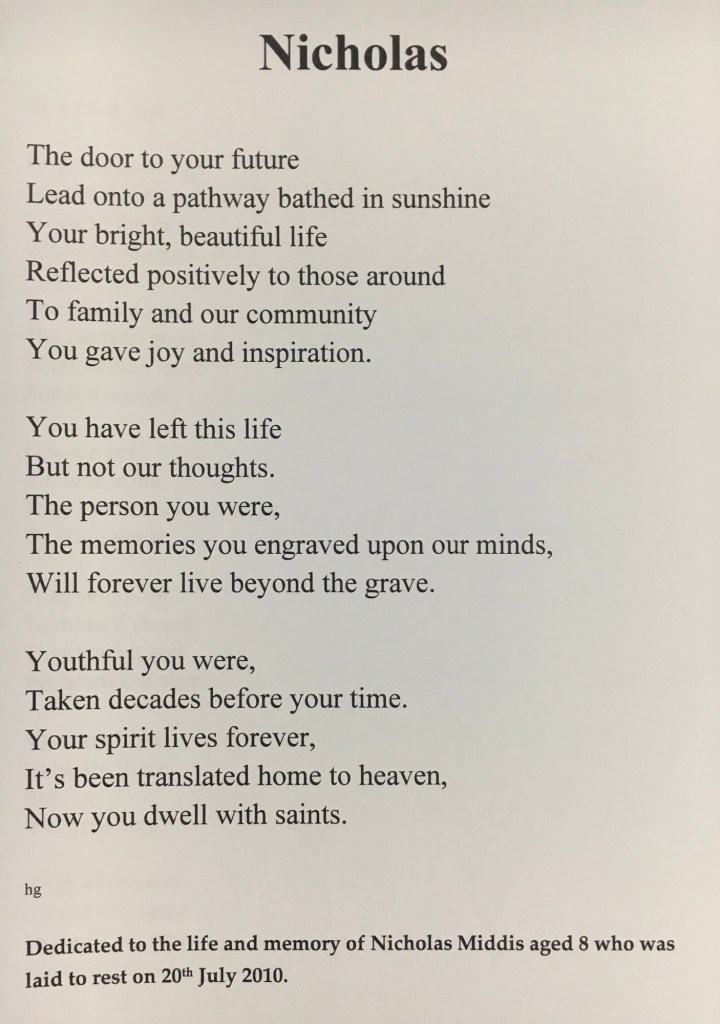
Nicolas was a student at Leanyer School, a keen student and a personable young man. One night, the home he shared with his family was torched as someone tried to break in.
While other family members, mercifully, were spared, Nicholas lost his life in that fire.
The poem I wrote, I read as part of words shared at his funeral. It was the saddest of days for our school community.
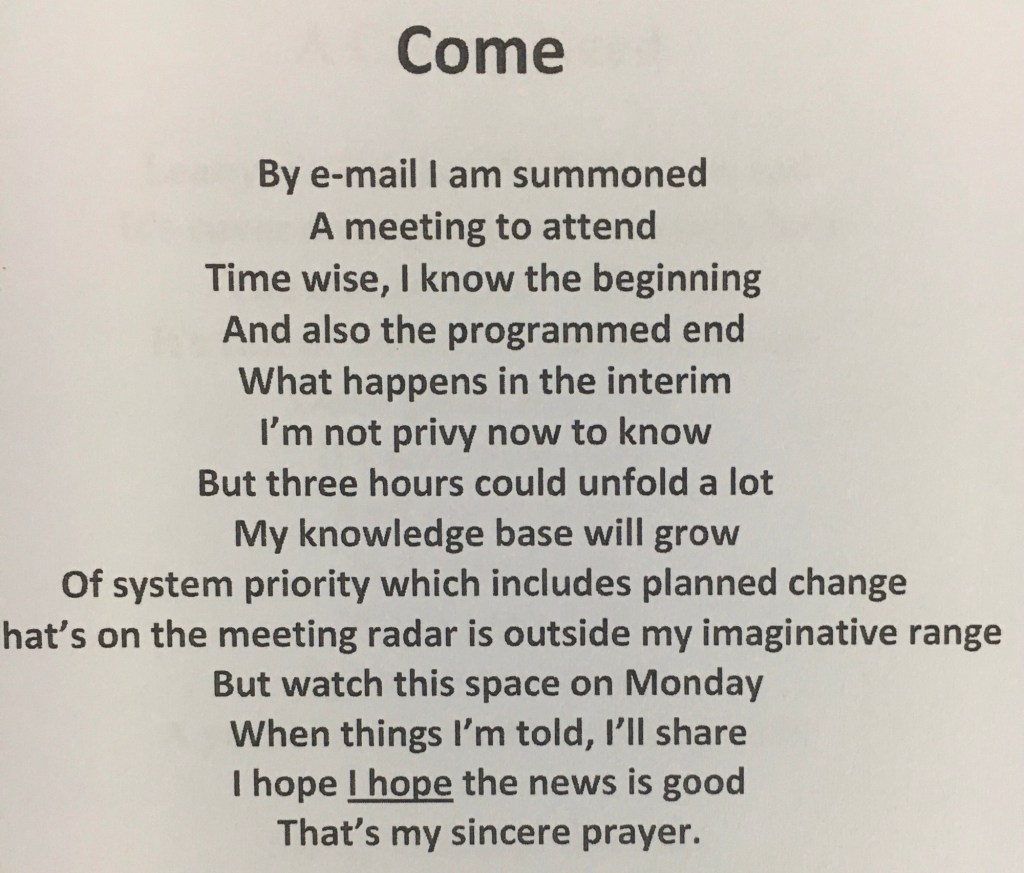
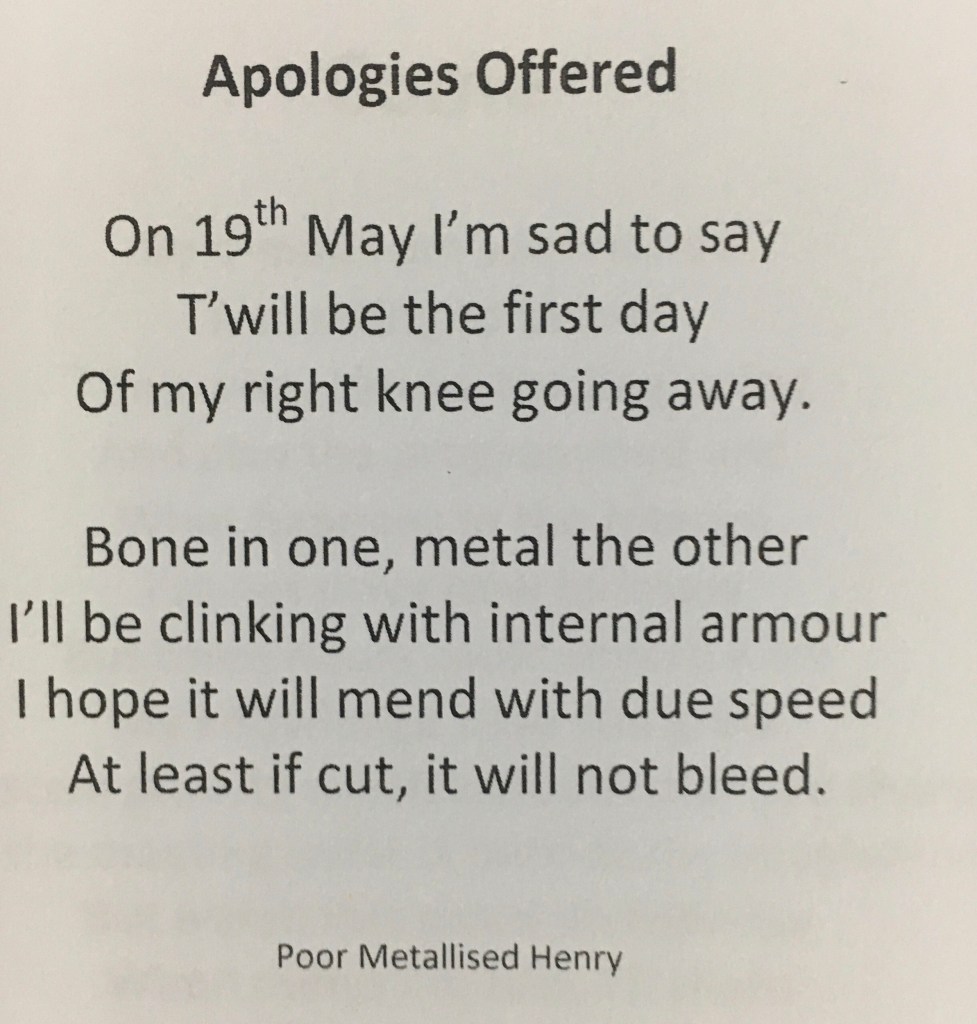
It is a bad thing to do good if the ‘good’ is really the ‘bad’ masquerading for the sake of creating delays in necessary change by obfuscation.
There is a possibility but not a strong probability that Senator Thorp may one day become Australia’s Prime Minister.
There is a possibility but not a strong probability that Donald Trump will become the patron of McDonalds in America.
There is a possibility but not a strong probability that the Northern Territory will relinquish the yearly Dirty Ashtray award, a ‘trophy’ it has held for close to a decade.
The second world war
The Korean war
The Vietnam war
The Afghanistan conflict
The Iraq conflict
The Ukrainian war
Sir Robert Menzies
Neil Arnstrong walking on the moon
My first day of teaching
The day I married
The birth of our three children
The Russian Sputnik in the night sky
The formation of the NT Government in 1979
My first aeroplane flight
Buying our home
The day I retired
And the list goes on
But had better stop
Before it stretches out of sight.
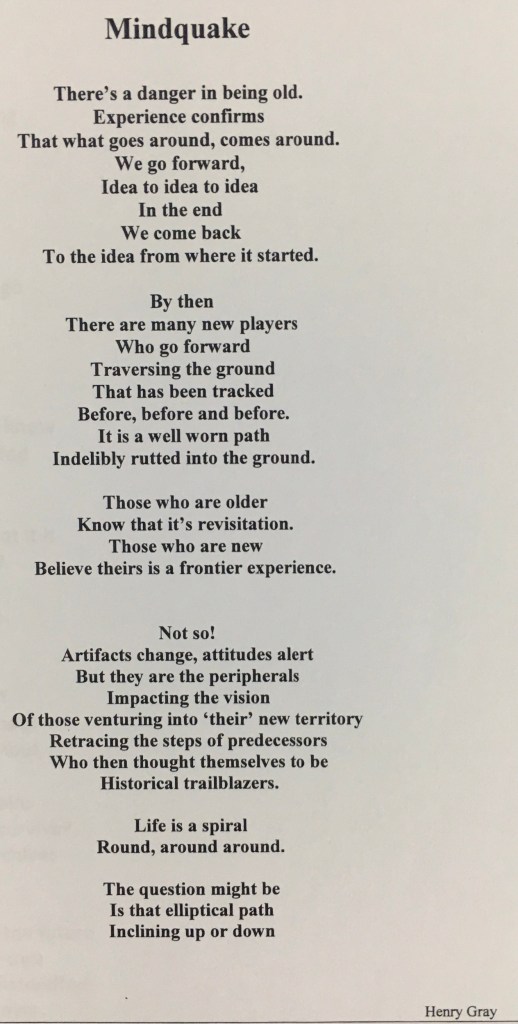
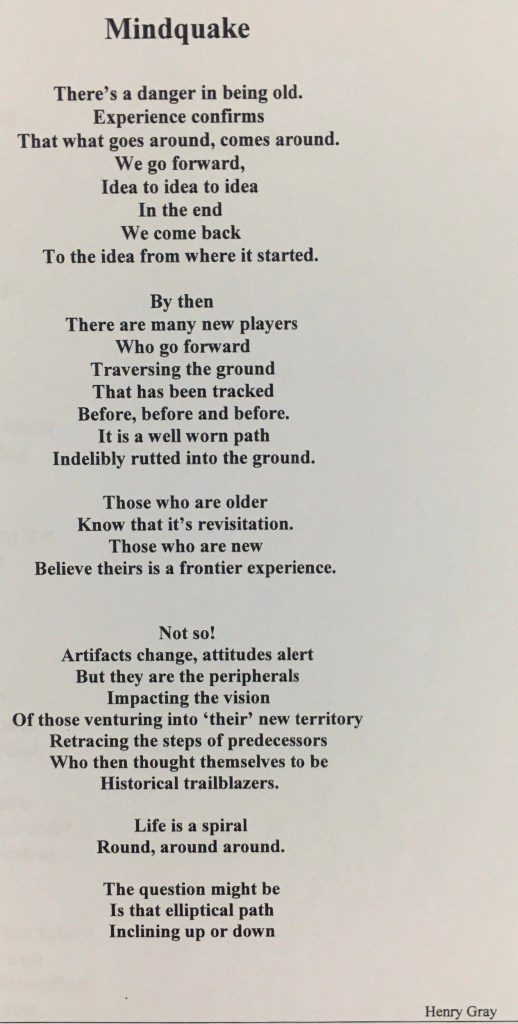
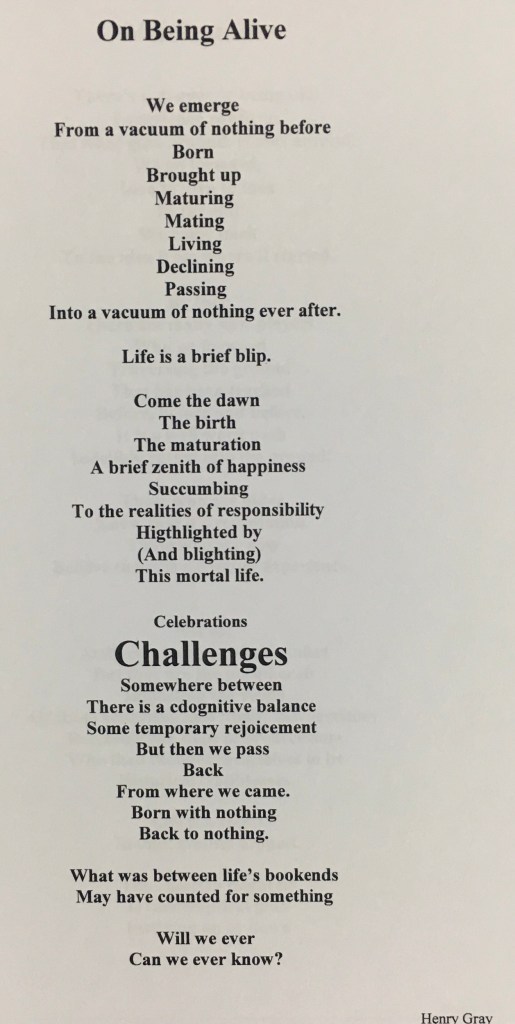
I am now 78. I am old and ever closer to passing. Beyond the grave, there is, to my thinking,everlasting nothingness.
Why do charities and support organisations bend over backwards to provide meals, clothing and accommodation for itinerants who flock into Darwin, primarily to access alcohol?
Does this not leave more pension and entitlement money the hands of these people to be spent on alcohol?




Ian McNamara AM, commonly known as “Macca”, is an Australian radio presenter, singer-songwriter and producer, best known for hosting the Australian Broadcasting Corporation‘s long running radio program Australia All Over on the ABC Local Radionetwork. (Source Wikipedia)
Recently, Mr McNamarra broadcast from Raintree Park in Darwin’s CBD. I did not know he was in Darwin until I switched the radio on just as his program finished at 10.00 am.
But I was promoted to send the following SMS.
God bless Macca and the messages of goodness and uplift he brings to his live and radio audiences.
I did not realise he was in Darwin.
I do remember when he visited to farewell the 5/7 RAR force off to Timor Leste in September 1999.
That was 25 years ago and sadly, the troops had left the night before. That was also the night the authorities started demolishing the iconic old Darwin Hotel, Green Room and all.
Macca’s program took place at Stokes Hill Wharf and he was welcomed by Leanyer Primary School students. It was a significant morning and one I will always remember. School student council President Ellin Lede now Dr Ellin Lede heading up a significant commercial enterprise in Darwin, read a brilliant piece she had written about the transformative nature of positive goodness and its powerful impact.
So, memories of times long ago.
Henry Gray
I dreamt last night that mine was the best job in Australia. I had been appointed ‘Senior Carpet Manager’. It was my job to coordinate the efforts of my team, who were charged with the responsibility of rolling out the red carpet in front of our Prime Minister and then rolling it up behind him as he traversed its length. In my dream, it was just the BEST, most rewarding job.
Then I woke to discover that my position was but a dream. Today, I feel disappointed and let down that this dream was not a reality, for we have a leader that I am sure most Australians hold in the highest regard.



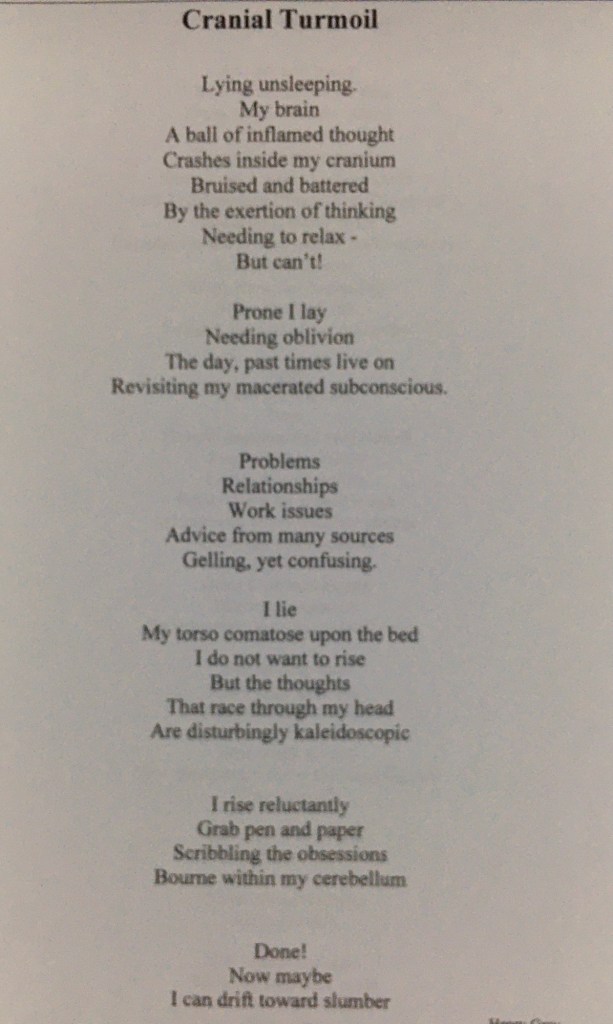
I lived my occupation 24 hours a day. So many ideas came to me while I was sleeping. I’d write them down and many helped with shaping my leadership.
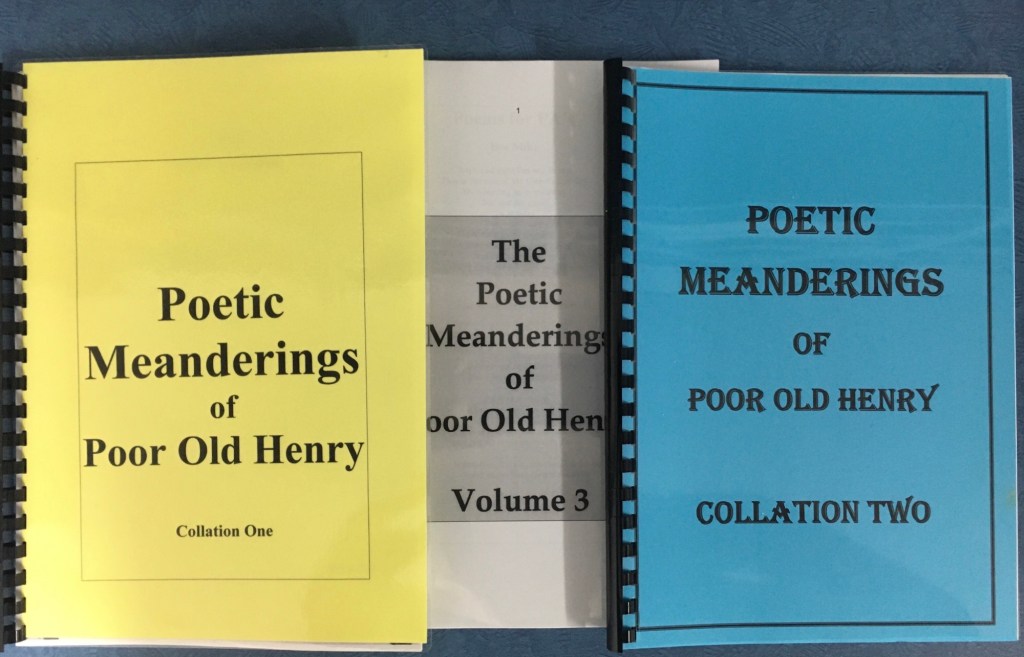
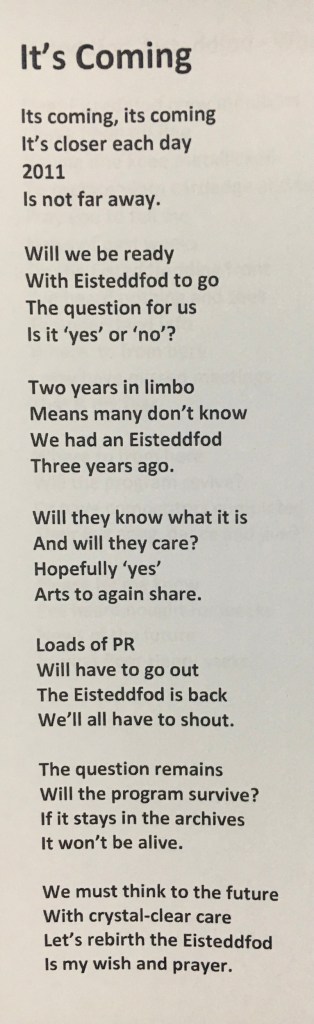
For years and years, a dedicated group of volunteers including music instructors, dance teachers, ordinary teachers and others, organised an annual eisteddfod in Darwin. Both young and old could participate in competition involving dance, drama, singing and instrumental music, speaking, poetry and scripture reading and much more.
Over the years, this program largely sponsored by the Darwin City Council and committee fundraising efforts, gave support to many thousands of competitors whose futures in everything, from confidence building to preparation toward occupational futures, was supported by the Eisteddfod.
Most of the dollars given in support or raised were for venue hiring costs – heavily subsidised by the Council – and accommodation, wages and living expenses for competition adjudicators from interstate.
Sadly, monetary support and revenue raising became challenging to the point of expenditure outstripping income.
Late in the life of Eudteddfod, a foundational member donated $20,000 to zero the accumulated debt. Sadly, that could only stave off the inevitable, the Eisteddfod folded and became no more.
I was on the Council and attest to how valuable and developing the program was for students in my schools – as well as for out if Darwin.
Support also came from the NT Department of Education and that had been consistent over the years. But in the end, not even the Department could prevent the Eisteddfod from going under.
A wonderful institution was lost and the Eisteddfod has faded into the annals of history.
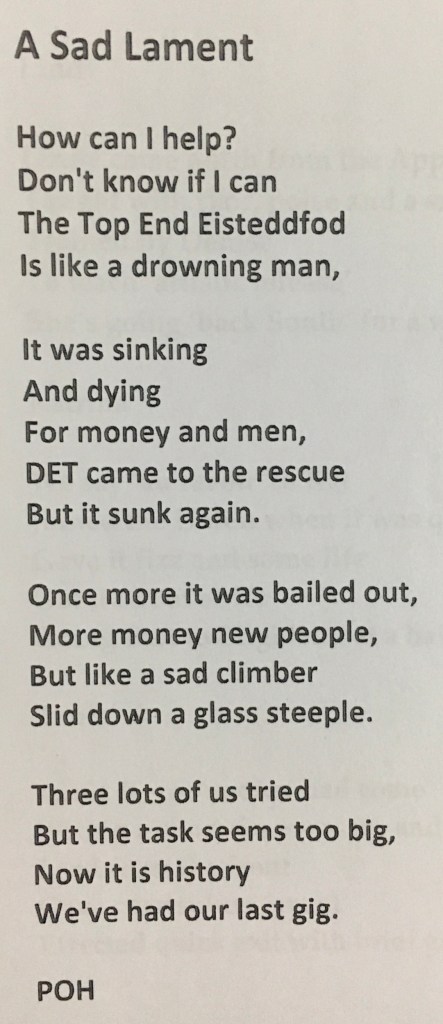
Farewell to the Eisteddfod.
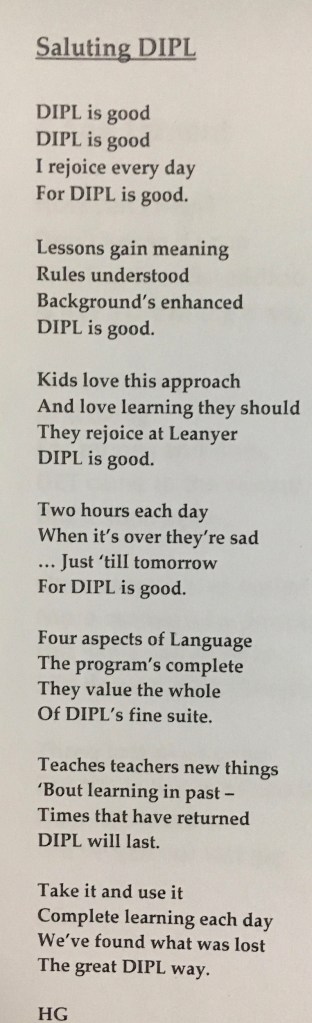
A great program I introduced for its phonetic and explicit teaching focus. They included my poem in their advertising material
Our students at ALL grade levels benefited hugely from this program – which sadly did not continue as a major focus after I retired.
We have slept, as a family, in many different bed situations over the years. But the BIGGEST bed we ever had was at a hotel in the Cameroon Highlands of Malaysia.
The mattress covering the HUGE expanse of the bed was thin but thwe bed itself was both very, very long and very, very wide.
The bed was SO WIDE I declared that either edge of this sleeping frame occupied different time zones.
I never found a bed covering a more enormous expanse than this one.

THEY GREW TO BECOME FRUIT BEARING TREES.
I have written close to 100 vignettes to support beginning teachers – and those in training – and will willingly share them free of any cost with anyone who would like copies.
Attached is the index.
If interested, contact me at henry.gray7@icloud.com and let me know which vignettes you would like.
Henry Gray
VIGNETTE INDEX
1. ‘Imagination’ the inner eye
2. Computer encourages teacher sedentariness
3. Mapping movement (by teachers around their classrooms)
4. Transient students
5. ‘Conversational’ voice
6. Singing
7. Storytelling
8. Oral Quizzes
9. Celebration and celebrating
10. Apologise for mistakes
11. School appraisal
12. ‘Knowing’ your classroom
13. ‘Looming’ – don’t allow your presence be off-putting to students
14. Marking student work
15. Modelling
16. Talking ‘with’ children
17. Computer lockdown
18. Classroom tidiness
19. Mobile phones in classroom
20. Direct teaching
21. Teacher dress
22. Technology can create separation
23. Classroom routines
24. How you are known
25. Interview strategies
26. Ask for help
27. Be cautious when using emails
28. Preparing presentations for PD days
29. Keep a clippings file
30. Build strong networks
31. Make ‘Show and Tell’ count
32. Spelling – necessary or superfluous?
33. Watch out for trendiness
34. Reporting to parents
35. Don’t discount drama
36. More on imagination
37. Desk tidiness
38. Time telling and time awareness
39. Learning takes time
40. Take time to relax
41. Build your CV
42. Writing applications
43. Rewarding the effort
44. Welfare is paramount
45. Socratic Discussion Part One
46. Socratic Discussion Part Two
47. Socratic Discussion Part Three
48. Remote Area service
49. Taxation deductions
50. Yard appearance
54. Room tidiness
55. ‘Sayers’ and ‘Doers’
56. Playing ‘Captains and Crew’ with technology
57. ‘Quiz out’ to lunch
58. Drawing quizzes
59. More on transient and late students
60. Assembly items
61. Programming should be Flexible
62. What people see is the iceberg tip
63. Contact – keeping it professional
64. Record your dealings
65. Short excursions
66. Program carefully and with remembrance
67. Classroom groupings (being constructed)
68. Editing and fixing
69. Classroom work displays
70. Establishing classroom protocols
72. Presenting and speaking in public
73. Recognise the shy contributor
74. Recording outcomes and reflecting on progress
75. Eating lunches
76. Classroom guests
77. Joy season
78. The game of eyes
79. Story-telling skills (extends from Vignette 7)
80. Trip Diaries
81. Silent reading as a learning tool
82. Media awareness (know how the media is reporting education)
83. Extended Excursions
84. Back to school pointers
85. ‘Quizzing’ the neighbourhood setting
86. New Ideas – Wise Choices or Fads?
87. Taking initiative
88. Familiarity with parents
89. Rejoice for others
90. A clean school is for everyone
91. Dressing Lessons
92. Take time to develop dexterity
93. The last fifteen minutes
There are some who say that attention the spelling is old hat and the discipline of being able to spell accurately and correctly is not really necessary anymore.
In an age of computer technology, they argue that the computer, iPads and similar gadgets provide students with correct spelling options through “spellcheck” and other text refining devices. Therefore it is not necessary to know how to spell words by heart any longer.
Others argue that in terms of priority spelling is a basic that no longer needs to be taught. There are other teaching and learning priorities.
Maybe “experts” believe that spelling skills will be aquired by osmosis. Some people genuinely believe that spelling accuracy isn’t important because corrections for both spelling and grammar can be provided by checks built into attachments for word documents and others. I believe that is the lazy way out.
I once had a teacher say to me “I don’t teach spelling because I don’t like it.” Teaching basics is apparently boring and quite stifling for some people. This overlooks the fact that teaching important basic understanding this is repetitious and not all learning is tinsel and glitter. However, there is a way of engaging children with spelling that makes it quite exciting and a looked forward to activity. There are numerous spelling games available that can be adapted for classroom use. These can be developed to support and reinforce graduated learning where the specific spelling word building an extension program is being followed.
Spelling and word appreciation games up also available and this is one area where computer or iPad use can be reinforcing. My contention however is that spelling is an area that requires basic teaching. It can’t all be left to children working on devices and acquiring the understanding they need without teaching going into the program.
An example of one game are used with spelling was to ask children within their minds to configure words broken into syllables attached to a piece of elastic. There is the word. As you stretch the elastic within your minds eye, the word breaks into syllables. The study of the breaks enables one to follow the patterning of the word. When the word had been “examined” the stretched elastic is relaxed, the word comes back together and is spelled orally as an intact unit. I found this method worked particularly well especially if it was built into a game including competition between children for accuracy and recall.
There are plenty of other games that can make spelling a fun learning experience. They are helped by teacher engagement and involvement in the process.
I believe we neglect spelling at our peril and to the eternal loss of students.
Story telling as a part of the teacher’s repertoire should not be allowed to die. If it is fading, consider the need for its resurrection.
Story telling has become a lost skill for many teachers. The emphasis on its importance has diminished because these days the use of technology is substituted for old fashioned story telling by voice. It is now more fashionable to sit children in front of computer screens or smart boards, with DVD’s doing the story telling.
I’d encourage teachers not to allow story telling to become a lost art. Children of all ages love story telling.
There is the ordinary and more usual form of ‘once upon a time’ story telling. This narration approach is embellished if the narrator adopts a characterisation role, with different vocal impressions representing characters within the story.
There are other variations.
Rather than being a narrator, the storyteller can get inside the story by assuming character ownership. Telling a story for instance “Goldilocks and the Three Bears” from the viewpoint of being one of the characters and embellishing the story from that particular character’s viewpoint, adds a quite exciting variation.
The “character” chosen need not be animate! Using the same story, the storyteller might choose to be the plate of porridge, the broken chair, the disappointed “too hard” bed, or any of the other artefacts in the story.
These variations can appeal to the imagination of children and to get them really fired up. Storytelling lends itself to extension in drama, art, and elements of science, maths and written expression.
I believe it quite possible to link storytelling and extensions to elements of the curriculum. But it takes engagement and getting outside the purist form of written documentation (The way in which curriculum documents often dictate resources and approaches) in order to achieve these ends
At the risk of sounding too old fashioned, I extol the virtues of story telling. These days, with the advent and use of smart-boards and connecting devices, teachers often use audio-visual technology when it comes to story telling and story readings. The possible reluctance that teachers may feel about telling stories to children is not new. When I was a primary school student in the 1950’s, we used to have ‘Junior Listener’ stories broadcast to us by radio. For half an hour or so we would sit at our desks in rural Western Australia and listen to the story of the week being read to us by a presenter in Perth. Memory fades with time but I cannot remember our teachers being much into story telling. We were read to from time to time. However in those days, books were not attractively presented or full of colourful illustrations to be shared with children.
Teachers should not feel reluctant about telling or reading stories to children. Sadly, the skill of story telling is becoming a lost art. I always gained great satisfaction from being able to share stories with students from Transition to Year Seven. I believe that teachers of older students can fashion their delivery of material in a way that transmits it to students in story form. Story provided ‘setting’ and helps place the context of message into a feasible environment. It helps students understand the application of theoretical contexts.
To tell stories with and to children is to engage with them in a primary conversational context. Stories told with animation and conviction, with supporting gesture and eye contact, engage children and switch them on in a way that draws them close to the message being conveyed.
Advantages
Some of the positives of story telling are as follows:
* The quality, meaning and context of language, word usage and meaning can be followed up by discussion during ‘conversational pauses’ within the story or at its end when the story is being reviewed.
* Questioning to test listening helps to build the notions of concentration and listening. To have ‘mini quizzes’ where there is some sort of contestation build within the group (for instance, girls versus boys, contest between class groups and so on) adds to student focus and engagement. This strategy discourages students ‘switching off’ and mentally wandering off into the distance.
* Having students work on ‘prediction. and ‘forecast’ by sharing their thoughts about where the story will head and how it will conclude can be an interesting and testing strategy. This approach helps develop the skills of logic and reasoning within thinking.
* Language study is enhanced. Asking children the meanings of words and words within context is an example. Similies and antonyms can be developed as a part word studies. The possibilities are endless.
* Some texts which share stories are written in the ‘language of yesteryear’. There are two volumes that come to mind, being ‘Grimm’s Fairy Tales’ and stories by Hans Christian Anderson. These stories not only introduce children to a vast array of very colourful old fashioned words that have been superseded by the idiom of modern language. They are also set in social situations of the past, largely replaced by the social attitudes and disposition of today. These stories lend to wonderful exploration of word development and a comparison of historical and contemporary social mores. They help with developing understanding of what has changed and why behaviours once acceptable have been replaced.
* The appeal of stories to imagination and ‘the mind’s eye’ is such that art growing or flowing from story presentation can be colourful and creative. If the story is one drawn from history, asking children to think of clothing, transport, buildings and other artefacts from the past can help with differentiation and clarify understanding.
* A great way of treating longer stories, is to serialise (or mini–series) them, with ‘to be continued’ as part of the understanding. That is a great way of helping children anticipate what may happen. A good story being well told can also be a motivator. Continuation can be applied as a reward for effort and endeavour.
Qualities
* Make sure when telling stories that you use clear, expressive language. Take the part with language variations of the characters you are describing.
* Engage children by asking them to respond by being characters in the story. Have them thing about and describe the characters, moods and attitudes of those around whom the story is centred.
* Have children act or visit the story or parts thereof through dramatic expression. Drama is a subject very rarely considered these days.
* As a story teller, make eye contact with the group. Vocal expression is important including pitch, rhythm and other elements of speech.
Concluding thought
I could go on about story telling. A good story told well, will be remembered for a long time. I still have people, now in their late teens and adult years, tell me they remember my story telling and how much they enjoyed stories I told.
It is a sad fact of life that adults tend to lose the capacity to imagine as they get older. To engage in story telling is to keep the imagination of the story teller alive and flourishing. As a school principal, I used to talk with children about the importance of imagination and imaginative thought. To tell stories has helped keep me in touch with this advice.
I do things here, do things there, in fact do things everywhere.



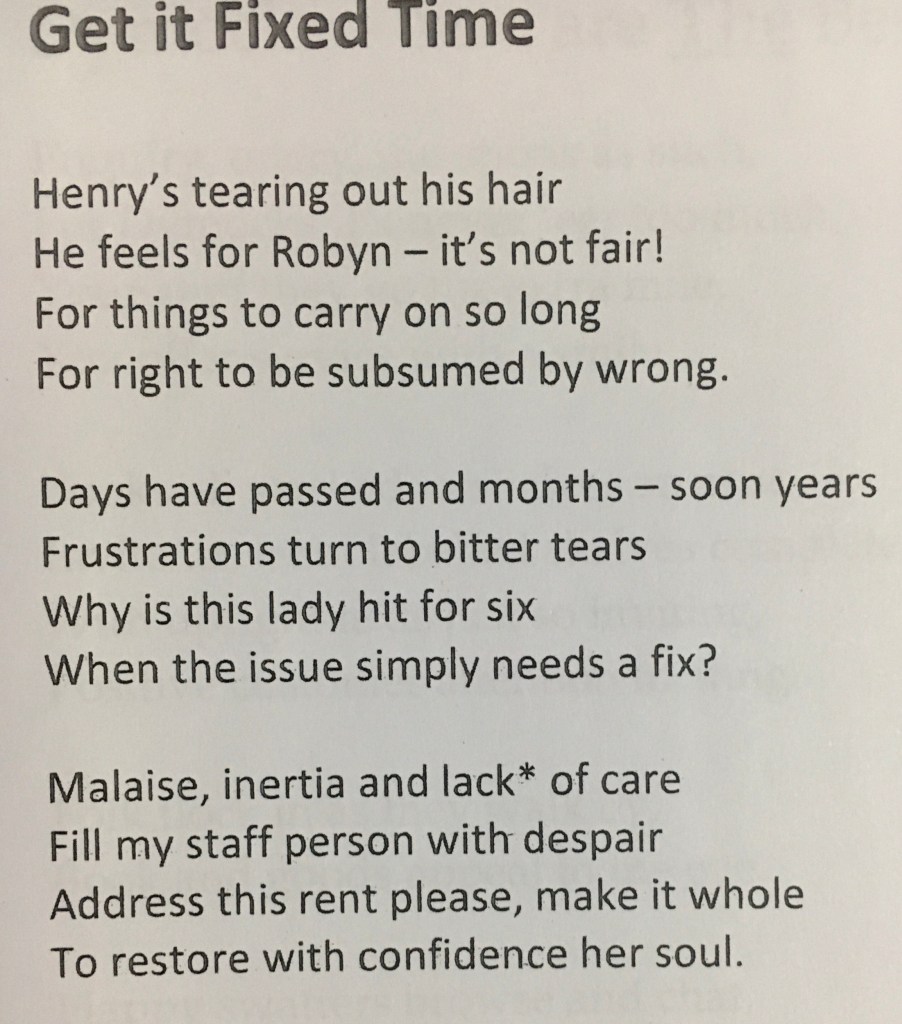
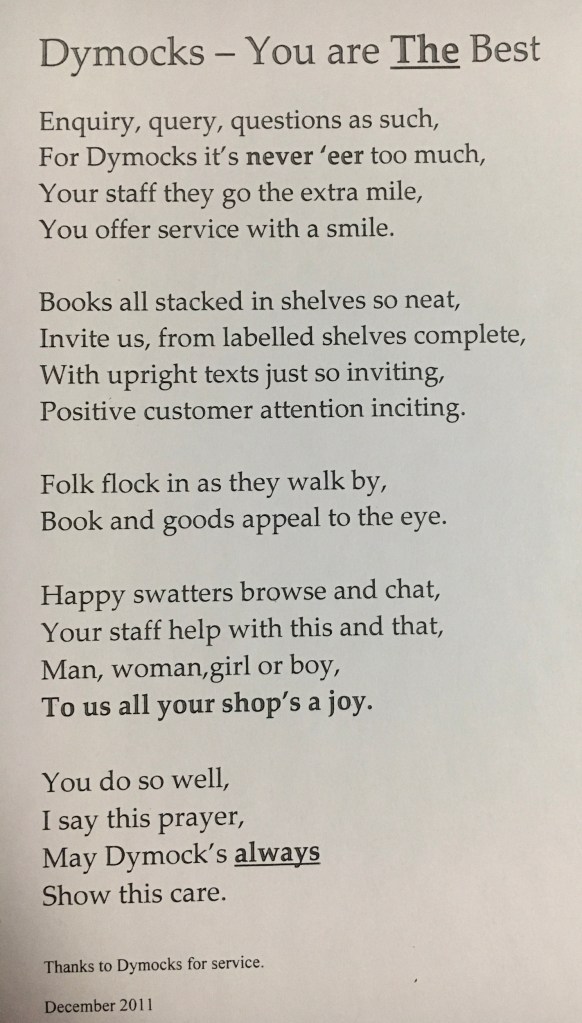
I write a lot of poetry. Allow me to share what was a predictive poem about a lady, a leader for whom I have deep respect.
THE EVERYWHERE LADY
(Recognising Lia Finocchiaro)
Lia is here
And Lia is there
Around the Territory
She’s everywhere
One of two left
From voter dump
She joined what was
A political rump.
Did she bundle drop
No bloody fear
She strove to recover,
And year by year
Began rebuilding
With her team
The CLP
Could again be seen.
Come 2020
And in the poll
Emerged her party
On a shallow roll
‘Twas no tsunami
Or uplift from Heaven,
But five more seats
To give them seven.
The party’s impact
Has really grown
With her team onboard
She has shown
The CLP can guarantee
That a better government
It could be.
More and more voters say,
The CLP is back – hooray!
Election’s due in 2024
Lia’s cohort at the door,
They can win
They’ve had enough
Of second best
The team is tough
Lia’s heart will swell with pride
When they sit on the government side.
And now they are the government.
Although I am very, very old, I always feel that if I take time off and do nothing I am sinning. I do not feel rested but rather guilty for not being productive.
I keep a little notebook in the little notebook to write down the things that I do in terms of occupation. I try very hard to make sure there are a few blanks.
When I was a little boy, my Mother used to go like the clappers and was always busy busy busy. I think that must be me and put it down to my upbringing.
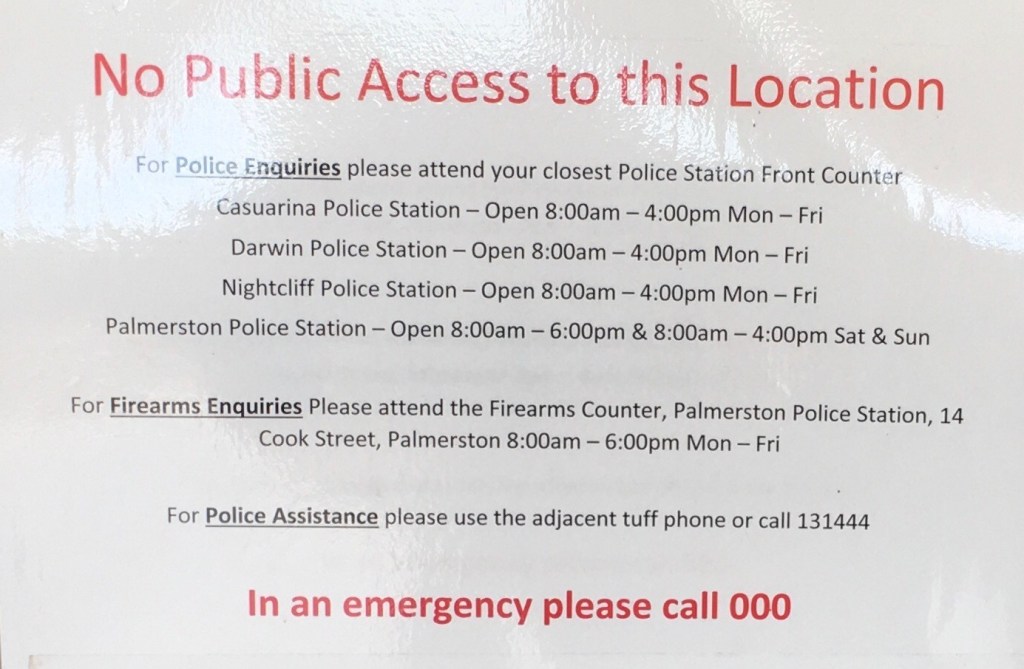
The Peter McCaulay Police Headquarters now no longer has provision for cistomer access. The front counter has been closed and going to the door reveals that people requiring assistance, must go to another police station.
What was the front entrance is gone. The area once welcoming customers and the general public needed a good clean when I visited.



The Northern Territory News HQ in Printers Place, Darwin


The Chinese posturing around and about Taiwan is more than a game. I believe the CCP is in deadly earnest about ‘reunification’ and will resort to armed aggression if needs be. Entreaties have escalated to exercises demonstrating how absolutely China could strangle all physical contact with Taiwan.
Communications could also be jammed and the unofficial country totally isolated from the rest of the world.
If this pressure failed to alter the Taiwanese mind, then military action to quell the island could soon follow.
Where to then ….

The tagged fishing program
P
This wonderful program attracts so many people, including hundreds and hundreds of tourists, to the Top End. Over the years, governments of both persuasions have worked on establishing and refining this program. It is truly a gem in the tourist crown.
The new government going forward
I believe that our new Chief Minister and her government are well-positioned to make a positive difference in how our territory is developing. The government will need to be resolute, firm on its key commitments, and not become the fall guy sucked in by the desire to appease narrowly focused ‘one issue’ interest groups.
The new cabinet
I am sure those taking up ministerial positions will be the right people for the jobs they are sworn into. It is good that the Chief Minister and her deputy are taking the time needed to consider the potential of all who have been elected. Hasty decision-making in critically essential areas is not wise – and our new leaders have plenty of wisdom.
Waters Ward and Malak improvements
The Waters Ward councillors (including Brian O” Gallagher until elected to the NT Assembly seat of Karama) are to be commended for their proactivity and the way they represent the needs of their ward to the City of Darwin Council. It is a shame that their ‘modus operandi’ appears not to be emulated by councillors representing other wards.
The Top End seasons
We have seasons in the Top End.
The ‘wet’ is sometimes wet, but Darwin and Palmerston have been somewhat skirted with heavier rainfall to the east, south and west for the past two or three years.
The dry doubles as the smoky season, which is with us day after week after month until finally, we get to late October. Smoke and humidity are not the most desirable of companions.
Make-up of the NT Assembly
Is this the beginning of a new and different era in NT Politics and the characteristics of elected members? Will the accountability of politicians be more front and centre in voters’ minds than may have traditionally been the case? Time will tell.
Come tourists, come
To all potential tourists;
Come see the NT,
The best views by far,
Share time in the NT,
See how lucky we are,
To live in a place,
So worthwhile to share,
Come and enjoy,
Is my entreaty and prayer.
Pre-40 persons lifting the Territory
How blessed and lucky is the Territory, and how thankful and inspired we should feel to know these pre-40 contributors from all walks of life are doing so much to lift this place to new heights of recognition and success. Futuristically speaking, we are in good hands.
Bushfires and the rural area
I went for a long drive in the rural area this weekend and was amazed at how much drying bush and undergrowth there is in many places. I also wondered about the propensity of building homes and constructing sheds in heavily bushed and uncleared areas. This helped me appreciate the sterling job that volunteers, bush firefighters, and brigades do to preserve property when these tinder-dry areas ignite.
Senate Inquiry sought
Senators Liddle and Price have identified an enormous problem and made it more relevant in the light of Geoff Clarke, NAAJA, and the Anindiliakwa Land Council findings, outcomes, and concerns. Accountability by all people and organisations invested with liberal funds needs to apply.
Iconic venue restricts trade
P
Closures and trade restrictions enacted by iconic venues are, sadly, a part and parcel of the present in which we live. We can ill afford to have organisations restricted by trading stringencies and environmental challenges – including wanton damage and vandalism.
New CLP cabinet
P
All in all, this is a carefully crafted and well-rounded cabinet. There is no criticism from this old man, but the proof will be in the effectiveness demonstrated by the raft of ministers dealing with their new responsibilities.
Karen Weston replaced by Susan Bowden as Education CEO
I don’t imagine that Ms Weston will be the only CEO to be replaced. But I hope that changes do not impact negatively on Education or any other Department providing services to the NT community. Notwithstanding, I think we may well be in for some further changes.
The new government
P
My heart is singing with joy at the prospect of what our new government and departmental leaders will be able to do to progress the Northern Territory, uplifting outcomes and assuring our prospects and development into the future.
Mr Cercarelli heads key department
Appointing Mr Cercarelli to this position is a smart move on the part of our new government. I hope there will be significant resurrection and progress within his and all other departments. Labour tried, but in so many ways, it was time for a change – and NT voters have spoken.
VAD futures
As an aging septuagenarian, fortunately still in one piece but very much scared of a future that may lead to physical incapacity or cognitive impairment, I most certainly hope that the need for VAD legislation is not headed for the nether regions of prioritisation. I would hate to live as a mindless vegetable or physical wreck.
Labor opposition and shadow ministries
The four will have to work very hard indeed and there will be little time for rest. They may hope the CLP government did what happened when last elected in 2012 – but I don’t think there will be a repeat of that unseemingly implosion.
Watch house woes
P
The issue of managing those alleged to have offended, where they are housed pending process and how things are progressed, continues to be a headache to both police and corrections. This is but one aspect of the issue of law management confronting our new government.
The new CLP Government and its commitments
The new CLP Government has many promises and undertakings to deliver. Still, with a fine and committed team of ministers and equally capable backbenchers, I am sure they will work to ensure that commitments are met. I will print and keep the list of undertakings on my desk. As things are undertaken and commitments fulfilled, I will tick them off. Maybe others will do the same.
Anzac Oval is saved
Sense and sensibility are prevailing. The Anzac Oval, a historically significant and ongoing essential recreational area, must be preserved. The Arts Centre should have always been accorded a different location for its construction, and well done to the CLP on reversing what was a contentious decision.
Parap Bakery finger buns
P
Well done to the Parap Bakery staff. I wish I could share some of the delightful products my daughter and son-in-law (Estelle and John Carter) produce at the Peninsular Bakery and Cafe in Nhulunbuy. So many people visiting the region and patronising the business are blown away by the quality of product produced.
Sealink deserves accolades
Fair shake of the sauce bottle, I say. Sealink has done its absolute best to restore regular services for Cox Peninsula residents as quickly as possible. The company deserves bouquets, not brickbats, for all its managers are trying to do to minimise disruption.
Musical entertainment goes remote
I am delighted that this outstanding music festival is being shared with those living in the remotest areas of our country. So often, those supporting our country from the vastness of isolation miss out on sharing the good things of life – not this time, and that is excellent news.
Cattle truck and Ghan mishap
How glad I am that this accident, which could have been so much more disastrous, did not result in the death or serious injury of the train passengers, the truck driver and livestock. Rather than rushing to judge on fault finding, we should wait until the factors leading to this accident are examined.
Theft of caravan
For anyone to commit such a heinous crime is an act of pure bastardy. I hope the caravan is recovered and that the damage is repairable. Were I the magistrate handling this case – if the thieves are caught – part of my sentence would be the garnishing of their income to pay for the damage wrought by their wanton actions.
Lowering the criminal age of responsibility
P
The CLP resoundingly won government in the NT because the vast majority of voters were fed up with the criminal behaviour and antisocial caprices of a growing number of people, including younger and younger offenders. I hope the CLP will discount the concerns of those organisations and their members – who too often are not connected with the daily crime confronting NT citizens.
September rain out of leftfield
P
I have been in Darwin since 1987 and cannot recall September rain like this! But it is refreshing and certainly most welcome. We do have to exercisee extreme caution as motorists – and that should be each and every day.
Art Gallery for Alice Springs?
The traditions, culture and artwork of Aboriginal Territorians are well and truly represented by the plethora of museums, galleries, cultural centres and key events – Barunga, the Tiwis, and Garma, to name three – already in place. This begs the question of why we need yet another gallery.
Zone Rebates
May the residents of the NT and Northern. Australia come – and in the not-too-distant future to be supported by an upgrade in the Zone Rebate allowances.
Key Alice Springs event in swansong time
God bless the people calling Alice Springs ‘home’. It isn’t very good to think of key events occupying prime space on events calendars, having to be discontinued in future years. Alice Springs was once a peaceful, idyllic place, but things have changed.
Removing roadside memorial
P
For the City of Darwin Council to respond to ONE expression. of complaint in the way it will act is beyond common sense and reasonableness. It also opens the door to copycat opportunities. If other residents complain about other memorials, just for the sake of getting a response, then the Council might have to remove many of these tributes of remembrance.
Palmerston Indoor Cricket Centre closes
For a long time, sporting organisations have looked to government grants and financial support to sustain budgets. There used to be a time when sports associations and clubs self-sustained through fundraising and enterprise. Those days, it seems, are largely gone, with taxpayers having to bear the cost of keeping sports viable. Sometimes, for some groups, that sponsorship comes to an end.
25 years since Timor Leste
I remember the 5/7 RAR leaving from Darwin to go to Timor Leste. It was a dangerous and harrowing time for our forces and one of worry and concern for families left behind. The day the troops left was also the day the old Darwin Hotel was demolished. The forces went on a Saturday, the hotel was partly dismantled that night, and Ian MacNamarra hosted Australia All Over from the Stokes Hill Wharf on Sunday. Those two days are days I will never forget.
NT economic uplift
Goodness! With the change of government, enthusiasm has not taken long to deepen and widen on the NT economic front. It seems that the blessings of government will bring us a return to economic prosperity.
The new government will be open and honest
P
I am sure that Chief Minister Finnochario and her ministers will, as they settle into their new roles of territory leadership, reveal themselves as being open, honest, and transparent in their dealings with the NT Community. They, of course, cannot breach ‘commercial in confidence’ limitations, and we cannot ask them to breach negotiating trust.
The government will consolidate our future
P
The more I learn about the way the Finocchario government is setting up, the more confident I feel that the way forward for us will be one of carefully considered policies that will lead to a future laced with positive outcomes.
Barossa nearing completion
I am delighted that the Barossa Project is near completion. Santos has earned my huge admiration for perseverance in the face of multiple challenges, many of them based on very flimsy points of contestation. NT will never become self-sustainable sense, and sensibility developmental projects are continually delayed and thwarted by self-centred objections.
Caravan recovery – along with Alladin’s hoard
P
Such flagrant and mind-numbing threats, as revealed by the Trident Task Force discovery and recovery program, are sadly part and parcel of life forced on us by the criminal underside of life in the NT. One can hope those responsible receive commensurate sentences matching their crimes – but I am not holding my breath.
Groote Eylandt mining
I hope GEMCO and South 32 can restore the manganese mining operation as soon as possible, hopefully without the intervention of the weather gods during the upcoming wet season. What happened last wet resulted in pure devastation, and the company is to be commended on persevering with restoration.
Government home building initiative
P
There is only one difficulty that might mitigate against this otherwise excellent scheme. If developers know that particular homes are being constructed under the auspices of this program and hike home building prices, the initiative will likely lose some of its gloss. Profiteering must not be allowed to detract from this initiative.
Alex Bruce new Chief of Staff
The news of Mr Bruce’s appointment as the Chief of Staff to our Chief Minister fills me with optimism. Mr Bruce has few peers regarding effectiveness and efficiency in his various roles over time.
Darwin a defence hotspot
Given the ever-growing warning of the threat being mounted by evermore countries toward others, we will need every vestige of protection against a threat that can be mustered. Darwin’s position as a significant defence base makes us particularly vulnerable to threats from abroad.
The new $20 million Jabiru Medical Precinct
This outstanding facility, if staffed, will significantly benefit those living in the area and may also reassure tourists concerned about the possibility of medical care when visiting the remote fastnesses of this area. However, I wonder if it is over the top in terms of what is provided. I also imagine staffing this centre – other than by fly-in/fly-out staff – might be impossible.
Relaxing alcohol sales restrictions for Alice Springs visit
It should be the same rules and regulations – including restrictions – for all. Making exceptions for one outlet is the start of something likely to multiply, for a precedent on sales hours for this business has now been set. Watch and wait as other outlets seek the same concessions.
History is important
How blessed is the NT to have people like Jane Munday, Derek Pugh, Peter and Shiela Forrest and others who research and, through their writings, preserve our history? History is important and too often overlooked – or slanted toward one particular aspect called ‘colonisation’ or ‘invasion’. History is a broad canvas and needs to be recorded in terms of its breadth and depth, for a narrow focus leads to biased interpretations.
Thank you Luke and Kon
.
We are blessed to have a far-sighted Member for Solomon in Luke Gosling OAM and a visionary, focused and ‘on the ball’ Lord Mayor in Kon Vatskalis. We are so lucky to receive their balanced yet visionary outlook and perspectives.
Support services in schools
There was a time I remember well when schools were supported by school-based dental therapists, school nurses and school-based police. Those programs have either been substantially reduced or removed. Students now compared with students then are less well supported than used to be the case.
‘Unable’ public servants and compulsory retirement
P
I think this is an understandable judgement. However, there needs to be an ability for people in other arms of the public service – including teaching – to be opted out and into retirement, without this option first requiring a long-winded and tedious panel management process.
Bush rents – then and now
When we worked in NT remote communities in the 1970’s and 1980s, rent for homes was paid by employees. Departments did not pay the rent bill. For the most part, homes were poorly maintained and necessary repairs took a long time coming.
Just one difference between then and now.
Odd bits
It is wonderful that our Prime Minister and his betrothed are prepared to put their nuptials on hold until after the next election. How many others, I wonder, would delay such a momentous personal occasion for the sake of others? This attests to the dedication of our PM and his wife-to-be for the good of our nation.
I do not feel reassured about the security vetting of those being rushed into Australia willy-nilly at the behest of our Federal Government. Too many hasty decisions in all sorts of areas are being made by ministers in the Albanese Government because they want to soft soap and persuade voters in their electorates, lest they be turfed at the next election. This is a prime example of putting yourself ahead of our population’s wants and needs – both economically and in security terms – at large. I hope this government has only one term of tenure.
I looked and listened to the interviews of the Democratic hopefuls on TV. It seemed to be a staged production focussed on ‘non-commitment’ as an outcome to be gleaned by viewers. Given the calibre of key candidates on both sides of the political equation, I shudder at the likely future confronting America. God help us all, for we are at a significant political crossroads.
I despise and hate the motivations of all terrorists. What happened in Israel on October 7 was and is reprehensible. However, I also question the motivations of Israel’s PM Netanyahu, whose actions as a leader seem to paint him as someone hell-bent on deflecting those legal problems he confronts in Israel because of his leadership strategies. He is singularly minded to the point of discounting what millions of Israelis are feeling and wanting. Is the West wise to follow him with what seems like one hundred per cent compliance with his whims?
I am 78 years of age and sh.t scared of becoming a victim of the Australian-aged care system. I think of aged care as being a shark tank into which people who are old and frail can be tossed.
Non-compliance with standards is far too common. There seems to be a falsification tendency that exists within the system.
Aged care costs plenty but care in far too many places seems to be minimal.
Too many people going into nursing homes become shrouded in blankets of sadness that smother them and their families.
My advice to those with mortgage concerns. Prioritise payments and get ahead of the debt curve. Eliminate expenditure on alcohol, cigarettes, and gambling and cut back hugely on entertainment and attendance at sporting venues – how many of the 92,088 at the MCG to watch Geelong and Brisbane were people in dire mortgage straits – fast food delivered by Uber and so on.


Propagated from seed.

Our PM instantly comes to mind for he is inextricably linked with the word “success”.
Some of the reasons:
Top Drawer
What a beautiful post and how considering both rankings and ratings, it epitomises the growth, success and outstanding leadership qualities of our prime minister.
He ranks high, indeed at the highest point on every success indicator.
Our prime minister brings great richness through his awareness and his leadership contributions to the growth in positive development of our country.
Leadership paragon
Thank you, Anthony Albanese, for being the excellent paragon of leadership and innate goodness you have become. You are Australia’s answer to Moses of old, who led his people for so long and guided them through so many dark places. You are Australia’s shining light.
Leadership Lighthouse
I am so glad that our PM is a man whose word and position on issues are steadfast and unwavering. We have every reason to be buoyed and stimulated with adulation for his qualities of leadership which richly benefit us all.
Australia’s Shining Light
How blessed we are to have an astute and deeply empathetic Prime Minister in Anthony Albanese who cares for and is there for us all. Our problems are his problems and he is with us and of us as a caring Australian. I feel that he embeds every one of us in his soul. I thank him for his warmth and humanity.
You know you are getting old when you know that everyone in every group is younger than you.
You know your better days are passed when the icecream which just cost you $3.50, was one you once purchased for five cents.
I am inclined to think that before the end of 2026 – so inside two years from now:
Russia will completely smash Ukranian infrastructure. Ukrainians will be reduced to almost permanently living in underground bunkers.
North Korea will join with Russia against Ukraine.
Nuclear warheads will be readied and one of two may be selectively detonated.
Countries around Ukraine, who left the USSR during the time of Micael Gorbachev, will be on notice that Vladimir Putin is after reunification
VAD proposal shortfalls
These areas of omission are disappointing. I have an advanced personal plan in place that confirms that should dementia or Alzheimer’s overtake me, the termination of my life by voluntary assisted dying is what I want. The alternative of being forced to live while in an incomprehensible or vegetable condition is not what I want for myself or my family.
Lack lustre election appeal
A certain amount of lustre is lacking in the territory’s anticipation of the upcoming election. Much anticipation is falling flat, with a lack of vibrance and enthusiasm more than obvious. One can expect that low voter turnouts in many seats will be the order of the day.
Major community constructions are coming
Consider all that has been spent and what has gone before when constructing facilities in community settings. Consider how many homes are trashed, how many amenities have been torched and vandalised, and how many communities are strewn with litter and neglect. Consider how much has been spent over the years fixing structures targeted by this abuse. Communities do not accept responsibility for care and maintenance, and seemingly, governments excuse them from accountability – preferring to replace what is destroyed.
Crime after the election
P
The NT has been on a downward path regarding social attitudes and economic outcomes for the past two decades. Occasional filips – like Inpex – stay the economic decline for a period before slippage starts again. Spikes in crime and antisocial behaviour are constantly rising and all the quoting of statistics to try and demonstrate things are getting better, fall when it comes to considering the realities we confront. Neither party will change the issues and directions of crime after the election because nothing has changed after every election since 2005 other than crime worsening.
Emergency at Darwin Airport
It is not surprising that this breach at the Darwin Airport occurred. The fact that authorities could implement emergency management strategies quickly is a testament to their readiness and preparedness to handle untoward emergencies. Temporary inconvenience and delayed flights are better options than proceeding as usual, with some catastrophe possibly occurring.
GARMA 2024
The significance of Garma every year cannot be overlooked or underestimated. But given the cost of attendance, I have to wonder how many official and semi-official attendees pay their way – or is it a case of taxpayer subsidisation of the attendance price? Locals who might want to attend also have to pay $270 for a day pass (four days) and $140 for those between the ages of 6 and 14. Garma must bring significant income to the organising group.
Home construction exploding exponentially
P
Houses in multiple precincts around Darwin and Palmerston are being built like there is no tomorrow. The size of the two cities from the viewpoint of dwellings has doubled, and then some since we came to Darwin in 1987. Masses and masses of houses are being added to by the ongoing construction of multi-storied apartment blocks one after the other. This must suggest that, by the next census, the population might be shown to have exploded.
The Darwin Cup – top drawer event
Every year on Picnic Day, the NT and, indeed, the racing fraternity all over Australia becomes glued to Fannie Bay and the events leading to the running of the Chief Minister’s Cup. The Darwin Race Club and everyone involved in staging the Darwin Cup Carnival deserve thanks and praise for their excellent job. The running of the cup – and events leading to the ultimate rate – are a jewel in the crown of the NT’s dry season attractions.
The flu
The flu is awful. One can dodge the dreaded lurgy for so long, but in the end, if overcome, look forward to an a sustained period of feeling unwell. Once taking hold, the thing seems to go on forever. It has taken weeks for me to start coming out of this dreadful affliction – and that is with the flu vaccination and all!
Stock Market bulls and bears
The Australian share market could drop a full 5% today and close to 20% by the end of the week. It is up and down like a yo-yo, with tens of thousands of people transitioning from euphoria to despair and back again, day after trading day and week.
The passing of Mr McAdam
Mr McAdam was a good man and an upright, decent politician who was committed to honesty in all he did. He was a rare breed of politician who always put the needs of others before his own. His commitment to service made him a person somewhat unparalleled in NT history.
Northcrest lauded
Here we go again. More and more houses on smaller and smaller blocks shoehorned into spaces here and here. So, there is minimal land left around Darwin that is not heritage-listed or highly swampy. Houses are expanding the city perimeter while more and more apartments are ascending skyward. So, I suppose that is ‘progress’.
Last leader’s debate August 20
P
This will be a debate not to be missed. Both leaders have significant experience in politics and life. The debate winner could swing a tightly contested election in her party’s favour. As a veteran – since 1975 – NT voter, I am REALLY looking forward to this debate.
Anzac Oval?
Anzac Oval was a beautiful, carefully manicured, well-kept, and well-used community facility. Its picturesque location at the foot of Anzac Hill offered a refreshing green vista as one looked across Alice from the hill’s viewing area. It was a lovely green space and does not deserve to be torn up. There are plenty of other locations the new facilities could occupy. Is it not too late to change the gallery location, or is it bye, bye another piece of Red Centre history.
ALP, CLP and NT crime
Spikes in crime and antisocial behaviour are constantly rising and all the quoting of statistics to try and demonstrate things are getting better, fall when it comes to considering the realities we confront. Neither party will change the issues and directions of crime after the election because nothing has changed after every election since 2005 other than crime worsening. Interest groups supporting the rights of those who wreak havoc in and on the NT always prevail.
2024 election candidates
In reading and re-reading this list of 2024 political candidates, I am convinced that voters will have difficulty selecting their preferred candidate. Never has the Territory fielded such a brilliant array of talent regarding people seeking election. We are in for a cliffhanging election, and excitement is palpable.
D’arcy Short for NT Cricket
We are in for a feast of cricket, and along with hundreds of others, I am looking forward to what will unfold. D’arcy Short, an outstanding cricketer with an impeccable domestic and T20 record, was a student at Leanyer Primary School during my years of educational service. I am immensely proud of him for his achievements and being a decent, example-setting person.
Arsonists
Arsonists will only ever be discouraged if they are hit with significant financial and jail-time penalties. There can be no forgiveness for their deliberate and hurting actions.
NT road carnage
This is a terrible and tragic story. So many people are losing their lives on territory roads, with hundreds of family members and emergency services respondents being impacted by the carnage on our streets. It is beholden upon all of us to try – and as motorists and pedestrians – to exercise care when using our roads.
Crocodiles as pets
P
There must be more to establishing key NT priorities than getting into a heated debate about whether or not crocodiles should be allowed as pets. And I wonder whether the proposed regulation changes will impact commercial interests, including crocodile farming.
Casuarina coastal reserve
This declaration will reassure environmentalists and those who love natural and unimpacted space. I wonder what will happen with the Lee Point conflict between environmentalists and developers.
Sporting expenditure
One thing that governments have never overlooked is the extensive spending on developing sporting facilities. Sport is a beneficiary of priority spending – regardless of which party is in government.
Defence accomodation at Howard Springs
It is excellent that a permanent base has been found that can accommodate so many people, both from the ADF and overseas personnel involved in defence exercises. ‘Economy of scale’ is a positive that grows from leaving this facility. The accommodation base will also be crucial if, in future times, Australia’s sovereignty is threatened by overseas aggressors.
VAD Laws
We need to introduce VAD laws in the NT. There is a lot more dignity about passing over in a controlled and empathetic environment than having to resort to suicide. Indeed, the time for discussion is past, and the introduction of appropriate laws should be one of the very first acts of the new NT Assembly.
Is the CLP ready for government
For the life of me, I cannot but wonder why the CLP, when returned with Terry Mills as Chief Minister in 2012, did little but fritter away the opportunity to consolidate in government. Instead, Mills was ousted after only 1979 days in the job, unceremoniously dumped while overseas representing the NT in Japan. After that, it was all downhill – and fast! The CLP was tossed out in 2016 – and it is no wonder the party had imploded. I want to think that the CLP has righted the ship, but I am far from convinced this is the case.
Donations to political parties
For me, donations to political parties are neither here nor there. One understands that donations by givers, and often to both parties, ensure appreciation and remembrance if the party gets into government. My prime concern, as a voter of many decades, is to appreciate candidates based on their track records and the sustainability of their positions on critical issues – including whether or not pre-election promises are deliverable post-election or simply pie in the sky.
Local Government budgets
P
Local Government Authorities (Councils including the City of Darwin Council) have changed their focus in significant and disappointing ways during the past couple of decades. For the CoD Council, tinsel, glitter, facade, and tourism promotion are essential priorities. Care about ratepayers, delivery of basic community services and maintaining Darwin’s environment beyond the CBD are no longer critical issues. The council does not need more money. What it needs is to refocus back on critical priorities.
The ADF and America’s ‘prop up’ support
We need defence support from the United States because our defence system has succumbed mainly to ineffectiveness and inefficiencies. We are good at hosting air, sea, and land defence exercises in companies with nations like ours, but on our own, we are weak and defenceless. We have clapped out and defunct material assets, while in personnel terms, our forces are thousands short of where they should be. If the ADF had to go solo in defending Australia, we would be lucky to last a week against aggressors.
Insurance costs
Insurance costs will keep rising and rising, and THAT is an absolute fact. Recklessness on our roads, rampant crime smashing our homes, businesses and cars, environmental catastrophes and the fact that insurance premiums are considered on a ‘whole of Australia’ and not ‘Territory only’ basis guarantee that premiums will never decline.
DATA storage and retention
Data is so valuable, its retention essential, and attention to its proper and secure storage so vital that for the NT Government to be front-running in its development is both wise and far-sighted.
Beetaloo gas
Regarding Beetaloo and gas, the government’s position confirms that “we ARE blessed by good government” and are so very lucky.
Housing authority responsibility
For many years, the Department of Housing and Community Services has allowed tenants and visitors in public housing ‘carte blanc’ regarding accountability and responsibility for premises and neighbourhoods. Upgrading authority levels of thise connected with public housing supervision is possibly ‘too little, too late’.
Costs of living through the roof
Expenditure prioritisation and financial hardship, to be believable, has to take into account the amount spent by families on alcohol, tobacco, gambling, socialisation and entertainment. Balancing budgets to cover essentials can be eased if these ‘extras’ are curtailed.
Tenant responsibility
Well, isn’t there an onus on tenants to maintain housing reasonably? In far too many communities, houses are very quickly destroyed by unreasonable wear and tear – with tenants then blaming everyone but themselves for the disrepair in their dwellings. Accountability and responsibility should be required of ALL public housing tenants.
Henley-on-Todd 2024
How wonderful it was that Alice Springs, after all the challenges this year, was able to stage the Henly-on-Todd program. With so many challenges facing the Red Centre, the reinstatement of this regatta, after it looked like it would not happen in 2024, will give a real boost to Alice. Thanks to all those who worked behind the scenes to realise this year’s program.
A new venture in Alice Springs
P
How wonderful it is that people have the motivation and initiative to plan, develop, and implement social and economic programs that benefit the community. May this and similar enterprises succeed for all those who have the creativity and enthusiasm to put themselves out there in order to make a difference.
False credentials presented by job seekers
With AI making significant inroads into Australian culture and thinking, creating false CVs becomes more accessible. Additionally, more and more aspirants for positions are being interviewed by online devices, obviating the need for face-to-face interviews; in these circumstances, it becomes more accessible to feed false information into applications for positions – and possibly more challenging to recognise these falsities.
Leave all land untouched
Between First Nation land claims and environmentalists who in no way want any area allowed for agriculture, industry or any other development, the future of the NT from a land use viewpoint is between a rock and a hard place.
Election candidates inspire
As an elector in the NT, I feel ever so blessed and reassured at my reading of what candidates would offer if elected to our Assembly this coming Saturday. No one can doubt the sincerity, the intent or the proposed commitment to making the NT a better place than those who are our candidates in the various seats. This I find pretty inspiring.
Economic future
We in the NT are not guaranteed any real future regarding predictable economic development. Environmentally motivated interest groups, along with the predisposition toward returning the majority of the Territory’s land mass to traditional ownership – requiring permission and demanding royalties for all development after that – make the future economic development of the NT fraught with uncertainty.
Council Parking Meters
This is typical of the ‘progress’ associated with the City of Darwin Council. It is also symptomatic of ‘putting the cart before the horse’, ensuring that changes will not work fulsomely because of apparent faults during the change process. I have heard of people who have had their card details stolen while paying meter charges by card. For me, meter payments will be by cash or not at all.
Appointment of ex Queensland Police Commissioner
Huh!
This is something I just don’t get!
The appointment of this high-level -Queensland – officer makes absolutely no sense to me.
Indeed, meaningful outcomes do not have to be predicated by meaningless processes.
Defence build-up and Darwin
Darwin is increasingly front and centre when it comes to focus as a city with defence intentions. As a long-term resident, I am evermore concerned that if part of future aggression toward overseas threats, tables could be turned on us in retaliation. Any revisitation of war on this place would be one hundred times worse than what happened to this city and its surroundings during World War Two.
Recognising food service
This is a deserved and fantastic recognition for all business owners involved in serving culinary delights to patrons. Well done to every contender, and all the best to everyone connected with food service and catering in the NT.
Political hopefuls silent on VAD
“Did not respond”! What a cop-out from so many political hopefuls. Get with it and take on what most Territorians want – the right to VAD.
Issues at RDH
Only once have visits to RDH, including both surgery and Emergency Department visits, resulted in positive experiences -and that was a recent visit to deal with an issue. The care and concern from the doctor and support nursing staff were appreciated. But I do worry about how RDH and particularly the ED are put under the pump by the intolerable and unforgivable behaviour of a key group of patients.
Thank you Tanami Miners
Thank you to each and every miner and mine worker, one of you, for your outstanding job in resource extraction and for how your industry and hard work boost the NT economy. And thank you to all those who, in past times, have contributed to the development and expansion of this mine.
Leaders debate – NT
P
What a stimulating, informative and professionally combative debate between these two experienced and outstanding leaders. Both were able to fiend questions with substantive and logically argued responses. I do not know who or which party will earn the right to govern post-Saturday, August 24, but we can be confident in the future leadership potential of both Ms Lawler and Ms Finocchario.
Bush candidates
These outstanding candidates for election will provide a compelling ‘voice’ for those they represent if elected. Their enthusiasm and inspiration will hopefully lead to more community members exercising their voting rights. This story is very encouraging and fills this old man with newfound hope for the future of the NT and its people, one and all.
Bomb threats on hospitals
Just one more example of how much out of control Australia and the NT have become and how powerless we are to do other than react to those who, through crime and wrongdoing, wreak havoc every day on our community.
Pre cyclone season clean-up
P
This is an excellent service provided by our Darwin and Palmerston Councils. It helps reinstate the belief that our local government provides some of the essential care that homeowners, ratepayers, and residents deserve.
Justine Glover endorses Nyare Ah Kit
It always pays to consider future intentions and ambitions when writing letters of support for others. We must consider issues carefully and thoroughly before committing perceptions and opinions to print.
Middle Arm development
We in the NT are at the mercy of committees of inquiry, with those on the committee having little or no understanding of the NT and its needs. To them, the NT is, in all probability, ‘outback’, with any development doing nothing but scar the landscape. They prefer it to remain primitive and under-developed.
Speckles the crocodile gets it wrong
I am relieved that Speckles was wrong. The CLP deserves a chance to turn the Territory in a new direction. At the same time, it can be stated that if the outgoing CM, Eva Lawler, had had an extended period as leader before the election, the result could have been different. As it was, Teritorians seemed to accept that the Territory was on the road to
Rehab or prisoner accomodation
Which is the more important project – rehabilitation or evermore prisoner accommodation – is the unanswered question. Indeed, both are essential and need to be accommodated without one giving way to the other.
Lia Finnochario Police Minister
I am delighted that CM Elect Lia Finnochario has taken on the role of Police Minister. She is the right person to re-establish positive perceptions of policing, making us all aware of the vital role filled by police within our community.
Public servants and overtime
In my experience and understanding, there have been, are, and will continue to be hundreds of salaried people – many of them public servants – who work countless hours of overtime during their years of employment. The point is that these many extra hours are often expected and infrequently appreciated.
Earthquake in the Banda Sea
We have regular tremors in the NT. I worry and pray that their severity will always be of minimal impact. One never knows from one day what the next may bring. Readiness and preparation to deal with the unexpected should be part of our thinking.
Alice Springs Council to ban football final
Good on the Alice Springs Town Council for taking this action – and THIS Time – (given that a previous ban was rescinded), the ban should stick. Alice Springs does not deserve the anti-social and hooligan behaviours before and after designated football games. Get these fixtures out of town, into one community or the other.
The NT’s future
Surely, SURELY, the only way for the Territory is up. Heaven help us, for if the NT keeps heading south, it will hit rock bottom, and we will all be starting to dig.
CDU Status of International Students
Might we not know how many international students are full-time, part-time or one-unit students? Would it not be fair to reveal how many internationals are doing TAFE/VET courses compared with those undertaking academic (Batchelor, Masters’s and PhD) programs? With more specifics, it should be possible to determine the percentages of students here to study and those whose prime purpose is to seek work.
CoD and PCC and parking meter policies
As a longtime City of Darwin ratepayer, I am digesting and applauding this eminently sensible policy – to do away with paid parking in their city centre – by the Palmerston City Council. Meanwhile the CoD Council is going ahead with its plan to spend multiple thousands on replacing meters with ‘new look, snazzy substitutes’ rejecting motorists right to pay by cash. Compare the policies of the two councils; it’s not hard to decide who has the better plan.
Critical shortage of apartments
Get going and start constructing these apartments. They will be fantastic in appearance and help significantly alleviate Darwin’s current apartment shortage. We are very much in need of housing, especially the building of apartment stock. We have too few apartments to house our growing population, especially the thousands of international students coming to our university.
CoD and Ayme Un saga
I wonder how much of this issue – seemingly everlasting until the next Council election – is based on fact and how much about the matter is descending into farce? The present four-year cycle of local government under the City of Darwin Council auspices could well be remembered for missteps and gaffes rather than for the development of consolidating policies and positive action.
THE MOST MAJOR APPREHENSION OF MY LIFE
Of ‘yes’ I’m scared,
Why is it so,
‘Yes’ will divide,
So I’ll vote ‘no’.
Right now,
Australians are as one,
But a ‘yes’ vote,
Will be to see that undone.
T’will be that
‘First Nations’ are best,
In the vanguard,
Will be the rest.
Some will be exalted,
Others dismissed, turned down
In the wash-up that follows,
Their voice it will drown.
Tread carefully,
I entreat and implore,
Lest we divide.
And be united no more,
For common good,
I entreat and say,
Vote ‘No’ NOT ‘yes’,
On polling day.
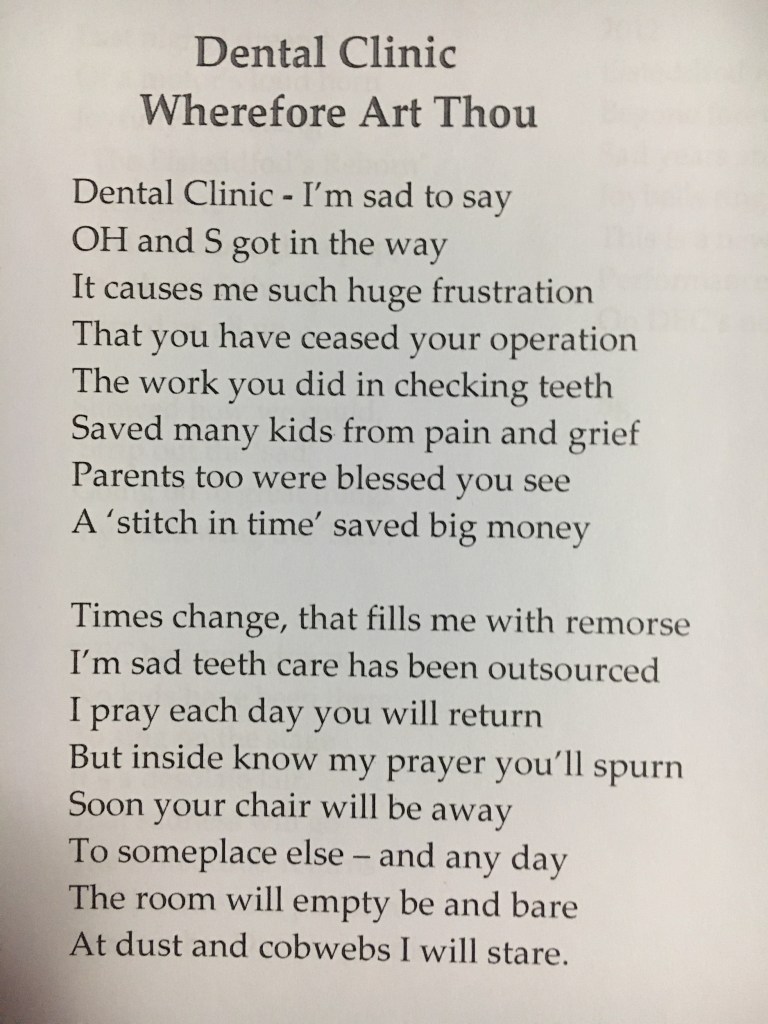
We are in a situation where the neighbourhood in which we live has changed dramatically from 1987, when we first moved into our house, to 2024.
When we moved, the neighbourhood was primarily occupied by somewhat different people. Housing policies and Darwin were other factors that differed in how they operate today.
A fair bit of my response on this topic is based on observations of general awareness and more direct experience.
So, I would be a good neighbour if the following observations about my conduct were made.
These commitments will do for now.
GRAB BYTES JULY 2024
Territory Day
How wonderful it is that we, as Territorians, can reflect on how far we have come since the mantle of self-government—in some ways at least—was settled upon us. May the day allow us to consider the many things we can celebrate and ponder the challenges our Territory still co nfronts?
Election Promises on the credit card
Whichever party wins the election in 53 days, one thing is for sure: Fulfilling those election promises – which ARE kept – will be on the Government’s credit card. Borrowings will take us ever further into debt. With interest payments already a significant drain on the NT treasury, the idea of “short-term gain for long-term financial pain” will come into sharper focus than ever before. When it comes to debt, how long can the government keep kicking the can down the road before the vast amount we owe turns around to bite the territory hard?
Focus on fishing for the young
The time and attention given to promoting and elevating the importance of recreational fishing in the NT confirm this to be one of the most significant territory pastimes. Engaging young people in this healthy outdoor occupation – with the evening meal, a promise at the end of the activity – could focus our youth away from occupying their time with technological gadgets, replacing these devices with handheld fishing rods.
Luke Gosling and ALDI
Mr Gosling is a politician with the best interests of those in his electorate, and indeed the interests of all Territorians, to heart. One can only hope his entreaties to ALDI will not be brushed aside. We certainly need the retail competition ALDI would infuse into our retail market.
Buffel Grass adding to tourist woes
This is yet another obstacle to tourism in the NT’s southern region. Vast distances, fuel and accommodation costs, and the ever-present threat of ill-treatment at the hands of those who would harm people and property add to the challenges faced by tourists.
Rio to gift solar to Nhulunbuy
P
This is good news, as it confirms how much Rio does for Nhulunbuy regarding pastoral care. The company is not there for mining alone but happily supports the community, comprised of employees and others. Rio’s gift of the town solar energy guarantees demonstrates that it is a company that considers people, products, and profit.
A crocodile took another person
Sadly, deaths by crocodiles will rise unless and until culling sense and sensibility prevail.
Rosebery businesses go down
It is always sad when businesses go flat and become unprofitable when expenses outweigh takings. Unfortunately, that is so often how things go in the NT—and, indeed, around the rest of Australia.
Leader’s debate on housing
P
I am looking forward to the Eva Lawler/Lia Finnochario debate and hope to follow the event on the radio or by other means. This election, now only 51 days away—with pre-polling and mobile booth voting starting much sooner than August 24—will be a tight contest. As someone who has voted in every election since self-government, I find it hard to predict an outcome.
100 apartments for Todd Street in Alice Springs
The construction of these 100 apartments in the centre of Alice Springs will provide accommodation, possibly for both the short—and long-term markets. I hope that those interested and involved in the project, from construction to occupation, will be spared the antisocial behaviour and threat to property and person that sadly occurs in the town.
Darwin’s changing face
The changing face of Darwin is turning the city I remember from the 1980s and 1990s into a place that is almost foreign to me. The development, trends and direction in which the town is heading may be inspiring for Generation Z people, but for an old baby boomer like me, it becomes less appealing with time.
Youth crime
The ALP (Government) and CLP (Opposition) have beautiful ideas, plans and pending policies about how crime, particularly youth crime, will be managed after the August 24 election. Significantly, neither party has plans for crime curtailment that include the parents and adults responsible for the upbringing of their offspring. It astounds me that for the past two decades, the response to crime by young people—often as young as seven or eight—has NOT included parents and responsible adults as part of the issue. My vote will go to a party that provides for them in the context of accountability and responsibility.
Lawler is a good chief
Chief Minister Lawler is leading a government that is becoming increasingly credible and reassuring to Territorians. She and her ministers have regenerated confidence in our government. Ms Lawler is the right Chief Minister in the right place – our Territory – at the right time – 48 days from our election.
Justice Charlesworth, Barossa and Beetaloo
Thank goodness Justice Charlesworth adjudicated this issue with sense and sensibility. Our territory, and indeed Australia, is being held captive by extremists with viewpoints that hinder, harass, and thwart economic development. When our essential services—electricity and gas—plunge into darkness and cold, they will be among the first to express distress at the lack of creature comforts.
SANTOS does excellent, good
The SANTOS focus on Aboriginal employment is far-sighted and enlightening. The company is keen to recognise and support Indigenous Australians by providing jobs and training. Let us not forget the significant royalties and monetary benefits from this company’s initiatives.
Power generation alternatives
We need a mix of nuclear power —in the future—and gas—right now—with gas crucial to our needs until nuclear-generated power grows into the mix. Australian authorities are foolish to suggest that wind, solar, and hydro generation can provide all we need. That kind of thinking belongs in Fairyland.
Defence issues
Given the defence focus on Darwin and the Top End, I want to feel safe and secure from foreign interference. But far from feeling any ‘fortress mentality’, a sense of vulnerability prevails. Defence has a shortfall of 5,000 personnel. We have submarines and warships in permanent dry dock. We have no missiles or drones, and current operations are spread so thinly that our vulnerability is exposed. We need a defence force ready for action, not perpetually in the planning stage.
Edith Falls handicapped access
The idea is for as many people as possible to have access to all our national parks. May that continue to be the way forward, with minimal interference.
Buffel grass is needed for cattle
Buffel grass may hinder tourism in the NT’s southern region. However, pastoralists’ need for viable feed for their livestock must be considered. Is there no way to establish a symbiotic relationship so that the access needs of tourists and the need for feed for our vast cattle herds can be accommodated?
Oval bollarding to prevent destructive hooning
My first experience with ovals being wrecked by wanton hoons goes back to my time as Principal of Leanyer School. Following the illegal ‘excursions,’ we had onto the oval – belonging to the school council and nor government – was – reluctantly – to look at fencing. These attacks are all too frequent, with the number of incidents increasing with the passing of years. It is another manifestation of the government and authorities being forever on the reactive back foot regarding crime curtailment.
Alice Springs Curfew for 72 hours
Commissioner Murphy has done what was necessary at this time. The more I read and hear about Alice Springs, the more it seems that the place has been ‘reclaimed’ by first people—who do as they like, when, where, and how they want, with little worry about consequences and outcomes.
Dealing with developmental issues
I wish we had a Territory with some predictability about trends, directions and our future. I want that development to be steady and not simply spiked with intensity just before elections before slumbering back into post-election inertia. And I wish that the NT, judiciary and police had the money to deal with crime head-on rather than pussyfooting around with processes designed to appease loud groups who want us to believe everything on the social behaviour front is hunky-dory.
Middle Arm – make haste slowly
What is happening at Middle Arm, in terms of its embryonic development, reminds me of how the Trade Development Zone between Berrimah and the East Arm Port was so slow to establish in the 1980s. But perseverance prevailed, and that area is now a significant and vibrant industrial hub. Middle Arm will require the same considered development.
Alice on the ropes
Alice Springs is being held to ransom in a way that must scare the life out of many of the town’s 25,000 residents who fear for their cars, homes and personal safety night after night. I once liked and visited Alice, where I found peace and solitude between the 1970s and 2008. No more! The town has become a war zone.
Tourism faces big challenges
A few people here and there speak glowingly of their times spent touring the Territory, and that is a good thing. However, alternative destinations are a significant drawcard because social issues are less confronted, and dollars buy more goods and services. Territory tourism faces a ‘come from behind’ challenge.
Walks to open up Rivers Region
How excellent will the expanding walks program be? It will allow locals and tourists to feast their eyes on the beautiful geographic and topographical features that are so much a part of our territory’s rich diversity.
More brawls in Alice Springs
Those involved in these brawls and those concerned with theft, stealing cars, house breaks, and assault on innocent persons who come from out of Alice Springs should be barred from the town and be required to seek police clearance if they need to go into Alice for medical reasons. They are turning the place into a no-go zone.
Stomping on authority OK, as ‘we’ were here first
Police force members, paramedics, hospital staff, emergency services personnel and others supporting the community cannot become collateral damage and ‘throw-away’ statistics in the fight against crime and the preservation of law and order. Too many people who commit vile acts of aggression against those providing human services are excused for the repulsiveness of their actions. Many, young and old, lash out at authorities because they own the land, with the rest of us being ‘Johnny come later’ persons. That is inherent in attitudes and behaviours so often apparent within the NT.
Burgeoning public service
P
The Education Department offers an excellent example of public service growth. When the NT Government took control of education in 1979, it was created with two divisions – school branch and school support/professional development services. These days, the Education Department has six or seven divisions, and at times, I wonder what it is for! Organisational growth needs to be for a purpose; organisations that grow too large need branches to support growth within, with only peripheral benefits to schools and students. What grows is the bureaucracy.
CDU and overseas students
Only 17% of Charles Darwin University students are from overseas. The rest are students from within Australia and the NT. As a past student and part-time staff member, I wish the University Management Board would focus more on the needs of domestic students and less on trying to attract students from overseas – who are sought for the money they inject into the CDU budget as a high-priority.
Night sky memory
My very favourite night-sky memory is of the Russian Satellite ‘Sputnik’ passing overhead in the remote fastnesses of WA’s outback, with the view enhanced by the inky blackness of the night sky.
Tourism support
Ironically, the NT Government must keep finding funds to help offset the costs of tourists coming to the territory. Underwriting cheap airfares – with a $16 million ‘aviation attraction’ grant to enable the offering of more affordable fares, along with $2 million in ‘tourist support’ by subsidising costs of tours for visitors, is money out of the Territory taxpayer’s pocket that should not have to be offered. Let the NT sell itself to potential visitors on its merits.
Richardson Park cannot be re-created
Richardson Park, as it used to be, had a rich history and will always be a landmark in the minds and memories of those who enjoyed its facilities before it was allowed to decay, falling into rack and ruin. This revamped facility might be a sports ground with associated – albeit limited – amenities, but it can in no way be the proud facility it used to be in past times. It is another example of Darwin’s history that was left to die. In its ‘resurrection’, the park is simply that – another park!
Agribusiness promises post-August 24
One can only hope that visionary statements about future prosperity and development translate into positive actions and outcomes after the August 24 election. If that happens, it will be a change, for after past elections, 90% of promises have been quickly ditched.
Swimming for all children
Regardless of which party is in government, swimming instruction should be a compulsory and fully funded program for all children. The sports voucher program offers partial funding for parents, but the costs of instruction and bus travel from school to the pool significantly add to the total costs of swimming instruction. All children should have the opportunity to become competent and confident swimmers.
Sense and sensibility should always prevail when balancing economic and environmental priorities.
Upgrading East Arm
P
In several ways, the privatisation of Darwin Port has brought economic blessings and growth opportunities to the NT. I used to worry because of the Chinese connection with privatising the wharf, but that no longer concerns the government or our defence department. The upgrade of East Arm will significantly benefit our commercial and industrial base. The thought of “making hay while the sun shines” comes to mind.
Mining rare earths
I am so glad we have bountiful supplies of critical minerals waiting for extraction in the NT. It would be wonderful if we could add value to these minerals by refining raw materials and, in time, possibly manufacturing goods in which they are used. May the NT become ever more self-resourceful.
Construction of wind-resistant building materials
Every advance that can be made in countering environmental threats and disastrous weather events is a step toward securing increased safety and security for those living in vulnerable areas. Knowing the progress on wind-withstanding building and construction materials is good.
Mitchell Street machete wielder
The threat to limb and life in the NT grows louder and becomes more pronounced daily. The reduction of these horrible happenings is not for want of effort on the part of our police – who are desperately overburdened with the requirements of crime management. The crime tsunami overwhelming the NT has to do – in an increasing number of cases – with slack parenting and a weak, limp-wristed judicial system hell-bent on forgiveness and the offering of multiple chances to offenders to mend their ways and get good.
Longer preschool hours for four-year-old children
Children are getting born, and within weeks, many are in long-term daycare. Then, they graduate from full-time to part-time care when preschool opportunities become a reality. After preschool is finished, they are back in care until collected by parents for a time at home. During primary school, children go into before-school and after-school care at the end of the school day. During pre-school and school holidays, vacation holiday care programs look after children. More time in care and school than with parents at home seems to be children’s never-ending present and future.
Lawler/Finnochario Debate
I am looking forward to the debate on the way forward in the NT from these two powerfully positive leaders. Regarding the NT post-August 24, I find it hard to get a handle on how I should vote. Hopefully, this debate will help in coming to a decision – it will be the most crucial exchange of viewpoints pre-election.
Sinning youth and calls for ‘understanding’ their situations
Youthful criminals are already treated with the greatest of lenience by our judicial system, creating a perception that they are absolved from the wrongs they do and the often devastating impact of their actions on people and property. The weakest link in the chain that couples the components of youth, parental responsibility, police/authority response, and the judicial system is the justice system, which has the excess application of forgiveness policies and the extension of bail without end to offenders as its primary policy.
Shrinking population dilemma
Government and authorities keep looking at the NT population issue through promotions and inducements to outsiders to come and make our territory their own. More frequently, less and less intention is paid to meeting the needs of long-term Territorians who have spent years and decades helping the NT consolidate and grow. This ‘neglect’ – perceived or actual – coupled with the increased crime and lawlessness now impacting the territory community’s social and economic fabric, forcing people to up stakes and go elsewhere.
Lawler and Finnachario debate
P
It is always good to be able to share as listeners in the debate between key political leaders in the days leading to an election. Thanks to the NT News for live-streaming the debate, which allowed many Territoerians access to the discussion.
CDU Medical School
The CDU Medical School will extend essential training and research in a domain provided in the NT by Flinders University. With two universities involved in this vital field, collaboration and cooperation should positively support ongoing development in both training and research.
People’s Choice Alice Springs Closing
The People’s Choice Credit Union has operated under various names for decades. I joined in the very early 1980s and, over the years, have appreciated the way it has served our community in both urban and regional centres. Sadly, branches have been closing, and ATMs have been removed to a point where People’s Choice is much diminished from how it used to operate. Services within the remaining branches have been reduced. Closing Alice Springs because of safety and security issues is another loss. If the closure involves crime and threats to staff, I suspect that the remaining branches will also be under the microscope of possible closure – and in the not-too-distant future.
It goes down across the world
P
This massive outage and the inability of businesses and people to function without recourse to IT should be a wake-up call to us all – but I doubt that most people will ever remember this worldwide dislocation a week from now. Our massive dependence on technology comes at the risk of people not having the skills or the money to function alternatively if technological supports are lost.
NT road deaths
Sadly, 39 people have been killed on our roads during 2024, compared with seven deaths in the same period – January to July – in 2023. However, between July and December 2023, another 24 people parked on territory roads, bringing the total to 31. The worry is the number of people killed in the 12 months of July/August 2023 to this point of time in 2024. Sixty-three people have perished in these twelve months, and that is highly alarming. What has gone wrong?
NT Election looms
Just 34 days before our NT election, I am becoming more excited and apprehensive by the day. As a very old man, I believe this could be close to the last NT election in which I will have the privilege to vote. I hope the outcomes will bring economic furtherance, social cohesion and enhanced well-being to the Territory.
Alice Springs Town Council overlooks casual vacancy
It is easy to understand how the Alice Springs Town Council overlooked the protocols of replacing a councillor retiring mid-term for personal reasons. With so much crime and community unrest dominating Alice Springs night after night, followed by daily cleaning up after the mess from the night before, this oversight was to be expected.
Overseas workers for servile but necessary tasks
Throughout the NT and Australia, governments must bring in overseas persons to do the work Australian citizens often can’t or won’t do. The reluctance to dirty one’s hands with every day and servile tasks is an attitudinal affliction that attaches too easily to too many people.
The administration and management of land councils and organisations connected with Aboriginal people go back years and decades. Organisations have come and gone, been reconstituted, and disbanded so often that it is impossible to recall them all. Suffice it to say that rarely, if ever, are meaningful inquiries undertaken, while misappropriations are swept under the carpet.
Emergency clinics in remote areas
P
One can but hope these clinics – indeed necessary – proceed beyond the establishment stage to include staffing and overall management needs. They could overcome the issue of people travelling to EDs in Darwin, Palmerston and regional hospitals. However, facilities provided in remote areas are often only partially used at best because of staffing and resource shortfalls.
Budget stringencies
What I find interesting is that in some cases, priority expenditure on alcohol, cigarettes, social drugs, entertainment and gambling is not diminished. Many people who carefully manage their budgets ARE doing it hard. Others in the same boat continue to waste money in these other pursuits.
Local government – Councils – failing
Before taking up elected positions on Councils – and even the NT Legislative Assembly – incumbents should be given compulsory training in organisations’ operations. Too often, processes and procedures are overlooked, with people filling power positions being poorly equipped to manage their responsibilities. Hence, things can go wrong.
Toughen laws on crime, particularly youth crime
Before every election, for as long as I can remember, both the major parties – whether in government or opposition – have made significant promises about controlling and managing crime, particularly youth crime. The day after the election, the elected government shelves the promises, bowing to pressure from interest groups not to act in any way other than softening existing laws. Whichever party finds itself in opposition continues to hound and berate the new government to make a change. If and when elected to government, the vociferousness while in opposition is suddenly muted, with the ‘new’ opposition finding a voice on the issues they are conveniently ignored while in government. Every four years, the cycle is repeated. And one who has lived with this issue for the past three decades should not be cynical!
Cattlemen and women owed
It seems that this settlement, in fiscal terms, will continue to drag on for years and years – as it has already. Maybe the federal government hopes this court-adjudicated compensation will become lost in the annals of time, that those entitled will have passed on, or something else will distract and keep the issue on the back burner forever. Now, if it were TAX owed by these cattlemen and women – THAT would be an entirely different matter regarding government alacrity!
New sports facilities for Alice Springs
One can only hope that the refurbished and reconstructed facilities, which will benefit Alice Springs, are preserved from wanton damage and acts of vandalism.
EV vehicles in the NT
We must recognise and appreciate the limitations of EV vehicles. Hiccups will be in place for a time, but challenges will sort out; we will come to bless the impact of EV vehicles on territory travel.
Recreational fishing the way forward
P
We must look after our recreational anglers. There are 60,000 in the NT, with the number increasing significantly yearly. This makes fishing the number one recreational pursuit in the Territory. The government is wise in nurturing and developing this activity.
Graduating police
One can but hope these graduates and others who have finished training this year can make a difference. The ‘rough and ready’ of Katherine and Alice Springs will test their mettle. (It was only recently that four off-duty police, including newbies, were assaulted in Alice Springs.) May these graduates make a difference and develop to become happy and satisfied with their careers – but I worry that criminal circumstances in the NT will be against this outcome.
Sports clubs getting millions
Sports organisations suck money out of governments like a thirst gap. No matter how much they get, they want more—gone are the days of self-help and reliance on club initiative. These days, it’s hands out, wanting more and
Out goes ‘The Quarter’
It is a shame that so much work that went into recent -2016 developments in the Quarter has to be undone because of anti-social behaviour and bizarre conduct by some who delight in ruining things for others. But as for a micro-brewery – should that be a priority? I hope the Planning Commission has a really good look at this proposal.
Karama and Malak crime headquarters
The Karama and Malak areas of the late 1980s through to the mid-1990s used to be quiet, serene and relatively safe suburbs. Come 2024, both have turned into ghettos along with the growth of a fortress mentality that leads to formidable security installations – and still, crime continues to escalate. Crime is ripping our Territory apart. I doubt either party – if in government – will be able to resolve what they have created by forgiving and ‘understanding’ criminal motivation.
DV on the increase
P
Domestic violence and crime belong in the same camp because both are about criminal behaviour. DV and crime are receiving ever more money and are being budgeted to try and curb their manifestation. It is not working – the frequency of both, especially DV, is on the increase. There has to be more than awareness rallies; will the government have the mental steel to invoke anti-DV practices that work?
Crime prevention – the truth of what will change post-election
We are now 26 days from the NT election. Both the Labor Government and CLP Opposition are saturating the Territory with written and verbal promises that significant attention will be given to alleviating Territorians from the scourge of crime post-August 24. Root causes, boot camps, truancy officers to ensure school attendance, holding parents accountable, the continued resurrection of the School-Based Constable program – the promises are dropping thick and fast. Sadly, based on post-election results, there will be little action, and we will all continue living in a crime-riddled Territory.
60 DV cases a night
Sixty DV callouts a night – that is just a massive impost on our police and others associated with trying to contain this vile behaviour. Indeed, DV perpetrators HAVE to be dealt with the severest of penalties if the domestic violence epidemic is to be slowed. At the moment, it seems rates of DV abuse are growing exponentially.
New Department of Housing mooted
P
Sixty DV callouts a night – that is just a massive impost on our police and others associated with trying to contain this vile behaviour. Indeed, DV perpetrators HAVE to be dealt with the severest of penalties if the domestic violence epidemic is to be slowed. At the moment, it seems rates of DV abuse are growing exponentially.
VAD Committee Report
P
I am so happy that the VAD Committee has recommended practical and logical ways in which the entitlement to end one’s life if passed through the Assembly, will work. When the law is passed, it will be a total relief to me, a 78-year-old man. With euthanasia not being an option available to me, should I need to access the option, I have been left feeling very insecure and vulnerable.
FOR THE FIRST TIME I COULD TRY …
Playing the piano.
Making a dress.
Playing hockey.
Enjoying barefoot bowls.
Shearing a sheep.
Flying a plane.
Becoming a garbage collector.
Singing in a choir.
Joining an archery club.
Going to sleep under a bed.
Wearing pale pink lipstick and nail polish.
Eating pig’s liver.
Not singing spontaneously when going around my daily business.
And
The list
Of first times
Could go on, on.
In a never ending fashion.
In the Northern Territory of Australia, we don’t presently have a law of entitlement to Voluntary Assisted Dying.
We had a law in 1997 that was passed by the Northern Territory Assembly giving people the right to die. That was the first law of its kind to be passed anywhere in Australia.
Because the Northern Territory is a territory, the right-to-die law was rescinded by the Federal Parliament. Very few people had accessed its provisions.
How the worm turns! Now in Australia, every state and the Australian Capital Territory have voluntary assisted dying laws – the exception being the Northern Territory. We now have a right to develop a law, but our Labour Government is being very tardy on the subject.
We may well get there at some time but at the moment a whole process of inquiry going on about the matter.
When it happens, if it happens, the Northern Territory which was first, will be last with such a law in place.
We NEED a law allowing the right to die. We need it soon. That is my beef
A SHOW … SO LONG AGO I HAVE FORGOTTEN
I can honestly say that if I have seen a live performance is so long ago I cannot remember having been to a show. Live performances do not appeal to me and I haven’t been to one since we came to the Northern Territory in 1975.
As the school principal, I did go to eisteddfods with students who were competing and also had students involved in an annual musical for schools in the Northern Territory called “The Beat”. In fact, I was on councils managing both these programs.
However, I’m not counting these programs as live performances in the way they are normally thought about.
I have never attended theatre performances as an audience member. I don’t like cabarets and modern comedy because its salaciousness does not appeal to me. I’m not interested in dance performances, circuses or anything else of that nature. I don’t watch them on television either.
Others may love live performances – but that’s not me.
The circumstances of life shackle the bodies and the minds of countless people. There may be many people in the world finding themselves in some sort of a binding situation from which they cannot escape. I am one of those people who are held captive.
To me, freedom is aspirational rather than real. For freedom to become a reality, I must bend the bars that entrap my body within the frame of restrictions with which I have to live.
Even more significantly I must untangle my mind from the barbed wire which binds fears, concerns, anxieties and hesitation within the grey matter of my cranial cavity.
At times I come close to breaking out from the constraints that shackle me; on other occasions, I feel more bound and more imprisoned than any other time.
Is freedom a reality or an illusion?
I was Angurugu Community School on Groote Eylandt’s principal from 1979 until 1982. I was asked to write a paper on Aboriginal Education for the Pacific Women’s Diamond Jubilee Conference held in Sydney in January 1882. The following was what I wrote. Forty years later, my propositions, if anything, are even more relevant than they were at that time.
A dilemma of the developing Aboriginal society is one of attitude. Women can play a vital role in societal development if society allows them to do so. There is abundant evidence to show that young Aboriginal women can do well at school and that they do achieve. The dilemma is ‘for what’. Often, it is for a return to the camp life, where childbearing and child-rearing provide the only relief from the following monotonous domestic routines.
Aboriginal society is patriarchal. It is what men say counts, and what men want happens. Aboriginal women have a vision; they are thinkers and know what they want. But they often don’t have the power in their society to put their thoughts into action. They don’t count enough.
This usually means that education only frustrates teenage girls growing up into women because education shows the girls concerned about what they could be and trains them to do things they learn about. In the end, however, it means nothing because society tells them they must fill a position in life that puts them in a less critical position than men. Aboriginal culture and tradition are essential. But often, men, who are the custodians of this culture, think ‘back’ to it without thinking ‘forward’ enough to the changes forced on Aboriginal society by the time and place in which we live.
I expanded this topic more deeply, but word limits mean this truncated version must be offered. I would add my deep appreciation for the work of Senator-Elect Jacinta Price and Dr Anthony Dillon from the Australian Catholic University on this subject. We should heed their advice.
I am not all that good at naval gazing.
Then said I think that there are two qualities I always try and practice. The first is listening and not rushing to judgment – listening is a skill that is all too rare these days. I always try very hard to be a good listener.
Secondly, – and this sometimes has gotten me into trouble in the past – I regard all people as equal and don’t stand on ceremony nor on recognising people based on their occupation and their perceived importance. To me all people are equal. That is the way I have always tried to practice in terms of both personal and professional relationships.
There have been recent reports in the media discussing the impact of fetal alcohol deficiency syndrome on students in classes. Reports talk about the fact that the behaviours manifest by students affected by this syndrome are not deliberate but rather the result of the deficiency that they have acquired.
The deficiency is by no fault of their own but they have to wear the consequences of the actions of intemperate mothers, who continued to drink alcohol during their pregnancies.
While one can empathise with these students, their disruptive and dysfunctional classroom behaviour cannot be excused because of the circumstances of theirs background. The needs of all students in classes has to be taken into account. If this means extended periods of suspension for behaviour that impacts others students in the classroom, then so be it.
FASD leads to brain deficiencies. One of their outcomes can be the inability of affected students to differentiate between right and wrong. They may also have limited recall in future days of the reasons for why their behaviour was wrong. This means that repetition of unacceptable acts can be ongoing.
Teachers and principals have a duty of care for whole classes. Individual students cannot be exempted from classroom and school behavioural requirements because of the syndrome. While mainstream classroom support might be offered by a special education support assistant, this may not overcome the behavioural and attitudinal issues of suffering students.
I believe that there is a strong case for the inclusion of FASD impacted students exhibiting negative behaviours in special schools or in special education units attached to schools. Mainstreaming can impose too many impossibilities.
EDUCATION HAS ITS DENIALISTS
There is a lot of denial going on at the moment. The major area of denial is in the domain of climate and climate change. Hopefully that matter will move beyond debate to action and the sooner the better.
Within the educational domain there are also deniers and a deep field of denialism. One of these fields embraces language acquisition and skills necessary for the development of reading skills. “Phonics” versus “whole word analysis” is the case in point. It’s an important debate, because so many children these days are well and truly behind the eight ball when it comes to reading competencies. That’s not just in the area of formal testing comparison, is but also within the domain of intelligent understanding and comprehension of the written word and messages being conveyed through text.
As a retired school principal and a person who for the whole of my teaching career was very keen that students receive the best possible teaching approach for the acquisition of understanding of language, I found the following except from an article very empowering.
The paragraph is lifted from an article by Greg Sheridan written into “The Week and Australian Review” of January 11 and 12th 2020.
In a few short words it reinforced my belief in phonics is a superior method of word understanding and language acquisition..
Trade Trainees and award earners
Congratulations to all awardees and supervisors for your care, guidance and empathy. Trades are critically crucial to the future of the NT. Thank you for pursuing this line of skills development to award earners and all who are growing their knowledge in the trade area.
Mandorah Jetty rebuild
The people living at Mandorah, Waigait, and Beleun deserve the renovation and rebuilding of a facility for which they have waited so long. This growing and expansive area has had to make do for many years, and the construction of new facilities will alleviate the discomfit they and visitors have endured for so many years.
Fearless swimmers and surfers
Those seeking to surf and swim in the waters off the coast of Darwin and other places north are fearless. They brave the threats posed by stingers, sharks, and crocodiles and must be aware of ocean currents’ vagaries. I think they are courageous people.
Nepalese Festival
This has been a beautiful festival, and it is more validated because Nepalese people are peace-loving, giving, caring for others, selfless, and empathetic. They set an excellent example of peace, oneness and togetherness that, sadly, is not the approach emulated by those from so many other countries on Earth.
The Emergency we confront
P
Without a doubt, the everlasting worry that occupies my mind is the danger of what might happen if and when China decides to the military force against Taiwan.
I have been worried about this for a long time. That concern has been deepened by my reading of Professor Hugh White’s quarterly essay “Sleepwalk To War” published last year. I’ve read his essay and taken account of his responses to what he wrote.
I am concerned that what Professor White has written could come to pass in terms of its most awful prediction. China is bristling about Taiwan and feels increasingly aggravated by Taiwan’s independence. Regional emergency is more likely by the day.
Vehicle theft ignored?
If this was the police response to the break-in and vehicle theft, I have just had my faith in our constabulary severely dented. I hope our police hierarchy will inquire into the matter and take action against the offending officer/officers if deliberate neglect is confirmed.
CDU city campus without accomodation
The great shame is putting the cart before the horse once more. Indeed, it would have made more sense to have student accommodation ready for when the new university campus opens. The ‘Vision for Darwin’ statement intimated that accommodation would be provided in a way that synchronised the completion of the city campus in alignment with accommodation to house the incoming hundreds of students. The campus will be finished before any accommodation is constructed – so where will students live in the interim for two or three years?
Community home construction
I am glad that upgraded and new accommodations are being provided within communities. But did you know that housing projects for communities are not new – that housing associations pledged to building and construction have been in place in various communities since the 1970s? I wonder, too, how much our authorities know about the history of past building initiatives, including awareness of why so many homes have a very short life span.
Controlled bush burns
Smoke from planned burns is inconvenient but far better than ravaging bushfires that destroy property and put lives at extreme risk. The NT’s controlled burning program to reduce fuel loads is eminently sensible and reassuring to home and property owners.
Australian defence capability
I cannot see any light at the end of the tunnel for Australia’s defence capbilities. The ADF has been downplayed and neglected for far to long. On our own, we are at the mercy of any hostile power seeking to wage war, for there is so little in our defence arsenal. In defence terms, we are an American dependency. Without their defence support, we are nothing.
RSV Virus
Without a doubt, the Federal Government should subsidise the cost of this vaccine. All babies and young children must be protected from this horrible, debilitating, and life-threatening virus. Federal tardiness on this issue should be countered, in the short term at least, by the NT Government covering the costs of immunisation for the vulnerable. “Chance” should not be played with young lives that are confronting this virus.
Boat Ramp at East Point?
P
There is sense and stupidity. Building yet another jump-off point for anglers in an area that does not deserve this construction interference, followed by endless processions of vehicles with boats on boat trailers, would be crass. Leave well alone and let fishers be happy with the abundance of facilities they already have.
Katherine hairdressing shop is closing for good.
Crime in the NT is out of control. Everyone everywhere, be they homeowners or business proprietors, is at the mercy of criminals, many of them very young, the majority of them under 20 years of age. Nothing will stop this ongoing upturn of criminal behaviour against people and property. Saying things are improving and crime is less telling and frequent is untrue. It’s so bad and getting worse. The NT after dark IS out of control.
Contempt for Andrews and Burke
I have nothing but a deep dislike for Kevin Andrews, now retired from political life, and Tony Burke, still in parliament, for presenting the motion to rescind the Perron legislation in 1997. In shaping the cancelling legislation, these men brought great and almost everlasting harm to the Northern Territory. Their action amounted to bruising and bullying behaviour.
Aboriginal people already in the Assembly
We have substantive numbers of Aboriginal people who are elected members of our NT Legislative Assembly. Study and appreciate the Assembly seating plan, and you will become aware of the very even distribution of members by their cultural backgrounds. Our Assembly excellently blends elected persons based on race and gender. In other words, the Assembly is well-balanced. We do not need to introduce schisms into the governance model already in place.
Fragility of NT Airline services
Tiger came, and Tiger went.
I recall Rex talking about the NT at one stage, but that never happened.
Bonza came with rejoicing and fanfare and appears to have folded.
Over the years, airlines have commenced routes to the Territory, which are short-term in 80% of the cases.
Qantas and Virgin services are inconsistent and subject to change.
It seems that ‘uncertainty’ is a theme underpinning airline services into and from the Territory.
Richardson Park
What a pity that the same retrospective care was not applied to the Anzac Oval in Alice Springs. Our government seems to be restoring history in one location (Richardson Park) and destroying heritage (Anzac Oval) in another.
Street Art in Darwin
P
How wonderful it is to have all these uplifting, invigorating, imagination-inspiring, and significant artworks in our city and surroundings. It makes a trip to Darwin an essential experience. We are blessed by this visually enriching annual project.
Cyclone Tracy Memorial at Bundilla Park
P
We arrived in Darwin en route to a remote area teaching appointment in July 1975, six months after Cyclone Tracy. I remember the first visuals of Darwin that I had ever experienced. The twisted steel poles adjacent to Casuarina Senior College remind me of Tracey’s brute force and savagery. The proposed modern artistic sculpture at quite an outlandish price – with input from our ratepayer contributions to the Council – does little for me because of the vagueness of its links to that cyclonic catastrophe.
Fireworks at Mindil off the radar?
A late application for the required permit(s) with the Aboriginal Affairs Planning Authority should be possible. Could an application not be made with and through support from the Larrakia Nation? Meeting the needs of this special event would surely secure the necessary approvals. The waterfront venue will be a poor alternative.
P
This story confirms how the conferral of land rights and entitlements is locking the general community out of once-accessible areas and locations. Non-Indigenous Australians are losing entitlement and access to many places they could, without restriction, once visit. Metaphorically – and actually – Indigenous Australians are the country’s landlords, with the rest of us being tagged as tenants, with decreasing rights of access without permitted permission.
Peter Costello and our national debt
Let us never forget the tremendous good and positive impact Peter Costello had as our treasurer during the Howard years of government. He oversaw the bulldozing of Australia’s debt at the time and placed our country firmly back on the road to financial prosperity. Fast-forward to 2024, and consider the debt accumulation our country now confronts. It’s as if financial accountability and the consignment of national debt to history never happened. It did – but it will never be zeroed again.
Inducements to visit the NT by road
People should come to the Territory to see and experience what we offer. It is rather disappointing that inducements have to be offered. Sadly, the reputation we have built of the NT as unsafe and insecure does not help entice visitors.
Moving Holtz to Palmerston?
This excision must not be allowed to happen. The development rightfully belongs within the Litchfield Shire, and it is not right for it to be covered by another local government area. Development within Litchfield must allow for the protection of the Shire’s developmental and management entitlements.
Excluding roller doors from security upgrade support
P
This is silly and arrant nonsense. Excluding a contribution under this scheme for installing external roller doors, the best and most effective deterrent to thwart those with criminal intent wanting to break in is not the way to go. This exclusion is wrong and should be reversed.
NAAJA Appointment
The truth is often hidden about appointments to key organisational positions. The expectations and requirements that Indigenous Australians must meet are far less rigorous and investigative than those required of non-Indigenous Australians.
Fireworks at Mindil
I would hate to think the government ‘imagined’ this problem to create a solution and continue the fireworks display at Mindil Beach. I wonder in part because we are only 72 days from an election, and could public affirmation of the solution found, reflect positively at the ballot box?
New Vehicles
I am happy with my 14-year-old Toyota Camry. It is well-maintained and regularly serviced. It is somewhat easy that, being an older car, it is far less attractive to thieves than all the new, modern, upmarket vehicles.
The NT: From first to last
We came to the NT in 1975, worked remotely in education and came to Darwin (via Numbulwar, Angurugu and Nhulunbuy) in 1987. I attest that personally and professionally, the NT was the place to be and was indeed suitable for me. But alas, from the end of the 1980s onward, the quality of life, including safety and security, has steadily declined. Far from recommending the NT as a place to live and work – my take in the years before the beginning of the 1990s – it would be one of the last places I would recommend to newcomers.
Ospreys versus Taipans
This policy is one of sense and sensibility. By comparasion, Australian Government’s decision to ground and scrap – literally – the Taipan helicopters after the Queensland accident – attributable to night goggle error rather than helicopter malfunction – was an irrational reaction.
Proposed Katherine Aquatic Centre
P
Politics aside, I sincerely hope this project is completed on time and within budget. From my experience, I know that towns and communities outside Darwin and Palmerston do it tough. Facilities like this are needed to help people feel more comfortable within their communities. A program like this also means a lot for water sports and, of course, the teaching of swimming.
Middle Arm inquiry
I hope this inquiry is based on questions and responses embedded in rationalism, without emotion getting in the way of fair discussion. It seems that too often, enquiries are encumbered by predisposed points of view that may well overlook the realities of the situation and environment. That would be most unfortunate.
Tennant Creek rebooted
P
I hope this enterprise comes to fruition for economic development in the NT and to reboot what has been flagging prospects in the Tennant Creek and Barkley areas. The NT economy has been flagging for a long time in so many ways and in so many areas. Any way of lifting this place from its economic doldrums should be pursued.
Tiger Brennan and its flyover
This major work will enhance access and boost safety on the ever-busier road network. Tiger Brennan and its adjuncts have substantially improved traffic movements between Darwin, Palmerston, East Arm, and the expanding industrial area. Well done to Louise McCormack who was the far sighted and enlightened engineer who stood behind the Tiger Brennan development.
Fishing in the NT
There is a real danger that the NT will be fished out in many places. Tens of thousands of anglers, both recreational and commercial, are posing an ever-increasing challenge to the survival of fish stocks. I wonder sometimes whether a moratorium on fishing needs to be imposed for 12 months, to allow for replenishment.
Greek Community rates bill set aside
P
These events support what our City Council wants—celebrating Darwin’s multiculturalism. It should not matter that the Greek Community, through its facilities, supports other ethnic and cultural groups. For the community to do so enhances the notion of all cultures being ‘together as one’ within our community. I am very glad that the Kalyminian Community has won this case.
Sadadeen Primary School’s piglet
These sorts of activities may sound strange, but they can transform school spirit and bond children. During my years in education, my schools had different mascots to encourage positive attitudes and atmosphere. They worked well in helping achieve this outcome.
WiFi in remote communities – free
Until the early 1980’s, as Principal of Angurugu School on Groote Eylandt, two way VJY radio transmission was the only communication tool available. There were no landline phones, and using a public phone required a 20-kilometre trip to Alyangula and a queue waiting at the public phone box. Calls were also time-limited. Haven’t we come a long way since then.
Crime grips Katherine
P
The NT is crime-saturated. Katherine, a town I have known and visited quite regularly since the late 1970s, is only a shell of the decent and respectful place it once was. Nighttime activities, along with CBD and suburban streets, have been taken over by criminal activity perpetrated by those with malevolent intent. Katherine is becoming a town requiring residents to live in constant fear.
NT Training Awards
Congratulations to all who are recognised by these prestigious awards and those who are undertaking training leading to trades and industry careers. We need young people like you who are dedicated and focused on outcomes that will bring personal and societal benefit.
Fire and emergncy services training
This story is reassuring and gives confidence that our fire and emergency services personnel – and volunteers supporting them – will be there to protect us from fires during this dry season.
The election draws nigh
The closer we get to the August 24 polling date, the more exciting issues—everything from the pros and cons of gill net fishing to the state of our roads to curtailing crime and a myriad of other concerns—will rise before voters’ eyes. We are in for the most significant election since 2016.
RDH ED issues
The number of people presenting at the RDH ED with illnesses and injuries that are self inflicted – fighting, alcohol consumption, drug usage – has reachd epidemic proportions. Staff offering treatment are often hindered by aggressive behaviour, including physical assaults. Recently, RDH ordered that all equipment be permanently affixed because items taken to hand could be used as weapons. From experience and observation, the ED at RDH is often in a state of chaos because of unruly patients.
Territory Day
The chance to celebrate our territory’s growing maturity provides us with a wonderful opportunity to reflect on everything that is positive and good about “our place.” I, along with many others, hope that one day, Territory Day will become an acknowledged public holiday.
Appreciating Graham Sawyer
While the jury is still out on how I will vote as a Wanguri elector, I rejoice that Graham Sawyer is standing in the seat because he is a past local government leader and profoundly understands and appreciates the Territory’s history. He has made a significant contribution to the NT and, several years ago, earned a Pride of Australia medal for his contributions to toad management, frog watch, and the environment in general. Mr Sawyer is a vital and ongoing contributor to the Territory, and the voting outcome in Wanguri may reflect genuine appreciation.
Booting Boulter residents in order to make money
They should not be kicked out if there are no issues about tenants’ keeping and maintaining their homes. People’s attachment to their homes should be taken into account. Booting people for the sake of making money discounts the humanity that should be part of decisions of this nature; keeping people in the dark about intentions, too, is totally wrong and disrespectful.
Ordinance at the Waterfront
This was a timely and providential find. It isn’t very good to contemplate what may have happened if the munition had been triggered without awareness. Eighty-plus years on, there are still periodic discoveries of unexploded bombs dropped on our city and surrounds in 1942. The mind boggles. Thank you to those who discovered this ordinance and assured that calm was maintained until the bomb was safely defused.
Tennant Creek Westpac closure
While Westpac in Tennant Creek did not act according to the protocols of branch closure, I can understand the frustration that staff confronted because of dysfunctional behaviour, damage and vandalism directed toward the facility. The community had a right to proper notification of intention, but the community also needs to consider why the closing decision was made in haste.
Flora’s Temper new restaraunt in Nightcliff
Flora’s Temper will be an excellent addition to the food and feasting opportunities provided for Nightcliffians, Darwinians, and the many tourists and visitors who will undoubtedly patronise this new eatery and appreciate its delicious, tastebud-tempting offerings. We are indeed blessed by the variety of eating establishments in our city and suburbs.
Magnesium mining to revitalise Rum Jungle
Should this project go ahead – and prospects are looking bright – it will be a wonderful filip for the mining and economic development of the NT. With recent mine closures and operational delay—Gove will cease bauxite mining in 2030, and Groote Eylandt manganese is curtailed because of cyclone damage—things have been looking grim. New mining ventures will be uplifting for the Territory.
Party political election promises
I am so over the moon, basking in the delights that promises of savings and living concessions are being offered by both parties should they win the election. We go to the polls in 58 days, and regardless of which party wins, consideration of living costs will bring sweet relief.
Pitch Black is coming
At least we have been notified of the Pitch Black dates, so that is something! For the past three weeks, we have been subject to jets flying back and forth across the top of the skies, all without a word of what the current exercise – they are still flying about at odd times and irregular intervals – is about. Let us be made aware of ALL exercises being undertaken.
Territory tourism decline
Airfare costs, the ever-ongoing spike in fuel prices, exorbitant accommodation prices and the continuing growth of the Territory’s crime epidemic all play a part in creating reluctance on the part of travellers to visit the Northern Territory. As a territory resident since 1975, there is no way I would be trying to entice people to come here, especially when crime is evermore engulfing business operators and homeowners. No wonder people regard the NT as a ‘no go’ area.
Henly-on-Todd cancelled
This iconic event usually transforms Alice Springs into a bustling and anticipation-filled city as people prepare for the Henly-on-Todd. Locals will be desperately disappointed by its cancellation, which comes at a time when tourism was just starting to turn up in the Red Center. This cancellation must not happen in 2025.
Public Housing responsibility shift
P
So much of what is happening on the issue of public housing seems to be a game called “responsibility shunting.” For monetary consideration, the government is persuading housing organisations to assume enormous responsibilities for maintaining and upkeep of what has been public housing. Some tenants look after their homes and surroundings, but many—I would say at least 50%—let their houses go to wrack and ruin. Drive around our older suburbs, and you will see what I mean. Shifting management responsibility will not improve the attitude of tenants who accelerate the wear and tear on their premises through a lack of responsibility and care.
OH&S and safey in constructing the shiplift
Occupational health and safety (OH&S) is something that NT pursues with great vigour. OH&S ensures things are done correctly, with construction firms playing by the book when it comes to avoiding unsafe practices.
Keegan and the $1 million fish
Congratulations, Keegan and well done on how you are heading in such a positive direction in life. You are a positive example to your peers. May you and your family be blessed by your positive reflections on the past, present, and future.
Election costs
Inevitably, costs associated with conducting elections have to rise. That is particularly true in the NT, with remote polling and extensive travel requirements. There are only 115 days until the August 24 polling day. Pre-polling, together with the movement of mobile polling booths around the NT, means that voting will commence in less than 100 days from now. I enjoy the cut and thrust of elections and cannot wait.
School populations
Some schools are more crowded in urban contexts because reputations count for a lot. That can be both advantageous and disadvantageous, depending on the ability of schools and staff to cope with enrolments well more than 100% capacity. As a school principal, I never once regretted marketing our place simply by using media to share good news stories about student accomplishments.
Council budget priorities
With respect, might I suggest an ongoing maintenance program attracting annual increments from rates to undertake maintenance of verges between homes and streets in our residential areas? This should also include the regular trimming and maintenance of trees, which are overgrown along many roads and streets and pose a risk to motorists and pedestrians. These aspects of Council responsibility have been neglected for years and, in some cases, decades.
The Lee Point development goes on
The conflict between environmentalists and developers has been ongoing at Lee Point for several years. Nothing has been resolved other than slowing an area of beautiful bushland and animal/bird habitat that will turn into another 800 homes. When Muirhead was about to be developed, many people wanted a decent margin of bush to be left between Fitzmaurice Drive and the new suburb. That never happened, and the thin strip of bush that was left hardly secured habitat for either flora or fauna. Sadly, for many, that seems to be the way of the Northern Territory.
Crime will not stop
P
We came to the NT in 1975. No matter where we lived, safety and security were not an issue – until we came to Darwin in 1987. It was then I became aware that all was not well; this was reinforced when our home was broken into in 1989. Since then, I have watched with increasing concern as criminal behaviours, mainly youth crime, have grown to exponential proportions. The government and opposition promise the issue will be addressed every four years. After each election, promises are found to have been hollow, and the only thing happening is increased crime. Will things be different after the August 24 election? Sadly, I think not.
Electricity prices set to rise
Meter reading can be an issue, but the element hitting the hardest has been for those putting rooftop solar-produced power into the grid, being reimbursed only 9 cents a kwh – while paying 26 cents per kWh for PAWA-produced power supplied by the grid. If we have to pay more, will the reimbursement for power input into the grid be lifted beyond 9 cents per kWh? Remember, it was illiberally cut to that level a year or two ago.
Actions and consequences
As Professor Maurice Balson once said, “Actions lead to consequences”. Maybe that means “do the crime, do the time”.
Dom Whiting’s Darwin CBD mobile music on wheels
Dom Whiting’s outstanding mobile ‘musical festival on wheels’ lived up to every expectation that had been held for this event. The engagement and joyous rapture built around this event ensured it would live long in the memories of participating Twrritorians and spectators. Thank you, Dom, for helping Darwin come alive!
Manton Dam being revisited
The government is moving in the right direction in upgrading and restoring Manton to a reservoir facility that can add to the water supply needed for our cities – Darwin/Palmerston – and the immediate surrounding area. The move is timely. Although Darwin River Dam has received bountiful top-ups from rain the last couple of years, weather and climate vagaries do not guarantee annual replenishment.
Osprey and Tiapan comparison
P
At least the American government is not reacting by ditching all the Osprey and consigning them to landfills like the Australian government with the Taipans. Doing things on emotive reaction is rather shortsighted- especially as the Taipan issue seems to have been associated with faulty night flying headwear rather than helicopter glitches.
Howard Springs tip accident
P
Indeed, this is a first-class overreaction. People need to take care and act in a way that ensures personal safety first when offloading rubbish. There should be no need for elaborate signage or structural and costly bin access modification to protect tip users from themselves.
Business expansion is good for us all
During these times of economic downturn and challenges to the retail industry, it is great to read about new and expanding businesses happening in our territory. Growing confidence and re-establishing economic upturn can only be good for us all.
St Vincent de Paul plans
As an organisation, St Vincent de Paul ranks among the best in humanitarian care and empathetic support for those in desperate need of assistance. The provision of quality support will be further enhanced when planned changes come to fruition. My concern is that the nurture, care and support offered do nothing to stave off the alcohol problem faced by so many of those who are supported. Help with the essentials of life leaves even more money derived from pensions to be spent on grog.
Aboriginal health in Aboriginal hands
Self-help and self-responsibility have to be critical aspects of focus. No group within society has the right to blame government instrumentalities for the woe-begotten state they bring upon themselves because of misplaced priorities and actions that result in self-inflicted misery.
Artefacts return to Alice Springs
This is a beautiful story of rightful recognition, with a homecoming to Alice Springs validating paintings and artefacts created by artists within the region. Their location within Alice will help validate their value and worth.
$880 on-the-spot fines
I love the story about on-the-spot $880 fines, which will be recovered from offenders. This made me think about the hundreds of thousands of dollars owed by multiple people through unpaid fines. This new raft of breaching will be added to the unpaid pool of uncollected fines.
Voter apathy and non-payment of not voting fines
Voter apathy in the NT is understandable. The longer people are here, the more numb they become. The flurry of promises made before elections at both NT and local government levels rarely eventuate or take far longer to fulfil than promised. We are lucky if 10% of the promises made are fully met. I keep a file of commitments made before elections and have been disappointed over the years at how few are realised.
COD and CBD security
Without the services offered by security companies in support of police, Darwin’s CBD and every shopping precinct in our suburbs would be 100% unsafe places. While management pays for security in shopping centres – recouped through rents levied and then by retailers through prices charged for goods – the City Council, in my opinion, should continue to underwrite security costs for the CBD. The CBD is the ‘home’ of our Council, and security investment should be part of its brief.
Will war come to Darwin
P
With Darwin being where Darwin is, and with the ever-upgrading of defence training and facilities, I stand in the yard, look at our home, look at the surrounding neighbourhood, and wonder when (not ‘if’) it will be reduced to smouldering rubble by a missile or barrages of rockets directed at our city.
Darwin, Palmerston, Nhulunbuy (where fuel storage is anticipated), Alice Springs (with Pine Gap being front and centre of Chinese interest) and other towns and communities will need bomb shelters and missile refuges. Our state of readiness for protection from environmental desecration and shattered infrastructure occasioned by war is zero out of ten.
The war that will envelop our region is imminent, and we are far from ready.
Darwin’s CBD a ‘dead heart’
P
This is a sad but true take on the value and worth of the CBD in the eyes of many people. It often seems that the potential of Darwin City Centre and its immediate surroundings are being viewed through rose-coloured glasses. In essence, the city once proclaimed in song by Slim Dusty as ‘the big heart of the north’, in many ways, is now the north’s ‘dead heart’. It is uninviting, unattractive and overstated as a vibrant, desirable location.
Anything to do with NT resource development is always ‘slo-mo.’
Environmentalists and traditionalists ensure that there is no short way to turn vision and intention into operational reality in the NT. Everything undertaken in resource development is stretched and extended by process and procedure to interminable time lengths before anything happens.
Daly Waters multiplying many times over
This is not just a Daly Waters issue. Neither is it an issue limited to assaults on people and destruction of property in numerous Indigenous communities in the north and south, east and west of the NT. The issue of criminal behaviour, allegedly committed by Indigenous Australians, many of tender years, is happening with increasing frequency in every territory, city and town. Aboriginal elders, parents and critical relations are unable or unwilling to quell a crime rate that has reached tsunami-like proportions in every NT city and town.
The ship lift cometh
I am so looking forward to the ship lift becoming a visual reality. Its planning and vision – or mirage – has occupied my many septuagenarian years, with the concept being in place before I turned 70. I fear the octogenarian ship will overtake me before construction is nearly complete. And at what additional dollar cost?
AFL team for the NT
The costs associated with this project will be both huge and continuous. I look at Tasmania and feel thankful that it was them before us – they may have a team in the making, but their establishment and ongoing costs will be eye-watering. Do we need that for the NT, which is hardly a territory awash with spare money?
Defence in a hopeless situation
Beneath the announcements and the veneer about our defence forces, infrastructural development and assets – to be used in war – acquisition, there seems to be little real consolidation; I feel that Australia is far from being prepared for any conflict, either in supporting allies or in defending our shores. We are short on navy personnel, with, I believe, only three vessels in service at the moment. The ADF is vigorously trying to step up recruiting to make up personnel shortfalls, while equipment upgrades and supply are many years away. We have been caught short on defence.
Darwin’s housing boom
Could you help me understand? I am confused. Darwin, Palmerston, and surrounding areas are growing housing estates and adding new residential suburbs as if there is no tomorrow. Additionally, there have been considerable increases in the number of apartment blocks constructed and still being built. Yet we had a nett population loss of around 3,000 last year – continuing a trend – and our Darwin/Palmerston combined population has not grown all that significantly. What is the reason for bounding suburban growth?
The Roma Bar is for sale
The Roma Bar is an iconic business for Darwin and the NT. In the CBD, where the opening of companies is too often followed by closing, where there are so many vacant shop fronts, and where the focus is usually negative, the Roma Bar stands out as a positive and permanent business. All the best to the co-owners as they move to new challenges, and I hope the company will attract the attention of new owners who will do as much for Darwin as the outgoing proprietors.
DSO funding
The Darwin Symphony Orchestra makes a wonderfully positive difference in musical appreciation and cultural expression in the NT. I imagine our Member for Solomon, Luke Gosling OAM, had much to do with gaining this support, and he deserves our appreciation.
CDU and Flinders Medical Schools
I am hoping that the. CDU Medical School and the existing Flinders Medical School campus in Darwin will be able to work together and support each other in this critically important field. It would not be perfect if the two were to compete with each other, especially given the significance of the Flinders program to date.
Minister King on gas reliance
I am reassured by Resource Minister King’s sense and sensibility in approaching Australia’s future reliance on natural gas to augment the sometimes unreliable power supply generated by wind and sun. Hopefully, members of the Albanese Cabinet will bow to her unemotive and pragmatic reasoning on the subject.
Land clearing for housing
Land clearing for housing development has become a priority in Darwin, Palmerston and surrounding areas. Unfortunately, hundreds of hectares of land have been transformed into dense housing developments. There seems to be no end to land clearing. The loss of the natural environment and the diminishment of flora and fauna for progress will continue to be our future.
Larrakeyah Centre
P
There is an excellent deal about Indigenous art and culture, of which we in the Territory are proud. But to this day, I still feel disappointed that another icon, the Indo-Pacific Marine, had to be scuppered to make way for the Larrakeyah Cultural Centre on THIS piece of land. Indeed, an alternative location for this development could have been found.
Doctor – Patient relationships
One is lucky to have a regular GP with full awareness of the patient’s medical history. I worry that person-to-person consultations are diminishing, with more and more people resorting to online communication. In these modern times, the personality and relationship of doctors with patients is on the wane.
Darwin’s Rocksitting Club turns 50
The Rocksitting Club has had thousands of members and is one of Darwin’s longest-lived and most iconic institutions. Camaraderie and mateship are hallmarks of this legendary organisation.
Taxi drivers upside
I have been a periodic user of Darwin Taxis for the past 30 years. There are some outstanding drivers with whom one can enjoy conversation while travelling. Taxi drivers do it tough, working long shifts, often in dangerous conditions at night – and increasingly during the day – and earn relatively meagre wages. I am always happy to tip drivers who are positive in outlook and dispositionally friendly. They never ask – and I have never been ripped off.
Convention Centre upgrades
P
Those organising conferences and entertainment will patronise the Convention Centre. The increase in capacity will turn it into a ginormous centre capable of hosting the world’s most significant meetings and gatherings. If marketed correctly, this should secure a fantastic future beneficial to all Territiorians and advertise the Territory worldwide.
Tank farm with inbuilt leakage
So much of the infrastructure is now being built, and all sorts of fields – industrial, commercial, retail, and residential – seem fraught with construction defects. Compared with historical constructions, the trend in modern times seems to be the high construction cost and the short life after completion.
Mr Hanna and the Deck Bar
P
The NT owes a debt of appreciation and gratitude to Mr Hanna for how he has helped build and sustain the NT’s hospitality industry. I admire how he has persevered and expanded his contribution to the NT despite setbacks caused by this breaking into various of his remises. His care for staff and support for our Territory make him very special and an NT Treasure.
NT Budget
We must look at the NT Budget through the lens of short-term benefits and long-term implications. Undoubtedly, there will be boosts in many vital areas of function, with enhancements in policing, education and health. In the long term, with expenditure outstripping revenue, the NT is going ever further into debt, with the future increasingly clouded by its massiveness and the considerable interest bills the government has to meet.
CLP and $50K housing grants
This sounds like a great initiative, but will it come with caveats, including occupational status, pledge of longevity in the NT, limitations on how soon homes purchased under these plans must remain with the purchaser before resale, and so on? Remember, we were inundated with people who moved up here during Covid, with many of these temporary residents now having returned South—maybe the crime rates had to do with their short stays.
Health Department resignations
P
It is no wonder that the Health Department is subjected to many resignations. The amount of abuse so many staff are subjected to and have to absorb without response is overwhelming. My concern extends to paramedics and health support professionals. Unless and until the behaviours of a particular and growing population group are reigned, these departures will continue.
CLP, if elected, to retain all public service jobs
Opposition Leader Finolcchario’s words about the public service and guarantee of job security post-August 24 – if the CLP forms government – will reassure thousands of people. I often wonder if burgeoning numbers within the NTPS lead to greater efficiency and more productive output. When the NT took carriage of Education in 1979, there were two branches within the department – schools and support services. Now, there are seven branches and a vast organisational flow chart—that growth parallels what has happened in all other departments. The question is, has efficiency and service delivery been enhanced?
Darwin Festival’s raunchy offerings
I am no prude, but in these times of escalating male misogyny toward women, with school boys developing spreadsheets to rank the desirability of girls and with domestic violence ever escalating, are shows like this going to help or hinder the efforts of authorities to change these trends?
The 2024 election is 100 days away
Today (16 May) marks 100 days until Territorians go to the polls on August 24. By then, pre-polling and mobile polling will mean that hundreds of territories have already voted. I have voted in all NT elections since self-government in 1979 and predict this poll will go down to the wire. It may be the closest election we have ever had, one to be watched with bated breath.
Housing is booming
It seems that houses in the NT are being built in such volume that it almost seems impossible to go at a faster and more frantic pace. More and more homes on smaller blocks are confirmed by aerial footage. It almost seems the more houses are built, the further behind we are in meeting housing needs. In addition, the plethora of high-rise apartments dotting our skyscape and construction in this field looks booming.
Michael Murphy is the best
Many tasks confront our Police Commissioner Michael Murphy, everything from building and sustaining increased police numbers to overseeing internal investigations on behavioural management. In my opinion, he is the right man for the job and has been an enabler since being appointed to the role, turning those within the force in a more focused and positive direction. He is a man of his word and will deal with internal and external issues that are currently engaging community attention. It takes time to fix problems and revelations, many of which are historical awarenesses now being brought to light.
Health dilemmas and budget blow-outs
P
With the side effects of alcohol and drug use playing on the way of territory life and living, the challenges facing our Health Department administrators and practitioners will never improve. Calls on paramedics and ambulances to deal with accidents and emergencies that are preventable but occasioned by alcohol and drug misuse add to the health-related dilemmas our Territory confronts. Without a change in people’s behaviours, health-related issues will only ever get worse.
Politicians, promises and delivery
Throughout my adult life, I have tried to live with the offerings of politics in a way that focuses on issues rather than personalities, on the quality of messages rather than the messengers. So much of our political system, not only in the NT but Australia-wide, is strong on distorting what opposition politicians say by denouncing and criticising them as people – thus muddying their messages. Sadly, all political parties, whether in government or opposition, are intense on messaging but very short when delivering outcomes. Our political system is strewn with broken promises.
Protecting public service from abuse
P
Attacks on public servants are not new, but sadly, they seem to increase exponentially in these modern times. Front-line providers – teachers, school principals, police, paramedics, nurses, hospital orderlies and support staff in government departments – are increasingly on the receiving end of vile and abusive behaviours. The matter needs to be addressed, but will the government elected on August 24 meaningfully address the issue, or will it succumb to the noisy minority interest group brigade and let it go through to the keeper? Unfortunately, present rhetoric is unlikely to translate into action outcomes.
The majority of Territorians are confronted by discrimination
I live in the hope that one day, the Anti-Discrimination Commissioner might realise that the majority of Territorians are being discriminated against by the minority, whose defiant attitudes and property and soul-destroying actions are increasingly holding the NT to ransom.
Attracting tourists by road
It may be wrong of me to paint what I see as a realistic picture of the NT regarding safety and security for visitors. However, people deserve to understand the pros and cons of visiting or living in every situation. So many tourists and short-term visitors have experienced and been impacted by crime – everything from assaults and theft of personal possessions to the stealing of vehicles and so on. These things cannot be hidden or taken away by the picture-perfect panorama of some of our locations.
Is ‘Jailing failing’ in crime management?
What is succeeding in law and order management if’ ‘Jailing is Failing’? Nothing, nothing at all. We continue to be a territory wherein those living in cities, towns, and remote areas continue to be victims of crime. Managing crime seems more about hype and curtailment planning, but crime is as bad as ever when it comes to curbing action.
Prisoners – but what about victim’s rights?
Let us not forget about the victims of crimes that have caused those imprisoned to be the clients of correctional institutions. So often, victims of crimes seem to be left to fend for themselves after the awful experiences they have confronted. Victims may not be in jail, but the aftermath of their experiences often confronts them with uncertainty and fear for years to come.
Esplanade blocks for sale
What an excellent opportunity to acquire two brilliant blocks in a prestigious location just away from the hubbub of Michell Streen and the Mall. I hope whoever buys these blocks will be able to add to our capital city’s positive side.
Hospitality awards for 2024
Congratulations to those owning and managing the iconic Howard Springs Tavern for topping the impressive list of prestigious awards earned by many businesses and people in the NT hospitality industry. It takes perseverance, stamina, commitment and enthusiasm to earn top honours. Well done to everyone who is, through their efforts, promoting the NT through our wonderful hospitality industry.
Child in a cage
What a fallacious story and a sad interpretation of a perfectly reasonable arrangement. Whoever ‘broke’ this story in such sensationalist terms should be counselled about the proprieties of reporting matters to authorities.
A youth hub in Casuarina
No, it is not a case of contempt for youth to be interested in the location of this centre. More to the point, there is a genuine worry that a youth centre in a particular location may generate concern about ‘overflow’ from the Hub into wrongful activities in nearby neighbourhoods. Sadly, that wariness is completely justified because of ongoing behaviours that challenge our community.
CBD Developments
Our city and all Darwininans owe a debt of gratitude to these two outstanding entrepreneurs for their enthusiasm and commitment to the CBD. Their optimism, backed by careful planning, is inspiring.
Appraising the Palmerston City Council
I suggest that the Palmerston Council undertake an Internal/External appraisal of the operations and functions of those elected as councillors and those employed by the council at all levels – from CEO to council workers. An in-depth appraisal would be cost-effective and engage everyone connected (including a selection of ratepayers). I was connected with two such appraisals in two different school communities. I would be happy to share how the assessment could be successfully – and without rancour – undertaken.
The Greens and crime management
Dreams and altruistic vision will not overcome the issue. The void in the family upbringing of children and the forbidding nature of family homes occasioned by the social impact of alcohol and drug usage is where it all starts. All attempts to fix the issues of crime and youthful waywardness fail because of the significant shortcomings of home environments, which, although glaringly obvious, are not addressed. Parents are home free, and authorities tiptoe around the real nexus of the problem.
Businesses starting and folding in the NT
P
Statistical data is not needed to confirm the desolation and emptiness of ‘once were’ business premises in the Darwin CBD and within many of the suburban shopping centres in Darwin, Palmerston and all towns en route to Alice Springs and a walk down the once thriving, now empty mall. It is excellent that some businesses are starting, but losing many commercial and retail enterprises is heartbreaking.
Houses in Darwin
The median value of homes in Darwin is by far and away the lowest in the country’s capitals. No wonder! This city has so many unkept and almost derelict houses that are a total eyesore. Houses in newer suburbs are jampacked into ever smaller block spaces. The streets in most of our suburbs are unkempt. Roads are increasingly corrugated bitumen strips, and many are so patched they would put Yacob’s britches to shame. Vertges are never cleared of weeds, street sweeping is sporadic, parks are poorly maintained, and trees along roadsides, once planted, are left and rarely, if ever, trimmed and maintained.
Crime is rampant in this place, with most homes now enclosed behind various fences, some decent and others not. Public housing policies have been, in many cases, an unmitigated disaster. Need I go on?
Building and expansion to attract tourists and visitors is the priority of territory and local governments. Maintaining what we have and prioritising local needs is not.
Crimes – consequences or not?
Parties argue the pros and cons of the consequences of criminal behaviours should be. Meanwhile, the offenders enthusiastically carry on committing offences with gay abandon and without fear of consequences.
Freds Pass Show
I remember when Geoff Nalder won the best rooster competition at the Freds Pass show, which was back in the 1990’s. The show is ongoing, enduring, and a great credit to the community centred on Fred’s Pass.
Alcohol back to communities – consultative committee to consider
P
I want to volunteer to be on the panel and would be happy to act in an honorary capacity. I do not want to be paid to join a group who are confronted with the reality of researching and recommending an issue – alcohol dependence – that has come to blight our cities and towns. As a Territorian who has lived remotely, then in towns and urban settings since 1975, I am aware and would bring a common sense approach to deliberations.
Alice Springs Council 2024/25 budget
What percentage of the budget monies will be needed to rectify loss and damage – occasioned by criminal conduct – to council property and facilities during the 2024/25 financial year?
Freds Pass Show
This is a wonderful, rural show, iconic to the point of attracting many visitors from elsewhere in the territory, along with tourists who happen to be at the top end at this idyllic time of the year. The event showcases the particular uniqueness of our territory and is increasingly considered by people planning holidays and community engagements.
Remote area teacher needs
P
This is a new and continuing chapter in a story of need that is decades old. It takes me back in time to the memory of a working party st up in the late 1970’s, with the task of “developing a program of incentives that woud attact teachers to remote area service “, then “retaining them for extended periods of time.” Many of the needs and incentives being identified and suggested in 2024, were made by that group of educators. The working group included members appointed by the education department and the teachers’ union. I was a union member of the group. Our extensive recommendations were minimally met, and what we identified back then are still concerns of this present time.
Australia’s defence suscepitilites
I wish I had faith in the capacity of the Australian Defence Forces, if needs be, to defend our country. Present government attitudes and the fact that our defence forces are so understaffed and under-resourced have stripped me of confidence. Australia is vulnerable to aggression, and Darwin, as a designated ‘defence hub’, would be particularly susceptible to any hostile attack. These realisations cause me much apprehension about what the future holds.
The electoral system and information
P
This may well be timely information to offer to all potential voters. Worry and mistrust about the electoral system may well be one of the factors turning people away from voting, therefore contributing to the high rates of non-compliance. Misinformation and wrong beliefs may also impact the percentage of informal and donkey votes in every election. This initiative to provide transparent and honest information will help clear the range of doubts people may have.
Mr Gosling and the Taiwan experience
I wish I had faith in the capacity of the Australian Defence Forces, if needs be, to defend our country. If China and Taiwan were to become engaged in war, Australia would be drawn quickly into the conflict, ovbligated by the American position. Present government attitudes and the fact that our defence forces are so understaffed and under-resourced have stripped me of confidence about our country and its security from retaliation. Australia is vulnerable to aggression, and Darwin, as a designated ‘defence hub’, would be particularly susceptible to any hostile attack. These realisations cause me much apprehension about the future, and my concerns are only fueled by Mr Gosling’s revelations.
The dangers of driving the Stuart Highway
Many accidents, sadly often tragic, happen on the Stuart Highway. As a person who has driven this road from Alice Springs to Darwin several times, I feel it is easy to be lulled into thinking that driving these 1550 kilometres is without significant risk. That is untrue, and vigilance is necessary when driving this highway. I always aimed to drive during daylight hours, for driving at night can be challenging because of the animals on the road and how the bush blends into the road, leading to misjudgements.
CDU and overseas students
I understand Professor Bowman’s concerns but regret that – it seems to me anyway – overseas students are too often regarded as ‘cash cows’. The huge fees they pay to complete degrees heavily impact the revenues of tertiary institutions. I wish overseas students were primarily thought of as people earning qualifications rather than as purses and wallets loaded with dollars to pay their way. A result is that many domestic students seeking part-time work find that there are no casual job vacancies because students have taken them from overseas.
Rare Earth mining in the NT
This is a very exciting project for the NT, one that has the potential to grow our economy significantly. With the closure of some mines and others due to close within the next few years, this boost to our mining industry is coming in the nick of time.
The Chief Minister and international students for CDU
P
I appreciate the Chief Minister’s concerns but regret that overseas students are appreciated as ‘cash cows’ rather than as people. The huge fees they pay to complete degrees significantly boost CDU revenues. I wish overseas students were primarily thought of as people earning qualifications rather than as purses and wallets loaded with dollars to pay their way.
The plight of real homelesness is endless
For those forced to live rough and camp where they can night after endless night, this living context must seem like an eternity. The annual CEO sleepout may raise some dollars to assist people experiencing homelessness – but to forever be living like this, for the real homeless, is far more than a romantically tinged interlude.
Johnn’s Ice Creamery to close and head south
Johnn’s has been and is a business providing ice creamery enjoyment for, I imagine, tens of thousands over the years. I feel for Mr Koenig because the decision he has had to make must have been hard and gut-wrenching. When people and their prominent businesses are forced to close and leave because of crime, the realisation that Darwin has become a ‘city of victims’ hits home.
Another candidate – and it’s 86 days to August 24
Today (30 May) marks 86 days until Territorians go to the polls on August 24. By then, pre-polling and mobile polling will mean that hundreds of territorians have already voted. Every few days it seems, another candidate is announced for one seat or another – and all are people of genuine commitment and calibre. I have voted in all NT elections since self-government in 1979 and predict this poll will go down to the wire. It may be the closest election we have ever had, one to be watched with bated breath. Although very much a senior, I am very excited about the coming election.
The Westpac Building has new owners
May this wonderful building that connects Darwin’s past with its present be forever preserved. It is an outstanding asset, physically and spiritually, a cornerstone of our city. It evokes memories of past times, both happy and sad, and its permanence gives exceptional strength to the durability of our city.
More high rise apartments for Darwin
Call me old fashioned and ‘historical’, but I liked the 1987 Darwin skyline much more. That was the year we came to Darwin. There were few sprouting buildings, and they were constructed to a gentle height. Driving into Darwin in 2024, especially coming from Tiger Brennan Drive, reveals high-rise apartments, hotels and other buildings that look so tightly packed together, they remind me of sardines in a tin. And there are more hgigh rise structures to come. Gone are the natural vistas and the concept of space. Still, that is ‘progress’?
Homegrown territorians needed to boost the NT – CM says
I think our Chief Minister is right to be concerned about the lack of Territory talent coiming through to be more significant contributors to our economy and the development of socio-economic direction. But whether or not the territory becomes more focussed upon by those born and raised here is a vexed question. So many, young and old, move away because they believe their chances of succeeding are better elsewhere. Part of this may have to do with the many middle and upper occupational levels, filled by those from overseas and interstate rather than from within the NT. Many outsiders also come to boost their CVs and broaden their experience before moving elsewhere.
Darwin Cup Carnival to be scaled back for 2024
I have attended one race meeting in my life, the Perth Cup in 1969. From memory, Dayana won. That was it for me; I wanted to attend the races to tick that off my bucket list. I watched, placed no bets and came away believing that the influence of racing on my life would be more harmful than positive. I am glad for having never bet on horse races – apart from the Melbourne Cup sweep during my years at work.

No drinking alcohol.
No smoking cigarettes
No going to taverns, pubs or clubs.
No dining out – dining in at home.
No social drugs – ever.
Going for relaxing drives with my wife and keeping in touch with developments
Daily reading of and commenting on the news.
Working on my blog.
Following and contributing on LinkedIn.
Avoidance of all social media platforms.
Supporting our children and grandchildren in a way that shares largesse before passing over – Sharing now and not by will alone after passing.
Doing daily housekeeping and outside yard maintenance.
Living quietly but comfortably.
A developer not a punisher
We are so blessed in Australia to have a Prime Minister who prefers to reposition colleagues into more appropriate portfolios if they find the going hard. He is not into sacking but rather developing them. He is an aware and empathetic leader and outstanding captain of the Australian political ship.
GRAB BYTES – APRIL 2024
CDU prioritising International students
While this may be an excellent initiative, consider our own (domestic) students who often have a hard time gaining part-time employment to help offset their HECS costs. Initiatives in both education/training and employment opportunities that promote international students over locals are shortsighted and disappointing.
Analysing the Royals
How wonderful it is to have hundreds of experts studying the body language, poise, facial expressions, gaits when walking, and the revealing traits of royal personages when they wave to crowds. The Royals must feel chuffed about all this attention.
Borooloola Evacuation
P
The cyclone-generated displacement experienced by those in the Borroloola area must be hard to bear. Through all this, our authorities deserve massive appreciation for handling what could have been a dire situation.
Massive election interest
The 2024 election on August 24 is 144 days away (2/4/2024). With the fervour and interest the election is already generating, that time will pass quickly. Both major parties are presenting candidates with proven track records in their various occupational fields. Voters are going to have a hard time in choosing between ‘better’ and ‘best’.
Expenditure priorities in times of scarcity
When facing cost of living pressures, people would be wise to assess expenditure priorities. With accommodation costs at astronomic levels and food costs rising, cutting back on costs associated with social and recreational pursuits seems a common sense choice. Given Australia’s economic circumstances, I am amazed that expenditures on alcohol, sports venue attendance, gambling, and food delivery to homes by Uber (adding hugely to costs) have not been trimmed.
Solar farms sitting idle
P
This fiasco situation results from the ‘cart before the horse’ organisation and strategy. Common sense dictates that before solar farms are built, that provision is in place for the electricity generated to be input into the grid in a seamless way that adds to capacity and supply. But no! Build the solar farms, then muddle around to try and determine how their output can be used. What a schemozzle.
Lee Point development on again
It seems that the Lee Point issue is all over, bar the shouting. Development of housing infrastructure will prevail. Much of the land cleared before the injunction has sprouted forth with new vegetation, so clearing must be done again. We live within a couple of kilometres of this area as the crow flies. Birds displaced by previous clearing and building action now try populating in this area as never before. It seems this displacement is about to be once more accelerated.
MacDonalds to exit Katherine
Yet another business, an essential food outlet in Katherine, is going down the gurgler. Fewer and fewer business facilities are supporting more and more towns in the Territory. Mortgage sale aside, I would vouchsafe that the motivation for selling may have been stimulated by the horrendous level of crime deluging the town.
Don Dale Rooftop Saga
Yet another rooftop escapade and a fire elevate the dangers of this incident. The damage done by way of arson to the detention centre and to Holtze Prison over the past several years, runs to the tens of millions of dollars. It seems that every facet of life in the NT is focused on and governed by criminal activities and their discouraging aftermath.
Is the King coming?
How wonderful it will be if our King can visit his most loyal country in October. I hope the trip goes ahead, as I would love the opportunity to see our King and Queen Camilla. I remember well as a seven-year-old joining the throng to wave to our then Queen Elizabeth 11 and Prince Phillip on the road past Kings Park in Perth. That was in 1953. I would love for that childhood experience to be reduplicated in my old age.
Your choice – keep sinning or get good
“Must agree to be voluntarily bailed to Saltbush” … is another weakness in the present system. Too much of the ‘must assent’ or ‘must agree’ enables those perpetrating upset and crime on people and property to choose if they want support or prefer to keep on rambling and committing acts of crime. It is high time authorities dealt firmly with these matters rather than kowtowing to offenders with foolish choice options.
Safety Division to be housed at Nightcliff Police Station
P
The Safety Division is likely to have its hands full in dealing with issues just across the road in the old Nightcliff Shopping Centre. At least officers will not have so far to go before quelling the unrest.
Alcohol rehabilitation should be compulsory
Making rehabilitation treatment for alcohol addicts – whose lives and those of their families are being devastated by alcohol – optional is the height of stupidity. Treatment should be compulsory, and the person with an addiction should be required to stay the course. Following treatment, those completing the programs should be barred from further imbibing for at least twelve months. Alcohol is sending the Territory to hell in a handcart.
Curfew in Alice Springs
P
The curfew was needed, and the curfew is working. What happens when the curfew is lifted is anyone’s business. For mine, I’d have the curfew permanently in place and extended to both Katherine and Tennant Creek. It also seems that Darwin and Palmerston are edging ever closer to needing restricted movement for youthful offenders. What IS required and will NEVER happen is parents being held accountable for the actions of their children. PARENTAL NEGLECT is at the crux of the matter
Addressing crime made difficult
This brings to mind a story I was told about one of the more recent NT Police Association conferences when the issues associated with crime were being discussed. It was suggested to me that one quite senior person said (and I paraphrase), “How can we discuss the issues of crime, when we are not allowed to talk about the identity of those responsible for (a great deal of) the crime?” (Bracket mine). When the source of criminal behaviour is off the table, how can the issue be adequately addressed?
Alice Springs shopping centre development
If only Alice Springs could be portrayed as a safe destination for tourists and visitors, this development could help remake the city. The aversion people feel about their situation and welfare is destabilising the future of Alice. The place has been reputationally sinking for a long time, and a reversal of perceptions is desperately needed.
Alice Springs beyond the curfew?
P
There is no ‘stilling’ of crime in Alice Springs. The curfew has reduced criminal intensity and given the CBD a break from being the nighttime playground of disaster it had become. When the curfew comes off, there will, in all probability, be a quick return to the way the CBD was before the lockout.
Broomping through Darwin on May 4
P
What a fantastic spectacle this incredible event will provide. Darwin’s streets will come alive with the vibrance and enthusiasm of participants, generating a joyous and celebratory atmosphere. This extravaganza will be an event not to be missed and, without a doubt, will draw many people to Darwin and the Top End for the occasion.
Attorney General Bias
Give over Attorney General. It’s time you thought about the WHOLE NT population rather than preferring one group over everyone else. We do not need divisions within our community with special treament being given to one group over everyone else. This will do nothing other than divide rather than working to unite us.
Don’t dump gas say the community
P
Common sense has prevailed and the Territory has spoken. Gas is a critically important fuel and has to be an ongoing part of our future for years to come. Far too many left-leaning policies, leading us toward an uncertain future, are prevailing. Surely, you don’t dump an energy source before there is an alternative – maybe carbon neutral – to replace what is being discarded.
SANTOS issues
Incalculable harm to SANTOS and our economic future by the EDO’s trivial pursuit of the company has been heaped upon the Territory because of excessive and delaying legal actions. It is absolutely beyond comprehension that the laying of underground cabling many kilometres offshore would in any way defile the past heritage of Indigenous Australians. It is time to get real and make rational developmental decisions about heritage issues.
Candidates and the upcoming election
P
I am in awe at the quality of candidates being chosen to stand for the Legislative Assembly for both Labor and the CLP in the upcoming election. While August 24 – election day – is still 135 days away, Territorians are already being appealed to by elected members and parliamentary hopefuls of outstanding calibre. As a senior citizen, I can be assured of excellent ongoing governance by those forming the government after the election.
Health vacancies in remote communities
P
It’s time to wise up on this issue. Staff shortages and the growing number of vacancies result from those providing health services fleeing communities because of behaviour directed toward them and their property. Increasingly, the right of staff to private life and their entitlement to feel secure at work and in their homes is being eroded by the treatment they have to endure at the hands of those within communities hellbent on making their lives a misery. With the passing of years, remote appointments are becoming increasingly untenable.
Federal Government interfering with the NT
The interferences we have had in the NT because of Australian Government impositions are legion. I go back to 1997 when the Kevin Andrews/Tony Burke-sponsored bill saw the NT Right to Die legislation overturned. There have been many instances since of federal government interference, most of the shoe-horning damaging to the Territory. It is time the feds stopped treating the NT as a plaything.
Alcohol costs in NT
P
Alcohol administration The amount spent on bottle shop surveillance by PALIs and Police, both in Alice Springs and around the Territory, must come to an eye-watering total. And all to protect people from themselves and from causing harm to others, both family members and the wider community. I wish the costs of policing alcohol use in the NT were made public because it must be pretty mind-boggling. The total costs associated with alcohol in the NT, taking account of supply and behavioural consequences, must make it one of the most expensive items requiring government budgeting.
Middle Arm Senate Hearing
P
How ironic that a significant Senate Committee of Inquiry on a matter of extreme economic importance to the NT should send a left-wing contingent of members to hear the stakeholders’ viewpoints when their minds are already made up. They have little knowledge of the NT and are disinclined to accept any point of view that is not congruent with their own. What should have been a vital hearing was reduced to parody and farce.
Age can be a burden
P
As a person now aged 78, I cringe at the thought of physical or mental incapacity requiring me to go into aged care in a residential facility. I have read too many chilling accounts of what can and often does go wrong. The Royal Commission into Aged Care was a real eye-opener for me. Should I decline to become dependent on others, particularly in an institutionalised situation, and having lived what I hope has been a complete and fruitful life, I want to be able to opt-out. That is why entitlement to Voluntary Assisted Dying is so essential. The alternatives are not at all palatable.
Passenger ship involved in sea recsue
P
We should rejoice that this ship was able to help save someone from dire danger in the ocean. This was the captain and crew responding to a major priority. May be some loss of revenue for CBD traders because of the ship’s fewer hours in port – however, with 103 vessels destined to stop in Darwin during the current cruising season, traders should be able to make up a small trading shortfall.
Alice Springs curfew to be lifted
Tonight (Monday, April 15) will be the last night of the Alice Springs CBD curfew. While nighttime behaviour within the CBD has been relatively calm for the past three weeks, one can wonder what may be in store for the mall and surrounding area once the curfew is lifted. Sadly, while the curfew has worked for those with businesses and residences in Central Alice, the surrounding suburbs and industrial hubs have not been spared. Where to from here, I ponder.
The Sussex’s after polo
What a beautiful story of the eternal and unrequited bond of existential love that binds the hearts of these two soulmates together. I am uplifted by the peace, harmony, tranquillity and inner strength the Sussexes demonstrate and indeed ‘live’ every day.
Supporting tourism
Money being spent to subsidise the tourism industry is not allocated for the betterment of resident territorians. Our territory is lacking in terms of consolidation, development and maintenance of existing infrastructure and facilities. Subsidising visitors, inducing them to come, and airlines with aviation assistance is somewhat temporary: As soon as the subsidies are gone, the airlines pull back, and tourist numbers dry up.
John. and Nicole Martins – selling their Pizza Shop
P
You have been absolutely brilliant in terms of the restauranter service you havwe provided along with the quality of your food fo so many years. Thank you from a pizza lover for the great good and the tens of thousands of pizzas looked forward to and enjoyed by so many customers over ther years. People like yourselves are the backbone of our Territory.
Quad bike hit and run
This incident borders on the ghoulish. It’s not only in the rural area but also in the suburbs of Darwin and Palmerston that motorbike riders and quad bike operators feel quite at liberty to ride on pedestrian walkways, in our parks, on ovals and other public places. The more noise they can make and the more dust they cab kick up, the happier they are. Strict enforcement of road use and safety protocols is long overdue.
Security dog bites customer in Casuarina Centre carpark
P
I am sorry that the security dog bit Mr Dixon and glad that his injuries were not more severe. This incident underpins how unsafe and insecure the Casuarina Shopping Complex has become. Needing guard dogs to supplement security – and not forgetting there is now a police presence in the centre – shows the level of deterioration in the behaviours of those who make visiting the centre a challenge and a nightmare. Theft, assault, and intimidatory behaviours directed at users are the new norm for a centre that was once peaceful, customer/community focussed and inviting. Sadly, that has all gone.
No pill testing at Bassinthegrass
So, “Pill testing is the last line of defence available to deter young people from potentially harming themselves”? Sorry, that attitude is reminiscent of ‘closing the stable door after the horse has bolted’. The pill-taking culture that has entrenched and ingrained itself within society is the problem. So, too, is the notion that happiness and celebration can only happen with the aid of social drugs. The only sensible option is abstention from drug-taking and pill-popping.
Racism within the NT Police Force
Many tasks confront our Police Commissioner Michael Murphy, everything from building and sustaining increased police numbers to overseeing internal investigations on behavioural management. He is, in my opinion, the right man for the job and, since being appointed to the role, has been an enabler, turning those within the force in a more focused and positive direction. He is a man of his word and will deal with internal and external issues currently engaging community attention. It takes time to fix problems and revelations, many of which are historical awarenesses now being brought to light.
Bundilla Beach will look good
Bundilla Beach, thanks to the vision of our Mayor and Councillors – and informed by public submissions – will become an area of topographic beauty and relaxation. The serenity of this area will be enhanced by improvements and development undertaken. Things done to strengthen the appeal of our environment should be appreciated by us all.
Don Dale and the centre’s migratory nature
The Don Dale facility has been nothing if not ‘migratory’. It was located in what is now the Red Cross Shop in Patterson Street, Malak. Then came the shift to the DD Detention Centre in Tivendale Road, Berrimah. Next came the move to a wing of the Berrimah Correction Centre after the Darwin Correctional Centre at Holtze was opened. Finally, the DD facility will be moved to its new location in Holtze. While the DD locations have been moved around, the one thing that has NOT lessened – but rather grown and escalated – is youth crime.
St. John Ambulance – review not necessary
I have nothing but admiration and respect for our St John Ambulance organisation and the paramedics who are so dedicated to the work they undertake. Rather than delving into the whys and wherefores of such an effective and efficient service, any review would be far better directed toward the Royal Darwin Hospital, especially the ED. The one thing that DOES need to change is St John’s obligation to respond to callers, who use it as a taxi service, taking them to the ED for the most minor of issues – and clogging both with trivial medical needs.
AFL in Alice Springs
This decision will unfairly impact the CAFL for the next couple of months. However, stringent AFL requirements on ground conditions have to be met. The loss of the game for want of an adequate playing surface would cause the Alice to dip out on what is an annual filip for the tourist industry – along with depriving locals of the enjoyment of exposure to top-level football.
Nurse Dredge out of Alice after 31 years
Thank you, Mrs Dredge – and your family – for the outstanding contribution you have made to nursing and medical care in Alice Springs. The hospital has been fortunate and blessed to have had you on an increasingly challenged team for over 30 years. Thank you for the positive difference you have made throughout a long and distinguished career in the Red Centre, and all the very best in your new role.
August 24 election is critical
I have never bet on an election outcome and never will. But in prognostic terms, our NT Assembly election, now only 126 days away, is too close to call. The quality of candidates and the outstanding nature of their contributions to the growth and development of our Twerritorey make likely winners, from both present members and aspirants, hard to separate in all seats. I have been voting in NT elections since the 1970s, and the August 24 2024 election is the most critical we have ever faced.
Hospital systems in dire straits
Without a doubt, our hospital system does the best it can, and this data confirms what a sad mess exists in a country where everything of a medical nature seems to be heading south. I live each day in hope of the fact that hospitalisation will not be needed any time soon. Australia’s medical and hospital system is in desperate straits and dire need of a turnaround.
Brolga Awards
There are so many businesses and organisations that could be nominated for this year’s awards, that the mind boggles. I hope that there will be bno reluctance to nominate or to allow nominations in the various award categories. Managers and organisers work hard to benefit our Territory through their endeavours and deserve the recognition attached to this prestigious awards program.
Dr Peter Forrest
Few things make my blood boil more the the crass and indifferent manner in which our universities hand out honorary doctorates to notary publics. These doctorates are not earned through any academic effort but conferred because recipients are deemed to be important people.
The awarding of an Honorary Doctorate to Peter Forrest is an exception, for this man and his partner have spent decades researching and writing about NT History. The amount of research Dr Forrest has done would, in terms of time devoted to study and pages written, be the equivalent of several PhDs. I am glad he has been honoured.
NT and alcohol
The amount of alcohol consumed, both legally and illegally, by Territorians each year would probably fill two or three full-sized swimming pools. My mind boggles at the sheer volume of dollars that must be spent on alcohol each year. The NT might be the last state/territory in Australia regarding economic growth, but it must win the gong for comparative alcohol consumption.
Eva Lawler and the old Berrimah Jail
Hats off to Chief Minister Lawler for her no-nonsense and common-sense approach to refitting the present Don Dale Centre (old Berrimah Jail) to accommodate the low-level risk prisoners. With some refurbishment, the place is more than fit for this purpose. The growth of our prison population makes this change (to knocking the place down) necessary.
Shiplift … yes, maybe or no
P
For so many years, the Darwin Shiplift has been a vision and to a large extent, that is still the case. I fully expected that the construction wheels would have been put in motion long ago – and that by now, we would have the ship lift. I feel that this facility is still a ‘promise’ and hope that actuality and realisation will soon be confirmed with the start of its building and construction.
GEMCO and Groote Mining standstill
I lived on Groote Eylandt from 1979 until the end of 1982, being principal at Angurugu Community School. The qualities always impressed me about GEMCO were how employees and their families were supported. That the company is ‘staying the course’ with employees at this time shows that to be a vital quality still. The company, contrary to what people may think, supported the Aboriginal communities with employment and training opportunities that were second to none. This included work experience and training programs for senior students from Angurugu School.
Thanks to the Defence Forces and families
Thanks and appreciation to Defence Force members and their families from the inception of Federation to the present day for their contribution and sacrifice to ensure Australia’s safety and security. We owe them an everlasting debt of gratitude.
Crocodile culling
The issue of crocodiles versus humans should be about the question of balance. Proportion is essential, and the debate about culling should be conducted pragmatically and realistically rather than being motivated by knee-jerk emotionalism.
Airport land and rates obligations
P
All dues should be paid. The situation about whether or not the finding on rates not having to be paid if the airport and its surrounds are on Commonwealth land, with that overruling state, territory and local government income expectations, must be clarified.
King Charlie and John McDouall Stuart
It might be a good thing if the statue of King Charlie was to be created and placed alongside that of John McDouall Stuart. Both men have been significant contributors to the history and development of Central Australia. Neither should we forget the contexts of the environments and times in which they lived. To have two statues of appreciation and remembrance side by side would go a long way toward reaffirming that, as Australians, there is more that unites us than divides us.
Vulnerability of late night workers
Those working in bottleshops, service stations, late-night food outlets, all-night food services, and isolated stand-alone shops, along with bus, taxi and Uber drivers, continue to be in danger of unexpected attacks. All need to be trained in self preservation strategies and that should include entitlement to use OC capsicum spray. Their vulnerability must be minimised.
Drunks spoil Anzac spirit
I don’t like pictures of people acting in such untoward social fashions. For me, that takes entirely from the dignity of Anzac Day and does little to enhance the Anzac spirit.
Halikos and Newcrest – access to war site
P
I am sure an appeal to the Halikos Group hierarchy would result in an arrangement that enables public access to this site. The long association of this group with the NT would, I am sure, mean that a reasonable access request would be organised.
Zuccoli School full of students
P
As a retired school principal, I can attest to the difficulties demographers and others tasked with predicting future urban growth – upon which planning for school infrastructural development is based – confront. Population bubbles ebb and flow. Construction of – or the closing of schools when enrolments decline – is not an exact science. At least Zuccoli can access portable classrooms.
The election draws nigh
The quality of candidates – incumbents and hopefuls – standing for election on August 24 will make for cliffhanging results in every one of the Legislative Assembly’s 25 seats. The fact that voters know or know of candidates will add to the intrigue. The election is only 117 days away, virtually around the corner of our four-year parliamentary terms.
Go Beetaloo
P
It looks as if it is ‘all go’ for Beetaloo. I cannot pretend to understand the science of fracking. Still, I worry that if treatments of the ruptured subterranean surface follow extraction, including chemical usage, the water table and artesian water sources could be impacted.
Deprioritise ‘buy now, pay later’ schemes
There are pros and cons to the business drumming up trade by offering credit and deferred payment for goods and services. While ‘pay later’ type plans appear attractive, it is easy for shoppers to weigh themselves down with a mountain of future debt quickly. My advice to everyone would be to save money and then shop. That overcomes payment of interest requirements and worries about making good the debt incurred by ‘buy now, pay later’ type schemes.
National Trauma Centre funding
It is reassuring to know that funding for the National Trauma Centre has been guaranteed for the next three years. Since its establishment – thanks to Dr Len Notarus and his staff – the NTC has been of inestimable value in supporting trauma management in many places, both in Australia and overseas. It is one of the best and most efficiently managed support centres in our country and does the NT proud.
Domestic violence in the NT
The sad and growing scourge of violence against women will only ever get worse. Justice systems allow offenders to bail while waiting for their court cases for violent offences. On top of that, penalties are often trivial. Appended protection and trespass orders are ineffective and a waste of paper upon which they are printed. Electronic bracelets should be required for EVERYONE who is charged with violence – and not only against women. These matters are being treated far too trivially and leniently by the justice system. In these times of increasing violence, God help women, children and us all.
Albo to Alice
The visit to Alice Springs by PM Albanese may well be a waste of time. Authorities have a habit of bussing and moving troublemakers out of centres about to be visited by dignitaries, so they never really see the situation attendant by life on the ground. Mr ASlbanese must visit as the Prince did in ‘The Prince and the Pauper’. The visit must be incognito and over several days and nights. All the advertising of this visit will mean that the issues confronting Alice Springs ‘disappear’ for the duration of the visit.
Basics Card misappropriation
There is no way of overcoming the imaginative ways in which well-intentioned support programs can be manipulated. The only alternative would be a return to times when deprived families were given goods rather than a dedicated means by which necessities could be purchased – if there was no card misuse.
BONZA bombed
P (2 May)
Sadly, I think BONZA was always going to be short-lived. It seems that we are often welcoming of new airlines and new promises of their better service – but their contribution is generally short-lived. If it wasn’t for the subsidies offered by the NT Government, I doubt if these alternative services would commence in the first place. Sustainability is critical to success, and that is the missing element.
Alice et.al. crime
P
It seems to me that nothing can overcome the sad demise facing not only Alice Springs but far too many towns, settlements and urban centres in the NT. Crime volumes are mind-boggling, and the cessation of nighly impacts is rare.
Past educational success
Sometimes, I wish educational planning authorities would stand still and reflect upon the past and consult a little with those who achieved past successes in all fields of territory education. But there is no interest in what worked longer ago than yesterday. It seems that authorities are hell-bent on revisiting past failures on the educational front – and not interested in what worked and worked well.
The passing of Jim Forscutt
Mr Forscutt was a good man, a very effective mayor, and a person whose genuineness and commitment could never be questioned. I offer condolences to his family and friends, and thank you, Jim, for your contribution to Katherine, the Rivers Region, and our Territory.
Think of the Vehicle Owners
I have an ancient vehicle that still goes well. Registration requires an annual check for serviceability and roadworthiness, which is fine. I want to stay with this vehicle because car theft in the NT (Including Hiluxes, SUVs and flashy, expensive and new cars} is rife.
Over a short time, hundreds of vehicles worth millions of dollars have been stolen. If they are crashed, sympathy is heaped upon the thieves, especially if they are killed or maimed. Scarcely a thought is offered to vehicle owners, many of whom are still paying these vehicles off. The fact they are up against it, with insurance premiums hiked for claims and payments still due on damaged, trashed or burnt vehicles, matters not.
My ancient vehicle will do quite nicely.
____________________________
POLICE ARE LUMBERED
Without stating the obvious, it seems to me that our police force in the Northern Territory is increasingly lumbered with responsibilities to counter crime, which makes their load almost an impossible one.
They are increasingly responsible for domestic violence issues (which seem to be growing at an exponential rate), countering public violence, and managing what appears to be an increase in traffic violations. They must be aware of potential injury to people and wanton damage to property being levied against our community.
I have personally witnessed on many occasions how police do their jobs and do them well. I’m also well aware of how they are treated by members of the public, with insult, attempted assault, taunting, racial vilification of them in their work, and so on.
One of the difficulties for police is that they must be so cautious in carrying out their duties, lest they even minimally overstep the mark. It seems that perpetrators of wrongdoing have so many rights that even the slightest policing misstep violates their entitlements.
Requiring police to be doing evermore in policing and demanding they be ever more vigilant in terms of the way they react to wrongdoing must be frustrating to the extreme. It is no wonder that many police leave the force.
I wonder, too, whether it is wise for new police who have just finished their training to be given first-up appointments to crime hot spots and remote areas around the territory.
I have a massive respect for our police force, and that stretches ck over decades in the Northern Territory. However, for them to be disrespected and treated like baggage and have to minutely monitor every action they undertake lest they cause offence or impose upon the entitlements of perpetrators of wrongdoing is just not right.
The Wadeye Pool closes again
In an ideal world, Wadeye people would train and qualify as lifeguards. TAFE available training in pool management and operation could be undertaken by persons living in the community. These opportunities will not be taken up. The chances of getting people in to do the work are slim, so that the pool may be closed indefinitely – to all other than supervised school groups.
NT Mining on shaky ground
PEKO has been on and off again for years. It is sad to see operations like this enterprise going to the wall. It is alarming, too, that nearly every operational mine in the NT is under a cloud of one kind or another. Uranium has gone. Lithium, manganese (Groote Eylandt), and bauxite (Gove/Nhulunbuy) are all under the pump, along with Glencore at McArthur River. Our mining economy in the NT is on very shaky ground.
‘Peace’ in Alice Springs
Just three break-ins in 24 hours. My, how peaceful, undisturbed and tranquil Alice Springs has become. A quiet and crime-free 24 hours. For how long will this pause last?
120 Most Powerful
How wonderful it is, and I am glad that the 120 Most Powerful List has not been revoked on 2023 accomplishers and contributors. Without the dedication and contribution of the Territory’s major players, this place would be poorer economically and socially. This list of acknowledgement and appreciation of those who care for the NT and do great good is a most appropriate tribute to all concerned.
This is a growing list of awareness of wonderful, contributive and productive people. Singly and collectively, they are bringing enrichment and prosperity to our Territory.
Ambulance Service
P
All the back-and-forth hoo-ha about who is responsible and how the ambulance service should operate buck passes without addressing the issue. The ambulance service must be fully funded, and cost-cutting should not considered as the way forward. This vital service must be adequately maintained and developed, including full support for and appreciation of paramedic staff.
Our PM to wed his beloved Jodie
This is a beautiful love story of two fine people whose lives have reached a point of conjunction with the intertwining of spirit and love. Australians should all be happy and rejoice for our PM and his soon-to-be bride. I feel uplifted and buoyed by this joyful news.
Thank you, BOM
P
As a person who came to the NT six months after Cyclone Tracy in mid-1975, I feel a deep and thankful appreciation to the Bureau of Meteorology for how awareness and warning systems have been developed over the years. Yes, occasionally, the BOM gets it wrong, but to be forewarned is to be forearmed. I appreciate and thank the BOM staff for the great job they do.
Palmerston Golf Club
It is terrific that the Palmerston Golf Club, supported by a proactive community that unites in progress behind a positively focussed City Council, has developed this new look facility. And well done to an organisation that is so community-oriented in promoting golf to all, including young people.
Well done, Ruth Palmer
Congratulations to Ruth Palmer for her business acumen, vision and durability. Darwin’s property portfolio and CBD business, generally, have profited enormously from the wisdom and guidance he offers. The columns she periodically writes for the NT News contain perceptive and quality suggestions to help secure our city’s future.
The CLP are shining lights
God bless these CLP stalwarts for their declarations and commitment to divest themselves of all shares if elected to government on August 24. The sincerity, dedication and transparency of CLP opposition members cannot be questioned. As a government, this group would be exciting and vital, with deeply embedded experience and the future of the Territory at the centre of all they do.
Schlock Sharma for Wanguri
P
Ms Manison will be a hard act to follow for whoever successfully contests Wanguri on August 24. Her vigilance, dedication, and everlasting interest in and concern for her electorate and its constituents hallmarked her as a local member (and Minister) of extraordinary calibre and commitment. Our electorate has been blessed by its local member for a long time, and she will leave the role with thanks and appreciation from hundreds of residents.
Onward America
When time ends at the end of the world as we know it, Donald
will be the last Trump.
Go, Ken, to Number 26
I am delighted to discover Ken Davies at position 26 on the 2023 Most Powerful List. He has, for his great endeavours and everlastingly positive contributions, been on the list for many years. Mr Davies’ influence has always been centred on doing the best for all Territorians. He has, as CEO of several departments over time, brought improvements in terms of efficiency and effectiveness to all his endeavours. Above all, Mr Davies cares for people. Being a ‘people’ rather than a ‘process’ person makes him one of the best non-political leaders who has ever contributed to our Territory.
School attendance statistics
I would very much like to see the statistical differentiation on attendance offered on a sub-set or locational basis. The overall statistic does not provide this option. Could the data be shown for city schools, town schools, rural schools and remote schools? This would offer a more realistic picture of trends.
Commissioner Murphy
There have been few wins for the NT in recent times, but a significant exception was the appointment of Michael Murphy as Police Commissioner. Commissioner Murphy is a highly principled leader, and there could not have been a better pick than him to take the NT Police Force from the doldrums into a new phase of confidence, trust, awareness and empathy for every force member. The validity of his leadership derives from the respect he has for our police and auxiliaries and the respect they, in turn, invest in him. He is a positively influential leader.
Alice Springs Aboriginal Arts/Cultural Centre
P
This Aboriginal art and cultural gallery is misplaced. The historic Anzac Hill High School and Anzac Oval, both significant in the life and development of Alice Springs, should have never been trashed for this construction. The NT is going right over the top in prioritising and magnifying First Nations people above everything else. Overall, community balance and perspective are sacrificed to recognise one group within the NT.
Building issues – quantity and quality
It seems to me that with the passing of years, not only have building costs escalated, but the standard of structural quality has significantly declined. More and more often, significant faults are revealed in homes and other premises cleared for occupancy. That is both a Territory issue and a nationwide reality.
From a resident of an older Darwin suburb
Dreaming of well-kept and manicured streetscapes is just that – a dream. Comes the reality of a new day.
Then I wake, go outside and look around me
At the dreary, unkempt streetscapes that surround me
And realise that I was only dreaming
For there’s verge neglect and abandoned treescapes
They persist past everyday – week- month – year break
No, I’ll never see an upgrade
In the streets around my home.
Voluntary Assisted Dying
I wish I were on the advisory panel. It needs to have input by and consideration from an ordinary person who has lived in the NT since 1975, experienced the creation and then extinction of the Perron Right to Die legislation and the decades of aftermath through which many have passed through sad final years of life, with suicide their only option.
$3 million purchase of truth-telling church in Alice Springs
This purchase by the government is just one more step in the process, confirming the Northern Territory has been repossessed, with little other than Indigenous culture counting for anything at all. The NT of today bears minimal resemblance to the NT that existed as recently as 1975. Everything, including all agencies and institutions, is geared toward Aboriginal people, with everyone and everything else coming an evermore distant second.
The August 24 election
I am becoming quite excited about the upcoming August 24 election. So much so that from the beginning of March, I will start the countdown by crossing off ‘days to go’ in my diary. Both parties have or are proposing some excellent candidates with a deep awareness of the needs within contested electorates and the NT. What a vital election is beginning to unfold.
Wadeye’s Misery
P
It seems that those disagreeing with alcohol limitations will be satisfied with nothing less than a club or canteen selling unlimited quantities of full-strength beer, along with wine and spirits. The terrible blight that has burdened the community because of alcohol, in their opinion, counts for naught. Once a flourishing mission, Wadeye is a sad shadow of its early history.
Potter the Minister and those shares
P
Please, PLEASE let us not be too harsh on Mr Potter. It takes a while to get used to being a Cabinet Minister, with the role’s attendant responsibilities and limitations.
Nathan Buckley and Masters Games
If anyone can heal the breach and overcome people’s concerns about the social aspects of attending and participating in the Alice Springs Masters Games, it is Nathan Buckley. He is an outstanding NT Ambassador and a person with a complete and deep understanding of our Territory. He will, without doubt, and through his influence, help revitalise and reinvigorate these flagging games.
The election looms
P
How I am looking forward to the upcoming election. With the field of quality candidates being revealed by both major parties, NT voters are going to be spoiled for choice. I am looking forward to debates between candidates opposing each other, and know they will focus on the critical issues of concern to all Territorians. It will be a privilege to vote in the upcoming election.
McDonald’s Staff and litter drive
This act of citizenship, civic pride and community care by McDonald’s staff sets a beautiful example to other business providers and the community. The curse of litter and strewn rubbish hangs over us like a permanent pall. Hopefully, this year’s cleaning-up program will inspire us to do more to keep our community clean.
Come back to us, Prince Harry
There is so much latent good and decency within the character and the psyche of Prince Harry. He may have done some things wrong because of influences and circumstances. However, he has a heart of gold and is, I believe, keen to make amends and rejoin with his family in England. As an avowed monarchist, I hope reconciliation and reunitidedness come to pass.
Housing the students … where!
I am sure this proposal will be music to the ears of everyon e connected with the rise of the CDU campus in Darwin. The spectacle of the university rising and arresting one’s vision when driving on Garamilla Boulevard is breathtaking.
But what is happening about the five blocks of student accommodation proposed for Frog Hollow? With thousands of students expected when the campus opens, where they will live remains unanswered.
Palmerston City Council staff disaffection
This sad story reminds me of the need for both employers (management) and employees to be respectful of and considerate to each other. Both have rights and responsibilities. If these are practised, there will be no discord in workplaces. There should be awareness, accord and satisfaction in all workplaces.
Yuendumu Health Clinic vandalised
This situation brings back memories of the Kumanjayi Walker matter. The issue of his passing was compounded by the fact that the Yuendumu Health Centre was closed at the time because of violence and threats against staff, which had caused them to leave the community. It seems that lessons of the past are still to be understood.
NT – crime and drugs on the up
P
Issues of crime and drugs are suffocating the Territory. How awful that our Territory comes out in upper-level rankings compared to the rest of Australia on these issues. The NT of 2024 is not the wonderful, peaceful place full of humanity and decency, as was the case when I came north in 1975.
By
Tourism and Hospitality a vital industry
The huge numbers of people coming to the NT as visitors, makes the Tourism and Hospitality Industry an ever more vital cog in our social and economic framework. People are coming in ever greater numbers to experince the topographical, geographic, and environmental wonders of this place, making T and H, with the passing of time an ever more significant industry.
Brent Potter and decade old social media posts
Yet again, it is a confirmation to me of the dangers and pitfalls of social media. It reminds me of the saying, “Children flying kites haul in their handheld birds, but you can’t do that when you’re flying (writing/speaking) words” (modifications mine).
I have never had a social media account and never will. For every positive attribute of social media accounts, there are, in my opinion, at least a dozen downsides.
Darwin and Palmerston being ripped apart
P
I am bemused by charities and groups that provide food, clothing, free accommodation, transport and other amenities for people who come into Darwin from communities with nowhere to go and stay.
While they are here, there are spikes in crime against people and property, along with terrible behavioural manifestations on our streets, in our shopping centres, at the hospital emergency department and around Darwin and Palmerston.
The need for incessant patrolling by the Larrakeyah Nation is never ending, and ambulance services are on the go 24 hours per day, often having to ramp at the RDH ED. Children are left as free agents to roam, with school and education being the last priority.
All the while, with the support of charity, more and more money is left available for the purchase of alcohol and drugs.
Make no mistake. Our twin cities of Darwin and Palmerston are in a terrible position because of what is happening. Permanent residents, businesses and homeowners are too often victims of nefarious behaviour and alarming crime levels.
Cometh the AFLNT Grand Finals
WOW! What a grand final day it will be, with Saint Mary’s fielding teams in both women and men’s divisions. I cannot wait for next Saturday and the culmination of an outstanding football season, not only in the Premier League but in all junior and senior divisions.
Alice Springs – now hell on earth
P
I used to enjoy visiting Alice Springs with family on holidays or for work-related conferences – from the 1970s to the end of the 1990s. Alice was peaceful, tranquil and a restful place to visit. I always came away feeling thankful for having visited and looking forward to returning.
No more! This once beautiful city and its suburbs have been ruined by crime that is degrading of property and persecuting of people. What a sad place the hub of the Red Centre has become.
Domestic Violence on Elcho Island
The traditional ways of gender respect (men for women) have not transitioned to what is expected in 2024. The subjugation of women and their treatment as being ‘goods and chattels’ has not moved with the times. I often wonder whether things will ever change or whether the transition of women to a status of equality in recognition is, for traditionalist Indigenous Australians, a step too far.
Brent Potter and social media
The Brent Potter situation is the latest in stories about the gaffes resulting from thoughtless or careless posts on social media. Written words are permanent and can come back to challenge reputations years after they have been written or included in social posts. I have always counselled associates to beware of the pitfalls that can occur once words are indelibly transcribed and can be visited by others. Sadly, people will continue to write and post things that may negatively impact them in future years.
Eva Lawler addresses Federal Cabinet
I sincerely hope that Chief Minister Lawler can cogently outline the priorities held by our government for the NT. So much of what the NT needs in terms of development is not understood or is dismissed by the Australian Government. A realistic picture of our Territory, in terms of successes and challenges, needs to be imprinted on the minds of those in Canberra.
The Ghan’s 20th Darwin Anniversary
I, too, celebrate the Ghan’s 20th anniversary of its first journey from Alice Springs (where the line used to end) to Darwin. This was a significant project which, aside from some construction, environmental and management issues, has greatly benefited the Territory.
Darwin, pre and post Cyclone Tracy
P
Luke Gosling is right about pre and post-Cyclone Tracy Darwin. Tracy destroyed what was a comfortable place in which everyone respected each other and where synergy (collective, positive energy) underpinned the city.
Post Tracy, and Darwin has become a place of growth architectursal and commercial expansion. It has also become a place where care for each other has minimised. Locals are less important than tourists, and crime has escalated to proportions unimaginable before 1974. The joy and collective community happiness that embraced Darwinians before Tracy is gone forever.
Rare earths mining near Alice Springs
This is terrific news. It will be a real filip not only for NT mining and industry but a shot in the arm for Alice Springs because of the boost that will follow for commercial and retail enterprises in the city.
Accountability – one rule for politicans and one for the rest
It seems there are two standards of expectational behaviour and decency in the NT, one standard for the general public and another for politicians and high-level decision-makers. That double standard is a feature of all governments, state, territory and the Federal Government. Impunity from responsibility for actions and outcomes should not be waived for our political leaders.
Defence is recognising Alice Springs
Widening the net of Australian defence influence to embrace Alice Springs will help boost the Red Centre economy. It will also acknowledge the vital importance that Alice can play in commercial and retail support of defence strategies. I am glad that discounting the residents and businesses of Alice Springs is no longer par for the course.
Eva Lawler and the CM’s role
It is unfortunate to suggest that our Chief Minister has no vision or leadership capacity. She has both, and these are qualities she has demonstrated throughout her working life. Ms Lawler, a born an,d bred Territorian is not influenced by whimsical requests and spur of the moment policy decisions. We need her as the CM because of the perspective and balance she brings to the role. She is not a ‘yes’ person who without consideration, blindly endorses what others may want.
Unrecognising Gwynne and Dunn
I am disgusted and appalled by the AFL(NT) removal. Recognition for both Colleen Gwynne and Dennis Dunn from its trophies. This is carrying misplaced political correctness and woke-like attitudes to the depths of arrant stupidity. These decisions to unrecognise critical figures who contributed impeccably to football progress and development in the NT is unmitigated hypocrisy.
Care Homes scare me
As a 78-year-old Territorian since 1975), I fear contemplating a final year stint in a retirement home. The various surveys, including the Royal Commission into Aged Care, have filled me with dread. A primary focus of care is to make money from those in homes, especially where questions of equity about residential rights are considered. Neither do I want to become a burden on others because of declining physicality or mental health. I would much prefer to have access to thre option of Voluntary Assisted Dying rather than ending up in institutionalised care.
Crime statistics
P
It matters not which party is in government, Labor or the CLP. When in power, both governments, over the years, have had their hands tied by a myriad of issues relating to the rights and entitlements of perpetrators. Victims always come off second best, with scant concern for physical injury and property loss. Things will never get better. Not only is crime the number one Territory scourge, it is the same all over Australia. Thank God, I am old enough to remember and appreciate what it was like to live without the constant security fears that now have me in a daily grip.
Would a shiplift be viable?
P
More and more navy assets are being mothballed. Ships are in drydock because there are insufficient personnel to crew and keep them on active duty. Maybe there is no need for the ship lift because there are so few ships to lift!
Speedway in the CBD
This new and exhilarating experience is a tremendous boost for young people and others who want to thrill by high-octane exposure. It will give countless hours of pleasure to those who need to go at it from a racetrack-driving point of view. Congratulations on this beautiful new CBD entertainment option.
CDU offers political training for women
The CDU Board is to be congratulated on the foresight and wisdom of its members in implementing this empowerment and political awareness program for women. The value of any course is demonstrated by its outcomes. The fact that women are being prepared through immersion in the influential studies offered by this course for entry into political life is immeasurable beyond words.
Cyclone Megan’s Impact
It’s the aftermath of cyclones that cause lingering heartache and devastation. Groote Eylandt and its communities face a long wait for the restoration of any semblance of its pre-cyclone capacities. Disruptions to barge supplies and shipping traffic similarly impact nhulunbuy and coastal communities. Cyclone Megan’s eye may have given a wide berth to both Gove and Groote, but the devastation of prevailing winds, bucketing rains and its creation of abnormally high tides and rough seas will be felt for a long time.
Teacher whacks student at Darwin Middle School
The alternative of corporal punishment was disallowed in schools over 20 years ago. I cannot recall when teachers were allowed to deal with students physically. The issue of discipline in schools requires staff to be circumspect in every way. The inability of teachers to counter student behaviour in disciplinary terms is one of the issues that makes teaching so fraught. The balance in terms of behavioural matters is tilted heavily in the favor of students, but that’s the way it is.
Crime ever on the up
There is no way I would encourage tourists or visitors to come and ‘experience’ the Northern Territory at this time. Crime against property and persons, year on year, is getting worse. People are entitled to think ‘security, what security’ because it is essentially non-existent. Households and business premises are always in danger of being targeted. The NT might well be branded ‘The Crime Territory’.
Borroloola Evacuees
What condition are the facilities used for temporary accommodation likely to be left in when evacuees return to their hometowns and communities? Will the government give out cash support that will be expended on alcohol? The money should be given as people return rather than when they arrive in Darwin.
Procurement Contracts
When I was a school principal, the letting of contracts to companies with a southern base was often money-saving because of lower quoted costs. Fortunately, we had the ability during those times to avoid compliance with requirements that we had to prioritise local businesses. With time, added restrictions have imposed themselves on school councils and the Department of Education regarding contracted procurement.
Jason Hanna Dilemma
What is happening to Mr Hanna and his staff is outrageous and over the top. We need to add the multiplier effect and consider just how much damage, destruction and loss are being impacted on everyone whose businesses and homes are being assailed by criminals, both young and old. Efforts to control and manage crime are ridiculous, ineffective and totally without impacting the escalation of property and personal crime Territorians are experiencing.
Nhulunbuy and Mrs Brown the nurse
P
These sorts of errors, which then visit the consequences on those impacted rather than on those making the mistakes, happen far too often in the NT. Being an ex-Nhulunbuy resident, I know how mistakes of this narure can impact the place because full staffing complements are needed to cover the expanding health needs of the town and its surrounding communities. (Covid confusion).
Permanent closure of Nightcliff Cafe because of break-ins
The permanent closure of the business, forced on the owner by constant break-ins, wanton damage and theft, is beyond the pale. I sincerely hope that, if elected, the CLP can work meaningfully to overcome these issues. However, I have strong doubts because Labor promoised rthe same before being elected in 2016 and again with election promises before being re-elected in 2020. Minority ‘interest’ groups, with their loud protestations and misguided statutory authorities, ensure that the only changes ever made are in consideration of the perpetrators and not the victims.
Our PM – so positive and so good
Prime Minister Anthony Albanese is the 24/7 man, who works while we sleep. Our PM is a visible leader, but so much of what he accomplishes is done out of sight and out of the minds of ordinary Australians.
His devotion to work and duties as our leader means he never takes his eye off the ball. He has a constant panoramic version of our country, – including the NT – its people and our needs. We are so blessed to have a leader with so many positive attributes – all of which are part of his action plan and the outcomes of all he undertakes.
Females playing their destructive part
How significant – not positive but sadly significant – that so many females of young and tender years are playing their gender part – along with young males – in damaging, desecrating and destroying businesses while putting the frighteners on their victims—an emerging and fast-growing trend methinks.
School intrusions and a benign department
I am glad Ms Evans, O’Loughlin’s Principal, has spoken out on student (and teacher) safety and well-being. All too often, when these sorts of intrusions take place, principals are reluctant to share their anxieties because they believe, in some way, incursions and break-ins are their fault. The Department of Education is also unwilling to share matters of this nature. Thanks to NTPA President Robyn Thorpe for sharing the principal’s concerns (NT News March 23). It disappoints me that the Department of Education seems prepared to ride the issue out – leaving Principals and school councils to their management strategies – remaining reactive and not proactive.
More drinking holes in the CBD
It’s as if we need more clubs and drinking premises in the CBD. It seems that the CBD is a place with an unquenchable thirst. My mind boggles at how much people pay to drink alcohol and socially indulge. Then, many will cry ‘poor’ regarding mortgages, rent, utility payments and general living costs.
Palmerston City Council and Venture Homes rates
P
The Palmerston City Council is the leader of NT Local Government organisations regarding empathy for those within the community. I am convinced that the PCC is behind this Venture Housing initiative when considering those tenanting these homes. But the waiving of rates is a step too far, for services have to be maintained and paid for. Cancelling rates, in this instance, would set a precedent that many others would quickly want to follow.
Cattle die aboard ship to Indonesia
P
I feel for this vital industry, which has endured many setbacks and hard knocks. May things come right about and may Australia’s beef and dairy herds be kept free from debilitating diseases impacting on the overseas clattle industry.
A curfew is a curfew
A curfew is a curfew, with its effectiveness reduced if there is a raft of exceptions and a burden of explanations about its application being necessary. Too much effectiveness is lost when an agreed action (curfew) becomes lost in a vast sea of explanation and interpretation.
Road deaths in 2024
This sad statistic of road deaths and injuries seems almost never-ending for 2024. The upward escalation of road tragedy this year by comparison to 2023 is horrendous and frightening. I hope it can end.
Shiplift underway
P
At last! Work is underway on the shiplift. It had to start sometime and although ‘late’, that is better than ‘never’. I hope the construction, from foundation laying to lift completion, goes smoothly and without major glitches.
New FES Commissioner to be appointed
I am sure the government will head-hunt someone with an impeccable resume. In all likelihood, that person will come from interstate or overseas, may – in the interests of gender equalisation – be a woman, and will be someone paid at least $500,000 a year.
#GRAB-BYTES-2024 GRAB BYTES – APRIL 2024
CDU prioritising International students
While this may be an excellent initiative, consider our own (domestic) students who often have a hard time gaining part-time employment to help offset their HECS costs. Initiatives in both education/training and employment opportunities that promote international students over locals are shortsighted and disappointing.
Analysing the Royals
How wonderful it is to have hundreds of experts studying the body language, poise, facial expressions, gaits when walking, and the revealing traits of royal personages when they wave to crowds. The Royals must feel chuffed about all this attention.
Borooloola Evacuation
P
The cyclone-generated displacement experienced by those in the Borroloola area must be hard to bear. Through all this, our authorities deserve massive appreciation for handling what could have been a dire situation.
Massive election interest
The 2024 election on August 24 is 144 days away (2/4/2024). With the fervour and interest the election is already generating, that time will pass quickly. Both major parties are presenting candidates with proven track records in their various occupational fields. Voters are going to have a hard time in choosing between ‘better’ and ‘best’.
Expenditure priorities in times of scarcity
When facing cost of living pressures, people would be wise to assess expenditure priorities. With accommodation costs at astronomic levels and food costs rising, cutting back on costs associated with social and recreational pursuits seems a common sense choice. Given Australia’s economic circumstances, I am amazed that expenditures on alcohol, sports venue attendance, gambling, and food delivery to homes by Uber (adding hugely to costs) have not been trimmed.
Solar farms sitting idle
P
This fiasco situation results from the ‘cart before the horse’ organisation and strategy. Common sense dictates that before solar farms are built, that provision is in place for the electricity generated to be input into the grid in a seamless way that adds to capacity and supply. But no! Build the solar farms, then muddle around to try and determine how their output can be used. What a schemozzle.
Lee Point development on again
It seems that the Lee Point issue is all over, bar the shouting. Development of housing infrastructure will prevail. Much of the land cleared before the injunction has sprouted forth with new vegetation, so clearing must be done again. We live within a couple of kilometres of this area as the crow flies. Birds displaced by previous clearing and building action now try populating in this area as never before. It seems this displacement is about to be once more accelerated.
MacDonalds to exit Katherine
Yet another business, an essential food outlet in Katherine, is going down the gurgler. Fewer and fewer business facilities are supporting more and more towns in the Territory. Mortgage sale aside, I would vouchsafe that the motivation for selling may have been stimulated by the horrendous level of crime deluging the town.
Don Dale Rooftop Saga
Yet another rooftop escapade and a fire elevate the dangers of this incident. The damage done by way of arson to the detention centre and to Holtze Prison over the past several years, runs to the tens of millions of dollars. It seems that every facet of life in the NT is focused on and governed by criminal activities and their discouraging aftermath.
Is the King coming?
How wonderful it will be if our King can visit his most loyal country in October. I hope the trip goes ahead, as I would love the opportunity to see our King and Queen Camilla. I remember well as a seven-year-old joining the throng to wave to our then Queen Elizabeth 11 and Prince Phillip on the road past Kings Park in Perth. That was in 1953. I would love for that childhood experience to be reduplicated in my old age.
Your choice – keep sinning or get good
“Must agree to be voluntarily bailed to Saltbush” … is another weakness in the present system. Too much of the ‘must assent’ or ‘must agree’ enables those perpetrating upset and crime on people and property to choose if they want support or prefer to keep on rambling and committing acts of crime. It is high time authorities dealt firmly with these matters rather than kowtowing to offenders with foolish choice options.
Safety Division to be housed at Nightcliff Police Station
P
The Safety Division is likely to have its hands full in dealing with issues just across the road in the old Nightcliff Shopping Centre. At least officers will not have so far to go before quelling the unrest.
Alcohol rehabilitation should be compulsory
Making rehabilitation treatment for alcohol addicts – whose lives and those of their families are being devastated by alcohol – optional is the height of stupidity. Treatment should be compulsory, and the person with an addiction should be required to stay the course. Following treatment, those completing the programs should be barred from further imbibing for at least twelve months. Alcohol is sending the Territory to hell in a handcart.
Curfew in Alice Springs
P
The curfew was needed, and the curfew is working. What happens when the curfew is lifted is anyone’s business. For mine, I’d have the curfew permanently in place and extended to both Katherine and Tennant Creek. It also seems that Darwin and Palmerston are edging ever closer to needing restricted movement for youthful offenders. What IS required and will NEVER happen is parents being held accountable for the actions of their children. PARENTAL NEGLECT is at the crux of the matter
Addressing crime made difficult
This brings to mind a story I was told about one of the more recent NT Police Association conferences when the issues associated with crime were being discussed. It was suggested to me that one quite senior person said (and I paraphrase), “How can we discuss the issues of crime, when we are not allowed to talk about the identity of those responsible for (a great deal of) the crime?” (Bracket mine). When the source of criminal behaviour is off the table, how can the issue be adequately addressed?
Alice Springs shopping centre development
If only Alice Springs could be portrayed as a safe destination for tourists and visitors, this development could help remake the city. The aversion people feel about their situation and welfare is destabilising the future of Alice. The place has been reputationally sinking for a long time, and a reversal of perceptions is desperately needed.
Alice Springs beyond the curfew?
P
There is no ‘stilling’ of crime in Alice Springs. The curfew has reduced criminal intensity and given the CBD a break from being the nighttime playground of disaster it had become. When the curfew comes off, there will, in all probability, be a quick return to the way the CBD was before the lockout.
Broomping through Darwin on May 4
P
What a fantastic spectacle this incredible event will provide. Darwin’s streets will come alive with the vibrance and enthusiasm of participants, generating a joyous and celebratory atmosphere. This extravaganza will be an event not to be missed and, without a doubt, will draw many people to Darwin and the Top End for the occasion.
Attorney General Bias
Give over Attorney General. It’s time you thought about the WHOLE NT population rather than preferring one group over everyone else. We do not need divisions within our community with special treament being given to one group over everyone else. This will do nothing other than divide rather than working to unite us.
Don’t dump gas say the community
P
Common sense has prevailed and the Territory has spoken. Gas is a critically important fuel and has to be an ongoing part of our future for years to come. Far too many left-leaning policies, leading us toward an uncertain future, are prevailing. Surely, you don’t dump an energy source before there is an alternative – maybe carbon neutral – to replace what is being discarded.
SANTOS issues
Incalculable harm to SANTOS and our economic future by the EDO’s trivial pursuit of the company has been heaped upon the Territory because of excessive and delaying legal actions. It is absolutely beyond comprehension that the laying of underground cabling many kilometres offshore would in any way defile the past heritage of Indigenous Australians. It is time to get real and make rational developmental decisions about heritage issues.
Candidates and the upcoming election
P
I am in awe at the quality of candidates being chosen to stand for the Legislative Assembly for both Labor and the CLP in the upcoming election. While August 24 – election day – is still 135 days away, Territorians are already being appealed to by elected members and parliamentary hopefuls of outstanding calibre. As a senior citizen, I can be assured of excellent ongoing governance by those forming the government after the election.
Health vacancies in remote communities
P
It’s time to wise up on this issue. Staff shortages and the growing number of vacancies result from those providing health services fleeing communities because of behaviour directed toward them and their property. Increasingly, the right of staff to private life and their entitlement to feel secure at work and in their homes is being eroded by the treatment they have to endure at the hands of those within communities hellbent on making their lives a misery. With the passing of years, remote appointments are becoming increasingly untenable.
Federal Government interfering with the NT
The interferences we have had in the NT because of Australian Government impositions are legion. I go back to 1997 when the Kevin Andrews/Tony Burke-sponsored bill saw the NT Right to Die legislation overturned. There have been many instances since of federal government interference, most of the shoe-horning damaging to the Territory. It is time the feds stopped treating the NT as a plaything.
Alcohol costs in NT
P
Alcohol administration The amount spent on bottle shop surveillance by PALIs and Police, both in Alice Springs and around the Territory, must come to an eye-watering total. And all to protect people from themselves and from causing harm to others, both family members and the wider community. I wish the costs of policing alcohol use in the NT were made public because it must be pretty mind-boggling. The total costs associated with alcohol in the NT, taking account of supply and behavioural consequences, must make it one of the most expensive items requiring government budgeting.
Middle Arm Senate Hearing
P
How ironic that a significant Senate Committee of Inquiry on a matter of extreme economic importance to the NT should send a left-wing contingent of members to hear the stakeholders’ viewpoints when their minds are already made up. They have little knowledge of the NT and are disinclined to accept any point of view that is not congruent with their own. What should have been a vital hearing was reduced to parody and farce.
Age can be a burden
P
As a person now aged 78, I cringe at the thought of physical or mental incapacity requiring me to go into aged care in a residential facility. I have read too many chilling accounts of what can and often does go wrong. The Royal Commission into Aged Care was a real eye-opener for me. Should I decline to become dependent on others, particularly in an institutionalised situation, and having lived what I hope has been a complete and fruitful life, I want to be able to opt-out. That is why entitlement to Voluntary Assisted Dying is so essential. The alternatives are not at all palatable.
Passenger ship involved in sea recsue
P
We should rejoice that this ship was able to help save someone from dire danger in the ocean. This was the captain and crew responding to a major priority. May be some loss of revenue for CBD traders because of the ship’s fewer hours in port – however, with 103 vessels destined to stop in Darwin during the current cruising season, traders should be able to make up a small trading shortfall.
Alice Springs curfew to be lifted
Tonight (Monday, April 15) will be the last night of the Alice Springs CBD curfew. While nighttime behaviour within the CBD has been relatively calm for the past three weeks, one can wonder what may be in store for the mall and surrounding area once the curfew is lifted. Sadly, while the curfew has worked for those with businesses and residences in Central Alice, the surrounding suburbs and industrial hubs have not been spared. Where to from here, I ponder.
The Sussex’s after polo
What a beautiful story of the eternal and unrequited bond of existential love that binds the hearts of these two soulmates together. I am uplifted by the peace, harmony, tranquillity and inner strength the Sussexes demonstrate and indeed ‘live’ every day.
Supporting tourism
Money being spent to subsidise the tourism industry is not allocated for the betterment of resident territorians. Our territory is lacking in terms of consolidation, development and maintenance of existing infrastructure and facilities. Subsidising visitors, inducing them to come, and airlines with aviation assistance is somewhat temporary: As soon as the subsidies are gone, the airlines pull back, and tourist numbers dry up.
John. and Nicole Martins – selling their Pizza Shop
P
You have been absolutely brilliant in terms of the restauranter service you havwe provided along with the quality of your food fo so many years. Thank you from a pizza lover for the great good and the tens of thousands of pizzas looked forward to and enjoyed by so many customers over ther years. People like yourselves are the backbone of our Territory.
Quad bike hit and run
This incident borders on the ghoulish. It’s not only in the rural area but also in the suburbs of Darwin and Palmerston that motorbike riders and quad bike operators feel quite at liberty to ride on pedestrian walkways, in our parks, on ovals and other public places. The more noise they can make and the more dust they cab kick up, the happier they are. Strict enforcement of road use and safety protocols is long overdue.
Security dog bites customer in Casuarina Centre carpark
P
I am sorry that the security dog bit Mr Dixon and glad that his injuries were not more severe. This incident underpins how unsafe and insecure the Casuarina Shopping Complex has become. Needing guard dogs to supplement security – and not forgetting there is now a police presence in the centre – shows the level of deterioration in the behaviours of those who make visiting the centre a challenge and a nightmare. Theft, assault, and intimidatory behaviours directed at users are the new norm for a centre that was once peaceful, customer/community focussed and inviting. Sadly, that has all gone.
No pill testing at Bassinthegrass
So, “Pill testing is the last line of defence available to deter young people from potentially harming themselves”? Sorry, that attitude is reminiscent of ‘closing the stable door after the horse has bolted’. The pill-taking culture that has entrenched and ingrained itself within society is the problem. So, too, is the notion that happiness and celebration can only happen with the aid of social drugs. The only sensible option is abstention from drug-taking and pill-popping.
Racism within the NT Police Force
Many tasks confront our Police Commissioner Michael Murphy, everything from building and sustaining increased police numbers to overseeing internal investigations on behavioural management. He is, in my opinion, the right man for the job and, since being appointed to the role, has been an enabler, turning those within the force in a more focused and positive direction. He is a man of his word and will deal with internal and external issues currently engaging community attention. It takes time to fix problems and revelations, many of which are historical awarenesses now being brought to light.
Bundilla Beach will look good
Bundilla Beach, thanks to the vision of our Mayor and Councillors – and informed by public submissions – will become an area of topographic beauty and relaxation. The serenity of this area will be enhanced by improvements and development undertaken. Things done to strengthen the appeal of our environment should be appreciated by us all.
Don Dale and the centre’s migratory nature
The Don Dale facility has been nothing if not ‘migratory’. It was located in what is now the Red Cross Shop in Patterson Street, Malak. Then came the shift to the DD Detention Centre in Tivendale Road, Berrimah. Next came the move to a wing of the Berrimah Correction Centre after the Darwin Correctional Centre at Holtze was opened. Finally, the DD facility will be moved to its new location in Holtze. While the DD locations have been moved around, the one thing that has NOT lessened – but rather grown and escalated – is youth crime.
St. John Ambulance – review not necessary
I have nothing but admiration and respect for our St John Ambulance organisation and the paramedics who are so dedicated to the work they undertake. Rather than delving into the whys and wherefores of such an effective and efficient service, any review would be far better directed toward the Royal Darwin Hospital, especially the ED. The one thing that DOES need to change is St John’s obligation to respond to callers, who use it as a taxi service, taking them to the ED for the most minor of issues – and clogging both with trivial medical needs.
AFL in Alice Springs
This decision will unfairly impact the CAFL for the next couple of months. However, stringent AFL requirements on ground conditions have to be met. The loss of the game for want of an adequate playing surface would cause the Alice to dip out on what is an annual filip for the tourist industry – along with depriving locals of the enjoyment of exposure to top-level football.
Nurse Dredge out of Alice after 31 years
Thank you, Mrs Dredge – and your family – for the outstanding contribution you have made to nursing and medical care in Alice Springs. The hospital has been fortunate and blessed to have had you on an increasingly challenged team for over 30 years. Thank you for the positive difference you have made throughout a long and distinguished career in the Red Centre, and all the very best in your new role.
August 24 election is critical
I have never bet on an election outcome and never will. But in prognostic terms, our NT Assembly election, now only 126 days away, is too close to call. The quality of candidates and the outstanding nature of their contributions to the growth and development of our Twerritorey make likely winners, from both present members and aspirants, hard to separate in all seats. I have been voting in NT elections since the 1970s, and the August 24 2024 election is the most critical we have ever faced.
Hospital systems in dire straits
Without a doubt, our hospital system does the best it can, and this data confirms what a sad mess exists in a country where everything of a medical nature seems to be heading south. I live each day in hope of the fact that hospitalisation will not be needed any time soon. Australia’s medical and hospital system is in desperate straits and dire need of a turnaround.
Brolga Awards
There are so many businesses and organisations that could be nominated for this year’s awards, that the mind boggles. I hope that there will be bno reluctance to nominate or to allow nominations in the various award categories. Managers and organisers work hard to benefit our Territory through their endeavours and deserve the recognition attached to this prestigious awards program.
Dr Peter Forrest
Few things make my blood boil more the the crass and indifferent manner in which our universities hand out honorary doctorates to notary publics. These doctorates are not earned through any academic effort but conferred because recipients are deemed to be important people.
The awarding of an Honorary Doctorate to Peter Forrest is an exception, for this man and his partner have spent decades researching and writing about NT History. The amount of research Dr Forrest has done would, in terms of time devoted to study and pages written, be the equivalent of several PhDs. I am glad he has been honoured.
NT and alcohol
The amount of alcohol consumed, both legally and illegally, by Territorians each year would probably fill two or three full-sized swimming pools. My mind boggles at the sheer volume of dollars that must be spent on alcohol each year. The NT might be the last state/territory in Australia regarding economic growth, but it must win the gong for comparative alcohol consumption.
Eva Lawler and the old Berrimah Jail
Hats off to Chief Minister Lawler for her no-nonsense and common-sense approach to refitting the present Don Dale Centre (old Berrimah Jail) to accommodate the low-level risk prisoners. With some refurbishment, the place is more than fit for this purpose. The growth of our prison population makes this change (to knocking the place down) necessary.
Shiplift … yes, maybe or no
P
For so many years, the Darwin Shiplift has been a vision and to a large extent, that is still the case. I fully expected that the construction wheels would have been put in motion long ago – and that by now, we would have the ship lift. I feel that this facility is still a ‘promise’ and hope that actuality and realisation will soon be confirmed with the start of its building and construction.
GEMCO and Groote Mining standstill
I lived on Groote Eylandt from 1979 until the end of 1982, being principal at Angurugu Community School. The qualities always impressed me about GEMCO were how employees and their families were supported. That the company is ‘staying the course’ with employees at this time shows that to be a vital quality still. The company, contrary to what people may think, supported the Aboriginal communities with employment and training opportunities that were second to none. This included work experience and training programs for senior students from Angurugu School.
Thanks to the Defence Forces and families
Thanks and appreciation to Defence Force members and their families from the inception of Federation to the present day for their contribution and sacrifice to ensure Australia’s safety and security. We owe them an everlasting debt of gratitude.
Crocodile culling
The issue of crocodiles versus humans should be about the question of balance. Proportion is essential, and the debate about culling should be conducted pragmatically and realistically rather than being motivated by knee-jerk emotionalism.
Airport land and rates obligations
P
All dues should be paid. The situation about whether or not the finding on rates not having to be paid if the airport and its surrounds are on Commonwealth land, with that overruling state, territory and local government income expectations, must be clarified.
King Charlie and John McDouall Stuart
It might be a good thing if the statue of King Charlie was to be created and placed alongside that of John McDouall Stuart. Both men have been significant contributors to the history and development of Central Australia. Neither should we forget the contexts of the environments and times in which they lived. To have two statues of appreciation and remembrance side by side would go a long way toward reaffirming that, as Australians, there is more that unites us than divides us.
Vulnerability of late night workers
Those working in bottleshops, service stations, late-night food outlets, all-night food services, and isolated stand-alone shops, along with bus, taxi and Uber drivers, continue to be in danger of unexpected attacks. All need to be trained in self preservation strategies and that should include entitlement to use OC capsicum spray. Their vulnerability must be minimised.
Drunks spoil Anzac spirit
I don’t like pictures of people acting in such untoward social fashions. For me, that takes entirely from the dignity of Anzac Day and does little to enhance the Anzac spirit.
Halikos and Newcrest – access to war site
P
I am sure an appeal to the Halikos Group hierarchy would result in an arrangement that enables public access to this site. The long association of this group with the NT would, I am sure, mean that a reasonable access request would be organised.
Zuccoli School full of students
P
As a retired school principal, I can attest to the difficulties demographers and others tasked with predicting future urban growth – upon which planning for school infrastructural development is based – confront. Population bubbles ebb and flow. Construction of – or the closing of schools when enrolments decline – is not an exact science. At least Zuccoli can access portable classrooms.
The election draws nigh
The quality of candidates – incumbents and hopefuls – standing for election on August 24 will make for cliffhanging results in every one of the Legislative Assembly’s 25 seats. The fact that voters know or know of candidates will add to the intrigue. The election is only 117 days away, virtually around the corner of our four-year parliamentary terms.
Go Beetaloo
P
It looks as if it is ‘all go’ for Beetaloo. I cannot pretend to understand the science of fracking. Still, I worry that if treatments of the ruptured subterranean surface follow extraction, including chemical usage, the water table and artesian water sources could be impacted.
Deprioritise ‘buy now, pay later’ schemes
There are pros and cons to the business drumming up trade by offering credit and deferred payment for goods and services. While ‘pay later’ type plans appear attractive, it is easy for shoppers to weigh themselves down with a mountain of future debt quickly. My advice to everyone would be to save money and then shop. That overcomes payment of interest requirements and worries about making good the debt incurred by ‘buy now, pay later’ type schemes.
National Trauma Centre funding
It is reassuring to know that funding for the National Trauma Centre has been guaranteed for the next three years. Since its establishment – thanks to Dr Len Notarus and his staff – the NTC has been of inestimable value in supporting trauma management in many places, both in Australia and overseas. It is one of the best and most efficiently managed support centres in our country and does the NT proud.
Domestic violence in the NT
The sad and growing scourge of violence against women will only ever get worse. Justice systems allow offenders to bail while waiting for their court cases for violent offences. On top of that, penalties are often trivial. Appended protection and trespass orders are ineffective and a waste of paper upon which they are printed. Electronic bracelets should be required for EVERYONE who is charged with violence – and not only against women. These matters are being treated far too trivially and leniently by the justice system. In these times of increasing violence, God help women, children and us all.
Albo to Alice
The visit to Alice Springs by PM Albanese may well be a waste of time. Authorities have a habit of bussing and moving troublemakers out of centres about to be visited by dignitaries, so they never really see the situation attendant by life on the ground. Mr ASlbanese must visit as the Prince did in ‘The Prince and the Pauper’. The visit must be incognito and over several days and nights. All the advertising of this visit will mean that the issues confronting Alice Springs ‘disappear’ for the duration of the visit.
Basics Card misappropriation
There is no way of overcoming the imaginative ways in which well-intentioned support programs can be manipulated. The only alternative would be a return to times when deprived families were given goods rather than a dedicated means by which necessities could be purchased – if there was no card misuse.
BONZA bombed
P (2 May)
Sadly, I think BONZA was always going to be short-lived. It seems that we are often welcoming of new airlines and new promises of their better service – but their contribution is generally short-lived. If it wasn’t for the subsidies offered by the NT Government, I doubt if these alternative services would commence in the first place. Sustainability is critical to success, and that is the missing element.
Alice et.al. crime
P
It seems to me that nothing can overcome the sad demise facing not only Alice Springs but far too many towns, settlements and urban centres in the NT. Crime volumes are mind-boggling, and the cessation of nighly impacts is rare.
Past educational success
Sometimes, I wish educational planning authorities would stand still and reflect upon the past and consult a little with those who achieved past successes in all fields of territory education. But there is no interest in what worked longer ago than yesterday. It seems that authorities are hell-bent on revisiting past failures on the educational front – and not interested in what worked and worked well.
In my retirement – and some would say my dotage – I like to read and comment on local (Northern Territory focussed) news items. Earlier this year, I began commenting on online news stories that invite comments and keep a file of comments under the heading “Grab Bytes” for each particular month.
I thought I might share some of these and would also urge readers to consider -if need be – commencing a similar response to stories published in local print or online papers.
Please note that I do not have social media accounts and never will.
I am…
Putting off spending money because I want to feel rich.
Putting off collecting the mail so I don’t get any bills.
Putting off going to church because I don’t want to feel like a sinner.
Putting off cleaning the car because it is so hot.
Putting off going to the doctor because I don’t want bad health news.
Putting off doing my taxes because I don’t want to know how much extra I will have to pay.
Putting off mowing the lawn because it will only grow again.
Putting off doing things because I am a dreamer and a procrastinator.
You know that most promises made during an electoral campaign will be promoted to the garbage can within 24 hours of the results being finalised.
You know that integrated living with everyone together in mixed housing domains will have drawbacks created by social and cultural specifics, but the model, which defies logic, will prevail anyway.
You know that fun and laughter are being muted by political correctness and newfound sensitivities but go with the new woke flow notwithstanding it’s severe shortcomings.
What is the most neglected of leadership attributes?
AI RESPONDS
One of the most neglected leadership attributes is often considered to be **empathy**.
While many leaders focus on strategic thinking, decision-making, and results-oriented behaviors, empathy tends to be overlooked.
Empathy involves understanding and being sensitive to the feelings, thoughts, and experiences of others. It allows leaders to connect with their team members on a personal level, fostering trust, collaboration, and a positive work environment. Leaders who demonstrate empathy can better support their team, address concerns, and motivate individuals, leading to higher engagement and productivity.
Neglecting empathy can result in a disconnect between leaders and their teams, potentially leading to low morale, high turnover, and a lack of innovation. In today’s diverse and rapidly changing work environments, the ability to empathize and understand different perspectives is increasingly crucial for effective leadership.
One of the most neglected leadership attributes is often considered to be **empathy**. While many leaders focus on strategic thinking, decision-making, and results-oriented behaviors, empathy tends to be overlooked.
Empathy involves understanding and being sensitive to the feelings, thoughts, and experiences of others. It allows leaders to connect with their team members on a personal level, fostering trust, collaboration, and a positive work environment. Leaders who demonstrate empathy can better support their team, address concerns, and motivate individuals, leading to higher engagement and productivity.
Neglecting empathy can result in a disconnect between leaders and their teams, potentially leading to low morale, high turnover, and a lack of innovation. In today’s diverse and rapidly changing work environments, the ability to empathize and understand different perspectives is increasingly crucial for effective leadership.
Also looking forward to the Government’s new legislation, then its enactment, about crime management and control. Can’t wait for the October sittings to begin. Change at last!
The NT,
Hopefully on the way to a new direction.



Why do people who are up against financial pressures prioritise expenditure on drinking, smoking and gambling?
Why do charities bend over backward to provide free meals and accommodation to people whose first port of call with any money from pensions and government support, is at hotels and bottle shops?
Why do women who know that drinking while pregnant can lead to foetal alcohol syndrome deficiency (FASD) appear not to care and keep drinking alcohol anyway?
I
Wonder if
I have ever
Grown out of childhood
For as a school leader
I was once told by a
Student that I was a grown man
But a man with the mind of a child.
And
I took
That as a
Compliment because I always
Told students they should never
Lose their imagination and the creativity
Resident in each one of them as youth.
I
Told them
That a ruination
For so many adults
Is the loss of imagination
Without which they stultify and stagnate.
And
That is
Best put off
For as long as
It can possibly be stayed.
So maybe for me that growing
Up is still to happen in future.
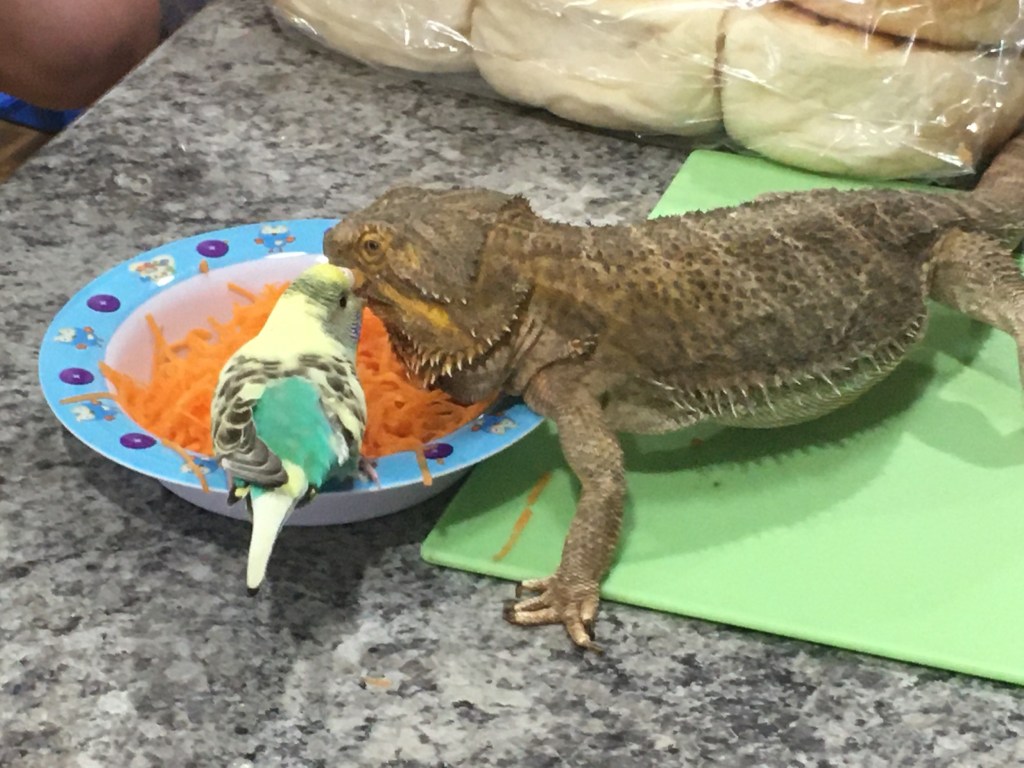
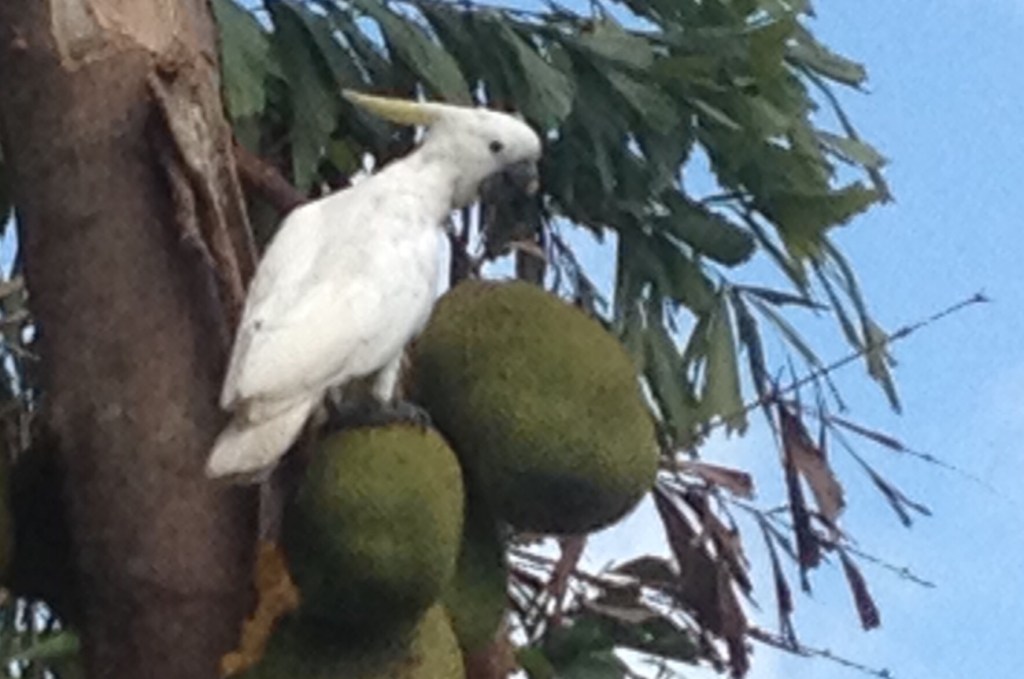

Cockatoo fly past.

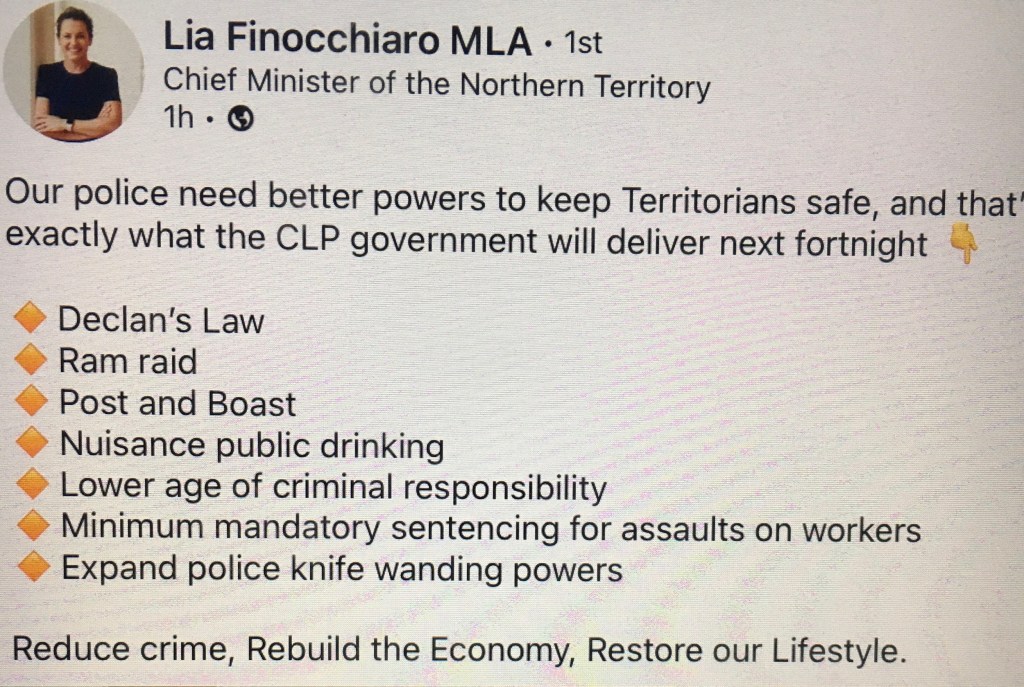
OVERSEAS STUDENTS THE PRIORITY
Australian universities are champing at their academic and financial bits, in frantic endeavours to have overseas students return to Australia. They are dead set keen to bend over backwards in order to have as many return as soon as possible and are looking at schemes to expedite their arrival .
This doubtful initiative had been spearheaded by the Charles Darwin University, with 63 students from four different countries arriving via a flight from Singapore. While students had to pay for their seats on the flight, their costs of being quarantined at the Howard Springs facility will be at the expense of the CDU.
Vice Chancellor Simon Maddock commented today that the average amount of money returned by each overseas student to the local economy is in order of $40,000 per year. The University is therefore happy to cover the $157,500 quarantine cost for the 63 students, because of their anticipated $2,520,000 contribution to the university and Territory economies.
This intake of students to the CDU is an icebreaking exercise. The Vice Chancellor and obviously the university board are looking forward to more arrivals. Sadly, this position is one that continues to further relegate domestic students as being unimportant, second class tertiary citizens – without the bags if money being jingled by arrivals from overseas.
I republish this because of history repeating
As a profession, teaching is at its most viable when members respect and support each other in a fully collaborative manner. The joys and challenges of teaching should never belong to those who remain in isolation from each other.
A strength of teacher education is the encouragement offered trainees to link with each other in discussion groups either in person or by discussion boards on Learnline . Observation confirms the help those preparing to teach can help each other on matters varying from assignment tasks to practice teaching rounds. Carrying quality communications habits into teaching beyond graduation is wise.
There is a misnomer that to share matters of challenge is a sign of weakness. That is far from the case. Those raising issues often find that colleagues are having similar issues or have developed strategies that help with mastery of similar difficulties. A problem shared is a problem halved.
Many universities have developed or are establishing alumni groups. Keeping in touch with colleagues through the university post graduation offers professional sharing opportunities.
Sharing through professional associations is recommended. There are maths, science, literacy associations among a host of others. Belonging to associations enables members to keep abreast of trends. Opportunities for personal professional development along with contributing to others through group membership is enriching.
I would recommend a consideration of joining ‘LinkedIn’. This site enables members to build up a global contact base with like minded people. Members can join specific interest groups, sharing global ideas.
Maintaining contact with the graduating peer group is another way of keeping in touch. Whatever the preference, keep in touch with others because that helps support both individual and collective strength.
I did some part time work around Tertiary Education. I was a casually employed marker. I became very worried about standards of assignments submitted by students for marking.
Background
My own tertiary studies were completed through the 1980s and 1990s. The drift in requirements for assignment presentation that have evolved from then until now are a distinct worry. Universities have the codes of assignment presentation and students are asked to be familiar with those. However it seems that conformity doesn’t really matter. Some of the things that have caused me concern as a marker are indicated.
Glaring Issues
* Many students do not cite or use compulsory course reference texts.
* Some students do not tackle the whole assignment requirement. If there are three elements, they may only complete one or two of these requirements.
* Title pages are generally not provided.
* There is often evidence in one case of material being lifted from a source but not discussed in detail or particularised as required. There is a generalised response to a specific requirement.
* Students waffle on with narrative discourse when a table or rubric would offer greater meaning and clarity to argument.
* Students tend to write on the side of brevity. When a 1,500 to 2,000 word suggestion is offered, many seem to struggle to 1,000 words.
* Some students write in a way that presumes markers can read their minds or have background on issues that should be elaborated and explained. That presumption can mean that students too are vague about issues and the strategy is one that covers the issue.
* Matters of word usage, paper layout, typing text, paragraphing techniques and double spacing of text are either untaught or forgotten skills. Papers are very hard to read.
* Casual markers are employed on a per hour basis. It is generally expected that an assignment will take around 20 or 25 minutes to read and comment upon. The way in which papers are presented and the need to offer advice about deficits makes this an impossible task.
I wanted to write about this difficulty and share it on my blog. It is a real issue and one I find quite confounding. I wonder whether I should worry about these things or am I just whistling in the wind?Posted
How old is too old to be a school principal in Australia?
In Australia, there is no official age limit for becoming a primary school principal. Age should not be a determining factor in someone’s ability to perform the role effectively. The key qualifications for a principal typically include relevant educational qualifications, teaching experience, leadership skills, and the ability to manage a school environment.
However, perceptions about age can vary. Some may believe that younger principals bring fresh ideas and energy, while others may value the experience and wisdom that comes with age. Ultimately, the suitability of a candidate for the role of principal should be based on their skills, experience, and vision for the school rather than their age.
Dear Readers
God help us all!
These sorts of ‘developments’ which are abounding upon us with ever greater zealousness and ferocity, make me glad to have already lived the bulk of my life.
Australia is on the way to hell in a handcart.
Sadly
Henry
Read this column in today’s ‘Australian’ newspaper
Attach:
Trauma’ guide for judges to go woke
EXCLUSIVE ELLIE DUDLEY LEGAL AFFAIRS CORRESPONDENT
Judges should be “trauma-informed” when dealing with Indigenous defendants and consider the “pervasive intergenerational effects of settler-colonialism” when presiding over them in court, a new 200-page guidebook endorsed by the country’s peak judicial body says.
In a clear indication of changing attitudes to how justice should best be achieved, the manual also includes a lengthy section encouraging judges working in specialist courts to consider aspects of the Islamic faith that offer “clear moral and ethical guidelines” when ruling on cases that involve Muslim defendants.
It also notes Muslim defendants may have “a sense of personal responsibility to react to world events, in the context of religious injunctions to support others of the same faith”.
The manual, commissioned by the NSW judicial watchdog and endorsed by the Australasian Institute of Judicial Administration, explores the idea of “therapeutic jurisprudence” – which is a new approach to legal research with the goal of reforming the law so that it has a positive impact on the wellbeing of defendants.
It also focuses on the physical and emotional “self-care” of judges, with recommendations of herbal teas, exercise and meditation. It says by “incorporating a variety of self-care strategies” into a routine, judges can “promote overall wellbeing to help cope with a challenging workload”.
In a section titled “the importance of being culturally competent” the guide lists attributes and experiences of people with different backgrounds, and stresses that judicial officers should be “trauma-informed” when approaching defendants of varying cultures. “This crucially includes an acknowledgment and understanding of a person’s individual and collective circumstances including the broader social, political and historical context,” the manual reads.
It says Indigenous communities are “still dealing with the pervasive intergenerational effects of settler-colonialism as well as the impact of successive generations of externally imposed government policies and discriminatory legislation which have marginalised, exploited, forced the removal of children and otherwise undermined First Nations communities”.
“The legacy of trauma and dispossession is interconnected with other aspects of First Nations disadvantage such as the disproportionately high incarceration rates for people both sentenced or on remand, substance abuse, social and economic disadvantage, poor mental and physical health and lower life expectancy and exposure to family violence,” the guide says.
The manual observes there is a “distrust of police, family and community services, health services and other non-Aboriginal-run services due to past and present policies that have caused significant trauma”.
“In terms of interactions with the criminal justice system, First Nations people are also significantly under-represented on juries in Australian criminal trials.”
Judges are instructed to prioritise “preserving positive connections and relationships with cultural and personal significance” when “planning orders in conjunction with any legislative framework”.
While the guide was created with specialist courts in mind – such as family violence, drug, mental health or Indigenous courts – the manual would be useful to “mainstream therapeutic interventions where appropriate”, including possibly family courts or civil courts.
Lawyer and psychologist Rhondda Waterworth, the author of the guide, said the techniques included were “designed to facilitate a different outcome for offenders, similar to a therapeutic engagement in any other setting, but with necessary limitations”.
The techniques included are “not designed for use in serious criminal matters, or to excuse offender behaviour or argue for judicial leniency”.
“Therapeutic jurisprudence and solution-focused judging do not promote leniency; indeed, offenders being held to account and receiving a just outcome – including imprisonment when warranted – is therapeutic in itself because it tells offenders that actions have consequences,” she wrote.
In another section, the guide identifies “potential sensitivities and sources of strength and resilience” for immigrant cultures which judges should bear in mind during proceedings.
It says Islamic teachings provide “clear moral and ethical guidelines” that “encourage prosocial behaviour and personal spiritual development, and discourage criminal activities”.
“These principles could help young offenders develop a strong moral compass and make better life choices, promoting rehabilitation,” the manual reads.
It also says the Muslim faith has strong “principles of justice” that focus on “reconciliation and making amends rather than mere punishment”. “This approach can facilitate the healing process for both offenders and victims, fostering a sense of accountability and personal growth,” the manual states.
It says it is “important” to show deference and politeness towards older Asian individuals, and says “maintaining harmony and avoiding embarrassment or loss of face is crucial in Asian cultures”.
“Criticism or confrontation in public should be avoided, as it can cause embarrassment and damage relationships,” it says. “This may make a court appearance a particularly shaming experience and make it difficult for an offender to participate fully due to becoming emotionally overwhelmed.”
Judges should also be alive to a “potential sensitivity” related to “the historical and ongoing impacts of colonisation, systemic racism, and the after-effects of the historical slave trade” on African defendants.
The guide also provides more practical tips to ensure the justice process can be a therapeutic experience for offenders and other parties, including the presence of support people in the courtroom or breaks in proceedings.
It also says it may be “useful” to avoid having a judge and an offender “facing each other head on” as it could evoke an “automatic, subconscious aggressive, confrontational emotional reaction from an offender”.
“It is useful to analyse how much influence you have, or would like to have, over the physical layout of the courtroom and the interactions and roles of other legal actors and the hearing present for these interactions,” the manual reads. “It could be useful to consider the positioning and orientation of the respective roles.
Therapy sessions are often conducted with seats at a perpendicular or 45 per cent angle from each other, as this is less likely to trigger a sense of being aggressed or confronted, and therefore the client is less defensive and more open to participating.”
The manual has a heavy focus on the emotional and physical wellbeing of judges, offering advice to avoid burnout and promote work-life balance. “When you run through your day, when are the energy highs and lows?
How are you dealing with any period of low energy?” it reads.
“Is it possible to consider replacing caffeine, chocolate (or other substances), with five minutes of directed meditation, high intensity exercise (such as stair climbing), or another intervention?”
The Australian, Thursday October 10, 2024
Why has the City of Darwin Council spent many, many thousands of dollars on a ‘memorial’ sculpture, which looks like an emaciated mango tree?
Why has the Council installed parking meters that will only accept credit card payment, and which are so far apart that those parking often have to walk a considerable distance from their parked vehicles to and from the meter?
Why does the Council plant trees that are never pruned or maintained, so they grow up to become quite hazardous to both traffic and pedestrians?
Why are councils loathe to focus on the basics of roads, rubbish, and vegetation maintenance and prefer to become involved in policy areas well and truly beyond the brief of local government?
You are getting old when you start talking about the burial places of predeceased family and friends.
You are aging when people appointed to key organisational positions are younger than your youngest child.
You are getting past it when the body will not respond to the mind’s request that you get up from your reclining chair and attend to work-related tasks.
THE PENULTIMATE DAY
He looks back down the years,
Reflecting I’d say,
On his prime ministership’s
Penultimate day.
The top job was his,
After Turnbull’s demise,
When gifted the party room’s,
Ultimate prize.
With the passing of years,
Both good and hurting,
The voters of Aus,
Find him to be wanting.
Too many blunders
Have caused him to fall
Political bluster destructing
A leader once tall.
Where to from here,
You wonder and say,
A bi-election is looming,
Where Cook landed that day.
What was the hardest personal goal you’ve set for yourself?
During my lifetime, I have faced many challenges and hopefully become stronger for surmounting the barriers I encountered.
For me, the biggest challenge and the most difficult confrontation faced was letting go when it was time to retire.
After more than 40 years in education, stepping away from work and stepping back was hard. It took a while but 12 years on from retirement, I feel this challenge has been mastered.
We all have to give way to others. That is an inevitability. It was a huge challenge – but no longer.
Should men swear?
AI’s response.
The question of whether men (or anyone, for that matter) should swear can vary based on personal values, cultural norms, and situational context. Here are some considerations:
Ultimately, whether men should swear depends on the context and their personal beliefs. It’s essential to consider the audience and situation when deciding to use such language.

Are men like roosters?
This is what AI said …
The comparison of men to roosters can be interpreted in various ways, often depending on the context. Here are a few perspectives:
1. **Symbolism**: Roosters are often seen as symbols of masculinity, pride, and vigilance. In this sense, one might say that men, like roosters, can embody traits such as confidence and assertiveness.
2. **Behavioral Traits**: Roosters are known for their crowing, which can be seen as a way of asserting their presence and territory. Similarly, some might argue that men can exhibit behaviors that assert dominance or confidence in social situations.
3. **Cultural References**: In some cultures, roosters are associated with fertility and virility, which can lead to comparisons with male traits in humans.
4. **Stereotypes**: The comparison can also highlight certain stereotypes about masculinity, such as being boastful or aggressive, which may not apply to all men.
Ultimately, while there may be some metaphorical similarities, it’s important to recognize the complexity and individuality of human behavior, which cannot be fully encapsulated by comparisons to animals.
I now think that many men are like roosters.





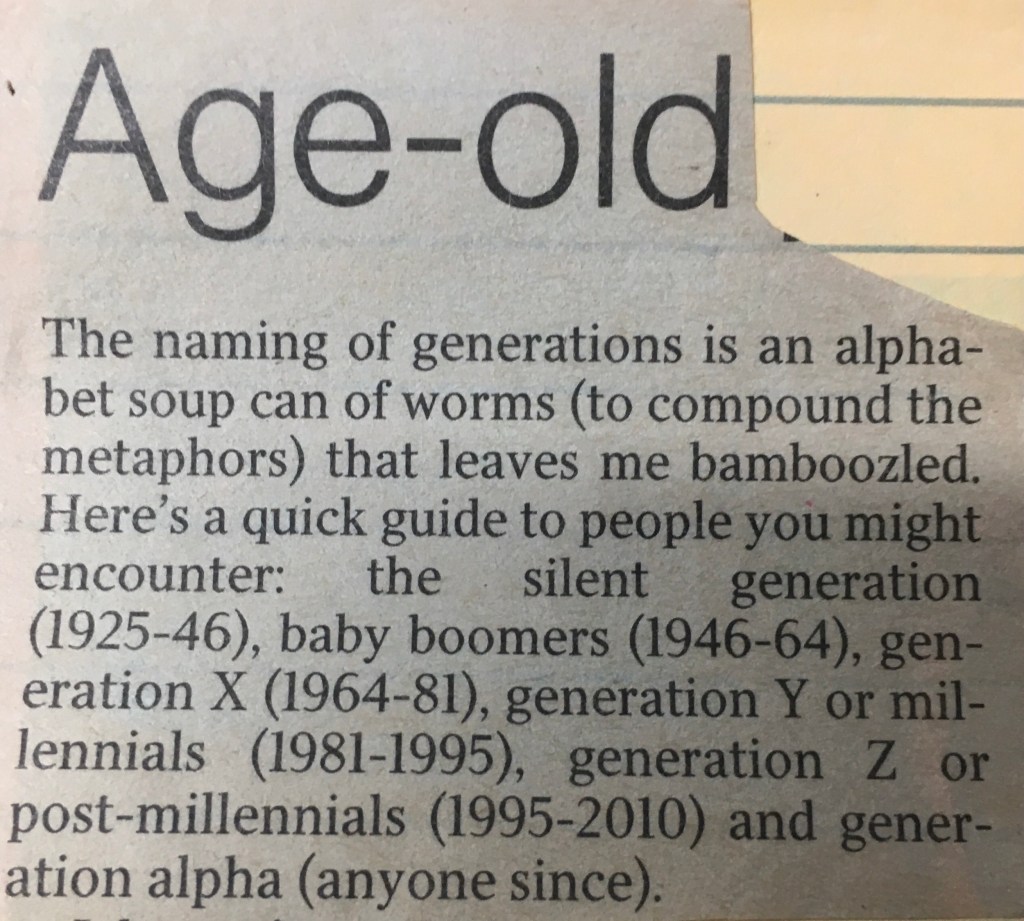


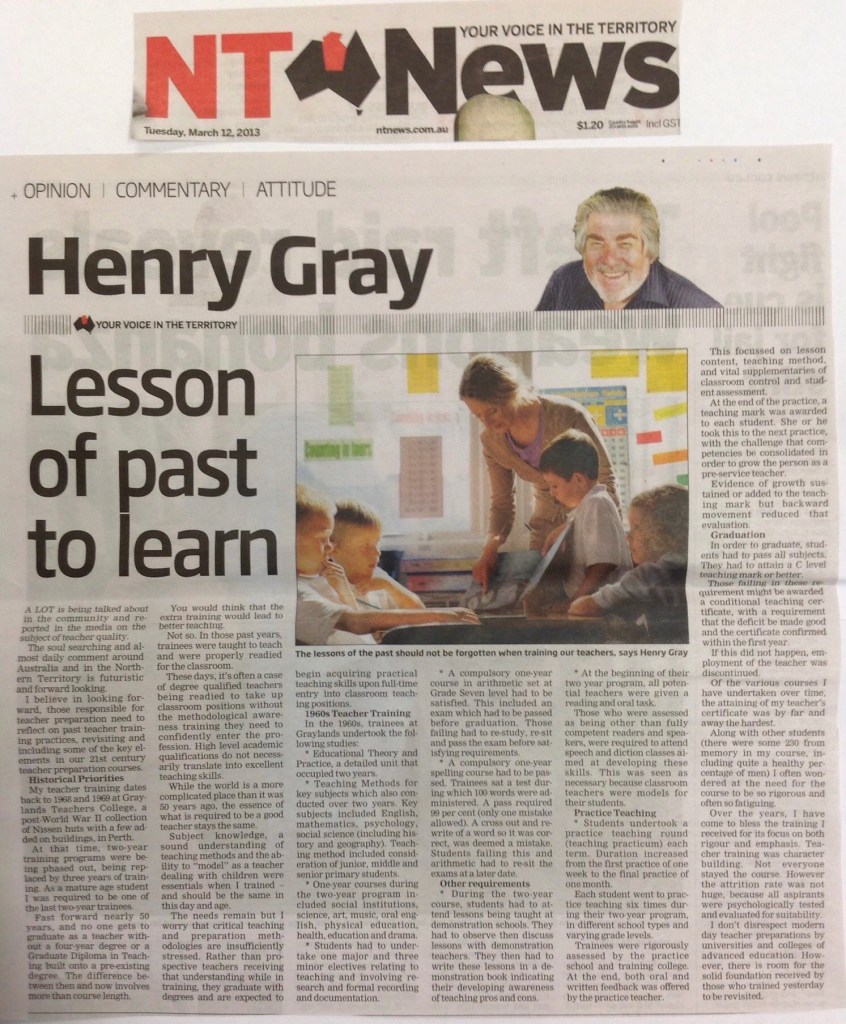
Seating arrangements in the assembly still being finalised.
The new (15th) Assembly sits on October 15, 2024.
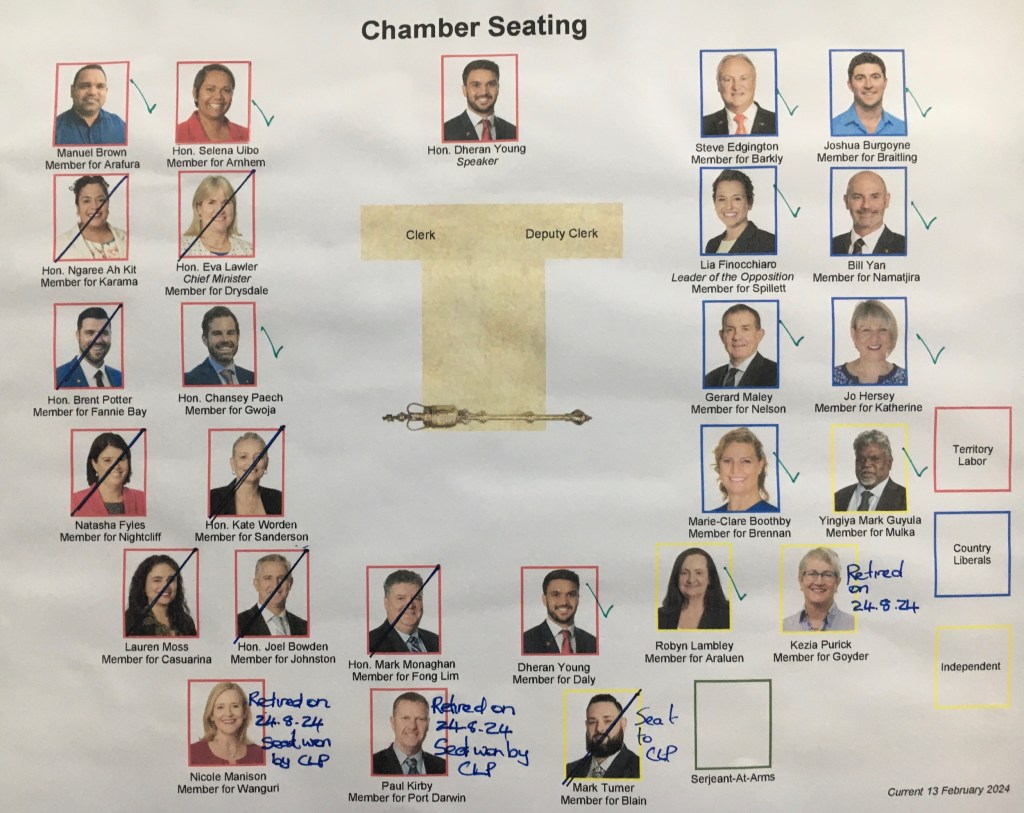
Labor were dismissed and the CLP elected.

Why is the Australian Government so insistent on promoting multicultural enclaves, while downplaying the importance of integration?
Why is defence so underplayed when it comes to recruiting personnel to build our forces and crew our assets?
Why is process deemed to be more important than function when it comes to establishing priorities within organisations?
Will China go to war against Taiwan?
As of my last update in October 2023, the situation between China and Taiwan remains complex and tense. China views Taiwan as a part of its territory and has not ruled out the use of force to achieve reunification. Taiwan, on the other hand, operates as a separate entity with its own government and democratic system.
The likelihood of war depends on various factors, including political developments, military readiness, international relations, and the responses of other countries, particularly the United States, which has a policy of strategic ambiguity regarding Taiwan.
While there are ongoing military exercises and increased rhetoric from China, many analysts believe that both sides may prefer to avoid a direct military conflict due to the potential for severe economic and human costs. Diplomatic efforts and international pressure also play significant roles in managing tensions.
It’s important to stay updated with reliable news sources for the latest developments, as the situation can change rapidly.
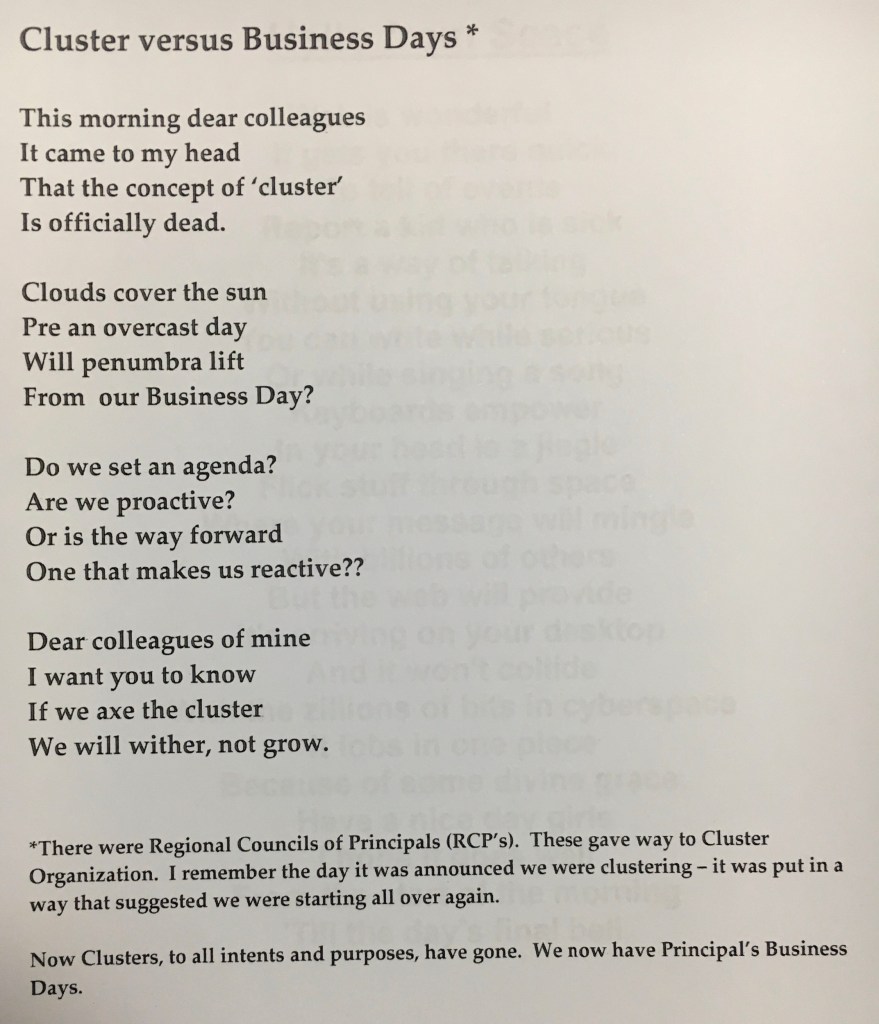


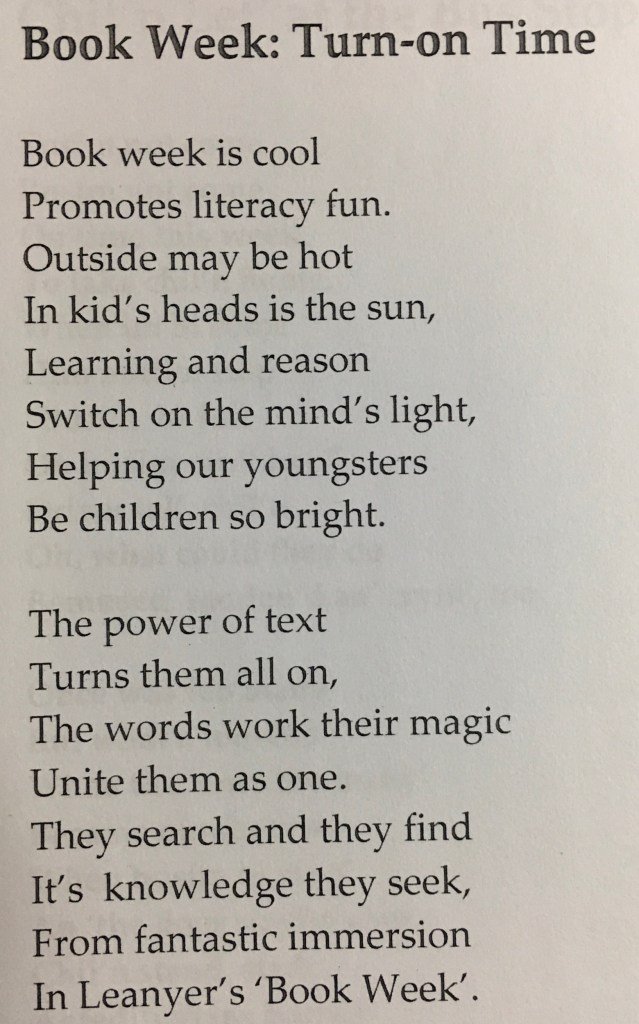
I like my possessions and appreciate the remembrances and the support that they bring to me. But if I was to lose them all, at the end of the day “My life lives within my mind”.
The material reminders might be gone but the memory there in of those things and then meaning would stay imprinted with in my mind for recall.
That would do until my memory was no longer and if it were to fade then I would not know what I have forgotten.
My name is Henry
It all counts for naught.
Where I was born
Was in the Land of Trespass
A place
Where my parents and theirs
Had no right to impose themselves
Or the generations that follow.
I am guilty by my birth
And guilty of contributing to the birth
Of children.
And they in turn have transgressed
By having children of their own.
What right have we
Those who have gone before
Our forebears
And those who follow
To have any purchase to title in this place?
A place where those who came later.
I wish Australia
Was back in the hands
Of Aborigines
With their own footprint
Being despised
As bringing shame
Because we interposed ourselves
Into this place of traditional sacredness.
How can we redress thisgrevious interference
The arrival of our forebears imposed
On the unhurried peace and tranquillity
Of this place
Before the trespass
Of 1788.
One positive is that to be indigenous was something of which to be ashamed and hidden. Transformative Australian thinking has changed this to the extent that being indigenous is an attribute to be highlighted and lauded.
I wonder whether part of the motivation to disallow abortion has to do with America’s population being reduced by the number of senseless killings happening during mass shootings. Is it all about rebuilding the population base?
I used to think they were there for the good they could do for others.
I now think that 99% of these people are there first and foremost for themselves alone.
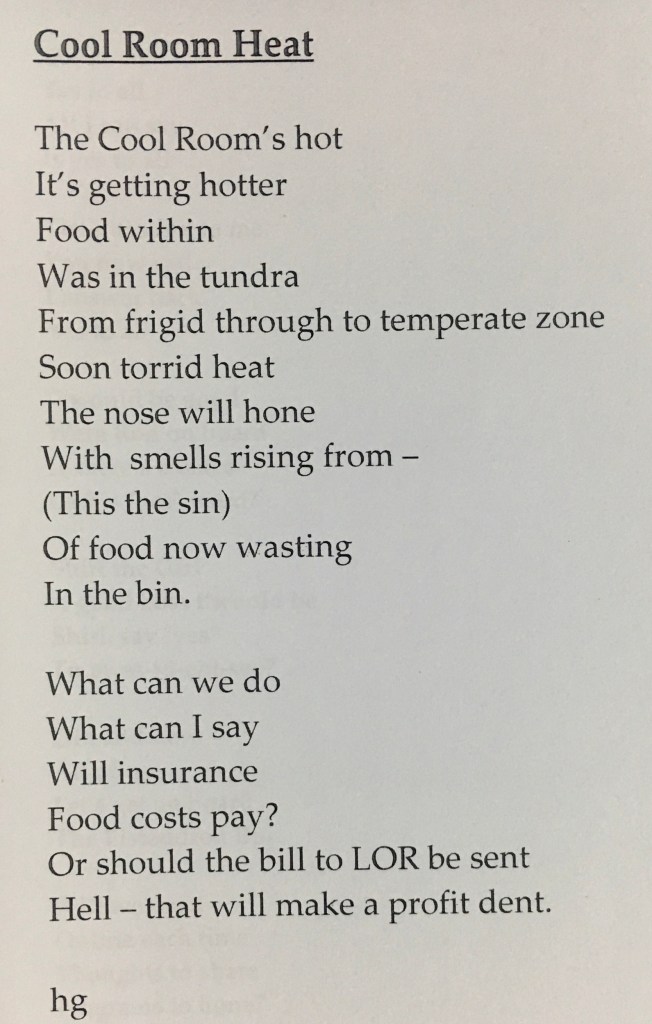
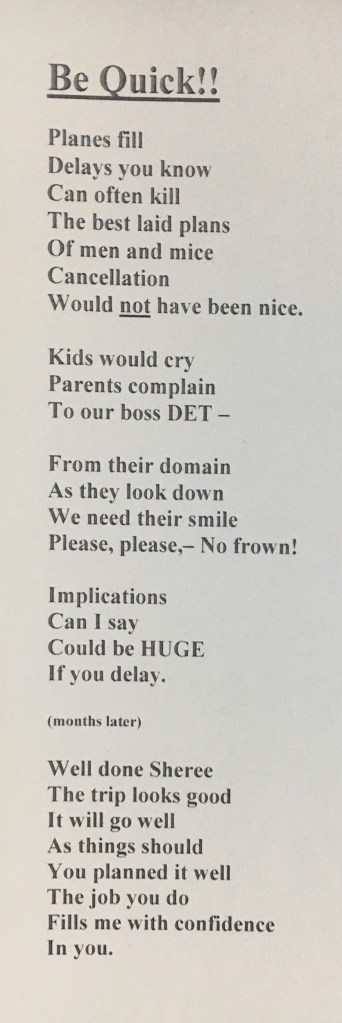
Residential aged care in Australia
The facilities that care appear to be in a minority. Most facility operators appear not to give a rats, beyond taking as much money as possible for the barest amount of care.
Too many of these care homes seem to be about making money and turning profits. The thought of being a victim held captive in one of these places does not bear thinking about. Finishing up in a decent and caring place is about accident rather than pre-planning and management.
How likely is it that China will Invade Taiwan?
AI RESPONDS:
The likelihood of China invading Taiwan is a complex and highly debated topic, influenced by various political, military, economic, and social factors. As of my last knowledge update in October 2023, here are some key points to consider:
1. **Political Context**: The Chinese government views Taiwan as a breakaway province that must eventually be reunified with the mainland, while Taiwan has its own government and operates as a separate entity. The political leadership in both places plays a significant role in shaping the likelihood of conflict.
2. **Military Capability**: China has been modernizing its military and increasing its capabilities in the region, which raises concerns about its intentions toward Taiwan. However, an invasion would be a complex and risky military operation, and China may weigh the potential costs and consequences.
3. **International Response**: The United States and other countries have expressed support for Taiwan and have commitments to assist in its defense. An invasion could provoke a significant international response, which China would likely consider in its calculations.
4. **Economic Considerations**: Taiwan is a critical player in the global semiconductor industry and other high-tech sectors. An invasion could disrupt global supply chains and have severe economic repercussions for China and the world.
5. **Public Sentiment**: The attitudes of the Taiwanese people toward unification with China are also important. Many in Taiwan identify as Taiwanese rather than Chinese and prefer to maintain their current status.
6. **Current Developments**: The situation is fluid, and developments can change rapidly. Diplomatic efforts, military exercises, and regional tensions can all influence the likelihood of conflict.
Overall, while the potential for conflict exists, predicting an invasion is challenging. Many analysts believe that China may prefer to pursue reunification through non-military means, such as political pressure and economic incentives, rather than through outright invasion. However, the situation remains dynamic, and ongoing developments should be monitored closely.
Response: I am not at all reassured about the future and feel the threat of war on the back of my neck.
It is only a matter of time before the ‘culture of division’ between groups in Australia, manifested in ever more aggressive rallies, will result in the deaths of people either protesting or resisting protesters.
Laws against the manifestation of support for terrorists are in place but are not enforced because the government is turning a blind eye.
Vile and disgusting rally behaviours are unsettling and jeopardising our country and societal decency.
Why is it almost impossible to buy apples that have not been bruised from the supermarket?
Why is Australia so complacent in the face of threats becoming ever more real toward the onset of World War Three?
Why so so many Australians hate the country that is supposedly their home?
I always feel out of place in informal situations, everything from conference dinners to important social functions particularly when I’m required to address the part in a suit and tie.
In these situations, my clothes always feel uncomfortable and I’m always worried that my belt is going to let go and my trousers are going to fall at least feel loose and threatening to do so.
With the passing of the years, my aversion to formality has reached a point where I no longer go out to any function requiring me to enter this field of personal discomfort.
These situations seem to me to me and to feel unnatural. As a retiree, it’s no longer beholden upon me do I have to go out very often in this formal way. In fact, in the last five years I’ve only been out in the formal context twice and on both occasions I was just ever so glad when the functions were over and I could come home and relax.
Formality makes me feel very uncomfortable indeed. That has been the case for the whole of my life. And it doesn’t get any better with age.
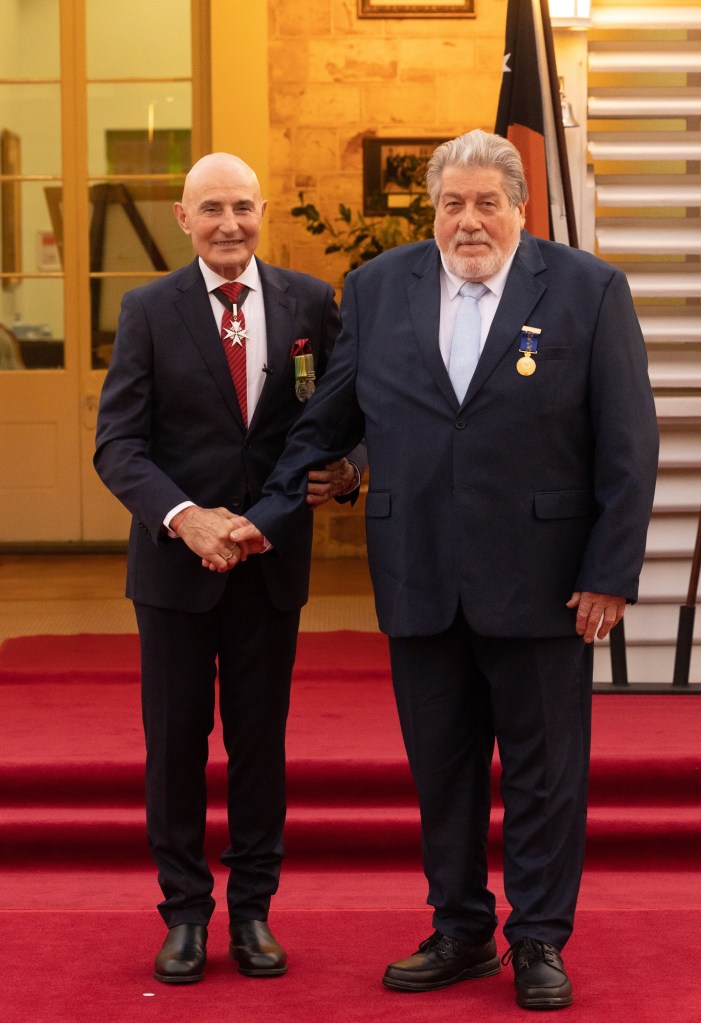
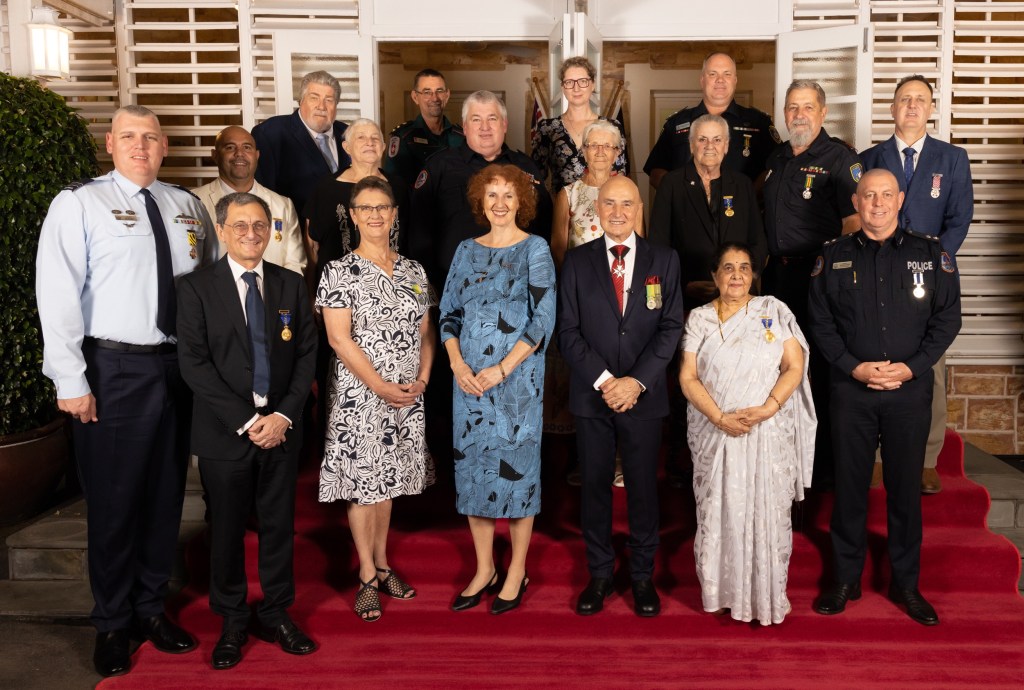
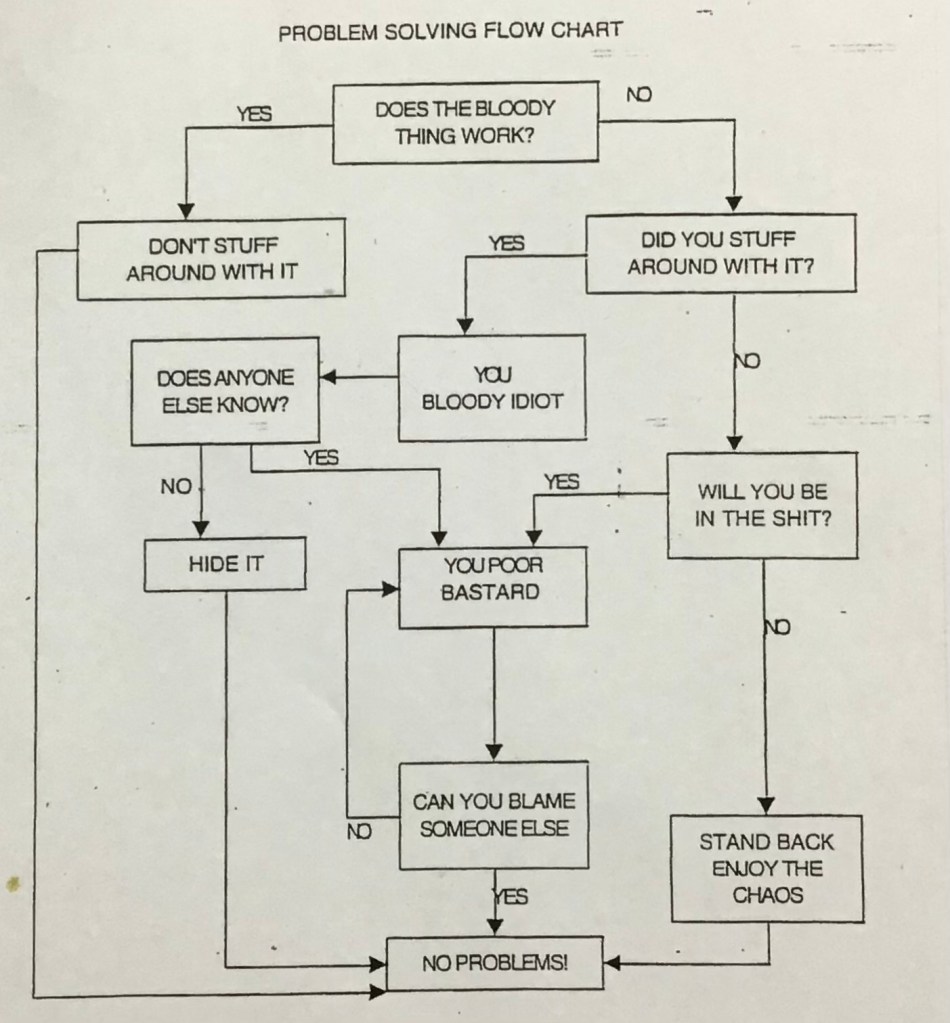

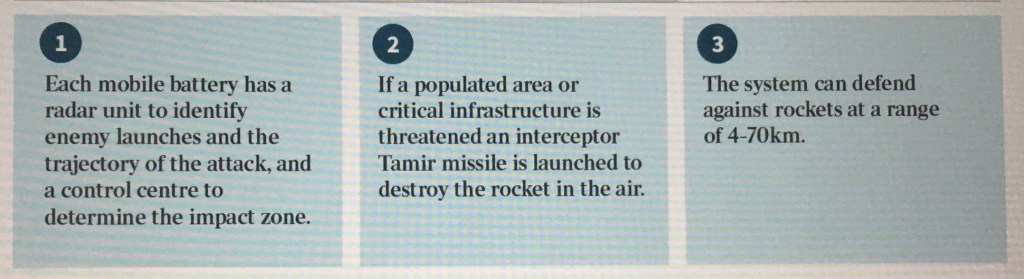

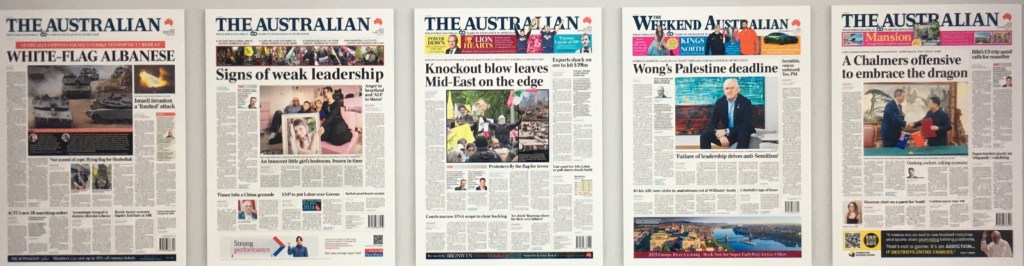
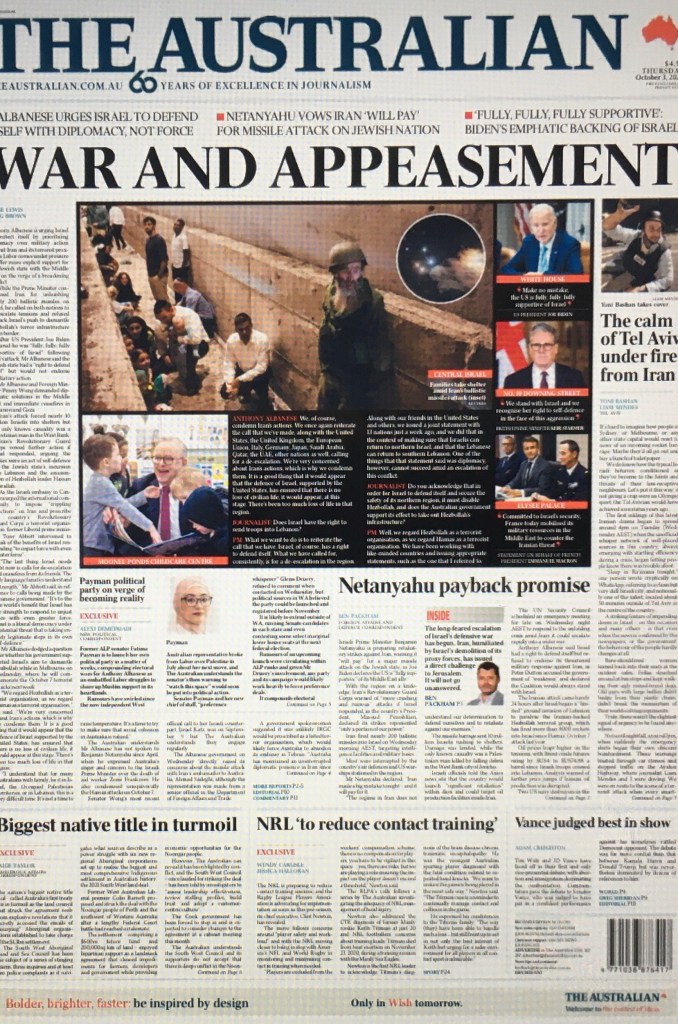
His powerfully positive, personally owned leadership brings daily blessings to us all. To every man, woman and child, to the old, middle aged and young, to those in cities, towns, farms and remote areas of this vast land.
He brings joy to us all.
How lucky we are.
I confess to using a laptop, an iPad and an iPhone. I do a lot of work on these. I don’t keep right up-to-date with every new series coming out or anything like that – my iPhone is still a 6S.
But without a computer and technological assistance in communication, particularly written communication, I am fine.
I do a lot of writing by hand. I keep a diary and have done it for the most part since 1970. I like to write by hand for it is important not to lose the skill.
If all of a sudden this Technology was not available, I would be fine. I go back to handwriting, to posting letters in an envelope with a stamp, to taking a bit of extra time to get things done, to go back to books rather than using the Internet for finding out things, to talking face-to-face rather than using the iPhone.
I would be quite happy to use hard currency – as I still do – rather than having everything on cards that I authorise through phone usage.
I could go on and on but won’t. However, I am very glad that I large part of my life was spent in a world of communication that happened before technology. If push came to shove, I would have other ways of communication. Sadly, I was born in recent years without technology and computers would be, sadly, lost.
(The sadness of Alice Springs)
What was:
A gentle breeze is blowing by,
Wafting clouds across the sky,
Birds fluff their wings in gentle breeze,
Sing joyful songs with happy ease.
Men playing cricket on the green,
Their noses polished with sunscreen,
Bowl, bat and field the ball,
Contentment reigns for one and all.
Neighbour dozes ‘neath his house,
Spouse tiptoeing like a mouse,
Buffing windows so they gleam,
Partners for life they are a team.
What is:
Sad it is the wider world,
Shuns the good with hate unfurled,
Alcohol floods – infusion reigns,
Scores of people with addled brains.
Lifted bans mean free for all,
Thefts and threats as people brawl,
People there are losing heart,
As the Alice tears itself apart.
Government’s in an awful bind,
Because the system they did unwind,
Shops are shut, the mall a mess,
Night fighting only adds to stress.
Residents have been sold a pup,
The city’s going belly up,
Almost too late to hear their cry,
Alice Springs about to die.
The nights once quiet,
Watched o’er by stars,
Now ears are burnt,
By hooning cars.
Governments it is time to wake,
How much more can people take,
The city abuzz with crime and sin,
With citizens entrapped therein.
After our August 24 election the hope is our new government can bring this situation under control.
My record to date.
6,020,248
total words analyzed by Gram-marly
since Mar 12, 2023


In the Northern Territory of Australia, and particularly in the Top End, we only have two seasons.
From October until the end of April is – technically – we have the wet season when most of our rain falls . From the beginning of May through until the end of September is the dry season.
There’s not all that much difference in temperature gradients between the seasons but during the dry, there is less humidity.
I am ambivalent about my favourite season. I like the wet particularly when it does rain. I also like the dry season when the humidity drops, particularly if the air is clear and smoke-free.
During the dry season between 50 and 60% of the Northern Territory gets burned out by bushfires so the dry season is often very smoky.
It’s hard for me to determine which I like the better – the wet or the dry. But I do like cold weather. To live in a cold place is something I would fancy but given where we live that is never ever going to happen.
Why is multiculturalism tearing apart the social fabric of Australia?
AI Responds
The topic of multiculturalism and its impact on the social fabric of Australia is complex and often debated. Here are some points that people might raise when discussing concerns about multiculturalism in Australia:
It’s also important to recognize that many argue in favor of multiculturalism, highlighting benefits such as:
The discourse around multiculturalism in Australia is multifaceted, with valid concerns on both sides of the argument. Rather than seeing multiculturalism as inherently problematic, it may be more constructive to focus on fostering dialogue, understanding, and integration to build a cohesive society while respecting and valuing diversity.
A further thought from Henry
Oneness and unity is NOT WORKING at the moment. Partisanship is pitting groups against each other. The Australian way of life is in tatters. The policies of government are shredding this country.
Is political power more ‘good’ than ‘bad’ or more ‘bad’ than ‘good’?
AI responded:
The nature of political power, whether it is more “good” than “bad” or vice versa, is a complex question that depends on various factors, including the context, the individuals wielding the power, and the systems in place. Here are some considerations that may help explore this topic:
Ultimately, the assessment of political power as being more “good” or “bad” may be subjective and can vary widely depending on personal beliefs, experiences, and the specific context in which power is exercised. Many argue for a balanced view, recognizing the potential for both positive and negative outcomes associated with political power. Effective systems of checks and balances, transparency, and accountability can help tilt the balance towards a more positive outcome.
‘This is worth further contemplation’ or “Is this worth further contemplation”
Is Australia in dire threat of warlike aggression from an overseas adversary?
AI Responded:
As of my last knowledge update in October 2023, Australia is not considered to be in immediate or dire threat of warlike aggression from an overseas adversary. However, the geopolitical landscape in the Asia-Pacific region has been increasingly complex, with rising tensions involving major powers such as China and the United States.
Australia has been enhancing its defense capabilities and forming strategic alliances, such as the AUKUS pact with the United States and the United Kingdom, to bolster its security in response to regional threats. The Australian government has also been focused on maintaining strong defense partnerships with countries in the region, including Japan and India.
While there are concerns about regional stability and potential conflicts, particularly in areas like the South China Sea, Australia has generally pursued a diplomatic approach to international relations and conflict resolution. It is important to stay updated with current events and analyses from credible sources for the latest information on this topic.
Why don’t I feel any reassurance about the subject?
Please write me a 250 word poem titled “The Indefatigable Adam”
Include:
He travels Australia doing good for and uplifting people.
He is super fit and encourages physical health and wellbeing in others.
He appreciates and looks for the good in everyone.
His great strengths are humility and empathy
He and the members of Balanced Choice unstintingly give of their time and energy. They are a 24/7 team.
He offers praise to others.
His support and advice is positive and uplifting.
He is ALWAYS contactable and available
Regardless of their race, colour, creed and beliefs, Adam treats all people equally – with due dignity and respect.
He does not espouse a good life; rather he lives and shows what a good life is to others.
Response:
The Indefatigable Adam
In sunlit lands where red earth meets the sky,
Adam wanders, a beacon, always nigh,
With heart unyielding, he travels afar,
Lifting souls, like a guiding star.
A champion of health, a figure so fit,
He inspires the weary, igniting their spirit.
“Let’s move,” he calls, with a smile so wide,
Encouraging fitness, a joyful ride.
With eyes like a lantern, he sees the pure light,
In every soul, finding hope shining bright.
His humility whispers, his empathy soars,
In the tapestry of life, he nurtures, restores.
Balanced Choice is his family, a tireless brigade,
With hands outstretched, they give without trade.
A 24/7 crew, united they stand,
Supporting each other, a passionate band.
Praise flows like rivers, from Adam’s sweet tongue,
He uplifts the weary, and praises the young.
His counsel, a treasure, like sunshine that streams,
Igniting the spark of a thousand dreams.
Race, colour, or creed, in love he believes,
Every heart worthy, respect he weaves.
Not just in words, but in actions, he lives,
A testament of goodness, the life that he gives.
Indefatigable Adam, relentless and free,
In the dance of compassion, he embodies decree.
A life brightly lived, a legacy grand,
In each joyful moment, love ripe as the sand.
A great deal is being made in Australia at the moment about the need for teachers to be direct and explicit in terms of the instruction that they give to students. The suggestion is that students learn better if the teacher and they have a primary relationship in terms of input from the teacher and response by the students.
The irony is that this used to be the method under which teachers Were trained in Australia up until the beginning of the 1970s. From there I mean it seems that we’ve gotten away from direct teaching and gone increasingly down the road of student-directed learning what would you like to learn which leaves Students in a situation of fuzziness when it comes to basic could meet of understanding in the areas of literacy and numeracy.
Proper teaching these days is also distorted by technological lines and other gimmicks that supposedly stand in the place of the teacher – so using computer technology and going online to find the answers to things and now of course using artificial intelligence to help in the shaping of responses to assignments.
Teacher directes learning has become almost anachronistic in some places.
We need to get rid of all the aids and the implements and get back to the simple teacher-people relationship with teaching and learning that is direct, explicit and proper. Students need to understand concepts and have head knowledge of key essentials.
Alas, I think that my wish might be flying in the wind. Not only are the students less able to learn than used to be the case – their teachers are less able to teach.
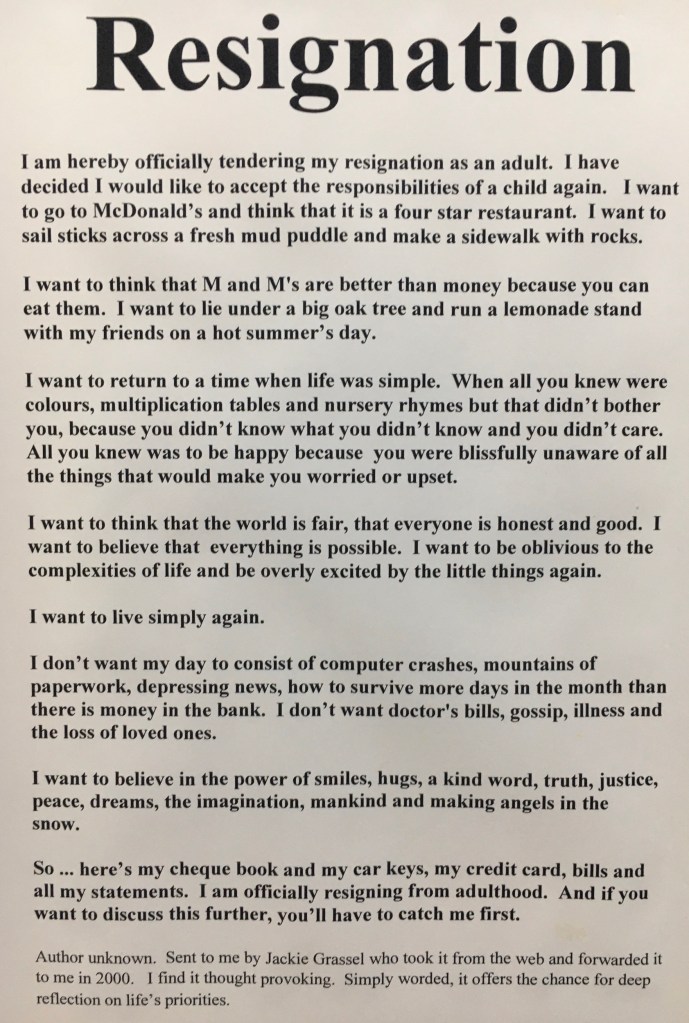
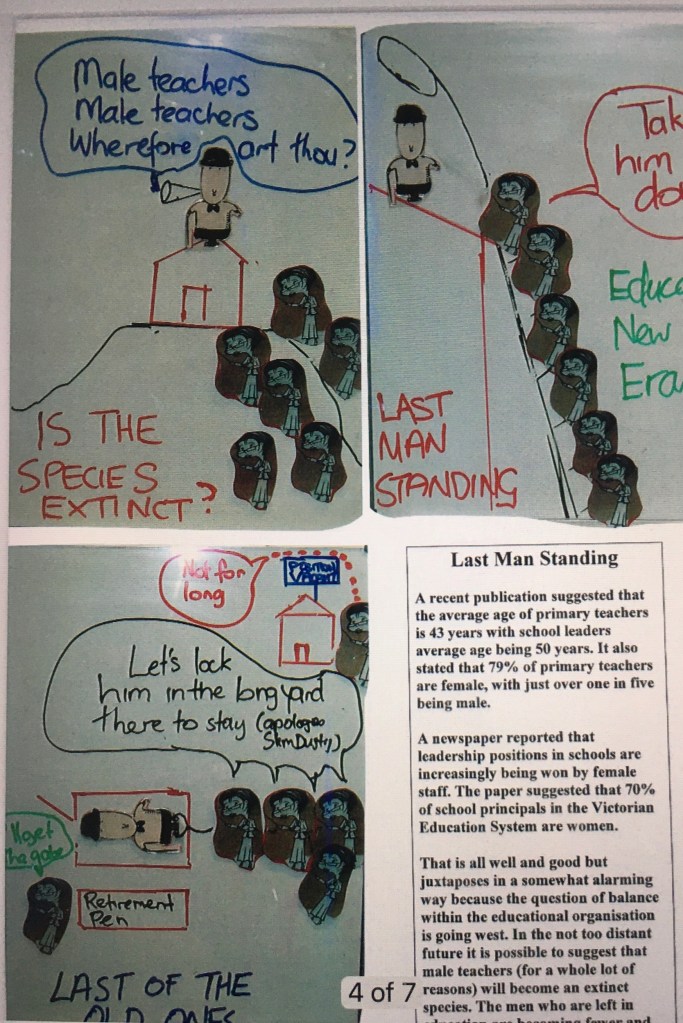
The way it has become.
RETIREMENT VILLAGES AND HOME OWNERSHIP
A QUESTION OF CONTROL
In retirement villages, do those taking up a home EVER OWN IT outright including their holding of the title deeds to the house?
In retirement villages, the ownership model can vary, and whether residents own their homes outright, including holding the title deeds, depends on the specific structure of the retirement village. Here’s a detailed breakdown:
1. **Leasehold Arrangements**:
– In most retirement villages, residents do **not** own their homes outright. They usually enter into a leasehold agreement, where they pay an upfront fee for the right to occupy a property for a set number of years or for life. The title deeds are held by the developer or management company.
2. **Freehold Ownership**:
– In some retirement villages, residents **can** purchase properties under a freehold model, meaning they own the property outright and hold the title deeds. This is less common but is an option in certain locations.
3. **Strata Title Properties**:
– Some retirement villages operate under a strata title model, where individuals own their units and can receive title deeds for their homes. They also share ownership of common areas with other residents. This grants more individual ownership rights compared to leasehold arrangements but still involves some cooperative governance.
4. **Co-operative Housing**:
– In cooperative setups, residents may own shares in a co-op that owns the property, giving them occupancy rights, but they typically do not hold title deeds to their individual units.
### Conclusion
In summary, it is possible for residents in some retirement villages to own their homes outright and hold the title deeds, but this is not the norm in most villages, which typically operate under leasehold agreements. Prospective buyers should carefully investigate the ownership model of any retirement village they are considering.
THIS SERIES WAS A CASE OF QUESTION TO AND ANSWERS BY AI
IT WAS MOTIVATED BY RECENT REPORTS ON THE ABC 7:30 REPORT
RETIREMENT VILLAGES AND HOME OWNERSHIP
A QUESTION OF CONTROL
Who actually holds and retains the title deeds to homes in retirement villages? Does the title deed holder have absolute control over the house allegedly ‘bought’ by the occupier?
In retirement villages, the holder of the title deeds typically depends on the specific ownership model of the village. Here’s how it generally works:
1. **Title Deed Holder**:
– In **leasehold arrangements**, the title deeds are usually held by either the developer or the management company of the retirement village. The residents do not hold title to the property; they have a right of occupancy based on the lease agreement.
– In **freehold arrangements**, the individual homeowners will hold the title deeds and thus have ownership rights to their property.
2. **Control over the Property**:
– If the title deeds are held by the developer or management company (as in leasehold arrangements), they indeed have significant control over the property. This can include decisions regarding maintenance, management fees, renovations, and, in some cases, even rules governing the occupancy of the property.
– If residents own their homes outright (in freehold or strata title arrangements), they have more control over their property and can make decisions regarding the home, subject to any applicable community or strata regulations.
### Conclusion
In summary, the title deed holder often has substantial control over properties in retirement villages, especially in leasehold arrangements. Residents should be fully aware of who holds the title deeds and the implications for their rights and responsibilities before entering into any agreements.
RETIREMENT VILLAGES AND HOME OWNERSHIP
A QUESTION OF CONTROL
Do those ‘buying’ a property, receive the title deeds to the homes they buy. Is ownership of the property purchased, transferred to them by their receipt of the title deeds?
In most retirement villages, residents typically **do not receive title deeds** to the homes they purchase. The ownership structure is usually different from traditional home ownership. Here’s a breakdown:
1. **Leasehold Agreements**: Residents usually enter into a leasehold arrangement where they pay an upfront fee for the right to live in the home for a set period or for life. They do not receive title deeds and do not own the land; the ownership remains with the developer or management company.
2. **Freehold Ownership**: In rare cases, a retirement village may offer properties under a freehold structure, where the buyer does receive title deeds and owns the property outright. This is less common in retirement settings.
3. **Strata Title**: This is another arrangement where residents might receive ownership through a title deed for their unit, along with shared ownership of common facilities, depending on local laws.
4. **Co-operative Housing**: Residents own shares in a co-op rather than individual title deeds for properties, so they do not own their home outright.
Conclusion
In summary, in most retirement villages, ownership is not transferred to the residents through title deeds. To understand the specific arrangements and ownership rights, potential buyers should carefully review their agreements and seek legal advice.
As an old man there are many things I should take into account. Sometimes I do and other times I am neglectful and that is not in my best interests.
I need to watch what I eat, take care of what I drink, and watch that I don’t eat too much in between meals and snacks.
I need to make sure that I do my share of domestic looking after because that has to be a part of my role.
I must make sure that I keep in touch with our nuclear family members who are a long way away – including our three children, partners, and our 10 grandchildren.
I must make sure not to neglect keeping up to date with what is going on in the world and staying abreast of trends and developments that can be so easily overlooked and forgotten, indeed discounted, when one becomes old.
I must make sure that I do a reasonable amount of physical activity so that I don’t suffer from wasted limb syndrome.
I must make sure that I do not lose my sense of humour.
Appreciating and respecting the viewpoints of others should always be a part of my demeanour.
I must try and enjoy life and not to virtually – as is my want – to be on the far side of the moon and in its darkness.
This is the second week of the Northern Territory schools break between term three and four.
A good number of years ago, between 2012 and 2016, the then Country Liberal Party Education Minister Peter Chandler understood that not everybody was wrapped with the way the school holidays were shaped within the territory.
We had six weeks at Christmas time, one week between term one and two, four weeks between semester one and semester two, and just one week between term three and term four.
There were no public holidays between the beginning of August and Christmas Day. At the end of term three, people had a little time to wind down before having to crank up for the start of term a week later.
Teachers, students, and those connected with school-based education suffered from fatigue that the weeks break Did not dissipate.
Perceiving this disaffection, Minister Chandler undertook research that suggested different modelling for the territory school holiday breaks.
Several models were proposed and Territorians asked to comment. After consultation the decision made was to change the 6-1-4-1 model to a 6-1-3-2 model.
A week was taken from the mid-semester break (four weeks back to three) and a week added to the break between terms three and four (from one week to two).
This change occurred during Minister Chandler’s time as Education Minister in the Mills/Giles CLP Government between 2012 and 2016.
Hence this extra week has been dubbed “The Chandler Week”.

.
I do not feel reassured about the security vetting of those being rushed into Australia willy-nilly at the behest of our Federal Government.
Too many hasty decisions in all sorts of areas are being made by ministers in the Albanese Government because they want to soft soap and persuade voters in their electorates, lest they be turfed at the next election.
This is a prime example of putting yourself ahead of our population’s wants and needs – both economically and in security terms – at large.
I hope this government has only one term of tenure.
On the last day of September,
I will remember that October is the month in the Northern Territory which stars as being “The Laksa Month” In this I will remember with respect a former Chief Minister Michael Garner who introduced the idea of this month onto the Northern Territory social and culinary calendar.







He was in Darwin to do his show this morning. I found out afterwards.
God bless Macca and the messages of goodness and uplift he brings to his live and radio audiences.
I did not realise he was in Darwin.
I do remember when he visited to farewell the 5/7 RAR force off to Timor Leste in September 1999.
That was 25 years ago and sadly, the troops had left the night before. That was also the night the authorities started demolishing the iconic old Darwin Hotel, Green Room and all.
Macca’s program took place at Stokes Hill Wharf and he was welcomed by Leanyer Primary School students. It was a significant morning and one I will always remember. School student council President Ellin Lede now Dr Ellin Lede heading up a significant commercial enterprise in Darwin, read a brilliant piece she had written about the transformative nature of positive goodness and its powerful impact.
So, memories of times long ago.
Henry Gray
A very important person said that .. “Giving 56 old army tanks to Ukraine would in no way diminish the capacity of Australian Defence Force.”
Very optimistic. A better thing to ask might be …
What defence force?
Assets wise and from the viewpoint of personnel, Australia, by comparison to most developed countries, is very thin on the ground – and in the air and at sea.
Glowing Good
When I feel down
In foul mood
I go to work
And glow with good.
For helping others
Through my work
Confirms my duties
I do not shirk.
It’s overnight
I feel the gloom
Of thinking idly
In my room.
My head fills with worry
And then I scare
For my own company
I do not care.
But working
Each and every day
For others
Drives the blues away
I give my time
And share my skills
When I do
The gloom it kills.
To work I’ll go
Each weekday
My work I love
That’s all I’ll say.
Why don’t runner’s up in the Australian Rules Football grand final receive consolation medals or rings?
AI Response
In Australian Rules Football, the tradition is that only the winning team in the Grand Final receives premiership medals and the premiership cup. The runner-up team does not receive consolation medals or rings as part of the tradition and culture surrounding the sport.
This practice emphasizes the significance of winning the premiership, which is considered the ultimate achievement in the league. The focus is on celebrating the champions, and the absence of consolation awards for the runners-up reinforces the competitive nature of the sport. While it may seem harsh, this tradition is part of what makes the Grand Final such a prestigious and highly coveted event in Australian Rules Football.
Additionally, some clubs and organizations may choose to recognize their players in other ways, but officially, the league does not provide medals or rings for the runners-up.
I can talk
Think
Reflect on the past, present and future.
I can sing
I can read
Tell stories in 1st, 2nd and 3rd person.
I can write
Wear good clothes
Dress for the occasion without overdoing things.
I can keep a diary
(And have done so since 1970)
I can recall in minute detail, past happenings.
I can remember names
Of past students
And enjoy some remembrances shared with them from time to time.
But
Above all
I can
And do
Listen.
Listening is such an important attribute and a quality and capacity I have AND USE.
Why do Aboriginal people who call the country their mother and who say the land owns them and they belong to the land, leave behind their rubbish and refuse on the ground, even if there are bins nearby?
AI RESPONSE
The relationship that Aboriginal people have with the land is deeply spiritual and cultural, often characterized by a profound connection and sense of belonging. However, the issue of littering or leaving rubbish can be complex and influenced by various factors:
1. **Cultural Practices**: In some Aboriginal cultures, the concept of waste and disposal may differ from Western perspectives. Traditional practices may not align with contemporary waste management systems, leading to misunderstandings about littering.
2. **Socioeconomic Factors**: Many Aboriginal communities face socioeconomic challenges, including limited access to resources, education, and infrastructure. This can affect waste management practices and the availability of proper disposal options.
3. **Community Engagement**: In some cases, there may be a lack of community engagement or awareness regarding the importance of waste disposal. Education and outreach can play a significant role in changing behaviors.
4. **Historical Context**: The history of colonization and its impact on Aboriginal communities can also influence behaviors. Disconnection from traditional practices and land management due to external pressures may lead to practices that seem inconsistent with cultural values.
5. **Environmental Factors**: In some areas, the natural environment may be perceived as resilient, leading to a belief that littering will not have significant consequences. This perception can contribute to the behavior of leaving rubbish behind.
6. **Community Norms**: In some instances, if littering is common within a community, it may become normalized behavior, regardless of the presence of bins.
It’s important to approach this topic with sensitivity and an understanding of the complexities involved. Engaging with Aboriginal communities to promote awareness and education about waste management can help bridge the gap between cultural practices and contemporary environmental stewardship.
Upshot: I still remain confused
How are the purple Beme Scooters in Darwin managed to have their batteries recharged – as they are parked and left everywhere?
In Darwin, as in many other cities where electric scooters are deployed, companies like Beme typically use a system involving local “chargers” or “juicers” to manage the recharging of their scooters. Here’s how the process generally works:
This model allows for efficient management of the scooters, ensuring that they are charged and ready for use while also providing a flexible work opportunity for local residents. The use of local chargers helps to keep operational costs down and allows for a more responsive service to the demand for scooters in the area.


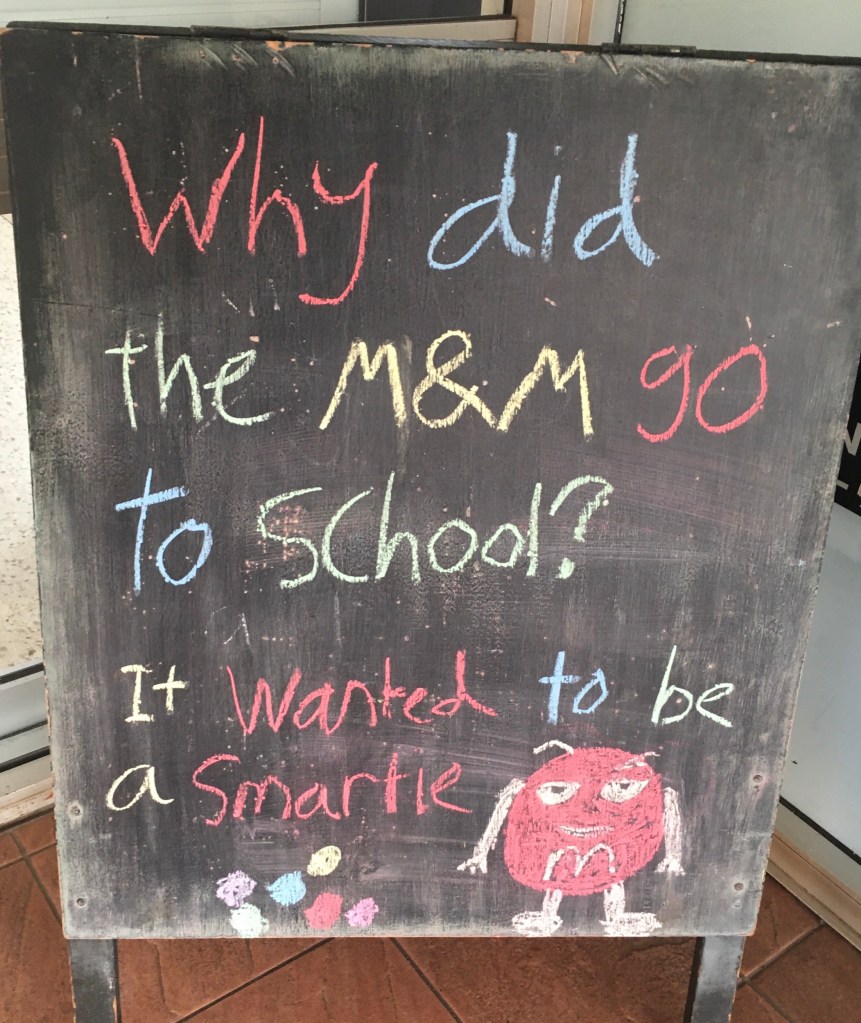





Should old men sing when walking or shopping?
Response:
Whether old men should sing while walking or shopping is a matter of personal preference and context. Singing can be a joyful expression and can enhance one’s mood, regardless of age. Here are a few considerations:
Ultimately, if an older man enjoys singing and feels comfortable doing so, there’s no reason he shouldn’t express himself in that way while walking or shopping.
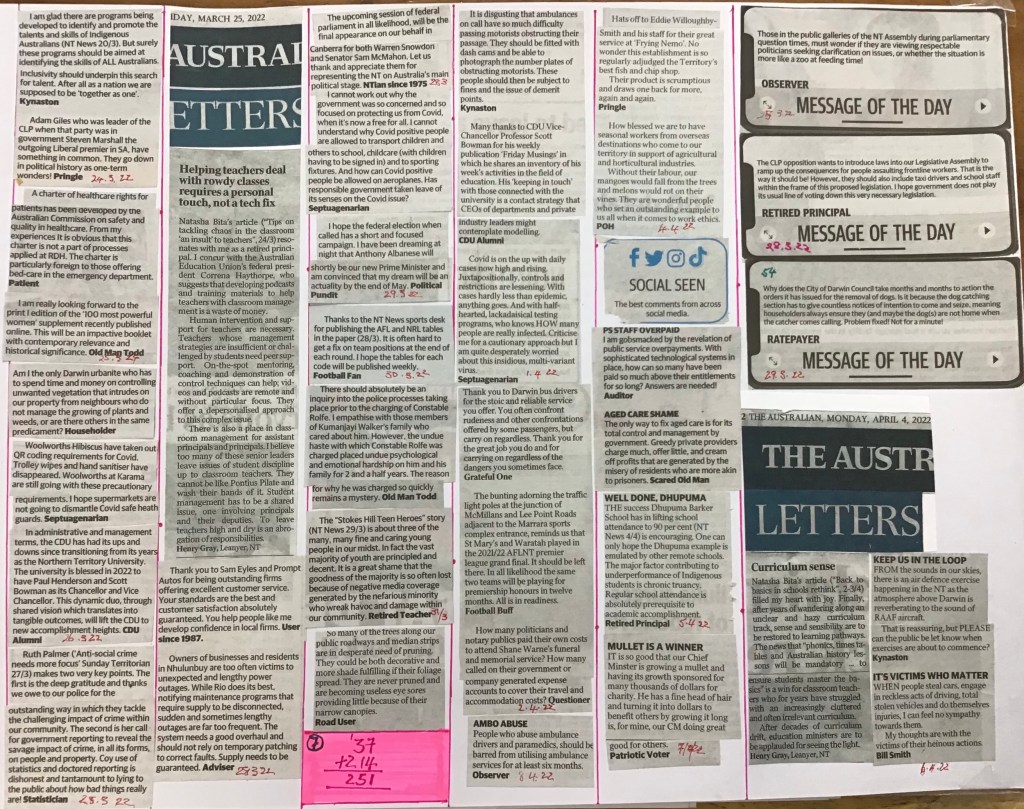

By and large I appreciate universities and the efforts made to extend tertiary opportunity to students both internally and externally. Universities have to work hard to balance their research and teaching arms, with funding being a constant consideration. Neither do I believe it unfair for students to contribute to their tertiary education through fees charged. Many governments underpin universities by advancing student loans which begin to be paid back when those graduates become earners.
However, my concern has always been the way the university play up the conferral of honorary doctorates.
This for mine discounts the honour due to hardworking students whose degrees come at great cost and substantial debt.
I feel a focus on honorary qualifications degrades the quality of their work and effort.
Sportspeople, politicans, community contributors and notary publics should never be recognised with honorary doctorates or conferred professorships. Universities who indulge in this practice for the sake of attaching a prominent person to the university discredit academe
AI RESPONSE
Predicting the future state of global peace is inherently complex and uncertain, as it depends on a multitude of factors, including political, economic, social, and environmental dynamics. Here are some considerations that could influence whether the world becomes more or less peaceful over the next twenty to thirty years:
### Factors That Could Lead to More Peace:
1. **Global Cooperation**: Increased collaboration on global issues such as climate change, health pandemics, and economic inequality could foster a more peaceful world. International organizations and treaties may play a crucial role in mediating conflicts and promoting peace.
2. **Technological Advancements**: Innovations in communication and technology can enhance understanding and cooperation among nations. For example, social media can facilitate dialogue, while technology can improve transparency and accountability.
3. **Economic Interdependence**: As economies become more interconnected through trade and investment, the costs of conflict may outweigh the benefits, leading to more peaceful relations between countries.
4. **Democratic Governance**: A trend toward democratization in various regions could promote peace, as democracies are generally less likely to go to war with one another.
5. **Conflict Resolution Mechanisms**: Improved mechanisms for conflict resolution, such as mediation and peacekeeping efforts, can help to resolve disputes before they escalate into violence.
### Factors That Could Lead to Less Peace:
1. **Geopolitical Tensions**: Rising tensions between major powers (e.g., the U.S., China, Russia) could lead to conflicts, particularly in contested regions like the South China Sea or Eastern Europe.
2. **Resource Scarcity**: Competition for dwindling resources, such as water and arable land, could lead to conflicts, especially in regions already facing environmental stress.
3. **Nationalism and Populism**: A rise in nationalist and populist movements can lead to increased xenophobia, isolationism, and conflict both within and between nations.
4. **Terrorism and Extremism**: The persistence of terrorism and violent extremism can undermine peace efforts and lead to cycles of violence.
5. **Climate Change**: The impacts of climate change, including natural disasters and displacement, could exacerbate tensions and lead to conflicts over resources.
### Conclusion:
The future of global peace will likely be shaped by a combination of these factors. While there are opportunities for increased cooperation and understanding, significant challenges remain that could lead to conflict. Ultimately, the trajectory will depend on the choices made by governments, organizations, and individuals around the world in addressing these complex issues.
Addendum:
And we know what will drive the leaders of nations.
If there ever was world peace, it has been consigned to history.
Should Australian universities encourage domestic students to pay course fees upfront ?
AI Response
The decision for Australian universities to encourage domestic students to pay course fees upfront involves several considerations, and the implications can vary based on the perspectives of different stakeholders, including students, universities, and the broader educational system. Here are some points to consider:
### Pros of Encouraging Upfront Payment:
1. **Financial Stability for Universities**: Upfront payments can provide universities with immediate cash flow, allowing them to invest in resources, facilities, and staff.
2. **Reduced Debt for Students**: Paying upfront can help students avoid accumulating debt through student loans, which can be a burden after graduation.
3. **Commitment to Education**: Students who pay upfront may be more committed to completing their courses, as they have already invested financially.
4. **Potential Discounts**: Universities might offer discounts or incentives for students who pay upfront, making it more appealing.
5. **Simplified Financial Management**: Upfront payments can simplify financial management for both students and universities, reducing the complexity of loan systems.
### Cons of Encouraging Upfront Payment:
1. **Accessibility Issues**: Many students may not have the financial means to pay large sums upfront, which could limit access to higher education for those from lower socioeconomic backgrounds.
2. **Increased Financial Pressure**: Upfront payments can create significant financial pressure on students and their families, potentially deterring them from pursuing higher education.
3. **Equity Concerns**: Encouraging upfront payments may exacerbate inequalities in access to education, as wealthier students would be more able to pay upfront compared to those from disadvantaged backgrounds.
4. **Potential for Increased Dropout Rates**: Students who pay upfront may feel pressured to complete their courses even if they are struggling, leading to stress and potential burnout.
5. **Impact on Student Choices**: Students may feel compelled to choose courses based on financial considerations rather than their interests or career aspirations.
### Conclusion:
While there are potential benefits to encouraging upfront payment of course fees, it is essential to consider the broader implications for equity and access to education. A balanced approach that offers flexible payment options, including upfront payments, payment plans, and financial aid, may be more effective in ensuring that all students have the opportunity to pursue higher education without undue financial burden. Ultimately, any policy should prioritize accessibility and support for all students.
It cost $13.00
A hat,
A black hat,
A black felt hat,
A black felt hat worn,
A black felt hat worn by,
A black felt hat worn by Taylor,
A black felt hat worn by Taylor Swift,
A black felt hat worn by Taylor Swift at,
A black felt hat worn by Taylor Swift at her,
A black felt hat worn by Taylor Swift at her Sydney,
A black felt hat worn by Taylor Swift at her Sydney Concert.
The hat,
The hat given,
The hat given to,
The hat given to an,
The hat given to an eleven,
The hat given to an eleven year,
The hat given to an eleven year old,
The hat given to an eleven year old girl,
The hat given to an eleven year old girl who,
The hat given to an eleven year old girl who is,
The hat given to an eleven year old girl who is a
The hat given to an eleven year old girl who is a number
The hat given to an eleven year old girl who is a number one,
The hat given to an eleven year old girl who is a number one fan.
The hat,
Which cost $13.00,
Is now conservatively valued,
At $500,000.
Watch,
It appreciate,
In value with,
The passing of time.
Once upon a time there was a kumquat tree that produced several crops of kumquats each year. The problem was in the harvesting. The tree was so tall no-one could pluck the fruit from its most prolific branches. It was beyond the enterprise and reach of everyone trying on conventional plucking methods. Occasionally Hosea would make with the ladder, and more infrequently he would clamber into the branches like a monkey. Otherwise the tree and its fruits were left to the mercy of birds, especially cockatoos. These intelligent birds made for the tree like homing pigeons, beak-handling and clawing the fruit. At the same time they stripped a good deal of foliage and fruits from the tree scattering the debris onto the ground. The concrete floor of the outdoor kitchen copped its fair share of mess.
It was true to say that the tree was a paradise for these birds.
Cleaning the kitchen and tidying the grounds and surrounds was a daily task for Jeleta. She devoted loads of time each day to restoring order.
No sooner was the place cleaned than the messing up started all over. The cockatoos seemed to be king pins.
Occasionally Jeleta looked up. She could see the cockatoos. They reacted toward her with mocking indifference.
The household decided that Keet the dog might, if tied up in the new outdoor kitchen, bark and frighten the cockatoos away. Keet was not at all keen on that idea and strained at his leash, trying to get away. Maybe he thought the cockatoos would bombard him with kumquats, bird droppings or that being tied up to bark was undignified for a senior canine.
Fortunately Skeet and Geet had come up for Christmas. Having heard of the cockatoo challenge, they brought with them what they thought would be the ultimate deterrent. It first required the hammering of three stakes into the ground adjacent to the kumquat tree
Geet and Skeet made sure the stakes were tied together and securely positioned. Geet then went to get what she hoped would be the ultimate cockatoo kumquat tree invasion deterrent.
The new and untried artefact was duly brought back and mounted on the stake. This introduced, fierce looking but inanimate bird cut a fearsome disposition.
OWL a prototype lookalike and fearsome nocturnal bird was installed. Owl’s job was to protect the kumquat tree, its foliage and its fruits.
Owl’s eyes were fearsome, his beak sharp and his very essence one of alertness. Surely this realistic looking scarecrow would be more than a match for those pestilential, fruit destroying, foliage stripping cockatoos.
Owl surveyed the scene unblinkingly. Geet, Skeet and Jelete hoped he would be more than a match for the cockatoos. He sat and surveyed all that was before him.
But ……
Owl was looking in the wrong direction. He had his back to the tree! So the cockatoos were able to make whoopee of the situation, carrying on as if Owl wasn’t there.
After some days, the penny dropped on the collective perplexity at 188 as to why Owl was such an ineffective decoy. It was not possible to reposition Owl’s torso in its completeness because he had been firmly set on an immovable platform. So the next best option was employed.
Owl’s head was twisted in such a way that, although facing forward, he was in fact looking back at the tree. Had he the capacity to think historically, Owl may have well felt like Lot’s wife in ancient times.
Notwithstanding this unusual postural pursuit, Owl looked back as vengefully as he had when looking forward.
There was one significant anatomical difficulty posed by Owl’s cranial re-positioning. The degree of difficulty those at 188 had with turning his head, meant that only one eye could actually focus on the kumquat tree. The other roamed the backyards of nearby neighbours.
A further impediment compounded the situation. Owl had a very stiff neck, so stiff it could not be vertically inclined. Unable to look up, Owl could only look straight ahead. This horizontal perspective gave him a clear if one-eyed view of the kumquat tree trunk. However he could not see what was happening in the tree’s upper branches foliage and fruit levels.
Safe from Owl’s line of sight, the cockatoos continued to frolic, feast and throw residue down onto the ground and into the kitchen. Could he look down, Owl would have be appalled at the ground level mess created by these birds.
It seemed that all Jelete could do was to carry on cleaning. Was this to be her never ending story?
A LITTLE OLD WOMAN And THEIR PACKAGING SERVICE
Once upon a time, the daughter of a little old man and a little old woman, summoned their help. She had commissioned the printing of hoardings displaying the prices of goods to be sold in their cafe. The boards had finally been printed and were ready for dispatch to a distant point of the NT. They would be sent by weekly barge service.
The daughter was reassured that everything would be done by the printer to ensure the boards were delivered to their far distant destination in good order. They were important for advertising purposes and cost several hundred dollars to produce.
Notwithstanding reassurances offered, the daughter had a premonition that all might not be right. So she asked her parents to visit the printer, arranging to receive the boards if this was necessary.
Upon arriving at the printers, the little old man discovered the boards to be ‘bare’. They were not wrapped. The little old man thought that intervention might be wise. Dispatching the three bare boards without wrapping seemed an unwise option – but not one seemingly apparent to the most prominent printers in Darwin.
The little old man and woman took the boards home in their car. The boards were SO BIG that it took some imagination to manoeuvre them into the vehicle. Once home, the couriers cleared their table and took the boards upstairs to rest on its timber surface. They were ever so glad their table was large.
The two looked at the boards and felt a little daunted. How to prepare these fragile statements for a journey of hundreds of kilometres across rough seas on a shipping barge. (Shipping was the only option because the boards exceeded maximum size for posting).
Nothing ventured, nothing gained. They set about the task.
Bubble wrap was the first order of the day. Metres and metres and square metres of plastic bubbles enveloped the boards and were held in place by unbelievable metres of tape.
Whew! After all that, they needed a long spell and an overnight rest.
Next day, it was up and at it again. The barge to Gove was accepting freight the next day, in readiness for sailing the day after.
But first, a trip to Bunnings to buy plywood timber, that needed trimming to almost the exact size of the menu boards. Trimmed, then home to Leanyer to await their usage.
The table was laid with a cloth (a chair cover), in readiness for the reception of the plywood protection.
What followed was hard work. It took some doing for the daughters parents, no longer as supple and dexterous as ‘once upon a time’, to enclose the boards into their protective casing. But it was done. And done to a ‘T’. The package (to date) was gigantic but neat, secured by metres of tape.
Surely this handiwork was worth admiring.
But there was more to be done. That package (with the boards expertly anchored by tape to the backing ply) was still someway from being a complete work.
There was a need for brown paper. Lots of brown paper. The package was wrapped and taped with one paper skin, then wrapped and taped with a second paper sheath.
Now, the package was really secure. It looked as if it would withstand its journey to Gove.
Looking at the package, the little old man and the little old woman spoke with each other.
“Label time”.
Not being given to neat writing, the little old man deferred to his wife’s more professional calligraphic skills. And shortly thereafter, the package was clearly addressed and readied to go.
Job done. Into the car and out to the barge for ‘tomorrow’s shipping’.
The last news is the best news. The boards have arrived and been fastened into place on a wall of the Peninsular Bakery and Cafe.
Yes, Yes, YES!
The boards are up and are selling their message.
I like many brands. Best sent by picture if OK.

The Value of brands
Brands are good
Oh me oh my
They show this old man
What to buy.
So many products
Spoiled for choice
Too little, too much
Which is the worse.
Some of their jingles
Turn me on
They are such fun
I sing along.
Brands show the way
‘Bout what to buy
Without their guidance
I’d sit and sigh.

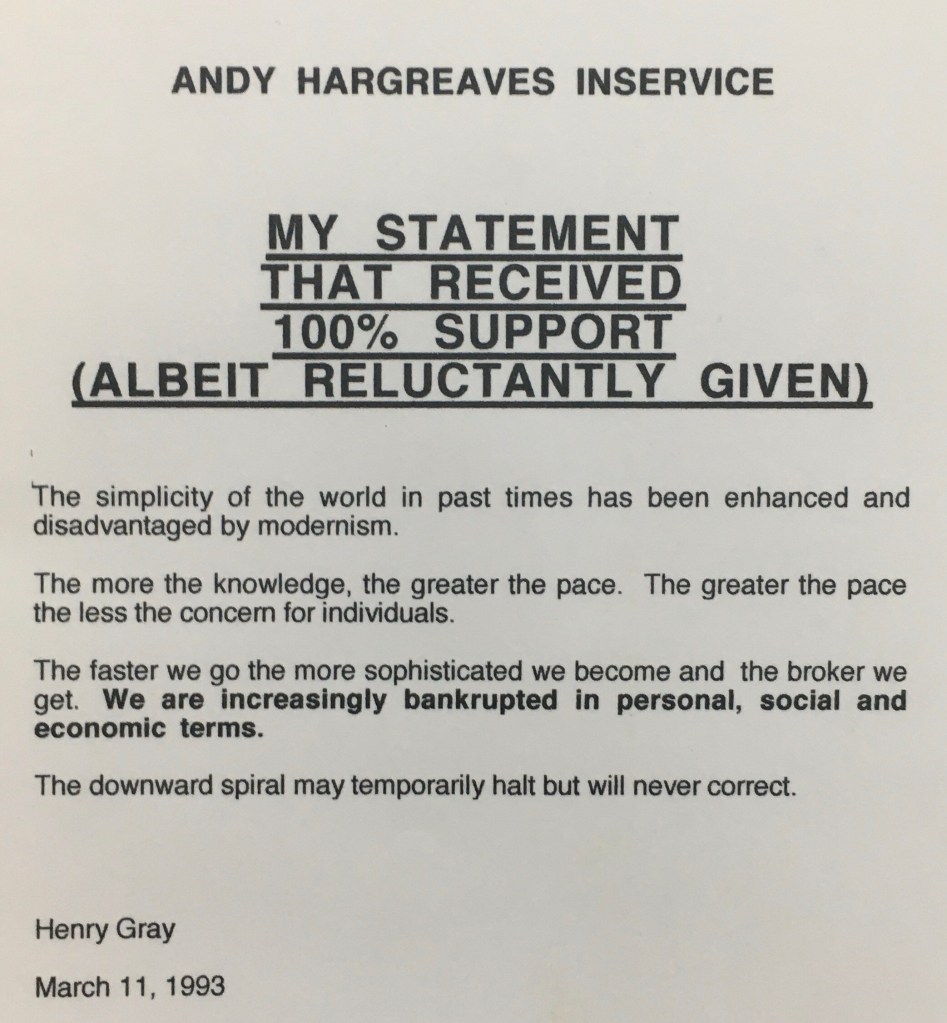
Dear Readers
I am closing on age 79 and really starting to feel the years.
As a child, adolescent and as a young man growing up, I was really scared about dying. I remember thinking that if I made 54 at the turn of the century, I would be doing well.
Nearly a quarter of a century later and with children closing on that age, I wonder when too many years leads to an excruciating existence.
I fear losing physical capacity and mental acuity. I fear the onset of faltering voice and am horrified by my aging and wrinkling skin, which is fast losing elasticity and, therefore, hanging on my limbs.
I am no longer afraid of dying and want to depart this life on my terms and without being a burden to others. I’d definitely like to pass over by the respectful method of euthanasia, but here in the NT of Australia that is not an option.
Where does that leave me?


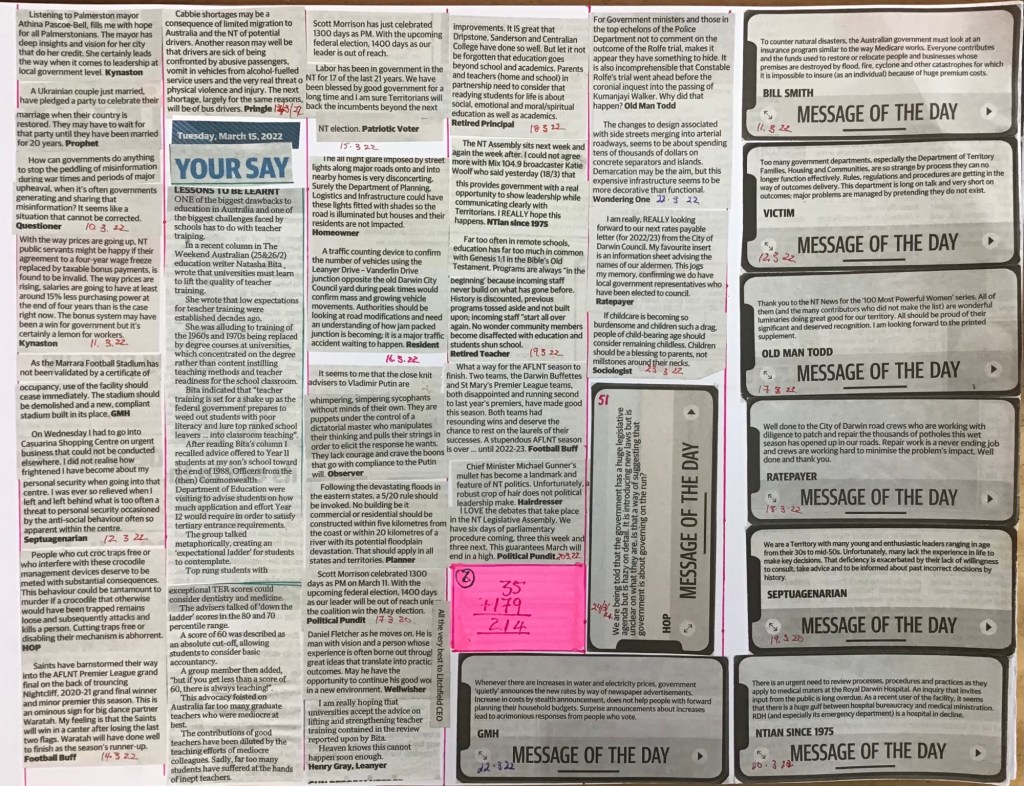
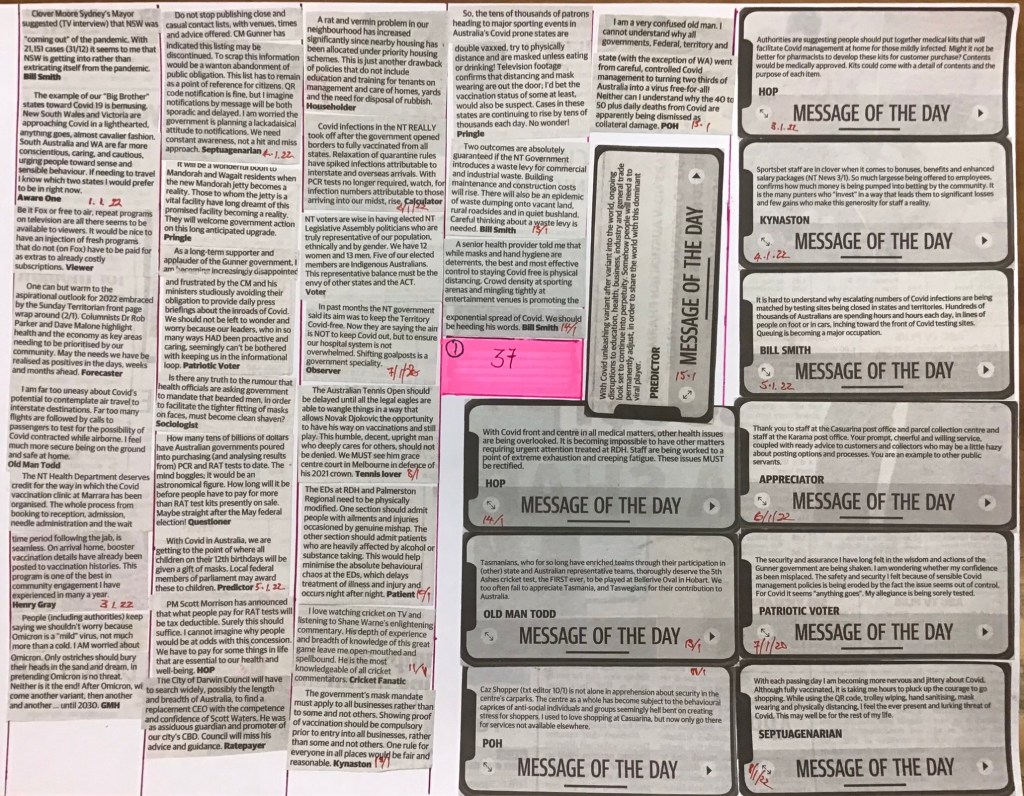


The first sitting of the Northern Territory Parliament under the new Finocchiaro Government will begin on October 15 and run for two weeks, with the government saying it will
That is all in the first week of the new parliament.
Oversights in the past?
Legislative sense at last.
How old is old for a man in Australia?
Response
In Australia, as in many other countries, the perception of what constitutes “old” can vary based on cultural, social, and individual factors. Generally, people might consider a man to be “old” when he reaches retirement age, which is around 65 years in Australia. However, many people remain active and healthy well into their 70s and beyond.
Statistically, life expectancy in Australia is around 80-85 years, so many would not consider someone to be “old” until they are in their late 70s or 80s. Ultimately, the concept of being “old” is subjective and can depend on health, lifestyle, and personal perspective.
Russia don’t mind, Russia don’t care,
About war’s destruction, And people’s despair,
Wrecking of cities, Pockmarking the land,
Confirms that Russia, Has a hard, hurting hand.
Slaughter don’t matter, Their point to make,
It matters not, that their claims are fake,
Little by little, They’ll claw back the past,
‘Till Russia becomes, ‘United’ at last.
The countries that fled, Their future has gone,
Back to what was, When Russia has won.
I predict that in times to come – and possibly before 2050 – Australia will have a Muslim Prime Minister and that there will be suburbs and areas in which Sharia Law is enforced.
That will happen because state and territory governments will be increasingly made up of those of the Muslim faith who have been voted into office.
That could all be hastened by the apologist way in which so many Australians demonise our country and its values.
Recently our local newspaper ran a survey to determine the most popular and in demand mobile food vendor in Darwin.
I have never tried his product, I have always been fascinated by the Potato Man and the dedication he brings to the job that he does. He has been the potato man for many many years.
So I upheld the Potato Man and I voted and voted for him and wrote notes to the online site promoting the Potato Man as the very best.
He didn’t win unfortunately – But apparently came a very close second. I am glad that the Potato Man gained that recognition.



I recently sat through a Welcome to Country offered at an NT Parliament House library awards function.
The ‘Welcome to Country’ which is seemingly compulsory, went on for at least 15 minutes with great attention to minute detail provided by a person who told us this was her fourth welcome to Country ceremony/presentation for the day.
The two hour program included individuals presenting awards who, each in turn, offered their own personal recognition to the Aboriginal group who came before us.
Interspersed through the events of the evening were references to and inferences about how detracting were those who came to this part of the Northern Territory. No mention of anything positive or beneficial accruing to the Aboriginal predecessors of the region by people who came after.
At the end of the evening, I left feeling like an imposter, someone who was trespassing in a country to which he had no right or entitlement. I felt shamed by the fact that I had been born in Australia.
But in leaving, I was glad that in my four decades of school leadership, I NEVER EVER engaged in any ‘welcome to country’ acknowledgements at my schools.
For mine, we were all ‘together as one’, and differentiation would have been anathema. I am, you are, we are ALL part of Australia, Australians together.
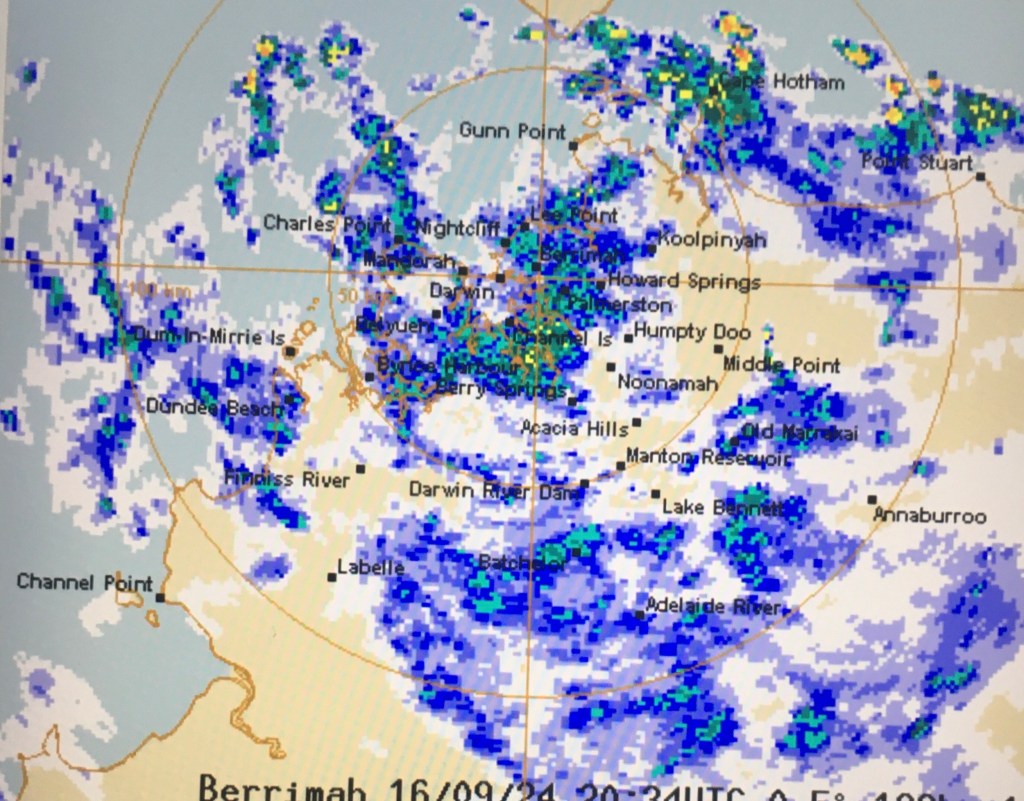



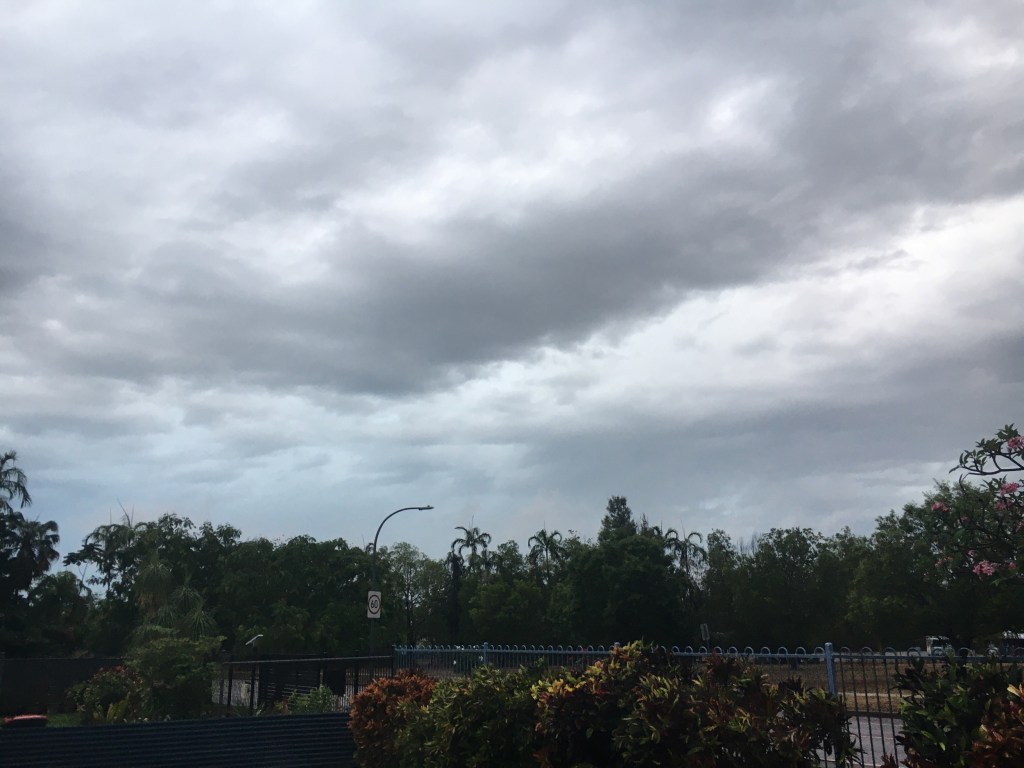



I sometimes reflect upon the statesmanlike qualities he brings to the leadership role he so ably fills. Our PM is the consummate diplomat. All world leaders anticipate and appreciate the wisdom of his utterances. His powerfully positive contributions as our leader enrich and uplift Australis in the eyes of the rest of the world.
He ALWAYS speaks purposely and definitively
The Seekers were my very favourite singing and instrumental group. They were just the best
Their album “The Carnival is Over” was my favourite collection. And still is.
The Seekers, so humble and so very inspirational.

This morning, while showering, I was thinking about some of the essential attributes and decisions our Prime Minister has taken. Decisions, actions and outcomes place him in a critical position on the world’s [political stage.
These are some of the ‘special remembrances’ that come to mind.
How wonderful it is and how blessed I am to think such thoughts. Or not?

I am 78 years of age and sh.t scared of becoming a victim of the Australian-aged care system.
I think of aged care as being a shark tank into which people who are old and frail can be tossed. In and forgotten with all independent decision making being ‘delegated’ into the hands of others.
Inquiry after inquiry and Commission after Commission have confirmed the obvious. Non-compliance with standards is far too common. There seems to be a falsification tendency that exists within the system.
Aged care costs plenty but care in far too many places seems to be minimal. Now the Australian Government is about to increase the cost contributions those entering aged care have to contribute.
Too many people going into nursing homes become shrouded in blankets of sadness that smother them and their families
Why, when they are cross, do certain people attack vehicles and smash windows, inanimate objects taking no part in the altercation?
When individuals express anger or frustration by attacking inanimate objects, such as vehicles or windows, it can be attributed to several psychological and social factors:
1. **Displacement of Anger**: People often experience emotions that they may not feel comfortable expressing directly towards the source of their frustration. Displacing that anger onto inanimate objects can provide a temporary release or outlet for their feelings.
2. **Symbolic Representation**: In some cases, the object being attacked may symbolize something larger, such as societal issues, personal grievances, or a sense of injustice. For example, a vehicle might represent wealth, privilege, or authority, and attacking it can be a way to express discontent with those concepts.
3. **Immediate Release of Tension**: Physical aggression can serve as a way to release pent-up emotions. The act of smashing something can provide a visceral sense of relief, even if it is not directed at a person.
4. **Group Dynamics**: In situations where people are part of a group (such as during protests or riots), there can be a mob mentality that encourages aggressive behavior. Individuals may feel empowered to act out in ways they might not consider when alone.
5. **Frustration with Powerlessness**: When individuals feel powerless in a situation—whether due to personal circumstances, societal issues, or systemic injustices—they may lash out at objects as a way to regain a sense of control or agency.
6. **Emotional Catharsis**: Some people may believe that expressing their anger physically can lead to emotional catharsis, allowing them to feel better afterward. This belief can drive them to act out against inanimate objects.
7. **Lack of Consequences**: In some contexts, individuals may feel that attacking inanimate objects carries fewer consequences than confronting a person directly. This can make it seem like a safer or more acceptable outlet for their anger.
8. **Social Media and Visibility**: In the age of social media, acts of vandalism or destruction can gain attention and validation from others, which may encourage individuals to act out in ways they might not otherwise consider.
While these behaviors can be understood through various psychological and social lenses, they are often not constructive responses to anger or frustration. Such actions can lead to further problems, including legal consequences and damage to community relations. Understanding the underlying emotions and motivations can help in addressing the root causes of such behaviors.
:
.
That is the Australian Senate question time this afternoon.
I am at my home listening to the radio and to question time in Australia send it from Canberra.
Behaviour of senators in large part is absolutely disgusting and totally disgraceful. At one stage the controller had to call the senate to order seven, yes SEVEN times before any response was forthcoming.
And then we wonder at the disrespect shown in classrooms by children.
The whole atmosphere, outside of the caterwauling and derision across the chamber, tended toward attack and defence.
The atmosphere was awful. It often is.
Is Anthony Albanese an outstanding leader and Prime Minister?
AI RESPONDS
As of my last knowledge update in October 2023, Anthony Albanese, the leader of the Australian Labor Party, became Prime Minister of Australia following the federal election in May 2022. Evaluating whether he is an “outstanding” leader and Prime Minister is subjective and depends on various factors, including political beliefs, policy preferences, and individual perspectives on leadership qualities.
Here are some points that supporters and critics might consider when assessing his leadership:
### Supporters Might Argue:
1. **Focus on Social Issues**: Albanese has emphasized social justice, climate action, and improving healthcare and education, which resonate with many voters who prioritize these issues.
2. **Climate Policy**: His government has committed to more ambitious climate targets, aiming for a reduction in greenhouse gas emissions, which appeals to those concerned about climate change.
3. **Economic Management**: Supporters may point to his government’s handling of economic challenges, including inflation and cost-of-living pressures, as evidence of effective leadership.
4. **Reconciliation with Indigenous Australians**: Albanese has expressed a commitment to advancing reconciliation and addressing Indigenous rights, including the proposal for a Voice to Parliament.
5. **International Relations**: His government has worked to strengthen Australia’s relationships with key allies and engage more actively in the Indo-Pacific region.
### Critics Might Argue:
1. **Implementation of Policies**: Critics may point to challenges in implementing policies or fulfilling campaign promises, particularly in a complex political landscape.
2. **Economic Challenges**: Some may argue that the government has struggled to effectively address rising living costs and inflation, which can impact public perception of his leadership.
3. **Political Opposition**: As with any leader, opposition parties may criticize his decisions and policies, framing them as inadequate or ineffective.
4. **Public Perception**: Public opinion can fluctuate, and leaders often face scrutiny based on current events, media coverage, and public sentiment.
### Conclusion
Ultimately, whether Anthony Albanese is considered an outstanding leader and Prime Minister will depend on individual perspectives and the evolving political landscape. His effectiveness will likely be assessed over time, based on the outcomes of his policies and his ability to navigate challenges both domestically and internationally. Public opinion polls, media analysis, and historical assessments will continue to shape his legacy as Prime Minister.
Without the vibrance of music it can be said
That poor old Henry would have space in his head
In his mind are filed thousands of songs
His brain is home to decades of
gongs.
Why are Australian voters turning away from the Anthony Albanese labor government, when it is only in its first three year term in office?
AI RESPONDS
There are several factors that could contribute to Australian voters turning away from the Anthony Albanese Labor government, even in its first term. While specific reasons can vary based on current events and public sentiment, some common themes include:
1. **Economic Concerns**: Voters often prioritize economic performance. If there are rising costs of living, inflation, or economic instability, voters may hold the government accountable, even if these issues are influenced by global factors.
2. **Policy Decisions**: Specific policies or decisions made by the Albanese government may not resonate with voters. This could include issues related to climate change, healthcare, education, or immigration. If voters feel that the government is not addressing their concerns or priorities, they may seek alternatives.
3. **Expectations vs. Reality**: When a new government comes into power, there are often high expectations for change and improvement. If voters feel that the Albanese government has not delivered on its promises or has failed to make significant progress, they may become disillusioned.
4. **Opposition Campaigning**: The effectiveness of the opposition parties in presenting a viable alternative can also influence voter sentiment. If the opposition is able to effectively critique the government and present their own policies, this can sway public opinion.
5. **Scandals or Controversies**: Any scandals, controversies, or missteps by the government can lead to a loss of public trust. If there are significant issues that arise during the term, they can impact voter perception.
6. **Changing Demographics and Issues**: As demographics change and new issues emerge, voter priorities can shift. The government may need to adapt to these changes to maintain support.
7. **Media Influence**: Media coverage can shape public perception of the government. Negative portrayals or critical reporting can influence how voters view the government’s performance.
It’s important to note that political dynamics are complex and can change rapidly. Public opinion polls and voter sentiment can fluctuate based on current events, so the reasons for any shift in support may evolve over time.
Is the world better or worse than 200 years ago?
AI response
Determining whether the world is better or worse than it was 200 years ago involves considering various factors, including economic development, health, education, social justice, and environmental conditions. Here are some key points to consider:
### Improvements:
1. **Health and Life Expectancy**:
– Life expectancy has significantly increased due to advancements in medicine, public health, and nutrition. In the early 19th century, global life expectancy was around 30-40 years; today, it is over 70 years in many parts of the world.
2. **Poverty Reduction**:
– The percentage of people living in extreme poverty has decreased dramatically. In the early 19th century, a large portion of the world lived in dire poverty; today, while poverty remains a significant issue, the global trend has been toward reduction.
3. **Education**:
– Access to education has improved substantially. Literacy rates have increased, and more people have access to primary, secondary, and higher education than ever before.
4. **Technological Advancements**:
– Technology has transformed daily life, improving communication, transportation, and access to information. Innovations in various fields have led to enhanced quality of life.
5. **Social Progress**:
– There have been significant strides in human rights, gender equality, and social justice. Movements for civil rights, women’s rights, and LGBTQ+ rights have gained momentum and led to legislative changes in many countries.
### Challenges:
1. **Environmental Issues**:
– The world faces significant environmental challenges, including climate change, biodiversity loss, and pollution. Industrialization and urbanization have led to environmental degradation that was less pronounced 200 years ago.
2. **Inequality**:
– While global poverty has decreased, inequality within and between countries remains a critical issue. Wealth distribution is highly uneven, and many people still lack access to basic resources.
3. **Conflict and Violence**:
– Although some forms of violence have decreased, conflicts and wars continue to affect millions. The nature of warfare has changed, and new forms of violence, including terrorism, have emerged.
4. **Mental Health**:
– There is increasing awareness of mental health issues, which were less understood 200 years ago. While this awareness is positive, mental health challenges are prevalent in modern society.
5. **Globalization and Cultural Homogenization**:
– Globalization has led to cultural exchanges but also to concerns about the loss of local cultures and identities.
### Conclusion:
Overall, many indicators suggest that the world is better off in terms of health, education, and overall quality of life compared to 200 years ago. However, significant challenges remain, particularly regarding environmental sustainability and social inequality. The assessment can vary depending on the specific context and perspective one considers.
Is it wrong for me to think the Federal Government is absolutely stuffed?
Is it wrong for me to think this government is the worst government we have had since Federation?
Is it wrong for me to doubt the wisdom of the renewables policy?
Is it wrong for me to think that coal and gas are almost ‘enemies’ of and to the Australian lifestyle?
Is it wrong for me to despair about our ability to defend ourselves against future aggression?
Is it wrong for this 78-year-old man to feel total and utter despair about the future of this country?
I first visited Melbourne over 30 years ago. That was the city, not the suburbs.
My first impressions were of a dirty, graffiti-riddled city without environmental pride.
I remember that a great deal was being made of the relatively sophisticated suburban railway system connecting the city. I went into one of the stations and was amazed at the amount of graffiti and wanton damage plastered over nearly every carriage coming through the station.
That was then. I can but conjecture that these days, things both environmentally and possibly socially are far, far worse.
I will be the last person wanting to visit the Protest Capital.
At closing on 79 years of age and really starting to feel the years, I wonder how old is too old to keep living.
As a child, adolescent and as a young man growing up, I was really scared about dying. I remember thinking that if I made 54 at the turn of the century, I would be doing well.
Nearly a quarter of a century later and with children closing on that age, I wonder when too many years become too much.
I fear losing physical capacity and mental acuity. I fear the onset of faltering voice and an horrified by my aging and wrinkling skin which is fast losing elasticity, therefore hanging on my limbs.
I am no longer afraid of dying and want to depart this life on my terms and without being a burden to others. I’d definitely like to pass over by the respectful method of euthanasia, but here in the NT of Australia that is not an option. Neither, when finally legalised, will mental decline be an allowed aspect of the legislation.
Suicide may well be my only option. The question becomes one of timing.
During my decades of work, and no matter where we lived, I always looked forward to holidays but they gazetted will be they work related. I looked forward to term breaks, annual leave, and the other periods allowing us to slow down. Holidays had meaning.
now in my 12th year of retirement, holidays have a far less substantial meaning because in terms of comparing retirement with work, “downtime“ is a constant rather than a rarity.
But of course, I value holidays for our children all full-time workers and our grandchildren who are full-time students, with the older three transitioning to work.
Women bring the following positive attributes to leadership roles:
1. Women are all seeing, all knowing and able to join in and contribute to several conversations at once.
2. Women are aware: They have 360 degree vision.
3. Women have clear goal orientation and crystal-like focus.
4. Women cut to the chase and don’t dither around the edges of issues.
]5. Women are careful synthesisers and succinct summarisers of situations.
]6. Women are adept at timetabling and planning; they are meticulous plan followers.
]7. Women have awareness.
]8. Women show empathy to those who are under the pump.
9. Women excel in engaging others in planning and organisation.
10. Women have excellent leadership and participative perspective. They are both on the organisational balcony with all-encompassing vision and on the dance floor with and among those engaged with endeavour.
11. Women make an extraordinary contribution in going forward.
12. Women contribute proactively to staff endeavour and leadership balance within macro (and micro) management of systems.
Should parents handball the responsibility for the bringing up of their children to schools and teachers?
AI Response
No, parents should not hand over the responsibility of raising their children entirely to schools and teachers. While schools and educators play a crucial role in a child’s development, education, and socialization, parenting is a fundamental responsibility that encompasses much more than academic learning.
Here are a few reasons why parental involvement is essential:
1. **Emotional Support**: Parents provide emotional guidance and support that is critical for a child’s well-being. They help children develop self-esteem, resilience, and coping skills.
2. **Values and Morals**: Parents are typically the primary source of a child’s values, beliefs, and moral framework. This foundational aspect of upbringing is best taught at home.
3. **Life Skills**: Parents teach practical life skills, such as communication, problem-solving, and responsibility, which are essential for a child’s overall development.
4. **Individual Attention**: Parents can offer personalized attention and support that schools may not be able to provide due to larger class sizes and diverse student needs.
5. **Collaboration with Schools**: A strong partnership between parents and schools enhances a child’s educational experience. When parents are involved, children tend to perform better academically and socially.
6. **Cultural and Family Heritage**: Parents pass down cultural traditions, languages, and family history, which are important for a child’s identity and sense of belonging.
In summary, while schools and teachers are vital in educating children, the responsibility of raising and nurturing children is a shared one, with parents playing a crucial and irreplaceable role.
What do you think?
Should parents of underage children be held responsible for their criminal and antisocial conduct?
The question of whether parents of underage children should be held responsible for their children’s criminal and antisocial conduct is complex and involves various factors, including legal, ethical, and social considerations.
### Arguments for Parental Responsibility:
1. **Influence and Guidance**: Parents play a crucial role in shaping their children’s values, behavior, and decision-making skills. If a child engages in criminal behavior, it may reflect a failure in parental guidance or supervision.
2. **Deterrence**: Holding parents accountable could serve as a deterrent, encouraging them to be more involved in their children’s lives and to instill better values and behaviors.
3. **Support and Intervention**: In some cases, parental responsibility can lead to interventions that address underlying issues within the family, potentially preventing future delinquency.
4. **Legal Precedents**: Some jurisdictions have laws that hold parents liable for their children’s actions, particularly in cases of vandalism or other property crimes.
### Arguments Against Parental Responsibility:
1. **Individual Accountability**: Children, especially as they grow older, should be held accountable for their own actions. Criminal behavior is ultimately a choice made by the individual, and they should face the consequences.
2. **Circumstantial Factors**: Many factors contribute to a child’s behavior, including peer influence, mental health issues, and socioeconomic conditions. Blaming parents may overlook these complexities.
3. **Unfair Burden**: Holding parents responsible can be unfair, especially if they are doing their best to raise their children in difficult circumstances. It may also lead to further stigmatization of families in crisis.
4. **Potential for Negative Outcomes**: Punishing parents could lead to negative outcomes for the family, such as increased stress, financial strain, or even the removal of children from their homes, which may not be in the best interest of the child.
### Conclusion:
Ultimately, the question of parental responsibility for a child’s criminal behavior is nuanced. A balanced approach that considers the role of parents, the individual circumstances of each case, and the need for accountability may be the most effective way to address this issue. Solutions could include supportive measures for families, educational programs, and community resources, rather than solely punitive measures.
What you you think.
Does Donald Trump bring great blessings to America?
Opinions on Donald Trump’s impact on America vary widely and are often deeply polarized.
Supporters argue that he brought blessings such as:
1. **Economic Growth**: Many supporters credit Trump with strong economic performance during his presidency, including low unemployment rates and stock market gains prior to the COVID-19 pandemic.
2. **Tax Cuts**: The Tax Cuts and Jobs Act of 2017 is seen by supporters as a significant achievement that lowered taxes for individuals and businesses.
3. **Judicial Appointments**: Trump appointed three Supreme Court justices and numerous federal judges, which supporters believe will have a long-lasting impact on the judiciary.
4. **Foreign Policy**: Some supporters highlight his administration’s efforts to negotiate peace agreements in the Middle East and a more confrontational stance towards China.
5. **Regulatory Reform**: Trump focused on reducing regulations, which supporters argue helped businesses and economic growth.
On the other hand, critics argue that his presidency brought significant challenges, including:
1. **Division and Polarization**: Many believe Trump exacerbated political and social divisions in the country.
2. **Handling of COVID-19**: Critics point to his administration’s response to the pandemic as inadequate, leading to a high number of cases and deaths.
3. **Environmental Policies**: Some argue that his rollback of environmental regulations has had negative consequences for climate change and public health.
4. **International Relations**: Critics contend that his approach to foreign policy strained relationships with traditional allies.
5. **Impeachment and Legal Issues**: Trump’s presidency was marked by impeachment proceedings and ongoing legal challenges, which some believe have undermined trust in government.
Ultimately, whether Trump brings “great blessings” to America is subjective and depends on individual perspectives and values.
What do you think?
What percentage of Australian land, by state and territory, has been returned to Aboriginal people under Native title legislation?
As of my last update in October 2023, the percentage of land returned to Aboriginal people under Native Title legislation varies by state and territory in Australia. Here are some approximate figures based on available data:
1. **New South Wales**: Approximately 20% of the land area has been recognized under Native Title.
2. **Victoria**: Around 10% of the land area has been recognized under Native Title.
3. **Queensland**: Approximately 30% of the land area has been recognized under Native Title.
4. **Western Australia**: About 40% of the land area has been recognized under Native Title.
5. **South Australia**: Roughly 15% of the land area has been recognized under Native Title.
6. **Tasmania**: A small percentage, around 1-2%, has been recognized under Native Title.
7. **Northern Territory**: Approximately 50% of the land area has been recognized under Native Title.
8. **Australian Capital Territory**: Very little land, less than 1%, has been recognized under Native Title.
These figures are approximate and can change as new claims are made and resolved. For the most accurate and up-to-date information, it is advisable to consult the latest reports from the National Native Title Tribunal or relevant state and territory land management agencies.
Billy Moir, retired school teacher and correspondent extraordinaire is an avid scribe regularly published – often several times each week – in the Northern Territory News, a daily with territory-wide readership.
His alertness and awareness of a myriad of issues leads to lively correspondence that is always on the money.
His interest in everything about life’s world has motivated him to write many hundreds of letters over the years.
May he live for a long time yet and never allow his pen to be stilled nor his letters flow staunched.

I am confused by the revelation that the drivers of motor vehicles are not infringing if drinking alcohol while driving – provided they are under the legal limit.
On the other hand, the use of a mobile phone while driving incurs an infringement if the driver is caught in the act.
There seems to be little logic in this situation and surely a correction is needed


If humans were limited to having only one character trait, what would it be?
If humans were limited to having only one character trait, it could be argued that empathy would be the most beneficial trait.
Empathy allows individuals to understand and share the feelings of others, fostering compassion, cooperation, and social harmony.
With empathy as the sole trait, people would likely prioritize the well-being of others, leading to a more supportive and cohesive society.
This trait could help mitigat conflicts, promote kindness, and encourage collaborative problem-solving, ultimately enhancing the quality of human interactions and relationships.
If there was only one positive value that could be pursued in life by people, what would it be?
AI responds
If there were only one positive value that could be pursued in life, it could be argued that it would be “compassion.”
Compassion encompasses empathy, kindness, and a genuine concern for the well-being of others. It fosters connection, understanding, and support among individuals and communities.
By prioritizing compassion, people can create a more harmonious and supportive society, addressing the needs of others while also enhancing their own sense of fulfillment and purpose.
Ultimately, compassion can lead to positive change, healing, and a deeper sense of belonging in the world.
Gala Day for the CLP on Monday September 16
On Monday, the many Electoral Office’s that have been deserted since Labour’s resounding defeat, on August 24, will come to life. They will come to life with new members elected for the Country Liberal Party (CLP).
The doors, with new members confirmed and installed will open in EVERY electorate in Darwin and its suburbs – for all sitting members were either not re-standing (Port Darwin and Wanguri) or were defeated (Karama, Sanderson, Johnson, Casuarina, Fannie Bay, Nightcliff).
It was a clean sweep in. terms of out with Labor and in with the CLP, Independents and Greens.
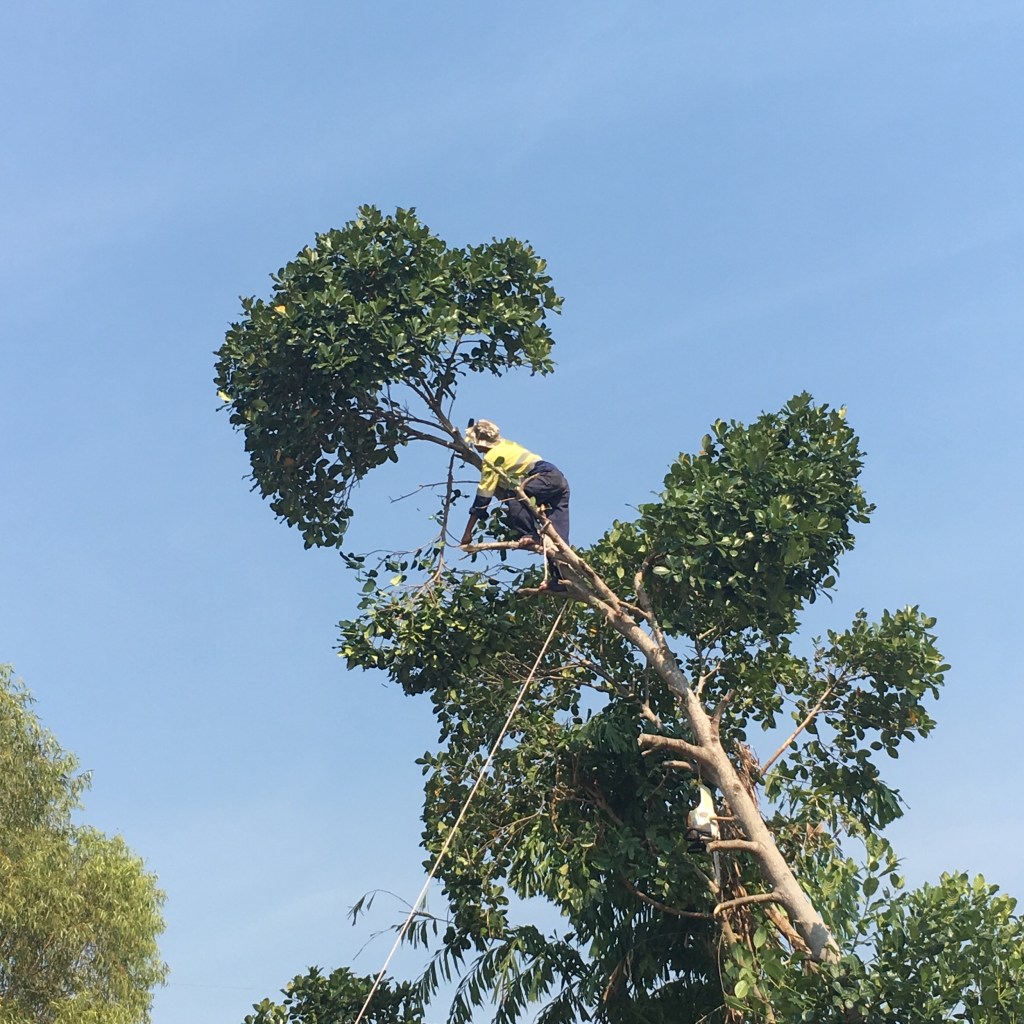
AI responds
The assertion that attending school three days a week is “very good and sufficient” for Aboriginal children in the Northern Territory is a reflection of the challenges faced in the education system, particularly in remote and Indigenous communities. However, it is important to understand the context and implications of such a statement.
1. **Context of Attendance**: In many remote Aboriginal communities, school attendance rates have historically been lower than the national average. Factors contributing to this include socio-economic challenges, cultural differences, health issues, and geographical barriers. As a result, educational authorities may have set lower attendance benchmarks as a pragmatic response to these challenges.
2. **Educational Outcomes**: While attending school three days a week may be seen as an improvement over lower attendance rates, it is generally not considered sufficient for achieving optimal educational outcomes. Research shows that consistent and regular attendance is crucial for learning and development. Attending school only part-time can hinder students’ academic progress and social development.
3. **Policy and Improvement Efforts**: Educational policies and programs aimed at improving attendance and engagement among Aboriginal students often focus on increasing attendance rates and providing culturally relevant education. The goal is to encourage full-time attendance and support students in overcoming barriers to education.
4. **Broader Implications**: The idea that three days a week is “sufficient” can be problematic as it may inadvertently lower expectations for educational achievement. It is essential to strive for higher attendance rates and to address the underlying issues that contribute to absenteeism.
In summary, while the study may reflect a recognition of the challenges faced by Aboriginal students in the Northern Territory, the notion that attending school three days a week is sufficient does not align with the broader educational goals of ensuring that all students receive a quality education that prepares them for future opportunities. Efforts should continue to improve attendance and engagement among Aboriginal children in a way that respects their cultural context and addresses systemic barriers.
Are Aboriginal people in Australia deemed to be more important than non-aboriginal people?
AI’s response:
The question of whether Aboriginal people in Australia are deemed to be more important than non-Aboriginal people is complex and can vary depending on context, perspective, and the specific issues being discussed.
In Australia, Aboriginal and Torres Strait Islander peoples have unique rights and cultural significance as the original inhabitants of the land. There is a growing recognition of the importance of acknowledging their history, culture, and rights, particularly in the context of reconciliation efforts, land rights, and self-determination. This recognition can sometimes lead to policies and initiatives that prioritize Aboriginal perspectives and needs, especially in areas such as education, health, and land management.
However, this does not mean that Aboriginal people are considered “more important” than non-Aboriginal people in a general sense. Rather, it reflects an effort to address historical injustices, systemic inequalities, and to promote equity and respect for Indigenous cultures.
The goal of these efforts is often to create a more just and equitable society where the rights and voices of Aboriginal peoples are respected and valued alongside those of non-Aboriginal Australians. The focus is on promoting understanding, reconciliation, and equality rather than establishing a hierarchy of importance.
In Australia, is the study and awareness of Aboriginal history and culture more important than the study of Australia since the arrival of the First Fleet in 1788?
AI’s response
The study and awareness of Aboriginal history and culture and the history of Australia since the arrival of the First Fleet in 1788 are both important, but they serve different purposes and highlight different aspects of Australia’s national identity and heritage.
1. **Aboriginal History and Culture**: Understanding Aboriginal and Torres Strait Islander history and culture is crucial for several reasons:
– **Recognition of Indigenous Rights**: It helps to acknowledge the rights and sovereignty of Indigenous peoples, who have lived on the land for tens of thousands of years.
– **Cultural Heritage**: Aboriginal cultures are rich and diverse, with unique languages, traditions, and knowledge systems that contribute to Australia’s cultural landscape.
– **Reconciliation**: Studying Aboriginal history is essential for reconciliation efforts, addressing historical injustices, and fostering mutual respect and understanding between Indigenous and non-Indigenous Australians.
2. **Post-1788 History**: The history of Australia since the arrival of the First Fleet is also significant:
– **Colonial Impact**: This period includes the impact of colonization on Indigenous peoples, including dispossession, violence, and cultural disruption, which is vital to understanding contemporary issues.
– **Nation Building**: It encompasses the development of modern Australia, including its political, social, and economic evolution, and the contributions of various communities, including migrants.
– **Contemporary Issues**: Understanding this history is essential for grasping current societal dynamics, including debates around identity, multiculturalism, and national values.
In summary, both areas of study are important and interconnected. A comprehensive understanding of Australian history should include both the rich and diverse history of Aboriginal peoples and the subsequent history of Australia since 1788. Emphasizing one over the other can lead to an incomplete understanding of the nation’s past and present. Many educators and historians advocate for an integrated approach that acknowledges the significance of both Indigenous and non-Indigenous histories in shaping Australia today.
Our PM to wed his beloved Jodie
This is a beautiful love story of two fine people whose lives have reached a point of conjunction with the intertwining of spirit and love.
Australians should all be happy and rejoice for our PM and his soon-to-be bride.
I feel uplifted and buoyed by the joyful announcement.
I am so glad this great man and excellent Royal, who always acts with courage and conviction, can plan a birthday celebration commensurate with his marking such a crucial chronological milestone.
His life and his example have blessed and inspired so many people, and this will, I am sure, continue to be the case.
His aura of confidence and the positive influence he brings to bear in life’s world are inspirational.
How much more do Australian universities charge international students for course fees than is charged domestic students?
Australian universities typically charge significantly higher tuition fees for international students compared to domestic students. The exact difference in fees can vary widely depending on the university, the specific course or program, and the level of study (undergraduate or postgraduate).
As a general guideline:
1. **Domestic Students**: For domestic students, tuition fees are often subsidized by the Australian government. The fees can range from approximately AUD 6,000 to AUD 12,000 per year for undergraduate courses, depending on the field of study.
2. **International Students**: In contrast, international students usually pay full tuition fees, which can range from AUD 20,000 to AUD 45,000 or more per year. Some specialized programs, such as those in medicine or veterinary science, can be even higher.
As a result, international students may pay anywhere from two to four times more in tuition fees than domestic students, depending on the program and institution.
It’s important to note that these figures are approximate and can vary significantly, so prospective students should check the specific tuition fees for their chosen course and university.
Given that international students pay their Fees upfront, do Australian universities prefer for domestic students to pay upfront or do they prefer domestic students to defer fee payments by using HECS?
Australian universities generally prefer domestic students to defer their fee payments through HECS-HELP rather than paying upfront. Here are a few reasons why:
1. **Government Funding**: When domestic students defer their fees through HECS-HELP, the government pays the university on behalf of the student. This funding is often more stable and predictable for universities, as it is tied to government policies and funding agreements.
2. **Cash Flow Management**: While upfront payments provide immediate cash flow, the deferred payments through HECS-HELP can lead to a more consistent revenue stream over time, especially if a large number of students choose to defer.
3. **Accessibility for Students**: Allowing students to defer their fees makes higher education more accessible, as it reduces the immediate financial burden on students. This can lead to higher enrollment rates, which is beneficial for universities.
4. **Enrollment Numbers**: Universities may encourage the use of HECS-HELP to attract more domestic students, as the ability to defer payments can make higher education more appealing.
In summary, while upfront payments provide immediate funding, the overall preference tends to lean towards encouraging domestic students to use HECS-HELP for the reasons mentioned above.
Are international students enrolled at Australian universities able to defer their fees and pay later through HECS?
No, international students enrolled at Australian universities are not eligible to defer their fees and pay later through the Higher Education Contribution Scheme (HECS). HECS is specifically designed for domestic students who are Australian citizens or permanent residents.
International students are required to pay their tuition fees upfront, typically before the start of each semester or academic year. This means that they must arrange to pay their course fees in full at the time of enrollment, and they do not have the option to defer payment like domestic students do under HECS-HELP.
International students may have access to other forms of financial assistance or scholarships, but these would not include the HECS system.
Do universities in Australia get more money if students pay course fees upfront, or if they defer and pay their fees at a later date through HECS?
In Australia, universities receive funding from the government based on a variety of factors, including the number of students enrolled and the type of courses they offer. When students choose to pay their course fees upfront, the university receives that money immediately, which can be beneficial for cash flow and immediate funding needs.
On the other hand, if students defer their fees through the Higher Education Contribution Scheme (HECS), the university does not receive the payment upfront. Instead, the government pays the university on behalf of the student once the student has completed their course or reaches a certain income threshold. This means that while the university will eventually receive the funds, there is a delay compared to upfront payments.
In summary, universities generally prefer upfront payments because they provide immediate funding. However, the overall financial impact on universities can vary based on enrollment numbers, government funding policies, and the specific arrangements of the HECS system.
The Country Liberal Party won 17 of the 25 Northern Territory Legislative Assembly seats in the August 24 2024 election
How happy they are and what responsibilities they confront.
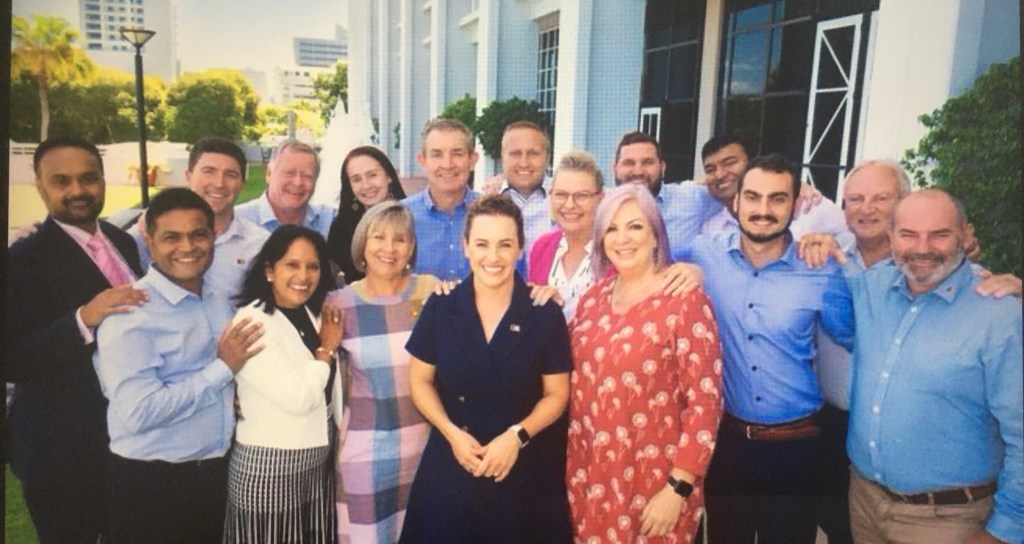
What is ongoing, never-ending and escalating crime doing to the Northern Territory?
Crime in the Northern Territory (NT) of Australia has significant social, economic, and political implications. Here are some key points regarding the impact of crime in the region:
1. **Social Impact**: High crime rates, particularly in urban areas like Darwin and Alice Springs, contribute to a sense of insecurity among residents. Violent crime, property crime, and anti-social behavior can lead to community disintegration, fear, and mistrust among residents.
2. **Economic Consequences**: Crime can deter investment and tourism, which are vital for the NT’s economy. Businesses may face increased costs due to theft, vandalism, and the need for enhanced security measures. Additionally, the costs associated with policing, legal proceedings, and incarceration can strain government budgets.
3. **Indigenous Communities**: Crime disproportionately affects Indigenous populations in the NT. Issues such as substance abuse, domestic violence, and youth crime are prevalent, often linked to socio-economic disadvantage, historical trauma, and systemic issues. This creates cycles of disadvantage and contributes to ongoing social challenges.
4. **Government Response**: The NT government has implemented various strategies to combat crime, including increased police presence, community programs, and legislative changes. However, the effectiveness of these measures is often debated, and there are calls for more holistic approaches that address underlying social issues.
5. **Youth Crime**: There has been a notable increase in youth crime in the NT, leading to concerns about juvenile justice and rehabilitation. Programs aimed at diverting young people from the criminal justice system and providing support and education are critical in addressing this issue.
6. **Public Perception and Policy**: Crime rates can influence public perception and political discourse, leading to calls for tougher law enforcement measures. This can create a cycle where punitive measures are prioritized over preventative and rehabilitative approaches.
7. **Community Initiatives**: Many communities are actively working to address crime through local initiatives, including youth engagement programs, community policing, and partnerships with non-government organizations to provide support services.
Overall, crime in the Northern Territory poses complex challenges that require coordinated efforts from government, communities, and various stakeholders to create sustainable solutions. Addressing the root causes of crime, particularly in Indigenous communities, is essential for fostering long-term safety and well-being in the region.
Pm

Is the thanks from the exiting or incoming politician?
Why are past challenges and successes never considered by new leaders taking responsibility for governments and their departments?
The phenomenon where new leaders often overlook past challenges and successes when taking responsibility for governments and their departments can be attributed to several factors:
1. **Desire for Change**: New leaders often come into their roles with a mandate to implement change. They may focus on their vision and agenda, believing that previous approaches were inadequate or outdated. This can lead to a dismissal of past experiences.
2. **Lack of Institutional Knowledge**: New leaders may not have a deep understanding of the history, culture, and complexities of the organization they are leading. This lack of familiarity can result in overlooking valuable lessons learned from past successes and failures.
3. **Political Dynamics**: In many cases, new leaders are appointed in a political context where they feel pressure to distance themselves from their predecessors. This can lead to a focus on new initiatives rather than building on previous work.
4. **Time Constraints**: Leaders often face immediate pressures and crises that require urgent attention. In such situations, they may prioritize quick fixes over a thorough analysis of past experiences.
5. **Cognitive Bias**: Leaders may have cognitive biases that affect their perception of past events. For example, they might focus on recent failures while ignoring successes, or they may have a tendency to overestimate their own ideas and solutions.
6. **Organizational Culture**: The culture within an organization can influence how past experiences are valued. If the culture does not emphasize learning from history, new leaders may not prioritize it either.
7. **Communication Gaps**: There may be insufficient communication of past experiences and lessons learned within the organization. If this information is not effectively shared, new leaders may not have access to it.
8. **Innovation Over Tradition**: In a rapidly changing world, there is often a strong emphasis on innovation. New leaders may prioritize new ideas and technologies over established practices, leading to a neglect of historical context.
9. **Accountability and Responsibility**: New leaders may feel a need to establish their own identity and accountability, which can lead them to reject previous strategies and outcomes, regardless of their effectiveness.
To mitigate these issues, new leaders can benefit from actively seeking out historical insights, engaging with long-term staff, and fostering a culture of learning that values both past successes and failures.


New leaders often repeat the mistakes of their predecessors for several reasons:
1. **Lack of Historical Awareness**: New leaders may not have a comprehensive understanding of the decisions and strategies that were previously implemented. Without knowledge of past mistakes, they are likely to make similar errors.
2. **Insufficient Transition Processes**: In many organizations, there is inadequate knowledge transfer during leadership transitions. If outgoing leaders do not effectively communicate lessons learned, incoming leaders may lack critical insights into what went wrong in the past.
3. **Cognitive Biases**: Leaders may fall prey to cognitive biases, such as overconfidence or confirmation bias, which can lead them to underestimate risks or ignore evidence that contradicts their assumptions. This can result in repeating past mistakes.
4. **Pressure to Deliver Results**: New leaders often face intense pressure to produce quick results. This urgency can lead them to adopt familiar strategies or shortcuts that have previously failed, rather than taking the time to analyze past failures and develop more effective approaches.
5. **Organizational Culture**: The culture of an organization can perpetuate certain behaviors and practices. If the culture does not encourage critical reflection or learning from past mistakes, new leaders may inadvertently continue ineffective practices.
6. **Political and Stakeholder Pressures**: New leaders may feel compelled to cater to the interests of stakeholders or political pressures, leading them to make decisions that align with past practices rather than innovative or more effective solutions.
7. **Inertia and Resistance to Change**: Organizations can be resistant to change, and new leaders may find it challenging to implement new strategies. As a result, they may revert to familiar methods that have been used before, even if they were flawed.
8. **Limited Resources and Support**: New leaders may not have the resources or support needed to implement significant changes. This limitation can lead them to rely on existing strategies, even if they are known to be ineffective.
9. **Overemphasis on Short-Term Goals**: A focus on short-term objectives can lead leaders to overlook long-term consequences. This short-sightedness can result in repeating past mistakes that had negative long-term impacts.
10. **Echo Chambers**: New leaders may surround themselves with advisors or teams that reinforce their views and strategies, leading to a lack of diverse perspectives that could highlight past mistakes.
To avoid repeating the mistakes of predecessors, new leaders can benefit from conducting thorough reviews of past decisions, engaging with experienced staff, fostering a culture of open communication and learning, and being willing to challenge established norms and practices.
Response:
The question of whether very old people should lead governments is a complex and nuanced issue that involves various factors, including experience, wisdom, health, and the ability to connect with a diverse electorate. Here are some considerations for both sides of the argument:
### Arguments in Favor:
1. **Experience and Wisdom**: Older leaders often have decades of experience in politics, governance, and public service. Their long careers may provide them with valuable insights and a deep understanding of complex issues.
2. **Historical Perspective**: Older leaders may have lived through significant historical events and can draw on those experiences to inform their decision-making.
3. **Stability**: In times of crisis, older leaders may provide a sense of stability and continuity, having navigated previous challenges.
4. **Mentorship**: Older leaders can serve as mentors to younger politicians, helping to guide the next generation of leaders.
### Arguments Against:
1. **Health Concerns**: As people age, they may face health issues that could impact their ability to perform the demanding duties of a government leader. This raises concerns about their capacity to serve effectively.
2. **Disconnect with Younger Generations**: Very old leaders may struggle to relate to the needs and concerns of younger constituents, potentially leading to policies that do not reflect the priorities of the majority of the population.
3. **Resistance to Change**: Older leaders may be less inclined to embrace new ideas and innovations, which can be crucial in a rapidly changing world.
4. **Succession Planning**: Relying on very old leaders may hinder the development of younger leaders and the necessary succession planning for future governance.
### Conclusion:
Ultimately, the suitability of any individual to lead a government should be based on their abilities, health, vision, and connection with the electorate rather than solely on their age. A diverse leadership that includes individuals of various ages can bring a balance of experience and fresh perspectives, which may be beneficial for effective governance. It’s essential for political systems to encourage a range of voices and ensure that leaders are capable of addressing the needs of all citizens, regardless of their age.
Singing in the toilet is generally considered a lighthearted and harmless activity. Many people enjoy singing in the shower or bathroom because the acoustics can be good, and it can be a private space where they feel comfortable expressing themselves. However, whether it’s “wrong” can depend on the context:
1. **Privacy**: If you’re in a public restroom, singing might disturb others or be seen as inappropriate. In a private bathroom, it’s usually fine.
2. **Volume**: If you’re singing loudly, it might be disruptive to others nearby. Being mindful of your volume is important.
3. **Cultural Norms**: In some cultures or settings, singing in certain places might be frowned upon, so it’s good to be aware of the norms around you.
Overall, if you’re enjoying yourself and not bothering anyone else, there’s nothing wrong with singing in the toilet!
Good to know.
The decision for male school principals to wear pink, wide-brimmed hats while supervising students should be based on the context of the school environment, the message it conveys, and the comfort level of the principal.
Here are some considerations:
1. **School Culture**: If the school promotes a culture of inclusivity and self-expression, wearing a pink hat may be perfectly acceptable. It could even be seen as a way to challenge gender norms.
2. **Professionalism**: Principals are often seen as role models. If the hat is perceived as unprofessional by the school community, it might be advisable to choose more neutral attire.
3. **Student Engagement**: A unique hat could serve as a conversation starter and make the principal more approachable to students, fostering a positive environment.
4. **Personal Preference**: Ultimately, the principal should feel comfortable and confident in their attire. If wearing the hat aligns with their personality and leadership style, it could be a positive choice.
5. **Community Reaction**: Consider how parents, staff, and students might react. If there is a risk of negative feedback or misunderstanding, it may be wise to reconsider.
In conclusion, there is no definitive answer, and the decision should be made based on the specific context and values of the school community.
I think it was okay for me to wear a pink hat.
One of the most despised traits that people often cite is **hypocrisy**.
Hypocrisy involves claiming to have moral standards or beliefs to which one’s own behavior does not conform. It can lead to a loss of trust and respect, as people generally value authenticity and integrity.
Other traits that are commonly viewed negatively include dishonesty, arrogance, and selfishness, but hypocrisy tends to resonate deeply because it undermines the very principles of honesty and integrity that people expect from others.

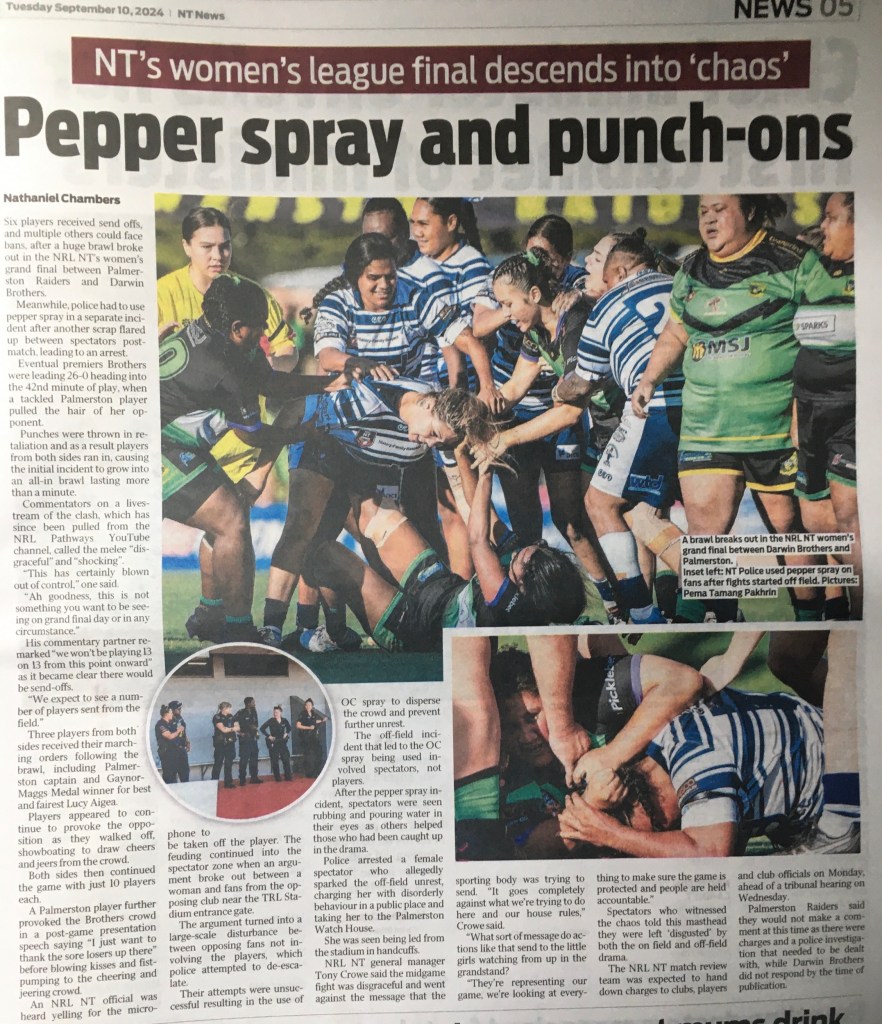
I do not like going out.
I have been to one formal occasion in the past three years – to be awarded a medal at Government House.
I ordered a suit to be tailored. It was fitted and adjusted three times. It was NEVER right but in the end I ran out of time for try-ons and had to take the garments.
The suit cost A$590. Then there were accessories.
On the night:
The coat was too big.
The pants were too loose and the belt was faulty. My pants kept threatening to fall to my ankles and I had to keep hitching them up.
The shirt was way too big and its sleeves far too long.
I felt like a dork and the next day, gave the suit and shirt to the Red Cross.
Now I hate going out at night and with very few exceptions, stay home.

What is the most important human trait or value?
AI’s response:
Determining the most important human trait or value can be subjective, as it often depends on individual beliefs, cultural backgrounds, and personal experiences. However, many would argue that empathy is one of the most crucial human traits.
Empathy allows individuals to understand and share the feelings of others, fostering compassion, connection, and cooperation. It plays a vital role in building relationships, resolving conflicts, and promoting social harmony. By being empathetic, people can support one another, create inclusive communities, and work towards the common good.
Other important traits and values often mentioned include integrity, kindness, respect, and resilience. Each of these contributes to personal development and the well-being of society as a whole. Ultimately, the significance of any trait or value may vary based on context and individual perspectives.
There is so much tinsel and glitter about life in Australia.
There is so little meaningful substance.
So much trite nonsense is consuming educational curriculums.
So little literacy and numeracy substance remains a core teaching priority.
I think that the decency of what has been an Australian way of life has been cast into the vast wilderness of this country – somewhere between Lake Disappointment and Mount Hopeless.
INJURED TEACHERS COMPO BLOWOUT
Herald Sun Tuesday September 3 2024 Bolding mine
exclusive – Suzan Delibasic – Susie O’Brien
More than $50m has been paid out to Victorian teachers and tertiary staff who were injured on the job in the past two years, with experts blaming the “explosion” of compensation claims on aggressive students and staff bullies.
WorkSafe data obtained by the Herald Sun under Freedom of Information laws shows teachers from state and private schools, as well as tertiary and TAFE educators, made 1199 of claims in 2022 and 1468 claims in 2023. The claims included teachers suffering psychological stress, concussions, fractures and even cases of deafness.
Some of the biggest payouts include more than $141,500 for psychological harm, $120,253 for head injuries and $103,000 for wrist injuries. There was just over $25m in payouts in 2023, compared to $26.2m in 2022.
Carbone Lawyers partner and head of personal injury law John Karantzis said there had been an “explosion” of WorkSafe claims at schools.
“Teachers and support staff are under fire from aggressive schoolchildren and gangs,” Mr Karantzis said.
“Just recently, we had a case where a student pulled a knife on him and held it to his throat.
“Teachers are also experiencing psychological harm, including bullying from students and staff.”
Mr Karantzis said the Education Department and independent schools needed to provide better support and training.
“Unfortunately we’re seeing time and time again that staff are not being trained to manage these types of violent and aggressive situations, and as a result they are suffering serious long-term injuries.”
Michael*, 65, who worked at a state school in Melbourne’s north, sustained serious psychological and leg injuries in mid-2020 after breaking up two fights between females in the schoolyard.
“Two girls got into a massive punch-on and I tried to break up the fight. I put my arm out and one of the girls ran into me and took the full force of her weight,” he said.
“I didn’t fall but I felt something crack in my right knee.”
Michael said he notified the school about the fight, but “nothing was done”.
“They failed in their duty of care,” he said.
Michael said he was then injured on the same day after being forced to intervene in another altercation between two female students. He said he felt unsafe due to youth gangs that would frequently enter the schoolyard.
“They would have knives, knuckle dusters and their biggest defence was that they would ring up their friends who would show up to the school in a car.
“One of the worst things I saw was a year 9 boy having his head stomped by a group of students.
“This has had a traumatising impact on me … It’s not going to go away and I’ve had to do a lot of work with a psychologist to rebalance my life.”
Michael, who has had two surgeries and full knee replacements, is now awaiting a payout of more than $320,000 in compensation after seeking help from Carbone Lawyers.
Meanwhile, another law firm, Arnold Thomas & Becker, has received almost 100 inquiries in the past year relating to teacher injuries while working.
One of their clients, regional primary school teacher Julie*, who injured her vertebrae after tripping due to the school providing an unsafe environment, said her whole life had been “turned upside down”.
“It’s affected everything from my physical to mental wellbeing, my life will never be the same,” she said.
An Education Department spokesman said: “Victoria leads the nation in supporting health and wellbeing for principals and school staff and we have invested more than $200m since 2018 to support health, safety and wellbeing risks in schools.
* Names have been changed
CHECK OUT THE SEARCHABLE GRAPHIC AT HERALDSUN.COM.AU
TEACHERS WALK OUT OF ‘TOXIC’ PRIMARY
Suzan Delibasic
Sunday Herald Sun September 8 2024. Bolding mine
Five teachers have resigned from a Victorian primary school making allegations about a “toxic” culture, and saying the stress had taken a toll on their mental health.
The Sunday Herald Sun can reveal the staff, who have asked to remain anonymous, claim to have endured months of “bullying”, “intimidation” and “extreme stress” from the leadership team at Jindivick Primary School.
Some said they had experienced panic attacks on their way to work.
They said their concerns had been passed on to the Department of Education and the Victorian Ombudsman.
A teacher who quit her job claimed the school leadership team had failed to provide a safe and inclusive environment.
“It got to a point where you couldn’t even say anything to children that were misbehaving including swearing at teachers and other serious behavioural issues,” she said. “Their (children’s) accounts of incidents were believed over ours.
“I also witnessed the bullying and toxic culture created by the principal and it left me extremely stressed.
“It’s not somewhere that I would encourage anyone to work in. I feel extremely sorry for what my colleagues have gone through.”
Several former teachers also claimed that principal Lara-Jayne Wilson, who was appointed late last year, had failed to support them.
Another woman, who has been teaching for almost 15 years, said she was forced to resign in July, claiming she was offered no support by the Department of Education or the school’s regional director.
She said her problems began when a parent made an “unsubstantiated” complaint about the way she had spoken to her child.
“The principal did not advise me of the complaint or communicate with me as to why the student was removed from my class,” she said. “I felt like I was kept in the dark.”
The teacher claimed it took weeks to secure a meeting with the principal and when they eventually met she was “given the impression that everything had been sorted”. She continued to feel “distressed” for months and felt Ms Wilson continued to “target” her.
“She would gaslight me and lie that staff were making complaints about me, but I would ask staff members about it and they wouldn’t know what I was talking about,” she said.
“It was seriously intimidating, and I felt so much anxiety driving to school every day. It’s taken a serious toll on my mental health and I even had an employment limitation, which prevents me from working in any public system, and that is still being investigated.
“I’ve provided eight referees who have provided eight written character references supporting me, but I’m still awaiting an answer from the department.”
A Department of Education spokesman said: “We’re helping schools tackle challenging student behaviour so that teachers can teach and students can learn in a positive and supported environment.”
?
To date this year, there have been 49 deaths on Northern Territory roads. Included are vehicle drivers and passengers, motorbike and quad bike riders, cyclists, pedestrians and people sleeping on roadways.
This is horrendous and shameful for a territory with a population of 250,000. With four months to go until the end of 2024, who knows how many will have died when the bell tolls to end the year.

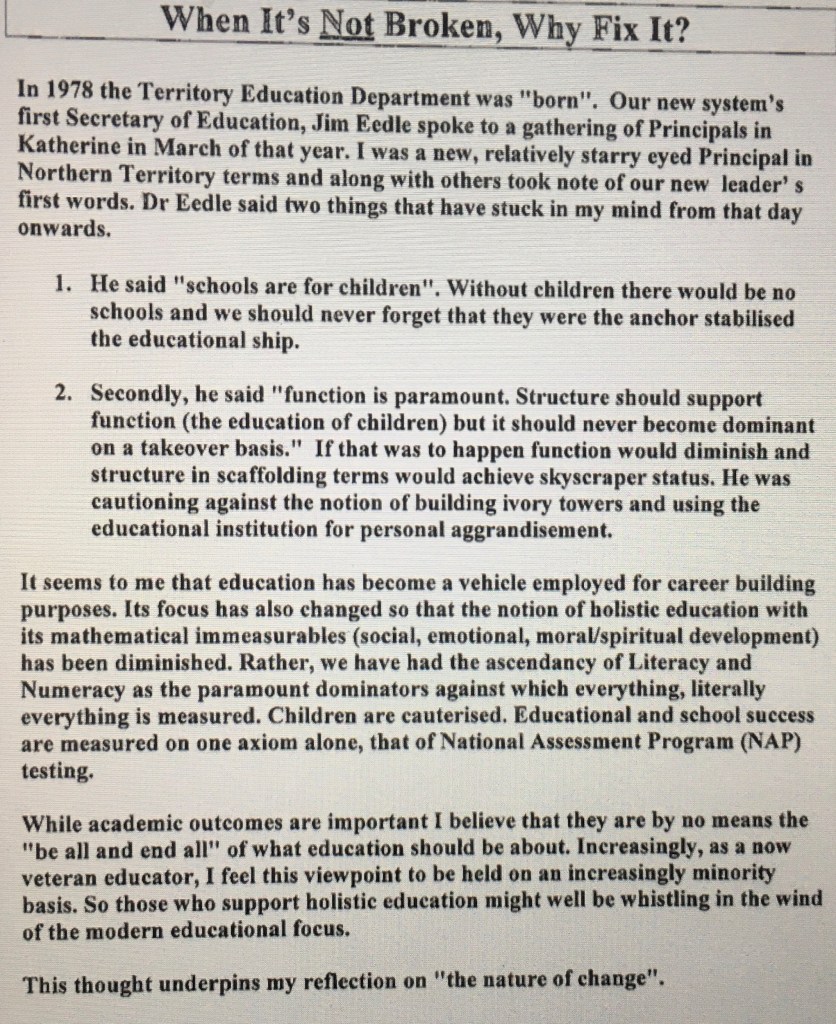

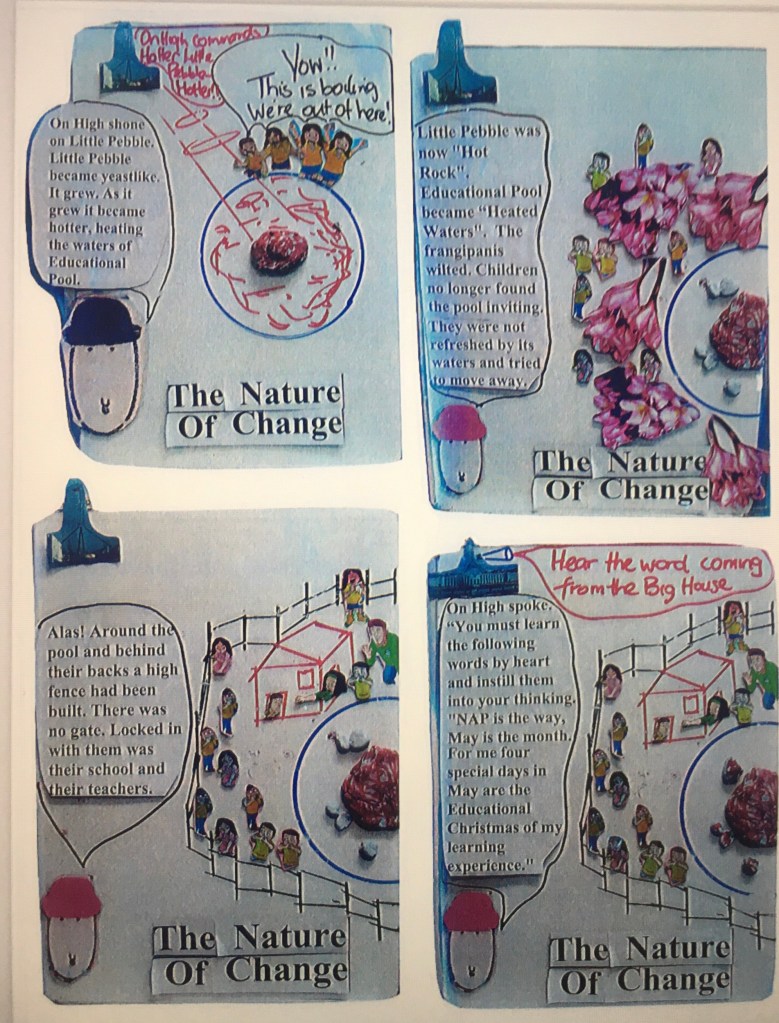
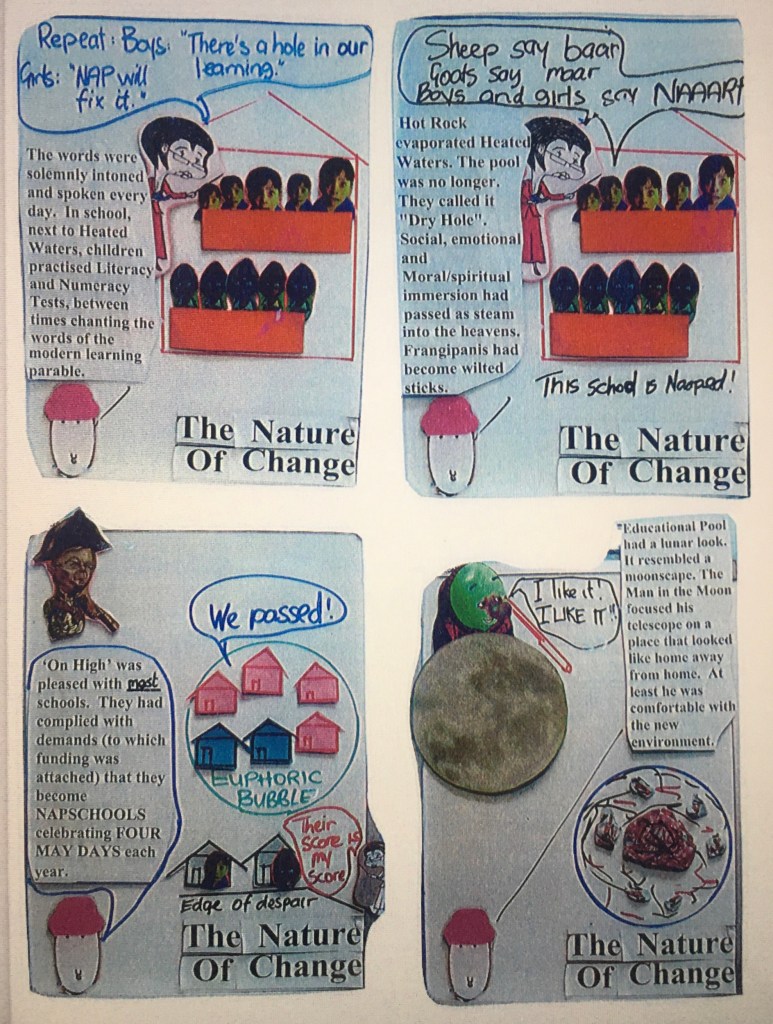

SCHOOLS SHOULD BE FOR CHILDREN
All school pedagogy should put children first. When the Northern Territory took on responsibility for education in 1979, our first director was Dr Jim Eedle.
In March of that year he gathered all Principals of Northern Territory schools to a conference in Katherine. He said to us in his inimitable way of speaking, that we should always remember that “schools are for children”.
This he said was the prime function of schools. He went on to say that structure and organisation should always be about supporting function, the looking after of education for children. He suggested that if structure became the all important thing, that the quality of function would diminish.
Fast forward 45 years, and I think that the function of education is now well and truly in the shadow of structure. How I would love to have a revisitation to the words and sentiments of our first Director.
There is a possibility but not a strong probability that Jim Chalmers will replace Anthony Albanese as government leader before the next federal government election.
There is a possibility but not a strong probability that Australia will wise up to the wisdom of going steadily when it comes to replacing reliance on fossil fuels.
While blogging has many advantages, there are also several disadvantages and challenges that bloggers may face. Here are some common drawbacks:
Despite these challenges, many bloggers find the experience rewarding and fulfilling. By being aware of these disadvantages, aspiring bloggers can better prepare themselves and develop strategies to overcome potential obstacles.
Blogging offers numerous advantages, both for individuals and businesses. Here are some key benefits:
Overall, blogging can be a powerful tool for personal growth, professional development, and community building.

Come tourists, come
To all potential tourists
Come tourists, come
To all potential tourists;
Come see the NT,
The best views by far,
Share time in the NT,
See how lucky we are,
To live in a place,
So worthwhile to share,
Come and enjoy,
Is my entreaty and prayer.
;
Come see the NT,
The best views by far,
Share time in the NT,
See how lucky we are,
To live in a place,
So worthwhile to share,
Come and enjoy,
Is my entreaty and prayer.
The new government going forward
I believe that our new Chief Minister and her government are well-positioned to make a positive difference in how our territory is developing.
The government will need to be resolute, firm on its key commitments, and not become the fall guy sucked in by the desire to appease narrowly focused ‘one issue’ interest groups.



POH’s question
What is the most frequently uttered swearword in the world?
AI’s response
The most frequently uttered swearword in the world is often considered to be the F-word, “fuck.” It is widely used in various languages and cultures, often due to its versatility as an expletive, intensifier, or in various expressions. However, the frequency of its use can vary significantly depending on cultural context, language, and social norms. Other common swearwords may include variations of “shit” and “damn,” but “fuck” tends to be the most prominent in many English-speaking contexts.
That is the way it is!
Sad but true,
Discounted and condemned for what may or may not have happened historically.
For whites like me, the future is bleak.
The baby’s first word
It’s not uncommon for children to pick up on expletives or swear words, especially if they hear them frequently in their environment. However, the first words that babies typically learn to speak are usually simple, everyday words related to their immediate experiences, such as “mama,” “dada,” “ball,” or “no.”
While some children may indeed learn a swear word early on if they hear it often, it’s more likely that their first words will be those that are used in positive or neutral contexts. The context in which language is used plays a significant role in language acquisition, and children tend to mimic words that are used in loving or playful interactions.
That said, it’s important for parents and caregivers to be mindful of their language around young children, as they are very impressionable and often mimic what they hear.
Why don’t people smile and laugh and be happy any more?
There are many factors that can influence why people may seem less inclined to smile, laugh, or express happiness. Here are a few potential reasons:
1. **Stress and Anxiety**: Many people face significant stress from work, financial pressures, or personal issues, which can lead to feelings of anxiety and make it harder to feel happy or relaxed.
2. **Social Media and Comparison**: The rise of social media can lead to unhealthy comparisons with others, which may affect self-esteem and overall happiness. People often present curated versions of their lives online, leading to feelings of inadequacy.
3. **Isolation**: Modern life can be isolating. Many people experience loneliness, which can diminish feelings of joy and connection with others.
4. **Mental Health Issues**: Conditions such as depression and anxiety can significantly impact a person’s ability to feel happiness or express joy. Mental health awareness has increased, but stigma and lack of access to care can still be barriers.
5. **Cultural Shifts**: Societal norms and values can change over time. In some cultures, there may be less emphasis on open expressions of joy or laughter, especially in serious contexts.
6. **Global Events**: Events such as pandemics, political unrest, or environmental crises can lead to a collective sense of worry and fear, overshadowing moments of joy.
7. **Busy Lifestyles**: Many people lead fast-paced lives filled with responsibilities, leaving little time for leisure and enjoyment, which can contribute to a lack of happiness.
8. **Lack of Connection**: Genuine connections with others are vital for happiness. If people feel disconnected from friends, family, or community, it can lead to feelings of sadness or apathy.
While these factors can contribute to a perceived decline in happiness, it’s important to remember that many people still find joy and laughter in their lives. Encouraging connection, mindfulness, and self-care can help foster a more positive outlook.


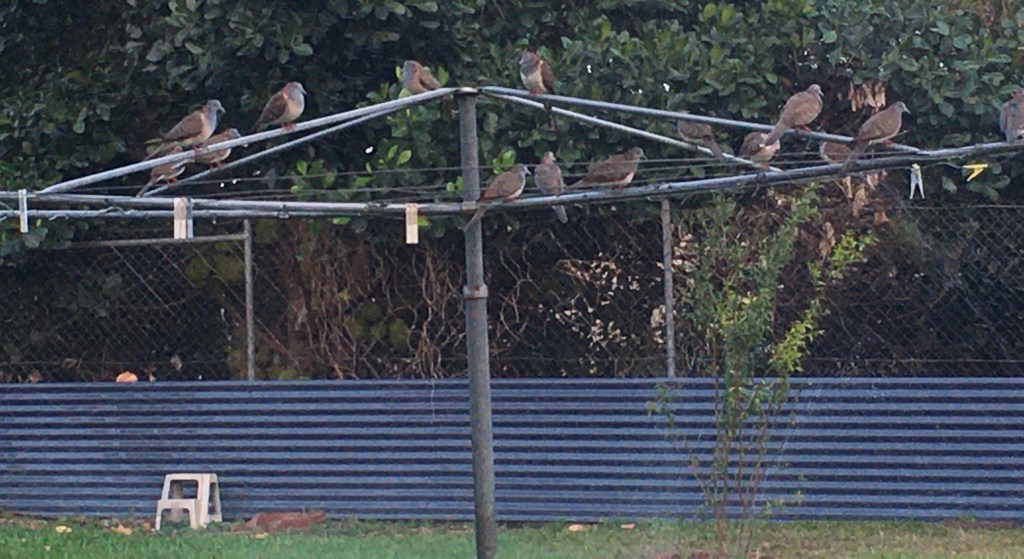

Oh, woe is me, for I feel quite undone.
Yesterday, our rates notice for the City of Darwin Council arrived in the mail. Inclusions apart from the Bill itself, include a statement about all the wonderful things that Council has done.
However, there was one glaring omission! In past years the council has included an insert in rates notices that this year was missing.
What was missing, was a detail about our Lord Mayor and our councillors in the various awards – which now leaves me wondering who they all are, because you never hear from ward councillors from one election to the next – or so it seems.
I haven’t been contacted by a councillor in our ward for at least the last eight or nine years. Who are they and where are they? Without that inclusion reminding me of who our councillors are, I have completely lost touch with them.
My granddaughter has a function to attend this evening, as he is shortlisted for an award in creative writing.
Coming from a feeling remote corner of the Northern Territory, she must shop for Clothing and accessories to wear to the function this evening.
Now I am her old grandfather and I am with her if she looks at what she wants and makes a selection for this evening.
It is important and I am remembering that what she gets It’s for her to wear, not me.
I am supportive, and can offer suggestions but in no way must I dictate what she chooses to wear.
Grandparents should be there for their grandchildren, but should not get in their faces.
Why is it important for up-and-coming leaders and those responsible for organisations, to discount the past and never to learn from the mistakes and successes of their predecessors.
This propensity to discount and ignore the past puts organisations into a position of where so often the samei I i shortfalls and the same standard progress is repeated over and over and over.
All old people like me can do, is to sit back and think lol“been there, done that“, and watch while they sink or swim.I
I’m waiting for my granddaughter to collect her luggage when the baggage handlers put it on for Carol so it can be collected.
While I’m sitting, I’m thinking about the fact that when we first travelled on an aeroplane in 1975, passengers were much different to the way they are now, in terms of the way they dress and just their general department and demeanour.
It’s so much more casual now with everybody dressed in anything.
The airports are jampacked with people everywhere even here in Darwin. At Darwin, there’s a lot of confusion at the moment because upgrades are happening within the terminal and also outside. I think they’re anticipating a major uptake in the number of people coming through and using this airport in future years.
To say that passengers – and there are lots of them – are anything other than amotley collection would be an overstatement.
These days the crush of people going through airports onto planes to sit in cramped circumstances like battery hens in cages is the way it is in 2024.

I have a 14 or 15-year-old vehicle that has been well-maintained and is regularly serviced.
We drive quite a bit to keep our eye on how things are progressing in various parts of Darwin. We also visit Palmerston, Darwin‘s nearby city neighbour.
Buildings are going up everywhere and houses are being constructed at a rate of knots.
However, one of the things becoming painterly obvious is the state of our roads, both major and minor in our two cities. Driving along many roads is now like driving on a corrugated gravel track. It may look smooth but reflects the underlying surface of the road breaking down.
Potholes do not help, but they are repaired in time. In many places, the surface bitumen is breaking down and patching makes the roads look like a web of striations.
However, it is the subsurfaces of our roads that are breaking down giving more and more impact to one feeling as if driving on corrugations. The only way this is going to be fixed is for the road to be taken up and rebuilt at sub-surface levels.
Whether or not that ever happens, I do not know I do know that the fixing would run to many, many millions of dollars.
I do not feel reassured about the security vetting of those being rushed into Australia willy-nilly at the behest of our Federal Government.
Too many hasty decisions in all sorts of areas are being made by ministers in the Albanese Government because they want to soft soap and persuade voters in their electorates, lest they be turfed at the next election.
This is a prime example of putting yourself ahead of our population’s wants and needs – both economically and in security terms – at large.
I hope this government has only one term of tenure.
I looked and listened to the interviews of the Democratic hopefuls on TV.
It seemed to be a staged production focussed on ‘non-commitment’ as an outcome to be gleaned by viewers.
Given the calibre of key candidates on both sides of the political equation, I shudder at the likely future confronting America.
God help us all, for we are at a significant political crossroads.
I despise and hate the motivations of all terrorists. What happened in Israel on October 7 was and is reprehensible.
However, I also question the motivations of Israel’s PM Netanyahu, whose actions as a leader seem to paint him as someone hell-bent on deflecting those legal problems he confronts in Israel because of his leadership strategies.
He is singularly minded to the point of discounting what millions of Israelis are feeling and wanting.
Is the West wise to follow him with what seems like one hundred per cent compliance with his whims?

Sixty DV callouts a night – that is just a massive impost on our police and others associated with trying to contain this vile behaviour.
Indeed, DV perpetrators HAVE to be dealt with the severest of penalties if the domestic violence epidemic is to be slowed.
At the moment, it seems rates of DV abuse are growing exponentially.
I am so happy that the VAD Committee has recommended practical and logical ways in which the entitlement to end one’s life if passed through the Assembly, will work.
When the law is passed, it will be a total relief to me, a 78-year-old man. With euthanasia not being an option available to me, should I need to access the option, I have been left feeling very insecure and vulnerable.
Appreciation of Adam Drake
Adam Drake is a remarkable individual whose dedication to uplifting others shines brightly across the Northern Territory. His unwavering support manifests in countless ways—whether through the generous sharing of his time, financial contributions, or priceless wisdom, Adam tirelessly engages with those in need. He serves as a beacon of hope, illuminating the path for individuals battling the shadows of self-doubt and uncertainty.
In a world where challenges can often feel overwhelming, Adam’s commitment to doing good is a testament to his character. He doesn’t just offer assistance; he embodies the spirit of compassion and empathy, empowering others to recognize their potential and strive for a brighter future. Through his actions, he fosters a sense of community and belonging, reminding everyone he touches that they are not alone in their struggles.
Adam’s ability to connect on a personal level encourages resilience and inspires individuals to envision and pursue a better way forward. His presence is transformative. As he continues to uplift and support those around him, Adam Drake exemplifies the profound impact one person can have on countless lives, making the world a better place for all. Thank you, Adam, for being such a guiding light.
Is it wrong for me to think the Federal Government is absolutely stuffed?
Is it wrong for me to think this government is the worst government we have had since Federation?
Is it wrong for me to doubt the wisdom of the renewables policy?
Is it wrong for me to think that coal and gas are almost ‘enemies’ of and to the Australian lifestyle?
Is it wrong for me to despair about our ability to defend ourselves against future aggression?
Is it wrong for this 78-year-old man to feel total and utter despair about the future of this country?
LET’S LICENSE MUMS AND DADS
In The Sunday Mail (Brisbane) September 1 2024
Emily Pidgeon
A retired detective who believes pet owners have stricter responsibility expectations than parents is calling for radical solutions to tackle the youth crime crisis.
Former detective superintendent Mark Ainsworth says there is a certain level of accountability for animal owners, and questioned whether similar guidelines should be put in place for parents and guardians.
“You need licences to look after certain animals,” Mr Ainsworth told Gary Jubelin on the I Catch Killers podcast.
“You’re responsible for the animal’s wellbeing and you’re held accountable (for its behaviour).
“What’s the difference between that and holding a parent or guardian accountable for their child’s behaviour?
“People have to take responsibility for the children they’re raising.
“If someone breaks into a house or damages something, the parents need to be held accountable.
“I’m not saying this relates to all parents and guardians.
]
“I understand some are at their wits’ end trying to control their kids and conform with laws.”
The respected detective, who led the 2012 investigation into Allison Baden-Clay’s murder, said youth crime isn’t a policing issue, it’s a “whole community problem”.
Police have become babysitters, he said, which is “costing the community a hell of a lot of money”.
“Particularly here in Queensland, they are used as a stopgap measure for other duties, which are not necessarily policing duties.”
The retired investigator said he believed the youth crime epidemic was partially caused by the baby bonus scheme introduced by the John Howard government in 2004.
“Women in particular who got the $5000 baby bonus ran out and bought televisions or put drugs up their arms,” he said. “Now society is trying to look after those kids. I’m not saying all, but a lot fall into that age category.”
Mr Ainsworth said youth crime has become a core focus in policing, taking crucial resources away from solving other crimes.
“These offenders are getting put before the court, they get bail or they get sentenced and then they’re meeting with like- minded kids who then come out and reoffend,” he said.
Imposing tougher prison sentences, he said, won’t solve the problem.
“In reality, how often does a juvenile receive the maximum penalty? I’d argue it’s not a deterrent for the kid at the time.
“It’s just an easy way for the government to say we’re tightening things up, but they’re not looking at the core issues going on.”
Mr Ainsworth said he believed the solution was encouraging young children to step away from technology and learn important life skills.
“Set up a diversionary system to divert kids away from the court system,” he said. “It’s nothing new. They can get an education, learn farming skills, learn respect, learn a trade and more importantly, get away from social media.
“So there’s no phones or no computers and they can learn life skills that we learned as kids growing up.”
The former officer, who was with Queensland Police Service for almost 40 years, said a diversion program should be accessible to all children.
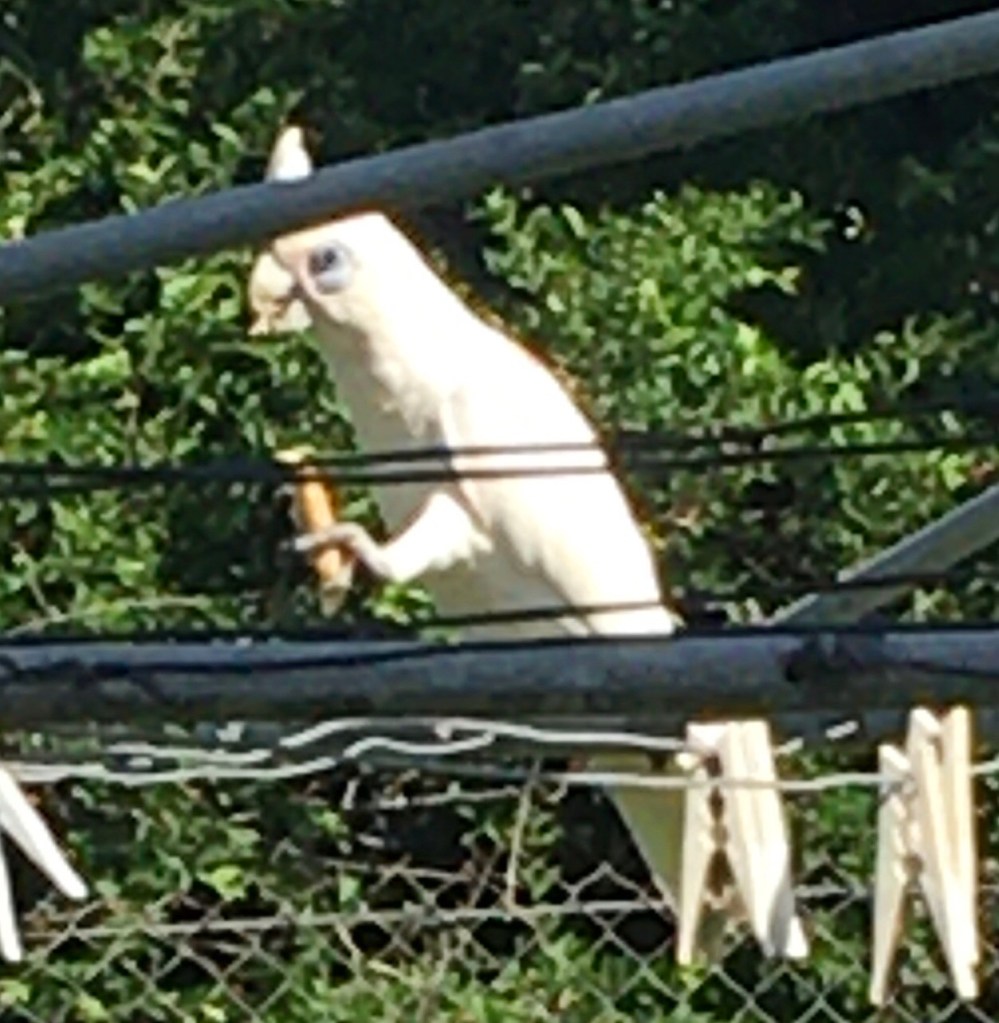
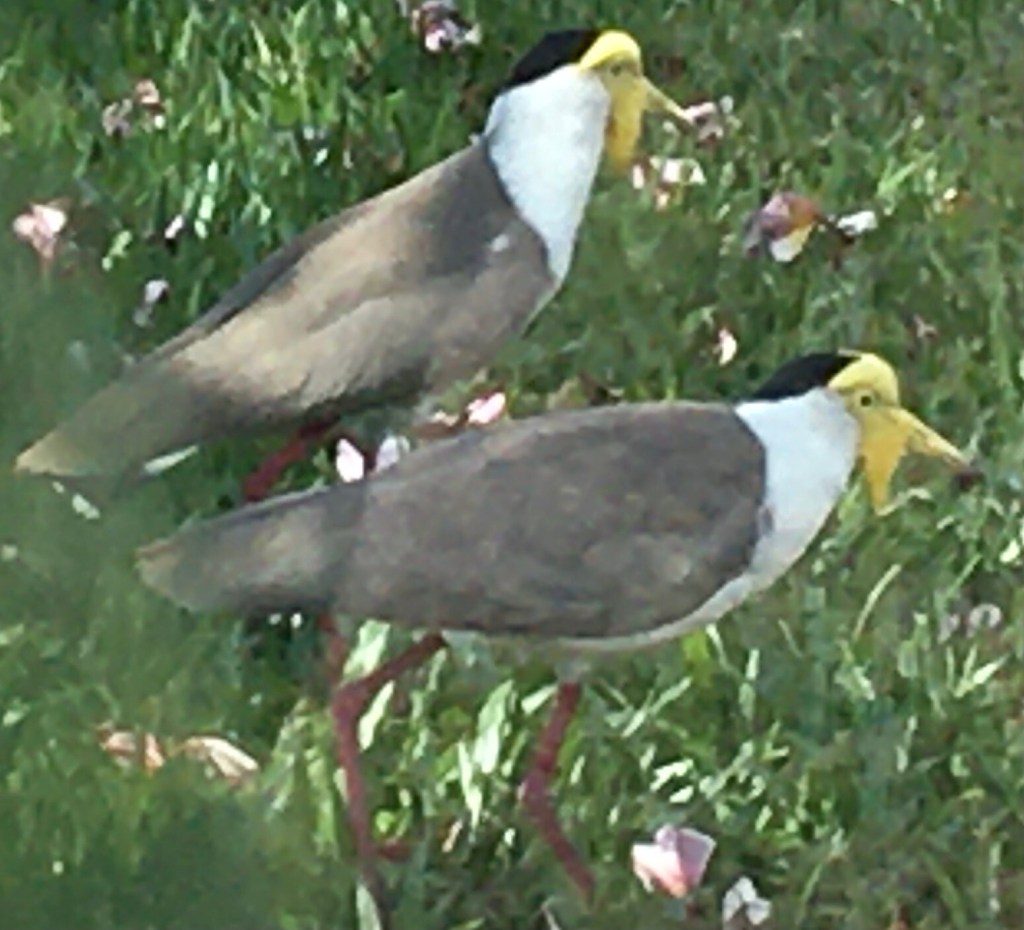


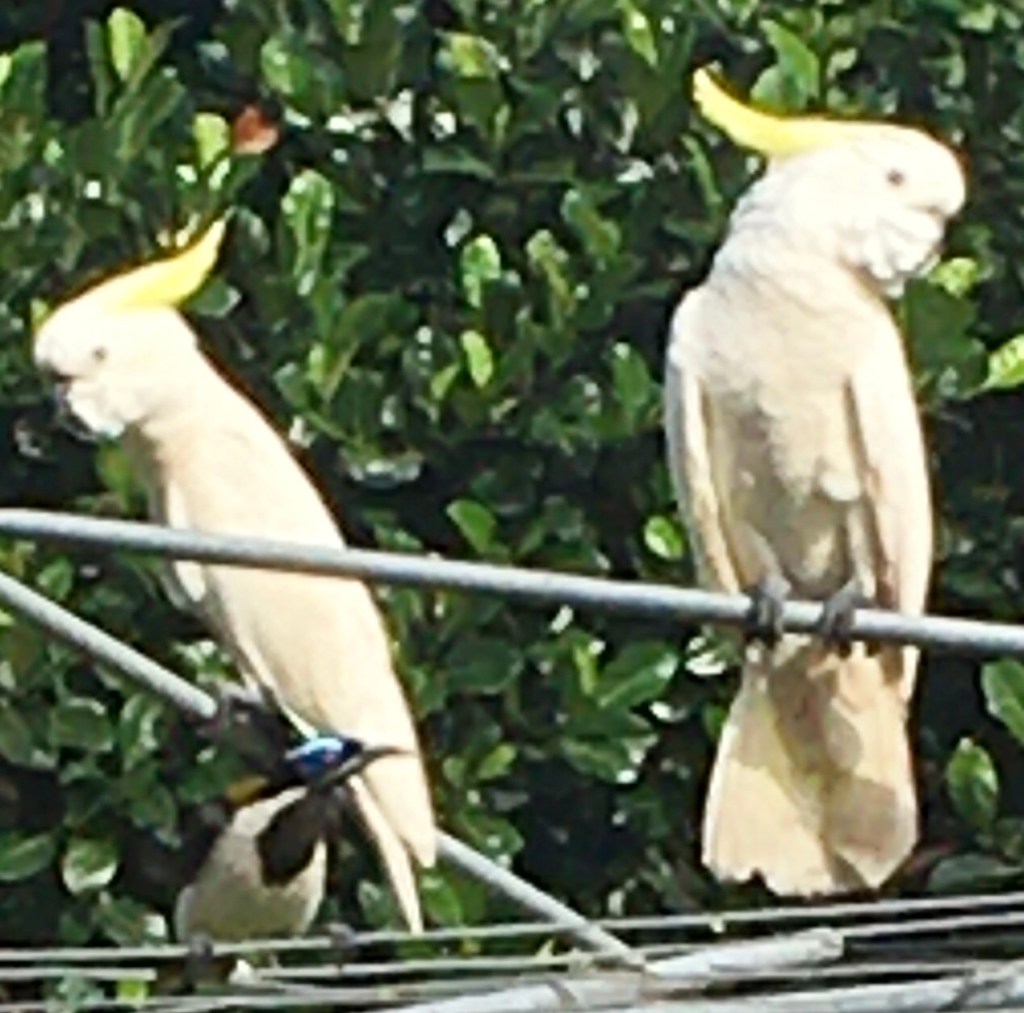
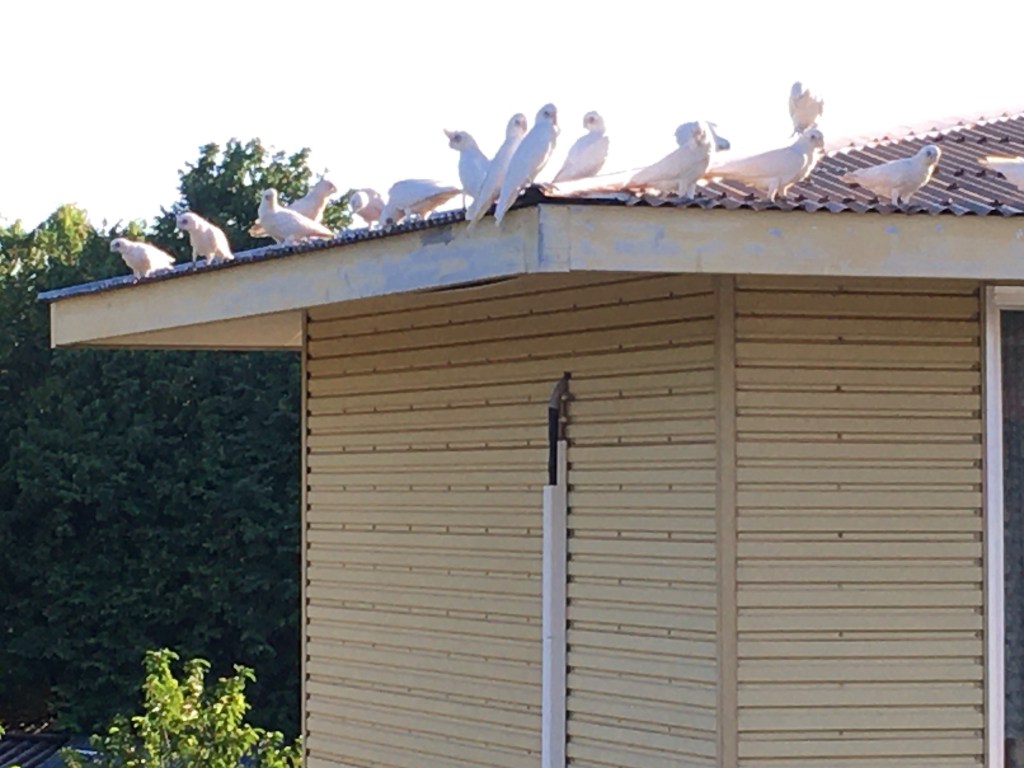
After retiring as a full-time Educator in January 2012, I had the chance to sit back, reflect and learn. There was also within my heart a desire to share with others – especially those who are in preservice training or at the very beginning of their teaching careers – some thoughts and ideas that they might find helpful.
At the beginning of my teaching career – and that was back when education was a lot simpler than it is now in terms of expectations and demands placed on teachers – I was helped in my learning by several educators who were far more experienced than me.
That help came to me in face-to-face conversation, through the telephone, and by letter or correspondence. To say that I was appreciative would be an understatement for in those days of inspection and careful study of newbies by inspectors and superintendents, it was easy to fall foul of expectations.
As I came to the other end of my professional life, the end rather than the beginning, an ambition was born within me and the determination that I hax been helped by senior colleagues and those who had gone before.
It was for this reason that I established my blog with WordPress in 2013, calling it “Education A Life Force“.
In the years since, I have used my blog primarily for educative purposes and through my LinkedIn account have both shared posts on my blog and invited others to my blog by sharing its address. The feedback I get suggests that what I am doing has been appreciated.
I also have a blog for more general purposes not related specifically to education.
There are other things I have done to spread messages, but my blog has been a prime source of helping me to help those in the same way as I was supported by others.
And by the way, I really appreciate WordPress and its management
Last weekend, the Country Liberal Party was resoundingly elected to the Northern Territory Assembly for the next four years.
With some authority, The CLP which had eight years ago been voted out of office leaving only two seats, turned out all around and came back to secure 17 seats in the new assembly. Labour has been reduced to probably for St Se.
Along with many other Northern Territorians, I am looking forward to some of the issues we have confronted, being overcome.
When opening the Australian newspaper on Friday, August 30, I saw the advertisement below.
This advertisement creates significant concern for me, because bringing a plethora of people into the Northern Territory from elsewhere to do all we get devising, guiding, and everything else, Will without doubt, defeat the purposes of this new government.
What we do not need coming into the territory to fill key roles are experts with wonderful CVs, great university credentials and limited experience – if any – in the Northern Territory and its unique politics and specific lifestyle.
We have had the past governments of the Northern Territory undone by the practice of bringing in outsiders who do little other than establish the depth and breadth of their own experience before taking off to greener pastures.
Far too often in the past governments and various of its departments, have been short-sheeted and left floundering in embarrassment by this practice.
We do not need more of the same! We do not need a government with the potential to be undone and reduced to mediocrity because of the infusion of those who, in practical terms, know very little about our territory.
But alas! I can already hear the flow of expressions of interest coming upon us like an avalanche.

The Royal Australian Navy (RAN) fleet is made up of 31 commissioned warships and 16 non-commissioned as of April 2024. The main strength is the seven frigates and three destroyers of the surface combatant force: seven Anzac class frigates and three Hobart class destroyers.
Where does Australia’s navy rank in the world?
Ranked 19th among the 140 most powerful armies in the world, Australia placed 47th in terms of naval power.
BAE System’s Global Combat Ship – Australia will be one of the most advanced anti-submarine warships in the world. The Hunter Class FFGs will be built in Australia by ASC Shipbuilding
The Hunter Class will begin entering service in the early 2030s replacing the 8 Anzac Class frigates, which have been in service since 1996.
The service currently forms the Navy’s Submarine Force Element Group (FEG) and consists of six Collins class submarines. The Royal Australian Navy Submarine Service has been established four times, with the initial three attempts being foiled by combat losses and Australia’s economic problems.
I am convinced that the Western World is living in some degree of ‘independence’ on borrowed time.
Western leadership, actual and potential is like a limp lettuce leaf compared to those leading the communist bloc.
We are going under, and I feel as secure about our future as a drowning man.


With each passing year, the world is becoming ever more complex. Getting from start to finish on issues becomes ever more difficult because of blocks and obstacles inserted by everything from process to the specific – and often selfish – demands of narrowly focused interest groups.
Oh, for a return to the definitive times of the past – times that were more definitive and people had the confidence to back themselves in on issues and decisions of consequence.
People everywhere are talking about peace and creating peace in places where war is presently being played out.
While talking about peace in our world, leaders of most countries preparing, to a greater or lesser extent, for war.
Well, maybe not in Australia where things defencewise just seem to meander slowly, slowly along.
The year 2030 is the one that the Australian Government has proudly earmarked as our country becoming of age in terms of responsibility for minimising the use of fossil fuels and becoming ever more dependent upon renewables.
My thinking about 2030 is that the same vision will be far from the mind of the Australian government. By then if we are not on the brink of a regional war, The war will already be upon us.
Do you think I am dreaming? I wish I was!
In essence, I think we are on the brink of a worldwide Holocaust and totality of destruction.
I can feel it in my bones.
We live close to the T junction of two major roads. When we moved here in 1987, both streets were quiet and relatively free from the likelihood of anything happening.
Fast forward to 2024, thirty-seven years later. Traffic volume has increased at least one thousandfold, and the escalation shows no signs of plateauing any time soon.
Vehicles start moving earlier and end later. The streets are no longer quiet.
I can put up with most things except increased traffic is an outcome of progress. However, there are two exceptions to my tolerance.
The first relates to people on motorbikes who like to rev and rev and rev as much as they can, particularly late at night and in the early hours.
The second increasingly distasteful experiences extend to people in vehicles who insist on tyres screeching and on Herning and on making as much engine noise as possible entering and leaving the T-junction of our roads.
I would desperately love to have a set of tyre spikes and be able to use them To help curb over-enthusiastic bike and vehicle drivers who care not a whit about the noise they make and the offence they create.
Is it wrong for me to think this way?
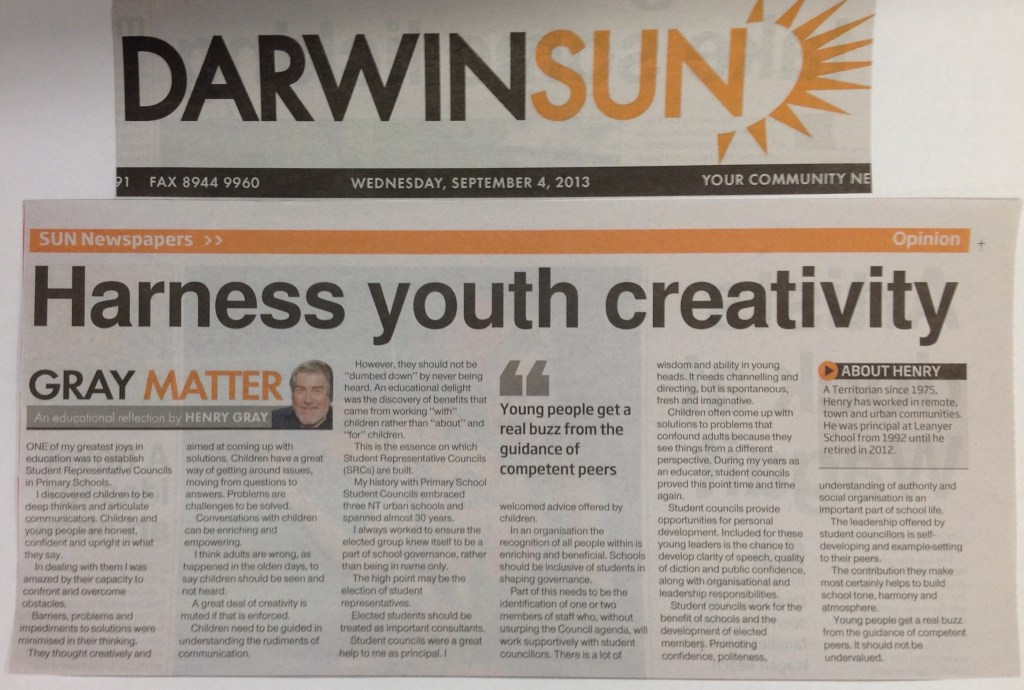
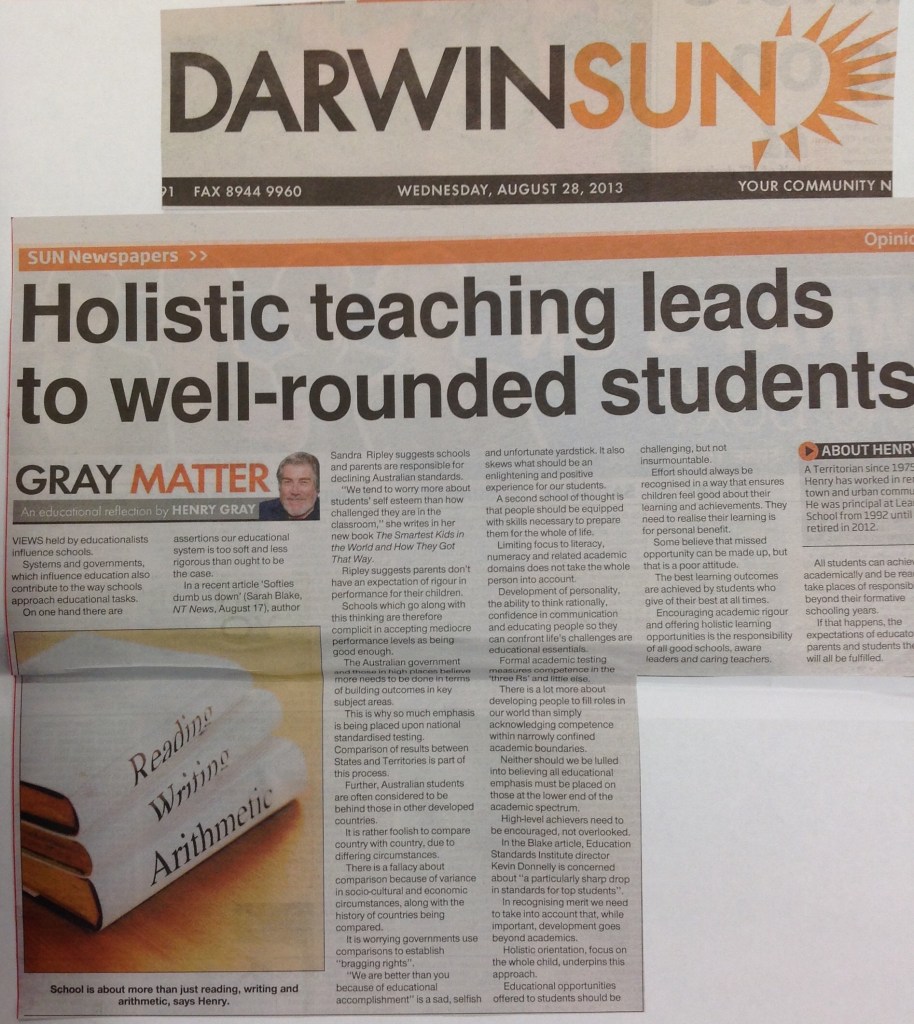

Tenzing Norgay and Sir Edmund Hillary reached the summit of Mount Everest in May of 1953, the British had been trying to climb it for 31 years. However, the summit was reached for the irst time by a Nepalese and New Zealand citizen, with both working together to reach the top of the world.
For poor old Mount Everest, it has been all downhill since then. With the passing of years, more and more people have taken to climbing the mountain. Tens of thousands have had a go, with some not being able to go past one of the interim camps on the way up the mountain.
They have left many ‘gifts’ – indeed hundreds of tonnes of them – on the mountain. Material waste. and human excrement of all kinds. Mount Everest has been turned from the centrepiece of a beautiful, pristine wilderness into one of the most notorious of the world’s rubbish dumps.
A sad and permanent pessimism is all pervasive and sits within my soul.
It is always there and is created by a number of circumstances relating to environment, social and economic circumstances and the increasingly tenuous state of the country – Australia – and the world in which we live.
THERE IS NEVER ANY BLUE SKY
Blue sky,
Has fled from my life.
Replaced,
By ever thickening,
Ever darkening,
Clouds of despair.
From bright light,
To dimming.
Then penumbric reflection,
Of dusk.
Deepening,
Into the black night,
Of depression.
Like an Arctic winter,
The sun,
No longer rises.
My life,
Is without shadow,
Without illumination.
I am
Lost in tundra darkness,
24/7/365.
More and more,
I realise,
Extinguishment,
Is the only escape.

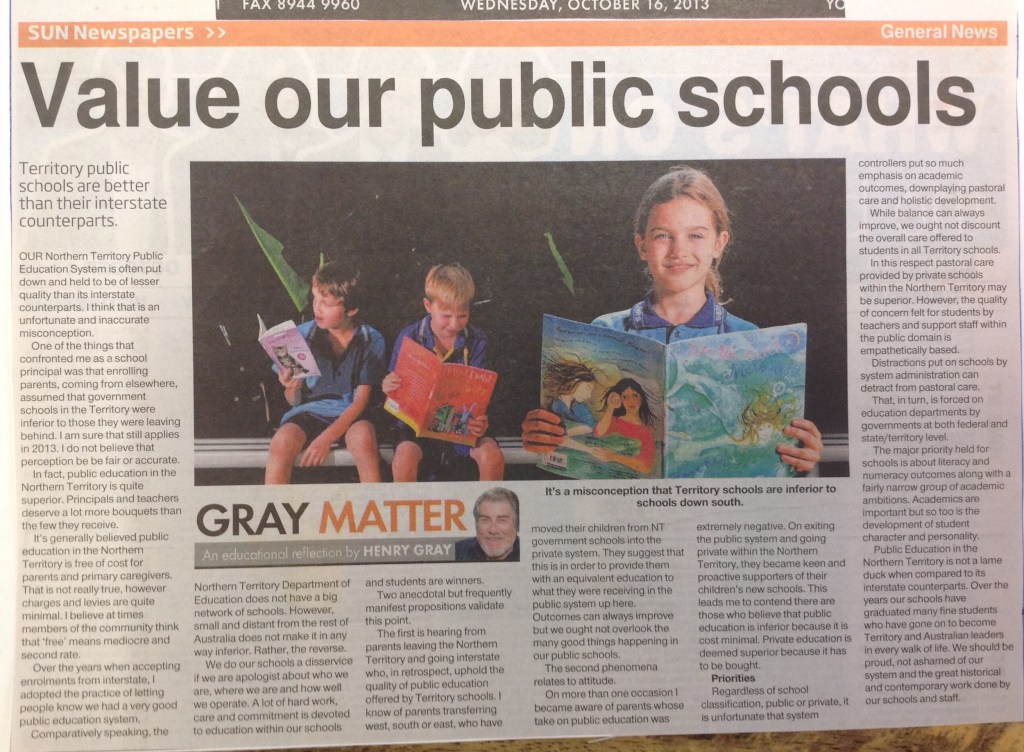
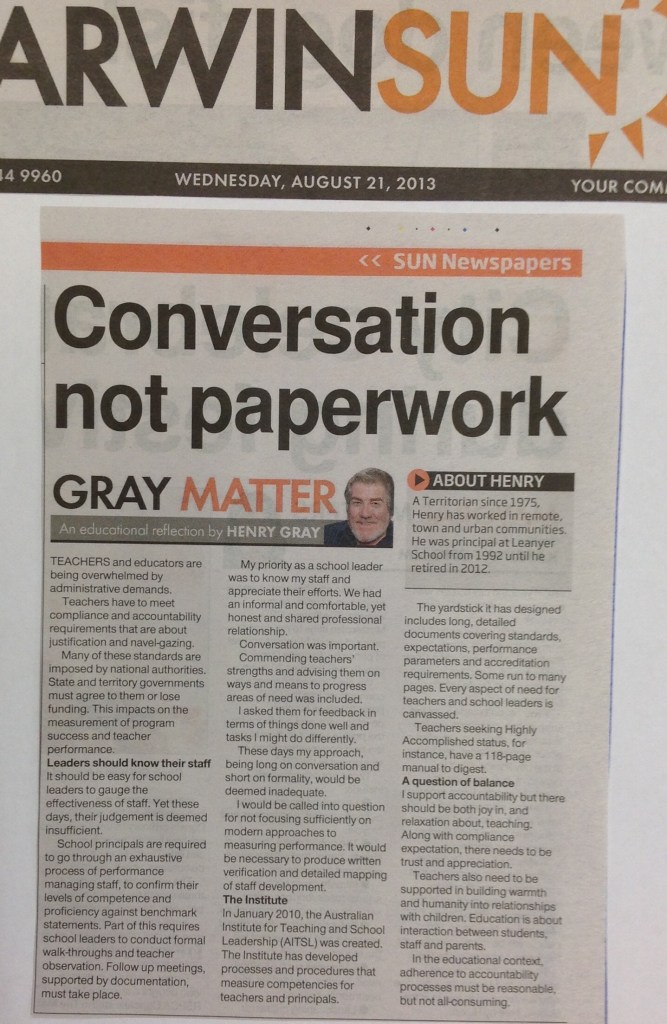
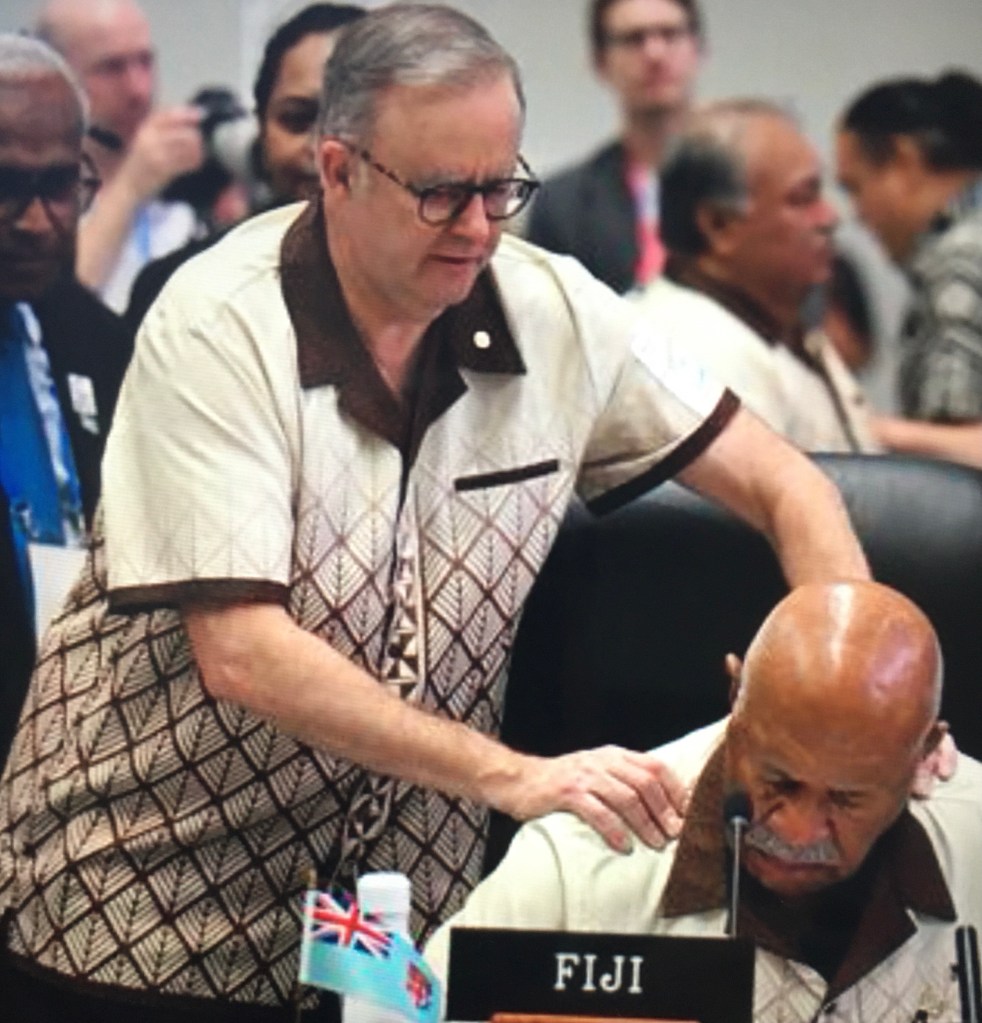
I suffer greatly from a post election syndrome. It might be called “depleted recognition syndrome“.
For me, a wonderful thing in the weeks and sometimes months leading up to an election is the number of pamphlets from aspiring candidates extolling personal and party virtues. Some even contain handwritten messages inviting me to contact them to discuss matters should I so wish.
My letterbox flourishes and I feel valued.
Now the election is over and decisions have been made about who is going to represent constituents in parliament, the mailbox has gone from being overloaded pretty well to nothing at all. No more pamphlets and no more paraphernalia – until the next election.
How on earth will I cope?
I am trying in my thinking to square what is happening in Alice Springs with its everlasting feast of youth crime – and non- fix with the issue being totally out of control – with what is happening with stood-down Yipirinya School principal Gavin Morris, who is on the mat over matters of trying to kerb aberrant behaviour, which has had an impact on the school.
How do I deal with the disparity?
Note: This is from two decades ago.
Teacher development consumed a hell of a lot of my time, and that of my senior leadership group, goes into developing people so that they can do their job better in terms of building kids and achieving, hopefully, the outcomes that we want.
We are riddled with teachers in our system up here who oughtn’t to be teaching.
We also have a hell of a lot of teachers in our system who are got to be’s, not want to be’s.
They don’t want to teach, but they have to teach, and often it’s because they weren’t sufficiently qualified to pick up any other occupation from a training viewpoint.
Have things changed?
. I don’t think that it’s something that we should just sort of lay down and accept.
I mean, I was never a principal who’s a doormat. And all my time – touch wood I suppose – I’ve never been physically set upon by any parent, and woe betide any parent that tried it on because I’d bring the full force of the law to weigh on them, and I’d do that for my staff as well.
But, you know, at the end of the day I think you’ve got to take a position, you’ve got to be seen, you’ve got to have a profile, you’ve got to have visibility, you’ve got to share that with your staff, you’ve got to have them supporting it.
SCREECH, YELL, HOLLOW, SCREAM
Canberra May 29, 2024
I have been listening to the federal parliamentary question time in the House of Representatives.
I am sitting in my car listening to it right now.
Talk about a circus of shouting, hollowing, screaming, and elected members on both sides of at the house. The whole thing is just a total and utter shambles and schnozzle.
I just hope that students and other impressionable people are not listening to the hubbub going on in the Federal Parliament this afternoon. What a terrible, terrible example our politicians are setting to the listening public.
One sensible question and one sensible answer fell into the midst of the session, but that was almost anachronistic.
I was principal at Leanyer School for 20 years before retiring 12 years ago.
Had the Labour government been returned at the election on the weekend, there was a promise that if the Wanguri Seat passed to Shlok Sharma, the school would be upgraded in terms of facilities and staff to the tune of $4 million.
With the CLP winning government, that has gone, with the promise being blown away in the wind of political change.
This issue has caused me to reflect upon the school and its community.

So many electorate offices in Darwin’s northern suburbs at the moment, and in the wash-up to Saturday’s election, are closed and being cleaned by politicians and their staff after so many incumbencies – in Saturday’s election – were terminated by voters. There is some shock and horror at how territory electors removed many politicians from office.
Change is major.
I drove around in Darwin and its suburbs this afternoon as is the case on most afternoons. It’s nice to go for a drive. But I could not help feel emptiness and disappointment today.
Today is the day after the Northern Territory election. Those wonderful posters and core flutes have all disappeared – all 50,000 or 60,000 of them. How empty the streets looked.
There were no faces coming back at me through our windscreen and side windows; no happy smiles sparkling eyes or glistening white teeth. No more political aspirants.
I hope I can cope with what we have now lost.
If people apply for jobs in writing and do not make it onto a short list for interview, make sure they are contacted and advised their applications were unsuccessful. Non-communication is rude.
If people are unsuitable for advertised positions, consider offering them feedback as to why their applications were unsuccessful. Encourage them to up-skill to achieve placement in the future.
GOVERNMENT has talked of cutting red tape and reducing the time and effort business owners have to devote to administrative process. I hope this happens so owners can refocus on prime needs.
It is a sad state of affairs that throws up the realisation that many young people are disinterested in work. Let us remember and appreciate young people who have a positive and caring work ethic.
My hope is that businesses committing to the employment of young people are not disappointed. Some honour their employers. Others are definitely ‘short term’ jumping ship, going at a moment’s notice.
As business or service providers, consider thanking clients or users for patronising your organisation. Appreciation expressed in this way will travel via grapevine to others. Value your customers.
Make sure that ONLINE DETAILS are kept up to date, particularly opening hours. If sites get out of date, they can be a source of frustration rather than a font of information for potential customers.
Consider PROMOTIONS through pages of papers, sometimes produced periodicals and via online writing onto interest groups and conference sites. Consider pamphlet drops and get to be known.
A problem for enterprise in the NT (and elsewhere) is the STICKABILITY of employees, particularly many of the younger set. Workers need to commit to their work, respecting ‘the boss and the business’.
It is important to INVITE CUSTOMER FEEDBACK and their genuine response to service rendered. Seek both compliment and suggestions that might lead to improvement of service delivery.
BRIEF DAILY SUMMARIES can be useful. Summary might include: *Activity/project; * How did I feel (+’s and -‘s); *What did I learn; * Implications for study/ work (tasks), people (relations) and self.
The excitement of the buildup to the NT election has gone. It is all flat the day after.
I feel flat and exhausted. Maybe this sort of excitement is not good for an old man.
The Northern Territory election, predicted by some to be a cliffhanger, was anything but that!
Rather than it being a cliffhanger, Labor fell off the cliff.
Election Day,
The time has come,
Who will have lost,
Who will have won,
We know not yet,
But time will tell,
Will it be red (Labor) or blue (CLP),
Come the winner’s bell?
One mob will cheer,
The other sign,
As time ebbs out,
On Election day,
The hype’s been huge,
What can I say,
What will come to the NT,
Post Election Day.
WORD OF MOUTH support from satisfied customers and happy clients is the best of all advertising for Northern Territory companies. Shoddy service on the other hand will turn on you in this place.
There are business enterprises that do a great job. We need to remember to appreciate them. Small Business Awards programs are one avenue and nomination for recognition is worth contemplation.
Some businesses fall on hard times, with situations beyond their control. When confronted, proprietors need to look at alternative opportunities. The first reaction should not be defeatist. Chin up!
Businesses shoot themselves in the foot when profit at all costs becomes paramount. It is then that the customer and client becomes disaffected. They feel regarded as being pawns in a profit game.
It seems that many businesses are not particularly interested in business enhancement and public relations. Quotes sought for work needed are not offered or reluctantly provided.
APATHY IS SAD!
There are businesses and proprietors who care. For some, there is the challenge of having staff engaged and interested. For others there are staff shortage issues. Employees turnover can be a problem. Skewed motivation is an issue when it is discovered employees are more interested in their salary than their work.
However, the apparent ‘don’t care and not interested’ is certainly inherent within the management of some businesses, particularly trades areas where work is plentiful. Further, there are some business which take the line of ‘the customer owes’ when it comes to arranging work to be done. In fifty year’s in the NT, both in remote areas and Darwin, I have seen and experienced plenty of both caring and disinterested businesses.
THANKS and APPRECIATION need to be built into all organisations. We focus too much on compliance and accountability and insufficiently on genuinely valuing what employees do for businesses.
We should aim to support NT BUSINESSES by preferring them for supply of product and in the letting of contracts for capital works construction. To by-pass local business and go elsewhere is not right.
SELF-CERTIFICATION is a dangerous thing. I believe all work undertaken should be checked by an external certifier, in order to validate the work to both the builder and the client. It avoids pitfalls.
When dealing with matters, aim to play the ball (issues dealing) and not the man (messenger). Too often we sidetrack and in having goes at people overlook the need to concentrate on the agenda.
Coaching, mentoring and genuine patronage need to be part of strong organisations. Confidence and strength needs to be built within. Sharing of ideas needs to be organisational health at heart.
The fabric of organisations is strong if ‘warp’ and ‘weft’ communications are open and honest. Subordinate to superordinate links and peer to peer contexts need to be supportive and appreciative.
The 4 R’s of housing
Reports
Remediation
Renovation
Responsibility
The oldest issue
The longest issue
The most cost focussed issue
The most neglected issue
The most often recycled issue
An issue without end.
English used to be, very definitely, the prime language and the major way of communication in Australia. We learned English when we went to school, including speech, listening, grammar, punctuation, and all the rules that went with the use of our language in oral or written form.
Students going for year 12 had to take English as a compulsory unit – at least one sometimes more than one unit.
When I trained as a teacher, the English Method and its teaching was a number one unit. We had to be able to speak correctly, read correctly, listen carefully, and have no speech imperfections in our make-up.
No longer! The purity of English has turned it into a hybrid form of communication and distorted its expression.
With the inroads of IT end the corrupted language which is part of these platforms, we are drifting in terms of English language competence, from bad to worse.
This acceptance of language mediocrity blows my mind.
My last excitement was 22 August 2020. That was the day we had our last Northern Territory election. I get very, very excited about elections.
My next day of great excitement will be tomorrow August 24, 2024. Four tomorrow is exactly 4 years after our last election.
Elections really, really turn me on.
.Worth a read and reflection.
STUDENTS SCHOOLED IN SMUT
Herald Sun Monday July 1 2024
EXCLUSIVE – Susie O’Brien – Suzan Delibasic
A growing sexual culture in Victorian schools means students are calling teachers pedophiles and sluts, and making pornographic memes and comments about them.
Both male and female teachers are reporting a rise in “casual statements about serious sexual issues” including boys being suspended for catcalls such as “clap them cheeks”.
Slurs also included girls who “call any male teacher who tries to maintain the class rules a pedophile at the drop of the hat”, according to one teacher on an online forum.
The teacher also said they had seen “disturbingly graphic public declarations of sexual acts directed toward female staff and students”.
“We recently suspended a boy who had a Word document with a list of various girls and women at the school and his preferred sex acts for each one,” the teacher wrote.
Another teacher reported one student who said “f–k you bitch” when he was disciplined.
A collection of teachers at one private boys’ school said boys were drawing penises on their school books, threatened to “piss in the corner” if not allowed to go to the bathroom and referred to a group of female teachers as a “coven”.
The Herald Sun has found a litany of social media posts, both from students in state and private schools, where teachers are accused of being pedophiles and having relationships with students.
“(Teacher’s name) after he preys on innocent little Indian boys,” one TikTok post said, while another post accuses a teacher of having a “relationship” with a student.
There are also several degrading posts in which teachers are matched up as couples while being mocked.
Samantha Schulz, a senior lecturer at the University of Adelaide, called for a national collection of instances of anti-social behaviour, abuse and harassment in schools.
Dr Schulz said the offensive attitudes “cut across the sectors” and were found in many different types of schools.
“Little change will be made until the problem is measured and acknowledged, and a unified system of reporting is put in place,” she said.
Dr Schulz surveyed teachers’ comments on social media, reporting “heightened use of misogynistic language and behaviours by male students, some as young as five”.
One teacher said: “Boys are increasingly using misogynistic language towards female students and teachers, telling them to ‘make me a sandwich’.”
Other teachers noted the use of terms like “slut” and “rape-able” used about female teachers. They said boys would make animal noises and grab their genitals and make rude gestures towards women and girls at the school.
Monash University researcher George Variyan said social media extended the reach of such attitudes, operating as a kind of “echo chamber” for Andrew Tate and other influencers.
“We need to do more, and it’s not just about having a one-hour consent education incursion,” he said. “This kind of profane behaviour has always been there but now technology is amplifying this.
“There’s not a single parent or teacher out there who is not concerned about this issue,” Dr Variyan said.
A Department of Education spokeswoman said: “Any harassment of staff by students is completely unacceptable, and schools will take appropriate disciplinary action against any students who engage in this kind of conduct.”
Come Sunday, the Northern Territory election will be all over, bar the shouting. No more will a drive around our streets and suburbs be the same. The 50,000 -maybe more – core flutes have been reflecting the faces of electoral hopefuls for many weeks. It will all be gone a day after the electon.
I will miss the happy, smiling, anticipatory faces.
I am 78 years of age and sh.t scared of becoming a victim of the Australian-aged care system. Metaphorically, I think of aged care as being a shark tank into which people who are old and frail can be too easily tossed.
Non-compliance with standards is far too common. There seems to be a falsification tendency within the system.
Aged care costs plenty but care in far too many places seems to be minimal.
Too many people going into nursing homes become shrouded in blankets of sadness that smother them and their families.
OLD FASHIONED READING IS THE BEST
In these modern times, it is easy to replace traditional reading approaches with device supported alternatives. The proof of this change is confirmed by the number of bookshops that have been relocated away from the Northern Territory, changed business focus or closed. Among these are the ABC Bookshop, Dymocks and Angus & Robertson. While newsagents carry text material, dedicated bookshops are in decline.
Tablets and electronic books are becoming ever more popular, replacing what was a preference for books and traditional texts. Newspapers and some magazines have skyrocketing numbers of online readers, but subscriptions to hardcopy and paper formats are declining.
Electronic reading is an individualised alternative. The interaction is between the reader and the device. Text sharing and discussion does not take place because this reading method is not a group activity. Reading from devices does little to promote text sharing and companionship between readers.
Jackie Sinnerton made this point in a recent column about what should be an important sharing between parents and children. She suggests that “… parents should stick with old fashioned storybooks when reading to their children and ditch the electronic devices … reading from a device or e-book fails to engage children in the same way as a storybook. Parents and children verbalise and interact more when story and pictures are in print.” (Reading more special when it’s in print, NT News, 27 March 2019)
Traditional reading offers interactive opportunities for parents and children. Quoting from a prominent paediatrician Dr Tiffany Munzer, Sinnerton explains that the tradition of parents and children reading together offers “ … interactions, including warmth, closeness and enthusiasm during reading (which) create positive associations with reading (that) will likely stick with children as they get older.” (Op cit).
Although not stated, this benefit will in all likelihood be carried forward and become a habit that today’s children will practice as tomorrow’s parents.
Traditional reading promotes family togetherness. It also supports children in their acquiring of reading, conversational and comprehension skills.
The NT News and other papers belonging to the Murdock stable recognise the importance of shared readings in the family context. From time to time, sets of books which can be purchased by families reading newspapers, are offered for sale at most reasonable prices. This is a positive and practical initiative.
Access to traditional books and sharing quality time focussing on written text, adds value to family life. Children from homes where shared reading and discussion is a family habit, stand to gain a head start in reading, discussion and social sharing which are elements of formal schooling.
MEDIA INFLUENCES YOUTH
From time to time the issue of media influence on shaping the values of young people comes up for discussion.
It is often asserted that what young people see, hear and experience has no influence on the shaping of their attitudes and values. People are scoffed at if they suggest otherwise. Researchers and others connected with empirical study assert that young people know that games are for amusement. Therefore, playing these games will have no impact upon their lives.
I believe that to be totally wrong. Many young people immerse themselves for hours on end, day after day, week after week in playing these games. Common sense suggests this has to impact on their thinking and attitudes.
Young people may become so totally absorbed in this “escape from reality“ that it becomes their reality.
While some of these amusements are quite benign, many of the more popular ones are about murder, massacre, slaughter, and macabre behaviours. It stands to reason that young people (and those who are not so young) who become totally immersed in these activities will be influenced by their addiction.
The fact that so many young people these days are “I“ and “me” people who do not think about others, may well be a result of exposure to online gaming. Lack of manners, slack, disrespectful speech, the inability to focus on real life tasks in school and elsewhere, disinclination toward real life activities all point toward cyberspace influence. The key characters in online games generally behave in a way that promotes heroism through bullying, harassment and other negative behaviour. Can we wonder at this bravado and these attitudes rubbing off on the impressionable minds of youthful gamers?
Common sense suggests that the antisocial behaviour of many young people has its genesis in their indulgent online activities. When cyberspace completely absorbs the minds and the attention of users, something has to give!
One of the most recent games is “fortnite”, which focuses on extremely negative social behaviour. Game changes and modifications always seem to focus on negatives, rather than social decency.
I believe it imperative for parents to be aware of the online games their children are playing. They would be wise to monitor the classification of these activities and the length of time spent in online indulgence.
Without doubt, the games children play impacts on their thinking, attitudes and behaviour. That can have negative consequences. It may result in them making poor decisions that impact upon their lives and their futures.
ALLERGY AWARENESS ON SCHOOL AGENDAS
Schools have to be increasingly aware of food allergy issues. Nut allergies are of particular concern. It seems more and more children are becoming nut sensitive. Recess and lunch box contents can be an issue.
“With severe allergies on the rise, no childcare centre, pre-school or school can afford to be uninformed about the risks to children in their care. They need to arm themselves with information on food allergy and anaphylaxis and create environments that are safer for all.” (Allergy and Anaphylaxis Aust. Website)
Until about 20 years ago, very few schools had policies that considered the risk of food allergies. This has changed. Most schools, particularly preschools in primary’s have policies relating to allergic sensitivities that can confront children.
The most common of these allergies is that relating to the susceptibility of some children to fall violently ill, if they come into contact with nuts. Many schools advertise that they are “nut free zones”. Parents are frequently asked to take into account the fact that foods including nuts and sandwich spreads containing nuts should not be included in children’s recesses and lunches.
While this is restrictive parents for the most part accept that nut contamination could have far reaching consequences for susceptible children.
Two way awareness
It is important for care and caution to be a two way process. Children who are nut allergic should understand their condition. It’s important that they take care to steer clear of any food danger. I believe the children from very young ages, including those in preschool, should be aware of the need for self-preservation.
From time to time there is a worry that children suffering from allergies might be teased or even threatened with contamination. This is usually an unnecessary fear. One of the qualities demonstrated by children is a genuine empathy and care for those whose circumstances are confronted in this way. It’s wise for teachers and children in all classes to be aware of children who may suffer from allergic reaction to nuts.
Schools in which all staff and therefore students are aware of an allergy situation can offer support. A further safeguard is for teachers and school support staff to have epipen training so this can be administered in the case of an emergency.
Nut consciousness and allergy awareness is the part and parcel of modern education. It’s just another duty of care responsibility existing for schools and staff. That duty is helped when parents and students cooperate to help make school environments safe, secure places for all students.
IN THE BLACK – NEVER IN THE RED
I hate debt.
Interest payments on borrowings are dead money.
I always work on the principle of having money to buy and having money to save.
Savings are important. They are enhanced by budgetting to meet expenses.
In budgeting, I ensure that splurging is avoided. Money is not treated in a miserly or penny-pinching manner. It is spent sensibly and saved prudently.
Budgeting is important and accountability critical. I would not have it any other way.
I ABHOR ‘I’
“I“!!
It is a selfish word. It is the most misplaced word. It is a suffocating word, smothering the notion of “we“ and “us“. It is a proud word, forever upholding individuals over the collective.
I was born a baby boomer. Then came the X and Y generations, the Millennials and the Z generation.
Going back over time the focus always used to be on “we“ in terms of the way we put others before ourselves and valued the community above ourselves.
Now that’s all gone! People think only of themselves, and what they want, and to hell with the rest!
Too many politicians are in politics for themselves and not other people. Too many CEOs of retailing and manufacturing companies are in their positions for their good, and what they want comes first. Too many people in government departments are more concerned about themselves and what they can get out of their jobs than they are about the jobs they do and the people they serve.
Service for others used to be heart service. These days it is lip service. It is not genuine but rather pretends. People who put others before themselves are a distinct minority.
Yes, the word “I” is the word I would most like to banish into extinction.
In my whole life, I have only once been on a motorbike as a pillion passenger – and have never actually driven a bike.
On this particular occasion, I was invited to be a pillion passenger on the motorbike owned by my future brother-in-law.
I got onto the bike, we travelled about a metre, and the bike spilled onto the ground and us with it.
What happened then was that the motorbike chain ripped the gusset out of my trousers.
I had to make a quick trip uptown on foot in as modest a way as possible to buy a new pair of pants. The only ones I could get were a size or three too big but that was the way it had to be.
No more motorbike riding for me ever again.
We are just five days away from the official Northern Territory Legislative Assembly election on August 24.
I have been counting the days down in my diary for the past several months, and now it’s down to single digits for days remaining.
Tonight on Sky News there was an hour-long debate between Government Chief Minister Eva Lawler and Country Liberal Party Opposition Leader Lia Finnochario.
I recorded the debate and will watch it tomorrow. In overall terms, I am very, VERY excited about the culmination of our once in every four years election.
Early voting started on August 12 and within the first seven days of pre-polling, 58,000 have already voted. With only around 6,000 voters in each of our 25 seats, seats could change and the election outcome is far from predictable.
I am very excited.


Very rarely do I have a dreamless sleep. Most nights it seems, I dream and dream and sometimes those dreams seem endless.
They are also repetitious, sometimes night after night, the same old, same old. Like trying to end an endless stream of laundry that has to be washed in an old fashioned way and then hung on outside lines to dry.
And in this dream it is always raining and drying washing is almost impossible.
My dreams go on and on. I have done so much to rehabilitate our educational system in the NT. All in my dreams.
Should dreaming be as intense and the memories of dreams as permanent as they become?
I do not know!
It is 2024. By 2019, this man was already the longest-serving PM in Israel’s history.
Turbulence and trouble always seem to dog his heels. He faces stiff scrutiny in Israel for some of his leadership actions. Is this conflict a tool by which he can help stave off this examination?
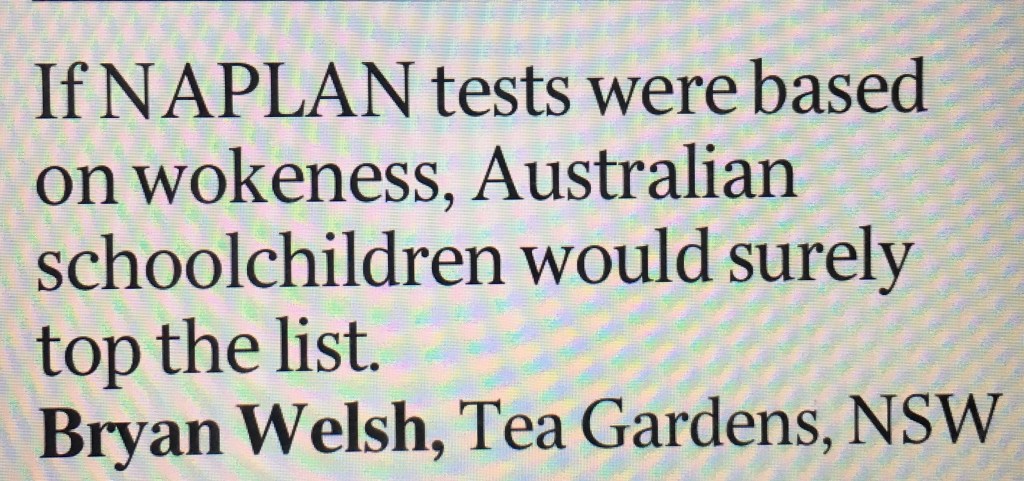

I am sh.t scared of becoming a victim of the Australian-aged care system. I think of aged care as being a shark tank into which people who are old and frail can be tossed.
Non-compliance with standards is far too common. There seems to be a falsification tendency that exists within the system.
Aged care costs plenty but care in far too many places seems to be minimal.
Too many people going into nursing homes become shrouded in blankets of sadness that smother them and their families.
Do politicans, ahead of elections, make promises they know will never be realised?
Why do voters swallow political promises – like fish taking a baited hook – knowing that they will be binned the day after the election?
Why do educators tacitly allow students to set the behaviour agenda in classrooms and act so powerlessly when it comes to behavioural expectations?
Attacking Mr Dutton for his cautionary and common sense approach to an intake of Gazian refugees who have, at best, been cursorily vetted is ridiculous.
It confirms that far too many politicians are all about popularism rather than a rational and logical approach to issues like this.
Australian politicians calling Dutton out for racism need only look at many countries in Europe to see how mass migration condoned by political leaders – without security checks – has brought so many to the brink of disaster.
Dear Mr Sharma,
We are into the last week, indeed the last few days, before voting will culminate in what happens on August 24. All our candidates in all the seats will be getting quite excited with anticipation. I have been counting down the days in my diary and we are nearly there.
Although I would never in a million years dream of standing for an election, as a very, very old man who has been voting in NT elections since 1975, I get very, very excited about elections.
I am often disappointed that the many, many promises are either not kept or are diluted to the point of making little discernible change to the issues they identified.
But so what! Elections tend to be full of what becomes empty rhetoric – and there is always next time!
All the very best for the last days of the campaign.
Regards
Poor Old Henry
August 19 2024
Today is a special remembrance day for Australian defence Force personnel who were conscripted into d3efence service and then sent to Vietnam. Australia committed to supporting America during the Vietnam War.
For so many who went to Vietnam, death awaited. Many others from both Australia and America, lost limbs and in other ways were hideously injured by the atrocities of war.
For Australian returned servicepeople, one of the awful underpinnings ws theway in which they were spurned and reviled by the general poploation. The war was horrible, accomplished little, and hurt many with terrible physical and mental scars.
PTSD was a major affliction while others succumbed to cancer. Many – indeed scores of returnees – lost mariages, families and their lives through suicide.
I am 78 and consider myself ever so lucky that the birthday ballot, by which those conscripted to training and war, did not include my date of birth.
So much sacrifice, so many deaths, and so much loss of access to an everyday and decent life – and for what?

In the Sunday Territorian today, August 18 2024
An Australian past Prime Minister Kevin Rudd, now Australia’s ambassodor to America, is doing a great job in representing our country, He is articulate, astute, a scholar, a person with deep understanding of China and South East Asia and a person who is careful to represent our country to the best of his ablity.
Importantly, and despite some criticism, he is more than willing to establish a reputation as being supportive of everyone he contacts. He represents Australia in a way that may incur expenditures but that is necessary for the interests of the critical representative role he fills.
This has attracted some response (as per the Sunday Telegraph), but expenditure is understandable in the interests of the critical representative role he fills.


Do non-indigenous Australians, individually and organisationally, have to apologise time and time and time again for the perceived historical treatment of Indigenous Australians?
Is compensation for perceived wrongs toward Indigenous Australians being rolled out time and time and time again?
Is there seemingly no end to the huge amounts of money paid in recompense terms to those who were here before us?
Is money often paid as royalties wasted by splurge spending, meaning benefits it might bring, are quickly dissipated?
(but beware rose-coloured glasses)
So much hoo-ha and confusion now exists in this world. It is so very complicated and unstraightforward.
I grew up in a simpler era and find myself increasingly confused as we walk through these modern times.
The clarity of life has become quite kaleidoscopic.
I was once nimble, a fleet of foot, and because of our farm’s terrain with steep and rocky hills, very, very good at climbing.
Alas, now a hack, all that is in the past.
I remind myself of a draft horse these days, for that is what I am like. I’m slow but dependable and will get there in the end.
I won’t be put off by distractions, like a draft horse that goes from one place to another and the completer and finisher of tasks. It may take a little while to complete, but those tasks will get done.
I’ve often thought draft horses are reflective, accepting of people and focused on endpoints rather than distractions.
I hope that is me.
Protecting public service from abuse
Attacks on public servants are not new, but sadly, they seem to increase exponentially in these modern times.
Front-line providers – teachers, school principals, police, paramedics, nurses, hospital orderlies and support staff in government departments – are increasingly on the receiving end of vile and abusive behaviours.
The matter needs to be addressed, but will the government elected on August 24 meaningfully address the issue, or will it succumb to the noisy minority interest group brigade and let it go through to the keeper?
Unfortunately, present rhetoric is unlikely to translate into action outcomes.
Abuse of public servants and those delivering front line services is going from bad to worse.
Politicians, promises and delivery
Throughout my adult life, I have tried to live with the offerings of politics in a way that focuses on issues rather than personalities, on the quality of messages rather than the messengers.
So much of our political system, not only in the NT but Australia-wide, is strong on distorting what opposition politicians say by denouncing and criticising them as people – thus muddying their messages.
Sadly, all political parties, whether in government or opposition, are intense on messaging but very short when delivering outcomes.
Our political system is strewn with broken promises.
 EDUCATION, A LIFE FORCE