Unknown's avatar

About pooroldhenry

I was a long term Northern Territory (NT) Educator, commencing my teaching career in WA in 1970. We came to the NT in July 1975 and worked in remote, town then urban communities. My tenure in the NT was at Numbulwar School (1975- 1978), Angurugu Community School on Groote Eylandt (1979-1982), Nhulunbuy Primary School (1983-1986), then Karama School (1987-1991) and lastly Leanyer School (1992 until retiring in January 2012). I filled the position of school principal from 1977 until my retirement. My career started at Warburton Ranges in WA as a teacher in 1970 then as headmaster in 1974. My major focus on and belief in education is that it develop children and students holistically, preparing them for the whole of life. Educational partnerships involving staff, students, community and department have always been important. I am a Fellow and Lifetime Member of the Council of Education Leaders, a Life Member of the Association of School Education Leaders (recently rebranded as the Northern Territory Principals Association) and was awarded the Commonwealth Centenary Medal for contribution to education. A member of Toastmasters International I am an Advanced Toastmaster Gold (ATMG). I hold a number of degrees and remain actively interested in and contributive to education. A highlight of my 'recent' life (from 2011 until 2016) was contributing to Teacher Education at Charles Darwin University. This has involved marking, tutoring and lecturing in a part time capacity. I was also involved with our Department of Education (NT) as a member of the Principals Reference Group (2012 until 2016) and have worked with others on the establishment of a Principals Coaching and Mentoring program. From 2014, I was the Education Minister's Nominee on the NT Board of Studies until its reconstitution in July 2016. Prior to retirement from full time work I represented the Education Department on the Board (2009 - 2011). I was working in support of students enrolled with the School of Education at CDU from 2012 until 2017. I enjoyed the chance to give back to the profession which over many years has done much for me. From July 2013 until the end of June 2019, I wrote a weekly column about educational matters for the Darwin/Palmerston /Litchfield 'Suns' Newspapers and then the rebranded 'Suns Newspaper' with Territory-wide circulation. This newspaper ceased publication in June 2019. I occasionally write for other papers and am a contributor to professional magazines and online discussion about educational matters. Included were regular contributions to the Australian Council of Education's 'e-Teaching' and 'e-Leading' publications, which ceased as communications organs in December 2017. I hold retired member's status with the Australian Education Union (NT), contributing occasionally to union publications. I am presently working on developing a series of vignettes, aimed at providing information that pre-service and beginning teachers may find useful. They are oriented toward assisting with an understanding of practices that may assist meet professional and teaching needs. To date, 89 of these have been completed. I contribute to general conversations and various groups on ‘Linked In’ and am also a contributor to ‘The Conversation’. I have a blog site at henrygrayblog.wordpress.com and invite you to access it at any time should you so wish. Henry Gray February 28 2020

ESTABLISHING CLASSROOM PROTOCOLS (8)

EXAMPLES OF EXCELLENCE IN SHAPING CLASS PROCESSES … CONTINUED

Mrs Quinn’s Precepts

Mrs Bev Quinn was a teacher at Nakara School. A practitioner for many years, she displayed the following precepts and principles in her classroom. These simple, effective statements were displayed to children of agreed-upon principles.

1. Everyone in this class is unique. 

2. Everyone in this class is essential.

3. Everyone in this class is valued

4. A smile is free.

(And in the ‘time out area’, a timely reminder)

5. Everyone has the right to learn and to be safe and happy.

To be continued

ESTABLISHING CLASSROOM PROTOCOLS (7)

EXAMPLES OF EXCELLENCE IN SHAPING CLASS PROCESSES … CONTINUED

Fran’s Wisdom Rubs Off

Mrs Fran Selvadurai was (and is) the Early Childhood Senior Teacher at Leanyer School. With her Year Three class, she developed the following Belief statement, which the group saw as their Statement of Purpose.

” In Year 3 Selvadurai, we choose to be

RESPECTFUL

SAFE

POLITE AND ENCOURAGING

And to complete ALL our work to

THE BEST OF OUR ABILITY.”

The class has a posting of positive consequences and outcomes that flow naturally from adherence to this statement of purpose:

1. Praise

2. Good comments

3. Stickers, stamps and visible rewards

4. Merit awards

5. Invitation to share good work with other teachers and (then) Mr Gray.

6. Free activities.

Evidence revealed that these statements of purpose and anticipation of the cooperating, caring and sharing process worked very well.

To be continued

ESTABLISHING CLASSROOM PROTOCOLS (6)

CHILDREN NEED TRAINING … CONTINUED

EXAMPLES OF EXCELLENCE IN SHAPING CLASS PROCESSES

In developing this article, I have drawn on some excellent examples of teaching practitionership. I want to highlight some educators who have the skills to set up procedures and routines that excellently underpin classroom organisation.

Louise Wright and the Golden Rule

Louise Wright was a teacher at Leanyer School for a period during my principalship. As an ex-Milingimbi educator, she gained insights into classroom management that portrayed her class as one within which democracy reigned. That was truly obvious.

Ms Wright’s class had the following as its mission statement :

” Remember the Golden Rule and choose to help each other.

1. Choose to help each other.

2. Choose to respect each other.

3. Choose to be kind and caring.

4. Choose to work and learn ‘together as one’.

5. Choose to be happy.”

Curious, I asked Ms. Wright for a small text explaining the class and its operational precepts. She responded in the following terms.

” I asked the children what classroom they would like to have. They all said, “A happy one.” Then, the question ‘How do we make a happy classroom?’ was brainstormed. We talked about choices and being responsible for our choices.

I told the children The Golden Rule: “Do unto others, or treat them as you would like to be treated.” They reckoned that was pretty fair, so we decided to make the choice to be a happy bunch by developing the above attitudes. They saw that those attitudes and behaviours embraced the school motto (Together as One), and so it all just came together. It is working.”

ESTABLISHING CLASSROOM PROTOCOLS (5)

CHILDREN NEED TRAINING … CONTINUED

First and Second Level Ownership

The way classroom procedures are developed confers first or second-level ownership. Children who feel a part of the ownership stratagem are more likely to be compliant and act according to agreed procedures than otherwise would be the case. (There will be exceptions, but aberrance may not be tolerated and quickly corrected in a ‘recalcitrant’ by the collective.) Rules break down and lose impact when there is little commitment and scant adherence on the part of children.

1. It is essential to develop rules ‘with’ children rather than ‘for’ children.

2. Expectations need to be encouraging rather than punitively worded.

3. It follows that if children participate in creating classroom procedures, they will regard them in a prime rather than a secondary sense.

All this points back to the need for teachers with new classes to spend time in a ‘getting to know and understand you’ phase with children and students.

Part of this will be (or should be) developing the class environment through shared shaping of agreed-upon procedures. Several essential precepts come to mind. They are simple, based on common sense, and easily overlooked.

1. Children and students need to be organised

2. Children and students are best predisposed toward being organised if they share in creating organising structures, including classroom rules and procedures.

3. Establishing routines should be based on fair and predictable management and administration. Impartiality and even-handedness are needed in all situations.

4. teachers can’t teach control but should teach in a way that gains control. This happens best in classrooms where the principles included in this paper are applied.

Rules, organisation, routines, and procedures are essential. They need to be established by teachers working in an environment that sees the first days and weeks spent getting to know and understanding children and students in classrooms. Students and their teachers need to get to know each other. This is extremely important and ought not to be overlooked.

Once this has happened and ground rules are in place, teachers can teach with the confidence that underpins successful teaching and learning strategies.

Teachers who go full-on from day one and ignore the need to establish management strategies with children may well set themselves up for a period of tiring and frustrating teaching effort.

CLASS RULES AND PROCEDURES 

I have pointed out that teaching is more effective once controlling devices are in place. It’s not a case of irrevocable ‘locking’ because circumstances may dictate the necessity of change. Fluidity is essential. However, the general precept stands. If controlling and managing measures are in place to underpin classroom operations, teaching will be more effective, and learning will be more meaningful than would otherwise be the case.

Rules and procedures are best developed via memorandums of understanding. That happens when those with a stake and interest in a learning domain contribute to their formulation. Creating is but the beginning. Outcomes and consequences and how those involved adhere to statements and precepts will be mainly based on the shape and wording of documents. All need to feel ownership of the process.

To indulge in lots of ‘dos and don’ts’ and ‘cants’ is opposing overkill.  Children will look. They may shudder, but one can bet they won’t comply, at least not willingly, with forceful and aggressively worded edicts. ‘Softly, softly catchy monkey’ is the smart way to go.

I have pointed out that establishing procedures facilitating class management and control needs to come before teaching. That process is best developed when the whole class feels ownership of what is put in place. Dictatorship is definitely not the best way forward. Classroom teachers should never be educational Idi Amins.

TAGLINE 40 YEARS OLD

I am 78.

I am old.

There is a certain legitimisation about my tagline – “Poor Old Henry.”

I started using that tagline in self descriptive terms around 40 years ago – so at the age of 38, it was a stretch too far. But nevertheless, it took hold and was accepted.

The response used to be when I introduced myself or signed myself as “For Old Henry”, “you’re not old”.

These days I no longer have that response offered, because I am old.

I used to be, am, and will continue to be “Poor Old Henry”.

ESTABLISHING CLASSROOM PROTOCOLS (4)

CHILDREN NEED TRAINING – CONTINUED

Teaching is spoiled and learning diminished if management devices are not in place and practised. Teachers can be too busy and bravely attempt to control, manage, discipline, and teach.  They wear themselves to frazzles and finish up with a group of students ranging from the disruptive (those setting the class social agenda) to the very frustrated (those who want to learn but are not taught because the teacher is too preoccupied to teach).

Processes, procedures, rules, and regulations can be reinforced and satisfied. That satisfaction embraces students, teachers, the class as a community of learners, and the school. When teaching a class, it can be that teachers lose the group. It is ever so important that the initial time teachers spend with a new class is a ‘steady as she goes’ period.

Set the Scene with the Children

A losing strategy for any teacher can be an attempt to set the classroom scene without involving the children. Ironclad rules and tight procedures will quickly lose their impact if they are set without the class’s involvement. Teachers and children must establish class rules and guidelines in concert. The class needs to own its governance. Rules won’t work if they are dictatorially set and then maritally announced. Collectivity, the group contributing to and therefore owning governance, is the intelligent way to formulate procedures.

‘Us shaping’ rather than ‘me saying’ and ‘you doing’ is essential. Groupship is empowering. Without the right approach to classroom management, a teacher can become awfully isolated and almost unappreciated. No teacher wants to be overbearing to the point of being ‘sent to Coventry’ by their class.

To be continued

ESTABLISHING CLASSROOM PROTOCOLS (3)

CHILDREN NEED TRAINING – CONTINUED

The working habits developed with and for children are part of sound routine and procedure. These habits (go) beyond classroom rules and guidelines because they are about individual training. These habits and work attributes include the following.

1. Desk habits include holding a pencil, maintaining paper position, and maintaining writing posture.

2. Use loose sheets of paper, including storage in books and files.

3. Gluing paper (right places) and fixing it into workbooks.

4. Using cloth for wiping up spills. The teacher may rinse the cloth occasionally with children trained to use it automatically to wipe up spills.

5. Correct school bag and lunch box storage with bags and boxes stowed by habit at the start of the school day or the end of lunch eating periods. Included are refrigerator opening and closing procedures, recess and lunch eating habits, and rubbish and wrapper disposal.

6. Movement habits in and around school buildings, including places for walking, running, and playing. Hats are on and off, depending on the area of play. Lining up and readying procedures at the end of recess and lunchtime is part of the ‘movement and motion’ strategy.

Training and establishing routines and procedures MUST be the NUMBER ONE PRIORITY in any classroom at the start of

the school year. Once these processes are in place, then learning can occur. Habits are important. I have read that it takes twenty-two days for a habit, good or bad, to establish. Once established, practice and adherence ensure they stay in place

While it takes time to implement these strategies, it is well spent. Good classroom habits and practices complement class rules and procedures and ensure things go smoothly. The time initially spent on this ordering returns tenfold in benefit terms because interruptions and disruptions are avoided. Boundaries are established. Expectations that have been discussed and programmed unfold practically daily in support of the class, teaching, learning and development.

[The pity is that as children move up the grades or experience different teachers on rotation, the training can lapse, and attitudes can deteriorate. Reinforcement and gentle reminders are necessary. The most important is the need for the school A principal or delegate to ensure that incoming teachers are aware of the need to establish procedures with the class in the ways already discussed. Each teacher must develop their overall routines, procedures and expectations. They are not inherited and don’t pass from one teacher to the next.]

To be continued

ESTABLISHING CLASSROOM PROTOCOLS (2)

CHILDREN NEED TRAINING – CONTINUED

In educational terms, we would do well to think in the same way. Frazer Mustard pointed out that brain malleability – its capacity for development and absorption – declines precipitously from birth to three years old, continuing to fall sharply until age ten. Brain malleability then plateaus and continues a gentle descent that parallels the increasing chronological enhancement of the individual. He points out that young and impressionable individuals have fewer resources for their development than older individuals. I feel this follows in educational terms – to the detriment of children.

Educationally speaking, resources tend to be prioritised toward tertiary, senior secondary and junior secondary students in that order. Then come upper middle and finally lower primary children.  (There is some recent focus on primary-age children, but the longevity of this focus is yet to be confirmed.) There seems to be a belief that the older children and students are, the more that has to be devoted to their education because of accountability factors. It often seems the only thing considered when measuring educational development is how well children do in Literacy and Maths.

I worry about the short-sightedness of measurement tools considering only one developmental domain.

The holistic (I sometimes use the term ‘holistic’ for impact) conception of development is a much more rational and logical alternative. It takes account of children’s social, emotional, and moral/spiritual development. 

There is a sad juxtaposition attached to this issue. On the one hand, we read of the desires of educators to develop children in a complete, rounded and fulfilled manner. On the other hand, we have acquiescence in the ‘narrow gauge’ rather than the ‘broadband’ measurement. We focus on academics, forgetting or minimising our appreciation of the other elements that should be part of the developmental framework.

Routines and procedures are the linchpins on which sound classroom development is predicated. While much of the reutilisation does not directly impact academics, processes and procedures help develop children as whole people. Developing a maturing personality has benefits such as enhanced attitudes to work and learning.

The environment and atmospheric ‘set’ are critical to focusing children and students on work and education. Outcomes are enhanced if procedures are in place to help make things work better.

This training needs to precede learning. Rules outlined in an earlier article translate into positive attitudes, quality routines and a wholesome classroom operational manner. This is on a day-to-day basis, not an ‘occasional’ or ‘sometimes’ basis. Procedures in place become operational precepts, which become ingrained as practised habits. Good habits. Children’s attitudes regarding classroom care, property management and respect for resources build atmosphere and promote harmony within the learning environment.

To be continued

ESTABLISHING CLASSROOM PROTOCOLS (1)

CLASS RULES AND DISCIPLINE

A Precursor to Teaching and Learning

One issue that may confront teachers is the belief that they must teach as soon as they take responsibility for a class of children. This may apply at the beginning of a year, the beginning of a semester, the start of a term, or whenever a teacher takes responsibility for a new class.

It seems teachers feel the need to jump in from the first bell, beginning to reach in a ‘go, go, go’ manner. Some go for it as if there is no tomorrow. Others may approach the task more slowly, but it seems the majority are doing it to make an impact from the first minutes of the first day the class is theirs.

CHILDREN NEED TRAINING

Without diminishing or in any way tarnishing the intelligence of ‘homo sapiens’, I sometimes think about the development of children in the same way I’d consider dog obedience classes.

I think of a delightful dog with a happy disposition and carefree nature.  It is a lolloping, happy, unrequited, playful yet uncontrolled, undisciplined, range-free canine. In dog-like terms, and based on the puppy stage, it is now adolescent and possibly past the age of recovery. Untrained as a puppy, its road to rectification of manners, deportment and attitude will be long and tortuous, with only minimal change to ingrained behaviour being possible. The dog is set in its ways.

Children go through a period of formulation and formation. During their formative years, they are impressionable, responsive to training and development, and receptive.

Just as young dogs need to be taught dog obedience when they are puppies, children must be developed while young. Very young. It is never too early to start with these necessary developments. But it is easy to leave the commencement of this moulding until it is altogether too late.

One of the things that annoys me is to hear people say that the nurture of young children can be left at the moment because they are so young. The message is that there is plenty of time to develop them as they age. What sad, ignorant and arrogant nonsense. The Catholic Church used to say that the age of impression was up to and including seven years. If children were trained in the art of catholic devotion before the age of seven, they remained with the church in a steadfast and generally unwavering way for the whole of life. They might drift off occasionally but inevitably come back to their belief platform.

To be continued

CLASSROOM PROTOCOLS – INTRODUCTION

So often during my years as an educator in school principal, I had the opportunity to study the protocols surrounding teacher and student interaction in classrooms. I became aware of teachers who succeeded and those who were chalkenged when it came to classroom management and leadership.

In my last years as an Educator and following retirement, I gave thought to aspects of the classroom that would be both positive and negative for teachers and students.

The posts that follow will be an elaboration on my thinking. Hopefully, sharing my offer will be useful.

I also add my appreciation for those who offered me so many perceptions and opportunities to be involved in engaging classrooms over the years.

55 Years of time together

My wife and I are both retired. We have known each other for decades and always spent lots of time together. She is the person I have spent the most time with over the years, and evermore now that we are retired.

We have been married for 55 years and grow ever closer.

She is my constant companion and the person with whom I spend the most time.

SOCRATIC DISCUSSION PART FIVE

CONCLUSION

Summarising Socratic Discussion

* Socratic Discussion is ‘issues honest’.

* Socratic Discussion is ‘anti scandal’.

* Socratic Discussion works to open the ‘Johore Windows’ of participants, so they share by giving of their feelings often held back and not revealed.

* Socratic Discussion allows sharing of information, opinion and belief.

* Socratic Discussion considers the presenter and participants.

I urge you to try Socratic Discussion. It takes a little time to set up but it is a conversational method that works. The model is appropriate for children of all ages, primary and secondary. It even works with adults.

Henry Gray

SOCRATIC DISCUSSION PART FOUR

The Facilitator’s Role

The facilitator:

a. Sets the group in a circle ready for the discussion.

b. Reminds of basic rules including courtesy and politeness.

c. Offers a reading or discourse to stimulate interest.

d. Asks a focus question, repeating it twice.

e. Monitors the conversation and pros and cons that follow.

f. Asks follow up questions if necessary.

g. Allows the conversation to follow a natural course, including variance away from the original question – with a refocus as necessary through a supplementary question or questions.

h. Calls ‘time’ at the end of the discussion period.

i. Sums up the ‘ebb and flow’ of the conversation including the time the group was involved in dialogue.

j. Invites participants to debrief, with each person in turn (working around the circle clockwise or anti-clockwise) invited to share something learned or something appreciated during the conversation.

k. Concludes by thanking participants and looking forward to the next session.

Key Elements

* When facilitating, ensure the following:

1. Children do not put their hands up in order to ask to speak. They wait for a pause in dialogue, and speak.

2. If more than one child begins to speak, encourage a process whereby one withdraws voluntarily, allows the other speaker to input, then enters her/his contribution.

3. Without undue intrusion, work to encourage recessive speakers while trying to reduce the impact that dominating speakers can have in group discourse.

4. If necessary and if there is a babble, call ‘time out’. First offer praise and advice. Then name the speaker who will continue the discussion when you call ‘time in’.

5. If necessary, call ‘time out’ and remind children that the focus needs to be on the issue not the person speaking. (In time self realisation will cause participants to recognise that fact automatically).

6. As a facilitator call ‘time out’ for coaching purposes as necessary. As the group becomes more engaged in the process, the need for this intervention will be less frequent.

7. When participants are doing things right, it can be useful to call ‘time out’ and offer praise for the modelling.

Coaching

As Socratic Discussion becomes ingrained within a group or class, it is wise for the teacher facilitator to coach students so they can take on facilitating roles. This might be with the whole class, or with a sub-group of class members.

To be concluded

SOCRATIC DISCUSSION PART THREE

Setting up for Socratic Discussion

A round of Socratic Discussion might follow the following plan.

Remember the leader is a facilitator and a participation encourager. Before starting, remind the group of listening and discussion procedures.

1. Choose a piece of literature and read it to the group or introduce a topic and briefly speak to it.

2. Ask an open-ended focus question. Pause. Ask it again.

3. Make sure Socratic Discussion procedures are followed.

4.Carefully control the time allocated for the session.

5. Offer each participant the opportunity to debrief.

6. Focus on issues, not personality.

Key Considerations

* Discussion leaders are facilitators.

* All participants have a chance to lead if the group is sustained over time. As skills and understanding are acquired, participants gain in confidence and are prepared to accept the challenge of facilitating.

* All group members are equal. There are no hierarchical constructs.

* All participants get to speak. All have a right to question the opinions of others. Everyone needs to be prepared to justify their beliefs, but no one is ridiculed for holding particular and ‘different’ opinions on issues.

* Listening and considering the opinions of others is obligatory.

* De-briefing takes place at the end of each segment and session.

* Seating arrangements enable participants to sit in a circle facing each other. The facilitator is part of the circle. Standing is discouraged because seating places everyone on the same level and negates individual ‘shortness’ or ‘tallness’.

* Equal opportunity and equity are promoted by the process.

* The quality of ‘consideration’ is developed, including respect for each other and looking to draw others into the conversation.

* Discussion is open-ended. No belief is necessarily right, none is necessarily wrong. Commitment to a position and willingness to share, defend and modify stance is a key element of socratic method. Influencing and being influenced by others is part of the group sharing process.

* Confidence in speech and verbal presentation are underpinning aims.

* Participants offer feedback, sharing what they learned with each other. Feedback is sought and must be willingly given. Group members have the right to pass during these personal response sessions if that is a preferred option.

To be continued

SOCRATIC DISCUSSION PART TWO

A Starting Point – Understanding the Model

Socratic discussion focuses on analysis of thought and meaning conveyed by text or information.

The beginning can be an analysis of text messages (as interpreted) to us as individuals.

‘What the text conveys’ is the focus.

Viewpoints and perceptions are debated and defended.

In modern argument issues are often neglected. The presenter rather than his or her message becomes the focus. It may be gentle chiding, regular teasing, serious lampooning or outright derision. The end result is that of people being discouraged from putting forward their opinions on issues. This leads to ‘dominant’ (as in dominating the agenda) and reticent group participation.

Socratic dialogue encourages speakers to bring their own authority (through knowledge) to debate. All opinions on the subject are sought and welcomed. Issue focussed shared participation is the aim.

Reflection is part of the socratic process. Saying what we have to say (rather than being reluctant and holding back) is part of the dialogue process.

Socratic discussion is enriching. It is a method through which respect for others is built.

A key outcome is the development of critical thinking skills, together with an appreciation for the viewpoints of others.

OBJECTIVES OF SOCRATIC DISCUSSION

* Socratic discussion focuses on analysis of thought and meaning conveyed by shared text and discussion of issues that arise.

* Messages conveyed are discussed with pros and cons being part of that discussion.

* Viewpoints and perceptions are debated and defended. People holding viewpoints are allowed to change their minds if persuaded by a counter-proposition.

* The focus of discussion is the OPINION not the person offering the opinion.

* In modern argument, issues are often neglected, with the presenter being the focus. This focus, often negative, can take various forms. With the advent of Facebook, twitter and other social media, personal attack can be quite hurtful, scarifying and even soul destroying. The result can be to discourage people from advancing their opinions on issues.

* Socratic discussion encourages speakers to contribute their knowledge and ideas on issues to the conversation. All opinions on the subject under discussion are weighed and valued. Socratic discussion enriches participants. One leaves the conversation knowing more about the subject than prior to the conversation.

* Socratic discussion is philosophical and clarifying in nature. Those involved consider what they mean and what they know. They learn about information sources and consider ‘evidence’ when adding their opinion into the discussion.

* A key purpose of discussion is to enlarge meaning and understanding about the subject under discussion. A key outcome is honing of critical thinking skills, together with appreciation of counter-viewpoints and the opinions of others.

To be continued

SOCRATIC DISCUSSION PART ONE

SOCRATIC DISCUSSION:

DEVELOPING LISTENING, SPEAKING AND APPRECIATION

My Connection

I first learned of ‘Socratic Discussion’ when attending a summer school program in Canberra during the 1991/92 school holiday period. I enrolled in the workshop out of curiosity.

The deeper into the workshop participants were immersed, the more convinced I became that this discourse methodology was one that would work well in classroom contexts. It had worried me for a long time that children tended to be ‘all mouth and no ears’ when it came to speaking and listening. If someone was speaking, listeners listened only for a brief pause. That pause was licence to verbally jump into the space, whether the speaker had finished or was merely pausing for breath.

Children, along with adult models, tended to criticise peers for holding viewpoints, rather than appreciating speakers for putting forward particular views on subjects. Socratic Discussion offered an alternative, whereby students could be trained or developed as respectful participants, appreciating peers and considering points of view offered in discussion.

How the Socratic Approach helps Children

I believe Socratic Discussion is of benefit to children for the following reasons:

* It dissuades from the old fashioned ideal that ‘children should be seen and not heard’ but in a way that encourages structured rather than an unthinking and garrulous approach to conversation.

* It helps persuade children that ‘all mouth and no ears’ (over-talking and under-listening) need not be a perception held of them as individuals.

* It is a process that balances the skills of speaking and listening in a positive educational manner.

* It is also a process upholding the rights of children to hold and express opinions; it reinforces the value of youthful points of view.

* It highlights the honesty and impediment free factors generally inherent in the speech of young people.

* The value of student voice is reinforced, with children who participate appreciating that worth and value are placed on what they and their peers say.

To be continued

WHAT’S IN A NAME

My comic hero is Phantom. Phantom the icon of goodness and the nemesis of evil in the comic strip has stated “I have many names”.

I too, have and have used many names. Most of these are when writing comments for newspapers in various locations. I have k “Two Left Feet” (sport), “Theatre Buff” (theatre), “Musicofanatic” (music), “Around The Traps” (general matters), along with “Old Man Todd”, “Bill Smith of Rocky Gully”, “Observer”, “Patriotic Voter”, “Statistician”, “Appreciator”, Septuagenarian “, Nutritionist”, “Rejoicer”, “GMH”, “POH”, and” HOP”.

The above are names I have adopted when writing in various contexts.

Of all the names and pseudonyms I have used over the years, there’s one I have not yet listed. It is the name I would like to change into if for whatever reason Henry Gray became non-applicable any longer.

The name I would choose is Edward Kynaston.

VANISHED

My dream chocolate bar has vanished. I can no longer dream of a chocolate bar because the reality is a recent diagnosis of diabetes level two has relegated the dreams and the reality of eating chocolate to history.

It’s now 154 days since I was diagnosed. It is 154 days since I ate any confectionery apart from cough lollies. I have eaten no sweet biscuits.

When diagnosed my sugar count was north of 7.0. I have no wish for diabetes to progress upon me so austerity is my new approach.

TEACHERS – VIGNETTE INDEX

BACKGROUND

I retired from teaching in January 2012 after a career that commenced with my teacher training in 1968/69 and my first appointment in 1970. I was both a neophyte and a greenhorn but was advantaged by a training program that, in those days, taught us to teach. Teaching methodology and substance was part of the deal.

We were given copious practice teaching opportunities and had to pass rigorous observation.

Notwithstanding, over the years, I was supported by many who were senior to me but empathetic toward me.

With time, I determined that on retirement, I would develop a series of vignettes or thoughts teachers in training and neophytes might find of use and support as they went through their early teaching years.

I have shared these vignettes with my WordPress readers. Thank you for your reading and comments.

Attached is the Vignette Index. If you or anyone you know would like copies of the index, please feel free to use them. If you or others would like copies of items to be emailed, I am happy to oblige. There is no cost attached; the support received in my years as an educator was free of charge.

My email address is henry.gray7@icloud.com

Please note I do not have social media accounts.

Regards

Henry Gray

June 4 2024

VIGNETTE INDEX

Henry Gray

1. ‘Imagination’ the inner eye

2. Computer encourages teacher sedentariness

3. Mapping movement (by teachers around their classrooms)

4. Transient students

5. ‘Conversational’ voice

6. Singing

7. Storytelling

8. Oral Quizzes

9. Celebration and celebrating

10. Apologise for mistakes

11. School appraisal

12. ‘Knowing’ your classroom

13. ‘Looming’ – don’t allow your presence be off-putting to students

14. Marking student work

15. Modelling

16. Talking ‘with’ children

17. Computer lockdown

18. Classroom tidiness

19. Mobile phones in classroom

20. Direct teaching

21. Teacher dress

22. Technology can create separation

23. Classroom routines

24. How you are known

25. Interview strategies

26. Ask for help

27. Be cautions when using emails

28. Preparing presentations for PD days

29. Keep a clippings file

30. Build strong networks

31. Make ‘Show and Tell’ count

32. Spelling – necessary or superfluous?

33. Watch out for trendiness

34. Reporting to parents

35. Don’t discount drama

36. More on imagination

37. Desk tidiness

38. Time telling and time awareness

39. Learning takes time

40. Take time to relax

41. Build your CV

42. Writing applications

43. Rewarding the effort

44. Welfare is paramount

45. Socratic Discussion Part One

46. Socratic Discussion Part Two

47. Socratic Discussion Part Three

48. Remote Area service

49. Taxation deductions

50. Yard appearance

54. Room tidiness

55. ‘Sayers’ and ‘Doers’

56. Playing ‘Captains and Crew’ with technology

57. ‘Quiz out’ to lunch

58. Drawing quizzes

59. More on transient and late students

60. Assembly items

61. Programming should be Flexible

62. What people see is the iceberg tip

63. Contact – keeping it professional

64. Record your dealings

65. Short excursions

66. Program carefully and with remembrance

67. Classroom groupings (being constructed)

68. Editing and fixing

69. Classroom work displays

70. Establishing classroom protocols

72. Presenting and speaking in public

73. Recognise the shy contributor

74. Recording outcomes and reflecting on progress

75. Eating lunches

76. Classroom guests

77. Joy season

78. The game of eyes

79. Story-telling skills (extends from Vignette 7)

80. Trip Diaries

81. Silent reading as a learning tool

82. Media awareness (know how the media is reporting education)

83. Extended Excursions

84. Back to school pointers

85. ‘Quizzing’ the neighbourhood setting

86. New Ideas – Wise Choices or Fads?

87. Taking initiative

88. Familiarity with parents

89. Rejoice for others

90. A clean school is for everyone

91. Dressing Lessons

92. Take time to develop dexterity

93. The last fifteen minutes

THREE KEY BOOKS WITH VITAL MESSAGES

THREE KEY BOOKS WITH VITAL MESSAGES

MY ‘TRILOGY’ OF BOOKS

The three books that I nominate are not a trilogy in the sense of being linked one after the other. However, they are a trilogy in the sense of importance to me for the awareness that they create and for the understanding that I need to have.The first of these, “ The One Minute Manager”, is one of a series by Kenneth Blanchard and Spencer Johnson. This was one of the earliest books that I bought, and then every other one in the series. It was from these authors that I learnt the importance of prioritisation, of using time wisely, of being effective and efficient without dillydallying and dawdling while at the same time considering the people with whom I worked, including my student cohorts, over the years.

This book helped me immensely in formulating my leadership priorities. It also taught me about perspective and life balance.

The second book is “Arnhem Land People and Places“ by Keith Cole. This is a significant text and pictorial work that shows how, back over time, there was plenty of business, industry, and progress being made by Indigenous Australians throughout the whole of Arnhemland.

Its research pre-dates 1974, when the Whitlam Government determined that self-management and self-determination were important for Aborigines because nothing much was going on anywhere in their lives that might lead to self-betterment. As Cole points out, there was so much happening before this intervention. Aborigines were participating in creating meaningful futures, which lends a lie to the superficial ‘Whitlam Discovery’ purporting that nothing was happening.

This is an eye-opening book I would recommend to anyone who wants an understanding of history and Aboriginal development in a significant part of Australia – as it happened. From personal experience (I became a teacher in remote communities in Western Australia and the Northern Territory in 1970), I can affirm what Cole has written and illustrated. It was the way it was, and the way it was, was good.

Aboriginal people were being taught and given the skills that time would have enabled them to take full responsibility for the enterprises in which they were working. The Whitlam changes demanded that Indigenous people take immediate responsibility as enterprise bosses. That led to the crash of many enterprises leadership cannot be conferred on people not yet ready to be leaders.

Professor White’s quite recent Quarterly Essay is thought-provoking and should wake within us, a sense of the parlous reality of the modern world in which we exist. After reading his essay, I realised that the world is indeed on a knife edge when future peace and security are considered.

The text is very readable and Hugh White’s message is very important. What he has written cannot be ignored.

TEACHERS – DRESSING LESSONS

Lessons in “dressing“ for transition and Year One children can offer “stitch in time“ benefits. It may sound tiresome, repetitive and therefore monotonous to contemplate teaching little children to tie shoelaces, put hats on correctly, manage their socks, and put on other articles of clothing. However, in the long term, time spent teaching little children these essential personal rudiments can have great benefits.

Take, for instance, the timing of shoelaces. Initially, it will be hard for teaching assistants and teachers to help children tie up the shoelaces individually. However, children “learn by doing“. Observation may come first, but with the instruction on tying shoelaces, some of the children will grasp the methodology. This in turn, will help children who are still in the learning phase.

It’s good practice for children who know how to do the tying and the motivation for children still learning to become independent, so they don’t have to rely upon their peers. Overreliance becomes embarrassing!

If these skills are not taught when children are young, they begin moving up the grades without the ability to undertake these essential elements of personal care. That becomes more than embarrassing; it may become a point of teasing and bullying that gets to be directed at those who are still inept.

Building confidence in young children is essential—building confidence enhances independence in personal care matters.

It’s also time-saving for teachers and support staff, particularly when children need to take off their PE shoes, get ready to go swimming, restore their motor additional dress after swimming lessons, and so on. And a “stitch in time saves nine“ certainly pays dividends for children and their teachers in the longer term.

TEACHERS – A CLEAN SCHOOL IS FOR EVERYONE

Caring for school environments is the duty of all users. If care is not taken, classrooms, walkways, toilets and school yards can quickly become littered and grubby. Most schools emphasise the need for students to properly dispose of rubbish. There are rubbish bins inside classrooms and buildings and strategically located around school, in toilets as well as communal areas.

It can be extraordinarily difficult for schools to maintain a clean, litter free appearance. A drive past some schools, particularly late in the afternoon, reveals a scatter of paper, plastic cups and other rubbish. A proliferation of rubbish detracts from the grounds appearance, giving the impression that all students are litterers. That is true only of of a minority.

Awareness of the need for classroom organisation and tidiness should be part of student development. In many classrooms there is a roster, assigning students to specific tasks. They might include the following:

• Cleaning whiteboards

• Delivering and collecting notes from the office

• Taking lunch orders to the canteen

• Collecting lunch orders from the canteen

• Tidying shelves and classroom storage areas

• Giving out and collecting work books

• Collecting recyclable materials.

All students take responsibility for:

• Tidy desks and personal storage areas

• Stacking their chairs at the end of the day

• Disposing of food scraps and their own rubbish into bins

• Putting litter into outside bins

• Personal hygiene including toilet flushing and hand washing

• Using classroom bins rather than floors for pencil shavings and scraps of paper.

Some would argue that attitudes of cleanliness and tidiness should be automatic. However, recognising effort and rewarding enterprise can help reinforce personal and civic attitudes. Recognition of class responsibility for care and maintenance of school appearance might include the following:

• The awarding at assembly of a mascot that ‘visits’ the tidiest classroom until the next assembly.

• Recognition of the class that looks after the verandahs and public areas adjacent.

• Giving small rewards to children caught ‘doing something good’ when it comes to environmental care.

• Presenting class or principal’s certificates to classes and children who always do the right thing when it comes to school and classroom appearance.

Schools have cleaning contracts. Contractors attend to daily and weekly cleaning together with a ‘spring clean’ during each long holiday period. However, it is up to students and those using the school to look after and take pride in their facilities. Along the way, habits of cleanliness and tidiness that should last a lifetime, are reinforced.

WHY I WILL KEEP MY OLD CAR

I have an ancient vehicle that still goes well. Registration requires an annual check for serviceability and roadworthiness, which is fine. I want to stay with this vehicle because car theft in the NT (Including Hiluxes, SUVs and flashy, expensive and new cars} is rife.

Over a short time, hundreds of vehicles worth millions of dollars have been stolen. If they are crashed, sympathy is heaped upon the thieves, especially if they are killed or maimed. Scarcely a thought is offered to vehicle owners, many of whom are still paying these vehicles off. The fact they are up against it, with insurance premiums hiked for claims and payments still due on damaged, trashed or burnt vehicles, matters not.

My ancient vehicle will do quite nicely.

MY 24/7/365 FOREBODING IS CONSTANT AND NEVER GOES AWAY

Without a doubt, the everlasting worry that occupies my mind is the danger of what might happen if and when China decides to the military force against Taiwan.

I have been worried about this for a long time. That concern has been deepened by my reading of Professor Hugh White’s quarterly essay “Sleepwalk To War” published last year. I’ve read his essay and taken account of his responses to what he wrote.

I am concerned that what Professor White has written could come to pass in terms of its most awful prediction. China is bristling about Taiwan and feels increasingly aggravated by Taiwan’s independence.

America is positioning itself to support Taiwan in the event of any military action by China, against the island they claim as part of the Chinese hegemony.

Australia’s increasing ties to America suggest that if the United States says “jump“ to Australia in seeking the support of any action supporting Taiwan against China, Australia will respond by saying “How high“?

Australia self-praises its independence, but I see it as being a country dependent upon America’s support in so many areas of defence. With that comes a requirement of payback if demanded by the major player.

In my opinion, we are still in the era of the 1960s when Harold Holt promised that we in Australia would go “All the way with BGJ”.

The irony of all this is that leave the country recognised as Taiwan as a nation, because of adherence to the “One China” policy. Having the pie and eating it too comes to mine.

I live in Darwin in the Northern Territory of Australia. Darwin is increasingly militarizing and being upgraded from a defence viewpoint by the Australian government and by America contributing facilities and large numbers of Marines for training exercises. The Northern Territory is developing fuel dumps and upgrading defence facilities in both Darwin and at the Tindall Air Base near Katherine, 270 km south of Darwin, to facilitate ground, C, and air military operations.

I make this point because Darwin would be the first port of call for any retaliation in time of war from an aggrieved overseas adversary. The city has cyclone shelters but certainly nothing constructed in any underground way as bunkers should they become necessary to avoid air or drone strikes.

Along with many other countries in the world, Australia talks of peace but is preparing for war. I worry not for myself alone but for our entire family and our community as a whole.

This concern has been growing upon me for the past ten years and is getting sharper and more constant with time. The anxiety never leaves me.

MY FAMILY BRINGS JOY

Underpinning all I do and indeed all I have done for most of my life, is the motivation of my family and the joy reflecting upon them brings to my heart.

first and foremost my family is the foundation on which my life has been built and to me, my family is that wonderful group of people who have brought fulfilment and joy to my life -each of every day.

TEACHERS – FAMILIARITY WITH PARENTS

As a school principal, I relatively quickly learned that leadership can be challenged by mateship. I always tried to allow respect and professional regard to transcend friendship and personal feelings about the people I worked with.

In the same way, I would advocate very strongly that teachers teaching children in classrooms should not allow friendships with parents of children to get in the way of their professional responsibility to board teaching tasks. Sometimes, It cannot be easy to need teachers to counsel parents about a child. I made it more difficult by “friendship” with the parents. The difficulty can be not wanting to offend the parent by telling things as if they offer home truths.

The onus is upon teachers to separate their professional and personal lives from each other. Allowing a personal relationship to cloud professional responsibilities can have disastrous long-term consequences.

If there is any chance that a conflict might occur, it would be wise policy for teachers to discuss matters with their senior or school principal.

TEACHERS – TAKING INITIATIVE

It can be easy, particularly at the beginning of one’s career, to “bite off more than you can chew” when it comes to task seeking at the school level. To get on and create a good impression, there may be a tendency to volunteer for a task, undertaking an extracurricular school contribution beyond a reasonable point. When this happens, tiredness and ingrained fatigue can set in.

I am committed, meaning many tasks are undertaken tightly, with a few being managed qualitatively. It’s better to study the framework of extras carefully to ensure that what is done is well done! Being the “willing horse” also puts you in a position of vulnerability. People sometimes look for those willing to take on the extras, then dump them unholy.

That is not good for those at the start of their career. It is essential to take time and adjust, making haste slowly and growing into the teaching profession. While people can be too selfish, always considering the “I” factor of the profession, it is easy to go in the opposite direction and become somebody who colleagues and the school use.

As careers develop, it is essential to hit a happy medium. That is personally satisfying and enables people to meet their obligations to others and the profession.

UNPLUGGING

Maybe it’s because I’m old but I find unplugging easy.

I turn off my mind, switch off my thoughts, and drift off to sleep.

Sometimes that is sitting in an easy chair. Sometimes it may be while I’m watching television and going to sleep. Usually, it’s when I go to bed switch off the light then unplug my mind and drift off into dreamland.

The Land of Nod is a nice place to visit.

TEACHERS – NEW IDEAS – WISE CHOICES OR FADS

Too often new, beaut ideas are grabbed and planted into schools in a faddish manner. This may satisfy romantically inclined educators but can reduce children in schools to being educational guinea pigs.

One of the things many educators find anathema is sticking with proven approaches. Methodology which is foundationally solid needs to be built upon in incremental terms. That guarantees that teaching and learning will go from strength to strength.

Sadly, the preference seems to be that of consigning what is working to the WPB. With that done, new beaut systems are brought in as replacement technology. It seems that educators get bored with ‘same old, same old’. They toss out good, proven and working programs to push new, innovative and largely untested practices onto schools and into classrooms.

While change is important, it should be both considered and incremental. Throwing the baby out with the bath water can create learning and knowledge vacuums. Neither should children and students in our schools and places of learning be treated as experimental control groups.

I believe it is essential for classroom teachers to consider changes that might be made carefully. Taking students with you through discussion and pre-consideration should be part of the process.

TEACHERS – ‘QUIZZING’ THE NEIGHBOURHOOD SETTING

This follows on from earlier vignettes on quizzes for children in classes.

Too often, children are insufficiently aware of their immediate, local environment. They can be in the classroom and not know who is next door in the adjacent module, who the teachers are, and so on.

I’ve spoken elsewhere about the importance and the use of quizzes. They can be constructive in a very stimulating manner.

The quizzing model can be extended to create an awareness of the whole school environment, particularly on the part of younger students. This might include sections of the school, functions of particular staff members, aspects of school history, particular school emphases and so on.

Many of our schools are situated not far from nearby shopping centres. For children a little older, incorporating what is connected with shopping centres nearby into the quizzing model can extend awareness and understanding. But too frequently, nobody knows anything about immediate and not-too-distant environments. It’s as if they are wrapped in some personal bubble from which they never emerge. Broadening the base of understanding and extending the comprehension to include these awarenesses is an essential cognitive tool.

Beyond people and places (or places the people), matters about bus routes, names and highlights of suburbs, sporting venues, and associated sporting activities can be included. Then, of course, there are Notary Public, government figures, and the incorporation of local organisations (emergency services, police, medical) that can be included.

The content field for quizzing and paralleling formal studies is wide open! Using the local environment can be an essential part of learning for students. It also helps teachers preparing these activities be more aware than they otherwise might have been.

WHAT IS A FRIEND

Someone honest.

Someone empathetic

Someone who told you things as they are.

Someone who rejoices in your successes.

Someone who is never jealous.

Someone you can turn to for advice and support in times of need.

Someone who values people over property and possessions.

Someone who keeps confidences.

A friend is all of the above and so much more. But remember always that to have a friend, you also need to be friendly.

TEACHERS – BACK TO SCHOOL POINTERS

While these pointers are primarily for parents, knowing and understanding them as teachers might help with reinforcement or reminding if necessary.

BACK TO SCHOOL POINTERS

1. Be confident, not hesitantly or ‘worried’ in conversation with or around children. Doubts rub off.

2. Label possessions – clothes, lunch boxes, – clearly and indelibly.

3. Choose lunch boxes small enough to fit into school fridges. Oversize boxes are often full of emptiness and take up unnecessary refrigerated space.

4. Be aware of healthy food policy for your school. Don’t pack poor quality food.

5. Be aware of school nut policies that are often in place.

6. Cut fruit, sandwiches and other food into manageable portions. Younger children do not get on with whole pieces of fruit.

7. Defence Force children enrol from interstate at this time of year. Know about the support that can be offered through Regional Education Liaison Officer’s (REDLO’s) for primary schools and Defence School Transition mentored (DSTM’s) for secondary schools.

8. Be aware of tutorial support programs for defence children arriving from interstate.

9. Be trustful and avoid being helicopter parents.

10. If parents need to have in depth conversation with teachers, make an appointment at school office for these meeting. Don’t shoehorn in and at Teachers who are trying to introduce children to the year and settle them down.

11. At home time, let teachers dismiss children to pack their bags including getting lunch boxes from fridge without doing it for them. Children have to learn these strategies.

12. Don’t crowd into classrooms and around doors at the start of the day or at home time. ‘Crowding’ leads to chaos. Wait at a respectful distance for children to emerge.

13. For Middle and senior school enrolments, discuss courses and study options with school coordinators within the first few weeks.

14. Most schools have parent/teacher information evenings within the first weeks of school. Plan to attend and ask question about school processes and directions.

15. Most schools have websites. Look them up on Google and read about your school.

16. LET GO OF YOUR CHILDREN FOR THE SCHOOL DAY AND BE TRUSTFUL.

17. Be aware that all teachers establish classroom rules with children. Learn from your children what they’re rules are, so parents and teachers can be together on the same expectational wavelength.

18. Become aware of school homework policy. Read handbooks.

19. If nearby when bringing or collecting children, avoid what can be disruptive conversations in loud voices with other parent. This talk can be off-putting to teachers and distracting for children.

20. Make sure vaccination and immunisation records are up to date and bring these records so they can be copied onto student enrolment data.

21. Ensure that a contact phone number is available to the school and always kept up to date.

22. Where applicable, know the cyclone policy applying to your school. Keeping a copy of this and essential data on the fridge or home notice board is not a bad idea.

TEACHERS – EXTENDED EXCURSIONS

Excursions have always played an important part in the educational opportunities offered children. Some excursions are local. Others are at distance from Darwin and Palmerston but within the NT. Extended excursions to other parts of Australia are not uncommon.

I believe that the purpose and reason of extended excursions should be to enhance educational opportunities for students . It can be too easy at times to overlook the benefits children might receive from these opportunities.

It’s not uncommon for students in the Top End to go on excursion to Katherine, Alice Springs, Jabiru or other centres within the Territory. There is a lot of learning that can be done in these centres.

At times the educational benefits that can be gained by students are minimised because of the visit’s focus. Katherine has extensive agricultural industries. Horticulture, animal husbandry and other agricultural enterprises are part of its development . There is significant industrial development in the town. As well, the centre is an important regional hub for places to the east, south and West.

It’s unfortunate that many excursions don’t to take the actual economy of the region into account. Rather than students becoming aware through visitation of what is on offer economically, they spend their excursion time in altogether different directions.

Included might be a trip down the gorge, hunting freshwater crocodiles the night, swimming in the pool, visiting Card Cutter caves and so on. While these activities might be part of an excursion, taking the other economic activities of Katherine Region into account should in my opinion be a part of the excursion itinerary. That then gives a complete picture of the students of what’s on offer with in the region.

Similar criteria when considering itineraries for other Territory centres called and should be considered.

Plan excursions carefully so that students enjoy what’s on offer but ensure that their learning and understanding of regions is enhanced.


NEVER JOBLESS

Excepting for the first four or five years of my life, I have really never ever been without a job.

As I grew older that extended to include more sophisticated jobs like cleaning dad‘s tool shed, maybe greasing the tractor, Looking after fuelling vehicles on the farm, and so on.

From the age of 15 through 17, I was at a college that required students to offset part of their fees by working; Working was deemed to be good for the soul. In that context, I worked at picking fruit, emptying bins, again collecting eggs but this time from the college’s poultry farm, and carrying out other tasks on the College farm.

For the following four years after receiving my Leaving Certificate I worked on my father‘s farm. That included ploughing, combining seed into the ground, harvesting, turning super bags, cleaning out the fowl house, grubbing doublegee plants out of growing crops, and stone picking in the off-cropping season in order to remove obstacles from the ground that would impede the cultivation in preparation for cropping and various other things.

I also helped run Vacation Bible Schools for my church, was a sometime lay preacher, a youth worker, and various other activities of a religious nature.

In 1968 and approaching the age of 22, I got lucky and managed through the help of a wonderful Education Minister in Western Australia (Edgar Lewis the member for our electorate) to get into teachers college from where I graduated two years later with a teacher’s certificate.

Then came my occupational job for life. After five years in Western Australia working for the Education Department in remote schools, we came to the Northern Territory. I was a teacher and school principal in five locations, two remote one town and two urban from that time until I retired in January 2012. I was ever so glad and still am, for the chance to be a part of educational delivery in WA and the NT.

Since retiring, I have discovered blogging, and LinkedIn, and enjoy writing to share ideas with others, giving back I hope, in the same way as people gave to me during my career.

That will probably continue for the rest of my life.

I’ve also, since 2012 (and actually back in the 1980s as well), worked with our university in teacher education as a part-time lecturer, observer of trainee teachers, editorial leader and marker of assignments. I also did a bit of work online in the later part of my time with Charles Darwin University, with students who were teachers in

training.

These days, I spent some time acting as The Editor for my grandchildren who are getting into the upper secondary levels of schooling. I’m happy to do that, because they’re sort of assistance that students need these days from teachers is often not provided – I guess I was lucky back in my time is the student when that first hand contact and into personality was the part and parcel of teaching and learning; not just the downloading of material online, giving it to students, And telling them to do this or that or the other project and research.

I also am in “urban farmer”. I grow pawpaw plants from seed, give away the plants and also give away fruit. It’s my part of helping people and it’s done gratis.

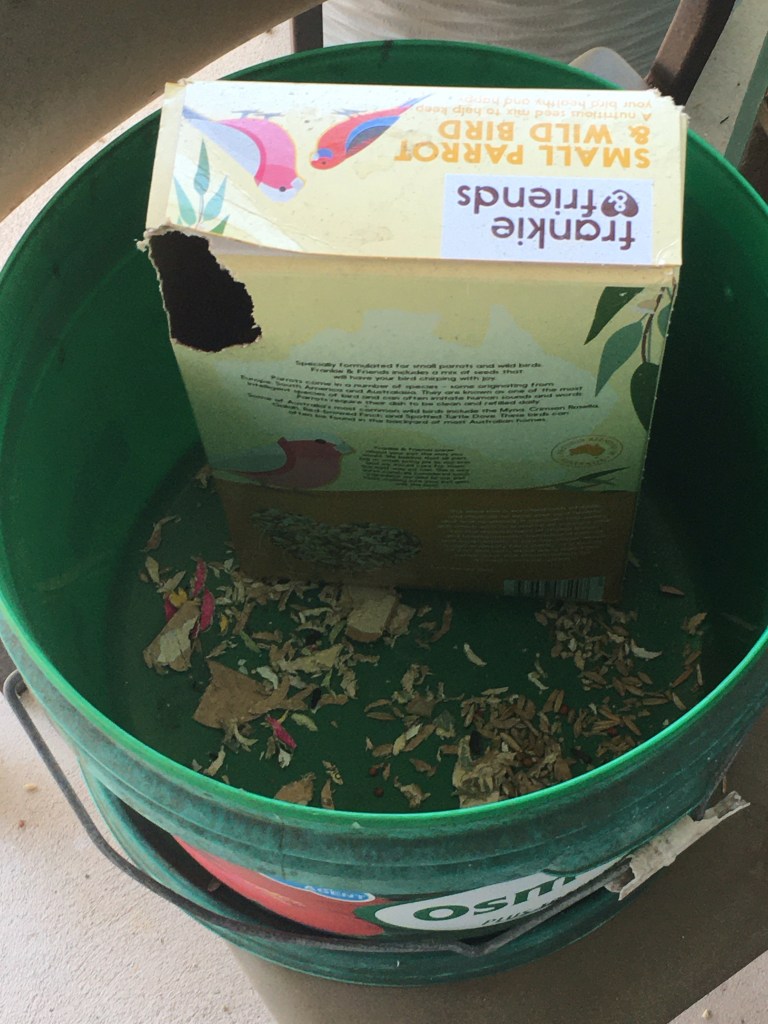
It’s true to say I have never really been without a job. Right now I am helping birds displaced by clearing to have a place offering food and water.

I have never really been without a job.

SCREECH, YELL, HOLLOW, SCREAM

Canberra May 29, 2024, heard on radio in Darwon

I have been listening to the federal parliamentary question time in the House of Representatives.

I am sitting in my car listening to it right now.

Talk about a circus of shouting, hollowing, screaming, and elected members on both sides of at the house. The whole thing is just a total and utter shambles and schnozzle.

I just hope that students and other impressionable people are not listening to the hubbub going on in the Federal Parliament this afternoon. What a terrible, terrible example our politicians are setting to the listening public.

One sensible question and one sensible answer fell into the midst of the session, but that was almost anachronistic.

And these are our leaders!!

TEACHERS – MEDIA AWARENESS

There is a deep and abiding interest by the community at large in matters of an educational nature. Increasingly print, radio, and television coverage refer to educational issues. Some people pay little attention to what is being reported about education because they feel it to be inconsequential. There is also a belief that what is reported, misconstrues facts. That to some extent may be the case; however it is important to be aware of the way education is trending within the community.

Retaining information about education can be useful. There are various ways and means of doing this, but it works best if collation is organised regularly (almost on a daily basis).

Newspaper items can be clipped and pasted in a loose leaf file, indexed book, or similar. Indexation is important as it allows you to quickly refer to things you may need to recall.

Photographing news clippings using an iPhone or iPad, saving them to your pictures file, then creating an album for clippings is another method that works well.

Scanning clippings and saving them onto USB stick is a method that works well. Again, indexing the USB file helps. It may be that you choose categories to index under, rather than an “A” to “Z”approach.

Clippings files can be backed up on iCloud or otherwise saved onto computer or USB.

From experience, the use of newspaper clippings when it comes to social and cultural education, cruising for general knowledge, for stimulating discussion in class, are but three ways in which they can be of use. Clippings can also be used to stimulate the content of debates, the writing of persuasive arguments for older students and so on.

Awareness of issues can stimulate professional discourse including helping to shape the way in which members of staff develop collaborative programming to support teaching in schools.

I believe teachers would find a study of media and the establishment of a clippings file useful and worthwhile.

TEACHERS – USE SILENT READING AS A LEARNING TOOL

“Silent reading” often takes place at strategic times during the school day. Children are engaged in “silent reading” (which is often anything but silent) straight after lunch or a break periods. This gives teachers time to organise and fine tune preparation for lessons to come. Sometimes silent reading is encouraged because teachers need time to complete records, work with individual children, and so on.

It’s often felt that silent reading does not really fill a useful or meaningful purpose in school programs. At best, it is often random and concludes with children putting books away. There is a possibility they have enjoyed reading, but with little sense of completion.

Silent reading is an activity that can be made engaging and meaningful. A working strategy might be as follows:

Ask children as they read to take note of the following. You might even develop these or similar markers with the class before this activity becomes operational.

• The title of the book and the authors and illustrators.

• The construction of a verbal summary about the book.

• The development of an understanding of that can be shared, of the main characters in the text, or what the text is about if it is nonfictional.

• A synopsis of what the reader has learned from the text to date. Every story has a moral, and every factual text A message that is being sold.

• An indication of whether the text is more or less appropriate for younger or older students and why.

• Are recommendation. Would you encourage others to read the book or not; why you’re making that recommendation.

Encourage children to take brief notes as they read, to cover the points listed above. You might also create a template or rubric that outlines these elements, with children to fill in the blank’s.

At the end of the period, ask a number of children to share their learnings as outlined. Oral expression can be assessed. Children are encouraged to build confidence through this sharing and that is the point should be understood.

It is wise to check the names of children on a list with a date to show when they have presented to the group. This means that next time the activity takes place, other children can be selected to offer their verbal summaries.

This could be pre-organised on a roster or keeps as a ‘cold turkey’ activity so children do not know when they will be selected.

Any activity that enhances “silent reading”, adding meaning and purpose is worthwhile. Value adding is an outcome and extension, enriching comprehension and oral expression opportunities

LIFE’S ACTIONS MORE IMPORTANT THAN CHURCH RITUAL

Brought up as a young person in a religiously inclined home, I practised religion and felt myself to be affiliated with a particular church followed by my parents during my formative years. That continued into my early teens and really up until I turned 20. Within my church I served as a lay preacher, are used leader, a person who participated in running Fake-ation Bible Schools for young people in our hometown and so on.

Not so long after I turn 20, I was appointed as a delegate to the State Conference held each year by our church. during that conference I was astounded to learn that money operation as in all churches belonging to this group were regularly asked to give, and give until it hurt, was not being used for the furtherance of the work but rather by the church leaders to amass assets. These assets included the purchase of property for investment and so on.

I asked questions at the conference of our leaders and those who were there as delegates. I was it that we were being urged to give money to further the churches work within Australia and overseas, when investment and by implication bank balances seem to be the important thing and the way that money was being directed.

In response to my questioning I was more or less told to “mind my own business”. Decisions impacting upon the church were made by people in positions of authority and it was not my right to question the propriety of what they did.

For me, being involved with organised religion and the visibly practising Christian began to cease at that point in time. I remind affiliated with the church only to satisfy my parents. That made me feel somewhat hypocritical because what I was on the outside was not how I felt about religion on the inside.

With the passing of time I disaffiliated from the church and from organised religion and that remains the case to this day. I have however tried very hard throughout my life to live in a decent and principled way and to help others per my mission statement which I will re-list at the end of this response.

For a long time after my severance from religious formalities and church practices, I felt guilty about what I had done and thought that I had somewhat apostatised. Some years decades passed, and I wrote a letter to my parents, who felt guilty about my departure from the faith, to point out that they had not failed me – that I had made my own decisions about the church and religious affiliation. I hope when they passed, it wasn’t with the feeling of guilt that they had misguided me in some way.

It was about going back to that conference and considering the priority is the church exposed and the practices (it seemed to me) in which the church engaged.

My parents had wanted me to train as a minister and become a pastor of the church. That of course never happened.

However, I think that my life as a teacher, educational leader and a person working with others has enabled me to fill the work I’ve done with the same (hopefully) positive outcomes for them (and myself) that would have ever been achieved had I followed my parent’s occupational wishes.

OH THE STORIES I COULD TELL

Do I remember life before the Internet?

Do I what?

I did the majority of my living – along with my family – in all sorts of places that were remote. That was back in the days of :

Emergency traffic by telegram at around $.60 for 12 words.

Transmission of telegrams from the Post Office and dispatch points that were quite public.

All mail sent by road with days and weeks taken for delivery in response.

Banking transactions if they were available had to

be conducted manually.

Long-distance telephone calls, called prank calls, cost several cents per minute, And we are often limited to calls of no more than three minutes.

It was all so interesting. Stories I could tell about what it was like a legion – and in some places I have published comparisons.

But one good thing about not having the Internet was that social media, being non-existent, was not the bane and often the evil of what it is today.

THE FIRST OF 290 COLUMNS

Starting in 2013, I wrote weekly column column on the Educational Matters or the Northern Territory news. These columns were regular until the newspaper changed its focus – some 290 columns later.

My first column.

Note: When asked to write, I accepted as a volunteer and was not paid for what I wrote.

ORAL COMMUNICATION IS A MUST

for the whole of my life, I have tried to be a person who is a good listener, a clear speaker, a careful evaluator of what others say, and a person who has tried to develop in others excellent speaking and listening skills.

For a long time, I was a member of the Toastmasters Club. That was in the Northern Territory of Australia. I became an Advanced Toastmaster at the highest gold level.

For many decades I focused on developing speech and speaking in a personal sense and through coaching and mentoring others. I think it is an area in which I am quite competent.

A worry that I have is that in becoming older – I am now 78 – time will see me lose my speech and speaking skills. I do not want that to happen and try very hard to maintain correctness in all areas of oral communication.

This is a field of critical importance and I worry that the skills are becoming lost by people who prefer to Communicate through fingers and text using electronic devices.

It’s Time to Stop the Breast Beating

I wrote this and it was publshed in 2013. Has the ‘attitude of supplication ‘ decreased. I think not.

In terms of educators meeting learner needs, it is time for us to stop the self-flagellation and breast-beating that accompanies educational accountability. “Are schools and teachers meeting the needs of children and students” is a question that needs repositioning.

Rather than schools and educators being dumped with loads of accountability for educational inputs and outcomes, it’s time for quizzing to turn to children and their parents. Self responsibility on the part of students and their parents should be the challenge. Are we meeting the needs of learners needs to be looked at in terms of “are children and their primary caregivers doing their bit toward the development of our next generation”.

I once had a conversation with a Principal colleague who told me of a meeting with parents over their child who was particularly and negatively challenging his schools’ culture and ethos. The parents upbraided the Principal for his lack of care and concern. They demanded he and the school do more for the child. The principal offered a conditional response. He and the school would do better for the child for the eighth of the year the child spent at school, if the parents would commit a greater effort for the remaining seven eights of the year – the time he was in their care.

This story goes to the nub of the issue.Schools have a role to play in child and student development, a matter educators have never shirked. However, parents are the primary caregivers and over time the gradual off-loading and dumping of rearing responsibilities onto schools is misplaced and alarming.

The notion of school being a place where fizz has to be applied to every learning situation in an effort to engage learners is equally as galling. Schools need to be fun places and learning needs underpinning with enjoyable experiences. However, there are vital aspects of learning that are repetitious, mundane and focussed toward cognitive appeal. Not everything can be bubble and froth because learning is not about fizz but about substance. 

Metaphorically, schools add the yeast added to the bread to make learning rise in the minds and souls of young people. That means biting onto key issues and chewing on the meat of learning opportunities.

The thought ‘best’ education has to be about froth and bubble in order to appeal to young people is a sad commentary on modernity. It also suggest that deep learning is unimportant.

Motivation and Inclination

There seems to be a belief held within society and certainly implied by Governments that all students are inclined learners. Nothing could be further from the truth. Deliberate disinclination is an ingrained element within the psyche of many children and students. Non-respondents may reject learning opportunities by passive resistance or by more belligerent defiance. All rejection is negative, confirming that while you can lead a horse to water you can’t make it drink.

If children come to school with attitudes of deliberate disinclination and defiance, it is hard to move them from negative to more positive attitudes without parental awareness and support. That is not always forthcoming and in fact parents often take the side of children, being in no way prepared to support the efforts of school staff.

It is behoven on children and students to recognise and accept responsibility for their actions. Educators are often too quick to excuse children and parents and too slow to recognise that the onus for change and development should be vested on the home as much as on the school front.

Sadly in this day and age, with parents compulsorily committed to work and earning, the upbringing and development of children, in almost total terms, is thrown at schools. I mean this quite literally because the social/government and system imperative plants this responsibility on and into schools. Many school educators feel they are being ‘commanded’ to bring children up. When societal failings become apparent, schools and their staff members are held up as being the major contributors to that failure. parents, prime carers and students themselves are home free. 

That is totally wrong. The wrong people and institutions are be3ing blamed for shortcomings, when the responsibility belongs to those whop are excused.

TEACHERS – MEDIA AWARENESS

There is a deep and abiding interest by the community at large in matters of an educational nature. Increasingly print, radio, and television coverage refer to educational issues. Some people pay little attention to what is being reported about education because they feel it to be inconsequential. There is also a belief that what is reported, misconstrues facts. That to some extent may be the case; however it is important to be aware of the way education is trending within the community.

Retaining information about education can be useful. There are various ways and means of doing this, but it works best if collation is organised regularly (almost on a daily basis).

Newspaper items can be clipped and pasted in a loose leaf file, indexed book, or similar. Indexation is important as it allows you to quickly refer to things you may need to recall.

Photographing news clippings using an iPhone or iPad, saving them to your pictures file, and then creating an album for clippings is another method that works well.

Scanning clippings and saving them onto USB stick is a method that works well. Again, indexing the USB file helps. It may be that you choose categories to index under, rather than an “A” to “Z”approach.

Clippings files can be backed up on iCloud or otherwise saved onto computer or USB.

From experience, the use of newspaper clippings when it comes to social and cultural education, cruising for general knowledge, for stimulating discussion in class, are but three ways in which they can be of use. Clippings can also be used to stimulate the content of debates, the writing of persuasive arguments for older students and so on.

Awareness of issues can stimulate professional discourse including helping to shape the way in which members of staff develop collaborative programming to support teaching in schools.

I believe teachers would find a study of media and the establishment of a clippings file useful and worthwhile.

TEACHERS – TRIP DIARIES

While children and their families are not encouraged to take annual leave during school term time, this can be unavoidable. We cannot dictate to the parents when they take the children from school for holidays because the circumstances are beyond our control.

Parents will sometimes come and approach schools and teachers for work to be done while children are on holidays either interstate or overseas. It really works! The work state is that best sporadically completed. Young people also feel it to be an imposition and don’t approach tasks with a positive mindset.

I was often confronted by families taking leave during school time. Home work as described above was never said. Rather, I’d sit down with children, talk with them about trip diaries and encourage them to compile a journal that covered the holiday period.

Children who accepted this task were rewarded when they returned to school. This happened in a number of ways:

Children had their diaries read, were able to share them with classes, and received certificates commemorating the work that they had put into their journals.

Students shared their journals with their classes, educational units, and often at unit or house school assemblies. One of my methods was to interview children during assembly using an “question-and-answer” technique.

On occasion, local media was contacted meaning of the children were featured in the local newspaper with the work they had done being acknowledged.

Encouraging children to complete diaries commemorating their travels gives them and indelible and everlasting reminder of the undertaking. It has the added benefit of encouraging them to keep records, the strategy that will stand them in good stead throughout life.

Consider this as a strategy that may be useful during your teaching career.

TEACHERS – STORYTELLING: A WONDERFUL TEACHING SKILL

Story telling as a part of the teacher’s repertoire should not be allowed to die. If it is fading, consider the need for its resurrection.

Story telling has become a lost skill for many teachers. The emphasis on its importance has diminished because these days the use of technology is substituted for old fashioned story telling by voice. It is now more fashionable to sit children in front of computer screens or smart boards, with DVD’s doing the story telling.

I’d encourage teachers not to allow story telling to become a lost art. Children of all ages love story telling.

There is the ordinary and more usual form of ‘once upon a time’ story telling. This narration approach is embellished if the narrator adopts a characterisation role, with different vocal impressions representing characters within the story.

There are other variations.

Rather than being a narrator, the storyteller can get inside the story by assuming character ownership. Telling a story for instance “Goldilocks and the Three Bears” from the viewpoint of being one of the characters and embellishing the story from that particular character’s viewpoint, adds a quite exciting variation.

The “character” chosen need not be animate! Using the same story, the storyteller might choose to be the plate of porridge, the broken chair, the disappointed “too hard” bed, or any of the other artefacts in the story.

These variations can appeal to the imagination of children and to get them really fired up. Storytelling lends itself to extension in drama, art, and elements of science, maths and written expression.

I believe it quite possible to link storytelling and extensions to elements of the curriculum. But it takes engagement and getting outside the purist form of written documentation (The way in which curriculum documents often dictate resources and approaches) in order to achieve these ends.

HAVING IT ALL

To me, “having at all“ means to be happy and contented with life in terms of my contribution to that life (which includes many people, family, personal, and professional).

It also means to be happy and satisfied with what life has given to me through actions and interconnections that I have with people.

It also means to have been satisfied with what life has built for me not just immediately but over the many years I have been on earth.

There are challenges, there are celebrations, there are people and there have been people over many years with whom I have engaged.

In so many ways I’ve had it all. I did my latter years I’m still having at all.

TEACHERS – THE GAME OF EYES

The ‘game of eyes’ is an interesting one to play with children and students. Rather than asking students to put up their hands to answer questions, let them know that you will be answering questions and then making eye contact with the student who is being “asked” to answer the question.

This is an alternative way in which comprehension exercises, conducting impromptu quizzes, and otherwise engaging the focus of children can be undertaken.

Eye contact is confidence building. Having children interacting through eyes is a great way of involving the whole class.

If eye contact is made with a student who isn’t responding, make a gentle note of that to the child and move on.

Using this method of eye contact is a great way of dismissing children for recess, lunch and at the end of the school day. Rather than naming children to leave or having them all bolt at once, let them know that the child whom the teacher is looking is the student designated to leave.

It can be a case of “when your eyes touch my eyes that your signal to stand and leave”.

This method is a superior way of identifying with children. When the child rightly identifies that she or he is being looked at by the teacher, a word of acquiescence or praise can be a good thing.

Try it with the eyes.

TEACHERS – JOY SEASON

The last weeks of Semester Two offer students, teachers and school communities the chance to enjoy activities that can be overlooked. For many schools these weeks encourage celebrations that go beyond academics. Tests and exams are over. Primary and secondary school students are about to enter a Christmas holiday break. This is a period that allows for some quiet reflection on the year to date. It provides a chance for students and staff to participate in some of the more non-academic but vital pursuits associated with school experiences. Activities that help build school spirit and camaraderie can include the following.

* Major assemblies featuring class performances.

* Dry season concerts, often held outside at night.

* End of semester school discos.

* Overseas exchanges with sister schools.

* Intra school athletics carnivals .

* Shared sporting and cultural activities between schools.

* School community breakfasts.

* Open days and school fetes.

The focus on academics and assessment programs, poses a danger that these respite times and activities can be put on the back-burner or overlooked altogether. Including these activities provides balance for students. They should be included in school calendars.

The social and emotional aspects of student development are supported by these and similar activities. They offer children a chance to relax and recognise non classroom abilities in each other.

Not wasted time

Some would reason there is no place in our schools for activities of this nature.

Their argument is that each minute of every school day should be devoted to the academic aspects of school life. However, children and teachers are human.

They need and deserve the chance to associate though activities designed to build school spirit. The importance of these shared opportunities cannot be overstated.

Building tone, harmony and atmosphere within schools is an enormous challenge. Visitors gain instant impressions about how the school feels. School spirit grows from the synergy or collective energy developed within and between students and staff. It’s the association that comes from sharing happy times that builds toward the tone and atmosphere sensed by visitors and others. In turn, the reputation of schools is either positively or negatively judged by this feeling of comfort.

It is sharing collective times together that helps in building these perceptions. The “joy times” help create an everlastingly good impression about schools. That is appreciated by those within and by the community at large.

TEACHERS – STUDENT WELFARE IS PARAMOUNT

WELFARE IS PARAMOUNT – BASED ON AUSTRALIAN MODEL

Safety and security for children are paramount entitlements. It doesn’t always follow that these needs are being met for children. Sadly in these modern times children seem to be increasingly the victims of those who prey upon them. Sometimes evidence of this may be obvious but often that is not the case.

If teachers believe, from observation or from conversation with children, that something is untoward, it’s important for them to report their concerns. Northern Territory law obligates people to report matters of concern is a punishable offence.

Classroom teachers, particularly those new to a school can find themselves in an invidious position when it comes to reporting. Raising matters of concern with senior teachers, assistant principal or principal (depending on the way the school is structured) is wise.

In some schools matters reported to the principal are then raised to Family and Children’s Services at that level. This enables the principal to take ownership of the report on be half of the school. It also offers a shield to teachers who may be worried about parent or caregiver reaction if a report is made. In any case it is important that school principals know about matters that are reported so that follow up do not come as a surprise.

Reports made to Family and Children’s Services are treated confidentially by the Department. However surmising by parents about the report source may well take place.

Although the situation can be difficult, the law is quite clear and reporting obligations are mandatory. Children and young people have to be safeguard and protected.

It is a part of our duty of care to children that these matters be followed up and not set aside. In fact, at the start of every semester teachers are required to sign their understand about reporting matters of a sexual nature and other abuse. This is after receiving correspondence and participating in in service that deals with these issues.

Awareness is important and observation plays a distinct part in this process.

MR PUTIN, I DESIRE CONVERSATION WITH YOUR ALTER EGO

If I could talk with someone for just one day, I would like to be Vladimir Putin’s alter ego. I would persuade in the following areas.

(Alter egos are persuadable but of course Mr Putin is intractable.)

Following conversation the Alter Ego would speak as follows.

“Within the day I would try to right the wrongs committed against Ukraine. I would withdraw all my troops, and initiate peace and reparation talks with President Zelenski.

I will put in place plans to reconstruct those areas of Ukraine my troops have laid desolate and waste.

I would withdraw from all occupied territories associated with Ukraine including the Crimean Peninsular.

I would expedite reconstruction by designating engineers, construction firms, and at least 25,000 personnel to go in and start rebuilding all that had been wrecked.

I would require my defence forces to locate them to remove all minds that had been laid.

I would employ Russian earthmoving companies to make good the terrain devastated by trenches and upheaval.

I would authorise a payment equivalent to 10,000 American dollars to each Ukrainian displaced by the unjust war I created.

I would support Ukraine in joining NATO. I would also withdraw Russia from membership of the Security Council because we have sold that institution short.

Together with my generals and other key decision-makers supporting my commands, I would petition that we appear before the International Court of Justice, pre-empting that appearance by pleading guilty to heinous crimes.

My final act would be to dissolve the Russian Government, stepping down as leader and asking the United Nations to instigate procedures to turn Russia’s autocratic power into an elected democracy.

On that day I would try to make good all that has been so wrong in the way I have acted in the past.”

Back to real life.

How I wish!!

TEACHERS – CLASSROOM GUESTS

In these modern times, there is a huge depth and breath of material requiring curriculum coverage . Gone are the days of simple, straightforward 3R’s teaching.

While most teachers have a fairly good general knowledge, the specifics of learning activities being presented can be enhanced through having guest speakers work with children. Over the years I have witnessed many classroom situations where children’s understanding has been magnified by guest presenters.

There are one of two things that need to be taken into account when inviting guests to support learning activities.

First and foremost the visitor needs to have ochre card clearance to work with children. Checking with the school office on compliance is a good idea. Sometimes teachers might invite guests into the classrooms without clearance from seniors. That is most unwise.

It is judicious to ascertain the appropriateness of the visitor, from those who have been in the school for a period of time and may know of past occasions when support has been offered.

A visitor should be well briefed on teacher expectations. He or she needs to know the age and comprehension of children. The level of vocabulary needs to be appropriate in order to ensure understanding. This engages children. If class members find it hard to understand what is being said or done, they quickly switch off and can become disruptive. Making sure all these “before hand” elements are taken into account will ensure that the visit meet its objectives.

It goes without saying that guests need to be thanked. If that thanks is offered by a child or student representative, then so much the better.

TEACHERS – EATING LUNCHES

Supervision of lunch eating arrangements is often part of teacher responsibility. That’s especially the case for Early Childhood and Primary children.

Quite often, lunches are eaten in classrooms before children go out to play. There is usually a time of 10 or 15 minutes allocated to lunch eating. This might include getting lunches from refrigerators or luggage lockers, eating, disposing of litter and replacing the lunch containers in school bags.

Keeping children focused on eating can be an issue. Often, there are children who have nowhere near completed eating by the time the release bell goes. These slow eaters can finish up sitting outside eating their food. That is supposed to happen; however more often than not, the lunch finishes up in the bin.

There are ways and means of encouraging children to eat lunches. Requiring children to stay in their seats or sit in social groups and acting in an acceptable manner may work for some. Playing soft music as a background can relax atmosphere and encourage eating.

When supervising lunches, I often used to play a game that focused on etiquette, table manners, posture, and general good manners. Included was commending children who ate with their mouths closed and didn’t become distracted. Giving points to groups for compliance is a way of reinforcing positive eating behaviours. On occasion, I would introduce imagination. One example was out the class pretending to be eating daintily and displaying appropriate etiquette, with a reward being a figurative visit to Buckingham Palace for afternoon tea.

Teachers sometimes use lunch eating periods for marking work, talking with colleagues, or preparing for lessons to follow. That’s important, but there are games that can by played or or attitudes that can be built around lunch eating.

I found that children quite often appreciated me taking an interest in what they were eating and interacting with them during lunch periods. This can be an enriching time.

TEACHERS – RECOGNISE THE SHY CONTRIBUTOR

All children are different one from the other. In every classroom there are some children who stand out and come more readily to the notice of teachers than others. These are students who invariably volunteer answers to questions and to push themselves forward to be noticed and appreciated by teachers.

When discussing issues or undertaking teaching tasks requiring oral responses by children, it’s wise to make sure that the “quiet” students are recognised and invited to speak.

Quieter and more reflective students often have a lot to offer. They bring interesting perspectives to bear on conversations and the classroom discussions. If they are pushed to one side by exuberant children, what could be quite valuable material to conversation and topic consideration can be lost.

One way to ensure that all children are included in a conversation, especially if the teacher is new to the group and doesn’t know them all that well, is to have a class list with them. As a child speaks, place a mark against their name. Quieter students will be more quickly noticed. Invitations to the students to join can help bring the whole class together when considering issues.

It is important that every child be given the opportunity to contribute to discussions and classroom conversations.

IT’S THE MEMORIES EMBEDDED WITHIN

The personal belongings I hold most dear are the encompassments of my life, from birth to the present day, embedded within my memory and housed in my brain.

My life is full of memories, some of them sad but most of them positive. Embedded within is everything embracing my family, work, recreational pursuits, and contributions in a total personal and professional context.

I have material aids, tangible artefacts and other physical and visible paraphernalia. But at the end of the day, these things can be left behind and it’s what remains within my memory that I treasure the most.

Those treasures come to light in conversation, in sitting and reflecting and casting back to the past through to the present and indeed prognosticating toward the future.

My most precious treasures of those within my mind.

TEACHERS – ALWAYS BE AWARE OF CHILDREN

It’s important the teachers understand duty of care responsibilities. Teachers have to be aware of and able to account for children at all times. Inside and outside classrooms, this is a number one priority.

If it is necessary to leave the classroom for urgent reasons, ask a nearby teacher to keep an eye on the class while you are out of the room. It may not always be possible to have a colleague fill this role. That being the case, having someone from the school office come up and keep an eye on children for a brief period will cover this responsibility. If a support staff member (not a teacher but a person who works with teachers for the betterment of children) is available, that will suffice.

Duty of care is a common sense issue. If the accident, injury or class mishap occurs and no teacher is present, the onus can come back on the teacher.

One aspect of care that can be easily overlooked is yard duty. Those rostered on our “loco parentis” responsible in duty of care terms for the whole of their rostered time. Teachers cannot be late out or leave their duty early. A person who is rostered for duty “first” recess or lunch, needs to wait until the “second” person on the roster is out and about.

Accident or injury that occurs in the duty area but without the teacher being on duty can leave teachers liable for negligence and worse.

If unsure about duty arrangements or responsibilities, checking with school leadership teams or classroom teachers have been there for a good while is highly advisable.

This is a priority issue, one that cannot be left to chance

TEACHERS – VOLUNTEERS ARE WONDERFUL SUPPORTERS

Volunteers offer wonderful support to classroom teachers. There are myriads of tasks that need to be undertaken in classrooms. Signing reading books in an out, hearing children read, working with small groups, changing readers, and doing physical tasks around the classrooms are a few of these things. Volunteers also assist on school excursions, overnight class camps and so on.

Without volunteer support, teachers would be stretched at times to almost impossible limits. Those fortunate enough to have volunteer assistance are greatly blessed.

There are some things about volunteers that classroom teachers need to consider. Firstly, volunteers must have ochre cards authorising them to work with children. Volunteers without cards mean the school is committing a breach of law.

There is a need for teachers and volunteers to know each other well. It’s very wise for a conversation to take place that establishes the boundaries under which the association of teacher and volunteer will work.

When volunteers are hearing children read or are conducting groups, it is important that they model correct speech and have a clear understanding of what they are doing. They need to be able to speak correctly and comprehend tasks being undertaken. Teachers need to ensure that volunteers have the capacity to complete tasks to which they are contributing.

Importantly teachers must ensure that volunteers do not exceed their authority when it comes to commanding or disciplining children. This can easily happen, particularly if the volunteer is older by some years then the teacher.

Discretion is an essential. Volunteers with concerns about the children should share their observation with the class teacher, not with other parents or staff. Confidentiality is paramount.

Dress is important. Volunteers need to be attired in an acceptable professional manner because they are working in classrooms with children.

If these elements and other practical needs are taken into account, the support the volunteers offer can assist classroom teachers quite immeasurably.

It’s is essential that volunteers are appreciated and this is conveyed to them from time to time. Taking volunteer support for granted is an absolute no-no. Certificates of appreciation, notes of thanks from children and staff and acceptance of them as people are strategies that help in this regard.

TEACHERS – PRESENTING AND SPEAKING IN PUBLIC

Many educators are required to present in public. That may be in every environment from staff meetings to convention centres. Delivery may be to a few people or to hundreds attending conferences. Presentations at workshops comes into the equation. Included are interviews that may be on radio, television on u-tube and similar.

The way in which presenters deliver their messages often reveal alarming shortfalls in speech and speaking methodology. The way in which presenters speak will reveals shortfalls, most of which cannot be hidden. Gesture, body language, word choice, speech hesitations, and awareness of time are a few areas often requiring education. There are many others.

It is said that beyond a presentation, 7% of audience recipients remember the speech content and often for only a short time. On the other hand 42% of audience groups remember the manner and method of delivery and for substantial periods. It is the way in which presenters present, rather that what they say which makes key impact.

I believe that educators, from teachers through to principals and departmental CEO’S should consider speech and message delivery training. Many politicians and notary publics certainly need to hone their speech, speaking, listening and comprehension skills. This might be through formal coursework, or through joining an organisation that promotes speaking, listening, appreciation, comprehension and evaluating skills. Toastmasters and Rostrum come to mind but there are other organisations including Zonta, an organisational supporting women within this domain.

It is easy to discount the importance of speech delivery: It is an area that needs our attention.

_________________________________

COLLECTIONS DONATED TO NT ARCHIVES

Collections of a bower bird

List of Items Donated

To the NT Archive

September 24 2019

* Leanyer School Yearbooks 2012, 2013 3 items

* Portfolio of advertisements Leanyer School 1992 onward 1 item

* The Saga of Harry Scrawls Volumes 1 – 5 in a bound volume. Two copies. 2 items

* ‘Media Stories and Public Relations’ Leanyer School 1992 onward. Laminated

stories from the newspapers. 1 item

* ‘Media Releases’ Leanyer School 1992 onward. Laminated stories from

newspapers, electorate office newsletters, Education Department

publications and so on.

* ‘Our School Was 21’. Compilation of all the activities including letters,

programs, copies of photographs and memorabilia associated with this

anniversary. Bound into one volume. 1 item

* ‘Leanyer Primary School Action Plan for School Improvement

2000 and Beyond’. Slim, summative document outlining school and

community held ambitions and context. 1 item

* Leanyer Primary School Annual Report 2006. 1 item

* Leanyer Primary School Strategic Implementation Plan 2009 – 2012. 1 item

* ‘Student Councils: Organisations Empowering Primary School Students as

Decision Makers’ 1997. [Dissertation completed as a part of university study

by Henry Gray] 1 item

List of Items Donated

To the NT Archive

July 5 2019

* Leanyer School Newsletters 1992 – 2010 bound A5 volumes. 27 items

* Leanyer School Newsletters 2007 – 2010 bound A4 volumes. 8 items

* A3 Folders containing features and highlight items.

* National Teachers Day features 1999 – 2001.

* World Teachers Day features 2003 – 2006.

* Education Week celebrations 1998, 2000, 2005,

* Back to School features 1999, 2001, 2004.

* Education and Children’s features 1999 – 2001.

* Schools Our Focus and School Enrolments 1999, 2000.

* Newspaper and Departmental Clippings 2004 – 2006.

* Leanyer Folder. ‘Renovation Celebration’ and other features. 8 items

* Leanyer School Yearbooks 1998 – 2013 (No copy of 2006) 31 items

[Multiple copies of some years.]

* Leanyer School Print Media stories 1992 – 1999. 14 items

[ Multiple copies of some years. Some original copies from

the NT News and other papers. Some photocopied. All in

bound, laminated covers.]

* Leanyer School assorted media stories in A4 folders from 4 items

1992 – 2000 and beyond.

* Leanyer School Contributions and Celebrations’ 1 item

[Bound volume.]

* Total 93 items

More has been donated since.

*

*

*

*

TEACHERS – CLASSROOM WORK DISPLAYS

Classrooms are sometimes negatively remembered because the walls are bare and the environment lacks wall charts, work displays and other evidence of learning. On other occasions, they host displays that seem to stay, without change, almost forever. Work displayed during term one may still be on display in term four. Such classroom environments lack vibrancy and relevance of current learning outcomes.

While it takes time to organise displays of student work, it’s well worth the effort. Children are reminded of what they have done and are justifiably proud of their “product” when it is on display. They are able to compare their work with other’s efforts. Displays can become talking points and they can also be used when revising and reinforcing previous learning.

It is important to change work displays periodically so they are always contemporary. This also give students, whose work hasn’t been displayed, a chance to join in the showing. Children love sharing their work with peers and with parents who visit from time to time. My belief is that parents feel welcome into classrooms when children’s work is on display.

When work is about to be taken down and replaced, an idea is to take photographs or video of the room. Pictorial material can be included in a physical or electronic folder and kept within the classroom for reference. This builds up a compendium of work that can be used on parent teacher nights, open classrooms and as a reminder of what has been done when records are being prepared.

TEACHERS – EDITING AND FIXING

It is important for children take pride in their work. This adds to the meaning and purpose of tasks set and assignments completed. For children to be proud of their work is part of the completion and finishing of written product.

When children write, encouraging them to edit their work is important. Spelling, punctuation and grammar are elements that need to be checked. The level and degree to which this is done, depends on the age and academic level of students. Editing should be to the level of curriculum expectation for children in the class.

Peer editing can be adopted in some circumstances. Self editing is also an important habit to establish with children. When work is finished and before being passed up for marking, ask them to go through carefully and check for errors. This is a good way of establishing editing as a habit.

In fixing mistakes, encourage children to do fix the error neatly. Computer produced documents need to be edited in a way that is understood by students.

Running automated grammar fix and spellcheck programs can mean students fix mistakes without understanding why that fix was necessary. My suggestion would be that students print off text, effect manual correction, which is then inserted into work.

Corrected work should be appreciated and assessed by teachers. It is frustrating for children to do their very best, only to have their work briefly scrutinised or passed over by their teacher.

Editing and fixing are two important and sometimes overlooked work traits.

TEACHERS – CLASSROOM GROUPING

CLASSROOM GROUPING

The thought of teaching a class of 20 plus students can be quite overwhelming for many teachers. This is especially the case when focus on individual learning needs is considered.

Organising children into groups is one way of helping manage this issue. Grouping according to ability is one method adopted by teachers. While that’s can be a useful strategy, it is important not to overlook self-sufficient groups. It is easy to spend disproportionate amounts of time with children in challenging groups, overlooking the needs of others.

A method that can facilitate classroom organisation is identifying children with leadership capacity who can oversight classroom groups. However, it is important not to place too much onus on group leaders, who have their own work to do.

When grouping, it is important to study peer preferences, so that groups do not include students who are incompatible in the same desk set. It is fine to work on relationships development overflow time but as an initial challenges its should be avoided.

Gender may come into grouping consideration. Having groups comprised of all girls or all boys may challenge the development of normal social relationships that should evolve within a group context. Considering mixed gender grouping may be wise.

Setting group level tasks and offering recognition and rewards that recognise groups can be a way of introducing healthy competition and social awareness. Learning characteristics and styles of group members might be taken into consideration when establishing groups.

It can be possible to identify particular students as group leaders. If this option is employed, discussing maters that will unfold during the day with these children can be a useful strategy. Along with the teacher, they know what is coming and understand the roles they might fill during particular sessions. It is never too soon to develop leadership skills with children.

LEGACY IN REQUIEM

The legacy I would like to leave behind when I pass from life on earth is that people will remember me as a person who lived his mission statement in life.

They will recognise my aims in living life were met and lived and that I did good for others. That my priorities were fulfilled.

In the end, I will be remembered as a person whose goals in life – as enunciated in his mission statement – were truly, honestly and thoroughly.

My mission in life. The summary of my living and remembrances in death.

TEACHERS – EXCURSIONS CAN ENHANCE LEARNING

Excursions can play a very important part in extending educational understandings for children. To study in classrooms and to learn in the traditional way and also through online or library extension is fine. If children can be taken out on visits to places being studied, that really helps. To “see” what one is being taught and to observe things as they happen, reinforces and cements learning. Excursions can help make learning live.

There is a need to prepare students for excursions. Ideally, excursions should be during the middle segment of the lesson or learning sequence. The initial elements of lessons lead into the excursion, with follow up after the excursion tying the venture into learning outcomes.

All excursions should be relevant. There is at times a tendency for excursions to be stand alone affairs disconnected from teaching. In that context they are an outing unrelated to learning.

Binding excursions into the text of learning is part of the warp and weft of the learning fabric. These activities have a meaningful part to play in teaching and learning. They can enrich the program and add value to educational outcomes.

TEACHERS – BE VISIBLE AND KEEP DETAILED RECORDS

Written several years ago but more relevant than ever

I offer this vignette in cautionary terms. Teaching is a profession that requires increasing vigilance in human relations on the part of teachers, school leaders and principals.

In recent years, the issue of child abuse has increasingly come to the fore. Lots of abuse issues, most of a historical nature, are being raised. Various Royal Commissions and Inquiries have highlighted the matter. I have heard that from Victorian Inquiries, around 1,600 issues have been and are being followed up (July 2015). There are inquiries taking place in other states and territories.

Without doubt many of the allegations being brought against alleged perpetrators of past abuse, especially sexual abuse, are justified. They need to be followed through. However, there are instances when allegations are made with mischievous and malevolent intent. They hang those falsely accused out to dry.

The recent program on ABC “Four Corners”illustrates this point. A female teacher in Melbourne was accused of sexually interfering with two boys around 30 years ago. She was dragged through a messy court process, including being accused, found guilty, and jailed. The case was subsequently appealed and another grimy court process ensued. At the end, she was found not guilty of these crimes and acquitted. Her career, of course was absolutely ruined. The protagonists who had brought the case against her, two men in their early 30s (they had been boys of seven or eight at the time referred to in the allegation) have not to this point in time been charged with their own gross criminal conduct. The story’s inference is that they have simply shrugged it off! Significantly, the Victorian Department of Education, Teachers Union and Teachers Registration Authority appear to have offered no support to the teacher.

Allegations made against teachers presume guilt until the teacher proves his or her innocence.

I have sought advice on what recourse is available to people who are falsely accused of interference with children, particularly when cases are brought years and years later. The response I have received is that it is very unlikely prosecution will be brought against false complainants.

The only recourse available to someone falsely accused and acquitted, is to seek redress through the civil court.

The purpose of this particular vignette (which follows from the one before) is not to pursue the issue of recompense. Rather, it is to strongly suggest educators keep a clear, detailed and time noted record of instances when they have been connected with students in counselling and developing them. Nothing beats a detailed diary. When moving schools, retiring or otherwise moving on, take these records with you. Always keep them in accessible place. Under no circumstances destroy or discard those records.

If allegations are then brought, there is a clear record to show the date, time, place, and nature of the counselling. Often details brought by the complainant are fairly vague and being able to refute them with accurate data is if inestimable value.

There are one or two other points to keep in mind.

If counselling children, make sure that you do so in a place that has visibility from the outside. A room with a see-through window, a common area within, a learning module, or a location within a linear classroom close to an open door are suggested. In the circumstances it’s not a bad idea to write down the names of people who observed, or were in the “visible” proximity at the time.

If the classroom teacher, it is always useful and indeed recommended that you report matters of counselling and discipline to a senior or to the principal, along with having kept a written record.

Those who have false accusations brought against them, regardless of outcomes, are never the same people again. I understand they look at life differently. Their outlook becomes tinged with suspicion. They wonder if they can never be part of trustful relationships again. This issue is one of growing consequence and something all educators need to take on board and carefully consider. Don’t live in fear but never think it can’t happen to you: It can.

TEACHERS – ALWAYS BE CIRCUMSPECT BECAUSE MAKING ALLEGATIONS IS ALMOST A FASHION

The spate of abuse inquiries happening around our nation at the moment are raising the issue of abuse to the forefront of public awareness.

Without doubt, some of the allegations levelled against teachers at others are as a result of the “stimulation” generated by these inquiries.

Sins against children need to be visited and perpetrators punished. However, the reputations of those who are completely innocent of any wrongdoing, need to need to be protected.

I would contend that keeping a distance between professional and social contact by teachers with parents of children is wise.

Our actions today need to be such that we protect and guard against future allegations.

COLD! WHAT IS COLD WEATHER?

In Darwin, the three levels of temperature that dominate are:

Hot

Very hot

Hot as hell.

It is never ever very cool in Darwin. As we approach the end of May, we have yet to experience a minimum overnight temperature of less than 20°C. Very rarely during the day, even in the middle of our dry season, are maximum temperatures less than 30°C. Added to that, the humidity for most of the year is oppressive and stifling. For the majority of the year, that humidity persists 24/7.

I love the cold weather. When we have travelled past times to two places that are cool and cold, I have always enjoyed that chill on my skin.

Darwin is home. But only because I’m prepared to compromise. I let my love of cold weather take second place and stay put in the city that was once described as “The Big Heart of the North” by Slim Dusty – in my opinion, the best country and western male singer we ever had in Australia.

TEACHERS – CONTACT – KEEPING IT PROFESSIONAL

Teachers and parents occupy a special and unique partnership when it comes to the development of children. They come together during parent teacher interviews during reporting time in order to share information and compare notes about children and their progress.

This association can sometimes lead to the formation and development of socially based friendships between parents and teachers. While it is important to get on well with parents and primary caregivers, I believe it important not to confuse professional obligations with social contacts.

If issues of professional and social contact become entwined that can lead to teachers being less definitive than should be the case when dealing with children. Teachers may tend to excuse or find a reason for poor behaviour. They might determine that circumstances are impacting on student performance. While understanding students, it is important expectations should not be reduced because of intimate knowledge or inside information available to teachers. This may result in teachers being labelled as “unfair” in dealing with children in different ways. It may also lead it to teachers diminishing standards and justifying lowered expectations.

There is a danger in socialisation. On the basis of some case studies teachers getting too socially close to families and children within those families, may bear the brunt of unfortunate allegations and accusations levelled against them in future years. That has happened in the number of cases, with teachers reputations being permanently besmirched by unfair and untrue allegations over inappropriate conduct. A recent “Australian Story” reporting on the jailing of a female teacher for alleged interference with children 30 years earlier – with the woman eventually being exonerative and acquitted – illustrates my point. Had she not been friends with the family, this matter would never have arisen. Cases reported in the media from time to time confirm that allegations brought against teachers are not rare. Even with acquittal, the teacher’s reputation is forever ruined.

TEACHERS – WHAT PEOPLE SEE IS THE ICEBERG TIP

The work of teachers and school leaders often reminds me of an iceberg. An iceberg reveals only 10% of its mass. The other 90% is hidden beneath the water, visible only to marine creatures. In the same way what is seen of the work done by teachers and school leaders is 10% seen and 90% unseen.

Perception

The all too frequent public perception of teachers and school support staff is that they work for six hours each day five days a week. This 30 hour working week is complimented by 12 weeks “holiday” each year. Those working in schools are deemed to be people on Easy Street when it comes to occupational comparison.

There are of course some who appreciate the job of teaching and education as being in depth; however the idea that the job is rather superficial appears to be held by many people.

One of the criticisms heaped on teachers, support staff and school leadership teams is that teaching is an easy job, generating far too many rewards. I have heard people say that teachers should go and get themselves a “real job”. Letters to newspapers regularly decry teachers as being too well rewarded for the tasks they undertake.

What is entailed

Teaching is far more than what is depicted by the professions percentage of public visibility. In fact, teaching is but one small part of the educational equation. Detailed planning, preparation and programming, taking many hours of time, preceding the act of classroom teaching and direct engagement with students. Beyond teaching there is the recording of outcomes, (testing, measurement and assessment), review and then the considerations of revision and extension. These educational elements go well beyond teacher and pupil interaction in the class room.

After hours commitment

A drive past most schools before and after hours, on weekends and during holiday periods will reveal a growing number of parked teacher’s cars.

Staff members are inside working on the huge number of tasks that embrace the teaching profession. Salary recognises teachers for around 37 hours per week, yet many in real terms many are working upwards of 60 hours during the same period.

These days, there are more and more meetings in which teachers and staff members are required to participate. Staff and unit meetings, moderation meetings, performance management meetings and a plethora of other gatherings have proliferated. Most are held outside the scope of the normal working day and week. Teachers organise extended excursions. They coach and manage teams and groups involved in sporting and cultural exchanges of several days duration. Preparation for their normal classes before going is part of the deal. They are part of fundraising activities, school council committees and school improvement planning groups. The list goes on.

A ‘giving’ profession

Unlike many occupations, teaching does not pay overtime. The incalculable number of unpaid hours devoted to their task by educators makes ‘giving’ one of the key characteristics of those engaged in the profession.

I abhor the fact that teachers and school staff members are so often knocked. Ours (and I say ‘ours’ after being retired for a number of years) is a selfless, giving and caring profession . Most of us are there for others and without the work we do, our society would be the poorer. Ours is one of society’s linchpin professions.

TEACHERS – PROGRAMMING SHOULD BE FLEXIBLE

Planning and preparation are vital prerequisites to teaching and learning. Unless lessons are carefully planned there is every chance they will go awry. When that happens students are dissatisfied and teachers unfulfilled.

There’s a juxtaposition to this. It sometimes happens that “once in a blue moon” opportunities present themselves to the school. It may be a visit by players from an interstate football team. It could be that a Notary Public whom no-one was expecting happens along. It could be the sudden arrival of what had been an unplanned Arts Council performance.

In these instances it can be wise to set aside preplanned lessons so the children can participate in activities brought to the School by visitors or performers.

If teachers decline participation because the program has to be forwarded and nothing can get in its way, a class of disappointed students will be the result. Because the learning is “forced” children will be resentful and less inclined to appreciate the lesson. Little will be done towards building relationships between students and the teacher.

Of course, if the activity or the visit is for a higher or lower year level within the school, carrying on with pre-planned activities is fine. Making sure children understand why they’re not joining in will help in setting learning attitudes.

___________________

BONES ALL INTACT

Like the vast majority of people in this world, I have had my share of ups and downs as far as health issues are concerned.

I would imagine that of the 7+ billion people living today, there would be no more than 10 of those who have never been impacted by aspects of health challenges.

With the threat of disease and the uncertainties we are confronted with these days, I can say that never have I suffered any broken bones. No big bones, no little bones, no toe bones, no finger bones, and no other bones.

Arthritis tells me that my bones are alive from time to time – but they have never been broken. I hope it remains that way until the end of my days.

TEACHERS – ASSEMBLY ITEMS

Most schools, particularly primary schools, hold regular school assemblies. Once a week or each fortnight parents and community members are invited to the school. During assemblies classes put on items or entertain to share learning outcomes and skills. In most schools and assembly roster is drawn up well ahead of time so the teachers and classes know when it is going to be their turn to perform.

It is important to begin planning and preparation for an assembly presentation a long way of the time of delivery. Having students discuss what they would like to exhibit is one way of getting them involved. Planning and preparation for an assembly might be based on reminders of what will be done, with practice and preparation being “a little and often”. School assembly presentations can be spoiled if there is a rush to get ready at the last minute. Last-minute rushes cause teachers to become frustrated and students to become edgy. That is the recipe for guaranteeing the assembly will not be enjoyed.

The prospect of performing at assembly can be a motivation for children. Practice can be offered as a reward for classes who finish work early. Part of refining assembly items can come from discussion between teachers and students.

Quality assembly items confirm ownership by the children in the class. Having children narrate, lead and generally present items, engages parents and those attending. If the teacher does all the leading and children are an “accessory – after-the-fact” the assembly is lot less impactive and performances a lot less memorable. For teachers, there is reward in terms of recognition that comes their way for the efforts they have made in preparing classes to present. An assembly is also a way of showing the community just how much interest in and understanding teachers have of children in their classes.

It’s important to make sure the parents of children who are performing at assembly have lead time in order to organise their programs so they can attend. It is very disappointing to children if their parents and relations cannot be there. It is also disappointing to parents who miss out on the children’s performance because of short notice or even no notice.

Evidence the parents love assemblies rest in the fact that many of them take movies, photographs, and other pictorial memorabilia of their children’s performances. School assemblies are one of the most important ways school leaders and teachers have of presenting in public. Assemblies celebrate children and a prese

TEACHERS – TRANSIENT AND LATE STUDENTS

Beware the student who is often late. Your school may have policies dealing with late arrivals. Notification to the front office, if required, need to be followed. Careful marking of the roll also helps to identify children who have a habit of being late to school.

Children who are frequently late do little for their educational opportunities and can detract from the learning entitlement of others. This is because teachers have to go over what has been covered in order to bring latecomers up to date. Teachers may elect to catch children up in their own time. However, this takes away from their refreshment breaks and down time.

One method that might be employed is assigning worksheets to children who are late, with the requirement that missed activities be done as a part of homework tasks. This has the added benefit of making parents or carers aware of the problem. Children could also be required to undertake catch up activities in the school library during recess or lunch time.

Lateness means lost learning. The habit of tardiness needs to be overcome with regularity being the norm.

Not accepting lateness and positively recognising those who are regular and punctual attenders can be a wise move. There are various ways of managing this including certification for those students who have perfect attendance and punctuality records. These students might be recognised at class or whole school level. One of the very best ways of helping to overcome poor attendance is recognising those who are regular always punctual and on time.

TEACHERS – DRAWING QUIZZES

DRAWING QUIZZES

This is an angle on quizzing. It is often non-verbal and requires students to focus their attention on a blackboard or whiteboard. This novelty quiz is best worked from a competition points viewpoint between boys and girls. It might also be between other groups in the classroom.

Introduce by telling children you’re going to do some drawing on the blackboard and they have to tell you what it is you have drawn might be about fact or it could be fictional.

An example of fact would be a drawing of a termite mound, termites therein, location of the mound, and other environmental settings. Children have to guess what you have drawn and then watch each symbol or drawing addition represents. It sometimes takes a little while for children to clean the first clue but after that association allows the quiz to proceed quite rapidly.

Responses can be enthusiastic and sometimes noise can get out of hand. This means that hands up might be a part of the approach. You can also alternate between boys and girls, groups, or by some other agreed method.

Imagination is the only limiting factor in an exercise like this.

Another might be to draw a railing style fence, which can also be interpreted as a section of railway track. Children have to identify elements of either or both.

Exercises of this nature are far from pointless. They fire up imagination and also help extend the general knowledge of children in the class. These sorts of activities take little time to prepare and administer. Once children get the quizzing habit, they look forward to these short, sharp knowledge testing interludes.

Try this approach to quizzes. It is different and can be fun.

TEACHERS – ‘QUIZ OUT’ TO LUNCH

A good quick activity that can engage and galvanise children prior to recess and lunch breaks is a short but intensive quiz. One if the best ways to organise this is to call for hands up after the question. The first hand earns answering right. A mistake is not penalised it passes to the next hand and so on. Questions that come from teacher knowledge rather than being read, speed the pace of the quiz.

The complexity of questions would depend on the level of class and children. Questions can be about all manner of things. Some thoughts from an inexhaustible list might include the following:

Spelling words

Recall of stories being shared

General knowledge

Politicans in the assembly

Bus routes

Layout questions about the local shopping centre

Wheat, from seed planting to bread making

Plurals of birds, animals and so on

School history

What teachers teach where (visualised school mapping and location within the precinct)

Watch my face, what’s my mood

Maths, SOCE and other subject questions – quick revision.

The list goes on

Stimulating thought processes prior to a break or at home time can be stimulating and fun.

TEACHERS – PLAYING ‘CAPTAINS AND CREW’ WITH TECHNOLOGY

There is increasing focus within classrooms upon technology and its use to promote teaching and learning. One of the things of which we have to be careful is the technology doesn’t take over. Technological tools are servants to be used in the enhancement of what we offer our student groups. We should never allowed to take over and dominate. Technology is a good servant but can be a bad master.

For older teachers particularly but younger ones as well, technology can be confusing. There is so much to learn and keeping abreast of developments can be hard. There is also a tendency to keep things not fully understood at arm’s-length. The case in point for myself was reluctant to come to terms with Learnline, a critically important communications tool I needed to understand in order to work with external students at university. I got over that concern and learned to use the tool and now try and keep abreast of upgrades and enhancements.

I was always appreciative of the fact that smart boards and other devices came toward the end of my teaching career. Being nervous about using and applying technology is not wise but certainly exists.

In 1996, there was an article in ‘The Australian’ newspaper written fro memory by Heather Gabriel. This column suggested that teachers in classrooms avoid becoming petrified of technology. Rather than stressing over understanding, the writer suggested teachers regard themselves as captains and students as the crew of a ship. The purpose of any journey is to get from Point A to Point B. To achieve that, a ship’s captain employs the expertise of his or her crew and acts as the overall controller.

Similarly, children often know a lot more about the intricacies of technology than teachers. Delegating children to use that knowledge to manage the ‘mechanics of technology’ can help avoid glitches and facilitate smooth sailing. Keeping an eye on the way technology is being used helps avoid the shortfalls (wrong sites and so on) that can find their way onto computer screens.

This approach promotes a collaborative and shared classroom. And over time, teachers learn a lot from children about ‘what works’ on the technological front.

Try it, it works.

TEACHERS – THERE ARE ‘SAYERS’ AND ‘DOERS’

There are two kinds of personalities in this world. Regardless of what we do when we go these personality types are with us. There are the “sayers” and the “doers”.

I believe it is very important as educators to be people who earn the respect of others

by “living” the statements that we make in the positions that we uphold to others. It is all together too easy to be somebody who commands and ask other people to do things and to act in particular ways. That after all is a part of the teaching and development of others. However we need to be prepared to live by the precepts we espouse. Unless we adhere in our lives to the things we ask of others we will not earn their respect.

“Do as I do” is very important in the teacher – pupil relationship. If students know us as teachers who live by this principle their respect will be enhanced. This applies to every aspect of that relationship.

If we want children to be on time and say so, then we need to be on time ourselves. Everyone children to return promptly after recess and lunch, then we can’t avoid is teachers to be late ourselves. If we want children to wear hats out in the playground then as teachers we need to do the same. If we put it upon children to keep their desks and tidy tray is clean neat and tidy, then teachers’ tables and working benches should be kept the same way.

I don’t believe we should ask the children to maintain standards that we are not prepared to maintain ourselves. And example might be handwriting.

If we ask children to take care when they’re writing in where books then we need to have the same set of standards that we maintain with written work. We might think the children don’t sense or understand what we’re doing but believe you me, they are very sharp and perceptive in that regard.

The principle extends to the way in which we approach our teaching tasks. The precepts or tenets under which we operate should not just be sets of empty words but reflective of vibrant teaching practices. In that way we earn the respect of our colleagues, the community and of course our students.

There may be occasions when we have to depart from the norm of usual operation. If that’s the case I believe it important that students and close colleagues understand why on the particular occasion the expected process can’t be followed.

Respect is a very important quality and in many ways the cement the binds those within an organisation together. It is a key value. If we earn the respect of others, self-respect also develops.

SACRIFICES PALE INTO INSIGNIFICANCE

What sacrifices have you made in life?

SACRIFICING STUDY FOR WORK

As a teacher who became a principal, I desired to complete doctoral studies during my career.

I’ve done or completed several degrees at postgraduate and masters level and was Deadset keen to undertake a doctorate.

I was also a school principal and in that context became aware of the fact that a good number of my colleagues were taking time off work to complete study programs. Thinking the matter through, I decided it would be far better for me from the viewpoint of my job and my work with children, staff and community not to leave and undertake study because it just seemed unfair to those with whom I was working.

so I didn’t pursue doctoral studies and am not particularly sorry about that. What I had was a full-time professional life and what I did was to spend my time as a principal in my schools. I also worked around the school teaching children and getting to know them.

How happy I am in retirement to reflect upon my career. Part of that is to be glad that I took the course of action I did and prioritised my work over study.

As a corollary, I also sacrificed 106 weeks of accumulated sick leave when I retired. Some of my colleagues and others, approaching the end of their working lives, used to take time off for medical reasons and for basically cutting out The sick leave that was owed to them.

To my way of thinking that was not right and I was quite happy to sacrifice my 106 weeks of sick leave to stay the course in my school and work with students and community and of course staff.

Exactly a year ago today, I was invested with an Order of Australia Medal for my services to Education. I felt ever so proud and humble in receiving that award and feel ever so blessed to have prioritised as I did – even though that meant the sacrifices I have described. Those sacrifices were nothing compared to the joy and satisfaction I got from my work.

TEACHERS – DEVELOP A PERSONAL PHILOSOPHY

When they begin their training, preservice teachers are often asked to think about a philosophy, that is a personal belief position, underpinning why it is they have decided teaching is for them. Some people think that it’s a waste of time to develop a philosophy and that such reflection is not very important. They could not be more wrong.

Personal philosophy is the essence upon which a career builds. It’s really a foundation stone, THE foundation stone, where it all starts and from which one’s training and career evolve. It is the starting point to the teaching journey. It is therefore important for preservice teachers and those starting out to spend time developing a belief statement upon which their future builds.

That statement may be short and pertinent or somewhat longer. One of the best and most meaningful philosophies I ever read was that of a teacher from 30 years ago. Her philosophy, the first page of her work program, was simple yet significant. It was five words long, “Teaching is a kind of loving”. That summed up her attitude and her desire to be a person who was there for others. Most certainly others came before herself.

Others might have a statement that embraces a sense of mission. It’s not unusual for statements are philosophy to be defined as “mission statements”.

Many years ago when a relatively young principal, I was invited to attend a leadership development program. We were asked to develop a mission statement of 25 words or less. Until then I knew where I wanted to go but had never defined that in terms of ‘mission’.

I spent considerable time thinking and reflecting on my priorities as an educator, as a family man, and as a person in this world.

My mission statement, from 1983, has been with me since that time. I have it on the back of my card. It reads:

“To fulfil and be fulfilled in organisational mode – family, work, recreation.

To acquit my responsibilities with integrity.

To live with a smile in my heart.”

This precept has been my guiding philosophy for the past 36 years and something I regularly reflect upon.

Please consider the importance of a defining philosophy or sense of purpose and mission.

TEACHERS – STAFF ROOM ASSOCIATION

STAFF ROOM CONTACT

If not on duty, my strong suggestion is that during recess and lunch breaks teachers spend time out of their classrooms, mingling with staff in the school staffroom. It is important for teachers to have social contact with each other, where that is not necessarily connected with professional learning and formal collegiate exchange. Sharing time together is important; teachers and staff members should get to know each other.

Those who don’t intermingle miss out on a lot of conviviality and the sharing that goes with being in the company of others. Avoiding isolation and being regarded as an isolate is important.

Don’t focus conversation entirely on classroom issues. These matters will come up. However being away from the classroom physically should also support the need to be away from it mentally. There is more to teaching than classrooms and children within the class. If sharing outcomes, concentrate on the positives and things that have been good about a particular teaching session. It can be all too easy to focus on the ongoing challenges and continuing problems, therefore overlooking the good bits.

Avoid scandal, gossip and character besmirchment when sharing with colleagues. This includes picking children to bits and making comment of a negative nature about them. There is a time and place to have a conversation about challenging children. The social aspects of gathering together are important for forgetting about what’s going on within the classroom for a period of time.

Cups and plates used during breaks should always be washed and placed in a drainer. Washing, drying and putting a way of utensils can help keep the class the staffroom neat and orderly. Dishwashers are provided in many staff rooms. Placing crockery and cutlery in them before going back to class helps ensure staffroom tidiness. There is nothing worse for support staff and those left behind to have to clean up after others. Messy teachers and staff quickly fall from favour with their peers.

Spillages on carpets and other floor coverings can occur. To clean up any mess quickly is important. There are far too many school staff rooms where floor coverings have been spoiled and the aesthetic affect of the room impacted because spillages have been left. Once dried on floors, spills are hard to remove.

Move on the first bell and aim to be back with the children when breaks are over and it is time to resume teaching activities. There’s often some distance between learning areas and the staffroom so giving yourself travelling (walking) time to get back and resume duty needs to be taken into account.

Mix with staff socially and don’t hide away from colleagues.

TEACHERS – THE INS AND OUTS OF YARD DUTY (Play supervision of students)

YARD DUTY

In most schools, yard duty is a very important part of the “extra” that teachers and staff provide for children. The pros and cons of yard duty have been raised as issues over many years but this responsibility is still with us.

I believe that yard duty is important not only for insuring children’s safety and well-being, but to help teachers get to know children in and outside the classroom.

There are a number of things teachers on the yard duty should take into account.

* Cover all areas of the designated duty area. Don’t stand still in one place but rather be aware and move around the whole of the area to which care is designated. Children love to get away into nooks and crannies, not necessarily for mischievous purpose but because at times they like to be alone, and on their own. Be aware of where children are within your area.

* Converse with children as you go but avoid staying in the one place talking to individuals or small groups for too long. The whole area that needs your coverage during time on duty. To spend too long in one place talking distracts from the 360° “eye and ear awareness” for which you are responsible.

* School guards can become horribly rubbishy places. Children have a propensity to throw litter onto the ground rather than using bins, even if the nearest one is only 2 metres away. If and when you see children using the bins, commend them on their tidiness and care for the environment. A little bit of praise can go along way when it comes to building the tidiness and civic pride habit.

* If a child has an accident or injury while you are on duty and if you are unsure of severity, send somebody who is reliable to the office to report the matter straight away. It’s often a good idea to send students in pairs to ensure that the message is delivered. If you have a mobile phone, contact with the front office may not be a bad idea. When out on yard duty I always carried my mobile and if there was a need to contact the office, it was done. Some schools have two-way (walkie-talkie) radios which are used for this purpose.

* If a child is injured while out in the sun, offer them shade if you can. That may mean you shedding a jumper, giving up your hat, or standing over the child in a way that prevents the sun from shining directly onto him or her. At the same time encourage peers to stand back and not crowd in on the injured child.

* It can be helpful and comforting for somebody who is distressed to have a close friend nearby to talk with and comfort them. It’s usually easy to identify such a person. To allow that person close proximity to the injured child while keeping others back is a good idea.

* Most schools have hat policies and also students who at times either forget the hats or prefer not to wear them when out in the sun. If your duty is out in the sun, be aware of children who may not have hats and direct them into shaded areas.

While some teachers don’t like wearing hats (and therefor set a bad example to children by not wearing them) I’d strongly urge duty teachers to always have a hat on their heads when out on duty. Remember, we model for children. If we don’t do what they’re required to do that places us in somewhat of a hypocritical situation.

* In most schools, recess and lunch duties are shared between teachers. That means during any break period there will be two teachers who share the oversight an area. Always be on time if going out on the yard duty or replacing somebody already there. It’s important to not leave an area unattended, because if an accident occurs while supervision is not supplied, duty of care comes into question. There has been more than one court case as a result of poor supervision when children are at play.

* If your duty area covers toilets, make sure you keep an eye on activity around toilet doors and be aware of the behaviours of children inside. You may not feel comfortable (nor might it be appropriate) about going into a particular toilet block but eyes, ears and awareness play a very important part in this observation. Behaviour in and around toilets needs to be appropriate and not ignored.

* There is usually a five minute warning bell or chimes to alert children to the fact that recess and lunchtimes are about to end. If out on duty, make sure the children stop playing when the bell begins to sound. Directing them back to classroom via the toilet, hand basin, and drinking fountain is a good idea. Encouraging children to be ready and in line with the second bell goes can be a good time management habit to acquire. Time awareness is very important. As well, duty teachers generally need to be back to take charge of their classes or groups when the second bell goes.

Yard duty is central to the care provision provided for students by school staff. At times it might be a little irksome and you may not feel like doing it. However in the overall scheme of things here for children is paramount and duty of care critically important. Yard duty should never ever be neglected.

____________________

EDUCATIONAL NUGGETS

Doing more with less

Generally speaking, budget stringencies are asking school principals and educational leaders to be like Moses in ancient times. Moses asked Pharaoh for more building supplies so Israelites (system slaves) could go on building good homes and Egyptian infrastructure. Pharaoh got cross and told Moses to go away. Supplies were cut off. The Israelites had to scrounge, using their wits to develop construction materials. Similarly, educators and principals are challenged to do more with less – just like Moses.

Schools and child care

We need to change the thinking paradigm of those who believe the prime purpose of schools to be that of providing child care. The fact that schools are often defined as places where children go to be brought up, being like unto second homes with teachers pseudo parents is a sad indictment on modern life. Often it seems, parents give birth and hand over their children for almost total institutionalised upbringing.

The Best Leadership

Ascribed leadership is assigned to the position and is a power many choose to use. My preference was for acquired leadership, leadership based on respect earned through the appreciation bestowed by others. 

Respect

I believe the most essential quality to be earned, as a student or as a teacher, is that of RESPECT. Respect has to be earned, for it is a recognition of decency that accrues because of genuine care.

The fragility of youth

We need to realise how fragile and concerned about the future young people are, doing our best as educators to build confidence and a sense of the positive into their thinking and belief patterns.

Hierarchical organisation

Hierarchal organisation is a worry. It stacks people in terms of importance within a pyramidical structure, from less to more important. My preference is concentric management, with one plane for all.

TEACHERS – WRITING APPLICATIONS FOR POSITIONS

Opportunities will arise enabling teachers to transfer to other schools or move into promotional and support positions. It is generally wise to consider staying in a particular position for a number of years in order to gain experience and consolidate as members of the teaching profession.

Building a CV as suggested (Vignette 41) will ensure that up to date information is available when it comes to preparing an application for a desired position that may be advertised. Having background material ready is especially useful because positions that are advertised generally require applications to be lodged within a fortnight of the advertisement appearing.

Most advertisements are listed on the government website rather than being advertised in newspapers. A regular check of the website will ensure teachers are aware of available positions.

Advertisements include details of obtaining job descriptions (JD’s). It is essential to have the JD to hand when completing applications because this enables applications to be written specifically to the job criteria. Follow and specified word limits and write applications tightly so they encompass the JD in a relevant and sensible manner. Evidence of capacity should be included to demonstrate suitability against each of the criteria.

Criteria are generally listed as ‘essential’ or ‘desirable’. The essential criteria are basic to the position and need to attract a sufficiently detailed response from applicants. All responses should be salient and based on evidence. Avoid getting off the point when preparing applications.

Primary evidence of capacity to fill a position is most important. Primary evidence is the recent (within the last three years) confirmation of experience and ability within a particular field. Secondary evidence can be useful but should only be included in a supplementary or supportive context.

I would strongly advise that applications be written on the basis of a certain amount each day. There is often a tendency to leave applications to the last minute, meaning they can be rushed and ill prepared. Such applications sell applicants short. Consider the following method of approach.

* Spend the first two days in reading the JD and writing key word points to be

expanded when you write the application.

* Write your CV which attaches to the application using headings suggested.

* Referring to your CV and considering other documentary evidence, write to each

point of the JD, setting yourself a goal of so much each day. Don’t over-write on

one day then leaving the task for two or three days before re-visiting.

* Periodically re-read the JD and requirements to make sure you keep on track and

don’t include extraneous detail.

* If the application is due by COB on a Friday, aim to finish it on the Tuesday

prior, including proof reading. It would be useful to have a colleague or spouse

then ready your documentation and offer feedback. Have this done so you can

spend time on the Thursday before lodgement is due, including final changes.

* Editing, including spelling and grammatical context is important.

* When lodging an application, ask for an email confirming its receipt.

* Make sure you keep a copy of your application, preferably a hard copy as well as

one that has been electronically saved.

Sometimes people defer from writing applications for positions because it all seems too hard. Remember, ‘nothing ventured, nothing gained.’

____________________________________

TEACHERS – BUILD YOUR CV

Building a curriculum vitae is a professional necessity that is too often overlooked. People tend to think ‘why bother’ or ‘I’ll remember’ when it comes to things they should be recording. Memory fades and with it the capacity to recall things that can help with job and promotion applications.

I would suggest considering buying an expanding file. Label each opening with one of the graduate standards suggested by AITSL. It would be wise to label them in order of the way the graduates standards are listed in documentation. Then as evidence of meeting graduate standards is provided, place a note about that in the relevant section of the file. Also include evidence confirming your meeting of those standards. Samples of student work from time to time may help, particularly if they verify teaching strategies and efforts. In addition it can be handy to keep a notebook into which you add jottings from time to time, for transfer to your CV.

Make sure you unload those jottings into the file possibly expanding them into a more detailed format before so doing.

As time goes on upgrade your file to consider standards for teachers gaining new understandings, proficiencies and experience. In that way your folder is of evidence is always up to date.

Make sure that as you update your expanded folder, to take out those things that are no longer relevant. They become secondary (aged) rather than primary (recent) evidence. When cleaning out the file my suggestion would be that rather than destroying documentation removed, you store it in some secondary way to be called on if necessary.

Photographic evidence confirming what you have done can be useful. With iPads and iPhones, taking supporting photographs becomes easy. My suggestion would be that you either print these photographs and add them to the folder or alternatively that you start an index on the device into which photographs can be added.

From time to time colleagues and superordinates, even parents might offer you written recommendations or references. Keeping these and adding them to your CV is important because those statements substantiate and validate what you have to say about yourself.

Developing sound methodology in relation to compiling evidence for CV purposes is a very good habit to establish and maintain.

FOLLOW THE LEADER & LEAD THE FOLLOWERS

My take on this question is to say I do both.

When it’s appropriate and when I am in a subordinate relationship then I am happy to follow the leader.

For much of my career, I was a leader, and in that context, I led

the followers.

I’ve been able to do this – in both capacities – because I don’t stand on unnecessary ceremony and I never have kowtowed to anybody.

As a leader, I was never in a position of wanting to be somebody relishing ascribed power. Always I tried to work based on being a leader who acquired the respect of those with whom he worked.

TEACHERS – TAKE TIME TO RELAX

Teachers need to remember that there is more to life than teaching. I believe it important for teachers take time to relax and in that relaxation to get right away from their professional obligations. One good way of doing this is to leave school at school and not to take it home. It may be that teachers start work early or leave school late in order to accomplish what needs to be done; that is wiser than putting school into bags and cases to take home in order to work on at night.

Teachers need relaxation, time with families, and to extend their interests and activities to life beyond classrooms. Dedication is important but to become introverted and narrowly focused on teaching and classroom does little to expand personal development for educators. Already a great deal of “out of class room” time is asked of teachers for extra curricular activities associated with schools. Then there’s the professional development needs that ask teachers to spend time after work and at weekends honing their professional skills. school camps, reporting nights and the many, many hours it takes to prepare school reports add to the extracurricular list.

While most teachers are motivated by the desire to work with and develop children, the issue of reward does come into contention. NT Teachers are paid for 36.75 hours each week. However, the vast majority put in 15 or 20, sometimes more hours each week over and above the time recognised by renumeration. This time is generally given willingly. It is easy to see why teaching can become a profession that totally consumes people.

Work-life balance is essential and something that should always be taken into account.

TEACHERS – LEARNING TAKES TIME

It is easy to make the mistake as teachers, of thinking we have to approach teaching in a rip, tear, rush manner. There is so much to be taught and so little time in which to do it, that the only option is to cram and cram. It is easy to think like that because of the huge load placed on schools and staff.

Learning takes time. Brain and cognitive development does not come all at once. Rather the process is graduated and in sync with the overall physical and mental development of children. We need to keep this in mind, teaching empathetically and patiently.

This is not an easy exercise in our modern classrooms. There is so much pressuring in and upon teachers, that quite often the only thing of seeming importance is to cram in as much learning opportunity as possible. Children need to have time to understand and digest the concepts being taught. The traditional lesson of introducing new concepts, teaching then revising and extending in the cyclical way was a good method of operation. It still works in this day and age. Crowding too much into shorter periods of time will leave students with half understandings and cause them to be very frustrated learners.

Reinforcement is important. The joy of learning is to understand what one has been offered from a learning viewpoint. This means pacing learning steadily and carefully, not always easy because of the imperatives trust on teachers. Getting the balance right between quantity (volume” and quality (manner of teaching”) is important. Volume learning is frustrating for students. The emphasis on quantity so that ticks can be placed against lists of things to be taught to the disadvantage of quality is unfortunate.

One way of judging how well students are learning is to take them aside individually or in small groups to discuss with them what’s been taught. If they can come back to you in a relaxed, conversational manner showing understanding, then it becomes clear that the proper quantity/quality nexus is being met. If students appear to have no clues, the amount being crammed is obviously overdone.

I believe that learning opportunities have to be consistent but “making haste slowly” is developing teaching in the right direction. One quality that is absolutely necessary when teaching is to have patience, to be prepared to spend time doing things with children so that learning sticks.

TEACHERS – DON’T IGNORE TIME TELLING

TIME TELLING AND TIME AWARENESS

These days many many children have difficulty in telling the time. It is important that children learn to tell and to appreciate time as early in life as possible. One of the things heading to confusion is the fact that we have both digital and analogue time telling devices.

I would strongly suggest having a decent analog clock in each classroom. If the school doesn’t supply clocks, a quite readable analog can be purchased from any supermarket for no more than about six or seven dollars. The clock would need to be sufficient to read from the back of the classroom. The numbers ‘1’ to ’12’ are preferable to those with other markers denoting five-minute intervals.

While more expensive I would also suggest a digital clock to be displayed somewhere in the room. That will help students when it comes to comparisons between analogue and digital time telling.

No device is of any use if it is ignored! To that end, reference to time by teachers is important. There are many games available that help students when it comes to time telling. Another strategy may be for teachers to draw attention to the clock(s) as the day reaches towards milestones. That may be recess, lunchtime, home time, the start of art, physical education lessons and so on. I believe that after a period of time children will begin to learn to avert their eyes toward clocks and possibly to remind the teacher about what is coming up and what is happening next.

Time telling is very much a part of functional literacy. People who don’t know how to tell the time can become quite lost.

To appreciate time quotients it may help for teachers to tell students undertaking activities at what time that lesson is due to finish. They then begin to understand how long they have to go. This can help students organise their time and to work out how much should have been completed by the time a particular period in lapses.

A useful activity is to give children blank clock faces and ask them by inserting minute and hour hands, to show particular times dictated in a mental exercise. Variation on this might be to ask students to show their favourite time of the day and why it is that this is a highlight time.

To develop exercises drawing attention to both analogue and digital time telling is a way of having students understand both methodologies.

This might sound like an exercise that is never ending. However children will become time literate with practice and importantly have an understanding of what time means. Time management is an issue that often challenges people, including adults. To help students gain an understanding and appreciation of time and why it is important cannot be overstated.

TEACHERS – DON’T NEGLECT DESK TIDINESS

DESK TIDINESS

One of the things that happens all too quickly and easily in classrooms is for student desks or working tables to become untidy. This bad habit applies to students of all ages. It impacts tidy trays and disk storage areas.

One of the things that quickly adds to untidiness are sheets of paper students have completed but which haven’t been filed, glued into scrapbooks or arranged for permanent keeping. They quickly become ratty, crumpled, dog-eared and therefore not worth keeping although they are a record of work.

It is important to encourage children to take pride in their work. One of those pride elements is the way in which work is stored in desks and storage units.

Another thing that often happens is that pencil shavings get left either on the top of the desks, in desk storage areas or on the floor. It’s important to encourage children to sharpen their pencils at the waste bin. The best pencil sharpeners are those that contain the shavings so that they can be periodically emptied into the bin.

Desks and tidy trays can become cruddy, quickly. I believe it is important for teachers to have students go through and tidy their desks at least once a week. It is a habit worth establishing.

When choosing a time to clean desks or desk areas make sure that a time limit is set. It shouldn’t take more than 10 minutes for desks to be given a regulation cleanup and for tidy trays to be fixed. The ideal thing happens when students automatically and by habit keep their desks clean neat and tidy and. To encourage this when students finish work and have five minutes spare, to ask if their desk need attention can be a way of helping to establish that habit.

I’ve heard it said that “cleanliness is next to Godliness”. There is no better way of starting young people who grow to become tomorrows adults into acquiring the tidiness habit than reinforcing it through school. And there is no better place to start than with desk tidiness.

TEACHERS – IMAGINATION IS SO CRUCIAL

IMAGINATION

One of the delightful things about teaching and working with children is the quality of imagination they can bring to learning and understanding. I used to say to children in classes, particularly those in the upper primary area, that they had three eyes: Their left eye , right eye, and their “I” For “imagination”) eye. Their “I” eye was in the middle of their foreheads but not visible. Their “I” eye was hidden from view but had the capacity to work hard and to see a lot beneath the surface. Their imagination was something that enabled them to visualise things not necessarily there at the moment. For instance the ability to conjure up pictures in their minds of what was going on in stories, in their understanding of historical facts, their engagement with music, drama, and with core subjects including Literacy and Mathematics.

The use of imagination can make learning a living and vibrant experience because it facilitates engagement. Too often people feel disassociated from what they are doing. They don’t bring imagination into play as they tackle tasks.

As the teacher and in later years as a person who used to work with children in the areas of music, storytelling, and drama I used to encourage them to use imagination to make things real through their engagement with what we were doing and therefore learning outcomes.

Imagination can also be used to help tackle problems and solutions. Often adults find it hard to overcome problems with which they are confronted because they don’t bring imagination into play. Inhibitions come to the fore and make overcoming challenges hard. Children are not confronted by those same obstacles or barriers. It’s for that reason that children often find solutions to problems much easier to reach than do adults. They don’t have the same hangups and worries about their environment as may be be the case for adults.

It is of concern that video games and technological entertainment can diminish imagination for children. Rather than relying upon their imagination and thought processes to reach end points that’s all done for them by games which reward them for no more or less than following the sequence of activities and events by letting their fingers walk around keyboards. While games are part of life they should never be allowed to take over the natural ability of children to immerse themselves in situations and solve problems without assistance.

Imagination is to be encouraged, particularly when it comes to story writing and creation. It’s something I believe we as teachers need to work hard to grow upon our children. Neither does it end with primary school students but extends into the middle and upper school domains.

I believe the teachers who work with children to grow their imaginations also grow their own. Being aware of imagination and its qualities is important. Imagination should not become stunted as people reach from childhood into adult realms. It is critically important as a teaching of development tool.

TEACHERS – DON’T DISCOUNT DRAMA

Drama is an area often underdone in classrooms. It is generally seen to be a subject that must give way to more important requirements, like getting on with language maths science and other key subjects. Drama is seen as a diversion taking attention away from key learning and conceptual areas.

That this happens it’s a pity. Rather than being an isolated standalone subject, drama can be used to correlate and integrate with other subjects. It can be used to reinforce learning by putting students into a context of acting out situations about which they’ve been learning. It offers a first hand experience rather than being second and third hand. it allows students to engage with and immerse themselves in experiencing what it was really like to be a part of the past

Children love to play and to pretend. To reinforce literature, stories been told, history, even mathematical and scientific concepts through acting them out and in gauging through play can be reinforcing.

Sometimes teachers feel drama is a subject that is below them. They feel embarrassed about the idea of getting involved with students in dramatic play situations. Drama can be a very vibrant and engaging area and for teachers to involve convinces students of the authenticity of Drama as a subject reinforcer. And what’s wrong with teachers having fun in classrooms with students. If they can assume roles outside their skins, this will encourage children to do likewise.

I encourage teachers to integrate Drama into student learning and developmental opportunities. ‘Learning by doing’ (and drama IS doing) is one of the very best methodologies available to educators.

SHRINKING

The one small improvement I can make in my life, I started 132 days ago. I was diagnosed with diabetes two and amongst other things was told I needed to lose weight.

Medication and injections prescribed by the doctor have helped. But it took willpower on my part as well.

No sweet biscuits or chocolate or lollies apart from cough lozenges have passed my lips since day one of my medication.

I started at around about 120 kg – am too fat for a person of my build and height.

For years I have wanted to lose weight but somehow the motivation wasn’t there. Maybe the diabetes gave me the motivation.

I weigh myself each Monday morning and today my weight was down to 110.1 kg. It’s been coming down slowly slowly each week. And I am making sure that I’m not eating between meals, And that I have just two meals a day.

My medication helps because it cuts out cravings for eating.

When I get down to a desirable weight, I never want to go above it again.

TEACHERS – MAKE ‘SHOW AND TELL’ COUNT

“Show and Tell” is often considered to be a way of filling in time. It gives children a chance to share a little about themselves or their activities with classmates. It is generally informal and there is no structure around this part of the program.

Show and tell can be transformed into a very meaningful classroom segment. It can also be engaging for all class members. Here are some ideas.

* Ask selected students to be ready with specific questions of the presenter.

* Similarly, have students pre-prepared to offer commendations and recommendations for the presenters consideration.

* With the class, prepare an evaluation template that covers elements of speech and speaking. Work with the class to ensure that the template takes account of ‘matter’, ‘manner’ and ‘method’ as key presentation elements.

* Draw up with students a class roster that enables all children to have regular turns at parenting and evaluating.

A program of this nature lends itself to a progression that develops a range of presentation skills. The following might be included:

Eye contact

Clarity of speech

Speed of speaking

Use of punctuation in oral presentations

Qualities of vocalisation

Use of notes

Inclusion of props

Stance and gesture

Focus on speech parts including the beginning, middle and the end if an oral presentation.

A similar raft of skills can be developed to cover speech evaluations.

Show and tell should be a meaningful and looked forward to part of the program. There is a great deal of relevance in encouraging children to speak, listen and appreciate with confidence.
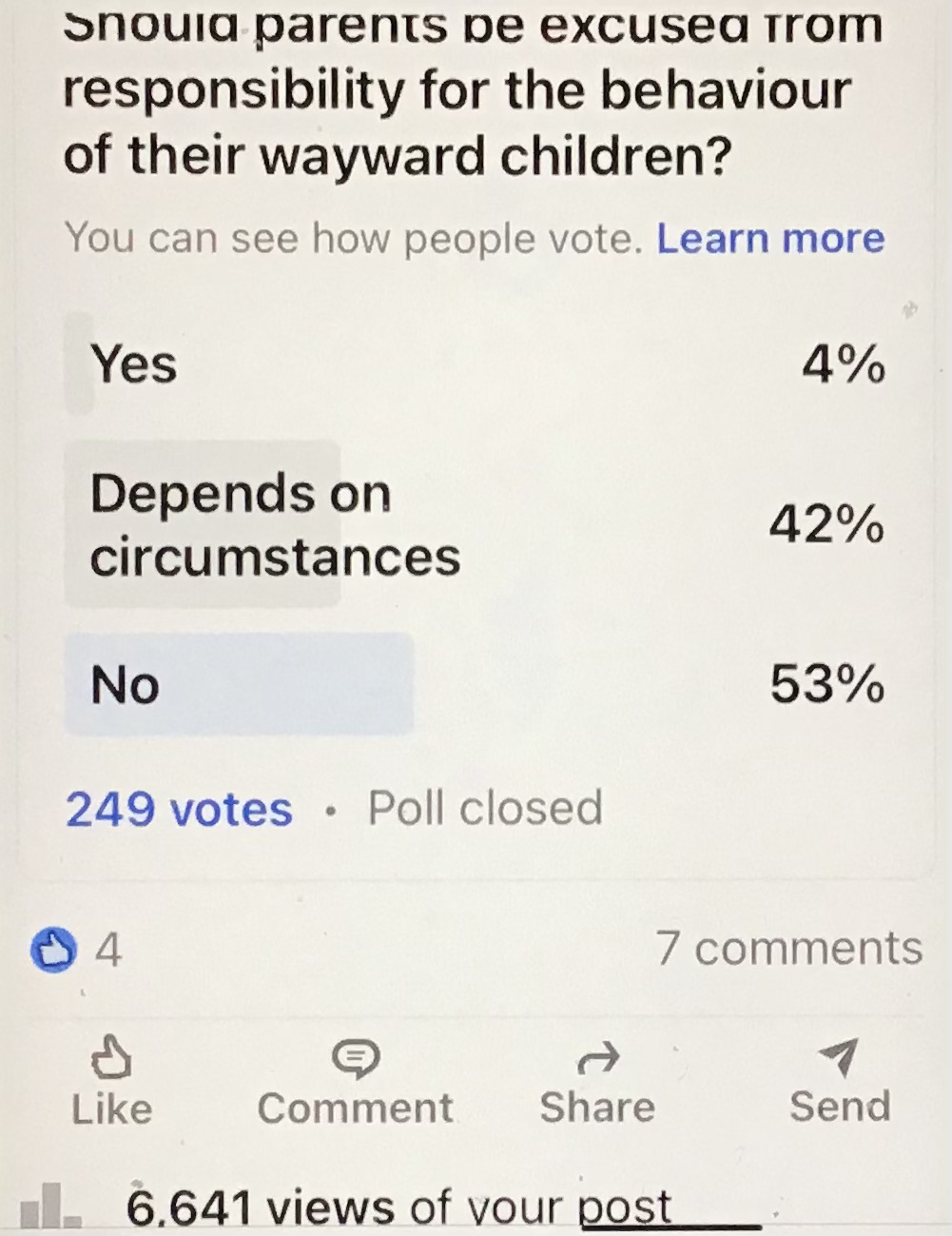
__________

TEACHERS – BUILD STRONG NETWORKS

As a profession, teaching is at its most viable when members respect and support each other in a fully collaborative manner. The joys and challenges of teaching should never belong to those who remain in isolation from each other.

A strength of teacher education is the encouragement offered trainees to link with each other in discussion groups either in person or by discussion boards on Learnline . Observation confirms the help those preparing to teach can help each other on matters varying from assignment tasks to practice teaching rounds. Carrying quality communications habits into teaching beyond graduation is wise.

There is a misnomer that to share matters of challenge is a sign of weakness. That is far from the case. Those raising issues often find that colleagues are having similar issues or have developed strategies that help with mastery of similar difficulties. A problem shared is a problem halved.

Many universities have developed or are establishing alumni groups. Keeping in touch with colleagues through the university post graduation offers professional sharing opportunities.

Sharing through professional associations is recommended. There are maths, science, literacy associations among a host of others. Belonging to associations enables members to keep abreast of trends. Opportunities for personal professional development along with contributing to others through group membership is enriching.

I would recommend a consideration of joining ‘LinkedIn’. This site enables members to build up a global contact base with like minded people. Members can join specific interest groups, sharing global ideas.

Maintaining contact with the graduating peer group is another way of keeping in touch. Whatever the preference, keep in touch with others because that helps support both individual and collective strength.

_____

TEACHERS – KEEP A CLIPPINGS FILE

There is a deep and abiding interest in matters of an educational nature. Increasingly print, radio, and television coverage refer to educational issues. Some people pay little attention to what is being reported about education because they feel it to be inconsequential. There is also a belief that what is reported, misconstrues facts. That to some extent may be the case; however it is important to be aware of the way education is trending within the community.

Retaining information about education can be useful. There are various ways and means of doing this, but it works best if collation is organised regularly (almost on a daily basis).

Newspaper items can be clipped and pasted in a loose leaf file, indexed book, or similar. Indexation is important as it allows you to quickly refer to things you may need to recall.

Photographing news clippings using an iPhone or iPad, saving them to your pictures file, then creating an album for clippings is another method that works well.

Scanning clippings and saving them onto USB stick is a method that works well. Again, indexing the USB file helps. It may be that you choose categories to index under, rather than an “A” to “Z”approach.

Clippings files can be backed up on iCloud or otherwise saved onto computer or USB.

From experience, the use of newspaper clippings when it comes to social and cultural education, cruising for general knowledge, for stimulating discussion in class, are but three ways in which they can be of use. Clippings can also be used to stimulate the content of debates, the writing of persuasive arguments for older students and so on.

Awareness of issues can stimulate professional discourse including helping to shape the way in which members of staff develop collaborative programming to support teaching in schools.

I believe teachers would find a study of media and the establishment of a clippings file useful and worthwhile.

CHARLIE CARTER: NUMBER ONE

There have been so many people who have supported and helped me throughout my life that separating them from each other and getting down to only one has been very difficult.

I thought back through the life I’ve had particularly my professional life which began in 1968.

Considering hundreds of people finally brought me down to the one person who I think is a great influence on the way I operated during the last 19 years of my professional life.

His name is Charlie Carter he was our Regional Superintendent for Education when I first came to Darwin.

Sadly, he is now deceased but what he did for me, evoked eternal appreciation.

When I first took up the Principalship at Leanyer School there were quite a number of

people who were unhappy about how I started my leadership career at that school. They never came and talk to me but some of them went to Charlie Carter to talk to him, my boss, about me.

Charlie‘s response was to send me a handwritten note. He said in the note that he needed to talk to me about some concerns people had about my style of leadership. He wanted to meet away from the school. He wanted our meeting to be in a private venue and he wanted to talk to me about what people had been telling him.

I appreciated this greatly. We had a very worthwhile meeting. Mr Carter outlined the facts of the concerns that were held about me he did not criticise me but he allowed me to think things through in a way that would enable me to go forward in a corrective way.

I went away from that meeting and took on board his advice. Without a shadow of a doubt, his meeting with me in this way helped me through what became a 20-year career as principal of Leanyer School. I asked people in the aftermath of things to talk with me if they felt there were issues I could be doing differently and better. That invitation over the years was accepted and respectful relationships became the modus operandi between me, staff, parents, and students at Leanyer.

When Mr Carter died I spoke of my appreciation for what he had done for me at his funeral. This included my reading out the note he had written to me all those years ago.

I was blessed by this man who believed in helping me rather than pulling rank and giving me a hard time. He was a genuine, sincere, and committed superordinate and colleague.

Charlie Carter is my number one influencer, who more than any other. helped me in an uplifting manner.

TEACHERS – PRESENTATIONS AND MIND SET

PRESENTATIONS AND MIND SET

From time to time teachers will be asked to prepare presentations for colleagues, school staff, parents committee meetings, and possibly for other audience groups. Used to working with children and students in a classroom context, presentation requests take teachers outside their normal comfort zone. Suddenly they are confronted with a new arena.

Quite often people who were asked to prepare a presentation react with stage fright. Presenting in a formal or semiformal matter is something that causes them a great deal of nervous reaction. Some become so nervous they refuse point-blank to participate.

In an informal or social context people are comfortable to converse and exchange experiences. Yet when asked to present to the same people and others more formally, those selfsame and confident communicators clam up!

There is no doubt that the first time is the hardest when it comes to presentations. Relaxation of the mind and not anticipating “the worst” is critically important.

I would strongly recommend to teachers and indeed to all professionals that they consider joining Toastmasters, Penguins, or some other speech and speaking club. Membership of such groups enables people to develop confidence when it comes to speech presentations. Graduated programs help recognise the essential ingredients of speech. Graduated development means progress in understanding the rudiments of a presentation with presenters building on previously acquired skills. Membership of these groups also facilitates critical listening, with a view to members evaluating each other and through that process honing their self evaluation skills.

There are many people in high places who have great difficulty when it comes to presenting. Some have managed to sidestep the challenge by resort to PowerPoint presentations but the essence of delivery can be stilted, uninspiring and predestinated to leave the listening audience feeling bored, flat and unconvinced.

Speaking up with confidence does not come naturally to a lot of people. However it is a skill that can be acquired and once gained builds confidence in people called upon to make formal presentations or contribute to organisations and groups.

Details of such groups are often available by word of mouth, online, and through telephone book entries. Although membership has a fee attached this can be tax-deductible because it has to do with professional development.

I unequivocably recommend this course of action for your consideration.

TEACHERS – TREAT EMAIL’S WITH CAUTIOUS RESPECT

E-MAILING – CAUTION NEEDED

In today’s world, emailing has become possibly the most common form of written communication. Most people have email accounts and use emails prolifically. Schools and teachers have email accounts, often displayed on the school’s website.

Communication by email is encouraged, including contact between parents and teachers. Notwithstanding the ease with which email communication can be used, it is important consider a cautionary approach to its use. This is because emails are written documents and can be held against writers for years and years to come.

* If parents seek information about homework assignments and work due,

excursion information or similar, response is fine.

* If parents want information on school policy or are confused about particular

whole school policies or school matters, refer them to a member of the

leadership team and forward email sent and you reply to your senior.

* Under no circumstances offer parent value judgements about a child’s

character by email. Written statements can come back in future times to haunt

the writer.

* Be aware of the fact that emails can be used as documentation supporting

actions in courts, including custody battles between parents. To that end avoid

sending emails that ‘take sides’ or can be interpreted as supporting one parent

viewpoint or the other.

* Never promise by email that a child ‘will’ make certain progress by a particular

time or ‘will’ achieve particular outcomes. ‘Will’ is an absolute and confirms

that a particular attainment will be the result. Use ‘can’ or ‘could’ or similar

non-committing words. The onus is then on the child and not on the teacher to

take prime ownership of possible outcomes.

* It is wise to keep copies of emails sent too parents in a designated folder.

Trashing can be tempting but if a communications issue is raised to the

teacher at some future time, not having a record can be very unhelpful.

The above dot points could be extended and others added. Suffice it to say that the use of emails can be fraught with danger, a situation that all too many people find to their eternal sorrow. Stick to material issues and don’t enter into the realm of value judgements and character comment. Parents may send emails of this nature, asking to you comment on their perceptions. That invitation should be avoided because response means they may quote you and tie you to what is really their position.

Never ever write and send emails in the hear of the moment, while over-tired or while less inhibited than usual because of the use of alcohol. The reasons for this advice should be obvious.

If in doubt on the subject of email correspondence, check with a senior staff member. It is always better to be sure than sorry when dealing with email traffic.

TEACHERS – ASK FOR HELP

ASK FOR HELP

One of the strongest attributes of the teaching profession is that of ‘fraternity’. Collegiality and sharing are elements of that togetherness. Unlike some occupations in which people feel they have to sit on problems or challenges and muddle through, teaching invites those with questions to seek assistance in finding answers. This does not mean teachers should not have a go, but rather that they seek support to help in reaching satisfactory outcomes.

This might include asking for clarification when a particular theory or teaching practice is not fully understood. It could be that teachers are struggling with classroom management, that discipline policies need explaining; a myriad of issues may press upon the teacher’s mind. They will remain there unless help is sought or given.

Teachers are often credited with having a sixth sense. Part of this is having the intuition to understand matters that others might be finding confusing and offering advice or support. Gumption needs to be a characteristic that allows teachers having difficulties, to ask for help if it is needed.

It is not a sign of weakness or inability to ask for support in understanding matters that are not fully comprehended. If there is a need ‘sensed’ in others, ask if they would like assistance. Two way caring and sharing should be informal, a part of the relationships that establish between members of staff.

In some cases, mentors are assigned to staff members new to a school. Building a two way professional relationship with a mentor or coach is wise. Beginning teachers can contribute to these relationships for they often have a better understanding of new methodologies than those who have been in schools for a number of years. Therefore meaningful two-way relationships can be established.

Keeping in touch with each other in a professional context is essential to the professional growth of teachers and school staff members. If problems are not shared and help not sought, worry, despondency and despair can set in and infect the soul. It is indeed sad if this happens … and it need not!

Caring and sharing are attributes to be cherished and practised.

BENDING THE BARS INPRISONING MY BODY AND MIND

The circumstances of life shackle the bodies and the minds of countless people. There may be many people in the world finding themselves in some sort of a binding situation from which they cannot escape. I am one of those people who are held captive.

To me, freedom is aspirational rather than real. For freedom to become a reality, I must bend the bars that entrap my body within the frame of restrictions with which I have to live.

Even more significantly I must untangle my mind from the barbed wire which binds fears, concerns, anxieties and hesitation within the grey matter of my cranial cavity.

At times I come close to breaking out from the constraints that shackle me; on other occasions, I feel more bound and more imprisoned than any other time.

Is freedom a reality or an illusion?

TEACHERS – INTERVIEW STRATEGY

Interviews between parents/carers and teachers about children is one of the most important ways of keeping in touch with progress being made. It’s important that teachers and parents are on the same wavelength regarding student progress.

In many schools interviews are organised toward the end of term one and term three. This allows teachers to let parents and carers know how students are progressing to a particular point in time during the school year. These conversations also help to prepare the way for written reports that follow, usually at the end of term two and term four.

While these interviews are usually brief (around 10 to 15 minutes) they are a way of ensuring some contact regularity about teaching and learning.

At times, longer interviews dealing with more specific issues are necessary. I believe that interviews to deal with specific topics or being called for particular reasons need to be programmed. Arranging by phone or note for parents to come in as a mutually convenient time the best way to go. Similarly if parents ring requesting interviews the same should apply. It’s best for interviews to happen in privacy and after school hours.

Some parents will approach teachers at the start of this school day to deal with an issue “there and then”. This isn’t fair on to the teacher or the class. Interviews conducted audibly in front of children places teachers in a bad situation. These conversations can be quite embarrassing. When this happens and teachers are confronted, I believe it appropriate to “call time” on the conversation there and then and arrange for a mutually convenient time when the conversation can be pursued.

If the teacher is unsure how an interview will progress or if she/he feels undue pressure, it is advisable to ask for a senior to be present during the meeting. If the teacher feels comfortable about an interview and doesn’t need that support, to be under the gaze of others as the interview is progressing can be helpful. The venue may be an interview room, a classroom that is visible to others, or similar environment in which the conversation takes place.

A strong suggestion is the teachers take notes for their own personal records of interviews that take place. It is a good idea to spend time post the meeting to write these notes up in some detail. Notes can record positives along with matters being dealt with the more challenging context.

When interviews happen “off-the-cuff and the spirit of the moment” teachers are caught unprepared. They may also be dealing with parents or carers who are somewhat agitated and even hostile. To set a future interview time gives everybody the opportunity to prepare and to come into the conversation in a rational way.

When teachers catch students doing something good and want to offer praise, sharing that praise with parents and carers can help. That might be done through a phone call or a simple brief message of congratulations of the parents coming to the school. This policy offers a sense of balance about reasons why contact is made with parents and carers. Conversations do not have to be totally about poor attitudes or behaviour.

For students to be made aware of interviews taking place between parents and teachers can be wise. That can be done in a positive way. I think it hard on students when adults have conversations about students without students knowing or understanding why the interview is happening. Students are very imaginative and may have all sorts of things on their minds about matters. Misinterpretation needs to be avoided. Children need to know that meetings of this nature are about helping them overcome issues and grow in terms of both character and accomplishment.

TEACHERS – HOW YOU ARE KNOWN

Sometimes teachers get into a bind about how they should be addressed by children and students. Some believe that in order to encourage relationships, that first names are fine.

Under no circumstances would I endorse this approach. Teachers are adults, students in primary and secondary schools in a learning relationship under their guidance. Respectful address demands that teachers are addressed as Mr, Mrs, Miss or Ms.

Surnames can be hard to pronounce. Teachers with difficult or indecipherable surnames often ask students to use their christian names instead. If this is done I’d strongly suggest the Christian name be preceded by Mr, Mrs, Miss or Ms. Another method might be to have children use the first letter hard to pronounce your surname. In that case it would be Mr M, Ms S and so on.

Students in secondary schools tend to refer to teachers is “Sir”, “Miss”, or “Ms”. That may be a preference but personally I would recommend the use of names as outlined above.

Appropriate address of teachers by students helps when it comes to the establishment of a respectful relationship. Similarly, those relationships are in hands if teachers take the time and make the effort to learn and use student names when speaking to their learning clientele.

TEACHERS – ROUTINES ARE IMPORTANT

Children appreciate classroom routines and organisation. Although young they like predictability. From experience I don’t believe young people despair of repetition but value ‘links’ with the day that routines reinforce. They like things to be predictable because that offers reassurance and extends feelings of security. Many children come from environments that are not always predictable. A settled, predictable school program where children know what is happening and what is coming next builds both confidence and trust.

Students who were part of my schools from years ago and with whom I have had contact years later, have told me how big and scary school was when they were little. Those who have come back to visit the schools of which they were student members talk about how little the school seems compared to what it was when they were in their primary, especially early primary years. An object lesson I learned from these disclosures was that children appreciated the security they were offered at school.

There are times when programs need to vary and when general routines and timetabled programs have to be set aside. If possible, we should avoid springing these changes on children ‘out of the blue’. It is important that teachers give as much notice as possible to children about changes and why they are being made. This can sometimes be done through forward notification to parents via newsletter or online contact. Letting children know beforehand is helped if school leaders give lead notice to teachers about changes.

Routines will be helped if children understand the following:

* What subjects happen on what days.

* Routines marking the beginning and end of each school day.

* Recess and lunchtime procedures including play areas.

* Understanding the times each day for maths, language and other subjects.

* Being clear about the days the class may have specialist teachers for subjects.

* Knowing what is where in the classroom, unit and school.

* Understanding the school facilities and knowing the school map.

* The names of teachers school support staff.

* Rules that are in place to make the classroom, unit and school safe.

* The names of and a little background about relief staff.

* Their right to be protected and feel safe at school.

There are many other factors that build into school routines, the above being a sample of what might be relevant.

Routines and procedures are essential. Without them, children can become aimless, confused, and lost in what should be the safe, supportive environment of school.

TEACHERS – TECHNOLOGY CAN CREATE SEPARATION

It is important that technology in classrooms and schools should be appreciated. It is important that teachers and students share teaching and learning opportunities,where these are enhances by the use of technology and equipment available. However, technological tools should never be allowed to stand in the place of the teacher.

Can be all too easy for teachers to recycle from direct interface with students, preferring instead to establish communications with learners through software packages available to support learning. Using attachments like blackboard, Skype, Scootle, and a myriad of other learning aids can help when it comes to refining and extending student learning. These devices must be under the control of teachers and structured in the way they are used to support student learning. It can be all too easy for teachers to hand pass their role in student learning development to the point of becoming detached.

The best most enriched learning comes from the contact developed and maintained between teachers and students. It is nice to “put a face on learning”! I believe students appreciate teachers who are there for them in a direct and first-hand context. To disengage, deferring classroom teaching practice to a robotic attachments with mechanical voices is anathema.

Perspective is important. Nothing can ever replace the first-hand relationships that develop and involve sincere, committed teaching professionals and students, primary, secondary and Treasury, with whom they engage.

ALTER-EGOING HELPS BALANCE

The person with whom I disagree the most is Australia’s number one public figure – our Prime Minister Anthony Albanese. There are so many things that have happened during the last two years of the Labour Government that seem to be taking Australia down the pathway to a very dark future.

I ponder deeply on this issue of his leadership and where it is taking us. That pondering leaves me feeling quite depressed and at times with an open mouth because of his mind-boggling decisions.

To cope I have created in my mind an alter ego of our Prime Minister. For everything he has done that I think is wrong, there is an alternative that if applied would make things right.

I dwell on the subject quite a bit and at times publish on my blog or elsewhere these thoughts which from an old alter ego viewpoint most positive.

The responses I get reassure me that my feelings are not unfair.

TEACHERS – THE PROS AND CONS OF MOBILE PHONES

MOBILE PHONES IN CLASSROOMS

In our modern, technological age, it seems that every child has a mobile telephone, smart phone or similar device. It’s understandable the parents give their children phones in order that they might be contacted in emergency situations. However there is a time and place for their use. That time and place are definitely not within schools and certainly not in classrooms.

If children bring mobile telephones to school they need to be kept in their bags in their lockers. If there is a worry about security may be appropriate for teachers to take and lock these devices in a secure place.

It is altogether too easy these days for children and students to misuse smart phones. Sadly, there seems to be a trend toward taking inappropriate photographs of students who are being bullied, interfered with, or who are in compromised situations. These photographs of been circulating for all to see.

When this happens within a school context it casts the school, its leaders and staff in a poor light. When students have been embarrassed or injured and that recorded on phone camera all sorts of recriminations can come back on the school. A great deal of time is taken in trying to resolve issues and overcome the hurt occasions by the wrongful use of those devices.

Far better that the school have a rule that smart phones another recording devices do not belong within its boundaries.

We need to be aware of the trouble smart phones can cause if they used for wrong purposes and at the wrong times. They need to be carefully secured and not used during the school day.

TEACHERS – CLASSROOM TIDINESS COUNTS

CLASSROOM TIDINESS

School days are hectic and “hurly-burly”. There is so much to do and so little time in which to do it! That being the case, it is easy for teachers and students to overlook the need for classrooms and personal space within (desks, tables, lockers and so on) to be kept in a reasonably clean and tidy state.

There can be nothing worse than opening a student desk to see a mass of learning material, waste material, socks, hats, toys, and other bits and pieces shoved in all higgledy-piggledy and to the extent that it’s hard to exert the pressure necessary to force the desk lid closed.

Another area quickly sullied is the classroom floor. Pencil shavings, bits of the writing tool, pieces of paper of all sizes, items of clothing, food scraps and wrappings; if children needed the tables and other things, finish up then try to strew them around on the floor. Often, the floors are left in a polluted state until cleaners come in at the end of the day and endeavour to straighten out the chaos.

That is not a good look! Neither does it do anything for the reputation of the class or teacher – for cleaners certainly talk amongst themselves and to each other about the state of things they find in classrooms.

They need to be some basic rules about classroom cleanliness and tidiness. That can be hard because of pressure is driving on teachers and students. Nevertheless it is necessary. Some suggestions:

. Have children periodically (at least once a week) go through and clean the lockers of residue.

. Undertake the same routine for desks but possibly a little more often. Make sure the children have loose papers fastened into books or folders is the case might be.

. Have children or students pick up any rubbish from the floor at the end of each session or period. That become something done before recess and lunch breaks. If insisted upon that process becomes “automatic”, a habit of many children will undertake without having to be reminded.

. (Ensure that the above applies equally to older students as well as younger. Students will sometimes argue that it is not “cool” to pick up after oneself and to keep things tidy. That particular lackadaisical mindset needs to be overcome.)

. Check the children keep refrigerators closed and lunchboxes tidy within.

. If children aged lunches in the classroom, check to make sure that their lunch containers are clean, that they keep their food as they should, and that any genuine rubbish goes into the bin.

. Cupboards and, and Benchtops belong to the whole class. Include those areas in the cleanliness and tidiness drive. It might be appropriate to assign particular students groups to particular common areas within the classroom and it becomes their responsibility to ensure that tidiness is maintained.

* Make sure that the teacher for example is one that models to children. Teachers tables and work areas need to be kept tidy and organised in the same way as being advocated for children. There is nothing more powerful than personal example.

. Having students involved in group competitions reward cleanliness and tidiness in my opinion is a good idea. Rewards can be extrinsic or intrinsic. Reinforcing the need for positive civic attitudes is important and putting clean, tidy needs into some competitive context can be quite fun.

TEACHERS – THE WAY WE TALK TO CHILDREN

One of the most important things about offering security to children is the way in which teachers speak “with” them. Often it’s a case of teachers talking “at” or “to” those they are teaching.

When dealing with each other in staffrooms or collaborative sessions or during professional development sessions, teachers speak conversationally. They each feel comfortable with the other and conversations reflect this attitude.

When dealing with children however, teachers often lose the conversational element replacing it with what might be termed “command language”. The niceness of speech often dissipates and delivery takes on a quite harsh quality.

Metaphorically speaking teachers when dealing with each other, are somewhat like motorcars which come along quietly from point a to point b. However, when relating to children those same teachers trade the cars for four wheel drive vehicles, lock them into 4×4 and then grate their way through conversation with children in a manner that can be far from pleasant.

Language can be embracing or off putting. In order to draw children close in terms of comfort, qualities of conversation and vocalisation are important. There is no way the teachers will draw children in and toward them if their language is the push off in terms of its invitation.

TEACHERS – CONSIDER THE IMPORTANCE OF MODELLING

MODELLING

I don’t believe that we can over estimate the importance of teachers modelling for students. This goes for primary and secondary students.

In some contexts teaching is regarded as being a profession in which one group (teachers) tells the other group (students) what to do and how it should be done. This of course is rather simplistic definition of teaching and learning processes. It hardly examples the interaction and togetherness that ideally embraces teachers and pupils in teaching/learning contexts.

One of the very important aspects of the leadership offered by teachers is the modelling they do through their own personal example and conduct. Students being young look to and emulate teachers and others. An example of this is the children often tell the parents that particular viewpoint is right because it is what the teacher thinks, therefor it must be right.

Without being prescriptive in anyway, I believe that modelling extends to include the following:

Dress standards

Speech patterns and modelling – setting a bright example free speech and vocalisation.

Punctuality

Showing respect.

Handwriting, including in students books and on whiteboards.

Correct spelling and accuracy in word usage.

This list could go on, but I’m sure you get the drift. Teachers deal with the development of people. It’s as we do and how we are that is so important to those we teach and shape toward being the adults of tomorrow.

TEACHERS – MARKING AND CHECKING WORK

The life confronting teachers is always busy. It is very easy to get behind with routine classroom tasks. One of the areas easily overlooked is that of marking children’s work. In particular, that can apply to book work, homework, and other tasks set for children. It can also include extra work set by way of sheets or other materials children asked to complete. These days children do a lot of work online and sometimes submit files for marking. That happens for both primary and secondary school students.

It’s extremely disappointing to students if work submitted for marking is overlooked. Initially children will be very disappointed that work has not been marked. If non-marking becomes a habit, then attention paid by children to work tasks will gradually decline. The reason for that is a belief that even if work is submitted to their very best standards, this will not be recognised or acknowledged. In short, children can come to believe the teachers are disinterested in what they produce.

That in turn takes from the self-esteem children feel, the pride in self and their attitude toward work tasks. If teachers file to mark work in the way suggested this can become very demotivating for children. Regardless of everything else they may believe that teachers are not into rested in them.

If a child brings to your attention the fact of work to be mark is outstanding, my suggestion is to apologise and then set about marking the assignment as quickly as practicable. Letting students know that this has been an oversight on your part as a teacher will not hurt. Children respect honesty.

Rewards

When marking, do so as thoroughly as possible. My suggestion is to correct spelling, punctuation, and other omissions. They’re so neatly and in a different coloured pen open parenthesis preferably red) to block the child has used.

Children appreciate comments written on work and I believe that stickers or stamps are an absolute “must”.

Students love to share our appreciation for work show on by teachers with the parents, siblings and with others. Teacher care and attention to marking can be the icing on the cake for students I like to know the work is appreciated this will help them further in a motivational context

MY CAREER PLAN IS HISTORY

After completing schooling and gaining a year 12 certificate (thanks to my parents for year 12 completion in those days for a country boy in Western Australia in the 1960s was rare), I worked on the Family farm for four years.

During that time I did it in pieces of study but none of it was connected. It includes everything from a wool classing

qualification to a general Bookkeeping certificate, A unit in sociology and a few other bits and pieces.

That all changed when I went to teachers’ college and graduated at the end of 1969.

What then followed with a career in education in Western Australia and the Northern Territory extending from 1970 to my retirement in January 2012.

for most of those years, I was the school principal and worked extraordinarily hard – anything up to 80 hours a week which I documented. Along the way, I also did a lot of external study and that was after I finished work for I never mix work and study.

Following my retirement I worked for four years at the Charles Darwin University variously as a lecturer, tutor and marker.

It all ended in 2016 and I went out into what is called the “pasture of the long paddock“.

These days, I do a lot of writing and publishing online, and in various other outlets. But it’s true to say that my career these days is a career that has been retired – along with me.

As a 78-year-old man, I don’t have any wish to start another career.

A SHOW … SO LONG AGO I HAVE FORGOTTEN

I can honestly say that if I have seen a live performance is so long ago I cannot remember having been to a show. Live performances do not appeal to me and I haven’t been to one since we came to the Northern Territory in 1975.

As a school principal, I did go to eisteddfods with students who were competing and also had students involved in an annual musical for schools in the Northern Territory called “The Beat”. In fact, I was on councils managing both these programs.

However, I’m not counting these programs as live performances in the way they are normally thought about.

I have never attended theatre performances as an audience member. I don’t like cabarets and modern comedy because its salaciousness does not appeal to me. I’m not interested in dance performances, circuses or anything else of that nature. I don’t watch them on television either.

Others may love live performances – but that’s not me.

INTERACTING WITH STUDENTS IN CLASSROOMS

When moving around classrooms and relating to children at desk level, it is important not to “Loom”. Looming is to stand above the child looking down at the child causing the child was down there to look up at you the teacher.

This places the child at some disadvantage when communicating with the teacher. It may also give the impression that the teacher is much more important as a person than the students because of the hype differential.

As well, students often have developing voices and the further away you are the less chance there is of catching for the child is saying. Misunderstandings can happen.

It is far better for teachers moving around classrooms to bend down, Neil, or Steve when talking to children so that they looking at each other more or less from the same level. My experiences that this builds the quality of contact between teacher and student. One of the advantages is that it enhances I contact and enables teacher and student to talk to each other with lowered and therefore more conversational voices.

To get down and work closely with students also builds confidence in relationships particularly from the Charles viewpoint towards his or her teacher. It overcomes the perception that can be held by children at the teacher is above all and somewhat remote as a person from them as pupils.

Try it! It works.

WORKING WITHIN A CLASSROOM

KNOWING’ YOUR CLASSROOM

It is all too easy these days for teachers to become disassociated from the classroom teaching space and somewhat “distant” from pupils in terms of the seating within. This has come about in part because of our preoccupation with computer and with the requirement that we are forever developing data to input, indicating student progress.

Unfortunately it can happen that teachers very rarely leave their tables because of attachment to this device. Communication with students across the classroom is by voice.

I believe that in terms of location, it is essential for teachers to be aware of the physical essence of the children and where those students are sitting.

As a person who sometimes works at schools level with teachers on practice I follow the rule of drawing a map and over a period of time showing how, where, and when teachers have moved around the classroom to contact students the desk level. This can be done into Waze. The first is to have a photograph of the classroom as it’s set up but without students at desks. On the face of that “blank” draw a line that tracks the route followed by teachers around the classroom over a period of say 20 minutes. The other method more simply is to draw an outline of the classroom including desk locations. In the same way track the teacher for a point in time indicating direction of movement by occasional arrows across the track path.

Student teachers always appreciate that feedback, for a chosen just where they’ve been how they’ve moved, which students have been contacted the most, which the least and so on. It also shows students in terms of the movement toward a teacher rather than allowing the teacher to circulate.

It is very important for teachers to spend time with each student and this is best done by getting away from the teachers table, leaving the computer mobile’s, then moving around talking to students and seeing how their work at an individual or group level within classrooms is progressing.

The other great thing about this methodology is that it helps teachers to get to know students, to appreciate the strengths and weaknesses and to better understand the way they relate to each other with in the classroom. This awareness is very important and sadly often overlooked.

APPRAISING AND APPRECIATING SCHOOLS

SCHOOL APPRAISAL – A RECOMMENDED MODEL

Educators are quite constantly involved with processes relating to testing, measurement and evaluation. This is done in different ways by people directly and indirectly connected with schools. While most factors of measurement relate to academics, there are other things to be considered when evaluating schools.

Over time priorities and processes have changed. These days within the NT a detailed visit by senior colleagues including a group of the principal’s peers and senior management staff is the way appraisals are undertaken. The process lasts several days. Examination includes conversations with some school staff members.

The Northern Territory Education Department has been concerned about the performance of its schools since taking over responsibility for education in 1978. Various models have been followed.

One of the very best was called the “Internal/external School Appraisal Model”. This involved members of the school staff and members of community working in groups to analyse the various aspects of school function. Teaching performance, staff relationships, student welfare, school appearance, communications and all other factors were examined. Each panel included staff and community members. A facilitator was appointed for each group.

Groups had the ability to glean information from a number of options. Included what questionnaires, interviews, and of course the self-awareness of that particular aspect of school function built within the group. Toward the end of the process each group presented in turn to the whole school staff and also members of community who cared to attend those sessions. From the report grew recommendations for future consideration. Each group also indicated things that were being done well and should be continued.

After presenting, each group report and recommendations to the forum of staff and community. Some revisions were then made and a priority put on the recommendations.

When all groups had presented and the final report from the “internal process” developed, this then went to an external panel which considered the report. This panel had the opportunity to order the recommendations as a whole.

This was a very elongated process. However he enabled all staff and those with a keen steak and interest in the school to have input. Importantly the report was owned by school staff and community members.

I applied this model at Nhulunbuy Primary School when first becoming principal. I gained, it was used it Karama Primary School in 1987. Of all the methodologies used over time to help centre school action in the right directions this approach was by far and away the most effective.

When people within an organisation own what they do including developing the context of futures direction the whole process is validated by ownership.

Although it may never happen I would certainly recommend a return to the past when it comes to appraising a school and its place within the community.

PLEASE REINFORCE (AND PRACTICE) GOOD MANNERS

CORRECTING FOR POLITENESS SAKE

These days, manners are not practised by habit. Many children (and adults) are poorly mannered. It seems that a big percentage have never been taught the rudiments of good manners at home. Child care programs may try but their prime focus is on minding, not on teaching.

All too frequently children overlook ‘excuse me’, ‘please’, ‘thank you’. ‘i beg your pardon’ and so on. Although it gets monotonous, correcting students who overlook these essences of politeness and good manners is important. Commenting in a praising context to children who do remember to use these words and expressions can offer positive reinforcement.

One of the most frequent oversights occurs when children butt into conversations being held by teachers with another student or students. That impetuosity certainly needs correction. Children need to appreciate the need to wait their turn when dealing with teachers.

Manners can be broached through appropriately constructed lessons. To involve students in situational role play where manners need to be practised can help. Periodic classroom discussions about manners and politeness might be useful.

The subject could be broached through a Socratic Discussion session.

Strategies to reinforce the need for good manners including reinforcement through daily classroom interaction should be part of teaching and learning strategy.

GOOD WORK SHOULD BE APPRECIATED

REWARDING THE EFFORT OF SCHOOL STUDENTS

Children owe it to themselves to do their best work in class. Sometimes they may think their work being done for teachers and parents. There are ways of helping children realise teachers and parents are supports, with the work being done ultimately for their benefit.

While ownership of work is vested in children, applauding their efforts helps when it comes to building pride in product and learning outcomes. It is discouraging for children who are trying their best, to be minimally recognised by teachers. Handwritten comments of praise, stamps, stars and stickers mean a lot. They are small tangibles that go a long way toward building justified pride in the hearts of children who have done their best. These small tokens of recognition are boosting for children. They love sharing their successes with parents, relations and friends.

Recognition of work and effort through merit certificates awarded at class or school assemblies is boosting for children. Classroom wall charts which track star awards are constant reminders of student success. Mention in school newsletters might be an option. Letting parents know about the efforts of their children by work of mouth, phone call or note might be an option. Rewards policies are often established by particular schools but a great deal of praising opportunity is left to the discretion of teachers.

Don’t overlook recognising effort by encouragement awards. It is nice to let children know their efforts at improvement are not going unnoticed.

Some schools allow teachers to purchase stickers and other reward tangibles from classroom allowances. If not, purchases of teaching aids and requisites are tax deductible. It is wise to keep receipts.

Recognising and rewarding the efforts of children, goes toward creating a positively happy classroom. Children are made to feel good about work outcomes while praising is uplifting for teachers.

COMMUNITY INVOLVEMENT

For many many decades, I was very actively involved with the community. It was both as an educator and a Volunteer.

I have been involved in a great deal of manicures and the community level.

These days, I’ll take a back seat when it comes to community. I am not out and about any more but retain contacts through media.

I am happy to lead a quieter life after huge activity for the whole of my working life and some years into my retirement.

CARTOONISTS SHOW THINGS AS THEY REALLY ARE

With the imposition of an increasing number of barriers to free speech, fewer and fewer people have the confidence to comment freely on issues. Cartoonists have been an exception to this rule. They defy the odds by region, state, country and the world for plying their trade and calling those out who act wrongfully or make shortsighted and crass decisions.

Good cartoonists honestly and unswervingly highlight the pros and cons of issues. While they may invoke people and personalities into cartoons, they do this to magnify matters about which we should be concerned.

All cartoonists have specific drawing styles, which adds to their stamp of communication by caricature. A key ingredient of cartooning is conveying a message so the reader is not left wondering what the cartoon is really about. Their style and relevance make the cartoonist’s messages meaningful. They take on contentious matters and stimulate debate on issues.

Any law or its interpretation that would stifle the free expression of cartoonists would be a retrograde step. Freedom for cartoonists to express what are often deep-seated community opinions must be preserved. That right should be as sacrosanct as parliamentary privilege.

But if laws of restriction were to be introduced, I am sure cartoonists would defy them and continue their trade of offering us all deep-seated awareness and understanding.

MY PERCEPTONS OF THE NT IN 2022 – BUT SHARPER NOW

During the past 46 years, the length of time I have been in the Northern Territory, there has been ongoing downturn in the level of respect paid to our social institutions and those who are responsible for leading and maintaining their functions.

The time has long since passed when the general public extended courtesy to those responsible for delivering essential services. Members of the police force, paramedics, bus and taxi drivers, and emergency services personnel are far too often made the butt of community discord and anger. School teachers and support staff, health department personnel, and those administering housing and community services also have to endure the spite of vindictive and disgruntled ‘clients’. In more recent times, service station operators and shop assistants have suffered abuse.

Key community organisations and those employed to keep them functional are increasingly at the mercy of verbal, physical and often violent assaults at the hands of the public.

When matters are reported, follow up action rarely occurs. Sadly, victims are often told to put up with abusive behaviour in order to avoid ‘inflaming’ situations. This supplication simply serves to make aggressors even more antagonistic. They go the harder with aberrant conduct because of the blind eye turned on their previous actions.

The degeneration of community respect for service providers is patently obvious. I can only wonder at the general level of law, order and attitudes that will be shown toward key institutions and personnel in another 40 years.

UNIVERSITY FOCUS IN AUSTRALIA

I am gobsmacked that some of Australia’s universities, supposedly led by thoughtful intellectuals, would contemplate lowering entry requirements for admission to courses, so critically important in preparing future contributors to major industries. That tertiary institutions would set the bar low “… to take subpar students” (6,7/8 2022) is making a mockery of the standards that should be expected of higher education. Sacrificing quality (course calibre) for quantity (increasing numbers of students admitted to courses) can lead to only one conclusion; that universities are more interested in income from students and government funding, than they are to maintaining reputations based on course standards.

Many students who are admitted to degree study under these conditions, will be drafted into remedial and ‘catch up’ programs, saturating bridging courses. Student drop out rates will skyrocket – but not before exiting students have been responsible for generating dollars into university treasury coffers.

The motivation for attracting students to university courses at degree level must be based on a valid ATAR score. To water down standards flies in the face of common sense. If universities are determined to lower entry level requirements, the Federal Government should take responsibility for enrolment processes by prescribing entry level requirement that cannot be diluted.

Will war come to Darwin

With Darwin being where Darwin is, and with the ever-upgrading of defence training and facilities, I stand in the yard, look at our home, look at the surrounding neighbourhood, and wonder when (not ‘if’) it will be reduced to smouldering rubble by a missile or barrages of rockets directed at our city.

Darwin, Palmerston, Nhulunbuy (where fuel storage is anticipated), Alice Springs (with Pine Gap being front and centre of Chinese interest) and other towns and communities will need bomb shelters and missile refuges. Our state of readiness for protection from environmental desecration and shattered infrastructure occasioned by war is zero out of ten.

I feel war that will envelop our region is imminent, and we are far from ready.

Henry Gray – GG for just one day

Just one day would be enough. As Governor-General for one day, I would make one immediate and crucial decision.

The first decision of the day would result in a chain reaction of responses, but it would stand, be immediately implemented and not rescindable.

I would prorogue the Australian government. That would be with immediate effect.

The Caretaker government would stand in place, to be jointly headed by the Leader of the Opposition and a selected person from the dismissed government side.

An election would be held within 35 days.

My reason for this action is because of the misplaced policies of the present government, particularly in the area of immigration, housing, and delusion of education, along with its policy of anti-integration of ethnic subsets within our population.

We cannot have one day longer of the same government.

SHOULD SPELLING BE A COMPULSORY SCHOOL SUBJECT

SPELLING: NECESSARY OR SUPERFLUOUS?

Some say that attention the spelling is old hat and the discipline of being able to spell accurately and correctly is not necessary anymore.

In an age of computer technology, they argue that the computer, iPads and similar gadgets provide students with correct spelling options through “spellcheck” and other text-refining devices. Therefore it is not necessary to know how to spell words by heart.

Others argue that in terms of priority, spelling is a basic that no longer needs to be taught. There are other teaching and learning priorities.

Maybe “experts” believe that spelling skills will be acquired by osmosis. Some people genuinely believe that spelling accuracy isn’t essential because corrections for spelling and grammar can be provided by checks inbuilt into attachments for Word documents and others. My personal belief is that that is the lazy way out.

I once had a teacher say to me, “I don’t teach spelling because I don’t like it.” Teaching basics is apparently dull and quite stifling for some people. This overlooks the fact that teaching essential basic understandings is repetitious. Not all learning is tinsel and glitter. However, there is a way of engaging children with spelling that makes it quite exciting and looked forward to. There are numerous spelling games available that can be adapted for classroom use. These can be developed to support and reinforce graduated learning.

Spelling and word appreciation games up also available. This is one area where computer and iPad use can be reinforcing. My contention, however, is that spelling is an area that requires primary teaching. It can’t all be left to children working on devices and acquiring the understanding they need without teaching going into the program.

An example of one game I used with spelling was to ask children to within their minds to configure words broken into syllables attached to a piece of elastic. There is the word. As your stretch the elastic in your mind’s eye, the word breaks into syllables. Syllable awareness enabled children to follow the pattern of the word. When the word had been examined by the stretch method, the elastic was relaxed; the word came back together and was spelt orally with everything all in place. I found this method worked remarkably well, especially if it was built into a game including competition between children for accuracy and recall.

I believe we neglect to spell at our peril and to the eternal loss of students.

_________________________________

BEWARE OF TRENDINESS POTHOLES

WATCH OUT FOR TRENDINESS

Education is exciting, often because of the chance to innovate and try out new ideas. However, it is crucial to consider and study the merit of new ideas. ‘Reform’ and ‘initiative’ are words often overdone.

Education that bounces from one new idea to the next, to the next in rapid succession, can present a destabilising and hard-to-follow classroom experience for children. There seems no end to the plethora of ideas, approaches and priorities that come along.

Schools and teachers must apply a filter to suggestions for change. The pros and cons of issues need to be considered. To grasp at something new for the sake of its novelty is unwise.

Schools and staff who take and consider ideas and change suggestions are wise. This is where the value of collaboration and conversation comes to the fore. Within every group, some want to run with change. Others prefer dialogue and careful consideration, and a third group dig in and avoids change at all costs. From this delightful mix, school organisation evolves.

Some thoughts:

* Discuss issues with colleagues and also be a sounding board for them.

* Read and research new initiatives.

* List the pros and cons relative to change in teaching approaches.

* Discuss ideas with people who may have trialled them.

* Make the subject one for discussion at unit meetings and possibly whole staff

meetings.

* Consider whether changes will build on what has gone before or whether

they will mean starting all over again in particular areas. There is much to say for ‘steady state’ or incremental development.

* Take into account budgetary implications of change. Programs that are resource-heavy can finish up costing schools a lot of money.

* Consider if change addresses significant learning needs or if it is simply about embellishment or ‘prettying the edges’ of learning; is it about superficiality or

substance?

Change ought not to be resisted by habit. Neither should it be unthinkingly accepted for change’s sake. Consider new ideas on their merit, including thinking, reading and discussion with others.

Importantly, consider that change should build on what has gone before. To throw out everything that has been developed, using change as an excuse to ‘start all over’ would be the extreme of foolishness.

_________________________________

SCHOOLS AND THE FORTRESS MENTALITY


It is a sad thing that open environments, once a feature of child care and school precincts are being consigned to history. Fenceless, physically borderless boundaries have all but gone.


Schools started with outer perimeters marked by knee or waist-high fencing that was no more than railing stretched

between vertical uprights. However, more and more have fences being upgraded to two-metre-plus high, impenetrable barriers. All are aimed at protecting schools from damage and vandalism.


A sad thing for schools is the need for this fortress-like mentality. Students and staff members shouldn’t be confronted with teaching and learning environments surrounded by two-metre-high fences.

They should not have to go through gates that open in the morning, are locked at night and require pass keys at other times. They should not have to walk around school precincts under the surveillance of CCTV cameras or sit in classrooms where security systems are turned on after hours to afford protection. They shouldn’t have to enter and exit classrooms through doors with double locking and deadbolt systems in place to secure against unlawful entry.

Neither should they be made to feel like prisoners, looking out from classrooms through windows reinforced with security mesh.


Teachers and students leaving schools at the end of each day, wonder whether violations occasioned by unlawful entry will occur overnight, at weekends or during holiday times. Will walls be graffitied, windows smashed, doors forced, rooms trashed and property stolen? Worrying about the susceptibility of workplaces to violation is always on the back-burner of thinking.


Ironies


An irony is the apparent reluctance of some school leaders to follow through on issues of wanton damage to premises and property. That may have to do with school leadership groups somehow feeling a misplaced ‘shame or blame’ for these happenings. The fact that schools are broken into is not their fault.
The issue needs to be aired in the public domain. Offenders should be dealt with in other than a trivial fashion. They are fully aware of what they are doing and deserve to face realistic consequences.
Students and staff who are the victims of property crime need to know that offenders will be dealt with appropriately, not handled with kid gloves and let off lightly.
Schools used to be happy and open places of learning, not enclosed fortresses separated from their communities by security devices. Sadly, that era has been consigned to history and may never be restored.

ADMIRATION AND ADVICE

I appreciate admire and take advice from all members of my family, from my wife to our children and our grandchildren. They all have a lot to offer and these days in my retirement, they are my world.

We all see the world differently and we must hear from each other and respect them as individuals are not visually narrowed through failing to consider viewpoints and advice from others.

My answer to this question now is somewhat different from the way I would’ve answered over time when I was working. Then the field was far wider, but my family members have always been my most sincere and honest advisors.

TECHNOLOGY AND REALITY : A QUESTION OF BALANCE

Over-reliance on communication technologies and a predisposition to prefer cyberspace can lead to a point of where the viewpoint of others become owned by those who are online and out there. It’s so easy to see what others write, then taking their words and owning them. With communication and discourse it’s ever so important and original thought prevail and be shared.

The thoughts of others can influence thinking but nobody should ever allow what they believe think and feel to be totally substituted. If this happens undue influence prevails, with people becoming hesitant, unsure and not at all positive about going forward on the strength and courage of their own convictions. With this comes the danger of plagiarism subsuming creativity: submergence of one’s beliefs and thoughts to those of others is both sad and dangerous. In terms of entrepreneurialship and engagement, this is something that needs to be thoroughly understood and avoided.

THE WORLDS IN WHICH WE LIVE

I believe there are two worlds: the real world in which we physically live and the technological world that resides in cyberspace. Simply put, around our planet is this endless space into which we launch on which we receive. It is instantaneous, but disengaging of people in direct physical terms. We ‘go global’ from desks, lounges, kitchen tables, the front porch, our cars, internet cafes – and all that in a way that consumes hours of our time without us having to physically move an inch!

We talk without opening our mouths. We identify respondents without engaging in eye contact. We reveal our inner selves thoughts without supporting our comments with a physical presence that confirms the emotion behind our expression. We communicate to others into the environment without having an awareness of that environment based on our presence and therefore not confirmed by our senses. In this context people young and old are removed from the real world, preferring one that is artificial.

Of course, there are issues at times of people feeling not confident when it comes to first-hand communication. Information Communication Technology offers both a palliative and a panacea. It’s important that people have the opportunity to communicate and share; adeptness at managing one’s self in the cyberspace world is important. However, there is a question of balance and total substitution of traditional communicative methods with their replacement by the ‘new way forward’ offered by technology creates an imbalance of another kind.

I LOVE ELECTIONS I ALWAYS VOTE

Quid pro quo – this is an easy one to answer. The heading says it all. I love elections and I always vote.

I have never missed a state, territory or federal election since the voting age embraced me.

I love the hype and razzmatazz that goes with the elections and also like contributing comments posing a viewpoint that is exactly opposite of what I feel. That always gets a reaction.

At the end of an election, I like to write a poem or two about what has happened and what outcomes have been achieved.

I am sufficiently a realist to understand that promises made before an election, and at best, will only be 10% honoured.

VIOLENCE AGAINST WOMEN A GROWING AUSTRALIA – AND WORLDWIDE – SCOURGE

The sad and growing scourge of violence against women will only ever get worse.

Justice systems allow offenders to bail while waiting for their court cases for violent offences. On top of that, penalties are often trivial.

Appended protection and trespass orders are ineffective and a waste of paper upon which they are printed.

Electronic bracelets should be required for EVERYONE who is charged with violence – and not only against women.

These matters are being treated far too trivially and leniently by the justice system. In these times of increasing violence, God help women, children and us all.

I OFFER TO BE AN HONORARY UNIVERSITY VC – TO FIX A FESTERING PROBLEM

I want to volunteer on the University board for a few days. I will act in an honorary capacity.

Give me carte blanc with the way security and extreme partisanship are managed, and I guarantee to have all this protesting gone within a week.

The trouble with university boards is that decisions that should be taken to quell the nonsense creating campus unease are avoided at all costs.

Too many boards and councils expertly practise the practice of obfuscation. The problem lives on.

SHOCKING ANTI-ISRAEL PROTESTS AT AUSTRALIAN UNIVERSITIES

Australia is aping America

I cannot get over the wish-washy weakness of university Vice Chancellors in allowing these protests to establish and flourish. The amount these people are paid to see things right on campuses requires making hard decisions.

Runnng, hiding and ducking for cover on controversial issues is not what VC’s should do; the mouthing of platitudes and hoping the problem will fade away, do not cut it as a response.

THE SETTING SUN

This may sound odd, but the sun gives me direction in life. I often think my life has been one that began when the sun rose, with my maximum capacity and contributions increasing as the sun reached toward its midday zenith.

In the early afternoon, as the sun slowly began its downward trajectory, I continued to feel what I hoped was a meaningful role in life. In the very late afternoon, I retired and that was now 12 years ago.

The sun is now reaching towards the western horizon, even as I reach the stage of tadvanced septuagenarianship in my life.

As the sun continues to fade, I will reach toward the end point of my days on earth.

The sun epitomises my track and cycleof my journey through life. When it sets for the final time on my days I hope that satisfaction for a life well lived will be part of my benediction.

I TRY TO LIVE BY MY MISSION STATEMENT

My mission (since 1982) was and still is embodied in my soul. 

To fulfil and be fulfilled in organisational mode, family, work, recreation.

To aquit my responsibilities with integrity.

To live with a smile in my heart.

My mission to serve others and to be an educator to the best of my ability, led me to undertake tasks that were necessary in supporting educational efforts. At the time of this picture, I was the principal of Nhulunbuy Primary School in East Arnhemland in Australia’s Northern Territory. A stormwater drain running the length of the school, was choked with weeds. There was no-one to do the job, so it became Saturday – Sunday effort on my part

WE MUST BE A JOKE IN THE EYES OF THE WORLD

We must a joke in the eyes of the world.

What other country takes in overseas people from those who are legitimate to illegals, then panders to their beliefs by changing our customs, i.e. being an apologist for Christmas, Easter and so on?

What other country is so welfare-bound that it takes the taxation contributions of three average households to fund the welfare entitlements of one (household)?

And what other country so softly folds its hands and gives in to the trading demands of overseas partners?

We ARE a soft touch.

YOU CAN GET TOO OLD TO WORK

Age begets experience which is a workplace positive. However, advancing years often mean a decrease in resilience and physical strength.

Blue collar oldies will be confronted with increasing physical exhaustion as their resilience and bounce-back capacity gradually diminishes.

Occupations like teaching and nursing – direct dealing with people – demand resilience and recovery time from one day to the next. These professions will for the most part drain their providers to a point of exhaustion bordering on illness.

The bounce and vitality these positions need are inherent in those younger in their professions. Working forever policies need some very careful thinking, including differentiation between occupations. One size does not fit all

NZ, A CAMPERVAN & SEVEN WEEKS IN 1978

These days, my wife and I lead quite sedentary lives and have no desire to go travelling. There comes a point in time when you can be “past it”.

That was not the case when we were young and when our children were growing up. We had some tremendous holidays together – and our children always came with us.

We had to budget carefully but we never borrowed money to support holidays.

In reflection, I think the best-ever holiday that we went on was one of nearly 7 weeks in New Zealand at the end of 1978.

Our three children at that stage were seven, six, and five years old.

In our campervan which we picked up in camp Auckland, we spent just over three weeks going around the perimeter of the North Island as well as up and down the middle. We then crossed over the Cook Strait. We had nearly 3 weeks in the south Island of New Zealand before flying back to Australia from Christchurch.

Without going into a lot of detail – and I can remember it well – that for me was the best holiday we ever had.

Driving in the campervan and living in the same vehicle, together, certainly drew us close as a family.

CRIME HAS AUSTRALIA BY THE THROAT

All over Australia, in every state and territory, the number one societal occupation seems to be the control and management of crime.

In my 78-year-old opinion, crime is out of control, with authorities barely able to keep abreast of its explosive expansion.

So often, it seems, authorities take a vacillating and forgiving stance to the control of criminal conduct – with the judiciary looking to minimise sentencing based on the life-world circumstances of the perpetrators.

Certainly, CRIME is the number one topic of conversation and concern here in the North Territory, and it seems that is the case all over Australia.

I certainly do not feel safe any longer, and that ingrained worry appears to translate into the apprehensions about the future that agitates millions of Australians.

DON’T DISCOUNT HANDWRITING

Natasha Bita’s column (Writing lessons ‘for 15 minutes a week’, 14 July 2022confirms one of the deepest concerns about the reshaping of educational priorities. The teaching of handwriting, an essential communication tool, has, in far too many instances and far too many countries, all but been abandoned.

I frequently have the chance to observe the challenges handwriting imposes on people using pens and pencils on paper. TV vision of people (of all ages) writing, reinforce the dismay I feel that handwriting is no longer taught in schools.

How to hold pencils and pens, how to position paper and how to sit comfortably when writing and importantly, how to form and join letters into a cursive writing format, are rudiments of understanding that assist handwritten communication.

For the growing numbers without these skills, handwriting looks to be everything from an uncomfortable action to pure torture.

Keyboard skills are important. So too is the ability to write legibility and with a degree of confidence and comfort that nowadays seems to be no longer educationally relevant.

VLADIMIR PUTIN WILL NEVER BE HELD TO ACCOUNT

My mind boggles at the malevolence of this man and his willingness to slaughter tens of thousands of Ukrainians and his own troops in an effort to ‘make a point’.  

Countless billions of dollars worth of residential, commercial and industrial infrastructure have been destroyed along with roads, harbours and airports.

Rich agricultural land has been savaged by rockets and missiles and turned into a hole filled, pockmarked and unproductive landscape. 

Ironically, Putin will NEVER EVER be held to account for his atrocious behaviour because no world powers or organisations have the guts to force him to any acquiescence or recompense. “Suck it up” will be his virtual response and that will be it.

We are close to 800 days since the invasion of February 24, 2022.

DON’T DENY TRADES TRAINING – WE DESPERATELY NEED TRADIES

In recent times, a realisation seems to be growing among  those who are involved with educational decision-making and the setting of priorities for students.  It appears to be dawning upon us all that there is more to education than university degrees and occupations based solely upon pure academics.  That should be reassuring for those who are completing secondary school and are concerned that high-level academic qualifications are a prerequisite to every occupation in life.

So much is made of university qualifications, including bachelor’s and master’s degrees and PhDs, that little else seems to count. That is far from the case.  There is a myriad of excellent occupational opportunities available, requiring practical skill sets outside the scope of degree qualifications.  The pity is that more is not made known about TAFE, VET and trade options when young people are considering career options. The thrust seems toward the need for upcoming tertiary-age students only to consider fully academically focused degree courses.

Tim Pitman and Gavin Moodie, writing for ‘The Conversation’ (Supporting part-time and online learners is the key to reducing university drop-out rates), revealed that the first-year university attrition average for Australia across all universities is under 15%.  For the NT, that attrition rate is just above 26%. This means that one in very four students has cause to re-think tertiary studies.

There are many reasons for study discontinuity, and one might well be a realisation that full-blown degree study is not the best option.  Re-thinking career options are part of this double take. It might also be that study costs and the burden of an upcoming HECS debt weigh on the student’s conscience. Withdrawal from courses by March 31 in the year of enrolment means that HECS debts are avoided.

The need for a re-think can leave students in a state of insecurity about what to do occupationally.

An option that might be considered is promoting to students the array of work opportunities available through trades training and related areas of occupational study. Our territory is desperately short of qualified people. Part of this is a misplaced belief that trades and apprentice-based training leads to second-class jobs. That is far from the case. Thriving communities need occupational balance, and this is an area of distinct shortfall in Australia.

THERE WAS NO OPTION TO CAMPING

For many years on and off from 1970 until 1987, the places in which we worked like living in a camping context. With one or two exceptions, the Housing we were assigned was pretty much run down and in need of repair.

Assignments in large part work with an aboriginal community contexts.

Yes, we like the situations in which we lived. In large part It was like unto camping.

That was the way it was.

Our house in 1970. Aluminium walls and Masonite cladding. Typical of our housing over many years. Renting was the only option.

THE VALUE OF WOMEN AS PRINCIPALS, KEY TEACHERS AND ORGANISATIONAL PARTICIPANTS.

Women are key players within our schools at all levels. I believe the following attributes to fit their character as ‘the invaluable group’.

1. Women are all seeing, all knowing and able to join in fifteen conversations at once.

2. Women are aware: They have 360 degree vision.

3. Women have clear goal orientation and crystal-like focus.

4. Women cut to the chase and don’t dither around the edges of issues.

5. Women are careful synthesisers and succinct summarisers of situations.

6. Women are adept at timetabling and planning; they are meticulous plan followers.

7. Women have awareness.

8. Women show empathy to those who are under the pump.

9. Women excel in engaging others in planning and organisation.

10. Women have excellent leadership and participative perspective. They are both on the organisational balcony with all-encompassing vision and on the dance floor with and among those engaged with endeavour.

11. Women make an extraordinary contribution in going forward.

12. Women contribute proactively to staff endeavour and leadership balance within schools and systems.

Multi-faceted face of education

In retirement from being a full time teacher, principal and educator, I live a little in two worlds.

On the one hand I connect with our Education Department as a person asked from time to time, to contribute to system initiatives and projects. It is a role I enjoy.

On the other, I retain membership in retirement with our Teacher’s Union and have contact quite regularly with those involved in the teaching field. On a third front, I am a casual lecturer/tutor/marker connecting with our Charles Darwin University’s School of Education. Finally I write a weekly column titled ‘Gray Matter … An Educational Reflection’ for the free community newspaper, the Suns’ circulating in Darwin, Palmerston and the Litchfield areas of the Northern Territory. Recently I have been invited onto the NT Board of Studies as an observer.

In these roles I have an appreciation of systems ambition and teacher response. I am convinced that the issue of happiness or unhappiness in roles is due largely to those in the field not understanding system imperatives and the system not understanding the issues that focus and concentrate teacher effort in our schools and classrooms. That divide needs bridging.

Teachers and principals need to tell it the way it is with and to our department.

The department needs for school operatives to know that its initiatives are often government directives over which they have little control or moderating influence.

Everyone needs to know that the function of education at schools and system level sits these days in the shadow of structure and the scaffolding build around the edifice of education.

All of this makes for impacting on attitudes, emotions and satisfactions.

PRODUCTIVITY REFLECTION AT BEDTIME

I feel most satisfied about productivity and what has been done during the day when I go to bed at night. It’s nice to lay and reflect on what has been accomplished during the day and with those thoughts in mind, to drift off to sleep.

In terms of activity volume, there is a variation each day in what has been done. That does not reflect negatively when contemplating what has happened during the day, before sleeping.

It is important to retire at night without feeling agitated or anxious about what has been accomplished and what is still to be done. As an old man, I have learnt to take it a day at a time and I’m always satisfied to reflect upon what the day has brought forward.

Pointless Living

To me

At the moment

And for some time past

Life has lost all of its meaning.

Although alive and breathing

I am in a constant state of melancholy

There seems little point in living

I feel that I am waiting to die.

With that passing

Will come blessed oblivion

To the cares and worries

The concerns about relevance and meaning

That have become a part

Of my latter days.

With my mortal coil perished,

Sweet oblivion

And anonymity,

Will mark the endpoint,

Of my time on Earth.

Along with the millions.

The tens of millions who have gone before,

I will become a memory,

That will fade

Into nothingness.

TOPICS ARE LEGION

I like to discuss many and varied topics with my family members, with the wider community, and through online connections involving my blog and LinkedIn.

Many of the topics are about education.

I like to talk politics at local, Territory and Australian levels and also overseas politics.

I like to talk about things of a topographical and geographical nature.

I like to share stories from our experiences in Education and in living in different places over many years.

I’d like to talk about and think about the world situations and sadly have realised that the world we are living in right now is in the end game.

In short, and taking into account various fields of interest I like to talk about, be talked to, and listen to and contemplate myriads of matters from the past, the present and the future.

EDUCATIONAL HOBBYHORSES – 1

Based on and interpreted freom my experiences as an educator in the Northern Territory, Australia, from 1975 until 2012. In my retirement, there has been no decline in the number of hobbyhorses presented for schools and communities.

Please read the first frame of the four carefully, for it sets the context.

To be continued

DANGEROUS WHEN DRIVING

The last time I took a risk was the last time I went driving. That was yesterday.

Every time I go driving in Darwin, I take a risk. The recklessness of drivers in this city is mind-boggling. Drivers often have to second-guess the behaviour of pedestrians and cyclists. People do not know how to use roundabouts. Little care is taken when people are coming out of side roads onto main roads and if on the main drag, you’ll have to get ready to brake at any time at all.

Many people do not use their indicators. The speed limits do not mean anything. Sticking to the speed limit means that you’re constantly passed and often tooted for going too slow.

At night time, it’s not unusual for vehicles to have a stone’s throw and have them. Car theft is on the increase. The driver who stops the traffic lights needs to be on the lookout in case somebody tries to grab their car while they are in forcing them out, allowing them to take off in the stolen vehicle. Getting fuel is another looking-out need, for the same reason.

I take a risk every time I drive out in Darwin.

JUMPING SHIP WAS A FORTUITOUS LEAP

Like all people, I have taken several risks in life, some small and others bigger and more profound.

The outcomes of risk-taking can have positive or negative consequences. It’s sometimes not possible to see them before taking the risk because the risk is to be taken suddenly.

The biggest risk I ever took was taken almost in a flash. Within 24 hours I left the family farm and signed up for a career in teaching. It was an overnight decision I have never regretted. To this day I am ever so glad I took that risk, for it brought me a career that I loved.

LOSING POUNDAGE

I have a perennial battle with weight from time to time I have lost weight but never managed to keep it off.

For the last five years, I just retired 110 days ago, I was wishing and wishing I could lose weight but never had the willpower to start. I wish I had decided to begin losing weight more quickly.

110 days ago circumstances caused me to put my weight loss plan into action. From then on I have eaten very few sweet things and eaten far less than I used to I have given up snacks between meals.

So far, because I’m dropping weight slowly, I’ve gone from 121 kg down to 111.9 kg. I don’t look much different yet, but give it time.

I finally started watching my diet and I’m determined this time that there will be no turning back.

WHEN THE CLOCK RESETS TO ZERO Part 3

Starting Over

There is a saying “If there is no problem, why fix it?” The answer to this question lies in an innate belief that people contemporary to organisations feel impelled to individualise the institution in order to leave upon it their mark and their stamp. They don’t want their contribution to be in any way diluted. In a school context this means incoming Principals and leadership teams don’t want what they have to offer, to be colored or tempered by what has gone before. Rather than accepting and building upon organisational history the preference is to dump inherited culture and ideology, therefore starting over again.

Why?

It seems there is a lack of logic to an approach that discounts organisational development, attempting to return (its) time and historical clock to zero. Nevertheless it happens and not infrequently. One probably never quite knows why, so contemplation has to be somewhat conjectural.

The Question of Personal Security

Perhaps the most significant reason new leaders attempt to shed the ‘old’ and ‘established’ school practices is their desire to make a mark that is not seen to be influenced by what has gone before and therefore been inherited.

There may be concerns by new leaders they cannot get on while historical residue remains. They desire to put distance between themsleves and the organisation’s past feeling that until and unless they do, they will be minimally acknowledged. They don’t want to be compared to past leaders lest that comparasion shows them up in a poor light. The best thing to do therefore is to promote a ‘fade out’ of what has happened in past years. “I can’t get on while memories of your involvement linger in the background’ may apply. That being the case the ‘new’ incumbent’s aim is to “put distance” between herself or himself and past leaders.

This worry may be aggravated by the new leader or leadership group feeling uncertain or insecure in the new position. The need to ‘prove oneself’ may come from inner motivation: It may also be that the new leader has been told she or he needs to take the school in a certain direction.

The incoming leader may have been told things about the school are wrong and need to be put to rights. The need to be a ‘fixer’ has certainly been put on incoming principals appointed to various schools in the Northern Territory over the years. Unless the Principal lives up to the expectation… ! The consequence may be less than palatable.

These matters go to the heart of personal security. Often it seems those new to principalship suffer from feelings of insecurity. This is likely to be exacerbated if the Principal is taking up appointment in an interstate or intra-territory location.

Elements Impacting on ‘Person Security’ Issues

The issue of security – with its close links to personal well-being is impacted by further considerations.

1. The fact that the Principal occupies (in the NT) a non-permanent position with the maximum temporary appointment being a four year contract, adds to anxiety and can create feelings of personal disequilibrium. The Principal becomes a creature anxious to please and therefore a person who is very conscious indeed, of superordinate expectations.

2. The loading down onto schools of Government expectations with accompanying accountability and compliance requirements may make new leaders anxious to show their worth by doing it their way – where their way has close alignment to systemic policy.

3. There may be a belief held by the incoming leader that the previous incumbent will somehow continue to impose upon and influence matters at the school. It could be a case of ‘gone but not really’. This means that in terms of SWOT (strengths, weaknesses, opportunities and threats) Analysis, the previous Principal and leadership group are regarded as threatening the newly appointed leader.

This being the case, the new leader will take every opportunity possible to distance her or his predecessor from the school. There is a certain worry about new leadership being compared and contrasted with the past; this can be felt as a threat by the new leader, particularly if the previous leader was in place for a substantial period of time and during that time had built up a respect base of appreciation within the school community.

An astute leader new to a school community will carefully assess that past and aim to engage her or his predecessor in a way that enhances opportunity and builds strength for the incoming leadership team.

There is danger that if the incoming leader and leadership team predetermine the outgoing leader to be a threat, this concern may become a reality. It is not hard to imagine that if the outgoing leader perceives herself or himself to be regarded as ‘alien’, this too may become a reality. No-one who has made a sincere commitment to an organisation for a long period of time appreciates being tossed aside and regarded as distasteful. It would take a noble person indeed, to ‘suck this up’ without reacting. Incoming leaders need to be careful about throwing the baby out with the bathwater.

4. It follows that new leadership may suggest that what is inherited is inferior or sub-standard. That justifies statements such as “drastic remedial action is necessary” and “things will get worse before they get better” – implying that if those within the school have been comfortable in working within an inferior environment, they will be given a good shake as the new leadership groups takes the school toward betterment.

Wise leaders take their time to carefully assess inherited environments before initiating wholesale change. While they may wish to change the way schools are branded, this needs to be done with care. Good inherited organisational practice deserves to be maintained, not tossed aside.

5. Plagiarism is an interesting juxtapositional point that comes into the equation of new leadership, particularly in Northern Territory schools. There are rapid population shifts within the Territory. It is not unusual for schools to have a turnover of one third to one half of the school student population every twelve months to two years.

With this being the case, incoming school leaders can allow processes and practices to lapse for a period of time, then re-introducing them as new ideas after twelve months or two years. This is accepted as healthy change by a client group who, not familiar with the way it was, considers these changes to be new rather than ongoing. This could apply to school assessments, reporting to parents, school marketing, methods of newsletter circulation and so on. Far from being new, these approaches are back to the past; however they are claimed as being new ideas. Undeserved credit is given to leaders for what is tantamount to recycling.

‘New’ initiatives and approaches are new to those who come later, but not to those who have been there all along. In other words, what is ‘new’ is really old hat.

Concluding Thoughts

No -one denies that school leaders (and leaders of other organisations) need to be given a fair go. Pragmatic people rejoice with leaders for and in their management and administrative successes. Those who don’t are sadly negative or inherently jealous.

However, when incoming leaders in turn deny what has gone before, wanting to minimise memories of previous leadership contribution and distance their predecessors from the current and contemporary organisation, a similar negative applies. The one is hardly better than the other.

Some leaders from the past may want to ‘push in’, being reluctant to let go. Others are more than willing to relinquish but can stay connected in a positive context as resource people.

It is behoven on school leaders to be careful lest their actions lead to negativity and generate bitter waters and bad feeling for and within their organisations.

Concluded

WHEN THE CLOCK RESETS TO ZERO Part 2

Metaphorically, that assigns everything built up over time to the waste paper bin. If organisations are build in the foundation up, its a case of big time demolition and the reduction of what has been to a pile of rubble. Leaders who are comfortable with only this operational style are not satisfied until the very foundations on which the organisation was built, are gone.

Expunging School History

Schools are organisations. The application of this principle, (tear down to build up) to schools and school communities can, in my opinion, be extremely destructive. While it might identify the Principal or Leadership Group as the sole owners of what ultimately comes to hallmark the school, damage done in ‘evolving toward’ and reaching this point can be destructive to the extreme. Organisational history and school history are wiped out; what remains are cultural scars.

Leadership so styled flies in the face of logic. It is generated by a false belief that in order for the new leader or leadership group to feel safe and comfortable within the school, its past must be dimmed until it vanishes into a never remembered past – a past that fades until fully shrouded by the ‘never was’ mantle.

Genesis 1:1 – In and Back to The Beginning

There used to be criticisms leveled about leadership changes in remote area Northern Territory schools. It was of concern that Aboriginal Schools were destabilised by the fact that incoming leaders assigned existing policies to the WPB as the first step in ‘starting all over again’. The fact that schools were always at Genesis 1:1 ‘in the beginning’ meant that little accumulative progress was made.

There used to be an advertisment on television talking about the propensity for people to take ‘two steps forward and one step back’. With Indigenous Education it became more a case of ‘one step forward and two steps backward’. This was largely the result of incoming leaders and staff members not accepting the authenticity of pre-built culture developed by those who had come, contributed, then gone.

When this happens in school contexts, the clock resets to zero and the organisation is forced to start over. The cycle of recommencement is not confined to Indigenous Schools. It happens elsewhere. It happens far too often and the happening has a deleterious impact on schools and their supporting communities.

To be continued

WHEN THE CLOCK RESETS TO ZERO

(Some Reflections of a ‘Yesterday’s Leader’)

One of the organisational contexts that has been precious over the years, is a belief in the fact that institutions should progress in an onward and upward direction. “Steady-state” development has always been important. It is confirmed as a practice if what has gone before is accepted and built upon by those new to organisations. The idea that succession in office should require the successor to dump as baggage the organisational culture he or she inherited to start all over, is anathema.

The best organisations are those that build, accepting what has driven the particular institution to date and moving it along. There will be some changes, including practices that might be deemed redundant. By and large however, it will be a case of incoming leadership accepting existing culture and building on existing mores. Modification, refinement, revision and extension come to mind as drivers of this precept.

Suspect organisations or those that have their credence called to mind, are those in which leadership changes are generally or always accompanied by the dumping of inherited culture in order to ‘start over’. Leaders who practice this philosophy seem to be uncomfortable with other than their own ideas and perceptions. They contextualise the organisation they have inherited as threatening, until the vestiges of development occurring under previous leaders are expunged. This means ‘wiping the slate clean’ and pretending that ‘what is’ (inherited culture) ‘never was’ because it is peremptorily wiped out

To be continued

‘NERVOUS’ QUESTION ASKED AT THE RIGHT TIME

“What makes you nervous“? This question is asked of me on the day before I am due to go into Darwin Day Surgery for an operation to remove carcinoma from my face.

Over the years I have had many cancers come from my person. The worst was the cancer behind my right here many years ago which my surgeon – also my GP – removed.

I have had two squamous cancers, one of which came close to getting away from me before it was surgically removed.

I am naturally frightened and nervous before any procedure and tomorrow’s appointment with the surgeon’s scalpel is no different.

The anticipation the day before surgery, with attendant worries, makes for a long day.

The surgeon’s marker.

A LEADER MOST ADMIRED

A TRIBUTE TO ANTHONY ALBANESE PM AUSTRALIA

A leader most admired,

That is our own AA,

He leads Australia brilliantly,

Each and every day,

When things are looking really grim,

And uncertainties seem to loom,

His smile and reassurance,

Will dissipate the gloom.

Like the Israelites of old,

Who wandered for 40 years,

Our PM is like Moses,

And expunges all our fears.

AA is our guiding light,

Who shows us a better way,

With reassuring confidence,

He highlights every day,

With futuristic promises,

Of what will come to hand,

When after years of hard knocks,

He transforms our place down under,

Makes it ‘the promised land’.

ADVANTAGE WOKEISM

There is someone here,

And someone there,

But wokeists, wokeists everywhere,

In every state and territory,

Showing us the better way,

Of accomodating every deed,

Of modernists’ every need,

Enlightening, showing us the way,

To live in society today.

Mores and beliefs that once were held,

From life wokeists have now expelled,

In ‘Wokeland’ now I find my home,

Safe and happy I’ve become,

Living life so gay and free,

Prudish times are history,

What was, has faded clean away,

New tides of wokelife are here to stay

AEROPLANE CRUSH

Airfares are far, away too high,

They are a reason I won’t fly,

Crowded into seats so small,

There is no room for legs at all,

Three seats in space that should take two,

Jammed in, there’s nought that one can do,

Knees together, elbows in,

I feel like a sardine in a tin,

From ‘go’ to ‘whoa’ seems like an age,

(I’m like a hen struck in a cage),

Off the plane in space I’m free,

Flying now is not for me.

UNWINDING IS AN ONGOING PROCESS

As a very, very old man, I retired from work what seems like a long time ago – 12 years – I now no longer experience days that are frantic and filled with never-ending tasks.

I worked extraordinarily hard during my 40+ years as an educator. I guess the unwinding began when I retired.

Yes, I do a fair bit in retirement and had a relaxed pace with much more dedication to the home front.

Tasks aside – and many of them are like writing which I do a lot, is fun – I relax at the end of the day by watching a bit of television, of then falling asleep in front of the TV.

Then I go to bed, relax, and after a while enter the Land of Nod and its province of Dreamland.

MY TRIPS TO ADELAIDE FOR SURGERY – PART THREE

August 3

Did not sleep at all well last night and was restless a lot of the time. My sleep I think was pretty light full of dreams. Nevertheless, I did need the alarm at 5 AM to jerk me into full wakefulness.

Looked out the door. It was still raining I’ll be asleep been raining most of the night. Just a steady, soaking rain and not much wind.

Had my taxi booked for 6 AM and got a text message just as I was about to walk out the door telling me the text it was on its way. I got an around and had a shower got things ready and packed ready for departure.

The check in Qantas ladyWas very good and pleasant. She has excellent customer relationships she’s like that all the time. Got a seat in row 4D

Checked in at the AdelaideAirport without too much fuss including the wanding process. Had a bacon and egg breakfast at the Terra Rosa and discovered that they don’t know how to fry eggs either. However, it’s better than aeroplane breakfast which is strong on pungency are not so flash wanna comes to quality eating.

Flight is boarding at 7:40 from gate 24. Sitting in the relevant passenger collection area right now it’s a long long corridor. Long and wide. When people walk past, is reverberation that goes right through the floor and gives people sitting down a reasonable shake.

Had to queue for cubicles at the male toilet.

Boarded at 7.40 am. Still raining. Adelaide will be happy but I don’t know how far inland it is going. Lots of strong wind and dust over much of western and northern SA yesterday. Coming as it did after a very dry winter, some farmers were declaring it a disaster.

Row 4 is right behind first class seats. You have much more legroom than in following rows and a table plus screen that have to be elevated from the arm rest.

My screen was jammed and had to be extracted by a combination of male flight attendants. It eventually became unstuck.

Plane got away in time and within a few ascending minutes had cut through the rain cloud and was in its way north and into dryness.

We ran into turbulence about 1.20 into the journey and all passengers and crew were returned to seats and had to fasten seat belts. It was in airspace north of Cooper Pedy.

The turbulence kept up for a good 20 minutes.

Watched ‘Beruit’ a drama on the little screen. Bit over three hours on board and we are approaching Katherine from the south. Just over or around 25 minutes from overflying Katherine to landing in Darwin.

This has been my fourth trip to Adelaide.

The first was in October 2017 for an initial consultation with Trevor Collinson.

Then my surgery was deferred because of my hip replacement and it’s subsequent healing.

The second trip was for botoxing on March 6 2018.

The third was for my operation on April 12 2018.

This trip was for my post operative appointment on August 2.

My impressions of Adelaide as a clean city remain. Parks with winter impacting are spacious and green. Traffic was heavy but not reduced to gridlock.

Some turbulence as we closed in on Darwin. Some overhanging cloud through which we had to fly before landing.

Arrived and caught a taxi home. Flight was just over three and a half hours.

It was / is great to be back. And with my hernia repaired.

MY TRIPS TO ADELAIDE FOR SURGERY – PART TWO

I talked about The positives of student leadership and development that schools have been pushing for the past two and three decades. The Palmerston initiative is an extension and development of this direction.

I also sent an email to Richardson Ward Alderman about the state of Darwin and northern suburbs. It will be interesting to see if I get a response.

Having time before my appointment today gave me the opportunity to do a bit of reading, writing, texting, and catch up. Flinders Lodge is basic but comfortable. When one is alone, it lends itself to those activities.

The Adelaide weather today has been quite comfortable – or at least it was until the early afternoon. The temperature has been pretty reasonable. This morning the sky was blue and cloudless, the gradually became overcast during the afternoon. Now there is rain on the horizon because of the looming cold front.

Adelaide’s temperature supposed to plummet overnight, only rising to 14°C tomorrow. There is likelihood of it being windy.

Northern and Western South Australia have experienced strong winds and quite a bit of raised dust today. There have been some rain storms, but seemingly, they’ve passed over fairly quickly because of the speed of advance of the front.

My 3 o’clock appointment was running a little late because Traffic Collinson was a bit behind. He is quite happy with the way things are going but would like to see me again in between three and six months. The hernia corrections taken up pretty well but a slight bulge on my left hand side maybe do due to the fact of incisions within the way they’ve come back. It’s not out of this world. My thinking is that it might tighten further with the passing months, particularly if I do some exercise. I also need to look at losing some weight.

The staff at Collinson’s office email through my patient assistance travel documentation to Leslie Cox at 3:40 PM. He was able to process that and email me my approval for return travel by just after 4 PM.

So that gave me clearance by a few minutes to catch the flight home tomorrow morning.

There seem to be quite a lot of people staying at this lodge at the moment. It is self-contained and really does afford you the chance to relax a little.

Had pumpkin soup, roast lamb and salad with chips, and ice cream with strawberry topping for tea. Plane but quite filling.

It started raining at about 9 PM or maybe just a bit before. Quite light, penetrating rain. Wherever is falling, would be guaranteeing maximum soakage.

To be continued

.

MY TRIPS TO ADELAIDE FOR SURGERY – PART ONE

ADELAIDE TRIP – A FEW YEARS AGO

Checked in quickly and joined the line of those who have to be zapped. ‘Dome’ was crowded and they have changed things upstairs so sandwiches are no longer an option. Finished up having to settle for s couple of MacDonald’s whoppers. Took out the rubbish bits.

25D was my allocated seat.

Plane late getting away because of Pitch Black planes landing and creating a backlog for commercials.

A personable captain on flight deck kept us apprised of developments.

Seat mate had shit tucker in a seal pack and chose to eat it before takeoff. The smell was enough.

Plane was pretty full with a few empty seats here and there.

The lunch smelled and it wasn’t a pleasant odour.

Toilets were getting plenty of patronage and by the time we were closing on Adelaide there was an occasional waft of ablutions odour drifting up the plane from the rear conveniences.

Seats are very close in economy and armrests close in on you.

Hard to move legs and feet and exercise.

Bought a book on the Top End for Trevor Collinson my surgeon.

Watched a movie on the way down. Not a terrific movie but it helps pass the time a little. Takes one’s mind off aches and pains.

Watched ‘Fahrenheit 451 Science Fiction 1.42. Film took us to 950 kilometres and 1.13 from Adelaide. Flying at 11466 metres and an outside temperature of -46C. 909 to go as I typed this bit.

Watched an episode of ‘True Detectives’. Essentially American and second rate.

Bit of reading in latest ‘Time’ magazine and also bought ‘The Readers Digest’. That will be for later.

4.10 on and we are two minutes from touching down. Adelaide temperature is 17C.

2733 kilometres travelled. 3.38 on stopwatch.

Taxi in at $35. Taxis organised by a dispatch officer at the Adelaide Airport. A very long queue of people were dispatched in a very short time. You are directed to a taxi spot.

Taxis are clean and the drivers dispositioned in a way that is quite foreign in Darwin. City continues to be clean and graffiti free.

Lodge is fine. Upstairs in room 48. Place is quite busy with people liberally sharing their stories on everything from plane travel to superannuation issues.

Leek and vegetable soup.

Sirloin steak, chips and salad.

Ice cream with strawberry topping.

August 2

Did not sleep all that well last night. Quite fitfully in fact. Dozed more than having slept.

Spent the morning reading and listening to current affairs in Darwin radio through the ABC and Mix 104.9. ABC contacted me regarding School Based Policing and my dissertation. Spoke with Adam Steer about the changes that happened, which started and gained momentum under the Martin Government’s watch. Things went from there and the program gradually eroded.

I was phoned by Thomas Morehouse who is the Policy Adviser to Gary Higgins. He asked for a copy of my dissertation. I sent it to him. I offered a conversation if that would be useful at some future time.

I will so sent a long text to Katie Woolf at Mix 104.9 about the youth program that’s looking at developing positive leadership and attitudes. Session of this program was held in Palmerston yesterday.

Part of my message was to convey the point that valuable though this program is, it is not the first rather an extension of what has gone before.

To be continued

Impressions of Adelaide

Adelaide is the captal city of South Australia

First impressions are often lasting impressions. My first impression of Adelaide after not having been here for 20-odd years is that it is well cared for and a city of which people are proud. Coming in from the airport to the town centre (and comparing the same journey in Darwin), the streets are clean, the verges maintained, very little evidence of graffiti on buildings and evident pride in the general city environment. The main drag from the airport to the CBD in Darwin is about as far removed from Adelaide as A is from Z.

I had a reasonable conversation with the taxi driver, who has been driving taxis in Adelaide for 20 years. He knows the city and reflects people’s pride in this place. His cab was clean and well-maintained, and his dress reflected Pride in the taxi driving profession.

Again, compared with Darwin, there was an A-Z difference just on this point. It would not hurt if the Northern Territory taxi driving industry examined how cars and drivers were present in the city. At the airport, passengers are assisted to a cab, and people with impediments are given that extra courtesy they need after a long-haul flight.

I was directed to a bay where the taxi would pull, and the concierge (controller) assisted with my luggage. That sure helped because I felt pretty stuffed and not particularly well.

One of the things that impresses Adelaide driving into town is the healthy mix of old and new buildings. All the structures are well preserved, and older buildings are well maintained. That level of the mixture is something I’ve not seen in cities where the first thought about construction and expansion is tearing down once already there. That mixing of building types fascinates and appeals.

Over a 12 km journey, I only saw one manifestation of graffiti on the building wall. Instead, gather from talking to the taxi driver that defacements are dealt with promptly and graffiti cleaned off. Neither was the letter along the roadsides either in gutters are on verges.

Much of the road is lined with deciduous trees, which will soon bloom. Those trees are maintained, apparent from their shape.

Streets are wide, and there’s plenty of Parkland interspersed with development. Although we are coming out of winter down south at the moment, I believe that the grass of these park areas has more to do with reticulation and maintenance than the vagaries of the weather.

There is a healthy mix of old and new buildings and architectural styles. Included are buildings with wrought iron facades. Major roads are wide and accommodate maximum traffic flow, and roundabouts are mixed with traffic lights. Routes are very clearly signposted.

TWO WORDS – “I DON’T”

How do I use social media? In two words “I don’t“.

I have never had a social media account and never will. I have seen too many people get into all sorts of situations because of social media – I believe that it does more harm than good.

Thousands and thousands of people of all ages are hurt beyond reason because of the scarifying comments, trolling, putdowns and other shortfalls of social media.

I like blogging and treat that professionally as I do my LinkedIn account. And they will do me just fine.

People can like me, hate me, envy me throw verbal barrages of negativism at me or anything else. But I know nothing about it because there will never be any revelations to me of anything at all that turns up on my social media accounts.

I am better off without social media and that’s the way it will continue to be.

CHRONOLOGICAL ENHANCEMENT

Aging is a funny process. You may ‘look’ old but quite often don’t ‘feel’ that aged within your mind. You appear old to others and are often treated accordingly. That can range from derision and discounting to the according of appreciation and respect.

Age is something often beholden from without, but not necessarily felt within by the aging one.

Practically speaking, one has to know her or his physical limitations as she or he gets older. Without that caution, there can be unnecessary and hurtful consequences. Falling, accidents and other altogether avoidable setbacks may occur.

A strange phenomenon about ‘age’ is that it is often anticipated with dread by those who are younger and considering the future of life’s pathway. Yet on arrival, you wonder what the fuss and worry were all about.

Being prepared in terms of planning when young for financial security when older sure helps! Being old, poor and dependent on others for everything is NOT recommended.

It CURRICULUM CHANGE AND TEACHING EXPERTISE

I say to those with a desire to have ‘the best’ becoming teachers of specialist subjects, “Good luck in finding the teaching candidates you want.”

There is a lot that causes disaffection about the profession. Pay rates are unappealing, men are discouraged from teaching because of the threat of being accused of socially inappropriate conduct, and parents and students no longer have the level of respect for teachers that once existed.

Teacher accountabilities and responsibilities have become unwieldy while changes in curriculum and teaching focus are unappealing to older, more conservative teachers.

And remember that it is NOT teachers in classrooms who are responsible for stupid and irresponsible curriculum changes and the watering down of teaching expectations while upping data, monitoring and recording requirements Teachers and schools are the victims of nonsensical changes – along with students.

Change comes from about, from the AITSL, the ‘experts’ government and others. These are people who want student accomplishment statistics to look good. They are also the people who are all about political correctness and educational fashion.

Teaching is in a watershed position.

QUALITIES THAT MAKE OUR PRIME MINISTER

Inclusivity a strong suit

Unlike many leaders who have an autocratic streak or are at least benevolent autocrats, our prime minister is a leader who values the input of his whole team, including members of both his inner and outer cabinets. He consults them frequently and helps them to feel valued and wanted. they know that together with the Prime Minister they are sharing in the shaping of our country’s future. This togetherness is a rare feature in many world leaders.

Our Prime Minister is careful, reflective, and never makes decisions in haste. part of this process is to engage with his full cabinet in shaping the way forward. This gives confidence in their leader to all members of the labour side of politics.

An excellent delegator

Our PM is an outstanding delegator. His shared leadership

style is inspirational. He never stands on the toes of, nor overrides his ministers. He has the deep and profound respect of all members of the Labor Party’s parliamentary wing. People within the community, particularly young people, rejoice in his candour and the trust he has in others. His transparency offers a wonderful insight into how good government should operate.

HECS DEBT AN ALBATROSS

My first thought on waking up this morning was about how much the Higher Education Contribution Scheme (HECS) Is impacting Australian University Students. I’m referring to the domestic students, not Those who are coming in as internationals because they pay an arm and a leg for the privilege of studying at our universities in Australia. They are regarded as “Cash Powers“ by universities. It is the huge amount charged to them for doing courses and gaining degrees that universities apply to everything from salaries to business cases and facilities management.

My concern is for domestic students who are studying at their home universities. Our granddaughter commenced study at the University in Darwin this year. Her degree in the area of science and medicine will take three years. Her HECS debt will be north of $30,000 at the end of that time.

There is no way that somebody can get a good degree and then have to turn around and start paying off that debt, especially when the cost-price index each year is added in to reflect inflation within the economy. over three years including 2024, the amount added to that will be in order of 15%. And those increases keep on adding to the accumulated debt in the same way as interest does on house mortgages. What chance did these people get?

We are helping our granddaughter and are pleased to be able to do so. But she may be among a minority supported in this way.

The cartoon in the Melbourne Herald Sun by Mark Knight today shows exactly what I’m talking about.

How unfair is this and why do governments aim to add to costs borne by students by adding CPI increases to what they owe?

THOUGHTS FOR DIGESTION ON EDUCATION – 3

The fragility of youth

We need to realise how fragile and concerned about the future young people are, doing our best as educators to build confidence and a sense of the positive into their thinking and belief patterns.

Hierarchical organisation

Hierarchal organisation is a worry. It stacks people in terms of importance within a pyramidical structure, from less to more important. My preference is concentric management, with one plane for all.

THOUGHTS FOR DIGESTION ON EDUCATION – 2

The Best Leadership

Ascribed leadership is assigned to the position and is a power many choose to use. My preference was for acquired leadership, leadership based on respect earned through the appreciation bestowed by others. 

Respect

I believe the most essential quality to be earned, as a student or as a teacher, is that of RESPECT. Respect has to be earned, for it is a recognition of decency that accrues because of genuine care.

THOUGHTS FOR DIGESTION ON EDUCATION – 1

Doing more with less

Generally speaking, budget stringencies are asking school principals and educational leaders to be like Moses in ancient times. Moses asked Pharaoh for more building supplies so Israelites (system slaves) could go on building good homes and Egyptian infrastructure. Pharaoh got cross and told Moses to go away. Supplies were cut off. The Israelites had to scrounge, using their wits to develop construction materials. Similarly, educators and principals are challenged to do more with less – just like Moses.

Schools and child care

We need to change the thinking paradigm of those who believe the prime purpose of schools to be that of providing child care. The fact that schools are often defined as places where children go to be brought up, being like unto second homes with teachers pseudo parents is a sad indictment on modern life. Often it seems, parents give birth and hand over their children for almost total institutionalised upbringing.

FEELINGS OF DESPAIR

ABOUT OUR AUSTRALIAN GOVERNMENT

The government does not need an advertising campaign to advertise its abject failures. If it could, this government would ‘do a Cyprus’ and wipe out all savings over $100,000, taking the rest for its coffers. In my opinion, this government despises enterprise and deeply envies the success of those who have made a go of life. I often wish we had no political parties but were governed by people rather than a party machine built on blind and unthinking affiliation.


All this blinding upcoming advertising campaign is going to do is waste huge amounts of money and convince most Australians more than ever of the deep, depressed place we have become.

Opportunity has declined, and initiative has been discouraged. So, too, there is the notion of independent enterprise and thinking for most, who do not want to bludge on support and handouts.

This country is “fairer”? No it isn’t, and it hasn’t been fairer for a long time.

Because it is an unfair country, our strength and smartness are being sapped. We are a country whose luck is fleeting. I wonder if totalitarianism isn’t coming on!

ACCIDENTAL ENCOUNTERS WITH FIVE PEOPLE

In the United Kingdom and Ireland when we went on holiday in 1996.

I happened across many people and had conversations, but five stood out and I remember them to this day.

A pigeon handler releasing birds in the Yorkshire moors.

A shearer shearing sheep on a tarpaulin under a tree in the corner of a paddock on the Isle of Skye.

Another Shearer shearing sheep using a petrol-driven mobile stand in the back of a trailer in John O Groats, Scotland.

The fascination of watching a fisherman fishing off a jetty at low tide in Penzance. I was fascinated by a drop of moisture seemingly permanently attached to the end of his nose.

A great conversation with a street cleaner in Dublin during the late hours of the night when I went out walking.

CURRICULUM CHANGE AND TEACHING EXPERTISE

I say to those with a desire to have ‘the best’ becoming teachers of specialist subjects, “Good luck in finding the teaching candidates you want.”

There is a lot that causes disaffection about the profession. Pay rates are unappealing, men are discouraged from teaching because of the threat of being accused of socially inappropriate conduct, and parents and students no longer have the level of respect for teachers that once existed.

Teacher accountabilities and responsibilities have become unwieldy while changes in curriculum and teaching focus are unappealing to older, more conservative teachers.

And remember that it is NOT teachers in classrooms who are responsible for stupid and irresponsible curriculum changes and the watering down of teaching expectations while upping data, monitoring and recording requirements Teachers and schools are the victims of nonsensical changes – along with students. Change comes from about, from the AITSL, the ‘experts’ government and others. These are people who want student accomplishment statistics to look good. They are also the people who are all about political correctness and educational fashion.

Teaching is in a watershed position.

CHILDREN AND A BARREN HOME LIFE

The childcare issue is one people should consider before having children.

Consider also that the problem was one that parents had to manage until about 30 years ago. These days, it seems that many people give birth to children and then think about the responsibilities associated with their upbringing.

These days, parents seem entitled to pass the buck for the upbringing of their children in schools and other institutions. They also hold their hands to be ‘compensated’ for the ‘inconvenience’ of having children.

There are parents who plan their families and prioritise their children over everything else in life – but it often seems they are in a minority.

I pity children who grow up in our modern times feeling unwanted and unloved. Institutionalised children and dispassionate, ultimately disinterested parents do nothing for our social future.

And than we wonder at the behaviours of those children, when so many of them must feel unwanted and unloved.

AUSTRALIA – THE WORLD LAUGHS AT US!

We are a joke in the eyes of the world.

What other country takes in overseas people from those who are legitimate to illegals, then panders to their beliefs by changing our customs, i.e. being an apologist for Christmas, Easter and so on?

What other country is so welfare-bound that it takes the taxation contributions of three average households to fund the welfare entitlements of one (household)?

What orther country is growing its population so fast, that in March 2024, the net intake ofr aerrivals over those departing was 105,000 – 3387 people each day or north of 141 people each hour.

And what other country so softly folds its hands and gives in to the trading demands of overseas partners?

We ARE a soft touch.

I ATE GOOD FOOD TO GROW

A decision to take the school canteen lady’s advice transformed me from being vertically challenged to vertically enhanced

The canteen lady helped the little boy (me) grow

I’m a canteen lady and I want you to know, that in my role I can help you, young Henry, to grow.

Little boy (me) who was teased because he was little and his legs swung from his shoulders, responded. “How?”

The canteen lady responded by saying “with my nourishing food I can help you to grow.”

So it was that I became determined to eat nourishing food and that decision helped me to grow.

IS MODERN TEACHER TRAINING MISSING THE POINT

A lot is being talked about in the community and reported in the media on the subject of teacher quality. The soul searching and almost daily comment around Australia and in the Northern Territory is futuristic and forward looking. I believe in looking forward, those responsible for teacher preparation need to reflect on past teacher training practices, revisiting and including some of the key elements in our 21st century teacher preparation courses.

I worry that critical teaching and preparation methodologies are insufficiently stressed. Rather than prospective teachers receiving that understanding while in training, they graduate with degrees and as neophytes are expected to begin acquiring practical teaching skills and dispositions upon full-time entry into classroom teaching positions.

ARE STUDENTS EDUCATION’S TOP PRIORITY ANYWHERE IN THE WORLD

SCHOOLS SHOULD BE FOR CHILDREN

All school pedagogy put should put children first. When the Northern Territory took on responsibility for education in 1979, our first director was Dr Jim Eedle.

In March of that year he gathered all Principals of Northern Territory schools to a conference in Katherine. He said to us in his inimitable way of speaking, that we should always remember that “schools are for children”.

This he said was the prime function of schools. He went on to say that structure and organisation should always be about supporting function, the looking after of education for children. He suggested that if structure became the all important thing, that the quality of function would diminish.

Fast forward 40 years, and I think that the function of education is now well and truly in the shadow of structure. How I would love to have a revisitation to the words and sentiments of our first Director.

KEY RUDIMENTS TO SPEECH AND SPEAKING – 4

EYE CONTACT

* Look at people. Don’t look over them, under them or around them.

* Engage people individually and collectively through eye contact. Rest on individuals and cover the audience.

* Make your eyes friendly, encouraging and inviting.

* Don’t allow eyes to become flat or hostile.

* Eyes are the most important parts of the anatomy when it comes to gesture.

___________

KNOW YOUR SUBJECT

As a presenter, particularly if you have been given preparation time, know your subject. If you don’t know your subject, then it will become patently clear to the audience that your knowledge is stretched. Restlessness, fidgeting , looking uncomfortable, visible sweating and other visible manifestations will become giveaways. Eye blinking and throat clearing might become part of the reaction all too visible to the listening group.

‘Subject stretch’ will bring out uncharacteristic ‘ahs’, ‘ums’, ‘you knows’ and so on in an altogether uncharacteristic manner.

There is a lot to be said for being prepared.

THE USA? NO JOLLY WAY!!

I have thought about this question long and hard. Not only today because it is our topic but over many years.

Some places on earth could be hazardous to visit. I believe the United States of America would be the most hazardous of all.

People are out of control. Guns rule. Thousands of people of all ages are slaughtered each year, not by external war, but by people living in America who like the ways of guns and who like to kill and massacre.

The American Gun Lobby is the most powerful organisation in America and sets the agenda of compliance that all authorities have toward gun ownership and usage.

Guns and crime in America are out of control and to such an extent that in many places major shopping centres have closed down permanently. Shop owners and centre managers can no longer manage to sustain business against the tsunami-like onslaught of crime.

Governments at all levels are all over the place and have no control. Internal upheaval is the way the country runs.

From what I read and hear, America is collapsing in on itself. What we see is the shell but the egg inside has gone bad.

Sadly, Australia is following in America’s footsteps, so we are within the next 10 or 20 years and look forward to the deterioration that has already suffocated America.

In essence, the United States is no longer. There may well be 50 states but they are not united in any way, shape or form.

KEY RUDIMENTS TO SPEECH AND SPEAKING – 3

AVOID THE BORING VOICE

The syndrome ‘boring voice’, associated with monotone expression is a habit into which it can be easy to lapse. Keeping one’s voice interesting, vibrant and in resonation territory is important,. This is especially the case when topics are seriously challenging. Monotonous expression is a sure fire turn off, negatively impacting the comprehension of listeners.

Nasalisation, that is speaking through one’s nose, can be equally off-putting to listeners. While cultural and dialectic differences impact on nasal speech, aiming for enunciation to be as clear as possible is important.

Facing the audience can be easily overlooked. When speakers move, speaking side on or even back on to the audience can happen. This is a presentation characteristic that must be avoided because it can result in inaudibility.

_____________

EYE CONTACT

* Look at people. Don’t look over them, under them or around them.

* Engage people individually and collectively through eye contact. Rest on individuals and cover the audience.

* Make your eyes friendly, encouraging and inviting.

* Don’t allow eyes to become flat or hostile.

* Eyes are the most important parts of the anatomy when it comes to gesture.

___________

“AVOID DEBT, HENRY”

I have had relations over the years do very positive and helpful things for me, everything from advice to material support. In turn, I hope I have given back to them in the same way.

It’s hard to think back and recall one thing that stands out about all others.

Upon reflection, I think that the advice my Father gave to me when I was a young man has been something that has stood me in good stead for well over 60 years. My Father lived by the principle of the advice that he gave. He said to me, “Henry, avoided at all costs. Don’t spend what you don’t have. Have the money you need before you buy what you require.” He explained to me that interest paid on borrowings was dead money and finished up causing goods and services to be a lot more expensive than they might if paid for at the time they were purchased.

That advice has done to me over time. In tern, I have passed this on to my children and now our grandchildren. If they can live by this principle as have I, they will benefit enormously.

KEY RUDIMENTS TO SPEECH AND SPEAKING – 2

MORE TO ‘UMS’ THAN ‘UMS’

Interspersing speech with ‘um’s,’ ‘ah’s’, ‘er’s’, and ‘or’s’, is distracting and off-putting to listeners. These hesitations, space fillers and time grabbers can distract listeners. Indeed, some might divert their attention completely from presenters, listening for and noting down each speech imperfection on some sort of a mental (or physical) tally sheet.

Variations to the ‘um’ count include the following:

• Beginning each sentence with ‘look’.

• Interspersing ‘you know’ through the verbal speech text.

• ‘Double clutching – ‘um, um’.

• Using ‘and’ ad nauseam as a sentence stretcher and space filler.

The list goes on. ‘Listen’ when listening and you will hear what I mean.

__________________________

CONSIDER A CRITICAL COLLEAGUE

Think of having someone as a CRITICAL COLLEAGUE offer you feedback on your presentations. Ask for recognition of your strengths and constructive criticism on things you might improve in future.

The presentation challenge is everlasting. We never reach the pinnacle. If we feel we have made it, with nothing left to learn, our slide into the area of lesser effectiveness begins immediately.

Encourage those in your workplaces, to consider speech and speaking development. So many people are frightened of dealing with the public because they lack communications confidence. Help them up.

_______________

PUNCTUATE SPEECH

When speaking, insert punctuation so that the audience ‘hears’ commas, semi colons, and full stops. This is achieved through pause which adds the emphasis punctuation is about.

Pause is a way of emphasising important points that have been made. To pause gives listeners a brief reflective space. In that context ‘pause’ is a way of emphasising elements of speech.

‘Inflection’ is a way of building emphasis and highlighting points that are being made. This adds to the vibrancy of speech and triggers listening reception that helps to make points ‘stand out’ in audience comprehension.

_____________

What seems to be the NUMBER ONE AUSTRALIAN INDUSTRY

Crime is the modern name for ‘Australia’.

Crime is a major Australian industry.

Perpetrators of crime are valued much more highly than the victims of crime.

Criminal activities are downplayed for a significant percentage of the population because of their ethnicity.

The consequences of crimes against people and property are mitigated for those who are mentally unstable.

Crime is the number one growth phenomenon in Australia.

KEY RUDIMENTS OF SPEECH AND SPEAKING -1

SPEAK TO BE REMEMBERED

Those most remembered as speakers are those who galvanise their audiences and engage with them. Don’t over talk. Twenty five minutes is tops. Engage the audience, involve them.

Always speak with conviction and sincerity. The audience can sense passion and speaker belief in his or her message by studying the presenter’s body language. Introduce, develop and conclude carefully.

I BELIEVE THE EYES TO BE THE MOST POWERFUL OF COMMUNICATIONS TOOLS. Speakers who are confident rove the audience, with his/her eyes canvassing the eyes of everyone in the listening group.

__________

SPEAK FROM THE HEART

Never be a ‘veneer speaker’ whose polish belies his/her commitment to the subject. Be a person remembered by the audience for sincerity. Speak to, not ‘down’ to your listeners.

Speakers and presenters should aim to embrace the audience, drawing listeners toward him or her by the power of sincerely uttered words. This will being them ‘together as one’ in a sharing context.

Listen carefully to speakers and EVALUATE them for strengths and elements of presentation you feel they might do differently and better. The exercise helps you focus on message and messenger.

CELEBRATING TOGETHERNESS AT “LITTLE HENRY’S”

I feel ever so chuffed that our prime minister in Australia Anthony Albanese and the lady who has now become his fiancé had their first drinks and one of their initial meetings that led to the cementing of their relationship at “Little Henry’s”

Because of its alignment with my name, this establishment has become my favourite in the area of restaurants and bars.

It was on Valentine’s Day this year that our prime minister Anthony Albanese proposed to Jodie Hayden.

How glad I am that our prime minister, who is widely acclaimed as an excellent politician and an outstanding leader, is to be blessed and uplifted by matrimony.

I am so glad that that “Little Henry’s” had a role to play in what I am sure will be an indelible and everlasting union.

RECOGNISING AUSTRALIA’S PRIME MINISTER – My vision and my dream

Not too proud to ask for help

One of the enduring qualities of our Prime Minister is that he is never too proud to ask for help in situations that need to be carefully addressed.

(He is always willing to ask others if they would like his help and support in dealing with matters, so he gives and seeks assistance.)

The best example I could give to illustrate his seeking help is pointing out that the cost of living issues and stresses being felt by Australian families are deeply embedded into his thinking, and he wants to fix the problems.

Knowing he can’t do it by himself and realising the importance of synergy (collective energy) as a quality inherent within his party, He has asked for all Labour members of parliament to cut short the Christmas break in the next fortnight and to meet in Canberra to help to work out ways that the living costs of Australians can be addressed and somehow eased.

Our prime minister is one of a kind, for few people would do what he is undertaking to address this issue. Others might do it independently, but our prime minister knows there is strength in numbers when dealing with critical issues.

The 24/7 man who works while we sleep

Our PM is a visible leader, but so much of what he accomplishes is done out of sight and out of the minds of ordinary Australians.

His devotion to work and duties as our leader means he never takes his eye off the ball. He has a constant panoramic vision of our country, people, and needs. We are so blessed to have a leader with many positive attributes – all of which are part of his action plan and the outcomes of all he undertakes.

A sincere and committed leader

It is the wisdom and sincerity of our Prime Minister that help when it comes to him winning over his peers to support his wonderful initiatives and insightful programs for Australia’s future.

He is a person who profoundly considers issues before acting and always finds every aspect of a problem before deciding on the way forward.

He is a man who tries and succeeds in being scrupulous in considering how the outcomes of his decisions will impact the population, including individuals.

The vast majority of Australians deeply believe in the quality of his leadership, for the essence of his government ensures benefit for us all.

His successes are our successes

We are blessed to have a leader committed to doing the right thing for his country, which he regards as “Our” country. There are so many policies that this visionary leader has introduced that have had positive outcomes and brought benefits to us all that naming them becomes almost impossible.

He has transformed our country during his first 18 months of prime ministership. He works hard to make Australia a great nation.

One of his many positive attributes is his extraordinary ability to communicate with every Australian, so we are fully aware of his intentions. He will never make a wrong decision, or if heading into an area of misdirection, will stop, estrace his steps, and take a better route toward positive outcomes.

If he ever makes the wrong decision, he accepts accountability for what has gone wrong. One of his most vital leadership attributes is his willingness to accept responsibilities rather than deflect to others when things go wrong.

A VERY OLD SEPTUAGENARIAN+ 10 YEARS = A VERY OLD OCTOGENARIAN

One spends many more years being old, than being young. I have been getting old for a long time and in a decade now, I will, if still alive, be much older.

I do not want to get to be 88 if my physical frailties cause me to become immobile. Nor do I want to live to be that old if a condition of age is a loss of my mental acuity. Should I remain relatively intact, that age could be countenanced. Otherwise, I do not want to live that long.

Looking to the future when I was 20, 30, 40, 50, 60, and 70 was not distasteful. But to think for 10 years from now causes me to feel fraught with uncertainty.

For me, this particular topic is a worry.

GRRRRTS [Cars]

Grrrrrts are polluters,

Grrrrrts are road fillers,

Grrrrrts are time wasters,

Grrrrrts are addictive carriers,

Grrrrrts are costly addendums,

Grrrrrts are destroyers of fitness,

Grrrrrts are creators of lazy attitudes,

Grrrrrts are accident prone, deadly missiles,

Grrrrrts are creators of dependent, slavish attitudes.

Grrrrrts are accessories we would be better off shedding.

THROUGH THE KALEIDOSCOPE OF THOUGHT

(Response to a columnist of ‘The Australian’ who was discounting aged citizens)

Shane, oh Shane,

For your thoughts I fear,

Resentment for boomers,

You hold so dear,

You dismiss the aged,

As blights upon Earth,

Yet I suspect a connection,

Of lineage through birth,

With some who are old,

Who must weather your scorn,

For without we boomers,

You never were born.

The vindictive streak,

With which you colour us all,

(Yes I confess,

It’s gotten my gall),

But on reflection I’m sad,

For the way that you feel,

And wonder if years,

Will that spirit heal?

May your future be bright,

But may I be bold,

And wonder your thoughts,

When it’s your turn to grow old.

GILLETTE THE BEST BLADES

I’ll stick with them,

They’re tried and true,

I’m a Gillette man,

Through and through.

They’ve been my blades,

For years and years,

Cut my face when young,

I cried salt tears.

Gillette’s blades are,

A top creation,

Shave my face,

Leave smooth sensation.

Why should I change,

T’would be a pest,

I feel I have,

The very best.

LIMERICK LIKE REFLECTIONS

FALSE HOPE

A mirage is a play on the mind,

It may seem inviting and kind,

‘Don’t touch it’ I say,

For it melts away,

It’s reflection is a tricking blind.

________________________

NOSE TO THE WHEEL.

We once worked five days a week,

Then had us two whole day’s break,

Now it’s a seven day grind,

With no time to unwind,

Refuge from the grindstone we seek

THE EVILS OF TROLLING


Why do they troll?

It’s so sad,

Trolling is wicked, EVIL, B A D.

It is in jail,

That trolls should be,

Lock them up,

INDEFINITELY


It IS in jail

That they should be,

Secure the cell,

Toss the key,

Out the window

Or in the bin,

For what they’ve done

Is a grievous sin.

DAILY HAPPINESS TRIGGERS FOR HENRY

1. Regular contact and conversations with our children and grandchildren.

2. Reflections with my wife on our 55 years of marriage and how our lives and those of our children and grandchildren have unfolded.

3. How many birds come to our birdbath and from the feed we provide.

4. Reflecting on our rich personal and professional history, including the way we lived and worked in places we have been.

5. Appreciating the fact that we can live private and individual lives and that to date we have enjoyed reasonable health.

A MAJOR FRUSTRATION

POST OFFICE ISSUES

For the past twelve years, I have regularly sent express postbags and parcels to family members running a vital business in Nhulunbuy. On most occasions, bags posted at the Karama LPO by 5.00 pm on any day, Monday to Thursday, are received through Winnellie and delivered by Air North, the mail carrier, to Nhulunbuy LPO the next day.

There have been several glitches in this methodology, and all of them are frustrating and, indeed, alarming.

I will stick to the current dilemma.

I posted by express a 7kg printer urgently needed by the Nhulunbuy business at Karama on April 4 at 4.32 pm. It was processed by the Winellie processing facility the same evening, Thursday, April 4, at 6.17 pm. It was notified as being delivered on/by Tuesday 9 April. It is now (Friday, April 12) noted as being ‘delayed’ – waiting to be processed for delivery (whatever that means).

I attach the details of postage and insurance costs:

(Note how Australia Post uses the cubing rule that charges on box dimensions and not weight).

I am totally frustrated by this episode. A postage bag sent at a later date has arrived in Nhulunbuy. Given the cost of postage and the designation of priority status on this item, along with this being the third item (costing plenty) subject to delay, I am fed up.

Australia Post treats inquiries almost glibly. “Give it a fortnight,” they say.

Sorry – that is not good enough.

Henry Gray

April 12 2024

HIGH SCHOOL – I LEARNED ABOUT BEING FRIGHTENED AND LONELY

For me, exposure to high school was a terrible period of ordeal. I floundered and was right out of my depth. I went from being a reasonably confident and self-assured child, into a scared and uncertain teenager.

I lived on a farm for the first eight years of my schooling and spent those at a small rural school named Coomberdale.

It was two teacher school with around 60 or 65 students. I completed my primary school years and my first in high school by correspondence at Coomberdale.

For year nine I was sent away from home. I was boarding with a family I did not know and every day had to go by school bus jampacked with children to Governor Stirling Senior High School, which had 1300 students. I was as miserable as sin and just could not cope. The school was so big and impersonal.

So it was, but my first year at high school brought to bear upon me everything was horrible and negative.

It did get better for me in a boarding school for the last three years of my secondary education. But my first experiences at high school were as described, and it was awful!

101 DAYS SINCE “SUGAR AWAY”

101 days ago, I was diagnosed with type 2 diabetes. The doctor prescribed appropriate medication including Ozeprin. Not only was I diabetic but also very overweight at 121 kilograms.

So 101 days ago, I ate my last sweet biscuit, chocolate and lolly (apart from cough lozenges). All sweet foods are off the menu except for one ice cream after our evening meal.

I do not eat between meals and generally have a cup of coffee for breakfast.

My weight is down to 113.5 kilograms and I am learning to live with my new dietary and diabetes program.

DOMESTIC BLISS – FUN WAYS TO EXERCISE.

Beat the clock by seeing how much floor cleaning and window wiping can be done in the shortest amount of time.

Stopwatch general cleaning including dusting surfaces, and cleaning the bathroom, toilets, laundry and storeroom.

See how many different manual-type tasks in and around the house and yard I can get done while the washing is going through the washing machine and then through the drying cycle.

I read once that domestic chores should be thought about by people for the value of the exercise undertaken by those performing them. That advice was in the Senior Citizens magazine distributed in the Northern Territory by the Council of the Ageing.

I have taken that on board and indeed try very hard to enjoy undertaking the tasks outlined. It does give me a sense of satisfaction.

SAGE ADVICE

Thoughts gleaned over the years

* Be a listener.

* Lead by action.

* Walk the walk. (Walking the walk is more important than talking the talk when walking is not part of that talking.)

* Offer praise and catch people doing something good.

* Share celebrations with staff and students.

* Take ownership of discipline issues.

* Delegate decisions not just tasks.

* Know about each student and be known to students.

* Write notes of thanks.

*Let people know why you have to do what you do with regard to imposed system requirements. Help them understand system required policy and direction.

IT HAS TO BE CALLED OUT – AUSTRALIA’S NT IS ENCUMBERED BY CRIME

Darwin and Palmerston being ripped apart

I am bemused by charities and groups that provide food, clothing, free accommodation, transport and other amenities for people who come into Darwin from communities with nowhere to go and stay.

While they are here, there are spikes in crime against people and property, along with terrible behavioural manifestations on our streets, in our shopping centres, at the hospital emergency department and around Darwin and Palmerston.

The need for incessant patrolling by the Larrakeyah Nation is never ending, and ambulance services are on the go 24 hours per day, often having to ramp at the RDH ED. Children are left as free agents to roam, with school and education being the last priority.

All the while, with the support of charity, more and more money is left available for the purchase of alcohol and drugs.

Make no mistake. Our twin cities of Darwin and Palmerston are in a terrible position because of what is happening. Permanent residents, businesses and homeowners are too often victims of nefarious behaviour and alarming crime levels.

And it is not good anywhere else in Australia.

TINTIN – when the time is right, and isn’t that ALL the time!

I confess to a reading passion. I have read many books both fiction and non-fiction. I read many newspapers and online texts.

But all the books I like, and am never tire of reading over and over and over again our books/comics in the Tintin Series.

I have been reading Tintin’s books and recalling his adventures hundreds of times over many years indeed decades. I still love Tintin

to this day. I enjoy reading Tintin as much in my late 70s as I did in my mid-20s.

In book/comic terms Tintin holds the gold standard and it never tarnishes.

CHALLENGES THAT MUST BE CONFRONTED

In Australia and possibly elsewhere

Expenditure priorities in times of scarcity

When facing cost of living pressures, people would be wise to assess expenditure priorities. With accommodation costs at astronomic levels and food costs rising, cutting back on costs associated with social and recreational pursuits seems a common sense choice. Given Australia’s economic circumstances, I am amazed that expenditures on alcohol, sports venue attendance, gambling, and food delivery to homes by Uber (adding hugely to costs) have not been trimmed.

Solar farms sitting idle

P

This fiasco situation results from the ‘cart before the horse’ organisation and strategy. Common sense dictates that before solar farms are built, that provision is in place for the electricity generated to be input into the grid in a seamless way that adds to capacity and supply. But no! Build the solar farms, then muddle around to try and determine how their output can be used. What a schemozzle.

BACK TO MUFFLES THE MONKEY

My parents did not believe in going to the pictures. I can only remember being taken by my parents when they went to the pictures once maybe twice.

We went to watch the coronation of Queen Elizabeth II.

Before the major screening, a support film was shown. It was about ”Muffles the Monkey”. He had escaped from the circus and entered the home of this woman. She was out of the time hanging washing on the line.

Muffles climbed through the window, put on her pink dressing gown, her pink slippers, and pink nightcap and powdered himself with her pink powder.

Muffles made a hell of a mess and had a ball until re-captured by the circus people.

As an eight-year-old boy, I was fascinated and wanted to be like Muffles.

Maybe the closest I ever got was to have as my favourite colour more than six decades later, in fact, seven decades, pink as my favourite colour.

THE BEST AND WORST OF PETS

How one answers this question depends upon personal preferences. Possibly, no two people are alike when it comes to likes and dislikes of pets in the animal world.

For mine, the worst pets are snakes, followed closely by rats, mice, and the rest of the rodent community. I am not particularly keen on lizards or any reptiles. Frogs are out and cane toads were never in.

Some birds may be okay but they squawk, make a hell of a mess in their food bowls, defecate in the most uncoordinated manner and take a lot of looking after.

I’m not particularly fond of dogs because they’re slurping and slobbering, can be quite offputting and I don’t like being licked by them. Maybe the one exception would be a border collie.

I don’t think sheep or cattle make ideal pets because they’re too demanding and take up a lot of room and feed bills can be quite horrendous.

That doesn’t leave too many out there, but I do like some cats. I don’t like furless cats, or cats with malevolent-looking eyes or cats that tend to be snarly and growly.

So cats with friendly eyes and a decent covering of fur that is not always inclined to shed, do it for me on the positive side of the ledger.

HENRY THE FREE CONSULTANT

FREE CONSULTANCY

The job I would do for free is the job I do for free. I offer advice to people looking for support and ideas about teaching, speech speaking and history associated with the development of education in the Northern Territory.

I share my writings and would never ask for payment. I love supporting others as I was supported during my foundational years as an educator.

I like giving back as was given to me. And it will always be free of any cost to those wanting support.

A REQUIEM FOR WHAT THE NORTHERN TERRITORY ONCE WAS

Darwin and Palmerston being ripped apart

I am bemused by charities and groups that provide food, clothing, free accommodation, transport and other amenities for people who come into Darwin from communities with nowhere to go and stay.

While they are here, there are spikes in crime against people and property, along with terrible behavioural manifestations on our streets, in our shopping centres, at the hospital emergency department and around Darwin and Palmerston.

The need for incessant patrolling by the Larrakeyah Nation is never ending, and ambulance services are on the go 24 hours per day, often having to ramp at the RDH ED. Children are left as free agents to roam, with school and education being the last priority.

All the while, with the support of charity, more and more money is left available for the purchase of alcohol and drugs.

Make no mistake. Our twin cities of Darwin and Palmerston are in a terrible position because of what is happening. Permanent residents, businesses and homeowners are too often victims of nefarious behaviour and alarming crime levels.

Crime statistics

It matters not which party is in government, Labor or the CLP. When in power, both governments, over the years, have had their hands tied by a myriad of issues relating to the rights and entitlements of perpetrators. Victims always come off second best, with scant concern for physical injury and property loss.

Things will never get better. Not only is crime the number one Territory scourge, it is the same all over Australia.

Thank God, I am old enough to remember and appreciate what it was like to live without the constant security fears that now have me in a daily grip

Is the King coming? To Australia??

How wonderful it will be if our King can visit his most loyal country in October. I hope the trip goes ahead, as I would love the opportunity to see our King and Queen Camilla. I remember well as a seven-year-old joining the throng to wave to our then Queen Elizabeth 11 and Prince Phillip on the road past Kings Park in Perth. That was in 1953. I would love for that childhood experience to be reduplicated in my old age

I write of that 1953 experience and will search it out and publish

ADMIRED LEADERSHIP

An opinion

Anthony Albanese is the most admired leader in Australia.

We are so blessed in Australia that our political leaders and our politicians in general are careful not to behave in a way that leads to insults and denigration the mothers, particularly those of opposite political affiliations.

How lucky we are to have governments at state, territory and federal level who are concerned to always focus on issues and messages and never on messengers.

Our politicians are behavioural models and never more so than when in parliament during question time.

From reading, reflecting and studying this site I have become convinced that Anthony Albanese is the most admired and the most effective political leader in the western world. His brilliance standing contribution should surely result in him at some stage being awarded a Nobel prize for contribution to the life and times of our contemporary world.

Are great leaders charming?

Possibly the greatest prime minister Australia has ever had Anthony Albanese, answers this question. Of all men and leaders, he is one of the most self-effacing and charming. A careful listener,  Mr Albanese is liked by the majority of Australian voters young and old. His effervescence, smile, and his home spun charm make him a person who relates well to everyone from those in the highest of offices to those in the most lowly of  positions.

Key character trait

I think flexibility is an extremely important characteristic for a leader – that is, the ability to mould oneself and to fit into any situations that transpire as a part of the events encompassing the leader.

Nowhere is flexibility more demonstrated than through the ability and the capacity of our prime minister Anthony Albanese to fit into and adjust to any situation in a dignified and wholly appropriate manner.

Our prime minister in the last few weeks has mixed it with the up at echelons of the management and leadership in the United States. He has visited China and represented his country with dignity and aplomb, quickly adapting to all situations presented during his days in the world’s second most populous country.

He met with the leaders of the Cook Islands and other nations in the South Pacific and worked closely with them in an encouraging and a supportive way to help ease their anxieties about the future.

Finally, and after a brief time in Australia, necessary to recoup energy into focus again on his Next journey, he left for the OECD conference of world leaders in America.

Our prime minister’s flexibility, resilience, capacity to bend to fit into every situation in which he finds him self representing our country, paint him as an outstanding leader. 

10 out of 10 for the rocksolid leadership characteristics demonstrated by our prime minister.

WHAT A LEADER

I think flexibility is an extremely important characteristic for a leader – that is, the ability to mould oneself and to fit into any situations that transpire as a part of the events encompassing the leader.

Nowhere is flexibility more demonstrated than through the ability and the capacity of our Australian prime minister Anthony Albanese to fit into and adjust to any situation in a dignified and wholly appropriate manner.

Our prime minister in the last few weeks has mixed it with the up at echelons of the management and leadership in the United States. He has visited China and represented his country with dignity and aplomb, quickly adapting to all situations presented during his days in the world’s second most populous country.

He met with the leaders of the Cook Islands and other nations in the South Pacific and worked closely with them in an encouraging and a supportive way to help ease their anxieties about the future.

Finally, and after a brief time in Australia, necessary to recoup energy into focus again on his Next journey, he left for the OECD conference of world leaders in America.

Our prime minister’s flexibility, resilience, capacity to bend to fit into every situation in which he finds him self representing our country, paint him as an outstanding leader. 

10 out of 10 for the rocksolid leadership characteristics demonstrated by our prime minister.

OLYMPIC AGNOSTIC

My response is going to sound negative, but that’s the way it is. I do not follow any of the sports or activities that happen during the Olympic Games. I am just not interested.

The games are an extravagant festival and for a disruption. They are very costly creating short-term euphoria and often long-term negative repercussions.

I have never followed the Olympics and never will.

COVID-19 HAS CHANGED HENRY GRAY

When COVID-19 hit Australia, I quickly accepted as common sense, all Department of Health recommendations on personal response. Masks, hand hygiene, physical distancing and keeping up to date with immunization were part of my immediate and ongoing response to COVID-19.

The community is now much more relaxed about Covid 19. We have transitioned from red to orange and now the green traffic light is on the issue.

That relaxed attitude is not for me. It was, is, and will continue to be a red light disease for me for the rest of my life. I have not had Covid and will do everything I can for things to stay that way.

I continue to mask up, clean my hands, physically distance – and that is the way it will continue to be.

Me, masked up.

RISE AND SHINE – DAY AFTER DAY

Day after day, I rise from my bed, have a shower, shave, do my ablutions, and make sure I leave the bathroom and bedroom neat clean and tidy.

Then I go to the kitchen and make tea, coffee, and porridge. The coffee is my part of the breakfast I don’t eat anything until lunchtime.

I put the breakfast dishes in the dishwasher and depending on how full the dishwasher is turn it on to a 43-minute cycle. I never have to clean the gunk out of the dishwasher because that’s all washed off in the sink before the plates and utensils go to the dishwasher.

I take the washing in its basket from our bedroom and laundry door downstairs and put it in the washing machine. I said the machine for a one-hour cycle – always remembering of course to put in the soap powder.

As the washing is washing, I clean the filter on the dryer and get it ready to receive the clothes when washed. That’s necessary at this time of the year because it’s often quite wet and you can’t use an outside line.

Then comes bird-feeding time, along with pot plant watering.

So, that’s the foundation of each day, for poor old Henry Gray. The day goes on from there.

VIGNETTES – SUGGESTIONS TO SUPPORT BEGINNING TEACHERS

I have written close to 100 vignettes to support beginning teachers – and those in training – and will willingly share them free of any cost with anyone who would like copies.

Attached is the index.

If interested, contact me at henry.gray7@icloud.com and let me know which vignettes you would like.

Henry Gray

VIGNETTE INDEX

1. ‘Imagination’ the inner eye

2. Computer encourages teacher sedentariness

3. Mapping movement (by teachers around their classrooms)

4. Transient students

5. ‘Conversational’ voice

6. Singing

7. Storytelling

8. Oral Quizzes

9. Celebration and celebrating

10. Apologise for mistakes

11. School appraisal

12. ‘Knowing’ your classroom

13. ‘Looming’ – don’t allow your presence be off-putting to students

14. Marking student work

15. Modelling

16. Talking ‘with’ children

17. Computer lockdown

18. Classroom tidiness

19. Mobile phones in classroom

20. Direct teaching

21. Teacher dress

22. Technology can create separation

23. Classroom routines

24. How you are known

25. Interview strategies

26. Ask for help

27. Be cautious when using emails

28. Preparing presentations for PD days

29. Keep a clippings file

30. Build strong networks

31. Make ‘Show and Tell’ count

32. Spelling – necessary or superfluous?

33. Watch out for trendiness

34. Reporting to parents

35. Don’t discount drama

36. More on imagination

37. Desk tidiness

38. Time telling and time awareness

39. Learning takes time

40. Take time to relax

41. Build your CV

42. Writing applications

43. Rewarding the effort

44. Welfare is paramount

45. Socratic Discussion Part One

46. Socratic Discussion Part Two

47. Socratic Discussion Part Three

48. Remote Area service

49. Taxation deductions

50. Yard appearance

54. Room tidiness

55. ‘Sayers’ and ‘Doers’

56. Playing ‘Captains and Crew’ with technology

57. ‘Quiz out’ to lunch

58. Drawing quizzes

59. More on transient and late students

60. Assembly items

61. Programming should be Flexible

62. What people see is the iceberg tip

63. Contact – keeping it professional

64. Record your dealings

65. Short excursions

66. Program carefully and with remembrance

67. Classroom groupings (being constructed)

68. Editing and fixing

69. Classroom work displays

70. Establishing classroom protocols

72. Presenting and speaking in public

73. Recognise the shy contributor

74. Recording outcomes and reflecting on progress

75. Eating lunches

76. Classroom guests

77. Joy season

78. The game of eyes

79. Story-telling skills (extends from Vignette 7)

80. Trip Diaries

81. Silent reading as a learning tool

82. Media awareness (know how the media is reporting education)

83. Extended Excursions

84. Back to school pointers

85. ‘Quizzing’ the neighbourhood setting

86. New Ideas – Wise Choices or Fads?

87. Taking initiative

88. Familiarity with parents

89. Rejoice for others

90. A clean school is for everyone

91. Dressing Lessons

92. Take time to develop dexterity

93. The last fifteen minutes

UNIQUE PEOPLE QUALITIES

There are some qualities that are unique and somewhat foreign to a great many people.

In my thinking, unique people demonstrate and practice the following qualities.

They listen.

They think of others before themselves.

They will spend their money for the good of others.

They exercise the niceties of politeness.

They never make ugly comments about others verbally or on social media.

They are respectful to their elders.

They hand out bouquets and use brickbats sparingly.

They bring out the best in others.

As leaders, their authority is acquired rather than being ascribed.

They put people first, rather than for possessions and material things.

They focus on i,ssues and never shoot messengers.

They walk the walk as well as talking the talk.

They look deeply into issues rather than giving them superficial consideration.

TAYLOR WORN VALUE ADDED

It cost $13.00

A hat,

A black hat,

A black felt hat,

A black felt hat worn,

A black felt hat worn by,

A black felt hat worn by Taylor,

A black felt hat worn by Taylor Swift,

A black felt hat worn by Taylor Swift at,

A black felt hat worn by Taylor Swift at her,

A black felt hat worn by Taylor Swift at her Sydney,

A black felt hat worn by Taylor Swift at her Sydney Concert.

The hat,

The hat given,

The hat given to,

The hat given to an,

The hat given to an eleven,

The hat given to an eleven year,

The hat given to an eleven year old,

The hat given to an eleven year old girl,

The hat given to an eleven year old girl who,

The hat given to an eleven year old girl who is,

The hat given to an eleven year old girl who is a

The hat given to an eleven year old girl who is a number

The hat given to an eleven year old girl who is a number one,

The hat given to an eleven year old girl who is a number one fan.

The hat,

Which cost $13.00,

Is now conservatively valued,

Watch,

It appreciate,

In value with,

The passing of time.

A ROOM NAMED ‘GRAY’

Around the turn of the century, the Mitchell Centre, a 14-story complex, was built in Darwin. The Northern Territory Department took a long-term lease on the top four or five floors of the building.

Two rooms on each of these floors were designated as meeting or conference rooms. The department decided to name them after ten people who had contributed to NT Education.

I was honoured to have my name attached to one of these rooms.

MULTI MILLIONS ON THE HOOF

Based on observation, I believe that there are millions and millions of dollars worth of tattoos walking around our city. They are engraved on the toes, feet, shins, calves, knees, thighs, and every aspect of the front, side and back of torsos. Also, fingers, hands, wrists, forearms., upper arms, necks, faces, ears and craniums.

The collective value of tattoos inked into people, often in full colour and graphic detail, must be astronomic.

The mind boggles.

GOOD, OLD-FASHIONED HUMOUR

Good old-fashioned humour makes me laugh. I need instances and quirky outcomes that are non-sexist and do not involve putdowns.

Modern-day humour I do not find it funny because it is often hurtful. I would no more about going to a modern-day comedy show than fly in the air.

For me, it’s situational humour and some of the good old-fashioned comedy shows that are now archived which I find give me plenty of laughs.

ILLUSION AND FACADE

They like to contemplate the arts,

To hide from real world demands,

Pretence and facade obscure the facts,

Keep reality from our hands.

We sing and dance, cavort and play,

And hide from the demands of life,

Thinking that pretence and games,

Will hide from us the strife.

The world we’re in, what we should do,

Is help make all things right,

Instead we hide from days so harsh,

By escape into the night.

Change the world by working hard,

And showing that you care,

Thought bubbles ’bout what is unreal,

Will burst and leave you bare.

BUILT TO CRUMBLE

MIRAGE

‘Jerry building’?

It’s all over Australia.

Behind the facades,

Crumbling premises,

Which cost the earth,

And now worth paltry dollars.

Jerry buildings

Look okay,

Behind the outer shell,

Vacuums of neglect,

And crumbling structure.

Jerry buildings,

Pumped up with Botox,

Smooth outer skin,

Hiding cracks and crumbling innards.

When the building is gone,

The mortgage,

Will still be,

Ever pressing.

MY CAREER ASPIRATIONS IN 1951

Consideration of this topic and reminiscing on the past of so very long ago, makes me feel chronologically enhanced, almost to the extreme edge of age.

When I was five, it was as a tiny, weeny boy with a one-year-old sister and a Mother and Father who were, as I discovered years later, far older as parents than I had ever imagined.

Shyness and naivety spring to mind as remembered traits. I led a sheltered life and was on the verge of going to school.

Our farm was situated just off a gravel road. Every three or four months the road was graded by a grader driver. He had a donga on wheels towed behind the grader.

The grader operator would park his home on wheels just off the road, then grade a section of road of around ten kilometres on both sides of his residence.

At the end of the day, he would park the grader, rest the night, and then carry on the next day.

When grading the section was complete, the grader driver would hitch his house behind the grader and move on to the next location.

As a five-year-old boy, I was fascinated by this occupation and wanted to be a grader driver when I grew up.

AUSTRALIA SO LOST WITHOUT AMERICA

Well, well, well,

Fancy that,

You KNOW Australia’s,

A copy cat.

Yanks say ‘jump’,

Aussies say ‘how high’,

We’re commanded by Yanks,

Like pigs in a sty.

Holt once said,

To LBJ,

‘With you my mentor’,

‘We’ll go all the way’.

Slaves to America,

With no mind of our own,

We surrender our birthright,

Your will be done.

We’ll join in your wars,

And fight overseas,

For it is you Big Brother,

We aim to appease.

Keep you arm around us,

And guide our way,

Forever and always,

Your servant each day.

ALL HAIL THE LEADER

Putin rules with iron rod,

All Russians grumble,

Putin will prevail,

Resistance will tumble.

There is only one answer,

And it never will be,

In essence all Russians,

To Putin bend knee.

Protests are all show,

Nothing they mean,

Kowtowing they kiss,

The road where he’s been,

They simper and crawl,

To buy life and space,

And fail always to see,

The disdain on his face.

Putin says ‘jump’,

People acquiesce, their heads nod,

In Russia Putin’s not human,

In Russia he’s god.

Google the Lighthouse

Google is wonderful,

Google is good,

Google’s our helpmate,

Focuses us as it should,

We’d be lost without Google,

The app is our friend,

We are born into Google,

‘Twill be there at the end.

Our guide and our helper,

The light of our way,

Without Google we’re cactus,

Hear what I say,

Take Google with you,

Wherever you go,

You’d be lost without Google?

You don’t want to know.

Poor Old Henry

THE LONE WOLF

Thoughts on President Biden

Joe is my hero,  

I’m not on my own,  

In asking that people,  

Leave Joe alone.  

He is in his office,  

Doing great good,  

Overseeing his nation,  

Just as he should.

He’s leading the world,  

That’s plain to see,  

In upholding the virtues, 

Of democracy.  

His age and his wisdom,  

Will mean some pain,  

As he shows how, 

To make things great again.  

Out of the doldrums, 

An onto cloud nine,  

But he cautions that people,  

Must tow the line.  

They must pull together,  

As they all should,  

Uplifting America,  

To make the place good.

I thank you Joe,  

For showing the way,

And being the best of leaders,  

Day after day

Henry Gray – with tongue slightly in cheek

ALL MOUTH, NO EARS

Far too many people, more and more it seems, have lost the ability to listen. Listening is a skill that is becoming less and less pronounced, dying for want of practice.

Speaking on the other hand is being overused with more and more having more and more to say about less and less.

In these modern times, there is a surfeit of talking and a dearth of listening.

Oh for equilibrium and balance between oral utterance and aural reception – but I fear we will never see that again.

SOCRATIC DISCUSSION (PART SIX)

Coaching

As Socratic Discussion becomes ingrained within a group or class, it is wise for the teacher facilitator to coach students so they can take on facilitating roles. This might be with the whole class, or with a sub-group of class members.

Summarising Socratic Discussion

* Socratic Discussion is ‘issues honest’.

* Socratic Discussion is ‘anti scandal’.

* Socratic Discussion works to open the ‘Johore Windows’ of participants, so they share by giving of their feelings often held back and not revealed.

* Socratic Discussion allows sharing of information, opinion and belief.

* Socratic Discussion considers the presenter and participants.

I urge you to try Socratic Discussion. It takes a little time to set up but it is a conversational method that works. The model is appropriate for children of all ages, primary and secondary. It even works with adults.

Concluded

OUT FROM UNDER – I ESCAPED TECHNOLOGY’S DARK SIDE

Fortunately, I retired at a point in time that was just before the tsunami of technology that has rolled over us all.

Technology with its social extensions, has created mayhem in schools along with discord among students.

Mobile phones were just coming in when I retired. At our school, there were no issues because I banned these devices from being used by students during the school day.

I am astounded by the way young people use technology to shame others, and abuse peers including starting fights and creating conflict situations to film and post.

Thank goodness I escaped the disasters social technology has been unfurled in our Australian schools.

EDUCATION IN THESE MODERN TIMES

In these modern times,

I muse and suppose,

We have to be happy,

That anything goes.

Uniforms are out,

Other dressing is in,

To express pride in one’s school,

Is now a sin.

Neat, tidy hair, be

NO we loudly say,

To be unkempt and untidy,

Is the new, modern way.

School is a chore,

With each passing day,

Students find learning a bore.

Academics are out,

Good times are the go,

And it’s no longer true,

You reap what you sow.

Deep learning has gone,

Fluffy subjects are in,

Too much pretending,

Where study has been.

We keep on with the pretence,

Modern schooling is good,

Replace fine traditions,

‘Fashion’ says that we should,

But fret not or worry,

All will pass for sure,

Because the word ‘fail’,

Is an issue no more.

SOCRATIC DISCUSSION (PART FIVE)

The Facilitator’s Role

The facilitator:

a. Sets the group in a circle ready for the discussion.

b. Reminds of basic rules including courtesy and politeness.

c. Offers a reading or discourse to stimulate interest.

d. Asks a focus question, repeating it twice.

e. Monitors the conversation and pros and cons that follow.

f. Asks follow up questions if necessary.

g. Allows the conversation to follow a natural course, including variance away from the original question – with a refocus as necessary through a supplementary question or questions.

h. Calls ‘time’ at the end of the discussion period.

i. Sums up the ‘ebb and flow’ of the conversation including the time the group was involved in dialogue.

j. Invites participants to debrief, with each person in turn (working around the circle clockwise or anti-clockwise) invited to share something learned or something appreciated during the conversation.

k. Concludes by thanking participants and looking forward to the next session.

Key Elements

* When facilitating, ensure the following:

1. Children do not put their hands up in order to ask to speak. They wait for a pause in dialogue, and speak.

2. If more than one child begins to speak, encourage a process whereby one withdraws voluntarily, allows the other speaker to input, then enters her/his contribution.

3. Without undue intrusion, work to encourage recessive speakers while trying to reduce the impact that dominating speakers can have in group discourse.

4. If necessary and if there is a babble, call ‘time out’. First offer praise and advice. Then name the speaker who will continue the discussion when you call ‘time in’.

5. If necessary, call ‘time out’ and remind children that the focus needs to be on the issue not the person speaking. (In time self realisation will cause participants to recognise that fact automatically).

6. As a facilitator call ‘time out’ for coaching purposes as necessary. As the group becomes more engaged in the process, the need for this intervention will be less frequent.

7. When participants are doing things right, it can be useful to call ‘time out’ and offer praise for the modelling.

To be continued

“NO” can be such a hard word to utter

In the right space, NO

Can sweep away obstacles

Can be a definitive response

Can offer clarity out of confusion

Can make the utterer stronger

Can earn respect for the user

Is often hard to utter the first time

Can earn respect based response from peers

Is often sparingly enunciated because it is easier to go with the flow

Is, sadly, often discounted

Is a word that should be central rather than peripheral to vocabulary.

HECS (Higher Education Student Contribution) SCHEME IS OUT OF THIS WORLD

The fees being charged by universities are out of this world. Fees for a full-time domestic student undertaking a bachelor’s degree are $5,000 Australian a semester. A six-semester (three-year) degree will set students back around $30,000.

If students have to defer payment until they begin work, the debt appreciates at the rate of the cost price index (CPI) each year.

At the end of 2023, a $30,000 accumulated debt increased by a CPI factor of 7.1%; $30,000 grew to a debt of $32,130 and that compounds with each CPI increase.

Degrees these days in Australia cost huge dollars. The above is for domestic students; for International students (often regarded as ‘cash cows’), costs are far, far higher.

SOCRATIC DISCUSSION (PART FOUR)

Key Considerations

* Discussion leaders are facilitators.

* All participants have a chance to lead if the group is sustained over time. As skills and understanding are acquired, participants gain in confidence and are prepared to accept the challenge of facilitating.

* All group members are equal. There are no hierarchical constructs.

* All participants get to speak. All have a right to question the opinions of others. Everyone needs to be prepared to justify their beliefs, but no one is ridiculed for holding particular and ‘different’ opinions on issues.

* Listening and considering the opinions of others is obligatory.

* De-briefing takes place at the end of each segment and session.

* Seating arrangements enable participants to sit in a circle facing each other. The facilitator is part of the circle. Standing is discouraged because seating places everyone on the same level and negates individual ‘shortness’ or ‘tallness’.

* Equal opportunity and equity are promoted by the process.

* The quality of ‘consideration’ is developed, including respect for each other and looking to draw others into the conversation.

* Discussion is open-ended. No belief is necessarily right, none is necessarily wrong. Commitment to a position and willingness to share, defend and modify stance is a key element of socratic method. Influencing and being influenced by others is part of the group sharing process.

* Confidence in speech and verbal presentation are underpinning aims.

* Participants offer feedback, sharing what they learned with each other. Feedback is sought and must be willingly given. Group members have the right to pass during these personal response sessions if that is a preferred option.

To be continued

MUSICAL DUNCE

The most telling skill I wish I had, was the ability to play a musical instrument. I’m told I have a reasonable singing voice and can hold a tune. I can also make up songs and sing them. But all that has to be without musical accompaniment.

The instrument I most wish I could play is the guitar. Sadly, I can play nothing at all and that to me is a real deficit.

If I had my time over again; but it’s altogether too late for that.

SOCRATIC DISCUSSION (PART THREE)

Setting up for Socratic Discussion

A round of Socratic Discussion might follow the following plan.

Remember the leader is a facilitator and a participation encourager. Before starting, remind the group of listening and discussion procedures.

1. Choose a piece of literature and read it to the group or introduce a topic and briefly speak to it.

2. Ask an open-ended focus question. Pause. Ask it again.

3. Make sure Socratic Discussion procedures are followed.

4.Carefully control the time allocated for the session.

5. Offer each participant the opportunity to debrief.

6. Focus on issues, not personality.

To be continued

NORTH TO PRUDHOE BAY, SOUTH TO INVERCARGILL

My favourite kind of weather is cold, cold, cold. Do we have what’s called a wet and dry season? The weather is hot and humid, and when it does rain it’s often accompanied by 100% humidity.

The dry season of the year, when it doesn’t rain is still hot but with sometimes less humidity.

The dry season is also the smoky season because it soon as the rain stops bushfires start and for months we have smoke every day. Sometimes it’s bearable and sometimes not. It also gets to be very windy and the wind is hot.

I fancy that I would like to live in Invercargill on the south of the South Island of New Zealand. I rather fancy that I would be cool – something I do not experience here.

I’m retired. But if I wasn’t, I fancy I would like to work during the trucking season on the Fairbanks to Prudhoe Bay Road. It would be nice to be a tracker on the Dalton Highway also known as the ice road.

To be cold and to experience cold temperatures is something I would love and really only ever imagine.

SOCRATIC DISCUSSION – THE INS AND OUTS

How the Socratic Approach helps Children

I believe Socratic Discussion is of benefit to children for the following reasons:

* It dissuades from the old fashioned ideal that ‘children should be seen and not heard’ but in a way that encourages structured rather than an unthinking and garrulous approach to conversation.

* It helps persuade children that ‘all mouth and no ears’ (over-talking and under-listening) need not be a perception held of them as individuals.

* It is a process that balances the skills of speaking and listening in a positive educational manner.

* It is also a process upholding the rights of children to hold and express opinions; it reinforces the value of youthful points of view.

* It highlights the honesty and impediment free factors generally inherent in the speech of young people.

* The value of student voice is reinforced, with children who participate appreciating the fact that worth and value is placed on what they and their peers say.

A Starting Point – Understanding the Model

Socratic discussion focuses on analysis of thought and meaning conveyed by text or information.

The beginning can be an analysis of text messages (as interpreted) to us as individuals.

‘What the text conveys’ is the focus.

Viewpoints and perceptions are debated and defended.

In modern argument issues are often neglected. The presenter rather than his or her message becomes the focus. It may be gentle chiding, regular teasing, serious lampooning or outright derision. The end result is that of people being discouraged from putting forward their opinions on issues. This leads to ‘dominant’ (as in dominating the agenda) and reticent group participation.

Socratic dialogue encourages speakers to bring their own authority (through knowledge) to debate. All opinions on the subject are sought and welcomed. Issue focussed shared participation is the aim.

Reflection is part of the socratic process. Saying what we have to say (rather than being reluctant and holding back) is part of the dialogue process.

Socratic discussion is enriching. It is a method through which respect for others is built.

A key outcome is the development of critical thinking skills, together with an appreciation for the viewpoints of others.

More to come

IN MY DIARY

In my handwritten diary, I keep tabs on many things, including:

Rainfall day/ month.

Percentage of pages in local newspapers devoted to advertisements.

Days until elections local/territory/ federal – next NT. Election in 154 days.

Parliamentary sitting days.

Number of Days since Russia invaded Ukraine (on my birthday).

Number of days since Hamas infiltrated Israel.

And so on.

Today is the 759th since Russia entered Ukraine to extend war beyond the Crimean takeover,

Today is the 170th since Hamas violated Israel.

I wonder if I will have to start recording the days since China began physical conflict (war) against Taiwan, and if so, how far into the future from March 23 2024?

MR FOLEY THE BEST

Who was your most influential teacher? Why?

I am 78.

In 1956, I was in the Year Five in primary school in Western Australia.

I was behind, having been being kept back in an earlier grade.

Things picked up for me when I was in Year Five because we had a new headmaster teacher Mr Foley. He took a real interest in me and said that I’d done very well in Year Five and he would help and support me to move from Year Five to Year Seven in 1957.

That’s what happened. All those decades ago he lifted me from feeling miserable and down on myself to somebody who was worthwhile. He was decades before his time for he supported students and was very much a people person.

He was the best teacher I ever had and I remember him to this day with appreciation. Hopefully, I was able to model myself as a teacher in the school principal along the lines of his example.

SOCRATIC DISCUSSION – THE BEST DISCOURSE METHOD

SOCRATIC DISCUSSION MY CONNECTION

I first learned of ‘Socratic Discussion’ when attending an Australian Education Union summer school program in Canberra during the 1991/92 school holiday.

The program was one of a number offered as workshop options for participants. The presenter was Nancy Letts, an educator and facilitator from New York, USA. I enrolled in the workshop out of curiosity.

The deeper into the workshop participants were immersed, the more convinced I became that this discourse and discussion methodology would work well in classroom contexts. It had worried me for a long time that children tended to be ‘all mouth and no ears’ when speaking and listening. The ‘kill space’ syndrome manifested part of this. If someone was talking, listeners heard only for a brief pause. That pause was a licence to verbally jump into the space, whether the speaker had finished or was merely pausing for breath.

Children, along with adult models, tended to criticise peers for holding viewpoints rather than appreciating speakers for putting forward particular views on subjects.

Socratic Discussion offered an alternative whereby students could be trained or developed as respectful participants, appreciating peers and considering points of view provided in discussion.

The workshop was one of the very best I have ever attended because it had applicability. During the years since I have done quite a lot of work around the model.

* It has been applied since 1992 in class contexts and for all year levels from transition to Year Seven ( when the sevens were still in Primary School).

* I ran workshops for students drawn from several primary schools who came together weekly at Dripstone Middle School as those ‘enriched’ and need to be challenged by extension. One student was James Mousa, whose commentary about Socrates is reproduced elsewhere.

Part of this was an evening culmination when students presented and modelled Socratic Discussion to their parents, running the evening from start to finish.

* It has been modelled for teachers who have taken the approach on board in their practice.

* I have conducted six or seven workshops with groups, outlining the concept and having the groups practice the process. Feedback has always been appreciated, and many attending have taken the approach on board.

How the Socratic Approach helps children

I believe Socratic Discussion is of benefit to children for the following reasons:

* It dissuades the old-fashioned ideal that ‘children should be seen and not heard’ but in a way that encourages a structured rather than unthinking and conversational approach to conversation.

* It helps persuade children that ‘all mouth and no ears’ (over-talking and under-listening) need not be a perception held of them.

* It is a process that balances speaking and listening skills in a positive educational manner.

* It is also a process upholding the rights of children to hold and express opinions; it reinforces the value of youthful points of view.

* It highlights the honesty and impediment-free factors generally inherent in young people’s speech.

* The value of student voice is reinforced, with children who participate appreciating that worth and value are placed on what they and their peers say.

In a Nutshell

Socratic Discussion is an ISSUES-based BASED APPROACH to thinking and speaking.

The essential element is the process. The issue is a means to understanding that end.

The process is issues-focused, not personality-directed: It aims to build, not destroy.

Listening, thinking and speaking are all essential skills appealed to and developed by the process.

More to come

TEACHERS NEED TO REJOICE (PART SIX)

At the end of each day, teachers should reflect on their successes and plan for what lies ahead. Reflective, ‘feel good’ times are essential and help build confidence. That can help alleviate the stresses and anxieties that too often build up within the mindset of teachers who feel they have no right to rejoice.

I hope that teachers become more valued and appreciated by the community, by their employment systems and by politicians who set educational agendas. Equally, I hope that educators working in our schools feel professional joy from within.

One looks back with appreciation to the brilliant teachers but with gratitude to those who touched our human feelings. The curriculum is so much necessary raw material, but warmth is a vital element for the growing plant and the child’s soul.

Carl Jung

Appreciation is the highest form of prayer, for it acknowledges the presence of good wherever you shine the light.

Concluded

I WOULD LOVE TO BE A RADIO PRESENTER

What do you wish you could do more every day?

One of my fanciful illusions, an opportunity I have never had, would be to be a radio presenter.

Specifically, I would like to be involved with current affairs from the viewpoint of both informing viewers and interviewing persons with viewpoints on key issues.

From time to time and over many years, I have been interviewed on the radio about educational issues. I have also been a guest in the Australian Broadcasting Commission studio in Darwin.

Although I have been retired for 12 years I am occasionally contacted by the ABC to give opinions on educational matters and also to revisit Education from the viewpoint of its historical development in the Northern Territory.

My best memory of Radio and one I will never forget was when I was invited by Mike Prenzler, at that time the afternoon radio presenter in Darwin.

Mike invited me to present with him and in so doing to nominate my three most memorable songs and to interview three people of my choice on topics of import.

I chose to interview three students who had been at Leanyer School before moving on to secondary and tertiary education. One of those students was living with me in the studio. Another was interviewed from Canberra and now lives with his parents. The third (And she had to get up early) was in London.

The theme focused on their student leadership capacities and on the values that had supported them and they would recommend to the consideration of those following in their footsteps.

That was an afternoon I will never forget.

TEACHERS NEED TO REJOICE (PART FIVE)

A ‘giving’ profession

Teachers and school staff members should not be knocked. They are selfless, giving and caring. Most teachers are there for others, and without the work they do, our society would be poorer. I believe teaching is the most vital of all professions. It is one of society’s linchpin professions, and those who work within it deserve to be valued and appreciated.

A Rejoicing Profession

I hope that school-based educators will come to feel good about themselves. A distinct worry is that our teachers under-sell and under-appreciate themselves. It is almost as if they expect to be put upon and criticised, accepting this as normative behaviour. That should not be the case. There needs to be a place for joy and rejoicing in the hearts of our teachers, who contribute so much to so many.

To be concluded

NO THANK YOU: ENOUGH BLEMISHES ALREADY

What tattoo do you want and where would you put it?

For me, it is “no thank you“ to a tattoo being indelibly printed into my skin on any part of my anatomy. Not legs, arms, not torso, neck, face, hands, feet, fingers, toes, ears, forehead, – not anywhere at all.

My skin is bedecked with freckles, warts, hard lumps of white skin, and craters from cut-out cancers. I have a scarred nose from a broken windscreen, surgical scars for a knee replacement, a hip replacement, appendix removal, hernia fix (twice): And so I say, enough is enough.

I don’t need any part of my person to be emblazoned with birds, flowers, creeping vines, snakes, zombie faces, skeletons, portraits of heroes, or any other so-called embellishment.

In any case, tattooists don’t need my money because they’re getting plenty a then some from sources elsewhere.

TEACHERS NEED TO REJOICE (PART FOUR)

After-hours commitment

A drive past many Australian schools before and after hours, on weekends and during holidays, will reveal a growing number of parked teachers’ cars. Staff members are inside working on many tasks that embrace the teaching profession. Salary recognises teachers for around 37 hours per week. In real terms, many work upwards of 60 hours during the same period.

Teachers are among the few professional groups not eligible for overtime payments to recognise extra hours at work. Police, firefighters, and nursing staff work to fixed rosters and are reimbursed

if extra hours or shifts are worked. This does not happen for teachers in schools. The only person entitled to compensation for extra work may be the school janitor, and only if a pre-agreement has been arranged.

These days, there are more and more meetings in which teachers and staff members are required to participate. Staff and unit meetings, moderation meetings, performance management meetings and many other gatherings have proliferated. Most are held outside the scope of the typical working day and week.

Teachers organise extended excursions. They coach and manage teams and groups involved in sporting and cultural exchanges of several days’ duration. Preparation for their regular classes before going is part of the deal. They are part of fundraising activities, school council committees and school improvement planning groups. The list goes on.

To be continued

LITTLE POSITIVE IN THESE MODERN TIMES

What is one word that describes you?

The word is

FLEETING

An unprecedented tsunami of negativeness and abominable behaviour is sweeping over the Northern Territory of Australia.

What began as a trickle of disquiet 30 or so years ago has swelled to become an unstoppable tide of criminal activity. The impotence of the government and the red tape restraining police from responding appropriately exacerbate the situation.

“Crime” is the number one issue in the Northern Territory of Australia. Its social and economic consequences are ruining the Northern Territory.

Our territory is not alone in that regard. Crime is rampant all around Australia and in every state. Youth crime particularly is out of control. In the territory, the police have great young offenders (those between the ages of six and 13) home to a “responsible adult”.

The term “responsible adult” is a misnomer for most of the parents of these children don’t give a rats about what they’re up to. They are I’m too busy doing their own thing to worry about Kids.

I quite often have young children and there’s not so young out in the streets at night indulging in massive criminal activity because they feel safer (the rest of the community doesn’t) than they would do at home.

The Northern Territory and Australia are becoming alarming places to live in.

In wider terms, the Northern Territory and Australia are microcosms of the rest of the world and a sad state in which humanity is declining. There are environmental impacts and wars. There is deprivation everywhere and a thirst for power among the worlds leaders which is leading to the destitution and ruination of their countries in the world as a whole.

Hence, the word the best characterises me in the times in which we live is FLEETING.

The way in which the world is going, and the gloom confronting Australia and the Northern Territory give me no confidence in longevity of this place nor the world.

It seems to me that we are all living on borrowed time.

TEACHERS NEED TO REJOICE – PART THREE

A criticism heaped on teachers, support staff, and school leadership teams is that teaching is an easy job, generating far too many rewards. I have heard people say that teachers should go and get themselves a ‘real job’. Letters to newspapers regularly decry teachers as being too well rewarded for the tasks they undertake.

There are some, of course, who appreciate the in-depth nature of teaching and education: sadly, the view that teaching is superficial appears to be held by many people.

Many students and parents appreciate ‘their’ teacher. However, in media releases and public statements about schools and teachers, there are far more brickbats than bouquets. Criticism is often harsh and strident, with acclamation of teaching positives being restricted to acknowledgement on World Teachers’ Day.

What is entailed

Teaching is far more than what is visible to the public. In fact, ‘teaching’ is a small part of the educational equation. Detailed planning, preparation and programming, taking many hours, precede classroom teaching and direct engagement with students.

Beyond teaching, there is the recording of outcomes (testing, measurement and assessment), review and then the considerations of revision and extension. These educational elements go well beyond teacher and pupil interaction in the classroom.

To be continued

COMPLIMENTS

What was the best compliment you’ve received?

Many have given and received over the years. One I remember was the whole school remembering my 60th birthday. I received many cards and the entire school went pink (my favourite colour) to wish me a memorable birthday. They even organised coverage of my 60th by the local newspaper.

Now, that was a day I will never forget.

That memorable day.

TEACHERS NEED TO REJOICE (PART TWO)

There are many things about teaching as a profession that are misunderstood by the public at large. Neither are these elements considered by the Departments of Education and those within systems that set teacher expectations. The long term confirms this, and the current differentiation of ‘them’ and ‘us’ describes the connection between school-based staff and system administrators. The hardly respectful term ‘carpet-land’ is used by many teachers to express the lack of proximity they feel to those developing curriculum priorities and setting teaching agendas. Departments set school curriculum agendas to meet government whim and societal pressures without considering how this will impact teachers and students.

What they see is the iceberg tip

The work of teachers (and school leaders) reminds me of an iceberg. Only 10% of an iceberg’s mass is visible. The other 90% is hidden beneath the ocean, seen only by marine creatures. In the same way, the work done by teachers and support staff is 10% observable and 90% unseen.

Many believe that classroom teachers work six hours daily, five days a week. This 30-hour working week, reduced by public holidays, is complemented by 12 weeks ‘holiday’ each year. Regarding occupational comparison, our teachers are considered people on ‘Easy Street’. Letters to newspapers and callers to radio talkback programs frequently slate teachers for lack of commitment and care for students. How wrong they are.

To be continued

BIKE ALL THE WAY

You’re going on a cross-country trip. Airplane, train, bus, car, or bike?

Going on a cross-country trip is an adventure and a challenge I would like to undertake on a pushbike.

Cross-country trips can be quite rugged. Terrain can be uninviting. Be it a case of sticking to the roads or leaving the road to go genuinely across the country, I would be hard-pressed to do that by transport which would be limiting.

Trains don’t go everywhere, trucks cars and buses tend to get stuck in bog holes, held up by bad roads or mechanical breakdowns.

By bike might be slow but I think it would be a sure way of getting to my destination. Speed is not the essence, but reaching my destination is.

So it’s all bike from start to finish.