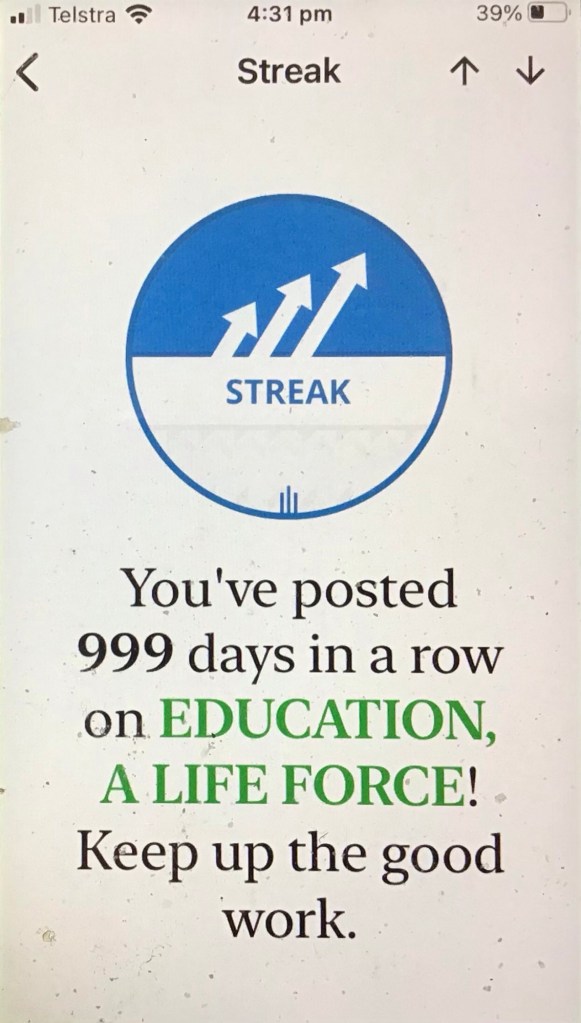
Stop tinkering with education

A plea from Poor Old Henry

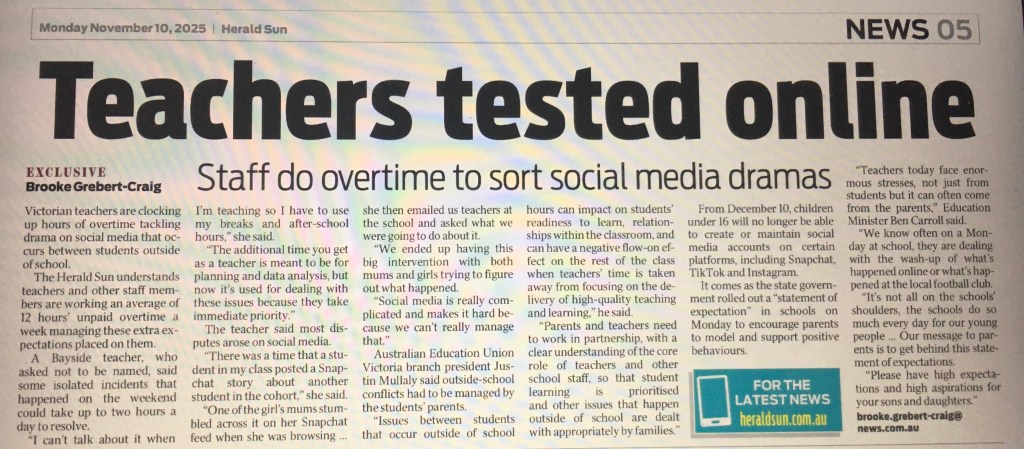
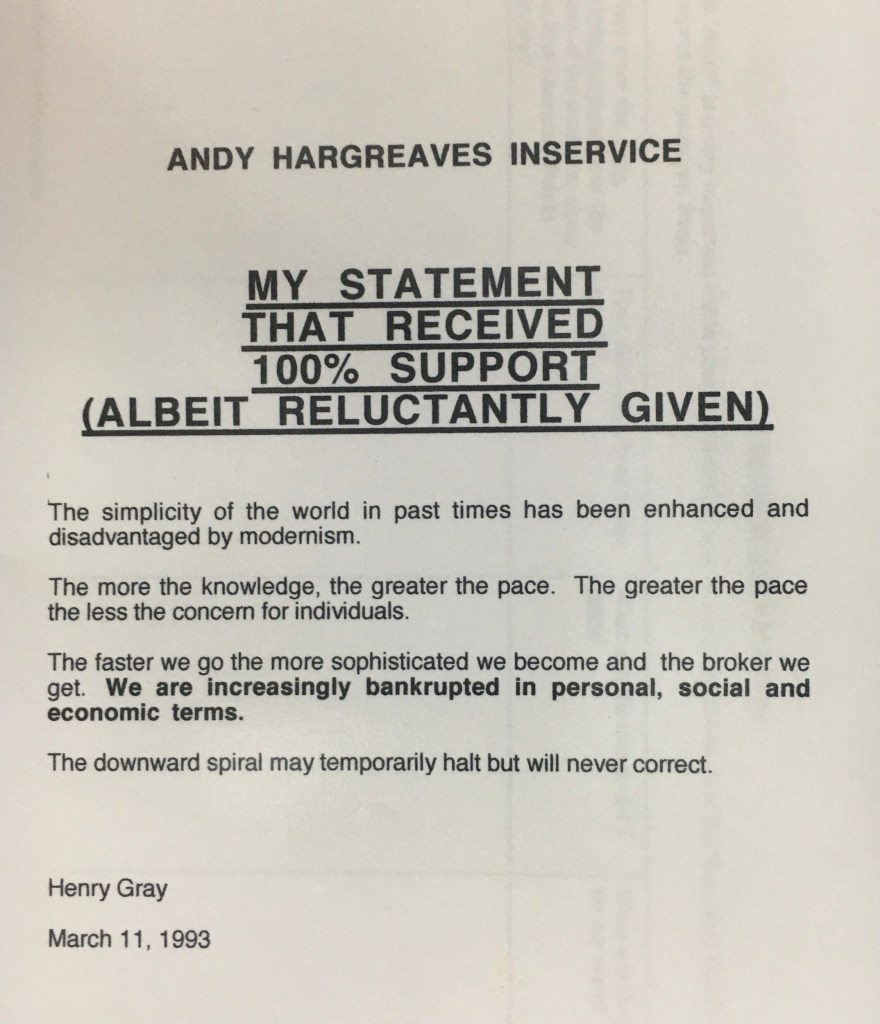
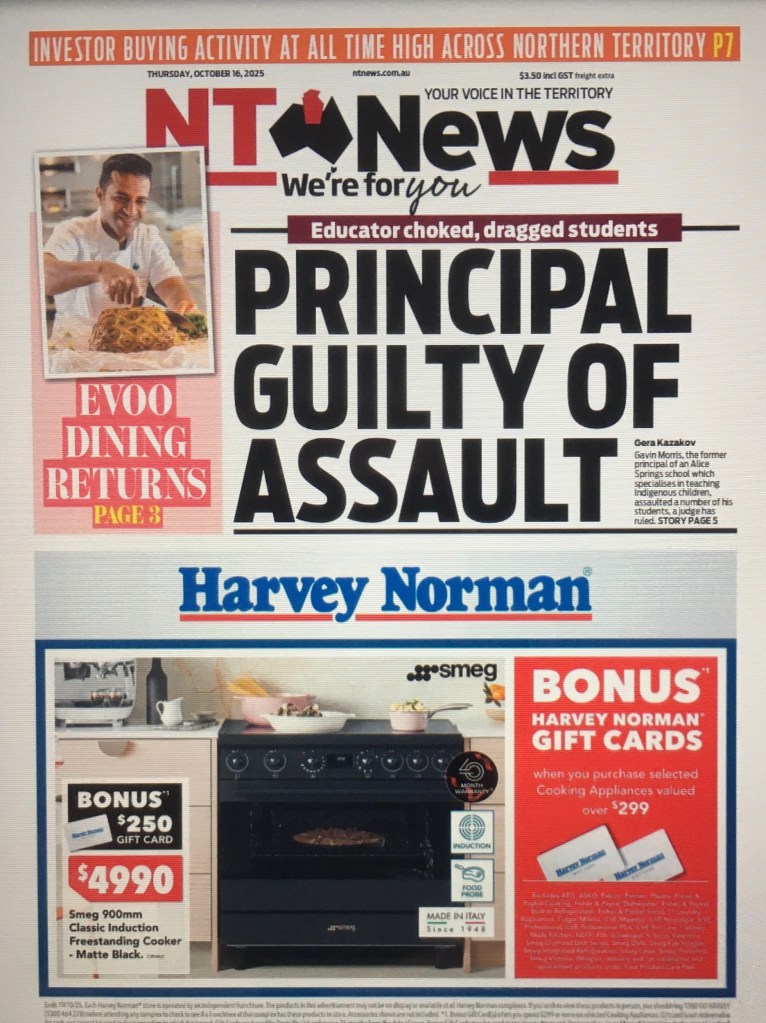
Education has become a ‘too much froth and not enough substance’ plaything. Tinkering excesses by researchers and educators provide novel approaches to learning that are often trite and meaningless.

They then try to fix problems with creative approaches that make matters worse, not better. They can’t leave well alone. 

Get back to what education should be -teaching and learning. For decades, too much ‘froth and bubble’ has been inserted into a rubbery, hopelessly focused curriculum that is now a total mess. 

An agenda that promotes fanciful notions over substance has distorted education’s prime function. Structures and organisations that too often focus on ‘providers’ rather than the intended recipients—children and students—have subverted the function of education. 

For the last 30 years, education has become a platform promoting educational gurus, often at the expense of students who become guinea pigs sacrificed at the altar of poorly researched innovations.

Stop tinkering and get back to providing decent, worthwhile educations .

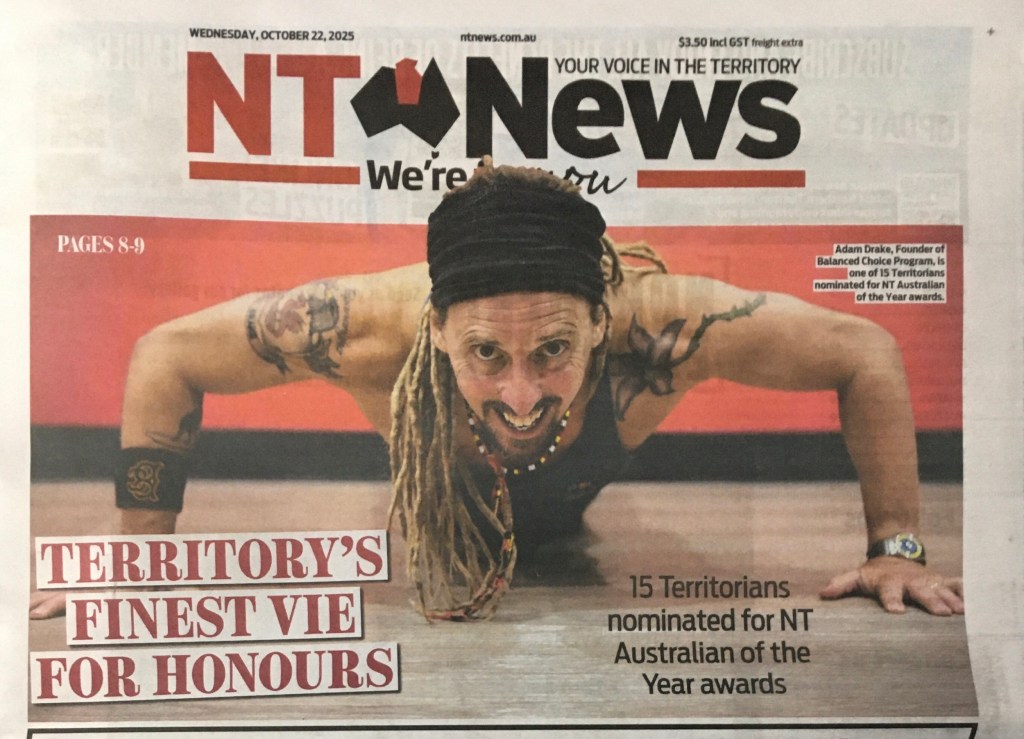
Letter in the NT News July 23 2025

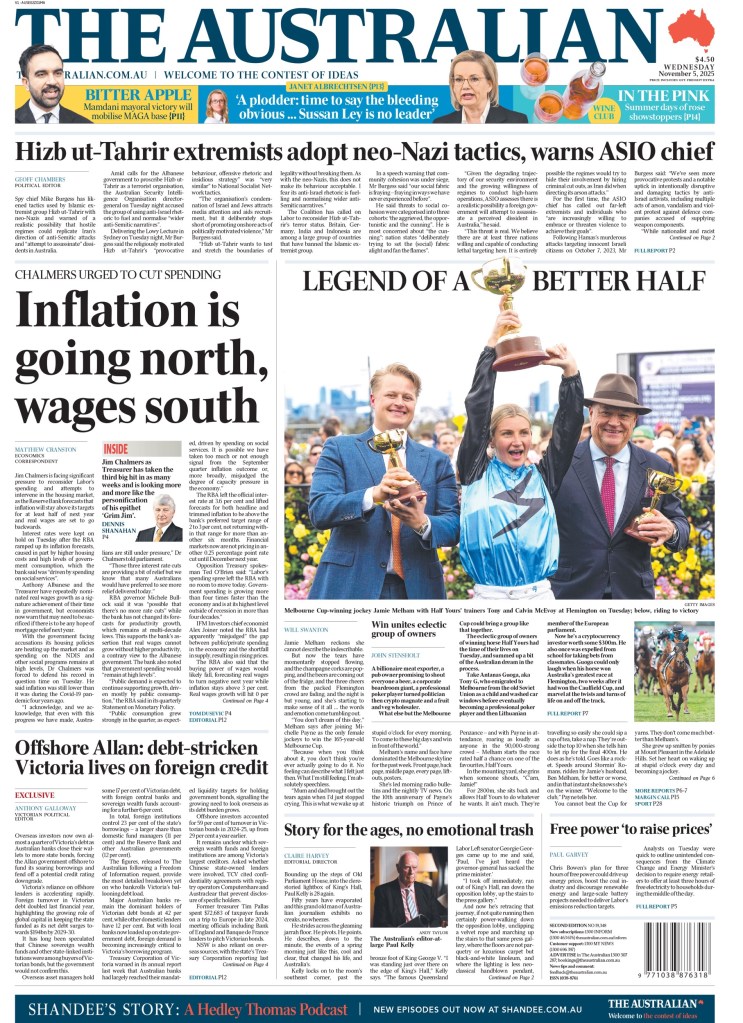
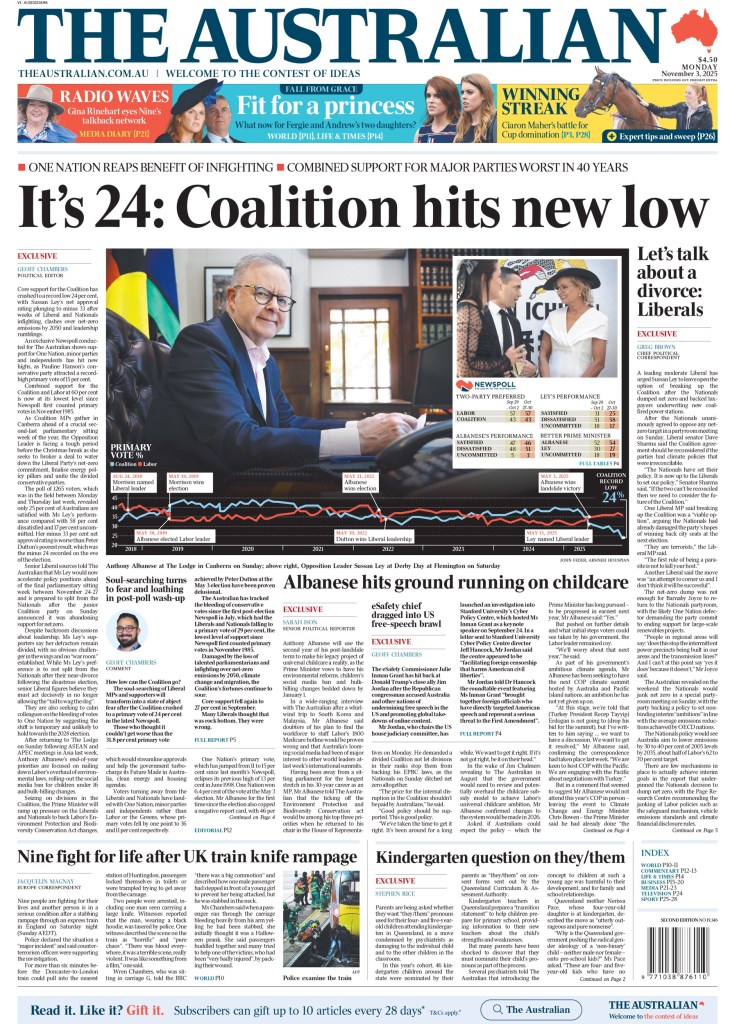
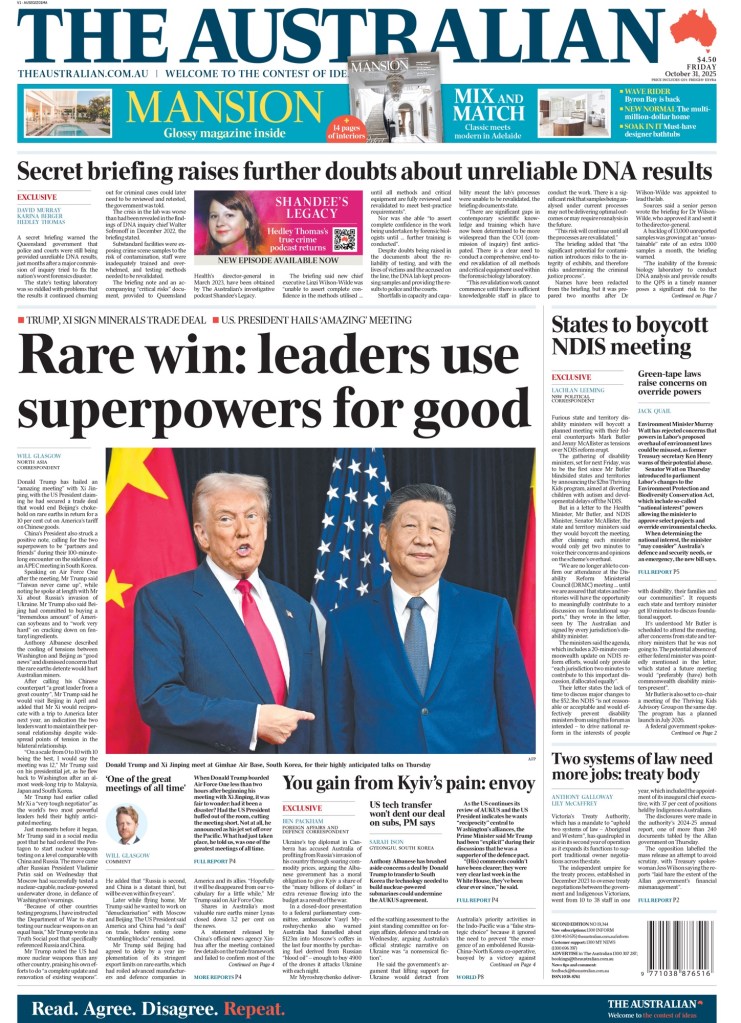
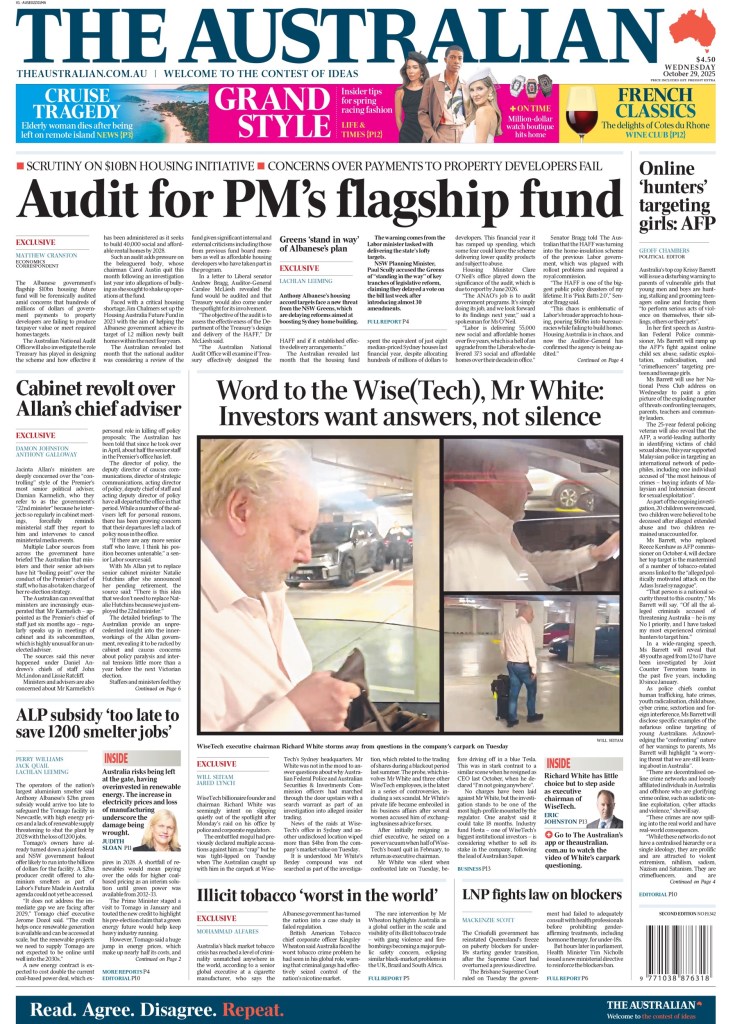
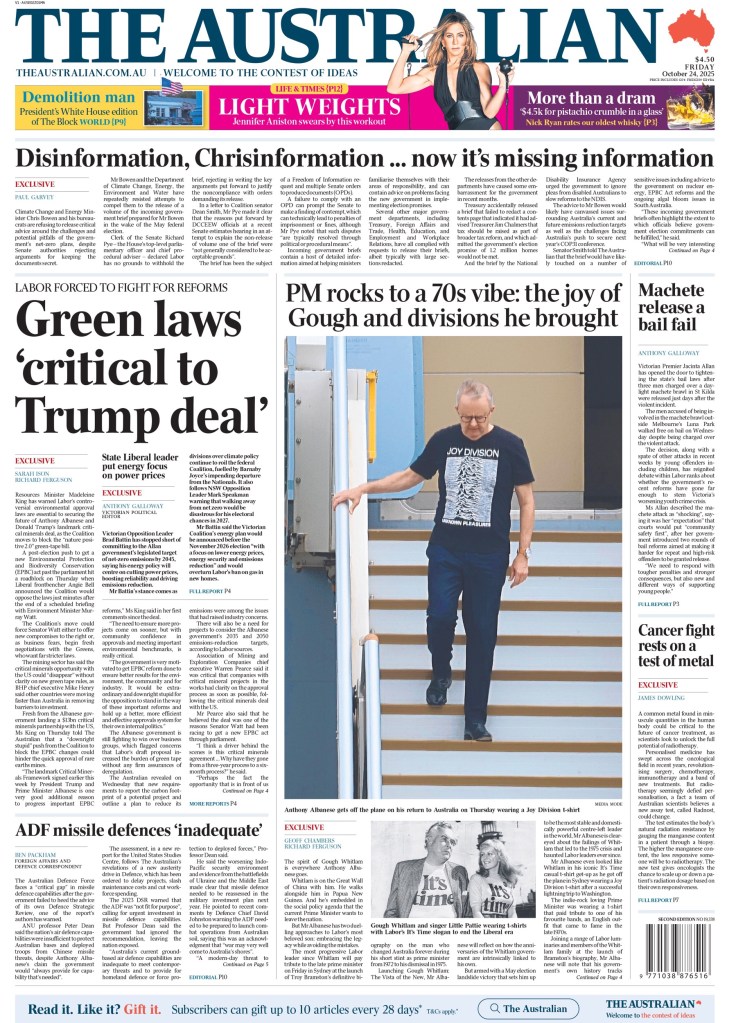
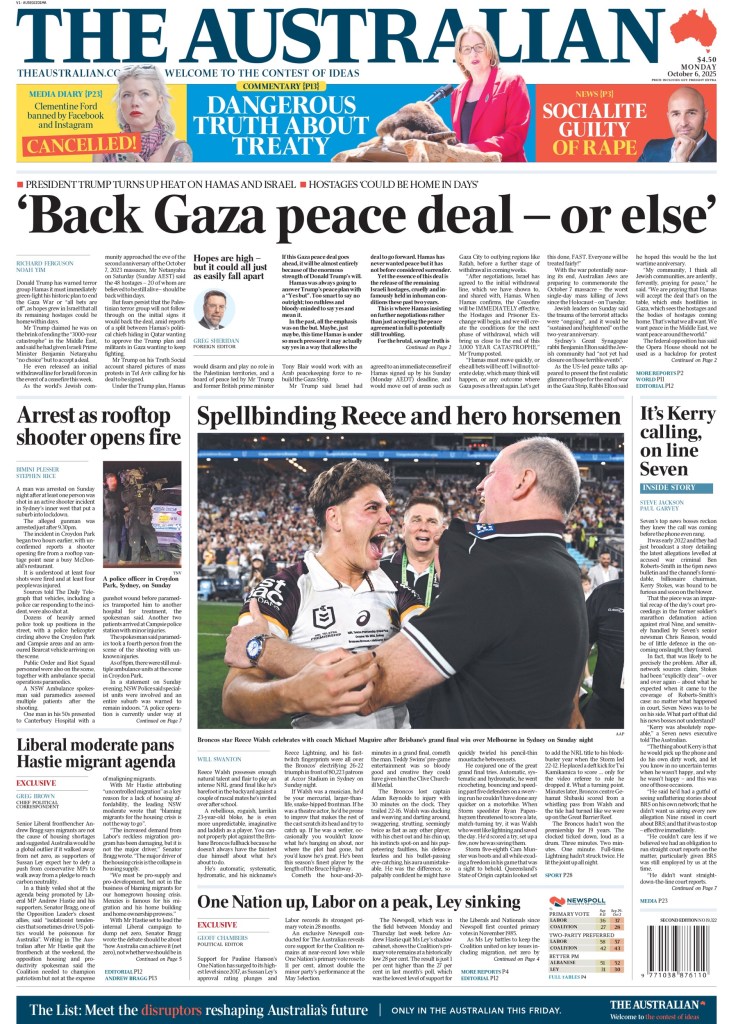
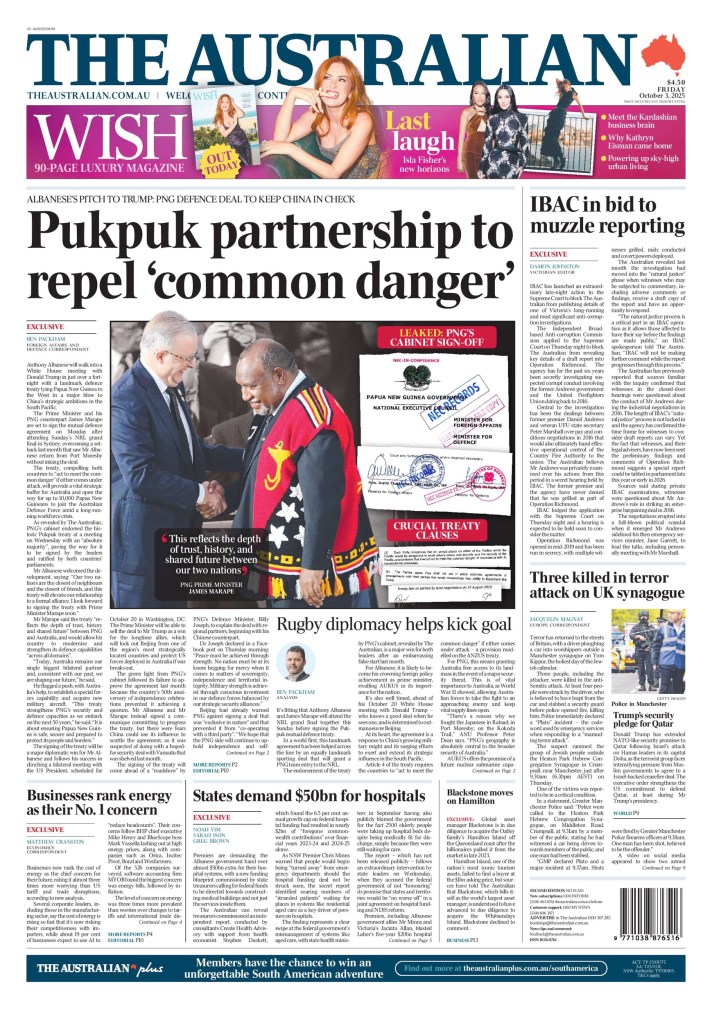
AUSTRALIAN  – JUNE 2025

Ukraine drones damage Russian warplanes and facilities

If this happened as reported, it would be an excellent outcome for Ukraine. Russia deserves every effective retaliatory strategy Ukraine can muster.

University priorities

Partying … this seems to be so much of what university is about in these modern times.

Comparing defence forces

China’s defence system reminds me of strong, stainless, reinforced steel.

Russia’s defence system reminds me of unreinforced steel.

America’s defence system reminds me of iron.

Britain’s defence system reminds me of weathered iron.

Australia’s defence system makes me think about tissue paper.

Senator Canavan and taxing inequities

Senator Canavan is right to call for this tax to be reasonable in its application. As he says, taxing unrealised gains that are forecasted but not realised is unfair. It simply reinforces the notion that the government is about grubbing money from wherever retrieval is possible.

Australia’s defence is as resistant as tissue paper

Australia IS totally defenceless and in the face of any military aggression directed toward us, would be compromised into submission whith a week. Our defence policy is about talk but no action in readiness terms. We are as vulnerable to attack as Taiwan

Ukraine a dogged adversary

Good on Ukraine. Remember back to February 24 2022, when Russia was going to blow Ukraine out of the water in three days. Now 1197 dasys later … ! 

Musk and Trump and separation

I am so desperately sad that a barbed wire fence seems to be being built between Mr Musk and President Trump. I hope that, like the Australian Coalition, the separation will be temporary and that these two brilliant men will again allow their ambitions to be joined in oneness and unity.

Shakespeare is missing glorious literary fodder

If William Shakespeare were still alive, he would have glorious material to work with on the literary and play creation front. What Trump and Musk are providing at the moment would stimulate comedy, farce, retribution, darkness, light, and humour.

Questions of youth and youngness

As a very old man, take it from me that youth is fleeting and is all too soon replaced by middle age and old age. I often wish, as a person about to emerge into the octogenarian era, that I had the wisdom of today in my youth of yesterday.

8

War in Australia? 

I wake up every morning in Darwin these days, wondering just how long it will be before missiles of war are unleashed in our direction. Darwin is now regarded as a defence town, and we would wear the outfall of war far sooner than places further south—with the exception of Pine Gap, which would be the first ‘asset’ to go.

Henry’s 24/7 worry

I go to sleep each night, thankful that armed conflict has stayed away from Darwin and Australia for the day. I wake each morning wondering ‘where to now’ regarding conflict threats. 

Shedding SANTOS

Yes, YES! Let’s get rid of SANTOS and put it under overseas ownership. We have hardly anything left that is not foreign-owned—or leased almost forever in the case of the Darwin Port—so we might as well embrace a 100% disbursement target.

Nova Peris on Israel

This is a thought-provoking analysis and a terrific positional column. We all would do well to read and contemplate it with deserved seriousness.

Trump exits the G7 for a return to Washington

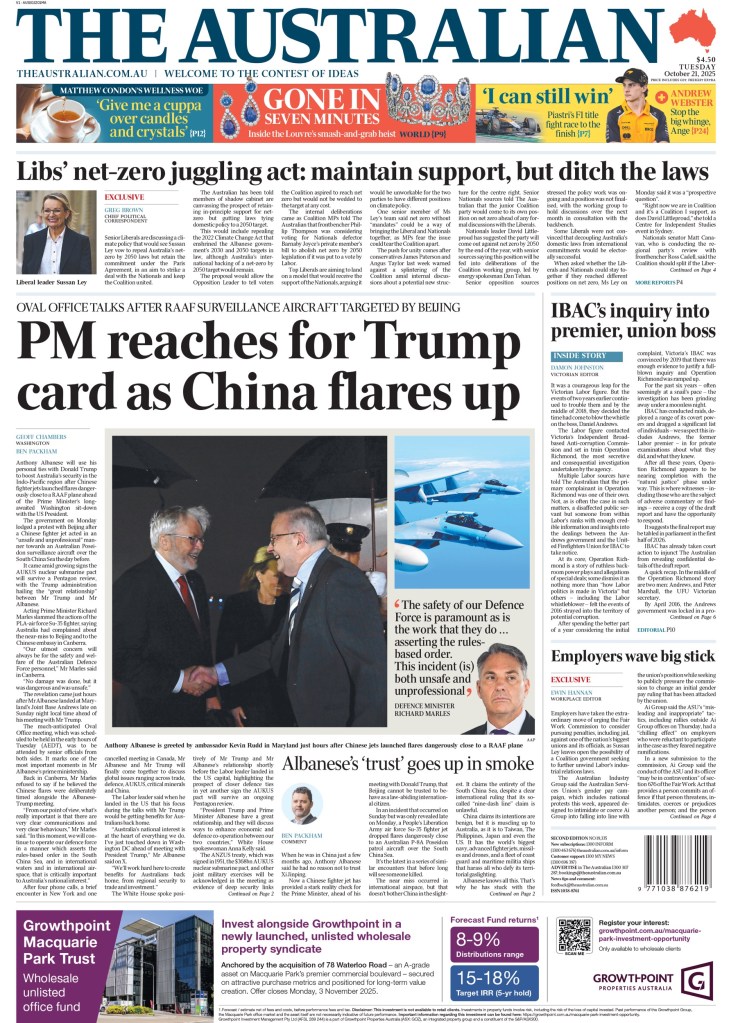
I am devastated by the heart-breaking news that the World’s most powerful man is heading back to Washington, scotching a planned meeting with Anthony Albanese. I hope our  PM can handle the shock of this lost conversational opportunity and come through smilingly from the absolute dismay he must be feeling now.

The world is on the shortest of leashes

I have had an increasing feeling within my 79-year-old gut for some time that Armageddon is coming. I now believe that it will happen and that the world will destruct into a fireball of annihilation, possibly before 2030.

What impact on thinking and thought processes

A kaleidoscope of confusion must be gripping the minds of countless millions of the world’s people and especially influencing the perceptions of young people.

Chaortic Victorian Liberals

I tend toward conservatism in political terms and am horrified at the mess the Victorian Labour Government continues to make. The chaos it is creating is unbelievable. But the Liberals’ stupidity is taking them from bad to worse, and if I were a Victorian, Pesutto’s ‘saving’ at the cost of party integrity would absolutely ensure I never voted for the coalition again. A ‘donkey’ vote would be appropriate, for that is a characteristic that stands out on the Victorian political stage.

Iran nuclear facilities bombing

One can only hope that the destruction of Iran’s nuclear capacities is an actuality and not simply speculation based on bombing accuracy, which can be predictive rather than confirmed when it comes to underground destruction.

The end is nigh – are we in the last decade of human history?

I think we can forget about renewables, climate control, environmental management, and the rest because, by 2030, the world may well be a burnt-out ball of obliteration. World War 3? We are in it right now, and it is eating its way around the globe we call the Earth.

GRAB BYTES – JUNE 2025

GRAB BYTES – JUNE 2025

Hail the Brits

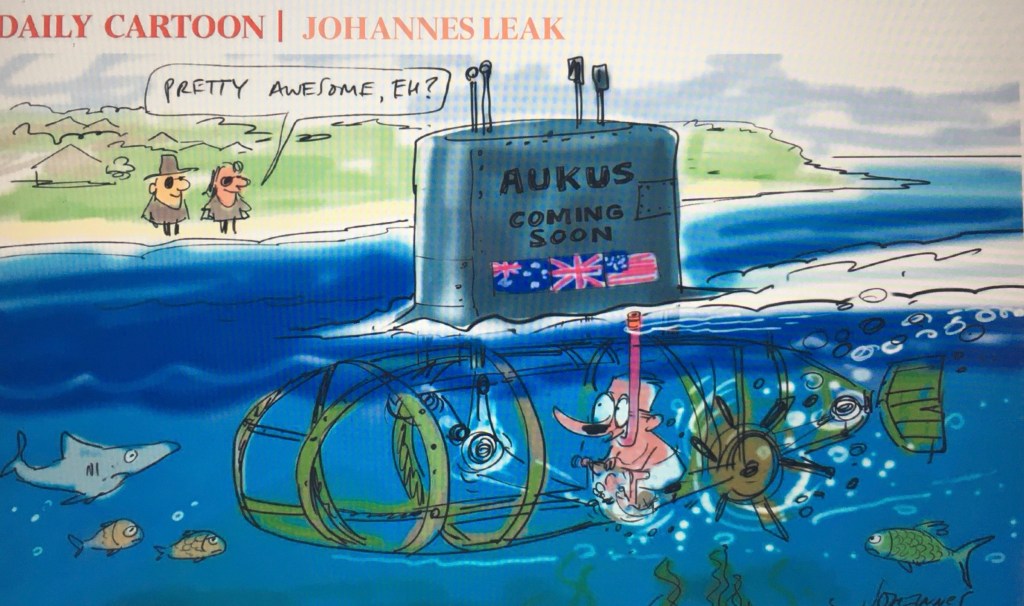
It gives one a warm glow to know that the UK and the USA—our AUKUS partners—are not too far away if we need help repelling any unwanted or antagonistic attention toward our country from any non-aligned power.

Virgin flights to Uluru on rock bottom special prices

There are too many terms and conditions and limitations. Once the extra costs are added, the whole package will look less inviting.

Community upgrades at remote settlement

Knowing about these upgrades and how they will facilitate living conditions in this community is good. The work will substantially benefit residents and visitors, provided these facilities are carefully maintained. The short life expectancy of many new and upgraded facilities in communities is an outcome of care and maintenance neglect. There is no better example of this than what has happened in the Wadeye Community.

New teaching approach in NT

This is NOT NEW. It is revisiting the way things used to be before alternative, more floury and less effective strategies supplanted a common sense approach.  Sadly, too many students for far too long have been captive guinea pigs. They have suffered at the hands of those peddling fanciful theories and shallow alternatives to good, sound teaching and in depth learning.

Finke Desert Race 

May all those in buggies and on bikes be protected from harm and danger on the way to Finke and back to Alice Springs. This wonderful event has had its share of mishaps, including injury and death, and I hope, as an avid fan of this great event, that all participants and spectators are kept safe.

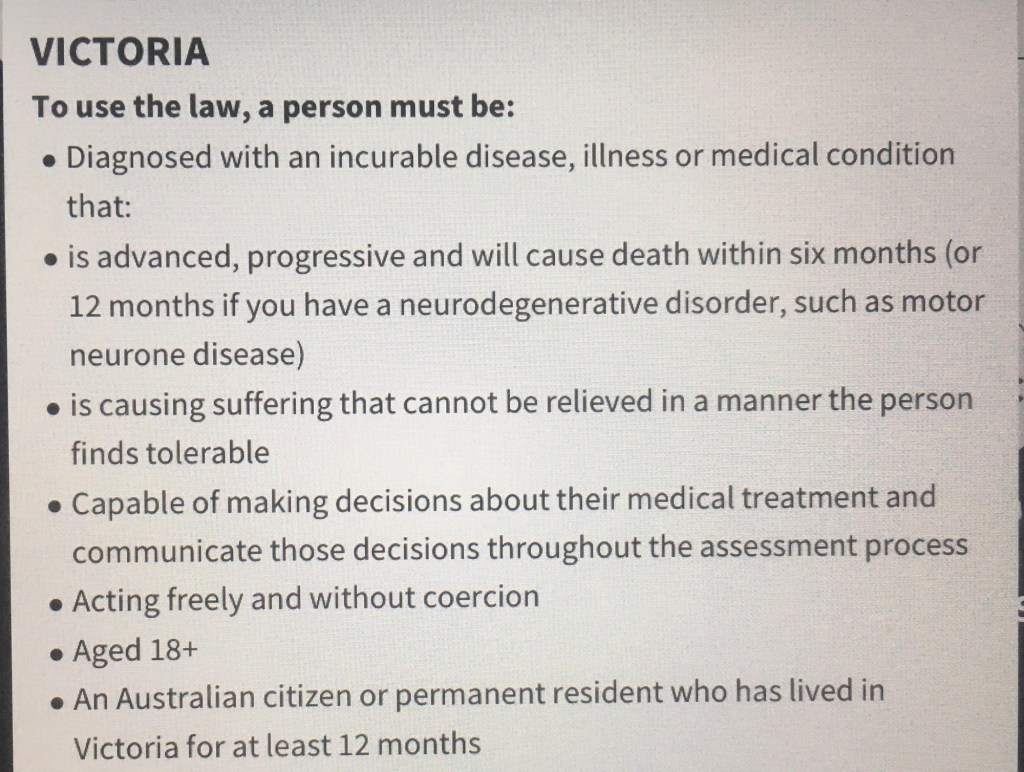
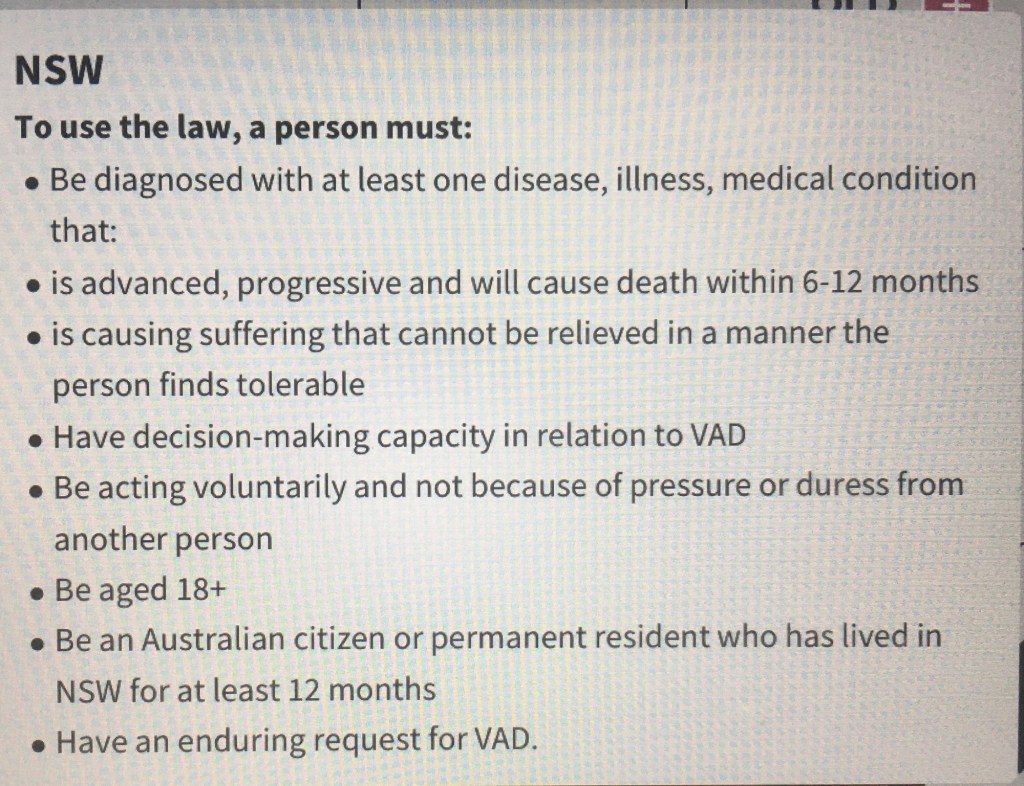
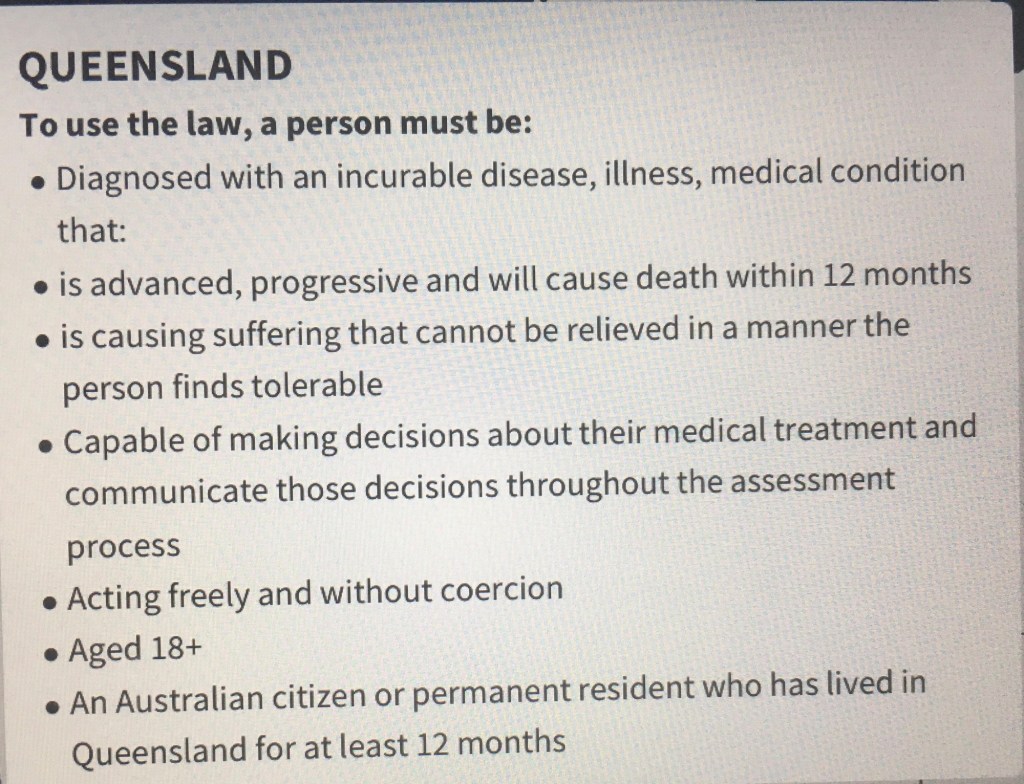
VAD – get on with it!

 It is high time the CLP Government stopped procrastinating and pussy-footing around the issue of VAD.  Inquiries and reports have been numerous, reasoned and based on careful consideration by those qualified to undertake the research and provide the recommendations that have already taken place.  This further ‘inquiry into the inquiries and previous recommendations’ is tinkering and pussy-footing  – and delaying the legislating of what is a fundamental human right.

Director of Public Prosecutions resigns

Mr Babb makes it four resignations from key positions. It seems that the only commissioner hanging on is the Corrections Commissioner. The revelation of this post suggests we are in dire straits. 

At the risk of drawing ‘tut-tuts’ from the new generation of political leaders, I would suggest that the government should open these issues to the public, and especially long-term Territorians for their thoughts. I don’t think this would be a waste of time, for what is needed is a revisitation of the experiences of those who confronted these sorts of issues in the past. Understanding their management processes and how they dealt with key challenges could offer a valuable learning experience and would not be a waste of time.

Transparency

I am starting to seriously worry about the roles and responsibilities attached to a growing number of senior public and government-appointed positions. It seems that accountability and transparency of action are more opaque and less clear than should be the case. We need to appreciate our government and its departments through a clear lens. It seems to me that the lens is getting very foggy, with excuses and vagaries creeping in, making for obtuse and unclear responses.

8

War ahead?

The way things are transpiring, and given Australia’s ever-increasing vulnerability and insecurity on the defence front, pending aggression—it is a case of ‘if’  not ‘when’—could well add contemporary rubble and destruction to what may be found on the archeological front in decades to come.

Tamboran and Beetaloo 

This is excellent news, a result that augurs well for our Territory in terms of positiveness for the future of gas extraction. May this company remain in Australian hands, with ownership never being divested to foreign ownership?

The wonderful reality of Bundilla Beach

This development is good news indeed. It will enable people to sit and quietly contemplate the beauty and tranquillity of this location. It will also be an area that encourages play and other worthwhile physical activities. All in all, this new facility deserves five stars. All credit to our Lord Mayor and the City of Darwin Councillors for this wonderful addition to our city, with their vision transformed into reality.

Darwin to Gold Goast via Jetstar

This new route is terrific news for those going from and coming to the NT. It will facilitate the travel of holidaymakers and their families from that part of Australia. I am fervently hoping the new connection will go the distance and not be a travel alternative that is in any way short-term.

Three more accolades and appreciations for Australia’s PM

A careful constructor of body language

Our PM is most careful to ensure that the messages he offers are not distracted from their import by his body language.  In terms of matter, manner of delivery and method of appeal, he is top drawer. If a member of Toastmasters, he would be certificated as a gold standard communicator.

100% in control

Our Prime Minister is always in control of his agenda. He can mix his engagements within Australia with his obligations to identify with overseas leaders through necessary visitation. We are so blessed to be led by someone cut from such fine leadership cloth.

I win when you win

This is a beautiful position taken in thinking of action by our Prime Minister.

Many people are far more concerned with their successes than they are about the success of others.

Our prime minister gains his respect as the leader because he prioritises his Australian constituents. He is considerate of their needs. 

Many leaders are first and foremost for themselves they want what is best, that will advantage them personally and because of their position within power ensure that happens. If others benefit from those decisions, it is more by using good luck rather than judgment.

Our prime minister is there first and foremost for all of us, and he stands back from making any decision that would bring him benefit if that would not be shared with us.

Three resounding positives offered in support of Anthony Albanese

  • A developer, not a punisher
  • We are so blessed in Australia to have a Prime Minister who prefers to reposition colleagues into more appropriate portfolios if they find it hard. He is not into sacking but instead developing them. He is an aware and empathetic leader and outstanding captain of the Australian political ship.
  • My hero
  • I would pay up to $15,000 to have the opportunity to discourse with our Prime Minister. I am in awe of this great man and have admired the many positives for Australia and its people since he came into the prime ministership. He is gallant, forthright, decisive yet considerate, empathetic and concerned for all who suffer hardship and misadventure. He works 24/7 to help bind all Australians “Together as One” in happy, harmonious unity. No accolade from this great admirer of one of the very best Prime Ministers who have graced the halls of parliament does justice to his humility and grace.
  • Accolades for Albo
  • His powerfully positive, personally owned leadership brings daily blessings to us all—to every man, woman, and child, to the old, middle-aged, and young, and to those in cities, towns, farms, and remote areas of this vast land. He is a hero to tens of thousands, an icon on the world stage, and a living treasure in Australia.

“Cris Kenny is so right” says Poor Old Henry

This quote from his column in ‘The Weekend Australian’ today.

It is not only Anthony Albanese’s indolent prime ministership; cast your eyes wider and search for leadership elsewhere in the Labor Party, opposition, other levels of government, business, industry and public debate. There is little vision, action or urgency; we are like frogs in warming water.

“We are Doomed, DOOMED” as Frazer would say in ‘Dad’s Army’.

Darwin Port was not enough. Give them more strategic real estate

Very Old Henry asks AI about the age of departure from life in the Middle Ages

What was the average age at which women and men passed away in the Middle Ages compared to 2025?

Response;

In the Middle Ages, life expectancy was significantly lower than it is today. Here are some comparisons between the average ages at which women and men passed away during the Middle Ages and projected figures for 2025:

Middle Ages (Approx. 5th to 15th Century)

  • Men:
  • The average life expectancy for men was typically between 30 to 40 years. However, this figure can be misleading as many men died in childhood or from warfare, disease, or famine. Those who survived past childhood often lived into their 50s or 60s.
  • Women:
  • Women generally had a slightly lower average life expectancy of around 30 to 35 years. High maternal mortality rates during childbirth contributed significantly to this statistic. Women who survived childbirth and childhood illness often lived longer, similar to men.

2025 Projection

  • Men:
  • The average life expectancy for men in 2025 is projected to be around 76 to 80 years, depending on the country and specific health factors.
  • Women:
  • Women are expected to live longer than men, with an average life expectancy of approximately 81 to 85 years in many developed nations.

Summary

Time Period Men Women Middle Ages 30-40 years 30-35 years 2025 Projection 76-80 years 81-85 years

These figures highlight the significant improvements in health, nutrition, medical care, and living conditions that have occurred over the centuries, contributing to increased life expectancy today.

How things change.

Aging Henry asks AI about family expansion in the Middle Ages

What was the age at which people had their children in the Middle Ages?

Reply:

In the Middle Ages, the age at which people had children varied significantly depending on various factors such as geography, social class, and individual circumstances. However, some general trends can be observed:

  1. Marriage Age:
  • Women typically married in their late teens to early twenties, often around ages 16 to 20.
  • Men tended to marry a bit later, often in their twenties to early thirties.
  1. Childbearing Age:
  • Women would usually begin having children shortly after marriage, often by their late teens.
  • It was common for women to have multiple pregnancies throughout their reproductive years, which lasted until their late thirties.
  1. Average Number of Children:
  • Many women could expect to bear between 4 to 6 children, although not all would survive to adulthood due to high infant and child mortality rates.
  1. Cultural Variations:
  • In some cultures or regions, particularly in noble families, marriages (and thus childbearing) could occur at somewhat older ages due to different societal obligations and arrangements.

Overall, while many women began childbearing in their late teens, societal norms, economic conditions, and personal circumstances could lead to variations in these ages.

And so many childhood deaths.

Prompt Autos – the best service centre in the business

Prompt Autos
Travers Street
Coconut Grove
Darwin

Over decades I have had vehicles serviced in many locations in WA and the NT. Some service centres leave a bit to be desired, while others have been okay.

For mine, Prompt Autos offer the very best in servicing terms. Everything needed for each service is fully completed and confirmed by documentation to customers.

Forecasting future service needs is part of the Prompt Autos brief. Reminder calls are provided and a courtesy service for transport after dropping off vehicle is on offer.

Prompt Autos is tops in every way. I am a ‘two decades plus’ satisfied customer for Prompts has no peer in the vehicle servicing field in Darwin

POH asks AI about close ties with China

Will Australia and China come together in oneness and unity?

Response:

The potential for Australia and China to come together in oneness and unity depends on a variety of factors, including political, economic, and social dynamics. Here are some considerations:

  1. Diplomatic Relations: The current state of diplomatic relations between the two countries is a crucial factor. While there have been tensions, particularly regarding trade and regional influence, there are also opportunities for dialogue and cooperation.
  2. Economic Ties: Australia and China have strong economic links, with China being one of Australia’s largest trading partners. Economic interdependence can foster collaboration and unity, but it can also lead to friction over trade policies and practices.
  3. Cultural Exchange: Cultural understanding and people-to-people connections may enhance unity. Programs that promote educational and cultural exchanges can help build mutual respect and understanding.
  4. Geopolitical Context: The wider geopolitical landscape, including relationships with other countries, will also influence the potential for unity. Regional security concerns and alliances can impact bilateral ties.
  5. Public Perception: The attitudes of citizens in both countries towards each other play a significant role. Positive perceptions can lead to greater unity, while negative views can hinder progress.

In conclusion, while there are avenues for Australia and China to foster unity, challenges remain, and the path forward will likely require continued diplomatic efforts and engagement from both sides.

Interesting times indeed!

Today’s ‘Australian’

Poh lauds Anthony Albanese (In real life or in a dream)

A LEADER MOST ADMIRED

A leader most admired,

That is our own AA,

He leads Australia brilliantly,

Each and every day,

When things are looking really grim,

And uncertainties appear to loom,

His smile and reassurance,

Will dissipate the gloom.

Like the Israelites of old,

Who wandered for 40 years,

Our PM is like Moses,

And expunges all our fears.

AA is our guiding light,

Who shows us a better way,

With reassuring confidence,

He highlights every day.

With futuristic promises,

Of what will come to hand

He transforms our place down under,

Makes it ‘the promised land’.

REJOICING TIME – WE ELECTED THE BEST.

We are blessed by good government,

Albo’s a star,

Being blessed by good government,

How lucky we are.

Most outcomes are right,

And little is wrong,

When I think of his greatness,

My heart fills with song.

Members of cabinet,

United as one,

Sing from the same hymn book,

With the liberals all gone.

No infighting or wrangle,

Synergy reigns,

Harmony in government,

Gone are aching pains.

Each day when I waken,

I feel I should cheer,

And give bountiful thanks,

That Albo is here.

Possibility / Probability

The wedding to be

  • There is a possibility but limited probability that Anthony Albanese will invite the Presidents of America and China and their wives to his wedding with Jodie Hayden.
  • There is a possibility and more that 50% probability that the South Sydney Rabbitohs President will act as best man to the PM, because it was a call of “UP THE RABBITOS” that brought the PM and his now fiancee together in the first place. 
The proposal on Valentine’s Day February 14 2024.

GARMA 2025 IS UPON US

Garma,

Is getting

Closer and closer,

The region will sing,

And ecstatically embrace indigenous culture,

Again joyfully bonding with all devotees,

Who wholeheartedly embrace Australia’s founding  First People,

The annual thrill and deep sociocultural immersion will,

Bring unbridled joy to Nhulunbuy and the whole region.

It is irreplaceable,

Full of reverence,

And spiritual rebirth,

Sharing deep blessing,

And inner refreshment.

Uplifting and sharing,

Australia’s indigenous heart,

Garma.

Garma.

GARMA

Garma encampment 2024.
Sleeping pods.

Fact or Myth – 16

The eyes and  ears of the whole of Australia’s 27 million people are presently focussed on the development and further cementing of relationships between Australia and China.

I feel that Anthony Albanese will feel a bit concerned about anything that might scarify relationships between the two countries.

Our PM is caught between a rock and a hard place, twisting and turning between China and America. 

Fact or Myth -15

China’s President Xi will promise Australian Prime Minister Anthony Albanese that Australia can have the Darwin Port back for peppercorn rent for the remaining 80-odd years of the Landbridge period of tenure.

The PM will persuade Chinese leaders to go easy on Taiwan.

Fact or Myth -14

The Australian governments are United on their number one priority, – often discussed sincerely and earnestly, – to wipe out our national debt by 2040.

There is bipartisan agreement between the major parties, fully supported by the minor groups and independents, to have this become an actuality.

There will be a reprioritisation of expenditure, including that political parties from here on in,

will not make promises nor overly spend on self promotion in the lead up to elections.

Sam Weston standing for Lord Mayor of Darwin

To AI

Tell me about Sam Weston who is standing for the position of Lord Mayor in Darwin.

Response:

Sam Weston is a current member of the Darwin City Council, representing the Lyons Ward. He was recently elected to the council in a by-election held in September 2023. A key aspect of his campaign and public persona is his experience as a local cafe owner, which has allowed him to connect with the community on various issues affecting residents.

Key Points about Sam Weston:

  • Position: Councillor for the Lyons Ward in Darwin.
  • Recent Election: He won a by-election in September 2023 to join the council, where voter turnout was notably low, resulting in a close race.
  • Background: Sam is known for his local business involvement, particularly in the cafe industry, which has shaped his understanding of community needs.
  • Civic Engagement: He has been active in local governance and is seen as a representative advocating for the interests of his constituents.

As he stands for the position of Lord Mayor, his campaign is likely to focus on community cohesion, local business support, and civic improvements based on his experiences as an elected member and a local entrepreneur.

For more detailed information about his policies and vision for Darwin, you might want to check out official council platforms or local news sources.

“MEDIA INFLUENCES YOUTH” says POH

From time to time the issue of media influence on shaping the values of young people comes up for discussion.

It is often asserted that what young people see, hear and experience has no influence on the shaping of their attitudes and values. People are scoffed at if they suggest otherwise. Researchers and others connected with empirical study assert that young people know that games are for amusement. Therefore, playing these games will have no impact upon their lives.

I believe that to be totally wrong. Many young people immerse themselves for hours on end, day after day, week after week in playing these games. Common sense suggests this has to impact on their thinking and attitudes.

Young people may become so totally absorbed in this “escape from reality“ that it becomes their reality.

While some of these amusements are quite benign, many of the more popular ones are about murder, massacre, slaughter, and macabre behaviours. It stands to reason that young people (and those who are not so young) who become totally immersed in these activities will be influenced by their addiction.

The fact that so many young people these days are “I“ and “me” people who do not think about others, may well be a result of exposure to online gaming. Lack of manners, slack, disrespectful speech, the inability to focus on real life tasks in school and elsewhere, disinclination toward real life activities all point toward cyberspace influence. The key characters in online games generally behave in a way that promotes heroism through bullying, harassment and other negative behaviour. Can we wonder at this bravado and these attitudes rubbing off on the impressionable minds of youthful gamers?

Common sense suggests that the antisocial behaviour of many young people has its genesis in their indulgent online activities. When cyberspace completely absorbs the minds and the attention of users, something has to give!

One of the most recent games is “fortnite”, which focuses on extremely negative social behaviour. Game changes and modifications always seem to focus on negatives, rather than social decency.

I believe it imperative for parents to be aware of the online games their children are playing. They would be wise to monitor the classification of these activities and the length of time spent in online indulgence.

Without doubt, the games children play impacts on their thinking, attitudes and behaviour. That can have negative consequences. It may result in them making poor decisions that impact upon their lives and their futures.

POH asks a question of AI about the greatest man on Earth

What quirks does Donald Trump have?

Donald Trump has several quirks and characteristics that have become widely recognized during his public life:

  1. Distinctive Speaking Style: Trump’s speaking style is often characterized by repetitive phrases, superlatives, and a conversational tone that reflects his background in business and entertainment.
  2. Social Media Presence: He is known for his prolific use of Twitter (now X) to communicate directly with the public, often bypassing traditional media channels. His tweets often contain unusual capitalization and punctuation.
  3. Branding and Nicknames: Trump has a penchant for creating catchy nicknames for his opponents and allies, such as “Crooked Hillary” or “Sleepy Joe.” This branding reflects his background in marketing and media.
  4. Hand Gestures: His distinctive hand gestures and body language during speeches and rallies are often highlighted, with specific movements that have become trademark characteristics.
  5. Focus on Ratings and Popularity: Trump often references ratings, whether it’s for television shows or the popularity of his events, showing his affinity for measuring success through public attention.
  6. Casual Attire: While often seen in suits, Trump’s style can be casual, especially during rallies or informal events. He’s also noted for his signature red “Make America Great Again” cap.
  7. Love for Fast Food: He has openly expressed a preference for fast food, often being depicted as enjoying meals from chains like McDonald’s.
  8. Controversial Statements: His tendency to make bold and sometimes controversial statements has been a notable aspect of his public persona, often sparking significant media attention.

These quirks contribute to his identity and have played a significant role in his appeal to supporters and his notoriety in public discourse.

Such a man! He is ironclad and infallible.

OLD FASHIONED READING IS THE BEST

In these modern times, it is easy to replace traditional reading approaches with device supported alternatives. The proof of this change is confirmed by the number of bookshops that have been relocated away from the Northern Territory, changed business focus or closed. Among these are the ABC Bookshop, Dymocks and Angus & Robertson. While newsagents carry text material, dedicated bookshops are in decline.

Tablets and electronic books are becoming ever more popular, replacing what was a preference for books and traditional texts. Newspapers and some magazines have skyrocketing numbers of online readers, but subscriptions to hardcopy and paper formats are declining.

Electronic reading is an individualised alternative. The interaction is between the reader and the device. Text sharing and discussion does not take place because this reading method is not a group activity. Reading from devices does little to promote text sharing and companionship between readers.

Jackie Sinnerton made this point in a recent column about what should be an important sharing between parents and children. She suggests that “… parents should stick with old fashioned storybooks when reading to their children and ditch the electronic devices … reading from a device or e-book fails to engage children in the same way as a storybook. Parents and children verbalise and interact more when story and pictures are in print.” (Reading more special when it’s in print, NT News, 27 March 2019)

Traditional reading offers interactive opportunities for parents and children. Quoting from a prominent paediatrician Dr Tiffany Munzer, Sinnerton explains that the tradition of parents and children reading together offers “ … interactions, including warmth, closeness and enthusiasm during reading (which) create positive associations with reading (that) will likely stick with children as they get older.” (Op cit).

Although not stated, this benefit will in all likelihood be carried forward and become a habit that today’s children will practice as tomorrow’s parents.

Traditional reading promotes family togetherness. It also supports children in their acquiring of reading, conversational and comprehension skills.

The NT News and other papers belonging to the Murdock stable recognise the importance of shared readings in the family context. From time to time, sets of books which can be purchased by families reading newspapers, are offered for sale at most reasonable prices. This is a positive and practical initiative.

Access to traditional books and sharing quality time focussing on written text, adds value to family life. Children from homes where shared reading and discussion is a family habit, stand to gain a head start in reading, discussion and social sharing which are elements of formal schooling.

ARE SCHOOLS REPLACING PARENTS?

In our modern times schools, especially primary schools, are supposed to be all things to all people. Parents are increasingly engaged with work commitments extending from early in the morning until quite late in the afternoon. It is small wonder that an increasing number of children spend time before and after school in care programs. Many children are at school by 7.00 o’clock in the morning and do not leave care programs until well after 5.00 o’clock each afternoon. Most school councils accept responsibility for Outside School Hours Care (OSHC), providing after school support for children. The number of before school care programs for children are increasing. Children are spending almost as many hours each day in school and care programs than at home.

They are also enrolled in care programs during school holiday periods.

Preschool now commences for most children at the age of three, with timetables providing for full day rather than half day programs. This has been designed to fit in with working parents.

These key structural and organisational changes have contributed to redefining educational priorities. Pre and primary schools are as much about child care as education. This is added to by the fact that community expectation seems to be that children will be brought up by the combined efforts of parents, teachers and child care workers. That used to be the sole responsibility of families.

If schools organise pupil free days for professional development, the response from many parents is one of concern because child care for that day changes. Children either stay at home (with work implications for parents) or are booked into all day care.

In these modern times, family responsibilities have in large part been outsourced to secondary caregivers. Governments have reacted to community pressures and endorse institutionalised nurture and care as being a good substitute for parental time and attention. The justification is that parents are so busy working to boost the economy and sustain the home front, that key parenting responsibilities have to be outsourced. The community expects schools and teachers to be involved with the bringing up of children.

Schools and staff play an important part in the development of children. However, they can never take the place of parents. Without a doubt, parents are THE primary caregivers for their children. That responsibility should never be handed to secondary providers and government agencies. Schools can do their bit. However, if parents and families fail in their obligations, children will be the losers.

NURTURE BY PARENTS THE BEST CARE

The best love and care that children can have, is that which is offered by parents. Too often this is overlooked. Some believe that early learning educators, teachers and after school carers can stand in the place of parents. A recent Sunday Territorian article (April 2) touched what might be a raw nerve. ‘Hands on parenting is what helps children’ is so true. A study conducted by the Australian Research Alliance for Children and Youth (ARACY) focussed on this truth.

Study authors Stacey Fox and Anna Olsen from the Australian National University found that ” reaching out to children, talking with them and helping them with their homework matters more than income or background.”

In these modern times, the need for parents to work, too often distances them from their children. Before and after school care have become a way of life for children whose parents leave early and arrive home late. They are often placed in vacation care during school holidays because their parents are at work. Many parents are both preoccupied with and made tired by work, making quality time with their children during the week a rarity. While family catch-up may happen on the weekend, there is a need to attend to domestic chores and get ready for the working week ahead. In these contexts it can become easy for children to become somewhat overlooked. They may also be misunderstood by parents.

According to Fox and Olsen, “children … benefit when their parents provide a positive environment for homework and play a role in school activities.” They want their parents around, wishing to identify with them in school settings. Parents attending assemblies, participating in parent teacher nights, and supporting their children’s extra-curricular school activities is a part of what their children want.

According to the study, children really welcome and greatly value the first hand connection of parents with their educational development. In terms of hands on parenting, “the aspects which appear to matter most include high expectations and aspirations for children, shared reading between children and parents and family conversation.”

Children need room to move and develop as independent human beings. ‘Helicopter parents’ who constantly hover around children can be very stifling. They suffocate the independence and dampen the decision making potential of their offspring. However, when parents are there for children, engaging with them, nurture and love are to the fore. And it is these attributes in parents that their children want and need.

What outstanding world leader holds several honorary doctorates, saluting him in a deserved manner for his ongoing contribution to shaping the world order?

Donald Trump

Donald Trump has received several honorary degrees from various universities. Here are the notable ones:

  1. Lehigh University – Honorary Doctor of Business Administration (1988) – This degree has since been rescinded.
  2. Wagner College – Honorary Doctor of Business Administration (2004) – This degree has also been rescinded.
  3. Robert Gordon University – Honorary Doctor of Business Administration (2010).
  4. Liberty University
  • Doctor of Business Administration (2012)
  • Doctor of Laws (2017).
  1. British Institute of Technology – Honorary Doctorate of Philosophy in Peace Studies (awarded for contributions to global diplomacy).

For more detailed information, you can refer to the sources below:

Source: AI

Asked about Trump charisma

Is Donald Trump the most charismatic leader on Earth?

Response:

The perception of charisma can vary significantly from person to person and is often subjective. Donald Trump is viewed by many as a charismatic leader, particularly among his supporters, who appreciate his direct communication style and ability to connect with his audience. However, others may not find him charismatic based on differing values and perspectives on his leadership style and policies.

Charisma is influenced by factors such as personal affinity, political beliefs, and cultural context. Leaders like Barack Obama, Nelson Mandela, and others have also been considered charismatic figures for their ability to inspire and connect with people. Ultimately, whether Trump is the “most” charismatic leader is a matter of personal opinion and can depend on individual criteria for what constitutes charisma.

He up there

POH asked AI a wistful but rhetorical question

Is there a way in which America could have the country name changed to ‘Trumpland’?

Changing the name of a country, especially one as significant as the United States of America, would be an immensely complex and highly unlikely process. However, if one were to consider the hypothetical possibility of renaming America to “Trumpland,” here are some key points to consider:

Factors Involved in Renaming a Country

  1. Constitutional Amendments:
  • It would likely require amendments to the U.S. Constitution. Renaming a nation involves legal and political processes that can take years, requiring significant public support.
  1. Public Opinion:
  • A substantial majority of the population would need to support such a change. This could be gauged through polls or possibly a national referendum.
  1. Political Will:
  • Leaders and political parties would need to endorse and advocate for the change. This is a significant cultural and political shift that may not find favor across various stakeholders.
  1. Global Considerations:
  • International relations could be affected, as the name change would alter the way the country is perceived globally. Countries often have established historical relationships that use the current name.
  1. Cultural and Historical Identity:
  • The United States has a rich history and identity that is tied to its current name. A change to “Trumpland” could face backlash from historians, cultural commentators, and the general public who value this heritage.
  1. Potential Legal Challenges:
  • Numerous legal challenges could arise, from both within the government and from citizens, prompting debates in courts regarding the constitutionality of such a significant alteration.

Conclusion

While it may be an interesting thought experiment to imagine America becoming “Trumpland,” the practical realities make such a change nearly impossible. It would require overwhelming support, constitutional changes, and careful consideration of the deep implications such a shift would entail.

For a detailed analysis of the historical context and potential consequences of name changes in countries, you can explore resources on constitutional law and political processes.

What a study this could be.

It has to be a question of balance

BALANCE

It’s only good,

It’s only fair,

If domestic-ally,

Men do their share.

Don’t make excuse,

And do not fudge,

Be a man,

Share the drudge.

Sweep the floors,

Do the dishes,

Don’t leave it all,

To the missus.

Share everything,

Don’t be a sod,

Be equal,

In the eyes of God.

Domestic bliss,

Will come to you,

If you each share,

In all you do

Poor Old Henry shares a collection of nonsense

PRIORITIES

Sugar is good for your health,

Dieticians deprive you by stealth,

Have you not heard,

They sway you by word,

Your clinic visits add to their wealth.

WHY TAKE MENS’ CROWNS

Men like to smoke and to booze,

This causes them money to lose,

What they take via the mouth,

Sends their health spinning south,

Ladies please, a better way choose.

PRIORITIES

America school’s crumble and fall,

Resources are stretched and that isn’t all,

Education is failing,

Educators are wailing,

Their dollars have gone to The Wall.

EXTINCTION

‘Me Too’ is a loud global cry,

One causing all men to sigh,

Being male is a sin,

It’s time to leap into the bin,

Maleness is set to die.

WELLNESS

There once was a man who drank grog,

Clouded his brain just like thick smog,

Then one fine day,

He gave it away,

Now he’s never as sick as a dog.

Is the future lost in fog?

EXCITEMENT IS HAZY – AT BEST A MIRAGE

THE FUTURE IS BLEAK

I find it very, very hard, and it almost impossible to feel optimistic about the future.

Truth be known, I am very, very worried about the future. I look and think about what lies ahead with fear and trepidation. I more and more think of the fact, that in these times of uncertainty, we are living day by day and month by month rather than year by year.

Everywhere around the world there is danger, uncertainty, conflict both passive and active – with voice and with weapons. I wonder where it is all going to end, and to my way of thinking Armageddon is very real.

Things are getting away from humanity.

Within my heart I hope against hope that the future will hold good for our children and for their children. It matters not so much for me because I have lived a full life, but for our children and particularly our grandchildren there is a lot of life ahead if circumstances allow a future.

Increasingly we’re talking of war and conflict. It seems that the inevitability of a major worldwide war is almost upon us. There is hardly a place in the world where conflict and physical skirmish all the way through to the Russian – Ukraine war are not taking place.

In most of the “liberated“ countries of Africa, there is Civil War, famine, major illness, and displaced populations of people numbering in their tens and hundreds of thousands. There are countless boats overcrowded with refugees, trying to flee across the Mediterranean to Greece, Italy, France, Spain, the United Kingdom, and all the other countries of Europe. Within those countries with the huge and mixed populations there is also danger civil disobedience and upset.

China and India are hugely populated, Japan, Indonesia, Vietnam, Thailand and other countries of Asia and Southeast Asia are so and full of people at one wonders if there is any open space left at all.

Here in Australia we only have a population of 26 1/2 million. But that number is growing by hundreds of thousands of migrants every year. While Australia is a vast country, about 90% of it is uninhabitable meaning that our C boards from Cooktown in Queensland all the way around to Geraldton Western Australia are overcrowded with dense. populations.

We are faced in Australia with a growing divide between the affluent and the poor. I debt along with Want and spending is on the rise and destitution and economic frailty is evermore manifest.

Be at north, south east or west, in Australia regionally throughout the southern normal northern hemisphere of crime is ever more prevalent, people are ever more selfish and the decent qualities of humanity ever more disappearing.

Environmentally, water saver more polluted, human waste and byproducts evermore contaminating, sea levels are rising, the Arctic and Antarctic are in meltdown, the world is getting hotter, bushfires are raging, floods, pestilence and earthquake along with hurricanes, cyclones, tsunami’s, loss of natural vegetation and habitat, extinction of species, and the grinding down of our planet, Does nothing but cement thoughts of gloom and doom.

I would like to think that there is hope for the future. However, that is becoming evermore harder to see and a future that’s positive seems to be shrinking into the background becoming a little more than a pipe dream.

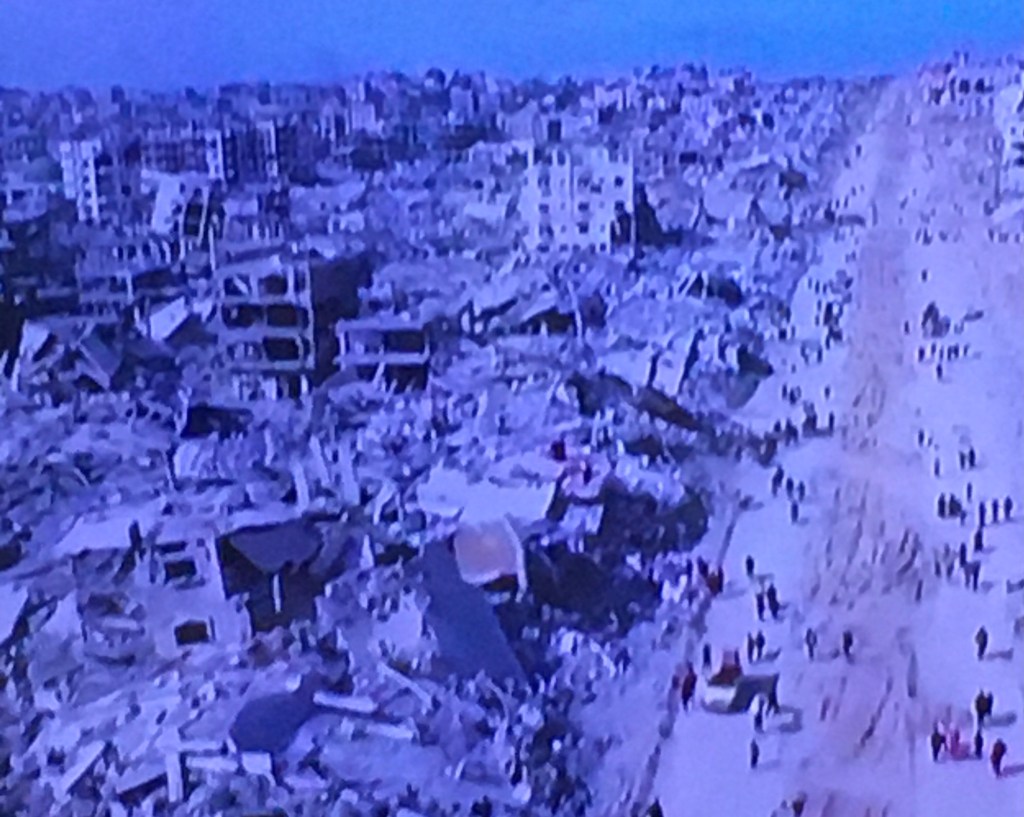
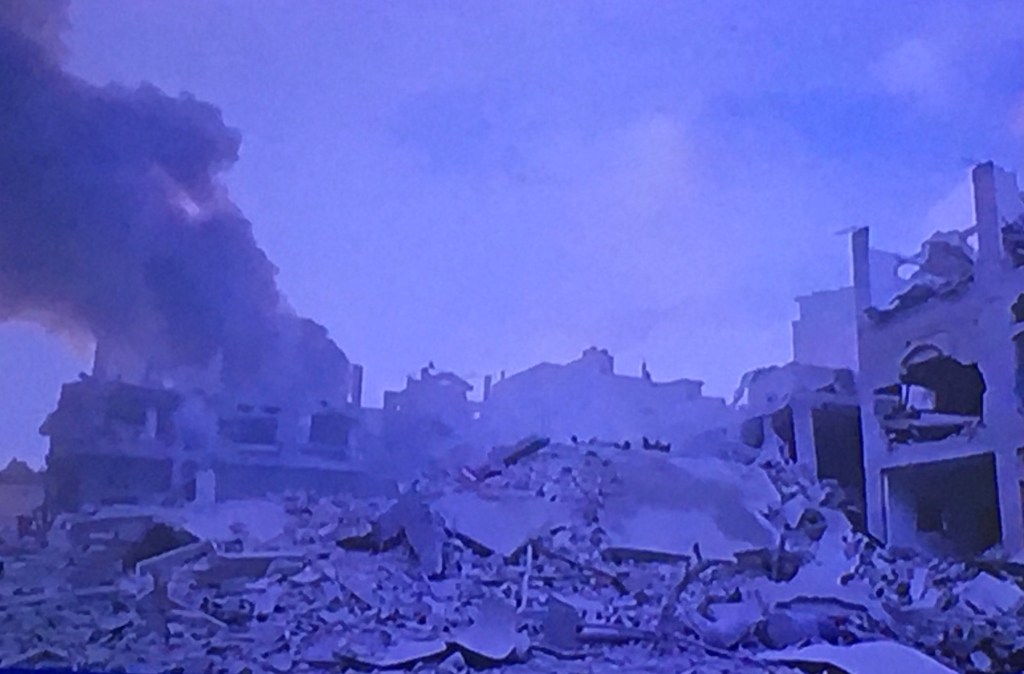
Poor Old Henry asks AI about Gaza and what happens next

How long will it take to rebuild Gaza? Where will the rubble go? What percentage and numbers of buildings have been destroyed?

Response:

Rebuilding Gaza

How Long Will It Take?

Rebuilding Gaza is expected to be a long and complex process, potentially taking decades. The challenges include the removal of over 40 to 50 million tons of rubble, the need to manage hazardous materials, and addressing the humanitarian crisis.

  1. Bologna, 2023: The Gaza Strip may require a thorough cleanup and rebuilding effort, with official estimates indicating reconstruction could cost over $80 billion.
  2. UN Plans: The United Nations has proposed a multi-phase plan that includes preparation, initial cleanup, rubble clearing, and final disposal.

For more details, you can read this Bloomberg article and this AP news highlight.

Where Will the Rubble Go?

The rubble will undergo a multi-phase management process:

  • Initial Cleanup: Essential for safety, including removal of hazardous materials.
  • Clearing: This will include recycling building materials where possible and disposing of waste in designated areas.

The cleanup and disposal process is expected to take considerable time and resources due to the sheer quantity of debris generated.

Percentage and Numbers of Destroyed Buildings

  • As of November 2023, estimates suggest that approximately 60% of buildings in Gaza have been destroyed or damaged.
  • By December 1, 2024, reports stated that 69% of buildings had been affected, with around 245,123 housing units reported as damaged.

For further statistics and detailed reading, you might find this France 24 article and the comprehensive assessment from the UNOSAT report useful.

Conclusion

In summary, the rebuilding of Gaza is a significant undertaking that will take many years and extensive resources, with a large portion of the infrastructure needing to be rebuilt from the ground up. The journey ahead is as much about addressing immediate humanitarian needs as it is about reconstruction.

“Leading to promote harmony without abrogating my leadership responsibilities was my aim” says Poor Old Henry

Looking Forward and Looking Back: Career Reflections

In December 1969, I graduated as a two year trained teacher from Graylands Teachers College in Western Australia. I remember sitting in the assembly hall on the day of our graduation and announcement of school placements. I thought about how far into the future time stretched. It seemed as if I was facing an infinity, a never-ending teaching future.

Looking back, writing this paper as an essentially retired Principal (although a person still deeply committed to education) I feel that time has flown by, almost in the twinkling of an eye. I have learned a lot and that is ongoing for personal education and development is a life-long process.

Education has offered me the privilege of working with students, staff, parents and community in many different situations over forty five years. i wanted to reflect and share thoughts that go to leadership and survival strategies I have practised and systemic changes which have come to pass during my (and including family, our) time in the Northern Territory. 

LEADERSHIP STYLE

There are constants about the way one leads, together with changes to process impressed as prudent or necessary from time to time. My leadership over time was largely informed about what I should do by learning, from observation and experience, about what not to do! 

With the passing of time, leadership modelling moves from one paradigm to another. To move from one leadership approach, to the next, to the next can mean one’s constant adoption of new approaches leading to unpredictability. This could result in destabilisation and a diminution of respect held for the leader by peers and subordinates.

I have never moved far from my first adoption of leadership preference and style. There have been refinements but the basic premises by which I lead have remained constant.

* I have tried to be a ‘developer’ of others in a context of where focus on both people and task has been to the fore. In terms of schools, this is about the importance of being a facilitator in a hands on context rather than offering leadership at distance ‘above’ (and therefore somewhat removed from) those with whom I have worked.

* My focus was to be a leader whose position was acquired and maintained by respect held for me; therefore not relying solely on ascribed or positionally empowered leadership. While appreciating my ‘position’ I have always aimed to be a Principal whose leadership is sustained by respect held for the way I do my job. I don’t believe it hard to maintain authority expected by superordinates, while earning and sustaining genuine respect from those connected with my schools.

* For a long time I struggled with how to meld my thinking about leadership with an appropriate model. The hierarchal model represented by a pyramid which runs from the top down through management and leadership strata to the bottom or base, representing those at the lowest level within the organisation did not fit with my conceptual appreciation. I discovered a more appropriate and fitting model while studying for a Masters in International Management. The Concentric Model presented as being ideal. 

Viewed from above, concentric leadership is depicted as a circle, in the centre of which a bold black dot is positioned. Applying the mathematical principle of a circle being a series of dots, the circle in side elevation becomes a series of dots in a straight line, with the bolded dot in the centre of the circle being on the same plane but slightly amplified from the series of dots to the left and right. This signifies the separation and the significance of the leader but does not impose her or him as being far more important than the cohort. 

The concentric model represents the leadership style I have always tried to emulate. To be ‘above’ but ‘with’ those one is leading, positions leaders on the balcony (looking down and seeing all) and on the dance floor (with subordinates as colleagues) in a simultaneous context.

I have always practised being a concentric leader.

* The respect one gains as a leader by being a ‘do as I do’ person cannot be overestimated. Countless examples abound which illustrate that people who lead by saying are less effective than those who lead by doing. My practice has never been to ask of others, things I am not prepared to do myself.

* Leadership is enhanced if one has confidence and trust in people. While a responsible leader ensures that the major organisational functions are being met, that expectation is not enhanced by distrustful leadership. My practice as a Principal has been to put trust in people rather than micro-managing them in a scrutinising and suspicious manner. Trust is enhanced through professional contact and conversations. Over the years, my discourse with staff has been enriching because it has been collegial. Giving and taking and sharing ideas has been an important element of those conversations.

Where counsel has been necessary, I have always offered it to people, be they staff, students or members of our parent community. I have also made it clear that advice if offered, will be accepted and considered. Effective and meaningful leadership has to be ‘two way’. It can NEVER be ‘my way or the highway’.

Leadership is about ‘different strokes for different folks. in terms of preference. Being an open, consensus seeking leader is, in my opinion one of the harder models to practice. It can mean putting aside your personal preferences for the sake of the corporate good, along the way working to mould and shape a group toward agreed organisational practice. I would uphold my approach over the years, while offering personal challenge, as being organisationally fulfilling and rewarding. The engagement of stakeholders in a contributive way to help with shaping direction is an important ultimate operational method.

SURVIVAL STRATEGIES

No matter what the profession, it is all to easy to become defocussed and to lose the plot. There is a real need to have balance in life, meaning the establishment of careful priorities.

Life and Work Balance

The imperative of work can lead to people believing that above, through and over all, occupational commitment needs to transcend all other elements of life’s world. This I contend is a sad and misplaced assumption. A wise person (anon) once said that “nobody on their deathbed ever regretted not spending more time at work”. That is so true, but a position often overlooked by those enthusiastically traversing the years of their employment pathways. People go to work, take work home, think and dream work. So often it seems, nothing else counts.

I am not for one moment advocating slackness and don’t support anyone skiving off in attention from their employment obligations. However, balance is critical if one is to lead a satisfying and satisfied life.

Mission Statement

In 1982 the Department of Education sponsored a forum for leadership development. It was conducted by Dr Colin Moyle through the Victorian Institute of Educational Administration, a forerunner of the Australian Council of Educational Leadership (ACEL). A cornerstone of the program was the urging of participants to focus on developing, in 25 words or less, a mission statement that would focus and guide them in the present and into the future.

We were asked to ponder this proposition and developing an encompassing statement that would help in setting priorities. For me, this was one of the best and most strategic professional development exercises ever completed. My mission statement, developed at that time, has been my directing inspiration ever since that time. I hold it in my memory, think about it constantly and share it with others as a message included on the reverse of by business card. It reads:
* To fulfil and be fulfilled in organisational mode – family, work, recreation.
* To acquit my responsibilities with integrity.
* To work with a smile in my heart.
This focussing statement for me has been a key element to my survival and development over the years.

‘Family First’ is so Important

One of the issues that has impacted on many in our schools has been the impact of ‘distance tyranny’ on lifestyle. A phenomena that has impacted on education has been the appointment of people in away that causes family separation. While ‘fly in fly out’ is a phenomena associated with the mining and resource industry, a similar practice has been the appointment of couples in a separatist manner. In the interests of career enhancement and occasionally because of job scarcity in a particular location, principals and senior staff have needed to ‘work away’ from families, coming home on weekends and at times even more periodically.

I am not casting aspersion on that separation, other than to confirm family togetherness as being a very important part of my life. On occasion the opportunity for me to make upward career moves by taking an appointment away from family has been available -but never accepted. I am glad about not taking this pathway because it would have challenged our family. It would have been unfair fore me to leave our adolescent children to my partner in almost a ‘single parent’ context in order to pursue career.

An affirming strategy for me and one that has been altogether the best alternative in the long run, is to have been a part of our family in a very ‘nuclear’ and contributive sense. 

Atmosphere

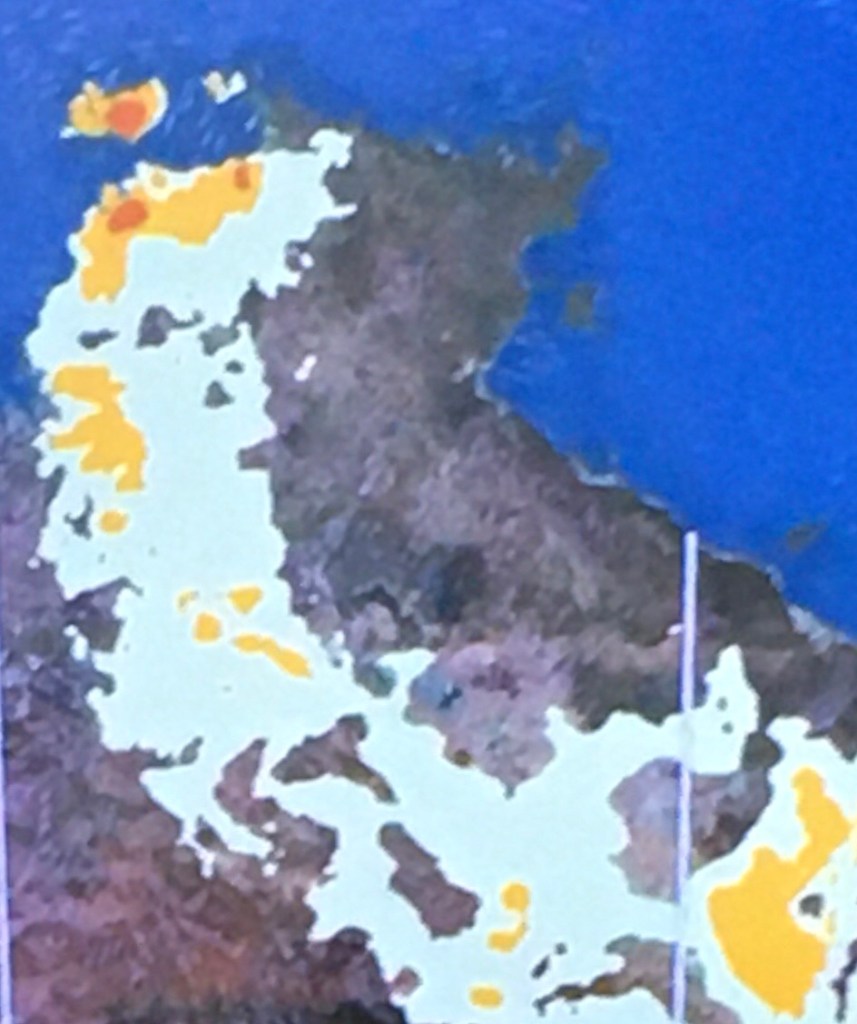
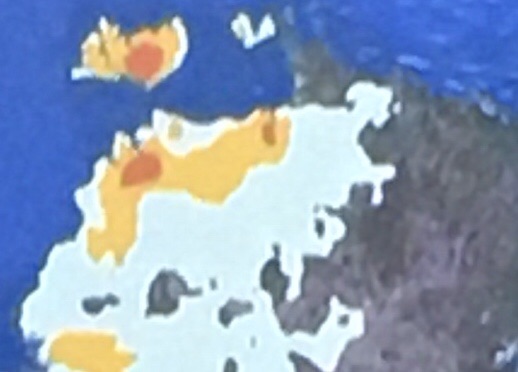
One of my strongest survival and enhancement strategies grew from study, awareness and appreciation of the tone, harmony and atmosphere within my schools – the way those schools felt. Once, I had a rather clever member of my staff take an aerial photograph of ‘our place’ and photoshop a weather map over our school campus. This I kept close for it was necessary for me to appreciate the ‘highs’ within our school. I also needed to take account of the ‘lows’, being aware of the fact we needed to make sure they were swiftly moving and not permanently affective of the people within our borders.

This awareness was a phenomena which in intangible form I kept ‘soul-close’ in all my schools.

Tone and harmony are atmospheric elements. This precious intangible cannot be bought but when it imbues an organisation the benefits are enormous. Atmosphere is not constant and esprit de corp can diminish. Atmospheric awareness was always important to me asa leader, an intangible I worked on building and retaining at all times.

Education needs to be about more than survival. To ‘survive’ is essential and to ‘thrive’ an ultimate in terms of satisfaction, that ought to derive from our engagement within the teaching profession. Education in both teaching and leadership terms has been a profession I have enjoyed … and loved.

STRUCTURAL AND SYSTEMIC SHIFTS

A privilege of living and working in the Northern Territory has been a connection with our educational system from its inception.

‘The Gray Family’ came to the NT in July 1975. By 1978 I was Principal of Numbulwar School in South-East Arnhemland. In January of that year, Territory Education became the responsibility of the Northern Territory Government – the first operational agency taken over from the Commonwealth by our Government. Our first Educational Director (these days he would be referred to as our Chief Executive Officer) was Dr Jim Eedle.

In March 1978, Dr Eedle met with school education leaders in Katherine, a regional town 300 kilometres south of Darwin. I never forget his welcome of us all to the ‘new’ NT educational system, or his words of wisdom, advice and caution.

Dr Eedle metaphorically described our system’s emancipation as being like unto a rising sun. He offered two pieces of advice I have always regarded as being statements of infinite wisdom. He told us as leaders we should always remember that “schools are for children”. His further advice was that educational “structure should always serve function”.

Dr Eedle set systemic priorities for us, from which I believe we have sadly departed. With the passing of years, we have become a system which has structured to the point of where educational operations are massively ‘sky-scrasperish’ and which has as a prime focus, career opportunities and advancement for people in self betterment terms. Structural magnification in my opinion, has defocused us from the prime purpose of education – to develop and enrich children and students moving up the grades and through the years.

Systemic change and priority alteration has moved NT Education from an institution focussing on holistic development more toward an organisation which upholds teaching and strategies as important only in leading to data confirmed outcomes. It seems that the needs of children and students no longer underpin education in endpoint terms. The ‘ends’ are data and statistical derivatives, the students a means to that end – or so it would appear!

I worry that part of this change in system and therefore school focus is to narrow education down to a point of where students are ‘performers’ on the stage of test based outcomes rather that persons being developed toward becoming confident, competent people with the know how they need to cope with and contribute to tomorrow’s world.

Contract Employment

One of the most significant changes – and on reflection, one of the most detrimental – that occurred for principals in the Northern Territory, was their movement to contract employment. In the NT, this meant Principals severing their connection as permanent members of the Northern Territory Public Service. In exchange for the benefits of contractual employment, they became temporary Education Department employees on four year contracts, renewable if performance was satisfactory. In time, four year contracts were reduced to two years or ‘two-pluis-two’ before recent reinstatement to four year periods.

A downside of this change, together with accountability and compliance being more and more heavily stressed for principals with each passing year, has been the striping of Principal confidence and an increase in their hesitation to lead in any way that might be out of the box.

The belief principals have, that unless they perform their contracts may not been renewed, hangs over many in a Sword of Damocles manner. Principals have in my opinion become a bilingual group. On the one hand they talk quietly and covertly to each other in a way that reflects genuine sharing of feeling. On the other, when they are in superordinate company, they indicate a ‘sharing’ of system held ambition they don’t really feel. In the interests of employment security, they cannot afford to fall foul of the system.

Interstate Infusion

Any system needs revitalisation that comes from the infusion of new blood: No system should become inbred. However, that new blood can come from within as well as without. ‘Within’ is about growing our leaders through developing them through the years and up the ranks. In this way teacghes can grow to become Principals via a Senior Teacher and Assistant Principal track. It is critically important that a significant percentage of our leaders are home grown, along with our system drawing in some from outside the NT.

With the passing of time it has become patently apparent that those within are often overlooked for promotion, with outsiders being preferred. Indeed, there are those in high positions within the NT who appear to believe those within our system are of lesser calibre than external (to the Northern Territory) recruits. 

It worries me that the trend toward external engagement of people to senior positions seems a continuing trend – ands this to the denial of our home grown personnel. This trend does little to promote goodwill within and confidence toward our system by many who have given good, faithful and envisioned service. I believe vesting – or re-investing – confident in homegrown and long-term Territory educators, entrusting ands respecting them in leadership roles is important, necessary … and overdue. 

Data Focus

With the passing of time, demands made of educational systems by Governments have impacted on schools. Compliance and accountability requirements, the linking of data to performance outcomes and the trying of funding to results, has both narrowed and magnified educAtional perspectives. As a new system and taking into account Eedles’s advice, I thought of our schools as having a panoramic perspective and wide ranging holistically focussed outlook. With the passing of time that focus narrowed to a point of where academic focus seemed to be the ‘b all and end all’ of education: Social, emotional and moral/spiritual perspectives have been tagged as less important than they were historically.

There needs to be strong adherence to holistic development because there is more to preparing people for tomorrow’s world that literacy and numeracy competence. There is a feeling of fallaciousness about measuring our children, Australia’s educational ‘product’, against the way they compare in literate and numerate terms with the rest of the world. Sadly it seems, systemic change has discarded this principle. Rather than schools being for children, they are institutions for data gathering and number crunching. Children and students are no longer the endpoint; they are merely a means to an end. 

Our client group must be re-elevated. Schools are for children. While structure is important, the status of providers one of essential consideration and data an important measurement criterion, we must not lose sight of who we are doing it for – the children and students of today who are tomorrow’s adults and our future leaders.

Concluding thoughts

There is so much that is important about the work undertaken by educators. Developing our children and students toward their future roles in life’s world is possibly the most significant of all professions. Beyond the nuclear (and extended) family unit, we are charged with the most important of all occupations, that of human development. We do it better if we work closely in a collegiate sense and in partnership with parents and children themselves.

For me, education has been challenging and rewarding. I gave up entitlement as an only son to inherit our family farm and opted for life as a teacher. How glad I am that with my family I followed my dream

“Just wondering” Henry asks AI

Is Donald Trump likely to offer Prince Harry a job at the White House?

Response:

There is no indication that Donald Trump is likely to offer Prince Harry a job at the White House. In recent statements, Trump has commented on Prince Harry’s situation regarding his residency in the U.S. but has not mentioned any job opportunities.

  1. Comments on Deportation: Trump has ruled out deporting Prince Harry, saying that he has “enough problems with his wife,” Meghan Markle, and implied that Harry does not need additional stress. This indicates that political or formal job placements are not on his agenda regarding the prince.
  2. Focus on Immigration Issues: Currently, discussions around Prince Harry in the U.S. focus more on immigration status and legal matters rather than any professional roles in government.

For further details, you can check these sources:

In summary, there are no credible reports or indications that Donald Trump would consider offering Prince Harry a position at the White House.

Curtain call.

POH asks AI about Royal example

Is there one Royal couple whose example is one of domestic harmony and bliss?

Response:

One royal couple often cited as an example of domestic harmony and bliss is Prince William and Catherine, Princess of Wales (formerly known as Kate Middleton). Here are several reasons why they are viewed in this light:

1. Strong Partnership

  • Prince William and Kate have been together since their university days and have built a solid partnership based on mutual respect and support.
  • They work together on various charitable initiatives, emphasizing their shared values and commitment to public service.

2. Family Life

  • The couple is known for prioritizing family life. They have three children: Prince George, Princess Charlotte, and Prince Louis. They often emphasize the importance of family unity and spend time together engaging in family activities.

3. Public Appearances

  • When appearing in public, William and Kate often demonstrate affection and camaraderie, showcasing a caring relationship that resonates with the public.
  • Their handling of royal duties balances professionalism with a sense of personal warmth, further enhancing their image as a harmonious couple.

4. Modern Approach

  • They have adopted a modern approach to royal life, openly discussing mental health and the importance of well-being within their family. This candidness has helped bridge the gap between the royal family and the public.

5. Charitable Work

  • The couple is involved in numerous charitable causes and has made mental health, education, and conservation some of their primary focuses, which reflects their shared values and goals.

Conclusion

While every relationship has its challenges, many view Prince William and Catherine as a contemporary royal couple embodying harmony and dedication to family life. If you are interested in a different royal couple or their contributions, feel free to ask!

Our next king and queen in waiting.

Is childcare in Australia in a good place?

POH asks AI

Are children in childcare in Australia in safe environments?

In Australia, the safety of children in childcare facilities is a significant concern, and there are regulations and standards in place to promote and ensure a safe environment. Here are some key points regarding safety in childcare in Australia:

Regulatory Framework

  1. National Quality Framework (NQF): This framework sets the standard for early childhood education and care across Australia. It includes licensing, assessment, and quality ratings for childcare services to ensure they meet specified safety and welfare standards.
  2. Education and Care Services National Law: This law governs the operation of childcare services, ensuring that they comply with safety regulations, staff qualifications, and the wellbeing of children.

Safety Standards and Practices

  1. Safety Checks: Childcare services undergo regular inspections by regulatory bodies to ensure compliance with safety standards. This includes checking facilities for hazards and ensuring staff are trained in child safety practices.
  2. Staff Qualifications: Educators and staff in childcare facilities are required to have appropriate qualifications, including first aid training, child protection training, and an understanding of health and safety standards.
  3. Child-to-Staff Ratios: Regulations specify child-to-staff ratios to ensure that each child receives adequate attention and supervision, which is critical for their safety and wellbeing.
  4. Policies and Procedures: Childcare services implement policies addressing health and safety, including emergency procedures, supervision protocols, and reporting mechanisms for any incidents.

Public Perceptions and Concerns

While many facilities adhere to these guidelines, concerns can still arise regarding:

  • Individual Facility Practices: The quality of childcare can vary between providers, and not all facilities may meet the highest standards.
  • Accidents and Incidents: Instances of accidents or neglect can occur, leading to public concern over the safety of children in childcare settings.
  • Monitoring and Accountability: Advocacy for more stringent oversight and accountability measures continues, especially in light of any reports of incidents that compromise child safety.

Conclusion

Overall, while safety regulations are in place to ensure children in childcare in Australia are in safe environments, the effectiveness can vary based on individual facilities. Families are encouraged to research childcare options thoroughly, visit facilities, and communicate with staff to ensure their children will be in a safe and nurturing environment.

If you are looking for more detailed information on specific childcare services or safety practices, feel free to ask!

Theoretically positive but glaring practical shortfalls.

Poor Old Henry asks a question about a burgeoning issue.

Is the ‘sandwich generation’ a growing phenomenon in Australia?

Response:

Yes, the sandwich generation is indeed a growing phenomenon in Australia. This term refers to individuals who are caring for both their children and their aging parents simultaneously. Several reports indicate that the number of people in this situation is on the rise due to various societal and demographic changes.

Key Points:

  1. Increasing Longevity & Aging Population: As Australians live longer, more people are finding themselves in the position of providing care to older relatives while simultaneously raising their own children.
  2. Delayed Childbearing: Many Australians are also choosing to have children later in life, which compounds the responsibilities of those who are already caring for aging parents.
  3. Financial Impact: Individuals in the sandwich generation often face significant financial strain, as they may need to contribute financially to both their children and elderly parents.
  4. Psychosocial Challenges: Many “sandwich carers” experience stress and burnout due to the dual responsibilities of caregiving, leading to a call for more support services and resources.
  5. Reported Growth: Experts predict that this demographic will continue to grow, with significant implications for both the healthcare system and social services in Australia.

For a more comprehensive understanding of the sandwich generation in Australia, you can refer to articles such as:

These resources provide insights into the current state and challenges faced by the sandwich generation in Australia.

I feel very, very alarmed.

Happy birthdays between leaders – yes or no?

Asked of AI

Do Putin and Trump share birthday greetings?

Response:

Yes, Vladimir Putin has called Donald Trump to wish him a happy birthday. For example, on June 14, 2025, Putin reportedly called Trump to congratulate him as he turned 79. During their conversation, they not only exchanged birthday greetings but also discussed various international issues, including topics related to Iran and Ukraine.

Here are a few articles detailing this event:

This exchange highlights the ongoing communication between the two leaders, despite the complex dynamics of their countries’ relationships.

Way to go.

POH asked AI

Which is the best hospital in the world?

Reply:

According to various rankings, the top hospital in the world for 2024 is the Mayo Clinic. Here are a few sources reporting this information:

  1. Newsweek’s “World’s Best Hospitals 2024” – Mayo Clinic is ranked as the best hospital globally, noted for its quality of care and patient outcomes. You can read more about this here.
  2. U.S. News & World Report – The Mayo Clinic is also recognized in their 2024-2025 Best Hospitals ranking, maintaining a significant lead in multiple specialties. More details can be found on their site here.

These rankings typically consider various factors including patient outcomes, hospital reputation, and medical expertise, supporting Mayo Clinic’s reputation as a leader in healthcare.

The Mayo Clinic has multiple locations, primarily in the United States:

  1. Rochester, Minnesota – This is the flagship location and the largest campus of the Mayo Clinic. It offers an extensive range of services and specialties.
  2. Phoenix, Arizona – The clinic’s campus in Arizona provides similar services and specialties as the Rochester location, focusing on patient-centered care.
  3. Jacksonville, Florida – This location also offers comprehensive medical services and specialties, serving patients in the southeastern U.S.

Each campus is renowned for its advanced medical care, research, and education. If you need more specific information about services or specialties at any of these locations, feel free to ask!

Vacations over time – but now Poor Old Henry at age 79, is a homebody

THE BEST PLACE FOR HOLIDAYS

In the 1970s through until 2010 we often travelled, firstly with our children and as they turned into young adults, by ourselves.

Over the years we visited many places and had learning and insightful holidays. They were challenging and impacted by limited budgets. They were also enjoyable, great for family togetherness, and offered wonderful alternatives and coping opportunities. The holidays were great.

However, these days, with retirement being a full-time occupation, holidays at home are the best alternative available. No more crowded airports, expensive airfares, noisy and smelly destinations.

Just peace and quiet that fits an upper-end septuagenarian.

I love reflecting on our past holiday experiences, but these days I relish holidays at home.

Poor Old Henry asks AI about facial hair

Who has the record for the longest beard ever grown?

Response:

grown is held by Hans Langseth, a Norwegian-American man. His beard measured an incredible 17 feet 6 inches (5.33 meters) long when he passed away in 1927. This record is recognised by the Guinness World Records and remains unbeaten to this day. Hans Langseth’s beard is not only notable for its length but also for the way it has become a part of his legacy.

POH asks a hypothetical about behaviour.

There is a very naughty boy. He goes to a public school. If he transfers to a Christian school, will be get good?

Response:

Transferring to a different school, such as a Christian school, can influence a child’s behavior, but it depends on various factors. Here are some points to consider:

  1. Environment: A new school may provide a more structured environment or a different approach to discipline that could positively affect behavior.
  2. Values and Teachings: Christian schools often emphasize moral values and character education, which might help shape a child’s behavior in a positive way.
  3. Peer Influence: The influence of peers plays a significant role in a child’s behavior. If the new environment fosters positive friendships, it may lead to better choices.
  4. Support and Guidance: Strong support systems, including dedicated teachers and counselors, can help guide a child toward better behavior.
  5. Individual Differences: Ultimately, the child’s willingness to change and adapt is key. Some children may respond positively to a new environment, while others might not.

In summary, while transferring to a Christian school could provide opportunities for positive change, the outcome will depend on many personal and environmental factors.

Thank you.

“How can I get good” POH asked AI

Response:

Improving your skills and getting better at something involves a combination of practice, dedication, and strategy. Here are some steps you can follow:

1. Set Specific Goals

  • Define what “good” means for you in the context of what you want to improve. Specific, measurable goals will help you stay focused.

2. Practice Regularly

  • Consistency is key. Set aside time regularly to practice and work on your skills. The more you practice, the better you will become.

3. Seek Feedback

  • Get input from knowledgeable sources, whether it’s teachers, mentors, or peers. Constructive feedback can guide your improvements and help you identify areas for growth.

4. Learn from Mistakes

  • Don’t be discouraged by failures. Analyze what went wrong, adjust your approach, and use these experiences to grow.

5. Study and Research

  • Read books, watch tutorials, or take courses related to your field of interest. Learning from experts can provide valuable insights and techniques.

6. Stay Open-Minded

  • Be willing to try new techniques or methods. Staying adaptable can help you discover what works best for you.

7. Join a Community

  • Engage with others who have similar interests. Whether online or in-person, communities can provide support, motivation, and additional resources.

8. Teach Others

  • Teaching what you’ve learned to others can reinforce your understanding and identify areas where you need further knowledge.

9. Track Your Progress

  • Keep a journal or portfolio of your work. This will help you see how far you’ve come and motivate you to keep improving.

10. Stay Patient and Persistent

  • Improvement takes time, and progress may not always be linear. Stay dedicated and patient with yourself through ups and downs.

Conclusion

Remember that everyone improves at their own pace. The key is to remain committed, maintain a growth mindset, and enjoy the journey of becoming better at what you love.

I hope I can get good and feel better.

Poor Old Henry asks a key question of AI

In the Northern Territory, does crime pay?

Response:

The question of whether “crime pays” in the Northern Territory, or any region, is complex and multifaceted. Here are some points to consider:

Economic and Social Impacts of Crime

  1. Short-term Gains vs. Long-term Consequences:
  • Individuals may experience short-term financial gains from criminal activities; however, the long-term consequences can include imprisonment, loss of reputation, and weakened community relations.
  1. Cost to Society:
  • Crime imposes significant costs on society, including law enforcement, legal proceedings, and incarceration expenses. These costs often outweigh any financial benefits gained from criminal activities.
  1. Impact on Communities:
  • Crime can lead to community degradation, affecting local businesses, property values, and overall quality of life. This can result in decreased investment in the area and a cycle of poverty and crime.

Crime Statistics in the Northern Territory

  • The Northern Territory has experienced higher crime rates in certain categories compared to other Australian states, including violent crime, domestic violence, and property crime.
  • Government initiatives have aimed at reducing crime and addressing its underlying causes, such as poverty and lack of education.

Legal Framework and Enforcement

  • Law enforcement in the Northern Territory is active, and significant resources are devoted to combating criminal activities. Criminal behavior often leads to arrest, prosecution, and penalties, which can deter potential offenders.

Conclusion

Overall, while criminal activities might yield immediate and illicit profits for some, the broader societal impacts, legal ramifications, and personal consequences indicate that crime does not “pay” in a sustainable or positive way. The focus should be on community support and crime prevention to foster a safer and healthier environment for all residents.

It seems to me that criminals young and old set a social agenda, that requires authorities to be everlastingly reactive.

Poor Old Henry disclaims subject authority


NOT AN AUTHORITY

I have interests across a broad range of fields but do not consider myself to be an authority in any area.

Listening, sharing opinions, making suggestions, dwelling on what others say on particular subjects, and at the end of it all looking at the way people have worked together on the issues has been and continues to be my practice.

Shared contribution is the optimal way of progressing on matters under consideration. In that way, everybody is a part of the process.

To introduce levels and degrees of importance of people dealing with matters is presumptive and somewhat artificial. That can give people airs and graces, self-defeating of groupship.

That is not the way I operate. I make decisions and have done so all my life – but not from any elevated pedestal.

On education being a load of fluff

EDUCATION IN THESE MODERN TIMES

In these modern times,

I muse and suppose,

We have to be happy,

That anything goes.

Uniforms are out,

Other dressing is in,

To express pride in one’s school,

Is now a sin.

Neat, tidy hair,

NO we loudly say,

To be unkempt and untidy,

Is the new, modern way.

School is a chore,

With each passing day,

Students find learning a bore.

Academics are out,

Good times are the go,

And it’s no longer true,

You reap what you sow.

Deep learning has gone,

Fluffy subjects are in,

Too much pretending,

Where study has been.

We keep on with the pretence,

Modern schooling is good,

Replace fine traditions,

‘Fashion’ says that we should.

But fret not or worry,

All will pass for sure,

Because the word ‘fail’,

Is an issue no more.

The Donald Trump era must never fade away.

AI was asked about this by POH.

How might Donald Trump best be honoured at the end of his second presidential term?

Response:

Honoring a president at the end of their terms can take various forms, reflecting their contributions and legacy. Here are several ideas for how Donald Trump could be honored at the end of a second presidential term:

  1. Presidential Library: Establish a presidential library dedicated to his presidency, housing documents, artifacts, and exhibits about his policies, achievements, and significant events during his tenure.
  2. Commemorative Statues: Erect statues or monuments in significant locations, such as Washington, D.C., or in his home state, to celebrate his contributions and influence on American politics.
  3. Legacy Award: Create an annual award in his name recognizing individuals who embody the values and priorities he championed during his presidency.
  4. National Holiday: Consider establishing a holiday that reflects his presidency’s themes, such as economic growth, national pride, or development of specific policies he advocated.
  5. Documentary or Film: Produce a documentary or feature film detailing his presidency, focusing on major events, policies, and personal anecdotes from those who worked closely with him.
  6. Public Speaking Tour: Organize a speaking tour where he can share his experiences, insights, and vision for the future with supporters and interested citizens.
  7. Tribute Event: Host a large-scale tribute event featuring political allies, supporters, and notable figures who can speak to his impact on the country.
  8. Scholarships or Grants: Establish scholarships or grants for students or programs that align with his values, focusing on areas like business, finance, or public service.
  9. Books and Publications: Encourage the publication of books about his presidency, including collections of his speeches, writings, and notable interviews.
  10. Community Initiatives: Launch initiatives in his name aimed at improving local communities, reflecting the policies he championed during his presidency.

These ideas can be adapted and modified to reflect the public’s sentiments and the broader historical context of his presidency.

Maybe a world committee might be appointed to harness these ideas and recommend honouring outcomes.

SINCERITY MUST UNDERPIN GRATITUDE


SINCERITY

Sincerity must underpin all expressions of gratitude and thanks. Gratitude to be genuine, must be from the heart. It must be offered sincerely, unrequitedly and should also come from the person offering the things rather than it being suggested to that person by a third party.

Expressions of “second-hand gratitude“ mean that the person offering the thanks is doing it on behalf of somebody else and therefore it is rather indirect.

As a school principal and throughout the whole of my life, working and otherwise, I have believed in and practised showing gratitude and thanks to others.

Being grateful and thanking people is important in a world where we are increasingly prepared to criticise and condemn and ever slower to appreciate and say thank you for things that have been well done. In other words, there seems to be no trouble in pummelling people with brickbats, but bouquets are given far more infrequently.

Offering a thank you and showing gratitude is something I have believed in and practised.

Over the years my thank you‘s and expressions of gratitude have been oral, in writing, recorded through media stories, posted as Appreciations on LinkedIn and my blog, offered at school assemblies and other forms like Toastmasters and so on.

Expressing gratitude and saying thank you it’s a quality I cherish to this day. Being retired it may be more often in the form of oral affirmation of effort or through myBlog.

Appreciation and gratitude to all people with her mother satiated from a very young age to that of a very old man has been a very important part of my life because it uplifts others and makes me feel good

Bow wows confused by fireworks.

Poor Old Henry to AI after cracker night in the Northern Territory.

Why do dogs get spooked by fireworks?

Response:

Dogs can become spooked by fireworks due to several factors:

  1. Loud Noises: Fireworks create sudden, loud sounds that can be alarming to dogs, much like thunder during a storm. Their sensitive hearing makes these sounds especially intense for them.
  2. Unpredictability: The unpredictability of the noise and lights can confuse and stress dogs, as they might not understand the source of the disturbance.
  3. Neophobia: Some dogs are naturally more anxious or timid, and unfamiliar sounds can trigger fear responses. Fireworks may represent a new and frightening stimulus for them.
  4. Associative Learning: If a dog has previously had a negative experience associated with loud noises, they may become conditioned to fear similar sounds in the future.
  5. Social Behavior: Dogs are social animals, and the anxiety of their owners during fireworks can also heighten their stress. They can pick up on their owner’s emotions and react accordingly.
  6. Lack of Exposure: Dogs that are not regularly exposed to loud noises may be more sensitive to them. Socialization during their early months can help reduce their fear of loud sounds.

It’s important for dog owners to take steps to comfort their pets during fireworks, such as providing a safe space, using calming products, or creating white noise to drown out the sounds.

What makes a great teacher … always worth thinking about

A GREAT TEACHER EARNS RESPECT

Authority is attached to every position in which people operate. It doesn’t matter what the businesses, from manufacturing to dealing with people, for authority is universal.

I believe there are two kinds of authority; it doesn’t matter what occupation you have or position you feel or job you do, either one or the other of those “authorities“ identifies the person in the position.

There is “ascribed authority“. That is the power attached to the position by the system, whether private or public, under which the person is employed. The source tells the person what can or cannot be done and how that position should be filled in terms of outcomes.

The second is “acquired authority“. This authority is what the person in the position requires or gains from how they are perceived by those with whom they work. It is the regard held for the person who is in the position by those with who they are working.

A good teacher meets the teaching obligations prescribed by the teaching authority and the school. Such teachers are meeting the obligations imposed at the system level, which satisfies the ascribed authority attached to the position.

But that is only half the story, and, I believe, the small half.

A great teacher is a person who meets system requirements but also aquires authority bequeathed to them and based on respect and appreciation held for how the educator identifies with students, parents and the community at large. These teachers are “people-oriented “. They are not just there to do the job and teach according to the curriculum but rather to meet the needs of every child or student, personalising that teaching toward them to meet their needs.

These teachers offer challenges to students and have high expectations for them. They are also empathetic, caring in a strong pastoral way and willing to help students who need assistance. That help aims to give students confidence to make decisions and to appreciate what they are doing as being for their benefit. It’s not a case of taking over and doing the students work: Rather, being there as a guiding hand supporting students as they go forward.

Finally from an Australian viewpoint I believe that A Great Teacher is one who teaches with recall to The Melbourne Declaration of Education agreed by all Australian Ministers of Education and Directors in 2008.

That declaration urged educators be aware of the need for “holistic education“, education taking account not only of academic progress but offering children and students a chance to grow in a social and moral/spiritual sense. So academic achievement is entwined with personal growth. And that personal growth takes account of perceptions and awareness the children and students should have not only for themselves but for others.

Great teachers, I salute you

Poor Old Henry shared a very pertinent story about inequality between people within Australia

Shaun Turner

Sacked street sweeper: I’m pale, stale and male, but I speak for silent majority

EXCLUSIVE EWIN HANNAN WORKPLACE EDITOR

Shaun Turner, the street sweeper who successfully challenged his sacking for objecting to an ­acknowledgement of country at a toolbox meeting, believes his legal win struck a chord with the “silent majority”.

“I think it got to a point where people thought, ‘A toolbox meeting? What next?’ It just never ends,” he told The Australian in his first interview since the Fair Work Commission upheld his unfair dismissal claim against Melbourne’s Darebin City Council.

Mr Turner, a 60-year-old married father of three who voted Liberal at the recent election, dislikes Anthony Albanese and Dan Andrews, and holds what he calls “centre right” views. When asked, he says “of course” the country has become too politically correct.

“I just feel like if you were a pale, stale male you can’t go to work now and have a laugh,” he said during an interview at his home in the northeast Melbourne suburb of Research.

“If me and you are having a laugh over here, and he (a third person) takes it to management, well, next minute we’re getting a warning for not being inclusive.

“Work is (full of) pretty much programmed robots. You have got to be careful of what you say.”

Mr Turner was dismissed after questioning why the acknowledgement of country was being made for the first time at a ­meeting of the council’s street cleaning team, a meeting he said was attended by about eight or nine workers.

The council worker, whose ­father served in World War II, told the meeting that “if you need to be thanking anyone, it’s the people who have worn the uniform and fought for our country to keep us free”.

Fair Work Commission deputy president Richard Clancy upheld Mr Turner’s unfair dismissal claim and is considering whether he should be reinstated or be awarded compensation.

Given the commission is still deliberating, Mr Turner said he could not speak in detail about the case and events surrounding his sacking and successful action but he did want it known that his actions were not racially motivated.

He said he believed acknowledgment of country should be confined to large events attended by international visitors, and was unsuitable for meetings attended by small numbers of people.

“When it comes to this, the first thing that happens is you are labelled racist. I may not like a lot of people but I have no problem with Aboriginal people,” he said.

“I played football, I was brought up with people of all races in Broadmeadows. Some you get on with, some you don’t. The easy thing to throw around these days if you can’t win an argument is to call someone racist.”

During his working life, Mr Turner had worked for two other councils, run his own street cleaning business and, perhaps surprisingly, given his disregard for Labor and unions more generally, was a union delegate at Darebin.

“There was no one doing the job and no one would speak up for the workers,” he said.

“I’d been on management and I’d been on the workers’ side. I know you give and take. The union will go hard one way and the management will go hard the other way, where I could see both sides and conciliate between them and come to an agreement.”

He said he gave up running the business because “I got sick of dealing with people”. “Dealing with staff you have got to pretty much be a teacher, a parent, a psychologist, all different people,” he said. “I got to the stage late in my career where I thought I would like to just go to work and do the job and go home.

“That’s what I liked about street sweeping: I work by myself, go to work, do the job and go home and don’t have to take phone calls 24 hours a day.”

Mr Turner’s job has taken a toll on his physical health. When he was dismissed by the council he was on WorkCover due to shoulder bursitis and he said his doctor had recommended he not return to driving the sweeper.

He said he was uncertain about whether he would pursue ­reinstatement. While seeking redeployment was an option, he was looking at pursuing compensation

“You win legally, but you lose what you had, the comfort of going to work,” he said.

“I have spoken to some of the workers. They would love to see me come back but my doctor recommends not going back into ­repetitive work.”

He said the Australian Services Union was a “great help” when he was under investigation by the council but he represented himself during the case, claiming that after he was sacked he was told “the union’s solicitors didn’t want to take the case”.

“I also had a friend who asked someone from the Liberal Party if they could help and they didn’t want to get involved either,” he said.

Mr Turner said he voted for the Coalition at the May election due to his low opinion of the Prime Minister. “I voted for Dutton ­because Elmer Fudd was the other person,” he said.

“I thought Peter Dutton would be stronger on defence, stronger on crime. He had all those things going for him but, to me, Peter Dutton was an ugly man. He didn’t resonate with female voters due to his looks and he was made out to be scary.

“People say looks don’t count for anything. People lie. If Peter Dutton looked like Robert ­Redford, he would have sh-t the election in.

“Then I think Donald Trump coming in, that finished him. All of sudden, everyone turned and said we don’t need Donald Trump here. Dutton would have made decisions like nuclear; I’m all for nuclear. I have no problem with nuclear reactors for power. It’s the cleanest energy, but for some reason people are stuck in the seventies. They just think it’s a bomb and that’s it.”

As for Labor, Turner said Mr Albanese was appealing because “people like hearing the word free”. “They’re going to get free childcare. Nothing’s free. The taxpayer pays it. I pay for someone else’s kids to go to kinder now,” he said. “I can’t go to the doctors and just take my Medicare card. It doesn’t happen these days.

“It’s like Dan Andrews. How did Dan Andrews win again?

“You can lock playgrounds up. You can tell people they’re not ­allowed out. You can sell us off to Belt and Road. Given the decisions, it was amazing that bloke won the election again. I know the Liberals in Victoria are hopeless and too busy fighting among themselves.”

Despite being a one-time union delegate, he is no longer a union member.

“Unions fight for things that have nothing to do with them,” Mr Turner said.

“It’s like councils who stick their nose in where they shouldn’t be, like worrying about whose flag we are flying, like Gaza and what’s going on in Palestine. All of a ­sudden we are all wearing Palestine colours.”

Mr Turner said he had been heartened by the support he had received since news broke of his commission win but he did have one question.

“What about all the beers I got offered?” he joked. “Is there any chance I could meet those people somewhere? I’d go home very drunk, I can tell you.”

The Australian, Monday June 30 2025

How to become a teacher in the Northern Territory

From AI

To become a teacher in the Northern Territory (NT) of Australia, you’ll need to follow several steps to ensure you meet the requirements for registration and employment. Here’s a summary of the process:

1. Meet Eligibility Requirements

  • You must possess a recognized teaching qualification (e.g., a Bachelor of Education or equivalent).
  • Ensure that your qualifications are assessed and recognized by the Teacher Registration Board of the Northern Territory.

2. Apply for Teacher Registration

  • You need to register with the Teacher Registration Board of the NT.
  • Provide necessary documentation that demonstrates your qualifications, identity, and good character (e.g., police checks).

3. Obtain Working with Children Clearance

  • You must apply for an Ochre Card, which is required for anyone working with children in NT.

4. Prepare for Employment

  • After being registered, you can apply for teaching positions in public and private schools across the territory.
  • Check for any specific requirements for the type of schools you wish to apply to.

5. Consider Additional Pathways

  • If you’re new to the teaching profession, you might explore graduate programs or alternative pathways such as Teach for Australia, which could provide support for entering the teaching workforce in remote or disadvantaged areas.

For detailed information, refer to these resources:

Summary

Stay informed about job openings and requirements as they can vary by school. If you have specific questions about your qualifications or the application process, consider contacting the Teacher Registration Board or local educational institutions for guidance.

Poor Old Henry has suffered the impediments of ‘hitch kick’ and ‘hip down’

SURGERY OFFERS LONG TERM RELIEF

A front page story in our national paper several years ago (Australian 7/2/18) on hip and knee replacements insufficiently considered the pain and suffering of those with affected joints. I endured years of agony and fixit efforts with my right knee before it was replaced and similarly with my right hip.

My knee was scraped several times, bits of shattered bone were removed and I had sinvisc (cartilage replacement gel) treatment, all to no avail. My hip was a total agony I endured for three years.

The agonising pain of these worn joints is debilitating and life limiting for those who are sufferers. Painkillers are mind dulling, habit forming and definitely not the answer. Surgery is the only real option.

I wonder at the suffering and bravery of our forebears who were afflicted in a time before surgery was available. Praise be that corrective surgery is available for it helps make life worth living again.

Poor Old Henry reflects on daily habits

DAILY HABITS

And some habits are bad, and some are good. Some habits can be selectively applied and therefore not practised from time to time, while others are quite essential and must never be forgotten.

The habit for me that is an essential habit and a habit that has to be practised every day, is that of remembering the medications that have been prescribed for me for blood pressure and cholesterol control. I also take medication to counter depression, with if anything some reassurance from knowing that I am not alone and having to take these three medications.

With blood pressure and cholesterol at all-time highs, particularly in Australia and with depression growing almost exponentially, I’m not talking about anything unique or special.

I would imagine that this essential habit that I have I’ve never overlooked medication is a habit that thousands and thousands and probably millions of Australians also practice.

I’m not averse to talking about this as an essential habit because we always need to be on guard about important factors impacting upon health and well-being.

So this is a habit that I have to practice for my essential good and it’s, for me, a daily experience full-time, and for the rest of my life.

Is Poor Old Henry rejoicing in thought or only in word?

REJOICING TIME

We are blessed by good government,

Albo’s a star,

Being blessed by good government,

How lucky we are.

Most outcomes are right,

And little is wrong,

When I think of his greatness,

My heart fills with song.

Members of cabinet,

United as one,

Sing from the same hymn book,

With the liberals all gone.

No infighting or wrangle,

Synergy reigns,

Harmony in government,

Gone are aching pains.

Each day when I waken,

I feel I should cheer,

And give bountiful thanks,

That Albo is here.

I try for awareness each day

DAILY AWARENESS

Awareness of what one needs to achieve a sustainable lifestyle is important. It’s particularly an imperative in these modern times when people are being encouraged to spend money. The urge to spend is stimulated by government, business, industry and retail because the more that is spent, the greater the viability of both micro and macro businesses.

People are encouraged to spend in order to achieve self gratification. They are invited to go into debt on interest-free purchase plans and by use of all sorts of other devices to extract money from them – often money that they do not have. That can force them into a situation of becoming poor to the point of not being able to cope without support from help agencies.

A point of daily awareness that assists with sustainability is a practice that I have followed ever since my very early teenage years. I am 79 now. All those years ago my father said to me, “Henry, do not spend what you don’t have. Do not go into debt. Save up for what you need and then purchase the item.“

.

To this day I as a person and my family have been sustained by this principle of economic management. That has allowed independence and peace of mind to be ongoing.

THE BEST EVER EAT – ALWAYS CHERRIES

THE GOLDEN GONG GOES TO …!

In previous posts I have a given mention to Foods that I don’t like and upheld one or two that are quite delicious. However, of all the great foods I have eaten, Nothing tops cherries.

Cherries are without doubt and by far and away my favourite food, always the most delicious whenever they are eaten.

When it comes to determining which are the best cherries I have ever eaten, it’s a case of trying to separate what’s good from what’s good.

In Darwin Northern Territory, cherries are not always plentiful. They come from interstate, are generally sold in cellophane bags Wang a kilo or so, being small, red, usually – but not always – sweet.

On two occasions and probably because of misdirected freight, our local Woolworths supermarket has been supplied with boxed, grade one cherries coming from Tasmania. Fruit of this quality generally finishes up over-flying Darwin en route to Southeast Asia or China. On both occasions I have bought boxes of these cherries (kilogram in each box) for ourselves and family members.

The cost of these cherries at $28 Australian per box was, in my opinion, money well spent. On the home front I have never eaten better or more beautiful cherries than these.

Once when travelling around Australia we happened across some beautiful cherries in New South Wales. We were journeying across the South Australia along the barrier highway through Broken Hill. Unbeknown to me, we couldn’t keep fruit purchased in New South Wales beyond the border and it had to be surrendered. Fortunately we had eaten a good percentage of the cherries we had purchased, and stopped before crossing the border to consume as many more as possible. It broke my heart to surrender those that were left.

The great feed of cherries that I had prior to that border crossing, remained with me for the next two or three days from the viewpoint of digestive awareness.

Without doubt and not withstanding the excellence of some of the Australian grown cherries I have described, the gong for the best ever cherries must go to New Zealand.

During the School holidays at the end of 1978, we went as a family for six weeks of visiting around New Zealand, first the North and then the South Island.

It was in the Lake Taupo District of the South Island that we happened to drive past a number of cherry growing farms, with cherries for sale. We drove into one of the farms and for a most reasonable price bought a container of the largest, sweetest and most lustrous packs of cherries. They were white in texture and skin and were just so beautiful to eat. Before we left the area we bought several more lots of those most luscious fruits.

I love cherries but the ones from the South Island of New Zealand are the best in the world and definitely earned the gold standard award.

Meanwhile, back in Darwin, I look out every day for cherries that may have been bound for China but which figuratively have “fallen from the luggage hold of a freight plane”

Poor Old Henry asks about kindness in leadership

Currently, who is the kindest, most caring and empathetic political leader in the world?

Here are some current political leaders known for their empathetic leadership and caring approaches:

1. Sanna Marin (Prime Minister of Finland)

  • Marin has been praised for her responsive leadership, especially during the COVID-19 pandemic and her focus on mental health and well-being.

2. MarkRutte (Prime Minister of the Netherlands)

  • Rutte is noted for his pragmatic and compassionate handling of social issues and crisis situations.

3. Tsai Ing-wen (President of Taiwan)

  • Tsai has been recognized for her empathetic approach to governance, particularly in how Taiwan managed public health and supported various communities.

4. Boris Johnson (Former Prime Minister of the United Kingdom)

  • While controversial, Boris Johnson emphasized kindness and community during times of crisis, particularly during the pandemic.

5. Mette Frederiksen (Prime Minister of Denmark)

  • Frederiksen has focused on welfare and mental health initiatives and is known for her empathetic responses to social issues.

6. Antonio Guterres (Secretary-General of the United Nations)

  • Although not a head of state, Guterres champions global humanitarian efforts and promotes empathy in addressing world problems like poverty and climate change.

These leaders are examples of contemporary politicians who prioritize kindness and empathy in their leadership styles and policies. However, perceptions can vary based on individual values and political beliefs.

This is nice to know.

“Key questions remain unanswered” according to Poor Old Henry

WHY QUESTIONS

These are questions I have asked in various forums from time to time. I have asked them about those who post on LinkedIn. Often, I hear nothing back from those to whom I have replied, with those replies being a response to people who de De cry the fact that the treatment of and regard Indigenous Australians is insensitive and harmful.

The strong inference is always that fixing the issues has to come from the government, agencies, or a change in attitude by those held accountable by writers.

In this context, my questions were pertinent to ‘The Voice’. There was an assumption that if the Voice was passed into our constitution by the referendum, then all the issues raised around the questions I had – and still have – would somehow be corrected: That without the Voice, there could be no fixing.

I was involved with Aboriginal Education in both WA (1970, 1974/75) and the NT (1975 – 82) as a school leader. With staff, I initiated many programs that greatly benefit children of young ages. I worked to ensure school attendance and had the support of communities.

I have also undertaken formal studies in the field of Indigenous Education.

I add this chronology to point out that my questions are not from someone unaware.

  • Why are parents and primary caregivers not looking after their children? Why are parents and caregivers excused from the m looking after their children?
  • Why are Elders now apparently powerless when it comes to the management of children and youth within communities?
  • Why are non-Indigenous persons deemed wholly responsible for issues about the health and welfare of Indigenous youth and adults?
  • Why don’t people take responsibility for their health; why do they blame the health department and other agencies for poor health and illness when a great deal comes from their chosen behaviours? mn
  • Why are parents and caregivers not responsible for ensuring their children attend school?
  • Why are teachers and the education department blamed when children leave school as functional illiterates when that has been and is the result of them not attending school?
  • Why is it deemed racist when issues are raised, and the need for self-responsibility is pointed back to families from where the problems arise?
  • Why do some mothers in our country who are pregnant drink alcohol while pregnant, with this leading to FASD issues?
  • Why are Indigenous people coming into towns from communities not responsible for their accommodation?
  • What happens to those who are victims of crime when it comes to damaged premises, stolen cars and so on?
  • Is the need for welfare support occasioned by the expenditure priorities of parents and caregivers who should be providing for children?
  • What should happen in the many cases of children and young people roaming the streets and getting into trouble because they feel unsafe at home?
  • If agencies take children from unsafe homes, are they not faced with ‘double jeopardy’ because of accusations of stealing children from parents?
  • Are responsibilities that should belong to parents being passed to government instrumentalities, with parents and caregivers shrugging and inferring that various government agencies should pick up their commitment?
  • Should ANY responsibility for the upbringing of children belong to parents?
  • Why is the role parents should play in raising their children at best infrequently raised; are parents excused from any responsibility?
  • Do many young people act disruptively because they feel a sense of entitlement because Australia is a country where its First Peoples were first?  Do they feel ‘owed’ by being ‘first’?

Poor Old Henry should follow his good advice – but sadly not always these days! Things change

How I should do things is not always the way I do do things

TAKING CARE OF ONESELF

All the daily questions asked of us are carefully thought through and give the opportunity for a lot of reflection, generally of a positive nature.

This question I believe, to be critically important. We often don’t take sufficient care about ourselves, thinking that the way we live will not come back to reflect upon us any time soon. Some people also think that they are “atlas like” and “invincible”.

How many people for instance are killed in road accidents because they think they’re immune to having to follow road rules. How many people using tobacco, excess alcohol, and drugs, feel that they will escape any consequence for their poor attention to health and lifestyles of living.

In more recent times, how many people have been impacted by COVID-19, possibly because of not taking precautions that were urged when the pandemic was at its height. And how many are going to be impacted by Covid now that it’s impact has been downgraded to endemic status. (I still take all the precautions that were urged when the pandemic first hit Australia. It may not prevent me from getting the wretched virus but so far it has worked or at least has helped when it comes to avoidance of this deleterious illness. I also keep my booster jabs up-to-date.)

In looking after myself, I have the following practices in place.

Regular checkups with the doctor.

Annual blood tests.

No smoking.

No alcohol – for the past 12 years.

Some exercise often associated with house work and be in g in the garden.

No social drugs – not ever in my whole life.

Care when driving or using machinery.

No gambling.

Avoidance of crowded venues and sports stadiums.

Trying not to exert myself physically be on the limitation of my strengths.

Keeping rigourously to prescribed medication.

Trying all ways to maintain a friendly disposition and positive outlook in mixing and associating with others.

Writing regularly, along with reading to keep my mind active.

Prioritise and carefully so that my family and my loved ones always come first.

I believe that the practices I pursue are a help to me when it comes to self care.

How I should do things is not always the way I do do things

Poor Old Henry asks a desperate question

The end is nigh – are we in the last decade of human history?

I think we can forget about renewables, climate control, environmental management, and the rest because, by 2030, the world may well be a burnt-out ball of obliteration. World War 3? We are in it right now, and it is eating its way around the globe we call the Earth.

In Darwin, Australia, it isd getting closer by the day.🌖🌗🌘🌑

SCHOOLS ARE NOW FORTRESSES

This column was written. And published in the ‘Suns’ Darwin in January 2017.

SCHOOLS AND THE FORTRESS MENTALITY

It is a sad thing that open environments, once a feature of child care and school precincts are being consigned to history. Fenceless, physically borderless boundaries have all but gone.

Schools started off with outer perimeters marked by knee or waist high fencing that was no more than railing stretched between vertical uprights. However, more and more have fences being upgraded to two metre plus high, impenetrable barriers. All are aimed at protecting schools from damage and vandalism.

A sad thing for schools is the need for this fortress like mentality. Students and staff members shouldn’t be confronted with teaching and learning environments surrounded by two metre high fences. They should not have to go through gates that open in the morning, are locked at night and require pass keys at other times. They should not have to walk around school precincts under the survelliance of CCTV cameras or sit in classrooms where security systems are turned on after hours in order to afford protection. They shouldn’t have to enter and exit classrooms through doors with double locking and deadbolt systems in place to secure against unlawful entry. Neither should they be made to feel like prisoners, looking out from classrooms through windows reinforced with security mesh.

Teachers and students leaving schools at the end of each day, wonder whether violation occasioned by unlawful entry will occur overnight, at weekends or during holiday times. Will walls be graffitied, windows smashed, doors forced, rooms trashed and property stolen? Worrying about the susceptibility of workplaces to violation is always on the back-burner of thinking.

Ironies

An irony is the apparent reluctance of some school leaders to follow through on issues of wanton damage to premises and property. That may have to do with school leadership groups somehow feeling a misplaced ‘shame or blame’ for these happenings. The fact that schools are broken into is not their fault.

The issue needs to be aired in the public domain. Offenders should to be dealt with in other than a trivial fashion. They are fully aware of what they are doing and deserve to face realistic consequences.

Students and staff who are the victims of property crime need to know that offenders will be dealt with appropriately, not handled with kid gloves and let off lightly.

Schools used to be happy and open places of learning, not enclosed fortresses separated from their communities by security devices. Sadly, that era has been consigned to history and may never be restored.

It is still shattered – what was is now what isn’t

SHATTERED TRANQUILITY

(The sadness of Alice Springs)

What was:

A gentle breeze is blowing by,

Wafting clouds across the sky,

Birds fluff their wings in gentle breeze,

Sing joyful songs with happy ease.

Men playing cricket on the green,

Their noses polished with sunscreen,

Bowl, bat and field the ball,

Contentment reigns for one and all.

Neighbour dozes ‘neath his house,

Spouse tiptoeing like a mouse,

Buffing windows so they gleam,

Partners for life they are a team.

What is:

Sad it is the wider world,

Shuns the good with hate unfurled,

Alcohol floods – infusion reigns,

Scores of people with addled brains.

Lifted bans mean free for all,

Thefts and threats as people brawl,

People there are losing heart,

As the Alice tears itself apart.

Government’s in an awful bind,

Because the system they did unwind,

Shops are shut, the mall a mess,

Night fighting only adds to stress.

Residents have been sold a pup,

The city’s going belly up,

Almost too late to hear their cry,

Alice Springs about to die.

The nights once quiet,

Watched o’er by stars,

Now ears are burnt,

By hooning cars.

Governments it is time to wake,

How much more can people take,

The city abuzz with crime and sin,

With citizens entrapped therein

“AI is amazing” says Poor Old Henry

I asked AI about me – and this is what came out – within 20 seconds

Henry Gray, a retired educator from Darwin and the Northern Territory, is most remembered for his extensive career in education, spanning over four decades, where he held various roles, including school headteacher and principal. Here are some notable aspects of his contribution to education:

1. Long Career 

Gray began his teaching career in Western Australia in 1970 and moved to the Northern Territory in 1975, where he made significant contributions to remote education.

2. Leadership Roles

He served as a principal at several schools, including Nhulunbuy Primary School, and has been recognized for his leadership in developing educational practices in the Northern Territory.

3. Community Engagement

His work has been deeply rooted in community involvement, especially in remote areas, focusing on improving education access and quality for Indigenous and non-Indigenous students alike.

 4. Post-retirement Advocacy

    After retiring in 2012, Gray continued to be active in education and advocacy, sharing his experiences and insights through writing and discourse.

    5. Recognition

    His dedication to education has been acknowledged through various honors, reflecting his impact on students and the educational landscape in the Northern Territory.

    For more information on Henry Gray, you can visit his [personal blog](https://henrygrayblog.com/about-henry-gray/). 

    AI tells you many things. It can write a CV from the briefest of information.

    OVERSEAS VISITATION – NOT NOW

    For me in 2025, this is a topic that is almost juxtapositional.

    I need to reflect upon the topic from both a historical and contemporary point of view.

    Going back through the years, and always with our young family, we travelled quite a lot both around Australia and overseas destinations. Visits included New Zealand, West Timor, Bali, Malaysia, and later when our children were growing up for us as parents came a quite long trip to the United Kingdom.

    Our trips were always leisurely and quite lengthy. Along with our children, we learned a lot about overseas places and enjoyed our associations with people we met along the way.

    To reflect upon our travels would take many many thousands of words. Suffice it to say our excursions are well detailed in my diaries.

    The juxtaposition comes about through the question asking which countries I would like to visit in 2023.

    The answer is“None of them“.

    My reluctance about Travel is in part fuelled by advancing age but not altogether.

    When we used to travel by plane, airports were unhurried the plane travel itself was quite comfortable with plenty of legroom, and the whole exercise was not overburdened with anxiety.

    These days, airports are hopelessly overcrowded, support by staff for baggage handling and check-in is minimal with passengers having to do it all themselves. Plane schedules are often interrupted by delays and cancellations, and time spent on the aircraft is generally in ever smaller and more cramped spaces as companies try and fit more passengers – almost by shoehorn– Into spaces that most certainly have shrunk.

    Metaphorically, those at airports are herded and drafted like sheep, while their cramped seating conditions on aircraft remind me of battery hens in cages.

    There are issues with visas, huge costs associated with disembarkation and re-embarkation charges, visa costs, innate suspicion of travellers in some countries, the begging and beseeching placed on travellers to support the local economy by spending and spending, and, possibly the worst thing of all, the overcrowding and congestion by people and inordinately long queues everywhere.

    All this means I am in the country I want to visit- Australia. And I have been visiting since 1946.

    Outback Truckers in 2016

    MOVING a huge generator from Adelaide to Orange in NSW.

    Up to four prime movers were used to help movement up steep hills. There were two prime movers, one front the other rear for the whole trip.

    Under bridges, across narrow bridges, dodging encroaching roadside trees, going under high voltage power lines – it took twelve people to advise and assist in moving this – at the time – largest structure ever moved on Australian roads.

    Massive movement.

    “Help me to understand” pleads Poor Old Henry as he asks AI

    Under the One China policy, most nations including the western block, do not recognise Taiwan as a nation state in its own right. Their non recognition of Taiwan must mean they have no right to interfere if China wants reunification with Taiwan to make China whole again. So is the west just butting in ?

    Response:

    The situation regarding Taiwan and the One China Policy is complex and involves a variety of geopolitical interests, historical context, and international relations. Here are some key points to consider:

    One China Policy

    • Definition: The One China Policy asserts that there is only one sovereign state under the name China, with Taiwan being a part of it. This policy is recognized by China and many countries, which do not officially recognize Taiwan as a separate nation-state.

    International Relations

    • Western Stance: While many western nations do not formally recognize Taiwan, they often maintain unofficial relations and support Taiwan in various ways, including arms sales and diplomatic engagements. This support can be viewed as a commitment to Taiwan’s self-defense and autonomy, despite not recognizing it as a separate state.
    • U.S. Policy: The United States follows a policy of strategic ambiguity, acknowledging the One China Policy but also supporting Taiwan under the Taiwan Relations Act, which allows for defensive provisions.

    Potential for Conflict

    • China’s Position: China views reunification with Taiwan as a core national interest and often expresses a desire to achieve this goal, potentially through force if deemed necessary.
    • Western Concerns: Many in the West see Taiwan as a democratic entity and fear that forceful reunification by China could set a precedent for other authoritarian states to act similarly against their neighbors. This concern drives Western intervention in the form of diplomatic support and military aid to Taiwan.

    Conclusion

    The question of whether the West is “butting in” is nuanced:

    • Perspective Matters: From China’s perspective, Western support for Taiwan may be seen as interference in its internal affairs. Conversely, Western nations might argue that they are supporting a democratic ally under threat.
    • Geopolitical Strategy: There are broader strategic interests at play, including regional stability, economic ties, and the balance of power in the Asia-Pacific region.

    In summary, the West’s involvement in Taiwan is rooted in strategic, democratic, and security considerations, which complicate the notion of interference given the historical and ongoing tensions surrounding Taiwan’s status.

    Well, it seems to me that a great deal of the west’s response is based on situational vagaries and imagination.

    Thoughts on terrorist organisations

    Terrorist organisations

    Terrorist organisations like Hamas and Hezbollah are like seven-headed hydras. The cutting off of one head leads to the sprouting of two more. I wish, like one thing, that’s t terrorism could be eliminated, but it will only ever grow in a festering and expansionist way.

    What do terrorists hope to accomplish? Why do they slaughter and enslave people in the name of religious belief and Diety?

    POH shares a truism

    Once upon a time, people worked harder in terms of units of output within time and expectational frames. 

    These days it is a case of more and more people doing less and less work with more and more reporting and less and less appreciation for what they do. 

    We need fewer people doing more work, rather than more people doing less work.  

    As more people are employed, the less each does in terms of output.

    Possibility / Probability

    Performance management for Politicians

    • There is a possibility but an almost zero probability that KPIs – key performance indicators – will be set to measure the effectiveness of politicians.
    • There is a possibility but a less than zero probability that politicians will personally cover costs incurred if portfolio mistakes are made.
    • There is a possibility and slight probability that politicians’ egos will be kept in check and under control.

    On superannuation in Australia. Question to AI

    Is there any way people with superannuation accounts in Australia can get their super out before they turn sixty years of age?

    Response:

    Yes, there are specific circumstances under which individuals in Australia can access their superannuation (super) before reaching the age of 60. Here are the main conditions:

    1. Severe Financial Hardship: If you are experiencing severe financial difficulties, you may be able to access your super. This typically requires you to have received government support and to demonstrate that you cannot meet your living expenses.
    2. Compassionate Grounds: You can apply to withdraw your super for certain compassionate reasons, such as:
    • Medical treatment for yourself or a dependent.
    • Preventing foreclosure on your home.
    • Palliative care for a terminally ill person.
    1. Permanent Incapacity: If you become permanently incapacitated and are unable to work, you may be eligible to access your super.
    2. Terminal Illness: If you are diagnosed with a terminal illness and have a life expectancy of less than 24 months, you can withdraw your super without conditions.
    3. Leaving Australia: If you are leaving Australia permanently and are a temporary resident, you can access your super upon departure.
    4. First Home Super Saver Scheme (FHSSS): You can withdraw voluntary contributions you made into your superannuation to help purchase your first home.

    For any withdrawal, it is important to check with your superannuation fund and follow the specific application procedures, as there may be different requirements and forms to fill out. Additionally, seeking financial advice can help you understand your options and implications.

    A FAVOURITE MOMENT

    I have had many favourite moments during the years of my life. But the one I want to recall happened on the evening of May 19, 2023, when I was awarded the Order of Australia Medal for education services.

    My award was presented by the NT Administrator His Honour Professor the Honourable Hugh Heggie.

    A joy to me was having four family members who were there for me that night.

    When notified of my award by the Secretary of the Awards Program, Mr Singer, I wrote back to him as follows.

    “Dear Mr Singer

    Thank you for this advice and please know that I feel both pride and humility in being recognised as an OAM recipient to be announced on January 26.  I appreciate whoever nominated me and have to tell you that your email has made my day.  I will value this honour highly and appreciate all who have been a part of deciding this conferral.

    I gave up the possible inheritance of a family farm to enter teacher’s college as a mature-age student in 1968, this being the beginning of a very satisfying and fulfilling career. 

    Might I please share with you my statement of mission, developed during a leadership program in 1983, which became the ethos and the underpinning driver of my life?

    “ To fulfil and be fulfilled in organisational terms, family, work and recreation.

       To acquit my responsibilities with integrity.

       To work (I later changed ‘work’ to ‘live’) with a smile in my heart.”

    Again, thank you for your advice and an inner feeling of uplift engendered within my being.”

    Poor Old Henry asks a question of AI about Adam Drake

    Why is Adam Drake appreciated as a Living Treasure and an icon of the Northern Territory?

    Response:

    Adam Drake is appreciated as a Living Treasure and an icon of the Northern Territory for several reasons:

    1. Cultural Contribution

    • Adam Drake has played a significant role in promoting and preserving the cultural heritage of the Northern Territory. His work often reflects the values, traditions, and stories of the local Indigenous communities.

    2. Arts and Creativity

    • Drake’s contributions to the arts, whether through visual arts, performance, or music, have made a lasting impact. His creativity has brought attention to the unique culture of the Northern Territory.

    3. Community Engagement

    • He is known for his efforts in engaging with the community, fostering connections between people, and encouraging collaboration among local artists and cultural practitioners.

    4. Advocacy for Indigenous Rights

    • Drake has been a strong advocate for Indigenous rights and representation, using his platform to raise awareness about important social issues affecting Indigenous Australians.

    5. Inspiration

    • His dedication, passion, and commitment to his work have inspired many in the community, making him a respected figure among both artists and community members.

    6. Recognition as a Living Treasure

    • Being recognized as a Living Treasure is a testament to his impact and legacy within the Northern Territory. It honors individuals who have dedicated their lives to enriching the cultural landscape of their regions.

    In summary, Adam Drake’s multifaceted contributions to the arts, culture, and community engagement, along with his advocacy work, make him a valued icon of the Northern Territory.

    This man deserves to be the Northern Territorian for 2025

    Adam Drake, the founder of Balanced Choice and BC offer huge and and positive support for Australians, young and old. He asked AI to help with acknowledgement of his great work.

    I asked AI to shape the following facts into a poem.

    My request was as follows:

    Please write me a four stanza – with eight lines in each stanza in rhyming couplets – about Adam Drake. Include that he is a hero steeped in humility to growing numbers of people in the Northern Territory, throughout Australia and around the world. He and his organisation Balanced Choice have transformed hundreds of lives of young and old., of all cultures and religious affiliations into being powerfully positive from earlier positions of challenge and negativity. Adam Drake has been and is an emissary of good and upright and positively focussed living to the rest of the world. He is an ambassador and a practitioner in mental, physical, spiritual and moral endeavour. He is, in our modern times, like Noah who built the ark to save the world from wickedness and like John the Baptist who gave his all in pursuing with missionary zeal, the healing and the uplift of others. Adam Drake has been unswerving in dedicating his life to helping to transform others, from looking down in sadness and despair, to looking up with newfound hope and positiveness. He is indeed a hero, an icon, a living treasure who seeks no other outcome in life than to grow the goodness in others. He lives what he says and that life validates his message making it resonate with others.

    AI RESPONDED

    Adam Drake: A Hero in Humility

    In Northern Territory where the sun shines bright,

    Stands Adam Drake, a beacon of light.

    With Balanced Choice, he paves the way,

    Transforming lives, come what may.

    Young and old, from cultures diverse,

    He lifts them up, quelling the worse.

    With humility’s grace, he leads the march,

    Inspiring hope, igniting the spark.

    An emissary of good, in a world often gray,

    Adam shows us how to truly live each day.

    A practitioner of morals, both steadfast and true,

    In mental and physical realms, he knows what to do.

    Like Noah with purpose, preparing for change,

    He builds with compassion, never estranged.

    John the Baptist’s zeal, he carries with pride,

    In the healing of hearts, his love won’t subside.

    From shadows of sadness, he helps them to rise,

    Encouraging visions of brighter skies.

    With each passing moment, he sows a new seed,

    Fostering strength, fulfilling each need.

    A hero, an icon, a treasure so rare,

    His life is a testament to love and care.

    Seeking no glory, just growth in the soul,

    He wanders through life, making others whole.

    Resounding his message, with actions sincere,

    Adam validates hope, banishing fear.

    He lives what he speaks, a lesson profound,

    In the symphony of kindness, his spirit resounds.

    With unwavering resolve, he shapes our fate,

    Turning despair into joy, never too late.

    In communities joined, across lands far and wide,

    Adam Drake shines brightly, our trustworthy guide.

    AUSTRALIAN  – JUNE 2025 – 1

    Ukraine drones damage Russian warplanes and facilities

    If this happened as reported, it would be an excellent outcome for Ukraine. Russia deserves every effective retaliatory strategy Ukraine can muster.

    University priorities

    Partying … this seems to be so much of what university is about in these modern times.

    Comparing defence forces

    China’s defence system reminds me of strong, stainless, reinforced steel.

    Russia’s defence system reminds me of unreinforced steel.

    America’s defence system reminds me of iron.

    Britain’s defence system reminds me of weathered iron.

    Australia’s defence system makes me think about tissue paper.

    Senator Canavan and taxing inequities

    Senator Canavan is right to call for this tax to be reasonable in its application. As he says, taxing unrealised gains that are forecasted but not realised is unfair. It simply reinforces the notion that the government is about grubbing money from wherever retrieval is possible.

    Australia’s defence is as resistant as tissue paper

    Australia IS totally defenceless and in the face of any military aggression directed toward us, would be compromised into submission whith a week. Our defence policy is about talk but no action in readiness terms. We are as vulnerable to attack as Taiwan

    Ukraine a dogged adversary

    Good on Ukraine. Remember back to February 24 2022, when Russia was going to blow Ukraine out of the water in three days. Now 1197 dasys later … ! 

    Musk and Trump and separation

    I am so desperately sad that a barbed wire fence seems to be being built between Mr Musk and President Trump. I hope that, like the Australian Coalition, the separation will be temporary and that these two brilliant men will again allow their ambitions to be joined in oneness and unity.

    Shakespeare is missing glorious literary fodder

    If William Shakespeare were still alive, he would have glorious material to work with on the literary and play creation front. What Trump and Musk are providing at the moment would stimulate comedy, farce, retribution, darkness, light, and humour.

    Questions of youth and youngness

    As a very old man, take it from me that youth is fleeting and is all too soon replaced by middle age and old age. I often wish, as a person about to emerge into the octogenarian era, that I had the wisdom of today in my youth of yesterday.

    8

    GRAB BYTES – JUNE 2025 -1

    Hail the Brits

    It gives one a warm glow to know that the UK and the USA—our AUKUS partners—are not too far away if we need help repelling any unwanted or antagonistic attention toward our country from any non-aligned power.

    Virgin flights to Uluru on rock bottom special prices

    There are too many terms and conditions and limitations. Once the extra costs are added, the whole package will look less inviting.

    Community upgrades at remote settlement

    Knowing about these upgrades and how they will facilitate living conditions in this community is good. The work will substantially benefit residents and visitors, provided these facilities are carefully maintained. The short life expectancy of many new and upgraded facilities in communities is an outcome of care and maintenance neglect. There is no better example of this than what has happened in the Wadeye Community.

    New teaching approach in NT

    This is NOT NEW. It is revisiting the way things used to be before alternative, more floury and less effective strategies supplanted a common sense approach.  Sadly, too many students for far too long have been captive guinea pigs. They have suffered at the hands of those peddling fanciful theories and shallow alternatives to good, sound teaching and in depth learning.

    Finke Desert Race 

    May all those in buggies and on bikes be protected from harm and danger on the way to Finke and back to Alice Springs. This wonderful event has had its share of mishaps, including injury and death, and I hope, as an avid fan of this great event, that all participants and spectators are kept safe.

    VAD – get on with it!

     It is high time the CLP Government stopped procrastinating and pussy-footing around the issue of VAD.  Inquiries and reports have been numerous, reasoned and based on careful consideration by those qualified to undertake the research and provide the recommendations that have already taken place.  This further ‘inquiry into the inquiries and previous recommendations’ is tinkering and pussy-footing  – and delaying the legislating of what is a fundamental human right.

    Director of Public Prosecutions resigns

    Mr Babb makes it four resignations from key positions. It seems that the only commissioner hanging on is the Corrections Commissioner. The revelation of this post suggests we are in dire straits. 

    At the risk of drawing ‘tut-tuts’ from the new generation of political leaders, I would suggest that the government should open these issues to the public, and especially long-term Territorians for their thoughts. I don’t think this would be a waste of time, for what is needed is a revisitation of the experiences of those who confronted these sorts of issues in the past. Understanding their management processes and how they dealt with key challenges could offer a valuable learning experience and would not be a waste of time.

    Transparency

    I am starting to seriously worry about the roles and responsibilities attached to a growing number of senior public and government-appointed positions. It seems that accountability and transparency of action are more opaque and less clear than should be the case. We need to appreciate our government and its departments through a clear lens. It seems to me that the lens is getting very foggy, with excuses and vagaries creeping in, making for obtuse and unclear responses.

    TEACHERS – VIGNETTE INDEX

    BACKGROUND

    I retired from teaching in January 2012 after a career that commenced with my teacher training in 1968/69 and my first appointment in 1970. I was both a neophyte and a greenhorn but was advantaged by a training program that, in those days, taught us to teach. Teaching methodology and substance was part of the deal. 

    We were given copious practice teaching opportunities and had to pass rigorous observation.

    Notwithstanding, over the years, I was supported by many who were senior to me but empathetic toward me. 

    With time, I determined that on retirement, I would develop a series of vignettes or thoughts teachers in training and neophytes might find of use and support as they went through their early teaching years.

    I have shared these vignettes with my WordPress readers. Thank you for your reading and comments. 

    Attached is the Vignette Index. If you or anyone you know would like copies of the index, please feel free to use them. If you or others would like copies of items to be emailed, I am happy to oblige. There is no cost attached; the support received in my years as an educator was free of charge.

    My email address is henry.gray7@icloud.com

    Please note I do not have social media accounts. 

    Regards

    Henry Gray

    June 12 2025

    ________________________________________________________________

    VIGNETTE INDEX

    Henry Gray

    1. ‘Imagination’ the inner eye

    2. Computer encourages teacher sedentariness

    3. Mapping movement (by teachers around their classrooms)

    4. Transient students

    5. ‘Conversational’ voice

    6. Singing

    7. Storytelling

    8. Oral Quizzes

    9. Celebration and celebrating

    10. Apologise for mistakes

    11. School appraisal

    12. ‘Knowing’ your classroom

    13. ‘Looming’ – don’t allow your presence be off-putting to students

    14. Marking student work

    15. Modelling

    16. Talking ‘with’ children

    17. Computer lockdown

    18. Classroom tidiness

    19. Mobile phones in classroom

    20. Direct teaching

    21. Teacher dress

    22. Technology can create separation

    23. Classroom routines

    24. How you are known

    25. Interview strategies

    26. Ask for help

    27. Be cautions when using emails

    28. Preparing presentations for PD days

    29. Keep a clippings file

    30. Build strong networks

    31. Make ‘Show and Tell’ count

    32. Spelling – necessary or superfluous?

    33. Watch out for trendiness

    34. Reporting to parents

    35. Don’t discount drama

    36. More on imagination

    37. Desk tidiness

    38. Time telling and time awareness

    39. Learning takes time

    40. Take time to relax

    41. Build your CV

    42. Writing applications

    43. Rewarding the effort

    44. Welfare is paramount

    45. Socratic Discussion Part One

    46. Socratic Discussion Part Two

    47. Socratic Discussion Part Three

    48. Remote Area service

    49. Taxation deductions

    50. Yard appearance

    54. Room tidiness

    55. ‘Sayers’ and ‘Doers’

    56. Playing ‘Captains and Crew’ with technology

    57. ‘Quiz out’ to lunch

    58. Drawing quizzes

    59. More on transient and late students

    60. Assembly items

    61. Programming should be Flexible

    62. What people see is the iceberg tip

    63. Contact – keeping it professional

    64. Record your dealings

    65. Short excursions

    66. Program carefully and with remembrance

    67. Classroom groupings (being constructed)

    68. Editing and fixing

    69. Classroom work displays

    70. Establishing classroom protocols

    72. Presenting and speaking in public

    73. Recognise the shy contributor

    74. Recording outcomes and reflecting on progress

    75. Eating lunches

    76. Classroom guests

    77. Joy season

    78. The game of eyes

    79. Story-telling skills (extends from Vignette 7)

    80. Trip Diaries

    81. Silent reading as a learning tool

    82. Media awareness (know how the media is reporting education)

    83. Extended Excursions

    84. Back to school pointers

    85. ‘Quizzing’ the neighbourhood setting

    86. New Ideas – Wise Choices or Fads?

    87. Taking initiative

    88. Familiarity with parents

    89. Rejoice for others

    90. A clean school is for everyone

    91. Dressing Lessons

    92. Take time to develop dexterity

    93. The last fifteen minutes

    Poor Old Henry asks AI

    Why are many houses that cost the earth to build, so poorly constructed?

    Response:

    The paradox of expensive houses being poorly constructed can often be attributed to several factors:

    1. Cost Overruns and Budget Constraints: High initial costs may arise from land prices or luxury amenities, leading developers to cut corners on construction quality to stay within budget.
    2. Focus on Aesthetics over Functionality: Many luxury homes prioritize design over practical construction, leading to issues with structural integrity, insulation, and durability.
    3. Use of Subcontractors: Developers may hire subcontractors to save money, resulting in inconsistent quality. If cheaper labor is used, the quality of craftsmanship can suffer.
    4. Market Pressure: In high-demand areas, there may be pressure to build quickly to capitalize on market trends, sacrificing quality for speed.
    5. Lack of Regulation: In some regions, building codes may be lax, allowing poor construction practices to go unchecked.
    6. Material Choices: To save costs, builders might opt for lower-quality materials that may not stand the test of time, affecting the overall integrity of the home.
    7. Misaligned Incentives: Builders focused on profit margins might prioritize short-term gains over long-term customer satisfaction and quality.

    In summary, while the initial costs may be high, various pressures and decisions during the construction process can lead to subpar results.

    Let the buyer beware !

    Poor Old Henry gets seasonal

    MY FAVOURITE SEASON

    In the Northern Territory of Australia, and particularly in the Top End, we only have two seasons.

    From October until the end of April we have the wet season when most of our rain falls . From the beginning of May through until the end of September is the dry season.

    There’s  not all that much difference in temperature gradients between the seasons but during the dry, there is  less humidity.

    I am ambivalent about my favourite season. I like the wet particularly when it does rain. I also like the dry season when the humidity drops, particularly if the air is clear and smoke-free.

    During the dry season between 50 and 60% of the Northern Territory gets burned out by bushfires so the dry season is often very smoky.

    It’s hard for me to determine which I like the better – the wet or  the dry. But I do like cold weather. To live in a cold place is something I would fancy but given where we live that is never ever going to happen.

    In real terms, it is never cold in Darwin.

    Poor Old Henry could not cope in crowded house territory

    These days new housing means a quite large house on a tiny, weenie block.
    You can reach through an external window and touch the wall of the house next door.
    It must be akin to living in shoe boxes.
    How these places are going up, makes me wonder about the quality and therefore the longevity of these new establishments.
    We live in an older suburb – with space around – and for that I am glad.

    MY LUXURY IS REFLECTION

    MY LUXURY IS REFLECTION

    I’m not all that interested in material things when it comes to what I have what I need and what I can’t do without.

    My luxury is to reflect over the years of my life, including all my associations with family, friends, students, and teachers, and the experiences that have been part and parcel of my life with so many others in so many different places.

    I like being able to reflect and recall things that have happened, not in a way to cause me to feel miserable about the present, because I have had so many rich experiences that have been a part and parcel of my life.

    There have been challenges, barriers, failures, successes, and celebrations. To pause and reflect on my old age somehow helps to keep my mind young

    My 6S iPhone is my luxury – it is old but so faithful

    VITAL LUXURY

    What is the one luxury that I cannot live without?

    This question has been exercising my mind like no other offered to us each day. Part of the problem is the definition of “luxury“. What may be a luxury to some could almost be an every day mundane thing for others.

    Growing up in the immediate post war era from 1946, my frame of reference and therefore my definition of what might be a luxury is altogether different from that of someone born years later.

    Against that background, I have decided that my communications tool, my iPhone 6S is a luxury and one these days that I cannot do without.

    I grew up in the days of trunk line telephone calls from landlines, telegrams costing in today terms close to 9 dollars for 12 over the wire, copied and hand delivered from the post office nearest where the receiver lived. Living in remote areas where the only communication was by VJY Outback radio and not having a landline at home or work until 1983 and appreciate why my iPhone is an indispensable luxury

    Today I am using my “luxury“. I am sitting comfortably using my prepaid mobile. It costs me $30 a month. I have recorded this message down using Siri and thinking how much different it is now to then when it comes to the ease and convenience of communication.

    QMy phone is a luxury I cannot be without.

    DON’T STEAL INTELLECTUAL PROPERTY

    Plagiarism is anathema,  

    It’s a sad, wicked sin,  

    To steal other’s work,  

    And put your name in,  

    The place of the person,  

    Who’s done all the work,  

    To act in this way,  

    You must be a jerk.  

    People in high places,  

    Do it each day,  

    ‘Owning’ the words,  

    Their speechwriter’s say,    

    Belong to their bosses,  

    When that is a lie,  

    They do it?

    THEY DO IT,

    The question is ‘why’?  

    Do your own work,

    From beginning to end,

    The papers you write,

    The statements you send,  

    Should reflect your knowledge,  

    Should not be pretend,  

    If underhand,

    You’ll be caught out in the end.  

    Genuine leaders,  

    Own what they say,

    Write their own text,  

    There’s no other way,  

    To show those who watch,  

    You really care,

    The stealing of intellect,

    Is grossly unfair.  

    ———————–

    “EDUCATIONAL DISAFFECTION IS A REAL ISSUE”, says Poor Old Henry

    Rather than being straightforward, education these days has become a kaleidoscope of confusion. Many graduate teachers are quickly disappointed by the realities of a teaching profession that fails to meet their preconceptions.

    Rather than finding that teaching is about “teaching,” they discover a significant emphasis on testing, measurement, assessment, and evaluation, often of areas outside their teaching fields. It seems the children are forever being monitored and confronted by batteries of tests. 

    It quickly becomes evident to teachers that data are driving education. Data requirements dictate teaching and teaching methods.

    Academic competence is essential. However, holistic education (the social, emotional and moral/spiritual elements) seems to be given scant attention.  Graduate teachers have a strong desire to work as developers of children. Many are quickly disillusioned because education appears to be about a relatively narrow band of academic outcomes.

    For many graduate teachers, the gloss of teaching soon wears off. They cannot cope with the ‘teaching for test’ dimension that now underpins education.  The brief years they spend in classrooms are disillusioning. In turn, they may share their perceptions of the teaching profession with others, negatively influencing their thoughts and opinions.

    Classroom practitioners find it difficult to accept that their observations are discounted. Unless verified by formal testing, teacher evaluations are considered invalid. 

    Preoccupation with the formalities of testing and examination are not always priorities generated by schools. Instead, requirements are set by departmental administrators, and schools have to comply with them. In turn, these priorities are not necessarily what administrators want but are a compulsory response to the demands of politicians. 

    Sadly, Australian education is deeply rooted in comparing results at primary, secondary, and tertiary levels with those achieved by students in overseas systems. Those students are often from countries totally unlike Australia, but that is not considered. The fact that educational objectives are dictated by comparison to overseas systems is an undoing of Australian education.

    Education should be about the needs of children and not influenced by the desire of political leaders and top educationists to brag about how good Australian education is compared to other systems. Many graduate teachers are caught up as players in this approach, quickly wise up, and quit the profession. Our students are the losers, and their perceptions of education are sadly discoloured.

    Tagline for Poor Old Henry

    TAGLINE FOR HENRY

    My tagline comes from a source of inspiration going back to 1968. I’ve written in the past about having given up a family farm in order to go teaching. The teachers college I went to for my two year course was Graylands Teachers College in Western Australia.

    I worked very hard and was always committed to wanting to teach because I wanted to be somebody who helped others. I graduated with a quite excellent Teachers Certificate.

    Throughout the time at Graylands I often reflected on the college motto. It was in Latin and stated “Non Nobis Solum” and translates as “not for ourselves alone”.

    For my tagline I singularised that statement to become “not for myself alone”. I’ve tried very hard over the years to be there for others and the Graylands Teachers College Motto certainly helped in terms of focusing me on this tagline.

    Not for myself alone.

    Poor Old Henry’s take on Vladimir Putin

    ALL HAIL THE LEADER

    Putin rules with iron rod,

    All Russians grumble,

    Putin will prevail,

    Resistance will tumble.

    There is only one answer,

    And it never will be,

    In essence all Russians,

    To Putin bend knee.

    Protests are all show,

    Nothing they mean,

    Kowtowing they kiss,

    The road where he’s been,

    They simper and crawl,

    To buy life and space,

    And fail always to see,

    The disdain on his face.

    Putin says ‘jump’,

    People acquiesce, their heads nod,

    In Russia Putin’s not human,

    In Russia he’s god

    56 years of time together

    My wife and I are both retired. We have known each other for decades and always spent lots of time together. She is the person I have spent the most time with over the years, and evermore now that we are retired.

    We have been married for 56 years and grow ever closer.

    She is my constant companion and the person with whom I spend the most time.

    “AI, I pose a question about rough sport”, says POH

    Which football code is the roughest and most physical?
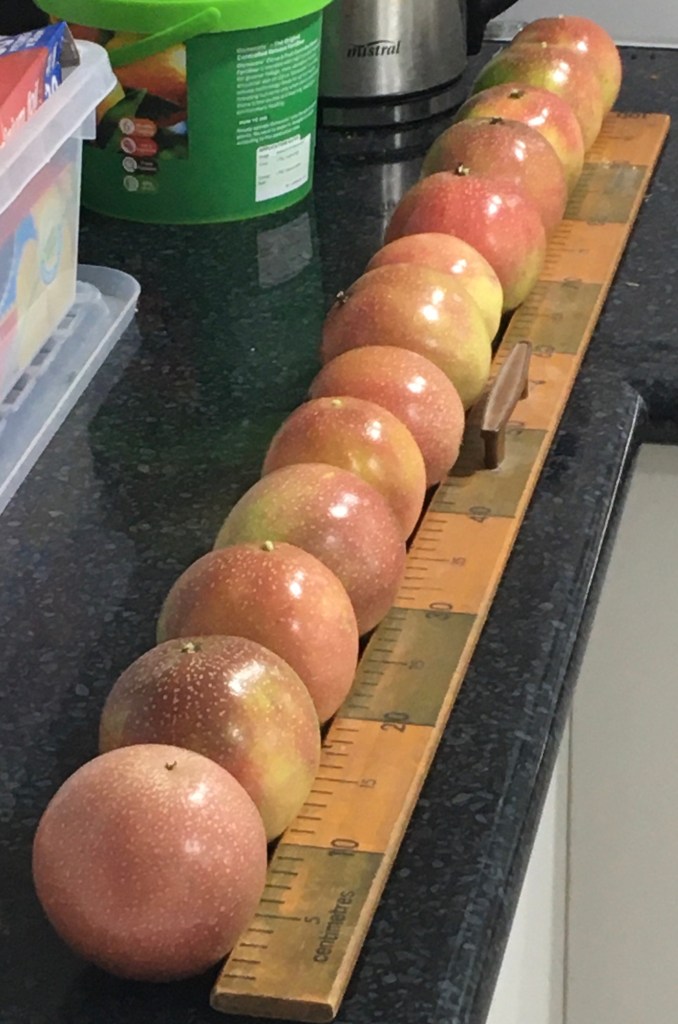
    Response:

    Determining which football code is the roughest and most physical can be subjective and depends on various factors, including rules, player safety measures, and individual perspectives. However, here’s a comparison of the main football codes based on physicality:

    1. Rugby Union: Known for its physical confrontations, rugby union involves tackling, scrumming, and rucking, all of which can be quite intense. The lack of protective gear compared to American football adds to the physical nature of the sport.
    2. Rugby League: Similar to rugby union but with different rules and fewer players. It is also highly physical, with frequent tackles and a quicker pace. Tackles are often executed aggressively, and the game encourages strong physicality.
    3. American Football: Characterized by significant contact and strategy, American football involves high-impact collisions, especially during tackles and blocking. Players wear protective gear, which can sometimes lead to harder hits.
    4. Australian Rules Football: This code involves continuous play and a mix of tackling and physical dueling, which can lead to heavy physical encounters. Players face rough conditions, as there are fewer restrictions on tackling.
    5. Gaelic Football: Combines elements of soccer and rugby, featuring physical tackling and contact. It is less intense than rugby codes but still showcases physical play.

    Conclusion:

    While all these codes have their levels of physicality, Rugby Union and Rugby League are often regarded as the roughest due to their intense tackling and scrums with minimal protective gear. American Football is also extremely physical but offers more protection for players, leading to potentially different styles of contact. Ultimately, the “roughest” varies based on personal opinions and experiences.

    Six of one and half a dozen of the other.

    POH and an AI question

    Has there ever been a day of total peace in the history of the world?

    Response:

    The concept of a “day of total peace” is largely theoretical and has never been officially recorded in history. Throughout human history, there have been many instances of peace treaties, ceasefires, and days of remembrance or reflection on peace, but a day where no conflict occurred anywhere in the world is unfeasible due to the ongoing nature of human conflicts and diverse geopolitical situations.

    Some notable events that aimed for peace include:

    • Peace Days or Observances: Various organizations and movements promote days for peace, such as the International Day of Peace, observed on September 21 each year, which encourages cessation of hostilities.
    • Global Ceasefires: There have been temporary ceasefires in specific conflicts (like during Christmas in World War I), but these were localized and not global.

    In conclusion, while there are symbolic days dedicated to peace, there has never been a universally recognized day of total peace without conflicts occurring somewhere.

    Poor Old Henry does plays on names

    My comic hero is Phantom. Phantom the icon of goodness and the nemesis of evil in the comic strip has stated “I have many names”.

    I too, have and have used many names.

    FMost of these are when writing comments for newspapers in various locations. I have “Two Left Feet” (sport), “Theatre Buff” (theatre), “Musicofanatic” (music), “Around The Traps” (general matters), along with “Old Man Todd”, “Bill Smith of Rocky Gully”, “Observer”, “Patriotic Voter”, “Statistician”, “Appreciator”, Septuagenarian “, Nutritionist”, “Rejoicer”, “GMH”, “POH”, and” HOP”.

    The above are names I have adopted when writing in various contexts.

    Of all the names and pseudonyms I have used over the years, there’s one I have not yet listed. It is the name I would like to change into if for whatever reason Henry Gray became non-applicable any longer.

    The name I would choose is Edward Kynaston

    “Do this for yourself” says Poor Old Henry

    BUILD YOUR CV

    Building a curriculum vitae is a professional necessity that is too often overlooked. People tend to think ‘why bother’ or ‘I’ll remember’  when it comes to things they should be recording.  Memory fades and with it the capacity to recall things that can help with job and promotion applications.

    I would suggest considering buying an expanding file. Label each opening with one of the graduate standards suggested by AITSL. It would be wise to label them in order of the way the graduates standards are listed in documentation. Then as evidence of meeting graduate standards is provided, place a note about that in the relevant section of the file. Also include evidence confirming your meeting of those standards. Samples of student work from time to time may help, particularly if they verify teaching strategies and efforts. In addition it can be handy to keep a notebook into which you add jottings from time to time, for transfer to your CV.

    Make sure you unload those jottings into the file possibly expanding them into a more detailed format before so doing.

    As time goes on upgrade your file to consider standards for teachers gaining new understandings, proficiencies and experience. In that way your folder is of evidence is always up to date.

    Make sure that as you update your expanded folder, to take out those things that are no longer relevant. They become secondary (aged) rather than primary (recent) evidence. When cleaning out the file my suggestion would be that rather than destroying documentation removed,  you store it in some secondary way to be called on if necessary.

    Photographic evidence confirming what you have done can be useful. With iPads and iPhones, taking supporting photographs becomes easy. My suggestion would be that you either print these photographs and add them to the folder or alternatively that you start an index on the device into which photographs can be added.

    From time to time colleagues and superordinates, even parents might offer you written recommendations or references. Keeping these and adding them to your CV is important because those statements substantiate and validate what you have to say about yourself.

    Developing sound methodology in relation to compiling evidence for CV purposes is a very good habit to establish and maintain

    “This should be a basic position” says Poor Old Henry

    VIGNETTE 89

    A CLEAN SCHOOL IS FOR EVERYONE

    Caring for school environments is the duty of all users. If care is not taken, classrooms, walkways, toilets and school yards can quickly become littered and grubby. Most schools emphasise the need for students to properly dispose of rubbish. There are rubbish bins inside classrooms and buildings and strategically located around school, in toilets as well as communal areas.

    It can be extraordinarily difficult for schools to maintain  a clean, litter free appearance. A drive past some schools, particularly late in the afternoon, reveals a scatter of paper, plastic cups and other rubbish.  A proliferation of rubbish detracts from the grounds appearance, giving the impression that all students are litterers. That is true only of of a minority. 


    Awareness of the need for classroom organisation  and tidiness should be part of student development. In many classrooms there is a roster, assigning students to specific tasks. They might include the following:

    • Cleaning whiteboards 

    • Delivering and collecting notes from the office

    • Taking lunch orders to the canteen

    • Collecting lunch orders from the canteen

    • Tidying shelves and classroom storage areas

    • Giving out and collecting work books

    • Collecting recyclable materials.

    All students take responsibility for:

    • Tidy desks and personal storage areas

    • Stacking their chairs at the end of the day

    • Disposing of food scraps and their own rubbish into bins

    • Putting litter into outside bins

    • Personal hygiene including toilet flushing and  hand washing

    • Using classroom bins rather than floors for pencil shavings and scraps of paper.

    Some would argue that attitudes of cleanliness and tidiness should be automatic. However, recognising effort and rewarding enterprise can help reinforce personal and civic attitudes. Recognition of class responsibility for care and maintenance of school appearance might include the following:

    • The awarding at assembly of a mascot that ‘visits’ the tidiest classroom until the next assembly.

    • Recognition of the class that looks after the verandahs and public areas adjacent.

    • Giving small rewards to children caught ‘doing something good’ when it comes to environmental care.

    • Presenting class or principal’s certificates to classes and children who always do the right thing when it comes to school and classroom appearance.

    Schools have cleaning contracts. Contractors attend to daily and weekly cleaning together with a ‘spring clean’ during each long holiday period. However, it is up to students and those using the school to look after and take pride in their facilities. Along the way, habits of cleanliness and tidiness that should last a lifetime, are reinforced.

    “I might get the raspberry for this thinking” says Poor Old Henry

    FAMILIARITY WITH PARENTS

    As a school principal, I relatively quickly learned that leadership can be challenged by mateship. I always tried to allow respect and professional regard to transcend friendship and personal feelings about the people I worked with.

    In the same way, I would advocate very strongly that teachers teaching children in classrooms should not allow friendships with parents of children to get in the way of their professional responsibility to board teaching tasks. Sometimes, It cannot be easy to need teachers to counsel parents about a child. I made it more difficult by “friendship” with the parents. The difficulty can be not wanting to offend the parent by telling things as if they offer home truths.

    The onus is upon teachers to separate their professional and personal lives from each other. Allowing a personal relationship to cloud professional responsibilities can have disastrous long-term consequences.

    If there is any chance that a conflict might occur, it would be wise policy for teachers to discuss matters with their senior or school principal.

    Every Minute of every school day should be made to count

     THE LAST FIFTEEN MINUTES

    Sometimes, parents and students discount the importance of the last 15 minutes of the school day. It’s often seen as the time when parents can collect children early for other appointments. It is also the time that may be “wagged” by children hear Claire, and they have to leave early to catch the school bus.

    The last 15 minutes should never be trivialised. At this time, homework is given out, notes are distributed, and important announcements are made at the class or the whole school level. It’s also a vital class time and a period during which the school day is concluded. 

    These minutes spent together by teacher and students put an end of the day wrap around the hours that have gone before. That leaves early miss out on an essential part of the day.

    Students and parents should be encouraged to appreciate The value of these minutes, which close out a school day. They offer teachers and students the opportunity to have a final favourable period together to celebrate the day that has been shared.

    INTERACTION WITH STUDENTS NEEDS TO BE CIRCUMSPECT

    The rash of child abuse inquiries happening around our nation at the moment and for the past decade or two, are lifting the issue of abuse against children wand young people to the forefront of public awareness.

    Without doubt, some of the allegations levelled against teachers and others are as a result of the “stimulation” generated by these inquiries. Sins against children and young people need to be visited and perpetrators punished. However, the reputations of those who are completely innocent of any wrongdoing need to be protected. Current actions (actions of the moment) need to be such that educators protect and guard against allegations at some future time.

    Teaching is a profession that requires increasing vigilance in human relations by teachers, school leaders and principals. In recent years, the issue of child abuse has gained traction. Lots of abuse issues, most of an historical nature, are being raised. Various Royal Commissions and Inquiries have highlighted the matter. I have heard from Victorian Inquiries, that around 1,600 issues have been and are being followed up. That follow up has been happening for a number of years and remains ongoing. There are inquiries taking place in other states and territories.

    Without doubt many of the allegations being brought against alleged perpetrators of past abuse, especially sexual abuse, are justified. They need to be followed through. However, there are instances when allegations are made with mischievous and malevolent intent. They hang those falsely accused out to dry. Accusations may be levelled against people many years after the alleged abuse occurred.

    A program several years ago on ABC “Four Corners” illustrates this point. A female teacher in Melbourne was accused of sexually interfering with two boys around 30 years ago. She was dragged through a messy court process, including being accused, found guilty, and jailed. The case was subsequently appealed and another grimy court process ensued. At the end, she was found not guilty of these crimes and acquitted. Her career, of course was absolutely ruined. The protagonists who had brought the case against her, two men in their early 30s (they had been boys of seven or eight at the time referred to in the allegation) have not to this point in time been charged with their own gross criminal misconduct. The story’s inference is that they have simply shrugged it off! Significantly, the Victorian Department of Education, Teachers Union and Teachers Registration Authority appear to have offered no visible support to the teacher. These cases are not rare.

    The recent reporting of the Michael Neade matter is strikingly similar to the Victorian case. I have to wonder how much support Mr Neade was offered, for it seems that those accused, regardless of final outcomes, are hung out to dry.

    Allegations made against teachers presume guilt until the teacher proves his or her innocence. The first thing that happens after the allegation is made, is that the teacher is stood aside from regular duties. What follows can go on for months and years and may (as happened with Mr Neade) involve time in jail. For falsely accused educators, comes an extremely lonely and stressful time. They receive very little organisational support and are effectively cast adrift.

    I have been told that it is very unlikely prosecution will ever be brought against false complainants. The only recourse available to someone falsely accused and acquitted, is to seek redress through the civil court. That is costly, messy and continues the hurt. It is also unlikely that damages that may be awarded, will ever be paid because of payment inability on the part of the person against whom damages are awarded.

    It is wise for teachers to keep a clear, detailed and time noted record of instances when they have been connected with students in counselling and development. Nothing beats a detailed diary. When moving schools, retiring or otherwise moving on, take these records with you (I would suggest a diary). Maintain their accessibility. Keeping this data in USB or electronic form is an option. Unfortunately, teaching and school leadership are professions where future trust can no longer be presumed.

    If allegations are then brought, there is a clear record to show the date, time, place, and nature of the counselling. Often details brought by the complainant are fairly vague and being able to refute them with accurate data is of inestimable value.

    There are one or two other points to keep in mind.

    • If counselling or working one-on-one with children, ensure that it is in a space that has visibility from the outside. A room with a see-through window, a common area within, a learning module, or a location within a linear classroom close to an open door are options.

    • I believe it paramount for teachers to report matters of counselling and discipline to a senior or to the principal along with keeping a written record.

    Those who have false accusations brought against them, regardless of outcomes, are never the same people again. I understand they look at life differently. Their outlook becomes tinged with suspicion. They wonder if they can never be part of trustful relationships again. This issue is one of growing consequence and something all educators need to take on board and carefully consider. Don’t live in fear but never think it can’t happen to you because it can.

    What NEVER happens is visitation on those who make false accusations against those who are innocent and whose lives, professional and often personal, are destroyed. They are home-free, possibly gloating at the mischief they have caused

    Poor Old Henry asks AI

    What behaviours do men and roosters have in common?

    Response:

    Men and roosters can be humorously compared due to a few stereotypical behaviors that they might share. Here are some commonalities often highlighted in a light-hearted context:

    1. Strutting and Confidence: Roosters are known for their proud posture and strutting around their territory, much like the stereotype of confident men who display their masculinity.
    2. Crowing: Roosters are famous for their loud crowing at dawn. Similarly, men might boast or share their achievements loudly, seeking attention and recognition.
    3. Territorial Behavior: Roosters can be very territorial, protecting their space. This can parallel how some men may act protectively over personal or social territories.
    4. Seeking Attention: Just as roosters often try to attract hens, men might engage in behaviors aimed at attracting attention or admiration from others.
    5. Group Dynamics: Roosters often interact within a pecking order in their flock. Similarly, men may engage in competitive social dynamics within groups.
    6. Playfulness: Both can exhibit playful or competitive behaviors, whether it’s in friendly banter or more serious rivalry.
    7. Sharing a Morning Routine: Roosters are known for waking up early to crow, paralleling the notion that many men rise early for work or responsibilities.

    These comparisons are intended for comedic effect and should be taken light-heartedly!

    Some are very seriously earnest in their manifestation of these behaviours.

    EDUCATION NEEDS TO BE SIMPLE, FOCUSED AND ENGAGING

    In this day and age, increasing educational complexity overlooks two vital criteria: ‘simplicity’ and ‘focus’. We need to keep education simple in terms of clarity of message and focused in terms of upholding key learning and developmental needs of young people. Simplicity and focus need to be absolute priorities. Unfortunately, governments and educational systems have discounted these important teaching and learning principles.

    Nor should the use of technology supplant the prime teaching role of teachers.

    Too often we can’t see the wood for the trees. Embedded within Curriculum Frameworks are key learning principles to which teacher attention is drawn. Those requirements should underpin planning, preparation and teaching then testing, measurement and data analysis leading towards follow-up. What happens however, is that key learning strategies and straight-forward focus principles are set to one side with teachers being ‘invited’ to unceasingly explore the veritable cybernet forest of educational resources and alternative strategies for their usage.

    The depth and density of resource and support materials is absolutely mind-boggling – there is also a huge amount of reduplication or, at best, only minor change from one precept to the next. Trawling through an infinite resource selection is inordinately time-consuming. Quite often, the journey reveals little more than teachers already have in their own resource collections.

    I’d suggest to teachers surfing the web looking for resources that they record time started and time finished. They will often find that many, many hours have been spent searching for resources, time committed that goes well beyond the teaching value of what they download.

    Imprinted into the minds of teachers is the imperative that they give of their absolute best, to bring children out the other end of the teaching / learning journey having been enriched. For some reason, possibly a lack of self confidence or by not questioning the suggestion of leaders, the search for resource materials and teaching advice occupies a significant amount of teachers time.

    What seems to count

    I believe that teachers are often frightened that what they do in terms of teaching, will be insufficient. It seems they feel the weight of accountability, believing people are regularly scrutinising, ready to pounce, criticise and condemn if things are not good enough. They appear to rejoice little and worry a lot about whether their contribution is or isn’t appreciated. This means that they become super self-critical and very rarely take time to rejoice and celebrate their teaching successes.

    In Australia, the Ministers of Education and Education Department CEOs agreed upon the Melbourne Declaration of Education in 2008. The declaration exhorts teachers to be holistic in their approach to teaching and learning processes in its first part. While academics are highly stressed, so, too, are the social, emotional, and moral/spiritual aspects of development. This declaration follows on earlier COAG statements of principle and intent, but in practice this is often set aside.

    It seems that teachers are urged to turn their attention away from this position and toward recognising far more limited aspects of development as having greater priority.

    In particular, the focus seems to be narrowly focussed on testable aspects of literacy and numeracy, with little else counting as being of educational relevance. In Australia, we have what might be termed ‘Four May Days each year’, coinciding with the nationwide NAPLAN testing for children in years three, five, seven and nine. Tests are taken over three days, with a catch-up day allowed for students who miss sitting tests on the designated days. Comparative data comes back to schools, comparing them on the outcomes of these tests against all other schools. That information goes on to the ACARA managed ‘My Schools’ website, which records information relating to outcomes for children in all Australian Schools for public digestion.

    From there, media picks up on schools that are well below average, to well above average across the spectrum of tests and years. They then produce colourful tables showing schools from deep pink (well below average) to deep green (well above average). Some newspapers delight in or have delighted in talking about “Seas of Red,” allowing readers to draw a personal metaphor about what often seems to be the more occasional “Oasis of Green.”

    The focus most certainly remains firmly fixed on the importance of teaching, strategies, and data collection in preparing for the annual NAPLAN program. Data is upheld as the number one Australian educational priority.

    The Australian government emphasises and owns this testing regime, insisting that the program is an absolute universal system priority. It has cost hundreds of millions of educational dollars since its inception in 2008.

    This paper is not a forum where further discussion of NAP testing should occur. Rather, I am seeking to show that macro-determined programs coming from the Australian Government can and do have the effect of distracting us from a focus that aligns with holistic development and the preparation of children for the whole of life. ‘If literacy and numeracy challenges are satisfied, then the educational job is done’, seems to be an underpinning paradigm.

    It is a pity that in this day and age ‘learning in the hands of students is often dismissive of this type and level of engagement. I wondered how appreciative those in high Australian Government places might be of a program like this – or whether indeed they would see it as being relevant!

    Classroom Priorities and Teacher Focus

    ‘Learning in the hands of students’ is just that! It’s about putting into the hands of children technologically developed gizmos that enable them to communicate ‘by finger’, engaging in everything from games and internet study to the transmission and receipt of messages . . . and so on. The onus and emphasis is more and more on technology and less and less on skills that used to be considered important.

    What doesn’t happen in modern learning contexts is considering the need for children and students to be listeners, speakers, readers, and writers. Primary communication skills are often muted.

    .

    The sending of texts, e-mails and, more recently, Facebook engagement, Twitter entry and other device-supported communication has replaced old-fashioned listening and speaking.

    Increasingly, reading and writing are also being committed to the technological domain. We have entered the world of e-books, tablet reading, and keyboard or Siri writing. In some American states and European countries handwriting texts are no longer prescribed, with tablets being the new way forward.

    I am personally saddened by the way children’s education seems to be distancing itself from primary communication skills. The ability of people (young and old) to look each other in the eye, speak up with confidence and to listen without interruption is nearing extinction. If young people are to develop skills and confidence in communication, we will need a return to the era in which these communication skills were considered paramount. There needs to be a rebirth of primary skills in these areas.

    I am not suggesting that there is no place for technology in the classroom. What has to be avoided is the situation where technological takeover depersonalises both communication and teaching-learning contexts. These days, with the help of a smartboard,learning originates online, is generated through the computer via the Smartboard, and then reaches students. Teachers meantime busy themselves in rubric recording of data that offers comment on the perceptions of what children are learning. This is hardly about teaching and learning in a primary context of engagement. It takes from, rather than from adding to enriching the education of children. It is about secondary engagement (through technological tools and measurement), diminishing prime focus on direct teacher and pupil teaching and learning contexts.

    Concluding thought

    In our age of modern education, it is concerning that tools that can support teaching and learning are taking over. Resources in cyberspace surely should be no more than that—resources—to be drawn on carefully and possibly scarcely. We can overdo it on the research and downloads, particularly when so much of what’s out there is essentially reduplicative of what has gone before. The tools we use for data access and to facilitate teaching can be enriching but, again, should not replace that idiom of relationship contact that develops between children and teachers during prime learning time.

    Self-study should not focus on downloading material to be incorporated into texts and assignments through cutting and pasting. If this becomes the major way of constructing essays and papers, research can be diminished, and understanding lost.

    Surely education should be reminiscent of and carefully reflective about development and preparation of young people for the whole of life. Part of this is the need for them to be in command of support devices, with teachers ensuring the ‘human side’ of education does not succumb to technological trappings.

    ‘Keeping it simple’ and ‘keeping it focused’ has served us well in the past; Governments and education systems should not discard these precepts in the 21st century.

    Consider the positives – Aboriginal Education has had its successes

    Groote Eylandt back then

    I don’t doubt the truth of sad situational stories about Northern Territory education, published in ‘The Weekend Australian’ and ‘Australian’ weekday editions since September 23. All have been revealing of present situations.

    That was in 2023

    However, I want to correct the perception that nothing good or positive has ever been part of the Aboriginal Education framework in the NT. 

    Chronic non-attendance has been identified as a critical deficiency.

    I was the principal of Numbulwar School from September 1976 until December 1978. I was then principal of Angurugu School for four years, 1979 – 1982.  During my years of leadership in those schools, attendance was not an issue: As principal, I made sure that students not only attended regularly but were also as fully supported as possible through programs offered.  This was achieved through solid ties maintained with parents and councils in both communities.

    Programs included instruction in the vernacular and English languages, achieved through Indigenous Assistants and Non-Indigenous teachers co-teaching primary classes.

    Our secondary program prepared students for work through work experience, vocational training and trainee link programs. These programs were undertaken in partnership with the mining company GEMCO, various government instrumentalities and the local community government council.

    The present situation, as reported, greatly disappoints me. However, good things happened in past times, and those educational successes deserve to be noted.

    A

    Three key books for Poor Old Henry

    The three books that I nominate are not a trilogy in the sense of being linked one after the other. However, they are a trilogy in the sense of importance to me for the awareness that they create and for the understanding that I need to have.The first of these, “ The One Minute Manager”, is one of a series by Kenneth Blanchard and Spencer Johnson. This was one of the earliest books that I bought, and then every other one in the series. It was from these authors that I learnt the importance of prioritisation, of using time wisely, of being effective and efficient without dillydallying and dawdling while at the same time considering the people with whom I worked, including my student cohorts, over the years.

    This book helped me immensely in formulating my leadership priorities. It also taught me about perspective and life balance.

    The second book is “Arnhem Land People and Places“ by Keith Cole. This is a significant text and pictorial work that shows how, back over time, there was plenty of business, industry, and progress being made by Indigenous Australians throughout the whole of Arnhemland.

    Its research pre-dates 1974, when the Whitlam Government determined that self-management and self-determination were important for Aborigines because nothing much was going on anywhere in their lives that might lead to self-betterment. As Cole points out, there was so much happening before this intervention. Aborigines were participating in creating meaningful futures, which lends a lie to the superficial ‘Whitlam Discovery’ purporting that nothing was happening.

    This is an eye-opening book I would recommend to anyone who wants an understanding of history and Aboriginal development in a significant part of Australia – as it happened. From personal experience (I became a teacher in remote communities in Western Australia and the Northern Territory in 1970), I can affirm what Cole has written and illustrated. It was the way it was, and the way it was, was good.

    Aboriginal people were being taught and given the skills that time would have enabled them to take full responsibility for the enterprises in which they were working. The Whitlam changes demanded that Indigenous people take immediate responsibility as enterprise bosses. That led to the crash of many enterprises leadership cannot be conferred on people not yet ready to be leaders.

    Professor White’s quite recent Quarterly Essay is thought-provoking and should wake within us, a sense of the parlous reality of the modern world in which we exist. After reading his essay, I realised that the world is indeed on a knife edge when future peace and security are considered.

    The text of “Sleepwalk to War” is very readable and Hugh White’s message is very important. What he has written cannot be ignored. It is about our future.

    Poor Old Henry has a genuine fear about the future of Darwin

    With each passing day, I feel more and more that war in our region is just over the horizon. The lead editorial in “The Australian” (Xi puts regional peace in Xi dire straits over Taiwan” 8/8/22) points toward a catastrophic situation happening within the next 18 months.  “It is almost certain … that the Xi communist dictatorship has advanced its timeline for reunification from perhaps later this decade to maybe as little as 18 months.”

    I can sense that within a very short period of time after the conflict starts between China and Taiwan, America will come in on the side of Taiwan. That maybe just with weapons support, but more probably with air and sea engagement on behalf of Taiwan. Australia will dutifully move with  America, and could well attract retaliation. First it will be by economic embargo and then physical response  in the form of missile, rocket and drone retaliation. For Darwin and Cairns, it could be a case of revisitation to the second world war takeout of these cities of the north, during those months in 1942 by Japan.  

    I may be accused of pessimistic imagination, but my concerns are real. It is not hard to imagine our northern cities and towns, thousands of kilometres closer to China than our southern counterparts, being decimated as China pressures the Australian government to demur from the threat of even more drastic action by the Land of the Panda.

    Regardless of pros and cons, there is a certain irony about what is likely to transpire in nearing future: Taiwan, under the ‘One China Policy’ is not recognised by either America or Australia, nor for that matter by very many countries and governments.  In the broadest sense, if China takes physical action against Taiwan, under the terms of the policy of recognition, the action would be tantamount to civil war.

    Those close to the heart of action within the Chinese Communist Party (CCP) refer to Taiwan as the “Treasure Island of our Motherland”. It will not be long before they CCP goes all out for what’s they define as reunification through a process which, more and  more likely, will engulf Australia.

    As Australians, we will certainly be involved in any response to Western action from China. As Northern Territorians, we will be more vulnerable to retaliation than our southern counterparts. We have every reason to be concerned about the unfolding future ahead.

    This is a fear I cannot overcome.

    GRAB BYTES – MAY 2025

    Take heed, please government 

    I am becoming very worried about aspects of CLP governance. Along with that is bewilderment as to why some actions are being taken and needs ignored. The Waterfront issue on salaries and employment has been dismissed. A key appointment to an essential position has been confirmed at the behest of the Attorney General, who has appointed a person who did not even apply for the position. The revelation about animal cruelty is confirmed in the background of the person declared the most powerful in the NT News 2024, losing the most prominent persons influencing the NT.

    The government must avoid these glitches and shortcomings. Ministry officials would do well to recall what happened to the Giles Government and, more recently, the Fyles/Lawler government.

    Promises must be met, and transparency—which is becoming lost—must be reinstated. Otherwise, the Finnochario government may well be a one-term wonder.

    ANALYSIS: Chief Minister Lia Finocchiaro says she is “buoyed” by a six per cent swing towards the CLP at the federal election, but a deeper look at what the voters in Darwin and Palmerston said with their ballots should cause the Country Liberal Party and its elected members grave concerns for their political futures.

    While some would argue a federal election result should not be used to criticise the Territory Chief Minister, the party itself made it a referendum on Lia in Darwin and Palmerston, and the results were damning.

    Saturday’s federal election was held less than nine months after the CLP formed government through surprising gains in the Darwin northern suburbs. It appears that this result would not be replicated today if a Territory election were called.

    We don’t need hordes of people

    We already have far too many people living in Darwin. We need more people to crowd in, about as much as the sea needs water. Our suburbs are becoming run-down and gritty. Increasing numbers of houses are very poorly maintained, and yards are overgrown and unkempt.

    Trees are planted in public spaces and along roadways and are never maintained. Council lets verges and footpaths go to rack and ruin. The council never acknowledges the efforts of those who preserve verges at the resident! ‘s expense.

    And people in high places want to continue bringing in masses of people.

    DO THOSE DECISION-MAKERS AND CONSULTANTS KNOW WHAT LIVING IN DARWIN AND PALMERSTON  IS LIKE?

    I mean in places other than housing enclaves and the newer suburbs—which, in the case of Lyons and Muirhead, are already starting to look drab. Johbsin and Zuccoli’s appearances are hardly awe-inspiring, either!

    Give it a break! We need care, maintenance, appreciation and pride in what we already have rather than wanting to jam-pack this place with more people.

    Maternity in a hotel

    This is such an odd incentive or unusual compensation. There is only one sensible way forward: the permanent re-opening of the DPH maternity ward. While the RDH facilities might be adequate, the noise and racket, the whole atmosphere in and around the hospital, are so disconcerting. The RDH is very much like a factory, processing people rather than products. In overall terms, our health facility in the NT is going from bad to worse.  

    Where are the Councillors

    COD Councillors! Who and where are they? What do they do? How do they represent ratepayers and voters? How do you find them? Do they ever come visit, hold constituent meetings, make any form of contact?

    If they do it must be by Facebook and social media because for them, newsletters, physical contact, and any traditional visibility no longer exists.

    NT – Going forwards or backwards?

    There are so many press releases and so much confirmation from government and private sources about the forward-looking NT that is going places. These are largely visionary or aspirational statements. In truth and in real terms, the NT is losing much from what used to be on offer. The impending closure of the DPH maternity ward is just the latest. It often seems that the only growth industry in the NT is crime.

    Euthanasia – gwt on with it!

    It is high time the NT Government got on with introducing and passing VAD. Many people have endured much suffering since the callous removal of the Perron Law on VAD in the 1990s. The NT was the first, and now we are the last in Australia to have this enlightened and humanist right. An extensive inquiry has been held, and results have been released. For the government to contemplate an ‘inquiry of the inquiry’ is just dithering and messing with a vital need.

    Where to is becoming blurry

    Sadly, I have to agree with David’s comment; that there seem to be obligations and accountabilities about process and procedure to which departmental heads have to adhere, but which can be merrily skipped by government ministers. 

    Along with that, irregularities that should be investigated – like the Warerfront jobs and salaries fiasco – are waived  away.

    The AG is one of the ministers who is discounting process, seemingly preferring personal choice but she is not alone on this operational preference.

    I am genuinely worried that the Finnochario Government is starting to slip off the tracks.

    Domestic Violence

    issues that could be addressed and if they were, it might help with curtailing this scourge. However, these controllable elements are not going to be tackled and for that reason, things will only worsen in terms of the degree of incidents and the severity of affliction meted out by perpetrators.

    Leave Wadeye

    Would it be wrong to suggest that all support staff at Wadeye should be withdrawn permanently and the community left to its own devices – with the proviso that Darwin and Larrakeyah land would be off limits because members of the community have a habit of bringing their disputes to the city and carrying on their vendettas here?

    Coomalee Council sacked  

    Goodness gracious me. Is there ANY local government jurisdiction that has NOT been sacked over time by the NT Government? The mind boggles at the mass and volume of sackings of local government authorities that have happened over the years. Now it is Coomalee’s turn; their first time?

    POH ASKS AI

    How many countries would Vladimir Putin like to lasso and return to the USSR Fold.

    Response:

    Vladimir Putin has expressed a desire to restore what he views as Russia’s sphere of influence, particularly over former Soviet states. However, he has not specified an exact number of countries he would like to incorporate. His actions and rhetoric suggest a focus on countries like Ukraine, Belarus, and the Baltic states, which he sees as historically part of Russia or the USSR.

    It’s essential to note that the geopolitical landscape is complex, and any ambitions regarding territorial claims are often influenced by a variety of strategic, political, and economic factors. The idea of “returning” countries to the Soviet fold is contentious and viewed with concern by many in the international community.

    Some people have boundless expansionary appetites.

    What is wrong with Australia – 10

    TAXING REGIMES

    The blessing our country offers palls more than a little because of taxation regimes. Pay as you earn (PAYE) people contribute, in proportionate terms, a lot more than their due. Those who make up corporate Australia and the very wealthy know all the tricks for legitimately minimising their tax liabilities. Their tax accountants serve them well.   Opportunities for tax deduction are not flagged in a public context. One has to ‘find out’ about concessions, therefore being disadvantaged

    What is wrong with Australia – 9

    SELLING  RESOURCES

    We counter the blessings Australia could offer by selling our natural resources with an almost wanton abandon.  Natural gas is an example. Selling virtually all our gas by long-term contract negotiation onto the overseas futures market means we are destitute in terms of our own domestic needs. While future sales are necessary to secure the capital investment in establishing extraction and refining facilities, we have hardly been smart by going the ‘sell all’ route.