Unknown's avatar

About pooroldhenry

I was a long term Northern Territory (NT) Educator, commencing my teaching career in WA in 1970. We came to the NT in July 1975 and worked in remote, town then urban communities. My tenure in the NT was at Numbulwar School (1975- 1978), Angurugu Community School on Groote Eylandt (1979-1982), Nhulunbuy Primary School (1983-1986), then Karama School (1987-1991) and lastly Leanyer School (1992 until retiring in January 2012). I filled the position of school principal from 1977 until my retirement. My career started at Warburton Ranges in WA as a teacher in 1970 then as headmaster in 1974. My major focus on and belief in education is that it develop children and students holistically, preparing them for the whole of life. Educational partnerships involving staff, students, community and department have always been important. I am a Fellow and Lifetime Member of the Council of Education Leaders, a Life Member of the Association of School Education Leaders (recently rebranded as the Northern Territory Principals Association) and was awarded the Commonwealth Centenary Medal for contribution to education. A member of Toastmasters International I am an Advanced Toastmaster Gold (ATMG). I hold a number of degrees and remain actively interested in and contributive to education. A highlight of my 'recent' life (from 2011 until 2016) was contributing to Teacher Education at Charles Darwin University. This has involved marking, tutoring and lecturing in a part time capacity. I was also involved with our Department of Education (NT) as a member of the Principals Reference Group (2012 until 2016) and have worked with others on the establishment of a Principals Coaching and Mentoring program. From 2014, I was the Education Minister's Nominee on the NT Board of Studies until its reconstitution in July 2016. Prior to retirement from full time work I represented the Education Department on the Board (2009 - 2011). I was working in support of students enrolled with the School of Education at CDU from 2012 until 2017. I enjoyed the chance to give back to the profession which over many years has done much for me. From July 2013 until the end of June 2019, I wrote a weekly column about educational matters for the Darwin/Palmerston /Litchfield 'Suns' Newspapers and then the rebranded 'Suns Newspaper' with Territory-wide circulation. This newspaper ceased publication in June 2019. I occasionally write for other papers and am a contributor to professional magazines and online discussion about educational matters. Included were regular contributions to the Australian Council of Education's 'e-Teaching' and 'e-Leading' publications, which ceased as communications organs in December 2017. I hold retired member's status with the Australian Education Union (NT), contributing occasionally to union publications. I am presently working on developing a series of vignettes, aimed at providing information that pre-service and beginning teachers may find useful. They are oriented toward assisting with an understanding of practices that may assist meet professional and teaching needs. To date, 89 of these have been completed. I contribute to general conversations and various groups on ‘Linked In’ and am also a contributor to ‘The Conversation’. I have a blog site at henrygrayblog.wordpress.com and invite you to access it at any time should you so wish. Henry Gray February 28 2020
An important point on speech and presentation

WHEN SPEAKING FACE THE AUDIENCE

From time to time, presenters get caught talking away from the audience. Side on and even back on the address to the audience occurs.  That, in my opinion, needs to be avoided at all costs. If I’m icing sideways or backwards, do it in a way that keeps you as the presenter front on (face on) to the audience. It can be too easy to get caught up on this point.

GRAB BYTES DECEMBER 2024 – 61 TO END OF MONTH

Alcohol a road killer

To spend tens of millions of dollars on upgrades is necessary to overcome the growing number of black spots on our highways and connecting roads. However, that will do nothing to overcome the deaths and injuries to drivers, passengers and pedestrians, while alcohol is a primary contributor to well over half the deaths on our roads.

Sandalwood Farms sold

This story again brings a sparkle of renewed hope to mind. Economic progressiveness has many facets, not the least of which are in the agricultural and horticultural fields. May 2025 be a year during which, with its new and pragmatic government, the NT continues to revive after what had become a long period of stagnation.

Henry is weeping

Henry is weeping—at the new format and because of his disappointment—but nobody cares. Henry also wept when excellent cartoonist Colin Wicking’s last cartoon appeared in the NT News on March 31, 2022, and he was never replaced. This made the NT News the only Australian paper in the Murdoch Stable not to have a cartoonist sharing the lighter side of news with readers. 

“SPEAKER’S IDIOSYNCRASIES AND PECULIARITIES ALWAYS REMEMBERED” SAYS POH

How people present often stands the test of time for far longer than what they say.  Two examples.

  • I remember 20 years later, a person normally articulate who was out of depth when presenting on a particular topic. There were 224 ‘um’ type utterances offered in 20 minutes—a record on my calculation that still stands.
  • A very important leader stood on a stage, also 20 plus years ago, and addressed an audience.  No, I don’t remember a word of the presentation.  But I remember the one hand on the hip, with a coffee cup in the other. I remember the occasional coffee sips, the strutting back and forth across the stage, and the overall body language. I remember it to this day.

First impressions can be more than last impressions; They can be everlasting.

“Technology can facilitate feedback to presenters”, according to Poor Old Henry

FEEDBACK BY DEVICE

Media can play an essential part in supporting feedback loops. If presentations are recorded visually or orally, seek to view or listen to how your presentation went.  A great deal about strengths of delivery and points from improvement will become self-evident.

This approach is not overdoing self-focus.  It is about each of us wanting to improve how effectively and efficiently, empathetically and humanistically, we reach out to others.

“Reflect after you have presented”, suggests Poor Old Henry

 POST PRESENTATION – LOOKING AT HOW YOU HAVE DONE

Self-evaluation is essential when considering how successful one is at presenting to an audience—several suggestions.

  • Reflect
  • Ask others for unbiased feedback
  • Ask audience members to complete an evaluation form
  • Invite contact by text or to an online address
  • THANK those who take the time to offer feedback
  • Seek and take advice from family members.

“So many leaders need speech development”, says Poor Old Henry

LEADERS NEED SPEECH DEVELOPMENT

WORTHWHILE CONSIDERING

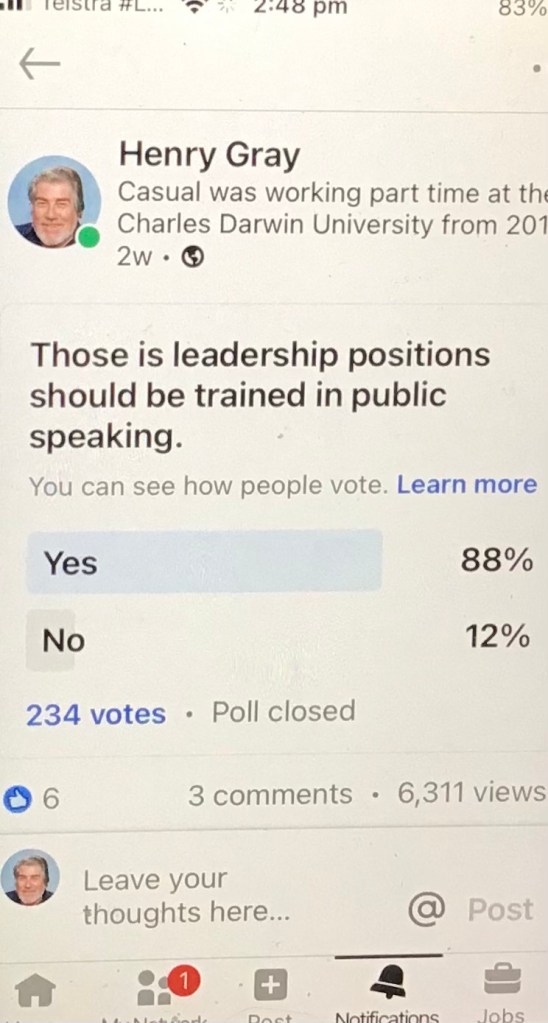
It would be more than worthwhile for many of our leaders across all fields of leadership to consider their need for speech development. Many with essential messages are poor presenters on radio and TV. They are also poor-speaking presenters in other forums.  The way these people speak needs fixing, for they do a poor job.

Poor Old Henry shares the opening stanza of the fifth and final test between Australia and India

Australia 2 wins, India 1 wins and one test drawn so far.

Opening stanza includes National Anthems
Australian team
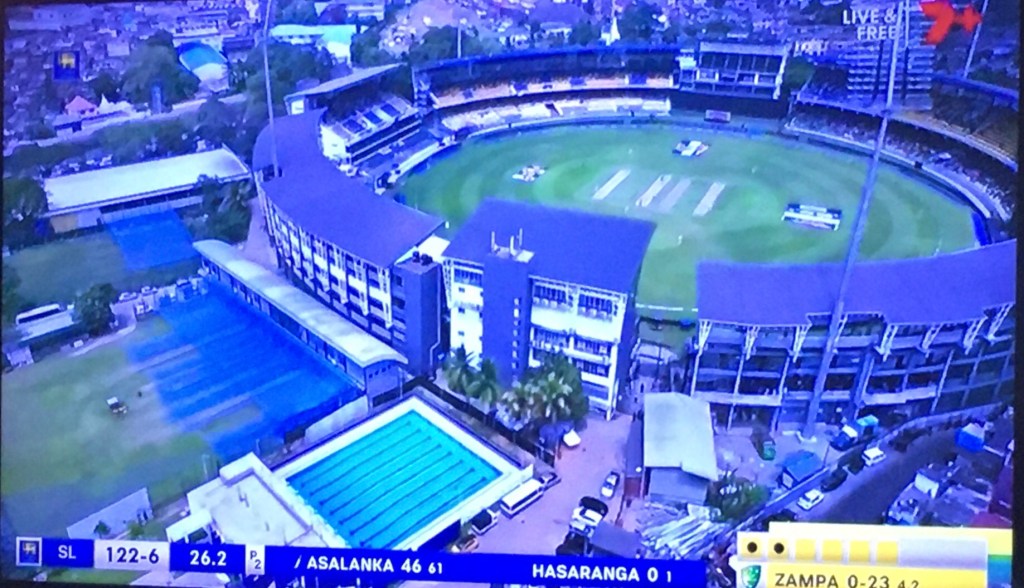
Sydney Cricket Ground with the city in the background.
Indian openers on the way out to the middle after Jasbrit Bumrah the stand in captain won the toss and elected to bat first.
The cricket ground with its mix of modern and historical stadiums.

“Evaluation of speech aids presenters” confirms POH

EVALUATING SPEECH

This might be done formally or informally.  

Elements evaluated and ratings might include the following.

*  The general purpose of the speech was clear.                                          

*  The specific purpose of the speech was clear.                                          

*  Speech organisation including planning and structure.                             

*  Material content supporting main speech points.                                      

*  Specific speech purpose reinforced by its beginning, middle and end.     

*  Confidence and sincerity of the speaker.                                                    

*  Reliance on notes.    

The theory and practice of language from Poor Old Henry

LANGUAGE – THE THEORY AND THE PRACTICE

The English language, like all languages, is fascinating. Unlike some languages, there is a strong differentiation between the theoretical study and the practical application of the English Language.

An intriguing element about language is the disconnect between its theory and practice.  The theory of language can be reasonably straightforward and understandable as it is studied on paper:  Language in practice and day-to-day terms of usage can be a lot more tricky.

In Australian contexts, there are conversational factors of expression, the way words are emphasised, nuances, hidden messages, colloquialisms (expressions) and so on. 

There is also pitch, rhythm, tone, intonation and volume.  How voice is used is a huge part of language expression.

“Consider the nuances of speech when presenting” suggests POH

INTONATION (EMPHASIS) MAKES A DIFFERENCE

How speakers emphasise words makes a difference in the way an audience receives and interprets the spoken word.  The emphasis placed on terms causes the listening audience to focus greater attention on the emphasised element.

‘Today is Wednesday ‘.    Emphasis can be focussed.

Today is Wednesday.

Today is Wednesday.

Today is Wednesday.

The usage of intonation is a way to lead an audience.  It is often not used and, therefore, remains under-appreciated

‘Gesture when speaking has plusses and minuses’ finds POH

WHEN SPEAKING REMEMBER GESTURE ADDS AND DISTRACTS

* Gesture must be ‘compatible’  with the presenter and magnifying of speech. 

* Gesture is a tool that can help emphasise and reinforce points.

* Overdoing gestures can undermine conversation because recipients are studying aspects of body language rather than listening to what is being said.

Avoid ‘accidental’ gestures which are off-putting. These might include the following:

* Wagging a cordless microphone while speaking.

* Rocking from one foot to the other or swaying from the waist.

* Neck movement which is out of sync with the general         movement

* Eye contact, which has you speaking in one direction and looking in another.

* Randomly putting on and taking off spectacles.

* Holding and wagging or twirling glasses while speaking.

* Doing similar with a pen, lazar pointer or some other prop.

* Pulling at the collar, sleeves or any other aspect of apparel.

More on speech effectiveness when ‘the eyes have it’

EYE CONTACT (Revisited and Extended)

The eyes are the most essential organs of gesture. They can reflect countless moods and signal everything from willing acceptance to absolute rejection—some important reminders for those presenting to an audience.

* Look at people. Don’t look over them, under them or around them.

* Engage people individually and collectively through eye contact. Rest on individuals and cover the audience.

* Make your eyes friendly, encouraging and inviting.

* Avoid flat or hostile eyes.

* Eyes are the most critical parts of the anatomy regarding gesture.

More on speaking skills from POH

SPEAK CONVERSATIONALLY TO YOUR AUDIENCE 

* A CONVERSATIONAL VOICE is engaging. A listening audience is reassured to hear program presenters speaking relaxedly. Many listeners are working through the hassles of the day. A calm and relaxed manner coming at them over the airwaves is relaxing and reassuring.

* Using pause, allow your audience time to digest and reflect on what you have said.

* Projection and outreach, avoiding ear bursts and fade-out, which impose ear strain.

* Use words to paint pictures, stimulating the listener’s imagination.  Successful radio and media communications are those which, by their appeal, draw listeners to programs.

* If working on a presentation from within the broadcast studio, IMAGINE you have people with you as guests. Work as a radio presenter in the same way you would if others were there

“Don’t discount speech development” says POH

SPEECH DEVELOPMENT TOO OFTEN DISCOUNTED

I often listen to the radio or watch on television as key, prominent, important people speak on and about their areas of expertise.

So many, yes SO many of them are very poor presenters regarding their qualities of speech, diction and (on television) gesture.

The ‘matter’ factor of their offering is acceptable.  They know their subjects. 

But it is their manner and method of delivery that let them down.

Leaving lasting impressions of mediocre delivery, I am sure, is not what the speakers want. But unfortunately, that’s the way it often goes.

And all for the want of a bit of fixing!

The wisdom of Solomon

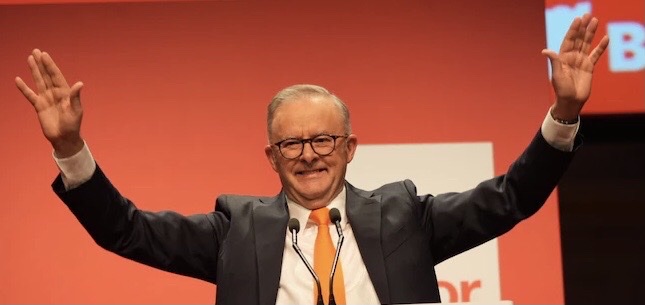
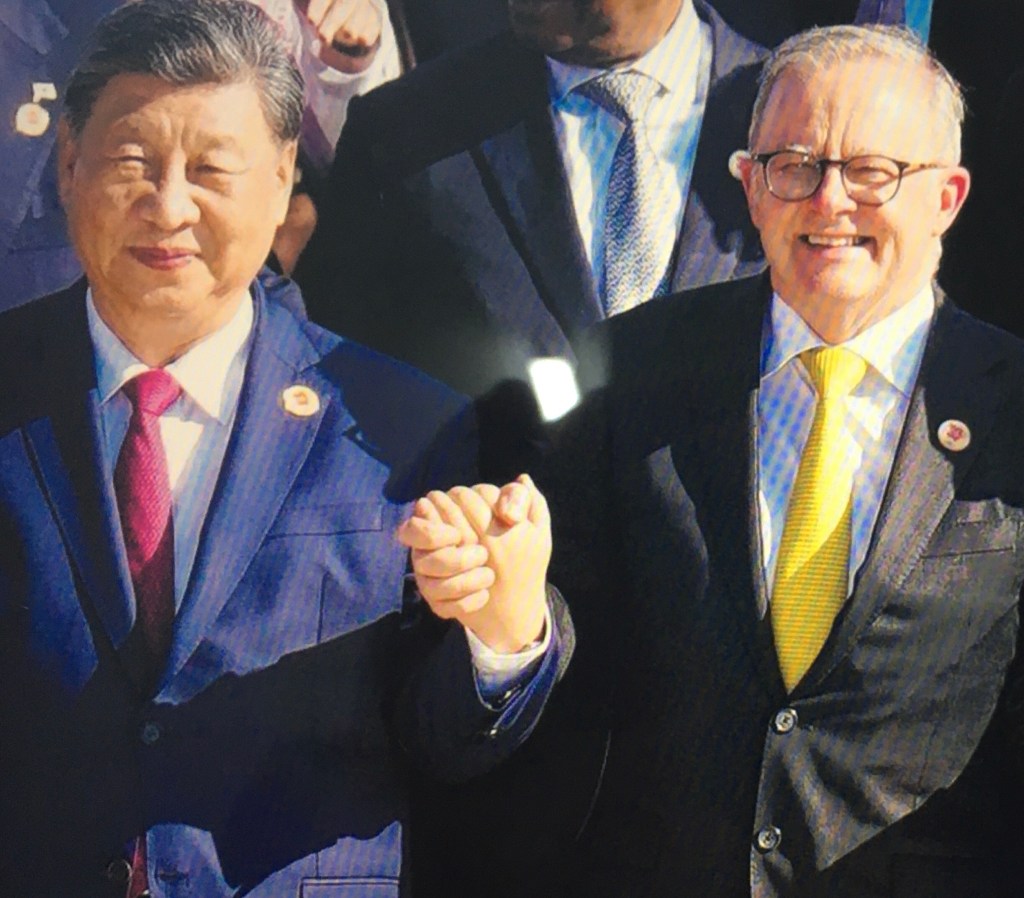
John Howard and Peter Costello bookend Anthony Albanese and Jim Chalmers.

The political leadership duo were the Coalition’s best.

The jury is still out on the Labor pair.

Are we looking at an awesome foursome or a duo who were excellent along with the other two who are bogged in leftist wokeism?

Howard, Albanese, Chalmers, Costello

Source – The Australian Newspaper

“Ring in the tidings of the New Year”, enthuses Poor Old Henry

Dear Bloggers one and all. Allow me to wish you the very best for the New Year of 2025.

I am not into resolutions, but please accept my sincere wishes that the traverse of the coming year will bring blessings, happiness and fulfilment to you and your families, friends and associates.

May the parlous state of the world in general – and some regions in particular – be constrained from ongoing unrest and deterioration.

May we all think less about ‘I’ and ‘me’ and more about the collectivity of ‘we’ and ‘us’, when it comes to the establishment of priorities and actions.

All the very best for 2025.

Regards

Henry Gray

January 1 2025

“December 31, 2024, is astronomically significant” suggests POH. “We have a black moon”.

It is New Year’s Eve. But it is also the day on which we celebrate the SECOND NEW MOON for the month – the first being on December 1st.

Two full moons in a calendar month designates the second full moon as the blue moon.

The second new moon in a calendar month is designated as a black moon.

So this new year’s Eve, we have a Black Moon

THE THINGS THAT MAKE HENRY WEEP WHEN CONTEMPLATING THE NT NEWS

Henry is weeping—at the new quiz format and because of his disappointment—but nobody cares.

Henry also wept when excellent cartoonist Colin Wicking’s last cartoon appeared in the NT News on March 31, 2022, and he was never replaced.

This made the NT News the only Australian paper in the Murdoch Stable not to have a cartoonist sharing the lighter side of news with readers.

Never any response from the NT News when I emailed and asked why – including suggestions on what might follow Mr Wicking’s cartoon cessation.

Words of the year – 2024 – 2

Enshittification

Judging committee says term captures widespread sense that things are getting worse. Australia’s oldest dictionary of Australian English has chosen “enshittification” – a slang term referring to the deterioration of products and services online – as the word of 2024.26 Nov 2024

It means Australia is stuffed and irreparably damaged.

Macquarie Dictionary 

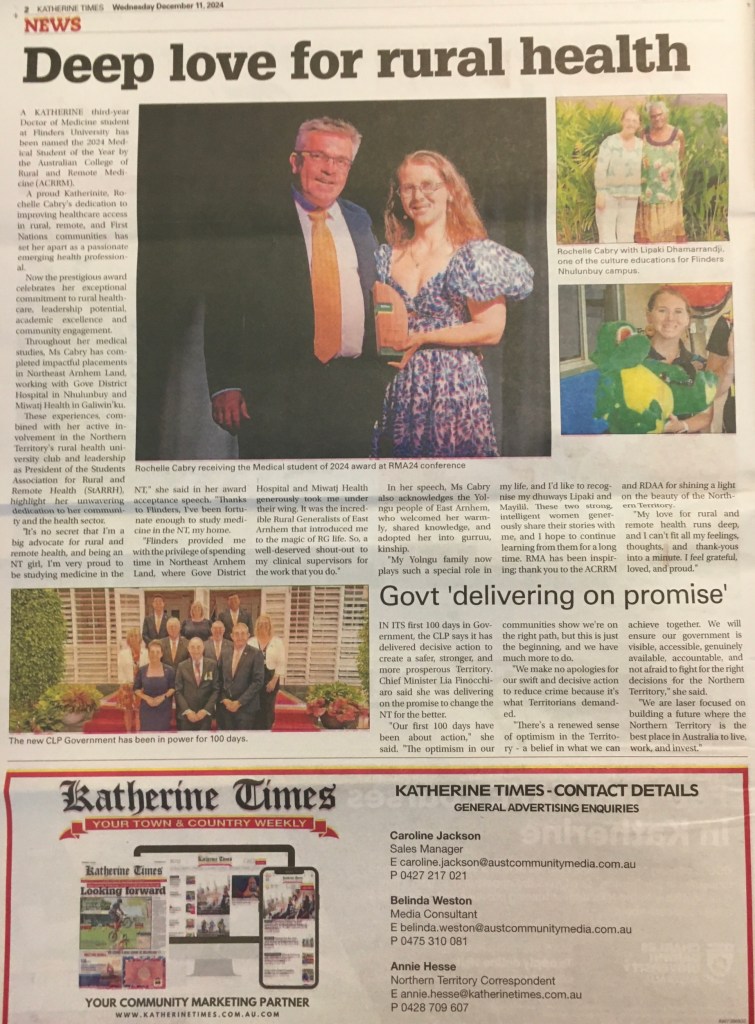
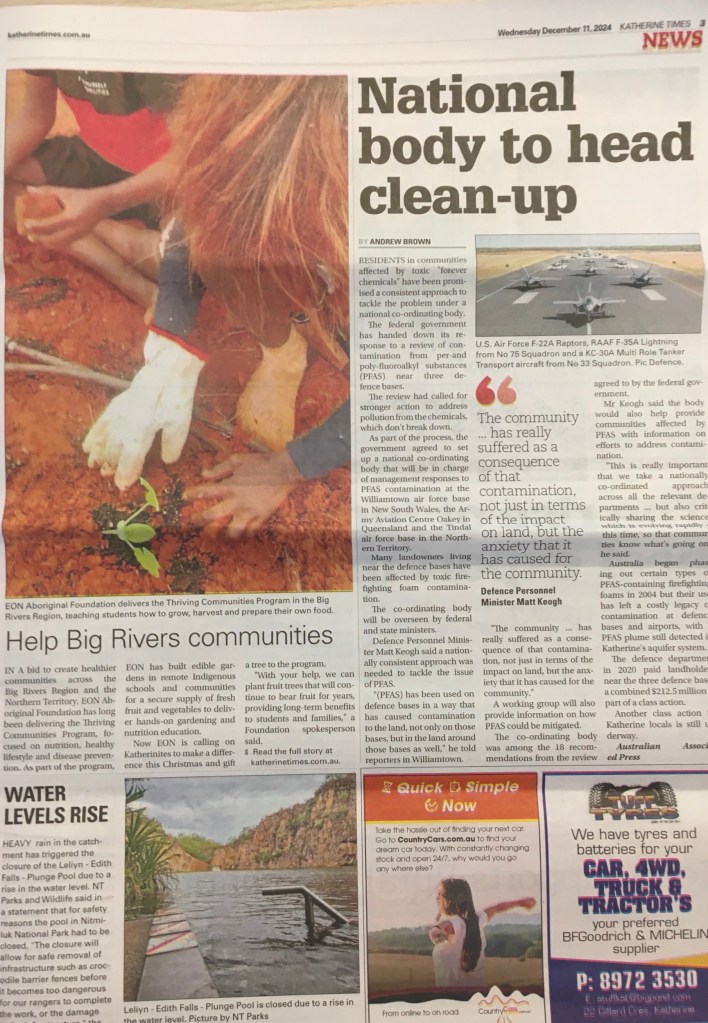
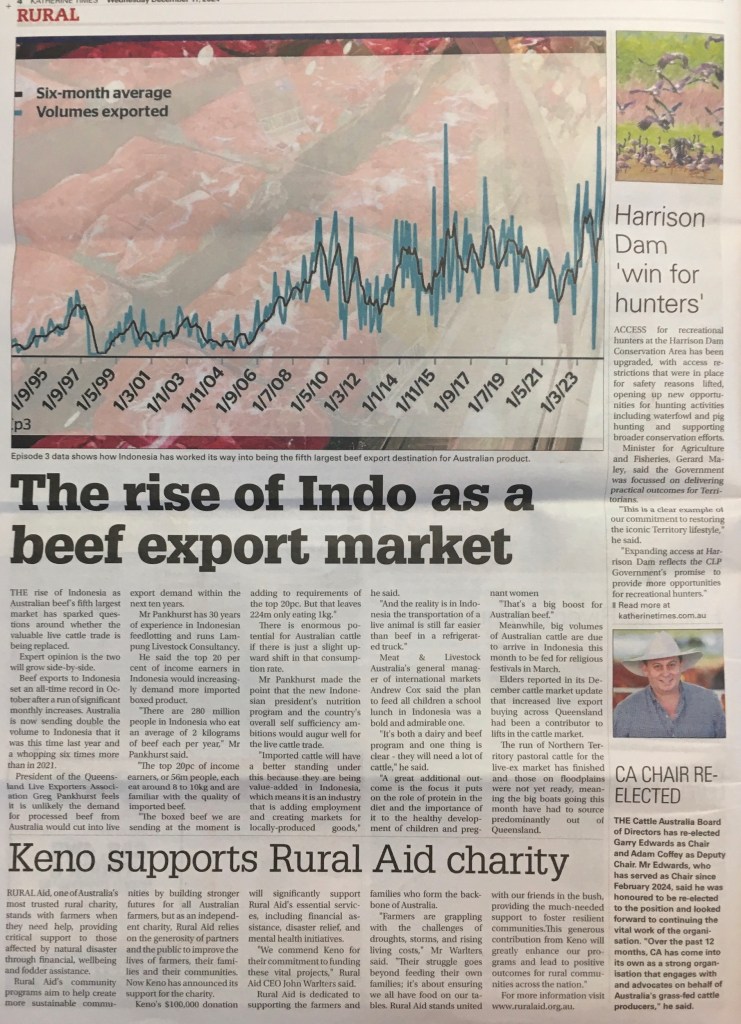
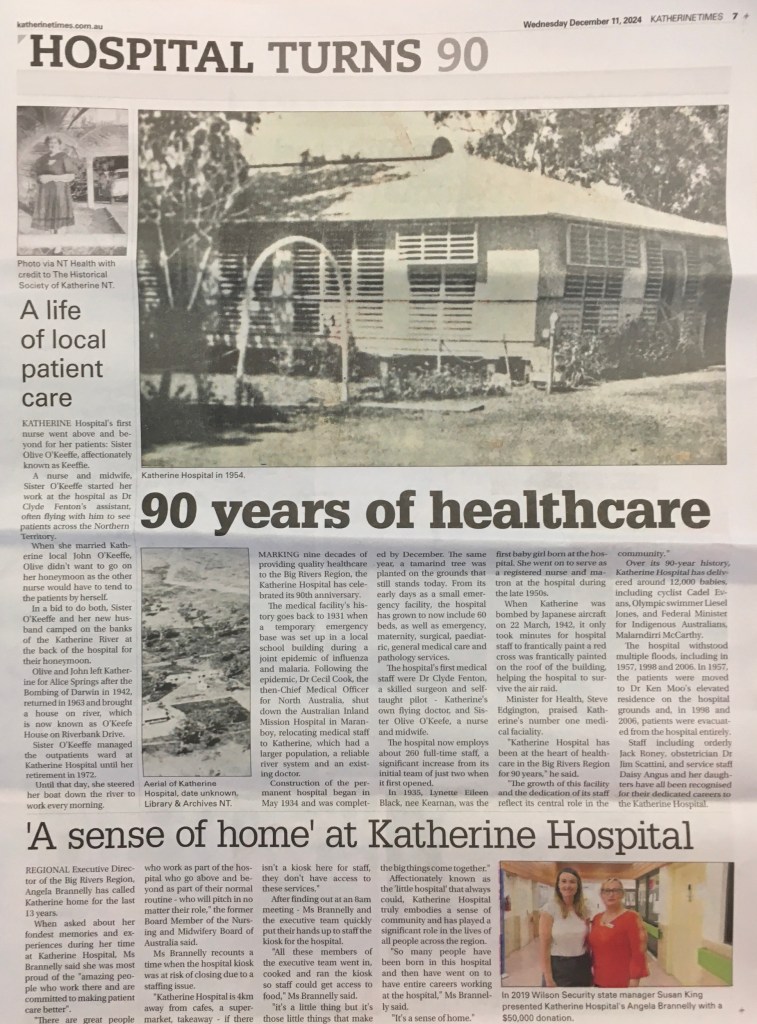
“Accolades for the Katherine Times” says Poor Old Henry

Katherine’s weekly newspaper, “The Katherine Times”, has defied the odds by continuing to publish each week. This paper has endured where many papers in regional towns around the NT and Australia have folded.

The Katherine Times, which sells for only $1.90 a copy is refreshingly local and a credit to the local management and reporters.

Below are pages from a recent issue that commemorated the Karjerine Regional Hospital celebrating 90 years of service to the community.

Credit where it is due. And congratulations to the paper’s staff, those acknowledged below.

Possibility/Probability

Local Government

  • There is a possibility and a quite strong probability that ratepayers will see elected councillors representing their wards only once every four years – when they are campaigning for re-election.
  • There is a possibility and a very likely probability that Councilnbudgets will prioritise Central Business Districts over the needs of suburban ratepayers.
  • There is a possibility and an almost 100% probability that councillors will not use the Snap, Send and Solve applications on their mobile phones. That will be left to ratepayers.

“Are you a leader, then consider the following”, suggests Poor Old Henry

IF A LEADER SEND STAFF FOR SPEECH DEVELOPMENT

Following my last share, I strongly suggest employers and managers consider organising speechcraft  (speech and speaking development) go-go programs for employees. 

These programs are available, and information can be sourced from online inquiries.

While some costs may be associated with such programs, employees will be appreciative. 

Their development of speaking and listening skills will enhance the organisation because of the improved way they present to those making contact with the company.

First impressions are lasting impressions. How customers and potential clients are greeted can add value to (your) organisation. In that context, everyone is a winner.

“Make the impression you leave. a good impression” counsels Poor Old Henry

DON’T DISCOUNT IMPRESSIONS SPEECHES MAKE

Those who are in leadership positions in organisations would do well to reflect on benefits that accrue when employees are careful, accurate speakers, careful listeners and accurate, empathetic evaluators of the efforts of others.

To this end, encouraging them to join organisations promoting these skills would be wise.

How employees present to the public and those with whom business is done can build goodwill and appreciation for the organisation they represent.

Those in organisational leadership positions often overlook this area of need. That should not be the case. 

Poor Old Henry on “speaking off the cuff”

IMPROMPTU SPEAKING

There is NOTHING better to support and assist in developing reactional speech response than learning to ‘think on your feet’ with spontaneous and rapid responses to a question, topic or general discussion.

This is an exercise that teachers can develop with students. It is an approach that can be used in workplaces or among group members to create fast response times to topics.

Responding to or speaking on a topic for up to two minutes without having time to prepare stimulates thought processes in often untried ways.  Having someone evaluate the impromptu presentation can help.  

People, when trying this approach, are nervous at first, but confidence grows. An impromptu speech is sharply stimulating cerebral processes.

Possibility/Probability

Academia

  • There is a possibility and a quite strong probability that sceptics will maintain that academics and PhD researchers are ‘microcosmic specialists’ – people who know a lot about nothing.
  • There is a possibility and a very strong probability that academics in their ivory towers lose sight of the real world.
  • There is a possibility and a proven probability that the academic world will deny what has REALLY transpired historically, to advance theories that are high on emotion, but totally lacking in truth and reality.  

“There is much to consider” advises Poor Old Henry

MORE ON THE ‘UM’ FACTOR

Ah’s’, ‘um’s’, ‘er’s’, ‘aw’s’, and other speech fillers diminish oral skill.  Consider the following as extending this tendency.

* ‘Okay’ at the start or end of sentences.

* ‘guys’ as a word of address to a mixed audience.

* ‘gonna’ rather than ‘going to’.

* Don’t overdo ‘so’, particularly as a never-ending joining word. 

* ‘could, could’ (double clutching)

* ‘I was, I was’  (double clutching)

* ‘Wh, when’  and similar double vocal movements.

* ‘and, um’; ‘um and so’; ‘you know’ ad infinitum.

* ‘um and or” ‘um it’s it’s …’.

* ‘aaaand’; ‘o   n   e’  (word stretching).

___________________________________________________

Poor Old Henry on speech fillers and unconscious habits

WHEN SPEAKING, NOTE THERE ARE MORE TO ‘UMS’ THAN ‘UMS

Interspersing speech with ‘um’s,’ ‘ah’s’, ‘er’s’, and ‘or’s’ is distracting and off-putting to listeners. These hesitations, space fillers and time grabbers can delight listeners. 

Indeed, some might divert their attention completely from presenters, listening for and noting each speech imperfection on some mental (or physical) tally sheet.  

Variations to the ‘um’ count include the following:

  • Beginning each sentence with ‘look’.
  • Interspersing ‘you know’ through the verbal speech text.
  • ‘Double clutching – ‘um, um’.
  • Using ‘and’ ad nauseam as a sentence stretcher and space filler.

The list goes on. ‘Listen’ when listening, and you will hear what I mean.

POH says to presenters, “be honest and genuine”

YOU CAN NOT ‘HOODWINK’ AUDIENCES

Some speakers and presenters may feel they can present with minimal preparation and a ‘winging it’ attitude, and that will not be noticed. 

How wrong they are! Empty rhetoric and hollow speech is fairly quickly recognised. Less-thank-polite audiences will let presenters know about content paucity while they are speaking.

In more academic and possibly refined circles, the audible response may not come.  However, audience members will make mental notes about the speech, and the presenter may be presenting to that particular group for the last time. 

Careful preparation is ever so necessary. Neglect is dangerous

GRAB BYTES – DECEMBER 2024 – 41 TO 50

COMMENT ON LOCAL NEWS

Poor and worsening state of urban roads

It is not only in Alice that we have work done that lasts but a short period before defects become apparent. Darwin has so many crazed roads, complete with patches over potholes to the extent of some roads looking like patchwork quilts. The serious and ever-deteriorating subsurface condition of most suburban roads creates bitumenised corrugations, making rides ever more bumpy and uncomfortable. As a regular road user, I am alarmed at the rapidly occurring deterioration.

Quality aged care after all

How wonderful and how different it is to read a story about aged care, about satisfied staff and happy, contented residents in a centre that has been remarkable for so long.  This story, for a 78 year old man, makes me wonder if there is a possibility of quality aged care – if needed – for people like me.

Health Facilities upgrqde at Ali Curung

It is uplifting and invigorating to learn about the programmed upgrade of health facilities—including recognition of care for the aged—in remote communities. With facilities provision, I imagine there will be opportunities for locals to be trained in health and aged care occupations. I hope the facilities being provided will be free from any structural decline that is not about fair wear and tear.

Thank you  City of Darwin Council workers

Our hardworking City of Darwin Council workers deserve a happy, relaxed, and work-worry-free Christmas and festive season. Thank you one and all for the great job you do maintaining and progressing life and living in our city and suburbs.

Driving a danger in Darwin

My wife and I go for regular drives around our city and suburbs. This helps with our awareness of what is happening in the place we have called home since 1987. We are driving on increasingly busy roads, where speed is rising. Giving way at roundabouts and sidestreets is not a given, and people rush onto roads, necessitating sudden braking. Road structure is also increasingly breaking down, with potholes abounding and sub-subsidence causing uneven, bumpy rides.  A bad drive is not a relaxing experience, particularly for the driver.

KPMG on a winner with Michael Gunner

P

KPMG will not be disappointed in their appointment of Mr Gunner. His capacity for work, background knowledge, and the in-depth experiences he has gained politically and post-politically will gel to make his contribution one of merit. As I am sure will be proved, he has a lot to offer.

Anthony Albanese comes to Darwin.

I feel both humbled and proud that our PM should grace our city with his presence on this occasion of special remembrance.

More on Anthony Albanese

I am glad that our Prime Minister saw fit to come to the NT, to share this day of remembrance and sombre reflection with us all. His empathy and care are fine qualities.

The ADF needs a rebuild and realignment

The ADF has to get its priorities right. Australia, its near neighbours, and more remote areas of need must be prioritised in this matter. Above all, the ADF needs to upgrade its military assets and recruit the thousands of personnel needed to restore our services to the active and influential forces they once were.

The Bradshaw Farm is on the market

This wonderful property is steeped in history and will be an excellent purchase for someone or a group that appreciates the depth and breadth of its history and contribution to the NT.

“Learn from studying others” says Poor Old Henry – 5

OFFER TO IMPROVE OTHERS (Presentation skills)

A genuine collegiate support for presenters can be the clear and unbiased feedback offered to them by a colleague or professional friend. Offering to evaluate might be a tactic; similarly, the presenter may ask a colleague to assess their presentation.

Oral feedback is valuable and is aided if supported by written comments. These might be critical points, with both methods aiming to offer the presenter a chance to improve delivery. 

Part of this should be recognising strengths (offered as commendations) and commenting on arenas needing development (offered as recommendations).

Reflection is supported by evaluation.

“Learn from studying others” says Poor Old Henry – 4

SELF STUDY AND IMPROVE  (‘Traits’)

I am a member of Toastmasters. Many years ago, a fellow club member offered to video several of us presenting speeches for evaluation.  Part of the evaluation was a study of the video he took as we gave.

I thought I’d made a fair fist of my speech. When the video of my presentation was played back, I discovered (along with everyone else) several ‘anomalies’:

  • I overly shuffled, and the movement was out of sync with and detracted from my presentation.
  • I scratched my posterior on two occasions.
  • I once picked at my nose.
  • Several times, my eye movements were out of context and did not support my trying to reach the audience through eye contact.

Without the video revelation, I would have been unaware of these unconscious actions.

Nowadays, videoing on mobile if using an iPad simplifies the whole process. My suggestion is that readers consider having someone video presentation for the sake of weakness awareness as a precursor to improvement

“Learn from studying others” says Poor Old Henry – 3

STUDY OTHERS AND IMPROVE (Gesture)

Those presenting on or for television should not undervalue gestures. Movement of arms, hands, head, neck and other body parts can help by emphasising what speakers, be they presenters, questioners or respondents, are saying.

Without gesture, those appearing on our screens can appear to be almost un-alive and inanimate.  Too much motion, be it pacing, flapping of the arms, or overusing the forearms, hands and fingers in making points, can be distracting.

We can all learn from what we see. We also know what to do by becoming aware of what not to do and by visiting the ‘don’ts’ in others.

“Learn from studying others” says Poor Old Henry

STUDY OTHERS   AND IMPROVE (Eyes)

When watching television, presenters and guests consider how their eyes and eye movements play in focusing on their messages.

Looks can be manipulated and controlled to show happiness, joy, concern, grief, decisiveness, hesitation and  in-between moods.

Consider that when talking with others, be that on a one-to-one basis through to significant audiences, our eyes help tell the story. 

Watchers and audience members remember eyes. They are organs of message reinforcement. 

Keep them attentive and make them live, supporting you as a communicator.

POH suggests that as speakers and presenters, we can learn from the presentsations of others

Note: The following few snippets are offered from listening to presenters on the radio or viewing them on television. There are parallels to be observed and appreciated in a live audience context.

STUDY OTHERS AND IMPROVE (Voice)

When watching television or listening to the radio, listen intently to what is said and how the presenter appears on the screen.

Consider their speech from the viewpoints of pitch, rhythm, tone and intonation.

Does the voice catch on and engage you, or is the style a turn-off?  How vocal qualities engage (or disengage) listeners is ever so important.

Think about what you are hearing and make mental notes about the example this presenter or speaker is offering. 

Studying others can help reflect upon the need for personal awareness and self-improvement.

“Don’t be a high horse presenter” cautions Poor Old Henry

HIGH AND MIGHTY

There are far too many presenters who are quietly regarded as ‘know-alls’ – and not in a particularly complimentary manner.  

They may well be very knowledgeable in their fields.  However, if they present to their audience in a ‘high and mighty’ style, the respect that might be theirs for a more wholesome and humble presentation will be lost.

How a presenter relates to their audience is of absolute and paramount importance.

Revisiting Speech and Speaking – POH advice

KNOW YOUR SUBJECT

As a presenter, particularly if you have been given preparation time, know your subject. If you don’t know your subject, it will become clear to the audience that your knowledge is stretched.

Restlessness, fidgetiness, looking uncomfortable, visible sweating and other visible manifestations will become giveaways. 

Eye blinking and throat clearing might become part of the reaction, all too visible to the listening group.

‘Subject stretch’ will bring out uncharacteristic ‘ahs’, ‘ums’, ‘you knows’ and so on in an altogether uncharacteristic manner.

There is a lot to be said for being prepared.

___________________________________

Poor Old Henry’s end-of-year reflections

Dear Bloggers one and all

I would like to wish everyone in our blogging world and your families and friends all the very best for Christmas and the New Year.

If not an adherent to this period in spiritual terms, then allow me to offer every good wish for the festive season.

We are coming toward mid-day in Australia’s Northern Territory.

Every new day begins around Samoa – at Millenial Island. Samoa is in the mid-afternoon period of December 25. 

Around 100 kilometres away, the time at Pago Pago in American Samoa is 2.08 pm on Thursday 24 December.

It is interesting to contemplate Samoa on the downhill run on Christmas Day, while its American neighbour is a good nine hours away from celebrating the start of Christmas Day.

I sometimes wonder if it would be possible to straddle the International Date Line, with one foot in today and the other in yesterday; or one foot in today, the other in tomorrow?

Fast forward a week and contemplate the positioning on one foot in 2024 – New Year’s Eve, and the other in 2025 – New Year’s Day.

Permutations are such interesting concepts with which to play.

All the best to everyone for the reflective time of 2024 and the anticipation we may have in contemplating 2025.

Regards

Henry Gray

December 25 2024

Poor Old Henry shares more of the Coolalinga Shopping Centre internals

Twenty years ago, Coolalinga was a small town on the outskirts of Darwin and Palmerston. How time changes placres. It is not a throiving metropolis but it is a town of hundreds of people with flats, tenements and houses being built aroubd a shopping centere three or four times the commeentcial and retail size of 20 years ago.

I like shopping at Coolalings. But give it another 20 years, and the place will be crawling woith people as is the case with our shopping precincts in Darwin.

Below are more shops in the centre, a small component of what is there.

A great place to shop and eat.

Please Ponder – 2

From watching the news, reading the paper, listening to commentary, studying the actions and responses of state and federal governments, reflecting on police reaction and taking account of all that has happened since October 7 2023, I can only conclude that the Australian official  position is pro-Palestine and anti-Israel.

Possibility / Probability

The downsides of the festive season

  • There is a possibility but an almost zero probability that people will spend within their means in this period leading into Christmas.
  • It is possible and 100% probable that people will gift cats and dogs to others this Christmas.
  • There is a possibility, and unfortunately, a strong probability, that disunity and acrimony will prevail in some households when the post-Christmas reality of penury and debt sink in

Poor Old Henry shudders at how people can do this!

On an idyllic drive to a local beach loved by locals and patronised by tourists – to find furniture, fittings and white goods dumped by those too lazy to visit the rubbish tip, is beyond my comprehension.

How can people be so vile, almost malevolent as to treat our environment in this manner.

And it has been there for a considerable time.

What are we coming to as people in this place to both dump then ignore this despoiled garbage.

Possibility / Probability

Government dreaming

  • There is a possibility but not a strong probability that the Reserve Bank will cut the interest rate by 1.0% in April 2025.
  • There is a possibility and a 60% probability that the Reserve Bank will increase interest rates before any decrease occurs.
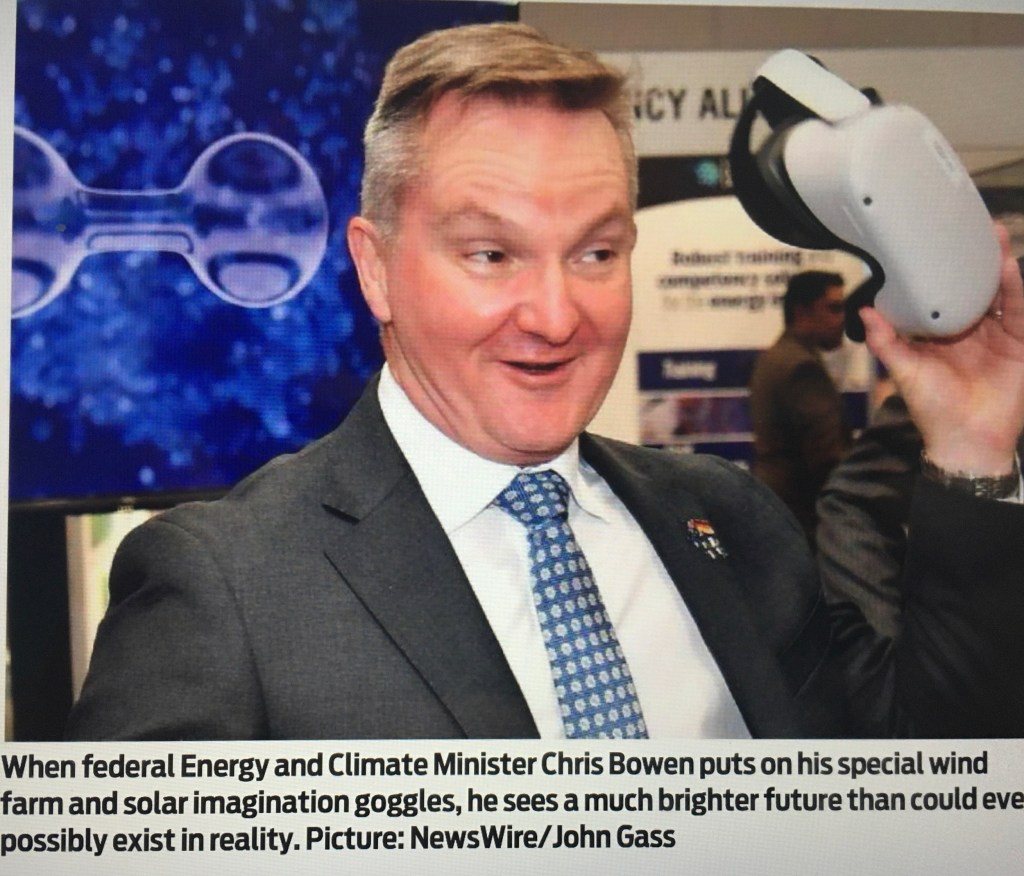
  • There is a possibility but very little probability that Australia will become 100% dependent on renewable energy generation by 2050. That ambition is but a pipe dream.

Possibility/ Probability

Deferences and priorities

  • There is a possibility, and sadly, a strong probability, that messages like this taken from the end-of-year message to organisational members will continue to perpetuate and grow like Topsy. Congratulations on making it through to the end of such a challenging year! We wish those who celebrate a Merry Christmas and Happy Holidays to those of you who do not. 
  • There is a possibility and a strong probability that ambulance services are prioritised for some people over others.
  • There is a possibility—and a high chance of probability—that emergency departments at hospitals will prioritise treatments for patients who have deliberately afflicted themselves—through avoidable behavioural outcomes—over those whose conditions were unavoidable.

POH and suggestions offered those to whom English was a second language – 2

WORD USAGE AND PRONUNCIATION

More things to watch:

*  ” One group, two group” should be “one group, two groups”.

*  “How many groups are need?” should be “How many groups do we    need”

*  “You can do it” (statement) should be “Can you do it?” (question) when asking children if they are up to a particular challenge.

* “Do amount” should be “Do the amount” …. of work.

* “I am looking for people who is working.” Should be “I am looking for people who are working.”

*  “Finish?”. Should be “Have you finished” or “I have finished”.

POH and suggestions offered those to whom English was a second language 1

WORD USAGE AND PRONUNCIATION (2)

Some things to watch:

*  Your pronunciation and use of ‘sh’ – you tend to go to ‘s’ with words.  

*  The need to be aware that some words (i.e. ‘sugar’ are said as ‘sugar’ although they are spelled without that sound (sh) being emphasised.

*  Similarly with ‘cl’ i.e. ‘in the next class’, not ‘in the next cass’.

*  Similarly with ‘th’ i.e.’ thirty centimeters’ not ‘tirty centimetres’.

*  Sometimes you miss plurals, i.e. ‘use your coloured pencils’, not ‘use your coloured pencil’.

*  “How many we need?” should be “How many do we need?”

POH on speech and speaking, then and now

TODAY, IT WOULD BE COUNTED AS DISCRIMINATION

I come from an era when those trained as teachers had to model correct speech to students.  This included pronunciation, diction, word choice usage and overall clarity.

Part of our training was that speech imperfections (i.e. ‘rabbits sun wing around Wocks’)  had to be overcome before graduation. For those with speech and speaking challenges, corrective and elocution sessions were offered.  They were free and compulsory.  

It was deemed that teachers who were to teach students had to, for example, correct speech and speaking. 

We have moved far from those days, but I still think what we were offered was invaluable. 

POH on pronunciation

WORD USAGE AND PRONUNCIATION (1)

In a role with Charles Darwin University, I was working with many International Students. Most were undertaking one-year Graduate Diplomas in Education.  Part of my role was to observe them in classroom teaching situations, advising them on teaching methodologies and voice usage. Some of my points with group members over time are included below. They tend to be points of pronunciation and speech application that need a little attention.   I have these points as they build up over time to become a statement of things I could share to watch.

Poor Old Henry is sad about about schools no longer being open and inviting

Schools and the Fortress Mentality

It is a sad thing that open environments, once a feature of child care and school precincts are being consigned to history. Fenceless, physically borderless boundaries have all but gone.

Schools started off  with outer perimeters marked by knee or waist high fencing that was no more than railing stretched between vertical uprights. However, more and more have fences being upgraded to two metre plus high, impenetrable barriers. All are aimed at protecting schools from damage and vandalism.

A sad thing for schools is the need for this fortress like mentality. Students and staff members shouldn’t be confronted with teaching and learning environments surrounded by two metre high fences. They should not have to go through gates that open in the morning, are locked at night and require pass keys at other times. They should not have to walk around school precincts under the survelliance of CCTV cameras or sit in classrooms where security systems are turned on after hours in order to afford protection. They shouldn’t have to enter and exit classrooms through doors with double locking and deadbolt systems in place to secure against unlawful entry. Neither should they be made to feel like prisoners, looking out from classrooms through windows reinforced with security mesh.

Teachers and students leaving schools at the end of each day, wonder whether violation occasioned by unlawful entry will occur overnight, at weekends or during holiday times. Will walls be graffitied, windows smashed, doors forced, rooms trashed and property stolen? Worrying about the susceptibility of workplaces to violation is always on the back-burner of thinking.

Ironies

An irony is the apparent reluctance  of some school leaders to follow through on issues of wanton damage to premises and property. That may have to do with school leadership groups somehow feeling a misplaced ‘shame or blame’ for these happenings. The fact that schools are broken into is not their fault.

The issue needs to be aired in the public domain. Offenders should  to be dealt with in other than a trivial fashion. They are fully aware of what they are doing and deserve to face realistic consequences.

Students and staff who are the victims of property crime need to know that offenders will be dealt with appropriately, not handled with kid gloves and let off lightly. 

Schools used to be happy and open places of learning, not enclosed fortresses separated from their communities by security devices. Sadly, that era has been consigned to history and may  never be restored.


Poor Old Henry extols the need for children to have peace of mind

SUNS   10   2019   278

CHILDREN NEED REASSURANCE IN UNCERTAIN TIMES

We are living in an increasingly volatile and unpredictable world.  Safety and security are paramount issues and frequently the centre of conversations.  

Terrorism is increasingly global and no country or region is guaranteed as safe from its impacts. The Christchurch massacre on March 15 showed that to be the case.

Questions about safety and the uncertainty of security affect both adults and children.

For children, one of the most significant impacts has been the requirement that schools develop lockdown policies. Policies are periodically drilled for the sake of awareness so that if schools are under threat they can be safely implemented.

Children of all ages are very aware of what is happening in the world. ‘The good, the bad and the ugly’ elements of life are constantly brought to their attention through media and by listening and contributing to conversations. 

Sarah Parry and Jez Oldfield  wrote that  “While adults often have enough life experience to … take a long-term perspective toward such disasters, children can face different challenges.” ( How to talk to children about terrorism, The Conversation, June 5, 2017.) Events such as the Christchurch massacre cause children to “… experience much higher levels of distress than usual. … this can include aches and pains, sleeplessness, nightmares, … (children) becoming very snappy … withdrawn … not wanting to be separated from their parents.” (Op cit)

Shielding children from confronting reality does not work and is an unhelpful strategy. Parry and Oldfield write that “… young people today are exposed to anxiety-provoking information like never before. Rather than shielding children from inevitable stressors, we need to focus on arming them with balanced information, compassion, hope and the chance to develop their resilience.” (Op cit)

Rather than hiding the horror of terrorism from children, frank discussion, including answering their questions, is a wiser approach. Parry and Oldfield suggest the following strategies.

  • Ask children how they feel about what they have seen or heard. Then address their feelings.
  • Remind children that helpers of those distressed are the real heroes. Discuss their bravery, decency and morality.
  • Be conscious of the need to “ … enhance children’s confidence, sense of bravery, ability to problem solve and develop their moral compass” through empathetic and understanding parental support.
  • Sorting the truth from myth and misinformation that circulates after tragedy, helps children keep things in perspective.
  • Be conscious of the need to reassure young people about parental and adult care for their safety. Parry and Oldfield (op cit) offer wise words. “ Being able to reassure young people that they are safe, loved and cared for can make all the difference.” 

These considerations are paramount in helping children during uncertain times.

GRAB BYTES DECEMBER 2024 – 31 – 40

COMMENTS ON LOCAL ISSUES COVERE3D IN THE NT NEWS

Gas  issues

It would be wonderful if gas exploration and production issues could be based on rational reality rather than emotive hype. Separating fact from fiction on carbon capture and storage issues is becoming more complex and evermore unfathomable.

The Susantos Siblings

This is a wonderful and uplifting story. Thank you for sharing it with your readers. We need more positive stories – and there are plenty from which to choose – to help balance the negative side of the youth repporting equation.

Domestic Violence escalating?

It seems that the greater the emphasis on awareness and the increased level of funding applied to help counter the issue, the more significant and more alarming the reports of domestic violence occurring within our community. With all the extra support in both personnel and monetary terms, why is this escalation happening?

Welcome to the Bali Five

P

How lucky we are to have our PM supporting the campaign to grow the NT population by sending these five people to Darwin for housing and other support. I imagine he could be planning to meet them during his visit here on Christmas Day.

Coastwatching is a priority

May this upturn in surveillance continue and never again be diminished because of an unexplainable—and foolish—lowering of this very necessary ‘watching’ priority.

P

Forgiving criminal behaviour 

It seems to me that letting go and forgiving the offenders in this case, is an unwise choice. I imagine the grapevine would confirm details about the culprits if tapped as a source of u information. Dripping this case could well stimulate further criminal activities by those involved and by others. “Home free” should never be an option.

On hoons tearing up the Palmerston Golf Course

What is needed is some olden-days tap. That certainly discouraged recidivism. In these modern times, we have to be kind, gentle, empathetic and understanding of those committing criminal acts. And don’t these miscreants just love setting their nightly agendas of mayhem and destruction.

Crime in the NT

It is both sad and alarming that so many people, upon realistic—and not idealistic—reflection, have come to recognise crime and its consequences as the number one social driver in the NT. With all the construction, development, marketing, positive social activity, and promotion, the burdensome underpinning of escalating crime is dragging us down to levels of mediocrity we do not deserve.

Career opportunities at Pine Gap

This will be an excellent career opportunity for whoever is successful in applying. This call for security confirms the strong liaison between Australia and America, for, without that trust, applications for positions would not be invited from within the NT.

$11 million police precinct not operating with any effect

I can only hope the situation will be resolved. It is ludicrous to think of this huge police facility across the road from businesses contemplating closure because crime is beyond control. This begs the question of WHY the previous government spent $11 million on a facility that is either not wanted or cannot be staffed.

Poor Old Henry lauds Specsavers of Leanyer

Credit and recognition where that is due.

Specsavers are the best. Ten out of ten for thoroughness, careful explanations, and genuine care for clients. Personalised attention is second to none and is supported by impeccable and accurate records. Every attention is given to ensuring a perfect fit of purchased spectacles. I cannot speak too highly of the dedication and care offered by Specsavers staff at Hibiscus Shopping Centre in Leanyer.

Teacher training from yesteryear

PREPARING THOSE WHO WOULD TEACH – A Need to Revisit Yesterday’s Practices

Posted on March 11, 2013, on my blog

PREPARING THOSE WHO WOULD TEACH

A lot of teacher quality is being discussed in the community and reported in the media. The soul-searching and almost daily comments around Australia and the Northern Territory are futuristic and forward-looking. In looking forward, those responsible for teacher preparation must reflect on past teacher training practices, revisiting and including some of the critical elements in our 21st-century teacher preparation courses.

Historical Priorities

My teacher training dates back to 1968 and 1969 at Graylands Teachers College, a post-second-world-war collection of Nissan Huts with a few added-on buildings, in Perth, WA.

At that time, two-year training programs were being phased out and replaced by three years of training. As a mature age student, I was required to be one of the last two-year trainees.

Fast forward nearly sixty years and no one gets to graduate as a teacher without a four-year degree or a Graduate Diploma in Teaching built onto a pre-existing degree. The difference between training then and now involves more than course length.

You would think the extra training would lead to better teaching on graduation. Not so. In those past years, trainees were taught to teach and were properly readied for the classroom. These days, it’s often a case of degree-qualified teachers being readied to take up classroom positions without the methodological awareness training they need to enter the profession confidently. High-level academic qualifications do not necessarily translate into excellent teaching skills.

While the world is more complicated than fifty years ago, what is required to be a good teacher stays the same. Subject knowledge, a sound understanding of teaching methods and the ability to ‘model’ as a teacher dealing with children were essentials when I trained – and should be the same today.

The needs remain, but I worry that critical teaching and preparation methodologies are insufficiently stressed. Rather than prospective teachers receiving that understanding while in training, they graduate with degrees and, as neophytes, are expected to acquire practical teaching skills and dispositions upon full-time entry into classroom teaching positions.

Teacher Training in the Sixties

In the 1960’s, trainees at Graylands undertook the following studies:

* Educational Theory and Practice, a detailed unit that occupied two years.

* Teaching Methods for key subjects were also conducted over two years. Key subjects included English, Mathematics, Psychology, and Social Science (including history and geography). The teaching method included consideration of Junior, Middle and Senior Primary students.

* One-year courses during the two-year program included Social Institutions, Science, Art, Craft, Music, Oral English, Physical Education, Health Education, and Drama.

* Students had to undertake one major and three minor electives relating to teaching and involving research and formal recording and documentation. Nature Study, further investigation of Education Theory and Methodology, Creative Writing and Historical research are examples of optional studies.

* A compulsory one-year course in Arithmetic set at Grade Seven level had to be satisfied. This included an exam which had to be passed before graduation. Those failing had to re-study, re-sit and pass the exam before satisfying training requirements.

* A compulsory one-year Spelling course had to be passed. Trainees sat a test during which 100 words were administered—a pass required 99% (i.e. one mistake only allowed). A cross out and re-write of a word so it was correct was deemed a ‘mistake’. Students failing this and Arithmetic had to re-sit the exams later.

There were other requirements.

* During the two-year course, students had to attend lessons taught at demonstration schools. They had to observe and then discuss lessons with demonstration teachers. They then had to write these lessons in a Demonstration Book in a reflective manner that indicated their developing awareness of teaching pros and cons.

* all potential teachers were given a reading and oracy task at the beginning of their two-year program. Those who were assessed as being other than fully competent readers and speakers were required to attend speech and diction classes aimed at developing these skills. This was seen as necessary because classroom teachers were models for their students.

Practice Teaching

* Students undertook a practice teaching round (teaching practicum) each term. Duration increased from the first practice of one week to the final practice of one month. Each student went out on practice teaching six times during their two-year program, in different school types and at varying grade levels.

The practice school and the training college rigorously assessed trainee teachers. At the end of formal observations, both oral and written feedback was offered to the practice teacher. This focussed on lesson content, teaching method, and vital supplementary of classroom control (management) and student assessment.

At the end of the practice, a Teaching Mark was awarded to each student. They took this to the next practice, with the challenge of consolidating competencies to ‘grow’ the person as a preservice teacher. Evidence of growth sustained or added to the teaching mark, but backward movement reduced that evaluation.

Graduation

To graduate, students had to pass all subjects. They also had to attain a C-level Teaching Mark or better. Those failing in this requirement might be awarded a Conditional Teaching Certificate, requiring the deficit to be made good and the certificate confirmed within the first teaching year. If this did not happen, the teacher’s employment would be discontinued.

Of the various courses I have undertaken over time, attaining my Teacher’s Certificate was by far and away the hardest of these studies. 

Along with other students (there were some 230 from memory in my course, including quite a healthy percentage of men) I often wondered at the need for the course to be so rigorous and often so fatiguing.

Over the years, I have come to bless the training I received for its focus on both rigour and emphasis. Teacher training was character building. Not everyone stayed the course. However, the attrition rate was not huge because, prior to entry, all aspirants were psychologically tested and evaluated for suitability to undertake the training program.

Without doubt, the focus and the quality of our training helped, for we were solidly prepared for entry into schools and classrooms. 

Our preparation for this vital profession was based on a solid foundation.

I don’t disrespect modern day teacher preparations by Universities and Colleges of Advanced Education. However, there is room for the solid foundation received by those who trained yesterday to be revisited in these modern times.

Henry Gray

March 11 2013

And where are we in 2024? Further than ever behind the eight ball when it comes to preparing teachers to teach.

Sent from my iPad

“Vocal vibrance is important”, suggests POH

BORING, BORING VOICE

The syndrome ‘boring voice’, associated with monotone expression, is a habit into which it can be easy to lapse. Keeping one’s voice interesting, vibrant and in resonance territory is essential. This is especially the case when topics are seriously challenging. A monotonic voice is a surefire shut-off, negatively impacting listeners’ comprehension.

Nasalisation, speaking through one’s nose, can be equally off-putting to listeners. At the same time, cultural and dialectic differences impact nasal speech, so aiming for pronunciation to be as clear as possible is essential.

Facing the audience can be easily overlooked. When speakers move, speaking side on or even back on to the audience can happen. This is a presentation characteristic that must be avoided.

____

“When speaking, remember punctiation”, says Poor Old Henry

PUNCTUATE SPEECH

When speaking, insert punctuation so the audience ‘hears’ commas, semi-colons, and full stops. This is achieved through pause, which adds the emphasis that punctuation is about.

Pause is a way of emphasising essential points that have been made. To pause gives listeners a brief reflective space. In that context, ‘pause’ is a way of emphasising elements of speech.

‘Inflection’ is a way of building emphasis and highlighting points that are being made. This adds to the vibrancy of speech and triggers listening reception that helps to make points ‘stand out’ in audience comprehension.

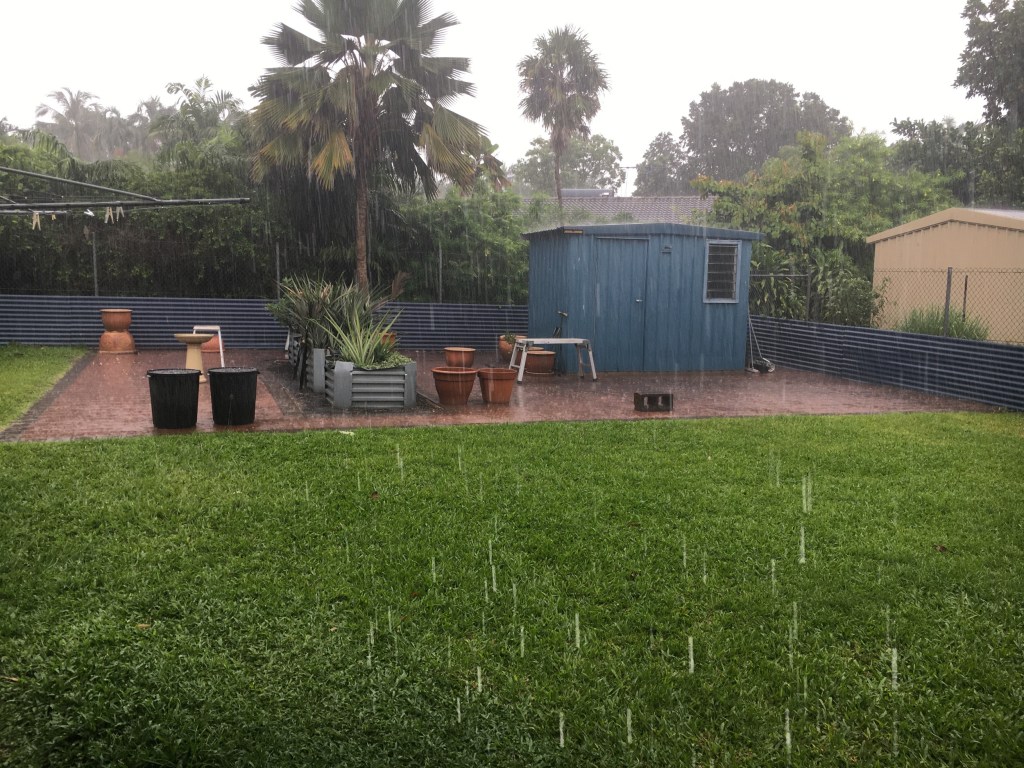
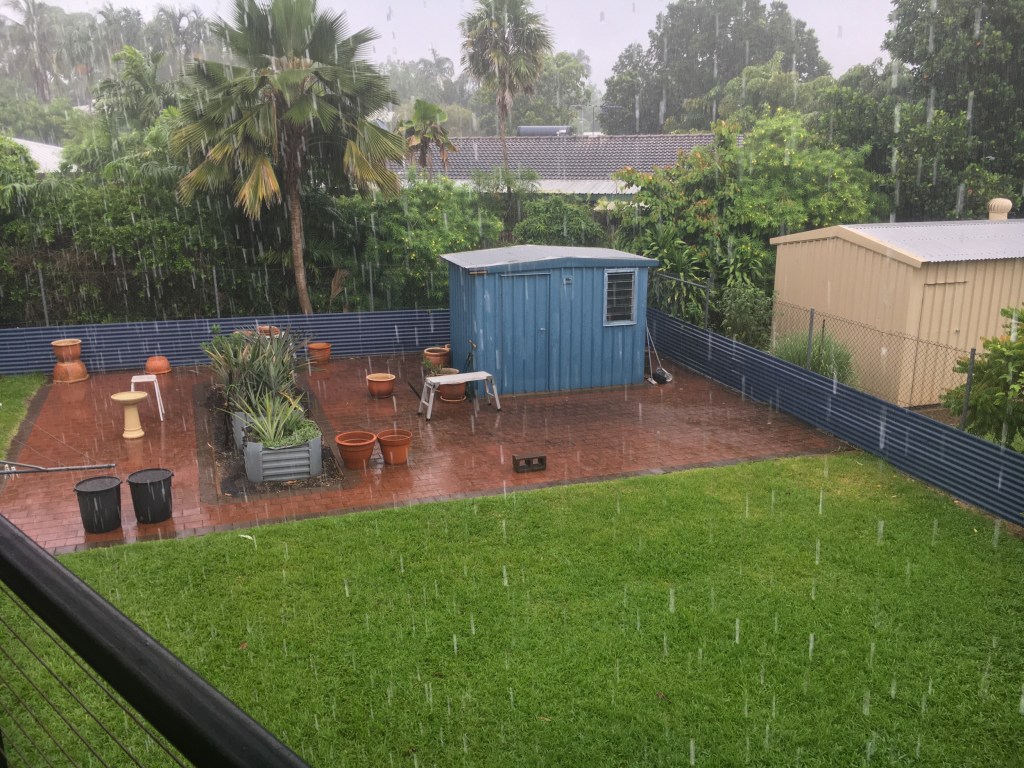
The demise of the doll left to the caprices of tropical rain

The fate of the wooden doll

Miss Polly had a Dolly that was sick, sick, sick,

She called for the doctor to come quick, quick,

The doctor came running just as fast as he could,

“Your doll’s got a problem – its head’s made of wood.”

Polly looked at the doctor and she said,

“Should I put poor Dolly to bed?“,

“It’s too late“, said the doctor “She’s turning to dust,

Cause she has termites in her crust.” 

Holly wept and wailed, threw a tantrum and howled,

Mummy got cross and Daddy growled,

“It’s too late to feel sorrow, sadness and pain,

“‘Twas you who left Dolly to soak in the rain”.

GRAB BYTES DECEMBER 21 – 30

Illegal arrivals

Illegal aspirants and the ADF are playing a game of ‘cat and mouse’ when it comes to boat arrivals and intercepts. Defence, when funded properly for surveillance operations, had the upper hand in the issue. I do not think that is now the case—we should expect an ever-increasing challenge from people smugglers wanting to make landfall on the Northern Australian coast.

CBD Development in Mitchell Street

P

This development is both mind-boggling and jaw-dropping in its appeal to the imagination. Without a doubt, Darwin’s CBD, which has experienced more than its fair share of downsides, has turned the corner, and things are looking up. May this new wave of positivism and prosperity continue into future years and decades.

Tivan is outstanding

Tivan’s audacious enterprise and positive approach to mineral extraction in the NT identify it as being managed by purposeful, practical, imaginative leaders who test and consolidate approaches, ensuring the company is building on a solid foundation.


Leave Tamboran be

Environmental groups are generally hasty in initiating processes that thwart economic development. That is the case in this instance, for Tamboran has bent over backwards to ensure compliance with all rigid expectations. It seems that these groups exist only to create confusion and discord.

Construction industry on the up

P

This new and exciting development will greatly bless Darwin and fill a significant accommodation void. We are blessed to have our construction industry returning to an exciting period of expansion, both within the CBD and through the suburban housing complexes under construction.

Luke Gosling

P

This successful funding application is just one example of the success our Federal Member for Solomon, Like Gosling, has had in eliciting funds from Canberra for necessary Darwin projects. He represents his electorate and constituents with indefatigability, carefully researching and presenting our funding needs. We have been blessed to have him as our representative in Canberra.

Coastwatch in the North of Australia

It’s better late than never in upgrading this surveillance, but funding for coast watching should have never been curtailed in the first place. Australia has again become an attractive magnet for illegal fishers and people smugglers. The Albanese Government has been failing this program since its election in 2022.

Social Mayhem and out of control crime in the NT

In 1976, the Department of Education commissioned a study, undertaken over two years, by Mitsuro Shimpo, a visiting overseas scholar. During his research, Dr Shimpo visited almosr every remote community in the NT, some of them twice. His report, ‘A Social Process In Education,’ predicted what the future might hold if communities AND PARTICULARLY PARENTS did not take responsibility for the upbringing of their children. They didn’t – and now we have the social mayhem confronting the NT.

Ships ahoy!

This commissioning is excellent news. I hope the four ships, each with a forecast of 20 years of service, will enhance surveillance and defence capability in our northern waters and further afield.

Gosling on the wrong political ship

Sadly, I have realised the ‘double jeopardy’ situation with which we are confronted federally. Luke Gosling is an outstanding politician who has runs on the board because he fiercely and consistently represents territory needs. But the Albanese Government is the worst government we have had since the Whitlam era. So, for whom do I vote?

NNN NOOOOO

Don’t you know 

It is a sin,

To put your rubbish

 In another’s bin.

You lift the lid

Surprise? Surprise 

Big mobs of maggots

Soon-to-be flies.

Plus all the smells

Your senses stretch

No wonder then 

You retch and retch.

The sight the stench

Will rot your sox

‘Cos you opened

Pandora’s box.

Another truism

In the emergency department

Of a hospital

There are patients being treated for;

Organ failure

Drug overdosing

Car accident injuries

Weapons injuries

And a host of other things

Most patients

Whinge and whine

Swear and curse

Yell loudly for attention

Become demanding.

A very few

Are compliant

Appreciative

Value the support received

And say ‘thank you’.

Poor Old Henry on the length of speeches

TALK TIME

Keep speeches and presentations short—ideally, no more than 25 minutes. Long and ongoing presentations turn into rambles. Audiences turn off and begin clock-watching.

Choose words carefully. They need to fit the audience profile. Presenters should avoid talking up and talking down to audience groups. This will happen if the audience type or group is researched, a hallmark of respect for listeners.

When speaking, make whole sentences impactful. Please don’t fade away toward the end of sentences, and don’t clip statements in a way that reduces their impact and meaning.

Poor Old Henry goes back to the beginning of 1970

MY FIRST DAY -AND YEAR- AS A TEACHER

Tell us about your first day at something — school, work, as a parent, etc. 

The first ever day of my full time teaching experience turned out to be pupil free, by accident rather than by design. It is a day now over half a century old I will never forget.

Warburton Range School Headmaster, Bruce Goldthorp, an educator with seven or eight years of teaching experience, was on his first day in the role of headmastership. As he lined the students up, a kerfuffle with beginnings outside the school yard, quickly entered the school precinct. It transpired that one of the older students (1) had told another that her Father had snakes in his legs. Her Father in fact had very visible and prominent varicose veins in his legs. This ‘observation’ was part of an altercation that had occurred some time prior between the two students.

This comment was relayed to her Father who took umbrage at the deep insult. With his weapons to hand, he and his family came into the school yard, seeking retribution on the utterer of that comment. She took off, into the school and up the classroom connecting passage, being chased by the offended father and family. The family of the girl who had made the comment became alerted to the dispute and with appropriate weaponry (no firearms were involved) began chasing after the offended family.

The end result of this situation was a scatter of all students, first as spectators to the event, which rapidly moved from the school yard and into the community, thence into the distance. There was no school that day: Our first school day of 1970 at Warburton was the second day of the school year.

The first day of a first year of decades of teaching.My first diary and some pages of entries.

SHARE THIS:

POH suggests that there is more to speaking than just speaking

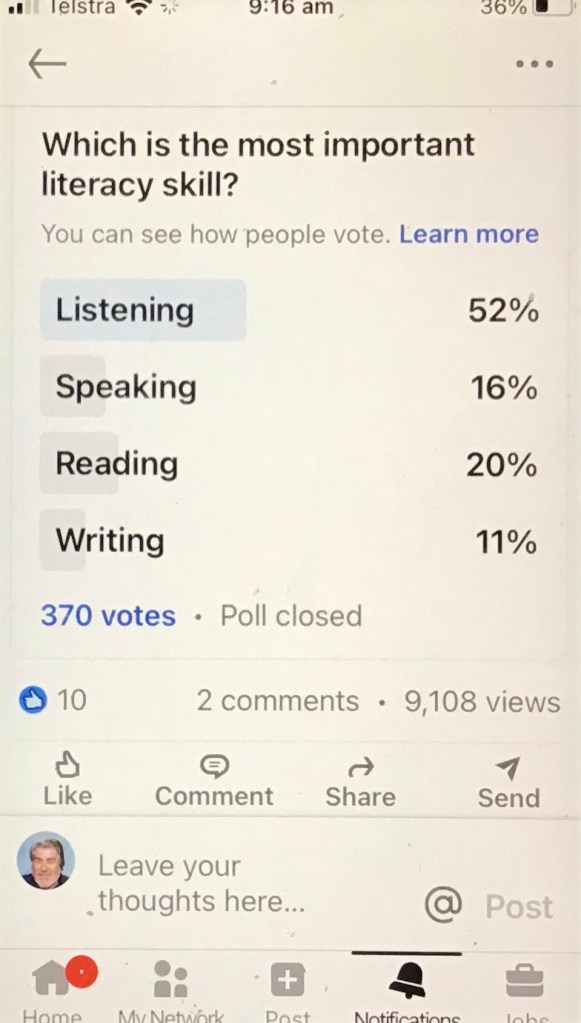
SPEAKING AND LISTENING

My concern is more with the qualities of speaking and LISTENING than with the mere speaking of words. There is speaking and speaking. Listening as a part of the speech platform seems to have gone by the bye. Too often, people attend for a pause so they can begin speaking. They listen but don’t hear or comprehend.

OFFER AUDIENCE RESPONSE TIME

When speaking, offer audience members a chance, if possible, to interact by asking questions and sharing their opinions. This kind of workshopping engagement is often far more appealing than the audience being subject to an ongoing non-participative presentation.

Consider KEYWORDS on palm-size prompt cards to guide in speech presentation. Those speaking without notes and visible paper aids are often more convincing than those dependent on ‘paper’ speeches.

More thoughts for presenters from Poor Old Henry

The proof of the message imparted by a good presenter is the life-changing impact that can happen in and for the lives of others.

Words are potent artefacts of social and cultural expression.

WHAT MATTERS

It does not matter if your audience is big or small. All those who come to hear you are paying you respect. Respect them in turn by offering the best delivery possible. 

Should the development of speech and speaking programs be part of the curriculum available to children and students of all ages?

Is ‘speaking and listening’ becoming an extinct form of expression?

POH and points of suggestion for presenters

BE DIGNIFIED, RESPECTED AND POSITIVELY REMEMBERED

As a presenter, never resort to SARCASM or criticise others when dealing with those who have counter viewpoints to what you are espousing. This indulgence can only ever lead to self-belittlement.

When addressing MULTICULTURAL AUDIENCES, it is critically important to deliver the message honestly but without offending race, culture or creed. That can so quickly happen, and consequences can hurt.

Be presenters for whom LISTENERS THIRST. Don’t be a presenter, causing the audience to wish either you or they were elsewhere. It can and does happen. How do we guard against this being a consequence?

POH says “ presenters must not overlook their audiences”

THE IMPORTANCE OF THE AUDIENCE

When speaking, convey your RESPECT to and APPRECIATION of the audience. You commit to present, and they commit to listen. Within every auditorium and lecture hall should exist a positive partnership.

School leaders, teachers, support staff and students are the ACTORS. The school and classrooms are stages. ‘Education’ is the plot, and the future in life’s world is the conclusion.

Can it happen that a speaker presenting the same content to several different audience groups can stereotype the presentation so those ending the speaking chain are unimpressed by the delivery?

“The western world seems to be going down the gurgler

The Western world has become so super-super sensitive that everyone other than the loud-mouthed ‘me’ fraternity is walking around on eggshells.

They are the members of the hesitant majority whose beliefs and principles have been muted by the noisy minority.

The world has turned into a sour and taciturn place without tolerance and humor, with everyone set on a course of “I want what is best for me and bugger the rest. No one and no thing counts if it is not for me, me,  ME.”

Poor Old Henry offers points of advice

Consider developing and including a MISSION STATEMENT of 25 words or less on the reverse side of your business or personal card. I did this in 1983. It can make a significant impact when shared.

When speaking to an audience, be meticulous about acknowledging your sources if using quotes or referring to a particular thesis of thought. Plagiarism may not be intended but can be a speech blot.

Know your AUDIENCE CONTEXT and speak in a genre with which they are familiar and, therefore, feel comfortable. Talking above the heads of the audience would be unfortunate—research audience background

Poor Old Henry’s advice to presenters …

SELF-REFLECT AND EVALUATE

After presenting, take a few minutes to self-reflect and evaluate your delivery. Be analytical. ‘Self-praise’ – and also reflect on things you might do differently. Make a few notes on the pros and cons.

Keep a notebook or a running file in which you note things being done well and mastered. Also, note speech and speaking challenges that continue to confront you during your development.  

Appreciate the speech efforts of others and, where appropriate, commend them on solid points of delivery and message impact. Have the confidence to offer advice in a non-threatening or ‘put down’ manner. People can only improve if they know where areas of challenge exist.

Poor Old Henry worries about the growing separation of parents from their children – with that gap of separation becoming ever wider

Once upon a time, children were brought up by their parents.

There was school.

Then came before and after school, and then vacation holiday care.

Now, there is before-school care and a plethora of early learning centres where children’s development is in the hands of others.

Next will be weekend care, followed by overnight, then 24/7 care.

This begs the question – why do parents have children when they become separated for huge and growing slabs of time after the child/baby reaches six weeks of age?

GRAB BYTES 11 – 20 DECEMBER 2024

Natasha Fyles Sommerville boss

P

No one is more deserving of this position than Ms Fyles, who, for so many years, gave of her time, energy and commitment on behalf of Territorians. Her deep and abiding awareness and interest in the needs of our community helped determine her as the right person for this position.

All downhill for Karama

Karama Community, from the shopping centre to the behaviours of young people with chroming, has gone from bad to worse over the years. I was the principal of Karama School from 1987 until 1991. Karama now is unrecognisable from the Karama then. It is so sad to bear witness to what was a vibrant community going so far downhill.

Mr Davis and meliodosis

Meliodosis is a terrible affliction, and I am glad Mr Davis has come through the horrible ordeal with which he was confronted. His recovery sends both a message of caution and inspiration to us all. It is also a testament to the medical care he received.

Business on the up

P

If things on the business front are looking up, this is mainly due to the new look and refreshing CLP government we now have. I hope improvements in business opportunities and all facets of living can keep on rebounding from recent historic lows.

St John deserves bocquets

I take my hat off in appreciation to St. John paramedics and the outstanding job they do in increasingly difficult circumstances to support those in need of medical attention. St John is a top organisation, and it is awful that everything from attacks on staff to a lack of appreciation is coming at them. They will ALWAYS get 10/10 from me.

Amy Hetherington tops

We are blessed and enriched by Ms Hetherington’s outstanding contributions to our Territory. Years ago, I wrote of her as one of our top three territory women because of her role within our community.  What a great job she does as an ambassador for the NT.

Gas extraction and use

P

We must recognise and utilise this valuable resource for domestic and export purposes. The prime focus of new developments should be our domestic needs. We do not have to be like Victoria, becoming a pauperism state when its gas reserves would offer domestic energy and great expert opportunities for that state.

Albo comes for Remembrances

I feel chuffed that the PM regards the anniversary of Tracy  and the memories it revisits as being so significant. His visit and the words he shares will add dignity and grace to this occasion of remembrance and reflection.

Trevor Riley new CDU Chancellor

Mr Henderson has done a pretty stand-out job as the CDU Chancellor, and we need to balance our appreciation with a broader perspective of the role than might sometimes be the case. Mr Riley is an excellent choice as our next Chancellor. He is an outstanding communicator and a deep and reflective thinker. 

Inpex contribution to the NT

We in the NT have much to thank Inpex for. The company has been the backbone and, indeed, the reviver of our ailing economy for many years. The company sets a positive example in tackling and managing major projects. Inpex’s support of the NT through employment opportunities, sponsorships, and the development of massive infrastructure—including the now defence headquarters in Howard Springs—sets the company, in a positive way, apart from some of the other major players.

GRAB BYTES 1 – 10 DECEMBER 2024

RAB BYTES – DECEMBER 2024

Cyclone Tracy remembrances

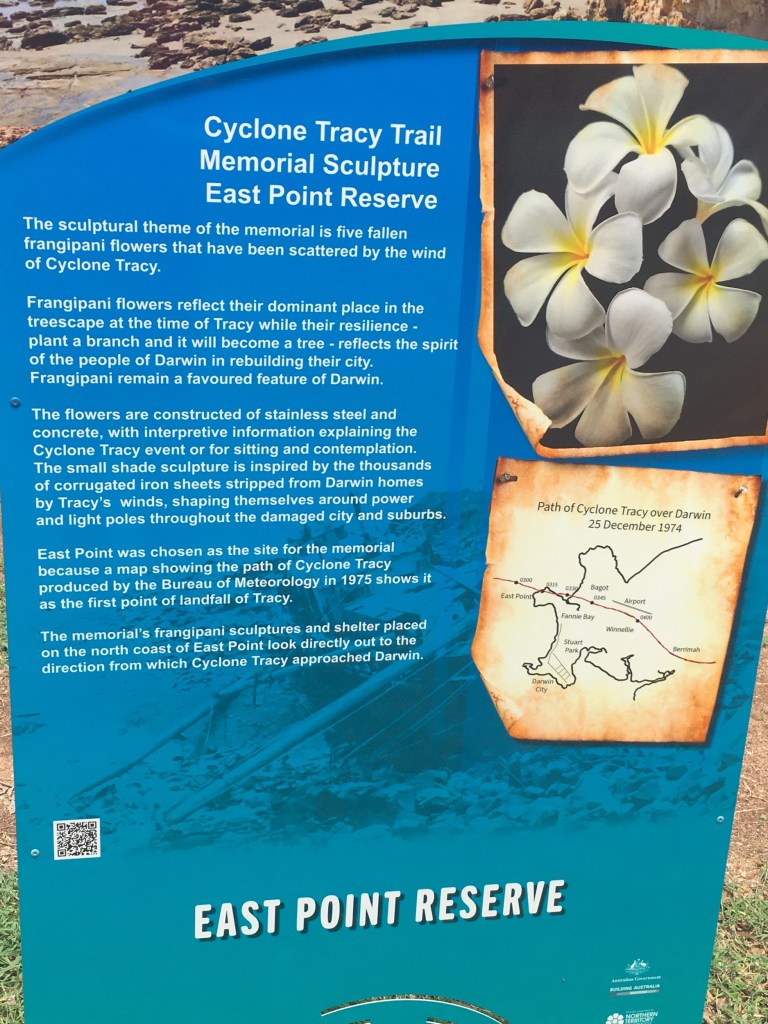
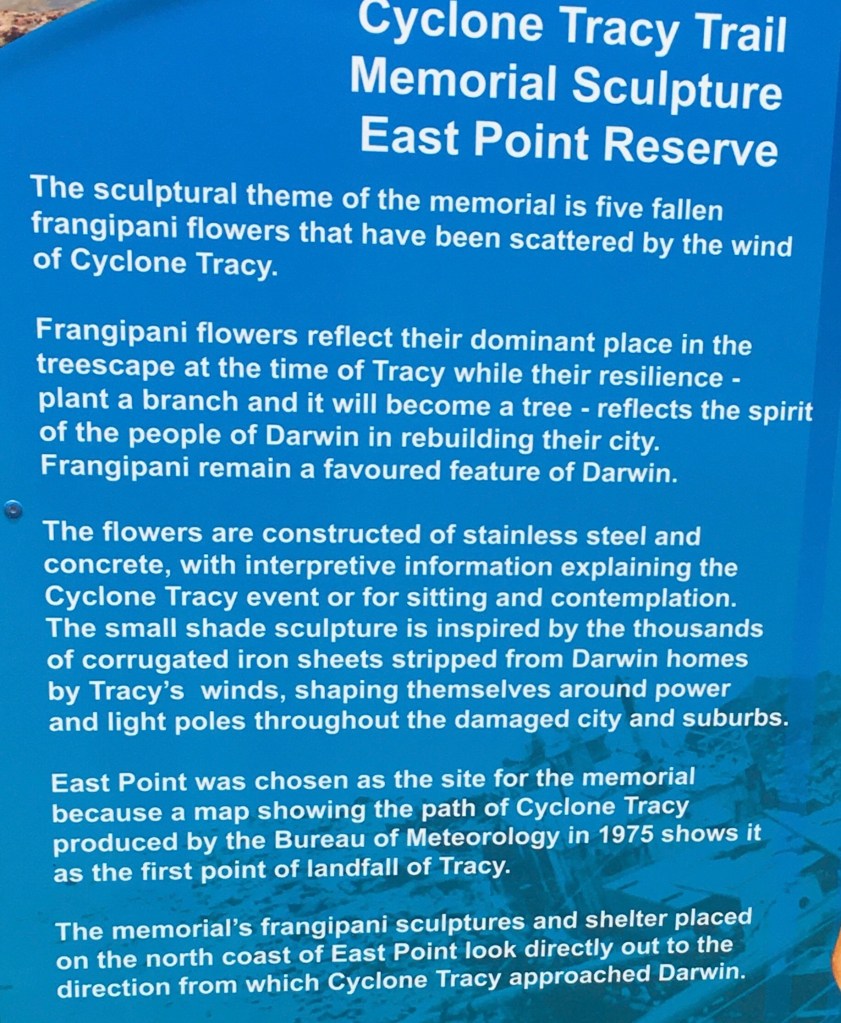
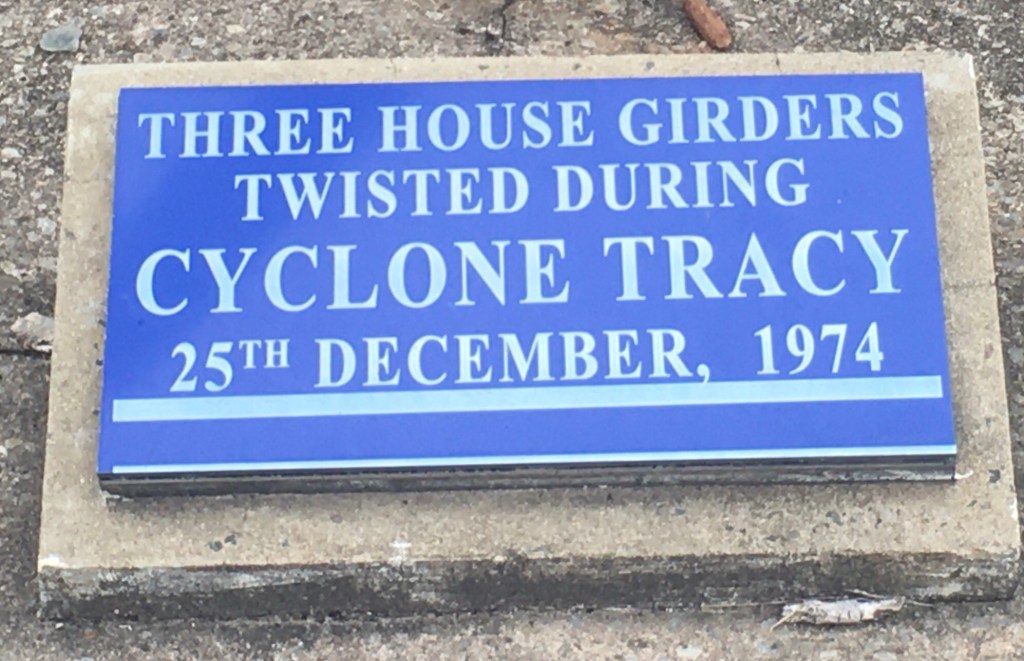
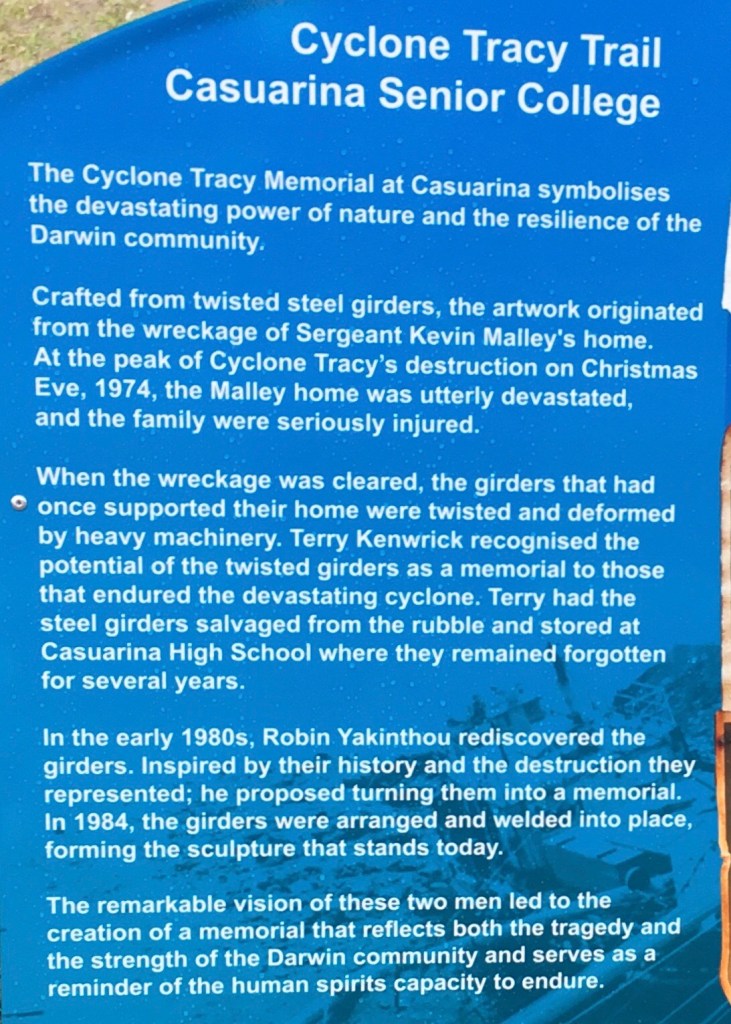
I appreciate the authenticity of the information plaque and memorial to Cyclone Tracy just off Trower Road at Casuarina Secondary College. It presents a graphic testament to this devastating event’s fierceness, velocity and tragedy.

Lia Finnochario and the CLP – first 100 days in office

P

Well done to our Chief Minister and her team. Our new government has made an excellent legislative start to its – hopefully first – four-year term. We would do well to remember that most crucial legislation passed will not come into law until January 2025.

I look forward to newfound hope becoming a reality in the new year.

Well done Sitzler

Congratulations to all at Sitzler who contributed to this significant work. We are blessed to have some fine construction companies managing significant developments in the territory. That augurs well for our future.

DV in the NT 

The issue of domestic violence is spiralling out of control. The more the focus and the greater the amount of money and resources devoted to its curtailment, the worse the issue seems to become. It sometimes seems to be that domestic violence is endemic within our community. While it is disastrous all around Australia, as statistically confirmed in per capita terms, the NT leads the way.  Will DV ever be curtailed?

206,000 outstanding infringements owed by defaulting person

P

If there are 206,000 fines and infringements outstanding, totalling tens of millions of dollars in outstanding dues, it cannot be the case that only a ‘minority’ have not settled their debts.  The number of outstanding infringements is nothing short of mind boggling.

Darwin is a city of victims

And Darwin is supposedly a safe, secure city? I don’t think so.  Whether walking, exercising. shopping, driving or just going about our lives at home, we are always on guard against potential harm coming our way. The CLP government faces a huge task in countering the issues we confront.

Attacks on paramedics

P

The vulnerability faced by paramedics and other frontline workers at the hands of those with nefarious intent makes me shudder in horror. I fervently hope laws to counter this issue are implemented quickly and effectively.  “Enough is enough”, and these attacks must be permanently stopped.

Thank you Mr Knights

P

Mr Knights has contributed indefatigably to the Mindil Beach casino and hospitality venue through his leadership and management. His enterprise and commitment have undoubtedly earned them recognition, resulting in his new appointment. Congratulations, and all the best, Mr Knights.

Tracy and the ADF

I hope that  Dr Lewis’s recommendation will be supported and actioned. Without the ADF at that time, one wonders just how much worse the aftermath of Tracy would have been. 

Darwin dog control laws

The dog control laws are poorly managed and in need of an overhaul. It is not only the laws but their enforcement that needs to be considered. In my opinion, there should also be a ban on dog breeds inclined to unpredictable attacks and unwanted savagery. As for incessant canine barking, night after night … maybe that could be addressed by other than the ‘too hard basket’.

F

Taxation musings from POH

An ‘alter ego’ position from a 78 year old

Paying tax is good and I am sad,
So many see it as something bad,
Tax is what makes Australia good,
With pollies spending it wisely as they should,
With our contributions safe to their hand,
Our leaders keep this as a promised land,
I am so glad to part with tax money,
To ensure Australia’s milk and honey,
Spreading hope and care to one and all,
This always is our government’s call

Poor Old Henry is so very happy

It is good news week. It will be the number one highlight of December. Our Prime Minister, recognising the significance and importance of the impact and aftermath of Cyclone Tracy, is coming to Darwin for the 50th Anniversary memorial program.

I feel chuffed that the PM regards the anniversary of Tracy  and the memories it revisits as being so significant. His visit and the words he shares will add dignity and grace to this occasion of remembrance and reflection.

Our PM… The best.

POH suggests that presenters seek feedback on their offerings

 Consider having someone as a CRITICAL COLLEAGUE offer you feedback on your presentations. Ask for recognition of your strengths and constructive criticism on things you might improve in future.

The presentation challenge is everlasting. We never reach the pinnacle. If we feel we have made it, with nothing left to learn, our slide into the area of lesser effectiveness begins immediately.

Encourage those in your workplaces to consider speech and speaking development. So many people are frightened of dealing with the public because they lack communication confidence. Help them up.

Poor Old Henry suggests that in workshopping situations, leaders should consider Socratic Discussion

Consider SOCRATIC DISCUSSION. It is a method of engaging presenters and recipients in excellent discourse methodology. It is superior as a way of developing shared learning and understanding.

The Socratic method of discussion helps students think logically and in a problem-solving way. It focuses on issues and messengers rather than messengers. It uplifts debate and brings everyone into the conversational frame.

If the discussion area is appropriately set, it ensures everyone is on the same level, with all participants able to see each other’s faces. There is no talking to the back of hears, but rather the opportunity to engage in meaningful visual and eye contact.

POH suggests that presenters …

SELF-REFLECT AND EVALUATE

After presenting, take a few minutes to self-reflect and evaluate your delivery. Be analytical. ‘Self-praise’ – and also reflect on things you might do differently. Make a few notes on the pros and cons.

Keep a notebook or a running file in which you note things being done well and mastered. Also, note speech and speaking challenges that continue to confront you during your development.  

Appreciate the speech efforts of others and, where appropriate, commend them on solid points of delivery and message impact. Have the confidence to offer advice in a non-threatening or ‘put down’ manner. People can only improve if they know where areas of challenge exist.

POH cautions that presenters should avoid personal big-noting

IT’S YOUR MESSAGE THAT PEOPLE  WANT TO HEAR

I think it essential that presenters are about ENHANCING THEIR TOPIC and selling their message, rather than big-noting themselves. Self-aggrandisement should not be a prime aim.

We need to work on building the speech and speaking skills of YOUNG PEOPLE. Worldwide, there is an atrocious lack of speech confidence and accuracy shown by our next generation of adults.

As a leader, consider SPEAKING AND LISTENING development for those working with you. Their gaining in confidence will impress and add value through perceptions held by those engaging your organisation.

.

.

.

Poor Old Henry offers a few more pointers on speech and speaking

DO AS I DO … 

MOTIVATIONAL SPEAKERS often encourage audience members to follow particular courses of action. Don’t spruik if you are not prepared to do those things advocated for others. Avoid hypocrisy.

During or after presenting, aim to engage the audience by INVITING QUESTIONS and responses relating to the topic. Allowing time for audience engagement helps reinforce the message that has been shared.

STORY-TELLING is a great entertainment option. Ask the audience to go into their mind’s eye, picture, and visualise your story so they, too, own what you are sharing. It is engaging.

“Minimise opportunities for audience distraction and enhance their focus”, says POH

SPEECH FIRST, PAPER LATER

If speaking to a paper, consider the speech first and distribution after. If audience members have the paper to hand while the presenter presents, they will focus on the paper, not the speaker.

‘AH’s’, ‘um’s’, ‘er’s’, and other speech glitches can happen unconsciously. Be aware and register them subconsciously as you speak. If conscious, you can program them out of your speech. Try it – it works!

Using ‘metaphor’ and ‘anecdote’ to illustrate the point of discussion can be a handy and identifying tool. “Likening phenomena unto…” using these illustrations identifies matter with the audience.

“Sincerity is paramount” says POH

SINCERITY COUNTS

Messages delivered by presenters should be from the heart. Avoid (debates excepted) speaking on issues you have no belief in. Avoid being a hypocritical presenter or a pyrrhic speaker.

When speaking, use POWERPOINT and props to support your speech. Don’t read verbatim from PowerPoint. KNOW your subject in case the power-point goes on the blink. Have a fallback position.

If an AUDIENCE MEMBER, thank presenters if you genuinely believe them to have delivered a quality message. Presenters value appreciation and, with that, constructive, skill-honing advice.

“Avoid a stumbling presentation” suggests POH

AVOID FILLERS

‘AH’s’, ‘um ‘s’, ‘er’s’, and similar speech stumbles must be avoided for fluency. Too many glitches may have the audience thinking you are unclear on your subject. Aim for ‘zero’.

Use notes as prompts, but try to avoid detailed reading. A speaker is more effective when speaking rather than being slavishly locked into notes. Notes can reduce the speaker’s confidence.

Consider vocalisation, the pitch, rhythm, intonation and vibrancy of voice. Live your message through your voice. Articulate carefully and correctly, and never come with a gabbling rush of words.

Pointers for presenters from POH

‘THANK YOU’ MAY BE REDUNDANT

Speakers must think about the THANK YOU often offered at the end of a presentation. Realistically, the audience should thank the presenter for their contribution.

Watch out for DISTRACTING GESTURES. Scratching parts of the body while presenting needs avoiding. Don’t scratch your nose, squint, or overuse eyebrow wrinkles. Involuntary actions can be off-putting.

INJECT HUMOUR into speech, but AVOID LAUGHING at that humour. Humour engages and focuses audience groups. However, those same audiences can be offputting if speakers laugh at their own

jokes.

Poor Old Henry suggests awareness to the presenter

When presenting, DON’T SHUFFLE

Movement is a part of gesture. Movement can be illustrative and points (of delivery) reinforcing. If movement is meaningless, stand in a relaxed but stationary manner.

SOME SPEAKERS GO ON AND ON FOREVER. What starts well goes downhill, and the presenter loses it. I once heard that 24 minutes was the ideal time for any presentation where the presenter owns the floor. 

Presenters need to ensure that DRESS supports and enhances their podium. . The finest presentation in the world will be ruined if presenters do not respect the audience by looking the part.

.

.

Poor Old Henry offers pointers on speech and speaking

DON’T OVERDO NOTES

They detract. Speakers generally know what they want to say. I recommend small cards that are snug into the palm. List KEYWORDS as prompts for what you want to say.

CONFIDENT SPEAKERS in an informal situation can go to pieces in formal cases. They pull down a blind in their minds which says ‘ uptight time’. Make sure the blind is never pulled down.

Make sure that topics have a beginning, middle and end. PLAN for presentations to establish, build and ebb to a telling and final conclusion. Balance within discourse is an essential need.

IN THE NORTHERN TERRITORY, ALCOHOL…

  • Is a primary cause of domestic violence – up to 100 cases every day in the NT.
  • Leads to an escalating number of DV deaths, primarily of Aboriginal women.
  • This is the motivation behind numerous break-ins to hospitality venues and private homes.
  • Is evermore plentiful to drinkers because they are fed and accommodated by charities, leaving more money available for purchasing alcohol.
  • Forces children out of their homes and onto the streets because it is not safe for them at home.
  • Costs the government tens of millions of dollars each year for policing, corrections costs, bottle shop patrolling, repairs to damage and vandalised infrastructure… the list goes on. 
  • Alcohol is the number one curse of the Northern Territory. It is a total and utter curse.

Index to speech and speaking suggestions by Poor Old Henry

I am happy to share with others.

SPEECH AND SPEAKING INDEX

Some general thoughts that may be useful as speech and speaking remembrance or reminders.

Includes listening and speaking.

Intended to have use or merit in particular situations.

1. Speak to be remembered.

2. Speak from the heart.

3. Don’t overdo notes.

4. When speaking, don’t shuffle.

5. ‘Thank you’ may be redundant. (The audience should be thanking the presenter.)

6. Avoid fillers.

7. Sincerity counts.

8. Speech first, paper later.

9. Do as I do.

10. It’s your message that counts.

11. Self reflection and evaluation.

12. Socratic Discussion.

13. Consider a critical colleague.

14. A mission statement focuses vision.

15. The importance of audience.

16. Be dignified, respected and positively remembered.

17. Points to ponder.

18. Speeches need meaning and intent.

19. Three points to remember.

20. Punctuate speech.

21. Boring, boring voice.

22. Eye contact

23. Gesture,

24. Visuals supporting your presentation(s)

25. Speak clearly.

26. Language theory and practice – the disconnect.

27. Eyes – the most important organs of communication.

28. Facial muscles support gesture.

29. Interact with the audience.

30. Speech development too often discounted.

30A Make presentations clear and succinct.

31. Today it would be counted as discrimination.

32. Word usage and pronunciation (1).

33. Word usage and pronunciation (2).

34. Word usage and pronunciation (3).

35. Word usage and pronunciation (4).

36. Word usage and pronunciation (5).

37. Word usage and pronunciation (6).

38. Word usage and pronunciation (7).

39. Know your subject.

40. High and mighty.

41. Study others and improve (Voice).

42. Study others and improve (Eyes).

43. Study others and improve (Gesture).

44. Self study and improve (‘Traits’).

45. Offer to improve others (Presentation skills).

46. You cannot ‘hoodwink’ audiences.

47. More to ‘ums’ than ‘ums’.

48. More on the ‘um’ factor.

49. Impromptu speaking.

50. Don’t discount speech impressions.

51. Send staff for speech development.

52. Speech development too often discounted.

53. Speak conversationally to audience.

54. Eye contact (Revisited and extended).

55. Gesture revisited.

56. Intonation (emphasis) makes a difference.

57. Language – the theory and practice.

58. Evaluating speech.

59. Worthwhile considering.

60. Post presentation – looking at how you have done.

61. Feedback by device.

62. Idiosyncrasies and peculiarities remembered.

63. Face to the audience.

64. Same, same (Avoid repetition).

65. Glass of water,

66. Hands free.

67. Don’t rely on props.

68. Scrabbling around with props (Defocussing).

69. ‘Uno’

70. Death by PowerPoint (1).

71. Death by PowerPoint (2).

72. ‘Kiss’ Principle.

73. Address the audience context.

74. The burden of notes.

75. Palm cards (1).

76. Palm cards (2).

77. Meet audience members.

78. ‘Recommendation’ can enhance the future for presenters.

79. Presentation in a nutshell.

80. Punctuate and pause.

81. Loud, lustreless voice is a turnoff.

82. Eyes wide shut.

83. Discordant head movements.

84. Repetition for emphasis (1).

85. Repetition for emphasis (2).

86. Highlighting words for emphasis.

87. Keep a note (Post evaluation).

88. Feedback sheet.

89. Avoid off-putting gesture.

90. Vocal tone a sincerity indicator.

91. Watch out for laughter.

Further thoughts on speaking

SPEAK FROM THE HEART

Never be a ‘veneer speaker’ whose polish belies their commitment to the subject. Be a person remembered by the audience for sincerity. Speak to, not ‘down’ to your listeners.

Speakers and presenters should aim to embrace the audience, drawing listeners toward them by the power of sincerely uttered words. This will bring them ‘together as one’ in a sharing context.

Listen carefully to speakers and EVALUATE them for strengths and elements of presentation you feel they might do differently and better. The exercise helps you focus on messages and messenger.

Poor Old Henry suggests that presenters should…

SPEAK TO BE REMEMBERED 

Those most remembered as speakers are those who galvanise their audiences and engage with them. Don’t over-talk. Twenty-five minutes is tops. Engage the audience and involve them.

 Always speak with conviction and sincerity. The audience can sense the speaker’s passion and belief in their message by studying the presenter’s body language. Introduce, develop and conclude carefully.

I BELIEVE THE EYES TO BE THE MOST POWERFUL OF COMMUNICATIONS TOOLS. Confident speakers rove the audience, with their eyes canvassing the eyes of everyone in the listening group.

POH recalls the man who mowed our lawn for many years

MALCY THE LAWNMOWER MAN

From lawnmover maintenance Malcy does shirk

Four ride-ons he owns and none of them work

Starts with a machine – ‘fore the end of the day

He’s got out a goer, the crook one put away

All through the week the machines he rotates 

For some vendors on time, for others huge waits

Bits of the yard he leaves barren and bare

Next to a swathe left high in the air

You wonder at times if he ‘tacks with a spade

Not the symmetry you ‘spect of a lawnmower blade

When he’s gone you look out with a kind of despair

Lawn looks like a site strafed by planes from the air.

Four ‘chines in the shed and none of them work

At least not for long but Malcy can’t shirk

Mumma wants moola for hairdo and dress

If he he hands her the dosh, then Malcy won’t stress

Till he goes to his shed at the start of the day

Knowing the maintenance man is the one he should pay.

POH and a tribute to a bookshop

Dymocks

My bookshop

The very best

Care when ordering needs

Courteous considerate and supportive staff

Working together in a positive environment

Comprising books and materials supporting knowledge needs

Carrier of stock adding entertainment and lateral value

One of the very best providers in Casuarina

Of care and service to others

Recognised, valued by grateful clients

Who come back constantly

With enthusiasm revisiting

AAA+ Bookshop

Dymocks. 

A reflective poem from Poor Old Henry

FROM START TO FINISH

Frank

A man

Owns a house

Has a red car

And a three legged dog

A man who inspires his peers

Leads in the workplace by fine example

No task too trivial nothing left to chance

Pride in workmanship is this hero man’ great trait

We cannot go past emulating someone who is so dedicated.

On a pedestal we place you oh Great One.

Forever hero the one to whom we look

When unsure of how or where

To go and look for

The best way forward

The right path

All hail

Frank.

Recognising the First Peoples of Australia

Some of the recognitions

THANKING THE LARRAKIA

City of Darwin Council

City of Darwin is proud to operate on Larrakia country. We acknowledge the Larrakia people as the Traditional Owners of the Darwin region and pay our respects to Larrakia elders past and present. We are committed to working with all Larrakia people to care for our community and this land and sea for our shared future.

City of Darwin acknowledges the Larrakia people as the Traditional Owners of the land and waterways now known as Darwin. Council pays respect to Elders past, present and emerging, and values the ongoing contribution to enrich and appreciate the cultural heritage of Darwin. Council acknowledges and respects Australia’s First Peoples as Traditional Owners of lands and waterways across Country, and encourages reconciliation between all. The City of Darwin also values the contribution made to Darwin over the years by people of diverse backgrounds and cultures.

A person

I am privileged to work and live on the lands of the Larrakia (Gulumoerrgin) people of the Darwin region (Garramilla/Garrmalang). I thank them for their ongoing protection of country, and acknowledge elders past, present, and emerging. I

Charles Darwin University

 acknowledges all First Nations people across the lands on which we live and work, and we pay our respects to Elders both past and present. Pop

Imprints Booksellers 

is located on the land of the Kaurna people, and we respect their people and culture.


ACEL

 acknowledges First Australians, the traditional custodians of country throughout Australia. We recognise their continuing culture, their contribution and connection to land, waters and community, and we pay our respect to elders past, present and emerging.

NT News

We acknowledge the Traditional Owners of the land in all states and territories on which we work and report. We pay our respects to Aboriginal and Torres Strait Islander Elders past, present and emerging, and honour

their history, cultures, and traditions of story telling.

We acknowledge the Traditional Owners and Custodians of Country throughout Australia. We pay our respects to all First Nations peoples and acknowledge Elders past and present.

Woolworths


Woolworths Group acknowledges the many 

Traditional Owners of the lands on which we operate, and pay our respects to their Elders past and present. We recognise their strengths and enduring connection to lands, waters and skies as the Custodians of the oldest continuing cultures on the planet. 


Woolworths Group supports the invitation set out in the Uluru Statement from the Heart to walk together with Aboriginal and Torres Strait Islander peoples. We are committed to actively contributing to Australia’s reconciliation journey through listening and learning, empowering more diverse voices, caring deeply for our communities and working together for a better tomorrow.

I acknowledge and pay respect to the Widjabal people of Bundjalung Nation on whose Land we work, meet and study. I recognise the significant role the past and future Elders play in the life of the University and the region. I am mindful that within and without the buildings, the Land always was and always will be Aboriginal Land

AFL

Acknowledgement of Country

In the spirit of reconciliation the AFL acknowledges the Traditional Custodians of country throughout Australia and their connections to land, sea and community. We pay our respect to their Elders past and present and extend that respect to all Aboriginal and Torres Strait Islander peoples today.

Peoples Choice

We acknowledge and honour the Traditional Custodians of the land on which we meet, work and live. We pay our respect to Aboriginal and Torres Strait Islander cultures and to Elders past, present and future. We acknowledge and honour the Traditional Custodians of the land on which we meet, work and live. We pay our respect to Aboriginal and Torres Strait Islander cultures and to Elders past, present and future.

Luke Gosling

 I acknowledge the Traditional Owners of country throughout Australia and their continuing connection to land, sea and community. I pay respect to them and their cultures and to elders past, present and future.

POH is over the moon about the rebirth of direct instruction and explicit teaching

Finally, sense and sensibility are gradually being restored to classroom education. The focus of educational authorities and system managers is again firmly fixed on the benefits to students and teachers of direct instruction and explicit teaching. 

It is a case of ‘again’ because of this methodology and the phonetic. Teaching word recognition and reading – again being reintroduced – was the primary practice in our classrooms until the late 1970s and early 1980s.

In the interests of change and dodgy experimentation and to make teaching more exciting, we explored alternative teaching and learning models. They may have seemed exciting and ‘different’, but they focussed on more trivial and less effective teaching and learning practices. Both teaching effectiveness and educational outcomes have suffered.

I rejoice in education returning to the best and most effective practices of the past.  May they never again be abandoned.

Poor Old Henry has to be good at something

They are myriad things at which I am hopeless.

I am mechanically inept.

I cannot do anything relating to electricity, plumbing, or irrigation on my own.

I am hopeless at many practical things.

In terms of most arms of mathematics, physics, chemistry and music I am worse than useless.

I am paranoid about the prospect of weather and climate induced disasters.

I can not switch off from thinking about education and the world economy.

Many more weaknesses are ingrained into my psyche.

BUT

I am good at..

Singing

Listening

Public speaking

Writing and publishing – all the way back to the mid 1960’s

Keeping debt at arm’s length.

Poor Old Henry reflects on these modern times

More and more it seems, the world in which we live is a sad and troubled place. In selfish terms, I find little in future terms about which to rejoice. I  am not complaining about my life up to this point in time, for most of the 78 years have been good – with challenges but also with much to celebrate.

Looking forward to it seems to me that social, political and economic challenges are going to trump celebrations.

Selfishly speaking, that makes me rather glad that the majority of my years are behind me and not on the pathway still to be travelled

Things POH has wondered about for many years

  • I am wondering why it is that many people of mixed ethnicity proudly acknowledge their Indigenous (aboriginal) heritage while overlooking, downplaying or ignoring their other ethnic characteristics. It seems to me that this is more and more the case.
  • It is this characteristic that without doubt is adding quite exponentially to the number of people within Australia in all states and territories now identifying as “Indigenous Australians“.
  • In many contexts, those claims while quite legitimate under procedures of recognition, are distorting funding and sending financial support in the wrong direction. A lot of that funding is now going to where it’s not needed but is being claimed purely and simply based on ethnic characteristics.
  • I’d like to know why the change (other than it seems to be one of the financial incentives) if there are reasons of a non-monetary nature for this happening.
  • Another aspect that worries me is that of people claiming identity under these circumstances, denying and not appreciating the contribution made to their development by the totality of their ethnic origin.

POH’S TAKE ON EDUCATIONAL EVOLUTION

THE EMERGENCE OF A GURU (The Birthing of Educational Practice)

Posted on 

Once upon a time on the eve of a Melbourne Cup day, an ordinary man had an extraordinary dream. In his dream it came to him that he needed to do only ONE thing in order to achieve personal greatness. In his dream the lightbulb of his subconscious mind flashed on. In order to achieve greatness he needed to develop a … develop a … THEORY. A new way forward.

A Theory! FANTASTIC!!

This very ordinary person thought about the inspiration presented to him in his dreams.
This new idea would be something he wanted to develop, espouse and portray orally and in written form. The would want to share his theory with one and all. He wanted it to be new, big and exciting. He wanted it to work for him in a way that would bring him acclaim, pecuniary emollient and above all, recognition.

He wanted to be a GURU. An ordinary man lifted to extraordinary heights caused by the ‘realisation and awakening’ of his theory falling on the ears of those who wanted to be convinced that his idea would indeed be a new way forward.

This “would be” Guru realised the importance of promoting and marketing his new idea.
So he talked about his new theory and never let a moment rest when he wasn’t theorising to others.

At first people were only mildly interested in the would be Guru’s Theory.
But like a little rock thrown into the middle a pond produces a ripple that spreads and spreads, the interest grew and grew and grew. It became quite exponential.

Gatherings of people (who self-defined as learned ones) began to talk, to echo and reflect upon the theory of this “Great One” who had come into their midst. They could not get enough of his exposition.

He went on a major lecture tour, preaching his theory in places wide-ranging in nature
– from small country town halls to metropolitan convention centres.

He was widely acclaimed and received by audiences everywhere in the educated world.
Figuratively (and in some cases literally) they fell at his feet. At times he couldn’t believe that he, an ordinary man, had become a “Guru Centric”.

Now it was that this Guru became a cult figure lauded by those who ranged from very high IQ’s to more run of the mill citizens. This acceptance by everyone became a denominator that linked people of all persuasions.

People paid to hear the words of this now Mighty Guru, basking in the matter and manner of his presentations.

People paid to buy his words. He made a mint from PowerPoint sales, DVD’s, essays and texts and by uploading these words into cyberspace and onto the net where they could be downloaded by adherents – for quite substantial remuneration.

Those of mercenary bent designed and sold T-shirts, mugs, writing stationery and other items enhanced by his countenance and embellished by his signature. He even became a hero on Pokemon cards.

Like Pedro climbing the mountain, he had reached dizzying heights of stratospheric proportion. He WAS the “Great One” above and looking down on all below him.

HIS was the pinnacle of life. 

As the Guru
THIS GURU
Looked down and proclaimed.
“I’m on top of the world
Looking down on my creation
And the only explanation I can find
A the people I see
Looking at me, Me, ME,
Think I am special
And one of a kind.”

Of course the admiration of his adoring public eventually reached saturation point.
His theory had achieved a status of becoming standard household and workplace practice.
There was no more tinsel and glitter about his new idea. Then of course it was time for role to move on, embracing other thoughts that were new, untried and untested.

So it was that his adoring ones moved on, creating new heroes, new Gurus, all the while continuing to practice the habit of ‘discipleship’. They of course were dedicated to being followers.

He was quite happy to let them go. He had had his turn! The translation of his ordinariness into extraordinariness had earned him years of substantial acclaim and one huge pile of dollars.

Years later he pondered the “why”. Why can mortals rise, their ordinary becoming extraordinary.

Through his ponderings he realised it takes time, effort, thought and creativity to translate a dream into reality.
He wondered about his experience. And wow, what an experience.

“Guruism” had set him up for life. He faced the prospect of enjoying an early, long and carefree retirement.

“Blessed be ordinary people who take ordinary people and create for themselves a Guru Class.
I am glad, so glad I was able to cater for those who had itchy ears and who longed for excitement. Thanks to my theory I feel better now .

Poor Old Henry believes in using words wisely and making a lasting impression

SPEAK TO BE REMEMBERED

It is important that presenters deliver in a way that evokes appreciation from the audience. Good work can be enhanced or undone by presentation
____________________________________

Many educators are required to present in public. That may be in every environment from staff meetings to convention centres. delivery may be to a few people or to hundreds attending conferences. Delivery at workshops comes into the equation. Included are interviews that may be on radio, television or on you tube and similar. 

The way in which presenters deliver their messages often reveals alarming shortfalls in methodology. The way in which presenters speak often reveals shortfalls in their capacities. Gesture, body language, word choice, speech hesitations, and awareness of time are a few areas requiring education. There are many others.

It is said that beyond a presentation, 7% of audience recipients remember the speech content and often for short periods of time. On the other hand 42% of audience groups remember the manner and method of delivery and for substantial periods. It is the way in which presenters present, rather that what they say which makes key impact. 

I believe that educators, from teachers through to principals and departmental CEO’S should consider speech and message delivery training. This might be through formal coursework, or through joining an organisation that promotes speaking and listening skills. Toastmasters and Rostrum comes to mind but there are other organisations including Zonta.

It is easy to discount the importance of speech delivery. This is an area that needs our attention.

Poor Old Henry ALWAYS exhorted teachers to be wise when …

ESTABLISHING CLASSROOM PROTOCOLS Take Time to Set the Boundaries

One of the issues that often confronts teachers is a belief they must teach from the minute they are assigned to a class of children. This ‘quick start’ impulse dominates at the commencement of the year, the beginning of a semester, the start of a term or whenever a teacher takes responsibility for a new class.

It seems teachers feel the need to jump in from the first bell, beginning to teach in a ‘go, go, go’ manner. Some launch as if there is no tomorrow. Others may approach the task a little more steadily, but it seems the majority are for making an impact from the first minutes of the first day the class becomes their responsibility.

Routines and procedures are the linchpins on which sound classroom development is predicated. Jumping into teaching ‘boots and all’ before taking the time to establish classroom protocols, is a recipe for disaster. While much of the routine establishment does not directly impact on academics, processes and procedures help in the holistic development of children. This can help develop positive attitudes to work and learning. Classroom environment and atmosphere is critical to helping children and students develop work and study habits.

The establishment of classroom routines is a prerequisite need and should not be overlooked. Once in place, procedures become operational precepts, leading in turn to good learning habits. Children’s attitudes to classroom care, property management and respect for resources, builds atmosphere and promotes harmony within the learning environment.

Part of sound routine and procedure, are the working habits developed with and for children. These habits go beyond the classroom because they are about individual training. Positive attributes include the following and many more could be added.

* Desk habits including pencil hold, paper position and writing posture.
* Use of loose sheets of paper including storage in books and files.
Putting things away properly.
Using bins for rubbish disposal.
Cleaning up when activities are completed.
Care when using the toilet.
Keeping hydrated.
Washing hands.
Talking and working in a way that avoids excessive noise.
Correct school bag and lunch box storage with bags and boxes stowed by habit at the start of the school day or at the end of lunch eating periods. Included is refrigerator opening and closing procedures, recess and lunch eating habits, rubbish and wrapper disposal.
Movement habits in and around school buildings including places for walking, running and playing. Hats on and off depending on the area of play. Lining up and readying procedures at the end of recess and lunchtime are part of the ‘movement and motion’ strategy.

The establishment of routines and procedures MUST be the NUMBER ONE PRIORITY in any classroom at the start of the school year. Once these processes are in place, structure for meaningful teaching and learning is facilitated.

Good classroom habits and practices complement to class rules and procedures, ensuring that things go smoothly. The time initially spent on this ordering returns tenfold in benefit terms because interruptions and disruptions are avoided. Boundaries are established. Expectations that have been discussed and programmed, unfold in a practical day-by-day manner in support of teaching and learning.

The pity is that as children move up the grades or experience different teachers on rotation, the impact of training can lapse and attitudes can deteriorate. Reinforcement and gentle reminders are necessary. The most important is the need for the school principal or delegate to ensure that incoming teachers are aware of the need to establish procedures with the class in the ways already discussed. Each teacher needs to develop his or her set of overall routines, procedures and expectations. They are not inherited and don’t pass by right from one teacher to the next.

Teaching is spoiled and learning diminished if classroom management structures are not in place and practised. Teachers can be too busy valiantly attempting to control, manage and discipline, to teach.  They wear themselves to frazzles and finish  up with a group of students who range from the very disruptive (those setting the class social agenda) to the very frustrated (those who want to learn but are not taught because the teacher is too preoccupied to teach).

Process, procedure, rules and regulations can be reinforcing and satisfying. That satisfaction embraces students, teachers, the class as a community of learners and the school as a whole. It is ever so important that the initial time teachers spend with a new class is a ‘steady as she goes’ period.

Set the Scene with the Children

A losing strategy for any teacher can be an attempt to set the classroom scene without involving the children. It is essential that class rules and procedures are established by teachers working with children. Classes need to own their governance. Rules won’t work if they are dictatorially set and enforced without empathy. Collectivity, with the group contributing to and therefore owning governance is the smart way to formulate classroom procedures.

Recognising the constituency of the class is important. Without having the right approach to classroom management, a teacher can become an isolated and unappreciated individual. No teacher wants to be overbearing to the point of being ‘sent to Coventry’ by his or her class.

First and Second Level Ownership

The way classroom procedures are developed confers ownership. Children who feel a part of the ownership stratagem are more likely to be compliant and act in accordance with agreed procedures than otherwise would be the case. (There will be exceptions but aberrance may not be tolerated. Recalcitrant individuals are likely to draw quick responses from the class collective. Rules break down and lose impact when there is little commitment and scant adherence on the part of children.

* Developing rules ‘with’ children rather than ‘for’ children is essential.
* Expectations need to be encouragingly rather than punitively worded.
It follows that if children are participants is creating classroom procedures they will regard them in a primary rather than a secondary way.

All this points to the need for teachers with new classes to spend time in a ‘getting to know and understand you’ phase with children and students.

Part of this will be (or should be) development of the class environment through shared shaping of agreed procedures. Several essential precepts come to mind. They are simple, based on common sense and easily overlooked.

* Class members need to be organised.
Pupils are best predisposed toward being organised if they share in creating organising structures, including classroom rules and procedures.
Routines established should be based on fair and predictable management and administration. There is a need for impartiality and even-handedness in all situations.
Teachers can’t teach control but should teach in a way that gains control. This happens best in classrooms where the principles included in this paper are applied.

In a Nutshell

Rules, organisation, routines and procedures are important. They need to be established by teachers working in a way that allows the first days and weeks to be spent on getting to know and understand the children and students in their classrooms. This is ever so important and ought not be overlooked.

Once ground rules and relationships are in place, teachers will be able to teach with the confidence that couples successful teaching with meaningful learning outcomes.

Teachers who go full on from day one and ignore the need to establish sensible management strategies with children, will pay a high price. They may well set themselves up for a long, tiring and frustrating teaching stint.

Poor Old Henry reflects on the teacher obligation of

REPORTING TO PARENTS

Reporting on student progress to parents and primary caregivers is of critical importance. It is an element of the educational partnersghip that includes the student, home and school.
______________________________________________________

Reporting to parents and caregivers in most primary schools, is a task undertaken each term. Toward the end of terms one and three, teachers report orally. Oral reports allow for conversations with parents on student progress. They enable teachers and parents to discuss progress including student strengths and the challenges they face.

Written reports are provided toward the end of terms two and four. These documents are looked forward to by many parents. They are at times photocopied and sent to grandparents or other relatives living at distance. 

For teachers, report writing is a task not to be taken lightly. The importance of reports to parents in large part influences the way in which these documents are regarded by our department and school principals. They are valued and valuable documents.

There are a couple of things that need to be understood. The first is that with teaching being increasingly a collaborative effort, a number of teachers may need to contribute to the preparation of student reports. Secondly, the steps leading to final report documents, mean that reports have to be started many weeks before the end of each term. Allowing time to prepare them reasonably is something that can be easily overlooked. 

Consider the following:

* Reports as a statement from teachers to parents need to be honest and
accurate.
* Spelling and grammar need to be correct as they reflect teacher standards.
* Reports should be factually correct.
* Preparation is helped if teachers have a critical colleague read through their
documents before sending them to senior staff for vetting and approval.
* What is written needs to be substantiated by background facts supporting
statements of progress. Inaccuracy can be embarrassing to teachers if report
comments are challenged by parents and cannot be refuted.
* Language needs to be carefully chosen, reporting on facts and not supposition.
* Avoid words like ‘will’ and choose words like ‘may’ when talking about potential
for improvement. Absolute words throw the onus on teachers to make things
happen; it is up to the student to achieve his or her potential.

I have always favoured the idea of teachers discussing reports with children and students about whom they are prepared, on a one-to-one basis. Commendation and recommendation for improvement might be part of these conversations. Post report discussion with parents can also have positive spin offs, particularly if the approach is one of offering encouragement. 

Reports reflect outcomes based on effort. That, together with character traits that contribute to good citizenship deserve recognition. While academic success is important, the social, emotional and moral/spiritual aspects of development are also worthy of mention. That is not always possible because these criterion have been expunged from many reporting templates.

Poor Old Henry recounts an unfathomable situation from 2022.

What a sad and poignant story was depicted on the front page of Monday’s “Australian” (‘Kumanjayi bashed me, but I loved him’). It is incredible to think that a young girl, a maturing teenager, should feel that her partner had the right to bash her brutally and for long periods. 

How can it be possible, in the way the majority of people view things, for Walker to forgive his partner Rickisha Robertson for the fact that her presence motivated him to abuse and beat her so savagely? 

Forgiveness from Robertson toward Walker, albeit misplaced, is understandable, but for him to forgive her for being the person she was is beyond comprehension. 

The story reminds me of the fact that in traditional times and before the arrival of Europeans in Australia, Indigenous women were deemed to be the property of men. They were objects men could do with as they saw fit. During my time working in remote areas of WA during the 1970s, the entitlement and possessiveness of girls and women by men was still very much a part of life. 

The worm is turning, but to this day, far too many men regard women and girls as goods and ‘possessions’ to be dealt with as they like. This story confirms just how far we have to go in shedding and hopefully eliminating this thinking and subsequent actions from indigenous and, indeed, from all cultural mores. 

I do not understand.

Poor 78 year old Henry deplores aged care in Australia

Residential aged care 

The facilities that care  appear to be in a minority. Most facility operators appear not to give a rats, beyond taking as much money as possible for the barest amount of care.

Too many of these care homes seem to be about making money and turning profits. The thought of being a victim held captive in one of these places does not bear thinking about. Finishing up in a decent and caring place is about accident rather than pre-planning and management. 

Poor Old Henry rejoices in the NT Government having celebrated its first 100 days in office

Well done to our Chief Minister and her team. Our new government has made an excellent legislative start to its – hopefully first – four-year term. We would do well to remember that most crucial legislation passed will not come into law until January 2025.

I look forward to newfound hope becoming a reality in the new year.

Domestic violence in the Northern Territory is out of control.

The issue of domestic violence is spiralling out of control. The more the focus and the greater the amount of money and resources devoted to its curtailment, the worse the issue seems to become. It sometimes seems to be that domestic violence is endemic within our community. While it is disastrous all around Australia, as statistically confirmed in per capita terms, the NT leads the way.  Will DV ever be curtailed?

The police deal with 100 DV call-outs in the NT each day.

POH reflects upon the Australian Government – in alter ego terms – of thankful gratitude

Paying tax is good and I am sad,
So many see it as something bad,
Tax is what makes Australia good,
With pollies spending it wisely as they should,
With our contributions safe to their hand,
Our leaders keep this as a promised land,
I am so glad to part with tax money,
To ensure Australia’s milk and honey,
Spreading hope and care to one and all,
This always is our government’s call.

Thank you

Poor Old Henry shares the last major interview – of 2024 – by the ABC with our Prime Minister

Our PM sits listening to interviewer David Speers on the last ‘Insiders’ program for 2024. When will the election be called is the burning question?
David Speers and Anthony Albanese
Discussing the downturn in per household disposable income due to cost of living pressures.
Discussing the paucity of disposable income for Australian families, compared with other counties.

Where to from here?

“Could this be what happens”, wonders POH

Budget Woes

SO MUCH of the support in every budget is offered to those who contribute so little to the Australian economy. And so much government largesse goes to organisations like the NDIS, childcare, Aboriginal support organisations and so on, where much of it is consumed by mismanagement and, in some cases, embezzlement, false and inflated claims and fraud. I am always amazed at two significant areas my tax statement advises of my contribution – welfare and interest on Australia’s national debt. Those who are self-sufficient and who abhor/avoid debt cannot be enamoured by these areas of ‘contribution’.

The future of politics

I predict that in times to come – and before 2050 – Australia will have a Muslim Prime Minister and that there will be suburbs and areas in which Sharia Law is enforced. That will happen because state and territory governments will be increasingly made up of those of the Muslim faith who have been voted into office.

MORNING FOR ME

At night

I prepare dinner

We eat

Watch the news and current affairs.

I do a bit of reading, thinking and blogging.

Then, being a very, VERY old man

Pull up stumps

Hit the hay

And sleep and dream

The night away

Sleeping tight

Till early morn

Then help the birds

Welcome the dawn

Doing things all day you see

That’s life for Poor Old Henry.

.

Poor Old Henry wonders whether the Western World is on the way to hell in a handcart

The western world has become so super-super sensitive that everyone other than the loud-mouthed ‘me’ fraternity is walking around on eggshells – members of the hesitant majority whose beliefs and principles have been muted by the noisy minority.

The world has turned into a sour and taciturn place without tolerance and humor, with everyone set on a course of “I want what is best for me and bugger the rest. No one and no thing counts if it is not for me, me,  ME.”

GRAB BYTES – NOVEMBER 2024 – comments on local stories in the NT News for November by Poor Old Henry

Prisoners

I am right behind and fully supportive of the CLP in their push to overcome the crime epidemic for which the NY. has unfortunately become renowned. Neither should prisoners’ rights be considered other than providing the essentials of life – food, ablutions, provision and a place to sleep. The rest is a low priority.

Tank Farm insecurities

P

This project, costing significant dollars, has gone from bad to worse and remains riddled with problems. Will a solution ever be found? But as a long-term Darwin resident, I have been worried from the beginning about the logistics of what, in a time of military conflict, could turn into a massive explosion decimating the area and costing many lives. Should it not have been located at a more respectable distance from the city?

Medical scholarships for Aborigines

Yet another boost for Aboriginal Australians in a context where so much is being provided ostensively to make up for real and imagined past wrongs. There is so much that is exclusively offered to Aboriginal people these days that the mind boggles.

Everyone is on a winner here, Kelsian, with guaranteed continuity of operations and healthy government subsidies for the next five years for those who will use the service, paying less for passage than would have been the case without government largesse. The places serviced need and deserve guaranteed connection. 

Laksa Festival winds up

Congratulations to the winners and to all businesses that contributed to the best Laksa festival staged to this point in time. May the festival endure and become a ‘forever’ Darwin feature

Outstanding contribution by graduates. 

P

It is wonderful to read about the successes in leadership, management, and innovation that are coming to pass for graduates of our educational system. With so much focus on the negative aspects of youth issues, this story offers a positive and encouraging perspective. Thank you, NT News, for one of the most uplifting stories of the year.

Dr Fejo resigns from the Waterfront Board

Dr Fejo is entitled to his viewpoint. I am so glad the government is taking the promised action. That is why the vast majority of people voted the CLP into office. Interestingly, the ALP’s retained seats are attached to remoter areas, where the problem of youth crime is less pronounced or understood but condoned.

Anzac Oval again

Indeed, there are enough places wherein Aboriginal art, culture and heritage can be celebrated without further construction. Whatever the outcome, preserving Anzac Oval must be a first and foremost priority.

4G network outage at Royal Darwin Hospital

The loss of communications capacity at the hospital is unfortunate – staff will have to resort to paper records and then upload them when the system is righted. However, the long-term gain will be worthwhile if the upgrade vastly improves the ‘G network’ in an area renowned for sporadic coverage.

Cyber attack possibilities in a vulnerable NT

This is another aspect of the vulnerabilities under which we live in the Northern Territory. Cyber attacks and the all too real possibility of military attack if ever Australia, with Darwin as a military hub, is caught up in the throes of war.

Dogs attacking posties delivering mail

P

Whether the attack is a major or minor consequence, dog attacks on mail deliverers should result in the attacking animal being put down. There ought also to be consideration of liability for dog owners if the dog has escaped security through neglect or restriction by the owner.  Unless they were teasing the dog, this should go for anyone attacked while out and about.

“Crazy Chicks” opens in Bakewell Shopping Centre

P

Congratulations ladies. May your business thrive and do well, and may the fruits of your entrepreneurship reward you for your initiative.

Voting in the Barkley

There are 4503 electors entitled to vote for those standing for election in the wards of the Barkley Regional Council. Of these, 1219 persons voted.  That is a voter turnout of 27%, with 73% disinclined or disinterested – and that is in the context of compulsory voting. That has to say something about the value placed on the Council and its operations by the community.

Northern Territorians  of the Year

Congratulations to our four Northern Territorians who have earned top honours – and thank you to all who were considered in the various categories for your contributions to our NT community and, in some cases, to the world beyond our territory boundaries.

Deferred government expenditure 

Sometimes, decisions of this nature, however unpalatable, must be taken in the interests of a responsible and accountable government. I do hope the delays in undergrounding powerlines will not be for too long. We are blessed with underground power, and it helps when it comes to supply reliability in adverse weather conditions.

Clamps on Palmerston Recreation Centre

When people cannot be trusted to be responsible in recreation centres and similar community benefit facilities, restrictions on access have to be imposed. It is so sad that in this modern era, appreciation of the rights of others is distanced from the thinking of so many; the concept of ‘community’ is slowly dying.

Woman slapped in the face with faeces

This is just the worst! I feel so very sorry for the lady who copped this vile response to her humanitarian act of intervening to save the puppy from further cruel treatment. I hope the police can apprehend the offender; when they do, judicial consequences should recognise the seriousness of this behaviour.

Terrible NT driving

P

We often go for a drive from home around Darwin and Palmerston and to the various parks and reserves dotting our two cities. The number of near misses caused by careless and selfish motorists during the past months is enormous. Included have been people running out in front of our car, drivers passing incorrectly on single land roads by veering around me to the left, and a significant number coming from side roads, pushing to be on the road ahead of me, requiring sharp braking and swerving. And then we wonder about road deaths in the NT!

Government to reduce motoring and licensing costs

P

Every little concession helps. Most Territorians will welcome fixing and reducing costs associated with motor vehicles. It will take a long time for the Finocchario Government to get ahead of the plethora of negative issues we confront, but we are heading in the right direction.

Real Estate awards

Congratulations to all who have earned accolades for contributing to our real estate industry in the NT over the past twelve months. Special congratulations to Derek Hart, the people’s choice this past year, for his efforts to reassure and assist people buying and selling property.

Dad’s advice about debt

My Father passed to his rest many years ago, but I continue to thank him for his sound money advice. From a young age, he said, “Henry, do not go into debt by buying goods on credit. The interest you pay is dead money and increases purchase costs. Save, and when you have sufficient, then buy the items.” This advice has been part of my life and passed on to our children. I am so glad that the idea of debt is something I keep at arm’s length.

Advice of Influencers

I like to think that young and old people can grow up and mature based on common sense and by self-adjustment to life.  To surrender one’s mind to influencers, following their example and advice like sheep is a mistake and an abrogation of self-responsibility that should never happen.

Remembrance Day appreciation

I sincerely appreciate and thank those who have served Australia in the Australian Defence Force for over 120 years each Remembrance Day. The Australia we have, with relative peace and security, is thanks to their individual and collective efforts – and that of their families over decades. May we forever be grateful for their sacrifices, including giving up life that we might live.

Churchhill Fellowships Five for NT

I think it would have been lovely for an educator determined to return the educational system to one that values the basics and upholds explicit teaching to earn a fellowship to study and contribute to the re-development of this technology. Education these days is too much about tinsel, glitter and selective woke/leftist studies. Cognitive development and realistic educational needs have gone by the board.

Courts for criminals with scant regard for victims

This is just another example – especially for the multitude of many recidivists – of how far the justice system leans toward offenders. Because of this,  the crisis and hardships faced by victims are neglected. 

Footy  club loses sponsorship over WOKE 

HOW CAN WE COPE

Once life was straightforward, based on sense,

‘Till  this approach got thin on defence,

These days, people say,

It has to be the WOKE way,

We’ve left the era of pounds, shillings and pence.

CDU’s Medical School for 2026, not 2025 start

P

I sometimes wonder if the CDU is not overstepping the mark at times, for ambition has to be couched in common sense. Why does the CDU need a medical school when Flinders University has been operating successfully in this field – in the NT – for years? Why not amalgamate the collective interest rather than reduplicate by starting a second medical school?

Spotlight on defence build-up in Darwin

The spotlight is evermore focussed on Darwin as the jump-off point for countering perceived aggression in our quadrant of the world. I have lived in Darwin since 1987 and confess to being increasingly insecure and jittery about our future. If Darwin is a defence focal point, God help us if military retaliation comes our way.

The hirdy-girdy of truancy officers

This on-again, off-again program, supported over the years by both the NT and Federal Governments – Remember Senator Nigel Scullion’s yellow army of truancy officers – has cost huge dollars for little or no success in changing parental and student attitudes toward school.  Truancy officers, in my experience, go back to 1980. The and-off approach has cost huge dollars for negligible outcomes.

Darwin turning into a Dublin

I remember walking around the streets of Dublin (Ireland). CBD in the early hours of one morning in 1996 while we were on tour. The walk was against better advice. Streets were littered, graffiti was everywhere, and every shop and premises had heavy metal roll-down shutters to counter wanton damage. It sounds like Darwin will keep turning into another Dublin.

Break-in to communities by illegals

These are the sorts of experiences that must be borne and managed by everyone who is a resident of our cities and towns. For the most part, we have to grin and bear the results of property damage and physical assaults.  As a Darwinian, I live with negative social potential every day. Maybe widening this experience will have an educational impact by showing what we have to endure.

NT Environment Centre thrives on negativity

P

Regardless of feasibility, The NT Environment Centre makes a habit of knocking every attempt by government, business and industry to further our economic progress and development. Just once, I would love to hear something bright and cheerful from the centre, ra rather than the 100% negative response to all developmental ideas.

City of Darwin Council to become lofty

P

This proposed new tower, apparently an artefact of architectural innovation and brilliance, convinces me that ‘structure’ is of far more importance to the City of Darwin Council than ‘function’.

Alice Springs a ‘no go’ place after dark

In no way should the residents and visitors to Alice Springs feel the constant threats permeating this town from sundown to sunrise every 24 hours. I hope the new CLP regime can put a stop to the ever-escalating violence and feelings of insecurity that embrace all law-abiding Alice Springs residents. Perpetrators MUST feel the consequences of their actions.

Australia’s north about as secure as a sieve

Senator Patterson is right in expressing concerns about the security of Australia’s north. Obviously, money allocated to surveillance is not cutting the mustard, for the percentage of arrivals onto our top coast is increasing. This is just one more challenge to our part of the world – which would be the first area impacted  if overseas aggression toward Australia were to become a reality.

Thank you to our firefighters

Well done, and congratulations on your long and impeccable record of committed service. And thank you to all firies around the length and breadth of our territory for your outstanding work – including volunteer firegfighters who are part of our countering backbone in case of fire emergency.

Darwin has wonderful air – fact or myth?

It is blue skies and clear air in Darwin – sometimes! The dry season, with its everlasting smoke-filled skies because of incessant fires – some controlled and many not – the air in and around Darwin is anything but clear and pristine.

Council dumps HPA from Tip Shop management

I have followed the work done by HPA to build skills and confidence in employees who are supported in developing their confidence and skills; HPA has done and continues to do an enormous amount of good through the Tip Shop program and other facets of their enterprise. To dump an organisation from being able to continue its humanitarian and developmental focus, is an absolutely awful decision by this council.

Here come the anti-development brigade

This is a decision that makes sound economic and developmental sense. Now, watch for the gabfest of disapproval from environmentalists and every other splinter organisation that wants to gain leverage from negative comments and anti-development positioning.

Thanks to key Territory families for their contribution

P

These families have brought, and continue to bring, great blessings to the NT through the projects they have undertaken and for the hundreds of people they employ. Their contributions are both past and present, for they are part of the foundation and the ongoing endurance of NT enterprise. Thank you from a dyed-in-the-wool Territorian.

Golden snapper disappearing from Territory waters

P

It is no wonder this species of fish is disappearing. With the hundreds and hundreds of anglers regularly out there with lines and boats, all fish species must be monitored to avoid depletion—just one more role required of the AFANT.

Is Australia positioning on a war footing approach to the future?

Almost every day, we have breaking news about the way the Australian Defence Force is evolving toward a future where, in our region, there are two distinct sides. Both groups will be involved in shaping our future. I can only hope peace will prevail in our area, but I worry about the fact that more and more frequently, the thought of war footing preparations comes to mind.

New look for Northern Lands Council building

Facades may be necessary, but the quality and efficiency of the work done within any organisation are all important ingredients.

Gas shortages loom for the Northern Territory

P

How sensible and far-sighted was the WA Government in requiring 15% of produced gas to be tagged for domestic consumption within the state? No supply shortage and the avoidance of skyrocketing prices are guaranteed benefits for people in that state. Why can’t the NT Government enter a similar arrangement with companies, especially in areas where establishment and start-ups are still happening?

Supporting and restoring Darwin in the aftermath of Cyclone Tracy

There were so many individuals and organisations who contributed unstintingly to helping to restore and rebuild the city after Cyclone Tracey. They all  – known and unknown – deserve our thanks.

Passing of Nick Dondas

Nick Dondas, one of the founding fathers of the modern-day NT under self-government, was a key figure in helping, within the Everingham Government, shape our Territory’s future. I remember him well and often think back to the fact that he was one who, with his peers, laid the solid foundation on which territory autonomy -being limited by federal constraints – was based. He will be missed.

Nicole Manison a Tamboran executive

Ms Manison’s depth and breadth of experience as a born-and-bred Territorian, augmented by her significant ministerial roles in the previous Labor Government, will provide her with the experiential tools and background awareness to fill her new role outstandingly. Tamboran is lucky to have her on their leadership team.

Hotel at Gateways to re-open

There will be great rejoicing in Palmerston when this hotel is re-opened.  The Gateway Shopping Centre has many business establishments, and the hotel adds one more feature to this progressive commercial and retail hub.

NT Hockey grant from government

P

This grant will significantly boost NT Hockey as it moves into this Asian competition. This is deserved because the association is very proactive and continues to develop and expand its outreach and appeal, particularly to upcoming players who are the future of NT Hockey. Let us also remember that Territorians have delivered in spades in both women’s and men’s competitions on the Australian and international stages.

NT Cotton

P

We need these enterprises, and for one, I applaud that we now seem to be heading toward growing our land-based industries. The early flourishing of our cotton industry is a good thing, and expansion will further cotton’s contribution to NT development.

Winners of ledership  awards

Congratulations to all award winners and to those who were shortlisted for consideration. Out Territory is blessed by your positive leadership, commitment and contribution to enriching this place. Thank you for the example you set.

Caring for Darwin

The city has changed since we first came here in 1987. Close to 40 years later, it is no longer recognisable compared to what it was back then. People have come and gone. I imagine that only 10% to 15% of our current residents are here from those days. There have been some positive developments, but many other changes have been short-sighted, undertaken hastily and without careful forethought about consequences. Between the government and our council, we need to look after this place.

Copper exploration in NT

I am beginning to think that with our new CLP Government in place, things ARE improving in terms of economic, mining and industrial outlook.

NT Assembly 50 years old

P.

Thank you, NT News, for revisiting our past with meaningful historical recall. And thank you for the pictures illuminating the text.  We tend to look at the past through rose-coloured glasses, but good things happened all those years ago. Thanks for the memories.

Upturn in boatpeople

P

We are likely to have an upturn in the numbers of people who go to desperate lengths to reach Australia. With reduced official surveillance, smugglers will be encouraged to return to what they see as a lucrative trade without fear of authorities’ interference.

Upgrade of Don Hotel

The history of this establishment will stay, and the upgrades will lift its decor and atmosphere to new heights of contemporary delights and atmosphere. What has been good about this place in the past will become even more appealing in the future.

Gender based violence

I have lived in the NT for many decades. There seem to be two critical shifts in gender-based domestic violence. On one hand, there is now a greater willingness for those abused or their nearest kin to report assaults. On the other hand, notwithstanding campaigns and far greater community awareness of the issue, the number of DV cases seems to be rising at an alarming rate.

Steeline are a top manufacturing business

Well done, Steeline, for showing how to develop manufacturing initiatives and make them front and centre in this vital industry. So often, brickbats are thrown at those who may be going out of their way to advance a cause or industry. In Steeline’s case, bouquets are in order.

Police checks on adults working with minors in the hospitality industry

I support Mr Dwyer’s call that adults who have responsibility and oversight for work done in the hospitality field, should be screened to ensure that young people are working in a safe place. Abuse of some by others, it seems, is growing almost exponentially, and I wonder if there will ever be a downturn in the proliferation of stories about bullying and abuse of some by others.

Cruise ships aplenty for Darwin

There is a possibility and a strong probability that Darwin will become the Cruise Capital of Australia in the not-too-distant future. This augurs well for our tourism and hospitality industry. Another upside is that those visiting share positives about their experiences and the places they visit, which will whet the appetite of others to visit this place.

Illegal arrivals on our northern shores

P

With our scant and financially deprived surveillance program in place, we are going to rely ever increasingly on Aboriginal people in communities and First People’s rangers to be Australia’s eyes and ears in countering what is becoming a significant issue. We can expect an increase in overseas arrivals to our northern shores.

Barunga Festival short listed for top gong

How fantastic is this accolade for a very deserving and proactive community? The festival has become better and more focused year after year, and this recognition is well and truly deserved. Congratulations to those in Barunga who have worked so hard to make this a top drawer and looked forward to celebration each year.

Aged care provision in Darwin

In discussing the pros and cons of the proposed development, we must remember that Darwin and our Top End have an ever-increasing number of aging people living in our midst. The housing may be needed, but supply needs are being met with the plethora of new suburbs and housing estates being established and constructed in Darwin and Palmerston. Providing accommodation for an aging population is essential – and where better to extend it than adjacent to an existing facility.

The EPA and SANTOS

I am thankful to Judge Charlesworth for adjudicating cost responsibility as she has. The EPA is an organisation that too often seems to enjoy obfuscation to obstruct economic progress, but manipulation of truth is beyond the pale. The organisation deserves to be called out and shamed. Neither should the government grant the EPA extra funds to restitute SANTOS.

$3.9 million extra for Legal Aid in the NT

This story and the accompanying statistics showing an exponential and mind-boggling increase in crime and the need for the accused to be offered legal aid in support of their defence convinces me that this – crime and its consequences – is the number one occupation in the NT.

Poor Old Henry reflects on life and living

More and more it seems, the world in which we live is a sad and troubled place. In selfish terms, I find little in future terms about which to rejoice. I  am not complaining about my life up to this point in time, for most of the 78 years have been good – with challenges but also with much to celebrate.

Looking forward to it seems to me that social, political and economic challenges are going to trump celebrations.

Selfishly speaking, that makes me rather glad that the majority of my years are behind me and not on the pathway still to be travelled.

 Poor Old Henry remembers Dec 1 every year since 2014, with a shudder

December 1 2014 was the very worst day of my life. I was confronted with a very serious accusation, one without substance. I was deemed to be guilty until I proved myself innocent.

My keeping a diary was my saving grace, for the records I kept showed that the allegation was false.

Notwithstanding, I laboured under the issue for some months before the authority gave me the all-clear.

I feel for people who are falsely accused and have to wear the allegations until they get the all-clear – if they ever do.

Ten years on, I remember the matter like yesterday.

A reminder from Poor Old Henry that there is …MORE THAN UNI, POST SCHOOL

We are approaching that time in the year when senior students will begin to earnestly consider their futures beyond school.

The focus for senior students seems to be on what degree courses they will need to support their chosen occupation. Much emphasis is placed on academic studies and careers requiring bachelor, masters or even pH D level certification. To this end, students are placed under stress to do well with year 12 examinations.

By comparison very little emphasis is placed on apprenticeships or training for a trade. There seems to be an inference that these courses are for students who cannot succeed academically. Students are almost discouraged from considering occupational alternatives.

There are an array of trades in desperate need of bolstering by qualified people. While a handiperson’s skill can suffice at times, a qualified trades person is often needed for a safe, efficient and lasting job finish.

We have such a critical shortage of qualified tradespeople in the Northern Territory and many other parts of Australia. To fill the gap, overseas recruiting is often done in order to bring people in on visas to fill trades gaps for major projects being undertaken.

It’s time for trades training and study to be presented in a more optimistic, positive light. Students need encouragement to consider these alternatives for they are not “second rate” or inferior. Incomes that can be earned by qualified tradespeople are right up there alongside the earning potential of white collar, degree holding employees.

Stephen Billett Professor of Adult and Vocational Education at Griffith University wrote that “we need to change negative views of the jobs VET serves to make it a good post school option.” (The Conversation, October 4 2018) Billett maintains that there needs to be three key actions to transform present perceptions.

1 A public education campaign is necessary to inform the community (particularly parents) that VET is a viable and worthy post-school option. Industry should support this government sponsored program.
2. Schools should better promote VET as a post school option to students including “…entrance into VET is an important performance indicator.”
3. Governments and industry should ensure that VET options are “… organised, ordered and resources (to provide) students with appropriate educational experiences” (op cit).

Vocational education is overlooked too often as a viable post school option. This is contributing to the NT’s desperate shortage of qualified tradespeople. For the good of our community and the future of our economy, this situation must be reversed

Poor Old Henry counsels that if a mistake is made …

APOLOGISE

One of the sticking points about life and relationships both personal and professional, is to insist that ‘your’ viewpoint is the right viewpoint. To offer and incorrect statement or recommend an action that proves to be wrong is reluctantly followed by an apology.
Within school contexts, this can have atmosphere destroying and suspicion arousing outcomes.

For teachers, it can be all too easy to make mistakes. It may be the incorrect spelling of a word, the misunderstanding of roles played by children in some dispute, or getting it wrong when it comes to a particular fact being correct or incorrect. In these instances and others, to apologise to students for a mistake or misunderstanding is important. It models a correct social attitude to children and also earns respect from children and students

Poor Old Henry shares some thoughts on WRITING APPLICATIONS FOR POSITIONS

Opportunities will arise enabling teachers to transfer to other schools or move into promotional and support positions. It is generally wise to consider staying in a particular position for a number of years in order to gain experience and consolidate as members of the teaching profession.

Building a CV as suggested (Vignette 41) will ensure that up to date information is available when it comes to preparing an application for a desired position that may be advertised. Having background material ready is especially useful because positions that are advertised generally require applications to be lodged within a fortnight of the advertisement appearing.

Most advertisements are listed on the government website rather than being advertised in newspapers. A regular check of the website will ensure teachers are aware of available positions.

Advertisements include details of obtaining job descriptions (JD’s). It is essential to have the JD to hand when completing applications because this enables applications to be written specifically to the job criteria. Follow and specified word limits and write applications tightly so they encompass the JD in a relevant and sensible manner. Evidence of capacity should be included to demonstrate suitability against each of the criteria.

Criteria are generally listed as ‘essential’ or ‘desirable’. The essential criteria are basic to the position and need to attract a sufficiently detailed response from applicants. All responses should be salient and based on evidence. Avoid getting off the point when preparing applications.

Primary evidence of capacity to fill a position is most important. Primary evidence is the recent (within the last three years) confirmation of experience and ability within a particular field. Secondary evidence can be useful but should only be included in a supplementary or supportive context.

I would strongly advise that applications be written on the basis of a certain amount each day. There is often a tendency to leave applications to the last minute, meaning they can be rushed and ill prepared. Such applications sell applicants short. Consider the following method of approach.

* Spend the first two days in reading the JD and writing key word points to be
expanded when you write the application.
* Write your CV which attaches to the application using headings suggested.
* Referring to your CV and considering other documentary evidence, write to each
point of the JD, setting yourself a goal of so much each day. Don’t over-write on
one day then leaving the task for two or three days before re-visiting.
* Periodically re-read the JD and requirements to make sure you keep on track and
don’t include extraneous detail.
* If the application is due by COB on a Friday, aim to finish it on the Tuesday
prior, including proof reading. It would be useful to have a colleague or spouse
then ready your documentation and offer feedback. Have this done so you can
spend time on the Thursday before lodgement is due, including final changes.
* Editing, including spelling and grammatical context is important.
* When lodging an application, ask for an email confirming its receipt.
* Make sure you keep a copy of your application, preferably a hard copy as well as
one that has been electronically saved.

Sometimes people defer from writing applications for positions because it all seems too hard. Remember, ‘nothing ventured, nothing gained.’
____________________________________

Poor Old Henry is flummoxed by the fact that …

YOU NEVER HEAR FROM THEM AGAIN

As a long-term Northern Territory resident and a contributor to education pre-retirement for 36 years (and post retirement in various capacities for eight years since) I am often asked for an opinion or comment on various issues. These matters have had to do with general territory living, with education and with matters relating to more rural and remote areas of the territory (where we worked for quite a number of years before coming to Darwin).

One of the things I find bemusing is that while people are quite willing to ask for input, if that input is provided, there is rarely if any feedback on outcomes nor the benefit of that advice may have offered.

That’s not a case of asking over and over for thanks. It is however a case of being appreciated and people knowing that you’re interested in the outcomes of the conversations or meetings, where advice given has been a part of the discussion.

Is this a case of being appreciated or simply used?

In 2017 and 2018 there was wide ranging discussion on School Based Policing and the need for it to be returned as a program in Northern Territory schools. This is a subject in which I’ve been deeply interested for many years both from the viewpoint of being a practitioner and a student who wrote on the subject during a Masters university course.

Following quite intense conversations between the government, the Northern Territory Police, the Council of Government Schools Organisation and others the program has been reinstated and guidelines developed for its re-introduction.

I did receive verbal thanks from COGSO.

What crystallised my thoughts on this topic was receiving an email copy of the reinstated guidelines from Thomas Moorhead who is advisor to the Leader of the Opposition Gary Higgins, in the Northern Territory Parliament. I really appreciated sent these guidelines and reflected upon just how rare it is to receive follow up and feedback from those to whom assistance has been provided.

Responses of this nature are, unfortunately, all too rare these days. For the provider of input the process has a beginning (request for support) middle (assumption of the negotiations that follow) but no ending.

This is unfortunately a modern day trend that should be recognised and put to rights. However, I doubt that there will be any change.

YOU NEVER HEAR FROM THEM AGAIN … UNTIL THEY WANT ANOTHER FAVOUR!

Poor Old Henry laments the fact that …

PLAYING IS GOING OUT THE DOOR

ACTIVE PLAY IS BECOMING HISTORICAL

Playing in the outdoors was something members of older generations took for granted when they were children. In more recent years there has been a foreclosure on what was once unregulated freedom. Safety and security issues have raised concerns about the wisdom of young people being allowed ‘old fashioned’ freedoms of play.

The upshot, is that many young people prefer to sit and play games on screens, rather than being in the outdoors letting off steam in a running, playing manner. There are hundreds of pieces of research that have been done, all pointing toward the fact that a lack of physical action and activity is depriving children of an energy outlet in play.

It is true that many children are now playing less than used to be the case. There are of course, a growing number of play centres in cities that attract young people, but they are often at distance from where people live. It also costs a lot to patronise these centres, meaning they are beyond the means of many families.

From time to time, walking or bike riding to school are promoted as one off family days. Children walk or ride with parents or others to school. Normally the majority are dropped off and picked up by parents and carers. Even on these special walk and ride days, most children (and many bikes) are collected after school.

School and public playgrounds used to be fun places for children. However, they have been impacted by occupational health and safety (OH&S) requirements that have taken many of the fun elements out of playgrounds. Roller slides used to be powerful drawcards for children but after an accident or two, OH&S decreed that rollers had to go and be replaced by a flat plastic or metal sheet down which children slid. Fun evaporated. ‘Stranger Danger’ awareness and the possibility of needle stick injuries have also discouraged parents from allowing children access to public playgrounds without supervision.

More and more families are living in high rise apartments. Limited playing space naturally encourages sedentary activity.

For whatever reason, physical activity and letting off steam in play situations seem to be diminishing. This is an unfortunate trend and not one that is helpful to the development of young people. It makes play opportunities at school all the more critical.

Poor Old Henry suggests that …

NATIONALISATION WOULD ENHANCE AUSTRALIAN EDUCATION

In some respects, education in Australia has been about the cart being put before the horse. That has occurred in part because the predominate focus of Australian Primary and Secondary education has been at State and Territory level. It is only in comparatively recent times that education has taken on a more national look.

History contributed to Australian Education becoming fractured and developing along state and territory lines.

In a vast country challenged until comparatively recently by communication and distance issues, this organisation was the only real possibility. But there have also been parochial constraints. In the mid 1980’s, attempts to develop a national curriculum were thwarted by State and Territory authorities who did not want to pass educational control to a national body.

For education to take on a truly national outlook, there are three requirements. In the first instance, there needs to be a curriculum framework that embraces the whole of Australia. Secondly, teacher education should lead to national teacher registration. This would allow portability for teachers wanting to move schools across state and territory boundaries. Finally, a national curriculum should be nationally assessed.

The order in which these priorities have been considered is not logical. The National Assessment Program for Literacy and Numeracy (NAPLAN) was introduced in 2008. NAPLAN assesses all Australian students in Years 3,5,7, and 9 for literacy and numeracy competence. Yet it was introduced as a nationwide measure of accountability, while States and Territories still held responsibly for their own curriculum delivery. Having a national curriculum prior to national assessment would have made more sense.

While we are now a fair way down the road toward universal curriculum, State and Territory authorities seem reluctant to fully embrace the concept. We contrast interestingly with many countries which have had a national curriculum for decades. It could well be that tested competencies in Australia are below comparative international standards because our curriculum has been so divided. Although State and Territory education authorities are coming together on the issue, national curriculum in many respects has a long way to go.

A third consideration ought to be the introduction of a National Teacher Registration Authority. At the moment Teacher Registration Boards (TRB’s) have State and Territory jurisdiction. A teacher wanting to move interstate has to be approved by that state’s registration board. A national board would streamline this process.

State and Territory boundaries limit educational effectiveness and are a barrier to Australia-wide outcomes. Nationalisation would introduce efficiencies and promote quality outcomes

Possibility / Probability

 The realistic and the absurd

There is a possibility and a more than 50-50 probability that the horrendous costs of weddings, will force more and more couples to elope.

There is a possibility but not a smell of probability, that Australian taxpayers would support legislation to levy each of us $500 a year for 10 years, to pay down the debt accumulated by government borrowings.

There is a possibility and a very strong probability that many politicians will continue to put self-interest ahead of electors and electoral needs.

“A pox on social media, because of its curse on us”, says Poor Old Henry

Sounds drastic, but in my opinion for every one good thing deriving from social media, there are 99 negatives.

Social media has turned our young people and those who are older into technological slaves, many of whom can no longer think for themselves.

Social media is used to harass, bully, belittle, and take from what should be the human fabric of kindness and care.

Social media has become the master and humankind its slaves.

How I wish social media had never come to pass.

POH RECOMMENDS THE GAME OF EYES

The ‘game of eyes’ is an interesting one to play with children and students. Rather than asking students to put up their hands to answer questions, let them know that you asked the question and then make eye contact with the student who is being “asked” to answer the question.

This is a good way of in which comprehension exercises, conducting impromptu quizzes, and otherwise engaging the focus of children can be undertaken.

Eye contact is confidence building. Having children interacting through eyes is a great way of involving the whole class.

If eye contact is made with a student who isn’t responding, make a gentle note of that to the child and move on.

Using this method of eye contact is a great way of dismissing children for recess, lunch and at the end of the school day. Rather than naming children to leave or having them all bolt at once, let them know that the child whom the teacher is looking is the student designated to leave.

It can be a case of “when your eyes touch my eyes that your signal to stand and leave”.

This method is a great way of identifying with children. When the child rightly identifies that she or he is being looked at by the teacher, a word of acquiescence or praise can be a good thing.

Try it with the eyes.

Trip Diaries were always recommended for children on holidays during term time.

While children and their families are not encouraged to take annual leave during school term  time, this can be unavoidable. We are not able to dictate the parents when they take the children from school for holidays because the circumstances are beyond our control.

Parents will sometimes come and approach schools and teachers for work to be done while children are on holidays either interstate or overseas. It really works! The work state is that best sporadically completed. Young people also feel it to be an imposition and don’t approach tasks with a positive mindset.

I was often confronted by families taking leave during school time. Home work as described above was never said. Rather, I’d sit down with children, talk with them about trip diaries and encourage them to compile a journal that covered the holiday period.

Children who accepted this task were rewarded when they returned to school. This happened in a number of ways:

Children had their diaries read, were able to share them with classes, and received certificates commemorating the work that they had put into their journals.

Students shared their journals with their classes, educational units, and often at unit or house school assemblies. One of my methods was to interview children during assembly using an “question-and-answer” technique.

On occasion, local media was contacted meaning of the children were featured in the local newspaper with the work they had done being acknowledged.

Encouraging children to complete diaries commemorating their travels gives them and indelible  and everlasting reminder of the undertaking.  It has the added benefit of encouraging them to keep records, the strategy that will stand them in good stead throughout life.  

Consider this as a strategy that may be  useful during your teaching career

Pointers for teachers

While these pointers are primarily for parents, knowing and understanding them as teachers might help with reinforcement or reminding if necessary.

BACK TO SCHOOL POINTERS

  1. Be confident, not hesitantly or ‘worried’ in conversation with or around children. Doubts rub off.

2. Label possessions – clothes, lunch boxes, – clearly and indelibly.

  1. Choose lunch boxes small enough to fit into school fridges. Oversize boxes are often full of emptiness and take up unnecessary refrigerated space.

4. Be aware of healthy food policy for your school. Don’t pack poor quality food.

  1. Be aware of school nut policies that are often in place.
  1. Cut fruit, sandwiches and other food into manageable portions. Younger children do not get on with whole pieces of fruit.

7. Defence Force children enrol from interstate at this time of year.  Know about the support that can be offered through Regional Education Liaison Officer’s   (REDLO’s) for primary schools and Defence School Transition mentored (DSTM’s) for secondary schools.

  1. Be aware of tutorial support programs for defence children arriving from interstate.
  2. Be trustful and avoid being helicopter parents.

10. If parents need to have in depth conversation with teachers,  make an appointment at school office for these meeting. Don’t shoehorn in and at Teachers who are trying to introduce children to the year and settle them down.

  1. At home time, let teachers dismiss children to pack their bags including getting lunch boxes from fridge without doing it for them. Children have to learn these strategies.
  2. Don’t crowd into classrooms and around doors at the start of the day or at home time. ‘Crowding’ leads to chaos. Wait at a respectful  distance for children to emerge.

13. For Middle and senior school enrolments, discuss courses and study options with school coordinators within the first few weeks.

14. Most schools have parent/teacher information evenings within the first weeks of school. Plan to attend and ask question about school processes and directions.

  1. Most schools have websites.  Look them up on Google and read about your school.

16. LET GO OF YOUR CHILDREN FOR THE SCHOOL DAY AND BE TRUSTFUL.

  1. Be aware that all teachers establish classroom rules with children. Learn from your children what they’re rules are, so parents and teachers can be together on the same expectational wavelength. 
  2. Become aware of school homework policy. Read handbooks.
  1. If nearby when bringing or collecting children, avoid what can be disruptive conversations in loud voices with other parent. This talk can be off-putting to teachers and distracting for children.
  1. Make sure vaccination and immunisation records are up to date and bring these records so they can be copied onto student enrolment data.
  1. Ensure that a contact phone number is available to the school and always kept up to date.

22. Where applicable, know the cyclone policy applying to your school.  Keeping a copy of this and essential data on the fridge or home notice board is not a bad idea.

POH always advocated for the importance of story telling

BE A TEACHER WHO TELLS GREAT STORIES

At the risk of sounding too old fashioned, I extol the virtues of story telling. These days, with the advent and use of smart-boards and connecting devices, teachers often use audio-visual technology when it comes to story telling and story readings. The possible reluctance that teachers may feel about telling stories to children is not new. When I was a primary school student in the 1950’s, we used to have ‘Junior Listener’ stories bradcast to us by radio. For half an hour or so we would sit at our desks in rural Western Australia and listen to the story of the week being read to us by a presenter in Perth. Memory fades with time but I cannot remember our teachers being much into story telling. We were read to from time to time. However in those days, books were not attractively presented or full of colourful illustrations to be shared with children.

Teachers should not feel reluctant about telling or reading stories to children. Sadly, the skill of story telling is becoming a lost art. I always gained great satisfaction from being able to share stories with students from Transition to Year Seven. I believe that teachers of older students can fashion their delivery of material in a way that transmits it to students in story form. Story provided ‘setting’ and helps place the context of message into a feasible environment. It helps students understand the application of theoretical contexts.

To tell stories with and to children is to engage with them in a primary conversational context. Stories told with animation and conviction, with supporting gesture and eye contact, engage children and switch them on in a way that draws them close to the message being conveyed.

Advantages

Some of the positives of story telling are as follows:

* The quality, meaning and context of language, word usage and meaning can be followed up by discussion during ‘conversational pauses’ within the story or at its end when the story is being reviewed.

* Questioning to test listening helps to build the notions of concentration and listening. To have ‘mini quizzes’ where there is some sort of contestation build within the group (for instance, girls versus boys, contest between class groups and so on) adds to student focus and engagement. This strategy discourages students ‘switching off’ and mentally wandering off into the distance.

* Having students work on ‘prediction. and ‘forecast’ by sharing their thoughts about where the story will head and how it will conclude can be an interesting and testing strategy. This approach helps develop the skills of logic and reasoning within thinking.

* Language study is enhanced. Asking children the meanings of words and words within context is an example. Similies and antonyms can be developed as a part word studies. The possibilities are endless.

* Some texts which share stories are written in the ‘language of yesteryear’. There are two volumes that come to mind, being ‘Grimm’s Fairy Tales’ and stories by Hans Christian Anderson. These stories not only introduce children to a vast array of very colourful old fashioned words that have been superseded by the idiom of modern language. They are also set in social situations of the past, largely replaced by the social attitudes and disposition of today. These stories lend to wonderful exploration of word development and a comparison of historical and contemporary social mores. They help with developing understanding of what has changed and why behaviours once acceptable have been replaced.

* The appeal of stories to imagination and ‘the mind’s eye’ is such that art growing or flowing from story presentation can be colourful and creative. If the story is one drawn from history, asking children to think of clothing, transport, buildings and other artefacts from the past can help with differentiation and clarify understanding.

* A great way of treating longer stories, is to serialise (or mini–series) them, with ‘to be continued’ as part of the understanding. That is a great way of helping children anticipate what may happen. A good story being well told can also be a motivator. Continuation can be applied as a reward for effort and endeavour. 

Qualities

* Make sure when telling stories that you use clear, expressive language. Take the part with language variations of the characters you are describing. 

* Engage children by asking them to respond by being characters in the story. Have them thing about and describe the characters, moods and attitudes of those around whom the story is centred.

* Have children act or visit the story or parts thereof through dramatic expression. Drama is a subject very rarely considered these days.

* As a story teller, make eye contact with the group. Vocal expression is important including pitch, rhythm and other elements of speech.

Concluding thought

I could go on about story telling. A good story told well, will be remembered for a long time. I still have people, now in their late teens and adult years, tell me they remember my story telling and how much they enjoyed stories I told.

It is a sad fact of life that adults tend to lose the capacity to imagine as they get older. To engage in story telling is to keep the imagination of the story teller alive and flourishing. As a school principal, I used to talk with children about the importance of imagination and imaginative thought. To tell stories has helped keep me in touch with this advice

Poor Old Henry wrote this during his time as a school principal

Note: I rarely physically left the school but by online methodology – often after school hours – attended and contributed to many online gatherings.

ONLINE MEETINGS SAVE BIG DOLLARS

These days, budget stringency and cost-cutting measures are front and centre for all organisations. Be it private industry or government enterprise, the issue of budget context is a primary conversational point. With the passing of time budgetary constraints become more and more stringent. Cost cutting and reprioritising expenditure is the order of the day.

In that context that I am somewhat bemused by an area in which logical and legitimate curtailment could be made, without reducing the effectiveness or efficiency of operations. In fact, the reverse may apply.

Meeting on-line

It is paradoxical that in an era of cost cutting and pruning, one domain which seems to be forever expanded and never curtailed, relates to travel and accommodation costs associated with meetings, conferences and gatherings. Without being too cynical, it seems to me that people within both government and private sectors take every opportunity possible to travel for the purpose of meetings and conference opportunities. Some meetings attended, last for very short periods of time but that doesn’t reduce travel costs. Anecdotal evidence about attendance at
intra-territory, interstate and overseas meetings is frequent. Whenever you ring wanting to talk to people at middle and upper level management within organisations, it seems that they are away from the Territory attending conferences or going to meetings.

Changes I would make

In my opinion there is absolutely no need for these constant gatherings. They are disruptive, detract from work function and add hugely to enterprise costs. One of the first changes I would make as a departmental head or person in charge of an employing organisation, would be to institute a program of meeting online through whichever of the technologies is most appropriate. It could be by teleconference, video-conferencing, Skype or some other cyberspace methodology. Meetings would be instantaneous. Within the framework of reasonableness, people could connect worldwide and engage in conversation of the subject under discussion. While socialisation and getting together are important, the issue of time utilisation and cost saving makes this method one that needs further exploration.

I became involved with Online Conferencing in the late 1990s. During the following years I attended many significant conferences that had world-wide connection. They were extremely well organised, followed carefully constructed timetables and operated on a 24/7 basis. Online discussion and later video linking helped make these connections relevant, focussed and timely. Importantly, as a school principal, I remained on duty at my workplace. At the same time I had the opportunity to extend my professional horizons by contributing online to conferences and professional gatherings.

Several years ago the Association of Northern Territory School Educational Leaders (ANTSEL) organised its Biennial Conference through online method. Conference contributors involved through video linkage, the sharing of papers, discussion threads on topics. This conference was one of the cheapest ever in terms of dollar cost and one of the most significant in terms of its organisational structure. 

Setting Priorities

Gatherings of people are important. However they incur significant expenditure and involve regular absence from work. In the interests of better effectiveness and efficiency and better utilisation of budgets I strongly suggest that online alternatives of meeting and gathering through cyberspace links should be explored.

I suspect that airline companies, convention organisers and accommodation providers may not be particularly impressed by this alternative method of gathering. However, in the interests of budget setting and establishing careful expenditure priorities, I would encourage an examination of this alternative conferencing and meeting method.

Poor Old Henry still remains unsure of his decision, decades and decades later

THE HARDEST DECISION and WHY

During my lifetime as a single person and later with my wife and then my wife and our children, I have had to make some tough decisions about different factors posed as confrontations and challenges.

Some of these have been professional, others to do with social and economic priorities, while a third cash related to expectations of a personal and individual nature.

All of those decisions came down to choice – choosing one outcome or the other, selecting one direction or another and so on.

I think the hardest decision I have ever had to make goes back to my upbringing and adherence to faith. My parents brought me up as a Seventh–Day Adventist.

As a child, teenager and young adult, I adhered to the faith externally and, for the most part, within my inner self.

As I was coming into my early 20s, I began, for various reasons, to question my faith.

One rather catalytic event triggered the first doubts in my mind that went below the surface and began searching my inner soul.

I have been brought up as an Advantest to believe that’s a great deal of work needed to be done to further the work of the church within Australia and in outreach terms. Members of aboriginal congregations were encouraged to give, give in to give it when it came to monetary contribution to the church. There was a lot of work to be done and a shortening period in which to do it, and therefore, every pound – later dollars, after currency decimalisation in 1966 – helped.

Our church congregation had chosen me to be one of the representatives for our area at the annual conference of the church. During proceedings, financial reports were offered on what was the wealth status of the Conference.

Part of that was shared by the church’s state treasurer, who showed the church to have significant and substantial investments in a property portfolio that was growing and adding to the material wealth of the church. Having been brought up with the idea of giving to facilitate church expenditure on reaching people, I was somewhat taken aback by the fact that so much of what was given was going Into property portfolio and other material investments rather than being directed, as I saw it toward reaching people who needed support and from the churches for you point a realisation of salvation’s opportunities.

I was told that what the church was doing was right and I was out of order in questioning monetary priorities.

Poor Old Henry regrets that this issue never resolved with any sense of fairness

LEAVE ENTITLEMENTS NEED RECOGNITION

An article in the NT News in late 2017, pointed out that many public servants take leave which may be questionable. This issue is quite frequently raised in the media. Those taking leave are at times held to be irresponsible for taking time off.

This perception is not helped by the fact that a certain number of days each year can be used without a medical certificate being required. Medical certificates are easier to obtain than was once the case. Pharmacists as well as medical practitioners are able to issue these documents, so a trip to the doctor’s surgery and an expensive consultation fee are no longer required.

One area of leave called upon by teachers may be that of time away to look after their own unwell children. Family should come first for everyone and genuine leave for family purposes should never be questioned.

Public servants are often portrayed as lazy, disenchanted with their work, selfish and interested only in themselves. This may be the case for a minority, but to apply this stereotype to the hard-working and committed majority is grossly unfair.

Permanent public servants are entitled to three weeks of sick leave each year. This entitlement is pro-rated for temporary employees and those on end-dated contracts. Sick leave is accumulative and weeks not used build up year-on-year.

Many public servants approaching retirement, use large portions of accumulated leave for medically confirmed reasons. This happens in part because unused leave is not paid out as a benefit to retirees. In some cases, this amounts to the forfeiture of many weeks of accumulated entitlement.

My suggestion (which to date has fallen on non-responsive ears) is that the NT Government and its Departments consider paying out this unused leave at a 20% rate. Retiring or resigning employees would receive a day’s salary for each week of accumulated leave. Someone with a balance of 20 weeks sick leave would receive the equivalent of 20 days pay on retirement. The greater the balance, the higher the payment.

Because this entitlement is not recognised on employment cessation, the trend of employees exhausting their benefits before retirement may continue. In these circumstances, workplace and system headaches occasioned by employee absence remain an issue.

CLASSROOM SINGING OFFERS SO MUCH

Singing is one of those things children love doing. It is also something many teachers feel concerned about, when it comes to personal vocalising adventure. For some reason or other, many teachers are reluctant to engage in signing with children at classroom level. In many schools these days, music programs are vested in singing and instrumental teachers. The domain is one into which classroom teachers, even those of early childhood children, rarely engage. That may be because of self-consciousness, embarrassment or because they genuinely believe they have no musical talent.

Singing is something I enjoyed with children in many different school settings, in grades at all levels and in all kinds of schools.

I don’t profess to be an expert in musical terms, but enjoyment should be the key to singing. Holding a tune helps, but for most if that does not come naturally, it can be cultivated.

Having fun with singing helps. Singing for enjoyment ought to be considered, especially as singing is confidence building for children. I believe that to sing can also build teacher confidence. The exercise is one that promotes vocal projection, facial expression, and correct word usage. Listening skills are enhanced because singers have to listen out for each other.

Some of the songs I taught children years ago, they still remember years later and as adults. I have had that feedback. Children I know from more recent years remind me of songs taught.

Memory building

Without doubt, learning the lyrics and music that goes with singing, helps when it comes to memory building. Songs stay with people for years, sometimes a lifetime, after the learning. The stimulation of memory is important because the ability to memorise is one of the characteristics with which we have been blessed.

Part of the appeal to memory is that of challenging children to learn the rudiments of the song as quickly as possible. When I was a primary school student back in the 1950’s, we used to have singing lessons to our schools broadcast over the radio. Lessons were weekly for 30 or 45 minutes. Once the song we were learning was introduced, the singing teacher would drag the learning out over several weeks. We poor children would back up phrase by phrase, line by line and verse by verse for what seemed an eternity. The enjoyment of singing became entangled within this torturous learning process. When teaching singing, be smart about methodology.

Linking

Singing can be linked with other elements of the curriculum, especially Social and Cultural Education. Attached is an example to illustrate.

Musical Appreciation

‘Linking’ similarly applies when it comes to musical appreciation. Music and instrumental appreciation is helpful when it comes to studying countries, cultures and people of the world. Musical appreciation is a strategy that helps us better understand and appreciate Indigenous Australians.

Creative appeal.

Children are asked to use their imaginations to create stories, write poems, manufacture art/craft pieces and to carry out scientific experiments. This may extend to electives studies, speech preparation and other activities. There is no reason why children, even very young children, can’t be encouraged to create and teach (under guidance) their own songs.

Singing is a great activity, one I recommend.

________________________

Attachment: Brumby Jack

BRUMBY JACK

See the dust cloud on the plain,

Hear the sound like falling rain,

Flashing hooves and heads held high,

As the wild bush brumbies gallop by.

Chorus*

*Here comes Brumby Jack,

Bringing the horses down the track,

Hear his come as he wheels them around,

He keeps them together safe and sound.

There’s Stumpy, Billy. Silver Dan,

Pickles, Jim and Pelican,

He has a name for everyone,

And when he calls they come at a run.

Chorus

He loves his wild bush friends so well,

Many a farming man can tell,

He’ll never eat or go to bed,

Until he’s sure they’ve all been fed.

Chorus

Froim the mountain side to the distant plain,

Here, there and back again,

They roam the country wild and free,

‘Cause that’s the way they want to be.

Chorus

Conversation and Discussion Points – a few

Discussion points about wild horses and why – origins.

*Location, location – where found.

* Property and farm damage.

*Use of horses and how domesticated horses could escape, breed and create brumby herds.

*’Life of a horse’.

*Persuasive argument on pro’s and cons of horse rearing, breeding, use and so on.

* Word study ; ‘wheel’, ‘roam’, ‘plain’ and so on.

Poor Old Henry always loved singing with students in schools

Singing is one of those things children love doing. It is also something many teachers feel concerned about, when it comes to personal vocalising adventure. For some reason or other, many teachers are reluctant to engage in signing with children at classroom level. In many schools these days, music programs are vested in singing and instrumental teachers. The domain is one into which classroom teachers, even those of early childhood children, rarely engage. That may be because of self-consciousness, embarrassment or because they genuinely believe they have no musical talent. 

Singing is something I enjoyed with children in many different school settings, in grades at all levels and in all kinds of schools. 

I don’t profess to be authentic in musical terms, but enjoyment should be the key to singing. Holding a tune helps, but for most if that does not come naturally, it can be cultivated. 

Having fun with singing helps. Singing for enjoyment ought to be considered, especially as singing is confidence building for children. I believe that to sing can also build teacher confidence. The exercise is one that promotes vocal projection, facial expression, and correct word usage. Listening skills are enhanced because singers have to listen out for each other.

Some of the songs I taught children years ago, they still remember years later and as adults. I have had that feedback. Children I know from more recent years remind me of songs taught.

Memory building

Without doubt, learning the lyrics and music that goes with singing, helps when it comes to memory building. Songs stay with people for years, sometimes a lifetime, after the learning. The stimulation of memory is important because the ability to memorise is one of the characteristics with which we have been blessed.

Part of the appeal to memory is that of challenging children to learn the rudiments of the song as quickly as possible. When I was a primary school student back in the 1950’s, we used to have singing lessons to our schools broadcast over the radio. Lessons were weekly for 30 or 45 minutes. Once the song we were learning was introduced, the singing teacher would drag the learning out over several weeks. We poor children would back up phrase by phrase, line by line and verse by verse for what seemed an eternity. The enjoyment of singing became entangled within this torturous learning process. When teaching singing, be smart about methodology.

Linking

Singing can be linked with other elements of the curriculum, especially Social and Cultural Education. Attached is an example to illustrate. 

Musical Appreciation

‘Linking’ similarly applies when it comes to musical appreciation. Music and instrumental appreciation is helpful when it comes to studying countries, cultures and people of the world. Musical appreciation is a strategy that helps us better understand and appreciate Indigenous Australians.

Creative appeal.

Children are asked to use their imaginations to create stories, write poems, manufacture art/craft pieces and to carry out scientific experiments. This may extend to electives studies, speech preparation and other activities. There is no reason why children, even very young children, can’t be encouraged to create and teach (under guidance) their own songs.

Singing is a great activity, one I recommend Even in 2024

POSSIBILITY / PROBABILITY

Parliament and politicans

  • There is a possibility but little probability that Northern Territorians will be doubly blessed this week because both our local parliament and the federal parliament are sitting this week.
  • There is a possibility but next to zero probability that our politicians in the interest of Australia’s dire economic circumstances, will decline their next pay increases.
  • There is a possibility but only scant probability that the perceptions held for politicians will elevate them to become members of the most respected profession in Australia.

Reflections by Poor Old Henry on retirement

I share with you now

The words of this poem

I was valued yesterday

But yesterday’s gone.

Respected ’till yesterday

I’m now on my own

The sun’s set on my leadership 

And yesterday’s gone.

No one remembers

What went before

“He did a good job”

But is remembered no more.


Let’s wipe out the memory

Of all that he did

“It will be done MY way”,

Past practice – not good!!

Take care with this thinking

I implore from the past

If you turn good practice to fallow –

While your tenure may last …

‘Twill be bitter not happy …

It’s wise to know

That your practice and style

Will reap what you sow.

CUT IT DOWN, DON’T LET IT FALL

It seems to show solidity

But I worry ‘ bout this tree

It is so tall in wind doth sway

It may just collapse on our driveway

Crunch a car smash walls and roof

I can offer you this proof

That years ago a tree that tall

From next door collapsed on roof and wall.

That time they said it was secure

Laughed at me when I did demure

Within two weeks it split asunder

Creamed our house with shake and thunder

Filled our yard and clothesline smashed

Took days and days to clear and clean

So I ask that you cut it down

Before it tumbles on its own.

SUNDAY MORNING COMING DOWN

The morning after the night before

Good morning my daughter,

Fred’s under his house,

As cute, as coy

As quiet as a mouse,

If you ask he will tell you

He has a sore a….,

From yesterday’s bruising

At Bass-in-the -Grass.   

He wasn’t quiescent

No, not at all,

He let down his hair 

And had a real ball!

Chief Organiser Giles

Was moved to say “sh.t”,

When he saw that our Fred,

Was in the Mosh Pit.

Hundreds of hands

Heaved him high – and it’s fair,

To say he was zeppelin-like

In turbulent air.

They tossed him and caught him

Till with a thump,

They let him fall

With a terrible bump!!

The ground trembled and shook …

Fred stuck in the crater,

Askew and dishevelled

A sorry potata,

He told all about it

It’s true to say, 

An otherwise quiet senior

‘Lived’ yesterday. 

THE UNION

He basks in the wan sunlight

Thinking thoughts sweet

Smoking a fag

The Englishman  Skeet

Needed a wife

Girls ran a mile

Thought of the web

Smiled a wee smile

Doctored a pikki

Then slimmed and tall

Posted his image

To the girls of the world.

In remotest Australia

Girl needed a man

To cosset and cherish

Heart lonely and lean

She longed for a rooster

Quiet moments to share

Being a Catholic

She turned to prayer 

She held in her soul

The greatest of fears

She’d not snare a man

Tho’ caught up by years

She went to confess

To the priest in the box

Told of her wish

“Pull up your sox”

Words inspired and wise

“Look for a mate 

By searching the skies”.

And that’s how it is

That girl caught her ace

From lonely hearts searching

In cyberspace.

Happiness and enduring love can come from the sky.

OLLEGIALITY AND CARE Essences of Passing the Leadership Baton

This was shared with readers of ACEL’s e-Leading in 2015. I wrote from my heart and with appreciation for those who helped me in developing along my career pathway.

_____________________________

Collegiality and Care

Essences of Passing the Leadership Baton

When reflecting upon one’s professional life, the remembrance of significant people who helped make a difference, reflects upon the consciousness. One remembers people who cared enough to care. Looking back on my years in education, I recall five people who helped me along the way and at various stages of my career. Their collegiality, empathy, advice and care made them great mentors, coaches and example setters. They motivated me to become an educator who endeavoured to support others in the same way.

John Lockley, Head Teacher Wannamal School: 1971

In my second year of teaching, I was lucky enough to earn an appointment to Gillingarra, a one teacher school in the central west coastal area of WA. I was head teacher on probation. At that time, in the early 1970’s, school inspections were an annual event and were a quite rigorous exercise. This was particularly the case for probationers. 

John Lockley was an experienced head teacher at Wannamal, a slightly larger school 50 kilometres down the road. His school was due for inspection around the same time as mine. He knew I was the new kid on the block and correctly anticipated my nervous apprehension about the pending exercise.

John phoned and offered to come up to Gillingarra to familiarise me with what was involved. He spent an afternoon stepping me through the processes the Inspector would follow. He explained what documentation I needed to complete and why particular records were necessary. This was an exercise in familiarisation and demystification, an experience that built my self confidence. 

Thereafter, John kept in touch, periodically guiding me in a supportive and collegiate manner. His interest, pastoral care and concern were instrumental in helping give me a good start to my educational career. That help was an important stepping stone towards my future.

Jim Eedle (Dr Jim) our First NT Education Secretary: 1979

The Northern Territory Government took responsibility for Territory Education in January 1979. Until that time education had been administered by various State Departments including NSW and SA. Until 1979, staffing had been the responsibility of the Commonwealth Teaching Service in Canberra.

Becoming an entity in our own right provided us with a serious opportunity to consider how education in the Northern Territory might be shaped.

In March 1979, Dr Eedle met with school education leaders in Katherine, a regional town 300 kilometres south of Darwin. He welcomed us all to the ‘new’ NT educational system and offered words of meaning, advice and caution.

Dr Eedle metaphorically described our system’s emancipation as being like unto a rising sun. He offered two pieces of advice I have always regarded as being statements of infinite wisdom. 

He told us that as leaders, we should always remember that “schools are for children”.
His further advice was that educational structure should always serve function”.

Dr Eedle suggested system priorities for us. He placed an emphasis on education which I always endeavoured to follow. With the passing of years, education everywhere has become structured to the point of where educational operations seem massively over-built.
Structural magnification can defocus us from the prime purpose of education – to develop and enrich children and students moving up the grades and through the years.

I always tried to underpin my practice, with Eedle’s advice about priorities firmly in mind. What he had to say, focussed on the prime purpose of education as a process to develop the young, preparing them to take control of the future. This became part of my ingrained educational practice.

Geoff Spring Education Secretary NT: 1983

In the mid 1980’s I was appointed Principal of Nhulunbuy Primary School at Nhulunbuy, a mining town of 4,000 people in East Arnhem (NT). Nhulunbuy was a school of 800 students and over 50 staff. The consensus was that our school would benefit from an appraisal that examined operational process and helped with the establishment of educational priorities.

At the time, school appraisals were flavour of the month. I was keen to make sure the model fitted to identifying teaching, learning and student development needs. My newness to urban education in the NT made this an untried area.

I wrote to Mr Spring, explaining what we intended doing and asked for his advice in shaping our appraisal process. He telexed me back (in the days before facsimile machines and email opportunities) with a very detailed, three page reply. I learned from him that valid school appraisals considered the organisation from the inside out, rather than the outside in. There was a tendency to prioritise the physical environment (how the school looked) along with staff and student wellbeing (how the school felt), ahead of what happened in classrooms.

The primary aspect of appraisal he advised, was to consider the teaching – learning nexus, the classroom interface or how the school taught. Evaluation from the outside in, missed the point of focussing on what schools were really all about.

We followed the Spring Methodology. I discovered that if the heart of the school, its teaching and learning focus were healthy, relationships and physical aspects of appearance tended to look after themselves. Mr Spring’s timely advice was not lost. The method was one I followed in other schools during following years.

Dr Colin Moyle ACEA (Now ACEL): 1984

From Dr Moyle, I learned that periodic professional refreshment should be part of educational development. It can be easy to relax in the leadership role, believing there is nothing more to learn. Leaders who think this way become ‘cruisers’, leading organisations that meander along, often making minimal progress. 

Revisiting the essence of a career can bring with it essential rethinking and revitalisation. This process can help people in leadership positions refocus and reinvigorate their operational precepts. 

In 1983 I was afforded such an opportunity when Dr Colin Moyle, a key figure in the Australian Council of Educational Administrators visited Darwin. He conducted a week long leadership symposium with fifteen school principals. He asked each of us to contemplate the development of a mission statement of no more that 25 words. Its purpose would be to focus us on key priorities we identified. 

The idea of a mission statement that conceptualised sense and purpose had never crossed my mind. After careful consideration my statement emerged. It became both a reminder and a guide. 

It reads:

To fulfil and be fulfilled in organisational mode, family, work and recreation;
To acquit my responsibilities with integrity;
To work with a smile in my heart.

Over the years since, I have frequently reflected on my mission statement. I have also asked others to consider the wisdom of developing a similar focussing position. My mission statement has well and truly served its purpose.

Charlie Carter Regional Superintendent of Education, Darwin: 1992

Wake-up calls are sometimes necessary and I had one come my way early in 1992. I had just been appointed principal of Leanyer School and began to fill the role enthusiastically. Too enthusiastically. I was making decisions without consultation and acting in a way that was imposing on Leanyer, the philosophy and policies belonging to Karama School, from which I had transferred. 

Some staff members and parents met with Mr Carter to express their concerns about my leadership style and approach. He listened to them and hand wrote me a note. It read in part:

Dear Henry

I am taking this opportunity to alert you to the fact that I have recently received a number of deputations from many sections of he Leanyer School Community. In all instances they were critical of your leadership. …

I would appreciate the opportunity to meet with you to discuss the situation and ways in which I can offer support to you. Please ring me to make an appointment. …

I have handwritten this letter to preserve … confidentiality. …”

I met with Charlie Carter. What followed was the support and understanding I needed to confront and meet this challenge. The help offered made me stronger, more empathetic and wiser in my dealings with others. I went on to spend 20 years at Leanyer as the school’s principal. Without the support, coaching and help of Mr Carter, my tenure may have been closer to twelve months.

Needless to say, I learned the wisdom of an approach to dealing with key issues, that confronts and overcomes challenges in an effective and non-confrontationist manner. It was a conversational and understanding strategy that stood me in good stead when dealing with others. Mr Carter’s modelling and practise of that approach was helpful to me at the time. He taught me the value of that self same approach in the years that followed.

Conclusion

Each of us in professional life can draw inspiration and understanding from the words and practices of others. In one sense it is ‘rote learning’. It is the instilling of priorities and the impression of leadership examples that pass from one generation of professionals to the next. These stepping stones of understanding and style help in ensuring some sense of organisational stability. Without this transfer, educational leaders could become lost.

Addendum

Dr Eedle, Mr Spring and Mr Carter have passed away. I am not sure about Dr Moyle or Mr Lockley. The impacts they made on my life and professional development, will stay with me until I pass to the other side.

TRENDS AND INFLUENCERS -WHAT A YAWN!

For me, a massive turnoff and bore is how people sell their souls and abrogate their individuality to follow in the footsteps of influencers.

Selling out oneself to ape others is to me the height of stupidity. It is also done so frequently that it’s become a crashing bore.

POH believes teachers help students establish themselves, gaining respect when they offer genuine support

LIVING THE LIFE

May all young people olf the world be blessed and given the wisdom to discern the right pathways in life’s world. May those of us who are senior do the right thing by the example we set to following generations. This is one of the very important elements of awareness and need that should be part of the motivation and the psyche of all teachers. I include teachers in our schools and staff in our universities.

Teaching is an important part of the role we fill. Of equal importance has to be the example we set. What we do and the way we live validates or discredits the teaching messages we espouse. 

My hope and wish is that all educators be remembered with appreciation and respect

Possibility / Probability

Australian Taxation Office

  • There is a possibility and a 90% chance of probability that a telephone call to the Australian Taxation Office if put on hold on one business day, will not be answered by a human operator until the next business day. 
  • There is a possibility and an extreme probability that the words “Thank you for waiting. Your call has progressed in the queue and will be answered by the next available service representative.” This will be repeated at least 1,000 times before the call becomes live.
  • There is a possibility and a probability that those waiting for a live response to an Australian Tax Office call, will turn into Rip van Winkles or Sleeping Beauty Princesses before the call is responded to by a live operator.

CONTRIBUTE AND LEARN

Those training to be teachers and recent graduates who have been appointed to schools, are usually on contract, are sometimes reticent to contribute View points on issues. For trainees, there may be a question as to whether or not they’re welcome at staff meeting is.

I believe it to be an important part of pre-service education for those on practice to make every effort to attend staff meetings. This validates educational interest and confirms to staff members and school leaders more than a minimalist sense of obligation.

As in “newbie” in staff meetings it is important to listen and take in what’s being said. A part of staff meetings is to contribute to the debate. Quite often those who have been in schools for a long period of time are up to date with current educational trends and thinking. Sharing what to many will be “new knowledge” helps in terms of deepening and broadening the thinking an awareness of all staff members.

After a period of time (and it doesn’t usually take too long) people get to understand when it’s appropriate to speak and to listen. It’s within staff meetings that teamship and the idea of being a team member really develops.

The suggestions apply equally at team and unit meetings. Within schools, professional development meetings are also held and it is in this space the contributions by people relatively new to the profession maybe particularly appreciated.

An important part of meetings is to keep a note of both key inputs and outcome is generated by the gathering. This doesn’t have to be in huge detail but certainly assists recall during reflective times.

Regardless of what people might say, meetings are an important part of the school fabric. Meaningful contribution and establishing positive meeting habits stands teachers in good stead as they move through the years of their experience.

SPORTS MOTIVATION LEAVES ME COLD

Because of how sports have unfolded over the years and from the time I first became interested in sports and sports participation in the 1950s, I need to add a preamble that is “situational” to my perceptions.

In these modern times, sports in all their forms are much more about business than recreation. It used to be that Sport was considered to be an add-on for those with skills and athletic capacities to display those skills after hours and the day’s work was done.

That’s all changed; Sport in its various forms is now a full-time occupation for those competing at the top and even middle levels.

Sport has become so business and finance-focused that athletes and sportspeople are competing against each other within the infrastructure of teams, meaning that advancement by one can depend upon a decline in form by another. In metaphoric terms, I think Sport has become almost a “dog eat dog“ proposition.

One of the disappointments to me, a person who has studied and followed sports since the late 1950s, is that the notion of “we as a team“ has now become “I and the others in the team”.

Very rarely in interviews with sports people do you hear those being interviewed deferring to other members of the team in a fulsome and holistic way. In answering the questions they will concede the contribution of others but overall they are being interviewed because they were standouts in whatever field of competition had taken place.

It seems to me that the desire to earn money has supplanted being an athlete or sportsperson for the love of the game in which they’re participating.

Sports people in all fields of endeavour in huge and ever-increasing amounts of money during the time of their place in the Spotlight. so the years of highlight are usually from the ages of SAFE 15 or 16 through to the ages of 33 to 35. Any top-level sportsperson in any field of endeavour aged more than 35 is a rarity. And that in a world where the average age of people (taking Australia here) is 81 years for a man and 84 years for a woman.

With sport being what it is, one’s earning life rarely exceeds 20 to 25 years, and there is a long long time left to hit the average age.

There is sadness about sports, for while earning money is great, devastation to the body (physically and mentally) can leave people far more broken than they should be at a very young age.

My appreciation of sportspeople does not extend to the modern era because of the changes in focus that have taken place. A sense of ‘entitlement’ seems to be pervasive among sports people.

My favourite sportspeople are all those who play for the joy of their sport, not worrying about fame, glory and money.

Poor Old Henry asks AI about AA’s Leadership

Is Anthony Albanese the best prime minister Australia has ever had?

Determining whether Anthony Albanese is the best prime minister Australia has ever had is subjective and depends on various factors, including personal political beliefs, the metrics by which one assesses a prime minister’s effectiveness, and historical context. 

### Factors to Consider:

1. **Policy Achievements**: Evaluating Albanese’s policies on issues such as climate change, healthcare, and economic management.

2. **Public Approval**: Analyzing approval ratings and public opinion during and after his term.

3. **Historical Context**: Comparing his leadership style and decisions to those of previous prime ministers, like John Howard, Bob Hawke, or Malcolm Turnbull.

4. **Crisis Management**: Assessing how well he has dealt with crises, such as the COVID-19 pandemic or economic challenges.

5. **Long-Term Impact**: Considering the long-term effects of his policies on Australian society and economy.

### Conclusion

Ultimately, whether he is seen as the best prime minister will vary among Australians based on their political views and the specific criteria they value in leadership. Historical assessments can evolve over time as well.

POH’s Interpretation

He is brilliant

North, South, East or West

He is indeed

The very best

SATURATED

My mind is blowing bubbles and confused by the mass of circumstances within eating at my soul and tearing at the fabric of my rational thinking. Circumstances are weighing on me and are now an insurmountable burden hanging like the dead weight of an albatross around my neck. My head spins dizzyingly at the myriad of challenges and the plethora of challenging circumstances that have confronted me like pounding surf heaving toward and over me like a tsunami of destruction. My head pounds and my cranium is being hanmered from within the indescribable pain of what has come to pass and I too am drowning in the sorrow of a phyrric reality evermore unbearable.

Where to from here I do not know. I am spinning out … out … out!

POSSIBILITY / PROBABILITY

There is a possibility and almost immutable probability that Adam and Eve founded the clothing industry.

There is a possibility and a questionable probability that covering one’s skin in tattoos enhances the appearance and adds to the intrinsic value of their skin.

There is a possibility but almost a zero possibility that humour and a spirit of genuine warmth and camaraderie will return to workplaces.

POSSIBILITY / PROBABILITY

There is a possibility and some probability motorists go driving in the rain to wash the undersides of their vehicles.

There is a possibility but only a 1000/1 probability that Australia will win the first cricket test match in Perth against India.

There is a possibility but not a strong probability that there will be no further world upsetting pandemic medical episodes. 

Thank you all – from Poor Old Henry

Thank you to all who have visited my blog so far this year. I appreciate your viewing, likes and above all, the dialogue we have shared through comments.

All the best to us all, as we communicate and share through blogging.

Regards

Henry Gray

November 24 2024

Blogging gets better and better. Thank you all, and thank you WordPress for my 11 years as a blogger.

What Poor Old Henry wrote about the Russian war on Ukraine in 2022

Inconsequential

Russia don’t mind,

Russia don’t care,

About war’s destruction,

And people’s despair,

Wrecking of cities,

Pockmarking the land,

Confirms that Russia,

Has a hard, hurting hand.

Slaughter don’t matter,

Their point to make,

It matters not,

That their claims are fake,

Little by little,

They’ll claw back the past,

‘Till Russia becomes,

‘United’ at last.

The countries that fled,

Their future has gone,

Back to what was,

When Russia has won.

5/8/2022

Possibility/Probability

There is a possibility but not a strong probability that Senator Thorp may one day become Australia’s Prime Minister.

There is a possibility but not a strong probability that Donald Trump will become the patron of McDonalds in America.

There is a possibility but not a strong probability that the Northern Territory will relinquish the yearly Dirty Ashtray award, a ‘trophy’ it has held for close to a decade.

EDUCATIONAL POINTS TO PONDER

A number of remote communities in East Arnhem are losing their funding for the provision of after school hours care programs. Some disappointment has been expressed at the curtailment of services, but the change is totally understandable. These programs are only relevant if children attend school. Chronic non- attendance and truancy make the provision of such services totally farcical.

—-

Denise Cahill ( A lesson on how not to be a leader, Sun. Territorian 25/10/20) makes some salient points on what elevates and deflates leaders in the eyes of beholders. The power of personal example is ever so important bin determined respect held for leaders. Good leaders are also people who learn about how to lead, by learning (often from observation) about what not to do as a leader. Leadership based on respect cannot be transcended.

—-

Parents need to be on guard and absolutely aware of the online sites their children visit and the online games that can be so absorbing. Schools play their part, but awareness, education and the shaping of young attitudes has to start in the home. Parents discount this issue at their peril, for it is one of clear and distinct danger to children

MISSION STATEMENT MOTIVATED POH

I was challenged to develop a statement of mission or purpose in 1983. Statements asked of us by Deakin University’s (Geelong Australia) Dr Colin Moyle asked that we develop a statement of 25 words of less which would be our precept and guide going forward. I spent a great deal of time in developing the following focus:

” To fulfil and be fulfilled in organisational mode: Famiily, work, recreation;
To acquit my responsibilities with integrity;
To work with a smile in my heart.”

This guide is one I reflect upon regularly and have on the reverse side of my business card. It has been of great focussing value to me over the years. Do others have statements or mottos that reflect the principles shaping their actions? Would you be prepared to share?

For POH, ‘respect’ must be paramount

I believe the most important quality that should exist within schools, and indeed all organisation’s, is respect. Included are: 

*Respectful relations bertween school leaders and members of staff.
*Respectful relations between all staff and students.
*Respectful relations between all students.
*Respectful relations between staff, students and parents.
*Respectful relationships that are the warp, weft and harmonious accord embracing school and community.

Respect … So necessary and so often poorly recognised and considered

The best and worst of pets

How one answers this question depends upon personal preferences. Possibly, no two people are alike when it comes to likes and dislikes of pets in the animal world.

For mine, the worst pets are snakes, followed closely by rats, mice, and the rest of the rodent community. I am not particularly keen on lizards or any reptiles. Frogs are out and cane toads were never in.

Some birds may be okay but they squawk, make a hell of a mess in their food bowls, defecate in the most uncoordinated manner and take a lot of looking after.

I’m not particularly fond of dogs because they’re slurping and slobbering, can be quite offputting and I don’t like being licked by them. Maybe the one exception would be a border collie.

I don’t think sheep or cattle make ideal pets because they’re too demanding and take up a lot of room and feed bills can be quite horrendous.

That doesn’t leave too many out there, but I do like some cats. I don’t like furless cats, or cats with malevolent-looking eyes or cats that tend to be snarly and growly.

So cats with friendly eyes and a decent covering of fur that is not always inclined to shed, do it for me on the positive side of the ledger.

POSSIBILITY / PROBABILITY

On our local council, priorities, processes and procedures.

There is a possibility but not a strong probability that the City of Darwin Council will prioritise expenditure on fixing suburban roads, trimming trees and tidying verges, lessening focus on the city centre.

There is a possibility but only a slight probability that CoD councillors will set up monthly or quarterly meetings to which ward ratepayers are invited to share ideas and offer suggestions.

There is a possibility, but not more than a low probability, that councillors will share council news with ratepayers through newsletters delivered to post and letter boxes.

The mountains and the hills do it for me

I’m sure that any poll of a small or large sample of people would determine just about a 50-50 split on the preferences they would have for either the sea or the mountains.

Both environments have their beauty, their challenges, their tranquillity and their dangers.

I am a person who has no swimming prowess. My first swimming lesson was at the age of 14 and a pool under the supervision of a director who did not know how awful a 14-year-old felt to be practising the basics of aquatic performance along with six and seven-year-olds. Her telling me that I was awful at swimming was both a confirmation and a humiliation.

I leapt out of the pool, swore loudly at her, took off and never looked back when it came to swimming, the sea, watersports or anything else that had the beachfront.

My preference is definitely for hills and mountains.

On our family farm as I was growing up, was a great big hill or someone saying to me. It’s that at no great distance behind our house. Relatively speaking, the hill was quite tall. It was rough and rugged but laced with trees. It had several grassy knolls and also a slope that was well grassed that one could slide down during the winter months when the grass was green.

As a young child and a person merging into my teenage years, I spent a great deal of time, many many hours in fact, up that hill. Sometimes it was roving, sometimes sitting and contemplating, and on other occasions because of its elevation just taking in about a 280 or 90° scope of the world from where I was perched. I could see many aspects of our farm, the road beyond our boundary, neighbouring farms and so on.

The beauty and the majesty of hills and mountains do it for me.

I am the hills and mountains man

UNIQUE PEOPLE QUALITIES

There are some qualities that are unique and somewhat foreign to a great many people.

In my thinking, unique people demonstrate and practice the following qualities.

They listen.

They think of others before themselves.

They will spend their money for the good of others.

They exercise the niceties of politeness.

They never make ugly comments about others verbally or on social media.

They are respectful to their elders.

They hand out bouquets and use brickbats sparingly.

They bring out the best in others.

As leaders, their authority is acquired rather than being ascribed.

They put people first, rather than for possessions and material things.

They focus on i,ssues and never shoot messengers.

They walk the walk as well as talking the talk.

They look deeply into issues rather than giving them superficial consideration.

ALL HAIL THE LEADER

Putin rules with iron rod,

All Russians grumble,

Putin will prevail,

Resistance will tumble.

There is only one answer,

And it never will be,

In essence all Russians,

To Putin bend knee.

Protests are all show,

Nothing they mean,

Kowtowing they kiss,

The road where he’s been,

They simper and crawl,

To buy life and space,

And fail always to see,

The disdain on his face.

Putin says ‘jump’,

People acquiesce, their heads nod,

In Russia Putin’s not human,

In Russia he’s god.

Russia’s President

Poor Old Henry sleeps and dreams of the Australian Utopia

WE ARE THE LUCKY PEOPLE.

How lucky we are,

How lucky we are,

Blessed by good government,

How lucky we are.

People hear about Aus,

From near and from far,

They envy our government,

How lucky we are.

They seek to come to this land,

From places afar,

Because of good government,

How lucky we are.

Australia’s so special,

Little goes wrong,

Because of good government,

In our hearts a song.

Uplifted by Canberra,

Through trouble and strife,

They sort all our ills,

Turn on the good life.

Without ours good governance,

This country would fall,

Preserve our good government,

For it helps us all.

How lucky we are,

How lucky we are,

In the arms of good government,

How lucky we are

HENRY MEETS WILLIAM THE CONQUEROR

If you could meet a historical figure, who would it be and why?

History Re-visited

There’s so much that’s fascinating about history and about people who have made up what has gone before but I find it very hard indeed to choose somebody I would like to meet – there are so many.

If it comes down to one single person I would very much like to meet William the Conqueror and talk with him about what he left, why he decided to invade the United Kingdom, what his plans were, if in his opinion he succeeded in his commission or not, and what he would do differently if he were to revisit the past in these modern times.

I would like to talk to him about strategies, battle plans, weapons, and how he found the people of England reacted to him coming from abroad to civilise and conquer.

There are many people from the past I would like to meet but there are certain parallels between what happened when the country of England was invaded.. I would find it fascinating indeed to have a conversation with William the Conqueror.

Poor Old Henry grows more nervous by the day

I AM BECOMING MORE AND MORE APPREHENSIVE ABOUT THE FUTURE OF DARWIN

With each passing day, I feel more and more that war in our region is just over the horizon. The lead editorial in “The Australian” (Xi puts regional peace in Xi dire straits over Taiwan” 8/8/22) points toward a catastrophic situation happening within the next 18 months. “It is almost certain … that the Xi communist dictatorship has advanced its timeline for reunification from perhaps later this decade to maybe as little as 18 months.”

I can sense that within a very short period of time after the conflict starts between China and Taiwan, America will come in on the side of Taiwan. That maybe just with weapons support, but more probably with air and sea engagement on behalf of Taiwan. Australia will dutifully move with America, and could well attract retaliation. First it will be by economic embargo and then physical response in the form of missile, rocket and drone retaliation. For Darwin and Cairns, it could be a case of revisitation to the second world war takeout of these cities of the north, during those months in 1942 by Japan.

I may be accused of pessimistic imagination, but my concerns are real. It is not hard to imagine our northern cities and towns, thousands of kilometres closer to China than our southern counterparts, being decimated as China pressures the Australian government to demur from the threat of even more drastic action by the Land of the Panda.

Regardless of pros and cons, there is a certain irony about what is likely to transpire in nearing future: Taiwan, under the ‘One China Policy’ is not recognised by either America or Australia, nor for that matter by very many countries and governments. In the broadest sense, if China takes physical action against Taiwan, under the terms of the policy of recognition, the action would be tantamount to civil war.

Those close to the heart of action within the Chinese Communist Party (CCP) refer to Taiwan as the “Treasure Island of our Motherland”. It will not be long before they CCP goes all out for what’s they define as reunification through a process which, more and more likely, will engulf Australia.

As Australians, we will certainly be involved in any response to western action from China. As Northern Territorians we will be more vulnerable to retaliation than our southern counterparts. We have every reason to be concerned about the unfolding months ahead.

Darwin is becoming a defence city with a build-up of resources and personnel. Indeed, an attractive target if things go belly up and war comes calling

For Poor Old Henry, masculinity is a frailty

As a man and a chronologically enhanced  – old – one at that, I am increasingly hesitant about trusting my instincts. With the passing of years I have become less sure about responding instinctively to situations. 

I worry that if I do something spontaneous, it is sure to be wrong. Or could have been handled differently and better had another, more carefully thought out, approach been adopted.

So to trust my instincts would be so worrying that I could not cope. Best not to be impulsive so the instinctive approach is anathema.

Charles Darwin University priorities and concerns about the status of domestic students

A worry for Poor Old Henry

The Charles Darwin University’s new campus is an imposing and architecturally significant building. The facility will offer significant support to international students who enrol to study in the NT. Accommodation facilities are going to be established in an area adjacent to the city campus. The influx of overseas students will go a long way toward fulfilling the university’s dream of expansion and development outlined in the Darwin City Deal developed during the Gunner Government era.

I worry that the focus on International students and the huge dollars they pay in advance for courses diminishes the value placed on local students and their needs. These range from a disproportionate focus on online learning to the need for greater awareness of fee-paying options.

Most domestic students would be unaware of the savings they can achieve if course fees are paid upfront, compared to the indexed debt they incur if costs are deferred until they graduate.

International students, yes. But please don’t regard our homegrown cohort in a lesser light than their overseas counterparts

Poor Old Henry’s favourite month of the year?

January

For new beginnings

For relaxation after the frenetic Christnas period.

Because it is the month in which my wife and I were married 55 years ago.

Because it is a month when our children and grandchildren have time away from work and study.

Because it is the month when generally sober up in terms of more wise and prudent spending than is the hallmark of November and December.

Because it is a turning point for those who make New Year resolutions – and stick to them.

Poor Old Henry bemused by leaning trees

These trees are examples of many hundreds, indeed thousands of trees, overhanging Darwin’s major roads. Some are the responsibility of Government, others come under the City of Darwin management plan.

Few trees are ever trimmed or trained to grow in designated direction. They are planted – often it seems, too close together, and then left to their own growing devices.

The only pruning ever taking place is undertaken by strong winds.

Examples of leaning trees along Lee Point Road, a major arterial road in Darwin.

The place I most like to go in Darwin

The George Brown Botanical Gardens next to Gardens Oval just a short distance from Darwin’s CBD.

So restful.

So quiet.

Soft grass underfoot.

Tall and well maintained trees offering a wonderfully cool canopy of shade.

Birds from time to time quietly singing.

A wonderful place of restful solitude.

Invitingly green all year around.

Human and vehicular traffic seems so distant.

Feelings of inner peace and tranquillity of the soul come to the fire.

The business of the world fades as the beautiful atmosphere of these gardens take over processes of thought and material priorities.

The Gardens – my favourite place for soul healing and sabctuary.

Poor Old Henry

Nhulunbuy – a town and school that taught me so much

We were blessed to live and work in Nhulunbuy from 1983 until 1987. In reflecting back overtime, our four years in Nhulunbuy offered both challenge and joy.

Nhulunbuy Primary was a very large primary school – at the stage the school with the largest enrollment of any primary school in the Northern Territory. We had around 800 children, at that time from Transition to Year Seven. On top of that was our preschool a little further up the road in Chesterfield Circuit.

The school was supported by 54 staff, nineteen of them male. We had a great staff balance from a gender viewpoint.

Sub-Schools – The Way We Managed Our School

We developed a sub-school model. Each of our Assistant Principals was the person in charge of the overall management of a sub-school along with having a ‘whole of school’ function.

Narelle Krause (who later became Principal) was the Assistant Principal responsible for Bremmer Sub-School and oversaw whole-of-school curriculum requirements.

Hugh Creighton (who later went top the Regional Office) then Ian Duncan (who after his time at Nhununbuy went on to become Principal of Macfarlane School in Katherine) was the Assistant Principal responsible for Wessell Sub-School and oversaw whole-of-school administrative requirements.

Pat Ellis (who after leaving, later returned to Nhulunbuy Primary as Principal) was our Assistant Principal responsible for Bromby while having responsibility for some aspects of our school’s public relations and marketing outreach.

Bremmer and Wessel were sub-schools made up of classes from Year One to Year Seven. That was the same for Bromby Sub-School. Our Preschool and Transition children were not split between sub-schools, but kept together in the Bromby Sub-School. We felt it important to have our early years children kept together for the sake of nurture and care.

At that time, our school’s five Senior Teachers had responsibility for curriculum development and implementation. Each senior was located on one sub-school or the other: As curriculum persons, they worked with Narelle Krause to assist and support teachers across the school. For example, our Senior responsible for Year Six and Seven was in Bremmer, but liaised with and supported Upper Primary teachers in Wessel and Bromby. That was the case for four of our Seniors. Our fifth senior (my wife Margo) with Preschool and Transition responsibilities had her whole and large team of staff within Bromby.

My role was over-sighting and working with everyone. “Everyone” included our School Council Members of the time. The three School Council Chairpeople of my time were James Strong (briefly, and who later went on to be CEO of Qantas) Graham Waldon and Michael Markham. These men and our council as a whole where there (as now) for the school and its educational programs

We developed the model in part after conversation with management staff at (then) Nabalco in order to ‘bounce’ ideas.

Computer Education

At that time Computer Education was just developing. I remember that Computer Education was made a distinct core learning need by the Department of Education. That changed when people woke up to the fact that computer was a tool that could support learning in all areas; it wasn’t really an ‘item of curriculum’.

The first computer I ever saw (and I heard later the first in the Territory) was out at the Nabalco Plant. I was invited out to see it., That computer was a huge, huge room full of floor to ceiling metal boxes making all sorts of connections in its data generating efforts. it was bulky, noisy and took a long time to carry out a task. I was told that its capacity was about that of an old Commodore 64 computer. We have come a long way since in a very short time. The iPad on I am writing this, in old technology terms, would have taken up many of those huge rooms.

The Oval

Our oval was awful and desperately needed fixing. It was fixed. With the support of Nabalco, Yirrkala Business Enterprises and a goodly number of volunteers. The oval in one weekend was topsoiled with hundreds of tonnes of rich red dirt. That was leveled, graded and made ready for seeding. The volunteers took out all rocks, sticks and other matter left behind once the leveling was completed.

A cannon jet water system was installed, again with wonderful company support. Later we inlaid a cricket pitch, completing the rebirth of this facility. It was enjoyed by the school and community.

This is but one example of the way in which we worked in and with our community. In hindsight, one of the enduring qualities of Nhulunbuy was the school community partnership we shared.

Living in Gove

One of the joys of Nhulunbuy was the way children were nurtured within the community. They lived in a safe environment, the biggest threat being the occasional buffalo or an odd crocodile on the town fringe. These possibilities were not real worries. There were great support activities for children with an array of cultural and sporting opportunities. Our children grew up with great confidence, as independent (albeit respectful) and ‘thinking’ young people.

Nhulunbuy is a great place. The community and school gave a lot to us and in turn, I hope we gave back to Nhulunbuy. One thing is for sure: If I had to revisit my 40+ years in educational terms, I would unhesitatingly go back to Gove.

Poor Old Henry reflects on Australia’s Prime Minister

Key character trait

I think flexibility is an extremely important characteristic for a leader – that is, the ability to mould oneself and to fit into any situations that transpire as a part of the events encompassing the leader.

Nowhere is flexibility more demonstrated than through the ability and the capacity of our prime minister Anthony Albanese to fit into and adjust to any situation in a dignified and wholly appropriate manner.

Our prime minister in the last few weeks has mixed it with the up at echelons of the management and leadership in the United States. He has visited China and represented his country with dignity and aplomb, quickly adapting to all situations presented during his days in the world’s second most populous country.

He met with the leaders of the Cook Islands and other nations in the South Pacific and worked closely with them in an encouraging and a supportive way to help ease their anxieties about the future.

Finally, and after a brief time in Australia, necessary to recoup energy into focus again on his Next journey, he left for the OECD conference of world leaders in America.

Our prime minister’s flexibility, resilience, capacity to bend to fit into every situation in which he finds him self representing our country, paint him as an outstanding leader. 

10 out of 10 for the rocksolid leadership characteristics demonstrated by our prime minister.

Silence is golden

This topic most certainly resonates with me. There is, without doubt, a place for non-verbalisation and silence, and the good thing is that our prime minister knows when it is wise to let Conversational debate rage around without actually joining in. Recently, he has been invited to comment on and to take ownership and responsibility. With great dignity and maturity, he has declined ownership of the statements of others, attributing them to those making the statements . He does not take ownership for things that other ministers say, for they are responsible for their own portfolios. Prime Minister Albanese demonstrates unusual maturity and intelligence in not subscribing to the comments of others. He knows when it is important to remain silent it’s that silence that hallmarks his maturity and indeed his growth is our prime minister.


The City of Darwin Council said “Let us build us a civic centre mansion”.

Nah verily a skyscraper.

$170 million dollars.

20 stories high.

10 floors for the busy council we have, in order to conduct their business.

10 floors to be rented or leased to other progressive groups or individuals.

“Time to move because the building we have is 50 years old and not fit for purpose and would cost too much to maintain”, was part of the justification.

The establishment of local government priorities is very, very important.

Artist’s impression of the new City of Darwin Council precinct. Indeed, this will be Darwin’s answer to Trump Tower in New York.

POH wants to be remembered as a listener

Some bounce in with speech

Words in their tongues do glisten

Never ever in their lives

Have they shut up to listen

The quickest way to offside others

Is to yap and yap AND YAP

Those who are speared by your words

Yearn to give you a slap.

Listen first to others

Synthesise with care

All the things they utter

‘For you respond with care

Knowing what the subject is

And thinking responses through,

When you respond with answers

They’ll have respect for you.

Those who Yap by habit

Are people that I fear

Have tongues that are far too long

And embryonic ear.

Poor Old Henry has posed questions on First Nations issues, with answers and understanding eluding him

WHY QUESTIONS

These are questions I have asked in various forums from time to time. I have asked them about those who post on LinkedIn. Often, I hear nothing back from those to whom I have replied, with those replies being a response to people who decry the fact that the treatment of and regard Indigenous Australians is insensitive and harmful.

The strong inference is always that fixing the issues has to come from the government, agencies, or a change in attitude by those held accountable by writers.

In this context, my questions were pertinent to ‘The Voice’. There was an assumption that if the Voice was  passed into our constitution by the referendum, then all the  issues rfaised arpound the questions I had – and still have – wpuls somehow be corrected: That withbout  the Voice, there could be no fixing.

I was involved with Aboriginal Education in both WA (1970, 1974/75) and the NT (1975 – 82) as a school leader. With staff, I initiated many programs that greatly benefit children of young ages. I worked to ensure school attendance and had the support of communities.

I have also undertaken formal studies in the field of Indigenous Education.

I add this chronology to point out that my questions are not from someone unaware.

  • Why are parents and primary caregivers not looking after their children? Why are parents and caregivers excused from looking after their children?
  • Why are Elders now apparently powerless when it comes to the management of children and youth within communities?
  • Why are non-Indigenous persons deemed wholly responsible for issues about the health and welfare of Indigenous youth and adults?
  • Why don’t people take responsibility for their health; why do they blame the health department and other agencies for poor health and illness when a great deal comes from their chosen behaviours?
  • Why are parents and caregivers not responsible for ensuring their children attend school?
  • Why are teachers and the education department blamed when children leave school as functional illiterates when that has been and is the result of them not attending school?
  • Why is it deemed racist when issues are raised, and the need for self-responsibility is pointed back to families from where the problems arise?
  • Why do some mothers in our country who are pregnant drink alcohol while pregnant, with this leading to FASD issues?
  • Why are Indigenous people coming into towns from communities not responsible for their accommodation?
  • What happens to those who are victims of crime when it comes to damaged premises, stolen cars and so on?
  • Is the need for welfare support occasioned by the expenditure priorities of parents and caregivers who should be providing for children?
  • What should happen in the many cases of children and young people roaming the streets and getting into trouble because they feel unsafe at home?
  • If agencies take children from unsafe homes, are they not faced with ‘double jeopardy’ because of accusations of stealing children from parents?
  • Are responsibilities that should belong to parents being passed to government instrumentalities, with parents and caregivers shrugging and inferring that various government agencies should pick up their commitment?
  • Should ANY responsibility for the upbringing of children belong to parents?
  • Why is  the role parents should play in raising their children at best infrequently raised; are parents excused from any responsibility?
  • Do many young people act disruptively  because they feel a sense of entitlement because Australia is a country where its First Peoples were first?  Do they think ‘owed’ by being first?

“What a $700,000 catastrophe” laments Poor Old Henry

In the collective wisdom, and supposedly to mark the 50th anniversary of Cyclone Tracy – 25 December 1974 – the Federal Government and our local City of Darwin Council have between them stumped up $700,000 for this unrepresentative monstrosity.

It is going to be erected at Bundilla Beach, a location between Darwin City and Fannie Bay – an inner suburb of the city.

There is a REAL memorial near Casuarina Secondary College. This shows it all – and unfortunately it has been totally overlooked.

“Our Prime Minister has a special leadership quality”, says Poor Old Henry

Our PM is

A developer not a punisher

We are so blessed in Australia to have a Prime Minister who prefers to reposition colleagues into more appropriate portfolios if they find the going hard.

He is not into sacking but rather developing them.

He is an aware and empathetic leader and outstanding captain of the Australian political ship.

A couple of thoughts on NT issues from Poor Old Henry

Darwin turning into a Dublin

I remember walking around the streets of Dublin (Ireland). CBD in the early hours of one morning in 1996 while we were on tour. The walk was against better advice. Streets were littered, graffiti was everywhere, and every shop and premises had heavy metal roll-down shutters to counter wanton damage. It sounds like Darwin will keep turning into another Dublin.

Break-in to communities by illegals

These are the sorts of experiences that must be borne and managed by everyone who is a resident of our cities and towns. For the most part, we have to grin and bear the results of property damage and physical assaults.  As a Darwinian, I live with negative social potential every day. Maybe widening this experience will have an educational impact by showing what we have to endure.

FANTASY GRIPS MY RESIDENTIAL AMBITIONS

If I could live any place on earth,

You know where it would be,

In the hot, dusty city of Timbuktu,

The capital of Mali.

I might be quite a fool 

Going to where angels fear to tread,

But reading of this lonely place,

Fills me not with dread.

Why do I feel this as a wish,

It’s really hard to say,

I’ll put it down to the quirkiness,

Of Poor Old Henry Gray.

More reflections on our Australian Prime Minister

Inspirational Albo 

The inspiration that our prime minister exudes and the way it resonates is an influence generated by this leader that is somewhat unusual.

If when I awake I feel down and gloomy, reflecting upon this great leader and the goodness that he’s bringing upon us all, his excellent leadership. inspires and uplifts me. He is indeed a beacon, a lighthouse house at positiveness shining over us all.

The inspiration that he brings to so many each day is like us being gently showered with beautiful fragrance sourced from the petals or red roses. 

An abundant feedback offeror

Leaders from so many countries  around  the world are reluctant to receive and give feedback on performance and how things are going generally. This reluctance can lead to greater than doing both within the macro and micro organisational frame of society.

It is really wonderful to know that our Prime Minister is a person openly receptive to an considering of feedback offered. I also admire him for the fact that he gives feedback to others about their performances as he sees them. 

Our prime minister is not reluctant in either direction. He carefully considered as an often acts upon advice given to him. He also reflects very carefully and wisely before offering advice to peer leaders elsewhere in the world. He is there for us all, both young and old.

Great News- Albo is NOT leaving 

How glad I am and how reassured I feel to know that our Prime Minister is in his position for the long haul. So often, leaders jump ship and leave the rest of us on board.

There is no doubt that AUSTRALIA is in the situation of needing rescuing from the directions in which it is heading. For that to happen we need quality leadership at the top. And for that to happen we have to know that our leader is not about to abdicate any time soon.

Our PM offers reassurance

Without the shadow of a doubt he will be a re-elected in 2024 and giving us the assurance that he and tends to stay the distance is great news for us all. In our prime minister we can have great confidence about our future happiness and prosperity.

 Some Reflections and Highlights from My Time at Karama School 1987 – 1991

Reflecting on my time as Principal of Karama School brings back many remembrances and a host of reflections. Those five years, from 1987 until 1991, were years I recall with both appreciation and fondness. I arrived at the start of the school’s fifth year and left just after it turned nine.

Appreciation and thanks to students, staff and a community with whom it was a pleasure to work. Fondness, because those years were ones that, in spite of challenges, enabled us to continue moving the school in an onward and upward direction.

Those years were ones during which we built upon the school’s beginning years in a way that promoted and consolidated it as a significant place of student development and learning. Karama School was, in every sense of the word, a ‘community’ school. It was front and centre within the Karama Community, a place of learning which evoked pride from parents and those within the electorate.

Highlights

Highlights are easy to recall and to this day, many indelible memories of Karama School remain imprinted on my mind. This recall is not in any particular chronological order, for all points made were part of our evolving culture and developing history.

* I arrived Karama when the school was right for change. That change and development was lead by our schools Parents and Citizens group, chaired by Mr Don Sutcliffe, that quickly evolved to become an Interim School Council under Mr Sutcliffe’s presidency. Our Schools Council was one of the first to become fully incorporated under the NT Education Act. Following Mr Sutcliffe’s contribution as council leader, came Mr Bill Bell and Ms Gail Lye. Both were people who, with our full council of parents and teachers, worked on school development.

 * Our School Council, whose parent and teacher members were fully representative of the community, filled an important and significant role in furthering our educational programs.

* Of equal importance was the establishment and development of the Karama Student Representative Council, the SRC. This group of year 4 – 7 student leaders was elected by children from Year 3 to 7. Voting was preferential. The SRC Charter was developed under the guidance of two stand-out students, Mark Clifton and Alex Smith. Over the years, this group came to do some great work for the school. Members grew to become stand out student leaders.

* We had a clean and green school. For the most part, children were conscientious about the way the school looked. There were few issues with graffiti and if any unsightly scrawls appeared, they were quickly removed.

* Karama invested in playground equipment. The stand-out and most used item was a roller slide located toward Livistona Road and just to the rear of the traffic lay-by. The slide was

constantly used. It was a pity when, years later, occupational health and safety experts decided, in the interests of student safety, that these items (roller slides in schools) had to be removed.

* In the days of dress optionality, Karama School became a leader in the development of positive attitudes toward wearing the school uniform. Most children wore the uniform with pride, for it identified them as being members of their school.

* We had strong multicultural links with the various ethnic groups resident within our community. This went beyond programs within the curriculum to supporting groups wanting to use our school facilities for social and cultural activities.

* We became a front-running school in the area of media and marketing. Good news stories featuring Karama’s students were carried on radio, television and by print media. One stand-out feature was the ‘Karama Times’ a four page insert produced by children in Mr George Roufiel’s class. This feature became the lift out carried by the ‘NT News’ on August 4, 1971. Karama’s positive profile was enhanced by media publicity.

* With computer education still in its infancy, we had a computer room set up with twenty or so Commodore 64 units. These were standard in many schools. Classes had dedicated computer awareness lessons supported by a designated teacher who look lessons for children across the school.

 * During this time, the first Apple computers were starting to emerge. Coles introduced a program known as ‘Apples for dockets’. Coles dockets could be tallied and traded for computer hardware when certain values were reached. Apple 2 and Apple 2E computers were available, together with printers and associated hardware items.

* Our students and classes worked diligently at collecting dockets. These came from home, from friends and from community members. Each Saturday morning, classes were rostered to wash cars at the (then) Ampol Service Station alongside Karama Shopping Centre. This was in exchange for Coles dockets from those whose cars were being washed. On one occasion, a Buslink bus turned up for a wash down! We earned shopping dockets to the value of many tens of thousands of dollars. On a per capita basis (docket values earned divided by the number of enrolled students) Karama came first in SA and the NT for the value of dockets turned into computers. And in the first year of the program, our ‘earning’ capacity was the second highest in Australia.

* A spin off was a front page picture and text story in the ‘NT News’ of School Council member Mrs Lynne D’Asssendro (labelled the ‘super docket counter’) tallying the value of

dockets earned that year. This program continued on and gave Karama School’s computer acquisition program a significant boost.

* During my time ay Karama, the School Council established an Outside School Hours Care program. At that time it was an ‘After School Care Program’, run with limited facilities and by a dedicated staff of two, Mrs Margaret Campbell and a support person) in our General Purpose room. As numbers grew, the program relocated to the pre-school. That was at a time when regulations were few, organisation was relaxed and establishment of such ventures not challenged by endless red tape.

* During my time at Karama, the school’s Founding Principal, Mr Graeme Cooper, passed away. A memorial stone and shade shelter was erected in the front garden bed of the main school

building, adjacent to what is now the staffroom. Our SRC named it ‘Cooper’s Cloister’. While the shade structure is gone, the stone remains.

 Conclusion

Karama School has and will continue to fill a significant role in the lives and development of young people living within the community. Happy anniversary and all the best for the future.

I have touched on a few points of remembrance. There is much more that could be told. I remember my five years at Karama with appreciation and fondness

Happy anniversary.

Regards

Henry Gray

Karama School’s second principal 1987 – 1991

The drunk in the Star Cafe in Geraldton in 1952

The most infamous person I ever met – by accidental association – was a very drunk man in a very unhygienic cafe – there were flies everywhere – when I was a very, very little boy.

His wavering walk, his unkemptnessq and his face remain embedded in my memory some 73 years later.

He lurched up to the table where I was sitting with my parents. He interspersed several lines of “Silent Night” with the words “Why worry” over and over and over again.

That engagement frightened me to my innermost core. The experience is one I have never forgotten.

Pointers for teachers – 10

EXTENDED EXCURSIONS

Excursions  have always played an important part in the educational opportunities offered children. Some excursions are local. Others are at distance from Darwin and Palmerston but within the NT.  Extended excursions to other parts of Australia are not uncommon. 

I believe that the purpose and reason of extended excursions should be to enhance educational opportunities for students . It can be too easy at times to overlook the benefits children might  receive  from these opportunities.

It’s not uncommon for students in the Top End to go on excursion to Katherine, Alice Springs, Jabiru or other centres within the Territory.  There  is a lot of learning that can be done in these centres.

At times the educational benefits that can be gained by students are minimised because of the visit’s focus. Katherine has extensive agricultural industries. Horticulture, animal husbandry and other agricultural enterprises are part of its development . There is significant industrial development in the town. As well, the centre is an important regional hub for places to the east, south and West.  

It’s unfortunate that many excursions don’t to take the actual economy of the region into account. Rather than students becoming aware through visitation of what is on offer economically, they spend their excursion time in altogether different directions.

Included might be a trip down the gorge, hunting freshwater crocodiles the night, swimming in the pool, visiting Card Cutter caves and so on. While these activities might be part of an excursion, taking the other economic activities of Katherine Region into account should in my opinion be a part of the excursion itinerary. That then gives a complete picture of the students of what’s on offer with in the region.

Similar criteria when considering itineraries for other Territory centres called and should be considered.

Plan excursions carefully so that students enjoy what’s on offer but ensure that their learning and understanding of regions is  enhanced. 

Pointers for teachers – 9

BEGINNING A SCHOOL TERM, SEMESTER OR YEAR

While these pointers are primarily for parents, knowing and understanding them as teachers might help with reinforcement or reminding if necessary.

BACK TO SCHOOL POINTERS

  1. Be confident, not hesitantly or ‘worried’ in conversation with or around children. Doubts rub off.

2. Label possessions – clothes, lunch boxes, – clearly and indelibly.

  1. Choose lunch boxes small enough to fit into school fridges. Oversize boxes are often full of emptiness and take up unnecessary refrigerated space.

4. Be aware of healthy food policy for your school. Don’t pack poor quality food.

  1. Be aware of school nut policies that are often in place.
  1. Cut fruit, sandwiches and other food into manageable portions. Younger children do not get on with whole pieces of fruit.

7. Defence Force children enrol from interstate at this time of year.  Know about the support that can be offered through Regional Education Liaison Officer’s   (REDLO’s) for primary schools and Defence School Transition mentored (DSTM’s) for secondary schools.

  1. Be aware of tutorial support programs for defence children arriving from interstate.
  2. Be trustful and avoid being helicopter parents.

10. If parents need to have in depth conversation with teachers,  make an appointment at school office for these meeting. Don’t shoehorn in and at Teachers who are trying to introduce children to the year and settle them down.

  1. At home time, let teachers dismiss children to pack their bags including getting lunch boxes from fridge without doing it for them. Children have to learn these strategies.
  2. Don’t crowd into classrooms and around doors at the start of the day or at home time. ‘Crowding’ leads to chaos. Wait at a respectful  distance for children to emerge.

13. For Middle and senior school enrolments, discuss courses and study options with school coordinators within the first few weeks.

14. Most schools have parent/teacher information evenings within the first weeks of school. Plan to attend and ask question about school processes and directions.

  1. Most schools have websites.  Look them up on Google and read about your school.

16. LET GO OF YOUR CHILDREN FOR THE SCHOOL DAY AND BE TRUSTFUL.

  1. Be aware that all teachers establish classroom rules with children. Learn from your children what they’re rules are, so parents and teachers can be together on the same expectational wavelength. 
  2. Become aware of school homework policy. Read handbooks.
  1. If nearby when bringing or collecting children, avoid what can be disruptive conversations in loud voices with other parent. This talk can be off-putting to teachers and distracting for children.
  1. Make sure vaccination and immunisation records are up to date and bring these records so they can be copied onto student enrolment data.
  1. Ensure that a contact phone number is available to the school and always kept up to date.

22. Where applicable, know the cyclone policy applying to your school.  Keeping a copy of this and essential data on the fridge or home notice board is not a bad idea.

Pointers for Teachers – 8

‘QUIZZING’ THE NEIGHBOURHOOD SETTING

this follows on from earlier vignettes on quizzes for children in classes.

Too often, children are insufficiently aware of their immediate, local environment. They can be in the classroom and not know who is next door in the adjacent module, who the teachers are, and so on.

I’ve spoken elsewhere about the importance and the use of quizzes. They can be constructive in a very stimulating manner.

The quizzing model can be extended to create an awareness of the whole school environment, particularly on the part of younger students. This might include sections of the school, functions of particular staff members, aspects of school history, particular school emphases and so on.

Many of our schools are situated not far from nearby shopping centres. For children a little older, incorporating what is connected with shopping centres nearby into the quizzing model can extend awareness and understanding. But too frequently, nobody knows anything about immediate and not-too-distant environments. It’s as if they are wrapped in some personal bubble from which they never emerge. Broadening the base of understanding and extending the comprehension to include these awarenesses is an essential cognitive tool.

Beyond people and places (or places the people), matters about bus routes, names and highlights of suburbs, sporting venues, and associated sporting activities can be included. Then, of course, there are Notary Public, government figures, and the incorporation of local organisations (emergency services, police, medical) that can be included.

The content field for quizzing and paralleling formal studies is wide open! Using the local environment can be an essential part of learning for students. It also helps teachers preparing these activities be more aware than they otherwise might have been.

Pointers for teachers -7

NEW IDEAS – WISE CHOICES OR FADS

Too often new, beaut ideas are grabbed and planted into schools in a faddish manner.  This may satisfy romantically inclined educators but can reduce children in schools to being educational guinea pigs.

One of the things many educators find anathema is sticking with proven approaches.  A foundationally solid methodology needs to be built upon in incremental terms.  That guarantees that teaching and learning will go from strength to strength.

Sadly, the preference seems to be that of consigning what is working to the WPB.  With that done, new beaut systems are brought in as replacement technology.  It seems that educators get bored with ‘same old, same old’. They toss out good, proven and working programs to push new, innovative and largely untested practices onto schools and into classrooms.

While change is important, it should be both considered and incremental.  Throwing the baby out with the bath water can create learning and knowledge vacuums.  Neither should children and students in our schools and places of learning be treated as experimental control groups.

I believe it is important for teachers in classrooms to carefully consider changes that might be made. Taking students along with you, through discussion and pre-consideration should be part of the process.

Pointers for teachers – 6

 TAKING  INITIATIVE

It can be easy, particularly at the beginning of one’s career, to “bite off more than you can chew” when it comes to task seeking at the school level. To get on and create a good impression, there may be a tendency to volunteer for a task, undertaking an extracurricular school contribution beyond a reasonable point. When this happens, tiredness and ingrained fatigue can set in.

I am committed, meaning many tasks are undertaken tightly, with a few being managed qualitatively. It’s better to study the framework of extras carefully to ensure that what is done is well done! Being the “willing horse” also puts you in a position of vulnerability. People sometimes look for those willing to take on the extras,  then dump them unholy.

That is not good for those at the start of their career. It is essential to take time and adjust, making haste slowly and growing into the teaching profession. While people can be too selfish, always considering the “I” factor of the profession, it is easy to go in the opposite direction and become somebody who colleagues and the school use.

As careers develop, it is essential to hit a happy medium. That is personally satisfying and enables people to meet their obligations to others and the profession.

Pointers for teachers – 5

FAMILIARITY WITH PARENTS

As a school principal, I relatively quickly learned that leadership can be challenged by mateship. I always tried to allow respect and professional regard to transcend friendship and personal feelings about the people I worked with.

In the same way, I would advocate very strongly that teachers teaching children in classrooms should not allow friendships with parents of children to get in the way of their professional responsibility to board teaching tasks. Sometimes, It cannot be easy to need teachers to counsel parents about a child. I made it more difficult by “friendship” with the parents. The difficulty can be not wanting to offend the parent by telling things as if they offer home truths.

The onus is upon teachers to separate their professional and personal lives from each other. Allowing a personal relationship to cloud professional responsibilities can have disastrous long-term consequences.

If there is any chance that a conflict might occur, it would be wise policy for teachers to discuss matters with their senior or school principal.

Poor Old Henry remembers Leanyer School on its 40th birthday

Dear Principal, staff, students, and Leanyer School community,

As a past Principal of Leanyer School, I feel honoured to extend my heartfelt congratulations on the momentous occasion of celebrating 40 years of contribution to education. It brings me great joy to see how far our school has come since it was opened by the NT Chief Minister, the Hon. Paul Everingham, on September 15, 1983.

Reflecting upon my 20 years of Principalship from 1992 to January 2012, I am flooded with memories of the challenges we faced and the successes we achieved as a united school community. Together, we forged a unique bond that went beyond the physical buildings and facilities. Our shared history gave birth to various symbols, landmarks, and events that will forever hold a special place in my heart.

Allow me to share these cherished memories, each representing a milestone or significant aspect of our journey:

– Parker’s Patch

– Scally Slipway

– The Sturdy-Jones Tree

– Gather and Goss Garden (named by Danielle Spillet)

– Lisa Brett, the coin design, and the ‘Lisa Brett Shade’

– Karama bringing the Student Representative Council (SRC) to Leanyer

– Tamarind tree planting with students from Hall’s Creek School

– Roller slide and 60-second competitions

– Easter and the Golden EG

– Honour Boards

– The ‘Wall of Fame’

– The Bruyn Boundary

– Leanyer’s 10th, 20th, and 25th anniversaries

– The Memorial ‘brick way’ path, marking the school’s 25th Anniversary

On a more sombre note, we also remember:

– Nicholas Middis’s sad passing and the memorial to this fine young man

– Assistant Principal Sally Bruyn, with the school oval being named in her honour after her sad passing

Above all, I hold dear the moment in 1992 when we developed our then-school motto, “Together As One.” It symbolized our unity and contributed to the positive atmosphere that permeated our school.

As time moves forward and individuals come and go, an institution like Leanyer School continues to evolve and thrive in the present and future. I hope that everyone will appreciate the rich history of our school, value its significance in the current circumstances, and continue to strengthen and refine it as a critical educational institution.

Once again, I offer my warmest congratulations on the attainment of this significant milestone. Leanyer School is truly a testament to the dedication and hard work of its principal, staff, students, and the entire community.

With great admiration and fondness,

Henry Gray

Principal of yesteryear

I was not able to attend the anniversary.

Electric Vehicles (EV’s) are anathema to Poor Old Henry

No electric vehicle for me,
I am aging Henry,
I love my old Camry,
No electric vehicle for me.

My old Camry. One hundred thirty thousand kilometres on the clock. I hope it keeps on sticking with me. It is regularly serviced by Prompt Autos at Coconut Grove in Darwin. Prompts are the best when it comes to servicing vehicles.

Pointers for teachers – 4

A CLEAN SCHOOL IS FOR EVERYONE

Caring for school environments is the duty of all users. If care is not taken, classrooms, walkways, toilets and school yards can quickly become littered and grubby. Most schools emphasise the need for students to properly dispose of rubbish. There are rubbish bins inside classrooms and buildings and strategically located around school, in toilets as well as communal areas.

It can be extraordinarily difficult for schools to maintain  a clean, litter free appearance. A drive past some schools, particularly late in the afternoon, reveals a scatter of paper, plastic cups and other rubbish.  A proliferation of rubbish detracts from the grounds appearance, giving the impression that all students are litterers. That is true only of of a minority. 


Awareness of the need for classroom organisation  and tidiness should be part of student development. In many classrooms there is a roster, assigning students to specific tasks. They might include the following:

• Cleaning whiteboards 

• Delivering and collecting notes from the office

• Taking lunch orders to the canteen

• Collecting lunch orders from the canteen

• Tidying shelves and classroom storage areas

• Giving out and collecting work books

• Collecting recyclable materials.

All students take responsibility for:

• Tidy desks and personal storage areas

• Stacking their chairs at the end of the day

• Disposing of food scraps and their own rubbish into bins

• Putting litter into outside bins

• Personal hygiene including toilet flushing and  hand washing

• Using classroom bins rather than floors for pencil shavings and scraps of paper.

Some would argue that attitudes of cleanliness and tidiness should be automatic. However, recognising effort and rewarding enterprise can help reinforce personal and civic attitudes. Recognition of class responsibility for care and maintenance of school appearance might include the following:

• The awarding at assembly of a mascot that ‘visits’ the tidiest classroom until the next assembly.

• Recognition of the class that looks after the verandahs and public areas adjacent.

• Giving small rewards to children caught ‘doing something good’ when it comes to environmental care.

• Presenting class or principal’s certificates to classes and children who always do the right thing when it comes to school and classroom appearance.

Schools have cleaning contracts. Contractors attend to daily and weekly cleaning together with a ‘spring clean’ during each long holiday period. However, it is up to students and those using the school to look after and take pride in their facilities. Along the way, habits of cleanliness and tidiness that should last a lifetime, are reinforced.

Pointers for teachers – 3

DRESSING LESSONS

Lessons in “dressing“ for transition and Year One children can offer “stitch in time“ benefits. It may sound tiresome, repetitive and therefore monotonous to contemplate teaching little children to tie shoelaces, put hats on correctly, manage their socks, and put on other articles of clothing. However, in the long term, time spent teaching little children these essential personal rudiments can have great benefits.

Take, for instance, the timing of shoelaces. Initially, it will be hard for Yakka teaching assistants and teachers to help children tie up the shoelaces individually. However, children “learn by doing“. Observation may come first, but with the instruction on tying shoelaces, some of the children will grasp the methodology. The intern will help children who are still in the learning phase. It’s good practice for children who know how to do the tiling and the motivation for children still learning to become independent, so they don’t have to rely upon their peers. Overreliance becomes embarrassing!

If these skills are not taught when children are young, they begin moving up the grades without the ability to undertake these essential elements of personal care. That becomes more than embarrassing; it may become a point of teasing and bullying that gets to be directed at those who are still inept.

Building confidence in young children is essential—building confidence in Hants if independence in personal care is developed.

It’s also time-saving for teachers and support staff, particularly when children need to take off their PE shoes, get ready to go swimming, restore their motor additional dress after swimming lessons, and so on. And “stitch in time saves nine“ certainly pays dividends for children and their teachers in the longer term.

Pointers for teachers – 2

TAKE TIME TO DEVELOP DEXTERITY 

I have written elsewhere about the importance of handwriting skills and their development for children.

There are the rudiments of learning that I have an estimate of the value in developing coordination capacity and finding motor skills for children. These things all take time and, unfortunately, are often discounted for the sake of expediency.

If the traits of paper are required to be pasted into scrapbooks, in terms of time, it can be easier and quicker for teachers and assistants to complete that activity. Having children grow up on their own takes a longer time and creates a mess! However, unless children practice glueing, the skill will escape them, and ultimately, they will be poorer for not being able to do this independently.

The same goes for cutting, colouring, and other skills requiring physical manipulation and mental dexterity on the part of children.

When children are in significantly lower grades in school, I believe they should have the opportunity under teacher guidance to develop the ability to work independently with materials, which include cutting, colouring, glueing, and similar. It will take time, but in the end, it pays dividends.

Once children master these basic skills, their ability to apply them in terms of general overall school work will pay dividends in terms of the time it takes to complete particular activities. Rather than shuddering and aversion to children working with these materials, I believe the teachers should embrace the opportunity to develop their skills in these fields with them.

It may seem more straightforward for teachers’ assistance to undertake these activities directly on behalf of children in the short term. However, in the long run, children without the ability to manipulate and use materials correctly will be the losers.

Pointers for teachers – 1

THE LAST FIFTEEN MINUTES

Sometimes, parents and students discount the importance of the last 15 minutes of the school day. It’s often seen as the time when parents can collect children early for other appointments. It is also the time that may be “wagged” by children hear Claire, and they have to leave early to catch the school bus.

The last 15 minutes should never be trivialised. At this time, homework is given out, notes are distributed, and important announcements are made at the class or the whole school level. It’s also a vital class time and a period during which the school day is concluded. 

These minutes spent together by teacher and students put an end of the day wrap around the hours that have gone before. That leaves early miss out on an essential part of the day.

Students and parents should be encouraged to appreciate The value of these minutes, which close out a school day. They offer teachers and students the opportunity to have a final favourable period together to celebrate the day that has been shared.

THROUGH THE KALEIDOSCOPE OF THOUGHT

(Response to a columnist of ‘The Australian’ who was discounting aged citizens)

Shane, oh Shane,

For your thoughts I fear,

Resentment for boomers,

You hold so dear,

You dismiss the aged,

As blights upon Earth,

Yet I suspect a connection,

Of lineage through birth,

With some who are old,

Who must weather your scorn,

For without we boomers,

You never were born.

The vindictive streak,

With which you colour us all,

(Yes I confess,

It’s gotten my gall),

But on reflection I’m sad,

For the way that you feel,

And wonder if years,

Will that spirit heal?

May your future be bright,

But may I be bold,

And wonder your thoughts,

When it’s your turn to grow old.

For Poor Old Henry it is insurance

Beyond our house and car, the item that costs me the most every gear recurringly is Insurance. With House insurance, contents insurance, medical insurance, and car insurance, together with items that I have to ensure when they go through the post, I am looking at at least $12,000 a year in premiums.

Premiums go up in all areas year on year and well beyond the cost of living index.

I would not even like to contemplate how much we have paid in insurance over the last 40 years and more.

Without a doubt, Insurance is the most costly item for our household.

“What about President-Elect Trump now?” Asks Poor Old Henry

Our PM and key members of his Cabinet had no qualms about expressing their opinions of Donald Trump, They felt absolutely confident he would NEVER return to the White House. How things change and how words spoken can be regretted,
‘The Australian’ cartoonist Johannes Leak has our PM trapped like a rabbit in the headlights because of the ascension of a President he was quite willing to criticise while believing he was immune to the future response.

Podcasts are anathema to Poor Old Henry

Podcasts

Never will be

On the viewing agenda

Of Poor Old Henry.

There

Are podcasts

Here and podcasts 

There – in fact podcast

Invitations are just everywhere.

I

Like watching

News – and current

Affairs, and breaking news.

It

Seems that

I can keep

Abreast of what trends 

Without the need for podcasts.

In

Any case

I do not 

Have the time for

Podcasts, because I devote it

To Linked In, blogging and other

Writing,

Including my

Fifty year old 

Habit of diary writing.

Goodbye old Friend

I have today dispensed the last of my old T- shirts, the last of a cohort that have worn well for many years.

Sad to say farewell and binning this article of clothing that has spent hundreds of hours clothing the body of Poor Old Henry.

Farewell.

Gone.

E-MAILING – CAUTION NEEDED

In today’s world, emailing has become possibly the most common form of written communication. Most people have email accounts and use emails prolifically.  Schools and teachers have email accounts, often displayed on the school’s website.

Communication by email is encouraged, including contact between parents and teachers.  Notwithstanding the ease with which email communication can be used, it is important consider a cautionary approach to its use. This is because emails are written documents and can be held against writers for years and years to come. 

* If parents seek information about homework assignments and work due, 

excursion information or similar, response is fine.

* If parents want information on school policy or are confused about particular  

whole school policies or school matters, refer them to a member of the 

leadership team and forward email sent and you reply to your senior.

* Under no circumstances offer parent value judgements about a child’s

character by email. Written statements can come back in future times to haunt

the writer.      

* Be aware of the fact that emails can be used as documentation supporting

actions in courts, including custody battles between parents.  To that end avoid 

sending emails that ‘take sides’ or can be interpreted as supporting one parent

viewpoint or the other.

* Never promise by email that a child ‘will’ make certain progress by a particular 

time or ‘will’ achieve particular outcomes. ‘Will’ is an absolute and confirms 

that a particular attainment will be the result. Use ‘can’ or ‘could’ or similar

non-committing words. The onus is then on the child and not on the teacher to 

take prime ownership of possible outcomes. 

* It is wise to keep copies of emails sent too parents in a designated folder. 

Trashing can be tempting but if a communications issue is raised to the

teacher at some future time, not having a record can be very unhelpful.

The above dot points could be extended and others added. Suffice it to say that the use of emails can be fraught with danger, a situation that all too many people find to their eternal sorrow. Stick to material issues and don’t enter into the realm of value judgements and character comment. Parents may send emails of this nature, asking to you comment on their perceptions. That invitation should be avoided because response means they may quote you and tie you to what is really their position. 

Never ever write and send emails in the hear of the moment, while over-tired or while less inhibited than usual because of the use of alcohol.  The reasons for this advice should be obvious.

If in doubt on the subject of email correspondence, check with a senior staff member. It is always better to be sure than sorry when dealing with email traffic.

This caution extends to all WRITTEN messages.

Take care with WHAT you write because it can boomerang back and knock you for six in future times.

Poor Old Henry reflects upon Darwin from 1987 until 2024

THE HISTORY OF DARWIN

We came to the Northern Territory in 1975 and worked in two Aboriginal communities. It was Nhulunbuy before coming to Darwin at the beginning of 1987.

We have been living in Darwin for 36 years.

The thing I love most about Darwin is its history. I really would have loved to have lived in Darwin in past times when it was quiet, rustic, and a community in which people cared for each other and where people came first.

Neither would I mind revisiting from a living viewpoint the history of this place in the first decade or possibly 15 years after we arrived. Darwin was quiet, safe, relatively crime-free, and had an intimacy among locals and genuine care for each other.

I wouldn’t say I currently like living in Darwin, although we won’t be shifting or going anywhere. Darwin has become tourist-oriented, with people wanting to make big dollars and get rich. So much of what the government and our council do is directed toward tourists rather than long-term residents.

The city and its suburbs have become oriented toward defence and defence force buildup. Much infrastructure is being built to promote defence activities. Defence training exercises are held regularly for increasingly more extended periods. Forces are increasing numbers coming from overseas to participate in training exercises. The place is being built out, and the open space we enjoyed is largely gone. 

Not only that, but the focus on defence would make Darwin a pri

Crime has reached epidemic proportions. There is no way I would buy a new car, particularly not a Hilux. So many vehicles are stolen, domestic violence has increased, and assaults on people and the damaging of property have become commonplace. 

Our shopping centres are not safe places because of behaviour, and everything is being forgiven. Causes are examined to determine why those who perpetrated crimes, particularly youthful offenders, can be excused.

Since coming to Darwin in 1987, I have witnessed the building of two new jails (each one increasing in size) and juvenile detention centres. The third detention centre is being built. Some people are urging the government to extend the jail for adults. Our correctional facilities are bursting at the seams; our police force is underdone in terms of numbers, and in some cases, it seems increasingly hesitant about their powers, lest they offend against the rights of those breaching the law.

The streets and parks of older suburban areas have become very rundown, and Maintenance seems to be sporadic.

A great deal has gone into establishing new suburbs and housing on claims, but I suspect how buildings have been put up might mean unless the life expectancy is held for older and more substantial structures.

The place is being built upon and built upon and built upon and could be said to be blowing up like a balloon. I sometimes wonder whether this frenetic growth will eventually collapse inwardly and we will realise that maintenance and care for what we had and neglected should have been given a higher priority than is the case.

So in conclusion, what I like most about the place where I live is a reflection upon its history when things, in my opinion, were far better than they are now.

But, comparing what was to what the world now offers, is anywhere any good?

More wrung out thoughts from Poor Old Henry

PRIORITIES

America school’s crumble and fall,

Resources are stretched and that isn’t all,

Education is failing,

Educators are wailing,

Their dollars have gone to The Wall.

EXTINCTION

‘Me Too’ is a loud global cry,

One causing all men to sigh,

Being male is a sin,

It’s time to leap into the bin,

Maleness is set to die.

WELLNESS

There once was a man who drank grog,

Clouded his brain just like a thick smog,

Then one fine day,

He gave it away,

Now he’s never as sick as a dog.

Some saturated thoughts from POH

PRIORITIES

Sugar is good for your health,

Dieticians deprive you by stealth,

Have you not heard,

They sway you by word,

Your clinic visits add to their wealth.

WHY TAKE MENS’ CROWNS

Men like to smoke and to booze,

This causes them money to lose,

What they take via the mouth,

Sends their health spinning south,

Ladies please, a better way choose.

The thoughts of POH on the Darwin (NT) CBD

THE UNFIXABLE ISSUE OF DARWIN’S CBD

Likely the vision will not last,

We fail to learn from what has passed,

Visions and plans are all we do,

Beyond that, it all falls through,

Plan has followed plan you see,

For the Darwin CBD,

What then follows is sad pain,

Planning money down the drain.

The reality creates a saddening pall,

There seems no hope for Darwin’s mall.

We must confront the reality,

The vision will not transform you see,

Until real issues are addressed,

Time and time again they’re stressed,

But to fix – no one is game,

And that is just a bleeding shame.

Possibility /Probability Inverted – now the American election outcome is confirmed

  •  There is a possibility and a moderate probability that at least 3 million working Australians will today take a leave  pass from work, in order t sit glued tro television sites, watching the unfolding American Presidential Election.
  • There is a possibility but only a very remote probability that if Donald Trump becomes America’s President Elect, that Kamala Harris will concede with the words, “Congratulations great man, the better person won”, or similar.
  • There is a possibility but only the remotest possibility that, if newly elected President, Trump will ask Harris to serve his government as Secretary of State or Secretary – or equivalent – of Foreign Affairs

Paying tax … An alter-ego take on universal reluctance to pay these dues

Paying tax is good and I am sad,
So many see it as something bad,
Tax is what makes Australia good,
With pollies spending it wisely as they should,


With our contributions safe to their hand,
Our leaders keep this as a promised land,


I am so glad to part with tax money,
To ensure Australia’s milk and honey,
Spreading hope and care to one and all,
This always is our government’s call.

Possibility / Probability

Possibility /Probability

  •  There is a possibility and a moderate probability that at least 3 million working Australians will today take a leqave pass from work, in order tro sit glued tro television sites, watching the unfolding American Presaidential Election.
  • There is a possibility but only a very remote probability that if Kamala Harris becomes America’s President Elect, that Donald Trump will concede with the words, “Congratulations gracious lady, the better person won”, or similar.
  • There is a possibility but only the remotest possibility that, if elected President, Harris will ask Trump to serve her government as Secretary of State or Secretary – or equivalent – of Foreign Affairs. 

Poor Old Henry asked AI. “Is the country of Israel adhering to the rules of war during the present conflict”?

AI’s Response:

The question of whether Israel is adhering to the rules of war during the current conflict involves complex legal, ethical, and factual considerations. The rules of war, primarily grounded in international humanitarian law (IHL), aim to limit the effects of armed conflict for humanitarian reasons. Key frameworks include the Geneva Conventions and customary international law.

As of my last update in October 2023, various reports and analyses have pointed to the following considerations:

1. **Targeting Practices**: Whether Israel is distinguishing between combatants and civilians, as required by IHL, is a critical issue. Allegations of indiscriminate attacks affecting civilian populations have been made.

2. **Proportionality and Necessity**: Any military action must meet the tests of proportionality (avoiding excessive harm to civilians relative to the military advantage gained) and necessity (taking measures to minimize civilian harm).

3. **Humanitarian Access**: Ensuring access for humanitarian aid to affected populations is also a component of compliance with IHL.

4. **Reporting and Investigations**: Independent investigations and reporting by various human rights organizations and international bodies often analyze the conduct of both state and non-state actors in armed conflicts.

5. **Legal and Political Context**: The political context surrounding the conflict plays a significant role in how actions are perceived and assessed in terms of legality and morality.

For a comprehensive view, it is important to consider various sources, including reports from international organizations, media coverage, and expert analyses. If you need specific, updated information or analyses, I can help search for relevant sources or reports. Would you like me to do that?

Poor Old Henry asks AI “Are the rules of war being adhered to by Iran and its Hamas, Hezbollah and Houthis outgrowths?”

AI Responds

The adherence to the rules of war, also known as international humanitarian law (IHL), by state and non-state actors in conflict situations is a complex and often contentious issue. In the context of Iran and its affiliated groups such as Hamas, Hezbollah, and the Houthis, there are several considerations:

1. **International Humanitarian Law (IHL)**: IHL, which includes the Geneva Conventions and their Additional Protocols, sets out the rules governing the conduct of armed conflict, including the protection of civilians, the treatment of prisoners of war, and the prohibition of indiscriminate attacks. All parties to a conflict are obligated to adhere to these rules, regardless of their status as state or non-state actors.

2. **Hamas**: Hamas, which governs the Gaza Strip, has been involved in multiple conflicts with Israel. There have been numerous allegations of violations of IHL by both Hamas and Israel. Hamas has been accused of launching indiscriminate rocket attacks targeting civilian areas in Israel, which would constitute a violation of IHL. Conversely, Israel’s military responses have also faced scrutiny regarding the proportionality and distinction principles under IHL.

3. **Hezbollah**: Hezbollah, a Lebanese militant group, has been involved in conflicts with Israel and has also been accused of violating IHL. This includes allegations of using civilian areas for military purposes and launching attacks that do not distinguish between military and civilian targets.

4. **Houthis**: The Houthis, involved in the conflict in Yemen, have also been accused of violating IHL, including attacks on civilian infrastructure and the use of child soldiers. The Saudi-led coalition opposing the Houthis has also faced accusations of indiscriminate bombing and other violations.

5. **Iran’s Role**: Iran provides support to these groups, including military, financial, and logistical assistance. While Iran itself is a state actor and is bound by IHL, its support for non-state actors complicates the situation. Iran’s involvement in regional conflicts, particularly in Syria and Yemen, has also raised concerns regarding adherence to IHL.

6. **Accountability and B One of the challenges in addressing violations of IHL is the lack of effective mechanisms for accountability. While international bodies can investigate and report on violations, enforcing compliance with IHL remains difficult, especially in politically charged environments.

In summary, there are significant allegations of violations of the rules of war by Iran and its affiliated groups. However, adherence to IHL is a complex issue influenced by the nature of the conflicts, the actions of all parties involved, and the broader geopolitical context. For the most current and detailed assessments, it is advisable to refer to reports from credible human rights organizations and international bodies monitoring these conflicts.

Poor Old Henry asked AI “Will China go to war against Taiwan”?

Will China go to war against Taiwan?

AI’s Response

As of my last update in October 2023, the situation between China and Taiwan remains complex and tense. China views Taiwan as a part of its territory and has not ruled out the use of force to achieve reunification. Taiwan, on the other hand, operates as a separate entity with its own government and democratic system.

The likelihood of war depends on various factors, including political developments, military readiness, international relations, and the responses of other countries, particularly the United States, which has a policy of strategic ambiguity regarding Taiwan. 

While there are ongoing military exercises and increased rhetoric from China, many analysts believe that both sides may prefer to avoid a direct military conflict due to the potential for severe economic and human costs. Diplomatic efforts and international pressure also play significant roles in managing tensions.

It’s important to stay updated with reliable news sources for the latest developments, as the situation can change rapidly.

Living in Darwin, makes this a key issue for me.

Poor Old Henry asked AI “Are men like roosters”?

AI Response

The comparison of men to roosters can be interpreted in various ways, often depending on the context. Here are a few perspectives:

1. **Symbolism**: Roosters are often seen as symbols of masculinity, pride, and vigilance. In this sense, one might say that men, like roosters, can embody traits such as confidence and assertiveness.

2. **Behavioral Traits**: Roosters are known for their crowing, which can be seen as a way of asserting their presence and territory. Similarly, some might argue that men can exhibit behaviors that assert dominance or confidence in social situations.

3. **Cultural References**: In some cultures, roosters are associated with fertility and virility, which can lead to comparisons with male traits in humans.

4. **Stereotypes**: The comparison can also highlight certain stereotypes about masculinity, such as being boastful or aggressive, which may not apply to all men.

Ultimately, while there may be some metaphorical similarities, it’s important to recognize the complexity and individuality of human behavior, which cannot be fully encapsulated by comparisons to animals.

The demise of Dolly, left abandoned to the elements in tropical Northern Territory

Miss Polly had a Dolly that was sick, sick, sick,

She called for the doctor to come quick, quick,

The doctor came running just as fast as he could,

“Your doll’s got a problem – its head’s made of wood.”

Polly looked at the doctor and she said,

“Should I put poor Dolly to bed?“,

“It’s too late“, said the doctor “She’s turning to dust,

Cause she has termites in her crust.” 

Holly wept and wailed, threw a tantrum and howled,

Mummy got cross and Daddy growled,

“It’s too late to feel sorrow, sadness and pain,

“‘Twas you who left Dolly to soak in the rain”.

CRICKETING BEHAVIOUR NEDS OVERHAUL

I have been a follower and supporter of Australian cricket for 60 years, from radio listening over the years to the more vivid and dramatic representation of the game through modern media.


With the passing of time, respectful behaviour has declined – and to the point of standards going down the gurgler. Spectator reaction is increasingly abominable. One wonders just how low cricketing audiences attending games can sink in terms of their scarifying remarks, many of which racially crucify competitors.


The matter goes beyond those in the stands. The onfield actions of players, particularly those playing at top level, is ever more disgusting. Sledging is epidemic. Fist pumping, aggressive gesturing of dismissed players toward the sheds and the silent but vigorous mouthing of jubilant expletives when a batsman is out, are all actions that go well beyond respectability.

Sadly, these actions are seen and copied by those who regard these cricketers as their heroes. What a sad example they are being set.


For the sake of what was once described as a gentleman’s game, this issue is one that needs attention if further deterioration in standards is to be avoided

“What teaching should be” from Poor Old Henry

A ‘giving’ profession

Teachers and school staff members should not be knocked. They are selfless, giving and caring. Most teachers are there for others, and without the work they do, our society would be poorer. I believe teaching is the most vital of all professions. It is one of society’s linchpin professions, and those who work within it deserve to be valued and appreciated.

A Rejoicing Profession

I hope that school-based educators will come to feel good about themselves. A distinct worry is that our teachers under-sell and under-appreciate themselves. It is almost as if they expect to be put upon and criticised, accepting this as normative behaviour. That should not be the case. There needs to be a place for joy and rejoicing in the hearts of our teachers, who contribute so much to so many.