
PARENTS PRIORITY SHOULD BE THEIR CHILDREN

The best love and care children can have, is that offered by parents. Too often this is disregarded and overlooked.

There is a belief that early learning educators, teachers and after school carers can stand in the place of parents. A Sunday Territorian article ‘Hands on parenting is what helps children’. (April 2, 2017) touched on a truth that in these modern times is too easily discounted. Study authors Stacey Fox and Anna Olsen from the Australian National University found that, ” reaching out to children, talking with them and helping them with their homework matters more than income or background.”

This realisation was one of the revelations of this family focussed study conducted by the Australian Research Alliance for Children and Youth (ARACY).

It seems that work preoccupation can distance parents from their children. Before and after school care have become a way of life for children whose parents leave home early and arrive home late. They are often placed in vacation care during school holidays because their parents are at work.

Many parents are both preoccupied with and wearied by work, making quality time with their children during the week a rarity. While family catch-up may happen at the weekend, there is a need to manage domestic chores and get ready for the working week ahead. In this context it can become easy for children to again be overlooked. Their need for family closeness and attention may be misunderstood by parents.

According to Fox and Olsen, “children … benefit when their parents provide a positive environment for homework and play a role in school activities.” Primary school children particularly, like their parents identifying with them in school settings. Parents attending assemblies, participating in parent teacher nights, and supporting extra-curricular school activities is a highlight for their children.

According to the study, children really welcome and greatly value the first hand connection of parents with their educational development. In terms of hands on parenting, “the aspects which appear to matter most include high expectations and aspirations for children, shared reading between children and parents and family conversation.” (Fox and Olsen)

Children need room to move and develop as independent human beings. ‘Helicopter parents’ who constantly hover around children can be very stifling. They suffocate independence and dampen the decision making potential of their offspring. However, when parents are there for children, engaging with them, nurture and love are to the fore. And it is these attributes in parents their children want and need.
COURSES AND EDUCATION FOR PARLIAMENTARY STAFFERS?

It seems a lot of people in parliament, particularly staffers, have lead unreal lives.

Many have been privileged in terms of their upbringing, choice of school, tertiary educational opportunities and preparation for political life by their associations.

Has this meant they are incapable of living in the real world and behaving as they should in the real world? Are their lives based on totally artificial constructs of behaviour and expectation? Are they responsible for creating the noxiousness pervading the parliamentary precinct and escaping like a poisonous gas into the wider world of awareness?

These people do not need education and to suggest they do is a cop out! They need to grow up, act responsibly and realise their belief the world fixates around them, was something taught as untrue from their early childhood school years.

They do not need ‘education’ on social behaviour. They need to apply common sense principles to life, living and interaction with others. They need to grow up or be fired.

NATIONALISATION WOULD ENHANCE AUSTRALIAN EDUCATION

In some respects, education in Australia has been about the cart being put before the horse. That has occurred in part because the predominate focus of Australian Primary and Secondary education has been at State and Territory level. It is only in comparatively recent times that education has taken on a more national look.

History contributed to Australian Education becoming fractured and developing along state and territory lines.

In a vast country challenged until comparatively recently by communication and distance issues, this organisation was the only real possibility. But there have also been parochial constraints. In the mid 1980’s, attempts to develop a national curriculum were thwarted by State and Territory authorities who did not want to pass educational control to a national body.

For education to take on a truly national outlook, there are three requirements. In the first instance, there needs to be a curriculum framework that embraces the whole of Australia. Secondly, teacher education should lead to national teacher registration. This would allow portability for teachers wanting to move schools across state and territory boundaries. Finally, a national curriculum should be nationally assessed.

The order in which these priorities have been considered is not logical. The National Assessment Program for Literacy and Numeracy (NAPLAN) was introduced in 2008. NAPLAN assesses all Australian students in Years 3,5,7, and 9 for literacy and numeracy competence. Yet it was introduced as a nationwide measure of accountability, while States and Territories still held responsibly for their own curriculum delivery. Having a national curriculum prior to national assessment would have made more sense.

While we are now a fair way down the road toward universal curriculum, State and Territory authorities seem reluctant to fully embrace the concept. We contrast interestingly with many countries which have had a national curriculum for decades. It could well be that tested competencies in Australia are below comparative international standards because our curriculum has been so divided. Although State and Territory education authorities are coming together on the issue, national curriculum in many respects has a long way to go.

A third consideration ought to be the introduction of a National Teacher Registration Authority. At the moment Teacher Registration Boards (TRB’s) have State and Territory jurisdiction. A teacher wanting to move interstate has to be approved by that state’s registration board. A national board would streamline this process.

State and Territory boundaries limit educational effectiveness and are a barrier to Australia-wide outcomes. Nationalisation would introduce efficiencies and promote quality outcomes.

A CLEAN SCHOOL IS FOR EVERYONE

Caring for school environments is the duty of all users. If care is not taken, classrooms, walkways, toilets and school yards can quickly become littered and grubby. Most schools emphasise the need for students to properly dispose of rubbish. There are rubbish bins inside classrooms and buildings and strategically located around school, in toilets as well as communal areas.

It can be extraordinarily difficult for schools to maintain a clean, litter free appearance. A drive past some schools, particularly late in the afternoon, reveals a scatter of paper, plastic cups and other rubbish. A proliferation of rubbish detracts from the grounds appearance, giving the impression that all students are litterers. That is true only of of a minority.

Awareness of the need for classroom organisation and tidiness should be part of student development. In many classrooms there is a roster, assigning students to specific tasks. They might include the following:

• Cleaning whiteboards

• Delivering and collecting notes from the office

• Taking lunch orders to the canteen

• Collecting lunch orders from the canteen

• Tidying shelves and classroom storage areas

• Giving out and collecting work books

• Collecting recyclable materials.

All students take responsibility for:

• Tidy desks and personal storage areas

• Stacking their chairs at the end of the day

• Disposing of food scraps and their own rubbish into bins

• Putting litter into outside bins

• Personal hygiene including toilet flushing and hand washing

• Using classroom bins rather than floors for pencil shavings and scraps of paper.

Some would argue that attitudes of cleanliness and tidiness should be automatic. However, recognising effort and rewarding enterprise can help reinforce personal and civic attitudes. Recognition of class responsibility for care and maintenance of school appearance might include the following:

• The awarding at assembly of a mascot that ‘visits’ the tidiest classroom until the next assembly.

• Recognition of the class that looks after the verandahs and public areas adjacent.

• Giving small rewards to children caught ‘doing something good’ when it comes to environmental care.

• Presenting class or principal’s certificates to classes and children who always do the right thing when it comes to school and classroom appearance.

Schools have cleaning contracts. Contractors attend to daily and weekly cleaning together with a ‘spring clean’ during each long holiday period. However, it is up to students and those using the school to look after and take pride in their facilities. Along the way, habits of cleanliness and tidiness that should last a lifetime, are reinforced.

EXPENSIVE EDUCATION CAN ESCALATE DEBT

There is no such thing as a ‘free’ education. This has always been the case for students enrolled in private schools. However this also applies to parents of children attending government schools. Educational costs rise year on year and no families are exempt.

The average cost of schooling is rising far more quickly than reflected by the Australian cost price index. The NT News (Back -to-school trap Warning to parents racking up debt 24/1/18) confirmed that text books, stationery, shoes, uniforms and laptops are among items set to cost families over 40% more than last year. “For a typical family, that’s $829 per year.” (NT News above).

The article cautions about the dangers of buy-now-pay-later schemes which could add to the debt burdens already confronting families. According to the NT News (above) these instalment plan options are being used by around 30% of parents. A better option might be to save a weekly or monthly instalment so money is there to pay for requisites when this outlay becomes due. This would help families to avoid the stress of suddenly having to find money to cover return to school expenditure.

VOCATIONAL TRAINING OFTEN DISCOUNTED

In recent months, a new realisation seems to be growing on those who are involved with educational decision making and the setting of priorities for students. It appears to be dawning upon us all, that there is more to education than university degrees and occupations based solely upon pure academics. That should be reassuring for those completing secondary school who are concerned that high level academic qualifications are prerequisite to every occupation in life.

So much is made of university qualifications, including batchelor and masters level degrees along with PhD’s, that little else seems to count. That is far from being the case. There are a myriad of excellent occupational opportunities available, requiring practical skills outside the scope of degree qualifications. The pity is that more is not being made known about TAFE, VET and trades when young people are considering their career options. The thrust is toward the need for upcoming tertiary age students to only consider academically focused degree courses.

Tim Pitman and Gavin Moodie, writing for ‘The Conversation’ (Supporting part time and online learners is the key to reducing university drop-out rates) revealed that the first year university drop out average for Australia across all universities is under 15%. For the NT, that attrition rate is just above 26%. This means that one in every four students has cause to re-think tertiary studies.

There are many reasons for study discontinuity and one might well be a realisation that full blown degree study is not the best option. Re-thinking career options is obviously part of this double take. It might also be that study costs and the burden of an upcoming HECS debt weigh on the conscience of students. Withdrawal from courses by March 31 in the year of enrolment, means that HECS debts are avoided.

The need for a re-think can leave students in a state of insecurity about what to do occupationally.

An option that might be considered is promoting to students the array of work opportunities available through trades training and related areas of occupational study. Our territory is desperately short of qualified people. Part of this is due to a misplaced belief that trades and apprentice based training leads to second class jobs. That is far from where being the case. Thriving communities need occupational balance and at the moment this is an area of distinct shortfall in the NT.

WOMEN ARE NT LEADERS

Women are the leaders and the key educators when it comes to the NT.

In Parliamentary terms:

On NT female leadership.

The NT Assembly (Parliament) has 25 members.

*The Chief Minister is male.

*The Deputy Chief Minister is female.

*The Opposition Leader is female.

* The Speaker is female.

* The ALP Government holds 15 seats. Eight are held by women, seven by

men.

* There are nine ministers including the chief. Six are women.

* There are eight CLP opposition members. Three are women, five men.

* There arwe three independents, two are women.

* Of the 25 seats in the house, 12 are filled by women, 13 by men.

* Women fill all but one of the key positions in front bench roles.

Women lead the way in the NT.

To the rest of Australia: Eat your heart out.

20/3/2021

TECHNOLOGY CAN LIMIT LEARNING

A great deal of what happens educationally is driven by technology. Computers, iPads and other technologies have their place in supporting students. However, they should always be tools used to enhance assignment preparation and work requirements. If students rely on devices to provide spellchecking, grammatical correctness, accurate mathematical formulae and so on, they may satisfy learning requirements without understanding what they have done.

Reliance on technological assistance starts in primary school and extend all the way through to tertiary study. Indeed, the list of student requirements to be provided by parents often includes the need for an IPA or similar device to be supplied. Relying on the capabilities of iPads and computers can take away the ability to reason and think from students. Computers and iPads become a crutch on which they lean too heavily to help satisfy learning requirements. There can be nothing more dissatisfying for students, than not understanding solutions to questions that are solved by technology, rather than their own brain power.

A great deal of data, both anecdotal and empirically validated, suggests that the concentration span of young people is diminishing. Relying on technological devices can interrupt concentration. If students become overly reliant on computers as learning aids, self confidence and independence can be eroded.

Communication Basics

Listening, speaking, reading and writing are essential communication skills. Use of technology often takes the place of live conversation. Texting and messaging have their purpose, but ought not replace face-to-face speaking and listening. Correct sentence structure, including the use of punctuation, word choice, intonation and clarity should be built into verbalisation. Children also need to clearly hear messages so they understand what has been said. Unclear speech and poor listening skills can develop from lack of practice and the substitution of keyboard communication. Reading from texts may be supplemented by electronic media, but should never be totally replaced by screen reading. Nothing beats books.

Keyboard skills and the ability to electronically produce written text should never be at the expense of handwriting. Mastery of pen and paper communication is important, enabling the written word to be produced anywhere and at any time. That includes the ability to hold a pen or pencil correctly and comfortably.

Technology supports education, but in no way should it replace traditional literary and mathematical teaching and learning. Should that happen, students will be the losers.

DISAFFECTION A REAL ISSUE

Rather than being straightforward, modern education has become a kaleidoscope of confusion. Many graduate teachers are quickly disappointed by the realities of a teaching profession that fails to meet their preconceptions.

Rather than finding that teaching is about “teaching”, they discover there is a huge emphasis placed on testing, measurement, assessment and evaluation, often in areas outside their teaching fields. It seems the children are forever being monitored and confronted by batteries of tests.

It quickly becomes obvious to teachers that education is being driven by data. Teaching and teaching methods are dictated by data requirements.

Academic competence is important. However holistic education (the social, emotional and moral/spiritual elements) seem to be given scant attention. Graduate teachers have a strong desire to work as developers of children. Many are quickly disillusioned because education seems to be about a fairly narrow band of academic outcomes.

For many graduate teachers, the gloss of teaching soon wears off. They find themselves unable to cope with the ‘teaching for test’ emphasis that now underpins education. The brief years many spend in classrooms before resigning, are disillusioning. In turn, they may share their perceptions of the teaching profession with others, negatively influencing their thoughts and opinions.

The discounting of their observations is a hard reality for classroom practitioners to accept. Unless verified by formal testing, teacher evaluations are considered to be invalid.

Preoccupation with the formalities of testing and examination are not always priorities generated by schools. Rather, requirements are set by departmental administrators and schools have to comply. In turn, these priorities are not necessarily what administrators want, but are compelled by the demands of politicans.

Sadly, Australian education is deeply rooted in the art of comparing results at primary, secondary and tertiary level with those achieved by students in overseas systems. Often those students are from countries totally unlike Australia, but that is not taken into account. The fact that educational objectives are dictated by comparison to overseas systems is a weakness of Australian education.

Education should be about the needs of children. It should not be influenced by the desire of political leaders and key administrators to brag about how good Australian education is, compared to other systems. Many graduate teachers find themselves caught up as players in this approach. They quickly wise up, and quit the profession. Our students are the losers and perceptions of education in schools become sadly discoloured.

Children need to understand money

MONEY NEEDS TO BE UNDERSTOOD

It is very easy in this day and age, for children to grow up without appreciating and understanding what money is all about. With transactions conducted on line, by card and through email, hard currency is being consigned to history.

Money, once concrete and easy to see, feel and use is fast becoming illusionary. No longer is currency the main item in wallets and purses. This makes it hard to share an understanding of money with children.

Teachers may conduct some activities in classrooms to offer familiarisation with hard currency. However, the exercise can be almost meaningless. Children rarely see their parents and other adults dealing in hard currency, so the concept of visible money is disappearing.

It is easy for children to grow up without understanding the value of money. It is also easy for them to grow up without understanding the meaning of debt and credit. Recent studies confirm that many people have no idea about debt and how easily it accumulates. In order to avoid growing up with a similar lack of understanding, children need to understand money.

Recent application

An application has recently been developed that may assist children to better understand the meaning and value of money. The application ‘Easy Money’ is free to download from the online Applications Store. It is user friendly and provides children with the chance to consider and understand financial issues. Saving, spending and investment are included.

The application offers scenarios posed as questions. The proposition about savings illustrates:

“How much have you saved right now?

How much will you save every month?

What percent interest do you expect to earn?

How long until you need to use the money?”

A pop-up calculator allows the user to insert data into boxes next to each question. When completed, the answer is revealed. It shows the amount banked, interest earned and total savings.

Some of the topics include:

What can I afford to buy?

How long to repay a credit card?

What is my loan repayment?

How long will it take me to save up?

How much do I need to retire?

What is the return on my investment?

‘Easy Money’ can be used by parents at home and teachers at school to help children understand and appreciate money. And it will be beneficial to them in reinforcing sound principles of money value and management.

KEEP PARENT – TEACHER CONTACT PROFESSIONAL

Teachers and parents occupy a special and unique partnership when it comes to the development of children. They come together during parent teacher interview is about reporting time in order to share information and compere notes about children and their progress.

This associationcan sometimes lead to the formation and development of socially based friendship between parents and teachers. While it is important to get on well with parents and primarycaregivers, I believe it important not to confuse professional obligations with social contacts.

If issues of professional aind social contact become intwined that can lead to teachers being less definitive thab should be the case when dealing with children. Teachers may tend to excuse or find a reason for poor behaviour. They might determine that circumstances are impacting on student performance.while understanding students is important expectations should not be reduced because of intimate knowledge or inside information available to teachers. This may result in teachers being labelled as “unfair” in dealing with children in different ways. It may also lead it to teachers diminishing standards and more general terms.

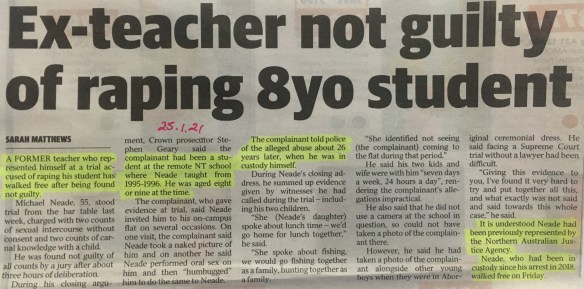
There is a danger in sociology. On the basis of some case studies teachers get too socially close to families and children within those families, unfortunate allegations and accusations may be levelled against teachers in future years. That has happened in the number of cases, with teachers reputations being permanently besmirched by unfair and untrue allegations over inappropriate conduct. A recent “Australian Story” reporting on the jailing of a female teacher for alleged interference with children 30 years earlier – with the woman eventually being exonerative and acquitted – balustrades my point. Had she not been friends with the family, this matter would never have arisen. Cases reported in the media from time to time con firm that allegations brought against teachers are not rare. Even with acquittal, the teachers reputation is forever ruined.

Fashion

The spate of abuse inquiry is happening around our nation at the moment are raising the issue of abuse to the forefront of public awareness. Without doubt, some of the allegations levelled against teachers at others are as a result of the “stimulation” generated by these inquiries. Sins against children need to be visited and perpetrators punished. However, the reputations of those who are completely innocent of any wrongdoing needs to need to be protected. I would can tend that keeping a distance between professional and social contactby teachers with parents of children is wise. Our actions todayneed to be such that we protect and guard against futurist allegations.

TEACHER EDUCATION IS BEING TUMBLED

Teacher quality is front and centre of educational discussion at the moment. “The Australian” columnist Glenn Fahey (12/3) offered particularly telling and insightful commentary on the subject. Soul searching and comment about the need for change is futuristic in outlook.

I believe that in looking forward, those responsible for teacher preparation need to reflect on the past teacher training practices, revisiting and including some of those key elements in our 21st century teacher preparation courses. When I trained in the 1960’s teaching methods were taught, practice teaching was paramount and phonics underpinned all aspects of language learning.

I worry that critical teaching and subject methodologies are now insufficiently stressed. Rather than prospective teachers receiving that understanding while in training, they graduate with degrees and as neophytes are expected to begin acquiring practical teaching skills and dispositions upon full-time entry into classroom teaching positions. No wonder they flounder and students suffer.

TEACHER TRAINING SHOULD CALL UP THE PAST

Always uppermost in the planning minds of universities and education departments, is training our future teachers. It is well known and understood that good teachers make a difference. Teachers who build student confidence and a commitment towards learning are always well remembered .

Those selected to train as teachers need to have done well in their own secondary years of education. Once relatively low tertiary entrance scores were sufficient to allow students into teacher training programs. This is no longer the case. The Federal Government wants those considering teaching to have finished in the top 20% of Year 12 students. A quality academic background is deemed essential for those contemplating entry into the teaching profession.

More recently, it has been determined that preservice teachers should pass literacy and mathematics competency tests that have been developed by the Australian Council of Educational Research. These tests became mandatory for students who commenced training from the beginning of 2017. Maths, spelling, English literacy including listening, speaking and reading tests were part of training programs in the 1960’s and early 1970’s. They should not need reinstating because they should never have been dropped.

Teaching Schools

Teacher training has changed over time. Until 2000, the focus for teachers on practice in schools was to be visited and advised on teaching methodology by university or training college lecturers. While lecturers still visit, the emphasis is now about partnerships between ‘Teaching Schools’ and universities. Trainee teachers are evaluated by classroom teachers who are their advisers and mentors. In each teaching school, a member of staff is appointed as Professional Learning Leader (PLL). The PLL supports both mentors and students. During practice, pre-service teachers are introduced to programming, planning and classroom teaching. A tutorial program to share ideas about teaching strategies is organised in each teaching school. Assisting student teachers to understand testing and assessment requirements is included in this focus.

The teaching schools approach is directed toward helping those in training to understand and meet graduate standards set by the Australian Institute of Teachers and the NT Teachers Registration Board. Results of literacy and maths competence are now included in registration requirements.

Could universities through their teacher training courses do more? Past university training included learning about teaching methods and the ways in which key subjects could be presented and taught. There was less onus on earning a degree and far more on teaching and classroom practices. That focus needs to be reinstated.

ARE AUSTRALIAN STUDENTS ‘REALLY’ BEHIND THE EIGHTBALL?

Media stories that highlight student mediocrity, are brought to the attention of the Australian public with predictable regularity. In recent days, ‘The Australian’ ran a front page story that bagged Australian students accomplishments. Our best were described as being on par with Singapore’s least accomplished students.

According to International Student Assessment (PISA) results released in December 2016, students tested in Singapore ranked first in science, reading and maths results for OECD countries. Among these countries, Australian students ranked 14th in science, 16th in reading and a lowly 25th in mathematics.

Comparing Australian with Singaporean students is fallacious. Singapore is an island state of 5.6 million, and the country’s prime focus is on commerce and finance. It is a country that controls the civil and political rights of people and is governed by a semi authoritarian regime.

Australia’s vastness, the fact that education is largely state and territory controlled and our multicultural nature are factors that make us different to Singapore. Singapore’s republic has a centrally administered and tightly controlled educational system. The focus on education is influenced by expectations that graduates will continue to build and expand the industrial, commercial and financial focus of the country. Personal choice and career options are more directly influenced by government and the education system than in Australia.

There are many more occupational choices on offer to Australian students than is the case in Singapore and many other OECD countries. Vocational opportunities within the agricultural and pastoral industry are not options for many in small, densely populated overseas countries, so competence in these occupations is not measured.

The fact that our students are encouraged to think freely and make decisions about their occupational futures is also a plus.

There are weaknesses in every educational system. Australian parents and teachers encourage children to make the most of education and school, but career decisions ultimately belong to students. And study aside, there is a focus on personal and social development and recreational opportunities.

Students in Singapore and other OECD countries are academically focussed on what seems to be a full time, whole of life basis. And all for a few extra PISA points. That is not the developmental balance we need for Australian students. By and large, Australian education meets the holistic needs of our students and generally does it well.

EDUCATING ABOUT STOCKMARKETS

Stock markets are like corrugated roads

The longer I live, the more convinced I am that Australian stock markets and indeed stock markets all over the world am I like a corrugated road. The corrugations are accentuated by the inclines and dips laced into this uneven surface. I had can be up one-day, down the next, and all over the place as your skew from side to side on this uneven and jarring road.

In my opinion, there is nothing predictable about the stock market and it doesn’t seem to be underpinned by any common sense. You can slip and slide all over the corrugations, sometimes being displaced by the fact that traversing what might be termed an overly clay based surface causes skidding and sometimes the overturning of vehicles. Those vehicles being the stockholdings of particular people who are going through a rough and skinny patch at the moment.

Then of course there is the bulldust. It’s so easy to get caught out. It’s up and down and all over the place on a daily basis.

Thank God for analogy. In another context I think of stock markets is being like yo-yos; up-and-down and up-and-down and up-and-down. Sometimes of course the string breaks and until it’s fixed the yo-yo itself is in a deep, detached and often long term plunge. Then things can write themselves and you again go back to being on that poorly surfaced road.

Having the stock market as an adjunct to personal wealth might be fine but I would hate to have all my eggs in the one basket. I would hate to be dependent upon the stock market for my life.

Stock markets are about twists, turns, whims and fancies. Their only everlasting quality is their eternal unpredictability.

A CRITICALLY IMPORTANT EDUCATIONAL POINT

EDUCATIONAL POINTS TO PONDER

.It seems that the NT Government and Police Department are at it again! Natasha Emeck’s story (“Big drop in NT cops at schools” NT News 1/3) seems to indicate that this vital program is facing strangulation by stealth.

This program is one (was one) of vital and telling importance in pointing students in the direction of making wise choices about their futures.

So 13 school based police have been slashed to four with Covid management the excuse for its diminishment. Police Minister Manison MUST ensure the full restoration of school based policing and not allow police hierarchy to slash this most effective of programs for budgetary reasons

——

BILINGUAL EDUCATION

The on again off again notion of bilingual education in remote NT Schools

HERE WE GO AGAIN

(The saga of bilingual education)

Please, please,

Whatever you do,

Do NOT think,

Bilingualism is new.

It has come and it’s gone,

For six decades or more,

From the highest of ceilings,

To flat on the floor.

They say ‘yes’ then say ‘no’,

It starts, stops and then’s all the go,

Green light then red, it makes you so dizzy,

Does the concept have substance,

Or is it all fizzy?

They’ve argued for decades,

For scores of years,

Nothing is settled,

The subject brings tears,

Of euphoria and despair,

Of love and then hate,

It’s still all in the air.

How long will we wait?

BAN MOBILES TO FIX THE PROBLEM

Some of our secondary schools have major problems with student behaviour that erupts into filmed violence with these clips then being shared. Yet one solution is simple. It is this: Ban mobile phones and exposure to social media from the school. It would also help if the subject was brought out into the open for full, frank and free discussion rather than the school and education department trying to hide the extent of the problem.

Hiding from issues and doing the ‘ostrich act’ only ever results in these situations growing and growing. That leads to small problems of molehill size becoming big problems of mountainous proportion.

Fix the problem by banning mobile phones at schools. Have the rule and carry it out.

EUTHANASIA – A RIGHT THAT MUST BE RESTORED TO THE NT

I am a believer in and supporter of Euthanasia. I wrote the following letter to Kevin Andrews some time ago and share the text.

Dear Mr Andrews

For a long time I have been distressed by the fact that you saw fit to introduce a private member’s bill into the Federal Parliament during the Howard years, which went to the overturning of the Northern Territory Euthanasia Bill. This is a matter about which I have harboured resentment for many years.

The NT Euthanasia Laws were well shaped and carefully structured by our then Chief Minister Marshall Perron. It was a day of relief rather than rejoicement when those laws were enacted into legislation.

In opposite vein, it was a day of rather astounded and disbelieving sadness, yet inevitability, when your private member’s bill got its overriding guernsey in Federal Parliament. I do not know if this bill was your own initiative or whether you were prevailed upon to move it to the parliament by other members of the Coalition. In any case, the rescinding of our most reasonable NT Act did our Territory and Northern Territorians a great disservice.

It is interesting that, by degree, the world is starting to catch up with Mr Perron’s ‘Rights of the Terminally Ill Bill’, which became part of our law over 20 years ago.

I have just turned 70. In my time, members of my family have passed in sad circumstances during which their rationality and their humanity was progressively dismantled by creeping loss of body and mind. I have seen that happen for many people and my awareness grows with advancing age.

For mine, I am desirous of incorporating into the provisions of my hastening old age, a provision that should I become totally incapable or demented, to the point of my reliance on life becoming the full responsibility of others, that I be allowed to decline my mortality: That I be allowed this as a legitimate right to determine, while still of sound body and mind.

Your bill stripped me of a basic human right and the possibility of action that should be an entitlement. I was deeply disappointed in what you did then. That disappointment remains until this day.

Sincerely

Henry Gray

11 March 2016

Mr Andrews eventually replied in a nondescript manner. Just to tell me in broad brush terms that the Federal Parliament acting on its operational principles, scuttled one of the wisest, most decent and empathetic pieces of legislation ever introduced into any Australian Parliament.

I still seethe about Mr Andrews and the Federal Parliament for mechanically and unreasonably brushing aside the Marshall Perron Euthanasia Bill. Few things in my life have been unforgivable. This matter is an exception